

How Thermal Cycling Impacts Redistribution Layer Reliability
APR 7, 20268 MIN READ
Generate Your Research Report Instantly with AI Agent
PatSnap Eureka helps you evaluate technical feasibility & market potential.
Thermal Cycling RDL Background and Objectives
Redistribution Layer (RDL) technology has emerged as a critical component in advanced semiconductor packaging, serving as the interconnect infrastructure that enables high-density routing between chip components and external connections. Originally developed to address the increasing complexity of integrated circuits and the demand for miniaturization, RDL has evolved from simple metal routing layers to sophisticated multi-level interconnect systems that support advanced packaging architectures including fan-out wafer-level packaging, 2.5D/3D integration, and system-in-package solutions.
The evolution of RDL technology has been driven by the semiconductor industry's relentless pursuit of higher performance, increased functionality, and reduced form factors. As device geometries continue to shrink and packaging densities increase, RDL structures have become increasingly complex, incorporating finer line widths, multiple metal layers, and diverse material combinations. This technological progression has introduced new challenges related to mechanical stress, thermal management, and long-term reliability under operational conditions.
Thermal cycling represents one of the most significant reliability challenges facing modern RDL implementations. During normal operation, electronic devices experience repeated temperature fluctuations due to power cycling, environmental variations, and thermal management strategies. These temperature changes induce mechanical stresses within the RDL structure due to coefficient of thermal expansion mismatches between different materials, including copper traces, dielectric layers, and substrate materials.
The primary objective of investigating thermal cycling impacts on RDL reliability is to establish a comprehensive understanding of failure mechanisms that occur under cyclic thermal loading conditions. This includes identifying critical stress concentration points, characterizing crack initiation and propagation patterns, and quantifying the relationship between thermal cycling parameters and RDL lifetime. Understanding these mechanisms is essential for developing robust design guidelines and material selection criteria that ensure long-term device reliability.
Furthermore, this research aims to develop predictive models that can accurately forecast RDL performance under various thermal cycling scenarios, enabling engineers to optimize package designs before physical prototyping. The ultimate goal is to establish industry standards and best practices that minimize thermal cycling-induced failures while maintaining the performance advantages that RDL technology provides in advanced semiconductor packaging applications.
The evolution of RDL technology has been driven by the semiconductor industry's relentless pursuit of higher performance, increased functionality, and reduced form factors. As device geometries continue to shrink and packaging densities increase, RDL structures have become increasingly complex, incorporating finer line widths, multiple metal layers, and diverse material combinations. This technological progression has introduced new challenges related to mechanical stress, thermal management, and long-term reliability under operational conditions.
Thermal cycling represents one of the most significant reliability challenges facing modern RDL implementations. During normal operation, electronic devices experience repeated temperature fluctuations due to power cycling, environmental variations, and thermal management strategies. These temperature changes induce mechanical stresses within the RDL structure due to coefficient of thermal expansion mismatches between different materials, including copper traces, dielectric layers, and substrate materials.
The primary objective of investigating thermal cycling impacts on RDL reliability is to establish a comprehensive understanding of failure mechanisms that occur under cyclic thermal loading conditions. This includes identifying critical stress concentration points, characterizing crack initiation and propagation patterns, and quantifying the relationship between thermal cycling parameters and RDL lifetime. Understanding these mechanisms is essential for developing robust design guidelines and material selection criteria that ensure long-term device reliability.
Furthermore, this research aims to develop predictive models that can accurately forecast RDL performance under various thermal cycling scenarios, enabling engineers to optimize package designs before physical prototyping. The ultimate goal is to establish industry standards and best practices that minimize thermal cycling-induced failures while maintaining the performance advantages that RDL technology provides in advanced semiconductor packaging applications.
Market Demand for Reliable RDL Solutions
The semiconductor packaging industry faces mounting pressure to deliver redistribution layer solutions that can withstand increasingly demanding thermal environments. As electronic devices become more compact and powerful, the thermal stress imposed on RDL structures has intensified significantly. This trend is particularly pronounced in high-performance computing applications, automotive electronics, and mobile devices where thermal cycling occurs frequently during normal operation.
Market demand for reliable RDL solutions is being driven by several critical factors. The automotive sector represents one of the fastest-growing segments, where electronic components must endure extreme temperature variations ranging from sub-zero conditions to elevated engine compartment temperatures. These applications require RDL structures that maintain electrical integrity and mechanical stability throughout thousands of thermal cycles without degradation.
Data center and cloud computing infrastructure present another substantial market opportunity for enhanced RDL reliability. Server processors and memory modules experience continuous thermal fluctuations due to varying computational loads, creating a persistent need for packaging solutions that can maintain performance over extended operational periods. The economic impact of thermal-induced failures in these environments drives significant investment in more robust RDL technologies.
Consumer electronics manufacturers are increasingly prioritizing thermal reliability as device performance continues to escalate. Smartphones, tablets, and wearable devices now incorporate multiple high-power processors that generate substantial heat during operation. The miniaturization trend further exacerbates thermal management challenges, making reliable RDL solutions essential for maintaining product quality and reducing warranty costs.
The aerospace and defense sectors represent specialized but lucrative markets where RDL reliability under thermal stress is absolutely critical. These applications often involve extreme operating conditions and zero-tolerance failure requirements, justifying premium pricing for advanced thermal-resistant packaging solutions.
Market research indicates strong growth potential for companies that can demonstrate superior thermal cycling performance in their RDL offerings. Semiconductor manufacturers are actively seeking packaging partners who can provide validated solutions with extended thermal endurance capabilities, creating opportunities for technology providers who invest in addressing thermal cycling challenges.
Market demand for reliable RDL solutions is being driven by several critical factors. The automotive sector represents one of the fastest-growing segments, where electronic components must endure extreme temperature variations ranging from sub-zero conditions to elevated engine compartment temperatures. These applications require RDL structures that maintain electrical integrity and mechanical stability throughout thousands of thermal cycles without degradation.
Data center and cloud computing infrastructure present another substantial market opportunity for enhanced RDL reliability. Server processors and memory modules experience continuous thermal fluctuations due to varying computational loads, creating a persistent need for packaging solutions that can maintain performance over extended operational periods. The economic impact of thermal-induced failures in these environments drives significant investment in more robust RDL technologies.
Consumer electronics manufacturers are increasingly prioritizing thermal reliability as device performance continues to escalate. Smartphones, tablets, and wearable devices now incorporate multiple high-power processors that generate substantial heat during operation. The miniaturization trend further exacerbates thermal management challenges, making reliable RDL solutions essential for maintaining product quality and reducing warranty costs.
The aerospace and defense sectors represent specialized but lucrative markets where RDL reliability under thermal stress is absolutely critical. These applications often involve extreme operating conditions and zero-tolerance failure requirements, justifying premium pricing for advanced thermal-resistant packaging solutions.
Market research indicates strong growth potential for companies that can demonstrate superior thermal cycling performance in their RDL offerings. Semiconductor manufacturers are actively seeking packaging partners who can provide validated solutions with extended thermal endurance capabilities, creating opportunities for technology providers who invest in addressing thermal cycling challenges.
Current RDL Thermal Cycling Challenges
Redistribution Layer (RDL) structures face significant thermal cycling challenges that directly impact their long-term reliability and performance in advanced semiconductor packaging applications. The primary challenge stems from the coefficient of thermal expansion (CTE) mismatch between different materials within the RDL stack, including copper traces, dielectric layers, and underlying substrates. This mismatch creates differential thermal stresses during temperature fluctuations, leading to mechanical strain accumulation at material interfaces.
Copper trace cracking represents one of the most critical failure modes observed in RDL structures under thermal cycling conditions. The repeated expansion and contraction cycles cause fatigue stress concentration at trace corners, via connections, and narrow line segments. Fine-pitch copper lines, particularly those below 2 micrometers in width, demonstrate increased susceptibility to stress-induced voiding and eventual electrical discontinuity. The challenge intensifies as industry trends push toward even finer geometries and higher interconnect densities.
Delamination at dielectric interfaces poses another substantial challenge, particularly between polyimide-based dielectric layers and copper metallization. The weak adhesion strength combined with thermal stress cycling creates interfacial crack propagation that compromises both mechanical integrity and electrical isolation. Low-k dielectric materials, while offering superior electrical performance, exhibit reduced mechanical robustness under thermal stress, creating additional reliability concerns.
Via reliability emerges as a critical bottleneck in multi-layer RDL structures. Thermal cycling induces stress concentration at via barrel walls and landing pad interfaces, leading to micro-crack initiation and propagation. The challenge becomes more pronounced in high aspect ratio vias where thermal stress distribution is non-uniform, creating preferential failure sites at the via bottom and top interfaces.
Warpage-induced stress represents a system-level challenge affecting entire RDL structures. Package-level thermal cycling causes substrate warpage that translates into additional mechanical stress on RDL layers. This global stress component superimposes with local thermal stresses, accelerating failure mechanisms and reducing overall reliability margins. The interaction between package warpage and RDL stress creates complex failure patterns that are difficult to predict and mitigate through conventional design approaches.
Current qualification standards struggle to adequately capture real-world thermal cycling impacts on RDL reliability. Traditional accelerated testing protocols may not accurately represent the complex stress states and failure mechanisms encountered in actual operating environments, creating gaps between laboratory assessment and field performance expectations.
Copper trace cracking represents one of the most critical failure modes observed in RDL structures under thermal cycling conditions. The repeated expansion and contraction cycles cause fatigue stress concentration at trace corners, via connections, and narrow line segments. Fine-pitch copper lines, particularly those below 2 micrometers in width, demonstrate increased susceptibility to stress-induced voiding and eventual electrical discontinuity. The challenge intensifies as industry trends push toward even finer geometries and higher interconnect densities.
Delamination at dielectric interfaces poses another substantial challenge, particularly between polyimide-based dielectric layers and copper metallization. The weak adhesion strength combined with thermal stress cycling creates interfacial crack propagation that compromises both mechanical integrity and electrical isolation. Low-k dielectric materials, while offering superior electrical performance, exhibit reduced mechanical robustness under thermal stress, creating additional reliability concerns.
Via reliability emerges as a critical bottleneck in multi-layer RDL structures. Thermal cycling induces stress concentration at via barrel walls and landing pad interfaces, leading to micro-crack initiation and propagation. The challenge becomes more pronounced in high aspect ratio vias where thermal stress distribution is non-uniform, creating preferential failure sites at the via bottom and top interfaces.
Warpage-induced stress represents a system-level challenge affecting entire RDL structures. Package-level thermal cycling causes substrate warpage that translates into additional mechanical stress on RDL layers. This global stress component superimposes with local thermal stresses, accelerating failure mechanisms and reducing overall reliability margins. The interaction between package warpage and RDL stress creates complex failure patterns that are difficult to predict and mitigate through conventional design approaches.
Current qualification standards struggle to adequately capture real-world thermal cycling impacts on RDL reliability. Traditional accelerated testing protocols may not accurately represent the complex stress states and failure mechanisms encountered in actual operating environments, creating gaps between laboratory assessment and field performance expectations.
Existing RDL Thermal Cycling Solutions
01 Redistribution layer structure design and material selection
The reliability of redistribution layers can be enhanced through optimized structural design and careful material selection. This includes selecting appropriate dielectric materials, metal layers, and passivation layers that can withstand thermal and mechanical stress. The design considerations include layer thickness, material composition, and interface properties to ensure long-term reliability and prevent delamination or cracking during operation and thermal cycling.- Redistribution layer structure design and material selection: The reliability of redistribution layers can be enhanced through optimized structural design and careful material selection. This includes selecting appropriate dielectric materials, metal layers, and passivation layers that can withstand thermal and mechanical stress. The design considerations include layer thickness, material composition, and interface properties to ensure long-term reliability and prevent delamination or cracking during operation and thermal cycling.
- Stress management and thermal cycling resistance: Managing stress in redistribution layers is critical for reliability, particularly during thermal cycling and temperature variations. Techniques include incorporating stress buffer layers, optimizing coefficient of thermal expansion matching between different materials, and implementing specific geometric designs that accommodate thermal expansion differences. These approaches help prevent crack formation and delamination that can occur due to thermal stress mismatch between materials.
- Interface adhesion enhancement and bonding techniques: Strong interfacial adhesion between redistribution layers and adjacent materials is essential for reliability. Methods to improve adhesion include surface treatment processes, use of adhesion promoters, and optimized bonding techniques. These approaches ensure robust mechanical connection between layers and prevent interface failure modes such as delamination during device operation, handling, and environmental exposure.
- Moisture and environmental protection: Protection against moisture ingress and environmental factors is crucial for redistribution layer reliability. This involves implementing effective passivation layers, hermetic sealing techniques, and barrier coatings that prevent moisture penetration and corrosion. The protective structures must maintain their integrity over the device lifetime while withstanding various environmental conditions including humidity, temperature extremes, and chemical exposure.
- Testing and reliability assessment methods: Comprehensive testing methodologies are employed to evaluate and ensure redistribution layer reliability. These include accelerated life testing, thermal cycling tests, moisture sensitivity testing, and electrical characterization under stress conditions. Advanced inspection techniques such as acoustic microscopy and cross-sectional analysis help identify potential failure modes early in development, enabling design improvements and process optimization for enhanced long-term reliability.
02 Stress management and crack prevention in redistribution layers
Managing stress distribution and preventing crack formation are critical for redistribution layer reliability. Techniques include incorporating stress buffer layers, optimizing the coefficient of thermal expansion matching between different layers, and implementing specific patterning designs. These approaches help to minimize stress concentration points and reduce the likelihood of mechanical failure under thermal cycling and operational conditions.Expand Specific Solutions03 Interface adhesion enhancement between redistribution layers
Strong interfacial adhesion between redistribution layers and adjacent structures is essential for reliability. Methods to improve adhesion include surface treatment processes, use of adhesion promoters, and optimization of deposition conditions. Enhanced interface bonding prevents delamination and ensures electrical and mechanical integrity throughout the device lifetime, particularly under moisture and temperature stress conditions.Expand Specific Solutions04 Electromigration and current density management
Electromigration resistance in redistribution layer metallization is crucial for long-term reliability. This involves optimizing metal line dimensions, selecting appropriate metal alloys, and controlling current density distribution. Design strategies include implementing redundant paths, using barrier layers, and ensuring adequate line width to prevent metal migration and void formation that can lead to open circuits or increased resistance over time.Expand Specific Solutions05 Testing and reliability assessment methods for redistribution layers
Comprehensive testing and assessment methodologies are essential for evaluating redistribution layer reliability. These include accelerated life testing, thermal cycling tests, moisture resistance testing, and electrical characterization under stress conditions. Advanced inspection techniques such as acoustic microscopy and cross-sectional analysis help identify potential failure modes early in the development process, enabling design improvements and quality assurance.Expand Specific Solutions
Key Players in RDL and Packaging Industry
The thermal cycling impact on redistribution layer reliability represents a critical challenge in the mature semiconductor packaging industry, which has reached a market size exceeding $30 billion globally. The industry is currently in an advanced development stage, driven by increasing demand for high-performance computing and mobile applications. Technology maturity varies significantly across market players, with leading foundries like Taiwan Semiconductor Manufacturing Co. and Samsung Electronics demonstrating advanced capabilities in redistribution layer technologies, while companies such as GlobalFoundries and Infineon Technologies focus on specialized applications. Research institutions including Xi'an Jiaotong University and Industrial Technology Research Institute contribute fundamental reliability studies, while packaging specialists like Silicon Box and equipment manufacturers such as Applied Biosystems develop innovative solutions to address thermal stress challenges in next-generation semiconductor devices.
Taiwan Semiconductor Manufacturing Co., Ltd.
Technical Solution: TSMC has developed advanced thermal management solutions for redistribution layer (RDL) reliability through comprehensive thermal cycling testing protocols. Their approach includes optimized copper trace design with enhanced thermal expansion coefficient matching, advanced underfill materials with improved glass transition temperatures, and multi-layer RDL structures that distribute thermal stress more effectively. TSMC implements rigorous thermal cycling tests from -40°C to 150°C for over 1000 cycles to validate RDL integrity. They utilize finite element analysis (FEA) modeling to predict thermal stress distribution and optimize via placement and sizing. Their advanced packaging technologies incorporate low-k dielectric materials and stress-buffer layers to minimize thermal-mechanical stress on RDL structures during temperature fluctuations.
Strengths: Industry-leading advanced packaging capabilities, extensive thermal testing infrastructure, proven track record in high-reliability applications. Weaknesses: High development costs, complex manufacturing processes requiring specialized equipment.
Infineon Technologies Americas Corp.
Technical Solution: Infineon addresses thermal cycling challenges in RDL reliability through automotive-grade qualification standards and robust design methodologies. Their solution emphasizes power semiconductor packaging applications where thermal cycling is critical, implementing thick copper RDL designs for enhanced current carrying capacity and thermal dissipation, utilizing advanced molding compounds with low CTE mismatch, and developing specialized test protocols for harsh automotive environments. Infineon conducts thermal cycling tests up to 3000 cycles with temperature ranges from -40°C to 175°C for power applications. They employ advanced failure analysis techniques including acoustic microscopy and cross-sectional analysis to understand thermal cycling failure mechanisms. Their approach includes optimized die attach materials, stress-relief groove designs, and advanced heat spreader integration to minimize thermal cycling impacts on RDL structures in high-power applications.
Strengths: Extensive automotive qualification experience, specialized power semiconductor expertise, proven reliability in harsh environments. Weaknesses: Limited presence in consumer electronics markets, focus primarily on power applications may limit broader applicability.
Core Innovations in RDL Reliability Enhancement
Electronic package with optimized lamination process
PatentInactiveUS20050224961A1
Innovation
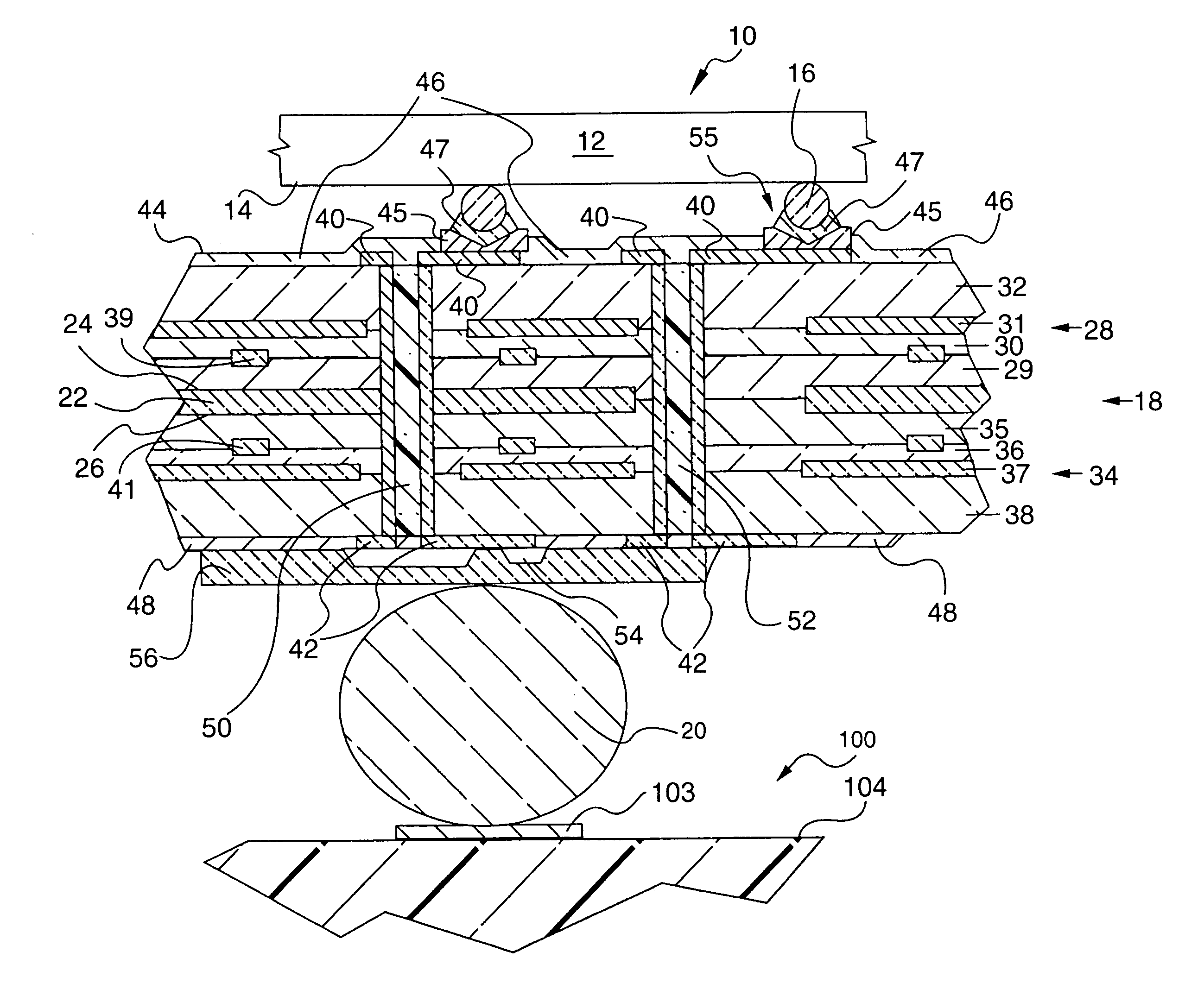
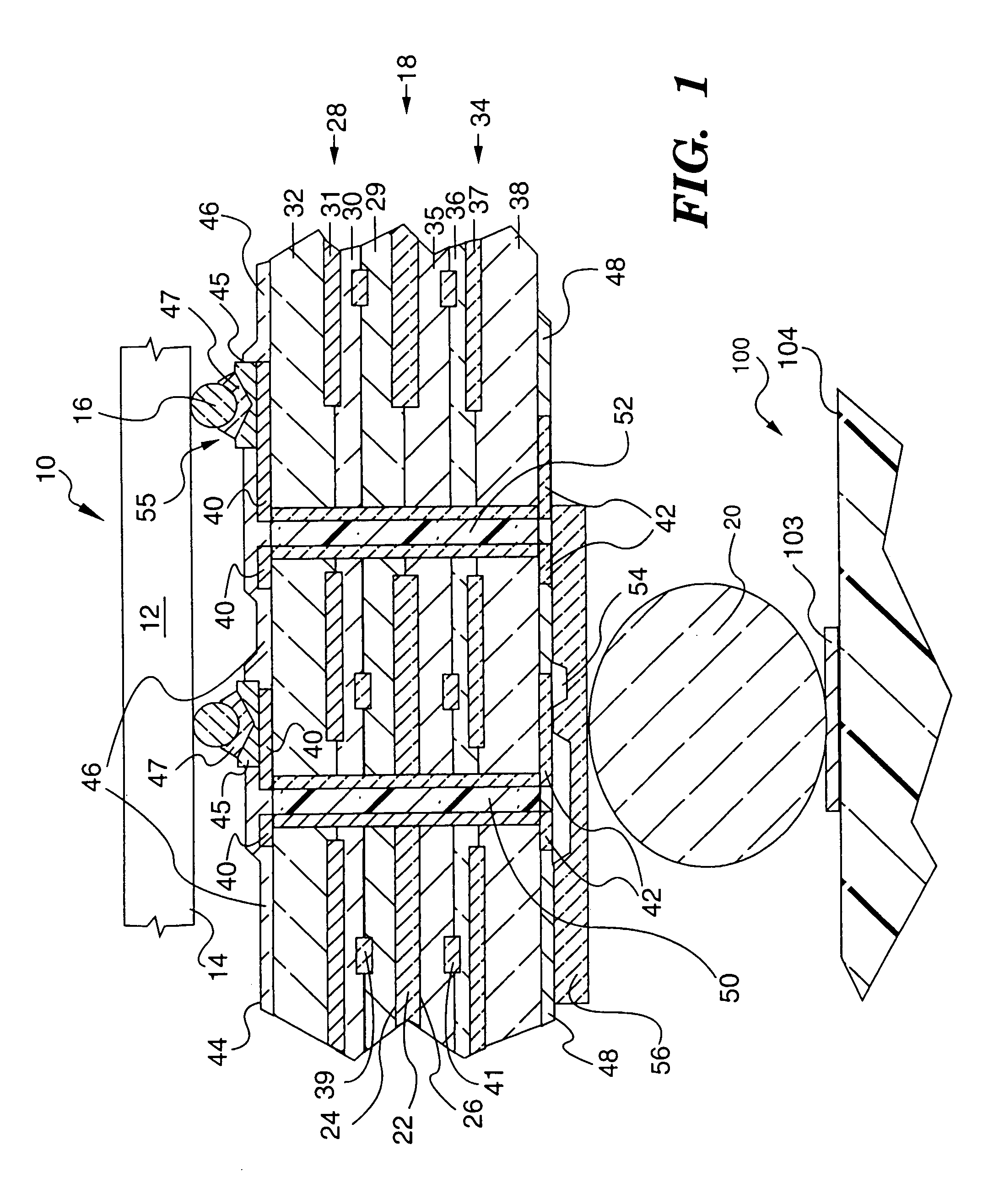
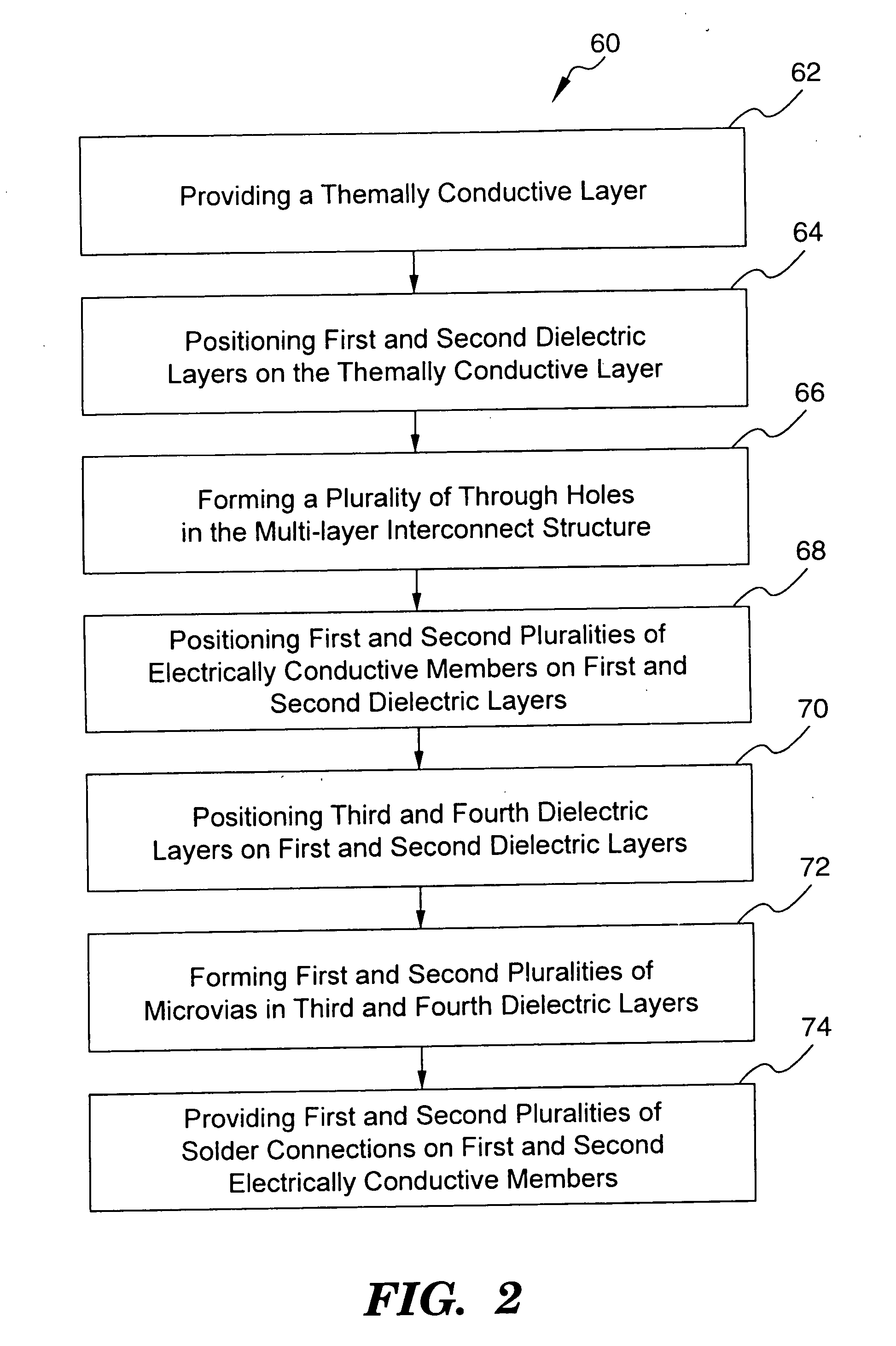
- A multi-layered interconnect structure is developed, comprising a thermally conductive layer with dielectric layers that are laminated under controlled pressure and temperature conditions to achieve a CTE of 10-12 ppm/°C, ensuring the structural integrity and fatigue life during thermal cycling, and featuring a high-density interconnect layer with a rough surface for efficient electrical pathing.

Hybrid circuit structure and partial backfill method for improving thermal cycling reliability of same
PatentInactiveUS20130069192A1
Innovation
- The method involves aligning circuit layers vertically with an adhesive material that wicks into the space between them, using a high-viscosity epoxy that stops penetrating before reaching circuit elements, thereby relieving stress and preventing degradation.


RDL Reliability Testing Standards and Protocols
The reliability testing of Redistribution Layers (RDL) under thermal cycling conditions requires adherence to established industry standards that provide comprehensive frameworks for evaluating material performance and structural integrity. The primary standard governing thermal cycling tests is JEDEC JESD22-A104, which defines temperature cycling procedures for semiconductor devices. This standard specifies test conditions including temperature ranges typically from -65°C to +150°C, ramp rates, dwell times, and cycle counts that can extend from hundreds to thousands of cycles depending on the application requirements.
IPC-9701A serves as another critical standard specifically addressing performance testing of flexible printed circuits, which shares similar structural challenges with RDL systems. This standard provides guidelines for thermal shock testing and thermal cycling evaluation, establishing baseline methodologies for assessing conductor adhesion, dielectric integrity, and overall system reliability under temperature variations.
The testing protocols typically involve pre-conditioning phases where samples undergo initial electrical and mechanical characterization to establish baseline performance metrics. During thermal cycling, continuous monitoring of electrical resistance, capacitance changes, and visual inspection for crack propagation or delamination occurs at predetermined intervals. Advanced protocols incorporate real-time resistance monitoring to detect the onset of failure mechanisms before complete system failure.
ASTM E1131 provides complementary guidance for compositional analysis using electron probe microanalysis, enabling detailed investigation of material redistribution and interfacial changes that occur during thermal cycling. This standard supports failure analysis protocols by establishing procedures for identifying elemental migration and chemical composition changes at critical interfaces.
Modern testing protocols increasingly integrate accelerated testing methodologies based on Arrhenius models and Coffin-Manson relationships to predict long-term reliability from shorter-duration tests. These approaches require careful calibration of acceleration factors and validation through correlation with field failure data to ensure accurate lifetime predictions for RDL systems operating under various thermal environments.
IPC-9701A serves as another critical standard specifically addressing performance testing of flexible printed circuits, which shares similar structural challenges with RDL systems. This standard provides guidelines for thermal shock testing and thermal cycling evaluation, establishing baseline methodologies for assessing conductor adhesion, dielectric integrity, and overall system reliability under temperature variations.
The testing protocols typically involve pre-conditioning phases where samples undergo initial electrical and mechanical characterization to establish baseline performance metrics. During thermal cycling, continuous monitoring of electrical resistance, capacitance changes, and visual inspection for crack propagation or delamination occurs at predetermined intervals. Advanced protocols incorporate real-time resistance monitoring to detect the onset of failure mechanisms before complete system failure.
ASTM E1131 provides complementary guidance for compositional analysis using electron probe microanalysis, enabling detailed investigation of material redistribution and interfacial changes that occur during thermal cycling. This standard supports failure analysis protocols by establishing procedures for identifying elemental migration and chemical composition changes at critical interfaces.
Modern testing protocols increasingly integrate accelerated testing methodologies based on Arrhenius models and Coffin-Manson relationships to predict long-term reliability from shorter-duration tests. These approaches require careful calibration of acceleration factors and validation through correlation with field failure data to ensure accurate lifetime predictions for RDL systems operating under various thermal environments.
Material Science Advances for RDL Durability
Recent breakthroughs in material science have significantly enhanced the durability of redistribution layers under thermal cycling conditions. Advanced copper alloy compositions incorporating trace elements such as manganese and silver have demonstrated superior resistance to electromigration and thermal fatigue. These alloys maintain structural integrity across extended temperature ranges while exhibiting reduced coefficient of thermal expansion mismatch with surrounding dielectric materials.
Novel dielectric materials represent another critical advancement in RDL durability enhancement. Low-k dielectric polymers with improved thermal stability, such as benzocyclobutene derivatives and advanced polyimides, have shown remarkable performance in maintaining adhesion strength during thermal excursions. These materials feature enhanced glass transition temperatures and reduced moisture absorption, directly addressing key failure mechanisms observed in traditional RDL structures.
Interfacial engineering has emerged as a pivotal approach for improving RDL reliability. Advanced barrier layer technologies utilizing titanium-tungsten alloys and tantalum-based compounds provide superior diffusion resistance while maintaining excellent adhesion properties. These barrier systems effectively prevent copper migration into adjacent dielectric layers, a primary cause of thermal cycling-induced failures.
Surface treatment innovations have revolutionized RDL durability through plasma-enhanced chemical vapor deposition techniques and atomic layer deposition processes. These methods enable precise control of interfacial properties, creating stronger bonds between metallic and dielectric layers. The resulting structures exhibit enhanced resistance to delamination and crack propagation under thermal stress conditions.
Nanocomposite materials incorporating carbon nanotubes and graphene derivatives have shown promising results in improving RDL thermal management capabilities. These additives enhance thermal conductivity while maintaining electrical insulation properties, effectively reducing thermal gradients that contribute to mechanical stress accumulation during cycling operations.
Additive manufacturing techniques have enabled the development of functionally graded materials for RDL applications. These materials feature gradually varying properties that minimize thermal expansion mismatches across layer interfaces, significantly reducing stress concentrations that typically initiate failure mechanisms during thermal cycling exposure.
Novel dielectric materials represent another critical advancement in RDL durability enhancement. Low-k dielectric polymers with improved thermal stability, such as benzocyclobutene derivatives and advanced polyimides, have shown remarkable performance in maintaining adhesion strength during thermal excursions. These materials feature enhanced glass transition temperatures and reduced moisture absorption, directly addressing key failure mechanisms observed in traditional RDL structures.
Interfacial engineering has emerged as a pivotal approach for improving RDL reliability. Advanced barrier layer technologies utilizing titanium-tungsten alloys and tantalum-based compounds provide superior diffusion resistance while maintaining excellent adhesion properties. These barrier systems effectively prevent copper migration into adjacent dielectric layers, a primary cause of thermal cycling-induced failures.
Surface treatment innovations have revolutionized RDL durability through plasma-enhanced chemical vapor deposition techniques and atomic layer deposition processes. These methods enable precise control of interfacial properties, creating stronger bonds between metallic and dielectric layers. The resulting structures exhibit enhanced resistance to delamination and crack propagation under thermal stress conditions.
Nanocomposite materials incorporating carbon nanotubes and graphene derivatives have shown promising results in improving RDL thermal management capabilities. These additives enhance thermal conductivity while maintaining electrical insulation properties, effectively reducing thermal gradients that contribute to mechanical stress accumulation during cycling operations.
Additive manufacturing techniques have enabled the development of functionally graded materials for RDL applications. These materials feature gradually varying properties that minimize thermal expansion mismatches across layer interfaces, significantly reducing stress concentrations that typically initiate failure mechanisms during thermal cycling exposure.
Unlock deeper insights with PatSnap Eureka Quick Research — get a full tech report to explore trends and direct your research. Try now!
Generate Your Research Report Instantly with AI Agent
Supercharge your innovation with PatSnap Eureka AI Agent Platform!