

How Throttle Valve Tuning Affects Engine Idle Stability
JUN 12, 20269 MIN READ
Generate Your Research Report Instantly with AI Agent
PatSnap Eureka helps you evaluate technical feasibility & market potential.
Throttle Valve Technology Background and Engine Idle Goals
Throttle valve technology has undergone significant evolution since the early days of internal combustion engines, transitioning from simple mechanical butterfly valves to sophisticated electronic throttle control systems. The fundamental principle remains consistent: regulating airflow into the engine's intake manifold to control power output and maintain optimal combustion conditions. Early carbureted engines relied on direct mechanical linkages between the accelerator pedal and throttle plate, providing immediate but often imprecise control over air-fuel mixture delivery.
The introduction of fuel injection systems in the 1980s marked a pivotal advancement, enabling more precise fuel metering while maintaining mechanical throttle control. However, the real breakthrough came with Electronic Throttle Control (ETC) systems, also known as drive-by-wire technology, which eliminated the direct mechanical connection between pedal and throttle valve. This innovation allowed for sophisticated engine management strategies that could optimize performance, emissions, and fuel economy simultaneously.
Modern throttle valve systems incorporate advanced materials and design features, including precision-machined throttle bodies, anti-icing coatings, and integrated sensors for position feedback. The throttle position sensor (TPS) and mass airflow sensor (MAF) work in conjunction to provide real-time data to the engine control unit (ECU), enabling precise control over airflow characteristics. Additionally, variable geometry intake systems and electronic throttle actuators have further enhanced the precision of airflow management.
The primary technical objectives for engine idle stability center on maintaining consistent rotational speed typically between 600-900 RPM while minimizing fluctuations that could cause vibration, stalling, or poor drivability. Achieving stable idle requires precise coordination between throttle valve positioning, fuel injection timing, and ignition advance to compensate for varying engine loads from accessories like air conditioning, power steering, and alternators.
Contemporary idle control strategies aim to reduce emissions during idle conditions, which represent a significant portion of urban driving cycles. Advanced systems target idle speed variations within ±25 RPM while maintaining smooth transitions during load changes. The integration of start-stop technology and hybrid powertrains has further elevated the importance of rapid, stable idle establishment, requiring throttle valve systems capable of precise, repeatable positioning within milliseconds of engine restart.
The introduction of fuel injection systems in the 1980s marked a pivotal advancement, enabling more precise fuel metering while maintaining mechanical throttle control. However, the real breakthrough came with Electronic Throttle Control (ETC) systems, also known as drive-by-wire technology, which eliminated the direct mechanical connection between pedal and throttle valve. This innovation allowed for sophisticated engine management strategies that could optimize performance, emissions, and fuel economy simultaneously.
Modern throttle valve systems incorporate advanced materials and design features, including precision-machined throttle bodies, anti-icing coatings, and integrated sensors for position feedback. The throttle position sensor (TPS) and mass airflow sensor (MAF) work in conjunction to provide real-time data to the engine control unit (ECU), enabling precise control over airflow characteristics. Additionally, variable geometry intake systems and electronic throttle actuators have further enhanced the precision of airflow management.
The primary technical objectives for engine idle stability center on maintaining consistent rotational speed typically between 600-900 RPM while minimizing fluctuations that could cause vibration, stalling, or poor drivability. Achieving stable idle requires precise coordination between throttle valve positioning, fuel injection timing, and ignition advance to compensate for varying engine loads from accessories like air conditioning, power steering, and alternators.
Contemporary idle control strategies aim to reduce emissions during idle conditions, which represent a significant portion of urban driving cycles. Advanced systems target idle speed variations within ±25 RPM while maintaining smooth transitions during load changes. The integration of start-stop technology and hybrid powertrains has further elevated the importance of rapid, stable idle establishment, requiring throttle valve systems capable of precise, repeatable positioning within milliseconds of engine restart.
Market Demand for Engine Idle Stability Solutions
The automotive industry faces increasing pressure to develop engines that deliver superior fuel efficiency while maintaining optimal performance characteristics. Engine idle stability has emerged as a critical factor in meeting stringent emissions regulations and consumer expectations for smooth vehicle operation. Modern vehicles spend significant time idling in urban traffic conditions, making stable idle performance essential for overall driving experience and environmental compliance.
Market demand for engine idle stability solutions spans multiple automotive segments, from passenger vehicles to commercial fleets. Light-duty passenger vehicles represent the largest market segment, driven by consumer sensitivity to engine vibration, noise, and fuel consumption during idle conditions. Premium vehicle manufacturers particularly emphasize idle refinement as a key differentiator, creating demand for advanced throttle valve tuning technologies that can maintain consistent engine speed with minimal fluctuation.
Commercial vehicle operators demonstrate strong demand for idle stability solutions due to direct economic impacts. Fleet managers recognize that unstable idle conditions lead to increased fuel consumption, accelerated engine wear, and higher maintenance costs. Long-haul trucking companies, delivery services, and construction equipment operators actively seek technologies that optimize idle performance during extended stationary periods required for their operations.
The growing electrification trend paradoxically increases demand for improved idle stability in remaining internal combustion engines. Hybrid vehicle systems require seamless transitions between electric and combustion modes, necessitating extremely stable idle conditions to ensure smooth operation. Start-stop technology implementation further amplifies the importance of rapid idle stabilization following engine restart events.
Regulatory frameworks worldwide continue tightening emissions standards during idle conditions, creating mandatory market demand for advanced throttle valve tuning solutions. European Union regulations, California Air Resources Board standards, and emerging markets' environmental policies drive manufacturers to invest in technologies that minimize idle emissions while maintaining engine stability.
Aftermarket demand represents a significant opportunity, particularly in regions with aging vehicle fleets. Independent service providers and performance tuning specialists seek cost-effective throttle valve optimization solutions to address idle stability issues in existing vehicles, creating a substantial secondary market for these technologies.
Market demand for engine idle stability solutions spans multiple automotive segments, from passenger vehicles to commercial fleets. Light-duty passenger vehicles represent the largest market segment, driven by consumer sensitivity to engine vibration, noise, and fuel consumption during idle conditions. Premium vehicle manufacturers particularly emphasize idle refinement as a key differentiator, creating demand for advanced throttle valve tuning technologies that can maintain consistent engine speed with minimal fluctuation.
Commercial vehicle operators demonstrate strong demand for idle stability solutions due to direct economic impacts. Fleet managers recognize that unstable idle conditions lead to increased fuel consumption, accelerated engine wear, and higher maintenance costs. Long-haul trucking companies, delivery services, and construction equipment operators actively seek technologies that optimize idle performance during extended stationary periods required for their operations.
The growing electrification trend paradoxically increases demand for improved idle stability in remaining internal combustion engines. Hybrid vehicle systems require seamless transitions between electric and combustion modes, necessitating extremely stable idle conditions to ensure smooth operation. Start-stop technology implementation further amplifies the importance of rapid idle stabilization following engine restart events.
Regulatory frameworks worldwide continue tightening emissions standards during idle conditions, creating mandatory market demand for advanced throttle valve tuning solutions. European Union regulations, California Air Resources Board standards, and emerging markets' environmental policies drive manufacturers to invest in technologies that minimize idle emissions while maintaining engine stability.
Aftermarket demand represents a significant opportunity, particularly in regions with aging vehicle fleets. Independent service providers and performance tuning specialists seek cost-effective throttle valve optimization solutions to address idle stability issues in existing vehicles, creating a substantial secondary market for these technologies.
Current State and Challenges in Throttle Valve Tuning
The current state of throttle valve tuning technology represents a complex intersection of mechanical precision, electronic control systems, and advanced algorithms. Modern engines predominantly utilize electronic throttle control (ETC) systems, which have replaced traditional cable-operated mechanisms. These systems employ sophisticated control units that manage throttle position through precise motor control, enabling more accurate idle speed regulation and improved response characteristics.
Contemporary throttle valve tuning relies heavily on proportional-integral-derivative (PID) control algorithms integrated within engine control units (ECUs). These systems continuously monitor engine parameters including manifold absolute pressure, intake air temperature, coolant temperature, and engine load to maintain optimal idle stability. The integration of drive-by-wire technology has enabled manufacturers to implement adaptive learning algorithms that adjust throttle response based on driving patterns and environmental conditions.
Despite technological advances, several significant challenges persist in achieving optimal throttle valve tuning for idle stability. Manufacturing tolerances in throttle body components create variability between individual units, requiring extensive calibration procedures to ensure consistent performance across production volumes. The complexity of modern engine systems, with multiple interacting subsystems including variable valve timing, exhaust gas recirculation, and turbocharging, creates intricate dependencies that complicate tuning optimization.
Thermal effects present another substantial challenge, as throttle valve performance characteristics change significantly with temperature variations. Cold start conditions require different tuning parameters compared to fully warmed engines, necessitating complex temperature compensation algorithms. Additionally, component aging and carbon buildup on throttle plates gradually alter airflow characteristics, potentially degrading idle stability over the vehicle's operational lifetime.
The integration of hybrid powertrains introduces additional complexity layers, as throttle valve control must coordinate seamlessly with electric motor operation during engine start-stop cycles. This coordination requires sophisticated control strategies to maintain smooth idle transitions and prevent perceptible disturbances during mode switching.
Regulatory constraints regarding emissions and fuel economy further complicate throttle valve tuning optimization. Engineers must balance idle stability requirements with stringent emission standards, often requiring compromise solutions that may not achieve theoretical optimal performance. The increasing demand for improved fuel efficiency has led to the adoption of smaller displacement engines with turbocharging, creating new challenges in maintaining stable idle conditions under varying boost pressure scenarios.
Current diagnostic capabilities, while advanced, still face limitations in real-time detection of subtle throttle valve performance degradation. This constraint hampers the development of predictive maintenance strategies and adaptive tuning systems that could continuously optimize performance throughout the vehicle's service life.
Contemporary throttle valve tuning relies heavily on proportional-integral-derivative (PID) control algorithms integrated within engine control units (ECUs). These systems continuously monitor engine parameters including manifold absolute pressure, intake air temperature, coolant temperature, and engine load to maintain optimal idle stability. The integration of drive-by-wire technology has enabled manufacturers to implement adaptive learning algorithms that adjust throttle response based on driving patterns and environmental conditions.
Despite technological advances, several significant challenges persist in achieving optimal throttle valve tuning for idle stability. Manufacturing tolerances in throttle body components create variability between individual units, requiring extensive calibration procedures to ensure consistent performance across production volumes. The complexity of modern engine systems, with multiple interacting subsystems including variable valve timing, exhaust gas recirculation, and turbocharging, creates intricate dependencies that complicate tuning optimization.
Thermal effects present another substantial challenge, as throttle valve performance characteristics change significantly with temperature variations. Cold start conditions require different tuning parameters compared to fully warmed engines, necessitating complex temperature compensation algorithms. Additionally, component aging and carbon buildup on throttle plates gradually alter airflow characteristics, potentially degrading idle stability over the vehicle's operational lifetime.
The integration of hybrid powertrains introduces additional complexity layers, as throttle valve control must coordinate seamlessly with electric motor operation during engine start-stop cycles. This coordination requires sophisticated control strategies to maintain smooth idle transitions and prevent perceptible disturbances during mode switching.
Regulatory constraints regarding emissions and fuel economy further complicate throttle valve tuning optimization. Engineers must balance idle stability requirements with stringent emission standards, often requiring compromise solutions that may not achieve theoretical optimal performance. The increasing demand for improved fuel efficiency has led to the adoption of smaller displacement engines with turbocharging, creating new challenges in maintaining stable idle conditions under varying boost pressure scenarios.
Current diagnostic capabilities, while advanced, still face limitations in real-time detection of subtle throttle valve performance degradation. This constraint hampers the development of predictive maintenance strategies and adaptive tuning systems that could continuously optimize performance throughout the vehicle's service life.
Existing Throttle Valve Tuning Solutions for Idle Control
01 Electronic throttle control systems for idle stability
Electronic throttle control systems utilize sensors and actuators to precisely control throttle valve position during idle conditions. These systems can automatically adjust the throttle opening to maintain stable engine idle speed by compensating for various load conditions and environmental factors. The electronic control allows for more accurate and responsive throttle positioning compared to mechanical systems.- Electronic throttle control systems for idle stability: Electronic throttle control systems utilize sensors and actuators to precisely control throttle valve position during idle conditions. These systems can automatically adjust the throttle opening to maintain stable engine speed by compensating for load variations and environmental factors. The electronic control allows for more accurate and responsive idle speed regulation compared to mechanical systems.
- Mechanical throttle valve positioning mechanisms: Mechanical systems for controlling throttle valve position during idle operation rely on springs, linkages, and mechanical governors. These mechanisms provide baseline throttle positioning and can include adjustable stops or bypass passages to maintain minimum airflow for stable idle operation. The mechanical approach offers reliability and simplicity in throttle control applications.
- Idle air control bypass systems: Bypass air control systems provide additional airflow paths around the main throttle valve to maintain idle stability. These systems typically include separate valves or passages that can be controlled independently of the main throttle position. The bypass approach allows for fine-tuning of idle air supply without affecting the primary throttle valve operation.
- Integrated throttle body designs for idle control: Integrated throttle body assemblies incorporate multiple control elements within a single housing to optimize idle performance. These designs may include primary and secondary throttle plates, integrated sensors, and built-in idle control mechanisms. The integrated approach provides compact packaging while maintaining precise control over idle air delivery and throttle response.
- Adaptive idle speed control algorithms: Advanced control algorithms continuously monitor engine parameters and adjust throttle valve position to maintain optimal idle stability under varying conditions. These systems can learn and adapt to engine wear, fuel quality changes, and environmental factors. The adaptive approach ensures consistent idle performance throughout the engine's operational life while compensating for system variations and aging effects.
02 Idle air control valve mechanisms
Dedicated idle air control valves work in conjunction with the main throttle valve to regulate airflow during idle conditions. These mechanisms provide a bypass air passage that can be precisely controlled to maintain stable idle speed regardless of engine load variations. The system typically includes a stepper motor or solenoid-operated valve that modulates air flow based on engine control unit commands.Expand Specific Solutions03 Throttle position sensing and feedback control
Advanced throttle position sensors provide real-time feedback on valve position to enable precise control of idle stability. These sensing systems work with control algorithms to detect and correct any deviations from the desired idle position. The feedback control system continuously monitors throttle position and makes micro-adjustments to maintain optimal idle performance.Expand Specific Solutions04 Mechanical throttle valve stabilization
Mechanical systems for throttle valve idle stability include spring-loaded mechanisms, dampers, and friction devices that help maintain consistent valve positioning. These systems provide passive stabilization through carefully designed mechanical components that resist unwanted throttle movement during idle conditions. The mechanical approach offers reliability and simplicity while maintaining adequate idle stability.Expand Specific Solutions05 Integrated throttle body designs for idle control
Modern integrated throttle body assemblies incorporate multiple control elements within a single housing to optimize idle stability. These designs combine the main throttle valve with auxiliary air control passages, sensors, and actuators in a compact unit. The integrated approach allows for better coordination between different control elements and improved overall idle performance through optimized airflow management.Expand Specific Solutions
Key Players in Engine Control and Throttle Technology
The throttle valve tuning technology for engine idle stability represents a mature automotive sector experiencing evolutionary rather than revolutionary development. The industry is in a consolidation phase, with established OEMs like Toyota, GM, Ford, Volkswagen, and BMW dominating through decades of refinement in electronic throttle control systems. Tier-1 suppliers including Bosch, DENSO, and Schaeffler provide sophisticated throttle body assemblies and control algorithms. The market, valued in billions globally, shows steady growth driven by stricter emissions regulations and fuel efficiency demands. Technology maturity is high, with most players having transitioned from mechanical to electronic throttle control, now focusing on AI-enhanced predictive algorithms and integration with hybrid powertrains, particularly evident in companies like BYD and Toyota's advanced idle management systems.
GM Global Technology Operations LLC
Technical Solution: General Motors has developed comprehensive throttle valve control systems that integrate with their advanced engine management platforms to ensure superior idle stability. Their technology employs multi-variable control algorithms that simultaneously optimize throttle position, ignition timing, and fuel delivery during idle conditions. GM's approach includes sophisticated disturbance rejection techniques that quickly compensate for sudden load changes from accessories or transmission engagement. The system features advanced diagnostic capabilities that monitor throttle valve performance and detect potential issues before they affect idle quality, incorporating predictive maintenance algorithms that optimize long-term engine performance and reliability.
Strengths: Comprehensive system integration, advanced diagnostic capabilities, strong disturbance rejection performance. Weaknesses: Higher computational requirements, potential compatibility issues with aftermarket components.
Toyota Motor Corp.
Technical Solution: Toyota has pioneered throttle valve tuning strategies that emphasize fuel efficiency while maintaining stable idle performance. Their Variable Valve Timing-intelligent (VVT-i) system works in conjunction with electronic throttle control to optimize air intake during idle conditions. The company's approach involves sophisticated mapping of throttle positions based on engine temperature, ambient conditions, and electrical load demands. Toyota's idle stability control incorporates machine learning algorithms that adapt to driving patterns and environmental conditions, continuously refining throttle response characteristics to minimize idle roughness and reduce emissions while maintaining optimal fuel consumption rates.
Strengths: Industry-leading fuel efficiency optimization, robust adaptive control systems, extensive real-world validation. Weaknesses: Conservative tuning approach may limit performance in high-demand applications, slower adoption of cutting-edge technologies.
Core Technologies in Electronic Throttle Control Systems
Device and method for controlling air volume during idle operation
PatentInactiveUS20050022782A1
Innovation
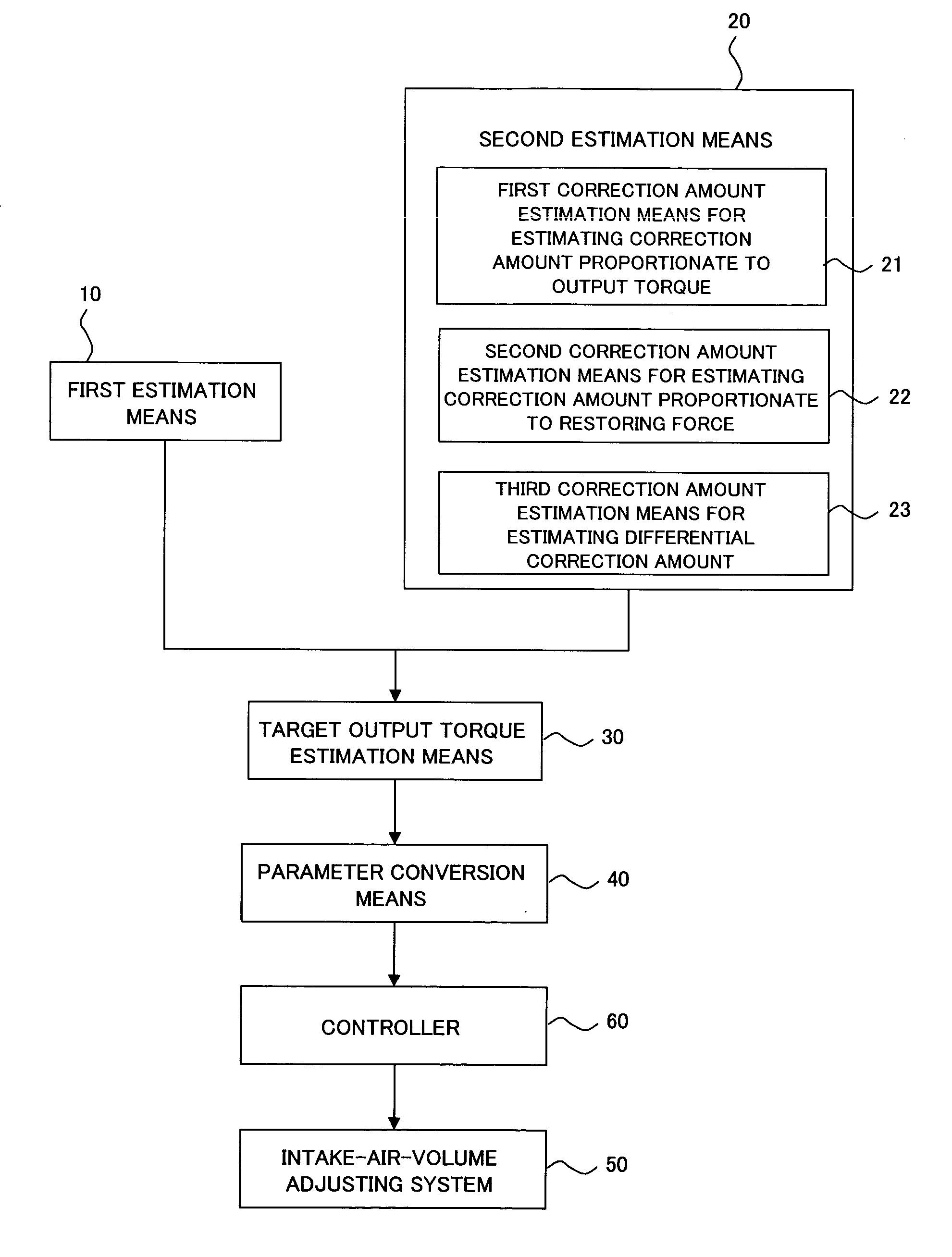
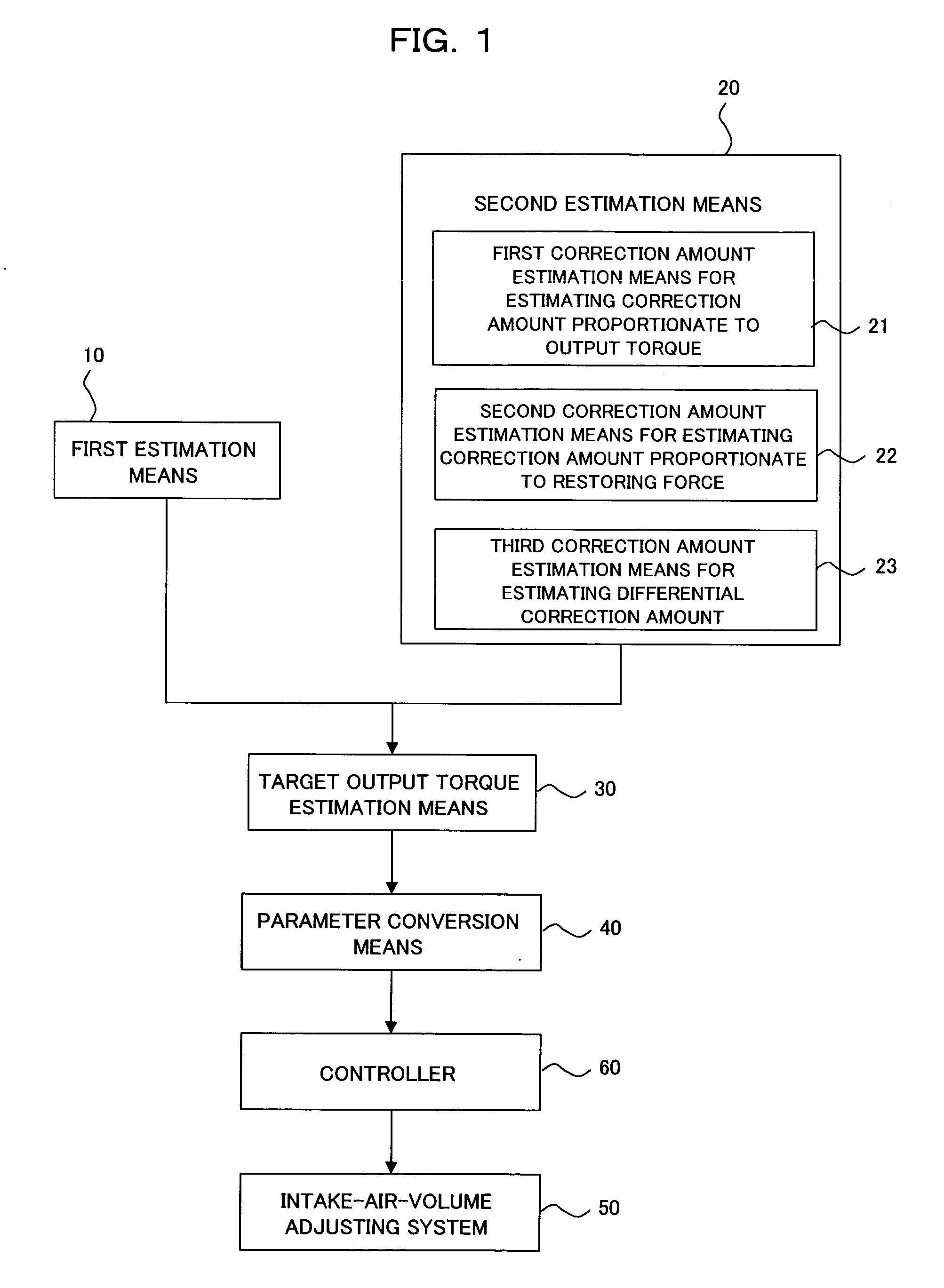
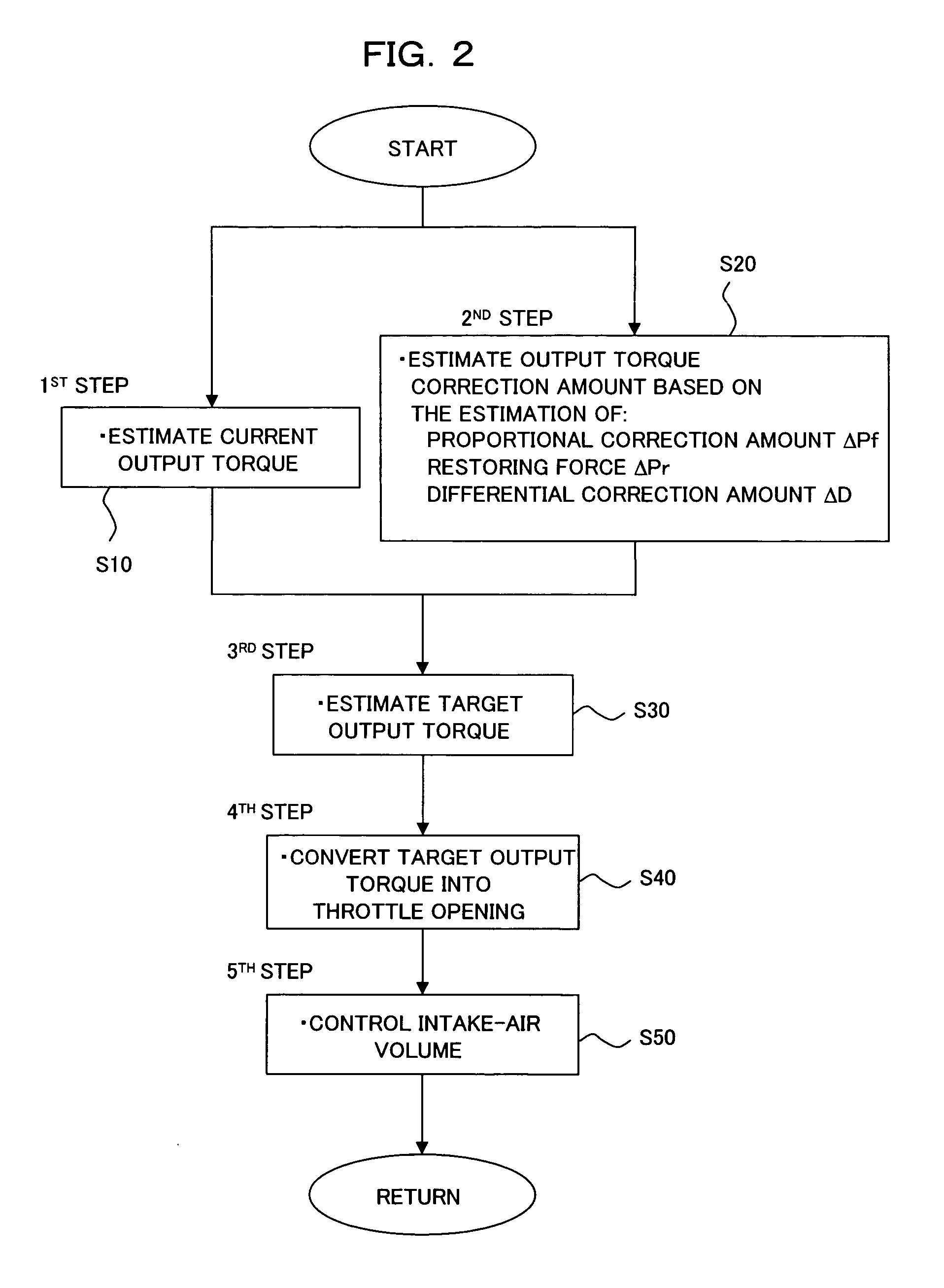
- A device and method that estimate a current output torque correlation value and output torque correction amount to control the intake-air volume, allowing for precise stabilization of idle speed by adjusting the air volume based on a target output torque correlation value, using a single gain for easier adjustment and adaptation to changing conditions.

Method for controlling a throttle valve operated internal combustion engine in the idling range
PatentInactiveEP0494337A2
Innovation
- The throttle valve is actuated in the up-regulation direction by an electric motor when the accelerator pedal is raised, with a decreasing opening characteristic of the actuator-side control element, ensuring the accelerator pedal-side actuating element contacts the throttle valve-side actuating element within the control range, allowing continuous adjustment of the throttle flap angle and eliminating control jumps.


Emission Standards Impact on Idle Control Strategies
The evolution of emission standards has fundamentally transformed idle control strategies, creating a paradigm shift from performance-centric to emission-compliant throttle valve tuning approaches. Modern emission regulations, including Euro 6, EPA Tier 3, and China VI standards, have imposed stringent limits on hydrocarbon, carbon monoxide, and nitrogen oxide emissions during idle conditions, forcing engineers to reconsider traditional throttle valve calibration methodologies.
Contemporary idle control strategies now prioritize emission reduction through precise air-fuel mixture management, requiring throttle valve positioning systems to maintain optimal combustion conditions while minimizing pollutant formation. This has led to the development of sophisticated electronic throttle control systems that can make micro-adjustments to valve position based on real-time emission feedback from oxygen sensors and catalytic converter monitoring systems.
The implementation of cold-start emission requirements has particularly influenced throttle valve tuning strategies, as engines must achieve stable idle while rapidly warming catalytic converters to operational temperatures. This necessitates dynamic throttle positioning algorithms that can balance airflow requirements for combustion stability with the need to maintain optimal exhaust temperatures for emission control system effectiveness.
Advanced emission standards have also driven the integration of idle control strategies with exhaust gas recirculation systems and variable valve timing mechanisms. Throttle valve tuning must now coordinate with these systems to achieve emission targets while maintaining idle stability, requiring more complex control algorithms that consider multiple variables simultaneously.
The trend toward real-world driving emission testing has further emphasized the importance of robust idle control strategies that perform consistently across varying environmental conditions and fuel qualities. This has resulted in adaptive throttle valve tuning systems that can learn and adjust to different operating scenarios while maintaining compliance with emission standards throughout the vehicle's operational life.
Contemporary idle control strategies now prioritize emission reduction through precise air-fuel mixture management, requiring throttle valve positioning systems to maintain optimal combustion conditions while minimizing pollutant formation. This has led to the development of sophisticated electronic throttle control systems that can make micro-adjustments to valve position based on real-time emission feedback from oxygen sensors and catalytic converter monitoring systems.
The implementation of cold-start emission requirements has particularly influenced throttle valve tuning strategies, as engines must achieve stable idle while rapidly warming catalytic converters to operational temperatures. This necessitates dynamic throttle positioning algorithms that can balance airflow requirements for combustion stability with the need to maintain optimal exhaust temperatures for emission control system effectiveness.
Advanced emission standards have also driven the integration of idle control strategies with exhaust gas recirculation systems and variable valve timing mechanisms. Throttle valve tuning must now coordinate with these systems to achieve emission targets while maintaining idle stability, requiring more complex control algorithms that consider multiple variables simultaneously.
The trend toward real-world driving emission testing has further emphasized the importance of robust idle control strategies that perform consistently across varying environmental conditions and fuel qualities. This has resulted in adaptive throttle valve tuning systems that can learn and adjust to different operating scenarios while maintaining compliance with emission standards throughout the vehicle's operational life.
AI-Driven Predictive Throttle Control Systems
The integration of artificial intelligence into throttle control systems represents a paradigm shift from traditional mechanical and electronic control methods to predictive, adaptive management of engine idle stability. AI-driven predictive throttle control systems leverage machine learning algorithms, real-time sensor data, and historical performance patterns to anticipate and preemptively adjust throttle valve positioning before idle instability occurs.
Modern AI-based throttle control architectures employ neural networks trained on extensive datasets encompassing various engine operating conditions, environmental factors, and load variations. These systems continuously monitor multiple parameters including manifold absolute pressure, intake air temperature, engine coolant temperature, and crankshaft position to predict optimal throttle valve angles. The predictive capability enables the system to compensate for disturbances before they manifest as idle speed fluctuations or engine roughness.
Advanced machine learning models, particularly recurrent neural networks and long short-term memory networks, excel at processing sequential sensor data to identify patterns that precede idle instability events. These algorithms can detect subtle correlations between throttle valve positioning and subsequent engine behavior that traditional control systems might miss. The predictive models continuously refine their accuracy through reinforcement learning, adapting to individual engine characteristics and aging effects.
Real-time implementation of AI-driven throttle control requires sophisticated edge computing capabilities integrated directly into engine control units. These systems must process complex algorithms within millisecond timeframes while maintaining fail-safe operation modes. The AI controllers incorporate uncertainty quantification methods to assess prediction confidence levels and seamlessly transition to conventional control strategies when prediction reliability falls below acceptable thresholds.
The most promising AI-driven systems combine model-based predictive control with deep learning approaches, creating hybrid architectures that maintain physical understanding of engine dynamics while leveraging data-driven insights. These systems demonstrate superior performance in managing idle stability across diverse operating conditions, reducing fuel consumption, and minimizing emissions compared to conventional throttle control methods.
Modern AI-based throttle control architectures employ neural networks trained on extensive datasets encompassing various engine operating conditions, environmental factors, and load variations. These systems continuously monitor multiple parameters including manifold absolute pressure, intake air temperature, engine coolant temperature, and crankshaft position to predict optimal throttle valve angles. The predictive capability enables the system to compensate for disturbances before they manifest as idle speed fluctuations or engine roughness.
Advanced machine learning models, particularly recurrent neural networks and long short-term memory networks, excel at processing sequential sensor data to identify patterns that precede idle instability events. These algorithms can detect subtle correlations between throttle valve positioning and subsequent engine behavior that traditional control systems might miss. The predictive models continuously refine their accuracy through reinforcement learning, adapting to individual engine characteristics and aging effects.
Real-time implementation of AI-driven throttle control requires sophisticated edge computing capabilities integrated directly into engine control units. These systems must process complex algorithms within millisecond timeframes while maintaining fail-safe operation modes. The AI controllers incorporate uncertainty quantification methods to assess prediction confidence levels and seamlessly transition to conventional control strategies when prediction reliability falls below acceptable thresholds.
The most promising AI-driven systems combine model-based predictive control with deep learning approaches, creating hybrid architectures that maintain physical understanding of engine dynamics while leveraging data-driven insights. These systems demonstrate superior performance in managing idle stability across diverse operating conditions, reducing fuel consumption, and minimizing emissions compared to conventional throttle control methods.
Unlock deeper insights with PatSnap Eureka Quick Research — get a full tech report to explore trends and direct your research. Try now!
Generate Your Research Report Instantly with AI Agent
Supercharge your innovation with PatSnap Eureka AI Agent Platform!