

Optimizing Electronic Throttle Valve Algorithms for Real-Time Response
JUN 12, 202610 MIN READ
Generate Your Research Report Instantly with AI Agent
PatSnap Eureka helps you evaluate technical feasibility & market potential.
Electronic Throttle Valve Algorithm Background and Objectives
Electronic throttle valves represent a fundamental shift from traditional mechanical throttle systems to electronically controlled mechanisms that have revolutionized automotive engine management since their widespread adoption in the 1990s. This technology emerged as part of the broader drive-by-wire revolution, replacing direct mechanical linkages between the accelerator pedal and throttle plate with sophisticated electronic control systems. The evolution from cable-actuated throttles to electronic throttle control systems has enabled unprecedented precision in airflow management, forming the cornerstone of modern engine control strategies.
The historical development of electronic throttle valve technology can be traced through several key phases, beginning with early implementations in luxury vehicles and gradually expanding to mainstream automotive applications. Initial systems focused primarily on basic position control, but technological advancement has progressively enhanced capabilities to include predictive algorithms, adaptive learning mechanisms, and integration with comprehensive vehicle dynamics systems. This evolution has been driven by increasingly stringent emissions regulations, fuel economy requirements, and consumer demands for improved vehicle performance and drivability.
Current technological objectives center on achieving millisecond-level response times while maintaining exceptional accuracy and reliability across diverse operating conditions. The primary technical goal involves developing algorithms capable of processing multiple input signals simultaneously, including accelerator pedal position, engine load conditions, transmission state, and environmental factors, to deliver optimal throttle positioning commands. These algorithms must demonstrate robust performance across temperature variations, altitude changes, and component aging scenarios while maintaining consistent response characteristics.
Real-time response optimization represents a critical technical challenge that encompasses multiple algorithmic domains, including signal processing, control theory, and predictive modeling. The target specifications typically require response times under 100 milliseconds from input signal reception to mechanical actuator movement completion, with position accuracy maintained within 0.5% of commanded values. Advanced implementations seek to achieve even more aggressive timing targets while incorporating sophisticated features such as torque-based control strategies and integration with hybrid powertrain management systems.
The strategic importance of optimizing electronic throttle valve algorithms extends beyond immediate performance benefits to encompass broader vehicle system integration objectives. Modern automotive architectures demand seamless coordination between throttle control and systems including automatic transmission management, stability control, cruise control, and emerging autonomous driving technologies. Achieving these integration goals requires algorithmic frameworks capable of supporting multiple concurrent control objectives while maintaining real-time performance standards and ensuring fail-safe operation under all conceivable operating scenarios.
The historical development of electronic throttle valve technology can be traced through several key phases, beginning with early implementations in luxury vehicles and gradually expanding to mainstream automotive applications. Initial systems focused primarily on basic position control, but technological advancement has progressively enhanced capabilities to include predictive algorithms, adaptive learning mechanisms, and integration with comprehensive vehicle dynamics systems. This evolution has been driven by increasingly stringent emissions regulations, fuel economy requirements, and consumer demands for improved vehicle performance and drivability.
Current technological objectives center on achieving millisecond-level response times while maintaining exceptional accuracy and reliability across diverse operating conditions. The primary technical goal involves developing algorithms capable of processing multiple input signals simultaneously, including accelerator pedal position, engine load conditions, transmission state, and environmental factors, to deliver optimal throttle positioning commands. These algorithms must demonstrate robust performance across temperature variations, altitude changes, and component aging scenarios while maintaining consistent response characteristics.
Real-time response optimization represents a critical technical challenge that encompasses multiple algorithmic domains, including signal processing, control theory, and predictive modeling. The target specifications typically require response times under 100 milliseconds from input signal reception to mechanical actuator movement completion, with position accuracy maintained within 0.5% of commanded values. Advanced implementations seek to achieve even more aggressive timing targets while incorporating sophisticated features such as torque-based control strategies and integration with hybrid powertrain management systems.
The strategic importance of optimizing electronic throttle valve algorithms extends beyond immediate performance benefits to encompass broader vehicle system integration objectives. Modern automotive architectures demand seamless coordination between throttle control and systems including automatic transmission management, stability control, cruise control, and emerging autonomous driving technologies. Achieving these integration goals requires algorithmic frameworks capable of supporting multiple concurrent control objectives while maintaining real-time performance standards and ensuring fail-safe operation under all conceivable operating scenarios.
Market Demand for Real-Time Throttle Response Systems
The automotive industry is experiencing unprecedented demand for enhanced throttle response systems driven by evolving consumer expectations and regulatory requirements. Modern drivers increasingly expect instantaneous vehicle response, particularly in performance-oriented applications where millisecond-level throttle adjustments can significantly impact driving experience. This demand extends beyond traditional performance vehicles to encompass mainstream passenger cars, commercial vehicles, and emerging electric vehicle platforms.
Electric and hybrid vehicle manufacturers represent a rapidly expanding market segment requiring sophisticated throttle response optimization. These vehicles demand precise electronic throttle control to coordinate seamlessly with electric motor systems, regenerative braking, and battery management systems. The integration complexity creates substantial market opportunities for advanced throttle valve algorithms capable of real-time adaptation across multiple powertrain configurations.
Advanced driver assistance systems and autonomous vehicle development further amplify market demand for real-time throttle response capabilities. These systems require throttle control algorithms that can execute rapid adjustments based on sensor inputs, traffic conditions, and safety protocols. The growing deployment of adaptive cruise control, collision avoidance systems, and semi-autonomous driving features necessitates throttle systems with enhanced responsiveness and reliability.
Regulatory pressures surrounding emissions control and fuel efficiency standards create additional market drivers for optimized throttle response systems. Manufacturers must balance performance requirements with stringent environmental regulations, demanding sophisticated algorithms that optimize throttle response while maintaining compliance with emissions standards across diverse operating conditions.
The commercial vehicle sector presents substantial market potential, particularly in applications requiring precise speed control such as logistics, construction, and agricultural equipment. Fleet operators increasingly prioritize fuel efficiency and operational precision, driving demand for throttle systems that can adapt to varying load conditions and operational requirements in real-time.
Emerging markets in developing regions show growing appetite for vehicles equipped with advanced throttle control systems as consumer purchasing power increases and infrastructure development accelerates. This geographic expansion represents significant long-term market growth potential for real-time throttle response technologies.
Electric and hybrid vehicle manufacturers represent a rapidly expanding market segment requiring sophisticated throttle response optimization. These vehicles demand precise electronic throttle control to coordinate seamlessly with electric motor systems, regenerative braking, and battery management systems. The integration complexity creates substantial market opportunities for advanced throttle valve algorithms capable of real-time adaptation across multiple powertrain configurations.
Advanced driver assistance systems and autonomous vehicle development further amplify market demand for real-time throttle response capabilities. These systems require throttle control algorithms that can execute rapid adjustments based on sensor inputs, traffic conditions, and safety protocols. The growing deployment of adaptive cruise control, collision avoidance systems, and semi-autonomous driving features necessitates throttle systems with enhanced responsiveness and reliability.
Regulatory pressures surrounding emissions control and fuel efficiency standards create additional market drivers for optimized throttle response systems. Manufacturers must balance performance requirements with stringent environmental regulations, demanding sophisticated algorithms that optimize throttle response while maintaining compliance with emissions standards across diverse operating conditions.
The commercial vehicle sector presents substantial market potential, particularly in applications requiring precise speed control such as logistics, construction, and agricultural equipment. Fleet operators increasingly prioritize fuel efficiency and operational precision, driving demand for throttle systems that can adapt to varying load conditions and operational requirements in real-time.
Emerging markets in developing regions show growing appetite for vehicles equipped with advanced throttle control systems as consumer purchasing power increases and infrastructure development accelerates. This geographic expansion represents significant long-term market growth potential for real-time throttle response technologies.
Current State and Challenges of ETV Algorithm Optimization
Electronic Throttle Valve (ETV) algorithm optimization has reached a critical juncture where traditional control methodologies are being challenged by increasingly stringent real-time performance requirements. Current ETV systems predominantly rely on Proportional-Integral-Derivative (PID) controllers enhanced with feedforward compensation and adaptive tuning mechanisms. While these approaches have demonstrated acceptable performance in conventional automotive applications, they exhibit limitations in achieving the microsecond-level response times demanded by modern powertrain systems.
The automotive industry has witnessed significant advancement in ETV control algorithms over the past decade, with major manufacturers implementing sophisticated model predictive control (MPC) and sliding mode control strategies. However, computational complexity remains a primary constraint, as these advanced algorithms often require processing capabilities that exceed the limitations of current automotive-grade Electronic Control Units (ECUs). The trade-off between algorithm sophistication and real-time execution capability continues to pose fundamental challenges for system designers.
Geographically, ETV algorithm development shows distinct regional characteristics. European manufacturers have focused heavily on emissions compliance and fuel efficiency optimization, leading to algorithms that prioritize precision over speed. Asian automotive companies, particularly those in Japan and South Korea, have emphasized rapid throttle response for performance applications. North American developments have concentrated on robust control strategies capable of handling diverse operating conditions and fuel qualities.
Current technical challenges encompass several critical areas that significantly impact real-time performance optimization. Sensor noise and measurement delays introduce uncertainties that traditional filtering approaches cannot adequately address without compromising response speed. The inherent nonlinearities in throttle valve dynamics, including friction characteristics and airflow turbulence effects, create modeling difficulties that limit the effectiveness of linear control strategies.
Hardware limitations present another substantial obstacle to algorithm optimization. Existing automotive ECUs typically operate with 16-bit or 32-bit processors running at relatively modest clock speeds to maintain cost-effectiveness and power consumption requirements. These constraints force algorithm designers to implement simplified control laws that may not fully exploit the theoretical potential for response time improvement.
Communication latency within Controller Area Network (CAN) bus systems introduces additional delays that compound the real-time response challenges. The periodic nature of CAN message transmission creates timing uncertainties that must be accommodated within the control algorithm design, often resulting in conservative tuning parameters that sacrifice optimal performance for system stability.
Environmental factors further complicate ETV algorithm optimization efforts. Temperature variations affect both electronic component performance and mechanical throttle valve characteristics, requiring adaptive algorithms capable of maintaining consistent response times across operating temperature ranges. Altitude changes and varying atmospheric conditions introduce additional variables that must be compensated within real-time constraints.
The integration of ETV systems with hybrid and electric powertrains has introduced new complexity layers that existing algorithms struggle to address efficiently. Coordination between electric motor torque delivery and throttle valve positioning requires sophisticated synchronization strategies that current control architectures cannot reliably execute within required timeframes.
The automotive industry has witnessed significant advancement in ETV control algorithms over the past decade, with major manufacturers implementing sophisticated model predictive control (MPC) and sliding mode control strategies. However, computational complexity remains a primary constraint, as these advanced algorithms often require processing capabilities that exceed the limitations of current automotive-grade Electronic Control Units (ECUs). The trade-off between algorithm sophistication and real-time execution capability continues to pose fundamental challenges for system designers.
Geographically, ETV algorithm development shows distinct regional characteristics. European manufacturers have focused heavily on emissions compliance and fuel efficiency optimization, leading to algorithms that prioritize precision over speed. Asian automotive companies, particularly those in Japan and South Korea, have emphasized rapid throttle response for performance applications. North American developments have concentrated on robust control strategies capable of handling diverse operating conditions and fuel qualities.
Current technical challenges encompass several critical areas that significantly impact real-time performance optimization. Sensor noise and measurement delays introduce uncertainties that traditional filtering approaches cannot adequately address without compromising response speed. The inherent nonlinearities in throttle valve dynamics, including friction characteristics and airflow turbulence effects, create modeling difficulties that limit the effectiveness of linear control strategies.
Hardware limitations present another substantial obstacle to algorithm optimization. Existing automotive ECUs typically operate with 16-bit or 32-bit processors running at relatively modest clock speeds to maintain cost-effectiveness and power consumption requirements. These constraints force algorithm designers to implement simplified control laws that may not fully exploit the theoretical potential for response time improvement.
Communication latency within Controller Area Network (CAN) bus systems introduces additional delays that compound the real-time response challenges. The periodic nature of CAN message transmission creates timing uncertainties that must be accommodated within the control algorithm design, often resulting in conservative tuning parameters that sacrifice optimal performance for system stability.
Environmental factors further complicate ETV algorithm optimization efforts. Temperature variations affect both electronic component performance and mechanical throttle valve characteristics, requiring adaptive algorithms capable of maintaining consistent response times across operating temperature ranges. Altitude changes and varying atmospheric conditions introduce additional variables that must be compensated within real-time constraints.
The integration of ETV systems with hybrid and electric powertrains has introduced new complexity layers that existing algorithms struggle to address efficiently. Coordination between electric motor torque delivery and throttle valve positioning requires sophisticated synchronization strategies that current control architectures cannot reliably execute within required timeframes.
Existing Real-Time Throttle Algorithm Solutions
01 Real-time control algorithms for electronic throttle positioning
Advanced control algorithms are implemented to ensure precise and real-time positioning of electronic throttle valves. These algorithms utilize feedback control systems to continuously monitor throttle position and adjust actuator commands to achieve desired throttle opening angles with minimal delay. The control systems incorporate predictive modeling and adaptive control strategies to compensate for system dynamics and environmental variations.- Real-time control algorithms for electronic throttle positioning: Advanced control algorithms are implemented to ensure precise and real-time positioning of electronic throttle valves. These algorithms utilize feedback control systems to continuously monitor throttle position and adjust actuator commands to achieve desired throttle opening angles with minimal delay and high accuracy.
- Sensor feedback integration for throttle response optimization: Integration of multiple sensor inputs including throttle position sensors, accelerator pedal position sensors, and engine load sensors to optimize throttle response. The system processes sensor data in real-time to determine optimal throttle valve positioning and ensure smooth engine operation under various driving conditions.
- Adaptive learning algorithms for throttle calibration: Self-learning algorithms that adapt to engine characteristics and driving patterns over time. These systems continuously calibrate throttle response parameters based on operational history, environmental conditions, and performance metrics to maintain optimal throttle valve operation throughout the vehicle's lifecycle.
- Fault detection and diagnostic algorithms: Comprehensive diagnostic systems that monitor throttle valve performance and detect potential faults or malfunctions in real-time. These algorithms analyze system parameters, identify anomalies, and implement appropriate corrective actions or safe-mode operations to ensure continued vehicle operation and safety.
- Electronic throttle actuator control mechanisms: Precise control of electronic actuators that physically operate the throttle valve mechanism. These systems employ sophisticated motor control algorithms, pulse-width modulation techniques, and position feedback loops to ensure accurate and responsive throttle valve movement with minimal mechanical wear and optimal energy efficiency.
02 Sensor integration and signal processing for throttle response
Multiple sensor systems are integrated to provide comprehensive feedback for throttle valve control. These include position sensors, airflow sensors, and pressure sensors that work together to deliver accurate real-time data. Signal processing algorithms filter and interpret sensor data to eliminate noise and provide reliable input for control decisions, ensuring optimal throttle response characteristics.Expand Specific Solutions03 Adaptive learning and calibration systems
Self-learning algorithms continuously adapt to changing operating conditions and component aging effects. These systems automatically calibrate throttle response parameters based on historical performance data and real-time operating conditions. The adaptive mechanisms ensure consistent performance over the vehicle's lifetime while compensating for manufacturing tolerances and wear patterns.Expand Specific Solutions04 Fault detection and diagnostic algorithms
Comprehensive diagnostic systems monitor throttle valve operation and detect potential faults or performance degradation. These algorithms analyze system behavior patterns, sensor readings, and response characteristics to identify anomalies. When faults are detected, the system can implement failsafe modes or alternative control strategies to maintain safe operation while alerting the operator to maintenance needs.Expand Specific Solutions05 Communication protocols and system integration
Electronic throttle systems utilize standardized communication protocols to interface with engine management systems and vehicle networks. These protocols ensure reliable data exchange between throttle control units and other vehicle systems, enabling coordinated operation and system-wide optimization. The integration allows for advanced features such as cruise control, traction control, and emissions management through coordinated throttle control.Expand Specific Solutions
Key Players in ETV and Engine Control System Industry
The electronic throttle valve algorithm optimization market represents a mature automotive technology sector experiencing significant evolution driven by electrification and autonomous vehicle demands. Major automotive OEMs including Toyota, Honda, BMW, and Audi are advancing sophisticated control systems, while tier-1 suppliers like Bosch, DENSO, Continental, and ZF Friedrichshafen lead technological innovation with advanced electronic control units and sensor integration. The technology has reached high maturity levels, with established players like Mitsubishi Electric and Astemo delivering production-ready solutions featuring real-time response capabilities. Academic institutions such as Southeast University contribute fundamental research, while specialized companies like Nanjing Aolian focus on power control components. The competitive landscape shows consolidation around proven technologies, with emphasis shifting toward AI-enhanced algorithms, predictive control systems, and integration with hybrid/electric powertrains, indicating a transitioning market from traditional mechanical systems to intelligent electronic solutions.
Robert Bosch GmbH
Technical Solution: Bosch has developed advanced electronic throttle control (ETC) systems utilizing model predictive control algorithms combined with adaptive feedback mechanisms. Their solution employs real-time sensor fusion from throttle position sensors, accelerator pedal position sensors, and engine management systems to achieve response times under 50 milliseconds. The system incorporates machine learning algorithms that adapt to driving patterns and environmental conditions, optimizing throttle response while maintaining fuel efficiency. Bosch's ETC technology features fail-safe mechanisms with redundant sensor systems and limp-home modes to ensure safety. Their latest generation systems integrate with hybrid and electric powertrains, providing seamless torque management across different propulsion modes.
Strengths: Industry-leading response times, robust safety systems, extensive automotive integration experience. Weaknesses: High complexity may increase manufacturing costs, requires sophisticated calibration procedures.
Toyota Motor Corp.
Technical Solution: Toyota has developed a proprietary electronic throttle control system that emphasizes reliability and fuel efficiency optimization. Their approach utilizes a hybrid control strategy combining traditional PID control with fuzzy logic algorithms to handle non-linear throttle dynamics. The system operates with a 10ms control loop, incorporating predictive algorithms that analyze accelerator pedal input patterns to anticipate required throttle positions. Toyota's ETC system features extensive fault detection and isolation capabilities, with multiple redundancy levels to ensure safe operation under all conditions. The technology integrates closely with Toyota's Hybrid Synergy Drive systems, coordinating throttle control with electric motor assistance to optimize overall powertrain efficiency. Their latest implementations include machine learning capabilities that adapt to individual driving styles and environmental conditions.
Strengths: Proven reliability, excellent fuel efficiency optimization, strong hybrid system integration. Weaknesses: Conservative approach may limit performance in high-performance applications, slower adoption of cutting-edge technologies.
Core Innovations in ETV Response Optimization Patents
Systems and methods for controlling an electronic throttle valve
PatentActiveUS10054062B1
Innovation
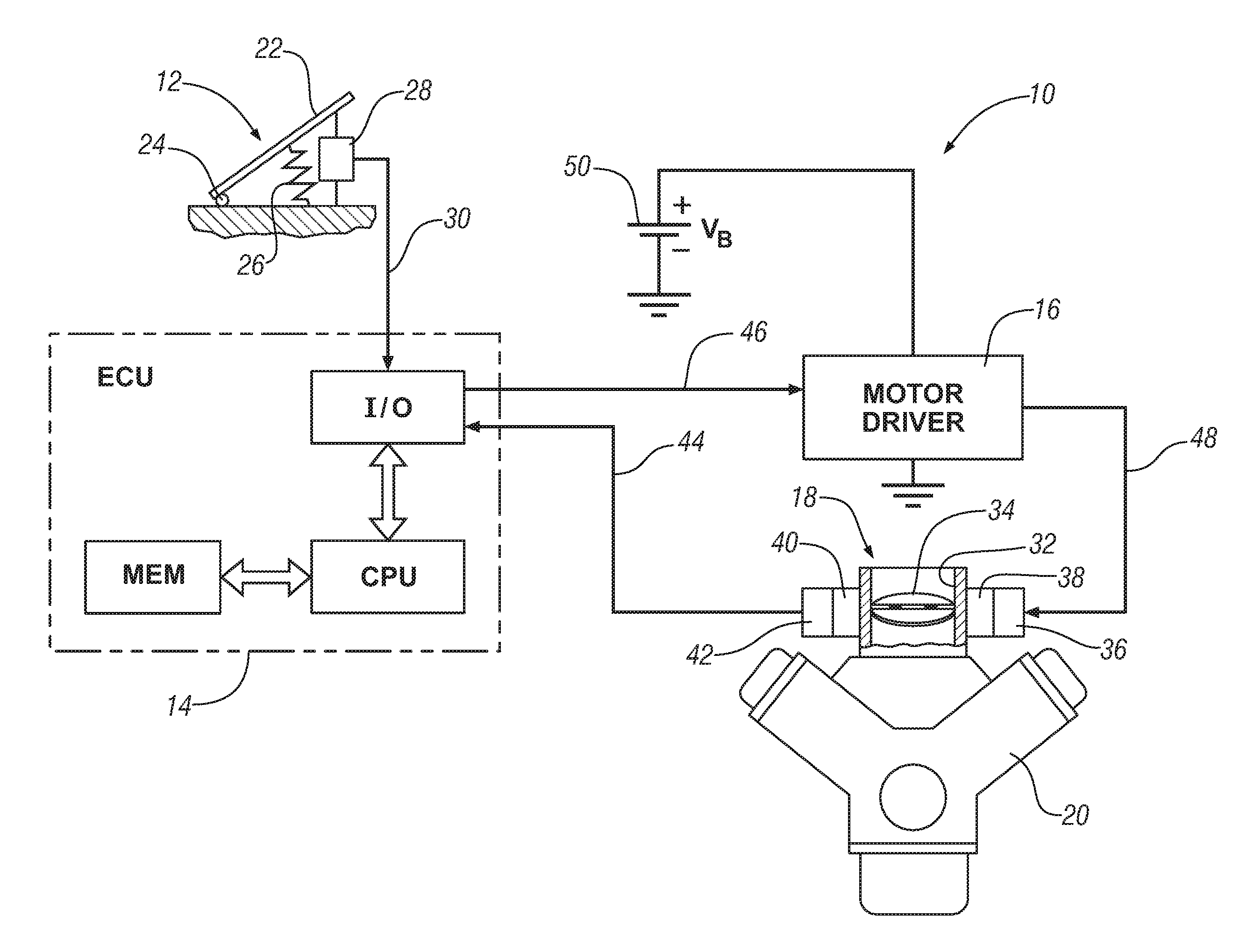
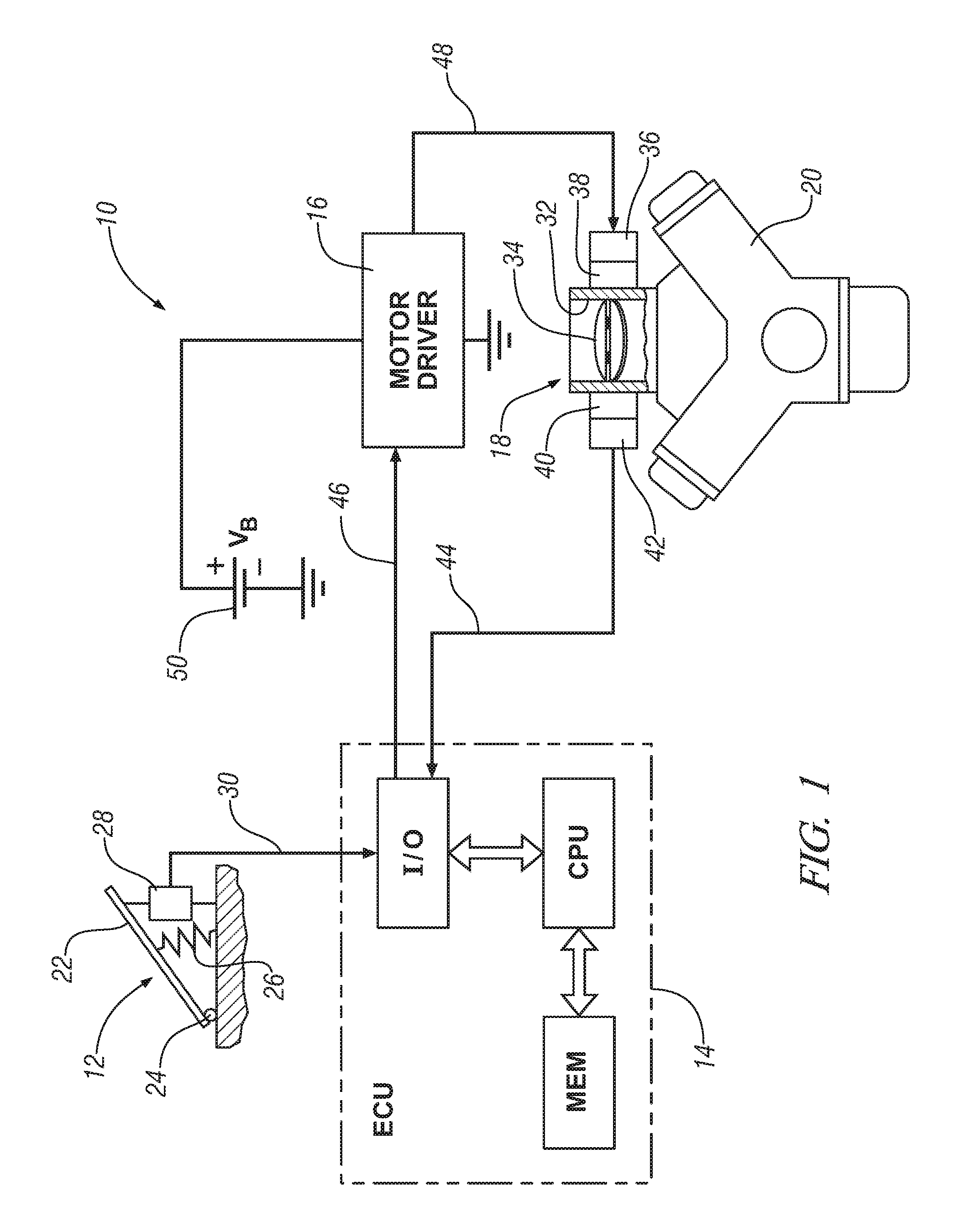
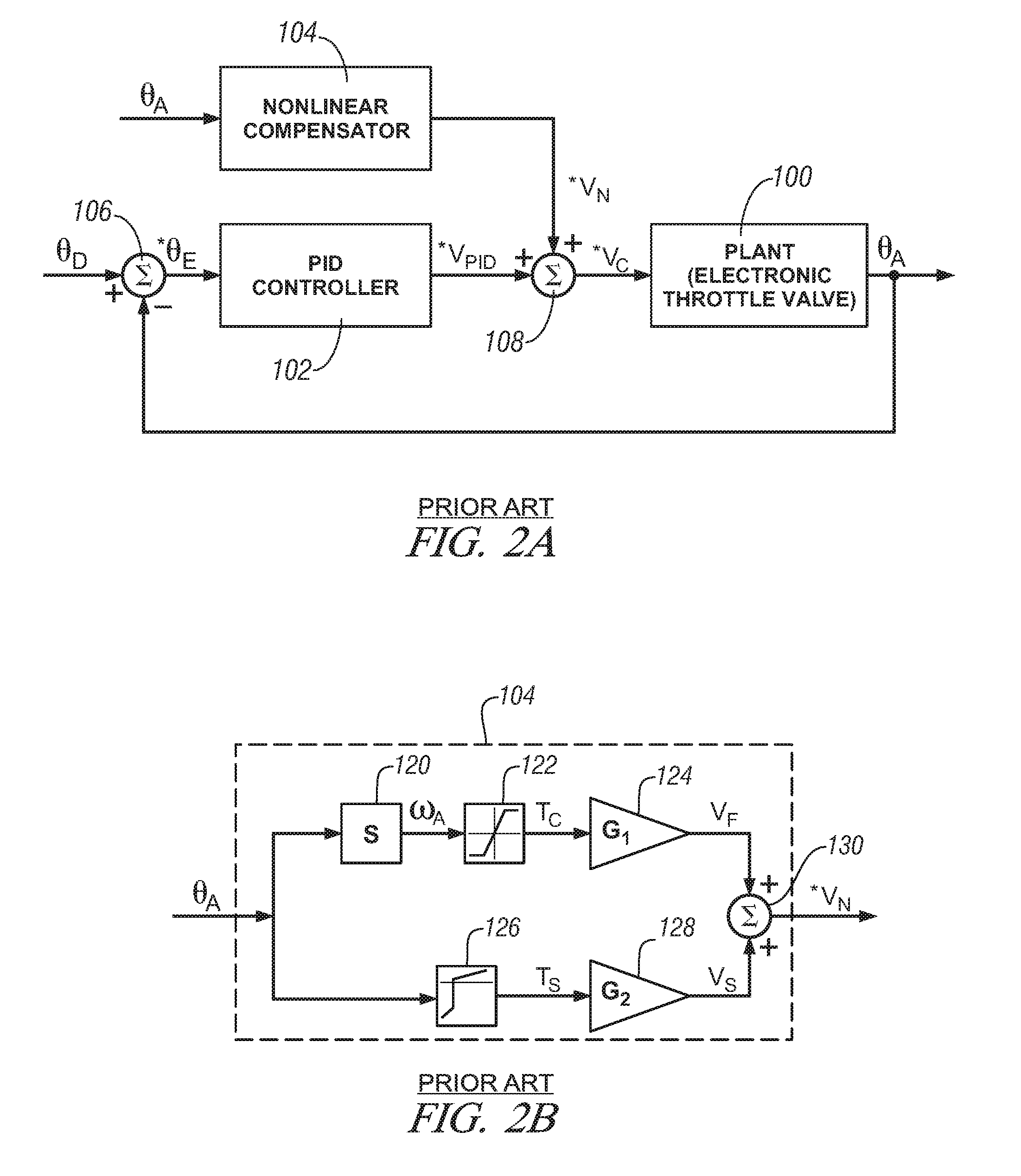
- A method and system that utilize feed forward signals to actuate the throttle valve, combining a velocity feed forward signal based on position change rate and a position feed forward signal based on comparison to the limp home position, along with feedback control, to overcome backlash and spring force variations, ensuring precise throttle valve positioning.


Method and system for controlling a valve device
PatentInactiveUS20080237517A1
Innovation
- A method that combines feedforward and feedback control signals, using a simulated position and velocity model to generate an actuator control signal that adjusts voltage to follow a maximum deceleration trajectory, allowing for more efficient use of the available actuator control voltage and compensating for opposing forces like spring biasing and friction.

Automotive Safety Standards for Electronic Throttle Systems
Electronic throttle systems in automotive applications must comply with stringent safety standards to ensure reliable operation and prevent potential hazards. The ISO 26262 functional safety standard serves as the primary framework for electronic throttle valve systems, requiring comprehensive hazard analysis and risk assessment throughout the development lifecycle. This standard mandates that electronic throttle systems achieve specific Automotive Safety Integrity Levels (ASIL), typically ASIL-C or ASIL-D, depending on the severity of potential failures and their impact on vehicle safety.
The Federal Motor Vehicle Safety Standards (FMVSS) in the United States and corresponding European regulations establish mandatory requirements for throttle system performance and fail-safe mechanisms. These regulations specify that electronic throttle systems must incorporate redundant position sensors, independent monitoring circuits, and predetermined failure response protocols. The standards require that any single-point failure in the throttle system must not result in unintended acceleration or complete loss of throttle control.
Compliance with SAE J2807 and SAE J1939 standards ensures proper communication protocols between the electronic throttle valve and engine control units. These standards define the acceptable response times, signal integrity requirements, and diagnostic capabilities necessary for real-time throttle control optimization. The specifications mandate maximum latency thresholds of 10-20 milliseconds for throttle position commands to maintain precise engine response characteristics.
International automotive safety standards also emphasize the implementation of limp-home modes and graceful degradation strategies when throttle system anomalies are detected. The standards require comprehensive self-diagnostic capabilities, including continuous monitoring of sensor signals, actuator performance, and communication integrity. These safety protocols must be validated through extensive testing procedures, including hardware-in-the-loop simulations and real-world validation scenarios.
Modern safety standards increasingly focus on cybersecurity aspects of electronic throttle systems, addressing potential vulnerabilities in controller area network communications and over-the-air update mechanisms. Compliance frameworks now incorporate requirements for secure boot processes, encrypted communications, and intrusion detection capabilities to protect against malicious interference with throttle control algorithms.
The Federal Motor Vehicle Safety Standards (FMVSS) in the United States and corresponding European regulations establish mandatory requirements for throttle system performance and fail-safe mechanisms. These regulations specify that electronic throttle systems must incorporate redundant position sensors, independent monitoring circuits, and predetermined failure response protocols. The standards require that any single-point failure in the throttle system must not result in unintended acceleration or complete loss of throttle control.
Compliance with SAE J2807 and SAE J1939 standards ensures proper communication protocols between the electronic throttle valve and engine control units. These standards define the acceptable response times, signal integrity requirements, and diagnostic capabilities necessary for real-time throttle control optimization. The specifications mandate maximum latency thresholds of 10-20 milliseconds for throttle position commands to maintain precise engine response characteristics.
International automotive safety standards also emphasize the implementation of limp-home modes and graceful degradation strategies when throttle system anomalies are detected. The standards require comprehensive self-diagnostic capabilities, including continuous monitoring of sensor signals, actuator performance, and communication integrity. These safety protocols must be validated through extensive testing procedures, including hardware-in-the-loop simulations and real-world validation scenarios.
Modern safety standards increasingly focus on cybersecurity aspects of electronic throttle systems, addressing potential vulnerabilities in controller area network communications and over-the-air update mechanisms. Compliance frameworks now incorporate requirements for secure boot processes, encrypted communications, and intrusion detection capabilities to protect against malicious interference with throttle control algorithms.
Environmental Impact of Optimized Throttle Control Systems
Optimized electronic throttle valve algorithms represent a significant advancement in automotive environmental sustainability, delivering measurable reductions in harmful emissions through enhanced precision control. Real-time response optimization enables more accurate air-fuel mixture management, resulting in decreased carbon monoxide, nitrogen oxides, and unburned hydrocarbon emissions. Advanced algorithms can achieve up to 15-20% reduction in particulate matter emissions compared to conventional throttle control systems, particularly during transient operating conditions where traditional systems struggle with response delays.
The implementation of optimized throttle control directly contributes to improved fuel economy, with studies indicating potential fuel consumption reductions of 8-12% in urban driving conditions. This improvement stems from the algorithm's ability to minimize throttle overshoot and undershoot scenarios, maintaining optimal engine load conditions more consistently. Enhanced real-time response characteristics eliminate unnecessary fuel enrichment periods that typically occur during rapid throttle transitions, thereby reducing overall carbon dioxide emissions per kilometer traveled.
Lifecycle environmental benefits extend beyond operational improvements to encompass reduced manufacturing environmental impact through enhanced component longevity. Optimized algorithms reduce mechanical stress on throttle valve components through smoother actuation profiles, extending service life by approximately 25-30% and consequently decreasing replacement part manufacturing requirements. This reduction in component turnover translates to lower material consumption and reduced industrial waste generation throughout the vehicle's operational lifetime.
Integration with hybrid and electric vehicle systems amplifies environmental benefits through improved energy recovery efficiency. Optimized throttle algorithms enhance regenerative braking coordination by providing more precise engine braking control, increasing energy recovery rates by 5-8% during deceleration phases. This improvement is particularly significant in stop-and-go traffic conditions where frequent throttle modulation occurs.
The broader environmental impact includes reduced urban air quality degradation through decreased emissions during critical low-speed operations. Optimized real-time response algorithms minimize the emission spikes typically associated with aggressive acceleration events, contributing to improved air quality in densely populated areas where vehicle emissions have the most significant public health implications.
The implementation of optimized throttle control directly contributes to improved fuel economy, with studies indicating potential fuel consumption reductions of 8-12% in urban driving conditions. This improvement stems from the algorithm's ability to minimize throttle overshoot and undershoot scenarios, maintaining optimal engine load conditions more consistently. Enhanced real-time response characteristics eliminate unnecessary fuel enrichment periods that typically occur during rapid throttle transitions, thereby reducing overall carbon dioxide emissions per kilometer traveled.
Lifecycle environmental benefits extend beyond operational improvements to encompass reduced manufacturing environmental impact through enhanced component longevity. Optimized algorithms reduce mechanical stress on throttle valve components through smoother actuation profiles, extending service life by approximately 25-30% and consequently decreasing replacement part manufacturing requirements. This reduction in component turnover translates to lower material consumption and reduced industrial waste generation throughout the vehicle's operational lifetime.
Integration with hybrid and electric vehicle systems amplifies environmental benefits through improved energy recovery efficiency. Optimized throttle algorithms enhance regenerative braking coordination by providing more precise engine braking control, increasing energy recovery rates by 5-8% during deceleration phases. This improvement is particularly significant in stop-and-go traffic conditions where frequent throttle modulation occurs.
The broader environmental impact includes reduced urban air quality degradation through decreased emissions during critical low-speed operations. Optimized real-time response algorithms minimize the emission spikes typically associated with aggressive acceleration events, contributing to improved air quality in densely populated areas where vehicle emissions have the most significant public health implications.
Unlock deeper insights with PatSnap Eureka Quick Research — get a full tech report to explore trends and direct your research. Try now!
Generate Your Research Report Instantly with AI Agent
Supercharge your innovation with PatSnap Eureka AI Agent Platform!