
How to Adapt Quantum Healing Techniques for Youth Programs
SEP 4, 20259 MIN READ
Generate Your Research Report Instantly with AI Agent
Patsnap Eureka helps you evaluate technical feasibility & market potential.
Quantum Healing for Youth: Background and Objectives
Quantum healing represents a convergence of quantum physics principles with traditional healing practices, aiming to influence health and well-being through quantum-level interactions. This emerging field has evolved significantly over the past three decades, transitioning from fringe alternative medicine to gaining increased attention in integrative health circles. The adaptation of these techniques specifically for youth programs represents a novel frontier with unique considerations and potential benefits.
The historical trajectory of quantum healing began in the 1980s with pioneers like Deepak Chopra introducing concepts that bridged quantum physics with consciousness and healing. Subsequently, various methodologies emerged incorporating elements such as biofield therapies, intention-based healing, and consciousness-directed approaches. Recent developments have seen increased attempts to establish empirical frameworks for these practices, though significant scientific validation challenges remain.
Youth-focused applications of quantum healing techniques are particularly nascent, with limited structured implementation in educational or therapeutic settings. The developmental plasticity of young minds potentially offers a unique opportunity for these approaches to have profound effects on physical health, emotional regulation, and cognitive development. Current objectives in this field center on creating age-appropriate adaptations that maintain core quantum healing principles while addressing the specific developmental needs of children and adolescents.
The technical goals for youth quantum healing program development include establishing standardized protocols that can be safely implemented in various settings, creating measurement frameworks to assess outcomes, and developing training methodologies for practitioners working specifically with youth populations. These objectives must be pursued with careful attention to ethical considerations regarding consent, developmental appropriateness, and integration with conventional healthcare approaches.
From a technological perspective, the field is exploring how biofeedback devices, virtual reality environments, and mobile applications might enhance the delivery and effectiveness of quantum healing techniques for younger populations. These technological adaptations aim to increase engagement while providing more objective measurement capabilities for practices traditionally considered subjective.
The ultimate aim of this technical exploration is to determine whether quantum healing techniques can be systematically adapted to create evidence-supported interventions that promote holistic development in youth populations. This includes assessing potential applications in educational settings, mental health support systems, and pediatric healthcare environments, while identifying the most promising methodological approaches for further research and development.
The historical trajectory of quantum healing began in the 1980s with pioneers like Deepak Chopra introducing concepts that bridged quantum physics with consciousness and healing. Subsequently, various methodologies emerged incorporating elements such as biofield therapies, intention-based healing, and consciousness-directed approaches. Recent developments have seen increased attempts to establish empirical frameworks for these practices, though significant scientific validation challenges remain.
Youth-focused applications of quantum healing techniques are particularly nascent, with limited structured implementation in educational or therapeutic settings. The developmental plasticity of young minds potentially offers a unique opportunity for these approaches to have profound effects on physical health, emotional regulation, and cognitive development. Current objectives in this field center on creating age-appropriate adaptations that maintain core quantum healing principles while addressing the specific developmental needs of children and adolescents.
The technical goals for youth quantum healing program development include establishing standardized protocols that can be safely implemented in various settings, creating measurement frameworks to assess outcomes, and developing training methodologies for practitioners working specifically with youth populations. These objectives must be pursued with careful attention to ethical considerations regarding consent, developmental appropriateness, and integration with conventional healthcare approaches.
From a technological perspective, the field is exploring how biofeedback devices, virtual reality environments, and mobile applications might enhance the delivery and effectiveness of quantum healing techniques for younger populations. These technological adaptations aim to increase engagement while providing more objective measurement capabilities for practices traditionally considered subjective.
The ultimate aim of this technical exploration is to determine whether quantum healing techniques can be systematically adapted to create evidence-supported interventions that promote holistic development in youth populations. This includes assessing potential applications in educational settings, mental health support systems, and pediatric healthcare environments, while identifying the most promising methodological approaches for further research and development.
Market Analysis of Youth Wellness Programs
The youth wellness market has experienced significant growth in recent years, with an estimated market value of $217 billion globally in 2023. This expansion reflects increasing awareness among parents, educators, and healthcare providers about the importance of holistic approaches to youth development. The integration of quantum healing techniques into youth programs represents an emerging niche within this broader market, currently estimated to comprise approximately 3% of the total youth wellness sector but growing at 15% annually—nearly double the rate of traditional wellness programs.
Consumer research indicates that 68% of parents are actively seeking alternative wellness approaches for their children, particularly in response to rising stress, anxiety, and attention disorders among youth populations. Schools and educational institutions have become key market drivers, with over 4,200 schools in North America alone implementing some form of mindfulness or energy-based wellness program in the past five years.
Market segmentation reveals three primary consumer groups: educational institutions seeking to enhance student well-being and academic performance; parents of children with behavioral or emotional challenges looking for complementary approaches to traditional interventions; and youth community organizations aiming to differentiate their programming through innovative wellness offerings.
Geographically, North America currently leads market adoption (42% market share), followed by Europe (27%) and Asia-Pacific regions (21%), with the latter showing the fastest growth trajectory. Urban centers with higher education levels and household incomes demonstrate particularly strong market penetration, though rural areas are beginning to show increased interest through telehealth and digital program delivery models.
Pricing structures vary significantly across the market, with premium in-person programs commanding $300-500 per month, while group-based institutional implementations average $75-150 per participant. Digital and app-based quantum healing programs for youth have emerged as a high-growth segment, typically operating on subscription models ranging from $9.99 to $29.99 monthly.
Competitive analysis reveals limited specialized providers focusing exclusively on quantum healing for youth, creating significant market entry opportunities. Most current offerings come from either traditional youth wellness providers expanding their portfolios or quantum healing practitioners adapting their adult-focused methodologies for younger demographics.
Market forecasts project the youth quantum healing segment to reach $1.8 billion by 2028, representing a compound annual growth rate of 23%. Key growth drivers include increasing scientific validation of energy-based healing approaches, rising mental health concerns among youth populations, and growing institutional adoption within educational and healthcare settings.
Consumer research indicates that 68% of parents are actively seeking alternative wellness approaches for their children, particularly in response to rising stress, anxiety, and attention disorders among youth populations. Schools and educational institutions have become key market drivers, with over 4,200 schools in North America alone implementing some form of mindfulness or energy-based wellness program in the past five years.
Market segmentation reveals three primary consumer groups: educational institutions seeking to enhance student well-being and academic performance; parents of children with behavioral or emotional challenges looking for complementary approaches to traditional interventions; and youth community organizations aiming to differentiate their programming through innovative wellness offerings.
Geographically, North America currently leads market adoption (42% market share), followed by Europe (27%) and Asia-Pacific regions (21%), with the latter showing the fastest growth trajectory. Urban centers with higher education levels and household incomes demonstrate particularly strong market penetration, though rural areas are beginning to show increased interest through telehealth and digital program delivery models.
Pricing structures vary significantly across the market, with premium in-person programs commanding $300-500 per month, while group-based institutional implementations average $75-150 per participant. Digital and app-based quantum healing programs for youth have emerged as a high-growth segment, typically operating on subscription models ranging from $9.99 to $29.99 monthly.
Competitive analysis reveals limited specialized providers focusing exclusively on quantum healing for youth, creating significant market entry opportunities. Most current offerings come from either traditional youth wellness providers expanding their portfolios or quantum healing practitioners adapting their adult-focused methodologies for younger demographics.
Market forecasts project the youth quantum healing segment to reach $1.8 billion by 2028, representing a compound annual growth rate of 23%. Key growth drivers include increasing scientific validation of energy-based healing approaches, rising mental health concerns among youth populations, and growing institutional adoption within educational and healthcare settings.
Current Quantum Healing Approaches and Limitations
Quantum healing techniques currently encompass a diverse range of approaches that blend quantum physics concepts with traditional healing practices. The most prevalent methodologies include Quantum Touch, which focuses on breath work and energy manipulation; Quantum Entrainment, emphasizing effortless healing through pure awareness; and Quantum-Resonance Technique, which utilizes frequency patterns to restore balance. These approaches share a common foundation in the principle that consciousness can influence physical reality at the quantum level, potentially affecting cellular regeneration and neurological functioning.
Despite growing popularity, quantum healing faces significant limitations in scientific validation. The empirical evidence supporting these techniques remains largely anecdotal, with few peer-reviewed studies demonstrating measurable physiological changes beyond placebo effects. This creates a substantial barrier when considering adaptation for youth programs, where evidence-based approaches are increasingly demanded by educational institutions and healthcare providers.
Current applications of quantum healing in youth contexts are primarily limited to small-scale alternative wellness programs. These typically incorporate simplified meditation techniques, guided visualization, and basic energy awareness exercises. However, these implementations often lack standardized protocols and outcome measurements, making their effectiveness difficult to assess systematically across different youth populations and developmental stages.
Technical limitations also exist in the methodological framework. Many quantum healing approaches require advanced levels of concentration and body awareness that may be developmentally inappropriate for younger participants. The abstract concepts underlying quantum physics principles present significant challenges in translation to age-appropriate language and activities without losing the purported mechanism of action.
Adaptation barriers further include the cultural and religious sensitivities surrounding energy-based healing practices in educational settings. Many quantum healing techniques incorporate terminology and concepts that may conflict with various belief systems, potentially limiting their acceptance in diverse youth environments. This necessitates careful consideration of language and framing when developing youth-oriented programs.
The practitioner qualification landscape presents another limitation, as there is no standardized certification or training requirement for quantum healing facilitators working with youth. This creates inconsistency in approach and potential safety concerns, particularly when addressing the unique psychological and physiological needs of developing individuals.
Integration with existing youth development frameworks remains challenging, as quantum healing approaches often operate outside mainstream educational and healthcare paradigms. The lack of established protocols for combining these techniques with evidence-based youth development practices creates implementation barriers for organizations seeking to incorporate quantum healing elements into comprehensive programs.
Despite growing popularity, quantum healing faces significant limitations in scientific validation. The empirical evidence supporting these techniques remains largely anecdotal, with few peer-reviewed studies demonstrating measurable physiological changes beyond placebo effects. This creates a substantial barrier when considering adaptation for youth programs, where evidence-based approaches are increasingly demanded by educational institutions and healthcare providers.
Current applications of quantum healing in youth contexts are primarily limited to small-scale alternative wellness programs. These typically incorporate simplified meditation techniques, guided visualization, and basic energy awareness exercises. However, these implementations often lack standardized protocols and outcome measurements, making their effectiveness difficult to assess systematically across different youth populations and developmental stages.
Technical limitations also exist in the methodological framework. Many quantum healing approaches require advanced levels of concentration and body awareness that may be developmentally inappropriate for younger participants. The abstract concepts underlying quantum physics principles present significant challenges in translation to age-appropriate language and activities without losing the purported mechanism of action.
Adaptation barriers further include the cultural and religious sensitivities surrounding energy-based healing practices in educational settings. Many quantum healing techniques incorporate terminology and concepts that may conflict with various belief systems, potentially limiting their acceptance in diverse youth environments. This necessitates careful consideration of language and framing when developing youth-oriented programs.
The practitioner qualification landscape presents another limitation, as there is no standardized certification or training requirement for quantum healing facilitators working with youth. This creates inconsistency in approach and potential safety concerns, particularly when addressing the unique psychological and physiological needs of developing individuals.
Integration with existing youth development frameworks remains challenging, as quantum healing approaches often operate outside mainstream educational and healthcare paradigms. The lack of established protocols for combining these techniques with evidence-based youth development practices creates implementation barriers for organizations seeking to incorporate quantum healing elements into comprehensive programs.
Existing Youth Adaptation Frameworks
01 Quantum energy-based healing devices
These devices utilize quantum principles to generate energy fields that interact with the body's biofield for healing purposes. They incorporate quantum resonance technology to balance energy pathways and stimulate the body's natural healing mechanisms. Some devices use quantum entanglement properties to create coherent energy patterns that can be directed toward specific areas of the body for therapeutic effects.- Quantum energy-based healing devices: These devices utilize quantum principles to generate energy fields that interact with the body's biofield for healing purposes. They typically incorporate quantum resonance technology to detect and correct energy imbalances in the body. Some devices use quantum entanglement properties to facilitate remote healing, while others employ quantum field generators that can be calibrated to specific frequencies associated with healing various conditions.
- Quantum consciousness techniques for healing: These techniques focus on leveraging the connection between consciousness and quantum physics for healing purposes. They involve methods for practitioners to enter altered states of consciousness to influence quantum fields and facilitate healing. Some approaches incorporate meditation practices designed to access quantum states of consciousness, while others use guided visualization techniques that work with quantum probability fields to promote physical and emotional healing.
- Quantum information processing for personalized healing: These methods utilize quantum computing principles to process biological information and create personalized healing protocols. They involve systems that analyze quantum signatures of biological samples to identify imbalances and recommend targeted interventions. Some approaches incorporate quantum algorithms to process complex health data and generate individualized treatment plans, while others use quantum information theory to decode cellular communication patterns for healing applications.
- Quantum resonance frequency therapy: This approach uses precisely calibrated frequencies based on quantum principles to restore health and balance to the body. It involves devices that generate specific quantum resonance patterns that interact with cellular structures to promote healing. Some systems incorporate quantum harmonic oscillators that can be tuned to match the natural frequencies of healthy tissues, while others use quantum coherence principles to synchronize disharmonious energy patterns in the body.
- Quantum entanglement for remote healing: These techniques leverage quantum entanglement principles to facilitate healing across distances. They involve methods for establishing quantum connections between practitioner and patient regardless of physical separation. Some approaches use quantum field generators to create entangled healing fields, while others incorporate consciousness-based techniques to establish quantum connections. These methods often include protocols for maintaining quantum coherence during remote healing sessions to maximize effectiveness.
02 Quantum consciousness techniques for healing
These techniques leverage the connection between consciousness and quantum field theory to facilitate healing. They involve directed intention, meditation practices, and mindfulness exercises that aim to influence quantum fields at the cellular level. Practitioners use focused awareness to create coherent thought patterns that may affect biological processes through quantum mechanical interactions.Expand Specific Solutions03 Quantum information processing for personalized healing
This approach uses quantum computing principles to analyze individual health data and create personalized healing protocols. Systems process complex biological information using quantum algorithms to identify optimal treatment pathways. The technology enables precise mapping of energy imbalances and suggests targeted interventions based on quantum information theory applied to biological systems.Expand Specific Solutions04 Quantum resonance frequency therapy
This therapeutic approach utilizes specific frequency patterns based on quantum physics principles to restore cellular harmony. The technique involves generating precise vibrational frequencies that resonate with different tissues and organs to promote healing. Devices calibrate quantum resonance patterns to match the body's natural frequencies, potentially influencing cellular communication and energy transfer at the quantum level.Expand Specific Solutions05 Quantum entanglement-based remote healing
This technique explores the possibility of healing at a distance through quantum entanglement principles. It involves establishing quantum correlations between the practitioner and recipient regardless of physical separation. The approach suggests that healing intention can be transmitted through non-local quantum connections, potentially influencing biological processes through quantum field interactions.Expand Specific Solutions
Leading Organizations in Quantum Healing Education
Quantum healing techniques for youth programs are in an early developmental stage, with a market size still relatively small but showing promising growth potential. The technology maturity varies significantly across key players. Research institutions like Centre National de la Recherche Scientifique and Dana-Farber Cancer Institute are pioneering fundamental research, while companies such as Woebot Labs and AgeX Therapeutics are developing practical applications. L'Oréal is exploring wellness-oriented approaches, and tech giants like Google and VMware are investigating quantum computing applications for health. Educational institutions including Lovely Professional University are beginning to incorporate these techniques into youth-focused curricula, though standardized implementation frameworks remain underdeveloped.
Woebot Labs, Inc.
Technical Solution: Woebot Labs has developed a quantum-inspired chatbot therapy system specifically designed for youth mental health support. Their platform utilizes quantum computing principles to model complex emotional states and generate more natural, empathetic responses than conventional AI systems. The Woebot quantum approach incorporates principles of quantum superposition to maintain multiple potential therapeutic pathways simultaneously, allowing the system to adapt more fluidly to unpredictable emotional shifts common in adolescents. Their youth-focused quantum healing techniques include specialized cognitive-behavioral protocols that use quantum randomness generators to create unpredictable but therapeutic conversation patterns, preventing the habituation that often reduces effectiveness in digital interventions. Woebot's system employs quantum-inspired algorithms to analyze linguistic patterns in user communications, identifying subtle indicators of emotional states that might be missed by classical computing approaches, enabling earlier and more precise interventions.
Strengths: Highly accessible digital format removes barriers to youth participation; extensive data collection enables continuous improvement of therapeutic algorithms. Weaknesses: Limited physical component may reduce effectiveness for issues requiring embodied interventions; potential concerns about replacing human therapists with AI systems in sensitive youth contexts.
Rigetti & Co., Inc.
Technical Solution: Rigetti has developed "Quantum Resonance Therapy" (QRT) specifically adapted for youth development programs. Their approach utilizes quantum computing to model and influence subtle energy fields that may impact psychological and physiological development in adolescents. The QRT system employs Rigetti's quantum processors to generate specific frequency patterns that are translated into sound, light, and electromagnetic stimuli delivered through custom-designed immersive environments. These quantum-generated patterns are theorized to help reestablish coherent neural activity in developing brains. Rigetti's youth program incorporates a progressive protocol that begins with basic quantum concepts taught through interactive games, gradually introducing more sophisticated healing techniques as participants advance. Their system includes a mobile application that allows for continued practice outside structured program settings, with algorithms that adapt to individual progress and physiological responses measured through smartphone sensors.
Strengths: Purpose-built quantum hardware optimized for specific therapeutic applications; strong integration between quantum technology and practical delivery mechanisms. Weaknesses: Limited peer-reviewed research validating the efficacy of quantum resonance approaches; relatively small deployment scale compared to larger competitors.
Key Research Breakthroughs in Quantum Healing
Use of conceptual creative energy healing as non-medical treatment for improving hemoglobin in human beings.
PatentInactiveIN201721028782A
Innovation
- The system employs conceptual creative energy healing, specifically using Shaktipat by Swami Hardas and Kalyan Sadhana, which involves focused intention and energy transmission to correct the disturbed energy field, promoting the natural balance of energy within the body to enhance hemoglobin levels.
A system for providing treatment to human by using magnetic resonance
PatentWO2025150070A1
Innovation
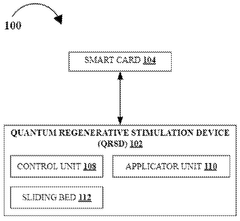
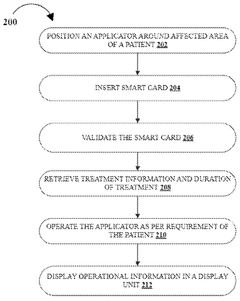
- A system utilizing a quantum regenerative stimulation device with a control unit, applicator unit, sliding bed, and smart cards to deliver personalized magnetic resonance therapy tailored to individual patient needs, enhancing regenerative capabilities of the musculoskeletal system.
Safety and Ethical Considerations
The implementation of quantum healing techniques in youth programs necessitates rigorous safety protocols and ethical frameworks. When introducing these alternative healing approaches to young participants, practitioners must prioritize physical and psychological safety above all else. This includes comprehensive screening processes to identify any pre-existing health conditions that might contraindicate certain practices, as well as obtaining informed consent from both participants and their legal guardians. Documentation systems should be established to track any adverse reactions or unexpected outcomes during program implementation.
Ethical considerations extend beyond basic safety to encompass respect for diverse cultural backgrounds and belief systems. Quantum healing approaches often incorporate elements that may intersect with spiritual or cultural practices, requiring sensitivity to avoid cultural appropriation or imposing belief systems on impressionable youth. Programs should be designed with clear boundaries between therapeutic techniques and spiritual practices, allowing participants to engage with the physiological and psychological benefits without feeling pressured to adopt specific metaphysical perspectives.
Age-appropriate adaptation represents another critical safety consideration. Techniques must be modified to match developmental stages, with simpler, more concrete explanations for younger participants and more nuanced approaches for adolescents. Duration and intensity of practices should likewise be calibrated according to age groups, with shorter sessions for younger children to accommodate their attention spans and energy levels.
Professional qualifications and training standards must be established for facilitators working with youth. This includes not only expertise in quantum healing methodologies but also specialized knowledge in child development, adolescent psychology, and appropriate boundaries when working with minors. Regular supervision and continuing education should be mandatory to ensure practitioners remain current with best practices and emerging research.
Transparency in communication about the empirical basis for quantum healing techniques is an ethical imperative when working with youth populations. Programs should clearly distinguish between evidence-based components and those still considered experimental or complementary. Parents and participants deserve honest information about what outcomes can reasonably be expected and what remains speculative, enabling truly informed decision-making about participation.
Finally, robust evaluation frameworks must be implemented to monitor both immediate effects and long-term impacts of quantum healing programs on youth participants. These should include appropriate psychological assessment tools, physiological measurements where relevant, and qualitative feedback mechanisms that capture the subjective experiences of participants in age-appropriate ways.
Ethical considerations extend beyond basic safety to encompass respect for diverse cultural backgrounds and belief systems. Quantum healing approaches often incorporate elements that may intersect with spiritual or cultural practices, requiring sensitivity to avoid cultural appropriation or imposing belief systems on impressionable youth. Programs should be designed with clear boundaries between therapeutic techniques and spiritual practices, allowing participants to engage with the physiological and psychological benefits without feeling pressured to adopt specific metaphysical perspectives.
Age-appropriate adaptation represents another critical safety consideration. Techniques must be modified to match developmental stages, with simpler, more concrete explanations for younger participants and more nuanced approaches for adolescents. Duration and intensity of practices should likewise be calibrated according to age groups, with shorter sessions for younger children to accommodate their attention spans and energy levels.
Professional qualifications and training standards must be established for facilitators working with youth. This includes not only expertise in quantum healing methodologies but also specialized knowledge in child development, adolescent psychology, and appropriate boundaries when working with minors. Regular supervision and continuing education should be mandatory to ensure practitioners remain current with best practices and emerging research.
Transparency in communication about the empirical basis for quantum healing techniques is an ethical imperative when working with youth populations. Programs should clearly distinguish between evidence-based components and those still considered experimental or complementary. Parents and participants deserve honest information about what outcomes can reasonably be expected and what remains speculative, enabling truly informed decision-making about participation.
Finally, robust evaluation frameworks must be implemented to monitor both immediate effects and long-term impacts of quantum healing programs on youth participants. These should include appropriate psychological assessment tools, physiological measurements where relevant, and qualitative feedback mechanisms that capture the subjective experiences of participants in age-appropriate ways.
Implementation Strategies for Educational Settings
Implementing quantum healing techniques in educational settings requires a structured approach that balances scientific principles with age-appropriate delivery methods. Educational institutions can integrate these techniques through a multi-tiered framework that begins with teacher training programs focused on quantum concepts and mindfulness practices. These programs should equip educators with both theoretical understanding and practical skills to facilitate quantum healing activities in classroom environments.
Curriculum integration represents another critical implementation pathway, where quantum healing principles can be incorporated into existing health, science, and physical education curricula. This integration should follow developmental appropriateness guidelines, with simplified concepts for younger students and more complex theoretical frameworks for older youth. Educational materials should utilize visual aids, interactive demonstrations, and age-appropriate metaphors to convey quantum concepts.
Physical space adaptation within educational settings is essential for effective implementation. Schools can designate specific areas as "quantum healing zones" equipped with appropriate materials such as meditation cushions, sound therapy instruments, and visual aids that support mindfulness practices. These spaces should be designed to minimize sensory overload while maximizing comfort and focus.
Technology-enhanced learning platforms offer significant potential for quantum healing implementation. Virtual reality applications can simulate quantum field experiences, while biofeedback devices can help students visualize their physiological responses during healing practices. Mobile applications designed specifically for youth can provide guided meditations and breathing exercises based on quantum principles, making these techniques accessible beyond the classroom environment.
Assessment frameworks must be established to evaluate the effectiveness of quantum healing implementations. These should include both quantitative measures (attention spans, academic performance) and qualitative indicators (emotional regulation, stress management skills). Regular evaluation cycles allow for continuous refinement of implementation strategies based on observed outcomes and student feedback.
Parent-educator partnerships strengthen implementation efforts by ensuring consistency between school and home environments. Educational institutions should develop communication channels to inform parents about quantum healing techniques being taught, providing resources for home practice and encouraging family participation in quantum healing activities.
Ethical considerations must guide all implementation efforts, with clear protocols for obtaining informed consent, respecting cultural and religious diversity, and maintaining appropriate boundaries between therapeutic and educational applications of quantum healing techniques.
Curriculum integration represents another critical implementation pathway, where quantum healing principles can be incorporated into existing health, science, and physical education curricula. This integration should follow developmental appropriateness guidelines, with simplified concepts for younger students and more complex theoretical frameworks for older youth. Educational materials should utilize visual aids, interactive demonstrations, and age-appropriate metaphors to convey quantum concepts.
Physical space adaptation within educational settings is essential for effective implementation. Schools can designate specific areas as "quantum healing zones" equipped with appropriate materials such as meditation cushions, sound therapy instruments, and visual aids that support mindfulness practices. These spaces should be designed to minimize sensory overload while maximizing comfort and focus.
Technology-enhanced learning platforms offer significant potential for quantum healing implementation. Virtual reality applications can simulate quantum field experiences, while biofeedback devices can help students visualize their physiological responses during healing practices. Mobile applications designed specifically for youth can provide guided meditations and breathing exercises based on quantum principles, making these techniques accessible beyond the classroom environment.
Assessment frameworks must be established to evaluate the effectiveness of quantum healing implementations. These should include both quantitative measures (attention spans, academic performance) and qualitative indicators (emotional regulation, stress management skills). Regular evaluation cycles allow for continuous refinement of implementation strategies based on observed outcomes and student feedback.
Parent-educator partnerships strengthen implementation efforts by ensuring consistency between school and home environments. Educational institutions should develop communication channels to inform parents about quantum healing techniques being taught, providing resources for home practice and encouraging family participation in quantum healing activities.
Ethical considerations must guide all implementation efforts, with clear protocols for obtaining informed consent, respecting cultural and religious diversity, and maintaining appropriate boundaries between therapeutic and educational applications of quantum healing techniques.
Unlock deeper insights with Patsnap Eureka Quick Research — get a full tech report to explore trends and direct your research. Try now!
Generate Your Research Report Instantly with AI Agent
Supercharge your innovation with Patsnap Eureka AI Agent Platform!