

How to Align Cross-Roller Bearings for Maximum Performance
MAY 25, 20269 MIN READ
Generate Your Research Report Instantly with AI Agent
Patsnap Eureka helps you evaluate technical feasibility & market potential.
Cross-Roller Bearing Alignment Technology Background and Goals
Cross-roller bearings represent a critical advancement in precision bearing technology, emerging from the need for high-precision rotational systems that can simultaneously handle radial, axial, and moment loads. These specialized bearings feature cylindrical rollers arranged perpendicular to each other in a single raceway, creating a compact design that delivers exceptional rigidity and accuracy. The technology gained prominence in the 1960s as industrial automation and precision machinery demands intensified.
The evolution of cross-roller bearing technology has been driven by increasingly stringent requirements in sectors such as robotics, machine tools, medical equipment, and aerospace applications. Traditional ball bearings and conventional roller bearings often fall short when applications demand both high load capacity and precise positioning accuracy. Cross-roller bearings address this gap by providing superior moment rigidity while maintaining compact dimensions.
Alignment technology for cross-roller bearings has become increasingly sophisticated as performance requirements have escalated. Early alignment methods relied primarily on mechanical adjustment techniques and basic measurement tools. However, modern applications demand sub-micron precision levels, necessitating advanced alignment methodologies that incorporate laser interferometry, precision measurement systems, and computer-controlled adjustment mechanisms.
The primary technical objectives for cross-roller bearing alignment center on achieving optimal load distribution across all rolling elements while minimizing runout errors and maximizing rotational accuracy. Proper alignment directly impacts bearing life, system precision, and overall mechanical performance. Misalignment can lead to premature wear, increased friction, vibration, and ultimately system failure.
Current alignment goals focus on developing standardized procedures that can consistently achieve angular accuracy within arc-seconds and radial runout below one micrometer. These targets reflect the demanding requirements of modern precision applications where even minute deviations can compromise system performance. Advanced alignment techniques now integrate real-time monitoring capabilities and adaptive correction systems.
The technological roadmap for cross-roller bearing alignment emphasizes automation, predictive maintenance integration, and enhanced measurement precision. Future developments aim to establish self-aligning systems that can automatically compensate for installation variations and operational changes, ultimately achieving unprecedented levels of performance reliability and consistency across diverse industrial applications.
The evolution of cross-roller bearing technology has been driven by increasingly stringent requirements in sectors such as robotics, machine tools, medical equipment, and aerospace applications. Traditional ball bearings and conventional roller bearings often fall short when applications demand both high load capacity and precise positioning accuracy. Cross-roller bearings address this gap by providing superior moment rigidity while maintaining compact dimensions.
Alignment technology for cross-roller bearings has become increasingly sophisticated as performance requirements have escalated. Early alignment methods relied primarily on mechanical adjustment techniques and basic measurement tools. However, modern applications demand sub-micron precision levels, necessitating advanced alignment methodologies that incorporate laser interferometry, precision measurement systems, and computer-controlled adjustment mechanisms.
The primary technical objectives for cross-roller bearing alignment center on achieving optimal load distribution across all rolling elements while minimizing runout errors and maximizing rotational accuracy. Proper alignment directly impacts bearing life, system precision, and overall mechanical performance. Misalignment can lead to premature wear, increased friction, vibration, and ultimately system failure.
Current alignment goals focus on developing standardized procedures that can consistently achieve angular accuracy within arc-seconds and radial runout below one micrometer. These targets reflect the demanding requirements of modern precision applications where even minute deviations can compromise system performance. Advanced alignment techniques now integrate real-time monitoring capabilities and adaptive correction systems.
The technological roadmap for cross-roller bearing alignment emphasizes automation, predictive maintenance integration, and enhanced measurement precision. Future developments aim to establish self-aligning systems that can automatically compensate for installation variations and operational changes, ultimately achieving unprecedented levels of performance reliability and consistency across diverse industrial applications.
Market Demand for High-Precision Cross-Roller Bearing Applications
The global market for high-precision cross-roller bearings is experiencing robust growth driven by increasing demands for accuracy and reliability across multiple industrial sectors. Precision manufacturing industries, including machine tools, robotics, and semiconductor equipment, represent the largest consumer segments where even microscopic misalignments can result in significant performance degradation and costly production errors.
Aerospace and defense applications constitute another critical market segment, where cross-roller bearings must maintain exceptional precision under extreme operating conditions. Aircraft control systems, satellite positioning mechanisms, and radar equipment require bearings that can deliver consistent performance while withstanding temperature fluctuations, vibration, and extended operational cycles without compromising alignment integrity.
The medical device industry has emerged as a rapidly expanding market for high-precision cross-roller bearings, particularly in surgical robotics, imaging equipment, and diagnostic instruments. These applications demand ultra-precise positioning capabilities where bearing alignment directly impacts patient safety and diagnostic accuracy. The growing adoption of minimally invasive surgical procedures has further intensified requirements for compact, high-precision bearing solutions.
Industrial automation and robotics sectors are driving substantial demand growth, as manufacturers increasingly adopt automated systems requiring precise positioning and repeatability. Collaborative robots, pick-and-place systems, and automated assembly lines depend on properly aligned cross-roller bearings to maintain operational efficiency and product quality standards.
The renewable energy sector, particularly wind turbine applications, presents emerging opportunities for high-precision cross-roller bearings. Turbine pitch control systems and yaw mechanisms require bearings capable of maintaining alignment under varying load conditions and environmental stresses to optimize energy generation efficiency.
Market demand is increasingly influenced by Industry 4.0 initiatives, where smart manufacturing systems require bearings with enhanced precision and predictable performance characteristics. This trend has created opportunities for bearing solutions that integrate condition monitoring capabilities and provide real-time alignment status information.
Geographically, Asia-Pacific regions demonstrate the strongest market growth, driven by expanding manufacturing capabilities and increasing adoption of precision automation technologies. European markets maintain steady demand focused on high-value applications in aerospace and medical devices, while North American markets emphasize innovation in robotics and advanced manufacturing applications.
Aerospace and defense applications constitute another critical market segment, where cross-roller bearings must maintain exceptional precision under extreme operating conditions. Aircraft control systems, satellite positioning mechanisms, and radar equipment require bearings that can deliver consistent performance while withstanding temperature fluctuations, vibration, and extended operational cycles without compromising alignment integrity.
The medical device industry has emerged as a rapidly expanding market for high-precision cross-roller bearings, particularly in surgical robotics, imaging equipment, and diagnostic instruments. These applications demand ultra-precise positioning capabilities where bearing alignment directly impacts patient safety and diagnostic accuracy. The growing adoption of minimally invasive surgical procedures has further intensified requirements for compact, high-precision bearing solutions.
Industrial automation and robotics sectors are driving substantial demand growth, as manufacturers increasingly adopt automated systems requiring precise positioning and repeatability. Collaborative robots, pick-and-place systems, and automated assembly lines depend on properly aligned cross-roller bearings to maintain operational efficiency and product quality standards.
The renewable energy sector, particularly wind turbine applications, presents emerging opportunities for high-precision cross-roller bearings. Turbine pitch control systems and yaw mechanisms require bearings capable of maintaining alignment under varying load conditions and environmental stresses to optimize energy generation efficiency.
Market demand is increasingly influenced by Industry 4.0 initiatives, where smart manufacturing systems require bearings with enhanced precision and predictable performance characteristics. This trend has created opportunities for bearing solutions that integrate condition monitoring capabilities and provide real-time alignment status information.
Geographically, Asia-Pacific regions demonstrate the strongest market growth, driven by expanding manufacturing capabilities and increasing adoption of precision automation technologies. European markets maintain steady demand focused on high-value applications in aerospace and medical devices, while North American markets emphasize innovation in robotics and advanced manufacturing applications.
Current Alignment Challenges and Technical Limitations
Cross-roller bearings face significant alignment challenges that directly impact their operational performance and service life. The primary difficulty stems from the complex geometric requirements of maintaining precise angular contact between the cylindrical rollers and the raceway surfaces. Unlike conventional ball bearings, cross-roller bearings require simultaneous control of both radial and axial positioning, making alignment procedures considerably more intricate and sensitive to minor deviations.
Manufacturing tolerances represent a fundamental limitation in achieving optimal alignment. Current industry standards typically allow for geometric variations that, while acceptable for general applications, can compromise performance in high-precision environments. The cumulative effect of dimensional tolerances across multiple components creates alignment uncertainties that are difficult to predict and compensate for during installation.
Installation methodology presents another critical challenge. Traditional alignment techniques rely heavily on operator skill and experience, introducing human variability into the process. The lack of standardized alignment procedures across different manufacturers and applications results in inconsistent performance outcomes. Many installations still depend on basic measurement tools that cannot adequately capture the multi-dimensional nature of cross-roller bearing alignment requirements.
Thermal effects during operation create dynamic alignment challenges that are poorly understood and inadequately addressed by current solutions. As operating temperatures fluctuate, differential thermal expansion between bearing components and housing structures can significantly alter the initial alignment parameters. This thermal-induced misalignment often occurs gradually, making detection and correction difficult without sophisticated monitoring systems.
Load distribution irregularities emerge as a consequence of misalignment, creating localized stress concentrations that accelerate wear patterns. Current analytical models struggle to accurately predict these load distribution effects, particularly under combined loading conditions where radial, axial, and moment loads interact simultaneously.
Measurement and verification technologies remain limited in their ability to provide real-time alignment feedback. Existing instrumentation typically requires bearing disassembly for comprehensive assessment, making continuous monitoring impractical. The absence of non-invasive alignment verification methods forces reliance on indirect performance indicators, which often detect problems only after significant degradation has occurred.
Environmental factors such as contamination, vibration, and shock loading can progressively degrade alignment integrity over time. Current bearing designs lack robust mechanisms to maintain alignment stability under these adverse conditions, leading to premature failure in demanding applications.
Manufacturing tolerances represent a fundamental limitation in achieving optimal alignment. Current industry standards typically allow for geometric variations that, while acceptable for general applications, can compromise performance in high-precision environments. The cumulative effect of dimensional tolerances across multiple components creates alignment uncertainties that are difficult to predict and compensate for during installation.
Installation methodology presents another critical challenge. Traditional alignment techniques rely heavily on operator skill and experience, introducing human variability into the process. The lack of standardized alignment procedures across different manufacturers and applications results in inconsistent performance outcomes. Many installations still depend on basic measurement tools that cannot adequately capture the multi-dimensional nature of cross-roller bearing alignment requirements.
Thermal effects during operation create dynamic alignment challenges that are poorly understood and inadequately addressed by current solutions. As operating temperatures fluctuate, differential thermal expansion between bearing components and housing structures can significantly alter the initial alignment parameters. This thermal-induced misalignment often occurs gradually, making detection and correction difficult without sophisticated monitoring systems.
Load distribution irregularities emerge as a consequence of misalignment, creating localized stress concentrations that accelerate wear patterns. Current analytical models struggle to accurately predict these load distribution effects, particularly under combined loading conditions where radial, axial, and moment loads interact simultaneously.
Measurement and verification technologies remain limited in their ability to provide real-time alignment feedback. Existing instrumentation typically requires bearing disassembly for comprehensive assessment, making continuous monitoring impractical. The absence of non-invasive alignment verification methods forces reliance on indirect performance indicators, which often detect problems only after significant degradation has occurred.
Environmental factors such as contamination, vibration, and shock loading can progressively degrade alignment integrity over time. Current bearing designs lack robust mechanisms to maintain alignment stability under these adverse conditions, leading to premature failure in demanding applications.
Existing Cross-Roller Bearing Alignment Solutions
01 Bearing structure and design optimization
Cross-roller bearings can be optimized through improved structural designs that enhance load distribution and reduce stress concentrations. Design modifications include optimized raceway geometry, improved roller spacing, and enhanced contact angles to maximize load-carrying capacity and minimize friction. These structural improvements contribute to better overall bearing performance and extended service life.- Cross-roller bearing structural design and configuration: Cross-roller bearings utilize a unique structural design where cylindrical rollers are arranged perpendicular to each other in alternating patterns. This configuration allows the bearing to handle both radial and axial loads simultaneously while maintaining high rigidity and precision. The crossed arrangement of rollers provides superior load distribution and reduces the overall bearing size compared to conventional bearing arrangements.
- Load capacity and stress distribution optimization: The performance of cross-roller bearings is significantly enhanced through optimized load capacity and stress distribution mechanisms. The perpendicular roller arrangement enables effective handling of combined loads while minimizing stress concentrations. Advanced design methodologies focus on optimizing contact stress patterns and load distribution across all rolling elements to maximize bearing life and performance under various operating conditions.
- Precision and accuracy enhancement techniques: Cross-roller bearings achieve exceptional precision through specialized manufacturing processes and design features that minimize runout and positioning errors. The bearing design incorporates precision-ground raceways and carefully controlled roller geometry to achieve high rotational accuracy. These bearings are particularly suited for applications requiring precise positioning and smooth rotation with minimal deviation.
- Lubrication systems and friction reduction: Effective lubrication systems are critical for cross-roller bearing performance, involving specialized lubricant delivery methods and friction reduction techniques. The unique roller arrangement requires carefully designed lubrication pathways to ensure adequate lubricant distribution to all contact points. Advanced lubrication strategies help minimize friction, reduce wear, and extend bearing service life while maintaining consistent performance.
- Sealing and contamination protection methods: Cross-roller bearing performance is maintained through advanced sealing technologies that protect against contamination and lubricant loss. Specialized seal designs accommodate the unique geometry of cross-roller bearings while providing effective barriers against dust, moisture, and other contaminants. These protection systems are essential for maintaining bearing performance in harsh operating environments and extending operational life.
02 Material composition and treatment methods
The performance of cross-roller bearings is significantly influenced by the materials used and their treatment processes. Advanced steel compositions, heat treatment methods, and surface hardening techniques improve wear resistance, fatigue life, and dimensional stability. Material selection and processing directly impact the bearing's ability to withstand high loads and maintain precision over extended operating periods.Expand Specific Solutions03 Lubrication systems and sealing mechanisms
Effective lubrication and sealing systems are critical for maintaining cross-roller bearing performance. Advanced lubrication methods ensure proper film formation between rolling elements and raceways, while improved sealing designs prevent contamination and lubricant loss. These systems work together to reduce friction, prevent corrosion, and maintain consistent performance under various operating conditions.Expand Specific Solutions04 Precision manufacturing and assembly techniques
Manufacturing precision and assembly methods significantly affect cross-roller bearing performance characteristics. Advanced machining techniques, dimensional control, and assembly procedures ensure proper roller alignment, uniform load distribution, and minimal runout. Precision manufacturing enables bearings to achieve higher accuracy ratings and maintain consistent performance in demanding applications.Expand Specific Solutions05 Load capacity and operational characteristics
Cross-roller bearings are designed to handle combined radial and axial loads while maintaining rotational accuracy. Performance optimization focuses on maximizing load capacity, minimizing deflection under load, and ensuring smooth operation across various speed ranges. These characteristics make them suitable for applications requiring high precision and reliability under complex loading conditions.Expand Specific Solutions
Key Players in Precision Bearing and Alignment Equipment Industry
The cross-roller bearing alignment market represents a mature industrial segment within the broader precision bearing industry, currently valued at several billion dollars globally with steady growth driven by automation and precision manufacturing demands. The industry has reached technological maturity, with established players like The Timken Co., Schaeffler Technologies, NSK Ltd., NTN Corp., and JTEKT Corp. dominating through decades of engineering expertise and comprehensive product portfolios. Regional specialists such as Luoyang Hongyuan Bearing Technology and THK CO., LTD. contribute advanced alignment solutions, while research institutions like Luoyang Bearing Research Institution drive innovation. The competitive landscape shows consolidation among major manufacturers who leverage extensive R&D capabilities, global distribution networks, and integrated manufacturing processes to maintain market leadership, though emerging players from Asia are increasingly challenging established positions through cost-effective solutions and specialized applications.
The Timken Co.
Technical Solution: Timken employs advanced precision alignment techniques for cross-roller bearings using laser measurement systems and proprietary mounting procedures. Their alignment methodology focuses on achieving optimal raceway contact patterns through controlled preload application and thermal compensation strategies. The company utilizes specialized tooling and fixtures designed specifically for cross-roller bearing installation, ensuring consistent alignment repeatability across production environments. Their technical approach incorporates real-time monitoring of bearing performance parameters during the alignment process to validate optimal positioning.
Strengths: Industry-leading precision measurement capabilities and extensive experience in bearing alignment across multiple industries. Weaknesses: Higher implementation costs due to specialized equipment requirements and longer setup times for complex applications.
Schaeffler Technologies AG & Co. KG
Technical Solution: Schaeffler has developed comprehensive alignment protocols for cross-roller bearings that integrate digital measurement technologies with automated positioning systems. Their approach utilizes advanced metrology equipment to achieve precise angular and radial positioning, combined with proprietary software algorithms that calculate optimal bearing placement based on application-specific load conditions. The company's alignment methodology includes detailed procedures for surface preparation, mounting sequence optimization, and post-installation verification testing to ensure maximum bearing performance and longevity.
Strengths: Comprehensive digital integration and automated alignment systems that reduce human error and improve consistency. Weaknesses: Requires significant investment in specialized equipment and training for proper implementation.
Core Innovations in Precision Bearing Alignment Methods
Bearing Alignment Tool and Method Of Use
PatentInactiveUS20090265947A1
Innovation
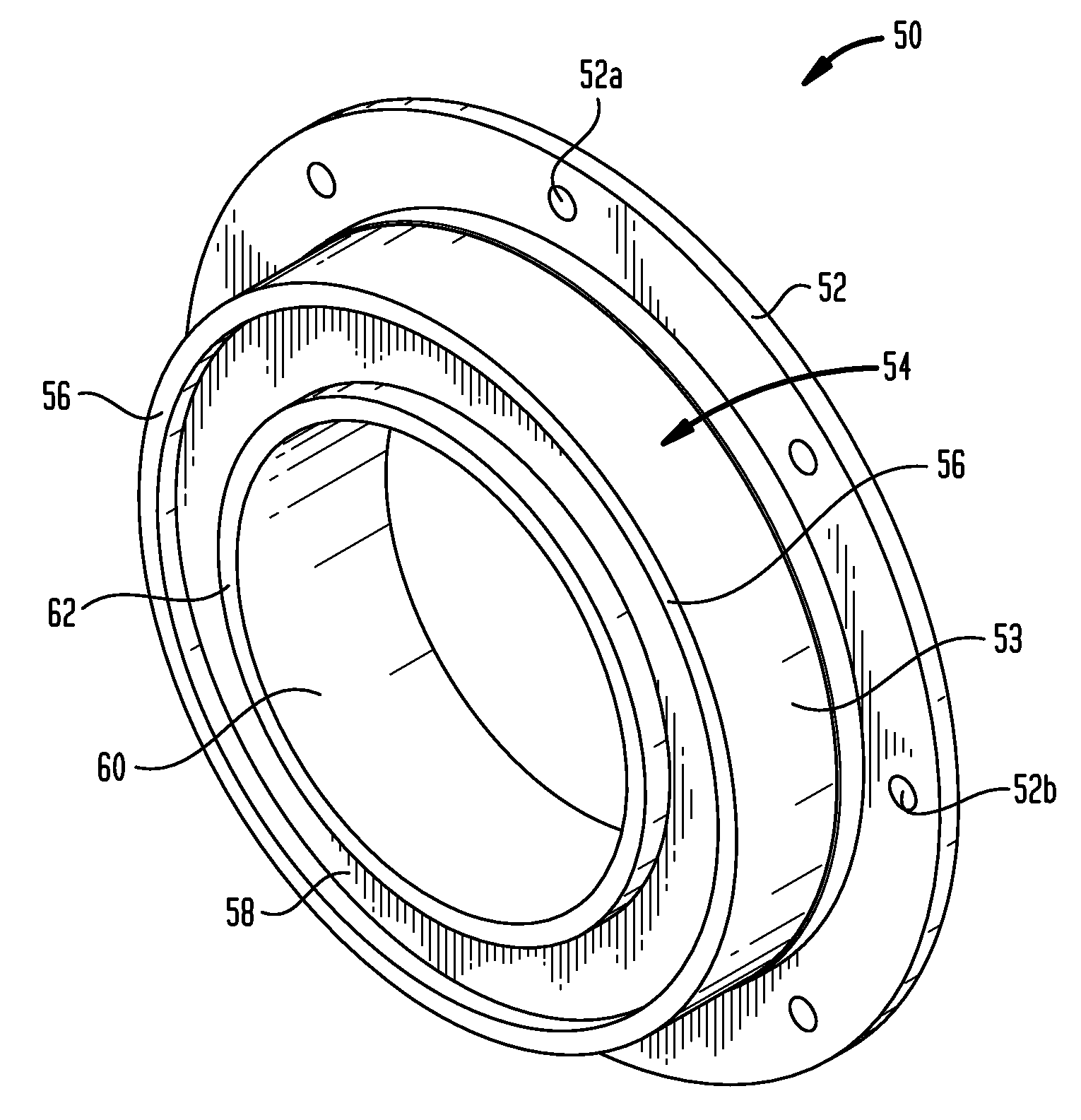
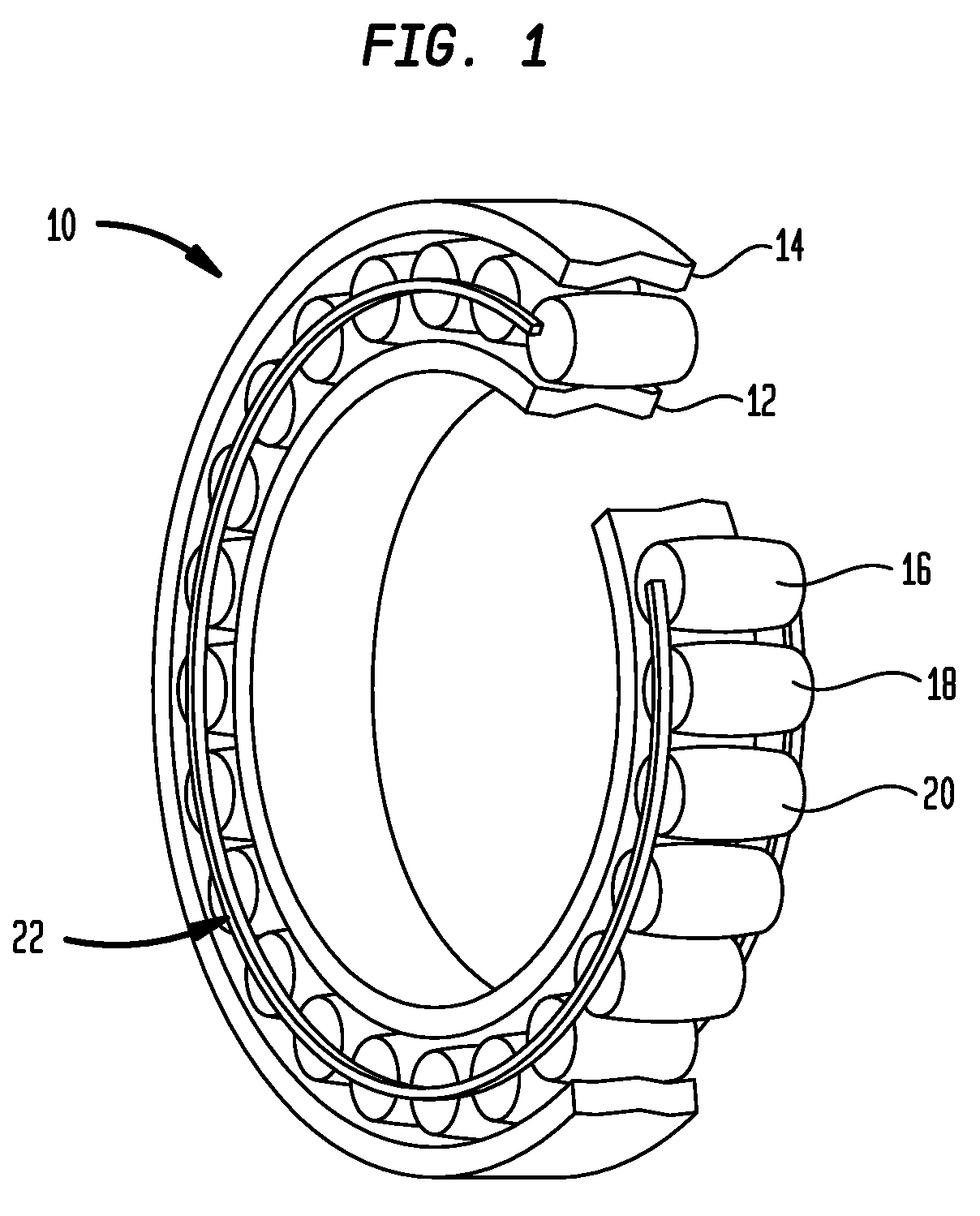
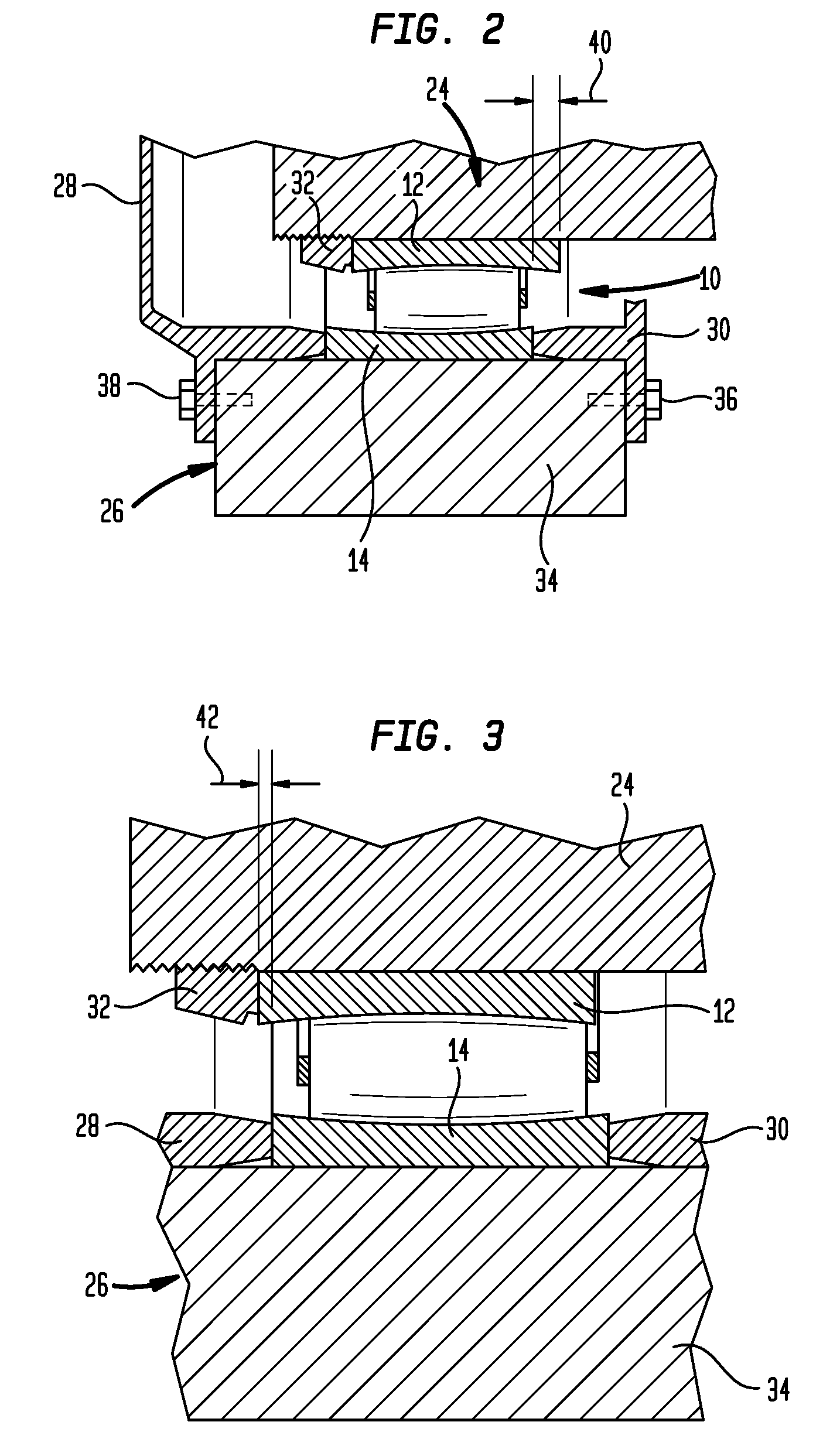
- A bearing alignment tool that aligns the inner and outer races of toroidal roller bearings with respect to the housing, using distinct annular alignment surfaces to ensure precise axial and lateral alignment, reducing misalignment to less than 5 degrees, thereby accommodating thermal growth and preventing vibration-induced failures.

Cross-roller bearing allowing important misalignment
PatentInactiveEP0518763A1
Innovation
- The bearing features rollers with a convex profile in an arc of a circle with a radius of curvature greater than the diameter but less than the pitch circle, and tracks with a concave profile matching the rollers', which self-centers the rollers to prevent end-face contact and distribute pressure evenly, reducing stress and wear.


Quality Standards and Certification Requirements
Cross-roller bearing alignment quality is governed by multiple international standards that establish precise requirements for dimensional accuracy, geometric tolerances, and performance characteristics. The primary standards include ISO 199 for rolling bearings general technical delivery conditions, ISO 492 for geometrical product specifications and tolerance values, and JIS B 1514 specifically addressing crossed roller bearings. These standards define critical parameters such as raceway roundness, parallelism between inner and outer rings, and maximum allowable runout values that directly impact alignment precision.
Manufacturing quality standards mandate strict control over bearing component geometry, with typical tolerances ranging from 2 to 5 micrometers for raceway surface finish and angular contact precision within 10 arc-seconds. The standards specify measurement methodologies using coordinate measuring machines and laser interferometry to verify dimensional compliance. Surface roughness requirements typically demand Ra values below 0.2 micrometers for optimal roller contact and minimal friction generation during operation.
Certification processes require comprehensive testing protocols including vibration analysis, load capacity verification, and rotational accuracy measurements under controlled environmental conditions. Accredited testing laboratories must validate bearing performance against specified criteria, including radial and axial runout measurements, moment resistance characteristics, and temperature stability across operational ranges. Documentation requirements encompass material traceability, heat treatment records, and statistical process control data demonstrating consistent manufacturing quality.
Industry-specific certifications such as ISO 9001 for quality management systems and AS9100 for aerospace applications impose additional requirements for cross-roller bearing alignment applications. These certifications mandate rigorous supplier qualification processes, incoming inspection protocols, and continuous monitoring of alignment performance metrics. Compliance verification includes periodic audits of manufacturing processes, calibration records for measurement equipment, and validation of alignment procedures through statistical sampling methods.
Quality assurance frameworks establish acceptance criteria for installed bearing systems, requiring alignment verification within specified tolerances before equipment commissioning. Post-installation certification involves comprehensive performance testing, including load distribution analysis, thermal imaging verification, and vibration signature analysis to confirm optimal alignment achievement and long-term reliability expectations.
Manufacturing quality standards mandate strict control over bearing component geometry, with typical tolerances ranging from 2 to 5 micrometers for raceway surface finish and angular contact precision within 10 arc-seconds. The standards specify measurement methodologies using coordinate measuring machines and laser interferometry to verify dimensional compliance. Surface roughness requirements typically demand Ra values below 0.2 micrometers for optimal roller contact and minimal friction generation during operation.
Certification processes require comprehensive testing protocols including vibration analysis, load capacity verification, and rotational accuracy measurements under controlled environmental conditions. Accredited testing laboratories must validate bearing performance against specified criteria, including radial and axial runout measurements, moment resistance characteristics, and temperature stability across operational ranges. Documentation requirements encompass material traceability, heat treatment records, and statistical process control data demonstrating consistent manufacturing quality.
Industry-specific certifications such as ISO 9001 for quality management systems and AS9100 for aerospace applications impose additional requirements for cross-roller bearing alignment applications. These certifications mandate rigorous supplier qualification processes, incoming inspection protocols, and continuous monitoring of alignment performance metrics. Compliance verification includes periodic audits of manufacturing processes, calibration records for measurement equipment, and validation of alignment procedures through statistical sampling methods.
Quality assurance frameworks establish acceptance criteria for installed bearing systems, requiring alignment verification within specified tolerances before equipment commissioning. Post-installation certification involves comprehensive performance testing, including load distribution analysis, thermal imaging verification, and vibration signature analysis to confirm optimal alignment achievement and long-term reliability expectations.
Cost-Benefit Analysis of Advanced Alignment Systems
The economic evaluation of advanced alignment systems for cross-roller bearings reveals significant long-term value propositions despite higher initial capital investments. Traditional manual alignment methods typically cost between $500-2,000 per installation, while advanced laser-based alignment systems require initial investments ranging from $15,000-50,000. However, the precision capabilities of advanced systems, achieving alignment accuracies within ±0.001 inches compared to ±0.005 inches for conventional methods, translate into substantial operational savings.
Advanced alignment systems demonstrate measurable returns through extended bearing life cycles. Properly aligned cross-roller bearings using precision systems exhibit 40-60% longer operational lifespans, reducing replacement frequencies and associated downtime costs. In high-precision manufacturing environments, this translates to annual savings of $50,000-200,000 per production line, depending on application criticality and throughput requirements.
The productivity gains from automated alignment processes significantly impact labor cost structures. Advanced systems reduce alignment time from 4-8 hours to 30-90 minutes per bearing assembly, while simultaneously eliminating human error variables. This efficiency improvement enables manufacturers to reallocate skilled technicians to higher-value activities, generating indirect cost benefits of approximately $25-40 per hour saved.
Maintenance cost reductions represent another critical benefit dimension. Precisely aligned bearings experience reduced vibration levels, lower heat generation, and decreased wear patterns, resulting in 30-50% reduction in unplanned maintenance interventions. The associated cost savings include reduced lubricant consumption, fewer emergency repairs, and minimized production interruptions.
Risk mitigation factors further enhance the economic justification for advanced alignment investments. Catastrophic bearing failures in critical applications can result in production losses exceeding $100,000 per incident. Advanced alignment systems reduce failure probability by 70-80%, providing substantial insurance value against operational disruptions and quality defects that could impact customer relationships and brand reputation.
Advanced alignment systems demonstrate measurable returns through extended bearing life cycles. Properly aligned cross-roller bearings using precision systems exhibit 40-60% longer operational lifespans, reducing replacement frequencies and associated downtime costs. In high-precision manufacturing environments, this translates to annual savings of $50,000-200,000 per production line, depending on application criticality and throughput requirements.
The productivity gains from automated alignment processes significantly impact labor cost structures. Advanced systems reduce alignment time from 4-8 hours to 30-90 minutes per bearing assembly, while simultaneously eliminating human error variables. This efficiency improvement enables manufacturers to reallocate skilled technicians to higher-value activities, generating indirect cost benefits of approximately $25-40 per hour saved.
Maintenance cost reductions represent another critical benefit dimension. Precisely aligned bearings experience reduced vibration levels, lower heat generation, and decreased wear patterns, resulting in 30-50% reduction in unplanned maintenance interventions. The associated cost savings include reduced lubricant consumption, fewer emergency repairs, and minimized production interruptions.
Risk mitigation factors further enhance the economic justification for advanced alignment investments. Catastrophic bearing failures in critical applications can result in production losses exceeding $100,000 per incident. Advanced alignment systems reduce failure probability by 70-80%, providing substantial insurance value against operational disruptions and quality defects that could impact customer relationships and brand reputation.
Unlock deeper insights with Patsnap Eureka Quick Research — get a full tech report to explore trends and direct your research. Try now!
Generate Your Research Report Instantly with AI Agent
Supercharge your innovation with Patsnap Eureka AI Agent Platform!