

Optimizing Cross-Roller Bearings Clearance for Tight Tolerances
MAY 25, 20269 MIN READ
Generate Your Research Report Instantly with AI Agent
PatSnap Eureka helps you evaluate technical feasibility & market potential.
Cross-Roller Bearing Clearance Optimization Background and Goals
Cross-roller bearings represent a critical component in precision machinery applications where exceptional rotational accuracy and load-bearing capacity are paramount. These specialized bearings feature cylindrical rollers arranged perpendicular to each other between inner and outer rings, enabling them to handle combined radial, axial, and moment loads simultaneously. The unique design makes them indispensable in applications such as industrial robots, machine tool spindles, medical equipment, semiconductor manufacturing systems, and aerospace mechanisms.
The evolution of cross-roller bearing technology has been driven by increasingly demanding precision requirements across multiple industries. Traditional bearing solutions often fall short when applications require positioning accuracies measured in micrometers or sub-micrometer ranges. As manufacturing processes become more sophisticated and automation systems more precise, the tolerance requirements for mechanical components have tightened exponentially, creating new challenges for bearing performance optimization.
Clearance optimization in cross-roller bearings has emerged as a fundamental technical challenge that directly impacts system performance. Internal clearance refers to the total distance through which one bearing ring can be displaced relative to the other ring in the radial or axial direction. This parameter significantly influences bearing stiffness, rotational accuracy, friction characteristics, heat generation, and overall service life.
The primary objective of cross-roller bearing clearance optimization is to achieve the optimal balance between mechanical performance and operational reliability under tight tolerance conditions. Excessive clearance leads to reduced system stiffness, increased vibration, and compromised positioning accuracy. Conversely, insufficient clearance or preload conditions can result in elevated friction, excessive heat generation, premature wear, and potential bearing failure.
Current market demands require bearing systems capable of maintaining positioning accuracies within ±1 micrometer while operating under varying load conditions and temperature fluctuations. This necessitates advanced clearance control methodologies that can account for thermal expansion, elastic deformation, manufacturing tolerances, and operational variables. The optimization process must consider the entire system dynamics rather than treating the bearing as an isolated component.
The strategic goal involves developing comprehensive clearance optimization frameworks that integrate theoretical modeling, advanced manufacturing techniques, and real-time monitoring capabilities. This approach aims to establish predictive models for clearance behavior under different operating conditions, enabling proactive adjustments and maintenance strategies that ensure consistent performance throughout the bearing's operational lifecycle.
The evolution of cross-roller bearing technology has been driven by increasingly demanding precision requirements across multiple industries. Traditional bearing solutions often fall short when applications require positioning accuracies measured in micrometers or sub-micrometer ranges. As manufacturing processes become more sophisticated and automation systems more precise, the tolerance requirements for mechanical components have tightened exponentially, creating new challenges for bearing performance optimization.
Clearance optimization in cross-roller bearings has emerged as a fundamental technical challenge that directly impacts system performance. Internal clearance refers to the total distance through which one bearing ring can be displaced relative to the other ring in the radial or axial direction. This parameter significantly influences bearing stiffness, rotational accuracy, friction characteristics, heat generation, and overall service life.
The primary objective of cross-roller bearing clearance optimization is to achieve the optimal balance between mechanical performance and operational reliability under tight tolerance conditions. Excessive clearance leads to reduced system stiffness, increased vibration, and compromised positioning accuracy. Conversely, insufficient clearance or preload conditions can result in elevated friction, excessive heat generation, premature wear, and potential bearing failure.
Current market demands require bearing systems capable of maintaining positioning accuracies within ±1 micrometer while operating under varying load conditions and temperature fluctuations. This necessitates advanced clearance control methodologies that can account for thermal expansion, elastic deformation, manufacturing tolerances, and operational variables. The optimization process must consider the entire system dynamics rather than treating the bearing as an isolated component.
The strategic goal involves developing comprehensive clearance optimization frameworks that integrate theoretical modeling, advanced manufacturing techniques, and real-time monitoring capabilities. This approach aims to establish predictive models for clearance behavior under different operating conditions, enabling proactive adjustments and maintenance strategies that ensure consistent performance throughout the bearing's operational lifecycle.
Market Demand for High-Precision Cross-Roller Bearings
The global market for high-precision cross-roller bearings is experiencing robust growth driven by increasing demands for accuracy and reliability across multiple industrial sectors. Manufacturing industries, particularly those involved in precision machining, semiconductor fabrication, and optical equipment production, require bearings that can maintain extremely tight tolerances while operating under varying load conditions. The aerospace and defense sectors represent significant demand drivers, where component reliability and precision directly impact mission-critical applications.
Robotics and automation industries constitute another major market segment, with industrial robots requiring bearings that can deliver consistent performance across millions of operational cycles. The growing adoption of collaborative robots and precision assembly systems has intensified the need for bearings with optimized clearance characteristics that can maintain positional accuracy over extended periods.
Medical device manufacturing presents a rapidly expanding market opportunity, particularly in surgical robotics, diagnostic imaging equipment, and precision instrumentation. These applications demand bearings that can operate with minimal vibration and maintain precise positioning capabilities, making clearance optimization a critical performance factor.
The machine tool industry continues to drive substantial demand for high-precision cross-roller bearings, especially in CNC machining centers, grinding machines, and coordinate measuring machines. As manufacturing tolerances become increasingly stringent, the requirement for bearings with optimized clearance characteristics has become more pronounced.
Emerging applications in renewable energy systems, particularly in wind turbine pitch control mechanisms and solar tracking systems, are creating new market opportunities. These applications require bearings that can maintain precision while withstanding environmental challenges and extended operational periods.
The semiconductor manufacturing sector represents a high-value market segment where even microscopic variations in bearing performance can impact production yields. Clean room environments and ultra-precise positioning requirements make clearance optimization essential for maintaining competitive manufacturing capabilities.
Market growth is further supported by increasing quality standards across industries and the trend toward miniaturization in electronic devices, which requires more precise manufacturing equipment and consequently more accurate bearing systems.
Robotics and automation industries constitute another major market segment, with industrial robots requiring bearings that can deliver consistent performance across millions of operational cycles. The growing adoption of collaborative robots and precision assembly systems has intensified the need for bearings with optimized clearance characteristics that can maintain positional accuracy over extended periods.
Medical device manufacturing presents a rapidly expanding market opportunity, particularly in surgical robotics, diagnostic imaging equipment, and precision instrumentation. These applications demand bearings that can operate with minimal vibration and maintain precise positioning capabilities, making clearance optimization a critical performance factor.
The machine tool industry continues to drive substantial demand for high-precision cross-roller bearings, especially in CNC machining centers, grinding machines, and coordinate measuring machines. As manufacturing tolerances become increasingly stringent, the requirement for bearings with optimized clearance characteristics has become more pronounced.
Emerging applications in renewable energy systems, particularly in wind turbine pitch control mechanisms and solar tracking systems, are creating new market opportunities. These applications require bearings that can maintain precision while withstanding environmental challenges and extended operational periods.
The semiconductor manufacturing sector represents a high-value market segment where even microscopic variations in bearing performance can impact production yields. Clean room environments and ultra-precise positioning requirements make clearance optimization essential for maintaining competitive manufacturing capabilities.
Market growth is further supported by increasing quality standards across industries and the trend toward miniaturization in electronic devices, which requires more precise manufacturing equipment and consequently more accurate bearing systems.
Current Clearance Control Challenges in Cross-Roller Bearings
Cross-roller bearings face significant clearance control challenges that directly impact their performance in precision applications. The primary difficulty stems from the inherent complexity of maintaining consistent radial and axial clearances simultaneously across multiple roller contact points. Unlike conventional ball bearings, cross-roller bearings utilize cylindrical rollers arranged perpendicular to each other, creating a more complex geometric relationship that amplifies manufacturing tolerance effects.
Manufacturing precision represents the most critical challenge in clearance control. The bearing rings, rollers, and cage components must be manufactured to extremely tight tolerances, often within micrometers. Even minor deviations in roller diameter, ring raceway geometry, or surface finish can result in uneven load distribution and clearance variations. This precision requirement significantly increases manufacturing costs and complexity, particularly for larger bearing sizes where thermal expansion effects become more pronounced.
Thermal effects pose another substantial challenge in maintaining optimal clearance. Cross-roller bearings operating in varying temperature environments experience differential expansion rates between steel components and aluminum or composite housings. These thermal variations can cause clearance to shift from optimal preload conditions to excessive looseness or dangerous over-constraint, leading to premature failure or reduced accuracy.
Assembly and installation procedures create additional clearance control difficulties. The preload adjustment mechanism, typically achieved through shim selection or threaded adjustment, requires precise measurement and calibration. Field installation often lacks the controlled environment and specialized equipment necessary for accurate clearance setting, resulting in suboptimal performance even when components are manufactured correctly.
Measurement and verification of clearance in cross-roller bearings presents unique technical challenges. Traditional clearance measurement methods designed for ball bearings are inadequate for the complex geometry of cross-roller configurations. The perpendicular roller arrangement makes it difficult to isolate and measure individual clearance components, requiring specialized measurement techniques and equipment that are not widely available in standard manufacturing facilities.
Long-term clearance stability remains problematic due to wear patterns and settling effects. Cross-roller bearings experience different wear characteristics compared to conventional bearings, with contact stress concentrations at roller ends and raceway edges. This uneven wear progression gradually alters the clearance characteristics over the bearing's operational life, making it challenging to predict and maintain consistent performance throughout the service period.
Manufacturing precision represents the most critical challenge in clearance control. The bearing rings, rollers, and cage components must be manufactured to extremely tight tolerances, often within micrometers. Even minor deviations in roller diameter, ring raceway geometry, or surface finish can result in uneven load distribution and clearance variations. This precision requirement significantly increases manufacturing costs and complexity, particularly for larger bearing sizes where thermal expansion effects become more pronounced.
Thermal effects pose another substantial challenge in maintaining optimal clearance. Cross-roller bearings operating in varying temperature environments experience differential expansion rates between steel components and aluminum or composite housings. These thermal variations can cause clearance to shift from optimal preload conditions to excessive looseness or dangerous over-constraint, leading to premature failure or reduced accuracy.
Assembly and installation procedures create additional clearance control difficulties. The preload adjustment mechanism, typically achieved through shim selection or threaded adjustment, requires precise measurement and calibration. Field installation often lacks the controlled environment and specialized equipment necessary for accurate clearance setting, resulting in suboptimal performance even when components are manufactured correctly.
Measurement and verification of clearance in cross-roller bearings presents unique technical challenges. Traditional clearance measurement methods designed for ball bearings are inadequate for the complex geometry of cross-roller configurations. The perpendicular roller arrangement makes it difficult to isolate and measure individual clearance components, requiring specialized measurement techniques and equipment that are not widely available in standard manufacturing facilities.
Long-term clearance stability remains problematic due to wear patterns and settling effects. Cross-roller bearings experience different wear characteristics compared to conventional bearings, with contact stress concentrations at roller ends and raceway edges. This uneven wear progression gradually alters the clearance characteristics over the bearing's operational life, making it challenging to predict and maintain consistent performance throughout the service period.
Existing Clearance Optimization Solutions
01 Clearance adjustment mechanisms in cross-roller bearings
Cross-roller bearings incorporate various mechanical adjustment mechanisms to control and maintain proper clearance between rolling elements and raceways. These mechanisms allow for precise adjustment of internal clearance to optimize bearing performance and compensate for manufacturing tolerances. The adjustment systems typically involve threaded components, shims, or specialized adjustment rings that enable fine-tuning of the clearance during assembly or maintenance.- Clearance adjustment mechanisms in cross-roller bearings: Cross-roller bearings incorporate various mechanical adjustment mechanisms to control and maintain proper clearance between rolling elements and raceways. These mechanisms allow for precise adjustment of internal clearance to optimize bearing performance, reduce vibration, and extend service life. The adjustment systems typically involve threaded components, shims, or specialized adjustment rings that can be fine-tuned during assembly or maintenance.
- Preload application methods for clearance control: Preload techniques are employed in cross-roller bearings to eliminate clearance and achieve negative clearance conditions for enhanced rigidity and precision. These methods involve applying controlled compressive forces to the bearing assembly, which eliminates play between components and improves rotational accuracy. Various preload application systems include spring-loaded mechanisms, hydraulic systems, and mechanical preload devices.
- Measurement and detection systems for bearing clearance: Advanced measurement systems are developed to accurately detect and monitor clearance in cross-roller bearings during operation and maintenance. These systems utilize various sensing technologies including displacement sensors, vibration analysis, and precision measurement tools to determine optimal clearance values. The measurement techniques enable real-time monitoring and predictive maintenance of bearing systems.
- Manufacturing tolerances and clearance specifications: Precise manufacturing tolerances and clearance specifications are critical for cross-roller bearing performance. Manufacturing processes focus on achieving consistent dimensional accuracy of rolling elements, raceways, and bearing components to maintain specified clearance ranges. Quality control methods ensure that clearance values fall within acceptable limits for different application requirements and operating conditions.
- Clearance optimization for specific applications: Cross-roller bearing clearance is optimized based on specific application requirements such as load conditions, rotational speed, temperature variations, and precision demands. Different clearance configurations are designed for various industrial applications including robotics, machine tools, and precision equipment. The optimization process considers factors like thermal expansion, load distribution, and operational environment to determine ideal clearance values.
02 Measurement and detection methods for bearing clearance
Advanced measurement techniques and detection systems are employed to accurately determine and monitor clearance in cross-roller bearings. These methods include both contact and non-contact measurement approaches, utilizing precision instruments and sensors to assess internal clearance values. The measurement systems enable quality control during manufacturing and facilitate proper installation and maintenance procedures.Expand Specific Solutions03 Preload control systems for clearance management
Preload control systems are designed to eliminate or control clearance in cross-roller bearings by applying controlled compressive forces to the bearing assembly. These systems ensure optimal contact between rolling elements and raceways, reducing vibration and improving rotational accuracy. The preload mechanisms can be adjustable or fixed, depending on the specific application requirements and performance specifications.Expand Specific Solutions04 Manufacturing processes for clearance optimization
Specialized manufacturing processes and techniques are employed to achieve precise clearance specifications in cross-roller bearings. These processes involve careful control of component dimensions, surface finishing, and assembly procedures to ensure consistent clearance values. Advanced machining techniques and quality control measures are implemented to minimize clearance variations and improve bearing performance reliability.Expand Specific Solutions05 Clearance compensation and adaptive systems
Adaptive clearance compensation systems automatically adjust bearing clearance in response to operating conditions such as temperature changes, load variations, and wear. These systems incorporate feedback mechanisms and control algorithms to maintain optimal clearance throughout the bearing's operational life. The compensation methods help preserve bearing performance and extend service life by continuously optimizing internal clearance conditions.Expand Specific Solutions
Key Players in Precision Cross-Roller Bearing Industry
The cross-roller bearings clearance optimization market represents a mature industrial segment within the broader precision bearing industry, currently valued at several billion dollars globally and experiencing steady 3-5% annual growth driven by automation and robotics demands. The competitive landscape is dominated by established Japanese manufacturers including NSK Ltd., NTN Corp., THK CO. LTD., and Minebea Mitsumi, alongside European leaders like Svenska Kullagerfabriken AB and Schaeffler Technologies AG, who possess decades of technological expertise and extensive patent portfolios. Chinese companies such as Luoyang Bearing Research Institution and Luoyang Hongyuan Bearing Technology are rapidly advancing through significant R&D investments, challenging traditional market hierarchies. Technology maturity varies significantly across players, with Japanese and European firms maintaining leadership in ultra-precision applications while Chinese manufacturers excel in cost-effective solutions for standard applications, creating a multi-tiered competitive structure.
Svenska Kullagerfabriken AB
Technical Solution: SKF has developed advanced cross-roller bearing solutions with precision clearance control systems utilizing proprietary manufacturing processes and quality control methods. Their approach involves sophisticated measurement techniques during production to achieve tight tolerance requirements, typically within ±2-5 micrometers for high-precision applications. The company employs specialized grinding and assembly procedures combined with statistical process control to optimize internal clearance. Their cross-roller bearings feature enhanced raceway geometry and roller crown profiles designed to minimize stress concentrations while maintaining optimal load distribution across the bearing contact surfaces.
Strengths: Global market leadership with extensive R&D capabilities and proven track record in precision bearing manufacturing. Weaknesses: Higher cost compared to standard solutions and longer lead times for custom applications.
NTN Corp. (Osaka)
Technical Solution: NTN Corporation has developed sophisticated cross-roller bearing clearance optimization through their Ultra High Precision bearing technology platform. Their methodology incorporates advanced materials science with specialized steel compositions and heat treatment protocols to achieve superior dimensional consistency. The company employs multi-stage grinding processes with in-process measurement systems to control clearance within extremely tight tolerances, typically ±3 micrometers for critical applications. Their approach includes comprehensive finite element modeling to predict bearing behavior under various load conditions and optimize internal geometry for maximum performance while maintaining required clearance specifications throughout the bearing's operational life.
Strengths: Excellent material science expertise with robust manufacturing processes and strong quality control systems. Weaknesses: Higher initial investment costs and complex maintenance requirements for specialized applications.
Core Innovations in Tight Tolerance Clearance Control
Method for setting correct roller bearing clearance
PatentInactiveUS20190136912A1
Innovation
- A method involving a removable cover that is tightened to a predetermined torque and then rotated by a calculated angle to achieve the correct clearance setting, using a formula that incorporates the desired bearing clearance and thread pitch, with the cover locked in place using thread-locking fluid or a threaded fastener.
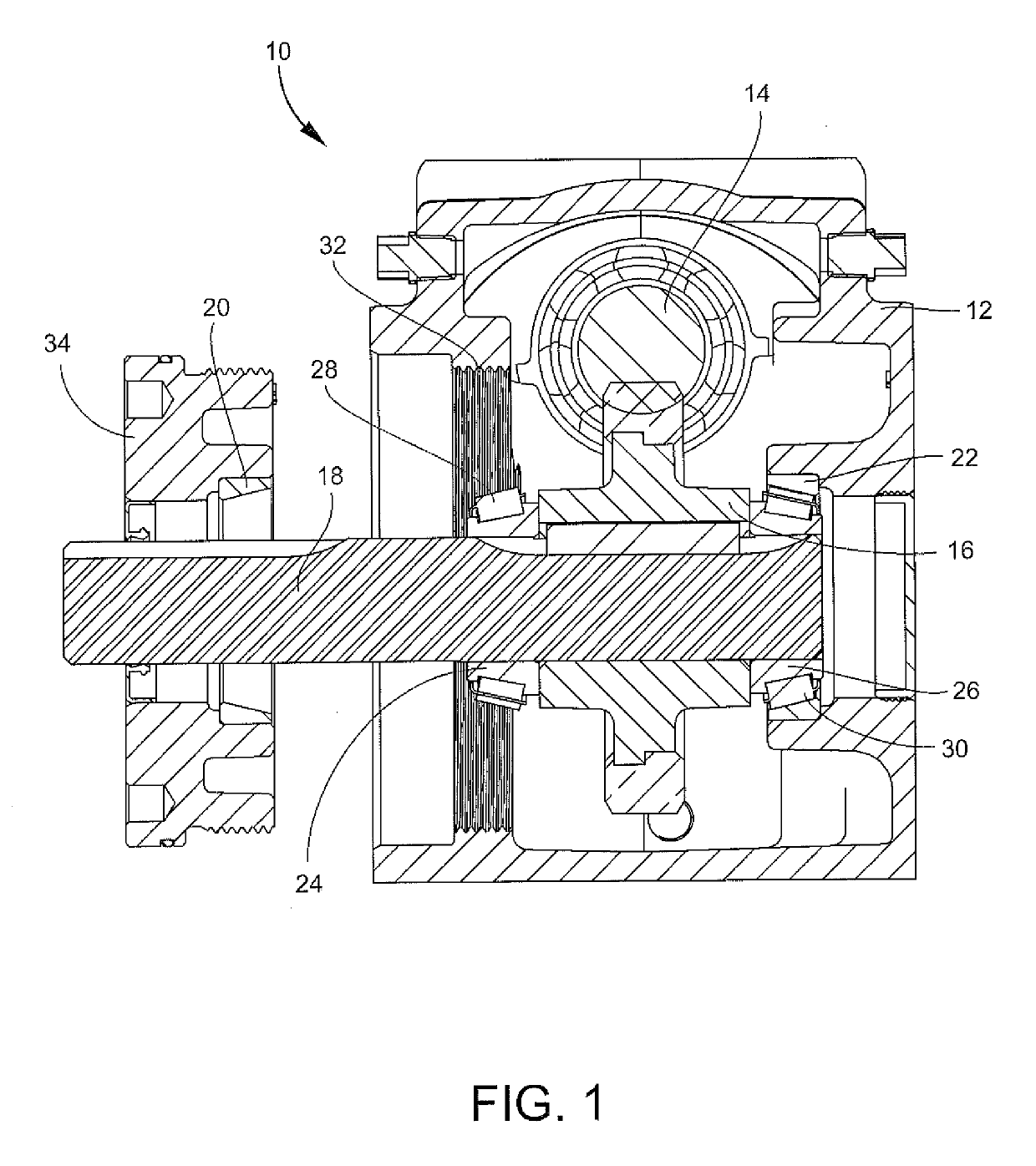
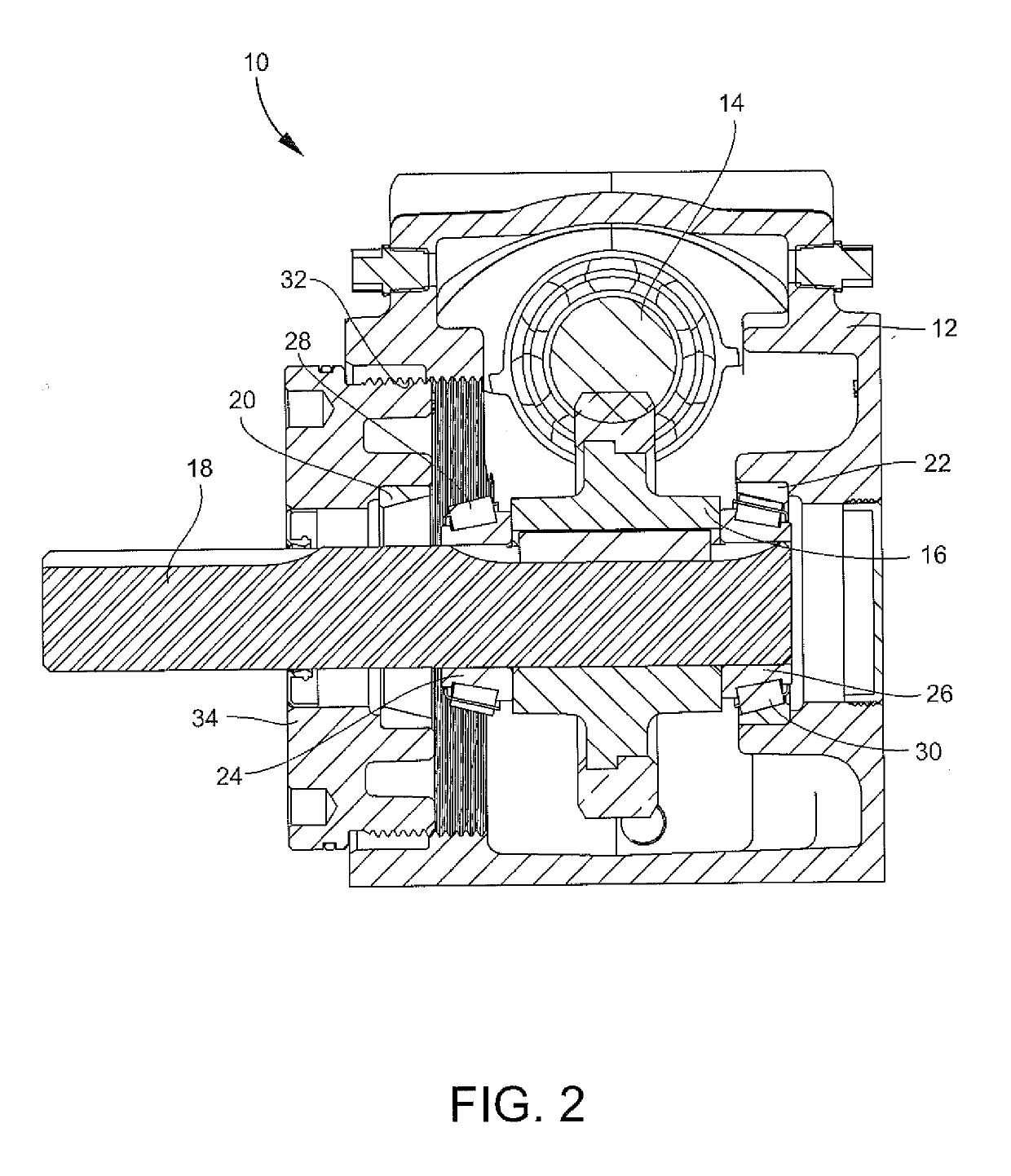
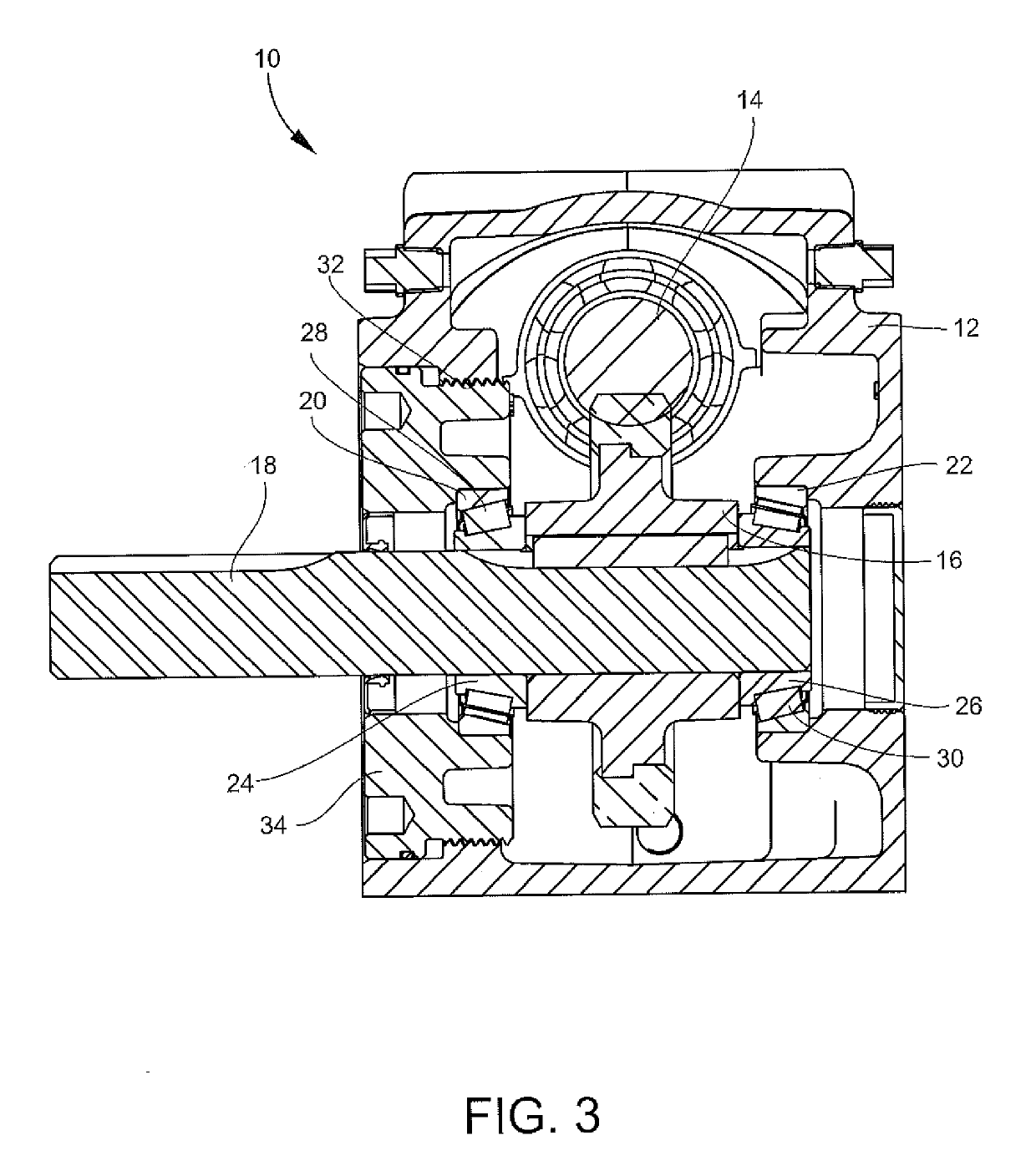

Rolling Bearing Clearance Adjustment Method
PatentInactiveJP1998508085A
Innovation
- A method for adjusting the internal clearance of rolling bearings by axially displacing the outer races relative to each other, using asymmetric bearing rings, spacer washers, or split bearing housings to achieve a range of gap grades in a single step.


Quality Standards for Precision Bearing Manufacturing
Quality standards for precision bearing manufacturing represent the cornerstone of achieving optimal cross-roller bearing clearance control in high-precision applications. These standards establish the fundamental framework that governs dimensional accuracy, surface finish requirements, and material specifications essential for maintaining tight tolerances in cross-roller bearing systems.
International standards such as ISO 492 and ABEC classifications define the precision grades that directly impact clearance optimization. Class P4 and P5 bearings, commonly specified for precision applications, require dimensional tolerances within micrometers to ensure proper clearance control. These standards mandate specific limits for inner ring bore diameter variation, outer ring outside diameter variation, and raceway roundness, all of which directly influence the final assembled clearance.
Surface roughness standards play a critical role in clearance optimization, as they affect the effective clearance during operation. Standards typically specify Ra values between 0.02 to 0.05 micrometers for precision bearing raceways. The surface texture requirements ensure consistent contact patterns and minimize clearance variations caused by surface irregularities during rolling element motion.
Material quality standards encompass chemical composition, hardness uniformity, and microstructural requirements that influence dimensional stability over time. Standards specify carbide distribution limits and retained austenite content to prevent dimensional changes that could alter clearance values during service life. Heat treatment standards ensure consistent material properties across bearing components, maintaining clearance stability under varying operational conditions.
Measurement and inspection standards define the protocols for clearance verification, including measurement methods, environmental conditions, and equipment calibration requirements. These standards specify the use of coordinate measuring machines and specialized fixtures to ensure accurate clearance assessment. Quality control procedures mandate statistical process control methods to monitor clearance consistency across production batches, enabling continuous improvement in manufacturing processes while maintaining the stringent tolerances required for precision cross-roller bearing applications.
International standards such as ISO 492 and ABEC classifications define the precision grades that directly impact clearance optimization. Class P4 and P5 bearings, commonly specified for precision applications, require dimensional tolerances within micrometers to ensure proper clearance control. These standards mandate specific limits for inner ring bore diameter variation, outer ring outside diameter variation, and raceway roundness, all of which directly influence the final assembled clearance.
Surface roughness standards play a critical role in clearance optimization, as they affect the effective clearance during operation. Standards typically specify Ra values between 0.02 to 0.05 micrometers for precision bearing raceways. The surface texture requirements ensure consistent contact patterns and minimize clearance variations caused by surface irregularities during rolling element motion.
Material quality standards encompass chemical composition, hardness uniformity, and microstructural requirements that influence dimensional stability over time. Standards specify carbide distribution limits and retained austenite content to prevent dimensional changes that could alter clearance values during service life. Heat treatment standards ensure consistent material properties across bearing components, maintaining clearance stability under varying operational conditions.
Measurement and inspection standards define the protocols for clearance verification, including measurement methods, environmental conditions, and equipment calibration requirements. These standards specify the use of coordinate measuring machines and specialized fixtures to ensure accurate clearance assessment. Quality control procedures mandate statistical process control methods to monitor clearance consistency across production batches, enabling continuous improvement in manufacturing processes while maintaining the stringent tolerances required for precision cross-roller bearing applications.
Cost-Performance Balance in Tight Tolerance Applications
The cost-performance balance in tight tolerance applications represents a critical decision framework that directly impacts the viability and market acceptance of cross-roller bearing solutions. Organizations must carefully evaluate the trade-offs between achieving ultra-precise clearance specifications and maintaining economically sustainable manufacturing processes. This balance becomes particularly challenging when targeting applications requiring sub-micron precision levels, where traditional cost models may not adequately reflect the exponential increase in manufacturing complexity.
Manufacturing costs escalate significantly as tolerance requirements tighten beyond conventional standards. Precision machining operations for achieving clearances within ±1-2 micrometers require specialized equipment, controlled environments, and extended processing times that can increase production costs by 200-400% compared to standard tolerance bearings. The investment in high-precision grinding machines, coordinate measuring systems, and climate-controlled facilities creates substantial overhead that must be justified through premium pricing strategies or high-volume applications.
Performance benefits in tight tolerance applications often justify the increased investment through enhanced system reliability and operational efficiency. Reduced vibration levels, improved rotational accuracy, and extended service life translate into measurable value propositions for end users. In semiconductor manufacturing equipment, the cost premium for tight tolerance bearings typically represents less than 2% of total system cost while contributing to yield improvements that can generate millions in additional revenue.
Market segmentation strategies enable manufacturers to optimize cost-performance positioning across different application tiers. High-value applications such as precision metrology equipment, advanced robotics, and aerospace systems demonstrate greater tolerance for premium pricing when performance benefits are clearly quantified. Conversely, industrial automation applications may require alternative approaches such as selective assembly techniques or statistical process control methods to achieve acceptable performance at competitive price points.
Value engineering approaches focus on identifying the minimum tolerance requirements that satisfy application performance criteria without over-engineering solutions. Collaborative design processes between bearing manufacturers and equipment designers can optimize clearance specifications based on actual operating conditions rather than theoretical worst-case scenarios. This approach often reveals opportunities to relax certain tolerance requirements while maintaining critical performance parameters, resulting in significant cost reductions without compromising functionality.
Manufacturing costs escalate significantly as tolerance requirements tighten beyond conventional standards. Precision machining operations for achieving clearances within ±1-2 micrometers require specialized equipment, controlled environments, and extended processing times that can increase production costs by 200-400% compared to standard tolerance bearings. The investment in high-precision grinding machines, coordinate measuring systems, and climate-controlled facilities creates substantial overhead that must be justified through premium pricing strategies or high-volume applications.
Performance benefits in tight tolerance applications often justify the increased investment through enhanced system reliability and operational efficiency. Reduced vibration levels, improved rotational accuracy, and extended service life translate into measurable value propositions for end users. In semiconductor manufacturing equipment, the cost premium for tight tolerance bearings typically represents less than 2% of total system cost while contributing to yield improvements that can generate millions in additional revenue.
Market segmentation strategies enable manufacturers to optimize cost-performance positioning across different application tiers. High-value applications such as precision metrology equipment, advanced robotics, and aerospace systems demonstrate greater tolerance for premium pricing when performance benefits are clearly quantified. Conversely, industrial automation applications may require alternative approaches such as selective assembly techniques or statistical process control methods to achieve acceptable performance at competitive price points.
Value engineering approaches focus on identifying the minimum tolerance requirements that satisfy application performance criteria without over-engineering solutions. Collaborative design processes between bearing manufacturers and equipment designers can optimize clearance specifications based on actual operating conditions rather than theoretical worst-case scenarios. This approach often reveals opportunities to relax certain tolerance requirements while maintaining critical performance parameters, resulting in significant cost reductions without compromising functionality.
Unlock deeper insights with PatSnap Eureka Quick Research — get a full tech report to explore trends and direct your research. Try now!
Generate Your Research Report Instantly with AI Agent
Supercharge your innovation with PatSnap Eureka AI Agent Platform!