
How to Boost Haptic Feedback Range in Wireless Devices
JAN 12, 20269 MIN READ
Generate Your Research Report Instantly with AI Agent
Patsnap Eureka helps you evaluate technical feasibility & market potential.
Haptic Feedback Technology Background and Objectives
Haptic feedback technology has evolved significantly since its early implementations in consumer electronics, transforming from simple vibration alerts to sophisticated tactile communication systems. The technology originated in the 1990s with basic eccentric rotating mass (ERM) motors in pagers and mobile phones, providing rudimentary vibration notifications. Over the past two decades, advancements in actuator design, signal processing algorithms, and power management systems have enabled more nuanced and expressive haptic experiences across various device categories.
The evolution accelerated with the introduction of linear resonant actuators (LRAs) and piezoelectric actuators, which offered faster response times and more precise control compared to traditional ERM motors. Recent developments in electroactive polymers and ultrasonic haptics have further expanded the possibilities for creating diverse tactile sensations. However, wireless devices face unique constraints that limit haptic feedback effectiveness, including battery capacity limitations, thermal management challenges, and the need to maintain compact form factors while delivering impactful tactile responses.
The primary technical objective in boosting haptic feedback range for wireless devices centers on expanding both the intensity spectrum and the variety of tactile sensations achievable within existing power and space constraints. This encompasses increasing the maximum force output for high-intensity alerts, extending the dynamic range to enable subtle nuanced feedback, and broadening the frequency response to reproduce a wider palette of tactile textures. Additionally, objectives include improving energy efficiency to minimize battery drain, reducing latency for real-time responsiveness, and enhancing spatial resolution in devices employing multiple actuators.
Achieving these objectives requires addressing fundamental trade-offs between actuator performance, power consumption, and physical dimensions. The goal extends beyond merely amplifying vibration strength to creating a comprehensive haptic vocabulary that can convey complex information through touch. This includes developing adaptive algorithms that optimize feedback based on usage context, user preferences, and device state. Furthermore, objectives encompass establishing standardized metrics for measuring and comparing haptic performance across different implementation approaches, enabling systematic evaluation of technological improvements and facilitating cross-platform haptic design consistency.
The evolution accelerated with the introduction of linear resonant actuators (LRAs) and piezoelectric actuators, which offered faster response times and more precise control compared to traditional ERM motors. Recent developments in electroactive polymers and ultrasonic haptics have further expanded the possibilities for creating diverse tactile sensations. However, wireless devices face unique constraints that limit haptic feedback effectiveness, including battery capacity limitations, thermal management challenges, and the need to maintain compact form factors while delivering impactful tactile responses.
The primary technical objective in boosting haptic feedback range for wireless devices centers on expanding both the intensity spectrum and the variety of tactile sensations achievable within existing power and space constraints. This encompasses increasing the maximum force output for high-intensity alerts, extending the dynamic range to enable subtle nuanced feedback, and broadening the frequency response to reproduce a wider palette of tactile textures. Additionally, objectives include improving energy efficiency to minimize battery drain, reducing latency for real-time responsiveness, and enhancing spatial resolution in devices employing multiple actuators.
Achieving these objectives requires addressing fundamental trade-offs between actuator performance, power consumption, and physical dimensions. The goal extends beyond merely amplifying vibration strength to creating a comprehensive haptic vocabulary that can convey complex information through touch. This includes developing adaptive algorithms that optimize feedback based on usage context, user preferences, and device state. Furthermore, objectives encompass establishing standardized metrics for measuring and comparing haptic performance across different implementation approaches, enabling systematic evaluation of technological improvements and facilitating cross-platform haptic design consistency.
Market Demand for Enhanced Wireless Haptic Devices
The wireless haptics market is experiencing accelerated growth driven by the convergence of immersive technologies and consumer expectations for richer sensory experiences. Gaming and virtual reality applications represent the most mature demand segments, where users increasingly require precise tactile feedback to enhance immersion and realism. The global gaming industry's shift toward cloud gaming and mobile platforms has intensified the need for wireless controllers and peripherals capable of delivering nuanced haptic sensations without latency or range limitations.
Healthcare and telemedicine sectors are emerging as significant demand drivers, particularly for remote surgical training, rehabilitation devices, and patient monitoring systems. The pandemic-accelerated adoption of telehealth services has highlighted the necessity for haptic-enabled devices that can transmit tactile information across distances, enabling practitioners to conduct remote examinations and therapeutic interventions with greater fidelity.
Consumer electronics manufacturers face mounting pressure to differentiate their products through enhanced haptic capabilities. Smartphones, wearables, and smart home devices are evolving beyond simple vibration alerts toward sophisticated haptic interfaces that convey texture, pressure, and spatial information. This evolution is particularly pronounced in premium device segments where users demonstrate willingness to pay for superior sensory experiences.
The automotive industry presents substantial opportunities as vehicles transition toward autonomous operation and digital cockpit interfaces. Haptic feedback systems are becoming critical for driver-vehicle interaction, providing tactile confirmation for touchscreen controls and safety alerts. Wireless implementation is essential for flexible interior designs and retrofit applications in existing vehicle fleets.
Industrial and enterprise applications are gaining traction in training simulations, remote equipment operation, and collaborative robotics. These sectors demand robust wireless haptic solutions capable of operating reliably in challenging electromagnetic environments while maintaining extended operational ranges. The convergence of augmented reality with industrial workflows further amplifies demand for untethered haptic devices that support mobility and hands-free operation.
Market research indicates sustained investment in haptic technology development, with particular emphasis on overcoming current limitations in wireless transmission range, battery efficiency, and feedback intensity. Consumer surveys consistently reveal dissatisfaction with existing haptic performance in wireless devices, creating clear market pull for breakthrough solutions that can deliver desktop-quality haptic experiences in portable form factors.
Healthcare and telemedicine sectors are emerging as significant demand drivers, particularly for remote surgical training, rehabilitation devices, and patient monitoring systems. The pandemic-accelerated adoption of telehealth services has highlighted the necessity for haptic-enabled devices that can transmit tactile information across distances, enabling practitioners to conduct remote examinations and therapeutic interventions with greater fidelity.
Consumer electronics manufacturers face mounting pressure to differentiate their products through enhanced haptic capabilities. Smartphones, wearables, and smart home devices are evolving beyond simple vibration alerts toward sophisticated haptic interfaces that convey texture, pressure, and spatial information. This evolution is particularly pronounced in premium device segments where users demonstrate willingness to pay for superior sensory experiences.
The automotive industry presents substantial opportunities as vehicles transition toward autonomous operation and digital cockpit interfaces. Haptic feedback systems are becoming critical for driver-vehicle interaction, providing tactile confirmation for touchscreen controls and safety alerts. Wireless implementation is essential for flexible interior designs and retrofit applications in existing vehicle fleets.
Industrial and enterprise applications are gaining traction in training simulations, remote equipment operation, and collaborative robotics. These sectors demand robust wireless haptic solutions capable of operating reliably in challenging electromagnetic environments while maintaining extended operational ranges. The convergence of augmented reality with industrial workflows further amplifies demand for untethered haptic devices that support mobility and hands-free operation.
Market research indicates sustained investment in haptic technology development, with particular emphasis on overcoming current limitations in wireless transmission range, battery efficiency, and feedback intensity. Consumer surveys consistently reveal dissatisfaction with existing haptic performance in wireless devices, creating clear market pull for breakthrough solutions that can deliver desktop-quality haptic experiences in portable form factors.
Current Haptic Range Limitations in Wireless Systems
Wireless haptic systems currently face significant constraints in delivering effective tactile feedback, primarily stemming from the inherent trade-offs between power consumption, device miniaturization, and signal transmission capabilities. The operational range of haptic actuators in wireless devices typically remains limited to basic vibration patterns, with most consumer electronics restricted to frequencies between 50-300 Hz and amplitudes insufficient for nuanced tactile experiences. This narrow operational bandwidth severely constrains the ability to reproduce complex haptic sensations that require broader frequency spectrums and higher force outputs.
Power efficiency represents a critical bottleneck in wireless haptic implementations. Traditional eccentric rotating mass motors and linear resonant actuators consume substantial energy to generate perceptible feedback, directly conflicting with battery life requirements in portable devices. The energy density limitations of current battery technologies force designers to compromise haptic intensity, resulting in weak or inconsistent feedback that diminishes user experience. Additionally, the wireless transmission protocols introduce latency issues, with typical delays ranging from 10-50 milliseconds, which disrupts the temporal precision essential for realistic haptic rendering.
Physical space constraints within wireless devices further restrict haptic range expansion. Modern smartphones and wearables allocate minimal volume to haptic components, typically less than 5% of total device space, limiting actuator size and consequently their force generation capacity. The miniaturization trend exacerbates this challenge, as smaller actuators inherently produce lower displacement amplitudes and reduced dynamic ranges. Current piezoelectric and voice coil actuators, while offering faster response times, struggle to deliver sufficient force magnitude across extended frequency ranges within compact form factors.
Thermal management issues compound these limitations, as intensive haptic operations generate heat that must be dissipated without compromising device performance or user comfort. The thermal constraints particularly affect high-frequency haptic rendering, where continuous operation can trigger thermal throttling mechanisms that automatically reduce haptic intensity. Furthermore, electromagnetic interference from wireless communication modules can degrade haptic signal quality, introducing unwanted noise and reducing the effective dynamic range available for meaningful tactile information transmission.
Power efficiency represents a critical bottleneck in wireless haptic implementations. Traditional eccentric rotating mass motors and linear resonant actuators consume substantial energy to generate perceptible feedback, directly conflicting with battery life requirements in portable devices. The energy density limitations of current battery technologies force designers to compromise haptic intensity, resulting in weak or inconsistent feedback that diminishes user experience. Additionally, the wireless transmission protocols introduce latency issues, with typical delays ranging from 10-50 milliseconds, which disrupts the temporal precision essential for realistic haptic rendering.
Physical space constraints within wireless devices further restrict haptic range expansion. Modern smartphones and wearables allocate minimal volume to haptic components, typically less than 5% of total device space, limiting actuator size and consequently their force generation capacity. The miniaturization trend exacerbates this challenge, as smaller actuators inherently produce lower displacement amplitudes and reduced dynamic ranges. Current piezoelectric and voice coil actuators, while offering faster response times, struggle to deliver sufficient force magnitude across extended frequency ranges within compact form factors.
Thermal management issues compound these limitations, as intensive haptic operations generate heat that must be dissipated without compromising device performance or user comfort. The thermal constraints particularly affect high-frequency haptic rendering, where continuous operation can trigger thermal throttling mechanisms that automatically reduce haptic intensity. Furthermore, electromagnetic interference from wireless communication modules can degrade haptic signal quality, introducing unwanted noise and reducing the effective dynamic range available for meaningful tactile information transmission.
Existing Solutions for Haptic Range Enhancement
01 Adjustable haptic feedback intensity and range control
Systems and methods for controlling the intensity and range of haptic feedback responses based on user preferences or contextual conditions. The feedback range can be dynamically adjusted to provide varying levels of tactile sensation, allowing users to customize their experience. This includes setting minimum and maximum feedback thresholds, scaling feedback intensity across different operational ranges, and adapting feedback parameters based on application requirements or user interaction patterns.- Adjustable haptic feedback intensity and range control: Systems and methods for controlling the intensity and range of haptic feedback responses based on user input or system conditions. The feedback range can be dynamically adjusted to provide varying levels of tactile sensation, allowing users to customize their haptic experience. This includes modulating the amplitude, frequency, and duration of haptic signals to achieve different feedback ranges suitable for various applications and user preferences.
- Multi-modal haptic feedback with extended spatial range: Technologies that enable haptic feedback across an extended spatial area or multiple contact points simultaneously. These systems can provide localized or distributed haptic sensations across a surface or device, creating a broader feedback range that enhances user interaction. The spatial range can be expanded through arrays of actuators or advanced haptic rendering techniques that simulate touch sensations across larger areas.
- Frequency range optimization for haptic actuators: Methods for optimizing the operational frequency range of haptic actuators to deliver effective tactile feedback. By controlling the frequency spectrum of vibrations and mechanical responses, systems can produce distinct haptic sensations that are perceptible across different frequency ranges. This optimization ensures that haptic feedback remains effective and distinguishable across various usage scenarios and device types.
- Context-aware haptic feedback range adaptation: Intelligent systems that adapt haptic feedback range based on contextual information such as user activity, application type, or environmental conditions. These adaptive mechanisms automatically adjust the characteristics and range of haptic responses to match the current usage context, providing appropriate tactile feedback intensity and coverage. The adaptation can involve machine learning algorithms or rule-based systems that optimize feedback parameters in real-time.
- Haptic feedback range extension through waveform synthesis: Techniques for extending the effective range of haptic feedback through advanced waveform synthesis and signal processing. By generating complex haptic waveforms and combining multiple feedback signals, systems can create richer tactile experiences with broader perceptual ranges. This includes methods for synthesizing haptic effects that simulate various textures, forces, and sensations beyond the physical limitations of individual actuators.
02 Frequency-based haptic feedback range modulation
Techniques for modulating haptic feedback through frequency variation to achieve different tactile sensations and feedback ranges. By adjusting the frequency of haptic actuators within specific ranges, different types of tactile responses can be generated. This approach enables the creation of diverse haptic effects spanning from subtle vibrations to more pronounced tactile feedback, expanding the perceptible range of haptic sensations available to users.Expand Specific Solutions03 Spatial haptic feedback distribution and coverage
Methods for distributing haptic feedback across spatial regions to extend the effective range of tactile sensation. This includes techniques for creating localized haptic effects at specific positions, as well as approaches for generating distributed haptic feedback across larger surface areas. The spatial range of haptic feedback can be controlled through actuator placement, signal coordination, and wave propagation techniques to provide comprehensive tactile coverage.Expand Specific Solutions04 Multi-modal haptic feedback range expansion
Integration of multiple haptic feedback modalities to expand the overall range and diversity of tactile sensations. This involves combining different types of haptic actuators, feedback mechanisms, or stimulation methods to achieve a broader spectrum of haptic effects. By leveraging complementary haptic technologies, the perceptible range of feedback can be extended beyond the limitations of individual actuator types, providing richer and more nuanced tactile experiences.Expand Specific Solutions05 Adaptive haptic feedback range optimization
Intelligent systems for automatically optimizing haptic feedback range based on real-time sensing, user behavior analysis, or environmental conditions. These adaptive approaches monitor various parameters and dynamically adjust feedback characteristics to maintain optimal tactile perception within appropriate ranges. The optimization may consider factors such as user sensitivity, device state, application context, and power consumption to ensure effective haptic feedback delivery across varying operational conditions.Expand Specific Solutions
Key Players in Wireless Haptic Device Industry
The wireless haptic feedback technology market is experiencing rapid growth as demand for immersive user experiences intensifies across consumer electronics, wearables, and automotive applications. The competitive landscape features established technology giants like Huawei, Samsung, Apple, and Google alongside specialized haptic innovators such as Immersion Corp. and emerging players like Bestechnic and CK Materials Lab. Market maturity varies significantly by segment, with smartphone haptics reaching advanced stages while wearable and automotive implementations remain in development phases. Technology maturity demonstrates a clear divide: major manufacturers like Apple, Samsung, and Huawei have integrated sophisticated haptic engines with refined software algorithms, while companies like Immersion Corp. provide foundational IP and solutions enabling broader industry adoption. Component suppliers including TDK Electronics, Maxim Integrated, and AVAGO Technologies support the ecosystem with actuators and driver ICs, indicating a maturing supply chain that enables enhanced feedback range and precision in wireless devices.
Huawei Technologies Co., Ltd.
Technical Solution: Huawei develops comprehensive haptic solutions for wireless devices through its proprietary HapticEngine technology, implemented across smartphones, tablets, and wearable devices. The system employs X-axis linear motors combined with advanced waveform synthesis algorithms that generate over 100 distinct haptic effects categorized by usage scenarios (notifications, gaming, system interactions). Huawei's approach emphasizes power efficiency for wireless devices through adaptive haptic rendering that dynamically adjusts feedback intensity based on remaining battery capacity and wireless signal strength. The technology incorporates acoustic-haptic coupling, where haptic feedback is synchronized with audio output to create immersive multimedia experiences, effectively expanding the perceptual range of tactile sensations. For wireless earbuds and smartwatches, Huawei developed ultra-compact piezoelectric actuators that consume 40% less power than traditional electromagnetic motors while maintaining comparable haptic intensity. The system features developer APIs that enable third-party applications to access graduated haptic intensity levels and custom waveform design tools, facilitating diverse haptic implementations across application categories.
Strengths: Excellent power efficiency optimized for battery-constrained wireless devices, strong integration with audio systems for multimodal feedback, competitive performance-to-cost ratio. Weaknesses: Limited global developer community due to geopolitical restrictions, less extensive haptic effect library compared to specialized haptic companies, reduced market presence in certain regions.
Samsung Electronics Co., Ltd.
Technical Solution: Samsung implements multi-actuator haptic systems in its wireless devices, particularly in flagship Galaxy smartphones and wearables. The technology employs dual linear motors positioned strategically within device chassis to create stereo haptic effects, effectively doubling the feedback range compared to single-actuator designs. Samsung's approach integrates haptic feedback with display technology through their AMOLED screens, enabling location-specific tactile responses across the screen surface. The system utilizes advanced driver ICs that support variable frequency operation (100-250Hz) and amplitude modulation with 256 intensity levels, providing granular control over haptic sensations. For wireless earbuds like Galaxy Buds series, Samsung developed miniaturized voice coil actuators that deliver haptic confirmation for touch controls while maintaining compact form factors. The haptic engine incorporates machine learning algorithms that adapt feedback patterns based on user interaction history and contextual usage scenarios, optimizing both perceptual impact and power efficiency in wireless operation modes.
Strengths: Multi-actuator architecture provides spatial haptic diversity, strong integration with display technology for enhanced user interfaces, competitive pricing enables broader market adoption. Weaknesses: Haptic quality varies across product lines, less refined developer ecosystem compared to competitors, occasional consistency issues in wireless latency management.
Core Innovations in Wireless Haptic Signal Transmission
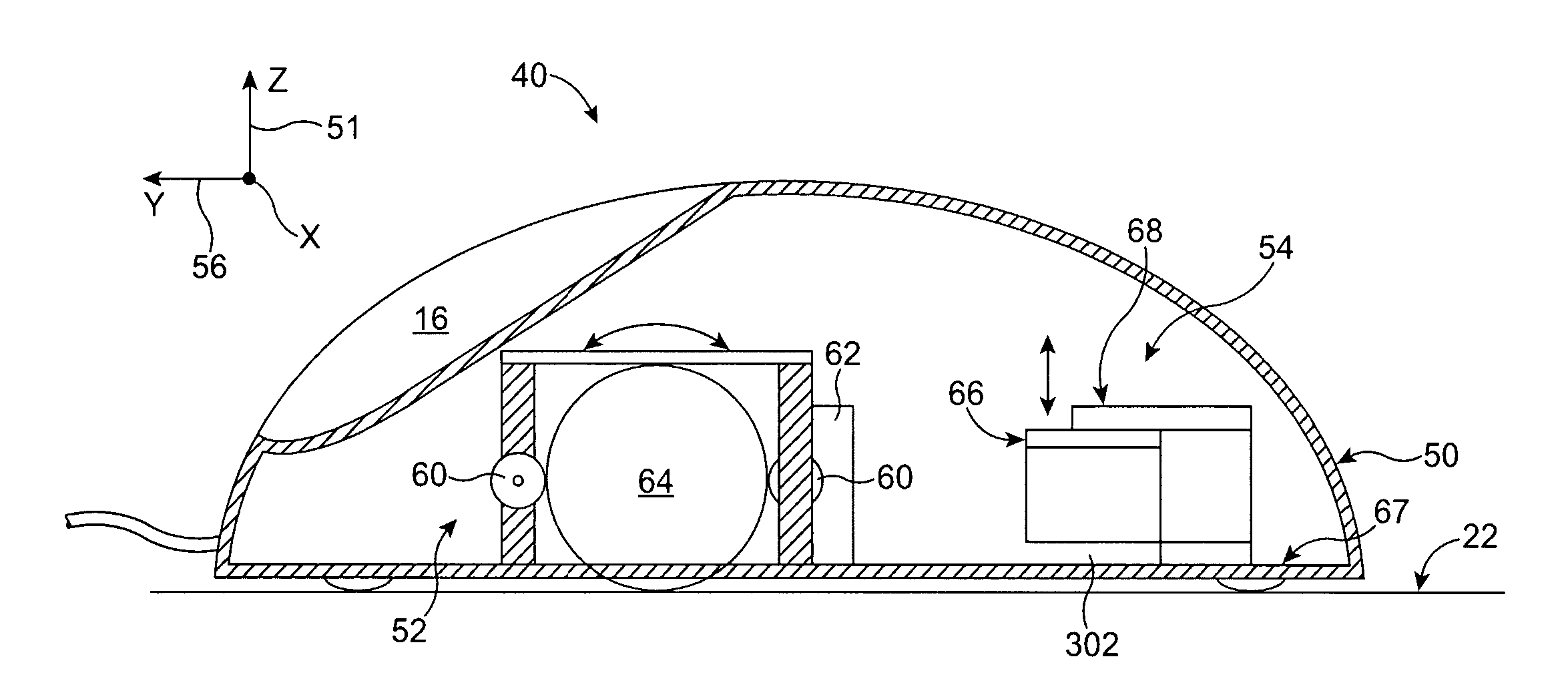
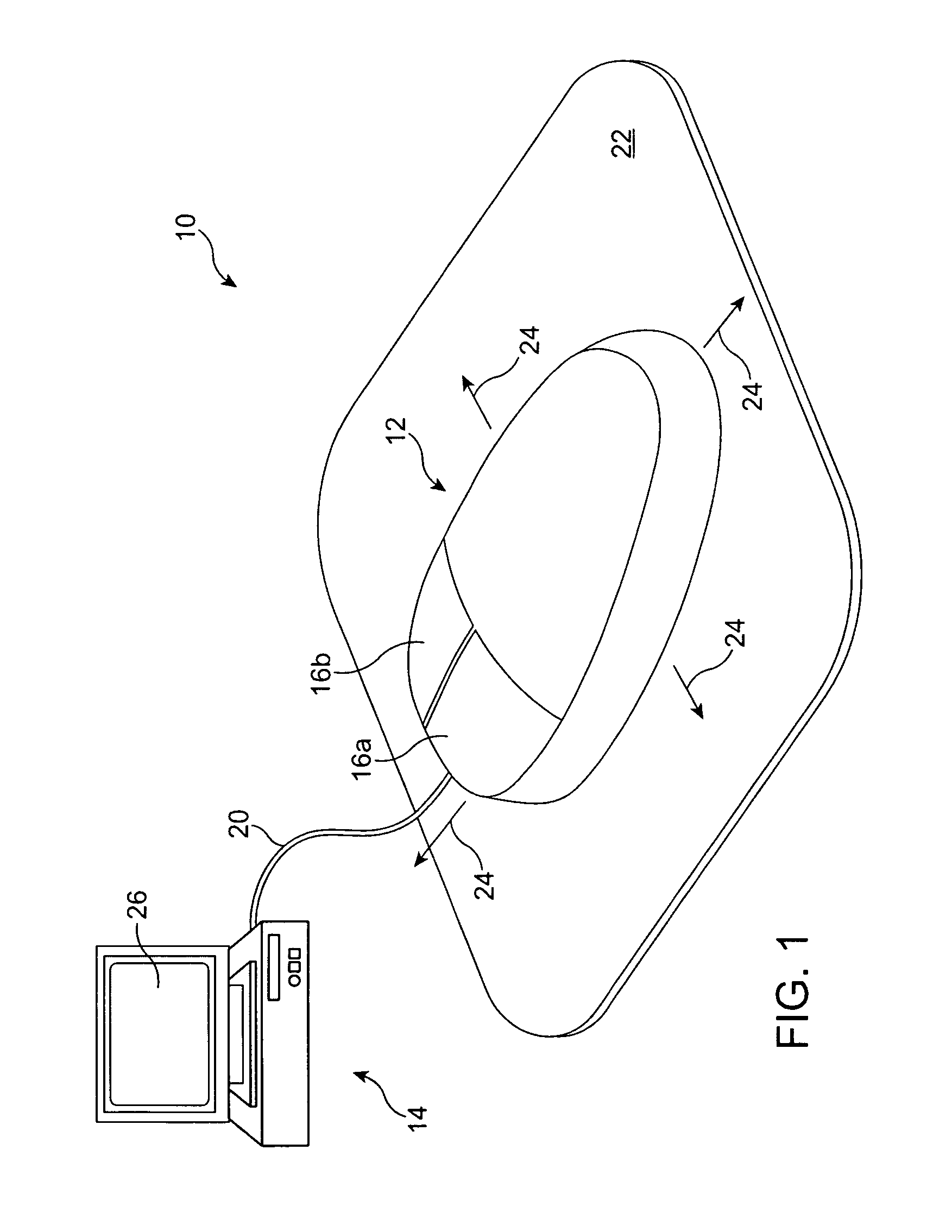
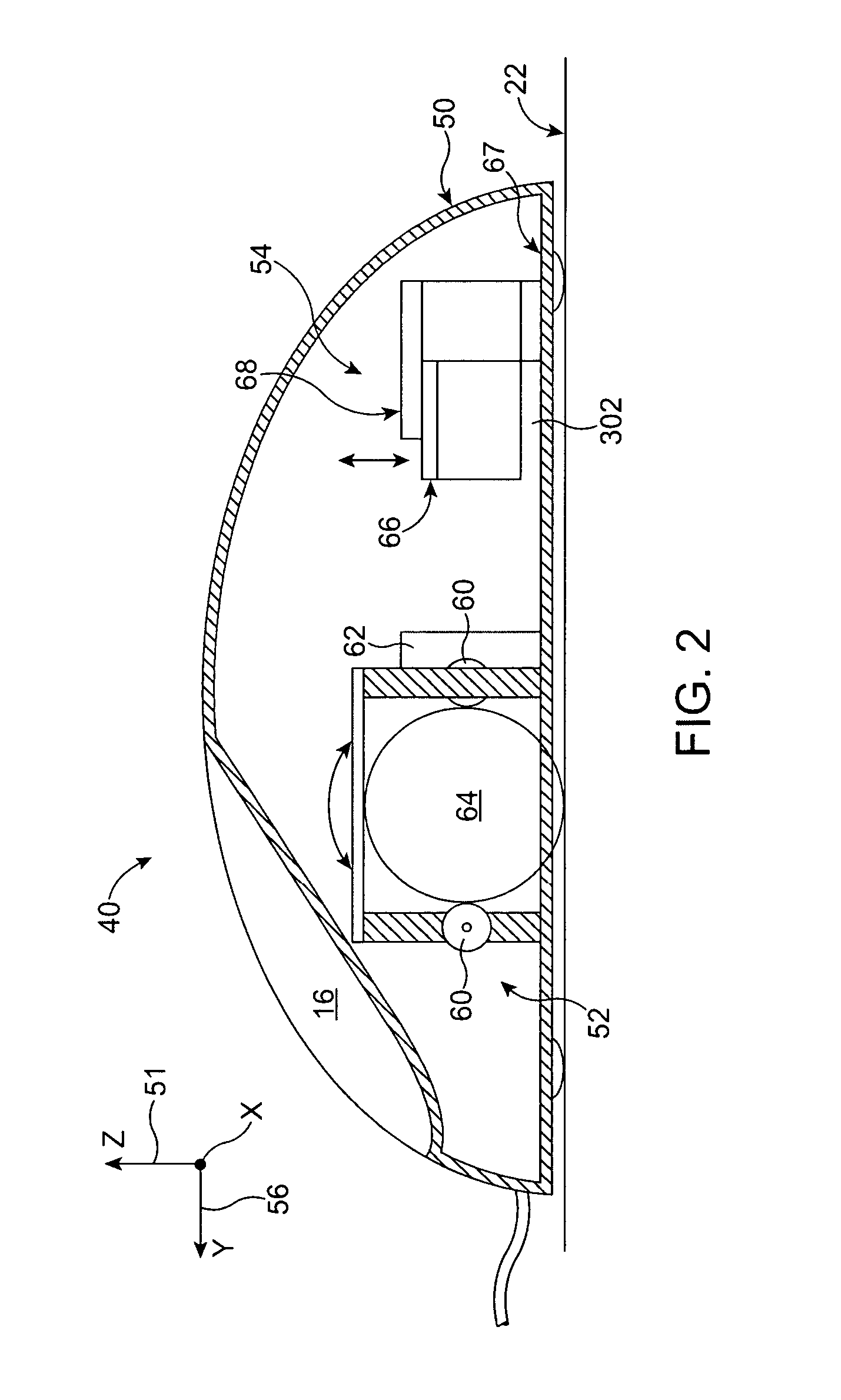
Providing enhanced haptic feedback effects
PatentInactiveUS7218310B2
Innovation
- The method involves combining high frequency waveforms with low frequency signals to enhance tactile sensations, using techniques such as pulse bursts, resonance, and filtering to create a resulting signal that conveys the low frequency content more effectively, allowing for stronger tactile sensations and improved combination of multiple tactile effects without reducing fidelity.

Device and method for producing active haptic feedback
PatentActiveUS11850630B2
Innovation
- A device comprising a piezoelectric actuator with multiple layers and internal electrodes, combined with amplification elements and a driver circuit, which applies electrical voltage to mimic a 'jump in force' haptic feedback, providing stronger and more reliable feedback across a broader frequency range by amplifying the actuator's movement.


Power Consumption Constraints in Wireless Haptics
Power consumption represents the most critical bottleneck limiting haptic feedback performance in wireless devices. Unlike wired systems with continuous power supply, battery-operated devices must balance haptic intensity against operational longevity. Conventional haptic actuators, particularly linear resonant actuators and eccentric rotating mass motors, consume substantial current during peak operation, often drawing 100-200mA at maximum intensity. This power demand becomes particularly problematic when attempting to extend haptic feedback range, as increased amplitude and frequency variations require proportionally higher energy input.
The fundamental challenge stems from the inverse relationship between haptic strength and battery life. Enhancing feedback range through higher vibration amplitudes or extended frequency bands necessitates increased voltage drive levels and longer activation periods. Research indicates that continuous high-intensity haptic operation can reduce typical smartphone battery life by 15-25%, creating significant user experience trade-offs. This constraint becomes more severe in compact wearable devices where battery capacity is inherently limited, often below 300mAh compared to smartphones' 3000-5000mAh capacity.
Wireless transmission protocols compound these power limitations. Bluetooth Low Energy and similar communication standards introduce latency and require additional power for maintaining stable connections during haptic events. The synchronization between haptic commands and actuator response demands constant radio activity, consuming 10-30mW continuously. When combined with actuator power requirements, total system consumption during haptic feedback can exceed 500mW, drastically limiting sustainable operation duration.
Thermal management further constrains power delivery to haptic systems. Concentrated power dissipation in miniaturized actuators generates localized heating, potentially reaching 45-50°C during sustained operation. This thermal buildup not only affects user comfort but also triggers power throttling mechanisms that reduce haptic intensity to prevent component damage. Consequently, achieving extended haptic range while maintaining thermal stability requires sophisticated power management strategies that balance instantaneous performance against thermal accumulation, adding complexity to system design and limiting practical implementation of enhanced haptic capabilities in wireless platforms.
The fundamental challenge stems from the inverse relationship between haptic strength and battery life. Enhancing feedback range through higher vibration amplitudes or extended frequency bands necessitates increased voltage drive levels and longer activation periods. Research indicates that continuous high-intensity haptic operation can reduce typical smartphone battery life by 15-25%, creating significant user experience trade-offs. This constraint becomes more severe in compact wearable devices where battery capacity is inherently limited, often below 300mAh compared to smartphones' 3000-5000mAh capacity.
Wireless transmission protocols compound these power limitations. Bluetooth Low Energy and similar communication standards introduce latency and require additional power for maintaining stable connections during haptic events. The synchronization between haptic commands and actuator response demands constant radio activity, consuming 10-30mW continuously. When combined with actuator power requirements, total system consumption during haptic feedback can exceed 500mW, drastically limiting sustainable operation duration.
Thermal management further constrains power delivery to haptic systems. Concentrated power dissipation in miniaturized actuators generates localized heating, potentially reaching 45-50°C during sustained operation. This thermal buildup not only affects user comfort but also triggers power throttling mechanisms that reduce haptic intensity to prevent component damage. Consequently, achieving extended haptic range while maintaining thermal stability requires sophisticated power management strategies that balance instantaneous performance against thermal accumulation, adding complexity to system design and limiting practical implementation of enhanced haptic capabilities in wireless platforms.
Latency Optimization for Real-Time Haptic Response
Latency optimization stands as a critical determinant in achieving effective real-time haptic feedback within wireless devices. The human sensory system exhibits remarkable sensitivity to temporal delays, with research indicating that latency exceeding 20-30 milliseconds becomes perceptible and degrades user experience significantly. In wireless haptic applications, minimizing end-to-end latency from trigger event to actuator response directly influences the perceived quality and immersiveness of tactile sensations, making it essential for applications ranging from gaming controllers to remote surgical systems.
The latency challenge in wireless haptic systems encompasses multiple contributing factors across the signal chain. Wireless transmission protocols introduce inherent delays, with traditional Bluetooth connections typically adding 10-40 milliseconds of latency. Processing delays occur at both the host device during haptic signal generation and at the receiving device during signal interpretation and actuator driving. Additional latency sources include sensor sampling rates, buffer management strategies, and the physical response time of haptic actuators themselves, which collectively can accumulate to unacceptable levels if not carefully managed.
Contemporary optimization approaches focus on protocol-level enhancements and architectural refinements. Low-latency wireless standards such as Bluetooth LE Audio with its LC3 codec and proprietary 2.4GHz implementations have demonstrated sub-10-millisecond transmission capabilities. Edge processing architectures that perform haptic rendering locally on the wireless device reduce round-trip communication requirements. Predictive algorithms analyze user interaction patterns to pre-generate haptic signals, effectively masking unavoidable transmission delays through anticipatory response generation.
Hardware acceleration techniques provide complementary latency reduction pathways. Dedicated haptic processing units bypass general-purpose CPU queues, enabling deterministic response timing. Direct memory access mechanisms eliminate intermediate data copying operations. Advanced actuator technologies with faster mechanical response characteristics, including piezoelectric and electroactive polymer solutions, reduce the final stage of the latency chain. System-level optimizations such as interrupt prioritization and real-time operating system implementations ensure haptic processing receives computational precedence over non-critical tasks, maintaining consistent low-latency performance even under varying system loads.
The latency challenge in wireless haptic systems encompasses multiple contributing factors across the signal chain. Wireless transmission protocols introduce inherent delays, with traditional Bluetooth connections typically adding 10-40 milliseconds of latency. Processing delays occur at both the host device during haptic signal generation and at the receiving device during signal interpretation and actuator driving. Additional latency sources include sensor sampling rates, buffer management strategies, and the physical response time of haptic actuators themselves, which collectively can accumulate to unacceptable levels if not carefully managed.
Contemporary optimization approaches focus on protocol-level enhancements and architectural refinements. Low-latency wireless standards such as Bluetooth LE Audio with its LC3 codec and proprietary 2.4GHz implementations have demonstrated sub-10-millisecond transmission capabilities. Edge processing architectures that perform haptic rendering locally on the wireless device reduce round-trip communication requirements. Predictive algorithms analyze user interaction patterns to pre-generate haptic signals, effectively masking unavoidable transmission delays through anticipatory response generation.
Hardware acceleration techniques provide complementary latency reduction pathways. Dedicated haptic processing units bypass general-purpose CPU queues, enabling deterministic response timing. Direct memory access mechanisms eliminate intermediate data copying operations. Advanced actuator technologies with faster mechanical response characteristics, including piezoelectric and electroactive polymer solutions, reduce the final stage of the latency chain. System-level optimizations such as interrupt prioritization and real-time operating system implementations ensure haptic processing receives computational precedence over non-critical tasks, maintaining consistent low-latency performance even under varying system loads.
Unlock deeper insights with Patsnap Eureka Quick Research — get a full tech report to explore trends and direct your research. Try now!
Generate Your Research Report Instantly with AI Agent
Supercharge your innovation with Patsnap Eureka AI Agent Platform!