
How to Boost System Uptime with Advanced Current Interrupt Devices
MAY 25, 20268 MIN READ
Generate Your Research Report Instantly with AI Agent
Patsnap Eureka helps you evaluate technical feasibility & market potential.
Current Interrupt Device Technology Background and Uptime Goals
Current interrupt devices have evolved significantly since the early days of electrical power systems, transforming from simple mechanical circuit breakers to sophisticated electronic protection systems. The fundamental principle remains consistent: rapidly detecting and interrupting abnormal current flows to prevent equipment damage and maintain system integrity. However, modern implementations leverage advanced semiconductor technologies, digital signal processing, and intelligent algorithms to achieve unprecedented speed and precision in fault detection and isolation.
The evolution of current interrupt technology has been driven by the increasing complexity and criticality of modern electrical systems. Traditional electromechanical devices, while reliable, often exhibited response times measured in cycles or even seconds. Contemporary solid-state current interrupt devices can respond within microseconds, dramatically reducing the potential for cascading failures and equipment damage. This technological progression has been particularly crucial in data centers, industrial automation systems, and critical infrastructure where even brief interruptions can result in substantial economic losses.
System uptime has become a paramount concern across industries, with many organizations targeting availability levels of 99.9% or higher. In mission-critical applications such as healthcare facilities, financial trading systems, and telecommunications networks, the cost of downtime can exceed millions of dollars per hour. Advanced current interrupt devices play a pivotal role in achieving these ambitious uptime targets by providing multiple layers of protection and enabling rapid system recovery following fault conditions.
The primary technical objectives for modern current interrupt devices center on minimizing both the frequency and duration of system interruptions. This involves achieving faster fault detection through enhanced sensing capabilities, reducing clearing times through improved switching technologies, and implementing selective coordination to isolate faults with minimal impact on healthy system components. Additionally, predictive maintenance capabilities and real-time system monitoring have emerged as critical features for preventing failures before they occur.
Contemporary uptime goals extend beyond simple availability metrics to encompass power quality considerations, including voltage regulation, harmonic distortion control, and transient suppression. Advanced current interrupt devices are increasingly expected to provide comprehensive power conditioning functions while maintaining their primary protective role, thereby supporting the operation of sensitive electronic equipment that demands clean, stable power supplies for optimal performance.
The evolution of current interrupt technology has been driven by the increasing complexity and criticality of modern electrical systems. Traditional electromechanical devices, while reliable, often exhibited response times measured in cycles or even seconds. Contemporary solid-state current interrupt devices can respond within microseconds, dramatically reducing the potential for cascading failures and equipment damage. This technological progression has been particularly crucial in data centers, industrial automation systems, and critical infrastructure where even brief interruptions can result in substantial economic losses.
System uptime has become a paramount concern across industries, with many organizations targeting availability levels of 99.9% or higher. In mission-critical applications such as healthcare facilities, financial trading systems, and telecommunications networks, the cost of downtime can exceed millions of dollars per hour. Advanced current interrupt devices play a pivotal role in achieving these ambitious uptime targets by providing multiple layers of protection and enabling rapid system recovery following fault conditions.
The primary technical objectives for modern current interrupt devices center on minimizing both the frequency and duration of system interruptions. This involves achieving faster fault detection through enhanced sensing capabilities, reducing clearing times through improved switching technologies, and implementing selective coordination to isolate faults with minimal impact on healthy system components. Additionally, predictive maintenance capabilities and real-time system monitoring have emerged as critical features for preventing failures before they occur.
Contemporary uptime goals extend beyond simple availability metrics to encompass power quality considerations, including voltage regulation, harmonic distortion control, and transient suppression. Advanced current interrupt devices are increasingly expected to provide comprehensive power conditioning functions while maintaining their primary protective role, thereby supporting the operation of sensitive electronic equipment that demands clean, stable power supplies for optimal performance.
Market Demand for High-Availability Power Protection Systems
The global market for high-availability power protection systems has experienced substantial growth driven by increasing digitalization and the critical need for uninterrupted operations across multiple industries. Data centers, healthcare facilities, manufacturing plants, and financial institutions represent the primary demand drivers, as these sectors cannot tolerate power disruptions without significant operational and financial consequences.
Enterprise data centers constitute the largest market segment, where even brief power interruptions can result in substantial revenue losses and service level agreement violations. The proliferation of cloud computing services and edge computing infrastructure has intensified the demand for sophisticated power protection solutions that can maintain system availability during grid disturbances and power quality issues.
Healthcare facilities represent another critical market segment, where power continuity directly impacts patient safety and regulatory compliance. Advanced current interrupt devices are increasingly essential for protecting life-support equipment, imaging systems, and electronic health record systems from power anomalies that could compromise patient care or data integrity.
Industrial manufacturing environments face growing pressure to minimize unplanned downtime, as modern production lines become increasingly automated and interconnected. The integration of Industry 4.0 technologies has created complex dependencies where power disturbances can cascade through entire manufacturing systems, making robust power protection a strategic necessity rather than a basic utility requirement.
Financial services institutions require exceptional power reliability to maintain trading operations, transaction processing, and regulatory reporting systems. The shift toward real-time payment systems and high-frequency trading has elevated power protection requirements, creating demand for advanced interrupt devices capable of responding to power anomalies within microseconds.
Telecommunications infrastructure providers face mounting pressure to deliver consistent service availability as 5G networks expand and Internet of Things applications proliferate. These networks require power protection systems that can maintain signal integrity and prevent service interruptions during various power quality events.
The market demand is further amplified by increasingly stringent regulatory requirements across industries, mandating specific uptime standards and business continuity capabilities. Organizations are recognizing that investing in advanced current interrupt devices represents a proactive approach to risk management and operational resilience.
Enterprise data centers constitute the largest market segment, where even brief power interruptions can result in substantial revenue losses and service level agreement violations. The proliferation of cloud computing services and edge computing infrastructure has intensified the demand for sophisticated power protection solutions that can maintain system availability during grid disturbances and power quality issues.
Healthcare facilities represent another critical market segment, where power continuity directly impacts patient safety and regulatory compliance. Advanced current interrupt devices are increasingly essential for protecting life-support equipment, imaging systems, and electronic health record systems from power anomalies that could compromise patient care or data integrity.
Industrial manufacturing environments face growing pressure to minimize unplanned downtime, as modern production lines become increasingly automated and interconnected. The integration of Industry 4.0 technologies has created complex dependencies where power disturbances can cascade through entire manufacturing systems, making robust power protection a strategic necessity rather than a basic utility requirement.
Financial services institutions require exceptional power reliability to maintain trading operations, transaction processing, and regulatory reporting systems. The shift toward real-time payment systems and high-frequency trading has elevated power protection requirements, creating demand for advanced interrupt devices capable of responding to power anomalies within microseconds.
Telecommunications infrastructure providers face mounting pressure to deliver consistent service availability as 5G networks expand and Internet of Things applications proliferate. These networks require power protection systems that can maintain signal integrity and prevent service interruptions during various power quality events.
The market demand is further amplified by increasingly stringent regulatory requirements across industries, mandating specific uptime standards and business continuity capabilities. Organizations are recognizing that investing in advanced current interrupt devices represents a proactive approach to risk management and operational resilience.
Current State and Challenges of System Uptime Technologies
System uptime technologies have evolved significantly over the past decade, driven by increasing demands for continuous service availability across critical infrastructure sectors. Current solutions primarily focus on redundancy-based approaches, including N+1 power configurations, uninterruptible power supplies (UPS), and distributed system architectures. However, these traditional methods often struggle with the rapid detection and isolation of electrical faults that can cascade into system-wide failures.
The integration of advanced current interrupt devices represents a paradigm shift from reactive to proactive system protection. Modern circuit breakers, smart relays, and solid-state protection devices now incorporate sophisticated monitoring capabilities that can detect anomalous current patterns within microseconds. Despite these advances, the industry faces significant implementation challenges related to cost-effectiveness and system complexity.
One of the primary technical obstacles lies in achieving optimal sensitivity without triggering false positives. Current interrupt devices must distinguish between normal operational transients and genuine fault conditions, particularly in environments with variable load patterns. This challenge is compounded by the need for seamless integration with existing legacy systems, which often lack the communication protocols necessary for coordinated protection strategies.
Geographic distribution of advanced current interrupt technology adoption reveals significant disparities. North American and European markets lead in deployment of intelligent protection systems, while emerging economies continue to rely heavily on conventional protection methods. This technological gap creates interoperability challenges for multinational organizations seeking standardized uptime solutions.
The scalability challenge represents another critical constraint. While advanced current interrupt devices perform effectively in controlled environments, their performance in large-scale distributed systems remains inconsistent. Issues arise from communication latency between protection devices, coordination complexity, and the exponential increase in potential failure modes as system complexity grows.
Emerging challenges include cybersecurity vulnerabilities introduced by smart protection devices and the need for real-time data processing capabilities that can handle the massive volumes of monitoring data generated by modern current interrupt systems. Additionally, the industry struggles with standardization across different manufacturers and the development of unified protocols for cross-platform compatibility.
The integration of advanced current interrupt devices represents a paradigm shift from reactive to proactive system protection. Modern circuit breakers, smart relays, and solid-state protection devices now incorporate sophisticated monitoring capabilities that can detect anomalous current patterns within microseconds. Despite these advances, the industry faces significant implementation challenges related to cost-effectiveness and system complexity.
One of the primary technical obstacles lies in achieving optimal sensitivity without triggering false positives. Current interrupt devices must distinguish between normal operational transients and genuine fault conditions, particularly in environments with variable load patterns. This challenge is compounded by the need for seamless integration with existing legacy systems, which often lack the communication protocols necessary for coordinated protection strategies.
Geographic distribution of advanced current interrupt technology adoption reveals significant disparities. North American and European markets lead in deployment of intelligent protection systems, while emerging economies continue to rely heavily on conventional protection methods. This technological gap creates interoperability challenges for multinational organizations seeking standardized uptime solutions.
The scalability challenge represents another critical constraint. While advanced current interrupt devices perform effectively in controlled environments, their performance in large-scale distributed systems remains inconsistent. Issues arise from communication latency between protection devices, coordination complexity, and the exponential increase in potential failure modes as system complexity grows.
Emerging challenges include cybersecurity vulnerabilities introduced by smart protection devices and the need for real-time data processing capabilities that can handle the massive volumes of monitoring data generated by modern current interrupt systems. Additionally, the industry struggles with standardization across different manufacturers and the development of unified protocols for cross-platform compatibility.
Existing Current Interrupt Solutions for System Reliability
01 Circuit breaker mechanisms and interruption techniques
Advanced circuit breakers utilize sophisticated interruption mechanisms to quickly and safely disconnect electrical circuits during fault conditions. These devices employ various technologies including vacuum interrupters, gas-insulated systems, and magnetic blow-out techniques to extinguish arcs and prevent system damage. The mechanisms are designed to operate within milliseconds to minimize downtime and protect downstream equipment.- Circuit breaker mechanisms and interruption techniques: Advanced current interrupt devices utilize sophisticated circuit breaker mechanisms that employ various interruption techniques to safely disconnect electrical circuits. These mechanisms include vacuum interrupters, gas-insulated systems, and magnetic blow-out designs that enhance the device's ability to interrupt fault currents while maintaining system reliability and extending operational lifespan.
- Arc extinction and contact systems: Current interrupt devices incorporate advanced arc extinction technologies and optimized contact systems to minimize arcing damage and improve interruption performance. These systems feature specialized contact materials, arc chutes, and magnetic field control mechanisms that effectively extinguish electrical arcs during switching operations, thereby enhancing device longevity and system uptime.
- Monitoring and diagnostic systems: Modern current interrupt devices integrate comprehensive monitoring and diagnostic capabilities that continuously assess device health and performance parameters. These systems provide real-time status information, predictive maintenance alerts, and operational analytics to optimize system uptime through proactive maintenance scheduling and early fault detection.
- Control and automation technologies: Advanced control systems and automation technologies enable intelligent operation of current interrupt devices through sophisticated algorithms and communication protocols. These systems facilitate remote operation, automatic fault isolation, and coordinated switching sequences that minimize downtime and enhance overall system reliability and availability.
- Protection and coordination schemes: Current interrupt devices employ advanced protection schemes and coordination algorithms to ensure selective operation and maintain system stability during fault conditions. These protection systems utilize digital relays, communication networks, and adaptive settings to provide fast and reliable fault clearing while minimizing the impact on system uptime and service continuity.
02 Fault detection and monitoring systems
Modern current interrupt devices incorporate intelligent monitoring and detection systems that continuously assess electrical parameters to identify potential faults before they cause system failures. These systems use advanced sensors, microprocessors, and communication protocols to provide real-time status information and predictive maintenance capabilities, significantly improving system reliability and uptime.Expand Specific Solutions03 Automatic reclosing and restoration mechanisms
Automatic reclosing systems enable current interrupt devices to restore power automatically after temporary faults have cleared, minimizing service interruptions and maximizing system uptime. These mechanisms include programmable timing sequences, fault discrimination capabilities, and coordination with other protective devices to ensure safe and reliable power restoration without human intervention.Expand Specific Solutions04 Communication and remote control capabilities
Advanced interrupt devices feature integrated communication systems that enable remote monitoring, control, and diagnostics through various protocols and interfaces. These capabilities allow operators to manage electrical systems from centralized control centers, perform remote switching operations, and receive real-time alerts about system status, thereby reducing response times and improving overall system availability.Expand Specific Solutions05 Power quality and harmonic management
Current interrupt devices incorporate features to maintain power quality and manage harmonic distortion during switching operations and fault conditions. These systems include filtering capabilities, voltage regulation functions, and coordinated switching techniques that minimize transients and disturbances, ensuring stable power delivery and protecting sensitive equipment from power quality issues.Expand Specific Solutions
Key Players in Power Protection and Interrupt Device Industry
The advanced current interrupt device market for system uptime enhancement is in a mature growth phase, driven by increasing demand for reliable power infrastructure across industrial and commercial sectors. The market demonstrates substantial scale with established players commanding significant positions through comprehensive product portfolios and global reach. Technology maturity varies considerably among key participants, with industry leaders like Schneider Electric Industries SASU, Siemens AG, and ABB Ltd. offering highly sophisticated, digitally-integrated solutions featuring advanced monitoring and predictive maintenance capabilities. Traditional powerhouse companies such as Mitsubishi Electric Corp., DENSO Corp., and Robert Bosch GmbH leverage decades of engineering expertise to deliver proven reliability. Meanwhile, specialized firms like Zeno Semiconductor Inc. and emerging players including Shenzhen Hello Tech Energy Co. Ltd. focus on innovative semiconductor-based approaches and energy storage integration, creating a competitive landscape where established reliability meets cutting-edge innovation in pursuit of maximum system uptime optimization.
Schneider Electric Industries SASU
Technical Solution: Schneider Electric develops advanced circuit breaker technologies with intelligent electronic trip units that provide precise current monitoring and fault detection capabilities. Their MasterPact MTZ series incorporates Micrologic control units with advanced protection algorithms that can detect overcurrent conditions within milliseconds and execute selective tripping to isolate faults while maintaining power to unaffected circuits. The system features predictive maintenance capabilities through IoT connectivity, enabling real-time monitoring of electrical parameters and early warning of potential failures. Their EcoStruxure Power platform integrates these devices with cloud-based analytics to optimize system reliability and reduce unplanned downtime through proactive maintenance scheduling.
Strengths: Market-leading position in electrical distribution, comprehensive IoT integration, proven reliability in industrial applications. Weaknesses: Higher initial cost compared to basic protection devices, complexity may require specialized training for maintenance personnel.
Siemens AG
Technical Solution: Siemens offers the SENTRON series of intelligent circuit breakers and protection devices featuring advanced microprocessor-based trip units with precise current measurement and selective coordination capabilities. Their 3WL and 3VA circuit breakers incorporate communication interfaces for integration with building management systems and provide detailed fault analysis data. The devices utilize advanced algorithms for arc fault detection and ground fault protection, significantly reducing the risk of electrical fires and equipment damage. Siemens' digital twin technology enables virtual testing and optimization of protection schemes before implementation, while their MindSphere IoT platform provides predictive analytics for maintenance optimization and system uptime improvement.
Strengths: Strong industrial automation expertise, comprehensive digital ecosystem, excellent integration with existing Siemens infrastructure. Weaknesses: Proprietary communication protocols may limit interoperability, premium pricing for advanced features.
Core Innovations in Advanced Current Interrupt Technologies
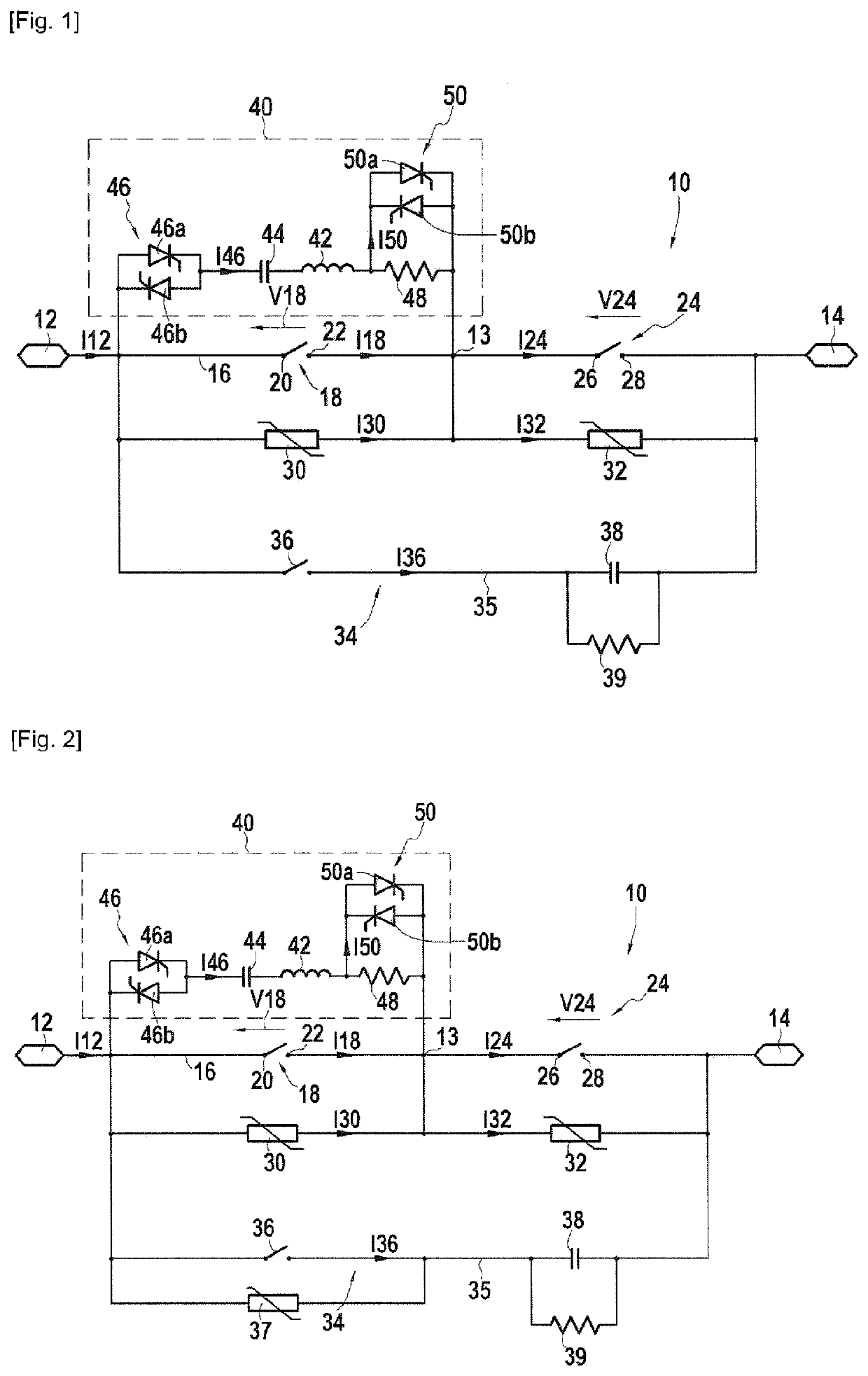
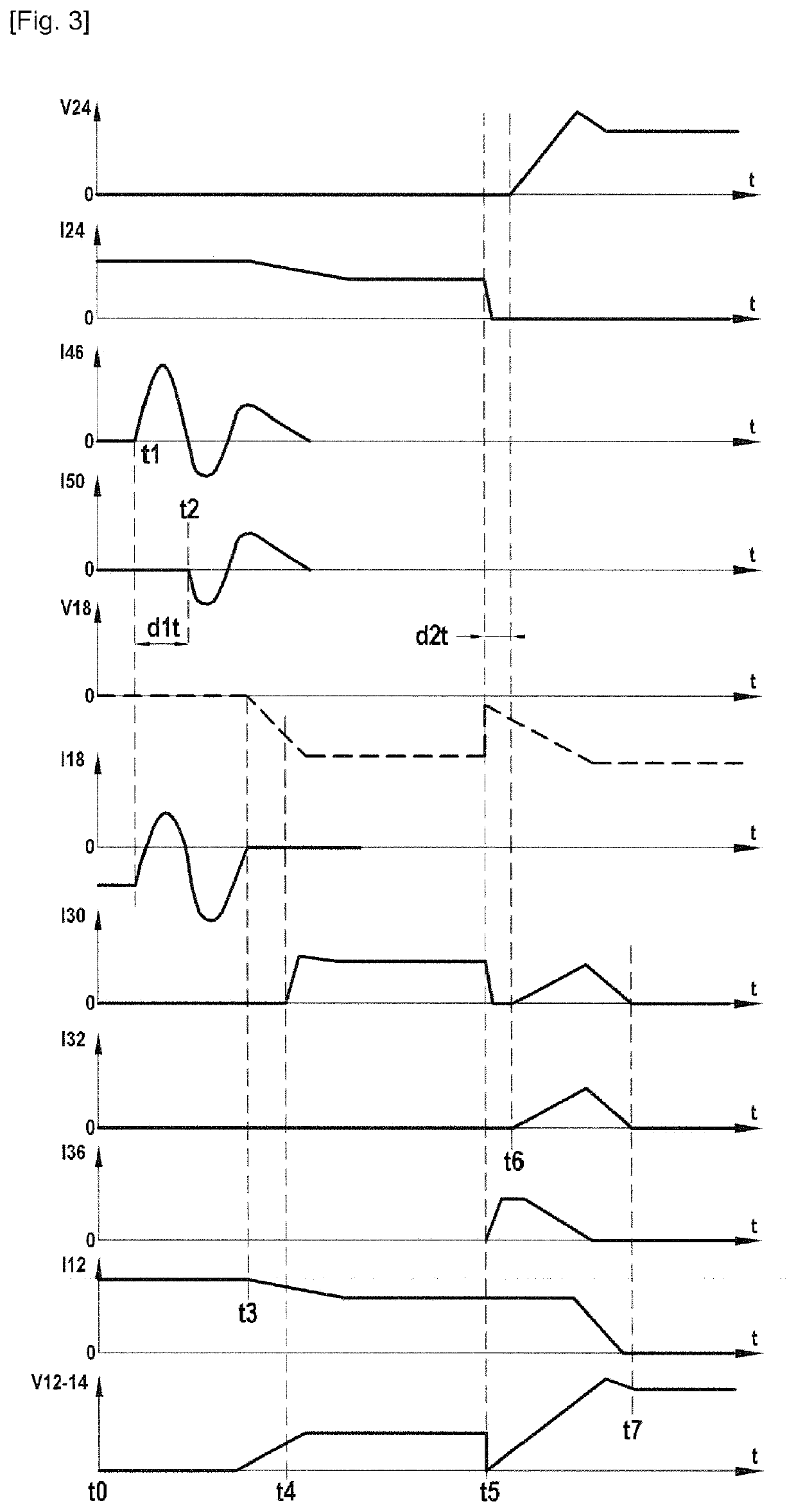
Current cut-off device for high-voltage direct current with capacitive buffer circuit, and control method
PatentActiveUS20220029408A1
Innovation
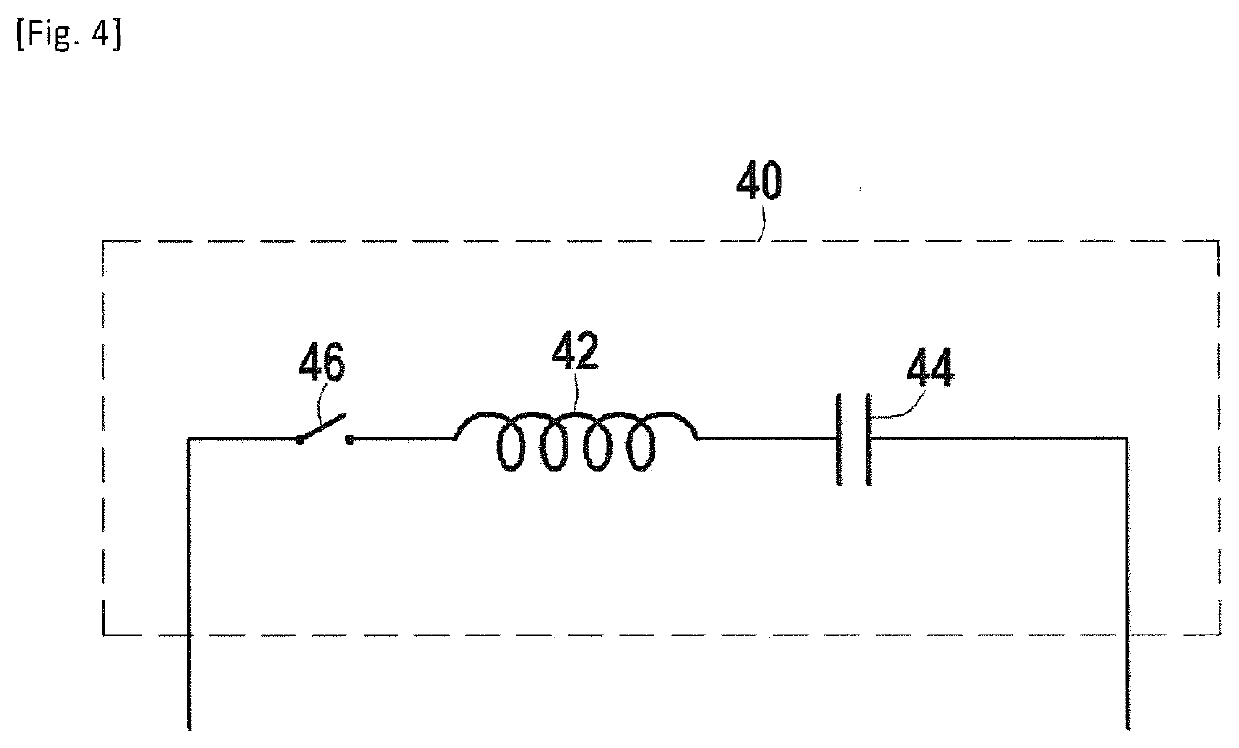
- A high-voltage DC current cut-off device featuring a capacitive buffer circuit without a dedicated inductive component, combined with an oscillation circuit and surge protectors, allows for the generation of a zero crossing and effective current interruption by charging a buffer capacitance to divert current and extinguish arcs, enabling the cut-off of currents up to 20 kA with reasonable size and cost.
System and method for extending system uptime while running on backup power
PatentActiveUS9280193B2
Innovation
- Implementing a system where controllers communicate with UPSs to dynamically adjust power limits for servers based on reserve power capacity, allowing for flexible allocation and reduction of power consumption by disabling non-essential components, and redistributing power among servers as needed to extend uptime.


Safety Standards and Compliance for Current Interrupt Devices
Current interrupt devices must adhere to stringent safety standards to ensure reliable operation in critical infrastructure applications. The International Electrotechnical Commission (IEC) provides fundamental guidelines through IEC 61508 for functional safety of electrical systems, establishing Safety Integrity Levels (SIL) that define acceptable failure rates for protective devices. These standards mandate that current interrupt devices achieve SIL 2 or higher ratings for most industrial applications, requiring failure rates below 10^-6 per hour.
The Institute of Electrical and Electronics Engineers (IEEE) C37 series standards specifically govern current interrupt device performance, with C37.04 defining rating structures and C37.06 establishing preferred ratings for AC high-voltage circuit breakers. These standards specify minimum interrupting capabilities, operating sequences, and environmental tolerance requirements that directly impact system uptime reliability.
Underwriters Laboratories (UL) certification requirements, particularly UL 489 for molded case circuit breakers and UL 1066 for low-voltage AC and DC power circuit breakers, establish critical safety benchmarks. Compliance with these standards ensures devices can safely interrupt fault currents without creating additional hazards such as arc flash incidents or equipment damage that could extend system downtime.
Regional compliance frameworks vary significantly across global markets. European markets require CE marking under the Low Voltage Directive (LVD) and Machinery Directive, while North American installations must meet National Electrical Code (NEC) requirements and Canadian Electrical Code (CEC) standards. Asian markets increasingly adopt IEC standards but maintain specific national requirements, such as Japan's JIS standards and China's GB standards.
Advanced current interrupt devices incorporating smart technologies face additional cybersecurity compliance requirements under standards like IEC 62351 for power system communications security. These devices must demonstrate resilience against cyber threats while maintaining their primary protective functions, as security vulnerabilities could compromise system availability and create new pathways for system failures that reduce overall uptime performance.
The Institute of Electrical and Electronics Engineers (IEEE) C37 series standards specifically govern current interrupt device performance, with C37.04 defining rating structures and C37.06 establishing preferred ratings for AC high-voltage circuit breakers. These standards specify minimum interrupting capabilities, operating sequences, and environmental tolerance requirements that directly impact system uptime reliability.
Underwriters Laboratories (UL) certification requirements, particularly UL 489 for molded case circuit breakers and UL 1066 for low-voltage AC and DC power circuit breakers, establish critical safety benchmarks. Compliance with these standards ensures devices can safely interrupt fault currents without creating additional hazards such as arc flash incidents or equipment damage that could extend system downtime.
Regional compliance frameworks vary significantly across global markets. European markets require CE marking under the Low Voltage Directive (LVD) and Machinery Directive, while North American installations must meet National Electrical Code (NEC) requirements and Canadian Electrical Code (CEC) standards. Asian markets increasingly adopt IEC standards but maintain specific national requirements, such as Japan's JIS standards and China's GB standards.
Advanced current interrupt devices incorporating smart technologies face additional cybersecurity compliance requirements under standards like IEC 62351 for power system communications security. These devices must demonstrate resilience against cyber threats while maintaining their primary protective functions, as security vulnerabilities could compromise system availability and create new pathways for system failures that reduce overall uptime performance.
Cost-Benefit Analysis of Advanced Uptime Solutions
The economic evaluation of advanced current interrupt devices reveals compelling financial justifications for organizations seeking to enhance system reliability. Initial capital expenditures for these solutions typically range from $50,000 to $500,000 depending on system complexity and protection requirements. However, the return on investment becomes evident when considering the substantial costs associated with unplanned downtime, which can reach $5,600 per minute for critical industrial operations.
Advanced current interrupt technologies demonstrate superior cost-effectiveness compared to traditional protection methods through reduced maintenance requirements and extended equipment lifespan. Modern solid-state circuit breakers, while commanding premium pricing, eliminate the need for frequent mechanical component replacements and reduce maintenance intervals by up to 60%. This translates to annual operational savings of $25,000 to $100,000 for medium-scale industrial facilities.
The quantifiable benefits extend beyond direct cost savings to encompass productivity improvements and risk mitigation. Organizations implementing advanced interrupt devices report average uptime improvements of 2-5%, resulting in increased production output valued at $200,000 to $2 million annually for manufacturing operations. Additionally, these systems provide enhanced protection against equipment damage, potentially preventing catastrophic failures that could cost millions in replacement and business interruption.
Risk assessment calculations demonstrate that the probability of major system failures decreases by 40-70% with advanced current interrupt implementations. When factoring in insurance premium reductions, regulatory compliance benefits, and avoided penalty costs, the total economic impact often justifies initial investments within 18-36 months. Energy efficiency gains from reduced arc flash incidents and optimized current management contribute an additional 3-8% reduction in operational electricity costs.
Long-term financial modeling indicates that advanced current interrupt solutions provide sustained value through scalability and future-proofing capabilities. The modular nature of modern systems allows for incremental capacity expansion without complete infrastructure overhaul, reducing future upgrade costs by approximately 30-50% compared to legacy protection schemes.
Advanced current interrupt technologies demonstrate superior cost-effectiveness compared to traditional protection methods through reduced maintenance requirements and extended equipment lifespan. Modern solid-state circuit breakers, while commanding premium pricing, eliminate the need for frequent mechanical component replacements and reduce maintenance intervals by up to 60%. This translates to annual operational savings of $25,000 to $100,000 for medium-scale industrial facilities.
The quantifiable benefits extend beyond direct cost savings to encompass productivity improvements and risk mitigation. Organizations implementing advanced interrupt devices report average uptime improvements of 2-5%, resulting in increased production output valued at $200,000 to $2 million annually for manufacturing operations. Additionally, these systems provide enhanced protection against equipment damage, potentially preventing catastrophic failures that could cost millions in replacement and business interruption.
Risk assessment calculations demonstrate that the probability of major system failures decreases by 40-70% with advanced current interrupt implementations. When factoring in insurance premium reductions, regulatory compliance benefits, and avoided penalty costs, the total economic impact often justifies initial investments within 18-36 months. Energy efficiency gains from reduced arc flash incidents and optimized current management contribute an additional 3-8% reduction in operational electricity costs.
Long-term financial modeling indicates that advanced current interrupt solutions provide sustained value through scalability and future-proofing capabilities. The modular nature of modern systems allows for incremental capacity expansion without complete infrastructure overhaul, reducing future upgrade costs by approximately 30-50% compared to legacy protection schemes.
Unlock deeper insights with Patsnap Eureka Quick Research — get a full tech report to explore trends and direct your research. Try now!
Generate Your Research Report Instantly with AI Agent
Supercharge your innovation with Patsnap Eureka AI Agent Platform!