

How to Compare Force Control vs Position Control for Contact Tasks
MAY 8, 20269 MIN READ
Generate Your Research Report Instantly with AI Agent
Patsnap Eureka helps you evaluate technical feasibility & market potential.
Force vs Position Control Background and Objectives
Contact tasks represent a fundamental challenge in robotics where manipulators must interact with their environment while maintaining desired force profiles or precise positioning. These tasks encompass a broad spectrum of applications including assembly operations, surface finishing, material handling, and human-robot collaboration scenarios. The complexity arises from the inherent coupling between force and position dynamics, where achieving optimal performance requires careful consideration of control strategy selection.
The evolution of contact task control has progressed through distinct phases, beginning with rigid position-based approaches in early industrial automation. As manufacturing demands increased for more sophisticated operations requiring force sensitivity, researchers developed impedance and admittance control methodologies. The emergence of collaborative robotics and precision manufacturing has further accelerated the need for advanced force control capabilities, driving innovation in sensor technology and control algorithms.
Force control strategies prioritize maintaining desired contact forces while allowing position compliance, making them particularly suitable for tasks where consistent pressure or force application is critical. This approach excels in operations such as polishing, deburring, and assembly tasks where force feedback ensures quality outcomes. Conversely, position control maintains precise geometric trajectories while monitoring force constraints, proving advantageous for tasks requiring exact positioning accuracy such as pick-and-place operations or precision machining.
The primary objective of comparing these control paradigms centers on establishing clear selection criteria based on task requirements, environmental constraints, and performance metrics. Key evaluation parameters include contact stability, trajectory accuracy, force regulation precision, robustness to uncertainties, and computational efficiency. Understanding the trade-offs between these approaches enables optimal controller selection for specific applications.
Contemporary research focuses on hybrid control strategies that dynamically switch between force and position control modes or combine both approaches simultaneously. These developments aim to leverage the strengths of each method while mitigating their respective limitations, ultimately advancing the state-of-the-art in robotic contact task execution and expanding the scope of feasible applications in industrial and service robotics domains.
The evolution of contact task control has progressed through distinct phases, beginning with rigid position-based approaches in early industrial automation. As manufacturing demands increased for more sophisticated operations requiring force sensitivity, researchers developed impedance and admittance control methodologies. The emergence of collaborative robotics and precision manufacturing has further accelerated the need for advanced force control capabilities, driving innovation in sensor technology and control algorithms.
Force control strategies prioritize maintaining desired contact forces while allowing position compliance, making them particularly suitable for tasks where consistent pressure or force application is critical. This approach excels in operations such as polishing, deburring, and assembly tasks where force feedback ensures quality outcomes. Conversely, position control maintains precise geometric trajectories while monitoring force constraints, proving advantageous for tasks requiring exact positioning accuracy such as pick-and-place operations or precision machining.
The primary objective of comparing these control paradigms centers on establishing clear selection criteria based on task requirements, environmental constraints, and performance metrics. Key evaluation parameters include contact stability, trajectory accuracy, force regulation precision, robustness to uncertainties, and computational efficiency. Understanding the trade-offs between these approaches enables optimal controller selection for specific applications.
Contemporary research focuses on hybrid control strategies that dynamically switch between force and position control modes or combine both approaches simultaneously. These developments aim to leverage the strengths of each method while mitigating their respective limitations, ultimately advancing the state-of-the-art in robotic contact task execution and expanding the scope of feasible applications in industrial and service robotics domains.
Market Demand for Advanced Contact Task Automation
The global automation industry is experiencing unprecedented growth driven by increasing labor costs, quality consistency requirements, and the need for enhanced productivity across manufacturing sectors. Contact task automation represents a critical segment within this broader market, encompassing applications where robots must physically interact with objects, surfaces, or environments through controlled force and position manipulation.
Manufacturing industries are increasingly demanding sophisticated automation solutions capable of handling delicate assembly operations, surface finishing tasks, and quality inspection processes. These applications require precise control over both force and position parameters, making the comparison between force control and position control methodologies essential for system designers and integrators.
The automotive sector demonstrates particularly strong demand for advanced contact task automation, especially in body panel assembly, welding operations, and surface polishing applications. Electronics manufacturing similarly requires high-precision contact tasks for component insertion, testing procedures, and delicate handling operations where traditional rigid automation approaches prove insufficient.
Emerging market segments include collaborative robotics applications where human-robot interaction necessitates sophisticated force sensing and control capabilities. Healthcare automation, food processing, and consumer goods manufacturing are driving additional demand for contact-sensitive robotic systems that can adapt to varying material properties and environmental conditions.
The aerospace and defense industries present growing opportunities for contact task automation, particularly in composite material handling, precision machining operations, and assembly processes requiring consistent force application. These sectors demand robust control strategies that can maintain performance across diverse operational parameters.
Market drivers include increasing emphasis on product quality consistency, reduction of manual labor in hazardous environments, and the need for repeatable processes in high-value manufacturing applications. The integration of advanced sensor technologies and real-time control algorithms is enabling more sophisticated contact task implementations across various industrial sectors.
Regional demand patterns show strong growth in Asia-Pacific manufacturing hubs, North American automotive centers, and European precision manufacturing regions. The market trajectory indicates sustained expansion as industries recognize the competitive advantages offered by advanced contact task automation capabilities in maintaining product quality while reducing operational costs.
Manufacturing industries are increasingly demanding sophisticated automation solutions capable of handling delicate assembly operations, surface finishing tasks, and quality inspection processes. These applications require precise control over both force and position parameters, making the comparison between force control and position control methodologies essential for system designers and integrators.
The automotive sector demonstrates particularly strong demand for advanced contact task automation, especially in body panel assembly, welding operations, and surface polishing applications. Electronics manufacturing similarly requires high-precision contact tasks for component insertion, testing procedures, and delicate handling operations where traditional rigid automation approaches prove insufficient.
Emerging market segments include collaborative robotics applications where human-robot interaction necessitates sophisticated force sensing and control capabilities. Healthcare automation, food processing, and consumer goods manufacturing are driving additional demand for contact-sensitive robotic systems that can adapt to varying material properties and environmental conditions.
The aerospace and defense industries present growing opportunities for contact task automation, particularly in composite material handling, precision machining operations, and assembly processes requiring consistent force application. These sectors demand robust control strategies that can maintain performance across diverse operational parameters.
Market drivers include increasing emphasis on product quality consistency, reduction of manual labor in hazardous environments, and the need for repeatable processes in high-value manufacturing applications. The integration of advanced sensor technologies and real-time control algorithms is enabling more sophisticated contact task implementations across various industrial sectors.
Regional demand patterns show strong growth in Asia-Pacific manufacturing hubs, North American automotive centers, and European precision manufacturing regions. The market trajectory indicates sustained expansion as industries recognize the competitive advantages offered by advanced contact task automation capabilities in maintaining product quality while reducing operational costs.
Current State and Challenges in Contact Force Control
Contact force control has emerged as a critical technology for robotic systems performing manipulation tasks that require physical interaction with the environment. Current implementations primarily rely on three main approaches: impedance control, hybrid force/position control, and admittance control. Each method addresses the fundamental challenge of managing contact forces while maintaining positional accuracy, yet significant technical barriers persist across all approaches.
Impedance control, widely adopted in industrial applications, modulates the robot's mechanical impedance to achieve desired force-position relationships. However, this approach suffers from stability issues when transitioning between free space and contact phases. The inherent trade-off between force tracking accuracy and position precision remains a persistent challenge, particularly in applications requiring high-frequency force modulation or precise contact geometry maintenance.
Hybrid force/position control attempts to decouple force and position control in orthogonal directions, but practical implementation faces substantial difficulties in accurately identifying contact surfaces and maintaining consistent control switching. The method's reliance on precise geometric models and real-time surface normal estimation creates computational bottlenecks that limit its applicability in dynamic environments or with deformable objects.
Sensor integration represents another significant challenge in current force control systems. Force/torque sensors introduce measurement noise, drift, and bandwidth limitations that directly impact control performance. The temporal delay between force sensing and actuator response creates stability margins that constrain achievable control gains, particularly problematic for tasks requiring rapid force adjustments or high-precision contact maintenance.
Computational complexity poses additional constraints, especially for multi-contact scenarios or systems with high degrees of freedom. Real-time force control algorithms must balance computational efficiency with control accuracy, often resulting in simplified models that inadequately capture contact dynamics. This limitation becomes particularly pronounced in applications involving soft materials, where nonlinear contact mechanics significantly complicate force prediction and control.
Environmental uncertainty further complicates force control implementation. Variations in surface properties, object compliance, and contact geometry require adaptive control strategies that current systems struggle to provide reliably. The lack of robust methods for online parameter identification and adaptation limits the versatility of existing force control approaches across diverse contact scenarios.
Impedance control, widely adopted in industrial applications, modulates the robot's mechanical impedance to achieve desired force-position relationships. However, this approach suffers from stability issues when transitioning between free space and contact phases. The inherent trade-off between force tracking accuracy and position precision remains a persistent challenge, particularly in applications requiring high-frequency force modulation or precise contact geometry maintenance.
Hybrid force/position control attempts to decouple force and position control in orthogonal directions, but practical implementation faces substantial difficulties in accurately identifying contact surfaces and maintaining consistent control switching. The method's reliance on precise geometric models and real-time surface normal estimation creates computational bottlenecks that limit its applicability in dynamic environments or with deformable objects.
Sensor integration represents another significant challenge in current force control systems. Force/torque sensors introduce measurement noise, drift, and bandwidth limitations that directly impact control performance. The temporal delay between force sensing and actuator response creates stability margins that constrain achievable control gains, particularly problematic for tasks requiring rapid force adjustments or high-precision contact maintenance.
Computational complexity poses additional constraints, especially for multi-contact scenarios or systems with high degrees of freedom. Real-time force control algorithms must balance computational efficiency with control accuracy, often resulting in simplified models that inadequately capture contact dynamics. This limitation becomes particularly pronounced in applications involving soft materials, where nonlinear contact mechanics significantly complicate force prediction and control.
Environmental uncertainty further complicates force control implementation. Variations in surface properties, object compliance, and contact geometry require adaptive control strategies that current systems struggle to provide reliably. The lack of robust methods for online parameter identification and adaptation limits the versatility of existing force control approaches across diverse contact scenarios.
Existing Force and Position Control Solutions
01 Hybrid force-position control systems
Control systems that combine both force and position control methodologies to achieve optimal performance in robotic applications. These hybrid approaches allow for simultaneous control of contact forces and positional accuracy, enabling better adaptation to varying environmental conditions and task requirements. The integration provides enhanced stability and precision in applications requiring both accurate positioning and controlled force application.- Force control algorithms and implementation methods: Various algorithms and implementation techniques are used to achieve effective force control in robotic and mechanical systems. These methods focus on controlling the force exerted by actuators or end-effectors through feedback mechanisms, sensor integration, and adaptive control strategies. The algorithms often incorporate force sensing, impedance control, and real-time adjustment capabilities to maintain desired force levels while accommodating environmental variations and system dynamics.
- Position control systems and precision tracking: Position control systems are designed to achieve accurate positioning and trajectory tracking in automated systems. These systems utilize various control strategies including PID control, servo mechanisms, and feedback loops to maintain precise positioning. The focus is on minimizing position errors, reducing settling time, and ensuring stable operation across different operating conditions and load variations.
- Hybrid control strategies combining force and position control: Hybrid control approaches integrate both force and position control methodologies to optimize system performance in applications requiring both precise positioning and controlled force application. These strategies often involve switching between control modes or simultaneous control of different degrees of freedom, allowing systems to adapt to varying task requirements and environmental constraints.
- Performance evaluation and comparison metrics: Various metrics and evaluation methods are employed to assess and compare the performance of force control versus position control systems. These include accuracy measurements, response time analysis, stability assessments, and robustness evaluations under different operating conditions. Performance benchmarking helps determine the most suitable control approach for specific applications and operational requirements.
- Adaptive and intelligent control enhancement techniques: Advanced control enhancement techniques incorporate adaptive algorithms, machine learning, and intelligent control strategies to improve both force and position control performance. These methods enable systems to learn from operating conditions, automatically tune control parameters, and optimize performance in real-time. The techniques often include neural networks, fuzzy logic, and self-tuning mechanisms to handle system uncertainties and varying operational demands.
02 Adaptive control algorithms for force regulation
Advanced control algorithms that automatically adjust force control parameters based on real-time feedback and environmental changes. These systems utilize machine learning and adaptive techniques to optimize force application while maintaining system stability. The algorithms can compensate for uncertainties in the system dynamics and external disturbances, providing robust performance across different operating conditions.Expand Specific Solutions03 Position control with force feedback integration
Position control systems enhanced with force sensing capabilities to improve overall control performance. These systems maintain precise positional accuracy while incorporating force information to prevent damage and ensure safe operation. The integration allows for better interaction with the environment and improved handling of contact situations during positioning tasks.Expand Specific Solutions04 Impedance and admittance control strategies
Control methodologies that regulate the dynamic relationship between force and motion through impedance or admittance parameters. These approaches provide compliant behavior that can be adjusted based on task requirements, allowing for smooth interaction with uncertain environments. The strategies enable fine-tuning of system responsiveness and stability characteristics for different applications.Expand Specific Solutions05 Real-time control performance optimization
Systems focused on optimizing control performance through real-time parameter adjustment and performance monitoring. These implementations utilize advanced sensing and processing capabilities to continuously evaluate and improve control effectiveness. The optimization includes minimizing tracking errors, reducing settling times, and enhancing overall system responsiveness for both force and position control modes.Expand Specific Solutions
Key Players in Force Control and Robotics Industry
The force control versus position control comparison for contact tasks represents a mature technological domain in an advanced development stage, with the global robotics and automation market exceeding $200 billion annually. The competitive landscape features established industrial giants like FANUC Corp., ABB Ltd., and Mitsubishi Electric Corp. dominating traditional position control systems, while specialized companies such as Motion Lib Inc. with their Real Haptics® technology and ATI Industrial Automation focus on advanced force sensing solutions. Academic institutions including Keio University, Beijing Institute of Technology, and Kyushu University drive fundamental research innovations. Technology maturity varies significantly, with position control being well-established across companies like KUKA Deutschland and Honda Motor, while sophisticated force control implementations remain concentrated among specialized providers like Motion Lib and research-focused organizations, creating opportunities for hybrid control approaches.
FANUC Corp.
Technical Solution: FANUC implements hybrid force/position control systems in their industrial robots, utilizing advanced force sensors and real-time feedback algorithms. Their approach combines impedance control with adaptive force regulation, allowing robots to maintain desired contact forces while following position trajectories. The system features force-torque sensors integrated into robot wrists, enabling precise force measurement and control during assembly, polishing, and machining operations. FANUC's control architecture switches between position-dominant and force-dominant modes based on task requirements, with sophisticated filtering algorithms to handle noise and disturbances in contact scenarios.
Strengths: Proven industrial reliability, extensive sensor integration, real-time performance. Weaknesses: Limited adaptability to novel contact scenarios, requires extensive parameter tuning.
ABB Ltd.
Technical Solution: ABB's robotics division has developed comprehensive force control solutions through their IRC5 controller platform, implementing both explicit force control and impedance control strategies. Their system utilizes six-axis force/torque sensors and advanced control algorithms that can seamlessly transition between position and force control modes. ABB's approach includes contact detection algorithms, force regulation with adjustable compliance, and safety monitoring systems. The technology is particularly optimized for applications like deburring, grinding, and assembly tasks where maintaining consistent contact forces is critical for quality outcomes.
Strengths: Robust industrial implementation, excellent safety features, versatile control modes. Weaknesses: Complex programming requirements, higher cost for force sensing equipment.
Core Innovations in Hybrid Force-Position Control
controller
PatentActiveUS20070210740A1
Innovation
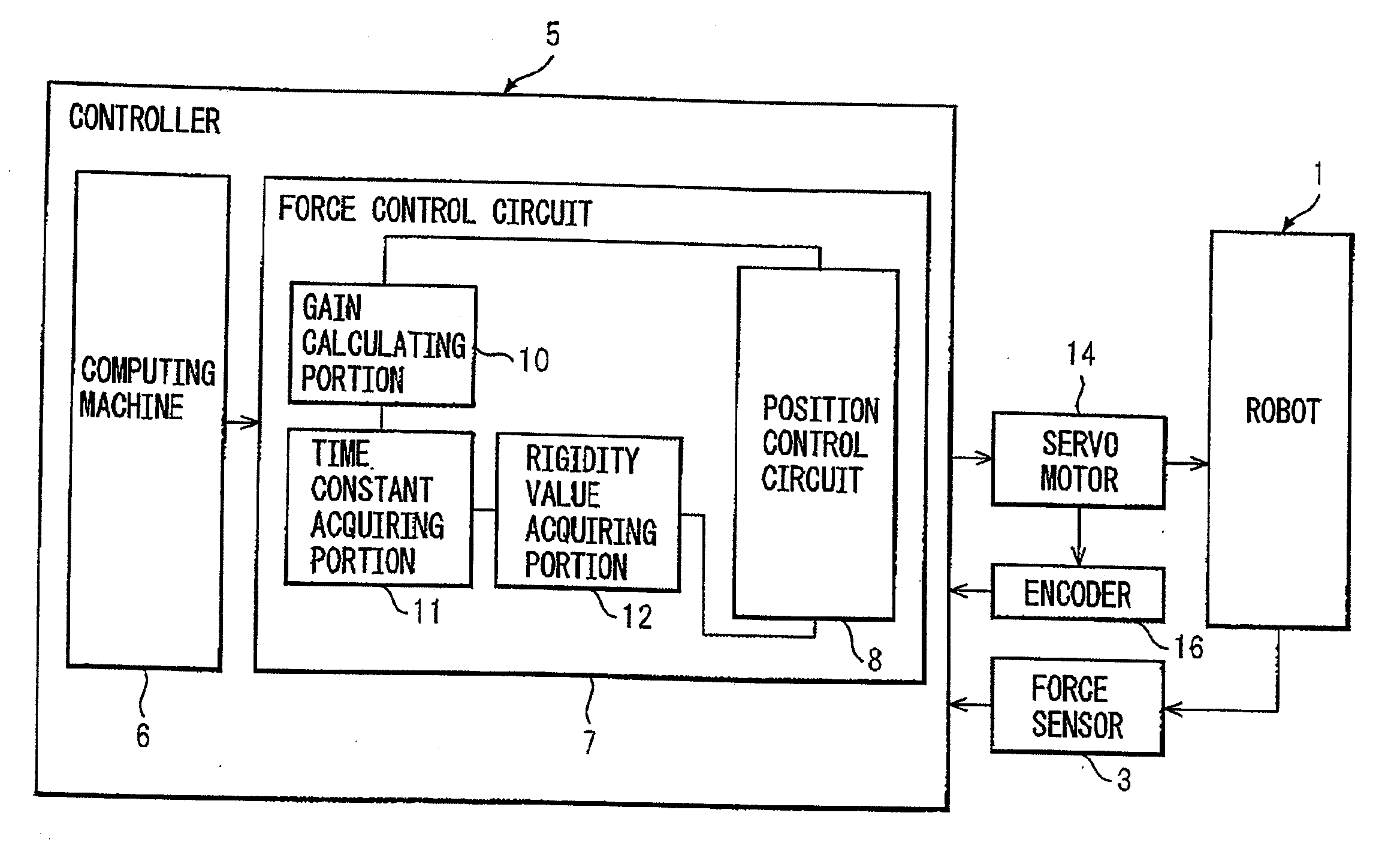
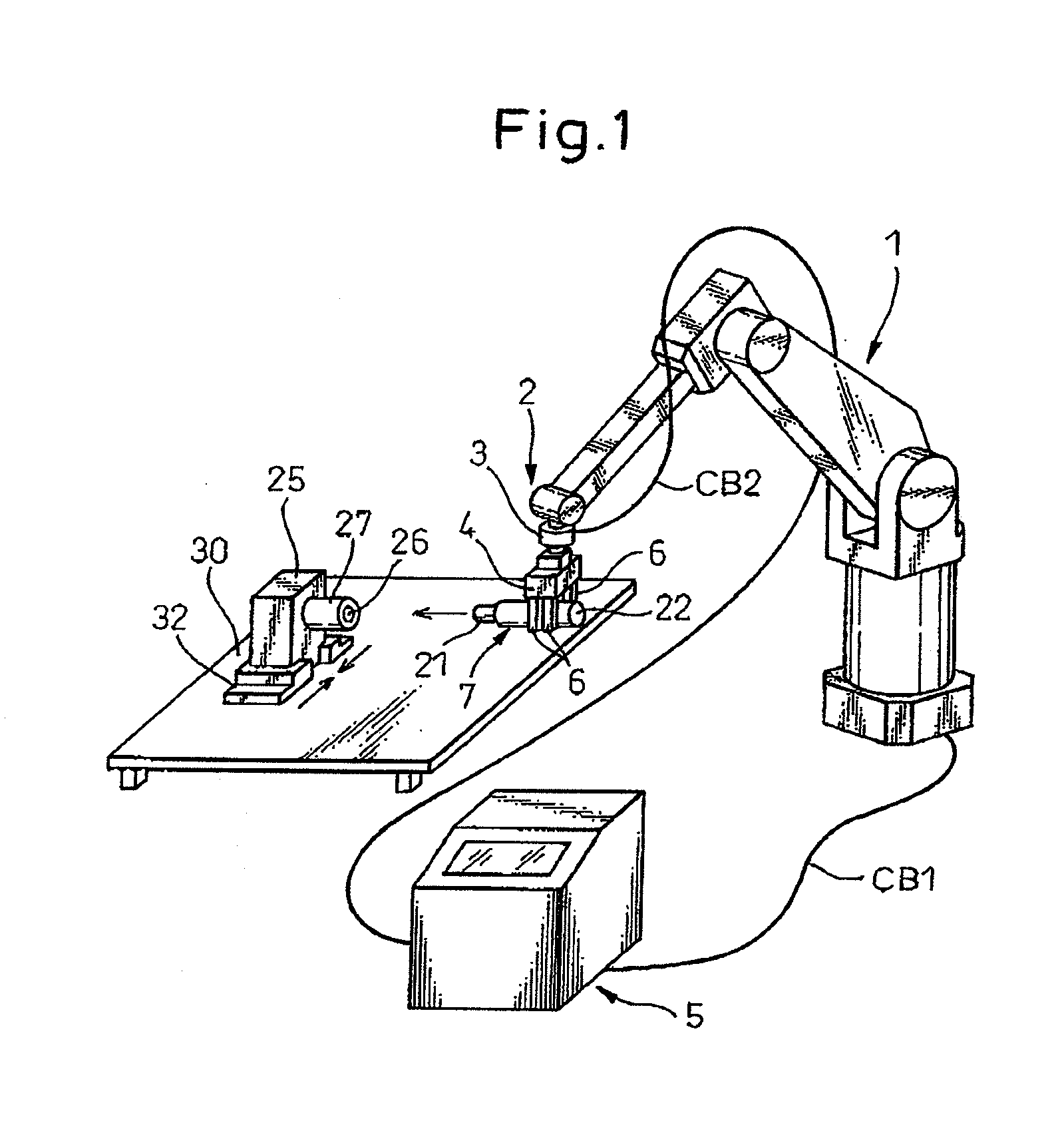
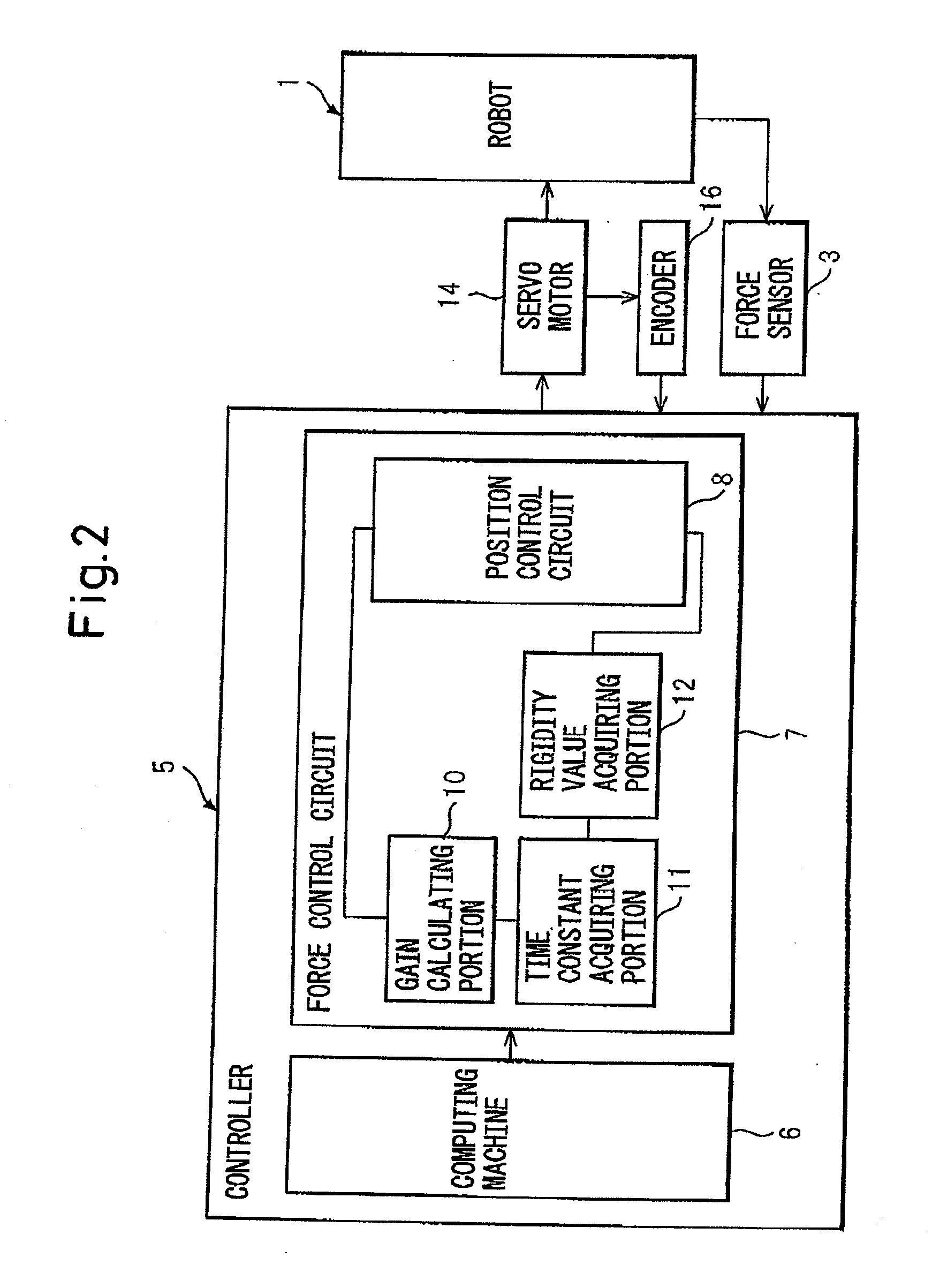
- A controller with a position control circuit inside a force control circuit that automatically calculates the force control gain using a first data acquiring portion for the time constant of the position control circuit and a second data acquiring portion for the rigidity value, allowing for accurate estimation and adjustment of the force control gain without manual trial and error, and enabling flexible adaptation to changes in robot or machine configurations.

Control
PatentActiveEP1845427B1
Innovation
- A controller that calculates the force control gain using the time constant of the position control circuit and the rigidity value of the controlled object, allowing for automatic and accurate adjustment without the need for repeated trials, and enabling flexible adaptation to changes in robot or machine configurations.


Safety Standards for Contact Task Robotics
Safety standards for contact task robotics represent a critical framework that governs the deployment of robotic systems in environments where physical interaction with humans, objects, or sensitive equipment is inevitable. These standards have evolved significantly as robotics technology has advanced from isolated industrial applications to collaborative and service-oriented scenarios.
The International Organization for Standardization (ISO) has established several key standards that directly impact contact task robotics. ISO 10218 series addresses industrial robot safety requirements, while ISO/TS 15066 specifically focuses on collaborative robots and their safety requirements during human-robot interaction. These standards establish fundamental principles for risk assessment, safety-rated monitored stop functions, and power and force limiting mechanisms that are essential when comparing force control versus position control strategies.
Force control systems in contact tasks must comply with stringent safety requirements regarding maximum allowable contact forces and pressures. The standards specify threshold values for different body regions, with particular attention to transient and quasi-static contact scenarios. For instance, ISO/TS 15066 defines specific force and pressure limits ranging from 65N to 280N depending on the contact area and body part involved. These limitations directly influence the design and implementation of force control algorithms.
Position control systems, while traditionally considered safer due to their predictable motion patterns, face unique safety challenges in contact scenarios. Standards require comprehensive risk assessment when position-controlled robots operate in environments where unexpected contact may occur. Emergency stop systems, safety-rated speed monitoring, and workspace limitation become critical safety features that must be integrated into position control architectures.
The emerging IEC 61508 functional safety standard increasingly influences contact task robotics, particularly in applications requiring Safety Integrity Level (SIL) certification. This standard mandates systematic approaches to safety lifecycle management, hazard analysis, and safety function verification. Both force and position control systems must demonstrate compliance with these functional safety requirements through rigorous testing and validation procedures.
Recent developments in safety standards emphasize the importance of real-time monitoring and adaptive safety systems. Standards now recognize that static safety parameters may be insufficient for complex contact tasks, leading to requirements for dynamic safety monitoring that can adjust safety thresholds based on operational context and environmental conditions.
The International Organization for Standardization (ISO) has established several key standards that directly impact contact task robotics. ISO 10218 series addresses industrial robot safety requirements, while ISO/TS 15066 specifically focuses on collaborative robots and their safety requirements during human-robot interaction. These standards establish fundamental principles for risk assessment, safety-rated monitored stop functions, and power and force limiting mechanisms that are essential when comparing force control versus position control strategies.
Force control systems in contact tasks must comply with stringent safety requirements regarding maximum allowable contact forces and pressures. The standards specify threshold values for different body regions, with particular attention to transient and quasi-static contact scenarios. For instance, ISO/TS 15066 defines specific force and pressure limits ranging from 65N to 280N depending on the contact area and body part involved. These limitations directly influence the design and implementation of force control algorithms.
Position control systems, while traditionally considered safer due to their predictable motion patterns, face unique safety challenges in contact scenarios. Standards require comprehensive risk assessment when position-controlled robots operate in environments where unexpected contact may occur. Emergency stop systems, safety-rated speed monitoring, and workspace limitation become critical safety features that must be integrated into position control architectures.
The emerging IEC 61508 functional safety standard increasingly influences contact task robotics, particularly in applications requiring Safety Integrity Level (SIL) certification. This standard mandates systematic approaches to safety lifecycle management, hazard analysis, and safety function verification. Both force and position control systems must demonstrate compliance with these functional safety requirements through rigorous testing and validation procedures.
Recent developments in safety standards emphasize the importance of real-time monitoring and adaptive safety systems. Standards now recognize that static safety parameters may be insufficient for complex contact tasks, leading to requirements for dynamic safety monitoring that can adjust safety thresholds based on operational context and environmental conditions.
Performance Metrics for Contact Control Evaluation
Establishing comprehensive performance metrics for contact control evaluation requires a multi-dimensional framework that captures both quantitative and qualitative aspects of force and position control systems. The evaluation methodology must address fundamental control objectives while considering practical implementation constraints and real-world application requirements.
Force tracking accuracy represents a primary metric for force control systems, typically measured through root mean square error (RMSE) between desired and actual contact forces. This metric evaluates the controller's ability to maintain consistent force application across varying surface conditions and contact geometries. Complementary metrics include force overshoot percentage and settling time, which assess transient response characteristics during initial contact establishment.
Position control systems require distinct evaluation criteria focused on trajectory following precision and geometric accuracy. Key metrics include path deviation measurements, endpoint positioning accuracy, and repeatability statistics. These measurements become particularly critical when evaluating contact tasks requiring precise spatial relationships, such as assembly operations or surface finishing applications.
Contact stability metrics provide essential insights into both control approaches' robustness. Stability indicators include contact force variance, chattering frequency analysis, and sustained contact duration measurements. These metrics help quantify the smoothness of contact interactions and identify potential instabilities that could compromise task performance or cause surface damage.
Dynamic response characteristics offer valuable comparative insights between force and position control methodologies. Bandwidth measurements, phase margins, and disturbance rejection capabilities provide quantitative assessments of each approach's responsiveness to environmental variations and external perturbations during contact operations.
Task-specific performance indicators must align with intended application requirements. For polishing operations, surface finish quality and material removal rates serve as primary metrics. Assembly tasks prioritize insertion success rates, alignment accuracy, and completion times. These application-focused metrics bridge the gap between fundamental control performance and practical utility.
Safety and robustness metrics encompass maximum force excursions, system recovery times following contact loss, and failure mode analysis. These measurements ensure that comparative evaluations consider operational safety requirements and system reliability under various operating conditions, providing comprehensive assessment frameworks for industrial implementation decisions.
Force tracking accuracy represents a primary metric for force control systems, typically measured through root mean square error (RMSE) between desired and actual contact forces. This metric evaluates the controller's ability to maintain consistent force application across varying surface conditions and contact geometries. Complementary metrics include force overshoot percentage and settling time, which assess transient response characteristics during initial contact establishment.
Position control systems require distinct evaluation criteria focused on trajectory following precision and geometric accuracy. Key metrics include path deviation measurements, endpoint positioning accuracy, and repeatability statistics. These measurements become particularly critical when evaluating contact tasks requiring precise spatial relationships, such as assembly operations or surface finishing applications.
Contact stability metrics provide essential insights into both control approaches' robustness. Stability indicators include contact force variance, chattering frequency analysis, and sustained contact duration measurements. These metrics help quantify the smoothness of contact interactions and identify potential instabilities that could compromise task performance or cause surface damage.
Dynamic response characteristics offer valuable comparative insights between force and position control methodologies. Bandwidth measurements, phase margins, and disturbance rejection capabilities provide quantitative assessments of each approach's responsiveness to environmental variations and external perturbations during contact operations.
Task-specific performance indicators must align with intended application requirements. For polishing operations, surface finish quality and material removal rates serve as primary metrics. Assembly tasks prioritize insertion success rates, alignment accuracy, and completion times. These application-focused metrics bridge the gap between fundamental control performance and practical utility.
Safety and robustness metrics encompass maximum force excursions, system recovery times following contact loss, and failure mode analysis. These measurements ensure that comparative evaluations consider operational safety requirements and system reliability under various operating conditions, providing comprehensive assessment frameworks for industrial implementation decisions.
Unlock deeper insights with Patsnap Eureka Quick Research — get a full tech report to explore trends and direct your research. Try now!
Generate Your Research Report Instantly with AI Agent
Supercharge your innovation with Patsnap Eureka AI Agent Platform!