
How To Enhance Safety Standards Using Solid Polymer Electrolytes
MAY 20, 20269 MIN READ
Generate Your Research Report Instantly with AI Agent
Patsnap Eureka helps you evaluate technical feasibility & market potential.
Solid Polymer Electrolyte Safety Enhancement Background and Goals
The evolution of battery technology has been fundamentally driven by the pursuit of higher energy density, improved performance, and enhanced safety standards. Traditional lithium-ion batteries utilizing liquid electrolytes have dominated the market for decades, yet they present inherent safety risks including thermal runaway, electrolyte leakage, and flammability concerns. These limitations have become increasingly critical as battery applications expand into electric vehicles, grid-scale energy storage, and portable electronics where safety failures can result in catastrophic consequences.
Solid polymer electrolytes represent a paradigm shift in battery design philosophy, offering a promising pathway to address the fundamental safety challenges associated with conventional liquid electrolyte systems. Unlike their liquid counterparts, solid polymer electrolytes eliminate the risk of electrolyte leakage and significantly reduce the probability of thermal runaway events. The inherent stability of polymer matrices provides superior mechanical integrity and thermal resistance, creating multiple layers of safety protection within the battery cell architecture.
The development trajectory of solid polymer electrolytes has been shaped by decades of materials science research, beginning with early work on polyethylene oxide-based systems in the 1970s and evolving through advanced polymer architectures incorporating ceramic fillers, cross-linked networks, and nanostructured composites. This technological evolution has been driven by the recognition that safety enhancement cannot be achieved through incremental improvements alone, but requires fundamental changes in electrolyte chemistry and structure.
Current safety enhancement objectives focus on achieving comprehensive risk mitigation across multiple failure modes while maintaining competitive electrochemical performance. Primary goals include eliminating thermal runaway propagation, preventing electrolyte-related fires, enhancing mechanical abuse tolerance, and establishing predictable failure mechanisms that enable early detection and intervention. These objectives extend beyond traditional battery metrics to encompass system-level safety considerations including gas generation control, short-circuit prevention, and long-term stability under extreme operating conditions.
The strategic importance of solid polymer electrolyte safety enhancement lies in enabling next-generation battery applications where traditional safety margins are insufficient. Electric aviation, underwater systems, and space applications represent emerging markets where solid polymer electrolytes could provide the safety assurance necessary for regulatory approval and commercial viability. Additionally, the potential for simplified battery management systems and reduced safety infrastructure represents significant cost advantages that could accelerate widespread adoption across existing markets.
Solid polymer electrolytes represent a paradigm shift in battery design philosophy, offering a promising pathway to address the fundamental safety challenges associated with conventional liquid electrolyte systems. Unlike their liquid counterparts, solid polymer electrolytes eliminate the risk of electrolyte leakage and significantly reduce the probability of thermal runaway events. The inherent stability of polymer matrices provides superior mechanical integrity and thermal resistance, creating multiple layers of safety protection within the battery cell architecture.
The development trajectory of solid polymer electrolytes has been shaped by decades of materials science research, beginning with early work on polyethylene oxide-based systems in the 1970s and evolving through advanced polymer architectures incorporating ceramic fillers, cross-linked networks, and nanostructured composites. This technological evolution has been driven by the recognition that safety enhancement cannot be achieved through incremental improvements alone, but requires fundamental changes in electrolyte chemistry and structure.
Current safety enhancement objectives focus on achieving comprehensive risk mitigation across multiple failure modes while maintaining competitive electrochemical performance. Primary goals include eliminating thermal runaway propagation, preventing electrolyte-related fires, enhancing mechanical abuse tolerance, and establishing predictable failure mechanisms that enable early detection and intervention. These objectives extend beyond traditional battery metrics to encompass system-level safety considerations including gas generation control, short-circuit prevention, and long-term stability under extreme operating conditions.
The strategic importance of solid polymer electrolyte safety enhancement lies in enabling next-generation battery applications where traditional safety margins are insufficient. Electric aviation, underwater systems, and space applications represent emerging markets where solid polymer electrolytes could provide the safety assurance necessary for regulatory approval and commercial viability. Additionally, the potential for simplified battery management systems and reduced safety infrastructure represents significant cost advantages that could accelerate widespread adoption across existing markets.
Market Demand for Enhanced Battery Safety Standards
The global battery market is experiencing unprecedented growth driven by the rapid expansion of electric vehicles, energy storage systems, and portable electronics. This surge has intensified focus on battery safety standards, as traditional lithium-ion batteries with liquid electrolytes pose significant risks including thermal runaway, fire hazards, and toxic gas emissions. The increasing frequency of battery-related incidents in consumer electronics and electric vehicles has created urgent market demand for safer alternatives.
Electric vehicle manufacturers face mounting pressure from regulatory bodies and consumers to implement enhanced safety measures. Recent high-profile incidents involving battery fires have prompted stricter safety regulations across major markets including the United States, European Union, and China. These regulatory changes are driving automotive manufacturers to seek advanced battery technologies that can meet evolving safety requirements while maintaining performance standards.
The energy storage sector represents another critical market segment demanding improved battery safety. Grid-scale energy storage installations require batteries that can operate safely over extended periods without human intervention. Current liquid electrolyte systems present challenges in large-scale deployments due to fire risks and the need for complex thermal management systems. This has created substantial market pull for solid-state battery technologies that can eliminate these safety concerns.
Consumer electronics manufacturers are increasingly prioritizing battery safety following numerous product recalls and safety incidents. The miniaturization trend in portable devices has intensified thermal management challenges, making solid polymer electrolytes an attractive solution for maintaining safety in compact form factors. Market research indicates growing consumer awareness of battery safety issues, influencing purchasing decisions and brand preferences.
Regulatory frameworks worldwide are evolving to establish more stringent battery safety standards. The United Nations has updated transportation regulations for lithium batteries, while regional authorities are implementing stricter testing requirements for battery systems. These regulatory developments are creating market incentives for manufacturers to adopt safer battery technologies, positioning solid polymer electrolytes as a key solution to meet future compliance requirements.
The insurance and liability landscape is also driving market demand for enhanced battery safety. Insurance companies are increasingly scrutinizing battery technologies when assessing risk profiles for electric vehicles and energy storage projects. This trend is encouraging manufacturers to invest in inherently safer battery chemistries and designs, further amplifying market demand for solid polymer electrolyte solutions that can demonstrate superior safety characteristics compared to conventional liquid electrolyte systems.
Electric vehicle manufacturers face mounting pressure from regulatory bodies and consumers to implement enhanced safety measures. Recent high-profile incidents involving battery fires have prompted stricter safety regulations across major markets including the United States, European Union, and China. These regulatory changes are driving automotive manufacturers to seek advanced battery technologies that can meet evolving safety requirements while maintaining performance standards.
The energy storage sector represents another critical market segment demanding improved battery safety. Grid-scale energy storage installations require batteries that can operate safely over extended periods without human intervention. Current liquid electrolyte systems present challenges in large-scale deployments due to fire risks and the need for complex thermal management systems. This has created substantial market pull for solid-state battery technologies that can eliminate these safety concerns.
Consumer electronics manufacturers are increasingly prioritizing battery safety following numerous product recalls and safety incidents. The miniaturization trend in portable devices has intensified thermal management challenges, making solid polymer electrolytes an attractive solution for maintaining safety in compact form factors. Market research indicates growing consumer awareness of battery safety issues, influencing purchasing decisions and brand preferences.
Regulatory frameworks worldwide are evolving to establish more stringent battery safety standards. The United Nations has updated transportation regulations for lithium batteries, while regional authorities are implementing stricter testing requirements for battery systems. These regulatory developments are creating market incentives for manufacturers to adopt safer battery technologies, positioning solid polymer electrolytes as a key solution to meet future compliance requirements.
The insurance and liability landscape is also driving market demand for enhanced battery safety. Insurance companies are increasingly scrutinizing battery technologies when assessing risk profiles for electric vehicles and energy storage projects. This trend is encouraging manufacturers to invest in inherently safer battery chemistries and designs, further amplifying market demand for solid polymer electrolyte solutions that can demonstrate superior safety characteristics compared to conventional liquid electrolyte systems.
Current Safety Challenges in Solid Polymer Electrolyte Systems
Solid polymer electrolyte systems face significant safety challenges that must be addressed to achieve widespread commercial adoption in energy storage applications. Despite their inherent advantages over liquid electrolytes, these systems encounter multiple technical obstacles that compromise their safety performance and operational reliability.
Thermal stability represents one of the most critical safety concerns in solid polymer electrolyte systems. Many polymer matrices exhibit limited thermal tolerance, with degradation temperatures often below 200°C. This constraint becomes particularly problematic during high-rate charging or discharging operations, where localized heating can trigger polymer decomposition, leading to gas evolution and potential thermal runaway scenarios.
Mechanical integrity poses another substantial challenge, as solid polymer electrolytes are susceptible to dimensional changes during battery cycling. The repeated expansion and contraction of electrode materials can induce mechanical stress on the polymer matrix, potentially causing cracking, delamination, or complete structural failure. These mechanical failures create pathways for dendrite formation and can compromise the electrolyte's barrier function.
Interface stability between solid polymer electrolytes and electrode materials remains problematic. Chemical incompatibility at these interfaces can lead to unwanted side reactions, forming resistive layers that increase internal resistance and generate heat. Additionally, poor interfacial contact results in current concentration effects, creating localized hot spots that further exacerbate safety risks.
Moisture sensitivity presents ongoing operational challenges for solid polymer electrolyte systems. Many polymer electrolytes are hygroscopic, absorbing atmospheric moisture that can trigger hydrolysis reactions and compromise ionic conductivity. This moisture absorption also affects dimensional stability and can lead to swelling-induced mechanical stress within the battery assembly.
Electrochemical window limitations restrict the operational voltage range of solid polymer electrolyte systems. Exceeding these voltage limits can cause electrolyte oxidation or reduction, generating reactive species that may initiate cascading failure mechanisms. This constraint particularly affects high-energy applications where maximizing voltage is crucial for performance optimization.
Manufacturing-related safety challenges include achieving uniform thickness distribution and eliminating defects such as pinholes or inclusions. These manufacturing imperfections create weak points that can compromise the electrolyte's protective function and serve as initiation sites for safety-critical failures during operation.
Thermal stability represents one of the most critical safety concerns in solid polymer electrolyte systems. Many polymer matrices exhibit limited thermal tolerance, with degradation temperatures often below 200°C. This constraint becomes particularly problematic during high-rate charging or discharging operations, where localized heating can trigger polymer decomposition, leading to gas evolution and potential thermal runaway scenarios.
Mechanical integrity poses another substantial challenge, as solid polymer electrolytes are susceptible to dimensional changes during battery cycling. The repeated expansion and contraction of electrode materials can induce mechanical stress on the polymer matrix, potentially causing cracking, delamination, or complete structural failure. These mechanical failures create pathways for dendrite formation and can compromise the electrolyte's barrier function.
Interface stability between solid polymer electrolytes and electrode materials remains problematic. Chemical incompatibility at these interfaces can lead to unwanted side reactions, forming resistive layers that increase internal resistance and generate heat. Additionally, poor interfacial contact results in current concentration effects, creating localized hot spots that further exacerbate safety risks.
Moisture sensitivity presents ongoing operational challenges for solid polymer electrolyte systems. Many polymer electrolytes are hygroscopic, absorbing atmospheric moisture that can trigger hydrolysis reactions and compromise ionic conductivity. This moisture absorption also affects dimensional stability and can lead to swelling-induced mechanical stress within the battery assembly.
Electrochemical window limitations restrict the operational voltage range of solid polymer electrolyte systems. Exceeding these voltage limits can cause electrolyte oxidation or reduction, generating reactive species that may initiate cascading failure mechanisms. This constraint particularly affects high-energy applications where maximizing voltage is crucial for performance optimization.
Manufacturing-related safety challenges include achieving uniform thickness distribution and eliminating defects such as pinholes or inclusions. These manufacturing imperfections create weak points that can compromise the electrolyte's protective function and serve as initiation sites for safety-critical failures during operation.
Current Safety Enhancement Solutions for SPE Systems
01 Thermal stability and temperature management in solid polymer electrolytes
Solid polymer electrolytes require specific thermal stability characteristics to ensure safe operation across various temperature ranges. This involves developing materials that maintain structural integrity and ionic conductivity while preventing thermal runaway or degradation that could lead to safety hazards. Temperature management systems and thermal monitoring are critical components for maintaining safe operating conditions.- Thermal stability and temperature management in solid polymer electrolytes: Solid polymer electrolytes require specific thermal stability characteristics to ensure safe operation across various temperature ranges. This involves developing polymer matrices that maintain structural integrity and ionic conductivity while preventing thermal runaway conditions. Advanced thermal management systems and temperature-resistant polymer compositions are essential for maintaining safety standards in battery applications.
- Chemical compatibility and interfacial stability requirements: Safety standards for solid polymer electrolytes emphasize the importance of chemical compatibility between electrode materials and the polymer matrix. This includes preventing unwanted chemical reactions, maintaining stable interfaces, and ensuring long-term electrochemical stability. Proper material selection and interface engineering are critical for preventing degradation that could lead to safety hazards.
- Mechanical integrity and structural safety standards: Solid polymer electrolytes must meet specific mechanical property requirements to prevent physical failure during operation. This includes maintaining adequate tensile strength, flexibility, and dimensional stability under various stress conditions. The mechanical integrity ensures prevention of internal short circuits and maintains the physical barrier between electrodes throughout the battery lifecycle.
- Ionic conductivity optimization while maintaining safety margins: Safety standards require balancing high ionic conductivity with operational safety in solid polymer electrolytes. This involves optimizing polymer composition and structure to achieve sufficient ion transport while preventing conditions that could lead to overheating or electrical hazards. The conductivity must remain stable across the intended operating range without compromising safety.
- Manufacturing quality control and testing protocols: Comprehensive quality control measures and standardized testing protocols are essential for ensuring solid polymer electrolyte safety. This includes establishing procedures for material purity verification, performance testing under various conditions, and long-term stability assessment. Standardized manufacturing processes help ensure consistent safety performance across production batches.
02 Chemical compatibility and stability standards
Safety standards for solid polymer electrolytes must address chemical compatibility with electrode materials and other battery components to prevent unwanted reactions. This includes establishing criteria for chemical stability over extended periods, resistance to degradation products, and compatibility with various active materials to ensure long-term safe operation without hazardous byproduct formation.Expand Specific Solutions03 Mechanical integrity and structural safety requirements
Solid polymer electrolytes must meet specific mechanical property standards to prevent physical failure that could compromise battery safety. This encompasses requirements for tensile strength, flexibility, puncture resistance, and dimensional stability under various stress conditions. Standards also address prevention of dendrite formation and maintaining separator integrity during battery operation and potential abuse conditions.Expand Specific Solutions04 Electrochemical safety and performance standards
Safety standards must define acceptable electrochemical performance parameters including ionic conductivity thresholds, electrochemical stability windows, and interfacial resistance limits. These standards ensure that the electrolyte maintains proper function while preventing conditions that could lead to safety issues such as gas generation, electrolyte decomposition, or loss of battery control during normal and abnormal operating conditions.Expand Specific Solutions05 Testing protocols and certification requirements
Comprehensive testing methodologies and certification processes are essential for validating solid polymer electrolyte safety. This includes standardized test procedures for abuse testing, aging studies, environmental exposure assessments, and failure mode analysis. Certification requirements ensure that products meet established safety criteria before commercial deployment and provide guidelines for quality control and manufacturing consistency.Expand Specific Solutions
Key Players in Solid Polymer Electrolyte Safety Industry
The solid polymer electrolyte technology for safety enhancement is in a rapidly evolving growth phase, driven by increasing demand for safer energy storage solutions across automotive and consumer electronics sectors. The market demonstrates significant expansion potential, with estimated values reaching billions globally as electric vehicle adoption accelerates. Technology maturity varies considerably among key players, with established manufacturers like Samsung SDI, LG Energy Solution, and Panasonic leading commercialization efforts, while companies such as Asahi Kasei, Resonac Corp., and Kuraray focus on advanced material development. Research institutions including Chinese Academy of Sciences Institute of Physics, University of Yamanashi, and Industrial Technology Research Institute contribute fundamental breakthroughs. The competitive landscape shows a mix of mature industrial giants with proven manufacturing capabilities and emerging specialized firms like CIC Energigune and Enerize Corp. developing next-generation solutions, indicating a dynamic market transitioning from laboratory research to commercial deployment.
Resonac Corp.
Technical Solution: Resonac Corporation has developed advanced solid polymer electrolyte systems focusing on enhancing safety through innovative polymer chemistry and composite material design. Their technology utilizes cross-linked polymer networks with embedded safety additives that provide multiple layers of protection against thermal and mechanical failures. The company has created polymer electrolytes with built-in flame suppressants and thermal shutdown capabilities that activate automatically when temperatures exceed safe operating limits. Their solid-state systems demonstrate improved resistance to dendrite formation through controlled ion transport mechanisms within the polymer matrix. Resonac's approach includes developing self-monitoring polymer electrolytes that can detect and respond to abnormal operating conditions by modulating ionic conductivity. The technology incorporates pressure-relief mechanisms and maintains structural integrity under various stress conditions, significantly reducing the risk of catastrophic failure modes compared to conventional liquid electrolyte systems.
Strengths: Multi-layered safety mechanisms, effective dendrite suppression, responsive monitoring capabilities. Weaknesses: Limited high-rate performance, complex material synthesis requirements.
Panasonic Intellectual Property Management Co. Ltd.
Technical Solution: Panasonic has pioneered solid polymer electrolyte technology using polyethylene oxide (PEO) based systems with lithium salt complexes for enhanced safety in battery applications. Their proprietary approach involves creating cross-linked polymer networks that maintain structural integrity even under mechanical stress, preventing electrolyte leakage and reducing fire hazards. The company has developed temperature-responsive polymer electrolytes that exhibit improved ionic conductivity at elevated temperatures while maintaining dimensional stability. Their safety enhancement strategy includes incorporating flame-retardant additives and developing self-extinguishing polymer formulations. Panasonic's solid polymer electrolytes demonstrate superior resistance to puncture and impact compared to liquid systems, with built-in thermal shutdown mechanisms that activate at predetermined temperatures to prevent thermal runaway events.
Strengths: Extensive patent portfolio, proven safety record in consumer electronics, strong temperature stability. Weaknesses: Lower ionic conductivity at room temperature, limited fast-charging capabilities.
Core Safety Innovations in Solid Polymer Electrolyte Patents
Solid polymer electrolyte and lithium secondary battery comprising same
PatentWO2018164407A1
Innovation
- A solid polymer electrolyte is developed containing a polymer with a phenyl group in the side chain and a polyethylene oxide group, along with additional repeating units, which enhances ionic conductivity and mechanical strength, and includes lithium salt to achieve improved electrochemical safety and stability.
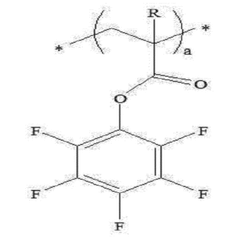
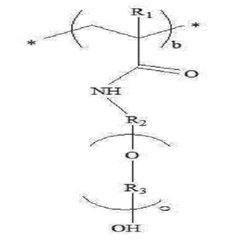
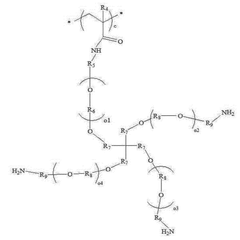
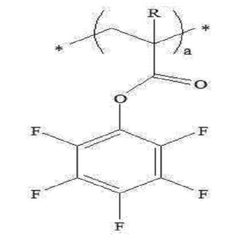
Polymer solid electrolyte, electrochemical device, and actuator element
PatentWO2008044546A1
Innovation
- A solid polymer electrolyte comprising a block copolymer and an ionic liquid, where the ionic liquid and polymer blocks form compatible and incompatible phases, enabling high ionic conductivity and shape retention without chemical cross-linking, allowing for various molding methods and improved mechanical strength.


Battery Safety Regulatory Standards and Compliance Framework
The regulatory landscape for battery safety has evolved significantly with the emergence of solid polymer electrolyte (SPE) technologies, necessitating comprehensive updates to existing compliance frameworks. Current international standards such as IEC 62133, UN 38.3, and UL 2054 primarily address conventional liquid electrolyte systems, creating regulatory gaps for SPE-based batteries that exhibit fundamentally different failure modes and safety characteristics.
Regulatory bodies including the International Electrotechnical Commission (IEC), Underwriters Laboratories (UL), and national agencies like China's CQC and Japan's JET are actively developing specialized testing protocols for solid-state batteries. These emerging standards focus on unique aspects of SPE systems, including thermal runaway propagation patterns, mechanical integrity under stress, and long-term stability assessments that differ substantially from liquid electrolyte requirements.
The compliance framework for SPE batteries encompasses multiple testing domains: thermal abuse testing adapted for solid-state interfaces, mechanical testing protocols addressing polymer flexibility and adhesion, and electrical safety assessments considering ionic conductivity variations. Key regulatory developments include IEC's proposed amendments to 62133-2 specifically addressing solid electrolyte systems and UL's draft standard UL 4200A for solid-state battery safety evaluation.
Certification pathways for SPE batteries require demonstration of enhanced safety margins compared to conventional systems, including reduced flammability risks, improved thermal stability, and elimination of electrolyte leakage concerns. Manufacturers must navigate varying regional requirements, with the European Union's Battery Regulation 2023/1542 establishing specific provisions for next-generation battery chemistries, while the US Department of Transportation continues refining shipping classifications for solid-state systems.
The compliance framework emphasizes risk-based assessment methodologies, requiring comprehensive failure mode and effects analysis (FMEA) tailored to SPE characteristics. This includes evaluation of polymer degradation pathways, interface stability under operational stress, and long-term performance validation through accelerated aging protocols specifically designed for solid polymer systems.
Regulatory bodies including the International Electrotechnical Commission (IEC), Underwriters Laboratories (UL), and national agencies like China's CQC and Japan's JET are actively developing specialized testing protocols for solid-state batteries. These emerging standards focus on unique aspects of SPE systems, including thermal runaway propagation patterns, mechanical integrity under stress, and long-term stability assessments that differ substantially from liquid electrolyte requirements.
The compliance framework for SPE batteries encompasses multiple testing domains: thermal abuse testing adapted for solid-state interfaces, mechanical testing protocols addressing polymer flexibility and adhesion, and electrical safety assessments considering ionic conductivity variations. Key regulatory developments include IEC's proposed amendments to 62133-2 specifically addressing solid electrolyte systems and UL's draft standard UL 4200A for solid-state battery safety evaluation.
Certification pathways for SPE batteries require demonstration of enhanced safety margins compared to conventional systems, including reduced flammability risks, improved thermal stability, and elimination of electrolyte leakage concerns. Manufacturers must navigate varying regional requirements, with the European Union's Battery Regulation 2023/1542 establishing specific provisions for next-generation battery chemistries, while the US Department of Transportation continues refining shipping classifications for solid-state systems.
The compliance framework emphasizes risk-based assessment methodologies, requiring comprehensive failure mode and effects analysis (FMEA) tailored to SPE characteristics. This includes evaluation of polymer degradation pathways, interface stability under operational stress, and long-term performance validation through accelerated aging protocols specifically designed for solid polymer systems.
Environmental Impact Assessment of SPE Safety Measures
The implementation of solid polymer electrolytes (SPE) in energy storage systems presents significant environmental advantages compared to conventional liquid electrolyte technologies. The elimination of volatile organic solvents and toxic liquid components substantially reduces the risk of environmental contamination during manufacturing, operation, and end-of-life disposal phases. SPE-based systems demonstrate enhanced containment properties, minimizing the potential for hazardous material leakage into soil and groundwater systems.
Life cycle assessment studies indicate that SPE safety measures contribute to reduced carbon footprint throughout the product lifecycle. The enhanced thermal stability of solid polymer electrolytes eliminates the need for extensive cooling systems and fire suppression infrastructure, resulting in lower energy consumption and reduced greenhouse gas emissions. Manufacturing processes for SPE systems typically require fewer hazardous chemicals and generate less toxic waste compared to traditional liquid electrolyte production.
The recyclability potential of solid polymer electrolytes represents a crucial environmental benefit. Unlike liquid electrolyte systems that often require complex separation and treatment processes, SPE materials can be more effectively recovered and reprocessed. The solid-state nature facilitates mechanical separation techniques and reduces the complexity of material recovery operations, contributing to circular economy principles in battery manufacturing.
Environmental risk mitigation through SPE implementation extends to transportation and storage phases. The reduced flammability and elimination of volatile emissions significantly decrease the environmental impact of accidental releases during logistics operations. This characteristic particularly benefits large-scale energy storage installations where environmental protection is paramount.
Long-term environmental monitoring data suggests that SPE-based systems exhibit superior performance in extreme weather conditions, reducing the likelihood of environmental incidents caused by system failures. The enhanced durability and stability of solid polymer electrolytes contribute to extended operational lifespans, thereby reducing the frequency of replacement cycles and associated environmental impacts from manufacturing and disposal activities.
Life cycle assessment studies indicate that SPE safety measures contribute to reduced carbon footprint throughout the product lifecycle. The enhanced thermal stability of solid polymer electrolytes eliminates the need for extensive cooling systems and fire suppression infrastructure, resulting in lower energy consumption and reduced greenhouse gas emissions. Manufacturing processes for SPE systems typically require fewer hazardous chemicals and generate less toxic waste compared to traditional liquid electrolyte production.
The recyclability potential of solid polymer electrolytes represents a crucial environmental benefit. Unlike liquid electrolyte systems that often require complex separation and treatment processes, SPE materials can be more effectively recovered and reprocessed. The solid-state nature facilitates mechanical separation techniques and reduces the complexity of material recovery operations, contributing to circular economy principles in battery manufacturing.
Environmental risk mitigation through SPE implementation extends to transportation and storage phases. The reduced flammability and elimination of volatile emissions significantly decrease the environmental impact of accidental releases during logistics operations. This characteristic particularly benefits large-scale energy storage installations where environmental protection is paramount.
Long-term environmental monitoring data suggests that SPE-based systems exhibit superior performance in extreme weather conditions, reducing the likelihood of environmental incidents caused by system failures. The enhanced durability and stability of solid polymer electrolytes contribute to extended operational lifespans, thereby reducing the frequency of replacement cycles and associated environmental impacts from manufacturing and disposal activities.
Unlock deeper insights with Patsnap Eureka Quick Research — get a full tech report to explore trends and direct your research. Try now!
Generate Your Research Report Instantly with AI Agent
Supercharge your innovation with Patsnap Eureka AI Agent Platform!