

How to Enhance Uranium Dioxide Performance in Large Reactors
MAR 11, 20269 MIN READ
Generate Your Research Report Instantly with AI Agent
Patsnap Eureka helps you evaluate technical feasibility & market potential.
Uranium Dioxide Nuclear Fuel Development Background and Objectives
Uranium dioxide (UO₂) has served as the predominant nuclear fuel material for commercial power reactors since the early days of nuclear energy development in the 1950s. Its selection was based on several favorable characteristics including high uranium density, chemical stability, and relatively straightforward fabrication processes. However, as the nuclear industry has evolved toward larger reactor designs with enhanced safety requirements and extended operational cycles, the performance demands on UO₂ fuel have intensified significantly.
The transition to large-scale reactor systems, including Generation III+ designs and advanced pressurized water reactors, has introduced new operational challenges that conventional UO₂ fuel struggles to address effectively. These reactors operate at higher power densities, experience more severe neutron flux conditions, and require fuel assemblies to maintain structural integrity over extended burnup periods exceeding 60 GWd/tU. The increased scale and operational parameters have exposed limitations in traditional UO₂ fuel performance, particularly regarding thermal conductivity degradation, fission gas release, and pellet-cladding interaction.
Contemporary large reactor designs demand fuel materials that can withstand higher linear heat generation rates while maintaining dimensional stability and minimizing the risk of fuel failure. The economic drivers for improved fuel utilization efficiency have also intensified, requiring enhanced uranium resource utilization and reduced waste generation. Additionally, modern safety standards necessitate fuel systems with greater accident tolerance and improved performance under both normal and off-normal operating conditions.
The primary objective of enhanced UO₂ development focuses on addressing thermal performance limitations through microstructural optimization and additive incorporation. Improving thermal conductivity retention throughout the fuel lifecycle represents a critical goal, as degraded thermal performance directly impacts reactor safety margins and operational flexibility. Advanced manufacturing techniques aim to produce fuel pellets with controlled porosity, grain structure, and chemical composition to optimize heat transfer characteristics.
Secondary objectives encompass extending fuel cycle lengths while maintaining safety margins, reducing fission gas release rates, and enhancing dimensional stability under irradiation. These improvements would enable higher burnup achievements, improved economic performance, and reduced environmental impact through more efficient uranium utilization in large reactor applications.
The transition to large-scale reactor systems, including Generation III+ designs and advanced pressurized water reactors, has introduced new operational challenges that conventional UO₂ fuel struggles to address effectively. These reactors operate at higher power densities, experience more severe neutron flux conditions, and require fuel assemblies to maintain structural integrity over extended burnup periods exceeding 60 GWd/tU. The increased scale and operational parameters have exposed limitations in traditional UO₂ fuel performance, particularly regarding thermal conductivity degradation, fission gas release, and pellet-cladding interaction.
Contemporary large reactor designs demand fuel materials that can withstand higher linear heat generation rates while maintaining dimensional stability and minimizing the risk of fuel failure. The economic drivers for improved fuel utilization efficiency have also intensified, requiring enhanced uranium resource utilization and reduced waste generation. Additionally, modern safety standards necessitate fuel systems with greater accident tolerance and improved performance under both normal and off-normal operating conditions.
The primary objective of enhanced UO₂ development focuses on addressing thermal performance limitations through microstructural optimization and additive incorporation. Improving thermal conductivity retention throughout the fuel lifecycle represents a critical goal, as degraded thermal performance directly impacts reactor safety margins and operational flexibility. Advanced manufacturing techniques aim to produce fuel pellets with controlled porosity, grain structure, and chemical composition to optimize heat transfer characteristics.
Secondary objectives encompass extending fuel cycle lengths while maintaining safety margins, reducing fission gas release rates, and enhancing dimensional stability under irradiation. These improvements would enable higher burnup achievements, improved economic performance, and reduced environmental impact through more efficient uranium utilization in large reactor applications.
Market Demand for Enhanced UO2 Performance in Large Reactors
The global nuclear power industry is experiencing unprecedented growth, driven by increasing energy demands and the urgent need for carbon-neutral electricity generation. Large-scale nuclear reactors, particularly Generation III and III+ designs, are becoming the cornerstone of many nations' clean energy strategies. This expansion has created substantial market pressure for enhanced uranium dioxide fuel performance, as operators seek to maximize efficiency, safety, and economic returns from their substantial capital investments.
Current market dynamics reveal a strong preference for fuel systems that can operate at higher burnup rates while maintaining structural integrity. Utilities are increasingly demanding UO2 fuels capable of extended operational cycles, reduced refueling frequency, and improved thermal conductivity to support higher power densities in large reactor designs. The economic incentives are compelling, as enhanced fuel performance directly translates to reduced operational costs and improved plant capacity factors.
The commercial nuclear sector is particularly focused on accident-tolerant fuel technologies that can withstand extreme conditions while maintaining fission product containment. Large reactor operators are seeking UO2 formulations that demonstrate superior performance under loss-of-coolant accident scenarios, addressing both regulatory requirements and public safety concerns that have intensified following recent nuclear incidents.
Regional market analysis indicates varying demand patterns across major nuclear markets. Established nuclear nations are prioritizing fuel performance enhancements to extend the operational life of existing large reactor fleets, while emerging nuclear markets are demanding proven, high-performance fuel technologies for their new reactor construction programs. This dual demand structure is creating opportunities for innovative UO2 enhancement technologies.
The market is also responding to evolving regulatory frameworks that emphasize enhanced safety margins and environmental performance. Utilities are increasingly willing to invest in premium fuel technologies that can demonstrate measurable improvements in thermal efficiency, reduced waste generation, and enhanced operational flexibility. These market forces are driving sustained investment in UO2 research and development initiatives focused on large reactor applications.
Current market dynamics reveal a strong preference for fuel systems that can operate at higher burnup rates while maintaining structural integrity. Utilities are increasingly demanding UO2 fuels capable of extended operational cycles, reduced refueling frequency, and improved thermal conductivity to support higher power densities in large reactor designs. The economic incentives are compelling, as enhanced fuel performance directly translates to reduced operational costs and improved plant capacity factors.
The commercial nuclear sector is particularly focused on accident-tolerant fuel technologies that can withstand extreme conditions while maintaining fission product containment. Large reactor operators are seeking UO2 formulations that demonstrate superior performance under loss-of-coolant accident scenarios, addressing both regulatory requirements and public safety concerns that have intensified following recent nuclear incidents.
Regional market analysis indicates varying demand patterns across major nuclear markets. Established nuclear nations are prioritizing fuel performance enhancements to extend the operational life of existing large reactor fleets, while emerging nuclear markets are demanding proven, high-performance fuel technologies for their new reactor construction programs. This dual demand structure is creating opportunities for innovative UO2 enhancement technologies.
The market is also responding to evolving regulatory frameworks that emphasize enhanced safety margins and environmental performance. Utilities are increasingly willing to invest in premium fuel technologies that can demonstrate measurable improvements in thermal efficiency, reduced waste generation, and enhanced operational flexibility. These market forces are driving sustained investment in UO2 research and development initiatives focused on large reactor applications.
Current UO2 Performance Limitations in Large Scale Applications
Uranium dioxide (UO2) fuel performance in large-scale reactor applications faces several critical limitations that constrain operational efficiency and safety margins. These constraints become increasingly pronounced as reactor designs scale up to meet growing energy demands, presenting unique challenges that differ significantly from smaller reactor configurations.
Thermal conductivity degradation represents one of the most significant performance barriers in large reactor applications. As UO2 fuel operates under high burnup conditions typical in large reactors, its thermal conductivity decreases substantially due to fission product accumulation and lattice damage. This degradation leads to elevated centerline temperatures, creating thermal gradients that can exceed design limits and compromise fuel integrity over extended operational cycles.
Pellet-cladding interaction (PCI) failures emerge as a critical concern in large-scale deployments where fuel assemblies experience prolonged exposure to neutron flux. The combination of fission gas release, fuel swelling, and cladding creep creates mechanical stresses that can lead to cladding breach. Large reactors operating at higher power densities exacerbate these interactions, particularly during power ramping scenarios common in load-following operations.
Fission gas release and retention capabilities of standard UO2 fuel become increasingly problematic at the scale and burnup levels required for large reactor economics. High burnup operation, essential for fuel cycle economics in large plants, results in significant fission gas accumulation that can cause fuel rod internal pressure to approach or exceed system pressure, potentially compromising cladding integrity.
Corrosion resistance limitations manifest more severely in large reactor environments where fuel assemblies must maintain structural integrity over extended cycles. The combination of high-temperature water chemistry, radiation fields, and mechanical stresses creates corrosive conditions that can degrade fuel performance and limit operational flexibility.
Dimensional stability challenges become amplified in large reactor cores where fuel assemblies must maintain precise geometric configurations over extended periods. Fuel densification, swelling, and creep phenomena can alter neutron flux distributions and affect core reactivity control, particularly problematic in large cores where small changes can have significant system-wide impacts.
These performance limitations collectively constrain the operational envelope of large reactors, limiting achievable burnup levels, restricting operational flexibility, and increasing maintenance requirements, thereby impacting the economic viability and safety margins that large-scale nuclear power deployment requires.
Thermal conductivity degradation represents one of the most significant performance barriers in large reactor applications. As UO2 fuel operates under high burnup conditions typical in large reactors, its thermal conductivity decreases substantially due to fission product accumulation and lattice damage. This degradation leads to elevated centerline temperatures, creating thermal gradients that can exceed design limits and compromise fuel integrity over extended operational cycles.
Pellet-cladding interaction (PCI) failures emerge as a critical concern in large-scale deployments where fuel assemblies experience prolonged exposure to neutron flux. The combination of fission gas release, fuel swelling, and cladding creep creates mechanical stresses that can lead to cladding breach. Large reactors operating at higher power densities exacerbate these interactions, particularly during power ramping scenarios common in load-following operations.
Fission gas release and retention capabilities of standard UO2 fuel become increasingly problematic at the scale and burnup levels required for large reactor economics. High burnup operation, essential for fuel cycle economics in large plants, results in significant fission gas accumulation that can cause fuel rod internal pressure to approach or exceed system pressure, potentially compromising cladding integrity.
Corrosion resistance limitations manifest more severely in large reactor environments where fuel assemblies must maintain structural integrity over extended cycles. The combination of high-temperature water chemistry, radiation fields, and mechanical stresses creates corrosive conditions that can degrade fuel performance and limit operational flexibility.
Dimensional stability challenges become amplified in large reactor cores where fuel assemblies must maintain precise geometric configurations over extended periods. Fuel densification, swelling, and creep phenomena can alter neutron flux distributions and affect core reactivity control, particularly problematic in large cores where small changes can have significant system-wide impacts.
These performance limitations collectively constrain the operational envelope of large reactors, limiting achievable burnup levels, restricting operational flexibility, and increasing maintenance requirements, thereby impacting the economic viability and safety margins that large-scale nuclear power deployment requires.
Current UO2 Enhancement Solutions for Large Reactors
01 Manufacturing methods for uranium dioxide pellets
Various manufacturing processes have been developed to produce uranium dioxide pellets with improved performance characteristics. These methods include powder preparation, pressing, sintering, and heat treatment techniques that optimize the microstructure and density of the pellets. Advanced manufacturing approaches focus on controlling grain size, porosity, and homogeneity to enhance the fuel performance in nuclear reactors.- Manufacturing methods for uranium dioxide pellets: Various manufacturing processes have been developed to produce uranium dioxide pellets with improved performance characteristics. These methods focus on controlling particle size, density, and microstructure through specific powder preparation, pressing, and sintering techniques. The manufacturing processes aim to achieve optimal pellet properties including uniform density distribution, controlled grain size, and minimal defects to enhance fuel performance in nuclear reactors.
- Enhancement of thermal conductivity in uranium dioxide: Improving the thermal conductivity of uranium dioxide is critical for nuclear fuel performance. Various approaches include doping with specific additives, controlling oxygen-to-metal ratios, and optimizing microstructural characteristics. Enhanced thermal conductivity allows for better heat transfer from the fuel pellet, reducing centerline temperatures and improving overall fuel behavior under irradiation conditions.
- Additives and dopants for uranium dioxide fuel: The incorporation of specific additives and dopants into uranium dioxide can significantly improve fuel performance characteristics. These materials can enhance properties such as grain growth control, fission gas retention, oxidation resistance, and dimensional stability. The selection and concentration of additives are carefully optimized to achieve desired performance improvements while maintaining compatibility with reactor operating conditions.
- Microstructure control and grain size optimization: Controlling the microstructure and grain size of uranium dioxide is essential for optimizing fuel performance. Techniques include adjusting sintering parameters, using grain growth inhibitors, and controlling the powder characteristics. Proper microstructure control can improve mechanical properties, reduce fission gas release, and enhance irradiation stability. The grain size and porosity distribution directly impact the fuel's behavior under reactor operating conditions.
- Advanced uranium dioxide fuel compositions and structures: Novel fuel compositions and structural designs have been developed to enhance uranium dioxide performance in modern reactor applications. These innovations include composite fuel structures, modified stoichiometry formulations, and advanced pellet geometries. Such developments aim to improve fuel utilization, extend burnup capabilities, enhance safety margins, and optimize economic performance while meeting stringent regulatory requirements.
02 Enhancement of thermal conductivity in uranium dioxide
Improving the thermal conductivity of uranium dioxide is critical for efficient heat transfer in nuclear fuel applications. Techniques include doping with specific additives, controlling the oxygen-to-metal ratio, and optimizing the sintering conditions. Enhanced thermal conductivity helps reduce fuel centerline temperatures and improves overall reactor safety and performance.Expand Specific Solutions03 Additives and dopants for uranium dioxide performance improvement
The incorporation of various additives and dopants into uranium dioxide can significantly enhance its properties. These materials may improve grain growth control, increase density, enhance thermal stability, and modify the oxidation behavior. Common additives include rare earth oxides, aluminum compounds, and other ceramic materials that are carefully selected to optimize specific performance characteristics.Expand Specific Solutions04 Oxidation resistance and stability of uranium dioxide
The oxidation behavior and chemical stability of uranium dioxide under various conditions are crucial for maintaining fuel integrity during reactor operation. Research focuses on understanding and controlling the oxidation kinetics, developing protective coatings, and modifying the composition to enhance resistance to oxidation at elevated temperatures. These improvements help extend fuel lifetime and maintain dimensional stability.Expand Specific Solutions05 Microstructure control and grain refinement in uranium dioxide
Controlling the microstructure and achieving optimal grain size distribution in uranium dioxide is essential for improving mechanical properties and fission gas retention. Techniques include the use of grain growth inhibitors, controlled sintering atmospheres, and specific thermal treatment cycles. Fine-grained microstructures generally exhibit better creep resistance, reduced fission gas release, and improved dimensional stability under irradiation.Expand Specific Solutions
Major Nuclear Fuel Manufacturers and Technology Leaders
The uranium dioxide performance enhancement sector for large reactors represents a mature nuclear technology market experiencing steady growth driven by global nuclear power expansion and reactor efficiency demands. The industry is in a consolidation phase with established players dominating through decades of expertise and regulatory compliance capabilities. Market size reflects significant investment in nuclear infrastructure, particularly in Asia-Pacific regions where companies like China Nuclear Power Technology Research Institute, China Nuclear Power Research & Design Institute, and Shanghai Nuclear Engineering Research & Design Institute lead domestic capabilities. Technology maturity varies across participants, with traditional nuclear giants like Toshiba Corp., Siemens AG, Hitachi Ltd., and Mitsubishi Heavy Industries maintaining advanced fuel fabrication technologies, while specialized firms such as TerraPower LLC, Nuclear Fuel Industries Ltd., and Framatome SA focus on next-generation reactor designs and fuel optimization solutions for enhanced performance applications.
Hitachi Ltd.
Technical Solution: Hitachi has developed advanced uranium dioxide fuel pellet technologies specifically designed for enhanced performance in large boiling water reactors. Their fuel design incorporates improved UO2 pellet geometry with optimized surface roughness and controlled grain structure to enhance heat transfer efficiency. The company utilizes advanced powder processing techniques including controlled atmosphere sintering and precise additive incorporation to improve thermal conductivity and fission gas retention. Their fuel pellets feature enhanced dimensional stability and reduced pellet-cladding mechanical interaction through innovative pellet design modifications and surface treatments for large reactor applications.
Strengths: Proven BWR fuel technology expertise, strong quality assurance systems, integrated reactor and fuel design capabilities. Weaknesses: Limited PWR fuel experience compared to BWR systems, higher manufacturing complexity, market competition from established fuel vendors.
TerraPower LLC
Technical Solution: TerraPower has developed innovative uranium dioxide fuel concepts for next-generation large reactor designs, focusing on enhanced fuel utilization and extended burnup capabilities. Their approach includes advanced UO2 pellet formulations with improved thermal properties through controlled microstructure engineering and optimized grain boundary chemistry. The company employs computational modeling to optimize pellet design parameters including porosity distribution and grain size for enhanced fission gas accommodation. Their fuel pellets are designed with enhanced thermal conductivity additives and feature improved resistance to pellet-cladding chemical interaction for extended operation cycles in large advanced reactor systems.
Strengths: Innovative advanced reactor fuel concepts, strong computational modeling capabilities, focus on next-generation reactor technologies. Weaknesses: Limited commercial manufacturing experience, unproven technology at industrial scale, regulatory uncertainty for advanced fuel designs.
Core Innovations in Advanced UO2 Fuel Technologies
High density u02 and high thermal conductivity UO2 composites by spark plasma sintering (SPS)
PatentActiveUS20220270768A1
Innovation
- The method involves spark plasma sintering (SPS) of UO2 fuel pellets with a thermally conductive material like silicon carbide (SiC) at high heating rates and short dwell times, achieving densities greater than 90% TD and uniformly distributing the conductive material throughout the pellet to enhance thermal conductivity.


Preparation method of monocrystal uranium dioxide nuclear fuel pellets
PatentActiveUS20190127876A1
Innovation
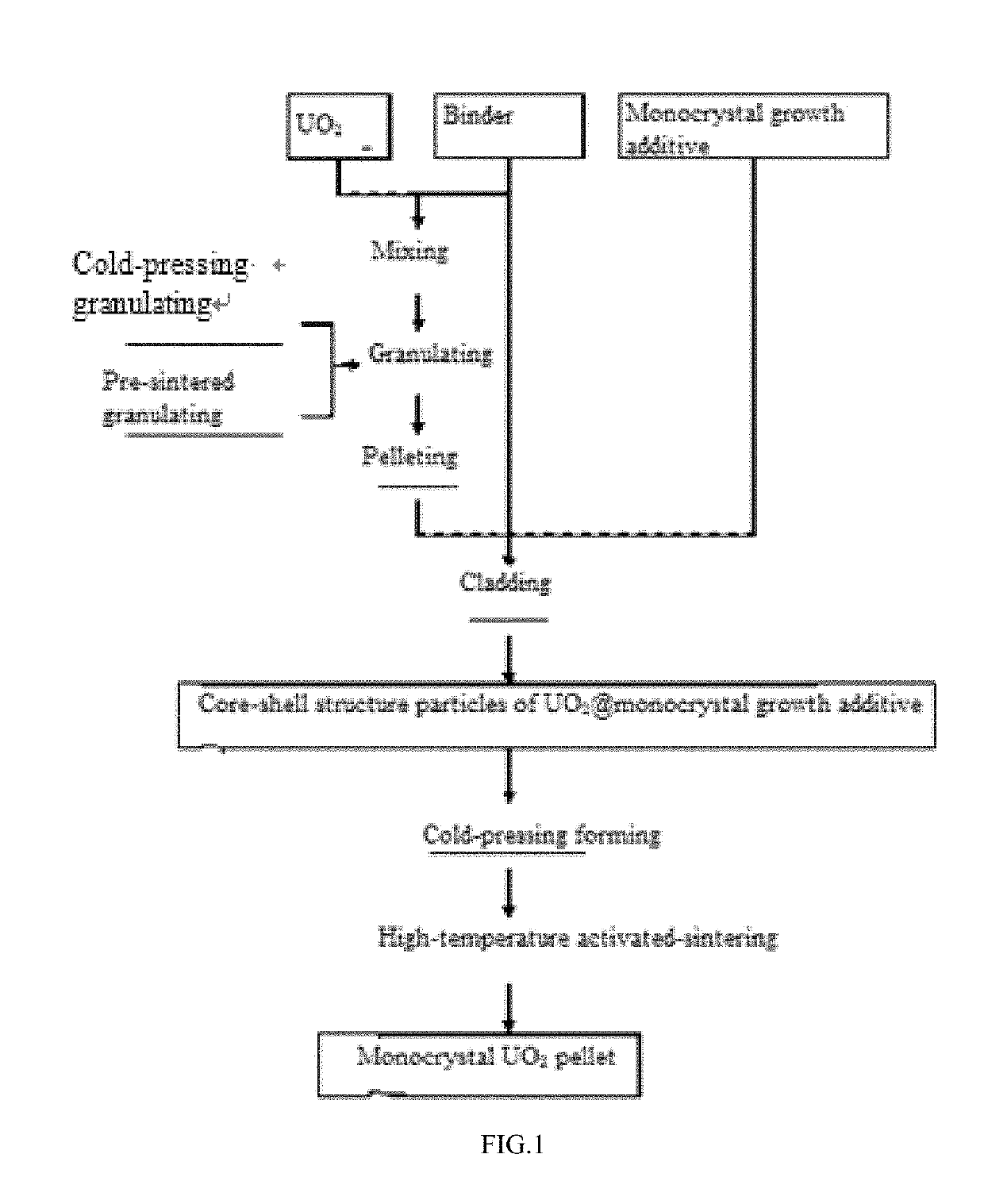
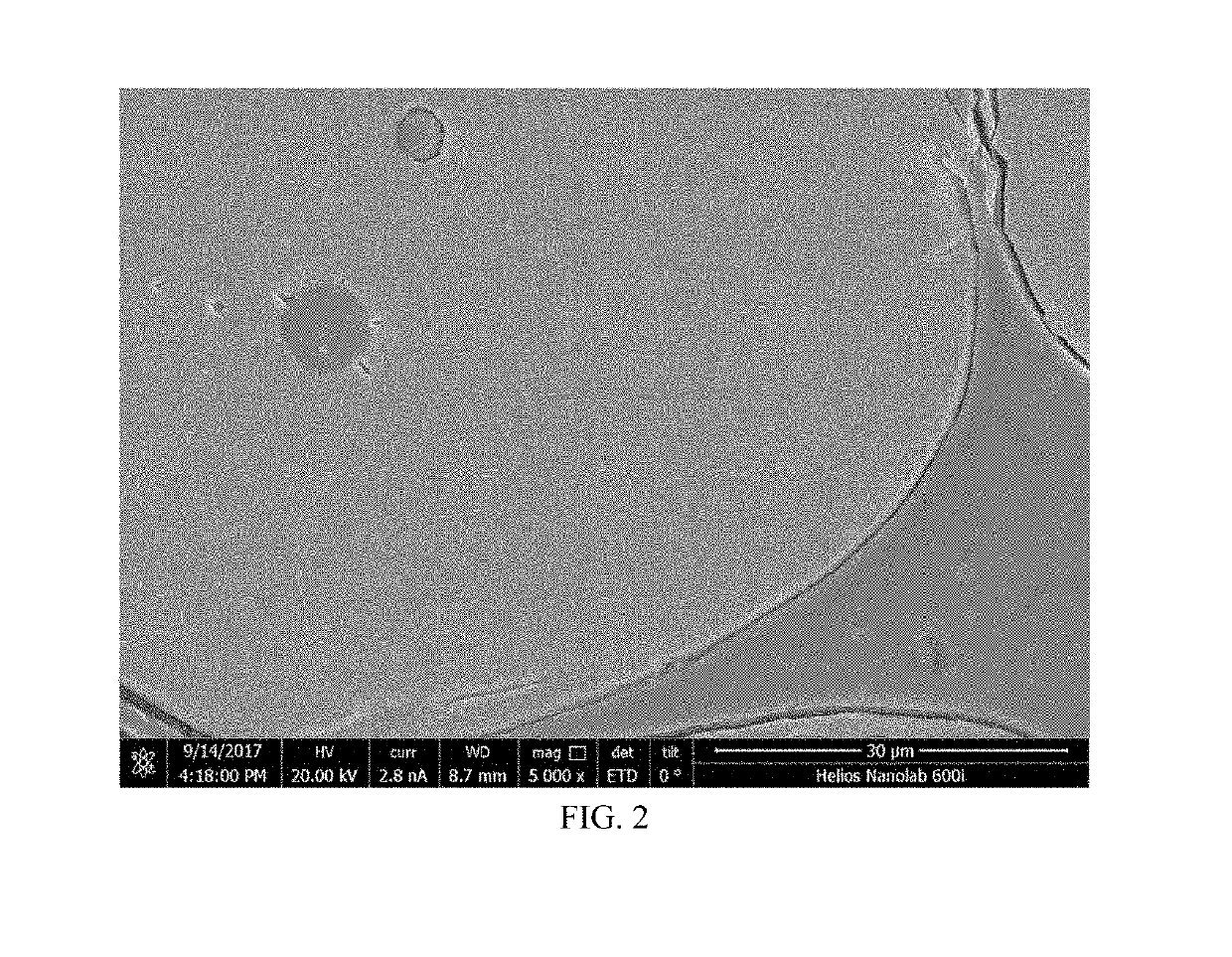
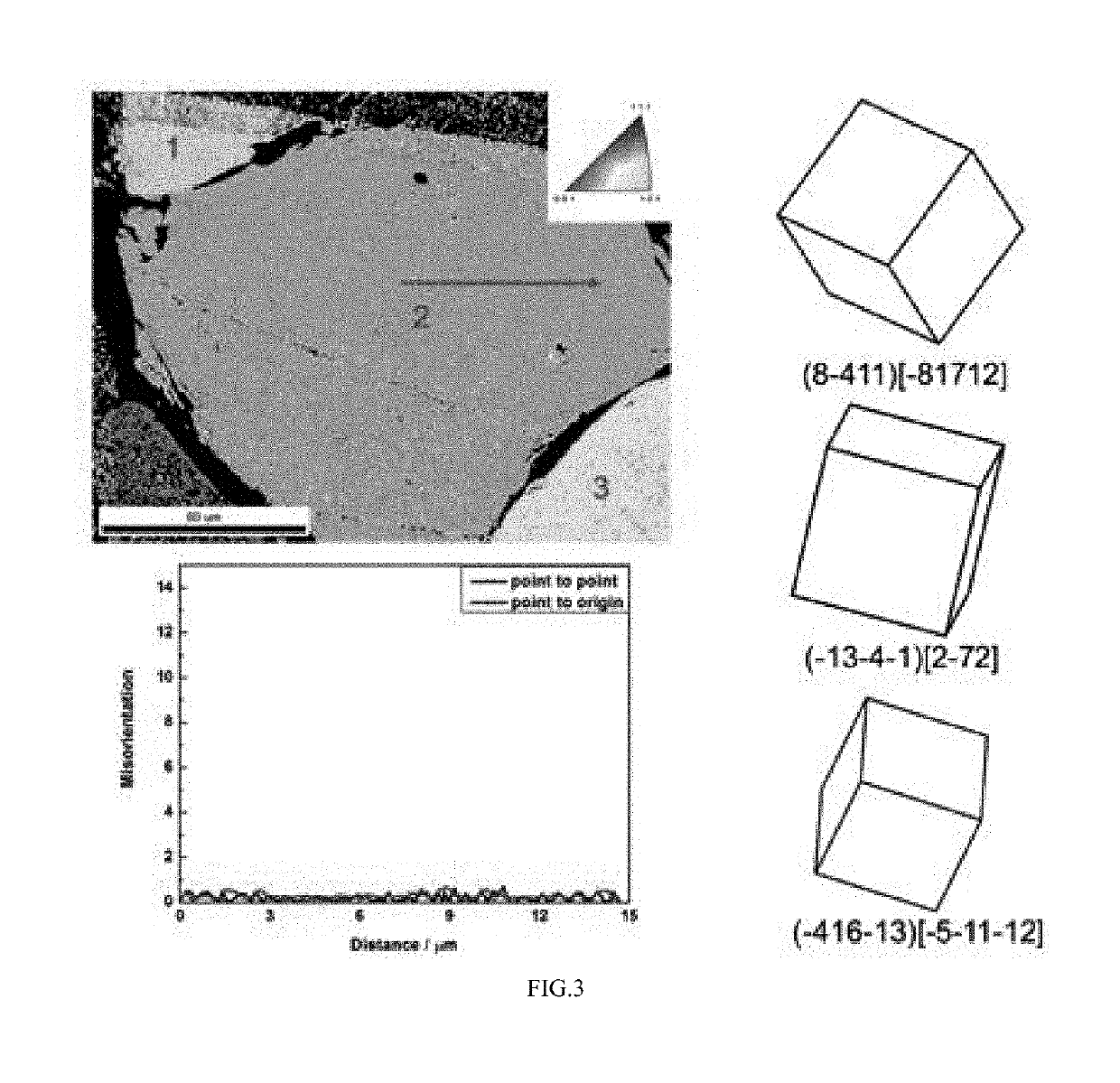
- A method to produce monocrystal UO2 nuclear fuel pellets by granulating and pelleting UO2 powder, coating with monocrystal growth additives, and activated-sintering to form a core-shell structure, promoting recrystallization and increasing crystal grain size, thereby enhancing heat conductivity and radiation stability.
Nuclear Safety Regulations for Advanced Fuel Systems
Nuclear safety regulations for advanced fuel systems represent a critical framework governing the deployment and operation of enhanced uranium dioxide fuels in large reactor environments. The regulatory landscape has evolved significantly to address the unique challenges posed by high-performance fuel designs, establishing comprehensive standards that ensure both operational safety and environmental protection.
Current regulatory frameworks primarily focus on fuel qualification requirements, which mandate extensive testing protocols for advanced UO2 formulations. These regulations require demonstration of fuel performance under normal operating conditions, anticipated operational occurrences, and design basis accidents. Key parameters include fuel centerline temperature limits, fission gas release thresholds, and cladding integrity maintenance throughout extended burnup cycles.
International regulatory bodies, including the Nuclear Regulatory Commission and International Atomic Energy Agency, have developed specific guidelines for advanced fuel licensing. These standards emphasize the importance of comprehensive fuel performance modeling, validated through irradiation testing programs and post-irradiation examinations. The regulations mandate detailed documentation of fuel design modifications, manufacturing processes, and quality assurance procedures.
Safety assessment requirements for enhanced UO2 systems encompass thermal-hydraulic analysis, neutronics evaluation, and accident scenario modeling. Regulators require demonstration that fuel performance enhancements do not compromise reactor safety margins or introduce new failure modes. Particular attention is given to fuel behavior during loss-of-coolant accidents and reactivity insertion events.
Licensing pathways for advanced fuel systems typically involve phased approaches, beginning with lead test assemblies and progressing to full core implementations. Regulatory approval processes require extensive safety analysis reports, environmental impact assessments, and public consultation periods. These frameworks ensure that performance improvements in uranium dioxide fuels are achieved without compromising the fundamental safety principles governing nuclear reactor operations.
Current regulatory frameworks primarily focus on fuel qualification requirements, which mandate extensive testing protocols for advanced UO2 formulations. These regulations require demonstration of fuel performance under normal operating conditions, anticipated operational occurrences, and design basis accidents. Key parameters include fuel centerline temperature limits, fission gas release thresholds, and cladding integrity maintenance throughout extended burnup cycles.
International regulatory bodies, including the Nuclear Regulatory Commission and International Atomic Energy Agency, have developed specific guidelines for advanced fuel licensing. These standards emphasize the importance of comprehensive fuel performance modeling, validated through irradiation testing programs and post-irradiation examinations. The regulations mandate detailed documentation of fuel design modifications, manufacturing processes, and quality assurance procedures.
Safety assessment requirements for enhanced UO2 systems encompass thermal-hydraulic analysis, neutronics evaluation, and accident scenario modeling. Regulators require demonstration that fuel performance enhancements do not compromise reactor safety margins or introduce new failure modes. Particular attention is given to fuel behavior during loss-of-coolant accidents and reactivity insertion events.
Licensing pathways for advanced fuel systems typically involve phased approaches, beginning with lead test assemblies and progressing to full core implementations. Regulatory approval processes require extensive safety analysis reports, environmental impact assessments, and public consultation periods. These frameworks ensure that performance improvements in uranium dioxide fuels are achieved without compromising the fundamental safety principles governing nuclear reactor operations.
Environmental Impact of Enhanced UO2 Fuel Cycles
Enhanced uranium dioxide fuel cycles present both environmental opportunities and challenges that require comprehensive assessment across the entire nuclear fuel lifecycle. The implementation of advanced UO2 technologies in large reactors fundamentally alters environmental impact profiles through improved fuel utilization efficiency and modified waste generation patterns.
The primary environmental benefit of enhanced UO2 fuel cycles stems from increased fuel burnup capabilities, which directly reduce the volume of spent nuclear fuel requiring long-term storage. Advanced fuel designs achieving burnup rates of 60-80 GWd/tU compared to conventional 45 GWd/tU levels result in approximately 30-40% reduction in high-level radioactive waste generation per unit of electricity produced. This improvement significantly decreases the environmental burden associated with geological disposal requirements and reduces the frequency of fuel transportation activities.
Enhanced fuel performance technologies also contribute to reduced uranium mining requirements through more efficient uranium utilization. The improved neutron economy in advanced UO2 formulations enables extraction of greater energy content from each kilogram of natural uranium, potentially reducing mining-related environmental impacts including land disturbance, water consumption, and mill tailings generation by 15-25% per unit of energy output.
However, the manufacturing processes for enhanced UO2 fuels introduce new environmental considerations. Advanced fuel fabrication techniques, including controlled grain structure modification and additive incorporation, typically require additional processing steps and higher-purity materials. These requirements can increase energy consumption during fuel manufacturing by 10-20% and generate specialized waste streams requiring dedicated treatment protocols.
The extended operational cycles enabled by enhanced fuels also modify reactor operational environmental impacts. Longer fuel residence times reduce refueling frequency, decreasing transportation-related emissions and occupational radiation exposure. Simultaneously, the higher fission product inventory accumulated during extended burnup periods necessitates enhanced containment systems and modified waste handling procedures.
Water resource impacts represent another critical environmental dimension, as enhanced fuel cycles may alter reactor thermal efficiency and cooling requirements. While improved fuel performance can enhance overall plant efficiency, the higher power densities achievable with advanced UO2 designs may increase cooling water demands or require enhanced heat rejection systems, potentially affecting local aquatic ecosystems.
The decommissioning phase environmental impacts are also influenced by enhanced fuel utilization, as reduced fuel handling frequency and improved containment systems can minimize long-term contamination levels in reactor facilities, potentially reducing decommissioning waste volumes and associated environmental remediation requirements.
The primary environmental benefit of enhanced UO2 fuel cycles stems from increased fuel burnup capabilities, which directly reduce the volume of spent nuclear fuel requiring long-term storage. Advanced fuel designs achieving burnup rates of 60-80 GWd/tU compared to conventional 45 GWd/tU levels result in approximately 30-40% reduction in high-level radioactive waste generation per unit of electricity produced. This improvement significantly decreases the environmental burden associated with geological disposal requirements and reduces the frequency of fuel transportation activities.
Enhanced fuel performance technologies also contribute to reduced uranium mining requirements through more efficient uranium utilization. The improved neutron economy in advanced UO2 formulations enables extraction of greater energy content from each kilogram of natural uranium, potentially reducing mining-related environmental impacts including land disturbance, water consumption, and mill tailings generation by 15-25% per unit of energy output.
However, the manufacturing processes for enhanced UO2 fuels introduce new environmental considerations. Advanced fuel fabrication techniques, including controlled grain structure modification and additive incorporation, typically require additional processing steps and higher-purity materials. These requirements can increase energy consumption during fuel manufacturing by 10-20% and generate specialized waste streams requiring dedicated treatment protocols.
The extended operational cycles enabled by enhanced fuels also modify reactor operational environmental impacts. Longer fuel residence times reduce refueling frequency, decreasing transportation-related emissions and occupational radiation exposure. Simultaneously, the higher fission product inventory accumulated during extended burnup periods necessitates enhanced containment systems and modified waste handling procedures.
Water resource impacts represent another critical environmental dimension, as enhanced fuel cycles may alter reactor thermal efficiency and cooling requirements. While improved fuel performance can enhance overall plant efficiency, the higher power densities achievable with advanced UO2 designs may increase cooling water demands or require enhanced heat rejection systems, potentially affecting local aquatic ecosystems.
The decommissioning phase environmental impacts are also influenced by enhanced fuel utilization, as reduced fuel handling frequency and improved containment systems can minimize long-term contamination levels in reactor facilities, potentially reducing decommissioning waste volumes and associated environmental remediation requirements.
Unlock deeper insights with Patsnap Eureka Quick Research — get a full tech report to explore trends and direct your research. Try now!
Generate Your Research Report Instantly with AI Agent
Supercharge your innovation with Patsnap Eureka AI Agent Platform!