

How to Evaluate Fluoroelastomer's Adhesive Bond Longevity
MAR 5, 20269 MIN READ
Generate Your Research Report Instantly with AI Agent
PatSnap Eureka helps you evaluate technical feasibility & market potential.
Fluoroelastomer Adhesive Bond Background and Objectives
Fluoroelastomers represent a specialized class of synthetic rubber materials characterized by exceptional chemical resistance, thermal stability, and mechanical durability. These high-performance polymers have evolved significantly since their initial development in the 1950s, transitioning from niche aerospace applications to critical components across diverse industrial sectors. The evolution of fluoroelastomer technology has been driven by increasingly demanding operational environments where conventional elastomers fail to maintain structural integrity and sealing performance.
The adhesive bonding of fluoroelastomers presents unique challenges due to their inherently low surface energy and chemical inertness. These same properties that make fluoroelastomers valuable for harsh environment applications also create significant barriers to achieving reliable adhesive bonds. Traditional bonding methods often prove inadequate, necessitating specialized surface treatments, primer systems, and adhesive formulations specifically designed for fluoroelastomer substrates.
Historical development in fluoroelastomer adhesive bonding has progressed through several distinct phases. Early approaches relied primarily on mechanical interlocking and basic chemical etching techniques. Subsequent advances introduced plasma treatment methods, chemical primers containing reactive silanes, and specialized adhesive chemistries incorporating fluorinated components. Recent developments have focused on molecular-level surface modification techniques and hybrid bonding systems that combine multiple adhesion mechanisms.
The primary objective of evaluating fluoroelastomer adhesive bond longevity centers on developing predictive methodologies that can accurately forecast bond performance over extended service periods. This evaluation framework must account for the complex interplay between environmental stressors, material degradation mechanisms, and interfacial chemistry evolution. Understanding these relationships is crucial for establishing reliable design criteria and maintenance schedules for critical applications.
Contemporary research objectives emphasize the development of accelerated testing protocols that correlate with real-world performance while reducing evaluation timeframes from years to months. Additionally, there is growing focus on establishing standardized metrics for bond durability assessment and creating predictive models that incorporate multiple degradation pathways. These efforts aim to provide engineers with robust tools for making informed decisions regarding fluoroelastomer bonding applications in mission-critical systems.
The adhesive bonding of fluoroelastomers presents unique challenges due to their inherently low surface energy and chemical inertness. These same properties that make fluoroelastomers valuable for harsh environment applications also create significant barriers to achieving reliable adhesive bonds. Traditional bonding methods often prove inadequate, necessitating specialized surface treatments, primer systems, and adhesive formulations specifically designed for fluoroelastomer substrates.
Historical development in fluoroelastomer adhesive bonding has progressed through several distinct phases. Early approaches relied primarily on mechanical interlocking and basic chemical etching techniques. Subsequent advances introduced plasma treatment methods, chemical primers containing reactive silanes, and specialized adhesive chemistries incorporating fluorinated components. Recent developments have focused on molecular-level surface modification techniques and hybrid bonding systems that combine multiple adhesion mechanisms.
The primary objective of evaluating fluoroelastomer adhesive bond longevity centers on developing predictive methodologies that can accurately forecast bond performance over extended service periods. This evaluation framework must account for the complex interplay between environmental stressors, material degradation mechanisms, and interfacial chemistry evolution. Understanding these relationships is crucial for establishing reliable design criteria and maintenance schedules for critical applications.
Contemporary research objectives emphasize the development of accelerated testing protocols that correlate with real-world performance while reducing evaluation timeframes from years to months. Additionally, there is growing focus on establishing standardized metrics for bond durability assessment and creating predictive models that incorporate multiple degradation pathways. These efforts aim to provide engineers with robust tools for making informed decisions regarding fluoroelastomer bonding applications in mission-critical systems.
Market Demand for Durable Fluoroelastomer Bonding Solutions
The aerospace industry represents the largest market segment for durable fluoroelastomer bonding solutions, driven by stringent safety requirements and extreme operating conditions. Aircraft engines, fuel systems, and hydraulic components demand adhesive bonds that maintain integrity across temperature ranges from cryogenic to elevated conditions while resisting aggressive chemical environments. The increasing adoption of next-generation aircraft with enhanced fuel efficiency requirements has intensified the need for reliable bonding evaluation methodologies.
Automotive applications constitute another significant demand driver, particularly in electric vehicle development where fluoroelastomer seals and gaskets require long-term adhesive performance. Battery systems, charging infrastructure, and thermal management components rely on bonds that must withstand repeated thermal cycling and chemical exposure over extended service lives. The automotive sector's shift toward electrification has created new requirements for adhesive longevity assessment protocols.
Chemical processing industries demonstrate substantial demand for fluoroelastomer bonding solutions capable of withstanding corrosive environments and high-pressure conditions. Refineries, petrochemical plants, and pharmaceutical manufacturing facilities require sealing systems with predictable service life characteristics. The ability to accurately evaluate bond longevity directly impacts maintenance scheduling and operational safety in these critical applications.
Semiconductor manufacturing represents an emerging high-growth market segment where ultra-pure processing environments demand exceptional chemical resistance and cleanliness standards. Wafer fabrication equipment, chemical delivery systems, and vacuum chambers require fluoroelastomer components with bonds that maintain performance throughout extended production cycles without contamination risks.
The oil and gas sector continues to drive demand for durable bonding solutions in downhole applications, subsea equipment, and processing facilities. Extreme pressure, temperature, and chemical exposure conditions necessitate robust evaluation methods to predict bond performance over multi-decade service intervals. Offshore operations particularly require reliable longevity assessment due to limited maintenance accessibility.
Market growth is further supported by increasing regulatory requirements across industries mandating comprehensive testing and validation of critical sealing systems. Environmental regulations and safety standards continue to evolve, creating additional demand for sophisticated bond evaluation methodologies that can demonstrate compliance with long-term performance requirements.
Automotive applications constitute another significant demand driver, particularly in electric vehicle development where fluoroelastomer seals and gaskets require long-term adhesive performance. Battery systems, charging infrastructure, and thermal management components rely on bonds that must withstand repeated thermal cycling and chemical exposure over extended service lives. The automotive sector's shift toward electrification has created new requirements for adhesive longevity assessment protocols.
Chemical processing industries demonstrate substantial demand for fluoroelastomer bonding solutions capable of withstanding corrosive environments and high-pressure conditions. Refineries, petrochemical plants, and pharmaceutical manufacturing facilities require sealing systems with predictable service life characteristics. The ability to accurately evaluate bond longevity directly impacts maintenance scheduling and operational safety in these critical applications.
Semiconductor manufacturing represents an emerging high-growth market segment where ultra-pure processing environments demand exceptional chemical resistance and cleanliness standards. Wafer fabrication equipment, chemical delivery systems, and vacuum chambers require fluoroelastomer components with bonds that maintain performance throughout extended production cycles without contamination risks.
The oil and gas sector continues to drive demand for durable bonding solutions in downhole applications, subsea equipment, and processing facilities. Extreme pressure, temperature, and chemical exposure conditions necessitate robust evaluation methods to predict bond performance over multi-decade service intervals. Offshore operations particularly require reliable longevity assessment due to limited maintenance accessibility.
Market growth is further supported by increasing regulatory requirements across industries mandating comprehensive testing and validation of critical sealing systems. Environmental regulations and safety standards continue to evolve, creating additional demand for sophisticated bond evaluation methodologies that can demonstrate compliance with long-term performance requirements.
Current Challenges in Fluoroelastomer Adhesion Evaluation
The evaluation of fluoroelastomer adhesive bond longevity faces significant technical challenges that stem from the unique chemical properties and demanding application environments of these materials. Fluoroelastomers, characterized by their exceptional chemical resistance and thermal stability, present inherent difficulties in forming strong adhesive bonds due to their low surface energy and chemically inert fluorinated surfaces. This fundamental incompatibility between fluoroelastomer surfaces and conventional adhesive systems creates the primary challenge in both achieving reliable bonding and subsequently evaluating bond durability.
Current standardized testing methodologies often prove inadequate for fluoroelastomer applications. Traditional adhesion tests, such as peel strength and lap shear measurements, were primarily developed for conventional elastomers and may not accurately reflect the long-term performance of fluoroelastomer bonds under real-world conditions. The lack of industry-specific testing protocols creates inconsistencies in evaluation approaches across different manufacturers and research institutions.
Environmental simulation presents another critical challenge in longevity assessment. Fluoroelastomers are typically employed in extreme environments involving high temperatures, aggressive chemicals, and dynamic mechanical stresses. Reproducing these complex multi-factor exposure conditions in laboratory settings while maintaining accelerated testing timelines remains technically demanding. The interaction effects between temperature cycling, chemical exposure, and mechanical fatigue are particularly difficult to simulate accurately.
The time-dependent nature of adhesive degradation mechanisms in fluoroelastomer systems complicates evaluation efforts. Unlike immediate bond failure, longevity assessment requires understanding of gradual degradation processes including interfacial delamination, adhesive aging, and substrate surface changes over extended periods. Accelerated aging protocols must balance testing efficiency with realistic degradation pathway representation.
Surface characterization and bond interface analysis present additional technical hurdles. The smooth, low-energy surfaces of fluoroelastomers make it challenging to assess surface preparation effectiveness and monitor interfacial changes during service life. Advanced analytical techniques are required to detect subtle chemical and physical modifications at the bond interface that may precede macroscopic failure.
Furthermore, the limited availability of reference materials and benchmark data specific to fluoroelastomer adhesion creates difficulties in establishing meaningful performance criteria and validation standards for longevity evaluation methodologies.
Current standardized testing methodologies often prove inadequate for fluoroelastomer applications. Traditional adhesion tests, such as peel strength and lap shear measurements, were primarily developed for conventional elastomers and may not accurately reflect the long-term performance of fluoroelastomer bonds under real-world conditions. The lack of industry-specific testing protocols creates inconsistencies in evaluation approaches across different manufacturers and research institutions.
Environmental simulation presents another critical challenge in longevity assessment. Fluoroelastomers are typically employed in extreme environments involving high temperatures, aggressive chemicals, and dynamic mechanical stresses. Reproducing these complex multi-factor exposure conditions in laboratory settings while maintaining accelerated testing timelines remains technically demanding. The interaction effects between temperature cycling, chemical exposure, and mechanical fatigue are particularly difficult to simulate accurately.
The time-dependent nature of adhesive degradation mechanisms in fluoroelastomer systems complicates evaluation efforts. Unlike immediate bond failure, longevity assessment requires understanding of gradual degradation processes including interfacial delamination, adhesive aging, and substrate surface changes over extended periods. Accelerated aging protocols must balance testing efficiency with realistic degradation pathway representation.
Surface characterization and bond interface analysis present additional technical hurdles. The smooth, low-energy surfaces of fluoroelastomers make it challenging to assess surface preparation effectiveness and monitor interfacial changes during service life. Advanced analytical techniques are required to detect subtle chemical and physical modifications at the bond interface that may precede macroscopic failure.
Furthermore, the limited availability of reference materials and benchmark data specific to fluoroelastomer adhesion creates difficulties in establishing meaningful performance criteria and validation standards for longevity evaluation methodologies.
Existing Fluoroelastomer Bond Longevity Testing Solutions
01 Surface treatment and primer application for fluoroelastomer bonding
Improving fluoroelastomer adhesive bond longevity can be achieved through surface treatment methods and primer applications. Surface treatments such as plasma treatment, chemical etching, or mechanical abrasion can modify the fluoroelastomer surface to enhance adhesion. Primers containing reactive functional groups can create chemical bridges between the fluoroelastomer and adhesive, significantly improving bond strength and durability over time. These treatments help overcome the inherently low surface energy of fluoroelastomers.- Surface treatment and primer application for fluoroelastomer bonding: Improving fluoroelastomer adhesive bond longevity can be achieved through surface treatment methods and primer applications. Surface treatments such as plasma treatment, chemical etching, or mechanical abrasion can modify the fluoroelastomer surface to enhance adhesion. Primers specifically designed for fluoroelastomers can create a chemical bridge between the substrate and adhesive, significantly improving bond strength and durability over time. These treatments help overcome the inherently low surface energy of fluoroelastomers.
- Adhesive composition optimization with crosslinking agents: The longevity of fluoroelastomer adhesive bonds can be enhanced by optimizing adhesive compositions with specific crosslinking agents and curing systems. Incorporating peroxide-based or amine-based crosslinking agents can create stronger chemical bonds at the interface. The use of multifunctional crosslinkers and accelerators in the adhesive formulation promotes better network formation and improves resistance to environmental degradation, thermal cycling, and chemical exposure, thereby extending bond life.
- Incorporation of adhesion promoters and coupling agents: Adhesion promoters and coupling agents can be incorporated into fluoroelastomer bonding systems to improve long-term bond performance. Silane coupling agents, titanate coupling agents, or fluorinated adhesion promoters can create chemical linkages between the fluoroelastomer and the substrate. These additives enhance interfacial adhesion by forming covalent bonds with both surfaces, resulting in improved resistance to moisture, heat, and mechanical stress over extended periods.
- Environmental resistance enhancement through barrier layers: The longevity of fluoroelastomer adhesive bonds can be improved by incorporating barrier layers or protective coatings that shield the bond from environmental factors. These barrier systems can include moisture-resistant layers, UV-protective coatings, or chemical-resistant films that prevent degradation of the adhesive interface. By protecting the bond from oxidation, hydrolysis, and other environmental attacks, these systems significantly extend the service life of fluoroelastomer adhesive joints in harsh conditions.
- Thermal stability improvement through filler reinforcement: Enhancing the thermal stability of fluoroelastomer adhesive bonds can be achieved through the incorporation of reinforcing fillers and stabilizers. Inorganic fillers such as silica, carbon black, or ceramic particles can improve the thermal and mechanical properties of the adhesive system. Heat stabilizers and antioxidants can be added to prevent thermal degradation of the polymer chains. These reinforcements help maintain bond integrity under high-temperature conditions and thermal cycling, extending the overall bond longevity.
02 Adhesive composition optimization with crosslinking agents
The longevity of fluoroelastomer adhesive bonds can be enhanced by optimizing adhesive compositions with specific crosslinking agents and curing systems. Incorporating peroxide-based or amine-based crosslinking agents can create stronger chemical bonds at the interface. The use of multifunctional crosslinkers and accelerators in the adhesive formulation promotes better network formation and improves resistance to environmental degradation, thermal cycling, and chemical exposure.Expand Specific Solutions03 Incorporation of adhesion promoters and coupling agents
Adhesion promoters and coupling agents can be incorporated into fluoroelastomer bonding systems to improve long-term bond stability. Silane coupling agents, titanate coupling agents, or phosphate-based adhesion promoters can form chemical bonds with both the fluoroelastomer substrate and the adhesive layer. These additives enhance interfacial adhesion and provide resistance to moisture, heat, and chemical attack, thereby extending bond longevity.Expand Specific Solutions04 Environmental resistance through barrier coatings and sealants
Protecting fluoroelastomer adhesive bonds from environmental factors can significantly improve their longevity. Applying barrier coatings or sealants over bonded joints can prevent moisture ingress, chemical attack, and UV degradation. These protective layers can be formulated with fluoropolymers, epoxies, or polyurethanes that are compatible with fluoroelastomers and provide long-term environmental resistance while maintaining bond integrity under harsh operating conditions.Expand Specific Solutions05 Thermal and mechanical stress management in bonded assemblies
Managing thermal and mechanical stresses in fluoroelastomer bonded assemblies is crucial for bond longevity. This can be achieved through proper joint design, use of flexible adhesive formulations, and stress-relief features. Adhesives with controlled modulus and elongation properties can accommodate differential thermal expansion between substrates. Additionally, incorporating stress-absorbing interlayers or designing joints with appropriate geometry can distribute loads more evenly and prevent premature bond failure.Expand Specific Solutions
Key Players in Fluoroelastomer and Adhesive Industries
The fluoroelastomer adhesive bond longevity evaluation field represents a mature yet evolving market driven by demanding applications in aerospace, automotive, and chemical processing industries. The industry is in a consolidation phase with established chemical giants like DuPont, Solvay, and 3M dominating through extensive R&D capabilities and comprehensive product portfolios. Market size reflects steady growth fueled by increasing performance requirements in extreme environments. Technology maturity varies significantly across players - while Western companies like DAIKIN, Shin-Etsu, and BASF demonstrate advanced testing methodologies and standardized evaluation protocols, emerging Asian manufacturers such as Kingfa Sci. & Tech. and Chengdu companies are rapidly developing capabilities. Japanese firms including NOK Corp., AGC, and Valqua excel in precision applications, while research institutions like Naval Research Laboratory and Northwestern Polytechnical University contribute fundamental advances in bond durability assessment techniques and predictive modeling approaches.
Solvay Specialty Polymers Italy SpA
Technical Solution: Solvay has developed specialized evaluation protocols for fluoroelastomer adhesive bond longevity assessment based on their extensive experience in high-performance polymer applications. Their approach integrates accelerated weathering tests, chemical resistance evaluations, and mechanical property retention studies under simulated service conditions. The company employs advanced characterization techniques including differential scanning calorimetry (DSC) for thermal transition analysis, gel permeation chromatography (GPC) for molecular weight distribution monitoring, and contact angle measurements for surface energy assessment. Their evaluation methodology emphasizes the correlation between fluoroelastomer composition, processing conditions, and long-term adhesive performance in demanding applications such as oil and gas, chemical processing, and semiconductor manufacturing.
Strengths: Deep expertise in specialty polymers, strong focus on high-performance applications, comprehensive material characterization capabilities. Weaknesses: Limited to specific fluoroelastomer grades, higher costs associated with specialized testing.
3M Innovative Properties Co.
Technical Solution: 3M has developed a multi-faceted approach to evaluate fluoroelastomer adhesive bond longevity combining standardized test methods with proprietary assessment techniques. Their evaluation framework includes environmental stress cracking resistance tests, hydrolytic stability assessments, and thermal oxidative stability measurements. The company utilizes advanced surface analysis techniques including X-ray photoelectron spectroscopy (XPS) and atomic force microscopy (AFM) to characterize interfacial interactions between fluoroelastomers and adhesive systems. Their methodology incorporates statistical modeling and Weibull analysis to predict service life and establish confidence intervals for bond performance under various operating conditions including high-temperature industrial applications and harsh chemical environments.
Strengths: Comprehensive testing portfolio, strong statistical analysis capabilities, broad application experience across industries. Weaknesses: Proprietary methods may limit standardization, high investment in specialized analytical equipment.
Core Technologies for Fluoroelastomer Adhesion Analysis
Apparatus and method for measuring adhesive bond strength
PatentInactiveUS4346602A
Innovation
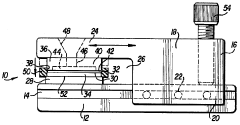
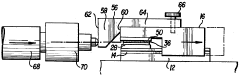
- A method and apparatus that form a planar joint between two materials using a rigid mold block and a seal to create a controlled shear stress environment, where a liquid adhesive is solidified and then subjected to a pure shear load using a hydraulic ram and load cell to determine bond failure.
Fluoroelastomer compositions having self-bonding characteristics and methods of making same
PatentInactiveUS20110236692A1
Innovation
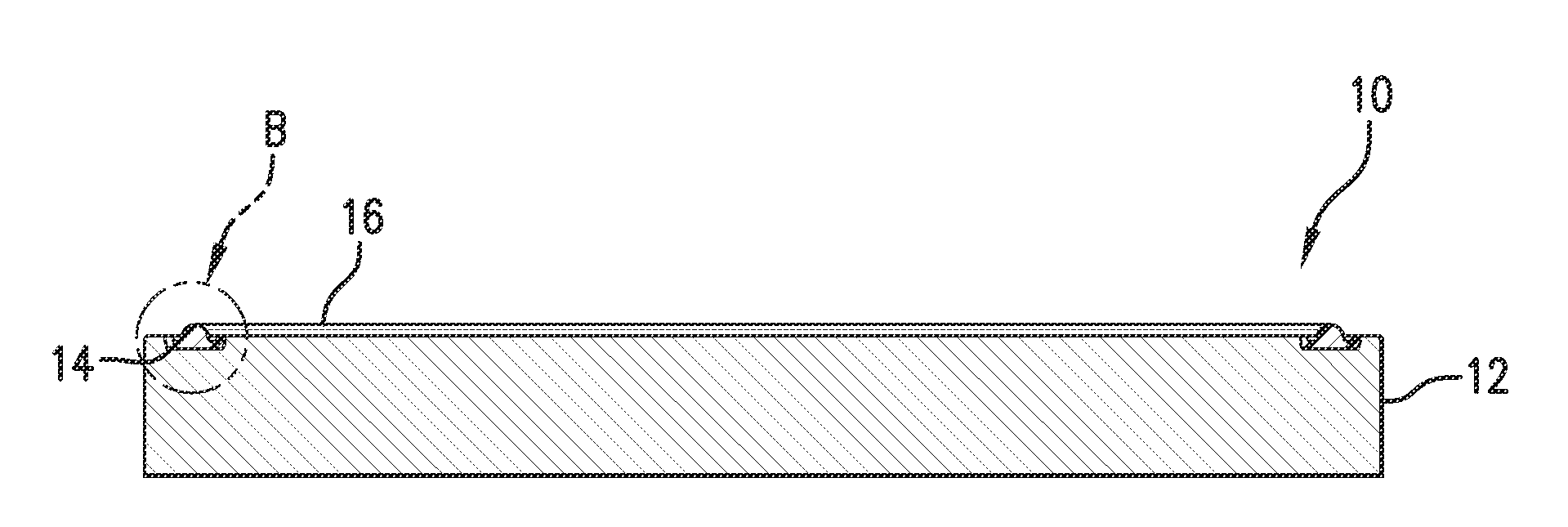
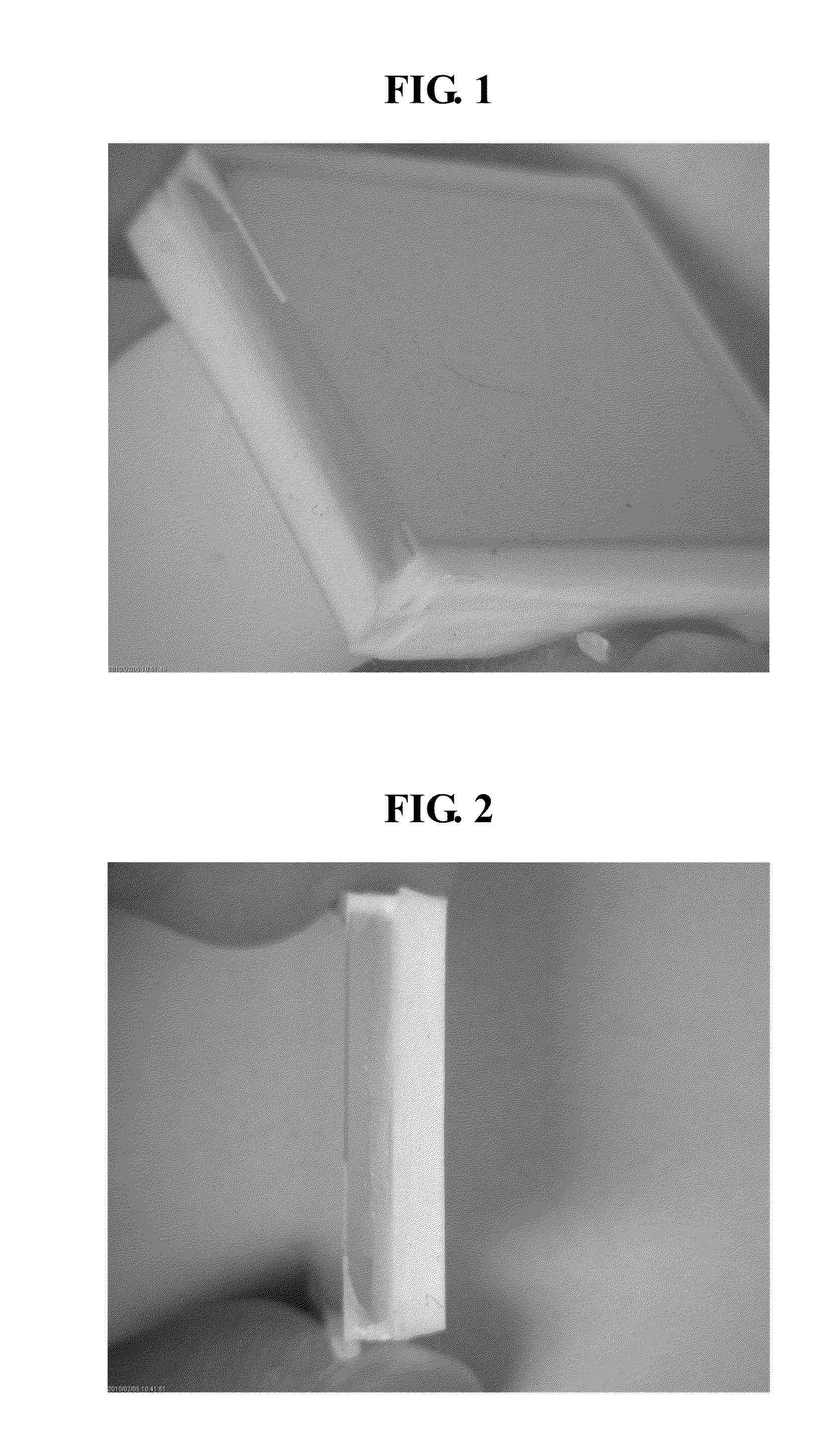
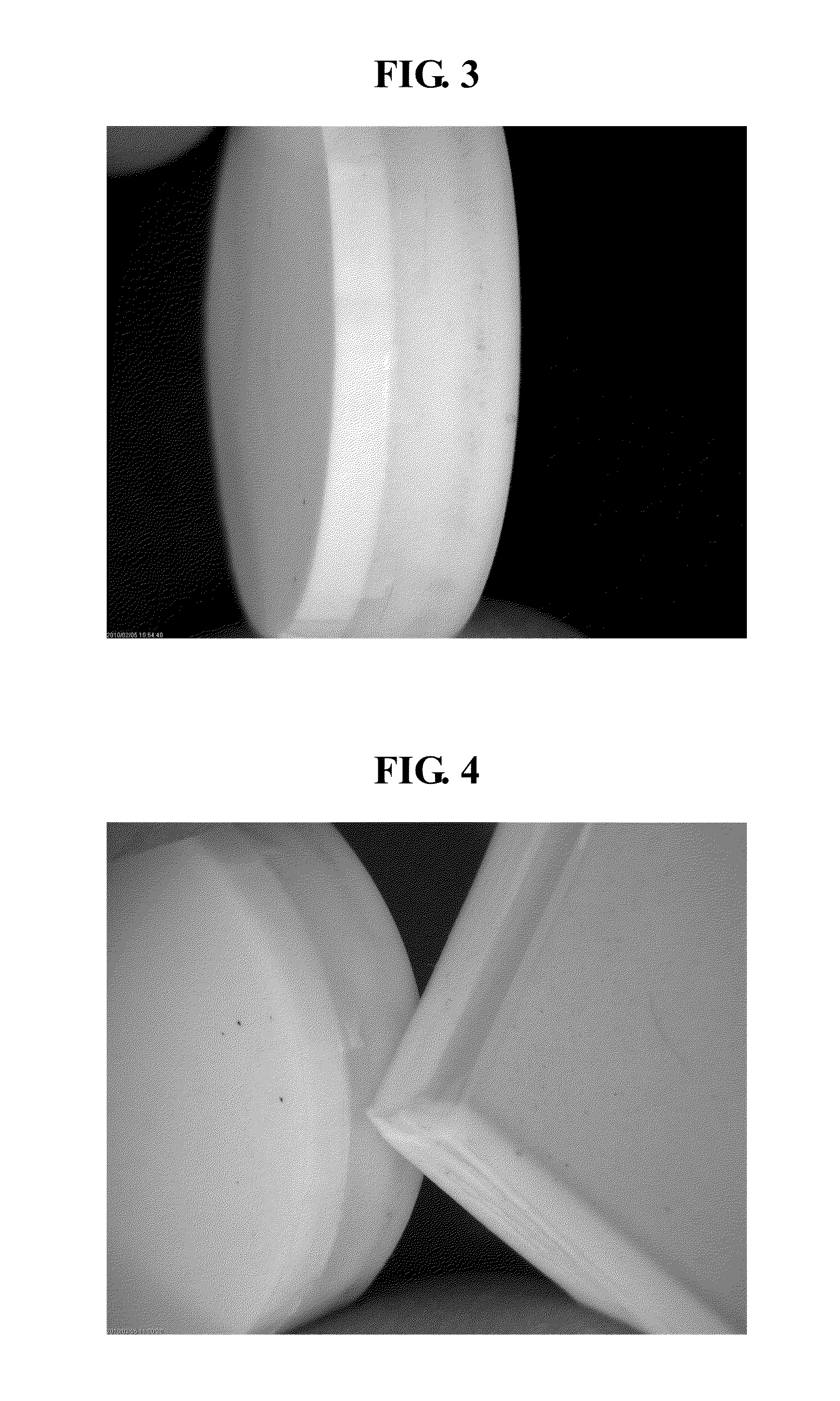
- A self-bonding curable fluoroelastomer composition is developed, comprising a fluoropolymer with aluminum acrylates, silicon acrylates, or ammonia acrylates, which allows direct bonding to substrates such as metals and ceramics without the need for external bonding agents, using a process that involves heat molding and curing to form a strong, stable bond.

Environmental Standards for Fluoroelastomer Applications
Fluoroelastomer applications across various industries are governed by stringent environmental standards that directly impact adhesive bond performance evaluation. These standards establish critical parameters for temperature exposure, chemical resistance, and environmental durability that must be considered when assessing bond longevity. The aerospace industry follows ASTM D1418 and SAE AMS specifications, which define operational temperature ranges from -65°F to 400°F (-54°C to 204°C) for extended periods.
Chemical exposure standards play a pivotal role in determining adhesive bond durability requirements. The automotive sector adheres to ISO 1817 and ASTM D471 standards for fuel and fluid resistance testing, requiring fluoroelastomer bonds to maintain integrity after 1000-hour exposure cycles to various automotive fluids. These standards mandate specific test protocols including immersion testing, thermal cycling, and accelerated aging procedures that simulate real-world environmental conditions.
Industrial applications must comply with FDA 21 CFR 177.2600 regulations for food-grade environments and USP Class VI standards for pharmaceutical applications. These regulations establish biocompatibility requirements and limit extractable compounds that could compromise both safety and adhesive bond performance over time. The standards specify maximum allowable levels of fluorine migration and require comprehensive cytotoxicity testing protocols.
Environmental stress testing standards such as ASTM D5662 and ISO 815 define compression set requirements under elevated temperatures, while ASTM D412 establishes tensile strength retention criteria after environmental exposure. These standards require fluoroelastomer adhesive bonds to maintain at least 75% of original strength after standardized aging protocols, including ozone exposure testing per ASTM D1149 and UV radiation exposure following ASTM G154 procedures.
Regulatory compliance frameworks vary significantly across geographical regions, with European REACH regulations imposing additional restrictions on perfluorooctanoic acid (PFOA) content in fluoroelastomer formulations. These evolving standards directly influence adhesive bond formulation strategies and long-term performance expectations, requiring continuous monitoring of regulatory updates and their implications for bond longevity assessment methodologies.
Chemical exposure standards play a pivotal role in determining adhesive bond durability requirements. The automotive sector adheres to ISO 1817 and ASTM D471 standards for fuel and fluid resistance testing, requiring fluoroelastomer bonds to maintain integrity after 1000-hour exposure cycles to various automotive fluids. These standards mandate specific test protocols including immersion testing, thermal cycling, and accelerated aging procedures that simulate real-world environmental conditions.
Industrial applications must comply with FDA 21 CFR 177.2600 regulations for food-grade environments and USP Class VI standards for pharmaceutical applications. These regulations establish biocompatibility requirements and limit extractable compounds that could compromise both safety and adhesive bond performance over time. The standards specify maximum allowable levels of fluorine migration and require comprehensive cytotoxicity testing protocols.
Environmental stress testing standards such as ASTM D5662 and ISO 815 define compression set requirements under elevated temperatures, while ASTM D412 establishes tensile strength retention criteria after environmental exposure. These standards require fluoroelastomer adhesive bonds to maintain at least 75% of original strength after standardized aging protocols, including ozone exposure testing per ASTM D1149 and UV radiation exposure following ASTM G154 procedures.
Regulatory compliance frameworks vary significantly across geographical regions, with European REACH regulations imposing additional restrictions on perfluorooctanoic acid (PFOA) content in fluoroelastomer formulations. These evolving standards directly influence adhesive bond formulation strategies and long-term performance expectations, requiring continuous monitoring of regulatory updates and their implications for bond longevity assessment methodologies.
Accelerated Aging Test Protocol Development
The development of accelerated aging test protocols for fluoroelastomer adhesive bonds requires a systematic approach that compresses years of real-world exposure into manageable laboratory timeframes. These protocols must accurately simulate the environmental stresses that fluoroelastomer bonds encounter during their operational lifetime while maintaining statistical relevance and reproducibility.
Temperature cycling represents a fundamental component of accelerated aging protocols, typically involving exposure to elevated temperatures ranging from 150°C to 200°C for fluoroelastomers. The Arrhenius equation serves as the theoretical foundation for temperature acceleration, where a 10°C increase can double the reaction rate. However, the challenge lies in avoiding unrealistic temperature extremes that could trigger failure mechanisms not present under normal service conditions.
Humidity and chemical exposure protocols must account for the unique resistance properties of fluoroelastomers. Standard protocols incorporate cyclic exposure to high humidity environments (85-95% relative humidity) combined with specific chemical agents relevant to the intended application. For aerospace applications, this includes exposure to hydraulic fluids, fuel vapors, and cleaning solvents, while automotive applications focus on engine oils, coolants, and road salt solutions.
Mechanical stress integration within aging protocols addresses the dynamic loading conditions experienced by bonded joints. Protocols typically incorporate constant or cyclic tensile, shear, or peel stresses at predetermined percentages of the initial bond strength. The combination of mechanical loading with environmental exposure often reveals synergistic degradation effects not apparent in individual stress testing.
Standardization efforts have led to the adoption of modified ASTM D1183 and ISO 188 protocols specifically adapted for fluoroelastomer systems. These protocols establish baseline exposure conditions of 168 hours at 175°C in air, with modifications for specific chemical environments and mechanical loading scenarios. The selection of appropriate acceleration factors requires careful validation through correlation studies with real-time aging data.
Protocol validation involves establishing mathematical relationships between accelerated test results and field performance data. This typically requires extensive statistical analysis using Weibull distribution models or power law relationships to extrapolate short-term laboratory results to long-term service predictions. The validation process must demonstrate that the accelerated conditions produce the same failure modes and degradation mechanisms observed in actual service environments.
Temperature cycling represents a fundamental component of accelerated aging protocols, typically involving exposure to elevated temperatures ranging from 150°C to 200°C for fluoroelastomers. The Arrhenius equation serves as the theoretical foundation for temperature acceleration, where a 10°C increase can double the reaction rate. However, the challenge lies in avoiding unrealistic temperature extremes that could trigger failure mechanisms not present under normal service conditions.
Humidity and chemical exposure protocols must account for the unique resistance properties of fluoroelastomers. Standard protocols incorporate cyclic exposure to high humidity environments (85-95% relative humidity) combined with specific chemical agents relevant to the intended application. For aerospace applications, this includes exposure to hydraulic fluids, fuel vapors, and cleaning solvents, while automotive applications focus on engine oils, coolants, and road salt solutions.
Mechanical stress integration within aging protocols addresses the dynamic loading conditions experienced by bonded joints. Protocols typically incorporate constant or cyclic tensile, shear, or peel stresses at predetermined percentages of the initial bond strength. The combination of mechanical loading with environmental exposure often reveals synergistic degradation effects not apparent in individual stress testing.
Standardization efforts have led to the adoption of modified ASTM D1183 and ISO 188 protocols specifically adapted for fluoroelastomer systems. These protocols establish baseline exposure conditions of 168 hours at 175°C in air, with modifications for specific chemical environments and mechanical loading scenarios. The selection of appropriate acceleration factors requires careful validation through correlation studies with real-time aging data.
Protocol validation involves establishing mathematical relationships between accelerated test results and field performance data. This typically requires extensive statistical analysis using Weibull distribution models or power law relationships to extrapolate short-term laboratory results to long-term service predictions. The validation process must demonstrate that the accelerated conditions produce the same failure modes and degradation mechanisms observed in actual service environments.
Unlock deeper insights with PatSnap Eureka Quick Research — get a full tech report to explore trends and direct your research. Try now!
Generate Your Research Report Instantly with AI Agent
Supercharge your innovation with PatSnap Eureka AI Agent Platform!