

Optimize Fluoroelastomer in Bearings for Dynamic Loads
MAR 5, 20269 MIN READ
Generate Your Research Report Instantly with AI Agent
PatSnap Eureka helps you evaluate technical feasibility & market potential.
Fluoroelastomer Bearing Technology Background and Objectives
Fluoroelastomers represent a specialized class of synthetic rubber materials that have emerged as critical components in high-performance bearing applications since their initial development in the 1950s. These materials, characterized by their exceptional chemical resistance and thermal stability, have evolved from basic perfluorinated compounds to sophisticated polymer systems capable of withstanding extreme operating conditions. The integration of fluoroelastomers into bearing technology addresses the growing industrial demand for sealing solutions that can maintain performance integrity under dynamic loading conditions.
The historical development of fluoroelastomer bearing technology has been driven by the aerospace, automotive, and chemical processing industries, where conventional elastomeric materials fail to meet stringent performance requirements. Early applications focused primarily on static sealing applications, but technological advancement has progressively expanded their use into dynamic bearing systems where mechanical stress, temperature fluctuations, and chemical exposure create challenging operational environments.
Current technological objectives center on optimizing fluoroelastomer formulations to enhance their mechanical properties under dynamic loading conditions. The primary focus involves improving fatigue resistance, reducing compression set, and maintaining elastic recovery during cyclic loading scenarios. These improvements are essential for extending bearing service life and reducing maintenance requirements in critical applications.
The optimization challenge encompasses multiple technical dimensions, including molecular structure modification, filler integration, and cross-linking chemistry enhancement. Advanced fluoroelastomer compounds must demonstrate superior resistance to extrusion under pressure while maintaining flexibility and sealing effectiveness throughout extended operational cycles. This requires precise control over polymer chain architecture and the incorporation of specialized additives that enhance mechanical performance without compromising chemical resistance.
Contemporary research efforts target the development of next-generation fluoroelastomer compounds that can withstand increasingly demanding dynamic load profiles. These materials must exhibit improved tear strength, enhanced abrasion resistance, and reduced hysteresis losses while maintaining the inherent advantages of fluoroelastomer chemistry. The ultimate objective involves creating bearing seal solutions that can operate reliably under high-frequency dynamic loads while providing extended service intervals and improved system efficiency.
The historical development of fluoroelastomer bearing technology has been driven by the aerospace, automotive, and chemical processing industries, where conventional elastomeric materials fail to meet stringent performance requirements. Early applications focused primarily on static sealing applications, but technological advancement has progressively expanded their use into dynamic bearing systems where mechanical stress, temperature fluctuations, and chemical exposure create challenging operational environments.
Current technological objectives center on optimizing fluoroelastomer formulations to enhance their mechanical properties under dynamic loading conditions. The primary focus involves improving fatigue resistance, reducing compression set, and maintaining elastic recovery during cyclic loading scenarios. These improvements are essential for extending bearing service life and reducing maintenance requirements in critical applications.
The optimization challenge encompasses multiple technical dimensions, including molecular structure modification, filler integration, and cross-linking chemistry enhancement. Advanced fluoroelastomer compounds must demonstrate superior resistance to extrusion under pressure while maintaining flexibility and sealing effectiveness throughout extended operational cycles. This requires precise control over polymer chain architecture and the incorporation of specialized additives that enhance mechanical performance without compromising chemical resistance.
Contemporary research efforts target the development of next-generation fluoroelastomer compounds that can withstand increasingly demanding dynamic load profiles. These materials must exhibit improved tear strength, enhanced abrasion resistance, and reduced hysteresis losses while maintaining the inherent advantages of fluoroelastomer chemistry. The ultimate objective involves creating bearing seal solutions that can operate reliably under high-frequency dynamic loads while providing extended service intervals and improved system efficiency.
Market Demand for Dynamic Load Bearing Solutions
The global bearing market continues to experience robust growth driven by increasing demands across multiple industrial sectors. Aerospace applications represent a particularly demanding segment where bearings must withstand extreme temperature variations, high rotational speeds, and significant dynamic loading conditions. Commercial aviation expansion and the emerging space exploration sector have intensified requirements for bearing solutions that maintain performance reliability under harsh operational environments.
Industrial machinery sectors, including manufacturing equipment, robotics, and automation systems, generate substantial demand for advanced bearing technologies. These applications frequently involve variable loading patterns, rapid acceleration and deceleration cycles, and extended operational periods without maintenance opportunities. The trend toward higher precision manufacturing and increased production speeds has elevated performance expectations for bearing components.
Automotive industry transformation, particularly the shift toward electric vehicles, has created new market dynamics for bearing solutions. Electric powertrains operate at higher rotational speeds compared to traditional internal combustion engines, while regenerative braking systems introduce unique dynamic loading patterns. Additionally, the growing emphasis on vehicle efficiency and reduced maintenance requirements has increased demand for longer-lasting bearing solutions.
Energy sector applications, encompassing wind turbines, oil and gas extraction equipment, and power generation facilities, present substantial market opportunities. Wind turbine bearings face particularly challenging conditions with variable wind loads, temperature fluctuations, and requirements for decades-long operational life. Offshore installations add corrosive environmental factors that further complicate bearing performance requirements.
Chemical processing industries require bearing solutions that can withstand aggressive chemical environments while maintaining mechanical performance under dynamic loading conditions. The expansion of specialty chemical production and pharmaceutical manufacturing has increased demand for bearings that combine chemical resistance with precision performance characteristics.
Market research indicates growing recognition among equipment manufacturers that bearing failures represent significant operational costs through unplanned downtime, maintenance expenses, and potential safety risks. This awareness has shifted procurement strategies toward premium bearing solutions that offer enhanced reliability and extended service life, even at higher initial costs.
The convergence of these market drivers has created substantial demand for bearing technologies that can simultaneously address multiple performance challenges, positioning fluoroelastomer optimization as a strategic technology development area with significant commercial potential.
Industrial machinery sectors, including manufacturing equipment, robotics, and automation systems, generate substantial demand for advanced bearing technologies. These applications frequently involve variable loading patterns, rapid acceleration and deceleration cycles, and extended operational periods without maintenance opportunities. The trend toward higher precision manufacturing and increased production speeds has elevated performance expectations for bearing components.
Automotive industry transformation, particularly the shift toward electric vehicles, has created new market dynamics for bearing solutions. Electric powertrains operate at higher rotational speeds compared to traditional internal combustion engines, while regenerative braking systems introduce unique dynamic loading patterns. Additionally, the growing emphasis on vehicle efficiency and reduced maintenance requirements has increased demand for longer-lasting bearing solutions.
Energy sector applications, encompassing wind turbines, oil and gas extraction equipment, and power generation facilities, present substantial market opportunities. Wind turbine bearings face particularly challenging conditions with variable wind loads, temperature fluctuations, and requirements for decades-long operational life. Offshore installations add corrosive environmental factors that further complicate bearing performance requirements.
Chemical processing industries require bearing solutions that can withstand aggressive chemical environments while maintaining mechanical performance under dynamic loading conditions. The expansion of specialty chemical production and pharmaceutical manufacturing has increased demand for bearings that combine chemical resistance with precision performance characteristics.
Market research indicates growing recognition among equipment manufacturers that bearing failures represent significant operational costs through unplanned downtime, maintenance expenses, and potential safety risks. This awareness has shifted procurement strategies toward premium bearing solutions that offer enhanced reliability and extended service life, even at higher initial costs.
The convergence of these market drivers has created substantial demand for bearing technologies that can simultaneously address multiple performance challenges, positioning fluoroelastomer optimization as a strategic technology development area with significant commercial potential.
Current State and Challenges of Fluoroelastomer Bearings
Fluoroelastomer bearings represent a specialized segment within the broader bearing industry, primarily serving applications where conventional materials fail to meet stringent chemical resistance and temperature requirements. Currently, these bearings find extensive use in aerospace, chemical processing, semiconductor manufacturing, and automotive sectors where exposure to aggressive chemicals, extreme temperatures, and dynamic loading conditions are commonplace.
The global market for fluoroelastomer bearings has experienced steady growth, driven by increasing demand from high-performance applications. The aerospace industry remains the largest consumer, accounting for approximately 40% of market share, followed by chemical processing at 25% and semiconductor manufacturing at 20%. Market projections indicate a compound annual growth rate of 6-8% through 2030, primarily fueled by expanding applications in renewable energy systems and advanced manufacturing processes.
Despite their superior chemical resistance and thermal stability, fluoroelastomer bearings face significant technical limitations when subjected to dynamic loads. The inherent viscoelastic properties of fluoroelastomers result in higher energy dissipation compared to traditional bearing materials, leading to increased heat generation and potential thermal degradation under cyclic loading conditions. This phenomenon becomes particularly pronounced at frequencies above 50 Hz, where material hysteresis effects significantly impact bearing performance.
Manufacturing consistency presents another critical challenge, as the complex polymerization processes required for fluoroelastomer production often result in batch-to-batch variations in mechanical properties. These variations directly affect bearing performance predictability, creating reliability concerns in critical applications where consistent dynamic response is essential.
The current technological landscape reveals a geographical concentration of advanced fluoroelastomer bearing development, with North America and Europe leading in both research and production capabilities. Asian markets, particularly Japan and South Korea, are rapidly advancing in specialized applications for semiconductor and electronics industries, while China is emerging as a significant player in cost-effective manufacturing solutions.
Load distribution optimization remains a fundamental challenge, as traditional bearing design principles developed for metallic materials do not directly translate to fluoroelastomer systems. The non-linear stress-strain behavior of these materials under dynamic conditions requires sophisticated modeling approaches and specialized design methodologies that are still evolving within the industry.
The global market for fluoroelastomer bearings has experienced steady growth, driven by increasing demand from high-performance applications. The aerospace industry remains the largest consumer, accounting for approximately 40% of market share, followed by chemical processing at 25% and semiconductor manufacturing at 20%. Market projections indicate a compound annual growth rate of 6-8% through 2030, primarily fueled by expanding applications in renewable energy systems and advanced manufacturing processes.
Despite their superior chemical resistance and thermal stability, fluoroelastomer bearings face significant technical limitations when subjected to dynamic loads. The inherent viscoelastic properties of fluoroelastomers result in higher energy dissipation compared to traditional bearing materials, leading to increased heat generation and potential thermal degradation under cyclic loading conditions. This phenomenon becomes particularly pronounced at frequencies above 50 Hz, where material hysteresis effects significantly impact bearing performance.
Manufacturing consistency presents another critical challenge, as the complex polymerization processes required for fluoroelastomer production often result in batch-to-batch variations in mechanical properties. These variations directly affect bearing performance predictability, creating reliability concerns in critical applications where consistent dynamic response is essential.
The current technological landscape reveals a geographical concentration of advanced fluoroelastomer bearing development, with North America and Europe leading in both research and production capabilities. Asian markets, particularly Japan and South Korea, are rapidly advancing in specialized applications for semiconductor and electronics industries, while China is emerging as a significant player in cost-effective manufacturing solutions.
Load distribution optimization remains a fundamental challenge, as traditional bearing design principles developed for metallic materials do not directly translate to fluoroelastomer systems. The non-linear stress-strain behavior of these materials under dynamic conditions requires sophisticated modeling approaches and specialized design methodologies that are still evolving within the industry.
Existing Fluoroelastomer Optimization Solutions
01 Fluoroelastomer composition and copolymers
Fluoroelastomers can be formulated using various copolymer compositions containing vinylidene fluoride, hexafluoropropylene, and tetrafluoroethylene. These copolymers provide the base polymer structure for fluoroelastomer materials. The composition and ratio of monomers can be adjusted to achieve desired properties such as chemical resistance, thermal stability, and mechanical strength. Different polymerization methods and monomer combinations allow for customization of the fluoroelastomer characteristics.- Fluoroelastomer composition and copolymers: Fluoroelastomers can be formulated using various copolymer compositions containing vinylidene fluoride, hexafluoropropylene, and tetrafluoroethylene. These copolymers provide the base polymer structure for fluoroelastomer materials. The composition and ratio of monomers can be adjusted to achieve desired properties such as chemical resistance, thermal stability, and mechanical strength. Different polymerization methods and monomer combinations allow for customization of the fluoroelastomer characteristics.
- Curing and crosslinking systems for fluoroelastomers: Effective curing systems are essential for fluoroelastomer processing and final product performance. Various crosslinking agents and curing methods can be employed, including peroxide curing, bisphenol curing, and polyol curing systems. The curing process involves the formation of crosslinks between polymer chains to improve mechanical properties, compression set resistance, and thermal stability. Selection of appropriate curing agents and conditions is critical for achieving optimal vulcanization and product performance.
- Processing aids and additives for fluoroelastomers: Processing aids and additives play important roles in improving the processability and performance of fluoroelastomer compounds. These materials can include plasticizers, stabilizers, fillers, and processing aids that facilitate mixing, molding, and extrusion operations. Additives can enhance properties such as low-temperature flexibility, compression set resistance, and mold release characteristics. The selection and incorporation of appropriate additives enables optimization of both processing efficiency and final product properties.
- Fluoroelastomer blends and composite materials: Fluoroelastomers can be blended with other polymers or combined with reinforcing materials to create composite systems with enhanced properties. Blending fluoroelastomers with other elastomers or thermoplastics can provide improved processability, cost reduction, or specific property enhancements. Composite materials incorporating fillers, fibers, or other reinforcing agents can offer superior mechanical strength, wear resistance, and dimensional stability. These blend and composite approaches expand the application range of fluoroelastomer materials.
- Applications and manufacturing methods for fluoroelastomer products: Fluoroelastomers are utilized in various industrial applications requiring chemical resistance, high temperature stability, and durability. Manufacturing methods include compression molding, transfer molding, injection molding, and extrusion processes tailored to specific product requirements. Applications span automotive seals, gaskets, O-rings, hoses, and specialty components for aerospace, chemical processing, and oil and gas industries. Advanced manufacturing techniques enable production of complex shapes and precision components meeting stringent performance specifications.
02 Curing and crosslinking systems for fluoroelastomers
Effective curing systems are essential for fluoroelastomer processing and performance. Various crosslinking agents and curing methods can be employed, including peroxide curing, bisphenol curing, and polyol curing systems. The curing process involves the formation of crosslinks between polymer chains to improve mechanical properties, heat resistance, and chemical stability. Selection of appropriate curing agents and conditions is critical for achieving optimal vulcanization and final product properties.Expand Specific Solutions03 Processing aids and additives for fluoroelastomers
Processing aids and additives play important roles in fluoroelastomer manufacturing and performance enhancement. These materials can include plasticizers, stabilizers, fillers, and processing agents that improve workability, reduce viscosity, and enhance dispersion during compounding. Additives can also provide specific functional properties such as improved low-temperature flexibility, enhanced compression set resistance, or better mold release characteristics. The selection and amount of additives must be carefully balanced to maintain the inherent properties of the fluoroelastomer.Expand Specific Solutions04 Fluoroelastomer blends and composite materials
Fluoroelastomers can be blended with other polymers or combined with reinforcing materials to create composite systems with enhanced or specialized properties. Blending allows for the combination of desirable characteristics from different polymer types, such as improved processability, cost reduction, or specific performance attributes. Composite formulations may incorporate fillers, fibers, or other reinforcing agents to improve mechanical strength, wear resistance, or dimensional stability while maintaining the chemical and thermal resistance of the fluoroelastomer matrix.Expand Specific Solutions05 Applications and specialized fluoroelastomer formulations
Fluoroelastomers can be formulated for specific applications requiring exceptional chemical resistance, high temperature stability, and durability in harsh environments. Specialized formulations are developed for sealing applications, gaskets, O-rings, hoses, and other components used in automotive, aerospace, chemical processing, and oil and gas industries. These formulations may incorporate specific additives or use particular polymer grades to meet stringent performance requirements such as resistance to aggressive chemicals, extreme temperatures, or specific regulatory standards.Expand Specific Solutions
Key Players in Fluoroelastomer and Bearing Industry
The fluoroelastomer optimization for bearings under dynamic loads represents a mature yet evolving market segment within the broader sealing and bearing industry. The market demonstrates steady growth driven by demanding applications in automotive, aerospace, and industrial sectors requiring enhanced durability and performance. Key players like Svenska Kullagerfabriken AB and NTN Corp represent established bearing manufacturers, while material specialists such as DuPont de Nemours and BASF Corp provide advanced fluoroelastomer solutions. Automotive giants BMW and component suppliers like ZF Friedrichshafen AG drive application-specific requirements. The technology maturity varies across applications, with automotive and industrial uses showing high development levels, while emerging sectors like renewable energy (represented by Siemens Gamesa) present new optimization challenges. Companies like Carl Freudenberg KG and Federal-Mogul Corp bridge material science with application engineering, indicating a collaborative ecosystem focused on performance enhancement rather than disruptive innovation.
Carl Freudenberg KG
Technical Solution: Freudenberg has developed specialized fluoroelastomer sealing solutions for dynamic bearing applications through their advanced material science division. Their technology focuses on optimized Shore hardness grades ranging from 70-90 Shore A, specifically formulated to withstand dynamic loads while maintaining sealing integrity. The company's fluoroelastomer compounds incorporate proprietary additives that enhance fatigue resistance and reduce friction coefficients under oscillating conditions. Their bearing seal designs feature optimized lip geometries and surface treatments that work synergistically with fluoroelastomer materials to extend service life under dynamic loading scenarios.
Strengths: Strong expertise in sealing technology and material optimization, extensive automotive industry experience. Weaknesses: Limited focus on extreme temperature applications, dependency on automotive market cycles.
Svenska Kullagerfabriken AB
Technical Solution: SKF has integrated fluoroelastomer technology into their advanced bearing seal systems designed for dynamic load applications. Their approach combines specialized fluoroelastomer compounds with precision-engineered seal geometries to optimize performance under varying load conditions. The company's fluoroelastomer solutions feature enhanced molecular structure that provides superior resistance to dynamic fatigue while maintaining low friction characteristics. SKF's technology includes proprietary surface treatments and compound formulations that extend bearing life by up to 40% in high-dynamic-load environments, particularly in industrial machinery and automotive applications where temperature and chemical exposure are critical factors.
Strengths: Deep bearing engineering expertise, comprehensive testing capabilities and global service network. Weaknesses: Higher initial investment costs, complex integration requirements for retrofit applications.
Core Patents in Dynamic Load Fluoroelastomer Technology
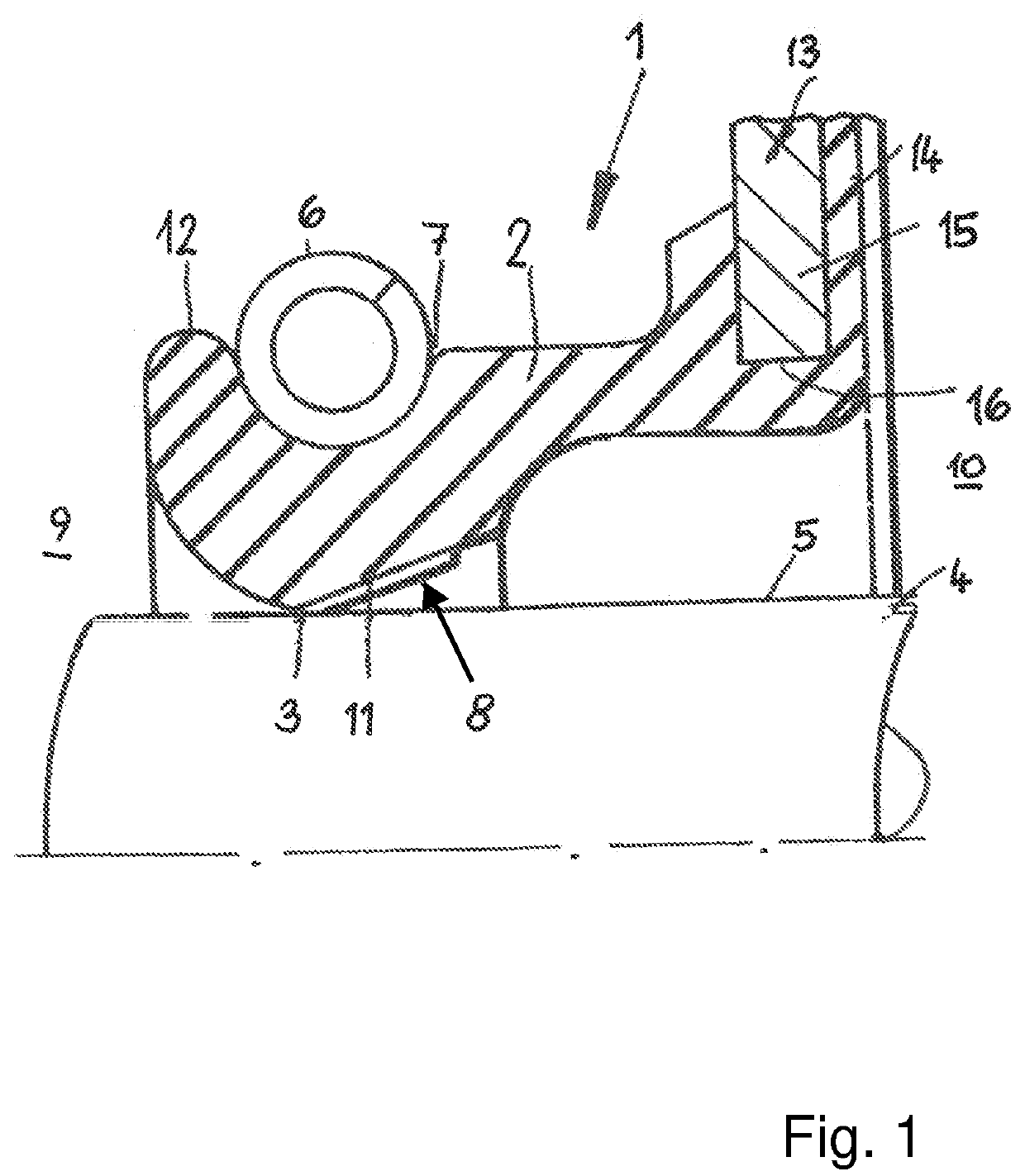
Fluoroelastomer Mixture, Seal Made of Such a Fluoroelastomer Mixture, and Shaft Seal with a Seal Body
PatentInactiveUS20220356325A1
Innovation
- A fluoroelastomer mixture comprising at least 50 parts by weight of amine-resistant fluoroelastomer and mineral fillers, such as calcium silicate, silica, and diatomaceous earth, which provides excellent media resistance and minimal abrasion/wear even at high peripheral speeds.
Support
PatentInactiveEP0775844A2
Innovation
- A fluid bearing design featuring two separate elastomer springs, a radial spring and an axial spring, with the radial spring remaining relaxed and the axial spring being prestressed to manage dynamic loads, and a bellows spring with a connected channel for fluidic decoupling and damping, allowing for adjustable damping characteristics through fluid pressure control and electro-viscoelastic properties.


Environmental Regulations for Fluorinated Materials
The regulatory landscape for fluorinated materials has undergone significant transformation over the past two decades, driven by growing environmental and health concerns. The Stockholm Convention on Persistent Organic Pollutants has established a framework for controlling perfluorooctanoic acid (PFOA) and perfluorooctane sulfonic acid (PFOS), which are commonly used in fluoroelastomer production. These regulations directly impact the manufacturing processes and material selection for bearing applications requiring fluoroelastomer components.
The European Union's REACH regulation represents one of the most comprehensive approaches to fluorinated material control. Under REACH, manufacturers must demonstrate safe use of fluorinated compounds throughout their lifecycle, including detailed risk assessments for workplace exposure and environmental release. The restriction on C9-C14 perfluorocarboxylic acids and their precursors has forced bearing manufacturers to reformulate their fluoroelastomer compositions, particularly for high-performance applications under dynamic loading conditions.
The United States Environmental Protection Agency has implemented the PFAS Action Plan, which includes mandatory reporting requirements for facilities manufacturing or processing fluorinated substances. This regulation affects the supply chain for fluoroelastomer bearings, as manufacturers must track and report the use of specific fluorinated compounds. The EPA's focus on drinking water contamination has led to stricter discharge limits for manufacturing facilities, increasing production costs and driving innovation toward more environmentally acceptable alternatives.
Recent developments in China's environmental regulations have introduced stringent controls on fluorinated material production and use. The Ministry of Ecology and Environment has established emission standards for fluorinated compounds, requiring advanced treatment technologies for manufacturing waste streams. These regulations particularly impact the cost structure for fluoroelastomer bearing production, as compliance requires significant investment in pollution control equipment and monitoring systems.
The regulatory trend toward extended producer responsibility is reshaping the fluoroelastomer bearing industry. Manufacturers are increasingly required to consider end-of-life disposal and recycling options for fluorinated materials. This has accelerated research into biodegradable alternatives and closed-loop recycling systems, though technical challenges remain in maintaining the superior performance characteristics required for dynamic load applications in critical bearing systems.
The European Union's REACH regulation represents one of the most comprehensive approaches to fluorinated material control. Under REACH, manufacturers must demonstrate safe use of fluorinated compounds throughout their lifecycle, including detailed risk assessments for workplace exposure and environmental release. The restriction on C9-C14 perfluorocarboxylic acids and their precursors has forced bearing manufacturers to reformulate their fluoroelastomer compositions, particularly for high-performance applications under dynamic loading conditions.
The United States Environmental Protection Agency has implemented the PFAS Action Plan, which includes mandatory reporting requirements for facilities manufacturing or processing fluorinated substances. This regulation affects the supply chain for fluoroelastomer bearings, as manufacturers must track and report the use of specific fluorinated compounds. The EPA's focus on drinking water contamination has led to stricter discharge limits for manufacturing facilities, increasing production costs and driving innovation toward more environmentally acceptable alternatives.
Recent developments in China's environmental regulations have introduced stringent controls on fluorinated material production and use. The Ministry of Ecology and Environment has established emission standards for fluorinated compounds, requiring advanced treatment technologies for manufacturing waste streams. These regulations particularly impact the cost structure for fluoroelastomer bearing production, as compliance requires significant investment in pollution control equipment and monitoring systems.
The regulatory trend toward extended producer responsibility is reshaping the fluoroelastomer bearing industry. Manufacturers are increasingly required to consider end-of-life disposal and recycling options for fluorinated materials. This has accelerated research into biodegradable alternatives and closed-loop recycling systems, though technical challenges remain in maintaining the superior performance characteristics required for dynamic load applications in critical bearing systems.
Cost-Performance Analysis of Fluoroelastomer Bearings
The cost-performance analysis of fluoroelastomer bearings reveals a complex economic landscape where initial investment costs must be weighed against long-term operational benefits. Fluoroelastomer bearings typically command a premium price point, often 3-5 times higher than conventional rubber bearings and 1.5-2 times more expensive than standard synthetic alternatives. This elevated cost stems from sophisticated manufacturing processes, specialized raw materials, and stringent quality control requirements necessary for dynamic load applications.
However, the total cost of ownership presents a more favorable picture when operational lifespan is considered. Fluoroelastomer bearings demonstrate exceptional durability under dynamic loading conditions, with service lives extending 2-4 times longer than conventional alternatives. This extended operational period significantly reduces replacement frequency, minimizing maintenance downtime and associated labor costs. In high-frequency dynamic applications, the reduced maintenance intervals can translate to substantial operational savings.
Performance metrics justify the premium pricing through superior load distribution capabilities and enhanced fatigue resistance. Fluoroelastomer bearings maintain consistent performance characteristics across temperature ranges from -40°C to 200°C, eliminating the need for seasonal replacements or performance adjustments. The material's inherent chemical resistance also reduces degradation from environmental contaminants, preserving bearing integrity in harsh operating conditions.
Economic analysis indicates break-even points typically occur within 18-24 months for high-duty cycle applications. Industries with continuous operation schedules, such as manufacturing and power generation, realize the most significant cost benefits. The reduced vibration transmission and improved load handling capabilities also contribute to extended equipment life for connected machinery, creating additional indirect cost savings.
Market pricing trends suggest decreasing costs as production volumes increase and manufacturing processes become more refined. Current projections indicate potential 15-20% cost reductions over the next five years, improving the cost-performance ratio and expanding market accessibility for medium-duty applications.
However, the total cost of ownership presents a more favorable picture when operational lifespan is considered. Fluoroelastomer bearings demonstrate exceptional durability under dynamic loading conditions, with service lives extending 2-4 times longer than conventional alternatives. This extended operational period significantly reduces replacement frequency, minimizing maintenance downtime and associated labor costs. In high-frequency dynamic applications, the reduced maintenance intervals can translate to substantial operational savings.
Performance metrics justify the premium pricing through superior load distribution capabilities and enhanced fatigue resistance. Fluoroelastomer bearings maintain consistent performance characteristics across temperature ranges from -40°C to 200°C, eliminating the need for seasonal replacements or performance adjustments. The material's inherent chemical resistance also reduces degradation from environmental contaminants, preserving bearing integrity in harsh operating conditions.
Economic analysis indicates break-even points typically occur within 18-24 months for high-duty cycle applications. Industries with continuous operation schedules, such as manufacturing and power generation, realize the most significant cost benefits. The reduced vibration transmission and improved load handling capabilities also contribute to extended equipment life for connected machinery, creating additional indirect cost savings.
Market pricing trends suggest decreasing costs as production volumes increase and manufacturing processes become more refined. Current projections indicate potential 15-20% cost reductions over the next five years, improving the cost-performance ratio and expanding market accessibility for medium-duty applications.
Unlock deeper insights with PatSnap Eureka Quick Research — get a full tech report to explore trends and direct your research. Try now!
Generate Your Research Report Instantly with AI Agent
Supercharge your innovation with PatSnap Eureka AI Agent Platform!