

How to Evaluate Pyroelectric Response Using Temperature Modulation
MAY 13, 20269 MIN READ
Generate Your Research Report Instantly with AI Agent
PatSnap Eureka helps you evaluate technical feasibility & market potential.
Pyroelectric Temperature Modulation Background and Objectives
Pyroelectric materials represent a specialized class of crystalline substances that generate electrical charge in response to temperature variations. These materials possess a unique crystal structure lacking inversion symmetry, enabling them to exhibit spontaneous polarization that changes with temperature. The pyroelectric effect has been recognized since ancient times, with early observations of amber attracting particles when heated, but systematic scientific investigation began in the 18th century with studies on tourmaline crystals.
The fundamental mechanism underlying pyroelectric behavior involves the temperature-dependent displacement of ions within the crystal lattice, leading to changes in the material's spontaneous polarization. This phenomenon occurs in materials belonging to ten of the thirty-two crystal point groups, with notable examples including lithium tantalate, barium titanate, and various polymer films such as polyvinylidene fluoride.
Temperature modulation techniques have emerged as sophisticated methodologies for characterizing pyroelectric response, offering significant advantages over traditional static measurement approaches. These dynamic methods involve applying controlled periodic temperature variations to pyroelectric samples while simultaneously monitoring the resulting electrical response. The technique enables precise determination of pyroelectric coefficients, thermal response characteristics, and frequency-dependent behavior.
The primary objective of implementing temperature modulation evaluation is to achieve enhanced measurement accuracy and reduced noise interference compared to conventional DC measurement techniques. By employing lock-in amplification and phase-sensitive detection methods, researchers can extract pyroelectric signals from background noise with remarkable precision. This approach also facilitates the separation of pyroelectric contributions from other thermoelectric effects that may occur simultaneously.
Contemporary research objectives focus on developing standardized protocols for temperature modulation measurements that can accommodate diverse material systems and application requirements. The goal extends beyond simple coefficient determination to encompass comprehensive characterization of thermal response dynamics, including thermal diffusivity effects and frequency-dependent behavior patterns.
Advanced temperature modulation techniques aim to enable real-time monitoring of pyroelectric properties under various environmental conditions, supporting the development of next-generation infrared detectors, thermal imaging systems, and energy harvesting devices. The methodology's evolution continues toward automated measurement systems capable of high-throughput characterization for materials discovery and quality control applications.
The fundamental mechanism underlying pyroelectric behavior involves the temperature-dependent displacement of ions within the crystal lattice, leading to changes in the material's spontaneous polarization. This phenomenon occurs in materials belonging to ten of the thirty-two crystal point groups, with notable examples including lithium tantalate, barium titanate, and various polymer films such as polyvinylidene fluoride.
Temperature modulation techniques have emerged as sophisticated methodologies for characterizing pyroelectric response, offering significant advantages over traditional static measurement approaches. These dynamic methods involve applying controlled periodic temperature variations to pyroelectric samples while simultaneously monitoring the resulting electrical response. The technique enables precise determination of pyroelectric coefficients, thermal response characteristics, and frequency-dependent behavior.
The primary objective of implementing temperature modulation evaluation is to achieve enhanced measurement accuracy and reduced noise interference compared to conventional DC measurement techniques. By employing lock-in amplification and phase-sensitive detection methods, researchers can extract pyroelectric signals from background noise with remarkable precision. This approach also facilitates the separation of pyroelectric contributions from other thermoelectric effects that may occur simultaneously.
Contemporary research objectives focus on developing standardized protocols for temperature modulation measurements that can accommodate diverse material systems and application requirements. The goal extends beyond simple coefficient determination to encompass comprehensive characterization of thermal response dynamics, including thermal diffusivity effects and frequency-dependent behavior patterns.
Advanced temperature modulation techniques aim to enable real-time monitoring of pyroelectric properties under various environmental conditions, supporting the development of next-generation infrared detectors, thermal imaging systems, and energy harvesting devices. The methodology's evolution continues toward automated measurement systems capable of high-throughput characterization for materials discovery and quality control applications.
Market Demand for Pyroelectric Evaluation Solutions
The global pyroelectric materials market has experienced substantial growth driven by increasing demand for infrared sensing applications across multiple industries. Traditional sectors such as security and surveillance continue to represent significant market segments, where pyroelectric infrared detectors serve as core components in motion detection systems and thermal imaging devices. The automotive industry has emerged as a rapidly expanding application area, particularly with the integration of pyroelectric sensors in advanced driver assistance systems and occupant detection mechanisms.
Consumer electronics represent another major demand driver, with pyroelectric sensors finding applications in smart home devices, automatic lighting systems, and energy management solutions. The miniaturization trend in electronic devices has created specific requirements for compact, low-power pyroelectric evaluation solutions that can operate effectively in space-constrained environments.
Industrial automation and process control sectors demonstrate growing interest in pyroelectric-based temperature sensing solutions, particularly for non-contact temperature measurement applications. Manufacturing facilities increasingly require precise thermal monitoring capabilities for quality control and process optimization, creating demand for reliable pyroelectric evaluation methodologies.
The medical and healthcare sector presents emerging opportunities for pyroelectric evaluation solutions, particularly in non-invasive temperature monitoring devices and thermal therapy equipment. Medical device manufacturers require highly accurate and repeatable pyroelectric characterization methods to ensure device reliability and regulatory compliance.
Research institutions and academic laboratories constitute a specialized but important market segment, requiring sophisticated pyroelectric evaluation equipment for materials research and device development. These organizations typically demand high-precision measurement capabilities and flexible testing configurations to support diverse research objectives.
Geographic market distribution shows concentrated demand in regions with strong electronics manufacturing bases, including East Asia, North America, and Europe. Emerging markets in Southeast Asia and Latin America are beginning to show increased interest in pyroelectric technologies, driven by expanding industrial automation and smart infrastructure development initiatives.
The market exhibits clear segmentation between high-volume, cost-sensitive applications requiring standardized evaluation solutions and specialized applications demanding customized, high-precision measurement systems. This segmentation influences the development priorities for pyroelectric evaluation technologies and shapes the competitive landscape among solution providers.
Consumer electronics represent another major demand driver, with pyroelectric sensors finding applications in smart home devices, automatic lighting systems, and energy management solutions. The miniaturization trend in electronic devices has created specific requirements for compact, low-power pyroelectric evaluation solutions that can operate effectively in space-constrained environments.
Industrial automation and process control sectors demonstrate growing interest in pyroelectric-based temperature sensing solutions, particularly for non-contact temperature measurement applications. Manufacturing facilities increasingly require precise thermal monitoring capabilities for quality control and process optimization, creating demand for reliable pyroelectric evaluation methodologies.
The medical and healthcare sector presents emerging opportunities for pyroelectric evaluation solutions, particularly in non-invasive temperature monitoring devices and thermal therapy equipment. Medical device manufacturers require highly accurate and repeatable pyroelectric characterization methods to ensure device reliability and regulatory compliance.
Research institutions and academic laboratories constitute a specialized but important market segment, requiring sophisticated pyroelectric evaluation equipment for materials research and device development. These organizations typically demand high-precision measurement capabilities and flexible testing configurations to support diverse research objectives.
Geographic market distribution shows concentrated demand in regions with strong electronics manufacturing bases, including East Asia, North America, and Europe. Emerging markets in Southeast Asia and Latin America are beginning to show increased interest in pyroelectric technologies, driven by expanding industrial automation and smart infrastructure development initiatives.
The market exhibits clear segmentation between high-volume, cost-sensitive applications requiring standardized evaluation solutions and specialized applications demanding customized, high-precision measurement systems. This segmentation influences the development priorities for pyroelectric evaluation technologies and shapes the competitive landscape among solution providers.
Current State of Pyroelectric Response Measurement Challenges
The measurement of pyroelectric response through temperature modulation faces several fundamental challenges that significantly impact the accuracy and reliability of characterization results. Traditional measurement approaches often struggle with thermal equilibrium issues, where non-uniform temperature distribution across the sample creates localized variations in pyroelectric response that are difficult to quantify accurately.
Signal-to-noise ratio limitations represent a critical obstacle in current measurement methodologies. The inherently small pyroelectric currents generated during temperature modulation are susceptible to electromagnetic interference, thermal noise, and instrumentation artifacts. These noise sources become particularly problematic when attempting to measure materials with low pyroelectric coefficients or when conducting measurements at high frequencies where thermal diffusion effects become significant.
Temporal response characterization presents another major challenge, as the pyroelectric response exhibits complex frequency-dependent behavior that varies with material properties, sample geometry, and thermal boundary conditions. Current measurement systems often lack the capability to accurately capture the full spectrum of temporal responses, particularly in the transition regions between different thermal regimes.
Standardization issues plague the field, with inconsistent measurement protocols leading to significant variations in reported pyroelectric coefficients across different laboratories. The absence of universally accepted reference materials and calibration standards makes it difficult to establish measurement traceability and compare results obtained using different experimental setups.
Temperature control precision remains a significant technical hurdle, as most conventional heating and cooling systems cannot provide the rapid, uniform, and precisely controlled temperature variations required for accurate pyroelectric measurements. The thermal mass of heating elements and sample holders introduces unwanted thermal lag effects that distort the true pyroelectric response.
Sample preparation and electrode configuration challenges further complicate measurements, as contact resistance, electrode material selection, and surface treatment can significantly influence the measured pyroelectric response. Poor electrical contacts or inappropriate electrode materials can introduce parasitic effects that mask the intrinsic pyroelectric properties of the material under investigation.
Environmental factors such as humidity, atmospheric pressure, and ambient temperature fluctuations introduce additional measurement uncertainties that are often inadequately controlled or compensated in current measurement systems, leading to reduced reproducibility and accuracy in pyroelectric characterization.
Signal-to-noise ratio limitations represent a critical obstacle in current measurement methodologies. The inherently small pyroelectric currents generated during temperature modulation are susceptible to electromagnetic interference, thermal noise, and instrumentation artifacts. These noise sources become particularly problematic when attempting to measure materials with low pyroelectric coefficients or when conducting measurements at high frequencies where thermal diffusion effects become significant.
Temporal response characterization presents another major challenge, as the pyroelectric response exhibits complex frequency-dependent behavior that varies with material properties, sample geometry, and thermal boundary conditions. Current measurement systems often lack the capability to accurately capture the full spectrum of temporal responses, particularly in the transition regions between different thermal regimes.
Standardization issues plague the field, with inconsistent measurement protocols leading to significant variations in reported pyroelectric coefficients across different laboratories. The absence of universally accepted reference materials and calibration standards makes it difficult to establish measurement traceability and compare results obtained using different experimental setups.
Temperature control precision remains a significant technical hurdle, as most conventional heating and cooling systems cannot provide the rapid, uniform, and precisely controlled temperature variations required for accurate pyroelectric measurements. The thermal mass of heating elements and sample holders introduces unwanted thermal lag effects that distort the true pyroelectric response.
Sample preparation and electrode configuration challenges further complicate measurements, as contact resistance, electrode material selection, and surface treatment can significantly influence the measured pyroelectric response. Poor electrical contacts or inappropriate electrode materials can introduce parasitic effects that mask the intrinsic pyroelectric properties of the material under investigation.
Environmental factors such as humidity, atmospheric pressure, and ambient temperature fluctuations introduce additional measurement uncertainties that are often inadequately controlled or compensated in current measurement systems, leading to reduced reproducibility and accuracy in pyroelectric characterization.
Existing Temperature Modulation Methods for Pyroelectric Analysis
01 Pyroelectric detector and sensor applications
Pyroelectric materials are utilized in detector and sensor applications where temperature changes generate electrical signals. These devices convert thermal energy into electrical energy through the pyroelectric effect, enabling detection of infrared radiation, motion sensing, and thermal imaging applications. The materials exhibit spontaneous polarization that varies with temperature, making them suitable for various sensing technologies.- Pyroelectric detector and sensor applications: Pyroelectric materials are utilized in detector and sensor applications where temperature changes generate electrical signals. These devices convert thermal energy into electrical energy through the pyroelectric effect, making them suitable for infrared detection, motion sensing, and thermal imaging applications. The pyroelectric response enables sensitive detection of temperature variations and thermal radiation.
- Pyroelectric material composition and structure: The development of pyroelectric materials focuses on specific compositions and crystal structures that exhibit strong pyroelectric properties. These materials typically include ferroelectric ceramics, polymers, and composite materials with optimized crystal orientations and domain structures. The material composition directly affects the magnitude and stability of the pyroelectric response.
- Enhancement of pyroelectric coefficient and response: Methods for improving the pyroelectric coefficient and overall response characteristics involve material processing techniques, doping strategies, and structural modifications. These approaches aim to maximize the change in polarization with temperature while maintaining material stability and reducing noise. Enhanced pyroelectric response leads to improved sensitivity and performance in practical applications.
- Pyroelectric device fabrication and processing: The fabrication and processing of pyroelectric devices involves specialized manufacturing techniques including thin film deposition, electrode formation, and device packaging. Processing parameters such as temperature, atmosphere, and cooling rates significantly influence the final pyroelectric properties. Proper fabrication ensures optimal device performance and reliability.
- Applications in energy harvesting and thermal management: Pyroelectric materials are increasingly used for energy harvesting applications where temperature fluctuations are converted into usable electrical energy. These systems can harvest waste heat or utilize natural temperature variations for power generation. Additionally, pyroelectric materials play roles in thermal management systems where precise temperature control and monitoring are required.
02 Pyroelectric material composition and structure
The development of pyroelectric materials focuses on specific compositions and crystal structures that enhance pyroelectric properties. These materials often involve ferroelectric ceramics, polymers, or composite structures designed to optimize the pyroelectric coefficient and temperature sensitivity. The crystalline structure and chemical composition are carefully controlled to achieve desired pyroelectric response characteristics.Expand Specific Solutions03 Pyroelectric device fabrication and manufacturing
Manufacturing processes for pyroelectric devices involve specialized fabrication techniques to create functional pyroelectric elements. These processes include thin film deposition, electrode formation, and device packaging methods that preserve the pyroelectric properties while ensuring reliable operation. The fabrication methods are designed to maintain the material's sensitivity to temperature changes and electrical response.Expand Specific Solutions04 Enhanced pyroelectric response and performance optimization
Techniques for improving pyroelectric response involve material engineering and device design modifications to increase sensitivity and response speed. These enhancements may include doping strategies, surface treatments, or structural modifications that amplify the pyroelectric effect. Performance optimization focuses on maximizing the electrical output while minimizing noise and improving thermal response characteristics.Expand Specific Solutions05 Pyroelectric applications in electronic systems
Integration of pyroelectric materials into electronic systems and circuits enables various applications including thermal switches, energy harvesting devices, and temperature monitoring systems. These applications leverage the unique properties of pyroelectric materials to convert thermal fluctuations into useful electrical signals for electronic processing and control systems.Expand Specific Solutions
Key Players in Pyroelectric Testing Equipment Industry
The pyroelectric response evaluation using temperature modulation represents a mature measurement technique within the broader thermal sensing and infrared detection market, which has reached substantial commercial scale exceeding several billion dollars annually. The industry demonstrates advanced technological maturity, evidenced by established players like Panasonic Holdings Corp. and Seiko Epson Corp. who have successfully commercialized pyroelectric sensors for consumer applications, while specialized companies such as Piezocryst Advanced Sensorics GmbH focus on high-precision sensor development. Industrial giants including Siemens AG and OMRON Corp. integrate these technologies into automation systems, indicating strong market adoption. Research institutions like Fraunhofer-Gesellschaft eV and academic centers continue advancing fundamental understanding, while semiconductor equipment manufacturers like AIXTRON SE and Mattson Technology provide fabrication capabilities, suggesting a well-established ecosystem supporting continued innovation and market expansion.
OMRON Corp.
Technical Solution: OMRON has established robust evaluation methodologies for pyroelectric materials used in their sensor and automation products. Their temperature modulation approach utilizes controlled heating elements with programmable temperature profiles to assess pyroelectric response characteristics. The evaluation system incorporates precision current measurement circuits with low-noise amplification to detect small pyroelectric signals generated during temperature cycling. Their methodology includes automated testing sequences that can evaluate multiple samples simultaneously while maintaining consistent environmental conditions. The company has developed proprietary algorithms for data analysis that account for thermal lag effects and parasitic capacitances in pyroelectric measurements.
Strengths: Industrial-grade reliability, automated testing capabilities, proven commercial applications. Weaknesses: Limited to specific sensor applications, proprietary measurement protocols, moderate temperature range coverage.
Seiko Epson Corp.
Technical Solution: Seiko Epson has developed specialized evaluation techniques for pyroelectric materials used in their precision timing and sensing devices. Their temperature modulation approach utilizes micro-scale heating elements integrated with MEMS technology to provide localized thermal stimulation for pyroelectric characterization. The evaluation methodology employs high-frequency temperature modulation combined with phase-sensitive detection to measure pyroelectric response with exceptional temporal resolution. Their system incorporates advanced packaging techniques that minimize thermal crosstalk while enabling accurate measurement of small pyroelectric signals. The company has established protocols for evaluating pyroelectric materials under various mechanical stress conditions to assess performance in real-world applications.
Strengths: Micro-scale precision, high-frequency capabilities, integrated MEMS technology. Weaknesses: Limited to small-scale applications, specialized equipment requirements, narrow application focus.
Core Innovations in Pyroelectric Response Characterization
Photopyroelectric measuring device and installation intended to evaluate and monitor thermal properties of condensed substances
PatentActiveRO130583A2
Innovation
- A photopyroelectric measurement device utilizing a composite pyroelectric sensor with a high resistance to chemical and mechanical factors, integrated with a miniature LED radiation source and additional devices for automated measurement and sample handling, allowing for non-destructive evaluation of thermal effusivity, diffusivity, and conductivity of liquids as substrates or intermediate layers, while minimizing lateral thermal energy losses and ensuring one-dimensional thermal wave propagation.


Pyroelectric temperature sensor and a method for measuring a temperature with the pyroelectric temperature sensor
PatentActiveUS20110299566A1
Innovation
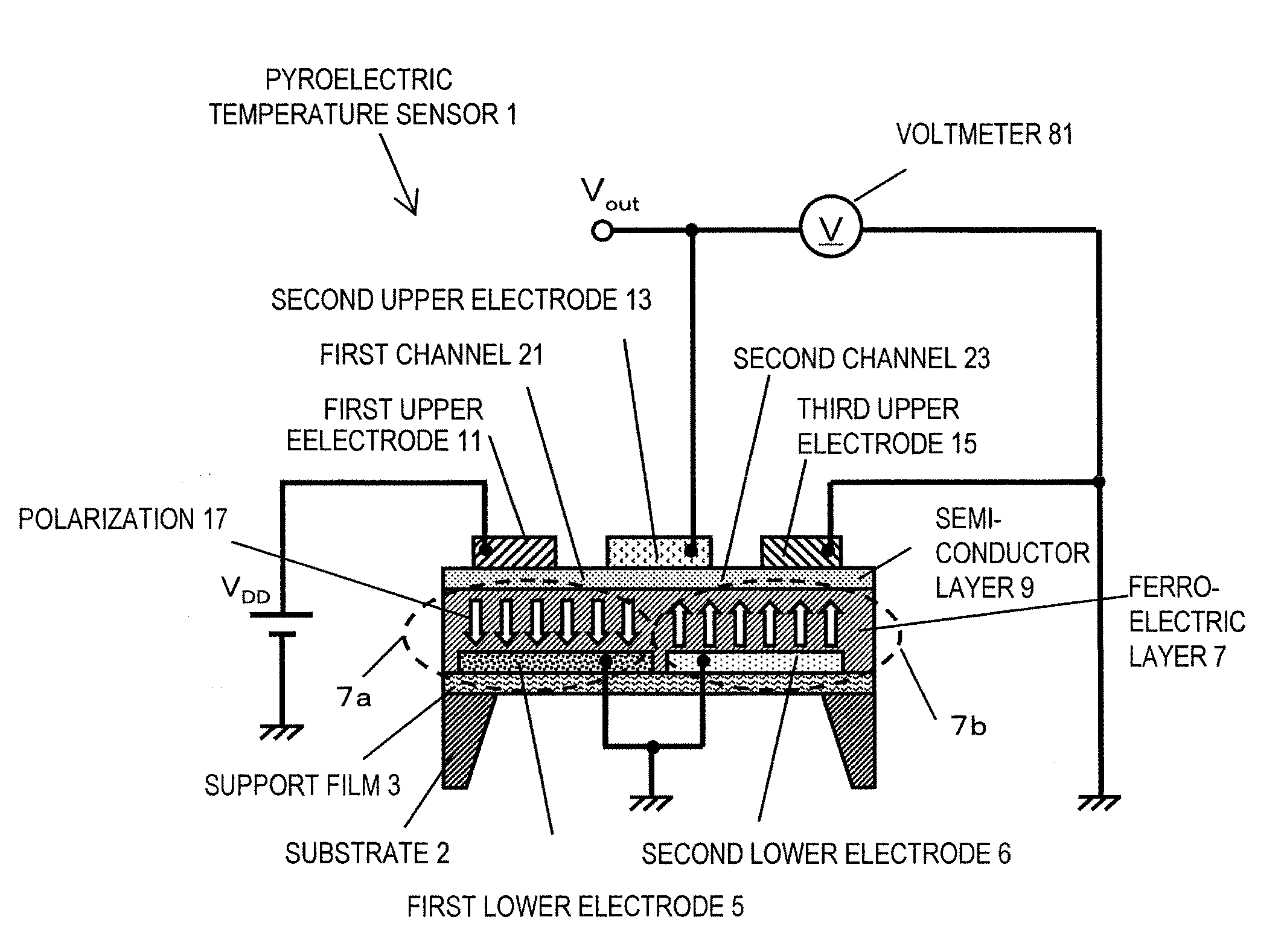
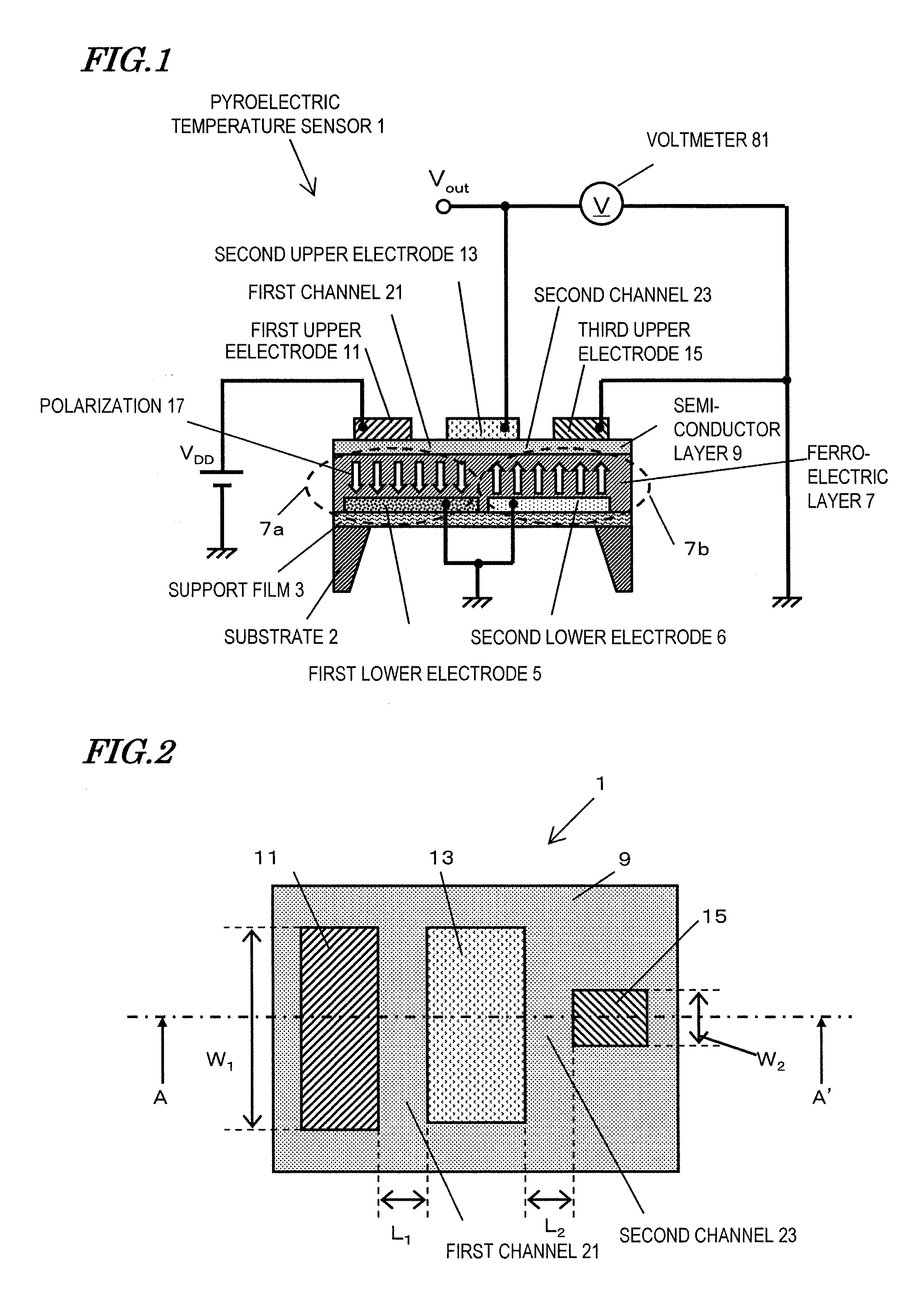
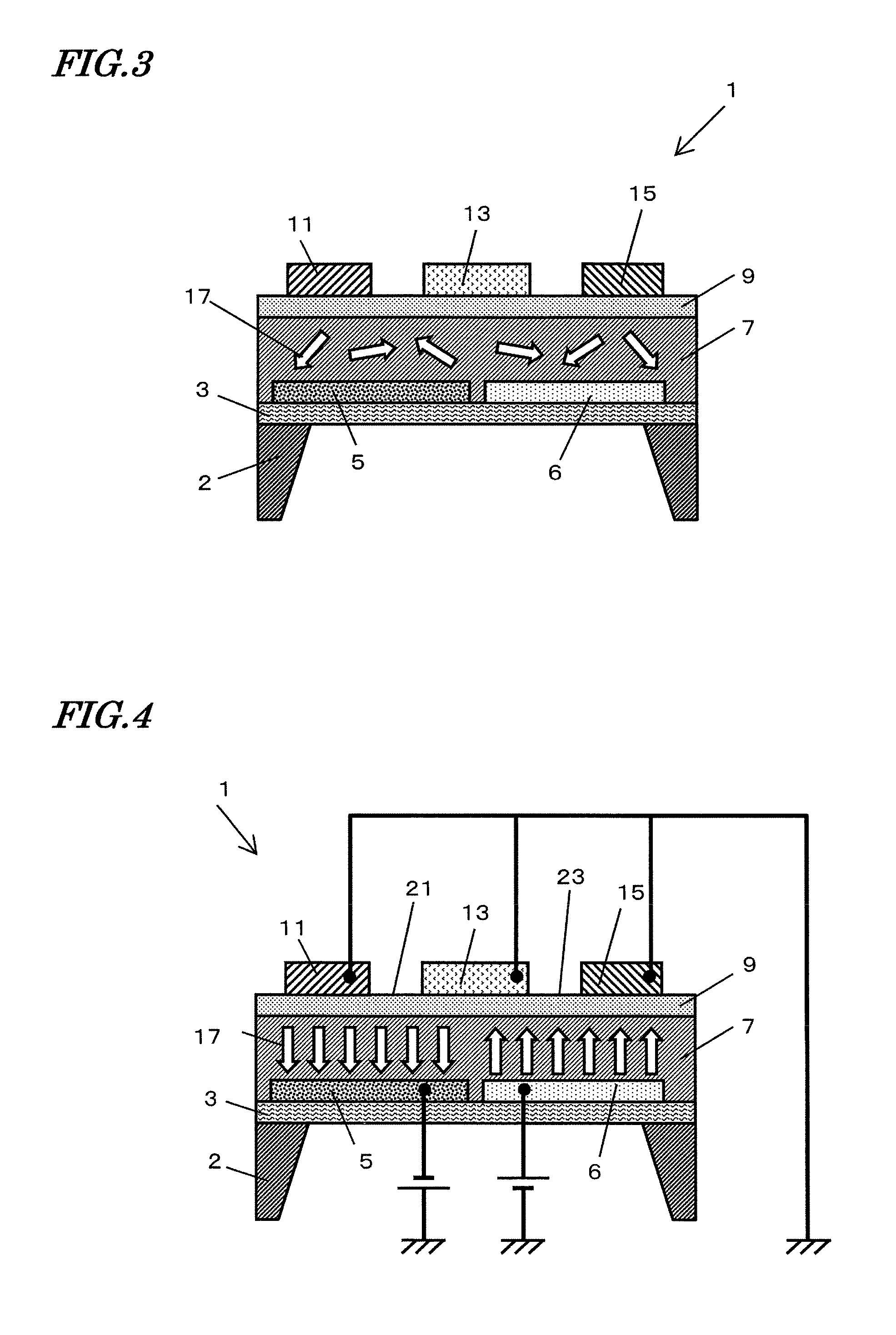
- A pyroelectric temperature sensor design featuring a stacked structure of a lower electrode group, ferroelectric layer, semiconductor layer, and upper electrode group, with specific channel configurations and polarization directions, allowing for the calculation of temperature using an output voltage equation that incorporates resistance values of different channels.

Standardization Requirements for Pyroelectric Testing
The establishment of standardized testing protocols for pyroelectric materials represents a critical need in advancing the field's commercial viability and scientific reproducibility. Current pyroelectric evaluation methods suffer from significant variations in measurement conditions, data interpretation criteria, and reporting formats across different research institutions and industrial laboratories. This lack of uniformity creates substantial barriers to technology transfer and comparative analysis of material performance.
International standardization bodies, including the International Electrotechnical Commission (IEC) and ASTM International, have begun addressing these challenges through the development of comprehensive testing standards. The IEC 62899 series specifically targets pyroelectric material characterization, establishing fundamental requirements for measurement equipment calibration, environmental control parameters, and data acquisition protocols. These standards mandate precise temperature control within ±0.1K accuracy and specify minimum sampling rates for reliable pyroelectric coefficient determination.
Key standardization requirements encompass several critical areas of testing methodology. Temperature modulation protocols must adhere to specified heating and cooling rates, typically ranging from 0.5 to 5 K/min, with mandatory stabilization periods between measurement cycles. Electrical measurement standards require defined impedance matching conditions, noise floor specifications below 10^-15 A, and standardized electrode configurations to ensure consistent current collection efficiency.
Sample preparation standards represent another crucial aspect of standardization efforts. These requirements specify minimum sample dimensions, surface preparation techniques, electrode deposition methods, and thermal contact protocols. Standardized sample holders and thermal coupling materials are mandated to eliminate measurement artifacts arising from inconsistent thermal boundary conditions.
Environmental control specifications form the backbone of reliable pyroelectric testing standards. Requirements include controlled atmosphere conditions with specified humidity levels below 5% relative humidity, electromagnetic shielding effectiveness exceeding 60 dB, and vibration isolation meeting specific acceleration limits. These environmental controls ensure measurement repeatability and eliminate external interference sources.
Data processing and reporting standards establish uniform calculation methods for pyroelectric coefficients, statistical analysis requirements for measurement uncertainty quantification, and mandatory documentation of all experimental parameters. These standards require traceability to national measurement institutes and specify minimum measurement repetition requirements for statistical validity.
Calibration and validation protocols represent the final critical component of standardization requirements. These protocols mandate regular calibration of temperature sensors against certified reference standards, verification of current measurement accuracy using traceable calibration sources, and participation in interlaboratory comparison programs to ensure measurement consistency across different facilities and equipment configurations.
International standardization bodies, including the International Electrotechnical Commission (IEC) and ASTM International, have begun addressing these challenges through the development of comprehensive testing standards. The IEC 62899 series specifically targets pyroelectric material characterization, establishing fundamental requirements for measurement equipment calibration, environmental control parameters, and data acquisition protocols. These standards mandate precise temperature control within ±0.1K accuracy and specify minimum sampling rates for reliable pyroelectric coefficient determination.
Key standardization requirements encompass several critical areas of testing methodology. Temperature modulation protocols must adhere to specified heating and cooling rates, typically ranging from 0.5 to 5 K/min, with mandatory stabilization periods between measurement cycles. Electrical measurement standards require defined impedance matching conditions, noise floor specifications below 10^-15 A, and standardized electrode configurations to ensure consistent current collection efficiency.
Sample preparation standards represent another crucial aspect of standardization efforts. These requirements specify minimum sample dimensions, surface preparation techniques, electrode deposition methods, and thermal contact protocols. Standardized sample holders and thermal coupling materials are mandated to eliminate measurement artifacts arising from inconsistent thermal boundary conditions.
Environmental control specifications form the backbone of reliable pyroelectric testing standards. Requirements include controlled atmosphere conditions with specified humidity levels below 5% relative humidity, electromagnetic shielding effectiveness exceeding 60 dB, and vibration isolation meeting specific acceleration limits. These environmental controls ensure measurement repeatability and eliminate external interference sources.
Data processing and reporting standards establish uniform calculation methods for pyroelectric coefficients, statistical analysis requirements for measurement uncertainty quantification, and mandatory documentation of all experimental parameters. These standards require traceability to national measurement institutes and specify minimum measurement repetition requirements for statistical validity.
Calibration and validation protocols represent the final critical component of standardization requirements. These protocols mandate regular calibration of temperature sensors against certified reference standards, verification of current measurement accuracy using traceable calibration sources, and participation in interlaboratory comparison programs to ensure measurement consistency across different facilities and equipment configurations.
Thermal Management Considerations in Evaluation Systems
Thermal management represents a critical aspect of pyroelectric response evaluation systems, as temperature control precision directly influences measurement accuracy and repeatability. The evaluation process requires sophisticated thermal regulation mechanisms to ensure stable baseline conditions and controlled temperature modulation profiles. Effective thermal management systems must address both active heating and cooling requirements while maintaining uniform temperature distribution across the pyroelectric sample surface.
Heat dissipation strategies become particularly important when dealing with high-frequency temperature modulation or rapid thermal cycling. The evaluation system must incorporate efficient heat sinks and thermal pathways to prevent unwanted temperature accumulation that could distort measurement results. Advanced systems employ thermoelectric coolers (TECs) or Peltier devices to provide precise bidirectional temperature control, enabling both heating and cooling phases of the modulation cycle.
Temperature uniformity across the sample area poses significant challenges, especially for larger pyroelectric elements. Non-uniform heating can create localized thermal gradients that generate spurious signals, masking the true pyroelectric response. Thermal modeling and finite element analysis help optimize heat source placement and thermal conductor design to achieve maximum temperature uniformity.
Thermal isolation between the sample and surrounding components prevents parasitic heat transfer that could compromise measurement precision. This involves careful selection of low thermal conductivity materials for sample mounting and strategic placement of thermal barriers. The thermal time constants of the entire system must be characterized to understand response delays and ensure proper synchronization between temperature modulation and signal acquisition.
Environmental thermal stability also requires consideration, as ambient temperature fluctuations can introduce measurement drift. Climate-controlled testing environments or active compensation systems help maintain consistent baseline conditions. Additionally, the thermal mass of the evaluation system components affects the achievable modulation frequencies and temperature ramp rates, necessitating optimization based on specific measurement requirements and pyroelectric material characteristics.
Heat dissipation strategies become particularly important when dealing with high-frequency temperature modulation or rapid thermal cycling. The evaluation system must incorporate efficient heat sinks and thermal pathways to prevent unwanted temperature accumulation that could distort measurement results. Advanced systems employ thermoelectric coolers (TECs) or Peltier devices to provide precise bidirectional temperature control, enabling both heating and cooling phases of the modulation cycle.
Temperature uniformity across the sample area poses significant challenges, especially for larger pyroelectric elements. Non-uniform heating can create localized thermal gradients that generate spurious signals, masking the true pyroelectric response. Thermal modeling and finite element analysis help optimize heat source placement and thermal conductor design to achieve maximum temperature uniformity.
Thermal isolation between the sample and surrounding components prevents parasitic heat transfer that could compromise measurement precision. This involves careful selection of low thermal conductivity materials for sample mounting and strategic placement of thermal barriers. The thermal time constants of the entire system must be characterized to understand response delays and ensure proper synchronization between temperature modulation and signal acquisition.
Environmental thermal stability also requires consideration, as ambient temperature fluctuations can introduce measurement drift. Climate-controlled testing environments or active compensation systems help maintain consistent baseline conditions. Additionally, the thermal mass of the evaluation system components affects the achievable modulation frequencies and temperature ramp rates, necessitating optimization based on specific measurement requirements and pyroelectric material characteristics.
Unlock deeper insights with PatSnap Eureka Quick Research — get a full tech report to explore trends and direct your research. Try now!
Generate Your Research Report Instantly with AI Agent
Supercharge your innovation with PatSnap Eureka AI Agent Platform!