

How to Implement Automation in Plastic Injection Molding
MAR 25, 202610 MIN READ
Generate Your Research Report Instantly with AI Agent
PatSnap Eureka helps you evaluate technical feasibility & market potential.
Plastic Injection Molding Automation Background and Objectives
Plastic injection molding has undergone significant transformation since its inception in the late 19th century, evolving from manual operations to sophisticated automated systems. The industry's journey began with simple hand-operated machines and has progressively advanced through mechanical automation, hydraulic systems, and now encompasses digital integration with Industry 4.0 technologies. This evolution reflects the manufacturing sector's broader shift toward precision, efficiency, and scalability.
The current technological landscape in plastic injection molding automation is characterized by the integration of advanced robotics, artificial intelligence, and Internet of Things (IoT) connectivity. Modern injection molding facilities increasingly rely on automated material handling systems, real-time process monitoring, and predictive maintenance algorithms. These developments have been driven by the need to address labor shortages, improve product consistency, and meet stringent quality requirements across industries ranging from automotive to medical devices.
Contemporary automation trends in this field focus on achieving lights-out manufacturing capabilities, where production can continue with minimal human intervention. The integration of machine learning algorithms enables predictive quality control, while advanced sensor networks provide comprehensive process visibility. Cloud-based data analytics platforms are becoming standard tools for optimizing production parameters and identifying efficiency improvements across multiple production sites.
The primary objective of implementing automation in plastic injection molding centers on achieving operational excellence through enhanced productivity, quality consistency, and cost reduction. Organizations seek to minimize cycle times while maintaining precise dimensional tolerances and surface finish requirements. Automation enables manufacturers to achieve repeatable processes that reduce scrap rates and eliminate human error variables that traditionally affected product quality.
Strategic goals include establishing flexible manufacturing systems capable of rapid changeovers between different product lines without compromising efficiency. This flexibility is crucial for manufacturers serving diverse markets with varying volume requirements and product specifications. Additionally, automation implementation aims to create data-driven production environments where real-time analytics inform decision-making and enable continuous process optimization.
Long-term objectives encompass building sustainable competitive advantages through reduced labor dependency and improved resource utilization. Companies target significant reductions in energy consumption per part produced while simultaneously increasing overall equipment effectiveness. The ultimate goal involves creating intelligent manufacturing ecosystems that can adapt autonomously to changing production demands and market conditions.
The current technological landscape in plastic injection molding automation is characterized by the integration of advanced robotics, artificial intelligence, and Internet of Things (IoT) connectivity. Modern injection molding facilities increasingly rely on automated material handling systems, real-time process monitoring, and predictive maintenance algorithms. These developments have been driven by the need to address labor shortages, improve product consistency, and meet stringent quality requirements across industries ranging from automotive to medical devices.
Contemporary automation trends in this field focus on achieving lights-out manufacturing capabilities, where production can continue with minimal human intervention. The integration of machine learning algorithms enables predictive quality control, while advanced sensor networks provide comprehensive process visibility. Cloud-based data analytics platforms are becoming standard tools for optimizing production parameters and identifying efficiency improvements across multiple production sites.
The primary objective of implementing automation in plastic injection molding centers on achieving operational excellence through enhanced productivity, quality consistency, and cost reduction. Organizations seek to minimize cycle times while maintaining precise dimensional tolerances and surface finish requirements. Automation enables manufacturers to achieve repeatable processes that reduce scrap rates and eliminate human error variables that traditionally affected product quality.
Strategic goals include establishing flexible manufacturing systems capable of rapid changeovers between different product lines without compromising efficiency. This flexibility is crucial for manufacturers serving diverse markets with varying volume requirements and product specifications. Additionally, automation implementation aims to create data-driven production environments where real-time analytics inform decision-making and enable continuous process optimization.
Long-term objectives encompass building sustainable competitive advantages through reduced labor dependency and improved resource utilization. Companies target significant reductions in energy consumption per part produced while simultaneously increasing overall equipment effectiveness. The ultimate goal involves creating intelligent manufacturing ecosystems that can adapt autonomously to changing production demands and market conditions.
Market Demand for Automated Injection Molding Solutions
The global plastic injection molding industry is experiencing unprecedented demand for automation solutions driven by multiple converging factors. Manufacturing companies across automotive, consumer electronics, medical devices, and packaging sectors are increasingly seeking automated injection molding systems to address labor shortages, rising operational costs, and stringent quality requirements. This demand surge reflects a fundamental shift from traditional manual operations toward intelligent manufacturing paradigms.
Labor market dynamics constitute a primary driver for automation adoption. Skilled operators for injection molding processes are becoming increasingly scarce, particularly in developed economies where manufacturing wages continue to rise. Companies are compelled to invest in automated solutions to maintain production continuity and reduce dependency on manual labor. This trend is particularly pronounced in high-volume production environments where consistent quality and throughput are critical success factors.
Quality consistency requirements across industries are intensifying demand for automated injection molding solutions. Automotive manufacturers require parts with extremely tight tolerances and zero-defect standards, while medical device producers must comply with stringent regulatory requirements. Automated systems deliver superior repeatability and precision compared to manual operations, making them essential for meeting these demanding specifications.
The consumer electronics sector represents a rapidly expanding market segment for automated injection molding solutions. Miniaturization trends and complex geometries in electronic components necessitate advanced automation capabilities including precision material handling, real-time quality monitoring, and adaptive process control. Manufacturers in this sector are actively seeking integrated automation platforms that can handle multiple part variations and rapid changeovers.
Cost optimization pressures are accelerating automation adoption across all market segments. Companies recognize that automated injection molding systems, despite higher initial capital investments, deliver significant long-term operational savings through reduced labor costs, minimized material waste, and improved energy efficiency. The return on investment calculations increasingly favor automation as technology costs decline and capabilities expand.
Emerging markets in Asia-Pacific and Latin America are demonstrating robust demand growth for automated injection molding solutions. These regions are transitioning from low-cost manual production models toward higher-value automated manufacturing to compete in global markets. Government initiatives promoting industrial modernization and smart manufacturing are further stimulating demand in these geographical areas.
The market demand encompasses various automation levels, from basic robotic part removal systems to fully integrated Industry 4.0 solutions featuring artificial intelligence, predictive maintenance, and real-time process optimization. This diversity in automation requirements creates opportunities for solution providers to address different market segments with tailored offerings ranging from entry-level automation packages to comprehensive smart factory implementations.
Labor market dynamics constitute a primary driver for automation adoption. Skilled operators for injection molding processes are becoming increasingly scarce, particularly in developed economies where manufacturing wages continue to rise. Companies are compelled to invest in automated solutions to maintain production continuity and reduce dependency on manual labor. This trend is particularly pronounced in high-volume production environments where consistent quality and throughput are critical success factors.
Quality consistency requirements across industries are intensifying demand for automated injection molding solutions. Automotive manufacturers require parts with extremely tight tolerances and zero-defect standards, while medical device producers must comply with stringent regulatory requirements. Automated systems deliver superior repeatability and precision compared to manual operations, making them essential for meeting these demanding specifications.
The consumer electronics sector represents a rapidly expanding market segment for automated injection molding solutions. Miniaturization trends and complex geometries in electronic components necessitate advanced automation capabilities including precision material handling, real-time quality monitoring, and adaptive process control. Manufacturers in this sector are actively seeking integrated automation platforms that can handle multiple part variations and rapid changeovers.
Cost optimization pressures are accelerating automation adoption across all market segments. Companies recognize that automated injection molding systems, despite higher initial capital investments, deliver significant long-term operational savings through reduced labor costs, minimized material waste, and improved energy efficiency. The return on investment calculations increasingly favor automation as technology costs decline and capabilities expand.
Emerging markets in Asia-Pacific and Latin America are demonstrating robust demand growth for automated injection molding solutions. These regions are transitioning from low-cost manual production models toward higher-value automated manufacturing to compete in global markets. Government initiatives promoting industrial modernization and smart manufacturing are further stimulating demand in these geographical areas.
The market demand encompasses various automation levels, from basic robotic part removal systems to fully integrated Industry 4.0 solutions featuring artificial intelligence, predictive maintenance, and real-time process optimization. This diversity in automation requirements creates opportunities for solution providers to address different market segments with tailored offerings ranging from entry-level automation packages to comprehensive smart factory implementations.
Current State and Challenges of Injection Molding Automation
The global plastic injection molding automation market has experienced significant growth, with current penetration rates varying considerably across different manufacturing sectors. While automotive and consumer electronics industries have achieved automation levels of 60-80%, many small to medium-sized manufacturers still rely heavily on manual operations, with automation rates below 30%. This disparity reflects both the complexity of implementation and the substantial capital investment required for comprehensive automation systems.
Current automation technologies in injection molding encompass several key areas including automated material handling, robotic part removal, quality inspection systems, and process monitoring. Leading manufacturers have successfully integrated Industrial Internet of Things (IoT) sensors, artificial intelligence-driven process optimization, and predictive maintenance systems. However, the adoption of these advanced technologies remains concentrated among large-scale operations with sufficient technical expertise and financial resources.
The primary technical challenges facing injection molding automation center around the complexity of integrating diverse systems and achieving reliable performance across varying production requirements. Legacy equipment compatibility presents a significant obstacle, as many existing injection molding machines lack the necessary interfaces for modern automation components. Additionally, the wide variety of plastic materials and part geometries requires highly flexible automation solutions that can adapt to frequent changeovers without extensive reprogramming.
Economic barriers constitute another major challenge, particularly for smaller manufacturers. The initial capital investment for comprehensive automation systems can range from $200,000 to over $1 million per production line, depending on complexity and scale. Return on investment calculations become complicated when factoring in training costs, system integration expenses, and potential production disruptions during implementation phases.
Technical skill gaps represent a critical constraint in automation adoption. The successful implementation and maintenance of automated injection molding systems require specialized knowledge spanning mechanical engineering, software programming, and process optimization. Many manufacturers struggle to recruit and retain personnel with the necessary expertise, particularly in regions where advanced manufacturing skills are scarce.
Quality control and process consistency challenges persist even in highly automated environments. While automation can reduce human error, it introduces new complexities related to sensor calibration, algorithm optimization, and system reliability. Achieving consistent part quality across different materials, environmental conditions, and production volumes requires sophisticated control systems and continuous monitoring capabilities that many facilities have yet to fully master.
Current automation technologies in injection molding encompass several key areas including automated material handling, robotic part removal, quality inspection systems, and process monitoring. Leading manufacturers have successfully integrated Industrial Internet of Things (IoT) sensors, artificial intelligence-driven process optimization, and predictive maintenance systems. However, the adoption of these advanced technologies remains concentrated among large-scale operations with sufficient technical expertise and financial resources.
The primary technical challenges facing injection molding automation center around the complexity of integrating diverse systems and achieving reliable performance across varying production requirements. Legacy equipment compatibility presents a significant obstacle, as many existing injection molding machines lack the necessary interfaces for modern automation components. Additionally, the wide variety of plastic materials and part geometries requires highly flexible automation solutions that can adapt to frequent changeovers without extensive reprogramming.
Economic barriers constitute another major challenge, particularly for smaller manufacturers. The initial capital investment for comprehensive automation systems can range from $200,000 to over $1 million per production line, depending on complexity and scale. Return on investment calculations become complicated when factoring in training costs, system integration expenses, and potential production disruptions during implementation phases.
Technical skill gaps represent a critical constraint in automation adoption. The successful implementation and maintenance of automated injection molding systems require specialized knowledge spanning mechanical engineering, software programming, and process optimization. Many manufacturers struggle to recruit and retain personnel with the necessary expertise, particularly in regions where advanced manufacturing skills are scarce.
Quality control and process consistency challenges persist even in highly automated environments. While automation can reduce human error, it introduces new complexities related to sensor calibration, algorithm optimization, and system reliability. Achieving consistent part quality across different materials, environmental conditions, and production volumes requires sophisticated control systems and continuous monitoring capabilities that many facilities have yet to fully master.
Existing Automation Solutions for Plastic Injection Molding
01 Multi-component injection molding systems
Advanced injection molding techniques involve multi-component or multi-material molding processes that allow for the production of complex parts with different materials or colors in a single molding cycle. These systems utilize specialized molds with multiple cavities or rotating mechanisms to inject different materials sequentially or simultaneously, enabling the creation of parts with enhanced functionality, improved aesthetics, and reduced assembly requirements.- Multi-component injection molding systems: Advanced injection molding techniques involve multi-component or multi-material molding processes that allow for the production of complex parts with different materials or colors in a single molding cycle. These systems utilize specialized molds with multiple cavities or rotating mechanisms to inject different materials sequentially or simultaneously. This approach reduces assembly time, improves part integration, and enables the creation of products with varied material properties in different sections.
- Mold design and cooling systems: Efficient mold design incorporates optimized cooling channels and temperature control systems to improve cycle times and part quality. Advanced cooling configurations include conformal cooling channels that follow the contour of the molded part, ensuring uniform temperature distribution and reducing warpage. These designs help achieve faster cooling rates, minimize thermal stress, and improve dimensional accuracy of the molded products.
- Injection molding process control and automation: Modern injection molding incorporates sophisticated process control systems and automation technologies to monitor and adjust critical parameters such as injection pressure, temperature, and cycle time. These systems utilize sensors and feedback mechanisms to ensure consistent part quality and reduce defects. Automated systems can also include robotic part removal, quality inspection, and material handling to improve production efficiency and reduce labor costs.
- Specialized molding techniques for thin-wall and precision parts: Specialized injection molding methods are designed for producing thin-wall components and high-precision parts that require tight tolerances. These techniques involve high-speed injection, optimized gate designs, and precise control of filling patterns to ensure complete cavity filling without defects. The processes are particularly useful for manufacturing lightweight components in electronics, automotive, and medical device applications where dimensional accuracy is critical.
- Material handling and preparation systems: Effective material handling systems for injection molding include drying equipment, material conveying systems, and blending units that ensure proper preparation of plastic resins before processing. These systems maintain material quality by controlling moisture content, preventing contamination, and enabling precise mixing of additives or colorants. Proper material preparation is essential for achieving consistent melt flow properties and preventing defects such as voids, bubbles, or surface imperfections in the final molded parts.
02 Mold design and cooling systems
Efficient mold design incorporates optimized cooling channels and temperature control systems to improve cycle times and part quality. Advanced cooling configurations, including conformal cooling channels and temperature regulation mechanisms, help maintain uniform temperature distribution throughout the mold, reducing warpage, improving dimensional accuracy, and increasing production efficiency. These designs may include specialized channel geometries and cooling fluid circulation systems.Expand Specific Solutions03 Injection molding machine control and automation
Modern injection molding machines feature sophisticated control systems that monitor and regulate various process parameters such as injection pressure, temperature, speed, and timing. Automated systems incorporate sensors, feedback mechanisms, and programmable logic controllers to optimize the molding process, ensure consistent part quality, and reduce operator intervention. These control systems enable precise adjustment of molding parameters and real-time process monitoring.Expand Specific Solutions04 Specialized mold components and ejection mechanisms
Injection molds incorporate various specialized components including ejector pins, slides, lifters, and core-pulling mechanisms to facilitate the removal of molded parts from the mold cavity. These components are designed to handle complex part geometries with undercuts, threads, or intricate features. Advanced ejection systems ensure smooth part removal without damage while maintaining high production rates and minimizing cycle times.Expand Specific Solutions05 Material handling and processing improvements
Innovations in material handling for injection molding include improved feeding systems, material drying equipment, and processing techniques for various thermoplastic resins. These advancements address challenges related to material preparation, moisture control, and consistent material flow into the injection unit. Enhanced material processing methods help achieve better melt homogeneity, reduced contamination, and improved final part properties.Expand Specific Solutions
Key Players in Injection Molding Automation Industry
The plastic injection molding automation sector is experiencing rapid growth as manufacturers seek enhanced efficiency and precision. The industry is in a mature expansion phase, driven by increasing demand for high-quality plastic components across automotive, electronics, and consumer goods sectors. Market leaders like ENGEL AUSTRIA GmbH, KraussMaffei Technologies GmbH, and Siemens AG demonstrate advanced technological maturity through sophisticated automation solutions, adaptive process controls, and integrated robotics systems. Companies such as Autodesk provide critical simulation software, while iMFLUX offers innovative low-pressure molding technologies. The competitive landscape spans from established machinery manufacturers to specialized automation providers, indicating a well-developed ecosystem. Technology maturity varies significantly, with major players like LG Electronics and Lear Corp. representing end-user adoption, while emerging companies focus on niche automation solutions and smart manufacturing integration.
Autodesk, Inc.
Technical Solution: Autodesk contributes to injection molding automation through their Moldflow simulation software integrated with cloud-based analytics and AI-driven optimization tools. Their automation approach focuses on design-stage process optimization, automated mold filling analysis, and predictive modeling for defect prevention. The Fusion 360 platform enables automated toolpath generation for mold manufacturing and integrates with CAM systems for automated machining operations. Autodesk's generative design capabilities help optimize part geometry for automated production while their cloud platform enables real-time collaboration and automated design validation workflows.
Strengths: Leading simulation and design optimization capabilities, strong cloud-based collaboration tools, AI-driven design automation. Weaknesses: Limited direct machine control capabilities, primarily focused on design phase rather than production automation.
ENGEL AUSTRIA GmbH
Technical Solution: ENGEL implements comprehensive automation solutions through their inject 4.0 digitalization platform, featuring integrated robotics systems, smart sensors for real-time process monitoring, and predictive maintenance capabilities. Their automation approach includes automated part removal, quality inspection systems using vision technology, and closed-loop process control that automatically adjusts injection parameters based on cavity pressure and temperature feedback. The company's modular automation concepts allow for flexible integration of handling systems, from simple pick-and-place robots to complex multi-axis systems for insert molding and assembly operations.
Strengths: Industry-leading digitalization platform with comprehensive IoT integration, extensive experience in complex automation projects, strong global service network. Weaknesses: Higher initial investment costs, complexity may require specialized training for operators.
Core Technologies in Smart Injection Molding Systems
Automated molding technology for thermoplastic injection molding
PatentInactiveUS7037452B1
Innovation
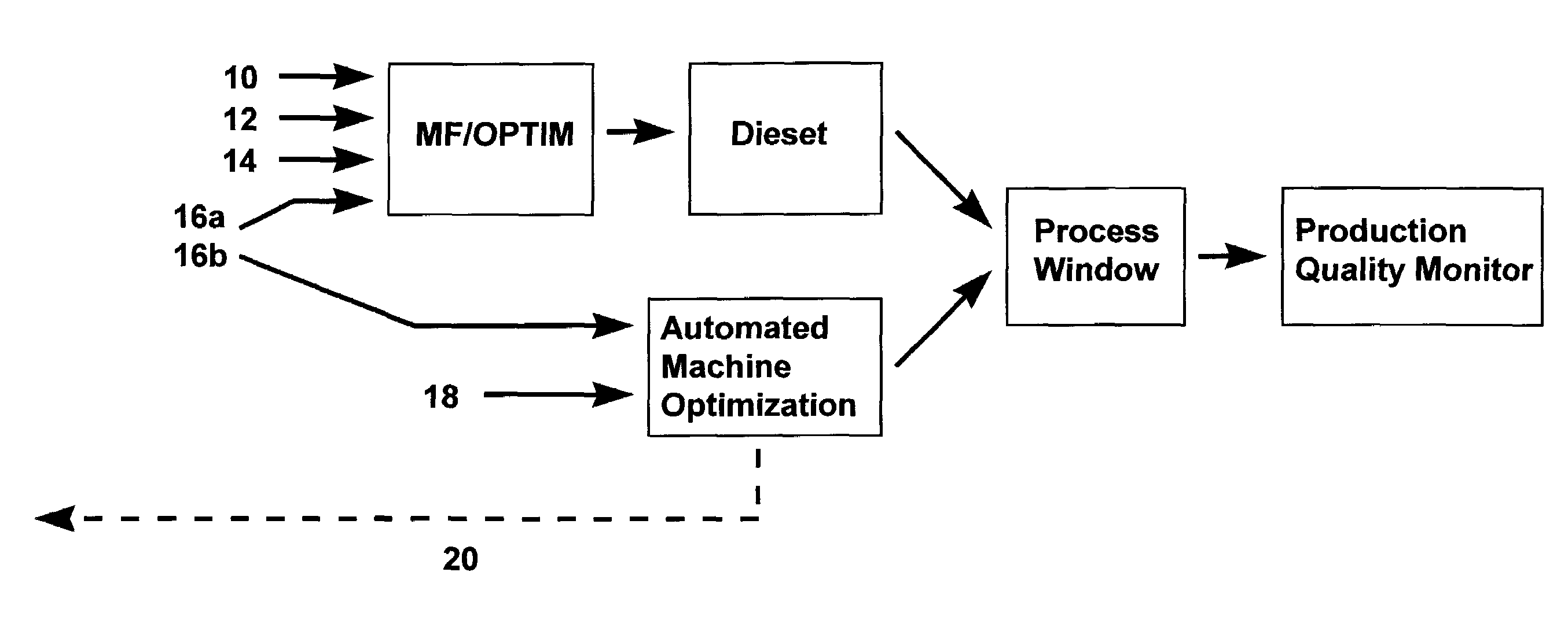
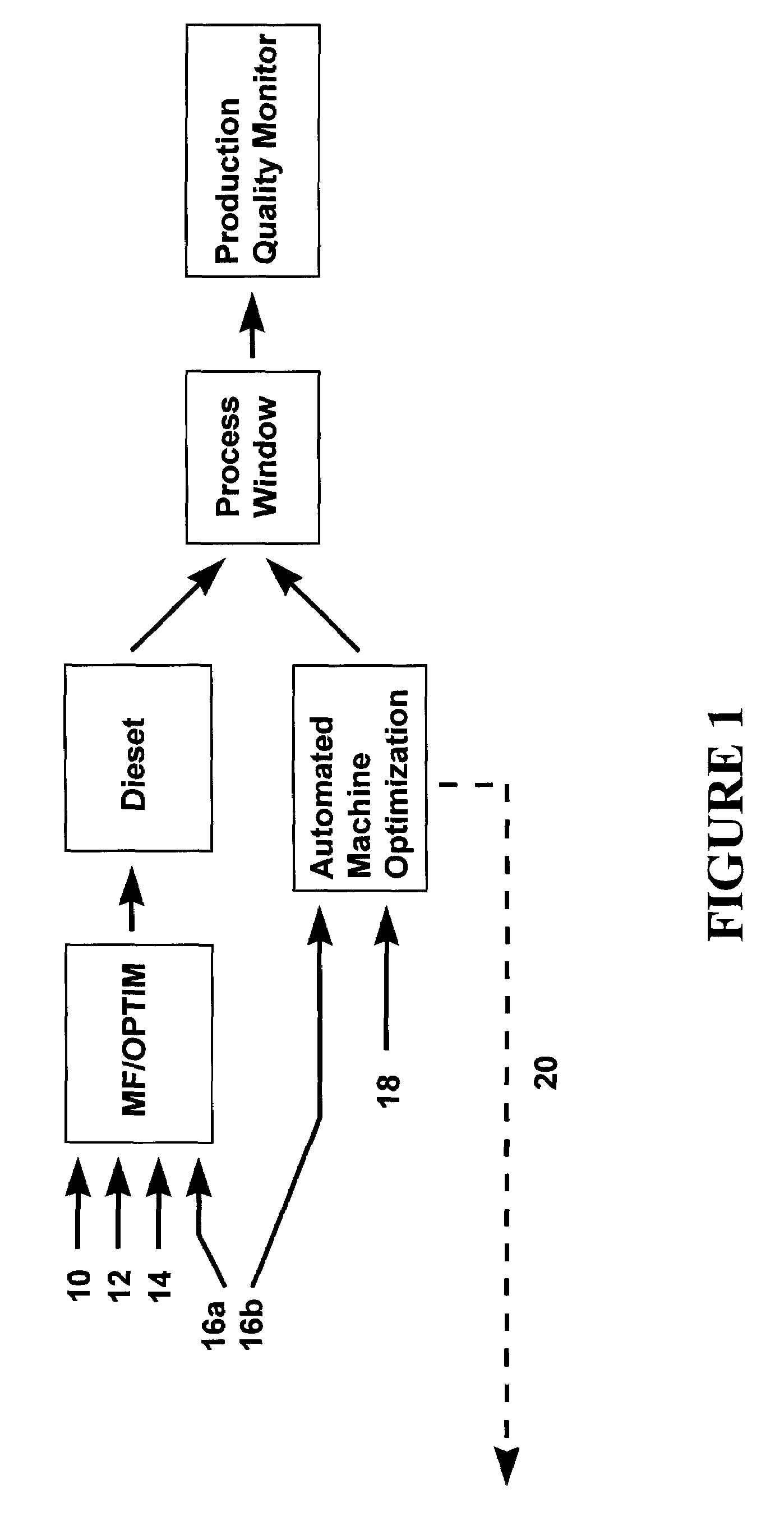
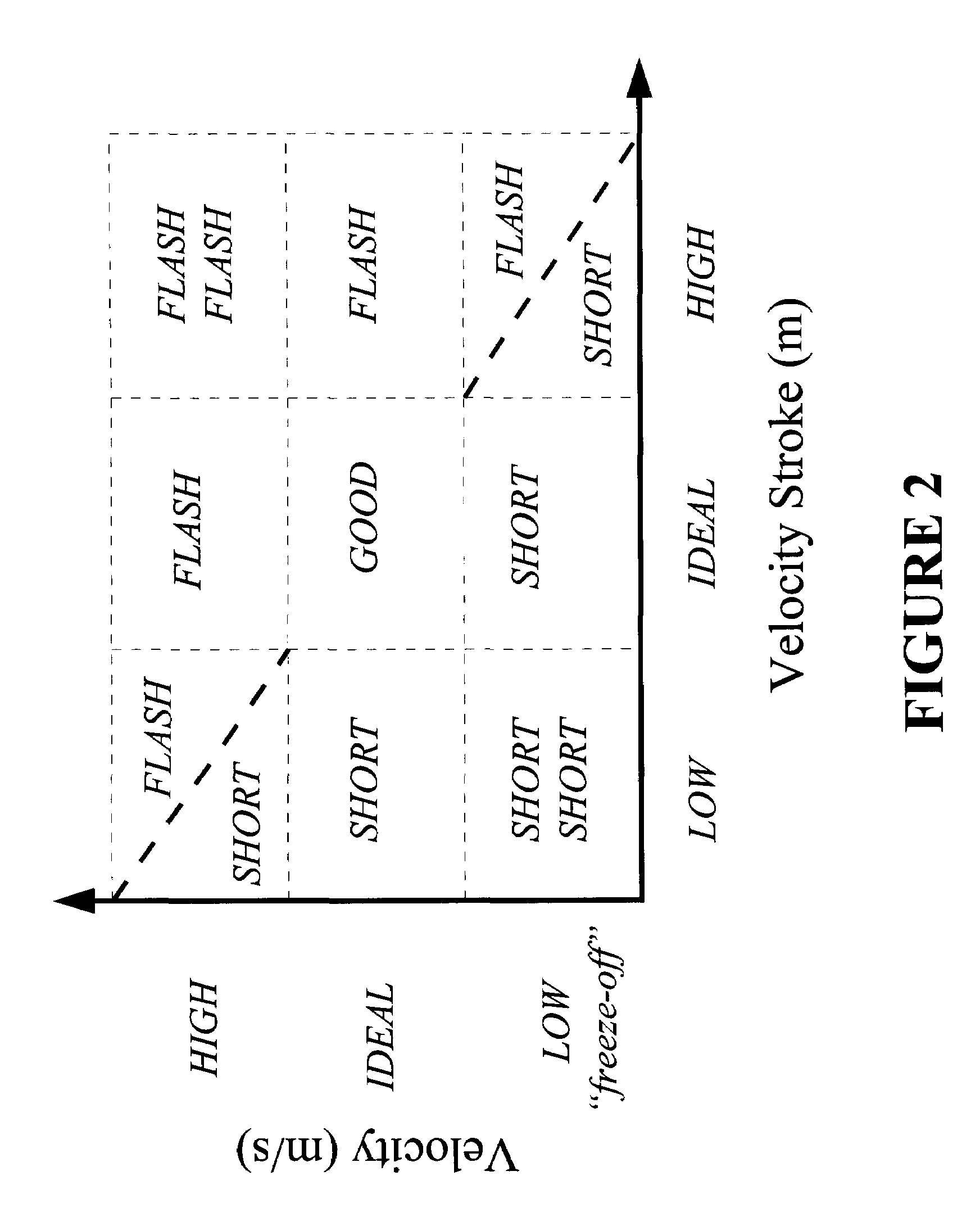
- An automated method for optimizing injection molding machine set-up, involving steps such as manufacturing parts, inspecting for defects, adjusting injection stroke and velocity, determining pressure profiles, and refining velocity and pressure profiles to reduce irregularities and defects, thereby improving machine set-up consistency and efficiency.


Automated molding technology for thermoplastic injection molding
PatentInactiveUS7431870B2
Innovation
- An automated method for optimizing injection molding machine setup by profiling injection velocity and pressure, adjusting velocity profiles to match mean pressure profiles, and determining optimal screw displacements and holding times through iterative measurements and adjustments.

Industry 4.0 Integration in Plastic Manufacturing
The convergence of Industry 4.0 principles with plastic injection molding represents a fundamental transformation in manufacturing paradigms. This integration encompasses the systematic deployment of cyber-physical systems, Internet of Things (IoT) sensors, artificial intelligence, and advanced data analytics to create intelligent, interconnected production environments. The fourth industrial revolution framework enables plastic manufacturers to achieve unprecedented levels of operational visibility, predictive maintenance capabilities, and adaptive manufacturing processes.
Smart factory architectures form the backbone of Industry 4.0 integration in plastic manufacturing. These systems utilize distributed sensor networks throughout injection molding equipment to continuously monitor critical parameters such as temperature profiles, pressure variations, cycle times, and material flow characteristics. Real-time data collection enables immediate process adjustments and quality control interventions, significantly reducing defect rates and material waste.
Digital twin technology represents a cornerstone of Industry 4.0 implementation, creating virtual replicas of physical injection molding processes. These sophisticated models simulate real-world manufacturing conditions, enabling predictive analysis of equipment performance, process optimization scenarios, and maintenance scheduling. Digital twins facilitate rapid prototyping of new products and process configurations without disrupting actual production lines.
Machine learning algorithms and artificial intelligence systems analyze vast datasets generated by connected manufacturing equipment to identify patterns, predict equipment failures, and optimize production parameters autonomously. These intelligent systems continuously learn from operational data, improving decision-making accuracy and process efficiency over time. Predictive analytics capabilities enable proactive maintenance strategies, minimizing unplanned downtime and extending equipment lifespan.
Cloud-based manufacturing execution systems (MES) provide centralized control and monitoring capabilities across multiple production facilities. These platforms integrate with enterprise resource planning (ERP) systems to enable seamless information flow from order management through production scheduling to quality assurance. Real-time production visibility allows for dynamic resource allocation and rapid response to changing market demands.
Cybersecurity frameworks become increasingly critical as manufacturing systems become more interconnected. Industry 4.0 integration requires robust security protocols to protect sensitive production data, intellectual property, and operational systems from cyber threats. Multi-layered security approaches including network segmentation, encryption, and access controls ensure manufacturing system integrity while maintaining operational flexibility.
Human-machine collaboration evolves significantly within Industry 4.0 environments, where augmented reality interfaces and intelligent assistance systems enhance operator capabilities. Workers receive real-time guidance, predictive maintenance alerts, and quality control information through advanced user interfaces, improving both productivity and safety outcomes in plastic manufacturing operations.
Smart factory architectures form the backbone of Industry 4.0 integration in plastic manufacturing. These systems utilize distributed sensor networks throughout injection molding equipment to continuously monitor critical parameters such as temperature profiles, pressure variations, cycle times, and material flow characteristics. Real-time data collection enables immediate process adjustments and quality control interventions, significantly reducing defect rates and material waste.
Digital twin technology represents a cornerstone of Industry 4.0 implementation, creating virtual replicas of physical injection molding processes. These sophisticated models simulate real-world manufacturing conditions, enabling predictive analysis of equipment performance, process optimization scenarios, and maintenance scheduling. Digital twins facilitate rapid prototyping of new products and process configurations without disrupting actual production lines.
Machine learning algorithms and artificial intelligence systems analyze vast datasets generated by connected manufacturing equipment to identify patterns, predict equipment failures, and optimize production parameters autonomously. These intelligent systems continuously learn from operational data, improving decision-making accuracy and process efficiency over time. Predictive analytics capabilities enable proactive maintenance strategies, minimizing unplanned downtime and extending equipment lifespan.
Cloud-based manufacturing execution systems (MES) provide centralized control and monitoring capabilities across multiple production facilities. These platforms integrate with enterprise resource planning (ERP) systems to enable seamless information flow from order management through production scheduling to quality assurance. Real-time production visibility allows for dynamic resource allocation and rapid response to changing market demands.
Cybersecurity frameworks become increasingly critical as manufacturing systems become more interconnected. Industry 4.0 integration requires robust security protocols to protect sensitive production data, intellectual property, and operational systems from cyber threats. Multi-layered security approaches including network segmentation, encryption, and access controls ensure manufacturing system integrity while maintaining operational flexibility.
Human-machine collaboration evolves significantly within Industry 4.0 environments, where augmented reality interfaces and intelligent assistance systems enhance operator capabilities. Workers receive real-time guidance, predictive maintenance alerts, and quality control information through advanced user interfaces, improving both productivity and safety outcomes in plastic manufacturing operations.
Sustainability Impact of Automated Injection Molding
The implementation of automation in plastic injection molding presents significant opportunities for enhancing environmental sustainability across multiple dimensions. Automated systems fundamentally transform the environmental footprint of manufacturing operations through improved resource efficiency, waste reduction, and energy optimization.
Energy consumption represents one of the most substantial sustainability benefits of automated injection molding. Advanced automation systems incorporate intelligent heating controls, optimized cycle timing, and predictive maintenance algorithms that collectively reduce energy usage by 15-30% compared to manual operations. Smart temperature management systems maintain precise thermal profiles while minimizing heat loss, and automated shutdown protocols eliminate unnecessary energy consumption during idle periods.
Material waste reduction constitutes another critical sustainability advantage. Automated systems achieve superior shot-to-shot consistency, reducing defect rates from typical manual operation levels of 3-5% to below 1%. This improvement translates directly into reduced raw material consumption and decreased waste generation. Additionally, automated material handling systems prevent contamination and degradation of plastic resins, further minimizing waste streams.
Water usage optimization emerges through automated cooling system management. Intelligent cooling controls adjust water flow rates and temperatures based on real-time production requirements, reducing water consumption by up to 25%. Closed-loop cooling systems integrated with automation platforms enable precise monitoring and control of coolant usage while maintaining optimal part quality.
The circular economy benefits of automated injection molding extend beyond immediate production efficiency. Automated systems facilitate better integration of recycled materials through precise parameter control that accommodates the varying properties of recycled resins. Quality monitoring systems ensure consistent output even when incorporating higher percentages of post-consumer recycled content.
Carbon footprint reduction occurs through multiple pathways in automated operations. Reduced cycle times, improved first-pass yield rates, and optimized logistics through automated material handling collectively decrease the carbon intensity per manufactured part. Remote monitoring capabilities also reduce the need for on-site personnel travel and enable centralized optimization across multiple production facilities.
Long-term sustainability impacts include extended equipment lifespan through predictive maintenance, reduced chemical usage in cleaning and maintenance operations, and improved workplace safety that reduces environmental incidents. These automation-driven improvements position injection molding operations as more environmentally responsible while maintaining economic competitiveness in increasingly sustainability-focused markets.
Energy consumption represents one of the most substantial sustainability benefits of automated injection molding. Advanced automation systems incorporate intelligent heating controls, optimized cycle timing, and predictive maintenance algorithms that collectively reduce energy usage by 15-30% compared to manual operations. Smart temperature management systems maintain precise thermal profiles while minimizing heat loss, and automated shutdown protocols eliminate unnecessary energy consumption during idle periods.
Material waste reduction constitutes another critical sustainability advantage. Automated systems achieve superior shot-to-shot consistency, reducing defect rates from typical manual operation levels of 3-5% to below 1%. This improvement translates directly into reduced raw material consumption and decreased waste generation. Additionally, automated material handling systems prevent contamination and degradation of plastic resins, further minimizing waste streams.
Water usage optimization emerges through automated cooling system management. Intelligent cooling controls adjust water flow rates and temperatures based on real-time production requirements, reducing water consumption by up to 25%. Closed-loop cooling systems integrated with automation platforms enable precise monitoring and control of coolant usage while maintaining optimal part quality.
The circular economy benefits of automated injection molding extend beyond immediate production efficiency. Automated systems facilitate better integration of recycled materials through precise parameter control that accommodates the varying properties of recycled resins. Quality monitoring systems ensure consistent output even when incorporating higher percentages of post-consumer recycled content.
Carbon footprint reduction occurs through multiple pathways in automated operations. Reduced cycle times, improved first-pass yield rates, and optimized logistics through automated material handling collectively decrease the carbon intensity per manufactured part. Remote monitoring capabilities also reduce the need for on-site personnel travel and enable centralized optimization across multiple production facilities.
Long-term sustainability impacts include extended equipment lifespan through predictive maintenance, reduced chemical usage in cleaning and maintenance operations, and improved workplace safety that reduces environmental incidents. These automation-driven improvements position injection molding operations as more environmentally responsible while maintaining economic competitiveness in increasingly sustainability-focused markets.
Unlock deeper insights with PatSnap Eureka Quick Research — get a full tech report to explore trends and direct your research. Try now!
Generate Your Research Report Instantly with AI Agent
Supercharge your innovation with PatSnap Eureka AI Agent Platform!