

How to Implement Noise Reduction Techniques in Fuel Cell Systems
MAR 12, 20269 MIN READ
Generate Your Research Report Instantly with AI Agent
Patsnap Eureka helps you evaluate technical feasibility & market potential.
Fuel Cell Noise Reduction Background and Objectives
Fuel cell technology has emerged as a critical component in the global transition toward sustainable energy systems, offering clean electricity generation through electrochemical processes that convert hydrogen and oxygen into electrical energy with water as the primary byproduct. Since the first practical fuel cell demonstration by Sir William Grove in 1839, this technology has evolved from laboratory curiosities to commercially viable power solutions across automotive, stationary power, and portable applications.
The widespread adoption of fuel cell systems faces numerous technical challenges, with acoustic noise generation representing a significant barrier to market acceptance, particularly in residential and commercial environments. Fuel cell systems inherently produce various forms of noise through multiple operational mechanisms, including air compressor operation, cooling fan systems, hydrogen recirculation pumps, and electrochemical reactions within the stack itself. These noise sources can generate sound levels ranging from 45 to 70 decibels, often exceeding acceptable limits for indoor installations and residential applications.
The evolution of fuel cell noise reduction techniques has progressed through distinct phases, beginning with basic mechanical isolation methods in early systems to sophisticated active noise control strategies in contemporary designs. Initial approaches focused primarily on passive sound dampening through enclosure design and material selection, while modern systems integrate advanced acoustic engineering principles, predictive noise modeling, and real-time adaptive control mechanisms.
Current noise reduction objectives center on achieving sound levels below 40 decibels for residential fuel cell systems and under 50 decibels for commercial applications, aligning with international noise regulations and user comfort standards. These targets must be accomplished without compromising system efficiency, reliability, or cost-effectiveness, requiring innovative approaches that address noise generation at its source rather than relying solely on post-generation mitigation strategies.
The primary technical objectives include developing low-noise auxiliary components, optimizing stack design for reduced acoustic emissions, implementing intelligent control algorithms that minimize noise-generating operational modes, and creating cost-effective acoustic enclosure solutions. Additionally, the integration of predictive maintenance capabilities that can identify and address noise-related component degradation before it impacts system performance represents a crucial advancement goal.
Achieving these noise reduction objectives is essential for fuel cell technology to realize its full market potential, particularly in distributed energy applications where acoustic compatibility with human environments directly influences adoption rates and regulatory approval processes.
The widespread adoption of fuel cell systems faces numerous technical challenges, with acoustic noise generation representing a significant barrier to market acceptance, particularly in residential and commercial environments. Fuel cell systems inherently produce various forms of noise through multiple operational mechanisms, including air compressor operation, cooling fan systems, hydrogen recirculation pumps, and electrochemical reactions within the stack itself. These noise sources can generate sound levels ranging from 45 to 70 decibels, often exceeding acceptable limits for indoor installations and residential applications.
The evolution of fuel cell noise reduction techniques has progressed through distinct phases, beginning with basic mechanical isolation methods in early systems to sophisticated active noise control strategies in contemporary designs. Initial approaches focused primarily on passive sound dampening through enclosure design and material selection, while modern systems integrate advanced acoustic engineering principles, predictive noise modeling, and real-time adaptive control mechanisms.
Current noise reduction objectives center on achieving sound levels below 40 decibels for residential fuel cell systems and under 50 decibels for commercial applications, aligning with international noise regulations and user comfort standards. These targets must be accomplished without compromising system efficiency, reliability, or cost-effectiveness, requiring innovative approaches that address noise generation at its source rather than relying solely on post-generation mitigation strategies.
The primary technical objectives include developing low-noise auxiliary components, optimizing stack design for reduced acoustic emissions, implementing intelligent control algorithms that minimize noise-generating operational modes, and creating cost-effective acoustic enclosure solutions. Additionally, the integration of predictive maintenance capabilities that can identify and address noise-related component degradation before it impacts system performance represents a crucial advancement goal.
Achieving these noise reduction objectives is essential for fuel cell technology to realize its full market potential, particularly in distributed energy applications where acoustic compatibility with human environments directly influences adoption rates and regulatory approval processes.
Market Demand for Quiet Fuel Cell Systems
The global fuel cell market is experiencing unprecedented growth driven by the urgent need for clean energy solutions and stringent environmental regulations. Automotive manufacturers are increasingly adopting fuel cell technology for electric vehicles, particularly in commercial transportation where hydrogen fuel cells offer advantages over battery systems in terms of range and refueling time. However, noise levels have emerged as a critical barrier to widespread adoption, especially in passenger vehicles and residential applications where acoustic comfort is paramount.
Industrial applications represent another significant demand driver for quiet fuel cell systems. Data centers, hospitals, and manufacturing facilities require reliable backup power solutions that operate with minimal acoustic disturbance. Traditional diesel generators produce substantial noise pollution, making quiet fuel cell systems an attractive alternative for urban environments with strict noise ordinances. The growing emphasis on sustainable operations in these sectors has created substantial market opportunities for acoustically optimized fuel cell technologies.
Residential and commercial building sectors are increasingly seeking distributed energy systems that can operate seamlessly within populated areas. Fuel cell systems for combined heat and power applications must meet stringent noise requirements to gain acceptance in residential neighborhoods. Building codes and zoning regulations in many jurisdictions specifically limit permissible noise levels for on-site power generation equipment, creating mandatory requirements for noise reduction technologies.
The marine industry presents unique challenges and opportunities for quiet fuel cell systems. Luxury yachts and passenger vessels demand silent operation to enhance user experience, while naval applications require stealth capabilities. Port authorities worldwide are implementing stricter noise regulations for docked vessels, driving demand for quiet auxiliary power systems that can replace traditional diesel generators during berthing periods.
Emerging applications in aerospace and portable power systems further expand market demand. Unmanned aerial vehicles require silent operation for surveillance and civilian applications, while portable fuel cell systems for outdoor recreation and emergency response must minimize acoustic signatures. These specialized applications often command premium pricing, making them attractive targets for advanced noise reduction technologies.
Market research indicates that noise performance has become a key differentiating factor in fuel cell system procurement decisions. End users consistently rank acoustic performance among the top three selection criteria, alongside efficiency and reliability. This trend has prompted fuel cell manufacturers to invest heavily in noise reduction research and development, recognizing that acoustic optimization is essential for market competitiveness and broader technology adoption across diverse application sectors.
Industrial applications represent another significant demand driver for quiet fuel cell systems. Data centers, hospitals, and manufacturing facilities require reliable backup power solutions that operate with minimal acoustic disturbance. Traditional diesel generators produce substantial noise pollution, making quiet fuel cell systems an attractive alternative for urban environments with strict noise ordinances. The growing emphasis on sustainable operations in these sectors has created substantial market opportunities for acoustically optimized fuel cell technologies.
Residential and commercial building sectors are increasingly seeking distributed energy systems that can operate seamlessly within populated areas. Fuel cell systems for combined heat and power applications must meet stringent noise requirements to gain acceptance in residential neighborhoods. Building codes and zoning regulations in many jurisdictions specifically limit permissible noise levels for on-site power generation equipment, creating mandatory requirements for noise reduction technologies.
The marine industry presents unique challenges and opportunities for quiet fuel cell systems. Luxury yachts and passenger vessels demand silent operation to enhance user experience, while naval applications require stealth capabilities. Port authorities worldwide are implementing stricter noise regulations for docked vessels, driving demand for quiet auxiliary power systems that can replace traditional diesel generators during berthing periods.
Emerging applications in aerospace and portable power systems further expand market demand. Unmanned aerial vehicles require silent operation for surveillance and civilian applications, while portable fuel cell systems for outdoor recreation and emergency response must minimize acoustic signatures. These specialized applications often command premium pricing, making them attractive targets for advanced noise reduction technologies.
Market research indicates that noise performance has become a key differentiating factor in fuel cell system procurement decisions. End users consistently rank acoustic performance among the top three selection criteria, alongside efficiency and reliability. This trend has prompted fuel cell manufacturers to invest heavily in noise reduction research and development, recognizing that acoustic optimization is essential for market competitiveness and broader technology adoption across diverse application sectors.
Current Noise Issues and Challenges in Fuel Cells
Fuel cell systems face significant noise challenges that stem from multiple operational components and processes. The primary noise sources include air compressors, cooling fans, pumps, and the electrochemical reactions within the fuel cell stack itself. These noise emissions typically range from 50 to 80 decibels, with peak frequencies occurring between 500 Hz and 8 kHz, making them particularly noticeable in residential and commercial applications.
Air supply systems represent the most substantial noise contributor in fuel cell operations. Centrifugal and screw compressors generate broadband noise due to turbulent airflow, blade pass frequencies, and mechanical vibrations. The compressor's variable speed operation creates additional complexity as noise characteristics change with load demands. Similarly, cooling system components including radiator fans and coolant pumps produce tonal and broadband noise that varies with thermal management requirements.
Stack-level noise emerges from several phenomena including gas flow turbulence through bipolar plates, membrane vibrations caused by pressure fluctuations, and thermal expansion effects during temperature cycling. The porous structure of gas diffusion layers creates additional flow-induced noise as reactant gases traverse the complex pathways. These internal noise sources are particularly challenging to address due to their integration with fundamental fuel cell operation principles.
Vibration transmission poses another critical challenge as mechanical energy from rotating components propagates through the system structure to surrounding surfaces. Poor isolation design amplifies these vibrations, creating secondary noise sources that can exceed the original component noise levels. The lightweight construction typical of fuel cell systems often lacks sufficient mass to naturally dampen these vibrations.
Current noise reduction efforts face significant constraints from system efficiency requirements, space limitations, and cost considerations. Traditional acoustic treatments may impede heat dissipation or airflow, directly impacting fuel cell performance. Weight restrictions in automotive applications limit the use of heavy damping materials, while cost pressures prevent implementation of premium noise control solutions.
Regulatory compliance presents an evolving challenge as noise standards become more stringent across different applications. Residential fuel cell systems must meet increasingly strict nighttime noise limits, while automotive applications face complex certification requirements that vary by region. The lack of standardized noise measurement protocols specific to fuel cell systems creates additional uncertainty in design and validation processes.
Air supply systems represent the most substantial noise contributor in fuel cell operations. Centrifugal and screw compressors generate broadband noise due to turbulent airflow, blade pass frequencies, and mechanical vibrations. The compressor's variable speed operation creates additional complexity as noise characteristics change with load demands. Similarly, cooling system components including radiator fans and coolant pumps produce tonal and broadband noise that varies with thermal management requirements.
Stack-level noise emerges from several phenomena including gas flow turbulence through bipolar plates, membrane vibrations caused by pressure fluctuations, and thermal expansion effects during temperature cycling. The porous structure of gas diffusion layers creates additional flow-induced noise as reactant gases traverse the complex pathways. These internal noise sources are particularly challenging to address due to their integration with fundamental fuel cell operation principles.
Vibration transmission poses another critical challenge as mechanical energy from rotating components propagates through the system structure to surrounding surfaces. Poor isolation design amplifies these vibrations, creating secondary noise sources that can exceed the original component noise levels. The lightweight construction typical of fuel cell systems often lacks sufficient mass to naturally dampen these vibrations.
Current noise reduction efforts face significant constraints from system efficiency requirements, space limitations, and cost considerations. Traditional acoustic treatments may impede heat dissipation or airflow, directly impacting fuel cell performance. Weight restrictions in automotive applications limit the use of heavy damping materials, while cost pressures prevent implementation of premium noise control solutions.
Regulatory compliance presents an evolving challenge as noise standards become more stringent across different applications. Residential fuel cell systems must meet increasingly strict nighttime noise limits, while automotive applications face complex certification requirements that vary by region. The lack of standardized noise measurement protocols specific to fuel cell systems creates additional uncertainty in design and validation processes.
Existing Noise Mitigation Solutions for Fuel Cells
01 Acoustic insulation and sound dampening materials for fuel cell systems
Implementation of specialized acoustic insulation materials and sound dampening structures to reduce noise emissions from fuel cell systems. These solutions involve the use of absorptive materials, barriers, and enclosures designed to attenuate sound waves generated during fuel cell operation. The acoustic treatments can be applied to various components including the fuel cell stack, air supply systems, and cooling systems to minimize overall noise levels.- Acoustic insulation and sound dampening materials for fuel cell systems: Fuel cell systems can incorporate acoustic insulation materials and sound dampening structures to reduce noise emissions. These materials can be applied to fuel cell housings, enclosures, and surrounding components to absorb and attenuate sound waves generated during operation. The use of specialized acoustic barriers and vibration-damping materials helps minimize noise transmission to the external environment.
- Active noise cancellation and control systems: Active noise control technologies can be implemented in fuel cell systems to reduce operational noise. These systems utilize sensors to detect noise patterns and generate counter-phase sound waves to cancel out unwanted noise. Electronic control units process acoustic signals in real-time and adjust the cancellation parameters to optimize noise reduction across different operating conditions.
- Optimized air flow management and blower design: Noise reduction in fuel cell systems can be achieved through improved air flow management and optimized blower or compressor designs. Modified blade geometries, flow channel configurations, and air intake/exhaust systems help minimize turbulence and aerodynamic noise. Advanced computational fluid dynamics modeling enables the design of quieter air delivery systems while maintaining performance requirements.
- Vibration isolation and mounting systems: Fuel cell systems can employ specialized mounting systems and vibration isolation techniques to prevent noise transmission through structural pathways. Elastic mounting elements, damping pads, and decoupling mechanisms reduce the transfer of vibrations from fuel cell components to the vehicle or installation structure. These isolation systems help contain noise at the source and prevent resonance amplification.
- Integrated noise monitoring and diagnostic systems: Advanced fuel cell systems incorporate noise monitoring and diagnostic capabilities to detect abnormal acoustic signatures that may indicate operational issues. Acoustic sensors and signal processing algorithms continuously monitor sound levels and frequency patterns. These systems can identify potential component failures, optimize operating parameters for reduced noise, and provide feedback for predictive maintenance.
02 Noise reduction through air supply and flow management optimization
Techniques for reducing noise generated by air intake, compression, and flow systems in fuel cells. This includes the design of optimized air flow paths, modified compressor configurations, and specialized inlet/outlet structures that minimize turbulence and pressure fluctuations. Flow management strategies help reduce aerodynamic noise while maintaining efficient fuel cell performance.Expand Specific Solutions03 Vibration isolation and structural damping methods
Application of vibration isolation systems and structural damping techniques to minimize noise transmission from fuel cell components. These methods include the use of mounting systems with vibration absorbers, elastic supports, and damping materials that prevent mechanical vibrations from propagating through the structure. Such approaches address both direct mechanical noise and structure-borne sound transmission.Expand Specific Solutions04 Active noise control and cancellation systems
Implementation of active noise control technologies that use sensors, processors, and actuators to generate anti-phase sound waves for noise cancellation. These systems monitor the noise characteristics of fuel cell operations in real-time and produce counteracting acoustic signals to reduce overall noise levels. Advanced control algorithms enable adaptive noise suppression across varying operating conditions.Expand Specific Solutions05 Integrated system design for quiet operation
Holistic fuel cell system designs that incorporate noise reduction considerations from the initial design phase. This includes optimized component placement, integrated acoustic enclosures, quiet auxiliary systems, and balanced system configurations that inherently produce lower noise levels. The approach considers the interaction between all system components to achieve overall noise reduction without compromising performance or efficiency.Expand Specific Solutions
Key Players in Fuel Cell Noise Reduction Industry
The fuel cell noise reduction technology sector represents a rapidly evolving market within the broader hydrogen economy, currently in its growth phase as automotive manufacturers transition toward zero-emission vehicles. The market demonstrates significant expansion potential, driven by increasing regulatory pressure and consumer demand for quieter, more efficient fuel cell systems. Technology maturity varies considerably across market participants, with established automotive giants like Toyota Motor Corp., Honda Motor Co., and Mercedes-Benz Group AG leading in commercial deployment and system integration expertise. These companies leverage decades of automotive engineering experience to develop sophisticated noise mitigation solutions. Meanwhile, specialized fuel cell manufacturers such as Shanghai Shen-Li High Tech, Shanghai Reshaping Energy Technology, and SFC Energy AG focus on advancing core stack technologies and component-level noise reduction innovations. The competitive landscape also includes component suppliers like Samsung SDI, Panasonic Holdings, and Robert Bosch GmbH, who contribute critical materials and subsystem technologies that enable quieter fuel cell operation across various applications.
Toyota Motor Corp.
Technical Solution: Toyota implements comprehensive noise reduction techniques in their fuel cell systems through advanced stack design and acoustic dampening materials. Their approach focuses on optimizing the air compressor operation, which is typically the primary noise source in fuel cell vehicles. The company employs variable speed control algorithms to minimize compressor noise during different operating conditions. Additionally, Toyota integrates sound-absorbing materials around the fuel cell stack and uses vibration isolation mounts to prevent noise transmission to the vehicle cabin. Their latest Mirai model demonstrates significant noise reduction compared to previous generations through improved air intake design and enhanced cooling system acoustics.
Strengths: Extensive real-world testing experience and proven noise reduction in commercial vehicles. Weaknesses: Solutions may be optimized primarily for automotive applications, limiting adaptability to other fuel cell systems.
Honda Motor Co., Ltd.
Technical Solution: Honda's noise reduction strategy centers on their proprietary fuel cell stack design that minimizes turbulence and flow-induced noise. They implement advanced computational fluid dynamics modeling to optimize air and hydrogen flow paths, reducing acoustic emissions at the source. Honda utilizes multi-layer acoustic barriers around critical components and employs active noise cancellation techniques in their fuel cell vehicles. Their approach includes sophisticated control algorithms that manage system pressure fluctuations to prevent noise spikes during load changes. The company also focuses on optimizing the balance of plant components, particularly the air supply system, to achieve quieter operation through improved component integration and smart operational strategies.
Strengths: Strong integration of noise reduction with overall system efficiency and innovative active noise control. Weaknesses: Complex control systems may increase maintenance requirements and system costs.
Core Innovations in Fuel Cell Acoustic Engineering
Fuel cell system
PatentInactiveJP2022077619A
Innovation
- A fuel cell system incorporating an enclosure with bulkheads and microphones to passively block noise, and actuators to generate anti-phase sounds actively canceling compressor noise, combining passive and active noise cancellation techniques.


Fan shroud with built in noise reduction
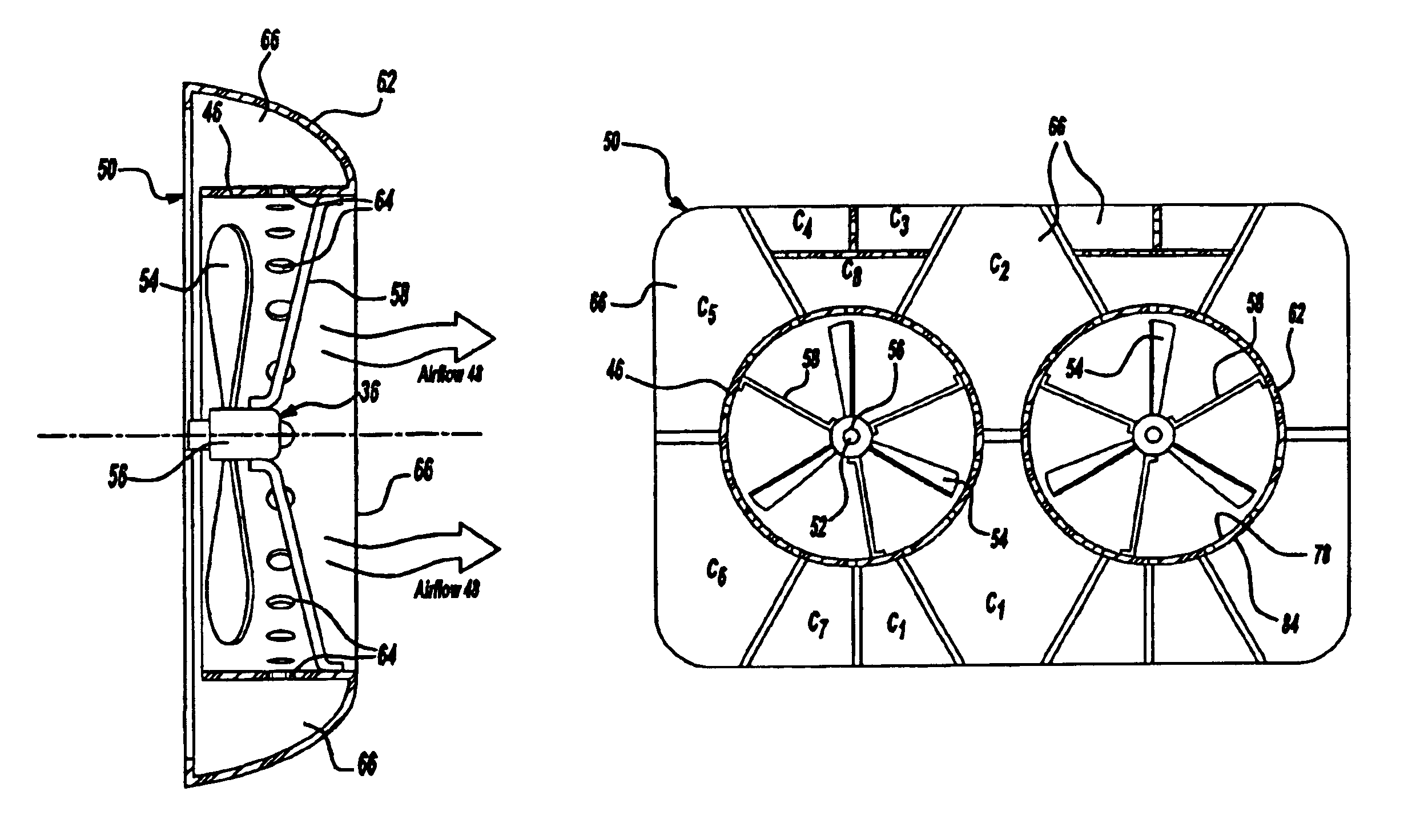
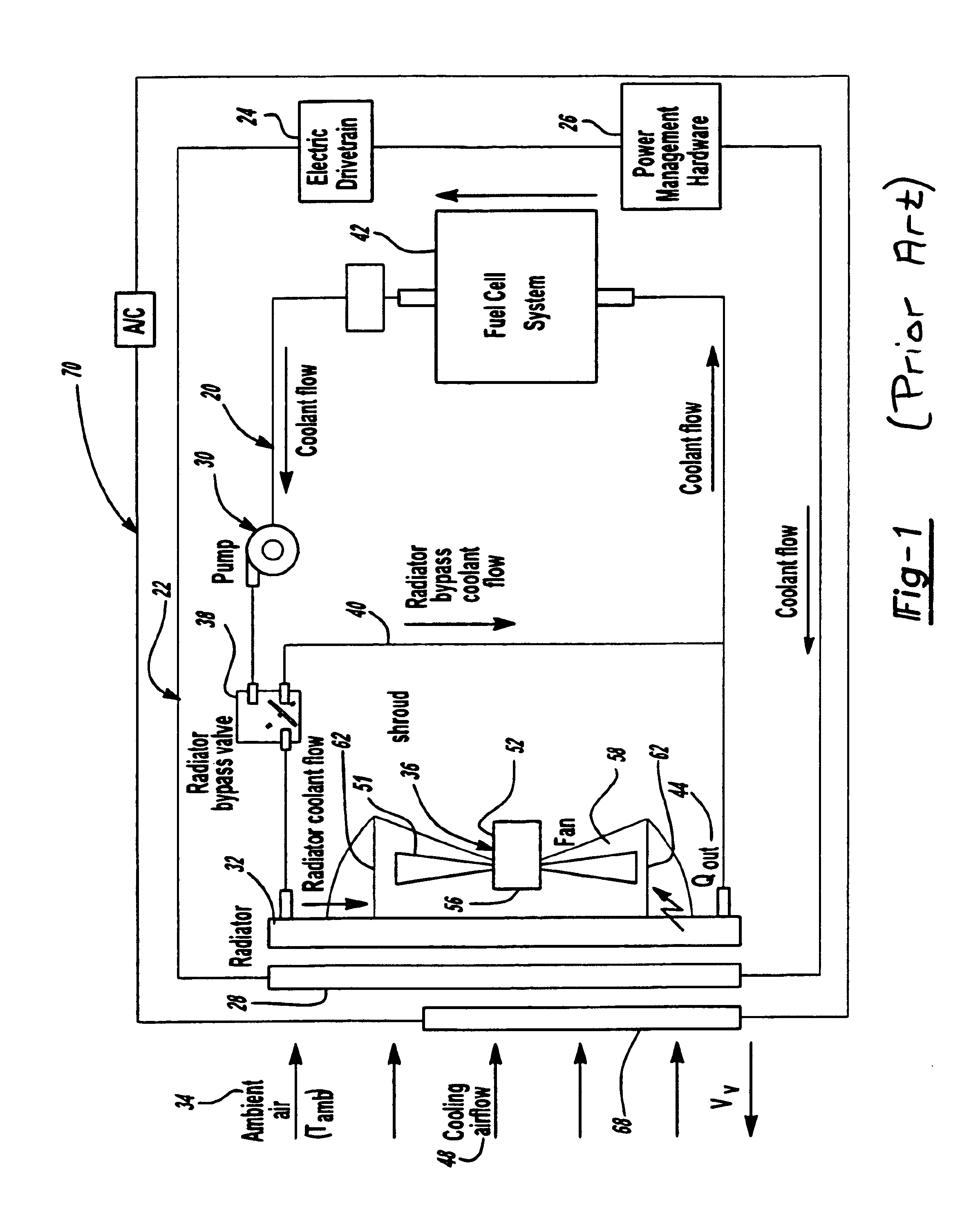
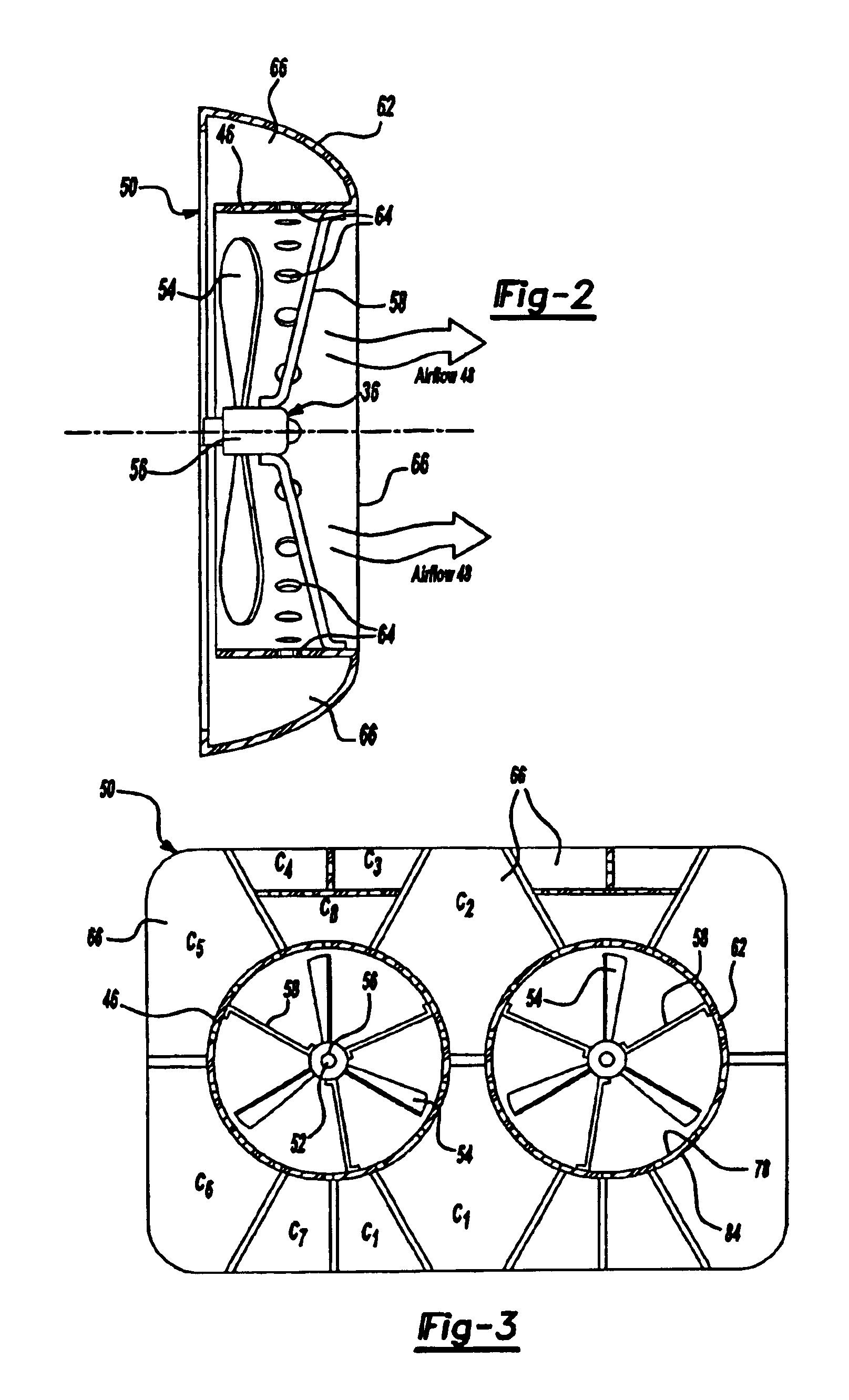
PatentInactiveUS6896095B2
Innovation
- Integration of Helmholtz resonators with a shroud and barrel system around air-moving devices, including axial flow fans, where the resonators are tuned to specific frequency bands and configured in various arrangements such as parallel or series configurations, with optional inner barrels and sound-absorbing materials like steel wool, to effectively reduce noise across a broader spectrum.

Environmental Noise Regulations for Fuel Cells
Environmental noise regulations for fuel cell systems have become increasingly stringent as governments worldwide recognize the importance of acoustic pollution control in urban environments. The regulatory landscape varies significantly across different jurisdictions, with the European Union leading through its Environmental Noise Directive 2002/49/EC, which establishes frameworks for assessing and managing environmental noise exposure. This directive specifically addresses industrial noise sources, including stationary fuel cell installations.
In the United States, the Environmental Protection Agency (EPA) provides guidance through the Noise Control Act, though enforcement primarily occurs at state and local levels. California's stringent noise ordinances, particularly in areas like the South Coast Air Quality Management District, impose limits as low as 45 dBA during nighttime hours for residential areas. These regulations directly impact fuel cell deployment strategies, especially for backup power systems in telecommunications and residential applications.
The International Electrotechnical Commission (IEC) has developed IEC 62282 series standards that include acoustic emission requirements for fuel cell systems. These standards specify measurement methodologies and acceptable noise levels for different installation categories. Commercial fuel cell systems must typically comply with noise limits ranging from 50-65 dBA depending on zoning classifications and operational hours.
Japan's regulatory framework, governed by the Noise Regulation Law, imposes particularly strict requirements for fuel cell systems in residential areas, with limits often below 40 dBA during nighttime operations. This has driven significant innovation in noise reduction technologies among Japanese manufacturers, influencing global design standards.
Emerging regulations in developing markets, particularly in China and India, are adopting similar frameworks but with varying enforcement mechanisms. China's recent environmental protection initiatives have introduced noise pollution standards that affect fuel cell vehicle operations and stationary installations, requiring compliance with GB 3096-2008 environmental quality standards.
The regulatory trend indicates increasing harmonization of international standards, with particular emphasis on measurement protocols and certification requirements. Future regulations are expected to incorporate more sophisticated metrics beyond simple dBA measurements, potentially including frequency-specific limits and psychoacoustic parameters to address community acceptance concerns.
In the United States, the Environmental Protection Agency (EPA) provides guidance through the Noise Control Act, though enforcement primarily occurs at state and local levels. California's stringent noise ordinances, particularly in areas like the South Coast Air Quality Management District, impose limits as low as 45 dBA during nighttime hours for residential areas. These regulations directly impact fuel cell deployment strategies, especially for backup power systems in telecommunications and residential applications.
The International Electrotechnical Commission (IEC) has developed IEC 62282 series standards that include acoustic emission requirements for fuel cell systems. These standards specify measurement methodologies and acceptable noise levels for different installation categories. Commercial fuel cell systems must typically comply with noise limits ranging from 50-65 dBA depending on zoning classifications and operational hours.
Japan's regulatory framework, governed by the Noise Regulation Law, imposes particularly strict requirements for fuel cell systems in residential areas, with limits often below 40 dBA during nighttime operations. This has driven significant innovation in noise reduction technologies among Japanese manufacturers, influencing global design standards.
Emerging regulations in developing markets, particularly in China and India, are adopting similar frameworks but with varying enforcement mechanisms. China's recent environmental protection initiatives have introduced noise pollution standards that affect fuel cell vehicle operations and stationary installations, requiring compliance with GB 3096-2008 environmental quality standards.
The regulatory trend indicates increasing harmonization of international standards, with particular emphasis on measurement protocols and certification requirements. Future regulations are expected to incorporate more sophisticated metrics beyond simple dBA measurements, potentially including frequency-specific limits and psychoacoustic parameters to address community acceptance concerns.
Safety Standards for Fuel Cell Noise Control
The establishment of comprehensive safety standards for fuel cell noise control has become increasingly critical as these systems expand into residential, commercial, and transportation applications. Current regulatory frameworks primarily focus on general noise pollution limits rather than addressing the specific acoustic characteristics of fuel cell systems, creating a gap in targeted safety protocols.
International standards organizations, including the International Electrotechnical Commission (IEC) and the International Organization for Standardization (ISO), have begun developing specialized guidelines for fuel cell noise emissions. These emerging standards typically establish maximum permissible sound pressure levels ranging from 45-55 dB(A) for residential applications and 60-70 dB(A) for industrial settings, measured at standardized distances from the equipment.
The European Union's Machinery Directive 2006/42/EC and the United States Environmental Protection Agency's noise control regulations provide foundational frameworks that fuel cell manufacturers must navigate. However, these broad regulations require interpretation and adaptation to address the unique operational characteristics of fuel cell systems, including variable load conditions and intermittent operation cycles.
Occupational safety standards play a crucial role in protecting workers involved in fuel cell system maintenance and operation. The Occupational Safety and Health Administration (OSHA) mandates exposure limits of 90 dB(A) for 8-hour time-weighted averages, with additional requirements for hearing protection programs when noise levels exceed 85 dB(A). These standards directly influence the design requirements for fuel cell systems in industrial environments.
Emerging safety protocols specifically address the acoustic signature of fuel cell auxiliary components, including air compressors, cooling fans, and hydrogen recirculation pumps. These standards recognize that traditional noise measurement techniques may not adequately capture the tonal characteristics and frequency content that contribute to noise-related safety concerns in fuel cell applications.
Future regulatory developments are expected to incorporate psychoacoustic parameters beyond simple decibel measurements, considering factors such as loudness, sharpness, and roughness that affect human perception and potential safety risks. This evolution reflects growing understanding of how fuel cell noise characteristics can impact operator alertness and emergency response capabilities in critical applications.
International standards organizations, including the International Electrotechnical Commission (IEC) and the International Organization for Standardization (ISO), have begun developing specialized guidelines for fuel cell noise emissions. These emerging standards typically establish maximum permissible sound pressure levels ranging from 45-55 dB(A) for residential applications and 60-70 dB(A) for industrial settings, measured at standardized distances from the equipment.
The European Union's Machinery Directive 2006/42/EC and the United States Environmental Protection Agency's noise control regulations provide foundational frameworks that fuel cell manufacturers must navigate. However, these broad regulations require interpretation and adaptation to address the unique operational characteristics of fuel cell systems, including variable load conditions and intermittent operation cycles.
Occupational safety standards play a crucial role in protecting workers involved in fuel cell system maintenance and operation. The Occupational Safety and Health Administration (OSHA) mandates exposure limits of 90 dB(A) for 8-hour time-weighted averages, with additional requirements for hearing protection programs when noise levels exceed 85 dB(A). These standards directly influence the design requirements for fuel cell systems in industrial environments.
Emerging safety protocols specifically address the acoustic signature of fuel cell auxiliary components, including air compressors, cooling fans, and hydrogen recirculation pumps. These standards recognize that traditional noise measurement techniques may not adequately capture the tonal characteristics and frequency content that contribute to noise-related safety concerns in fuel cell applications.
Future regulatory developments are expected to incorporate psychoacoustic parameters beyond simple decibel measurements, considering factors such as loudness, sharpness, and roughness that affect human perception and potential safety risks. This evolution reflects growing understanding of how fuel cell noise characteristics can impact operator alertness and emergency response capabilities in critical applications.
Unlock deeper insights with Patsnap Eureka Quick Research — get a full tech report to explore trends and direct your research. Try now!
Generate Your Research Report Instantly with AI Agent
Supercharge your innovation with Patsnap Eureka AI Agent Platform!