

How to Increase Proton Membrane Power Density
MAR 10, 20269 MIN READ
Generate Your Research Report Instantly with AI Agent
PatSnap Eureka helps you evaluate technical feasibility & market potential.
Proton Membrane Power Density Background and Targets
Proton exchange membrane fuel cells (PEMFCs) have emerged as a critical technology in the global transition toward clean energy systems, representing one of the most promising solutions for sustainable power generation across automotive, stationary, and portable applications. The fundamental principle underlying PEMFC operation involves the electrochemical conversion of hydrogen and oxygen into electricity through proton transport across a specialized polymer membrane, with water as the only byproduct.
The evolution of proton membrane technology traces back to the 1960s when General Electric first developed sulfonated polystyrene membranes for NASA's Gemini space program. This pioneering work laid the foundation for subsequent breakthroughs, including DuPont's introduction of Nafion membranes in the 1970s, which established the benchmark for proton conductivity and chemical stability that continues to influence modern membrane design.
Power density has become the paramount performance metric determining commercial viability of PEMFC systems, directly impacting system size, weight, and cost-effectiveness. Current state-of-the-art automotive fuel cell stacks achieve power densities ranging from 3.1 to 4.4 kW/L, while the industry targets ambitious goals of exceeding 9 kW/L by 2030 to compete effectively with internal combustion engines and battery electric vehicles.
The primary technical objectives driving power density enhancement encompass multiple interconnected parameters. Membrane thickness reduction remains a critical pathway, with researchers targeting ultra-thin membranes below 10 micrometers while maintaining adequate mechanical integrity and gas barrier properties. Simultaneously, improving proton conductivity through advanced ionomer chemistry and nanostructure optimization represents another fundamental approach.
Operating condition optimization presents additional opportunities for power density advancement. Elevated temperature operation, typically above 80°C, can significantly enhance reaction kinetics and reduce catalyst loading requirements, though this approach demands membranes with superior thermal stability and reduced water dependency for proton conduction.
The integration of advanced catalyst layer architectures, including three-dimensional nanostructured electrodes and novel catalyst support materials, directly correlates with achievable power density improvements. These developments must be synchronized with membrane advancements to realize optimal electrochemical performance while minimizing interfacial resistances that limit overall system efficiency.
The evolution of proton membrane technology traces back to the 1960s when General Electric first developed sulfonated polystyrene membranes for NASA's Gemini space program. This pioneering work laid the foundation for subsequent breakthroughs, including DuPont's introduction of Nafion membranes in the 1970s, which established the benchmark for proton conductivity and chemical stability that continues to influence modern membrane design.
Power density has become the paramount performance metric determining commercial viability of PEMFC systems, directly impacting system size, weight, and cost-effectiveness. Current state-of-the-art automotive fuel cell stacks achieve power densities ranging from 3.1 to 4.4 kW/L, while the industry targets ambitious goals of exceeding 9 kW/L by 2030 to compete effectively with internal combustion engines and battery electric vehicles.
The primary technical objectives driving power density enhancement encompass multiple interconnected parameters. Membrane thickness reduction remains a critical pathway, with researchers targeting ultra-thin membranes below 10 micrometers while maintaining adequate mechanical integrity and gas barrier properties. Simultaneously, improving proton conductivity through advanced ionomer chemistry and nanostructure optimization represents another fundamental approach.
Operating condition optimization presents additional opportunities for power density advancement. Elevated temperature operation, typically above 80°C, can significantly enhance reaction kinetics and reduce catalyst loading requirements, though this approach demands membranes with superior thermal stability and reduced water dependency for proton conduction.
The integration of advanced catalyst layer architectures, including three-dimensional nanostructured electrodes and novel catalyst support materials, directly correlates with achievable power density improvements. These developments must be synchronized with membrane advancements to realize optimal electrochemical performance while minimizing interfacial resistances that limit overall system efficiency.
Market Demand for High-Density Fuel Cell Applications
The global fuel cell market is experiencing unprecedented growth driven by the urgent need for clean energy solutions and decarbonization initiatives across multiple sectors. Transportation applications represent the largest demand segment, with automotive manufacturers increasingly adopting proton exchange membrane fuel cells for passenger vehicles, commercial trucks, and buses. The automotive sector's transition toward zero-emission vehicles has created substantial pressure for fuel cell systems that can deliver higher power density while maintaining compact form factors suitable for vehicle integration.
Industrial and stationary power applications constitute another significant market segment demanding high-density fuel cell solutions. Data centers, telecommunications infrastructure, and backup power systems require reliable, high-performance fuel cells that can operate continuously while occupying minimal space. The growing emphasis on grid stability and renewable energy integration has further amplified demand for fuel cell systems capable of delivering substantial power output from compact installations.
Maritime and aerospace sectors are emerging as critical markets for high-density fuel cell applications. Shipping companies face increasing regulatory pressure to reduce emissions, driving interest in fuel cell propulsion systems that can provide sufficient power for large vessels without compromising cargo capacity. Similarly, the aerospace industry seeks lightweight, high-power-density fuel cell solutions for both unmanned aerial vehicles and future commercial aircraft applications.
The portable electronics and military equipment markets demand fuel cell systems with exceptional power density characteristics. Consumer electronics manufacturers require compact fuel cells capable of extended operation times, while military applications necessitate reliable, high-output power sources for field equipment and portable systems. These applications place premium value on power density improvements that enable longer operational periods without increasing system weight or volume.
Market growth is further accelerated by government policies and incentives promoting hydrogen economy development. Regulatory frameworks worldwide are establishing performance standards that favor high-density fuel cell technologies, creating competitive advantages for manufacturers who can achieve superior power density metrics. The convergence of environmental regulations, technological advancement, and market demand has established high-density fuel cell development as a critical priority across multiple industries.
Industrial and stationary power applications constitute another significant market segment demanding high-density fuel cell solutions. Data centers, telecommunications infrastructure, and backup power systems require reliable, high-performance fuel cells that can operate continuously while occupying minimal space. The growing emphasis on grid stability and renewable energy integration has further amplified demand for fuel cell systems capable of delivering substantial power output from compact installations.
Maritime and aerospace sectors are emerging as critical markets for high-density fuel cell applications. Shipping companies face increasing regulatory pressure to reduce emissions, driving interest in fuel cell propulsion systems that can provide sufficient power for large vessels without compromising cargo capacity. Similarly, the aerospace industry seeks lightweight, high-power-density fuel cell solutions for both unmanned aerial vehicles and future commercial aircraft applications.
The portable electronics and military equipment markets demand fuel cell systems with exceptional power density characteristics. Consumer electronics manufacturers require compact fuel cells capable of extended operation times, while military applications necessitate reliable, high-output power sources for field equipment and portable systems. These applications place premium value on power density improvements that enable longer operational periods without increasing system weight or volume.
Market growth is further accelerated by government policies and incentives promoting hydrogen economy development. Regulatory frameworks worldwide are establishing performance standards that favor high-density fuel cell technologies, creating competitive advantages for manufacturers who can achieve superior power density metrics. The convergence of environmental regulations, technological advancement, and market demand has established high-density fuel cell development as a critical priority across multiple industries.
Current State and Challenges of PEM Power Density
Proton Exchange Membrane (PEM) fuel cells have achieved significant technological maturity over the past two decades, with current commercial systems demonstrating power densities ranging from 1.0 to 2.5 W/cm². Leading manufacturers such as Toyota, Hyundai, and Ballard have successfully deployed PEM systems in automotive and stationary applications, establishing baseline performance benchmarks for the industry.
The membrane electrode assembly (MEA) represents the core component determining power density performance. Current state-of-the-art MEAs utilize platinum-based catalysts with loadings typically between 0.1-0.4 mg/cm² at the cathode and 0.05-0.1 mg/cm² at the anode. Nafion-based membranes with thicknesses of 10-25 micrometers dominate commercial applications, providing adequate proton conductivity while maintaining mechanical integrity.
Mass transport limitations constitute the primary bottleneck restricting higher power density achievement. At current densities exceeding 2.0 A/cm², oxygen transport through the cathode catalyst layer becomes severely constrained, leading to concentration overpotentials that limit peak power output. The tortuous pathways within conventional catalyst layer architectures exacerbate these transport resistances.
Catalyst utilization efficiency remains suboptimal in existing designs, with only 30-50% of platinum sites actively participating in electrochemical reactions. Poor ionic conductivity within thick catalyst layers and inadequate three-phase boundary formation contribute to this inefficiency. The random distribution of catalyst particles in conventional ink-based manufacturing processes further compounds utilization challenges.
Membrane resistance presents another significant constraint, particularly under low humidity operating conditions. Current perfluorosulfonic acid membranes exhibit proton conductivity degradation at relative humidity levels below 50%, necessitating complex humidification systems that reduce overall system efficiency and increase parasitic power consumption.
Thermal management challenges intensify at higher power densities due to increased heat generation rates. Conventional cooling strategies struggle to maintain uniform temperature distribution across large active areas, creating hot spots that accelerate membrane degradation and reduce catalyst activity. The temperature gradient across the MEA can exceed 10°C in high-power operation modes.
Durability concerns become more pronounced as power density targets increase. Higher current densities accelerate platinum dissolution, carbon support corrosion, and membrane chemical degradation. Current automotive targets require 5,000-hour operational lifetimes, but achieving this durability while maintaining peak power density remains challenging under real-world operating conditions including frequent start-stop cycles and load variations.
The membrane electrode assembly (MEA) represents the core component determining power density performance. Current state-of-the-art MEAs utilize platinum-based catalysts with loadings typically between 0.1-0.4 mg/cm² at the cathode and 0.05-0.1 mg/cm² at the anode. Nafion-based membranes with thicknesses of 10-25 micrometers dominate commercial applications, providing adequate proton conductivity while maintaining mechanical integrity.
Mass transport limitations constitute the primary bottleneck restricting higher power density achievement. At current densities exceeding 2.0 A/cm², oxygen transport through the cathode catalyst layer becomes severely constrained, leading to concentration overpotentials that limit peak power output. The tortuous pathways within conventional catalyst layer architectures exacerbate these transport resistances.
Catalyst utilization efficiency remains suboptimal in existing designs, with only 30-50% of platinum sites actively participating in electrochemical reactions. Poor ionic conductivity within thick catalyst layers and inadequate three-phase boundary formation contribute to this inefficiency. The random distribution of catalyst particles in conventional ink-based manufacturing processes further compounds utilization challenges.
Membrane resistance presents another significant constraint, particularly under low humidity operating conditions. Current perfluorosulfonic acid membranes exhibit proton conductivity degradation at relative humidity levels below 50%, necessitating complex humidification systems that reduce overall system efficiency and increase parasitic power consumption.
Thermal management challenges intensify at higher power densities due to increased heat generation rates. Conventional cooling strategies struggle to maintain uniform temperature distribution across large active areas, creating hot spots that accelerate membrane degradation and reduce catalyst activity. The temperature gradient across the MEA can exceed 10°C in high-power operation modes.
Durability concerns become more pronounced as power density targets increase. Higher current densities accelerate platinum dissolution, carbon support corrosion, and membrane chemical degradation. Current automotive targets require 5,000-hour operational lifetimes, but achieving this durability while maintaining peak power density remains challenging under real-world operating conditions including frequent start-stop cycles and load variations.
Existing Solutions for PEM Power Density Enhancement
01 Membrane electrode assembly optimization for enhanced power density
Optimizing the membrane electrode assembly (MEA) structure is crucial for improving proton exchange membrane power density. This includes controlling the thickness of catalyst layers, optimizing the interface between membrane and electrodes, and improving the three-phase boundary where electrochemical reactions occur. Enhanced MEA designs can reduce internal resistance and improve mass transport, leading to higher power output per unit area.- Membrane electrode assembly optimization for enhanced power density: Optimizing the membrane electrode assembly (MEA) structure is crucial for improving proton exchange membrane power density. This includes controlling the thickness of catalyst layers, optimizing the interface between membrane and electrodes, and improving the three-phase boundary where electrochemical reactions occur. Enhanced MEA designs can reduce internal resistance and improve mass transport, leading to higher power output per unit area.
- Advanced catalyst materials and loading techniques: The development of high-performance catalyst materials and their optimal loading methods significantly impacts power density. This involves using platinum-based or alternative catalysts with improved activity and durability, controlling catalyst particle size and distribution, and developing novel support materials. Proper catalyst layer composition and structure can maximize electrochemical surface area while minimizing material costs and maintaining high power output.
- Proton exchange membrane material improvements: Enhancing the properties of proton exchange membranes directly affects power density performance. This includes developing membranes with higher proton conductivity, improved mechanical strength, better water management capabilities, and enhanced thermal stability. Advanced membrane materials can operate at higher temperatures and lower humidity conditions while maintaining excellent proton transport properties, resulting in increased power density.
- Water and thermal management systems: Effective water and thermal management is essential for maintaining optimal power density in proton exchange membrane systems. This involves designing flow field patterns, controlling humidity levels, managing water flooding and membrane dehydration, and implementing efficient cooling systems. Proper management ensures uniform current distribution and prevents performance degradation, thereby sustaining high power density during operation.
- Stack design and operating condition optimization: Optimizing fuel cell stack architecture and operating parameters plays a vital role in maximizing power density. This includes designing compact bipolar plates, optimizing cell compression, controlling operating temperature and pressure, and managing reactant flow rates. Systematic optimization of these factors can minimize voltage losses, improve current distribution uniformity, and achieve higher power density at the stack level.
02 Advanced catalyst materials and loading techniques
The development and application of advanced catalyst materials significantly impacts power density performance. This includes using platinum-based alloys, non-precious metal catalysts, and optimizing catalyst loading distribution. Improved catalyst utilization efficiency and activity can enhance electrochemical reaction rates while reducing material costs, thereby increasing overall power density of the fuel cell system.Expand Specific Solutions03 Proton exchange membrane material improvements
Enhancing the properties of proton exchange membranes through material innovation is essential for power density optimization. This involves developing membranes with higher proton conductivity, improved mechanical strength, better thermal stability, and reduced methanol crossover. Advanced membrane materials can operate at higher temperatures and lower humidity conditions while maintaining excellent proton transport properties.Expand Specific Solutions04 Water and thermal management systems
Effective water and thermal management is critical for maintaining optimal power density in proton exchange membrane systems. This includes designing efficient humidification systems, water removal mechanisms, and temperature control strategies. Proper management ensures adequate membrane hydration for proton conductivity while preventing flooding that can block reactant access to catalyst sites, thus maintaining high power output.Expand Specific Solutions05 Flow field and bipolar plate design optimization
Optimizing flow field patterns and bipolar plate configurations plays a vital role in enhancing power density. This encompasses designing channel geometries for uniform reactant distribution, minimizing pressure drops, and improving current collection efficiency. Advanced designs can reduce contact resistance, enhance mass transport, and ensure better heat dissipation, all contributing to increased power density performance.Expand Specific Solutions
Key Players in PEM Fuel Cell Industry
The proton membrane power density enhancement field represents a mature technology sector within the broader fuel cell industry, currently experiencing significant growth driven by automotive and stationary power applications. The market demonstrates substantial scale with established players spanning automotive manufacturers like Toyota Motor Corp., Hyundai Motor Co., and Kia Corp., alongside specialized fuel cell companies such as Sunrise Power Co., Ltd. Technology maturity varies significantly across participants, with leading automotive OEMs achieving commercial deployment while research institutions including University of Southern California, Huazhong University of Science & Technology, and Dalian Institute of Chemical Physics continue advancing fundamental membrane technologies. Material science companies like Nitto Denko Corp., BASF Corp., and W. L. Gore & Associates contribute critical membrane components, while semiconductor equipment providers such as ASML Netherlands BV support manufacturing infrastructure, indicating a well-established supply chain ecosystem supporting continued innovation and commercialization efforts.
Toyota Motor Corp.
Technical Solution: Toyota has developed advanced proton exchange membrane fuel cell technology with focus on increasing power density through optimized membrane electrode assembly (MEA) design. Their approach involves using ultra-thin membranes with enhanced proton conductivity and reduced resistance. The company has implemented innovative catalyst layer structures with higher platinum utilization efficiency, achieving power densities exceeding 4.2 kW/L in their latest fuel cell systems. Toyota's technology incorporates advanced water management systems and optimized flow field designs to maintain optimal membrane hydration while preventing flooding, which is crucial for maintaining high power density performance.
Strengths: Proven commercial application in automotive sector, extensive R&D experience, strong manufacturing capabilities. Weaknesses: High cost due to platinum usage, limited to automotive applications primarily.
Nitto Denko Corp.
Technical Solution: Nitto Denko specializes in developing high-performance proton exchange membranes with enhanced power density through advanced polymer chemistry. Their technology focuses on creating membranes with improved proton conductivity while maintaining mechanical strength and chemical stability. The company has developed fluorinated polymer membranes with optimized side chain structures that provide superior proton transport properties. Their membranes feature reduced thickness (10-25 μm) while maintaining durability, enabling higher current densities and improved power output. Nitto Denko's approach includes surface modification techniques and composite membrane structures that enhance performance under various operating conditions.
Strengths: Advanced polymer expertise, thin membrane technology, good chemical stability. Weaknesses: Limited market presence compared to major competitors, higher manufacturing complexity.
Core Innovations in High-Density Membrane Technologies
Proton-conducting polymer membrane coated with a catalyst layer, said polymer membrane comprising phosphonic acid polymers, membrane/electrode unit and the use thereof in fuel cells
PatentInactiveEP1664166A2
Innovation
- A proton-conducting polymer membrane coated with a catalyst layer containing phosphonic acid-containing polymers, which can be produced inexpensively and exhibits high conductivity over a wide temperature range without additional humidification, allowing for high power densities and extended service life even at low temperatures.
Solid state, thin film proton exchange membrane for fuel cells
PatentInactiveUS20070042252A1
Innovation
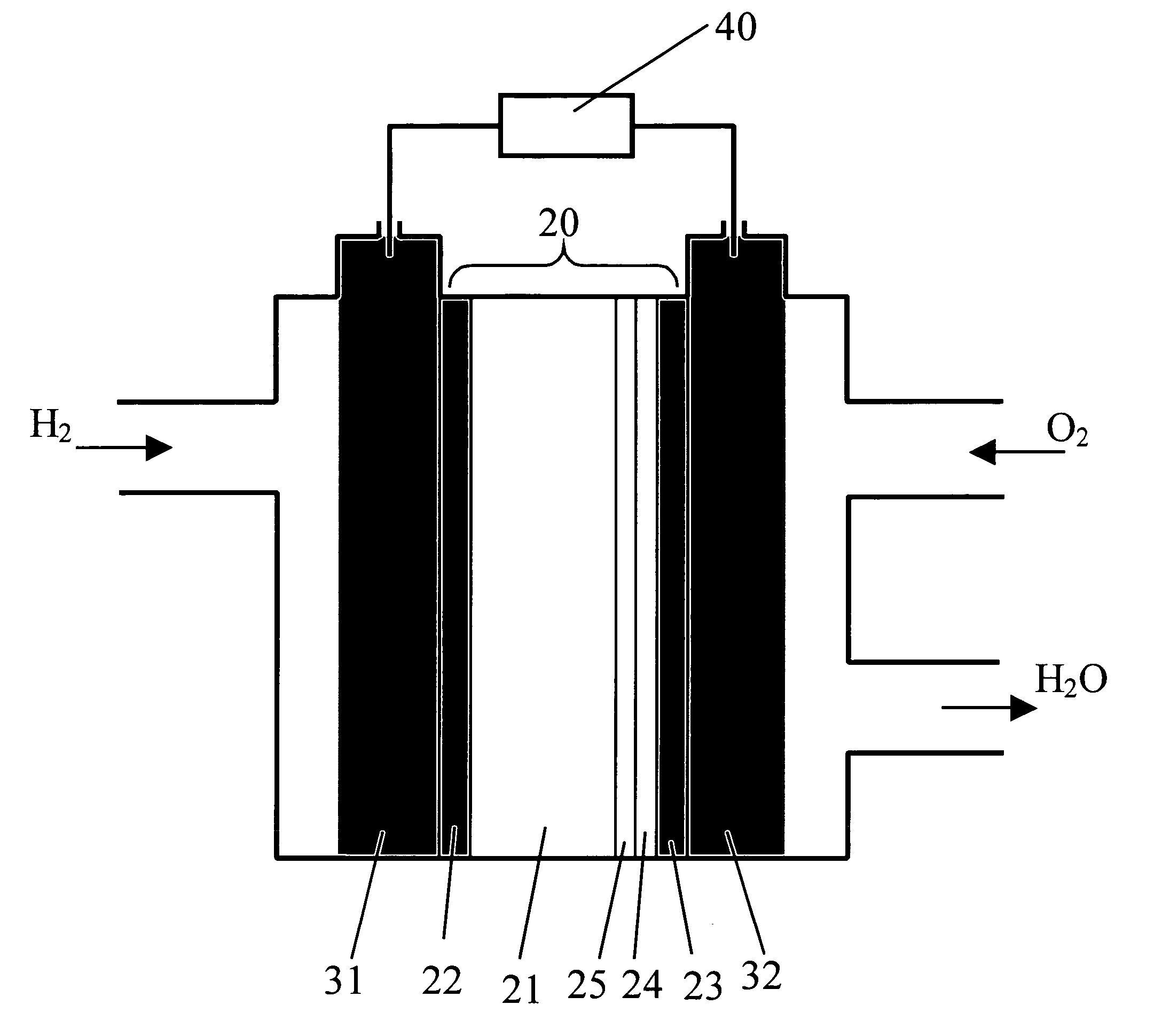
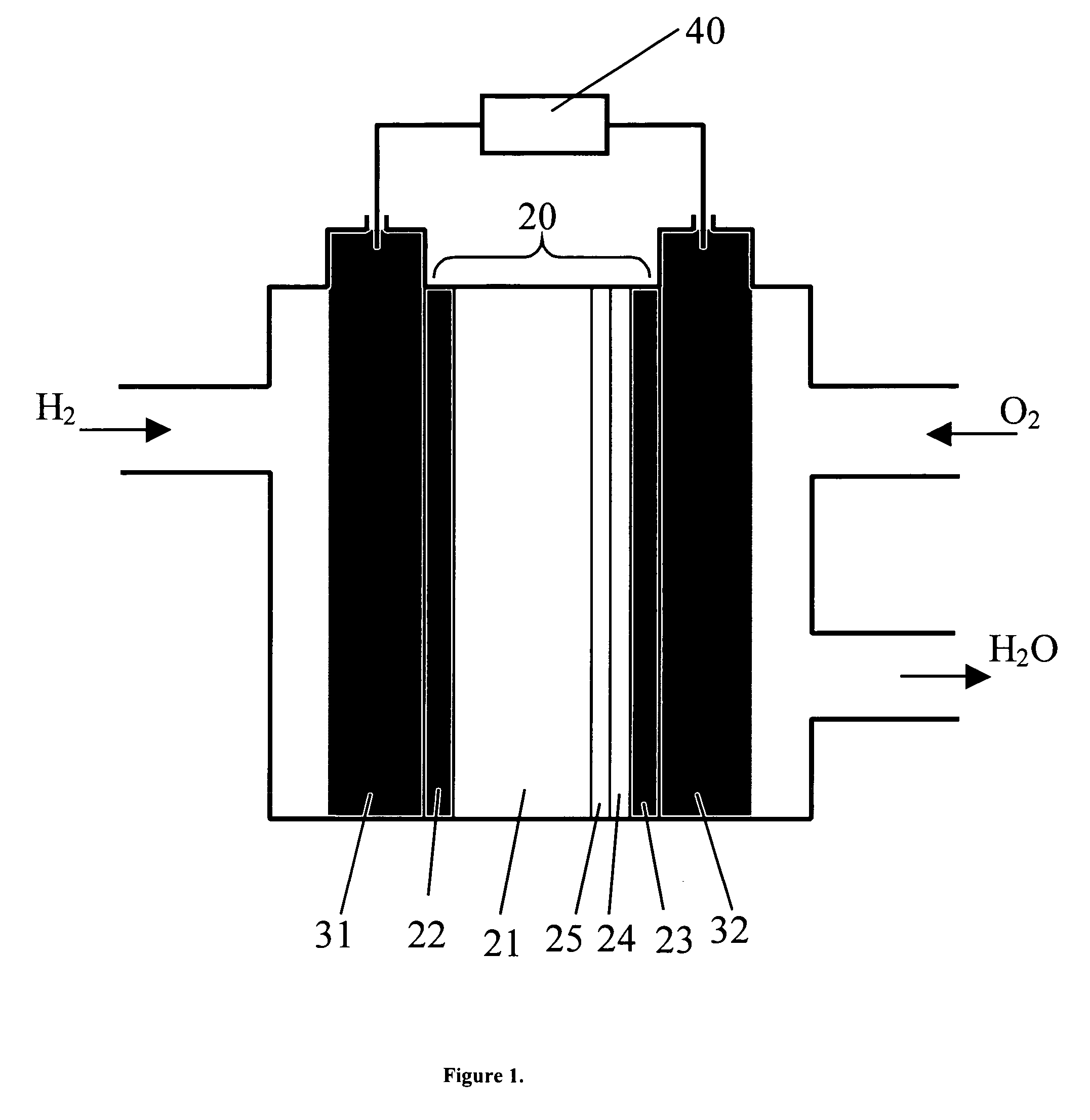
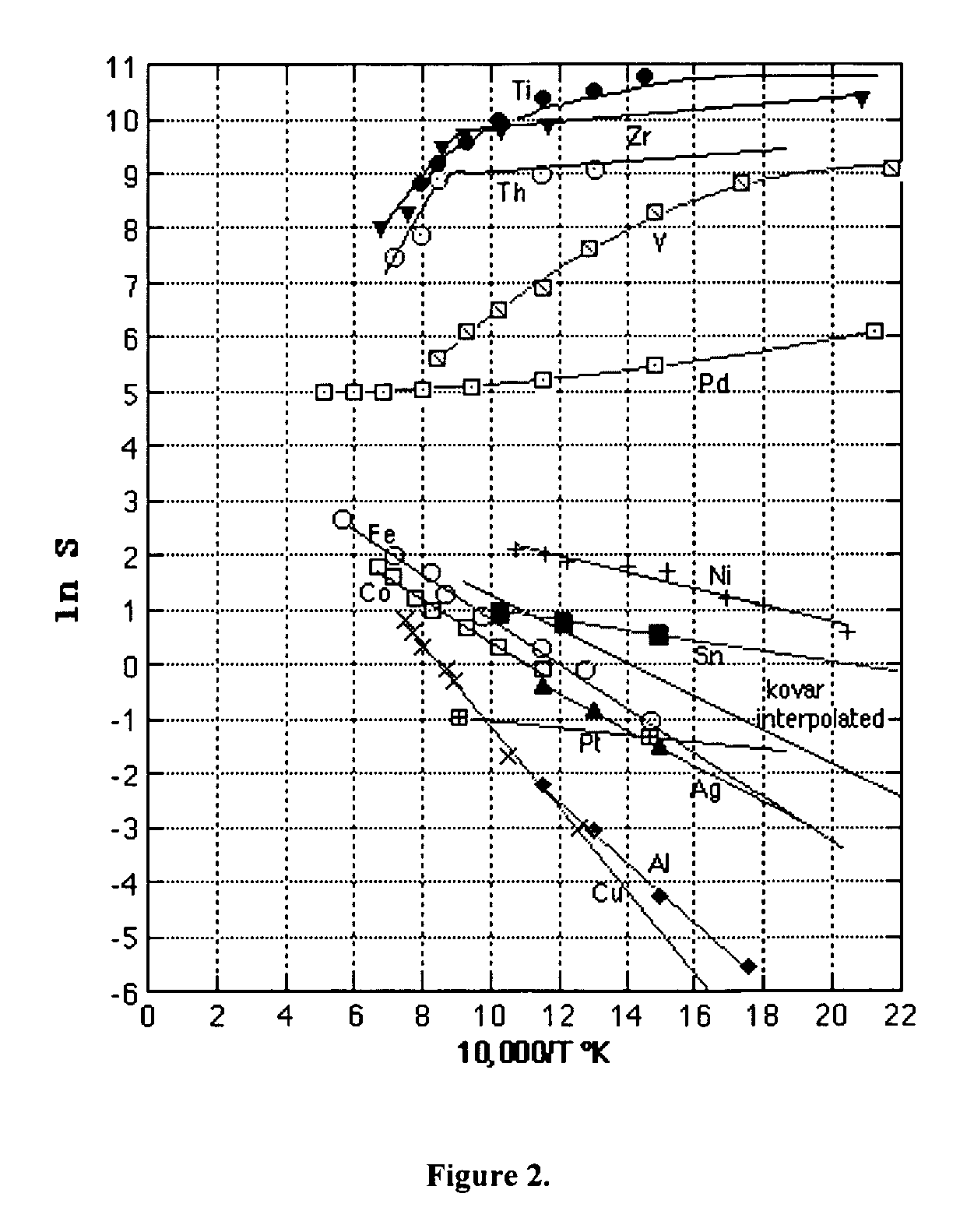
- A thin film solid state fuel cell with a multilayer structure comprising a metal oxide polymer protonic conductor and metal coatings on a high hydrogen permeability metal substrate, operating in the 300-400°C temperature range, significantly reducing protonic conductor resistance and enhancing power density and efficiency.

Material Science Advances in Membrane Development
The development of advanced membrane materials represents a critical frontier in enhancing proton exchange membrane fuel cell performance. Recent breakthroughs in polymer chemistry have enabled the synthesis of novel ionomer structures that exhibit superior proton conductivity while maintaining mechanical integrity under operational conditions. These materials incorporate innovative side-chain architectures and backbone modifications that optimize the balance between ionic transport and dimensional stability.
Nanocomposite membrane technologies have emerged as a transformative approach, integrating inorganic fillers such as silica nanoparticles, metal-organic frameworks, and functionalized carbon nanotubes into polymer matrices. These hybrid structures create enhanced proton conduction pathways while reducing methanol crossover in direct methanol fuel cells. The strategic incorporation of these nanomaterials has demonstrated power density improvements of up to 40% compared to conventional Nafion-based systems.
Advanced sulfonation techniques and alternative acidic functional groups have expanded the chemical toolkit for membrane design. Researchers have developed phosphonic acid-based polymers and imidazole-functionalized materials that operate effectively at elevated temperatures and reduced humidity conditions. These innovations address critical limitations of traditional perfluorosulfonic acid membranes, particularly in automotive applications where rapid startup and temperature cycling are essential.
Block copolymer architectures represent another significant advancement, enabling precise control over phase separation and ionic domain connectivity. These materials feature well-defined hydrophilic and hydrophobic segments that create continuous proton conduction channels while minimizing water uptake and swelling. The resulting membranes exhibit enhanced durability and consistent performance across varying operational conditions.
Surface modification techniques, including plasma treatment and chemical grafting, have enabled the development of gradient-structured membranes with optimized interfacial properties. These approaches allow for tailored surface chemistry that improves electrode-membrane compatibility and reduces interfacial resistance, directly contributing to increased power density and overall system efficiency in practical fuel cell applications.
Nanocomposite membrane technologies have emerged as a transformative approach, integrating inorganic fillers such as silica nanoparticles, metal-organic frameworks, and functionalized carbon nanotubes into polymer matrices. These hybrid structures create enhanced proton conduction pathways while reducing methanol crossover in direct methanol fuel cells. The strategic incorporation of these nanomaterials has demonstrated power density improvements of up to 40% compared to conventional Nafion-based systems.
Advanced sulfonation techniques and alternative acidic functional groups have expanded the chemical toolkit for membrane design. Researchers have developed phosphonic acid-based polymers and imidazole-functionalized materials that operate effectively at elevated temperatures and reduced humidity conditions. These innovations address critical limitations of traditional perfluorosulfonic acid membranes, particularly in automotive applications where rapid startup and temperature cycling are essential.
Block copolymer architectures represent another significant advancement, enabling precise control over phase separation and ionic domain connectivity. These materials feature well-defined hydrophilic and hydrophobic segments that create continuous proton conduction channels while minimizing water uptake and swelling. The resulting membranes exhibit enhanced durability and consistent performance across varying operational conditions.
Surface modification techniques, including plasma treatment and chemical grafting, have enabled the development of gradient-structured membranes with optimized interfacial properties. These approaches allow for tailored surface chemistry that improves electrode-membrane compatibility and reduces interfacial resistance, directly contributing to increased power density and overall system efficiency in practical fuel cell applications.
Thermal Management Strategies for High-Density PEM
Thermal management represents a critical bottleneck in achieving high power density in proton exchange membrane (PEM) fuel cells. As current densities increase to enhance power output per unit area, the associated heat generation intensifies exponentially, creating thermal gradients that can severely compromise membrane integrity and overall system performance. Effective thermal management strategies must address both heat removal efficiency and temperature uniformity across the membrane electrode assembly.
Active cooling approaches have emerged as the predominant solution for high-density PEM applications. Liquid cooling systems utilizing deionized water or specialized coolants can achieve heat removal rates exceeding 1.5 W/cm², enabling sustained operation at current densities above 3 A/cm². Advanced microchannel cooling designs with channel widths below 500 micrometers demonstrate superior heat transfer coefficients while minimizing parasitic power consumption. These systems typically integrate with bipolar plate architectures, incorporating serpentine or parallel flow patterns optimized for both reactant distribution and thermal management.
Passive thermal management strategies focus on material innovations and structural optimizations. High thermal conductivity bipolar plates utilizing expanded graphite composites or metal-based materials can reduce in-plane temperature variations by up to 40% compared to conventional graphite plates. Thermal interface materials with conductivities exceeding 10 W/mK facilitate efficient heat transfer from the membrane electrode assembly to cooling systems.
Advanced thermal management concepts include phase-change cooling systems and integrated heat recovery mechanisms. Vapor chamber technologies adapted for fuel cell applications can achieve isothermal surfaces with temperature variations below 2°C across large active areas. Heat recovery systems capture waste heat for auxiliary functions such as reactant preheating or humidity control, improving overall system efficiency while reducing thermal stress on the membrane.
Temperature control precision becomes increasingly critical as power densities exceed 2 W/cm². Localized hot spots can trigger membrane degradation mechanisms, including chemical decomposition and mechanical stress cracking. Real-time thermal monitoring systems with embedded temperature sensors enable predictive control algorithms that optimize cooling flow rates and reactant stoichiometry to maintain uniform temperature distributions during dynamic load conditions.
Active cooling approaches have emerged as the predominant solution for high-density PEM applications. Liquid cooling systems utilizing deionized water or specialized coolants can achieve heat removal rates exceeding 1.5 W/cm², enabling sustained operation at current densities above 3 A/cm². Advanced microchannel cooling designs with channel widths below 500 micrometers demonstrate superior heat transfer coefficients while minimizing parasitic power consumption. These systems typically integrate with bipolar plate architectures, incorporating serpentine or parallel flow patterns optimized for both reactant distribution and thermal management.
Passive thermal management strategies focus on material innovations and structural optimizations. High thermal conductivity bipolar plates utilizing expanded graphite composites or metal-based materials can reduce in-plane temperature variations by up to 40% compared to conventional graphite plates. Thermal interface materials with conductivities exceeding 10 W/mK facilitate efficient heat transfer from the membrane electrode assembly to cooling systems.
Advanced thermal management concepts include phase-change cooling systems and integrated heat recovery mechanisms. Vapor chamber technologies adapted for fuel cell applications can achieve isothermal surfaces with temperature variations below 2°C across large active areas. Heat recovery systems capture waste heat for auxiliary functions such as reactant preheating or humidity control, improving overall system efficiency while reducing thermal stress on the membrane.
Temperature control precision becomes increasingly critical as power densities exceed 2 W/cm². Localized hot spots can trigger membrane degradation mechanisms, including chemical decomposition and mechanical stress cracking. Real-time thermal monitoring systems with embedded temperature sensors enable predictive control algorithms that optimize cooling flow rates and reactant stoichiometry to maintain uniform temperature distributions during dynamic load conditions.
Unlock deeper insights with PatSnap Eureka Quick Research — get a full tech report to explore trends and direct your research. Try now!
Generate Your Research Report Instantly with AI Agent
Supercharge your innovation with PatSnap Eureka AI Agent Platform!