
How to Map Electron Capture Pathways in Complex Systems
MAR 7, 20269 MIN READ
Generate Your Research Report Instantly with AI Agent
Patsnap Eureka helps you evaluate technical feasibility & market potential.
Electron Capture Mapping Background and Objectives
Electron capture processes represent fundamental mechanisms governing charge transfer dynamics in complex molecular, biological, and materials systems. These processes involve the attachment of free electrons to neutral atoms, molecules, or molecular complexes, resulting in the formation of negatively charged species. Understanding and mapping these pathways has become increasingly critical as scientific research advances into more sophisticated multi-component systems where traditional analytical approaches prove insufficient.
The complexity of modern systems under investigation spans multiple domains, from atmospheric chemistry involving aerosol particles and trace gases, to biological systems encompassing protein folding and DNA damage mechanisms, to advanced materials including quantum dots and nanostructured devices. In these environments, electron capture events occur through intricate networks of competing pathways, each influenced by local chemical environments, energetic landscapes, and temporal dynamics that operate across vastly different timescales.
Historical approaches to studying electron capture have primarily focused on isolated molecular systems under controlled laboratory conditions. However, the emergence of complex systems science has revealed significant gaps in our understanding when multiple capture sites, competing reaction channels, and environmental factors interact simultaneously. Traditional spectroscopic and computational methods often fail to provide comprehensive pathway mapping in such scenarios, necessitating the development of new methodological frameworks.
The primary objective of electron capture pathway mapping is to develop comprehensive methodologies capable of identifying, characterizing, and quantifying all significant electron attachment routes within complex systems. This includes determining the relative importance of different pathways under varying conditions, understanding the kinetic and thermodynamic factors governing pathway selection, and predicting how system modifications might alter capture behavior.
Secondary objectives encompass the development of predictive models that can forecast electron capture behavior in previously unstudied systems, the establishment of standardized protocols for pathway analysis across different research domains, and the creation of computational tools that integrate experimental data with theoretical predictions. These efforts aim to transform electron capture studies from primarily empirical observations to predictive science capable of guiding rational system design and optimization strategies for applications ranging from radiation therapy to atmospheric modeling and advanced electronic device development.
The complexity of modern systems under investigation spans multiple domains, from atmospheric chemistry involving aerosol particles and trace gases, to biological systems encompassing protein folding and DNA damage mechanisms, to advanced materials including quantum dots and nanostructured devices. In these environments, electron capture events occur through intricate networks of competing pathways, each influenced by local chemical environments, energetic landscapes, and temporal dynamics that operate across vastly different timescales.
Historical approaches to studying electron capture have primarily focused on isolated molecular systems under controlled laboratory conditions. However, the emergence of complex systems science has revealed significant gaps in our understanding when multiple capture sites, competing reaction channels, and environmental factors interact simultaneously. Traditional spectroscopic and computational methods often fail to provide comprehensive pathway mapping in such scenarios, necessitating the development of new methodological frameworks.
The primary objective of electron capture pathway mapping is to develop comprehensive methodologies capable of identifying, characterizing, and quantifying all significant electron attachment routes within complex systems. This includes determining the relative importance of different pathways under varying conditions, understanding the kinetic and thermodynamic factors governing pathway selection, and predicting how system modifications might alter capture behavior.
Secondary objectives encompass the development of predictive models that can forecast electron capture behavior in previously unstudied systems, the establishment of standardized protocols for pathway analysis across different research domains, and the creation of computational tools that integrate experimental data with theoretical predictions. These efforts aim to transform electron capture studies from primarily empirical observations to predictive science capable of guiding rational system design and optimization strategies for applications ranging from radiation therapy to atmospheric modeling and advanced electronic device development.
Market Demand for Advanced Electron Capture Analysis
The market demand for advanced electron capture analysis technologies is experiencing unprecedented growth across multiple industrial sectors, driven by the increasing complexity of modern chemical and biological systems. Industries ranging from pharmaceutical development to environmental monitoring require sophisticated analytical capabilities to understand electron transfer mechanisms that govern critical processes such as drug metabolism, catalytic reactions, and atmospheric chemistry.
Pharmaceutical and biotechnology companies represent the largest market segment, where electron capture pathway mapping is essential for drug discovery and development. These organizations require precise understanding of how therapeutic compounds interact with biological systems at the molecular level, particularly in oxidative stress pathways and metabolic processes. The growing emphasis on personalized medicine and targeted therapies has intensified the need for detailed electron capture analysis to predict drug efficacy and potential side effects.
Environmental monitoring and remediation sectors constitute another significant market driver. Regulatory agencies and environmental consulting firms increasingly demand advanced analytical tools to track pollutant degradation pathways, assess atmospheric chemical processes, and evaluate the effectiveness of remediation technologies. The global focus on climate change and environmental protection has created substantial demand for technologies capable of mapping electron capture in complex atmospheric and aquatic systems.
The energy sector, particularly renewable energy and battery technology development, presents rapidly expanding market opportunities. Companies developing next-generation energy storage systems, fuel cells, and photovoltaic technologies require detailed understanding of electron capture and transfer processes to optimize device performance and longevity. The transition toward sustainable energy solutions has created urgent demand for advanced analytical capabilities in this domain.
Academic and research institutions form a stable market base, with consistent demand for cutting-edge electron capture analysis tools. Government funding for fundamental research in chemistry, physics, and materials science continues to support market growth, particularly in areas related to national security and technological competitiveness.
Market growth is further accelerated by the increasing integration of artificial intelligence and machine learning technologies, which enable more sophisticated data analysis and pattern recognition in electron capture studies. This technological convergence has created new market segments and expanded the potential applications of electron capture pathway mapping across diverse industries.
Pharmaceutical and biotechnology companies represent the largest market segment, where electron capture pathway mapping is essential for drug discovery and development. These organizations require precise understanding of how therapeutic compounds interact with biological systems at the molecular level, particularly in oxidative stress pathways and metabolic processes. The growing emphasis on personalized medicine and targeted therapies has intensified the need for detailed electron capture analysis to predict drug efficacy and potential side effects.
Environmental monitoring and remediation sectors constitute another significant market driver. Regulatory agencies and environmental consulting firms increasingly demand advanced analytical tools to track pollutant degradation pathways, assess atmospheric chemical processes, and evaluate the effectiveness of remediation technologies. The global focus on climate change and environmental protection has created substantial demand for technologies capable of mapping electron capture in complex atmospheric and aquatic systems.
The energy sector, particularly renewable energy and battery technology development, presents rapidly expanding market opportunities. Companies developing next-generation energy storage systems, fuel cells, and photovoltaic technologies require detailed understanding of electron capture and transfer processes to optimize device performance and longevity. The transition toward sustainable energy solutions has created urgent demand for advanced analytical capabilities in this domain.
Academic and research institutions form a stable market base, with consistent demand for cutting-edge electron capture analysis tools. Government funding for fundamental research in chemistry, physics, and materials science continues to support market growth, particularly in areas related to national security and technological competitiveness.
Market growth is further accelerated by the increasing integration of artificial intelligence and machine learning technologies, which enable more sophisticated data analysis and pattern recognition in electron capture studies. This technological convergence has created new market segments and expanded the potential applications of electron capture pathway mapping across diverse industries.
Current Challenges in Complex System Electron Mapping
Mapping electron capture pathways in complex systems faces significant technical barriers that limit comprehensive understanding of electron transfer mechanisms. The primary challenge stems from the inherently dynamic nature of electron capture processes, which occur on femtosecond to picosecond timescales, making real-time observation extremely difficult with current analytical techniques.
Spatial resolution represents another critical constraint in complex system electron mapping. Traditional spectroscopic methods often lack the precision required to distinguish between closely positioned electron capture sites, particularly in heterogeneous materials or biological systems where multiple pathways may operate simultaneously within nanometer-scale regions.
The complexity of multi-component systems introduces substantial interference effects that complicate pathway identification. In systems containing multiple electron acceptors, donors, and mediating species, distinguishing individual capture events from collective phenomena becomes increasingly challenging. This is particularly problematic in biological systems where protein conformational changes can alter electron transfer rates and pathways dynamically.
Current detection methodologies suffer from sensitivity limitations when attempting to monitor low-probability electron capture events or trace-level intermediates. Many existing techniques require high concentrations of target species, which may not reflect realistic operating conditions in complex systems and can introduce artifacts that mask genuine pathway behaviors.
Computational modeling faces significant obstacles in accurately predicting electron capture pathways due to the quantum mechanical nature of electron transfer processes. Current theoretical frameworks often rely on simplified models that cannot adequately account for environmental effects, thermal fluctuations, and long-range interactions that influence pathway selection in real systems.
Data interpretation complexity presents another major hurdle, as electron capture mapping generates vast amounts of multidimensional data requiring sophisticated analysis algorithms. The lack of standardized analytical protocols across different research groups further complicates comparative studies and pathway validation efforts.
Environmental factors such as temperature, pH, ionic strength, and electromagnetic fields can dramatically alter electron capture pathways, yet most current mapping techniques struggle to maintain controlled conditions while simultaneously monitoring pathway dynamics. This limitation restricts the applicability of laboratory findings to real-world complex systems operating under variable environmental conditions.
Spatial resolution represents another critical constraint in complex system electron mapping. Traditional spectroscopic methods often lack the precision required to distinguish between closely positioned electron capture sites, particularly in heterogeneous materials or biological systems where multiple pathways may operate simultaneously within nanometer-scale regions.
The complexity of multi-component systems introduces substantial interference effects that complicate pathway identification. In systems containing multiple electron acceptors, donors, and mediating species, distinguishing individual capture events from collective phenomena becomes increasingly challenging. This is particularly problematic in biological systems where protein conformational changes can alter electron transfer rates and pathways dynamically.
Current detection methodologies suffer from sensitivity limitations when attempting to monitor low-probability electron capture events or trace-level intermediates. Many existing techniques require high concentrations of target species, which may not reflect realistic operating conditions in complex systems and can introduce artifacts that mask genuine pathway behaviors.
Computational modeling faces significant obstacles in accurately predicting electron capture pathways due to the quantum mechanical nature of electron transfer processes. Current theoretical frameworks often rely on simplified models that cannot adequately account for environmental effects, thermal fluctuations, and long-range interactions that influence pathway selection in real systems.
Data interpretation complexity presents another major hurdle, as electron capture mapping generates vast amounts of multidimensional data requiring sophisticated analysis algorithms. The lack of standardized analytical protocols across different research groups further complicates comparative studies and pathway validation efforts.
Environmental factors such as temperature, pH, ionic strength, and electromagnetic fields can dramatically alter electron capture pathways, yet most current mapping techniques struggle to maintain controlled conditions while simultaneously monitoring pathway dynamics. This limitation restricts the applicability of laboratory findings to real-world complex systems operating under variable environmental conditions.
Existing Electron Pathway Mapping Solutions
01 Electron capture detection systems and detectors
Specialized detection systems designed to capture and measure electrons in various analytical applications. These systems utilize electron capture detectors with specific configurations to enhance sensitivity and accuracy in detecting electron interactions. The detectors employ various electrode arrangements and gas flow systems to optimize electron capture efficiency and signal detection.- Electron capture detection systems and detectors: Various detection systems and detectors have been developed specifically for electron capture applications. These systems utilize specialized detector configurations and materials to efficiently capture and measure electrons. The detectors can be designed with specific geometries and electrode arrangements to optimize electron capture efficiency and signal detection. Advanced detector designs incorporate features such as pulse mode operation and improved sensitivity for detecting trace amounts of substances through electron capture mechanisms.
- Mass spectrometry methods for electron capture analysis: Mass spectrometry techniques have been adapted to study and map electron capture pathways. These methods involve the use of specialized ionization techniques and mass analyzers to detect and characterize electron capture events. The approaches enable the identification and quantification of molecular species involved in electron capture processes, providing detailed information about reaction pathways and mechanisms. Advanced mass spectrometric methods can track electron transfer processes and map the resulting product distributions.
- Computational modeling and simulation of electron capture processes: Computational approaches have been developed to model and simulate electron capture pathways at the molecular level. These methods utilize quantum mechanical calculations and molecular dynamics simulations to predict electron capture cross-sections and reaction pathways. The computational tools can map potential energy surfaces and identify favorable electron capture sites on molecules. Advanced algorithms enable the prediction of electron capture rates and the visualization of electron density distributions during capture events.
- Chromatographic systems with electron capture detection: Chromatographic systems have been integrated with electron capture detection capabilities to enable pathway mapping of complex mixtures. These systems combine separation techniques with sensitive electron capture detectors to identify and quantify individual components. The integrated approach allows for the analysis of electron capture behavior across different molecular species and provides detailed mapping of capture efficiency as a function of molecular structure. Enhanced systems incorporate temperature control and carrier gas optimization to improve detection sensitivity.
- Radiation detection and imaging systems for electron capture: Specialized radiation detection and imaging systems have been developed to visualize and map electron capture events in real-time. These systems employ advanced detector arrays and imaging technologies to spatially resolve electron capture processes. The imaging approaches can provide two-dimensional or three-dimensional maps of electron capture distributions in various materials and biological systems. Modern systems incorporate digital signal processing and advanced reconstruction algorithms to enhance image quality and quantitative accuracy of electron capture measurements.
02 Mass spectrometry with electron capture dissociation
Advanced mass spectrometry techniques that utilize electron capture dissociation mechanisms to fragment and analyze molecular ions. These methods involve introducing electrons at specific energies to induce fragmentation patterns that provide structural information about analytes. The technology enables detailed mapping of molecular structures through controlled electron-molecule interactions and subsequent ion detection.Expand Specific Solutions03 Radiation detection and imaging using electron capture
Systems and methods for detecting and imaging radiation through electron capture processes. These technologies employ specialized detectors and imaging arrays that capture electrons generated by radioactive decay or other radiation sources. The captured electron signals are processed to create spatial maps and quantitative measurements of radiation distribution.Expand Specific Solutions04 Semiconductor devices with electron capture mechanisms
Semiconductor-based devices and circuits that utilize electron capture phenomena for various electronic applications. These devices incorporate specific material compositions and structural designs to control electron trapping and release mechanisms. The technology enables improved performance in memory devices, sensors, and other electronic components through engineered electron capture pathways.Expand Specific Solutions05 Chemical analysis methods using electron capture principles
Analytical techniques that leverage electron capture interactions for chemical identification and quantification. These methods involve exposing samples to electron sources and monitoring the resulting capture events to determine chemical composition and concentration. The approaches provide high sensitivity for specific compound classes and enable trace-level detection in complex matrices.Expand Specific Solutions
Key Players in Electron Spectroscopy and Analysis
The electron capture pathway mapping field represents an emerging technological domain in the early growth stage, driven by increasing demand for advanced analytical capabilities in complex systems analysis. The market demonstrates significant expansion potential as industries require more sophisticated characterization techniques for materials science, pharmaceutical development, and nanotechnology applications. Technology maturity varies considerably across market participants, with established analytical instrument manufacturers like Agilent Technologies, Shimadzu Corp., and Bruker Daltonics leading in commercialized solutions, while research institutions including University of California, Swiss Federal Institute of Technology, and Fudan University drive fundamental innovation. Companies such as Hitachi High-Tech America and Siemens AG contribute advanced hardware platforms, whereas specialized firms like Micromass UK Ltd. and DH Technologies focus on mass spectrometry applications. The competitive landscape shows a hybrid ecosystem where traditional analytical equipment providers collaborate with academic research centers to advance detection methodologies and software capabilities for complex electron capture analysis.
Agilent Technologies, Inc.
Technical Solution: Agilent has developed advanced mass spectrometry solutions for electron capture dissociation (ECD) and electron transfer dissociation (ETD) techniques. Their systems integrate high-resolution quadrupole time-of-flight (Q-TOF) mass spectrometers with specialized electron capture cells that enable precise mapping of fragmentation pathways in complex biological systems. The technology utilizes low-energy electrons to selectively cleave N-Cα bonds in peptides and proteins while preserving labile post-translational modifications, allowing researchers to determine structural information and identify modification sites with high accuracy and sensitivity.
Strengths: Market-leading mass spectrometry expertise, comprehensive analytical workflows, strong customer support network. Weaknesses: High equipment costs, requires specialized training for operation.
Micromass UK Ltd.
Technical Solution: Micromass has pioneered electron capture dissociation technology in their Q-TOF mass spectrometry platforms, specifically designed for structural characterization of complex biomolecules. Their systems feature optimized electron sources and ion optics that facilitate efficient electron capture processes, enabling detailed mapping of fragmentation patterns in proteins, peptides, and oligonucleotides. The technology incorporates advanced data processing algorithms that automatically identify and characterize electron capture pathways, providing researchers with comprehensive structural information for complex molecular systems including protein complexes and modified biomolecules.
Strengths: Innovative ion optics design, robust electron capture efficiency, established reputation in proteomics research. Weaknesses: Limited market presence compared to larger competitors, higher maintenance requirements.
Core Innovations in Electron Capture Spectroscopy
Ion fragmentation by electron capture in linear RF ion traps
PatentInactiveUS20050017167A1
Innovation
- The method involves injecting low-energy electrons into a linear RF ion trap to capture and fragment multiply charged ions, using two injection methods: through gaps between electrodes or through openings in pole rods, allowing electrons to reach the ion cloud during zero voltage periods or with deceleration, enabling efficient fragmentation and ion sequencing.
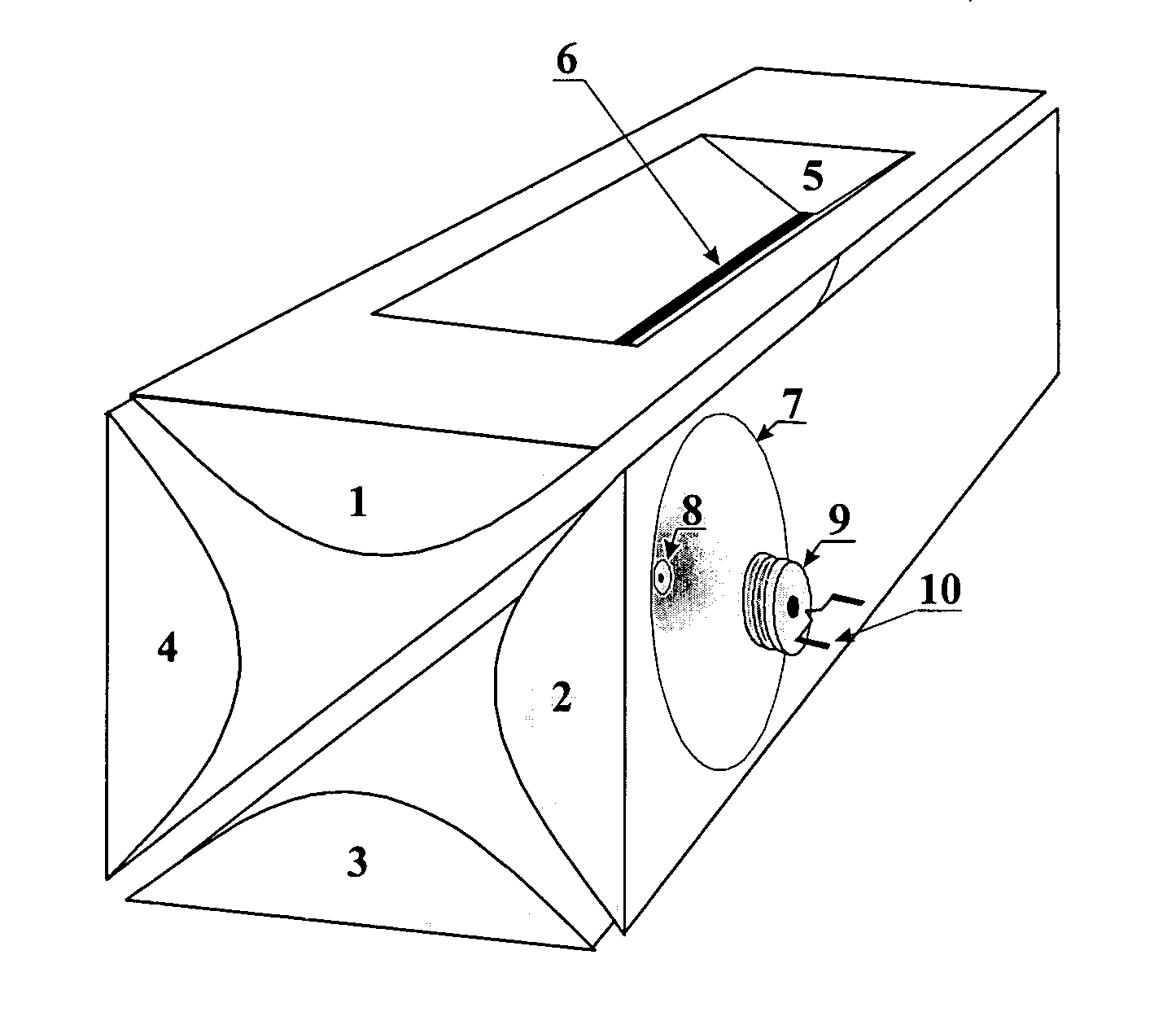
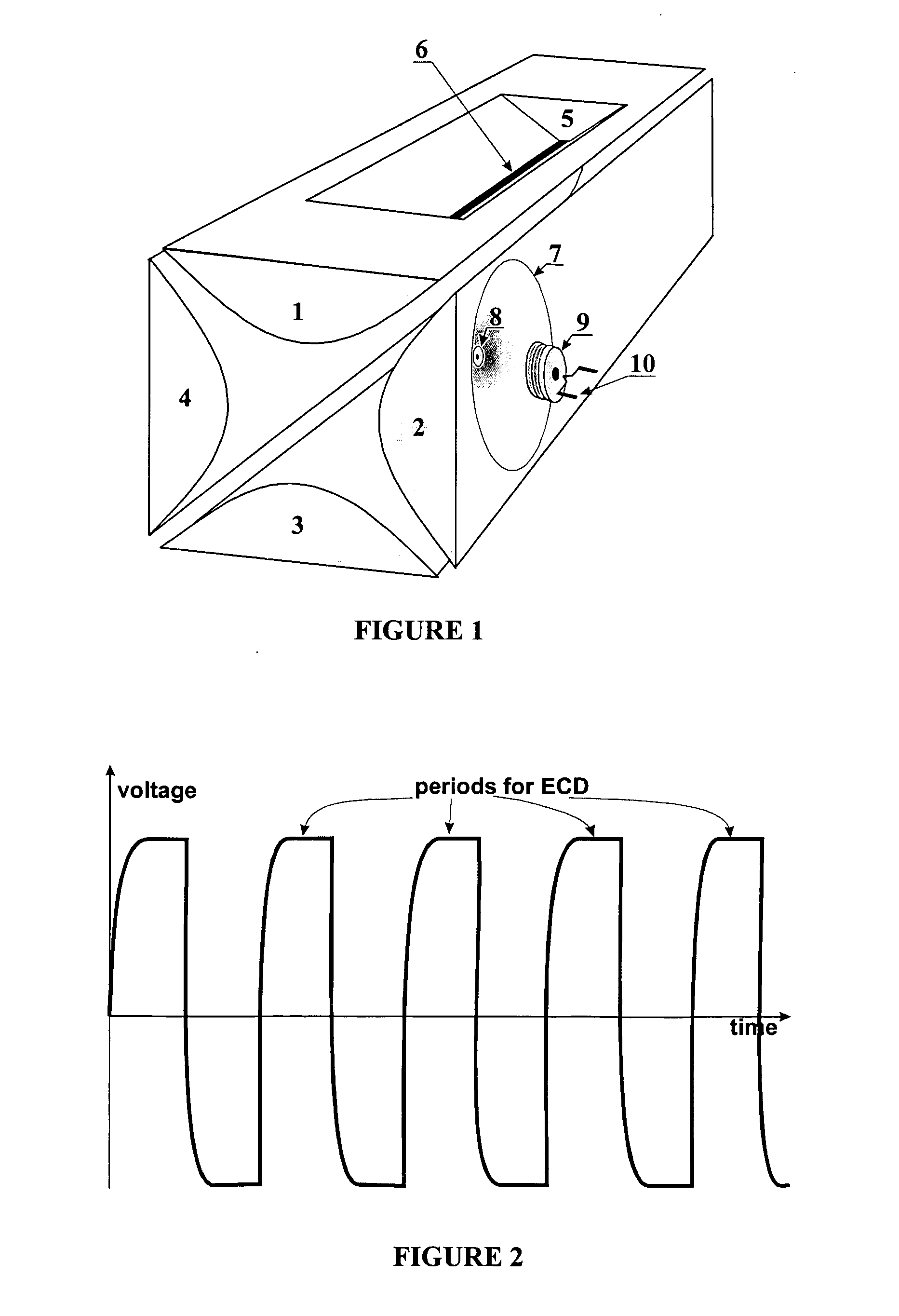
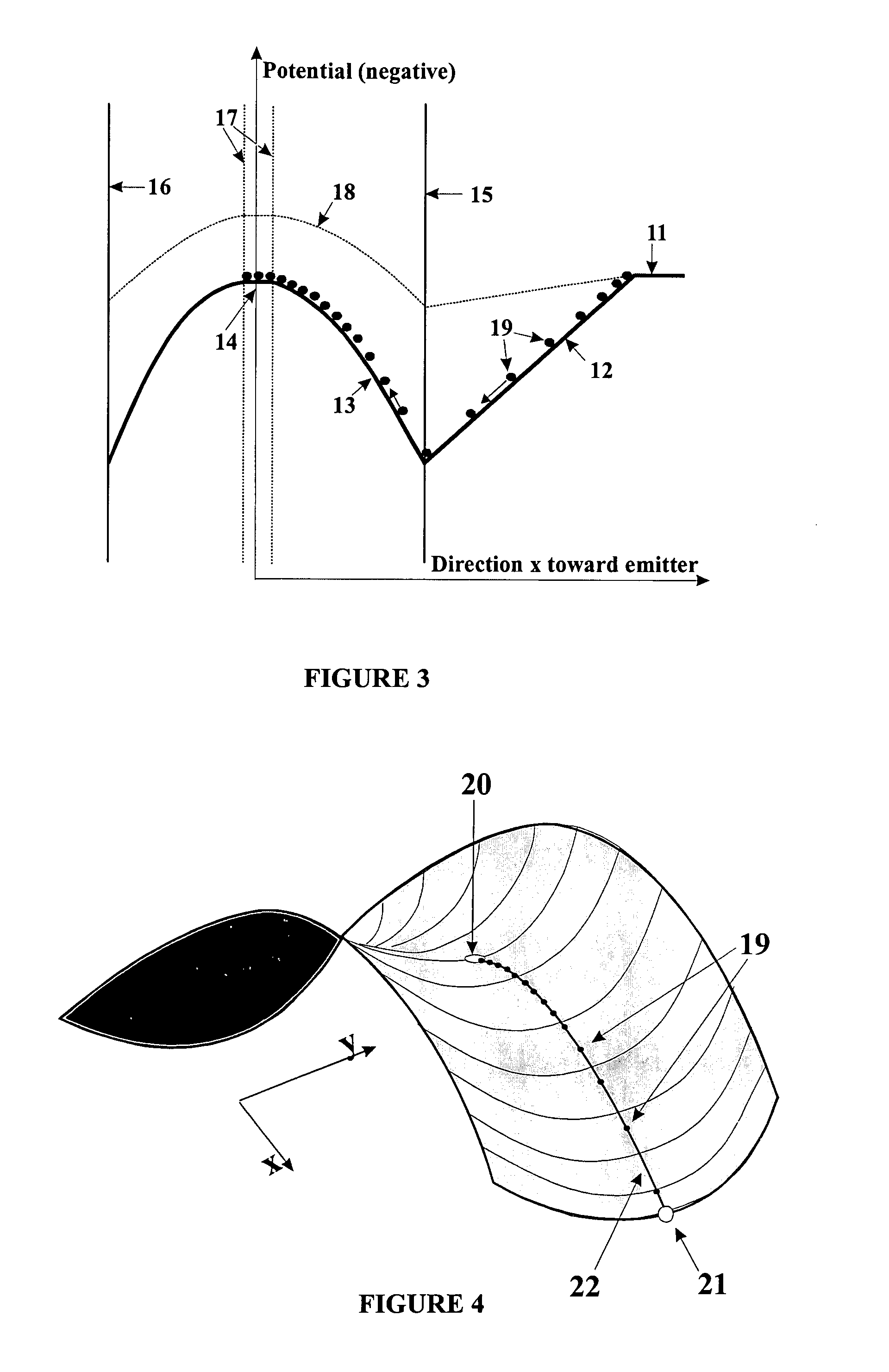

Electron capture dissociation (ECD) utilizing electron beam generated low energy electrons
PatentActiveUS20190287775A1
Innovation
- An ECD apparatus and method that generates high-density, low-energy plasma electrons using an electron beam to produce secondary electrons for interaction with analyte ions, ensuring efficient fragmentation without intersecting the ion beam, thereby achieving effective dissociation of large molecular ions.


Computational Modeling for Electron Pathway Prediction
Computational modeling has emerged as a transformative approach for predicting electron capture pathways in complex systems, offering unprecedented insights into molecular-level processes that are often difficult to observe experimentally. Advanced quantum mechanical calculations, particularly density functional theory (DFT) and time-dependent DFT methods, serve as the foundation for accurate pathway prediction by providing detailed electronic structure information and transition state energies.
Machine learning algorithms have revolutionized electron pathway prediction by enabling rapid screening of vast chemical spaces. Neural networks trained on extensive databases of electron transfer reactions can predict capture probabilities and pathway preferences with remarkable accuracy. These models incorporate molecular descriptors, electronic properties, and environmental factors to generate predictive frameworks that significantly reduce computational costs compared to traditional ab initio methods.
Molecular dynamics simulations integrated with quantum mechanical calculations provide dynamic perspectives on electron capture processes. These hybrid approaches capture the influence of thermal fluctuations, solvent effects, and conformational changes on pathway selection. Monte Carlo methods further enhance prediction capabilities by sampling multiple conformational states and calculating ensemble-averaged capture probabilities.
Multi-scale modeling frameworks bridge the gap between quantum mechanical accuracy and system-level complexity. These approaches combine atomistic simulations with continuum models to predict electron pathways in large biological systems, materials interfaces, and catalytic environments. Coarse-grained models enable investigation of electron transport across extended networks while maintaining essential chemical details.
Recent developments in graph neural networks specifically designed for molecular systems show exceptional promise for pathway prediction. These architectures naturally represent molecular connectivity and can learn complex relationships between structure and electron capture behavior. Transfer learning techniques allow models trained on simpler systems to be adapted for more complex environments.
Validation of computational predictions requires careful benchmarking against experimental data and cross-validation with multiple theoretical approaches. Uncertainty quantification methods provide confidence intervals for predictions, enabling more informed decision-making in experimental design and system optimization.
Machine learning algorithms have revolutionized electron pathway prediction by enabling rapid screening of vast chemical spaces. Neural networks trained on extensive databases of electron transfer reactions can predict capture probabilities and pathway preferences with remarkable accuracy. These models incorporate molecular descriptors, electronic properties, and environmental factors to generate predictive frameworks that significantly reduce computational costs compared to traditional ab initio methods.
Molecular dynamics simulations integrated with quantum mechanical calculations provide dynamic perspectives on electron capture processes. These hybrid approaches capture the influence of thermal fluctuations, solvent effects, and conformational changes on pathway selection. Monte Carlo methods further enhance prediction capabilities by sampling multiple conformational states and calculating ensemble-averaged capture probabilities.
Multi-scale modeling frameworks bridge the gap between quantum mechanical accuracy and system-level complexity. These approaches combine atomistic simulations with continuum models to predict electron pathways in large biological systems, materials interfaces, and catalytic environments. Coarse-grained models enable investigation of electron transport across extended networks while maintaining essential chemical details.
Recent developments in graph neural networks specifically designed for molecular systems show exceptional promise for pathway prediction. These architectures naturally represent molecular connectivity and can learn complex relationships between structure and electron capture behavior. Transfer learning techniques allow models trained on simpler systems to be adapted for more complex environments.
Validation of computational predictions requires careful benchmarking against experimental data and cross-validation with multiple theoretical approaches. Uncertainty quantification methods provide confidence intervals for predictions, enabling more informed decision-making in experimental design and system optimization.
Safety Standards for High-Energy Electron Analysis
High-energy electron analysis in complex systems requires stringent safety protocols to protect personnel, equipment, and ensure data integrity. The primary safety concern involves radiation exposure from high-energy electron beams, which can generate secondary radiation including X-rays and gamma rays. Established safety standards mandate that electron beam energies exceeding 10 keV must operate within controlled radiation areas with appropriate shielding materials such as lead or tungsten composites.
Personnel safety protocols require comprehensive training in radiation safety principles, proper use of dosimetry equipment, and emergency response procedures. All operators must maintain radiation exposure levels below internationally recognized limits, typically 20 mSv per year for occupational exposure. Regular health monitoring and badge dosimetry are mandatory components of safety compliance programs.
Equipment safety standards focus on beam containment and fail-safe mechanisms. High-voltage systems must incorporate multiple interlock systems that immediately shut down operations upon detection of anomalous conditions. Vacuum system integrity is critical, as breaches can lead to catastrophic equipment failure and potential personnel exposure. Regular calibration and maintenance schedules ensure consistent safety performance.
Environmental safety considerations include proper ventilation systems to manage ozone production and electromagnetic interference shielding to prevent disruption of sensitive electronic equipment. Waste management protocols address contaminated materials and components that may become radioactive through neutron activation processes.
Data integrity standards require electromagnetic compatibility measures to prevent signal interference that could compromise electron capture pathway mapping accuracy. Grounding systems and Faraday cage configurations are essential for maintaining measurement precision while ensuring operator safety.
Emergency response protocols must address potential scenarios including beam line failures, vacuum system breaches, and radiation exposure incidents. Regular safety audits and compliance reviews ensure adherence to evolving international standards such as those established by the International Electrotechnical Commission and national regulatory bodies.
Personnel safety protocols require comprehensive training in radiation safety principles, proper use of dosimetry equipment, and emergency response procedures. All operators must maintain radiation exposure levels below internationally recognized limits, typically 20 mSv per year for occupational exposure. Regular health monitoring and badge dosimetry are mandatory components of safety compliance programs.
Equipment safety standards focus on beam containment and fail-safe mechanisms. High-voltage systems must incorporate multiple interlock systems that immediately shut down operations upon detection of anomalous conditions. Vacuum system integrity is critical, as breaches can lead to catastrophic equipment failure and potential personnel exposure. Regular calibration and maintenance schedules ensure consistent safety performance.
Environmental safety considerations include proper ventilation systems to manage ozone production and electromagnetic interference shielding to prevent disruption of sensitive electronic equipment. Waste management protocols address contaminated materials and components that may become radioactive through neutron activation processes.
Data integrity standards require electromagnetic compatibility measures to prevent signal interference that could compromise electron capture pathway mapping accuracy. Grounding systems and Faraday cage configurations are essential for maintaining measurement precision while ensuring operator safety.
Emergency response protocols must address potential scenarios including beam line failures, vacuum system breaches, and radiation exposure incidents. Regular safety audits and compliance reviews ensure adherence to evolving international standards such as those established by the International Electrotechnical Commission and national regulatory bodies.
Unlock deeper insights with Patsnap Eureka Quick Research — get a full tech report to explore trends and direct your research. Try now!
Generate Your Research Report Instantly with AI Agent
Supercharge your innovation with Patsnap Eureka AI Agent Platform!