

How to Analyze Electron Capture Spectra with Precision
MAR 7, 20269 MIN READ
Generate Your Research Report Instantly with AI Agent
PatSnap Eureka helps you evaluate technical feasibility & market potential.
Electron Capture Spectroscopy Background and Objectives
Electron capture spectroscopy represents a sophisticated analytical technique that has evolved significantly since its theoretical foundation in the early 20th century. This method exploits the fundamental nuclear process where an inner orbital electron is captured by the nucleus, resulting in the emission of characteristic X-rays and Auger electrons. The technique emerged from pioneering work in nuclear physics and has progressively developed into a precision analytical tool capable of providing detailed information about atomic structure and chemical environments.
The historical development of electron capture spectroscopy can be traced through several key phases. Initial discoveries in radioactive decay mechanisms laid the groundwork for understanding electron capture processes. Subsequently, advances in detector technology and signal processing capabilities enabled the practical implementation of spectroscopic measurements. The integration of high-resolution detectors, sophisticated electronics, and computational analysis methods has transformed electron capture spectroscopy from a purely research-oriented technique into a viable analytical solution for various applications.
Current technological trends indicate a strong emphasis on enhancing spectral resolution, improving detection sensitivity, and developing automated analysis protocols. The evolution toward digital signal processing and machine learning-based data interpretation represents a significant paradigm shift in the field. These developments are driven by increasing demands for precise elemental analysis in materials science, environmental monitoring, and quality control applications.
The primary technical objectives center on achieving unprecedented precision in spectral analysis through advanced calibration methodologies, noise reduction techniques, and systematic error minimization. Key goals include developing robust algorithms for peak identification and quantification, establishing standardized measurement protocols, and creating comprehensive spectral databases for reference purposes.
Future aspirations encompass the development of portable instrumentation systems, real-time analysis capabilities, and enhanced sensitivity for trace element detection. The integration of artificial intelligence and automated decision-making processes represents a critical objective for advancing the field toward fully autonomous analytical systems capable of delivering consistent, high-precision results across diverse application domains.
The historical development of electron capture spectroscopy can be traced through several key phases. Initial discoveries in radioactive decay mechanisms laid the groundwork for understanding electron capture processes. Subsequently, advances in detector technology and signal processing capabilities enabled the practical implementation of spectroscopic measurements. The integration of high-resolution detectors, sophisticated electronics, and computational analysis methods has transformed electron capture spectroscopy from a purely research-oriented technique into a viable analytical solution for various applications.
Current technological trends indicate a strong emphasis on enhancing spectral resolution, improving detection sensitivity, and developing automated analysis protocols. The evolution toward digital signal processing and machine learning-based data interpretation represents a significant paradigm shift in the field. These developments are driven by increasing demands for precise elemental analysis in materials science, environmental monitoring, and quality control applications.
The primary technical objectives center on achieving unprecedented precision in spectral analysis through advanced calibration methodologies, noise reduction techniques, and systematic error minimization. Key goals include developing robust algorithms for peak identification and quantification, establishing standardized measurement protocols, and creating comprehensive spectral databases for reference purposes.
Future aspirations encompass the development of portable instrumentation systems, real-time analysis capabilities, and enhanced sensitivity for trace element detection. The integration of artificial intelligence and automated decision-making processes represents a critical objective for advancing the field toward fully autonomous analytical systems capable of delivering consistent, high-precision results across diverse application domains.
Market Demand for Precision Electron Capture Analysis
The global market for precision electron capture analysis is experiencing robust growth driven by expanding applications across multiple high-tech industries. Pharmaceutical companies increasingly rely on precise electron capture spectroscopy for drug development and quality control, particularly in analyzing complex molecular structures and detecting trace impurities that could affect therapeutic efficacy. The semiconductor industry represents another major demand driver, where electron capture analysis is essential for characterizing materials at the nanoscale and ensuring the purity of electronic components.
Environmental monitoring agencies and research institutions constitute a significant market segment, utilizing electron capture detection for identifying and quantifying environmental pollutants, pesticide residues, and atmospheric trace gases. The growing emphasis on environmental protection and regulatory compliance has intensified the need for more sensitive and accurate analytical methods, directly boosting demand for precision electron capture analysis solutions.
The nuclear industry presents substantial market opportunities, where electron capture spectroscopy plays a crucial role in nuclear waste characterization, reactor safety monitoring, and radioisotope analysis. As nuclear energy programs expand globally and decommissioning activities increase, the demand for precise analytical capabilities continues to grow steadily.
Academic and research institutions represent a stable market foundation, with universities and national laboratories requiring advanced electron capture analysis capabilities for fundamental research in physics, chemistry, and materials science. Government funding for scientific research and the establishment of new research facilities contribute to sustained market demand.
The market exhibits strong regional variations, with North America and Europe leading in terms of technological adoption and research investment. Asia-Pacific markets show rapid growth potential, driven by expanding pharmaceutical manufacturing, semiconductor production, and increasing environmental monitoring requirements. The trend toward miniaturization and automation in analytical instrumentation is creating new market opportunities for compact, user-friendly electron capture analysis systems.
Market growth is further supported by the increasing complexity of materials and compounds requiring analysis, pushing the boundaries of detection sensitivity and analytical precision requirements across industries.
Environmental monitoring agencies and research institutions constitute a significant market segment, utilizing electron capture detection for identifying and quantifying environmental pollutants, pesticide residues, and atmospheric trace gases. The growing emphasis on environmental protection and regulatory compliance has intensified the need for more sensitive and accurate analytical methods, directly boosting demand for precision electron capture analysis solutions.
The nuclear industry presents substantial market opportunities, where electron capture spectroscopy plays a crucial role in nuclear waste characterization, reactor safety monitoring, and radioisotope analysis. As nuclear energy programs expand globally and decommissioning activities increase, the demand for precise analytical capabilities continues to grow steadily.
Academic and research institutions represent a stable market foundation, with universities and national laboratories requiring advanced electron capture analysis capabilities for fundamental research in physics, chemistry, and materials science. Government funding for scientific research and the establishment of new research facilities contribute to sustained market demand.
The market exhibits strong regional variations, with North America and Europe leading in terms of technological adoption and research investment. Asia-Pacific markets show rapid growth potential, driven by expanding pharmaceutical manufacturing, semiconductor production, and increasing environmental monitoring requirements. The trend toward miniaturization and automation in analytical instrumentation is creating new market opportunities for compact, user-friendly electron capture analysis systems.
Market growth is further supported by the increasing complexity of materials and compounds requiring analysis, pushing the boundaries of detection sensitivity and analytical precision requirements across industries.
Current State and Challenges in EC Spectra Analysis
Electron capture (EC) spectroscopy has emerged as a powerful analytical technique for studying molecular structures and electronic properties. Currently, the field relies on several established methodologies including high-resolution mass spectrometry coupled with electron capture detectors, gas chromatography-electron capture detection systems, and advanced computational modeling approaches. These techniques have demonstrated significant capabilities in detecting trace-level compounds and analyzing complex molecular interactions.
The precision of EC spectra analysis faces substantial technical barriers that limit widespread adoption and accuracy. Signal-to-noise ratio optimization remains a critical challenge, particularly when analyzing samples with low electron capture cross-sections. Background interference from atmospheric components and instrumental artifacts significantly impacts spectral quality, requiring sophisticated baseline correction algorithms and environmental control systems.
Instrumentation limitations present another major obstacle in achieving high-precision analysis. Current detector technologies struggle with dynamic range constraints, leading to saturation effects in high-concentration samples and insufficient sensitivity for trace-level detection. Temperature stability and pressure fluctuations within analytical systems introduce systematic errors that compromise reproducibility across different measurement sessions.
Data processing and interpretation methodologies represent significant bottlenecks in the analytical workflow. Existing software packages often lack standardized algorithms for peak identification, integration, and quantitative analysis. The absence of comprehensive spectral databases limits compound identification capabilities, while manual interpretation introduces subjective bias and reduces throughput efficiency.
Calibration and standardization protocols across different instrumental platforms remain inconsistent, hindering inter-laboratory comparisons and method validation. Matrix effects in complex samples create unpredictable variations in electron capture efficiency, making quantitative analysis particularly challenging in environmental and biological applications.
Geographic distribution of EC spectroscopy expertise shows concentration in developed regions with advanced analytical infrastructure. North American and European research institutions lead in methodological development, while emerging markets face accessibility barriers due to high instrumental costs and limited technical support networks. This disparity affects global standardization efforts and collaborative research initiatives.
Recent technological advances in detector materials and electronic systems show promise for addressing some current limitations. However, integration of these improvements into commercial instruments requires substantial development investments and regulatory approvals, creating delays in practical implementation.
The precision of EC spectra analysis faces substantial technical barriers that limit widespread adoption and accuracy. Signal-to-noise ratio optimization remains a critical challenge, particularly when analyzing samples with low electron capture cross-sections. Background interference from atmospheric components and instrumental artifacts significantly impacts spectral quality, requiring sophisticated baseline correction algorithms and environmental control systems.
Instrumentation limitations present another major obstacle in achieving high-precision analysis. Current detector technologies struggle with dynamic range constraints, leading to saturation effects in high-concentration samples and insufficient sensitivity for trace-level detection. Temperature stability and pressure fluctuations within analytical systems introduce systematic errors that compromise reproducibility across different measurement sessions.
Data processing and interpretation methodologies represent significant bottlenecks in the analytical workflow. Existing software packages often lack standardized algorithms for peak identification, integration, and quantitative analysis. The absence of comprehensive spectral databases limits compound identification capabilities, while manual interpretation introduces subjective bias and reduces throughput efficiency.
Calibration and standardization protocols across different instrumental platforms remain inconsistent, hindering inter-laboratory comparisons and method validation. Matrix effects in complex samples create unpredictable variations in electron capture efficiency, making quantitative analysis particularly challenging in environmental and biological applications.
Geographic distribution of EC spectroscopy expertise shows concentration in developed regions with advanced analytical infrastructure. North American and European research institutions lead in methodological development, while emerging markets face accessibility barriers due to high instrumental costs and limited technical support networks. This disparity affects global standardization efforts and collaborative research initiatives.
Recent technological advances in detector materials and electronic systems show promise for addressing some current limitations. However, integration of these improvements into commercial instruments requires substantial development investments and regulatory approvals, creating delays in practical implementation.
Existing Solutions for High-Precision EC Analysis
01 Electron capture detector design and configuration
Improvements in electron capture detector design focus on optimizing the detector geometry, electrode configuration, and gas flow patterns to enhance signal precision. These designs include modifications to the detector cell structure, electrode spacing, and the use of specific materials to minimize noise and improve electron capture efficiency. Advanced configurations incorporate temperature control systems and pressure regulation mechanisms to maintain stable operating conditions.- Electron capture detector design and configuration: Improvements in electron capture detector design focus on optimizing the detector geometry, electrode configuration, and gas flow patterns to enhance signal precision. These designs include modifications to the detector cell structure, electrode spacing, and the use of specific materials to minimize noise and improve electron capture efficiency. Advanced configurations incorporate temperature control systems and pressure regulation to maintain stable operating conditions for consistent measurements.
- Signal processing and data acquisition methods: Enhanced signal processing techniques are employed to improve the precision of electron capture spectra. These methods include digital signal processing algorithms, noise reduction circuits, and advanced data acquisition systems that can accurately capture and process electron capture events. The techniques involve filtering, amplification, and conversion of analog signals to digital format with high resolution, enabling more precise spectral analysis and quantification.
- Calibration and standardization procedures: Precision in electron capture spectra is achieved through rigorous calibration and standardization protocols. These procedures involve the use of reference standards, automated calibration routines, and quality control measures to ensure measurement accuracy and reproducibility. Methods include periodic calibration with known compounds, temperature and pressure compensation, and the implementation of internal standards to correct for instrumental drift and variations.
- Radioactive source optimization and management: The precision of electron capture detection is influenced by the characteristics and management of radioactive sources used in the detector. Innovations include the selection of appropriate isotopes, optimization of source activity levels, and methods for maintaining source stability over time. Techniques also address source positioning, shielding design, and safety measures to ensure consistent electron emission while minimizing background interference and extending source lifetime.
- Environmental control and interference reduction: Achieving high precision in electron capture spectra requires careful control of environmental factors and reduction of interference sources. This includes temperature stabilization systems, humidity control, electromagnetic shielding, and vibration isolation. Methods also address the elimination of contaminants, optimization of carrier gas purity, and the use of specialized materials to minimize background signals and enhance the signal-to-noise ratio for improved spectral precision.
02 Signal processing and data acquisition methods
Enhanced signal processing techniques are employed to improve the precision of electron capture spectra. These methods include digital signal processing algorithms, noise reduction circuits, and advanced data acquisition systems that can accurately measure and record electron capture events. The techniques involve filtering, amplification, and conversion of analog signals to digital format with high resolution and minimal distortion.Expand Specific Solutions03 Calibration and standardization procedures
Precision in electron capture spectra is achieved through rigorous calibration and standardization procedures. These procedures involve the use of reference standards, automated calibration routines, and quality control protocols to ensure consistent and accurate measurements. Methods include periodic calibration checks, temperature compensation algorithms, and the use of certified reference materials to validate detector performance.Expand Specific Solutions04 Radioactive source optimization and management
The precision of electron capture detection is influenced by the characteristics and management of radioactive sources used in the detector. Optimization involves selecting appropriate isotopes with suitable energy levels and half-lives, controlling source activity, and implementing safety measures. Techniques include source positioning, shielding design, and monitoring systems to maintain optimal source performance while ensuring measurement accuracy.Expand Specific Solutions05 Environmental control and interference reduction
Achieving high precision in electron capture spectra requires careful control of environmental factors and reduction of interference sources. This includes temperature stabilization, humidity control, electromagnetic shielding, and vibration isolation. Methods also address contamination prevention, carrier gas purity management, and the elimination of background radiation effects to ensure stable and reproducible measurements.Expand Specific Solutions
Key Players in Spectroscopy and Detection Industry
The electron capture spectra analysis market represents a mature yet evolving technological landscape within the broader analytical instrumentation sector. The industry has reached a stable growth phase, with established market leaders like Thermo Fisher Scientific (through Thermo Finnigan), Agilent Technologies, Shimadzu Corp., and JEOL Ltd. dominating the precision analytical equipment space. These companies have developed sophisticated mass spectrometry and electron microscopy solutions that enable high-precision spectral analysis. The technology demonstrates high maturity levels, evidenced by the comprehensive product portfolios of major players including Hitachi Ltd., Canon Inc., and specialized firms like Gatan Inc. and LECO Corp. Academic institutions such as University of North Carolina and Fudan University continue advancing fundamental research, while companies like Bruker Daltonics and Leica Microsystems push technological boundaries. The competitive landscape shows consolidation around established players with strong R&D capabilities, indicating a market where precision, reliability, and advanced software integration are key differentiators for electron capture spectral analysis applications.
Thermo Finnigan Corp.
Technical Solution: Thermo Finnigan develops high-performance mass spectrometry systems with specialized electron capture capabilities, particularly for proteomics and metabolomics applications. Their Orbitrap technology enables precise mass measurements with sub-ppm accuracy, while their electron capture dissociation (ECD) cells provide controlled fragmentation for structural analysis. The company's Xcalibur software suite offers advanced spectral processing algorithms, including isotope pattern recognition and automated spectral interpretation tools. Their systems incorporate real-time mass calibration and advanced ion optics for optimal transmission efficiency, achieving dynamic range exceeding six orders of magnitude for quantitative analysis applications.
Strengths: Exceptional mass accuracy and comprehensive bioinformatics software capabilities. Weaknesses: High complexity and cost, requiring specialized training for optimal operation.
Agilent Technologies, Inc.
Technical Solution: Agilent develops comprehensive analytical solutions for electron capture detection, particularly in gas chromatography-mass spectrometry (GC-MS) applications. Their electron capture detectors (ECD) utilize advanced radioactive sources with optimized geometry for maximum sensitivity, achieving detection limits in the femtogram range. The company's MassHunter software provides sophisticated algorithms for spectral deconvolution and quantitative analysis, incorporating advanced baseline correction and peak integration methods. Their systems feature temperature-programmable injection ports and automated sample handling capabilities, enabling high-throughput analysis with coefficient of variation typically below 2% for replicate measurements.
Strengths: High sensitivity and robust analytical software with excellent reproducibility. Weaknesses: Limited to specific analytical chemistry applications, regulatory constraints due to radioactive sources.
Core Innovations in Electron Capture Detection Methods
Systems and methods for determining clean inelastic and capture spectra
PatentPendingGB2637461A
Innovation
- Integration of neutron detector with gamma ray detector in proximate arrangement enables simultaneous measurement of burst gate neutron count rate and capture gate neutron count rate for enhanced spectral correction.
- Implementation of normalized neutron count rate correction methodology to obtain clean inelastic and capture spectra by compensating for measurement artifacts and background interference.
- Dual-gate measurement approach combining burst gate source intensity monitoring with simultaneous inelastic and capture spectrum determination for improved spectral accuracy.
Molecular identification and electron resonance system and method
PatentInactiveUS7570055B1
Innovation
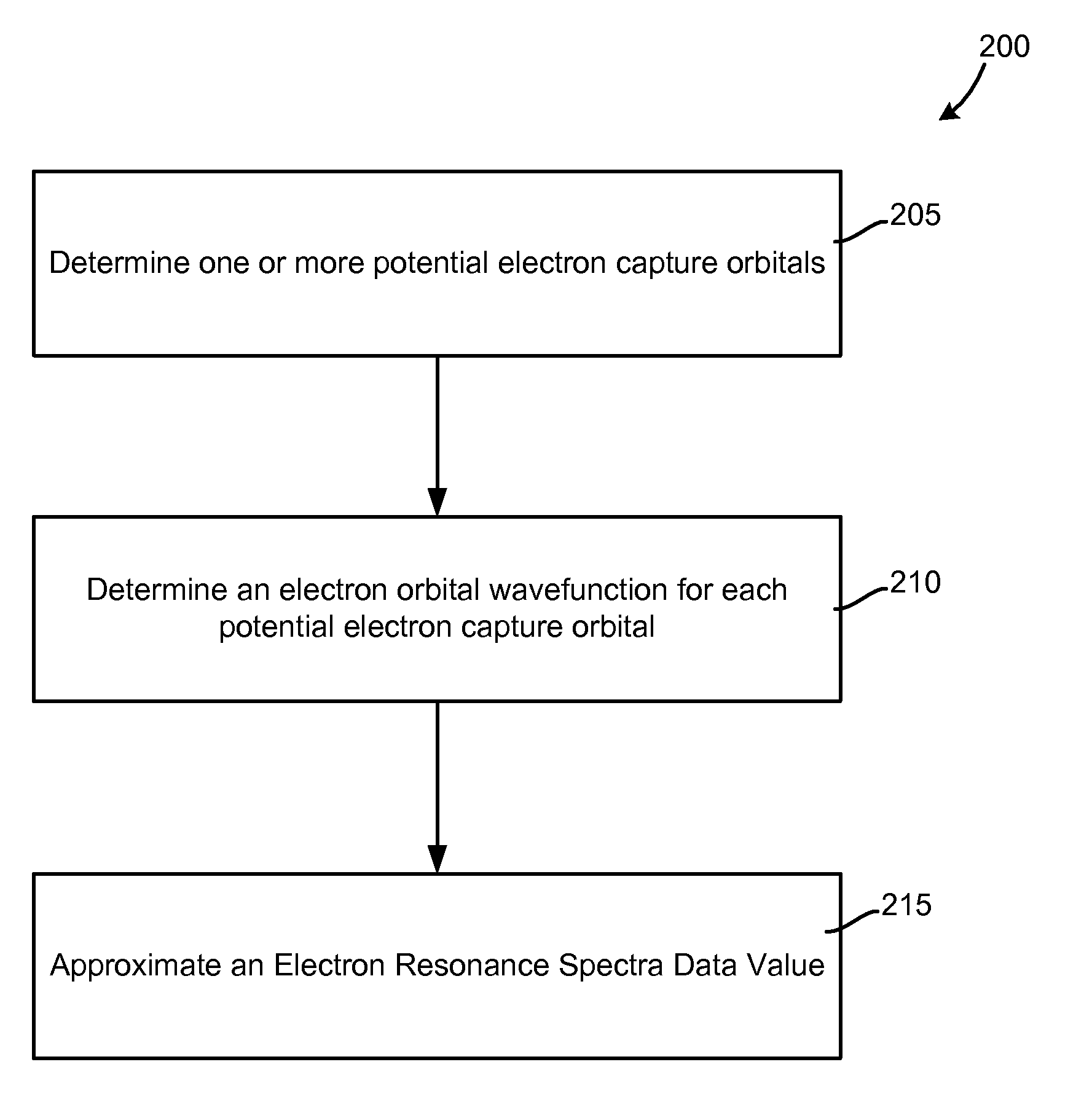
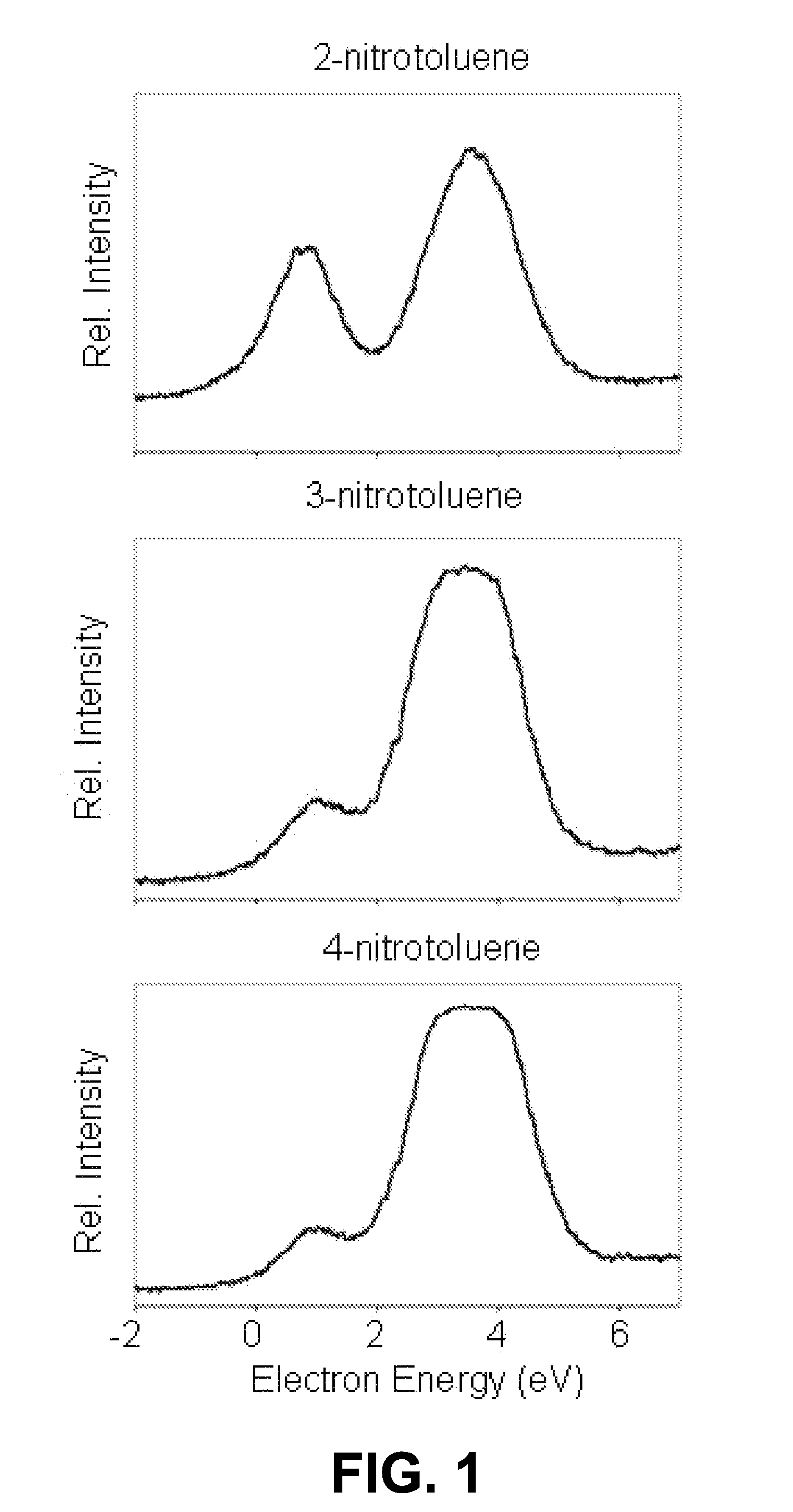
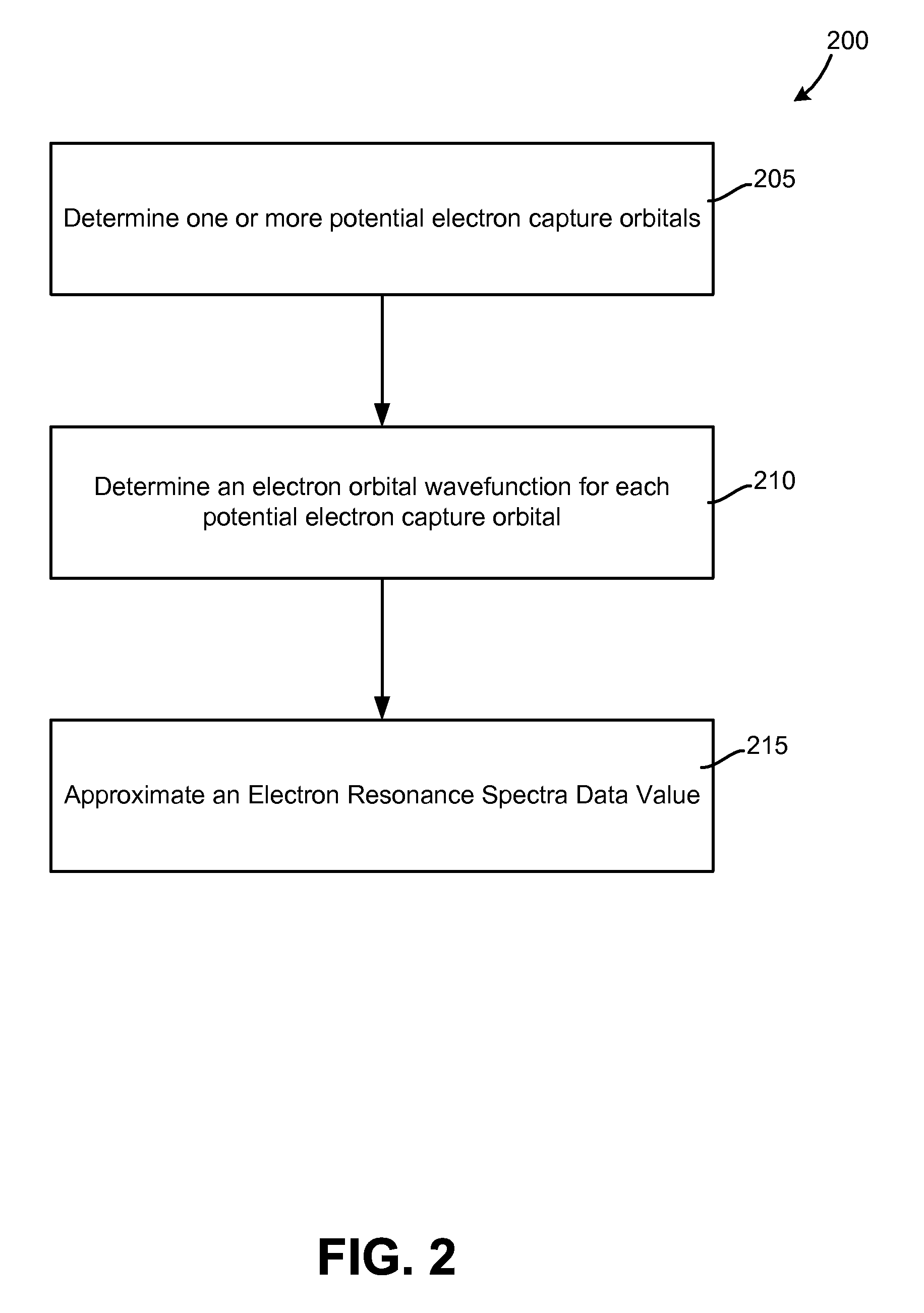
- A method is developed to calculate theoretical electron resonance spectra data for chemical constituents by identifying potential electron capture orbitals, determining their wavefunctions, and generating spectra data values, which can be used to identify unknown isomers by comparing with measured data.

Safety Standards for Radioactive Detection Equipment
The analysis of electron capture spectra requires adherence to stringent safety standards for radioactive detection equipment to ensure both accurate measurements and personnel protection. International regulatory frameworks, including those established by the International Atomic Energy Agency (IAEA) and national nuclear regulatory authorities, mandate comprehensive safety protocols for equipment handling radioactive materials and ionizing radiation.
Primary safety standards encompass radiation shielding requirements, with detection equipment necessitating appropriate lead or tungsten shielding to minimize operator exposure during spectral analysis. Equipment must incorporate fail-safe mechanisms, including automatic shutdown systems when radiation levels exceed predetermined thresholds, and emergency stop functions accessible to operators at all times.
Personnel safety protocols require mandatory radiation monitoring badges, regular dosimetry assessments, and comprehensive training programs covering proper equipment operation and emergency procedures. Detection equipment must feature visual and audible alarm systems that activate when radiation exposure approaches safety limits, ensuring immediate awareness of potentially hazardous conditions.
Equipment calibration and maintenance standards demand regular verification using certified reference sources, with documentation requirements for all calibration activities and maintenance procedures. Safety interlocks must prevent equipment operation when protective barriers are compromised or when safety systems are not functioning properly.
Environmental safety considerations include proper ventilation systems to prevent accumulation of radioactive gases, contamination monitoring protocols, and waste disposal procedures compliant with regulatory requirements. Detection equipment must incorporate contamination detection capabilities to identify surface contamination that could affect spectral analysis accuracy.
Quality assurance programs must establish routine safety audits, equipment performance verification, and documentation systems that demonstrate ongoing compliance with applicable safety standards. These comprehensive safety frameworks ensure that electron capture spectral analysis can be conducted with both precision and safety, protecting personnel while maintaining measurement integrity.
Primary safety standards encompass radiation shielding requirements, with detection equipment necessitating appropriate lead or tungsten shielding to minimize operator exposure during spectral analysis. Equipment must incorporate fail-safe mechanisms, including automatic shutdown systems when radiation levels exceed predetermined thresholds, and emergency stop functions accessible to operators at all times.
Personnel safety protocols require mandatory radiation monitoring badges, regular dosimetry assessments, and comprehensive training programs covering proper equipment operation and emergency procedures. Detection equipment must feature visual and audible alarm systems that activate when radiation exposure approaches safety limits, ensuring immediate awareness of potentially hazardous conditions.
Equipment calibration and maintenance standards demand regular verification using certified reference sources, with documentation requirements for all calibration activities and maintenance procedures. Safety interlocks must prevent equipment operation when protective barriers are compromised or when safety systems are not functioning properly.
Environmental safety considerations include proper ventilation systems to prevent accumulation of radioactive gases, contamination monitoring protocols, and waste disposal procedures compliant with regulatory requirements. Detection equipment must incorporate contamination detection capabilities to identify surface contamination that could affect spectral analysis accuracy.
Quality assurance programs must establish routine safety audits, equipment performance verification, and documentation systems that demonstrate ongoing compliance with applicable safety standards. These comprehensive safety frameworks ensure that electron capture spectral analysis can be conducted with both precision and safety, protecting personnel while maintaining measurement integrity.
Quality Assurance in Analytical Chemistry Methods
Quality assurance in analytical chemistry methods for electron capture spectra analysis represents a critical framework ensuring reliable and reproducible results in spectroscopic measurements. The implementation of robust QA protocols directly impacts the precision and accuracy of electron capture detection systems, which are fundamental to various analytical applications including environmental monitoring, pharmaceutical analysis, and materials characterization.
Standardization protocols form the cornerstone of quality assurance in electron capture spectra analysis. These protocols encompass instrument calibration procedures, reference material validation, and measurement traceability requirements. Regular calibration using certified reference standards ensures consistent detector response across different measurement sessions. The establishment of control charts and statistical process control methods enables real-time monitoring of analytical performance, allowing for immediate detection of systematic errors or instrumental drift.
Method validation procedures specifically tailored for electron capture detection require comprehensive evaluation of analytical parameters including linearity, precision, accuracy, detection limits, and selectivity. Validation studies must demonstrate method robustness under varying operational conditions such as temperature fluctuations, carrier gas flow variations, and sample matrix effects. Inter-laboratory comparison studies provide additional validation through collaborative testing programs that establish method transferability and reproducibility across different analytical facilities.
Documentation and record-keeping systems constitute essential components of quality assurance frameworks. Comprehensive documentation includes detailed standard operating procedures, maintenance logs, calibration records, and analytical result documentation with complete measurement uncertainty assessments. Electronic laboratory information management systems facilitate automated data capture, processing, and archival while maintaining data integrity and audit trails.
Proficiency testing programs specifically designed for electron capture applications provide external validation of analytical competency. These programs involve analysis of blind samples with known analyte concentrations, enabling laboratories to assess their analytical performance against established criteria. Regular participation in proficiency testing schemes ensures continuous improvement and maintains analytical credibility within the scientific community.
Standardization protocols form the cornerstone of quality assurance in electron capture spectra analysis. These protocols encompass instrument calibration procedures, reference material validation, and measurement traceability requirements. Regular calibration using certified reference standards ensures consistent detector response across different measurement sessions. The establishment of control charts and statistical process control methods enables real-time monitoring of analytical performance, allowing for immediate detection of systematic errors or instrumental drift.
Method validation procedures specifically tailored for electron capture detection require comprehensive evaluation of analytical parameters including linearity, precision, accuracy, detection limits, and selectivity. Validation studies must demonstrate method robustness under varying operational conditions such as temperature fluctuations, carrier gas flow variations, and sample matrix effects. Inter-laboratory comparison studies provide additional validation through collaborative testing programs that establish method transferability and reproducibility across different analytical facilities.
Documentation and record-keeping systems constitute essential components of quality assurance frameworks. Comprehensive documentation includes detailed standard operating procedures, maintenance logs, calibration records, and analytical result documentation with complete measurement uncertainty assessments. Electronic laboratory information management systems facilitate automated data capture, processing, and archival while maintaining data integrity and audit trails.
Proficiency testing programs specifically designed for electron capture applications provide external validation of analytical competency. These programs involve analysis of blind samples with known analyte concentrations, enabling laboratories to assess their analytical performance against established criteria. Regular participation in proficiency testing schemes ensures continuous improvement and maintains analytical credibility within the scientific community.
Unlock deeper insights with PatSnap Eureka Quick Research — get a full tech report to explore trends and direct your research. Try now!
Generate Your Research Report Instantly with AI Agent
Supercharge your innovation with PatSnap Eureka AI Agent Platform!