

How to Model Electron Capture in High-Vacuum Environments
MAR 7, 20269 MIN READ
Generate Your Research Report Instantly with AI Agent
PatSnap Eureka helps you evaluate technical feasibility & market potential.
Electron Capture Modeling Background and Objectives
Electron capture phenomena in high-vacuum environments represent a critical area of research with profound implications for advanced technological applications. This field encompasses the study of how electrons are captured by atoms, ions, or surfaces under extremely low-pressure conditions, typically below 10^-6 Torr. The significance of understanding these processes has grown exponentially with the advancement of space technology, semiconductor manufacturing, particle accelerators, and quantum computing systems.
The historical development of electron capture modeling traces back to early quantum mechanical theories in the 1920s and 1930s, when scientists first began to understand the fundamental interactions between electrons and matter. The field gained substantial momentum during the space race era, as researchers recognized the critical importance of understanding electron behavior in the vacuum of space. Subsequent decades witnessed the evolution from classical collision theory to sophisticated quantum mechanical models incorporating relativistic effects and many-body interactions.
Current technological trends driving research in this domain include the miniaturization of electronic devices, the development of ultra-high vacuum systems for scientific instrumentation, and the emergence of quantum technologies requiring precise control over electron dynamics. The increasing demand for more accurate predictive models stems from the need to optimize performance in applications ranging from electron beam lithography to ion propulsion systems.
The primary technical objectives of electron capture modeling in high-vacuum environments focus on developing comprehensive theoretical frameworks that can accurately predict capture cross-sections, energy transfer mechanisms, and temporal dynamics of the capture process. These models must account for the unique characteristics of vacuum environments, including the absence of collisional processes that typically dominate at higher pressures, the prevalence of surface interactions, and the extended mean free paths of particles.
A fundamental challenge lies in bridging the gap between quantum mechanical descriptions of individual capture events and macroscopic observables relevant to engineering applications. This requires sophisticated computational approaches that can handle multi-scale phenomena, from femtosecond-scale electronic transitions to long-term system evolution. The integration of experimental validation with theoretical predictions remains a cornerstone objective, necessitating the development of models that can be directly compared with measurable quantities in controlled laboratory environments.
The strategic importance of advancing electron capture modeling extends beyond fundamental scientific understanding to practical applications in emerging technologies. As industries increasingly rely on vacuum-based processes and space-based systems, the ability to predict and control electron capture phenomena becomes essential for optimizing device performance, ensuring mission reliability, and enabling next-generation technological capabilities.
The historical development of electron capture modeling traces back to early quantum mechanical theories in the 1920s and 1930s, when scientists first began to understand the fundamental interactions between electrons and matter. The field gained substantial momentum during the space race era, as researchers recognized the critical importance of understanding electron behavior in the vacuum of space. Subsequent decades witnessed the evolution from classical collision theory to sophisticated quantum mechanical models incorporating relativistic effects and many-body interactions.
Current technological trends driving research in this domain include the miniaturization of electronic devices, the development of ultra-high vacuum systems for scientific instrumentation, and the emergence of quantum technologies requiring precise control over electron dynamics. The increasing demand for more accurate predictive models stems from the need to optimize performance in applications ranging from electron beam lithography to ion propulsion systems.
The primary technical objectives of electron capture modeling in high-vacuum environments focus on developing comprehensive theoretical frameworks that can accurately predict capture cross-sections, energy transfer mechanisms, and temporal dynamics of the capture process. These models must account for the unique characteristics of vacuum environments, including the absence of collisional processes that typically dominate at higher pressures, the prevalence of surface interactions, and the extended mean free paths of particles.
A fundamental challenge lies in bridging the gap between quantum mechanical descriptions of individual capture events and macroscopic observables relevant to engineering applications. This requires sophisticated computational approaches that can handle multi-scale phenomena, from femtosecond-scale electronic transitions to long-term system evolution. The integration of experimental validation with theoretical predictions remains a cornerstone objective, necessitating the development of models that can be directly compared with measurable quantities in controlled laboratory environments.
The strategic importance of advancing electron capture modeling extends beyond fundamental scientific understanding to practical applications in emerging technologies. As industries increasingly rely on vacuum-based processes and space-based systems, the ability to predict and control electron capture phenomena becomes essential for optimizing device performance, ensuring mission reliability, and enabling next-generation technological capabilities.
Market Demand for High-Vacuum Electron Capture Applications
The semiconductor manufacturing industry represents the largest market segment for high-vacuum electron capture applications, driven by the continuous miniaturization of electronic devices and the demand for higher precision in fabrication processes. Advanced lithography systems, particularly extreme ultraviolet (EUV) lithography, require sophisticated electron capture modeling to optimize exposure processes and minimize defects. The transition to smaller node technologies below 7nm has intensified the need for precise electron behavior prediction in ultra-high vacuum environments.
Space technology applications constitute another significant market driver, encompassing satellite systems, space-based telescopes, and interplanetary missions. The harsh vacuum conditions of space necessitate accurate electron capture modeling for the design of reliable electronic systems and scientific instruments. Growing commercial space activities and increased government investments in space exploration programs have expanded market opportunities in this sector.
Scientific instrumentation markets, including electron microscopy, mass spectrometry, and particle accelerators, demonstrate sustained demand for advanced electron capture modeling capabilities. Research institutions and analytical laboratories require increasingly sophisticated vacuum systems to achieve higher resolution and sensitivity in their measurements. The expansion of materials science research and nanotechnology development has further amplified these requirements.
The emerging quantum computing sector presents substantial growth potential for electron capture modeling applications. Quantum systems operate under extreme vacuum conditions to maintain coherence, requiring precise understanding of electron interactions to minimize decoherence effects. As quantum computing transitions from research to commercial applications, the demand for specialized vacuum modeling tools is expected to accelerate significantly.
Industrial vacuum processing applications, including thin-film deposition, surface treatment, and vacuum metallurgy, represent established markets with steady growth trajectories. Manufacturing sectors such as automotive, aerospace, and medical devices increasingly rely on vacuum-based processes that benefit from improved electron capture modeling for process optimization and quality control.
The convergence of artificial intelligence and machine learning with vacuum technology has created new market opportunities for intelligent electron capture modeling systems. These advanced solutions offer predictive capabilities and automated optimization, appealing to industries seeking to enhance operational efficiency and reduce development cycles.
Space technology applications constitute another significant market driver, encompassing satellite systems, space-based telescopes, and interplanetary missions. The harsh vacuum conditions of space necessitate accurate electron capture modeling for the design of reliable electronic systems and scientific instruments. Growing commercial space activities and increased government investments in space exploration programs have expanded market opportunities in this sector.
Scientific instrumentation markets, including electron microscopy, mass spectrometry, and particle accelerators, demonstrate sustained demand for advanced electron capture modeling capabilities. Research institutions and analytical laboratories require increasingly sophisticated vacuum systems to achieve higher resolution and sensitivity in their measurements. The expansion of materials science research and nanotechnology development has further amplified these requirements.
The emerging quantum computing sector presents substantial growth potential for electron capture modeling applications. Quantum systems operate under extreme vacuum conditions to maintain coherence, requiring precise understanding of electron interactions to minimize decoherence effects. As quantum computing transitions from research to commercial applications, the demand for specialized vacuum modeling tools is expected to accelerate significantly.
Industrial vacuum processing applications, including thin-film deposition, surface treatment, and vacuum metallurgy, represent established markets with steady growth trajectories. Manufacturing sectors such as automotive, aerospace, and medical devices increasingly rely on vacuum-based processes that benefit from improved electron capture modeling for process optimization and quality control.
The convergence of artificial intelligence and machine learning with vacuum technology has created new market opportunities for intelligent electron capture modeling systems. These advanced solutions offer predictive capabilities and automated optimization, appealing to industries seeking to enhance operational efficiency and reduce development cycles.
Current State and Challenges in Vacuum Electron Modeling
The current landscape of vacuum electron modeling presents a complex array of theoretical frameworks and computational approaches, each with distinct capabilities and limitations. Monte Carlo simulations have emerged as the predominant methodology for tracking electron trajectories in high-vacuum environments, offering statistical accuracy in predicting electron behavior under various field conditions. However, these simulations often struggle with computational efficiency when modeling large-scale systems or long-time dynamics.
Particle-in-cell (PIC) methods represent another cornerstone approach, particularly effective for self-consistent field calculations where space charge effects significantly influence electron motion. Despite their widespread adoption in plasma physics applications, PIC methods face substantial challenges when applied to electron capture phenomena due to the need for extremely fine temporal and spatial resolution near capture sites.
Molecular dynamics simulations have shown promise in modeling electron-surface interactions at the atomic level, providing detailed insights into capture mechanisms. Nevertheless, the computational cost of these methods severely limits their application to systems containing more than a few thousand particles, making them impractical for most industrial vacuum applications.
The integration of quantum mechanical effects into classical electron transport models remains one of the most significant technical hurdles. Current hybrid approaches attempt to combine quantum tunneling calculations with classical trajectory methods, but these solutions often lack the seamless integration necessary for accurate capture probability predictions.
Boundary condition specification presents another critical challenge, particularly in complex geometries where multiple surfaces with varying material properties interact. Existing models frequently employ simplified surface interaction models that fail to capture the full complexity of electron capture processes, especially in the presence of surface contamination or temperature variations.
Validation of electron capture models against experimental data reveals substantial discrepancies, particularly in low-energy regimes where quantum effects become prominent. The scarcity of high-quality experimental datasets for model validation further compounds these difficulties, creating uncertainty in model reliability for practical applications.
Computational scalability issues persist across all current modeling approaches, with most methods exhibiting poor performance scaling when applied to realistic vacuum system geometries. This limitation significantly restricts the practical utility of existing models for industrial vacuum system design and optimization.
Particle-in-cell (PIC) methods represent another cornerstone approach, particularly effective for self-consistent field calculations where space charge effects significantly influence electron motion. Despite their widespread adoption in plasma physics applications, PIC methods face substantial challenges when applied to electron capture phenomena due to the need for extremely fine temporal and spatial resolution near capture sites.
Molecular dynamics simulations have shown promise in modeling electron-surface interactions at the atomic level, providing detailed insights into capture mechanisms. Nevertheless, the computational cost of these methods severely limits their application to systems containing more than a few thousand particles, making them impractical for most industrial vacuum applications.
The integration of quantum mechanical effects into classical electron transport models remains one of the most significant technical hurdles. Current hybrid approaches attempt to combine quantum tunneling calculations with classical trajectory methods, but these solutions often lack the seamless integration necessary for accurate capture probability predictions.
Boundary condition specification presents another critical challenge, particularly in complex geometries where multiple surfaces with varying material properties interact. Existing models frequently employ simplified surface interaction models that fail to capture the full complexity of electron capture processes, especially in the presence of surface contamination or temperature variations.
Validation of electron capture models against experimental data reveals substantial discrepancies, particularly in low-energy regimes where quantum effects become prominent. The scarcity of high-quality experimental datasets for model validation further compounds these difficulties, creating uncertainty in model reliability for practical applications.
Computational scalability issues persist across all current modeling approaches, with most methods exhibiting poor performance scaling when applied to realistic vacuum system geometries. This limitation significantly restricts the practical utility of existing models for industrial vacuum system design and optimization.
Existing Solutions for High-Vacuum Electron Capture Modeling
01 Electron capture detectors for gas chromatography
Electron capture detectors (ECD) are highly sensitive devices used in gas chromatography for detecting trace amounts of compounds, particularly halogenated substances. These detectors utilize a radioactive source to generate electrons, which are captured by electronegative compounds in the sample. The reduction in current caused by electron capture is measured to quantify the analyte concentration. Various improvements have been made to enhance detector sensitivity, stability, and response characteristics.- Electron capture detectors for gas chromatography: Electron capture detectors (ECD) are highly sensitive devices used in gas chromatography for detecting trace amounts of compounds, particularly halogenated substances. These detectors utilize a radioactive source to generate electrons, which are captured by electronegative molecules in the sample. The reduction in current caused by electron capture is measured to quantify the analyte concentration. Various improvements have been made to enhance detector sensitivity, stability, and response characteristics.
- Electron capture dissociation in mass spectrometry: Electron capture dissociation (ECD) is a fragmentation technique used in mass spectrometry for structural analysis of biomolecules, particularly proteins and peptides. This method involves the capture of low-energy electrons by multiply charged cations, leading to specific bond cleavages that preserve labile post-translational modifications. The technique provides complementary fragmentation information compared to traditional collision-induced dissociation methods and is particularly useful for characterizing large biomolecules and their modifications.
- Radioactive sources and ionization systems for electron capture: Various radioactive isotopes and ionization systems are employed to generate electrons for electron capture applications. These sources produce beta particles or other radiation that ionizes carrier gases to create free electrons. Improvements focus on optimizing source design, enhancing electron generation efficiency, extending source lifetime, and ensuring safety. Different configurations and materials are used to control electron energy and distribution for specific detection or analytical purposes.
- Electron capture in nuclear physics and radioisotope applications: Electron capture is a nuclear decay process where an inner orbital electron is captured by the nucleus, converting a proton to a neutron. This phenomenon is utilized in various applications including radioisotope production, nuclear medicine, and radiation detection. Technologies have been developed to harness or measure electron capture events for diagnostic imaging, therapeutic applications, and fundamental nuclear research. The process results in characteristic X-ray emissions that can be detected and analyzed.
- Electron capture devices for environmental and industrial monitoring: Electron capture technology is applied in environmental monitoring and industrial process control for detecting pollutants, contaminants, and specific chemical compounds. These devices offer high sensitivity for electronegative substances such as pesticides, PCBs, and other halogenated compounds in air, water, and soil samples. Advanced designs incorporate improved signal processing, temperature control, and miniaturization features to enhance portability and field deployment capabilities for real-time monitoring applications.
02 Electron capture dissociation in mass spectrometry
Electron capture dissociation (ECD) is a fragmentation technique used in mass spectrometry for structural analysis of biomolecules, particularly proteins and peptides. This method involves the capture of low-energy electrons by multiply charged ions, leading to specific bond cleavages that provide detailed structural information. The technique is particularly useful for preserving labile post-translational modifications and has been implemented in various mass spectrometer configurations including Fourier transform ion cyclotron resonance and Orbitrap instruments.Expand Specific Solutions03 Radiation detection using electron capture materials
Certain materials and devices are designed to detect radiation through electron capture processes. These systems utilize specific isotopes or compounds that undergo electron capture decay, producing characteristic signals that can be measured and analyzed. Applications include environmental monitoring, nuclear medicine, and radiation safety. The detection systems may incorporate scintillation materials, semiconductor detectors, or other sensing elements optimized for capturing and measuring electron capture events.Expand Specific Solutions04 Electron capture in ion mobility spectrometry
Ion mobility spectrometry systems employ electron capture mechanisms for detecting and identifying chemical compounds based on their mobility characteristics. These devices generate ions through electron capture reactions with analyte molecules, then separate and detect them based on their drift times through a buffer gas under an electric field. The technology is widely used for security screening, environmental monitoring, and chemical warfare agent detection. Various configurations and operational modes have been developed to enhance sensitivity and selectivity.Expand Specific Solutions05 Electron capture in plasma and ionization systems
Plasma-based systems and ionization devices utilize electron capture phenomena for various analytical and processing applications. These systems generate plasmas or ionized gases where electron capture reactions occur, enabling detection, analysis, or modification of target compounds. Applications include atmospheric pressure ionization sources for mass spectrometry, plasma treatment systems, and analytical instruments for trace gas detection. Design considerations include electrode configurations, gas flow dynamics, and voltage parameters to optimize electron capture efficiency.Expand Specific Solutions
Key Players in Vacuum Technology and Electron Modeling
The electron capture modeling in high-vacuum environments represents a mature yet evolving technological domain currently in the growth-to-maturity phase. The market is dominated by established players across multiple sectors, with significant contributions from precision instrumentation manufacturers like Hitachi Ltd., Canon Inc., Shimadzu Corp., and Nikon Corp., who leverage decades of expertise in electron beam technologies and vacuum systems. Research institutions including University of California, Swiss Federal Institute of Technology, and NASA provide foundational scientific advancement, while specialized companies like FEI Co. (electron microscopy), TAE Technologies (plasma physics), and Picarro Inc. (precision measurement) drive innovation in specific applications. The technology demonstrates high maturity in semiconductor manufacturing and analytical instrumentation, evidenced by the involvement of industry leaders such as Carl Zeiss SMT and KIOXIA Corp., yet continues advancing in emerging applications like fusion energy research and space technology, indicating robust market potential estimated in billions globally.
Hitachi Ltd.
Technical Solution: Hitachi has developed advanced electron capture modeling techniques for high-vacuum environments, particularly in their electron beam lithography and scanning electron microscopy systems. Their approach utilizes Monte Carlo simulation methods to predict electron trajectories and capture probabilities in ultra-high vacuum conditions (10^-9 to 10^-11 Torr). The company's proprietary algorithms account for surface charging effects, secondary electron emission, and backscattered electron interactions with chamber walls and specimen surfaces. Their modeling framework incorporates quantum mechanical cross-sections for electron-atom interactions and considers the influence of residual gas molecules on electron transport. This comprehensive approach enables accurate prediction of electron capture rates and spatial distributions in various high-vacuum applications including semiconductor manufacturing and materials characterization.
Strengths: Extensive experience in electron optics and vacuum technology, proven track record in commercial electron beam systems. Weaknesses: Proprietary nature limits academic collaboration and model validation transparency.
Canon, Inc.
Technical Solution: Canon employs sophisticated electron capture modeling in their extreme ultraviolet (EUV) lithography and electron beam direct write systems operating in high-vacuum environments. Their modeling approach combines first-principles calculations with empirical corrections to predict electron capture cross-sections for various target materials and vacuum conditions. The company has developed specialized algorithms that account for space charge effects, electron-electron interactions, and the influence of electromagnetic fields on electron trajectories in vacuum chambers maintained at pressures below 10^-8 Torr. Their models incorporate temperature-dependent capture probabilities and consider the role of surface contamination on electron capture efficiency. Canon's simulation framework also addresses the impact of electron capture on pattern fidelity and critical dimension control in nanolithography applications, enabling optimization of exposure parameters and vacuum system design.
Strengths: Strong semiconductor manufacturing expertise, advanced computational modeling capabilities for nanoscale processes. Weaknesses: Focus primarily on lithography applications may limit broader applicability to other high-vacuum electron capture scenarios.
Core Innovations in Quantum Electron Capture Theories
Electron capture dissociation (ECD) utilizing electron beam generated low energy electrons
PatentActiveUS11217437B2
Innovation
- An electron capture dissociation (ECD) apparatus and method utilizing an electron beam to generate plasma and low-energy electrons within a cell, where the electron beam does not intersect the ion beam, creating an interaction region with high-density low-energy electrons for efficient fragmentation of analyte ions.


Anion generating and electron capture dissociation apparatus using cold electrons
PatentInactiveUS9230791B2
Innovation
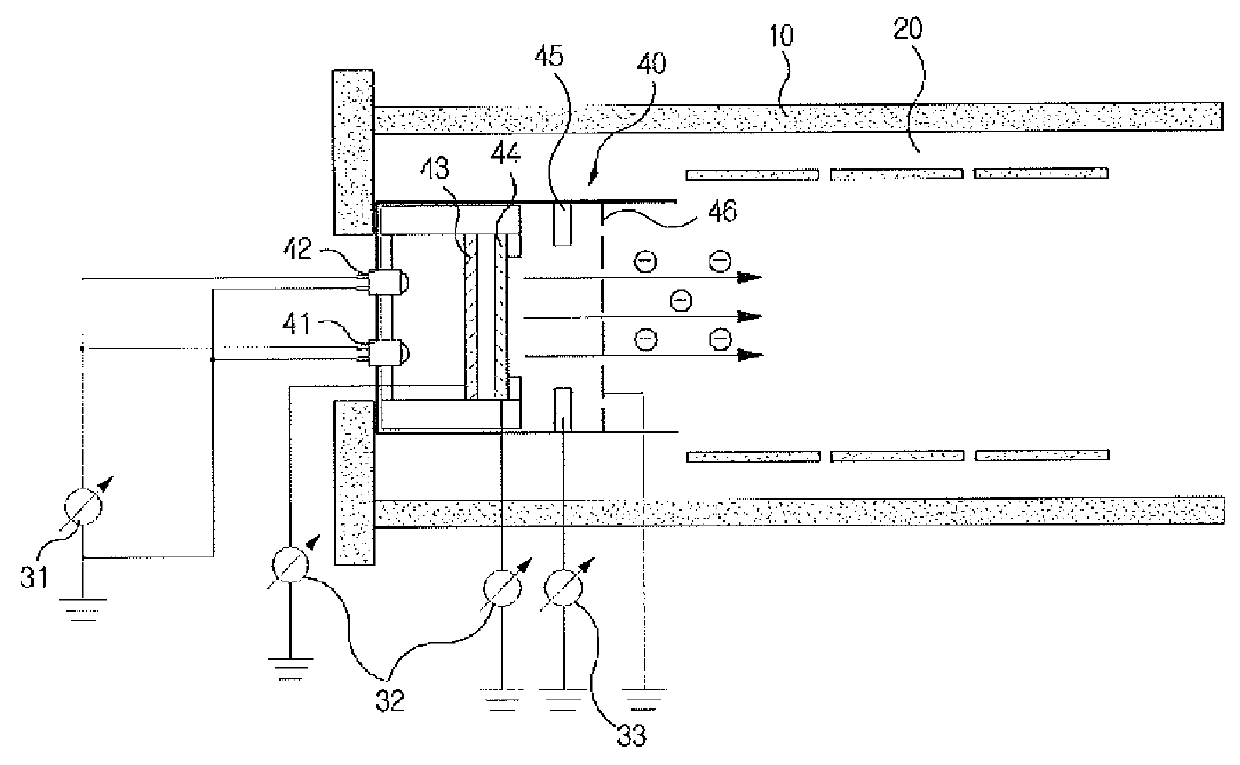
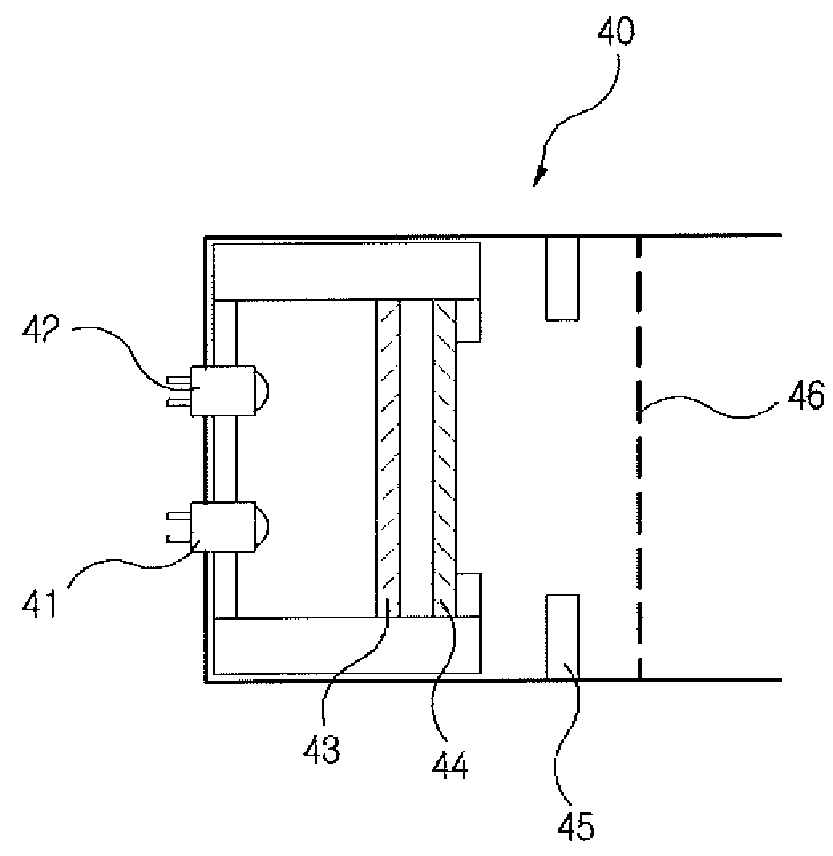
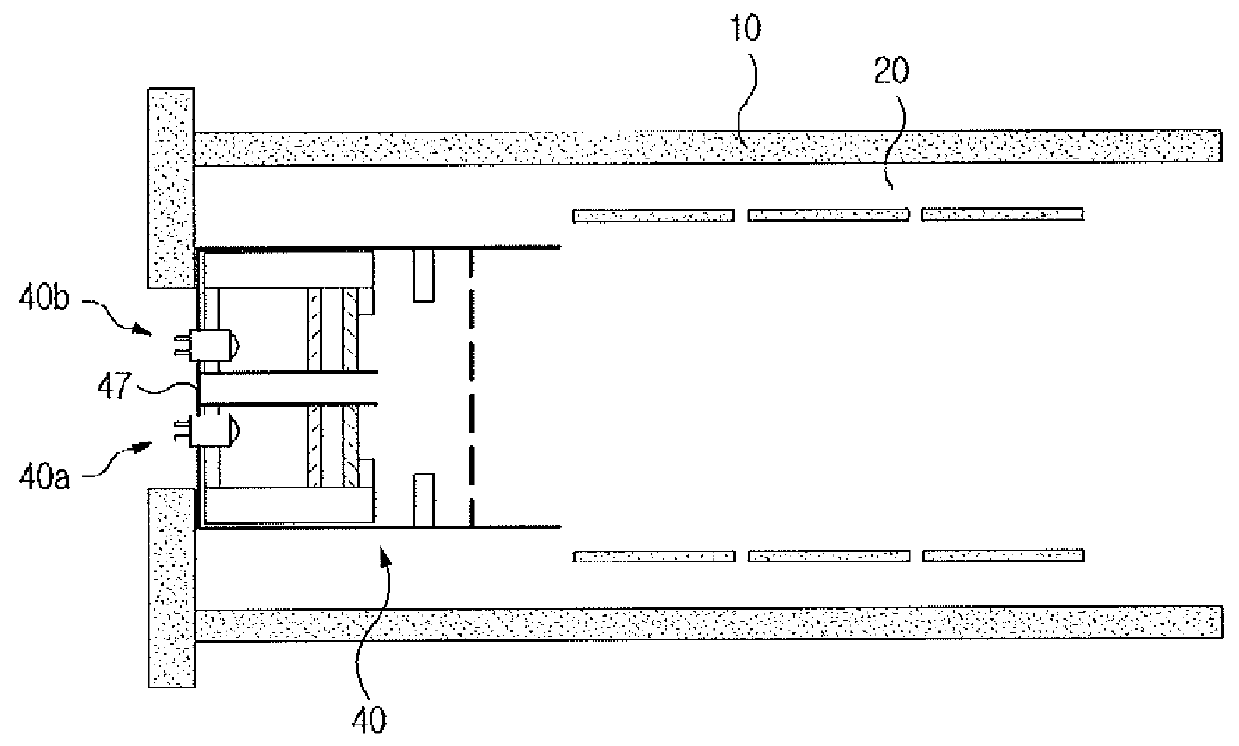
- An anion generating and electron capture dissociation apparatus utilizing cold electrons, which employs micro-channel plate (MCP) electron multiplier plates and ultraviolet diodes to generate and focus a low-energy electron beam within an ion trap, allowing for precise control of energy and current using an electron focusing lens, enabling efficient negative ionization and dissociation of molecules.

Safety Standards for High-Vacuum Electronic Systems
High-vacuum electronic systems operating in environments where electron capture modeling is critical must adhere to stringent safety standards to ensure both personnel protection and equipment integrity. These standards encompass multiple layers of protection, from hardware design requirements to operational protocols that mitigate risks associated with high-voltage components, vacuum system failures, and electromagnetic interference.
The primary safety framework for high-vacuum electronic systems is established by international standards including IEC 61010 series for electrical equipment safety and ISO 3529 for vacuum technology safety requirements. These standards mandate specific design criteria for vacuum chambers, electrical feedthroughs, and control systems that handle electron capture processes. Critical requirements include proper grounding schemes, arc detection systems, and fail-safe mechanisms that automatically shut down operations when vacuum levels fall below specified thresholds.
Personnel safety protocols are particularly stringent due to the dual hazards of high voltage and vacuum systems. Operators must be trained in lockout/tagout procedures, emergency shutdown protocols, and proper handling of vacuum components. Safety interlocks prevent access to energized systems, while pressure relief systems protect against catastrophic vacuum failures. Personal protective equipment requirements include specialized gloves for handling vacuum components and safety glasses rated for potential arc flash incidents.
Equipment protection standards focus on preventing damage from electron bombardment, thermal cycling, and contamination. Materials selection criteria specify vacuum-compatible components that minimize outgassing and maintain structural integrity under electron irradiation. Thermal management systems must comply with temperature cycling standards to prevent component degradation that could compromise electron capture modeling accuracy.
Environmental safety considerations address electromagnetic compatibility (EMC) requirements to prevent interference with surrounding equipment. Shielding specifications ensure that high-frequency emissions from electron capture processes remain within regulatory limits. Additionally, waste management protocols govern the disposal of components that may become radioactive through neutron activation or contain hazardous materials used in vacuum system construction.
Regular safety audits and compliance verification procedures ensure ongoing adherence to these standards, with documentation requirements that trace safety-critical components throughout their operational lifecycle.
The primary safety framework for high-vacuum electronic systems is established by international standards including IEC 61010 series for electrical equipment safety and ISO 3529 for vacuum technology safety requirements. These standards mandate specific design criteria for vacuum chambers, electrical feedthroughs, and control systems that handle electron capture processes. Critical requirements include proper grounding schemes, arc detection systems, and fail-safe mechanisms that automatically shut down operations when vacuum levels fall below specified thresholds.
Personnel safety protocols are particularly stringent due to the dual hazards of high voltage and vacuum systems. Operators must be trained in lockout/tagout procedures, emergency shutdown protocols, and proper handling of vacuum components. Safety interlocks prevent access to energized systems, while pressure relief systems protect against catastrophic vacuum failures. Personal protective equipment requirements include specialized gloves for handling vacuum components and safety glasses rated for potential arc flash incidents.
Equipment protection standards focus on preventing damage from electron bombardment, thermal cycling, and contamination. Materials selection criteria specify vacuum-compatible components that minimize outgassing and maintain structural integrity under electron irradiation. Thermal management systems must comply with temperature cycling standards to prevent component degradation that could compromise electron capture modeling accuracy.
Environmental safety considerations address electromagnetic compatibility (EMC) requirements to prevent interference with surrounding equipment. Shielding specifications ensure that high-frequency emissions from electron capture processes remain within regulatory limits. Additionally, waste management protocols govern the disposal of components that may become radioactive through neutron activation or contain hazardous materials used in vacuum system construction.
Regular safety audits and compliance verification procedures ensure ongoing adherence to these standards, with documentation requirements that trace safety-critical components throughout their operational lifecycle.
Computational Requirements for Electron Modeling Accuracy
Accurate electron capture modeling in high-vacuum environments demands substantial computational resources due to the complex multi-physics nature of the problem. The computational requirements scale exponentially with system size and desired accuracy levels, necessitating careful consideration of hardware specifications and algorithmic efficiency. Modern electron capture simulations typically require high-performance computing clusters with distributed memory architectures to handle the massive datasets generated during particle tracking and field calculations.
Memory requirements constitute a critical bottleneck in electron modeling accuracy. Three-dimensional particle-in-cell simulations with sufficient spatial resolution to capture electron trajectories accurately demand memory allocations ranging from several gigabytes for simplified geometries to terabytes for complex industrial vacuum systems. The memory footprint increases dramatically when incorporating Monte Carlo collision models and secondary electron emission phenomena, as these processes require storing extensive cross-sectional databases and tracking multiple particle generations simultaneously.
Processing power requirements vary significantly based on the chosen modeling approach. Direct simulation Monte Carlo methods typically require 10^6 to 10^8 computational particles to achieve statistical convergence, with each particle requiring hundreds to thousands of time steps for accurate trajectory calculation. This translates to computational loads exceeding 10^12 operations per simulation, necessitating parallel processing architectures with hundreds to thousands of CPU cores for reasonable execution times.
Temporal resolution demands impose additional computational constraints on electron modeling accuracy. Electron dynamics in high-vacuum environments occur on picosecond to nanosecond timescales, requiring time steps on the order of femtoseconds to maintain numerical stability in explicit integration schemes. This fine temporal discretization, combined with microsecond to millisecond simulation durations needed for statistical significance, results in simulation runs requiring millions of time steps and corresponding computational overhead.
Storage and data management requirements present unique challenges for high-fidelity electron capture modeling. Comprehensive simulations generate terabytes of trajectory data, field distributions, and statistical outputs that must be efficiently stored and processed for post-simulation analysis. Advanced compression algorithms and hierarchical data formats become essential for managing these large datasets while maintaining data integrity and accessibility for subsequent analysis phases.
Memory requirements constitute a critical bottleneck in electron modeling accuracy. Three-dimensional particle-in-cell simulations with sufficient spatial resolution to capture electron trajectories accurately demand memory allocations ranging from several gigabytes for simplified geometries to terabytes for complex industrial vacuum systems. The memory footprint increases dramatically when incorporating Monte Carlo collision models and secondary electron emission phenomena, as these processes require storing extensive cross-sectional databases and tracking multiple particle generations simultaneously.
Processing power requirements vary significantly based on the chosen modeling approach. Direct simulation Monte Carlo methods typically require 10^6 to 10^8 computational particles to achieve statistical convergence, with each particle requiring hundreds to thousands of time steps for accurate trajectory calculation. This translates to computational loads exceeding 10^12 operations per simulation, necessitating parallel processing architectures with hundreds to thousands of CPU cores for reasonable execution times.
Temporal resolution demands impose additional computational constraints on electron modeling accuracy. Electron dynamics in high-vacuum environments occur on picosecond to nanosecond timescales, requiring time steps on the order of femtoseconds to maintain numerical stability in explicit integration schemes. This fine temporal discretization, combined with microsecond to millisecond simulation durations needed for statistical significance, results in simulation runs requiring millions of time steps and corresponding computational overhead.
Storage and data management requirements present unique challenges for high-fidelity electron capture modeling. Comprehensive simulations generate terabytes of trajectory data, field distributions, and statistical outputs that must be efficiently stored and processed for post-simulation analysis. Advanced compression algorithms and hierarchical data formats become essential for managing these large datasets while maintaining data integrity and accessibility for subsequent analysis phases.
Unlock deeper insights with PatSnap Eureka Quick Research — get a full tech report to explore trends and direct your research. Try now!
Generate Your Research Report Instantly with AI Agent
Supercharge your innovation with PatSnap Eureka AI Agent Platform!