

How to Maximize Data Integrity in Proprioceptive Sensor Networks
APR 24, 20269 MIN READ
Generate Your Research Report Instantly with AI Agent
Patsnap Eureka helps you evaluate technical feasibility & market potential.
Proprioceptive Sensor Network Data Integrity Background and Goals
Proprioceptive sensor networks have emerged as a critical component in modern autonomous systems, robotics, and industrial automation applications. These networks consist of sensors that provide internal state information about system position, orientation, velocity, and acceleration, enabling machines to understand their spatial configuration and movement dynamics. The evolution of proprioceptive sensing began with simple mechanical feedback systems in the 1960s and has progressed through electronic encoders, inertial measurement units, to today's sophisticated multi-modal sensor fusion architectures.
The technological trajectory has been driven by increasing demands for precision, reliability, and real-time performance in applications ranging from robotic manipulation to autonomous vehicle navigation. Early proprioceptive systems relied on single-point-of-failure architectures with limited redundancy, making them vulnerable to sensor malfunctions and environmental interference. The integration of multiple sensor modalities, including gyroscopes, accelerometers, magnetometers, and optical encoders, has created complex data fusion challenges that directly impact system reliability and safety.
Current market drivers emphasize the critical importance of data integrity in proprioceptive sensor networks. Industries such as aerospace, medical robotics, and autonomous transportation require near-perfect reliability, where sensor data corruption or loss can result in catastrophic failures. The proliferation of Internet of Things devices and edge computing has further amplified the need for robust data integrity mechanisms that can operate in distributed, resource-constrained environments.
The primary technical objectives for maximizing data integrity in proprioceptive sensor networks encompass several key areas. Error detection and correction mechanisms must be implemented to identify and mitigate data corruption during transmission and processing. Redundancy strategies need to be developed to ensure continuous operation despite individual sensor failures. Real-time validation algorithms must verify sensor data consistency across multiple modalities and temporal windows.
Security considerations have become increasingly paramount as proprioceptive sensor networks become more interconnected and vulnerable to cyber attacks. Data authentication, encryption, and secure communication protocols are essential to prevent malicious data injection and ensure the authenticity of sensor measurements. The challenge lies in implementing these security measures without compromising the real-time performance requirements critical to proprioceptive sensing applications.
The ultimate goal is to achieve deterministic data integrity guarantees while maintaining the low-latency, high-frequency operation characteristics essential for effective proprioceptive sensing. This requires innovative approaches that balance computational overhead, power consumption, and reliability across diverse deployment scenarios and operational environments.
The technological trajectory has been driven by increasing demands for precision, reliability, and real-time performance in applications ranging from robotic manipulation to autonomous vehicle navigation. Early proprioceptive systems relied on single-point-of-failure architectures with limited redundancy, making them vulnerable to sensor malfunctions and environmental interference. The integration of multiple sensor modalities, including gyroscopes, accelerometers, magnetometers, and optical encoders, has created complex data fusion challenges that directly impact system reliability and safety.
Current market drivers emphasize the critical importance of data integrity in proprioceptive sensor networks. Industries such as aerospace, medical robotics, and autonomous transportation require near-perfect reliability, where sensor data corruption or loss can result in catastrophic failures. The proliferation of Internet of Things devices and edge computing has further amplified the need for robust data integrity mechanisms that can operate in distributed, resource-constrained environments.
The primary technical objectives for maximizing data integrity in proprioceptive sensor networks encompass several key areas. Error detection and correction mechanisms must be implemented to identify and mitigate data corruption during transmission and processing. Redundancy strategies need to be developed to ensure continuous operation despite individual sensor failures. Real-time validation algorithms must verify sensor data consistency across multiple modalities and temporal windows.
Security considerations have become increasingly paramount as proprioceptive sensor networks become more interconnected and vulnerable to cyber attacks. Data authentication, encryption, and secure communication protocols are essential to prevent malicious data injection and ensure the authenticity of sensor measurements. The challenge lies in implementing these security measures without compromising the real-time performance requirements critical to proprioceptive sensing applications.
The ultimate goal is to achieve deterministic data integrity guarantees while maintaining the low-latency, high-frequency operation characteristics essential for effective proprioceptive sensing. This requires innovative approaches that balance computational overhead, power consumption, and reliability across diverse deployment scenarios and operational environments.
Market Demand for Reliable Proprioceptive Sensing Systems
The global market for reliable proprioceptive sensing systems is experiencing unprecedented growth driven by the convergence of robotics, autonomous systems, and advanced manufacturing technologies. Industries ranging from automotive and aerospace to healthcare and consumer electronics are increasingly demanding high-fidelity proprioceptive sensors that can maintain data integrity under challenging operational conditions.
Autonomous vehicle manufacturers represent one of the largest market segments, requiring proprioceptive sensors for vehicle dynamics control, stability management, and navigation systems. These applications demand sensors capable of operating reliably in extreme temperatures, vibrations, and electromagnetic interference while maintaining precise data accuracy for safety-critical functions.
The robotics industry, particularly in industrial automation and collaborative robotics, drives substantial demand for proprioceptive sensing solutions. Manufacturing facilities require sensors that can provide consistent feedback for robotic arm positioning, force control, and collision detection. The growing adoption of Industry 4.0 principles has intensified requirements for sensor networks that can guarantee data integrity across distributed manufacturing environments.
Healthcare and medical device sectors present rapidly expanding opportunities, with applications in prosthetics, rehabilitation equipment, and surgical robotics. These markets demand exceptionally high reliability standards, as sensor failures can directly impact patient safety and treatment outcomes. Regulatory compliance requirements further emphasize the critical importance of maintaining data integrity throughout sensor network operations.
Aerospace and defense applications constitute premium market segments where proprioceptive sensor reliability is paramount. Flight control systems, unmanned aerial vehicles, and satellite positioning mechanisms require sensors that can function flawlessly in harsh environmental conditions while providing continuous, accurate feedback for mission-critical operations.
The consumer electronics market, while price-sensitive, represents significant volume opportunities through applications in gaming controllers, virtual reality systems, and wearable devices. These applications increasingly require sophisticated proprioceptive feedback to enhance user experience and enable new interaction paradigms.
Market growth is further accelerated by emerging applications in smart infrastructure, where proprioceptive sensors monitor structural health in bridges, buildings, and industrial facilities. These deployments require long-term reliability and data integrity to ensure public safety and infrastructure maintenance efficiency.
Autonomous vehicle manufacturers represent one of the largest market segments, requiring proprioceptive sensors for vehicle dynamics control, stability management, and navigation systems. These applications demand sensors capable of operating reliably in extreme temperatures, vibrations, and electromagnetic interference while maintaining precise data accuracy for safety-critical functions.
The robotics industry, particularly in industrial automation and collaborative robotics, drives substantial demand for proprioceptive sensing solutions. Manufacturing facilities require sensors that can provide consistent feedback for robotic arm positioning, force control, and collision detection. The growing adoption of Industry 4.0 principles has intensified requirements for sensor networks that can guarantee data integrity across distributed manufacturing environments.
Healthcare and medical device sectors present rapidly expanding opportunities, with applications in prosthetics, rehabilitation equipment, and surgical robotics. These markets demand exceptionally high reliability standards, as sensor failures can directly impact patient safety and treatment outcomes. Regulatory compliance requirements further emphasize the critical importance of maintaining data integrity throughout sensor network operations.
Aerospace and defense applications constitute premium market segments where proprioceptive sensor reliability is paramount. Flight control systems, unmanned aerial vehicles, and satellite positioning mechanisms require sensors that can function flawlessly in harsh environmental conditions while providing continuous, accurate feedback for mission-critical operations.
The consumer electronics market, while price-sensitive, represents significant volume opportunities through applications in gaming controllers, virtual reality systems, and wearable devices. These applications increasingly require sophisticated proprioceptive feedback to enhance user experience and enable new interaction paradigms.
Market growth is further accelerated by emerging applications in smart infrastructure, where proprioceptive sensors monitor structural health in bridges, buildings, and industrial facilities. These deployments require long-term reliability and data integrity to ensure public safety and infrastructure maintenance efficiency.
Current State and Data Integrity Challenges in Sensor Networks
Proprioceptive sensor networks have evolved significantly over the past decade, transitioning from simple position-sensing systems to sophisticated multi-modal networks capable of real-time spatial awareness and motion tracking. These networks integrate various sensor types including accelerometers, gyroscopes, magnetometers, and force sensors to provide comprehensive proprioceptive feedback. Current implementations span across robotics, wearable devices, autonomous vehicles, and industrial automation systems, where maintaining data integrity is paramount for operational safety and performance.
The contemporary landscape of proprioceptive sensor networks faces substantial data integrity challenges that directly impact system reliability. Signal degradation represents a primary concern, particularly in environments with electromagnetic interference or physical obstructions. Sensor drift, caused by temperature variations and mechanical stress, introduces cumulative errors that compromise long-term data accuracy. Additionally, synchronization issues between multiple sensors create temporal misalignments that distort the overall proprioceptive picture.
Network-level vulnerabilities pose another significant challenge category. Data packet loss during wireless transmission can create gaps in proprioceptive information, leading to incomplete spatial awareness. Latency variations across different sensor nodes result in inconsistent data timestamps, making sensor fusion algorithms less effective. Furthermore, bandwidth limitations in dense sensor deployments can force data compression, potentially sacrificing precision for transmission efficiency.
Security-related integrity threats have emerged as critical concerns in modern proprioceptive networks. Malicious attacks targeting sensor data can inject false proprioceptive information, leading to catastrophic system failures in safety-critical applications. Data tampering during transmission or storage phases can compromise the authenticity of proprioceptive measurements. Additionally, sensor spoofing attacks can overwhelm legitimate signals with fabricated data, disrupting the network's ability to maintain accurate spatial awareness.
Environmental factors continue to challenge data integrity maintenance in proprioceptive sensor networks. Extreme temperatures affect sensor calibration and introduce measurement biases. Vibrations and mechanical shocks can cause temporary or permanent sensor malfunctions. Moisture and corrosive substances degrade sensor performance over time, leading to gradual integrity deterioration that may go undetected until system failure occurs.
Current mitigation strategies include redundant sensor deployment, real-time error detection algorithms, and adaptive calibration techniques. However, these approaches often increase system complexity and power consumption while providing only partial solutions to the comprehensive data integrity challenge facing modern proprioceptive sensor networks.
The contemporary landscape of proprioceptive sensor networks faces substantial data integrity challenges that directly impact system reliability. Signal degradation represents a primary concern, particularly in environments with electromagnetic interference or physical obstructions. Sensor drift, caused by temperature variations and mechanical stress, introduces cumulative errors that compromise long-term data accuracy. Additionally, synchronization issues between multiple sensors create temporal misalignments that distort the overall proprioceptive picture.
Network-level vulnerabilities pose another significant challenge category. Data packet loss during wireless transmission can create gaps in proprioceptive information, leading to incomplete spatial awareness. Latency variations across different sensor nodes result in inconsistent data timestamps, making sensor fusion algorithms less effective. Furthermore, bandwidth limitations in dense sensor deployments can force data compression, potentially sacrificing precision for transmission efficiency.
Security-related integrity threats have emerged as critical concerns in modern proprioceptive networks. Malicious attacks targeting sensor data can inject false proprioceptive information, leading to catastrophic system failures in safety-critical applications. Data tampering during transmission or storage phases can compromise the authenticity of proprioceptive measurements. Additionally, sensor spoofing attacks can overwhelm legitimate signals with fabricated data, disrupting the network's ability to maintain accurate spatial awareness.
Environmental factors continue to challenge data integrity maintenance in proprioceptive sensor networks. Extreme temperatures affect sensor calibration and introduce measurement biases. Vibrations and mechanical shocks can cause temporary or permanent sensor malfunctions. Moisture and corrosive substances degrade sensor performance over time, leading to gradual integrity deterioration that may go undetected until system failure occurs.
Current mitigation strategies include redundant sensor deployment, real-time error detection algorithms, and adaptive calibration techniques. However, these approaches often increase system complexity and power consumption while providing only partial solutions to the comprehensive data integrity challenge facing modern proprioceptive sensor networks.
Existing Solutions for Maximizing Sensor Data Integrity
01 Cryptographic authentication and encryption for sensor data
Implementing cryptographic techniques to ensure data integrity in proprioceptive sensor networks involves using authentication protocols and encryption methods. These techniques verify the authenticity of sensor data and protect it from unauthorized access or tampering during transmission. Digital signatures and hash functions can be employed to detect any modifications to the data, ensuring that the information received is identical to what was originally transmitted by the sensors.- Cryptographic authentication and encryption for sensor data: Implementing cryptographic techniques to ensure data integrity in proprioceptive sensor networks involves using authentication protocols and encryption methods. These techniques verify the authenticity of sensor data and protect it from unauthorized access or tampering during transmission. Digital signatures and hash functions can be employed to validate data integrity, while encryption algorithms secure the data payload against interception and modification.
- Error detection and correction mechanisms: Data integrity in sensor networks can be maintained through error detection and correction codes that identify and rectify transmission errors. These mechanisms include checksums, cyclic redundancy checks, and forward error correction techniques that detect corrupted data packets and either request retransmission or automatically correct errors. Such approaches ensure that proprioceptive sensor data remains accurate and reliable throughout the communication process.
- Redundancy and data validation protocols: Employing redundancy techniques and validation protocols enhances data integrity by cross-verifying sensor readings from multiple sources. This approach involves deploying redundant sensors or using consensus algorithms to compare data from different nodes in the network. Anomalous or inconsistent data can be identified and filtered out, ensuring that only validated and accurate proprioceptive information is processed and stored.
- Secure communication protocols and network architecture: Designing secure communication protocols and robust network architectures is essential for maintaining data integrity in proprioceptive sensor networks. This includes implementing secure routing protocols, establishing trusted communication channels, and using network segmentation to isolate critical sensor data. Authentication mechanisms at the network layer prevent unauthorized nodes from injecting false data, while secure protocols ensure end-to-end data integrity throughout the network infrastructure.
- Real-time monitoring and anomaly detection systems: Implementing real-time monitoring and anomaly detection systems helps maintain data integrity by continuously analyzing sensor data patterns and identifying deviations that may indicate data corruption or security breaches. Machine learning algorithms and statistical methods can be applied to detect unusual behavior in sensor readings, triggering alerts or corrective actions. These systems provide proactive protection against data integrity threats by identifying and responding to anomalies as they occur.
02 Redundancy and error detection mechanisms
Employing redundancy techniques and error detection codes helps maintain data integrity in sensor networks. Multiple sensors can be used to measure the same parameter, and the data can be cross-validated to identify anomalies or errors. Error detection codes such as cyclic redundancy checks or parity bits can be implemented to detect transmission errors. These mechanisms enable the system to identify corrupted data and request retransmission or use redundant data sources to maintain accuracy.Expand Specific Solutions03 Secure communication protocols and network architecture
Designing secure communication protocols and network architectures specifically for proprioceptive sensor networks enhances data integrity. This includes implementing secure routing protocols, establishing trusted communication channels, and using network segmentation to isolate critical sensor data. The architecture can incorporate intrusion detection systems and firewalls to prevent unauthorized access and ensure that data flows through verified pathways, maintaining its integrity throughout the network.Expand Specific Solutions04 Real-time monitoring and anomaly detection systems
Implementing real-time monitoring systems with anomaly detection algorithms helps identify and respond to data integrity issues promptly. Machine learning techniques can be applied to establish baseline patterns of sensor behavior and detect deviations that may indicate data corruption, sensor malfunction, or security breaches. These systems can automatically flag suspicious data, trigger alerts, and initiate corrective actions to maintain the integrity of the sensor network data.Expand Specific Solutions05 Data validation and calibration frameworks
Establishing comprehensive data validation and sensor calibration frameworks ensures the accuracy and integrity of proprioceptive sensor data. Regular calibration procedures verify that sensors are operating within specified parameters and producing accurate measurements. Data validation techniques include range checking, consistency verification, and temporal analysis to identify outliers or implausible values. These frameworks can be automated and integrated into the sensor network to continuously maintain data quality and integrity.Expand Specific Solutions
Key Players in Proprioceptive Sensor and Network Industry
The proprioceptive sensor networks industry is experiencing rapid growth driven by increasing demand for autonomous systems and IoT applications. The market demonstrates significant expansion potential as organizations seek enhanced data integrity solutions for critical sensor deployments. Technology maturity varies considerably across market participants, with established telecommunications giants like Huawei Technologies, ZTE Corp., and Ericsson leading infrastructure development, while specialized companies such as OMRON Corp. and Sensor-Technik Wiedemann focus on industrial sensor applications. Academic institutions including Tsinghua University, Harbin Institute of Technology, and University of California contribute fundamental research advancing sensor reliability methodologies. Emerging players like Tributech and SenseTime are developing innovative blockchain-based and AI-driven data integrity solutions. The competitive landscape reflects a maturing ecosystem where traditional hardware manufacturers collaborate with software innovators and research institutions to address complex data integrity challenges in distributed sensor networks.
Thales SA
Technical Solution: Thales provides military-grade data integrity solutions for proprioceptive sensor networks in aerospace and defense applications. Their approach emphasizes cybersecurity and resilience against adversarial attacks, implementing multi-level encryption and authentication protocols. The system features redundant sensor configurations with Byzantine fault tolerance algorithms to maintain data integrity even when some sensors are compromised. Thales integrates hardware security modules (HSMs) for cryptographic key management and implements real-time intrusion detection systems to identify potential data manipulation attempts. Their solution includes advanced signal processing techniques to distinguish between genuine sensor data and potential spoofing attempts in hostile environments.
Strengths: Military-grade security standards, expertise in mission-critical systems, advanced cybersecurity capabilities. Weaknesses: High cost and complexity, primarily designed for specialized defense applications.
Huawei Technologies Co., Ltd.
Technical Solution: Huawei implements a comprehensive data integrity framework for proprioceptive sensor networks through multi-layered security protocols and redundant data validation mechanisms. Their approach includes real-time error detection algorithms, cryptographic hash functions for data authentication, and distributed consensus protocols to ensure data consistency across sensor nodes. The company employs advanced machine learning techniques to identify anomalous sensor readings and implements automatic correction mechanisms. Their proprietary chipsets integrate hardware-level security features including secure enclaves for sensitive sensor data processing, ensuring end-to-end data integrity from sensor acquisition to cloud storage.
Strengths: Comprehensive end-to-end security architecture, integrated hardware-software solutions, strong R&D capabilities. Weaknesses: Potential geopolitical restrictions, complex implementation requirements.
Core Innovations in Proprioceptive Data Validation Methods
Protection method for fusion integrity of sensor network data
PatentInactiveCN102638791A
Innovation
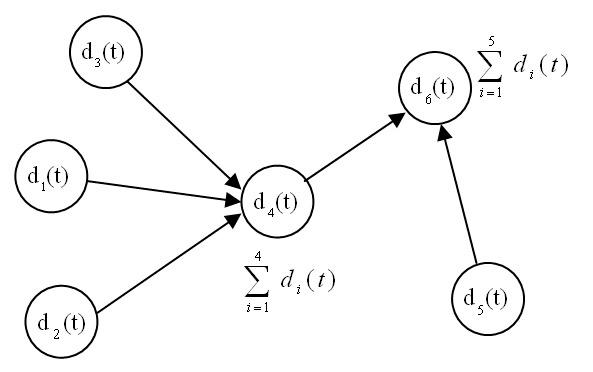
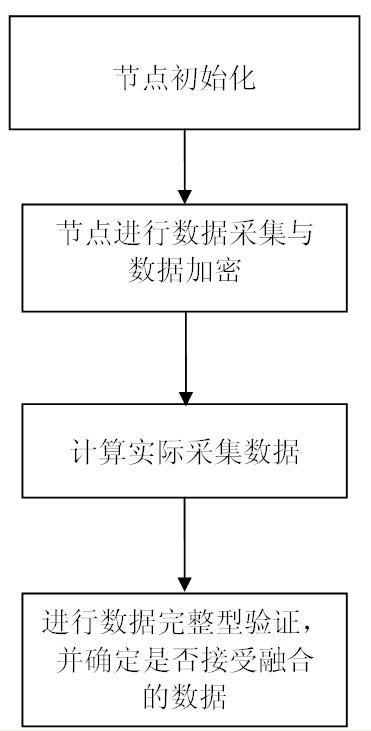
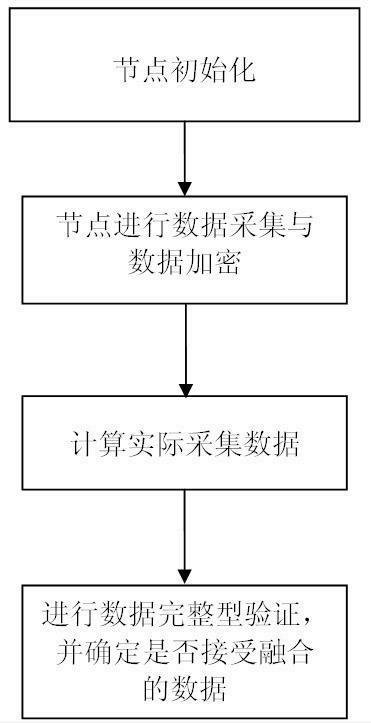
- A data transmission security encryption and data fusion integrity monitoring method is adopted. By adding an imaginary part to the data and using encryption technology, the correlation characteristics of the virtual and real parts are used for data integrity verification to ensure the confidentiality and integrity of the data during the transmission process. . Specific steps include node initialization, data collection and encryption, data aggregation and integrity verification.
Security Standards for Proprioceptive Sensor Networks
Proprioceptive sensor networks require robust security frameworks to ensure data integrity throughout the sensing, transmission, and processing pipeline. Current security standards for these networks are primarily derived from established IoT and wireless sensor network protocols, adapted to address the unique characteristics of proprioceptive sensing systems. The IEEE 802.15.4 standard provides foundational security mechanisms including AES-128 encryption and authentication protocols, while the Thread networking protocol offers additional security layers specifically designed for mesh networks commonly used in proprioceptive applications.
The International Organization for Standardization (ISO) has developed ISO/IEC 27001 and ISO/IEC 27002 standards that provide comprehensive information security management frameworks applicable to proprioceptive sensor networks. These standards emphasize risk assessment, access control, and continuous monitoring protocols that are essential for maintaining data integrity in distributed sensing environments. Additionally, the NIST Cybersecurity Framework offers specific guidelines for IoT device security that directly apply to proprioceptive sensor deployments.
Industry-specific standards such as IEC 62443 for industrial automation and control systems provide crucial security requirements for proprioceptive networks operating in manufacturing and robotics environments. This standard defines security levels and zones that help organizations implement appropriate protection measures based on risk assessment. The standard also addresses secure communication protocols and authentication mechanisms specifically relevant to real-time proprioceptive data transmission.
Emerging standards development focuses on quantum-resistant cryptographic protocols and blockchain-based authentication systems. The National Institute of Standards and Technology (NIST) is actively developing post-quantum cryptography standards that will be critical for future-proofing proprioceptive sensor networks against quantum computing threats. These evolving standards recognize the long operational lifecycles typical of proprioceptive sensing systems and the need for cryptographic agility.
Implementation challenges arise from the resource constraints inherent in many proprioceptive sensor nodes, requiring standards to balance security robustness with computational efficiency. Current standardization efforts are addressing lightweight cryptographic protocols and energy-efficient security mechanisms that maintain data integrity without compromising network performance or battery life in distributed proprioceptive sensing applications.
The International Organization for Standardization (ISO) has developed ISO/IEC 27001 and ISO/IEC 27002 standards that provide comprehensive information security management frameworks applicable to proprioceptive sensor networks. These standards emphasize risk assessment, access control, and continuous monitoring protocols that are essential for maintaining data integrity in distributed sensing environments. Additionally, the NIST Cybersecurity Framework offers specific guidelines for IoT device security that directly apply to proprioceptive sensor deployments.
Industry-specific standards such as IEC 62443 for industrial automation and control systems provide crucial security requirements for proprioceptive networks operating in manufacturing and robotics environments. This standard defines security levels and zones that help organizations implement appropriate protection measures based on risk assessment. The standard also addresses secure communication protocols and authentication mechanisms specifically relevant to real-time proprioceptive data transmission.
Emerging standards development focuses on quantum-resistant cryptographic protocols and blockchain-based authentication systems. The National Institute of Standards and Technology (NIST) is actively developing post-quantum cryptography standards that will be critical for future-proofing proprioceptive sensor networks against quantum computing threats. These evolving standards recognize the long operational lifecycles typical of proprioceptive sensing systems and the need for cryptographic agility.
Implementation challenges arise from the resource constraints inherent in many proprioceptive sensor nodes, requiring standards to balance security robustness with computational efficiency. Current standardization efforts are addressing lightweight cryptographic protocols and energy-efficient security mechanisms that maintain data integrity without compromising network performance or battery life in distributed proprioceptive sensing applications.
Privacy Protection in Proprioceptive Data Collection
Privacy protection in proprioceptive data collection represents a critical challenge as these sensor networks capture highly sensitive biometric and behavioral information. Proprioceptive sensors monitor body position, movement patterns, gait characteristics, and physiological responses, creating detailed profiles of individual users that could be exploited if compromised. The intimate nature of this data necessitates robust privacy frameworks that balance data utility with user confidentiality.
Traditional privacy protection mechanisms face unique challenges in proprioceptive environments due to the continuous, high-frequency nature of sensor data streams. Standard anonymization techniques often prove insufficient as proprioceptive patterns contain distinctive biometric signatures that can enable re-identification even after conventional de-identification processes. The temporal correlation and behavioral uniqueness inherent in proprioceptive data create persistent privacy vulnerabilities that require specialized protection strategies.
Differential privacy emerges as a promising approach for proprioceptive data protection, introducing controlled noise to sensor readings while preserving statistical utility for analysis. However, implementation requires careful calibration to maintain data integrity objectives while providing meaningful privacy guarantees. The challenge lies in determining optimal noise parameters that protect individual privacy without compromising the precision required for accurate proprioceptive analysis and system functionality.
Federated learning architectures offer another avenue for privacy-preserving proprioceptive data utilization, enabling model training without centralizing sensitive sensor data. This approach allows individual devices to contribute to collective learning while maintaining local data control. Edge computing integration further enhances privacy by processing proprioceptive information locally, reducing transmission of raw sensor data to external systems.
Homomorphic encryption techniques enable computation on encrypted proprioceptive data, allowing analysis without exposing underlying sensor information. While computationally intensive, recent advances in lightweight cryptographic protocols show promise for real-time proprioceptive applications. Secure multi-party computation protocols also facilitate collaborative analysis across multiple proprioceptive networks while maintaining individual data privacy.
The regulatory landscape increasingly demands privacy-by-design approaches in proprioceptive systems, requiring built-in protection mechanisms rather than retrofitted solutions. Compliance with frameworks like GDPR and emerging biometric privacy regulations necessitates comprehensive privacy impact assessments and user consent mechanisms tailored to proprioceptive data characteristics.
Traditional privacy protection mechanisms face unique challenges in proprioceptive environments due to the continuous, high-frequency nature of sensor data streams. Standard anonymization techniques often prove insufficient as proprioceptive patterns contain distinctive biometric signatures that can enable re-identification even after conventional de-identification processes. The temporal correlation and behavioral uniqueness inherent in proprioceptive data create persistent privacy vulnerabilities that require specialized protection strategies.
Differential privacy emerges as a promising approach for proprioceptive data protection, introducing controlled noise to sensor readings while preserving statistical utility for analysis. However, implementation requires careful calibration to maintain data integrity objectives while providing meaningful privacy guarantees. The challenge lies in determining optimal noise parameters that protect individual privacy without compromising the precision required for accurate proprioceptive analysis and system functionality.
Federated learning architectures offer another avenue for privacy-preserving proprioceptive data utilization, enabling model training without centralizing sensitive sensor data. This approach allows individual devices to contribute to collective learning while maintaining local data control. Edge computing integration further enhances privacy by processing proprioceptive information locally, reducing transmission of raw sensor data to external systems.
Homomorphic encryption techniques enable computation on encrypted proprioceptive data, allowing analysis without exposing underlying sensor information. While computationally intensive, recent advances in lightweight cryptographic protocols show promise for real-time proprioceptive applications. Secure multi-party computation protocols also facilitate collaborative analysis across multiple proprioceptive networks while maintaining individual data privacy.
The regulatory landscape increasingly demands privacy-by-design approaches in proprioceptive systems, requiring built-in protection mechanisms rather than retrofitted solutions. Compliance with frameworks like GDPR and emerging biometric privacy regulations necessitates comprehensive privacy impact assessments and user consent mechanisms tailored to proprioceptive data characteristics.
Unlock deeper insights with Patsnap Eureka Quick Research — get a full tech report to explore trends and direct your research. Try now!
Generate Your Research Report Instantly with AI Agent
Supercharge your innovation with Patsnap Eureka AI Agent Platform!