

How to Optimize Fuel Cell Cold Start Performance
MAR 27, 20269 MIN READ
Generate Your Research Report Instantly with AI Agent
PatSnap Eureka helps you evaluate technical feasibility & market potential.
Fuel Cell Cold Start Technology Background and Objectives
Fuel cell technology has emerged as a critical component in the global transition toward sustainable energy systems, offering zero-emission power generation through electrochemical conversion of hydrogen and oxygen. However, the widespread adoption of fuel cell systems faces significant operational challenges, particularly in cold climate conditions where ambient temperatures can severely impact system performance and reliability.
Cold start performance represents one of the most pressing technical barriers limiting fuel cell deployment in automotive, stationary, and portable applications. When fuel cell systems are exposed to sub-zero temperatures, multiple degradation mechanisms occur simultaneously, including ice formation within the membrane electrode assembly, reduced ionic conductivity of the electrolyte membrane, and sluggish electrochemical reaction kinetics. These phenomena collectively result in extended startup times, reduced power output, and potential permanent damage to critical components.
The automotive industry has identified cold start capability as a fundamental requirement for fuel cell electric vehicles to achieve market competitiveness with conventional internal combustion engines and battery electric vehicles. Current automotive specifications typically require fuel cell systems to achieve full operational capacity within 30 seconds at temperatures as low as -30°C, while maintaining durability over thousands of cold start cycles.
The primary technical objective centers on developing comprehensive solutions that enable rapid system startup from sub-zero conditions while preserving long-term durability and performance. This encompasses optimizing membrane electrode assembly materials and structures to minimize ice formation and enhance low-temperature ionic transport, implementing advanced thermal management strategies for efficient heat distribution, and developing intelligent control algorithms that balance startup speed with component protection.
Secondary objectives include reducing parasitic power consumption during cold start sequences, minimizing water management complexity in freeze-thaw cycles, and establishing standardized testing protocols for cold start performance evaluation. These objectives must be achieved while maintaining cost-effectiveness and manufacturing scalability to support commercial viability.
The successful resolution of cold start challenges will unlock significant market opportunities across multiple sectors, enabling fuel cell technology to compete effectively in cold climate regions and seasonal applications where current limitations restrict deployment.
Cold start performance represents one of the most pressing technical barriers limiting fuel cell deployment in automotive, stationary, and portable applications. When fuel cell systems are exposed to sub-zero temperatures, multiple degradation mechanisms occur simultaneously, including ice formation within the membrane electrode assembly, reduced ionic conductivity of the electrolyte membrane, and sluggish electrochemical reaction kinetics. These phenomena collectively result in extended startup times, reduced power output, and potential permanent damage to critical components.
The automotive industry has identified cold start capability as a fundamental requirement for fuel cell electric vehicles to achieve market competitiveness with conventional internal combustion engines and battery electric vehicles. Current automotive specifications typically require fuel cell systems to achieve full operational capacity within 30 seconds at temperatures as low as -30°C, while maintaining durability over thousands of cold start cycles.
The primary technical objective centers on developing comprehensive solutions that enable rapid system startup from sub-zero conditions while preserving long-term durability and performance. This encompasses optimizing membrane electrode assembly materials and structures to minimize ice formation and enhance low-temperature ionic transport, implementing advanced thermal management strategies for efficient heat distribution, and developing intelligent control algorithms that balance startup speed with component protection.
Secondary objectives include reducing parasitic power consumption during cold start sequences, minimizing water management complexity in freeze-thaw cycles, and establishing standardized testing protocols for cold start performance evaluation. These objectives must be achieved while maintaining cost-effectiveness and manufacturing scalability to support commercial viability.
The successful resolution of cold start challenges will unlock significant market opportunities across multiple sectors, enabling fuel cell technology to compete effectively in cold climate regions and seasonal applications where current limitations restrict deployment.
Market Demand for Cold Climate Fuel Cell Applications
The global fuel cell market is experiencing unprecedented growth driven by the urgent need for clean energy solutions, with cold climate applications representing a critical segment that demands specialized technological solutions. Transportation sectors in northern regions, including Canada, Scandinavia, Russia, and northern United States, face unique challenges where conventional fuel cell systems struggle to maintain optimal performance during winter months.
Automotive manufacturers are increasingly focusing on fuel cell electric vehicles (FCEVs) as viable alternatives to battery electric vehicles in cold climates, where lithium-ion batteries suffer significant range reduction. Major automotive markets in cold regions demonstrate strong demand for vehicles that can maintain consistent performance regardless of ambient temperature, creating substantial opportunities for optimized cold-start fuel cell technologies.
The commercial vehicle sector presents particularly compelling market opportunities, as fleet operators in cold climates require reliable, efficient propulsion systems for buses, trucks, and delivery vehicles. Municipal transportation authorities in cities like Toronto, Helsinki, and Moscow are actively seeking fuel cell solutions that can operate effectively in sub-zero temperatures while maintaining passenger comfort and operational schedules.
Stationary power generation applications in remote cold climate locations represent another significant market segment. Off-grid communities, telecommunications infrastructure, and emergency backup systems in arctic and sub-arctic regions require dependable power sources that can start reliably in extreme cold conditions. These applications often lack access to grid electricity and depend on fuel cells for critical power needs.
The maritime industry is emerging as a substantial market driver, particularly for vessels operating in polar regions and cold water environments. Arctic shipping routes, offshore platforms, and research vessels require auxiliary power systems capable of cold-start operation, creating demand for specialized fuel cell technologies optimized for marine cold climate conditions.
Industrial applications in cold regions, including mining operations, oil and gas facilities, and manufacturing plants, increasingly seek fuel cell systems for both primary and backup power generation. These facilities require power systems that can start reliably during equipment shutdowns in cold weather and maintain continuous operation throughout harsh winter conditions.
Government initiatives and environmental regulations in cold climate countries are accelerating market demand through incentives for clean energy adoption and emissions reduction mandates. These policy frameworks create favorable market conditions for fuel cell technologies that can demonstrate superior cold weather performance compared to conventional alternatives.
Automotive manufacturers are increasingly focusing on fuel cell electric vehicles (FCEVs) as viable alternatives to battery electric vehicles in cold climates, where lithium-ion batteries suffer significant range reduction. Major automotive markets in cold regions demonstrate strong demand for vehicles that can maintain consistent performance regardless of ambient temperature, creating substantial opportunities for optimized cold-start fuel cell technologies.
The commercial vehicle sector presents particularly compelling market opportunities, as fleet operators in cold climates require reliable, efficient propulsion systems for buses, trucks, and delivery vehicles. Municipal transportation authorities in cities like Toronto, Helsinki, and Moscow are actively seeking fuel cell solutions that can operate effectively in sub-zero temperatures while maintaining passenger comfort and operational schedules.
Stationary power generation applications in remote cold climate locations represent another significant market segment. Off-grid communities, telecommunications infrastructure, and emergency backup systems in arctic and sub-arctic regions require dependable power sources that can start reliably in extreme cold conditions. These applications often lack access to grid electricity and depend on fuel cells for critical power needs.
The maritime industry is emerging as a substantial market driver, particularly for vessels operating in polar regions and cold water environments. Arctic shipping routes, offshore platforms, and research vessels require auxiliary power systems capable of cold-start operation, creating demand for specialized fuel cell technologies optimized for marine cold climate conditions.
Industrial applications in cold regions, including mining operations, oil and gas facilities, and manufacturing plants, increasingly seek fuel cell systems for both primary and backup power generation. These facilities require power systems that can start reliably during equipment shutdowns in cold weather and maintain continuous operation throughout harsh winter conditions.
Government initiatives and environmental regulations in cold climate countries are accelerating market demand through incentives for clean energy adoption and emissions reduction mandates. These policy frameworks create favorable market conditions for fuel cell technologies that can demonstrate superior cold weather performance compared to conventional alternatives.
Current Cold Start Challenges and Technical Barriers
Fuel cell cold start performance faces significant technical barriers that fundamentally stem from the electrochemical and thermodynamic properties of proton exchange membrane fuel cells (PEMFCs) at sub-zero temperatures. The primary challenge emerges from ice formation within the fuel cell stack, particularly in the catalyst layer and gas diffusion layer, which severely impedes reactant transport and reduces electrochemical activity.
Water management represents the most critical technical barrier during cold start operations. Product water generated during fuel cell operation can freeze at temperatures below 0°C, blocking gas channels and reducing the effective surface area of the catalyst. This ice formation creates a cascading effect where reduced performance leads to lower heat generation, further exacerbating the freezing problem and potentially causing permanent damage to the membrane electrode assembly.
Membrane conductivity degradation poses another substantial challenge at low temperatures. The proton conductivity of Nafion membranes decreases exponentially as temperature drops, resulting in significantly higher ohmic resistance. At -20°C, membrane resistance can increase by 300-500% compared to normal operating conditions, severely limiting current density and power output during startup phases.
Catalyst activity reduction becomes pronounced at sub-zero temperatures, particularly affecting the oxygen reduction reaction kinetics at the cathode. The activation overpotential increases substantially, requiring higher cell voltages to achieve meaningful current densities. Additionally, carbon monoxide tolerance of platinum catalysts decreases at lower temperatures, making fuel cells more susceptible to poisoning from reformate hydrogen.
Thermal management complexity intensifies during cold start scenarios due to the need for rapid and uniform heating while preventing thermal shock. Uneven temperature distribution across the stack can cause differential thermal expansion, leading to mechanical stress on seals and membranes. The challenge lies in achieving sufficient heat generation through electrochemical reactions while maintaining stable operation.
Gas diffusion and mass transport limitations become more severe as temperature decreases. Reduced diffusivity of reactant gases, combined with potential ice blockages in porous media, creates significant concentration gradients that limit fuel cell performance. The effective porosity of gas diffusion layers can be substantially reduced by ice formation, creating additional barriers to reactant delivery.
System integration challenges emerge from the need to coordinate multiple subsystems during cold start, including thermal management, humidification control, and reactant supply. The interdependency of these systems creates complex control requirements where traditional operating strategies may not be applicable, necessitating specialized cold start protocols and hardware modifications.
Water management represents the most critical technical barrier during cold start operations. Product water generated during fuel cell operation can freeze at temperatures below 0°C, blocking gas channels and reducing the effective surface area of the catalyst. This ice formation creates a cascading effect where reduced performance leads to lower heat generation, further exacerbating the freezing problem and potentially causing permanent damage to the membrane electrode assembly.
Membrane conductivity degradation poses another substantial challenge at low temperatures. The proton conductivity of Nafion membranes decreases exponentially as temperature drops, resulting in significantly higher ohmic resistance. At -20°C, membrane resistance can increase by 300-500% compared to normal operating conditions, severely limiting current density and power output during startup phases.
Catalyst activity reduction becomes pronounced at sub-zero temperatures, particularly affecting the oxygen reduction reaction kinetics at the cathode. The activation overpotential increases substantially, requiring higher cell voltages to achieve meaningful current densities. Additionally, carbon monoxide tolerance of platinum catalysts decreases at lower temperatures, making fuel cells more susceptible to poisoning from reformate hydrogen.
Thermal management complexity intensifies during cold start scenarios due to the need for rapid and uniform heating while preventing thermal shock. Uneven temperature distribution across the stack can cause differential thermal expansion, leading to mechanical stress on seals and membranes. The challenge lies in achieving sufficient heat generation through electrochemical reactions while maintaining stable operation.
Gas diffusion and mass transport limitations become more severe as temperature decreases. Reduced diffusivity of reactant gases, combined with potential ice blockages in porous media, creates significant concentration gradients that limit fuel cell performance. The effective porosity of gas diffusion layers can be substantially reduced by ice formation, creating additional barriers to reactant delivery.
System integration challenges emerge from the need to coordinate multiple subsystems during cold start, including thermal management, humidification control, and reactant supply. The interdependency of these systems creates complex control requirements where traditional operating strategies may not be applicable, necessitating specialized cold start protocols and hardware modifications.
Existing Cold Start Optimization Strategies
01 Thermal management and heating strategies for cold start
Various thermal management techniques are employed to improve fuel cell cold start performance, including preheating systems, heat exchangers, and thermal insulation methods. These approaches focus on rapidly raising the temperature of fuel cell components to operational levels while minimizing energy consumption. Active heating elements and heat recovery systems can be integrated to accelerate the warm-up process and prevent ice formation in critical components.- Thermal management and heating strategies for cold start: Various thermal management techniques are employed to improve fuel cell cold start performance, including preheating systems, heat exchangers, and thermal insulation methods. These approaches focus on rapidly raising the temperature of fuel cell components to operational levels, preventing ice formation, and maintaining optimal operating conditions during cold start scenarios. Active heating elements and waste heat recovery systems can be integrated to accelerate the warm-up process.
- Water and ice management during cold start: Effective water and ice management is critical for cold start performance. Technologies include drainage systems, hydrophobic materials, and purging strategies to remove residual water before shutdown and prevent ice blockage during startup. Methods involve controlling humidity levels, optimizing flow field designs, and implementing freeze-thaw cycle protection to ensure unobstructed reactant flow and maintain membrane hydration without freezing damage.
- Control strategies and startup protocols: Advanced control algorithms and startup protocols are developed to optimize fuel cell operation during cold start conditions. These include current density control, voltage management, reactant flow rate adjustment, and sequential startup procedures. The control systems monitor temperature distribution, manage power output ramping, and coordinate subsystem operations to minimize startup time while preventing component damage and ensuring stable performance transition from cold to normal operating conditions.
- Material and component design for cold start capability: Specialized materials and component designs enhance cold start performance, including cold-resistant membranes, modified catalyst layers, and optimized gas diffusion layers. These innovations focus on maintaining ionic conductivity at low temperatures, improving catalyst activity during cold conditions, and enhancing mass transport properties. Material selections consider freeze tolerance, mechanical stability under thermal cycling, and rapid activation characteristics to support reliable cold start operation.
- System integration and auxiliary components for cold start: Integrated system approaches incorporate auxiliary components such as coolant circulation systems, battery-assisted startup, and external power sources to facilitate cold start. These solutions include pre-conditioning systems, thermal storage devices, and hybrid power management strategies that provide initial energy for heating and operation. The integration ensures coordinated operation of balance-of-plant components, optimizes energy distribution, and reduces dependency on ambient conditions for successful cold start.
02 Water management and ice prevention during cold start
Effective water management is crucial for cold start performance, involving strategies to prevent ice formation and manage water accumulation in fuel cell stacks. Techniques include purging procedures, drainage systems, and hydrophobic materials to facilitate water removal. Methods for controlling humidity levels and preventing freezing in flow channels and membrane electrode assemblies are implemented to ensure reliable startup in sub-zero conditions.Expand Specific Solutions03 Control strategies and startup protocols
Specialized control algorithms and startup protocols are developed to optimize fuel cell operation during cold start conditions. These include current density management, voltage control sequences, and adaptive strategies that respond to temperature variations. The control systems coordinate multiple parameters such as reactant flow rates, pressure levels, and power output to achieve efficient and reliable cold start performance while protecting the fuel cell from damage.Expand Specific Solutions04 Material and component design for low temperature operation
Advanced materials and component designs are utilized to enhance cold start capability, including modified membrane materials with improved low-temperature conductivity, specialized catalyst layers, and optimized gas diffusion layers. Design modifications to bipolar plates, flow field configurations, and sealing materials help maintain performance and durability under freezing conditions. These innovations focus on reducing cold start time and improving overall system reliability.Expand Specific Solutions05 Energy storage integration and auxiliary power systems
Integration of energy storage devices and auxiliary power systems supports cold start operations by providing supplementary power for heating and startup procedures. Battery systems, supercapacitors, or hybrid configurations can supply the initial energy required for preheating and system activation. These auxiliary systems enable faster cold start times and reduce the burden on the fuel cell during the critical startup phase, improving overall system efficiency and longevity.Expand Specific Solutions
Major Players in Fuel Cell Cold Start Solutions
The fuel cell cold start optimization market represents an emerging yet rapidly evolving sector within the broader hydrogen economy, currently in its early commercialization phase with significant growth potential driven by increasing hydrogen vehicle adoption. Market dynamics are shaped by substantial investments from automotive giants and technology suppliers, with the global fuel cell vehicle market projected to reach billions in the coming decade. Technology maturity varies significantly across key players, with established automotive manufacturers like Toyota Motor Corp., Honda Motor Co., and Hyundai Motor Co. leading in commercial fuel cell vehicle deployment and cold start solutions, while Mercedes-Benz Group AG and their joint venture cellcentric GmbH focus on heavy-duty applications. Specialized fuel cell companies such as Ballard Power Systems and Beijing SinoHytec are advancing stack-level cold start technologies, supported by tier-one suppliers like Robert Bosch GmbH and research institutions including Jilin University, creating a competitive landscape where traditional automotive expertise converges with emerging hydrogen technologies.
Robert Bosch GmbH
Technical Solution: Bosch has developed integrated fuel cell system solutions that optimize cold start performance through advanced control algorithms and component integration. Their approach combines electric heating elements with waste heat recovery systems to minimize energy consumption during startup phases. The company utilizes machine learning algorithms to predict optimal heating patterns based on environmental conditions and usage history, reducing cold start times by up to 60%. Bosch implements sophisticated sensor networks that monitor temperature distribution across the fuel cell stack, enabling precise thermal management and preventing hot spots or uneven heating. Their system includes advanced air supply management with heated intake air to maintain consistent reactant temperatures, ensuring stable fuel cell operation during cold weather conditions.
Strengths: Strong automotive supplier network, comprehensive system integration capabilities, advanced control technologies. Weaknesses: Relatively newer entrant in fuel cell market compared to automotive OEMs, dependency on partnerships for complete vehicle integration.
Hyundai Motor Co., Ltd.
Technical Solution: Hyundai's fuel cell cold start optimization focuses on rapid heating technology combined with advanced stack design modifications. Their system employs resistance heating elements strategically placed within the fuel cell stack to achieve faster warm-up times, typically reducing cold start duration by 40-50% compared to conventional methods. The company has developed proprietary catalyst formulations that maintain higher activity at lower temperatures, enabling partial power generation during the heating phase. Hyundai also implements intelligent power management that utilizes battery assistance during cold start sequences, ensuring consistent vehicle performance while the fuel cell reaches optimal operating temperature. Their approach includes specialized coolant circulation systems with bypass valves for efficient thermal distribution.
Strengths: Fast heating technology with proven commercial application in NEXO vehicles, cost-effective implementation. Weaknesses: Increased power consumption during cold start phase, dependency on battery backup systems.
Core Patents in Fuel Cell Cold Start Enhancement
Method to Cold-Start Fuel Cell System at Sub-Zero Temperatures
PatentActiveUS20070224462A1
Innovation
- A fuel cell system is operated at low load to generate power for the heating device and coolant pump, allowing the system to heat up to a preset temperature without external assistance, reducing the need for a large battery and enabling faster start-up.
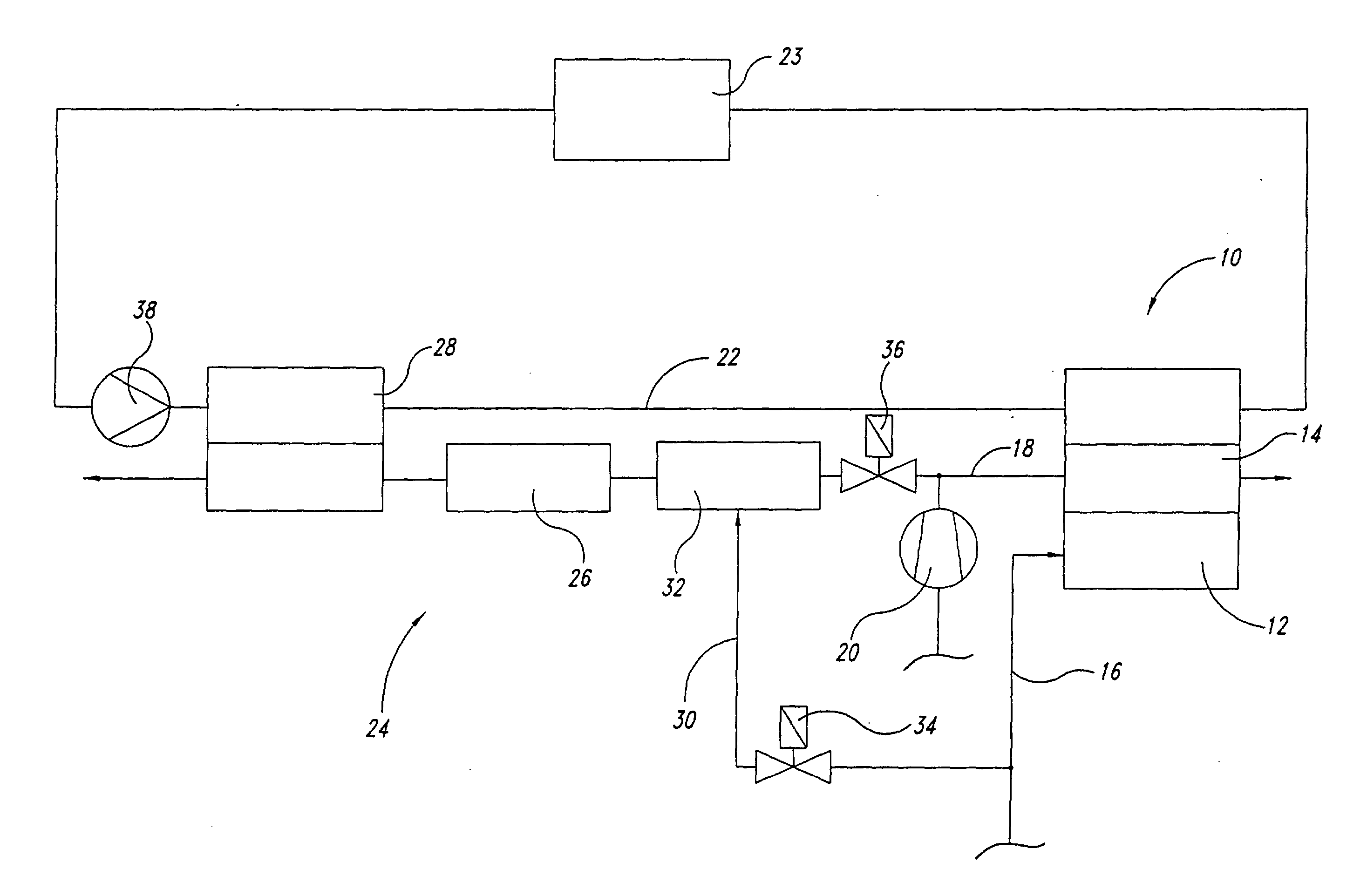
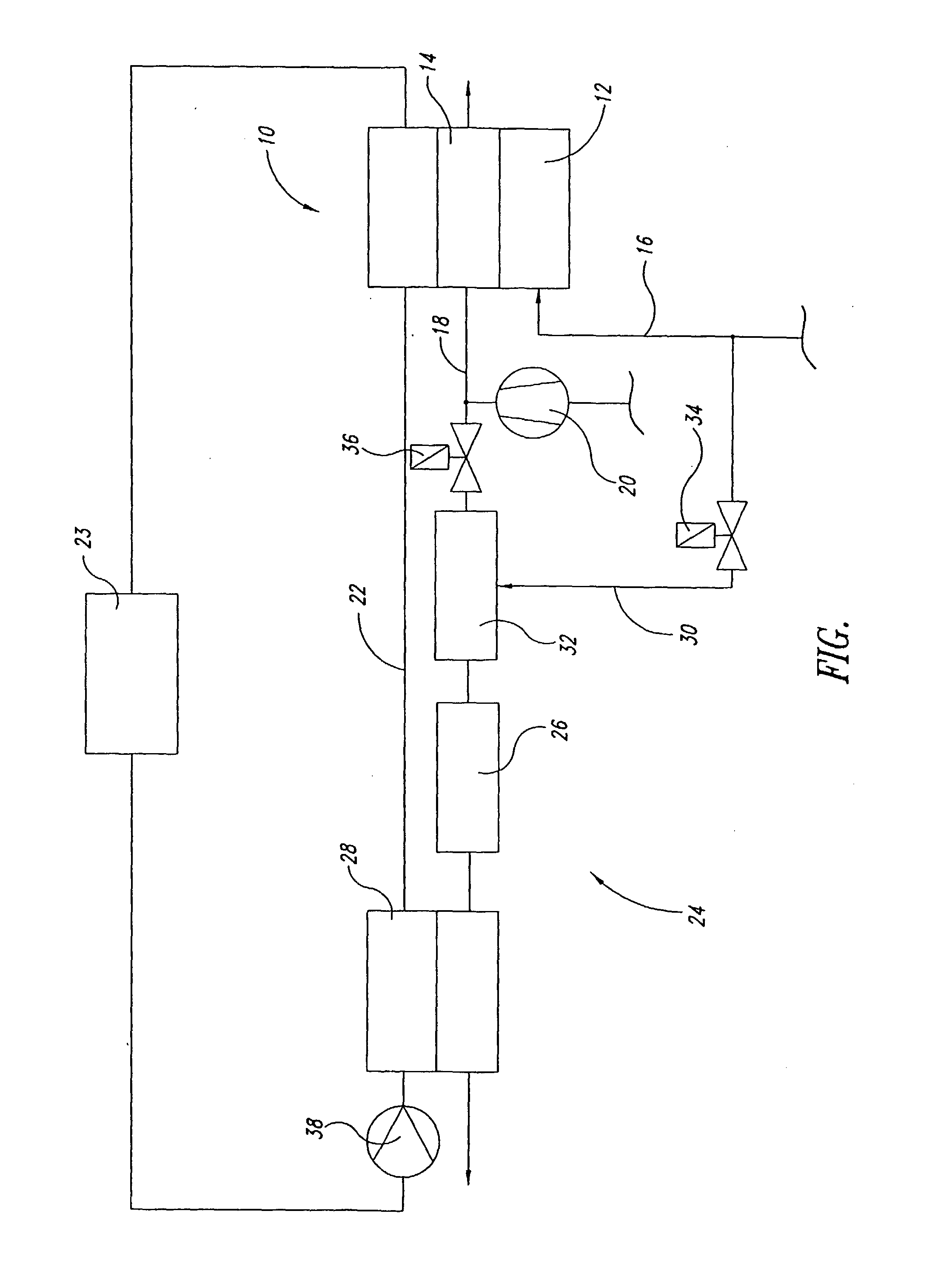
Method for cold-start of fuel cell stack
PatentActiveUS10249890B2
Innovation
- Limiting power drawn from the fuel cell stack based on water solubility and temperature to control water content within an ice tolerance curve, using a coolant pump to quickly reintroduce heat and prevent ice formation, thereby reducing intermittent or total power loss.


Environmental Regulations for Cold Climate Vehicles
Environmental regulations for cold climate vehicles have become increasingly stringent as governments worldwide recognize the critical need to address both air quality and climate change challenges in harsh winter conditions. These regulatory frameworks specifically target vehicle performance in sub-zero temperatures, where traditional internal combustion engines and emerging fuel cell technologies face unique operational challenges.
The European Union has established comprehensive cold weather testing protocols under the Euro 6d emissions standards, requiring vehicles to demonstrate compliance at temperatures as low as -7°C. These regulations mandate that fuel cell vehicles maintain emission performance and operational efficiency during cold start procedures, with specific attention to hydrogen consumption rates and water management systems during freeze-thaw cycles.
North American regulations, particularly those enforced by the California Air Resources Board (CARB) and Environment and Climate Change Canada, have implemented zero-emission vehicle mandates that include cold climate performance requirements. These standards specify that fuel cell vehicles must achieve minimum driving range and power output capabilities within defined timeframes during cold start scenarios, typically requiring 50% of rated power within 30 seconds at -20°C ambient temperature.
The regulatory landscape also addresses safety considerations unique to cold climate fuel cell operation. Standards such as SAE J2578 and ISO 23273 establish requirements for hydrogen system integrity during freeze conditions, including pressure relief valve functionality and hydrogen leak detection system performance at low temperatures. These regulations ensure that fuel cell vehicles maintain safety standards even when ice formation affects system components.
Emerging regulations in Nordic countries and Canada are pioneering performance-based standards that directly correlate with fuel cell cold start optimization. These frameworks establish minimum acceptable start-up times, energy efficiency thresholds, and durability requirements for fuel cell stacks operating in extreme cold conditions, driving technological innovation in membrane materials, thermal management systems, and control algorithms.
Compliance with these evolving environmental regulations necessitates significant investment in cold climate testing infrastructure and validation procedures, ultimately shaping the development priorities for fuel cell cold start performance optimization technologies across the automotive industry.
The European Union has established comprehensive cold weather testing protocols under the Euro 6d emissions standards, requiring vehicles to demonstrate compliance at temperatures as low as -7°C. These regulations mandate that fuel cell vehicles maintain emission performance and operational efficiency during cold start procedures, with specific attention to hydrogen consumption rates and water management systems during freeze-thaw cycles.
North American regulations, particularly those enforced by the California Air Resources Board (CARB) and Environment and Climate Change Canada, have implemented zero-emission vehicle mandates that include cold climate performance requirements. These standards specify that fuel cell vehicles must achieve minimum driving range and power output capabilities within defined timeframes during cold start scenarios, typically requiring 50% of rated power within 30 seconds at -20°C ambient temperature.
The regulatory landscape also addresses safety considerations unique to cold climate fuel cell operation. Standards such as SAE J2578 and ISO 23273 establish requirements for hydrogen system integrity during freeze conditions, including pressure relief valve functionality and hydrogen leak detection system performance at low temperatures. These regulations ensure that fuel cell vehicles maintain safety standards even when ice formation affects system components.
Emerging regulations in Nordic countries and Canada are pioneering performance-based standards that directly correlate with fuel cell cold start optimization. These frameworks establish minimum acceptable start-up times, energy efficiency thresholds, and durability requirements for fuel cell stacks operating in extreme cold conditions, driving technological innovation in membrane materials, thermal management systems, and control algorithms.
Compliance with these evolving environmental regulations necessitates significant investment in cold climate testing infrastructure and validation procedures, ultimately shaping the development priorities for fuel cell cold start performance optimization technologies across the automotive industry.
Safety Standards for Fuel Cell Cold Start Operations
Safety standards for fuel cell cold start operations represent a critical framework governing the secure initiation and operation of fuel cell systems under low-temperature conditions. These standards encompass comprehensive protocols designed to mitigate risks associated with hydrogen handling, electrical safety, and thermal management during the vulnerable cold start phase when system components operate outside their optimal temperature ranges.
The International Organization for Standardization (ISO) 14687 series establishes fundamental hydrogen quality requirements that become particularly stringent during cold start scenarios, where impurities can cause system degradation or safety hazards. Additionally, ISO 23273 addresses fuel cell road vehicle safety requirements, including specific provisions for cold weather operations that mandate enhanced leak detection systems and emergency shutdown procedures when ambient temperatures fall below operational thresholds.
Electrical safety standards under IEC 62282 series define critical parameters for fuel cell systems during cold start, including insulation resistance requirements that must be maintained despite temperature-induced material property changes. These standards specify minimum voltage isolation levels and ground fault detection capabilities that remain functional even when electrolyte conductivity varies due to temperature fluctuations.
Hydrogen leak detection and ventilation requirements become more stringent during cold start operations due to altered gas density and dispersion characteristics at low temperatures. Safety standards mandate enhanced sensor sensitivity and reduced response times, typically requiring detection capabilities of 25% lower explosive limit with response times under 10 seconds, compared to standard operating conditions.
Thermal safety protocols address the controlled heating of fuel cell components to prevent thermal shock and ensure uniform temperature distribution. Standards specify maximum heating rates, typically limiting temperature increases to 2-5°C per minute for polymer electrolyte membrane fuel cells, while maintaining continuous monitoring of hot spots that could indicate component failure or unsafe operating conditions.
Emergency shutdown procedures for cold start operations require specialized protocols that account for the increased risk of component damage during rapid temperature changes. These standards mandate fail-safe mechanisms that can safely terminate operations while preventing hydrogen accumulation and ensuring proper system purging even under adverse temperature conditions.
The International Organization for Standardization (ISO) 14687 series establishes fundamental hydrogen quality requirements that become particularly stringent during cold start scenarios, where impurities can cause system degradation or safety hazards. Additionally, ISO 23273 addresses fuel cell road vehicle safety requirements, including specific provisions for cold weather operations that mandate enhanced leak detection systems and emergency shutdown procedures when ambient temperatures fall below operational thresholds.
Electrical safety standards under IEC 62282 series define critical parameters for fuel cell systems during cold start, including insulation resistance requirements that must be maintained despite temperature-induced material property changes. These standards specify minimum voltage isolation levels and ground fault detection capabilities that remain functional even when electrolyte conductivity varies due to temperature fluctuations.
Hydrogen leak detection and ventilation requirements become more stringent during cold start operations due to altered gas density and dispersion characteristics at low temperatures. Safety standards mandate enhanced sensor sensitivity and reduced response times, typically requiring detection capabilities of 25% lower explosive limit with response times under 10 seconds, compared to standard operating conditions.
Thermal safety protocols address the controlled heating of fuel cell components to prevent thermal shock and ensure uniform temperature distribution. Standards specify maximum heating rates, typically limiting temperature increases to 2-5°C per minute for polymer electrolyte membrane fuel cells, while maintaining continuous monitoring of hot spots that could indicate component failure or unsafe operating conditions.
Emergency shutdown procedures for cold start operations require specialized protocols that account for the increased risk of component damage during rapid temperature changes. These standards mandate fail-safe mechanisms that can safely terminate operations while preventing hydrogen accumulation and ensuring proper system purging even under adverse temperature conditions.
Unlock deeper insights with PatSnap Eureka Quick Research — get a full tech report to explore trends and direct your research. Try now!
Generate Your Research Report Instantly with AI Agent
Supercharge your innovation with PatSnap Eureka AI Agent Platform!