

How To Optimize Niobium Anode Thickness For EV Efficiency
MAY 15, 20269 MIN READ
Generate Your Research Report Instantly with AI Agent
PatSnap Eureka helps you evaluate technical feasibility & market potential.
Niobium Anode EV Battery Technology Background and Goals
The evolution of electric vehicle battery technology has been marked by continuous pursuit of higher energy density, faster charging capabilities, and enhanced safety characteristics. Traditional lithium-ion batteries utilizing graphite anodes have reached performance plateaus, prompting researchers to explore alternative anode materials that can overcome current limitations. Among emerging solutions, niobium-based anodes have garnered significant attention due to their unique electrochemical properties and potential to revolutionize EV battery performance.
Niobium anodes represent a paradigm shift from conventional carbon-based materials, offering superior rate capabilities and enhanced safety profiles. The crystalline structure of niobium compounds enables rapid lithium-ion intercalation and deintercalation processes, potentially reducing charging times from hours to minutes. This breakthrough addresses one of the most critical barriers to widespread EV adoption: range anxiety and charging infrastructure limitations.
The development trajectory of niobium anode technology has accelerated over the past decade, driven by advances in materials science and nanofabrication techniques. Early research focused on niobium pentoxide (Nb2O5) as a promising anode material, demonstrating excellent cycling stability and high-rate performance. Subsequent investigations explored various niobium compounds, including niobium titanium oxides and doped variants, each offering distinct advantages in specific applications.
Current research objectives center on optimizing anode thickness to maximize energy density while maintaining rapid charging capabilities. The thickness parameter directly influences battery capacity, power output, and thermal management characteristics. Too thin anodes may limit energy storage capacity, while excessive thickness can impede ion transport and increase internal resistance, ultimately compromising charging speed and efficiency.
The primary technical goals encompass achieving optimal balance between volumetric energy density and power density through precise thickness control. Researchers aim to establish design principles that enable niobium anodes to deliver both high capacity retention over extended cycling and ultra-fast charging capabilities essential for next-generation EVs. Additionally, manufacturing scalability and cost-effectiveness remain critical objectives for commercial viability.
Advanced characterization techniques and computational modeling approaches are being employed to understand the relationship between anode thickness and electrochemical performance. These investigations seek to identify the optimal thickness range that maximizes lithium-ion diffusion kinetics while ensuring structural integrity during repeated charge-discharge cycles, ultimately enabling the development of superior EV battery systems.
Niobium anodes represent a paradigm shift from conventional carbon-based materials, offering superior rate capabilities and enhanced safety profiles. The crystalline structure of niobium compounds enables rapid lithium-ion intercalation and deintercalation processes, potentially reducing charging times from hours to minutes. This breakthrough addresses one of the most critical barriers to widespread EV adoption: range anxiety and charging infrastructure limitations.
The development trajectory of niobium anode technology has accelerated over the past decade, driven by advances in materials science and nanofabrication techniques. Early research focused on niobium pentoxide (Nb2O5) as a promising anode material, demonstrating excellent cycling stability and high-rate performance. Subsequent investigations explored various niobium compounds, including niobium titanium oxides and doped variants, each offering distinct advantages in specific applications.
Current research objectives center on optimizing anode thickness to maximize energy density while maintaining rapid charging capabilities. The thickness parameter directly influences battery capacity, power output, and thermal management characteristics. Too thin anodes may limit energy storage capacity, while excessive thickness can impede ion transport and increase internal resistance, ultimately compromising charging speed and efficiency.
The primary technical goals encompass achieving optimal balance between volumetric energy density and power density through precise thickness control. Researchers aim to establish design principles that enable niobium anodes to deliver both high capacity retention over extended cycling and ultra-fast charging capabilities essential for next-generation EVs. Additionally, manufacturing scalability and cost-effectiveness remain critical objectives for commercial viability.
Advanced characterization techniques and computational modeling approaches are being employed to understand the relationship between anode thickness and electrochemical performance. These investigations seek to identify the optimal thickness range that maximizes lithium-ion diffusion kinetics while ensuring structural integrity during repeated charge-discharge cycles, ultimately enabling the development of superior EV battery systems.
EV Market Demand for Advanced Battery Performance
The electric vehicle market is experiencing unprecedented growth driven by stringent environmental regulations, government incentives, and increasing consumer awareness of sustainable transportation. This expansion has created substantial demand for advanced battery technologies that can deliver superior performance metrics including higher energy density, faster charging capabilities, and extended cycle life. Current lithium-ion batteries face limitations in meeting these evolving requirements, particularly in achieving the optimal balance between power output and longevity that modern EVs demand.
Battery performance directly impacts critical EV characteristics such as driving range, charging time, and overall vehicle efficiency. Consumers increasingly expect EVs to match or exceed the convenience of traditional internal combustion engine vehicles, creating pressure for battery technologies that can support longer distances between charges and rapid charging capabilities. The automotive industry recognizes that battery advancement is fundamental to widespread EV adoption and market competitiveness.
Niobium-based anode materials have emerged as a promising solution to address these performance challenges. Unlike conventional graphite anodes, niobium anodes offer superior lithium-ion intercalation properties, enabling faster charging rates without compromising battery safety or cycle life. The optimization of niobium anode thickness represents a critical engineering challenge that directly influences battery performance parameters including capacity, power density, and thermal management.
Market demand for enhanced battery performance extends beyond passenger vehicles to commercial transportation, energy storage systems, and industrial applications. Fleet operators require batteries with consistent performance under demanding operational conditions, while grid-scale energy storage applications demand long-term reliability and efficiency. These diverse applications create multiple market segments with specific performance requirements that advanced anode technologies must address.
The competitive landscape in battery technology development has intensified as automotive manufacturers and battery suppliers invest heavily in next-generation materials and manufacturing processes. Companies are seeking differentiation through proprietary battery technologies that can provide competitive advantages in terms of performance, cost, and manufacturing scalability. Niobium anode optimization represents a strategic opportunity to achieve these objectives while meeting the growing market demand for superior battery performance in electric vehicles and related applications.
Battery performance directly impacts critical EV characteristics such as driving range, charging time, and overall vehicle efficiency. Consumers increasingly expect EVs to match or exceed the convenience of traditional internal combustion engine vehicles, creating pressure for battery technologies that can support longer distances between charges and rapid charging capabilities. The automotive industry recognizes that battery advancement is fundamental to widespread EV adoption and market competitiveness.
Niobium-based anode materials have emerged as a promising solution to address these performance challenges. Unlike conventional graphite anodes, niobium anodes offer superior lithium-ion intercalation properties, enabling faster charging rates without compromising battery safety or cycle life. The optimization of niobium anode thickness represents a critical engineering challenge that directly influences battery performance parameters including capacity, power density, and thermal management.
Market demand for enhanced battery performance extends beyond passenger vehicles to commercial transportation, energy storage systems, and industrial applications. Fleet operators require batteries with consistent performance under demanding operational conditions, while grid-scale energy storage applications demand long-term reliability and efficiency. These diverse applications create multiple market segments with specific performance requirements that advanced anode technologies must address.
The competitive landscape in battery technology development has intensified as automotive manufacturers and battery suppliers invest heavily in next-generation materials and manufacturing processes. Companies are seeking differentiation through proprietary battery technologies that can provide competitive advantages in terms of performance, cost, and manufacturing scalability. Niobium anode optimization represents a strategic opportunity to achieve these objectives while meeting the growing market demand for superior battery performance in electric vehicles and related applications.
Current Niobium Anode Thickness Optimization Challenges
The optimization of niobium anode thickness in electric vehicle batteries faces several critical technical challenges that significantly impact overall system performance and commercial viability. Current manufacturing processes struggle with achieving precise thickness control at the nanoscale level, where variations of even a few nanometers can substantially affect electrochemical performance and energy density.
One of the primary challenges lies in the complex relationship between anode thickness and ion transport kinetics. Thicker niobium anodes provide greater active material capacity but create longer diffusion pathways for lithium ions, leading to increased internal resistance and reduced power output. Conversely, thinner anodes facilitate faster ion transport but limit overall energy storage capacity, creating a fundamental trade-off that current optimization approaches struggle to resolve effectively.
Manufacturing consistency presents another significant obstacle. Existing deposition techniques, including physical vapor deposition and electrochemical plating, exhibit inherent variability that results in thickness non-uniformities across large-scale battery cell surfaces. These variations create localized hotspots and uneven current distribution, ultimately compromising battery safety and longevity.
The thermal management aspect adds complexity to thickness optimization efforts. Niobium anodes generate heat during charge-discharge cycles, and the thermal conductivity characteristics vary with thickness. Current thermal modeling approaches lack sufficient accuracy to predict optimal thickness ranges that balance electrochemical performance with thermal stability requirements.
Interface engineering between niobium anodes and electrolyte systems remains poorly understood. The solid electrolyte interphase formation is highly dependent on anode surface area and thickness, yet existing characterization methods provide limited insight into these dynamic interfacial processes during real-world operating conditions.
Cost considerations further complicate optimization efforts. Niobium's relatively high material cost necessitates precise thickness control to minimize waste while maximizing performance benefits. Current optimization methodologies lack comprehensive cost-performance modeling frameworks that account for both material utilization efficiency and long-term battery degradation patterns.
Additionally, the integration of niobium anodes with existing battery management systems presents compatibility challenges. Conventional charging algorithms and safety protocols were designed for traditional anode materials and may not adequately accommodate the unique electrochemical characteristics of thickness-optimized niobium anodes.
One of the primary challenges lies in the complex relationship between anode thickness and ion transport kinetics. Thicker niobium anodes provide greater active material capacity but create longer diffusion pathways for lithium ions, leading to increased internal resistance and reduced power output. Conversely, thinner anodes facilitate faster ion transport but limit overall energy storage capacity, creating a fundamental trade-off that current optimization approaches struggle to resolve effectively.
Manufacturing consistency presents another significant obstacle. Existing deposition techniques, including physical vapor deposition and electrochemical plating, exhibit inherent variability that results in thickness non-uniformities across large-scale battery cell surfaces. These variations create localized hotspots and uneven current distribution, ultimately compromising battery safety and longevity.
The thermal management aspect adds complexity to thickness optimization efforts. Niobium anodes generate heat during charge-discharge cycles, and the thermal conductivity characteristics vary with thickness. Current thermal modeling approaches lack sufficient accuracy to predict optimal thickness ranges that balance electrochemical performance with thermal stability requirements.
Interface engineering between niobium anodes and electrolyte systems remains poorly understood. The solid electrolyte interphase formation is highly dependent on anode surface area and thickness, yet existing characterization methods provide limited insight into these dynamic interfacial processes during real-world operating conditions.
Cost considerations further complicate optimization efforts. Niobium's relatively high material cost necessitates precise thickness control to minimize waste while maximizing performance benefits. Current optimization methodologies lack comprehensive cost-performance modeling frameworks that account for both material utilization efficiency and long-term battery degradation patterns.
Additionally, the integration of niobium anodes with existing battery management systems presents compatibility challenges. Conventional charging algorithms and safety protocols were designed for traditional anode materials and may not adequately accommodate the unique electrochemical characteristics of thickness-optimized niobium anodes.
Current Thickness Optimization Solutions for Niobium Anodes
01 Optimization of niobium anode thickness for capacitor applications
The thickness of niobium anodes in electrolytic capacitors is critical for achieving optimal electrical performance and capacitance values. Proper thickness control ensures uniform current distribution and prevents localized heating effects that can degrade capacitor performance. The anode thickness must be carefully balanced to maximize surface area while maintaining structural integrity and electrical conductivity throughout the electrode structure.- Optimization of niobium anode thickness for capacitor applications: The thickness of niobium anodes in capacitor applications requires careful optimization to achieve desired electrical performance characteristics. Proper thickness control ensures optimal capacitance values while maintaining structural integrity. The anode thickness directly affects the surface area available for oxide formation and influences the overall capacitor performance parameters.
- Manufacturing processes for controlling niobium anode thickness: Various manufacturing techniques are employed to precisely control the thickness of niobium anodes during production. These processes include powder metallurgy methods, sintering parameters, and forming techniques that determine the final dimensional characteristics. Process control is critical for achieving consistent thickness across production batches.
- Relationship between niobium anode thickness and electrical properties: The electrical characteristics of niobium-based components are significantly influenced by anode thickness variations. Thicker anodes may provide different impedance characteristics and voltage handling capabilities compared to thinner configurations. The thickness parameter affects current distribution and overall device performance in electronic applications.
- Structural design considerations for niobium anode thickness: Design parameters for niobium anodes must account for mechanical stress, thermal expansion, and structural stability requirements. The thickness specification affects the mechanical robustness of the component and its ability to withstand operational stresses. Proper thickness design ensures long-term reliability and prevents mechanical failure modes.
- Quality control and measurement of niobium anode thickness: Accurate measurement and quality control of anode thickness are essential for ensuring product consistency and performance reliability. Various measurement techniques and inspection methods are employed to verify thickness specifications during manufacturing. Quality control processes help maintain tight tolerances and identify deviations from target thickness values.
02 Manufacturing processes for controlling niobium anode thickness
Various manufacturing techniques are employed to achieve precise control over anode thickness during production. These processes include powder metallurgy methods, sintering parameters, and forming techniques that directly influence the final thickness characteristics. The manufacturing approach significantly impacts the uniformity and consistency of the anode thickness across the entire electrode surface.Expand Specific Solutions03 Relationship between anode thickness and electrical properties
The electrical characteristics of niobium anodes are directly influenced by their thickness parameters. Thicker anodes generally provide higher capacitance but may exhibit increased equivalent series resistance. The thickness also affects the voltage rating and leakage current characteristics of the final device. Optimal thickness selection requires balancing these competing electrical requirements.Expand Specific Solutions04 Structural considerations for niobium anode thickness design
The mechanical and structural properties of niobium anodes are significantly affected by thickness variations. Proper thickness design ensures adequate mechanical strength while preventing cracking or delamination during operation. The structural integrity must be maintained across different operating conditions including temperature cycling and mechanical stress.Expand Specific Solutions05 Quality control and measurement of niobium anode thickness
Accurate measurement and quality control of anode thickness is essential for consistent product performance. Various measurement techniques and inspection methods are employed to ensure thickness uniformity and detect any variations that could affect device reliability. Quality control processes must account for thickness variations across different production batches and manufacturing conditions.Expand Specific Solutions
Key Players in Niobium Anode and EV Battery Industry
The niobium anode optimization for EV efficiency represents an emerging technology sector in the early development stage, with significant growth potential driven by increasing EV adoption and demand for faster-charging, longer-lasting batteries. The market remains relatively niche but is expanding rapidly as automotive manufacturers seek advanced battery solutions. Technology maturity varies considerably across key players, with established companies like Toshiba Corp., LG Chem Ltd., and Sony Group Corp. leveraging their extensive R&D capabilities and manufacturing expertise to advance niobium-based anode technologies. Specialized materials companies such as Global Advanced Metals Japan KK and Instituto Hercilio Randon focus specifically on niobium processing and nanoparticle production, while battery-focused firms like Ningde Amperex Technology Ltd. and SK On Co., Ltd. integrate these materials into commercial applications. Research institutions including Johns Hopkins University and Georgia Tech Research Corp. contribute fundamental research, indicating strong academic-industry collaboration driving technological advancement in this promising but still maturing field.
Toshiba Corp.
Technical Solution: Toshiba has developed advanced niobium titanium oxide (NTO) anode technology that enables ultra-fast charging capabilities. Their approach focuses on optimizing the crystalline structure of niobium-based materials to achieve thickness ranges of 50-100 micrometers, which provides optimal balance between energy density and charging speed. The company's proprietary synthesis method creates uniform particle distribution and controlled porosity, allowing for efficient lithium-ion intercalation while maintaining structural integrity during rapid charge-discharge cycles. This technology demonstrates significant improvements in cycle life, with over 10,000 charge cycles at 80% capacity retention.
Strengths: Ultra-fast charging capability, excellent cycle stability, proven commercial viability. Weaknesses: Lower energy density compared to conventional graphite anodes, higher manufacturing costs.
Sony Group Corp.
Technical Solution: Sony has pioneered the development of niobium pentoxide (Nb2O5) anodes with optimized thickness control for enhanced EV performance. Their technology utilizes a multi-layered approach where niobium oxide layers are precisely controlled at 20-80 nanometer thickness intervals to maximize surface area while maintaining mechanical stability. The company employs advanced coating techniques that ensure uniform distribution of active material, resulting in improved conductivity and reduced internal resistance. Sony's approach includes the integration of carbon nanotubes within the niobium matrix to enhance electrical conductivity, achieving charging times reduced by up to 70% compared to traditional graphite anodes while maintaining safety standards.
Strengths: Rapid charging capability, enhanced safety profile, superior temperature stability. Weaknesses: Complex manufacturing process, limited scalability for large-format EV batteries.
Core Patents in Niobium Anode Thickness Engineering
Graphene Foam-Protected Niobium-Based Composite Metal Oxide Anode Active Materials for Lithium Batteries
PatentInactiveUS20190165363A1
Innovation
- A graphene foam-protected anode layer is developed, where niobium-containing composite metal oxide particles are embedded in a solid graphene foam with elastic properties, preventing direct contact with the electrolyte and accommodating volume expansion, thus minimizing electrolyte decomposition and maintaining lithium ion storage capacity over cycles.
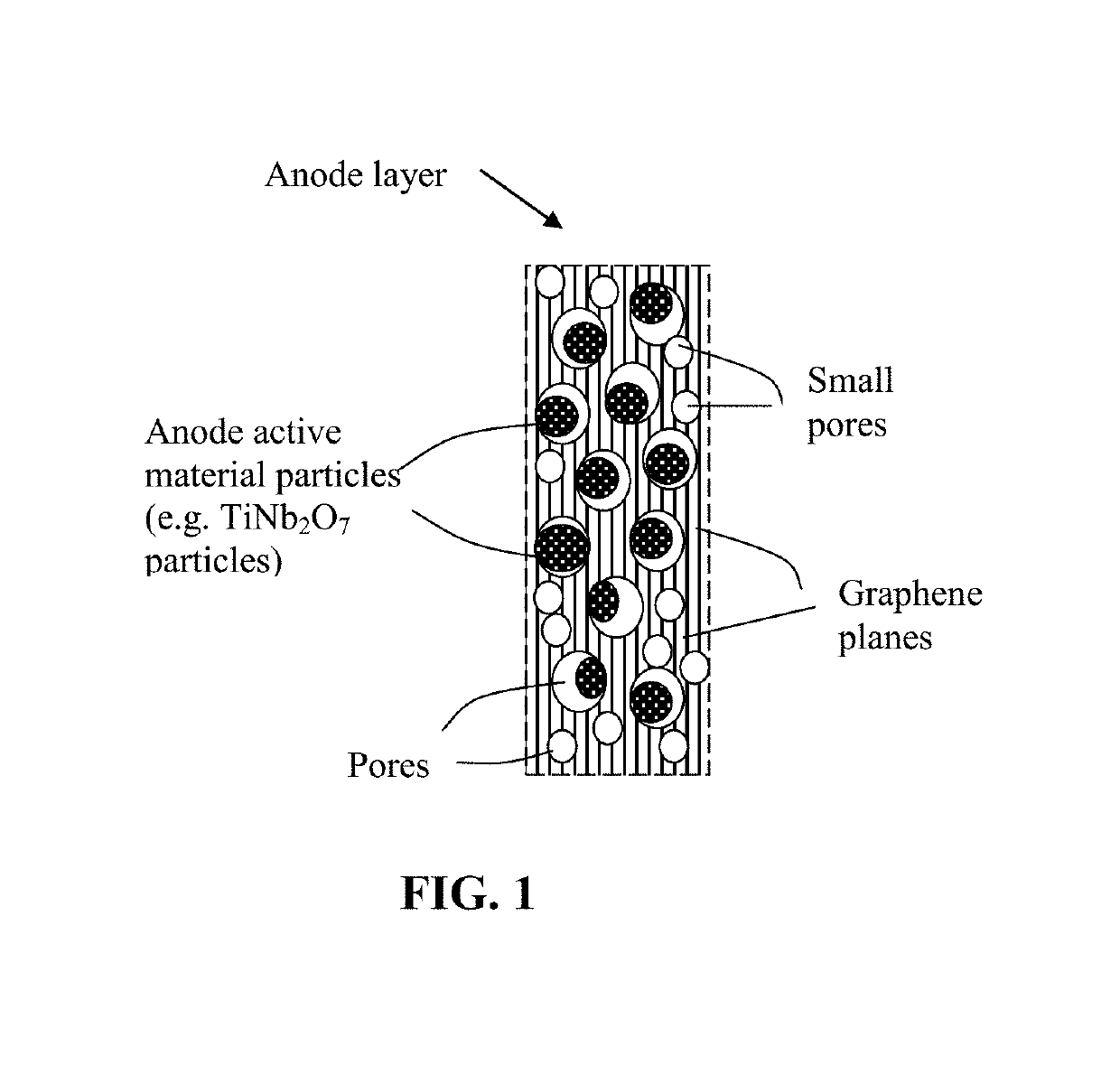
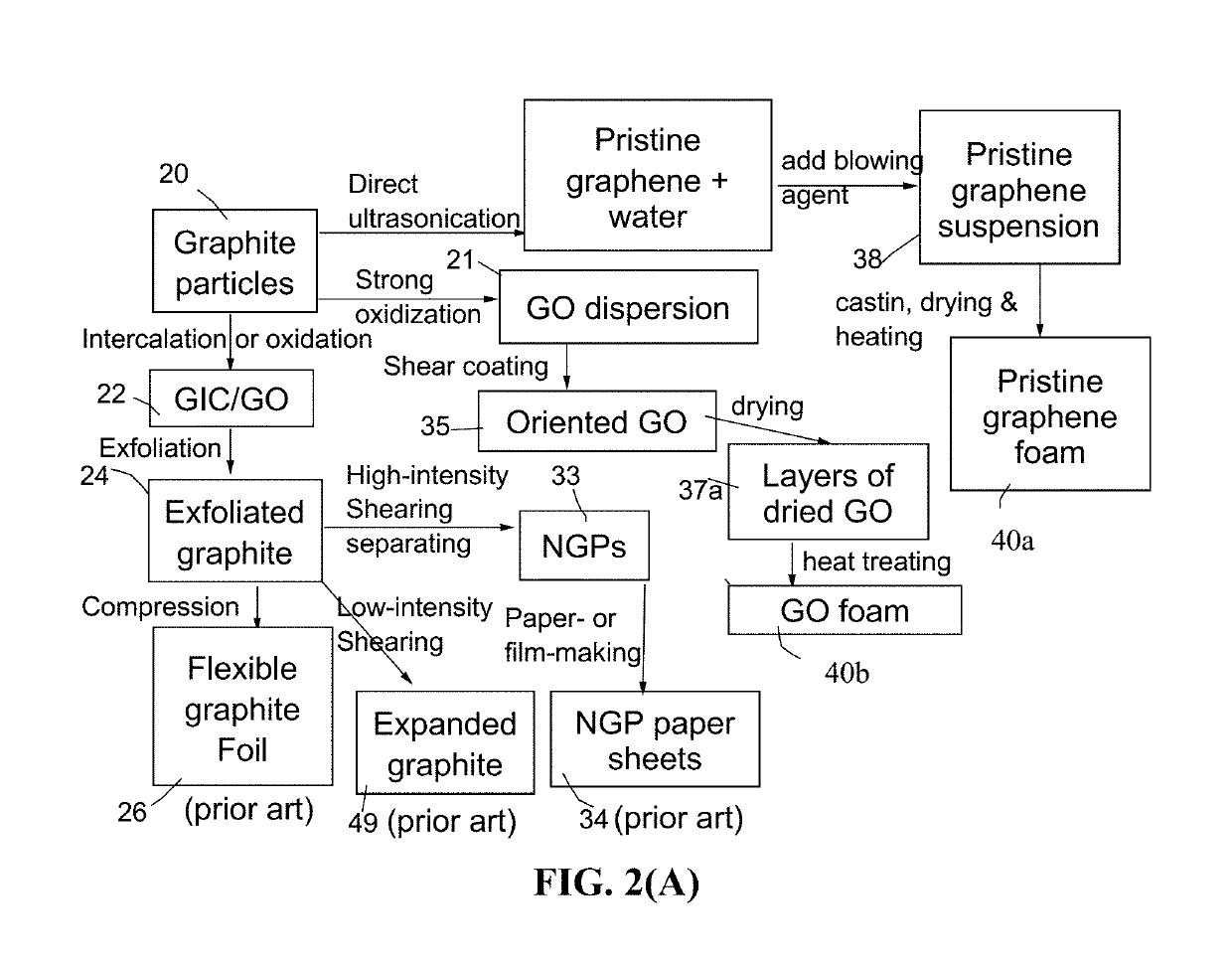
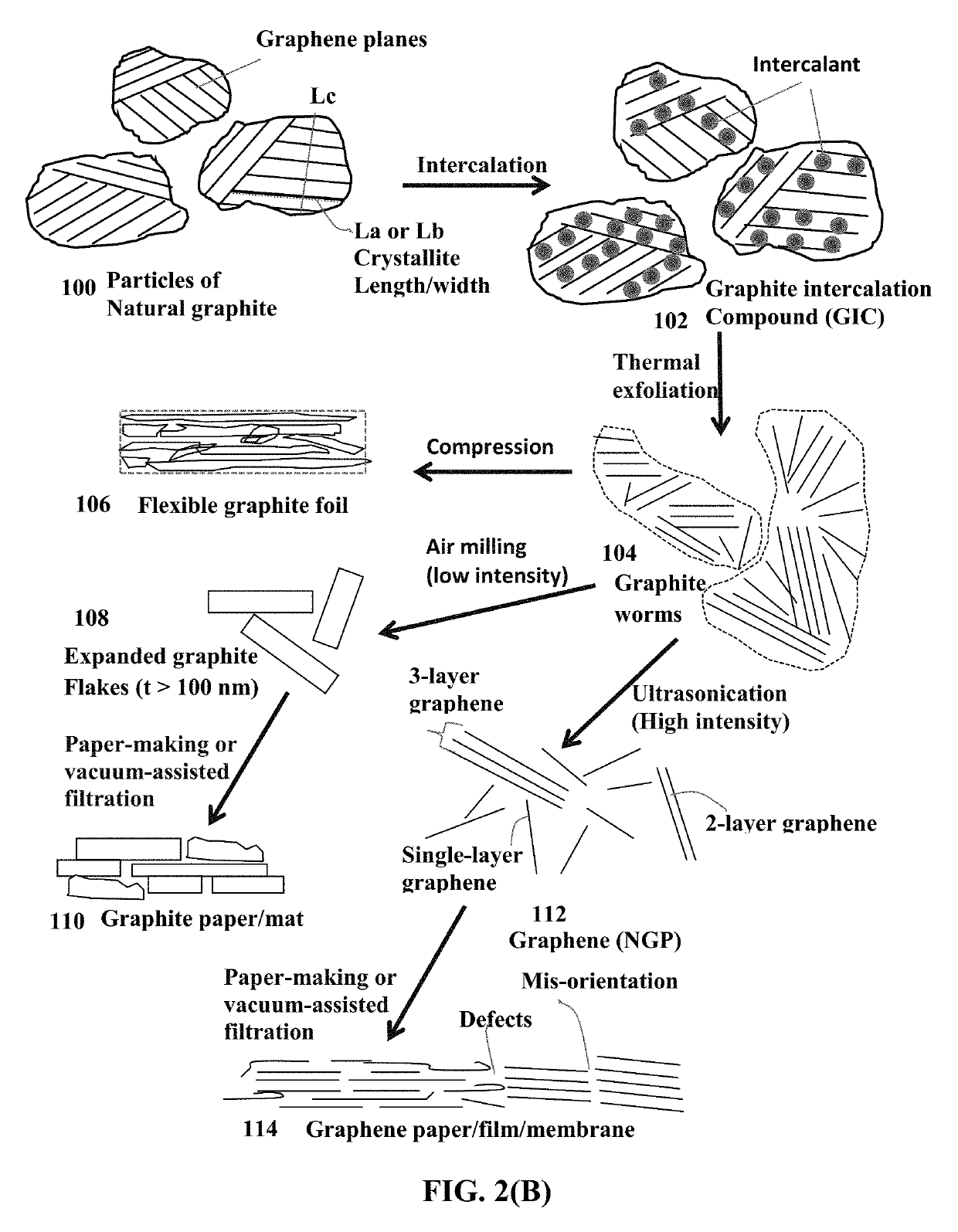

Titanium niobium oxide and molybdenum oxide multicomponent electrodes for thick all active material lithium ion electrodes
PatentWO2024226611A1
Innovation
- Development of multicomponent electrodes comprising titanium niobium oxide (TNO) and molybdenum oxide (MO) blended in various ratios, processed into sintered electrodes without conductive additives or polymer binders, enhancing electronic conductivity and mechanical strength, and allowing for high energy density and stable cycling.


Environmental Impact of Niobium Mining and Processing
The environmental implications of niobium extraction and processing present significant challenges that directly impact the sustainability of optimized niobium anodes in electric vehicles. Niobium mining operations primarily occur in Brazil, which controls approximately 85% of global production, with secondary sources in Canada and Australia. These mining activities involve open-pit extraction methods that result in substantial land disturbance, deforestation, and habitat destruction in ecologically sensitive regions.
The processing of niobium ore requires energy-intensive procedures including crushing, grinding, flotation, and high-temperature pyrometallurgical treatments. These processes consume considerable amounts of electricity and fossil fuels, contributing to greenhouse gas emissions. The carbon footprint associated with niobium production ranges from 15-25 kg CO2 equivalent per kilogram of refined niobium, depending on the processing facility's energy sources and efficiency levels.
Water consumption represents another critical environmental concern, as niobium processing facilities require substantial volumes for ore beneficiation and cooling operations. Mining operations can generate acid mine drainage, potentially contaminating local water sources with heavy metals and acidic compounds. The tailings from niobium processing contain residual chemicals and fine particles that pose long-term environmental risks if not properly managed through engineered containment systems.
Waste generation during niobium extraction includes overburden removal, tailings production, and slag formation during smelting operations. For every ton of niobium concentrate produced, approximately 200-300 tons of waste material are generated, requiring extensive land areas for disposal and long-term monitoring to prevent environmental contamination.
The optimization of niobium anode thickness must therefore consider these upstream environmental costs. While thinner anodes may reduce material consumption and associated environmental impacts, the trade-offs between performance efficiency and ecological sustainability require careful evaluation. Advanced recycling technologies and closed-loop material recovery systems are becoming increasingly important to minimize the environmental burden of niobium utilization in electric vehicle applications.
The processing of niobium ore requires energy-intensive procedures including crushing, grinding, flotation, and high-temperature pyrometallurgical treatments. These processes consume considerable amounts of electricity and fossil fuels, contributing to greenhouse gas emissions. The carbon footprint associated with niobium production ranges from 15-25 kg CO2 equivalent per kilogram of refined niobium, depending on the processing facility's energy sources and efficiency levels.
Water consumption represents another critical environmental concern, as niobium processing facilities require substantial volumes for ore beneficiation and cooling operations. Mining operations can generate acid mine drainage, potentially contaminating local water sources with heavy metals and acidic compounds. The tailings from niobium processing contain residual chemicals and fine particles that pose long-term environmental risks if not properly managed through engineered containment systems.
Waste generation during niobium extraction includes overburden removal, tailings production, and slag formation during smelting operations. For every ton of niobium concentrate produced, approximately 200-300 tons of waste material are generated, requiring extensive land areas for disposal and long-term monitoring to prevent environmental contamination.
The optimization of niobium anode thickness must therefore consider these upstream environmental costs. While thinner anodes may reduce material consumption and associated environmental impacts, the trade-offs between performance efficiency and ecological sustainability require careful evaluation. Advanced recycling technologies and closed-loop material recovery systems are becoming increasingly important to minimize the environmental burden of niobium utilization in electric vehicle applications.
Manufacturing Scalability for Optimized Niobium Anodes
The transition from laboratory-scale niobium anode optimization to industrial manufacturing presents significant scalability challenges that must be addressed to realize commercial viability in electric vehicle applications. Current manufacturing processes for niobium anodes rely heavily on specialized deposition techniques such as magnetron sputtering and chemical vapor deposition, which demonstrate excellent thickness control at small scales but face substantial limitations when scaled to automotive battery production volumes.
Manufacturing scalability fundamentally depends on achieving consistent thickness uniformity across large substrate areas while maintaining the precise dimensional tolerances required for optimal electrochemical performance. Traditional batch processing methods, while suitable for research applications, cannot meet the throughput demands of EV battery manufacturing, where production rates must reach thousands of cells per hour to achieve economic feasibility.
The primary scalability bottleneck lies in the deposition rate versus thickness uniformity trade-off. High-rate deposition processes often compromise the nanoscale precision essential for optimized niobium anode performance, while maintaining research-grade uniformity significantly reduces manufacturing throughput. Advanced roll-to-roll processing techniques show promise for addressing this challenge, enabling continuous production of niobium-coated current collectors with improved thickness consistency across large areas.
Quality control systems represent another critical scalability consideration. Real-time thickness monitoring and feedback control mechanisms must be integrated into high-speed manufacturing lines to ensure each anode meets the stringent specifications derived from optimization studies. Non-destructive measurement techniques, including advanced optical interferometry and X-ray fluorescence spectroscopy, are being developed specifically for in-line thickness verification during continuous production processes.
Cost considerations become paramount at manufacturing scale, where material utilization efficiency and process yield directly impact commercial viability. Optimized niobium anodes require precise material deposition with minimal waste, necessitating closed-loop recycling systems and advanced process control algorithms to maintain economic competitiveness against conventional anode technologies while delivering the performance advantages that justify the manufacturing complexity.
Manufacturing scalability fundamentally depends on achieving consistent thickness uniformity across large substrate areas while maintaining the precise dimensional tolerances required for optimal electrochemical performance. Traditional batch processing methods, while suitable for research applications, cannot meet the throughput demands of EV battery manufacturing, where production rates must reach thousands of cells per hour to achieve economic feasibility.
The primary scalability bottleneck lies in the deposition rate versus thickness uniformity trade-off. High-rate deposition processes often compromise the nanoscale precision essential for optimized niobium anode performance, while maintaining research-grade uniformity significantly reduces manufacturing throughput. Advanced roll-to-roll processing techniques show promise for addressing this challenge, enabling continuous production of niobium-coated current collectors with improved thickness consistency across large areas.
Quality control systems represent another critical scalability consideration. Real-time thickness monitoring and feedback control mechanisms must be integrated into high-speed manufacturing lines to ensure each anode meets the stringent specifications derived from optimization studies. Non-destructive measurement techniques, including advanced optical interferometry and X-ray fluorescence spectroscopy, are being developed specifically for in-line thickness verification during continuous production processes.
Cost considerations become paramount at manufacturing scale, where material utilization efficiency and process yield directly impact commercial viability. Optimized niobium anodes require precise material deposition with minimal waste, necessitating closed-loop recycling systems and advanced process control algorithms to maintain economic competitiveness against conventional anode technologies while delivering the performance advantages that justify the manufacturing complexity.
Unlock deeper insights with PatSnap Eureka Quick Research — get a full tech report to explore trends and direct your research. Try now!
Generate Your Research Report Instantly with AI Agent
Supercharge your innovation with PatSnap Eureka AI Agent Platform!