

How To Optimize Sintering Parameters For Porous Ceramic Substrates
MAY 26, 20269 MIN READ
Generate Your Research Report Instantly with AI Agent
PatSnap Eureka helps you evaluate technical feasibility & market potential.
Ceramic Sintering Background and Optimization Goals
Ceramic sintering represents a fundamental thermal processing technique that transforms loose ceramic powder compacts into dense, mechanically robust structures through controlled heating below the melting point. This process relies on atomic diffusion mechanisms that eliminate porosity while promoting particle bonding, ultimately determining the final microstructure and performance characteristics of ceramic components. The sintering process involves complex mass transport phenomena including surface diffusion, grain boundary diffusion, and volume diffusion, each contributing to densification and grain growth at different temperature ranges.
The evolution of ceramic sintering technology has progressed from traditional atmospheric firing methods to sophisticated controlled-atmosphere and pressure-assisted techniques. Early developments focused on empirical temperature and time optimization, while modern approaches integrate advanced process control systems, real-time monitoring capabilities, and computational modeling to achieve precise microstructural control. Recent decades have witnessed significant advancements in sintering aid development, atmosphere control strategies, and multi-stage heating profiles that enable tailored porosity management.
Porous ceramic substrates present unique sintering challenges due to the requirement of maintaining controlled porosity while achieving adequate mechanical strength and dimensional stability. Unlike dense ceramics where maximum densification is typically desired, porous substrates demand careful balance between particle bonding and pore preservation. This necessitates precise control of sintering parameters including heating rate, peak temperature, dwell time, cooling rate, and atmospheric conditions to achieve target porosity levels while ensuring structural integrity.
The primary optimization objectives for porous ceramic substrate sintering encompass achieving uniform pore size distribution, maintaining dimensional accuracy, maximizing mechanical strength within porosity constraints, and ensuring reproducible processing outcomes. These goals require sophisticated understanding of how individual sintering parameters influence competing densification and grain growth mechanisms. Temperature profiles must be optimized to promote sufficient neck formation between particles while preventing excessive pore closure that would compromise permeability or filtration performance.
Contemporary sintering optimization strategies increasingly rely on multi-objective optimization approaches that simultaneously consider mechanical properties, thermal characteristics, and functional performance requirements. Advanced characterization techniques enable real-time monitoring of microstructural evolution during sintering, facilitating development of predictive models that correlate processing parameters with final substrate properties. These developments support the growing demand for application-specific porous ceramics in filtration, catalysis, biomedical implants, and thermal management systems.
The evolution of ceramic sintering technology has progressed from traditional atmospheric firing methods to sophisticated controlled-atmosphere and pressure-assisted techniques. Early developments focused on empirical temperature and time optimization, while modern approaches integrate advanced process control systems, real-time monitoring capabilities, and computational modeling to achieve precise microstructural control. Recent decades have witnessed significant advancements in sintering aid development, atmosphere control strategies, and multi-stage heating profiles that enable tailored porosity management.
Porous ceramic substrates present unique sintering challenges due to the requirement of maintaining controlled porosity while achieving adequate mechanical strength and dimensional stability. Unlike dense ceramics where maximum densification is typically desired, porous substrates demand careful balance between particle bonding and pore preservation. This necessitates precise control of sintering parameters including heating rate, peak temperature, dwell time, cooling rate, and atmospheric conditions to achieve target porosity levels while ensuring structural integrity.
The primary optimization objectives for porous ceramic substrate sintering encompass achieving uniform pore size distribution, maintaining dimensional accuracy, maximizing mechanical strength within porosity constraints, and ensuring reproducible processing outcomes. These goals require sophisticated understanding of how individual sintering parameters influence competing densification and grain growth mechanisms. Temperature profiles must be optimized to promote sufficient neck formation between particles while preventing excessive pore closure that would compromise permeability or filtration performance.
Contemporary sintering optimization strategies increasingly rely on multi-objective optimization approaches that simultaneously consider mechanical properties, thermal characteristics, and functional performance requirements. Advanced characterization techniques enable real-time monitoring of microstructural evolution during sintering, facilitating development of predictive models that correlate processing parameters with final substrate properties. These developments support the growing demand for application-specific porous ceramics in filtration, catalysis, biomedical implants, and thermal management systems.
Market Demand for Porous Ceramic Substrates
The global market for porous ceramic substrates has experienced substantial growth driven by increasing demand across multiple high-technology sectors. These advanced materials serve critical functions in automotive catalytic converters, industrial filtration systems, biomedical implants, and electronic applications where controlled porosity and thermal stability are essential performance requirements.
Automotive applications represent the largest market segment, where porous ceramic substrates function as catalyst supports in emission control systems. The transition toward stricter environmental regulations worldwide has intensified demand for more efficient catalytic converter designs, requiring substrates with optimized pore structures and enhanced surface area characteristics. Electric vehicle adoption has simultaneously created new opportunities in battery thermal management systems.
The filtration industry demonstrates robust demand for porous ceramics in water treatment, air purification, and industrial process applications. Municipal water treatment facilities increasingly rely on ceramic membrane technologies for their superior chemical resistance and regeneration capabilities compared to polymer alternatives. Industrial sectors including petrochemicals, pharmaceuticals, and food processing require high-temperature filtration solutions that only ceramic substrates can reliably provide.
Biomedical applications constitute a rapidly expanding market segment, particularly in orthopedic implants and tissue engineering scaffolds. The biocompatibility and controllable pore architecture of ceramic substrates enable enhanced bone ingrowth and integration, driving adoption in joint replacement procedures and dental applications. Regenerative medicine research continues to explore new applications requiring precisely engineered porous structures.
Electronics and semiconductor industries utilize porous ceramic substrates for thermal management, electromagnetic interference shielding, and specialized sensor applications. The miniaturization trend in electronic devices demands substrates with tailored thermal conductivity and dielectric properties achievable through controlled sintering parameter optimization.
Market growth trajectories indicate sustained expansion across all application sectors, with emerging technologies in energy storage, environmental remediation, and advanced manufacturing creating additional demand streams. The optimization of sintering parameters directly impacts product performance characteristics, making process improvements essential for meeting evolving market requirements and maintaining competitive positioning in this technology-driven marketplace.
Automotive applications represent the largest market segment, where porous ceramic substrates function as catalyst supports in emission control systems. The transition toward stricter environmental regulations worldwide has intensified demand for more efficient catalytic converter designs, requiring substrates with optimized pore structures and enhanced surface area characteristics. Electric vehicle adoption has simultaneously created new opportunities in battery thermal management systems.
The filtration industry demonstrates robust demand for porous ceramics in water treatment, air purification, and industrial process applications. Municipal water treatment facilities increasingly rely on ceramic membrane technologies for their superior chemical resistance and regeneration capabilities compared to polymer alternatives. Industrial sectors including petrochemicals, pharmaceuticals, and food processing require high-temperature filtration solutions that only ceramic substrates can reliably provide.
Biomedical applications constitute a rapidly expanding market segment, particularly in orthopedic implants and tissue engineering scaffolds. The biocompatibility and controllable pore architecture of ceramic substrates enable enhanced bone ingrowth and integration, driving adoption in joint replacement procedures and dental applications. Regenerative medicine research continues to explore new applications requiring precisely engineered porous structures.
Electronics and semiconductor industries utilize porous ceramic substrates for thermal management, electromagnetic interference shielding, and specialized sensor applications. The miniaturization trend in electronic devices demands substrates with tailored thermal conductivity and dielectric properties achievable through controlled sintering parameter optimization.
Market growth trajectories indicate sustained expansion across all application sectors, with emerging technologies in energy storage, environmental remediation, and advanced manufacturing creating additional demand streams. The optimization of sintering parameters directly impacts product performance characteristics, making process improvements essential for meeting evolving market requirements and maintaining competitive positioning in this technology-driven marketplace.
Current Sintering Challenges and Parameter Control Issues
The sintering of porous ceramic substrates presents a complex array of challenges that significantly impact the final product quality and performance characteristics. One of the primary difficulties lies in achieving uniform densification while maintaining the desired porosity levels throughout the substrate structure. Traditional sintering approaches often result in non-uniform pore distribution, where surface regions may over-densify while interior sections remain inadequately consolidated.
Temperature control represents a critical challenge in porous ceramic sintering processes. Conventional heating methods frequently generate temperature gradients across the substrate thickness, leading to differential shrinkage rates and internal stress development. These thermal inconsistencies can cause warping, cracking, or complete structural failure during the sintering cycle. The situation becomes more complex when dealing with substrates containing multiple ceramic phases with different sintering kinetics.
Atmosphere management during sintering poses another significant technical hurdle. Maintaining optimal oxygen partial pressure and controlling gas flow rates are essential for preventing unwanted chemical reactions and ensuring proper pore formation. Inadequate atmosphere control can result in grain boundary oxidation, phase transformations, or pore collapse, ultimately compromising the substrate's mechanical and thermal properties.
Parameter interdependency creates substantial control difficulties in current sintering operations. The complex relationships between temperature, heating rate, dwell time, pressure, and atmosphere composition make it challenging to predict optimal processing conditions. Small variations in any single parameter can cascade through the system, affecting multiple material properties simultaneously. This interconnected nature makes process optimization particularly demanding.
Real-time monitoring and feedback control systems remain underdeveloped in most industrial sintering operations. Current practices rely heavily on predetermined temperature profiles and post-process quality assessment, lacking the capability to make dynamic adjustments based on in-situ measurements. This limitation prevents operators from responding to process deviations before they result in defective products.
Scaling challenges emerge when transitioning from laboratory-scale optimization to industrial production volumes. Heat transfer characteristics, atmosphere uniformity, and thermal mass effects change dramatically with furnace size, making direct parameter translation ineffective. Additionally, batch-to-batch variations in raw material properties require adaptive control strategies that current systems cannot adequately provide.
Temperature control represents a critical challenge in porous ceramic sintering processes. Conventional heating methods frequently generate temperature gradients across the substrate thickness, leading to differential shrinkage rates and internal stress development. These thermal inconsistencies can cause warping, cracking, or complete structural failure during the sintering cycle. The situation becomes more complex when dealing with substrates containing multiple ceramic phases with different sintering kinetics.
Atmosphere management during sintering poses another significant technical hurdle. Maintaining optimal oxygen partial pressure and controlling gas flow rates are essential for preventing unwanted chemical reactions and ensuring proper pore formation. Inadequate atmosphere control can result in grain boundary oxidation, phase transformations, or pore collapse, ultimately compromising the substrate's mechanical and thermal properties.
Parameter interdependency creates substantial control difficulties in current sintering operations. The complex relationships between temperature, heating rate, dwell time, pressure, and atmosphere composition make it challenging to predict optimal processing conditions. Small variations in any single parameter can cascade through the system, affecting multiple material properties simultaneously. This interconnected nature makes process optimization particularly demanding.
Real-time monitoring and feedback control systems remain underdeveloped in most industrial sintering operations. Current practices rely heavily on predetermined temperature profiles and post-process quality assessment, lacking the capability to make dynamic adjustments based on in-situ measurements. This limitation prevents operators from responding to process deviations before they result in defective products.
Scaling challenges emerge when transitioning from laboratory-scale optimization to industrial production volumes. Heat transfer characteristics, atmosphere uniformity, and thermal mass effects change dramatically with furnace size, making direct parameter translation ineffective. Additionally, batch-to-batch variations in raw material properties require adaptive control strategies that current systems cannot adequately provide.
Existing Sintering Parameter Optimization Methods
01 Temperature control and heating profiles for sintering
Optimal sintering temperature profiles are critical for achieving desired porosity and mechanical properties in ceramic substrates. The heating rate, maximum temperature, and cooling rate must be carefully controlled to prevent cracking and ensure uniform densification. Multi-stage heating profiles with controlled ramp rates help achieve better microstructural control and reduce thermal stress during the sintering process.- Temperature control and heating profiles for ceramic substrate sintering: Optimal sintering of porous ceramic substrates requires precise temperature control and specific heating profiles. The sintering temperature must be carefully selected to achieve proper densification while maintaining desired porosity levels. Controlled heating rates and temperature ramping profiles are essential to prevent thermal shock and ensure uniform microstructure development throughout the ceramic substrate.
- Atmosphere composition and gas flow control during sintering: The sintering atmosphere plays a critical role in determining the final properties of porous ceramic substrates. Controlled gas environments, including inert atmospheres or specific gas mixtures, help prevent oxidation and control the chemical composition of the final product. Gas flow rates and pressure conditions must be optimized to ensure uniform heating and prevent contamination during the sintering process.
- Pressure application and compaction parameters: Sintering pressure and compaction methods significantly influence the porosity and mechanical properties of ceramic substrates. Hot pressing, isostatic pressing, and other pressure-assisted sintering techniques can be employed to control densification rates and final porosity levels. The timing and magnitude of pressure application must be coordinated with temperature profiles to achieve optimal results.
- Sintering time and dwell period optimization: The duration of sintering cycles and specific dwell periods at target temperatures are crucial parameters for achieving desired ceramic substrate properties. Extended sintering times can lead to over-densification and loss of porosity, while insufficient time may result in incomplete sintering and poor mechanical properties. Optimization of these temporal parameters ensures proper grain growth and pore structure development.
- Cooling rate control and post-sintering treatment: Controlled cooling rates following the sintering process are essential to prevent thermal stress and cracking in porous ceramic substrates. Gradual cooling profiles help maintain structural integrity and prevent the formation of defects. Post-sintering treatments may include additional heat treatments or surface modifications to enhance specific properties of the ceramic substrate.
02 Atmosphere composition and gas flow control
The sintering atmosphere plays a crucial role in determining the final properties of porous ceramic substrates. Controlled atmospheres including air, nitrogen, hydrogen, or mixed gases affect the oxidation state and grain growth during sintering. Gas flow rates and composition must be optimized to achieve the desired porosity level and prevent unwanted chemical reactions that could compromise substrate performance.Expand Specific Solutions03 Pressure application and compaction methods
Applied pressure during sintering significantly influences the densification behavior and final porosity of ceramic substrates. Various pressure application methods including uniaxial pressing, isostatic pressing, and hot pressing can be employed. The pressure magnitude, duration, and timing relative to the heating cycle must be optimized to achieve the target pore structure while maintaining substrate integrity.Expand Specific Solutions04 Sintering time and dwell period optimization
The duration of sintering cycles, including heating time, dwell time at maximum temperature, and cooling time, directly affects the microstructural development of porous ceramics. Extended dwell periods promote grain growth and densification, while shorter times may preserve finer microstructures. The optimization of time parameters is essential for achieving consistent porosity and mechanical strength across the substrate.Expand Specific Solutions05 Additive incorporation and binder burnout control
The addition of pore-forming agents, binders, and other additives requires careful control of burnout parameters during sintering. The removal of organic binders and pore formers must be synchronized with the densification process to prevent defect formation. Controlled burnout schedules with appropriate heating rates and atmosphere conditions ensure clean removal of additives while maintaining the desired porous structure.Expand Specific Solutions
Key Players in Porous Ceramic Manufacturing Industry
The porous ceramic substrate sintering optimization field represents a mature technology sector experiencing steady growth, driven by increasing demand across electronics, automotive, and industrial applications. The market demonstrates significant scale with established players like IBIDEN Co., Ltd., Murata Manufacturing Co. Ltd., and Sumitomo Electric Industries Ltd. leading through decades of expertise in ceramic manufacturing and substrate technologies. Technology maturity varies across applications, with companies like NGK Corp. and SCHOTT AG advancing high-performance solutions, while research institutions including Japan Fine Ceramics Center and Advanced Industrial Science & Technology drive innovation in sintering parameter optimization. The competitive landscape shows strong Japanese dominance, complemented by European players like SCHOTT AG and emerging Chinese manufacturers such as Shenzhen Dingding Ceramic Technology Co., Ltd., indicating a globally distributed but technologically concentrated market with established manufacturing capabilities and ongoing R&D investments.
IBIDEN Co., Ltd.
Technical Solution: IBIDEN specializes in sintering parameter optimization for diesel particulate filter substrates and electronic packaging ceramics. Their approach focuses on achieving uniform pore structure through controlled sintering atmospheres and precise temperature profiling. They employ heating rates of 0.5-3°C/min for large substrate components and utilize zone-controlled furnaces to maintain temperature uniformity. Their optimization process includes careful control of green density, binder burnout schedules, and peak temperature selection between 1200-1450°C. Advanced quality control systems monitor dimensional stability and pore characteristics throughout the sintering process, achieving porosity levels of 45-65% with narrow pore size distributions.
Strengths: Specialized expertise in automotive ceramics, excellent manufacturing scale capabilities, proven quality systems. Weaknesses: Limited to specific substrate geometries, dependency on automotive market cycles.
Murata Manufacturing Co. Ltd.
Technical Solution: Murata has developed advanced sintering parameter optimization techniques for multilayer ceramic capacitors and substrates. Their approach involves precise temperature profiling with heating rates of 1-5°C/min and peak temperatures ranging from 900-1300°C depending on material composition. They utilize atmosphere control with oxygen partial pressure regulation and implement multi-stage sintering processes to achieve optimal porosity levels between 30-60% for substrate applications. Their proprietary debinding and sintering schedules minimize defects while maintaining dimensional accuracy within ±0.1% tolerance.
Strengths: Industry-leading expertise in ceramic processing, excellent quality control systems, proven mass production capabilities. Weaknesses: Limited to specific ceramic compositions, high equipment investment requirements.
Core Innovations in Sintering Process Control
System and Method for Fabricating Ceramic Substrates
PatentInactiveUS20100048374A1
Innovation
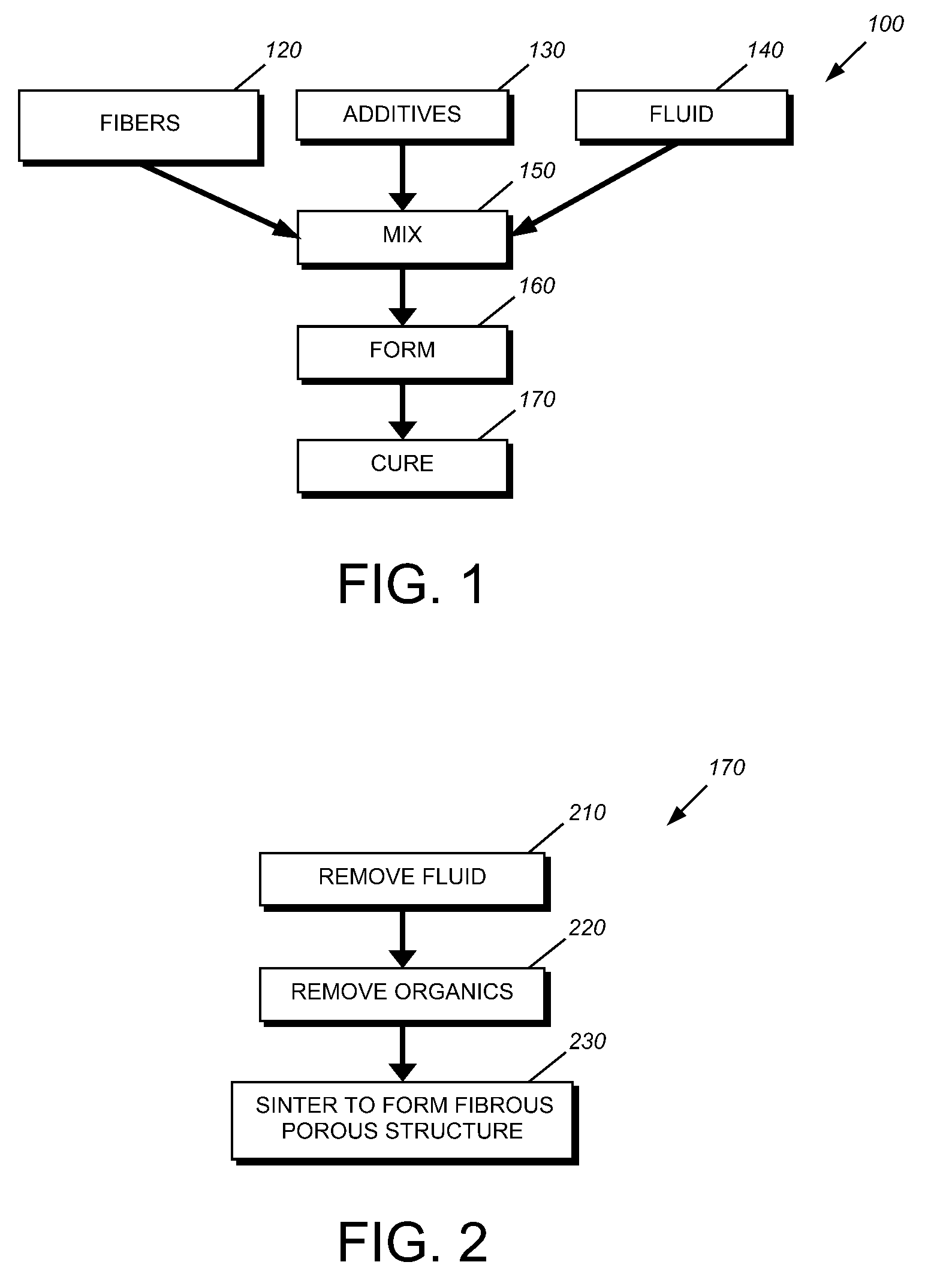
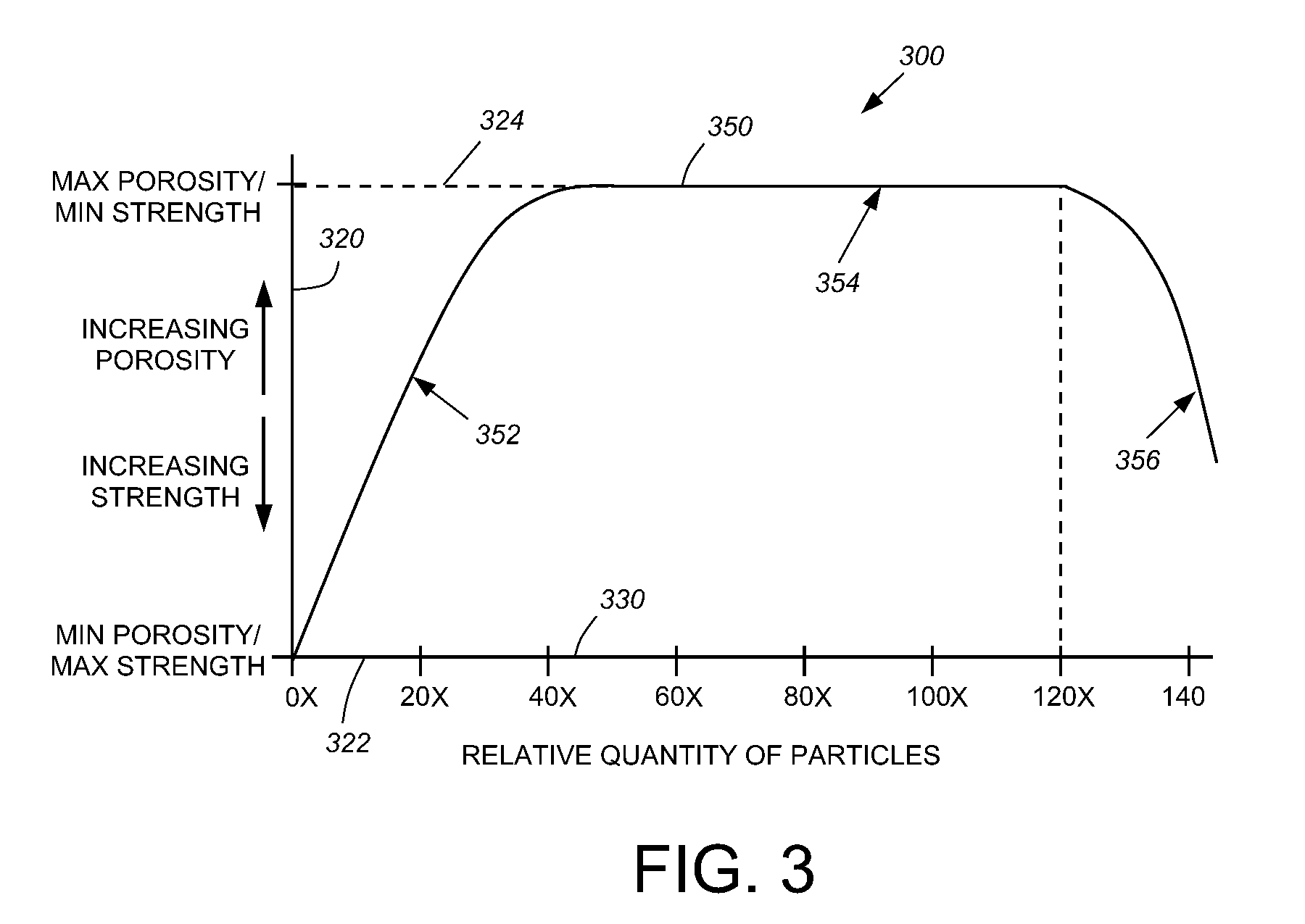
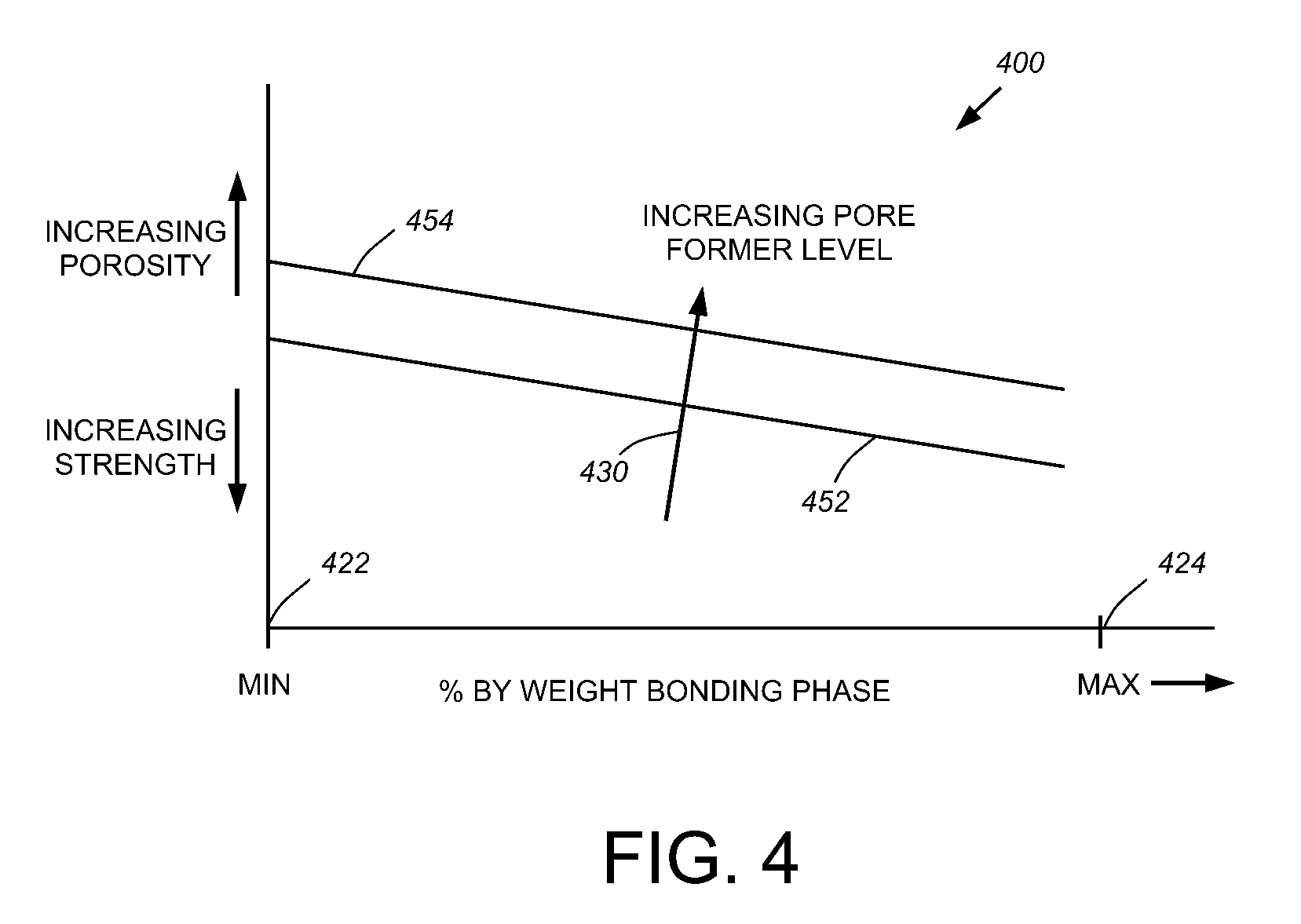
- A system and method for fabricating porous ceramic substrates by controlling the relative weight percentages of components such as ceramic fiber, organic binder, pore former, and inorganic bonding phase, allowing for variation of controllable factors to achieve optimized strength and porosity through a systematic approach rather than trial-and-error.

Porous ceramic supports, membranes, methods and uses thereof
PatentWO2022182287A1
Innovation
- A method involving a ceramic paste composition of 70-80 wt% ceramic powder, 5-15 wt% clay powder, and a binder, aged and extruded to form a green body, then partially sintered at 1000-1500 °C, which reduces firing temperatures and enhances both mechanical strength and permeability through controlled pore structure and interface regulation.


Environmental Impact of Ceramic Manufacturing
The ceramic manufacturing industry faces significant environmental challenges that directly impact the optimization of sintering parameters for porous ceramic substrates. Energy consumption represents the most substantial environmental concern, as sintering processes typically require temperatures ranging from 1200°C to 1600°C, consuming approximately 30-40% of total manufacturing energy. This high energy demand translates to substantial carbon dioxide emissions, with conventional ceramic production generating 0.8-1.2 tons of CO2 per ton of finished product.
Air quality degradation occurs through multiple emission pathways during ceramic substrate manufacturing. Particulate matter release during raw material handling and grinding operations contributes to atmospheric pollution. Additionally, volatile organic compounds and nitrogen oxides are released during high-temperature sintering, particularly when organic binders and pore-forming agents decompose. These emissions necessitate sophisticated filtration systems and stack monitoring, adding operational complexity to parameter optimization strategies.
Water resource impact emerges from cooling systems required for sintering furnaces and wet processing stages in substrate preparation. Thermal pollution from cooling water discharge affects local aquatic ecosystems, while chemical contamination from cleaning agents and processing aids requires extensive wastewater treatment. The industry typically consumes 2-4 cubic meters of water per ton of ceramic product, creating substantial environmental pressure in water-scarce regions.
Waste generation patterns significantly influence sintering parameter selection and optimization approaches. Defective products from suboptimal sintering conditions contribute to solid waste streams, while spent refractory materials from furnace maintenance create disposal challenges. Green body failures during sintering optimization trials can increase waste generation by 15-25%, emphasizing the importance of precise parameter control for environmental sustainability.
Regulatory compliance frameworks increasingly constrain sintering parameter optimization strategies. Emission limits for particulates, sulfur compounds, and greenhouse gases require manufacturers to balance performance objectives with environmental standards. Carbon pricing mechanisms and energy efficiency mandates are driving adoption of alternative sintering technologies, including microwave-assisted sintering and spark plasma sintering, which offer reduced environmental footprints while maintaining product quality for porous ceramic substrates.
Air quality degradation occurs through multiple emission pathways during ceramic substrate manufacturing. Particulate matter release during raw material handling and grinding operations contributes to atmospheric pollution. Additionally, volatile organic compounds and nitrogen oxides are released during high-temperature sintering, particularly when organic binders and pore-forming agents decompose. These emissions necessitate sophisticated filtration systems and stack monitoring, adding operational complexity to parameter optimization strategies.
Water resource impact emerges from cooling systems required for sintering furnaces and wet processing stages in substrate preparation. Thermal pollution from cooling water discharge affects local aquatic ecosystems, while chemical contamination from cleaning agents and processing aids requires extensive wastewater treatment. The industry typically consumes 2-4 cubic meters of water per ton of ceramic product, creating substantial environmental pressure in water-scarce regions.
Waste generation patterns significantly influence sintering parameter selection and optimization approaches. Defective products from suboptimal sintering conditions contribute to solid waste streams, while spent refractory materials from furnace maintenance create disposal challenges. Green body failures during sintering optimization trials can increase waste generation by 15-25%, emphasizing the importance of precise parameter control for environmental sustainability.
Regulatory compliance frameworks increasingly constrain sintering parameter optimization strategies. Emission limits for particulates, sulfur compounds, and greenhouse gases require manufacturers to balance performance objectives with environmental standards. Carbon pricing mechanisms and energy efficiency mandates are driving adoption of alternative sintering technologies, including microwave-assisted sintering and spark plasma sintering, which offer reduced environmental footprints while maintaining product quality for porous ceramic substrates.
Quality Standards for Porous Ceramic Products
Quality standards for porous ceramic products represent a critical framework that directly influences sintering parameter optimization strategies. These standards establish measurable criteria for porosity distribution, mechanical strength, thermal conductivity, and dimensional accuracy, which serve as benchmarks for evaluating sintering effectiveness. The implementation of rigorous quality standards ensures that optimized sintering parameters consistently produce ceramic substrates meeting industrial specifications.
International standards such as ISO 17892 and ASTM C20 provide comprehensive guidelines for porous ceramic characterization, defining acceptable ranges for pore size distribution, total porosity percentage, and structural integrity. These standards typically specify porosity levels between 30-70% for substrate applications, with pore sizes ranging from 0.1 to 500 micrometers depending on intended use. Compliance with these specifications requires precise control of sintering temperature profiles, heating rates, and atmospheric conditions during the firing process.
Quality assessment protocols encompass multiple testing methodologies including mercury intrusion porosimetry, gas permeability measurements, and mechanical compression testing. These evaluation techniques provide quantitative data that correlates directly with sintering parameter effectiveness. For instance, mercury intrusion results indicating uniform pore size distribution typically reflect optimal temperature ramping rates and proper powder preparation techniques during the sintering process.
Manufacturing quality control systems integrate real-time monitoring of sintering parameters with post-production quality verification. Statistical process control methods track key quality indicators such as bulk density variations, thermal shock resistance, and surface roughness measurements. These quality metrics serve as feedback mechanisms for continuous optimization of sintering conditions, enabling manufacturers to maintain consistent product performance while minimizing production defects.
Certification requirements for porous ceramic substrates often mandate compliance with industry-specific standards such as automotive emission control regulations or biomedical device specifications. These regulatory frameworks establish minimum performance thresholds that directly influence sintering parameter selection and optimization priorities. Meeting these stringent quality requirements necessitates comprehensive understanding of how temperature profiles, atmosphere composition, and cooling rates affect final product characteristics.
Advanced quality assurance approaches incorporate predictive modeling techniques that correlate sintering parameters with expected quality outcomes. Machine learning algorithms analyze historical production data to identify optimal parameter combinations that consistently achieve target quality specifications while minimizing manufacturing costs and cycle times.
International standards such as ISO 17892 and ASTM C20 provide comprehensive guidelines for porous ceramic characterization, defining acceptable ranges for pore size distribution, total porosity percentage, and structural integrity. These standards typically specify porosity levels between 30-70% for substrate applications, with pore sizes ranging from 0.1 to 500 micrometers depending on intended use. Compliance with these specifications requires precise control of sintering temperature profiles, heating rates, and atmospheric conditions during the firing process.
Quality assessment protocols encompass multiple testing methodologies including mercury intrusion porosimetry, gas permeability measurements, and mechanical compression testing. These evaluation techniques provide quantitative data that correlates directly with sintering parameter effectiveness. For instance, mercury intrusion results indicating uniform pore size distribution typically reflect optimal temperature ramping rates and proper powder preparation techniques during the sintering process.
Manufacturing quality control systems integrate real-time monitoring of sintering parameters with post-production quality verification. Statistical process control methods track key quality indicators such as bulk density variations, thermal shock resistance, and surface roughness measurements. These quality metrics serve as feedback mechanisms for continuous optimization of sintering conditions, enabling manufacturers to maintain consistent product performance while minimizing production defects.
Certification requirements for porous ceramic substrates often mandate compliance with industry-specific standards such as automotive emission control regulations or biomedical device specifications. These regulatory frameworks establish minimum performance thresholds that directly influence sintering parameter selection and optimization priorities. Meeting these stringent quality requirements necessitates comprehensive understanding of how temperature profiles, atmosphere composition, and cooling rates affect final product characteristics.
Advanced quality assurance approaches incorporate predictive modeling techniques that correlate sintering parameters with expected quality outcomes. Machine learning algorithms analyze historical production data to identify optimal parameter combinations that consistently achieve target quality specifications while minimizing manufacturing costs and cycle times.
Unlock deeper insights with PatSnap Eureka Quick Research — get a full tech report to explore trends and direct your research. Try now!
Generate Your Research Report Instantly with AI Agent
Supercharge your innovation with PatSnap Eureka AI Agent Platform!