

How to Optimize Voltage Parameters in Plasma Electrolytic Oxidation
APR 8, 20268 MIN READ
Generate Your Research Report Instantly with AI Agent
PatSnap Eureka helps you evaluate technical feasibility & market potential.
PEO Voltage Optimization Background and Objectives
Plasma Electrolytic Oxidation has emerged as a revolutionary surface treatment technology that addresses critical limitations of conventional anodizing processes. This electrochemical technique operates under high-voltage conditions, typically ranging from 200 to 800 volts, creating plasma discharges within the electrolyte that enable the formation of ceramic-like oxide coatings on lightweight metals such as aluminum, magnesium, and titanium alloys.
The historical development of PEO technology traces back to the 1970s in the Soviet Union, where researchers first discovered the potential of high-voltage electrolytic processes. The technology gained significant momentum in the 1990s as industries began recognizing its superior coating properties compared to traditional methods. Unlike conventional anodizing, PEO can produce coatings with exceptional hardness, wear resistance, and corrosion protection, making it invaluable for aerospace, automotive, and biomedical applications.
Current technological evolution demonstrates a clear trend toward precision control and process optimization. Modern PEO systems incorporate advanced power supply technologies, real-time monitoring capabilities, and sophisticated parameter control mechanisms. The integration of pulsed power supplies, frequency modulation, and multi-stage voltage profiles has opened new possibilities for coating customization and quality enhancement.
The primary objective of voltage parameter optimization centers on achieving precise control over coating formation mechanisms. Voltage directly influences plasma discharge characteristics, determining the intensity and distribution of micro-arc events that create the oxide layer. Optimal voltage parameters enable controlled porosity, enhanced adhesion, and uniform coating thickness while minimizing energy consumption and processing time.
Technical goals encompass developing predictive models for voltage-coating property relationships, establishing standardized protocols for different substrate materials, and creating adaptive control systems that respond to real-time process variations. These objectives aim to transform PEO from an empirically-driven process to a scientifically-controlled manufacturing technique.
The strategic importance of voltage optimization extends beyond immediate coating quality improvements. Enhanced parameter control enables broader industrial adoption, reduces manufacturing costs, and supports the development of next-generation lightweight components for critical applications where surface performance directly impacts operational safety and efficiency.
The historical development of PEO technology traces back to the 1970s in the Soviet Union, where researchers first discovered the potential of high-voltage electrolytic processes. The technology gained significant momentum in the 1990s as industries began recognizing its superior coating properties compared to traditional methods. Unlike conventional anodizing, PEO can produce coatings with exceptional hardness, wear resistance, and corrosion protection, making it invaluable for aerospace, automotive, and biomedical applications.
Current technological evolution demonstrates a clear trend toward precision control and process optimization. Modern PEO systems incorporate advanced power supply technologies, real-time monitoring capabilities, and sophisticated parameter control mechanisms. The integration of pulsed power supplies, frequency modulation, and multi-stage voltage profiles has opened new possibilities for coating customization and quality enhancement.
The primary objective of voltage parameter optimization centers on achieving precise control over coating formation mechanisms. Voltage directly influences plasma discharge characteristics, determining the intensity and distribution of micro-arc events that create the oxide layer. Optimal voltage parameters enable controlled porosity, enhanced adhesion, and uniform coating thickness while minimizing energy consumption and processing time.
Technical goals encompass developing predictive models for voltage-coating property relationships, establishing standardized protocols for different substrate materials, and creating adaptive control systems that respond to real-time process variations. These objectives aim to transform PEO from an empirically-driven process to a scientifically-controlled manufacturing technique.
The strategic importance of voltage optimization extends beyond immediate coating quality improvements. Enhanced parameter control enables broader industrial adoption, reduces manufacturing costs, and supports the development of next-generation lightweight components for critical applications where surface performance directly impacts operational safety and efficiency.
Market Demand for Advanced PEO Surface Treatment
The global surface treatment market has experienced substantial growth driven by increasing demands for enhanced material performance across multiple industrial sectors. Advanced PEO surface treatment technologies have emerged as critical solutions for industries requiring superior corrosion resistance, wear protection, and biocompatibility characteristics. The aerospace sector represents one of the most significant demand drivers, where lightweight aluminum and magnesium components require exceptional surface properties to withstand extreme operating conditions.
Automotive manufacturers increasingly seek PEO treatments for engine components, transmission parts, and structural elements to improve durability while reducing weight. The shift toward electric vehicles has further amplified demand for advanced surface treatments on battery housings and thermal management systems, where PEO coatings provide essential electrical insulation and corrosion protection properties.
Medical device manufacturing constitutes another rapidly expanding market segment for PEO treatments. Orthopedic implants, dental components, and surgical instruments benefit from PEO-treated surfaces that offer enhanced biocompatibility and reduced inflammatory responses. The aging global population and increasing healthcare expenditure continue to drive growth in this application area.
Industrial machinery and equipment sectors demonstrate growing adoption of PEO treatments for hydraulic components, pumps, and precision instruments operating in harsh environments. The technology's ability to create uniform, adherent oxide layers on complex geometries makes it particularly valuable for components requiring both functional and protective surface properties.
Emerging applications in renewable energy systems, particularly wind turbine components and solar panel frameworks, present new market opportunities. These applications demand long-term durability and corrosion resistance in challenging environmental conditions, positioning advanced PEO treatments as enabling technologies for sustainable energy infrastructure.
The market demand trajectory indicates continued expansion as manufacturers recognize the cost-effectiveness of PEO treatments compared to alternative surface modification technologies. Optimization of voltage parameters directly impacts treatment quality, processing efficiency, and economic viability, making this technical advancement crucial for meeting evolving market requirements across diverse industrial applications.
Automotive manufacturers increasingly seek PEO treatments for engine components, transmission parts, and structural elements to improve durability while reducing weight. The shift toward electric vehicles has further amplified demand for advanced surface treatments on battery housings and thermal management systems, where PEO coatings provide essential electrical insulation and corrosion protection properties.
Medical device manufacturing constitutes another rapidly expanding market segment for PEO treatments. Orthopedic implants, dental components, and surgical instruments benefit from PEO-treated surfaces that offer enhanced biocompatibility and reduced inflammatory responses. The aging global population and increasing healthcare expenditure continue to drive growth in this application area.
Industrial machinery and equipment sectors demonstrate growing adoption of PEO treatments for hydraulic components, pumps, and precision instruments operating in harsh environments. The technology's ability to create uniform, adherent oxide layers on complex geometries makes it particularly valuable for components requiring both functional and protective surface properties.
Emerging applications in renewable energy systems, particularly wind turbine components and solar panel frameworks, present new market opportunities. These applications demand long-term durability and corrosion resistance in challenging environmental conditions, positioning advanced PEO treatments as enabling technologies for sustainable energy infrastructure.
The market demand trajectory indicates continued expansion as manufacturers recognize the cost-effectiveness of PEO treatments compared to alternative surface modification technologies. Optimization of voltage parameters directly impacts treatment quality, processing efficiency, and economic viability, making this technical advancement crucial for meeting evolving market requirements across diverse industrial applications.
Current PEO Voltage Control Challenges and Limitations
Plasma Electrolytic Oxidation voltage control faces significant challenges in achieving consistent and predictable coating properties. The primary limitation stems from the complex, non-linear relationship between applied voltage parameters and the resulting plasma discharge characteristics. Current control systems struggle to maintain stable voltage conditions due to the dynamic nature of the electrolytic process, where resistance changes continuously as the oxide layer grows.
Traditional voltage control approaches rely on simple feedback mechanisms that cannot adequately respond to the rapid fluctuations in electrical parameters during PEO processing. The breakdown voltage varies significantly across different substrate materials and electrolyte compositions, making it difficult to establish universal voltage optimization protocols. This variability leads to inconsistent coating thickness, porosity, and adhesion properties.
Real-time monitoring and adjustment of voltage parameters present substantial technical hurdles. Existing measurement systems often lack the temporal resolution required to capture rapid voltage transients that occur during plasma discharge events. The high-frequency oscillations and voltage spikes characteristic of PEO processes exceed the response capabilities of conventional control hardware, resulting in suboptimal parameter regulation.
Multi-parameter optimization represents another critical challenge, as voltage amplitude, frequency, and duty cycle interact in complex ways that are not fully understood. Current control strategies typically optimize these parameters independently, failing to account for their interdependent effects on coating formation mechanisms. This approach limits the ability to achieve optimal coating properties and process efficiency simultaneously.
Industrial implementation faces additional constraints related to equipment limitations and process scalability. Many existing PEO systems lack the sophisticated control algorithms necessary for advanced voltage optimization, relying instead on empirical parameter selection based on trial-and-error approaches. The absence of standardized voltage control protocols across different equipment manufacturers further complicates the development of optimized processing strategies.
Temperature-dependent voltage behavior adds another layer of complexity, as thermal effects during processing influence the electrical characteristics of the electrolyte-substrate system. Current control systems inadequately compensate for these thermal variations, leading to process instability and reduced coating quality consistency.
Traditional voltage control approaches rely on simple feedback mechanisms that cannot adequately respond to the rapid fluctuations in electrical parameters during PEO processing. The breakdown voltage varies significantly across different substrate materials and electrolyte compositions, making it difficult to establish universal voltage optimization protocols. This variability leads to inconsistent coating thickness, porosity, and adhesion properties.
Real-time monitoring and adjustment of voltage parameters present substantial technical hurdles. Existing measurement systems often lack the temporal resolution required to capture rapid voltage transients that occur during plasma discharge events. The high-frequency oscillations and voltage spikes characteristic of PEO processes exceed the response capabilities of conventional control hardware, resulting in suboptimal parameter regulation.
Multi-parameter optimization represents another critical challenge, as voltage amplitude, frequency, and duty cycle interact in complex ways that are not fully understood. Current control strategies typically optimize these parameters independently, failing to account for their interdependent effects on coating formation mechanisms. This approach limits the ability to achieve optimal coating properties and process efficiency simultaneously.
Industrial implementation faces additional constraints related to equipment limitations and process scalability. Many existing PEO systems lack the sophisticated control algorithms necessary for advanced voltage optimization, relying instead on empirical parameter selection based on trial-and-error approaches. The absence of standardized voltage control protocols across different equipment manufacturers further complicates the development of optimized processing strategies.
Temperature-dependent voltage behavior adds another layer of complexity, as thermal effects during processing influence the electrical characteristics of the electrolyte-substrate system. Current control systems inadequately compensate for these thermal variations, leading to process instability and reduced coating quality consistency.
Existing Voltage Parameter Control Solutions
01 Voltage control methods in plasma electrolytic oxidation process
Various voltage control strategies are employed in plasma electrolytic oxidation to optimize coating formation. These include constant voltage mode, pulsed voltage application, and voltage ramping techniques. The control methods aim to regulate the discharge intensity and distribution across the substrate surface, ensuring uniform coating thickness and quality. Advanced control systems may incorporate feedback mechanisms to adjust voltage parameters in real-time based on process conditions.- Voltage control and regulation methods in plasma electrolytic oxidation: Various voltage control strategies are employed in plasma electrolytic oxidation processes to optimize coating formation. These include constant voltage mode, pulsed voltage application, and voltage ramping techniques. The control methods aim to manage the discharge characteristics and energy input during the oxidation process, affecting the microstructure and properties of the resulting oxide layer. Precise voltage regulation helps prevent excessive sparking and ensures uniform coating thickness.
- Voltage range optimization for different substrate materials: The optimal voltage parameters vary significantly depending on the substrate material being treated. Different metals and alloys require specific voltage ranges to achieve desired coating properties. The voltage selection considers factors such as material conductivity, melting point, and chemical reactivity. Proper voltage range determination ensures effective plasma discharge formation while preventing substrate damage or excessive energy consumption.
- Pulsed voltage waveform parameters and duty cycle: Pulsed voltage application involves controlling parameters such as pulse frequency, duration, and duty cycle to enhance the plasma electrolytic oxidation process. The waveform characteristics influence the discharge intensity, coating growth rate, and final surface morphology. Adjusting pulse parameters allows for better control over the thermal effects and reduces the risk of coating defects. The duty cycle optimization balances between coating quality and process efficiency.
- Voltage monitoring and feedback control systems: Advanced monitoring systems track voltage fluctuations and discharge behavior in real-time during the plasma electrolytic oxidation process. Feedback control mechanisms automatically adjust voltage parameters based on measured process variables to maintain optimal conditions. These systems help detect anomalies, prevent process failures, and ensure consistent coating quality across multiple treatment cycles. Integration of sensors and control algorithms enables precise process management.
- Multi-stage voltage progression techniques: Multi-stage voltage application involves progressively changing voltage levels throughout the oxidation process to achieve specific coating characteristics. Initial stages may use lower voltages for nucleation and base layer formation, followed by higher voltages for coating densification. This approach allows for better control over coating structure, porosity, and adhesion properties. Sequential voltage adjustment helps optimize both the coating formation kinetics and final product quality.
02 Voltage range optimization for different substrate materials
The optimal voltage parameters vary significantly depending on the substrate material being treated. Different metals and alloys require specific voltage ranges to achieve desired coating properties. The voltage selection considers factors such as substrate conductivity, melting point, and chemical composition. Proper voltage range determination prevents substrate damage while ensuring adequate plasma discharge for effective oxide layer formation.Expand Specific Solutions03 Pulse voltage waveform characteristics and parameters
Pulse voltage application involves specific waveform characteristics including frequency, duty cycle, and amplitude. The pulse parameters significantly influence the microstructure and properties of the formed oxide coating. Different pulse configurations can be employed to control coating porosity, hardness, and adhesion. The waveform design considers both positive and negative pulse components to enhance coating uniformity and reduce energy consumption.Expand Specific Solutions04 Voltage monitoring and measurement systems
Accurate voltage monitoring systems are essential for process control and quality assurance in plasma electrolytic oxidation. These systems incorporate sensors and data acquisition equipment to track voltage variations throughout the treatment process. Real-time monitoring enables detection of abnormal discharge events and process instabilities. Advanced measurement systems may include voltage breakdown analysis and arc detection capabilities to prevent coating defects.Expand Specific Solutions05 Multi-stage voltage application strategies
Multi-stage voltage protocols involve sequential application of different voltage levels during the oxidation process. Initial stages typically use lower voltages for surface preparation and nucleation, followed by higher voltages for coating growth. The staged approach allows better control over coating structure and composition at different depths. This strategy can improve coating adhesion, reduce defects, and enhance overall coating performance compared to single-stage processes.Expand Specific Solutions
Key Players in PEO Equipment and Process Industry
The plasma electrolytic oxidation (PEO) voltage parameter optimization field represents a mature technology sector experiencing steady growth across semiconductor manufacturing, materials processing, and medical device applications. The market demonstrates significant scale with established players like Tokyo Electron Ltd., Lam Research Corp., and Taiwan Semiconductor Manufacturing Co., Ltd. driving semiconductor equipment demand, while companies such as Boston Scientific and terraplasma medical GmbH advance medical applications. Technology maturity varies by application segment - semiconductor processing shows high maturity with companies like Hitachi Ltd. and NGK Insulators Ltd. offering refined solutions, whereas emerging applications in energy storage (LG Energy Solution Ltd.) and specialized coatings remain in development phases. Research institutions including University of Florida, Central South University, and Shandong University continue advancing fundamental understanding, while industrial players like Sumitomo Electric Industries and Alps Alpine Co. integrate PEO technologies into commercial products, indicating a competitive landscape balancing established manufacturing capabilities with ongoing innovation.
Tokyo Electron Ltd.
Technical Solution: Tokyo Electron has developed advanced plasma processing equipment with sophisticated voltage control systems for semiconductor manufacturing. Their plasma electrolytic oxidation systems utilize real-time voltage monitoring and adaptive control algorithms to optimize coating formation. The company's approach involves multi-stage voltage ramping protocols, starting with low voltages for initial oxide nucleation and gradually increasing to achieve desired coating thickness and properties. Their systems incorporate feedback mechanisms that adjust voltage parameters based on current density measurements and electrolyte temperature variations, ensuring consistent coating quality across different substrate materials.
Strengths: Industry-leading plasma equipment expertise, advanced process control systems, extensive R&D capabilities. Weaknesses: High equipment costs, complex system integration requirements.
Lam Research Corp.
Technical Solution: Lam Research specializes in plasma-based etch and deposition systems with precise voltage parameter optimization capabilities. Their plasma electrolytic oxidation solutions feature proprietary voltage waveform generation technology that enables fine-tuned control over discharge characteristics. The company's approach includes pulsed voltage techniques with variable duty cycles and frequency modulation to enhance coating uniformity and reduce energy consumption. Their systems integrate machine learning algorithms to predict optimal voltage settings based on substrate composition, electrolyte chemistry, and desired coating specifications, significantly reducing process development time.
Strengths: Advanced plasma technology, AI-driven process optimization, strong semiconductor industry presence. Weaknesses: Limited focus on non-semiconductor applications, high system complexity.
Core Innovations in PEO Voltage Optimization Patents
Plasma electrolytic oxidation load parameter identification method based on recursion estimation idea
PatentPendingCN118737303A
Innovation
- Using a method based on the idea of recursive estimation, by establishing an electrical equivalent circuit model, using voltage sensors and current sensors to extract the terminal voltage and load current, constructing the system state differential equation, and using the idea of recursive estimation to identify process parameters, achieving online parameter identification .


Plasma oxidation method and plasma oxidation apparatus
PatentInactiveUS20110250763A1
Innovation
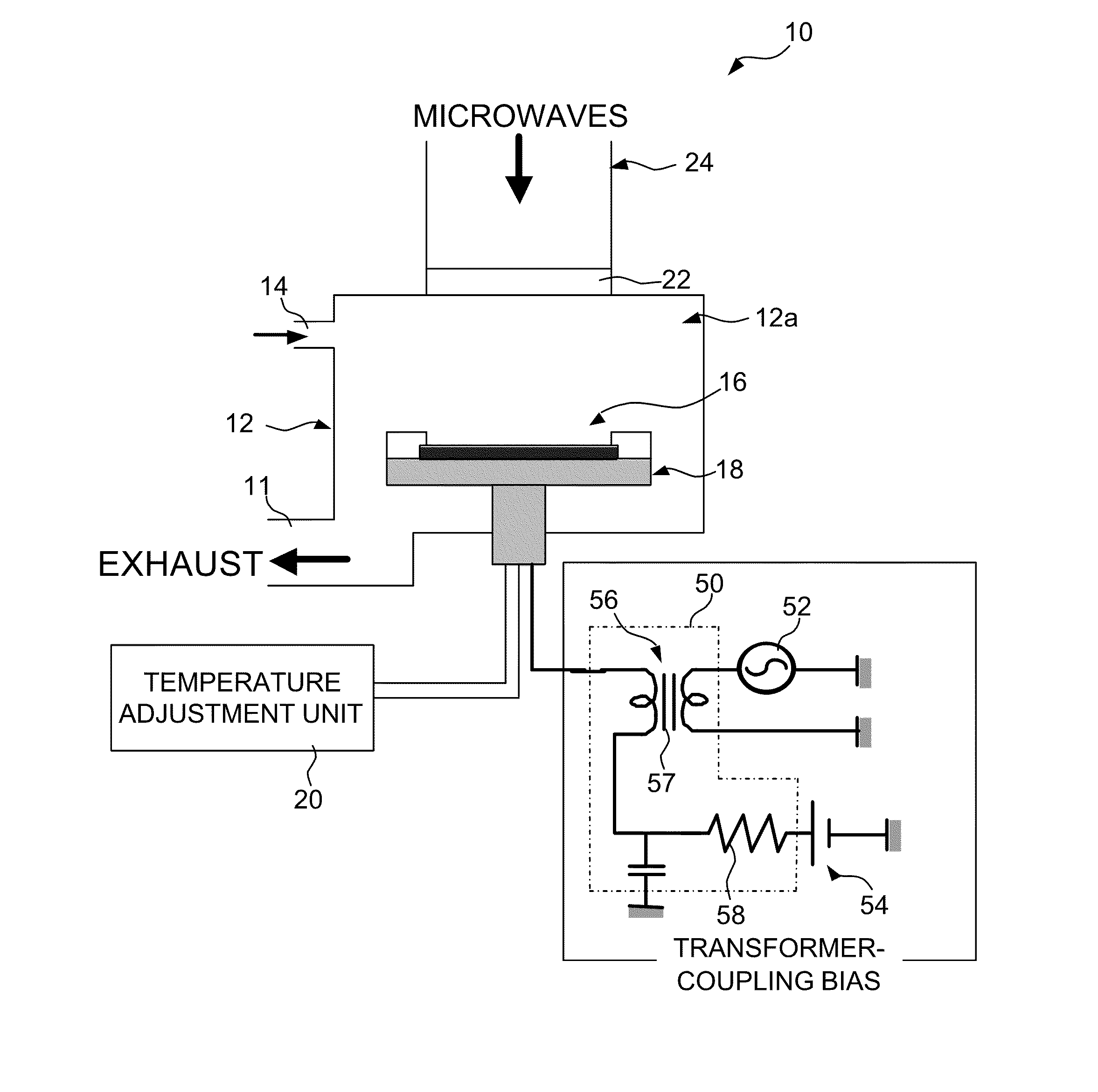
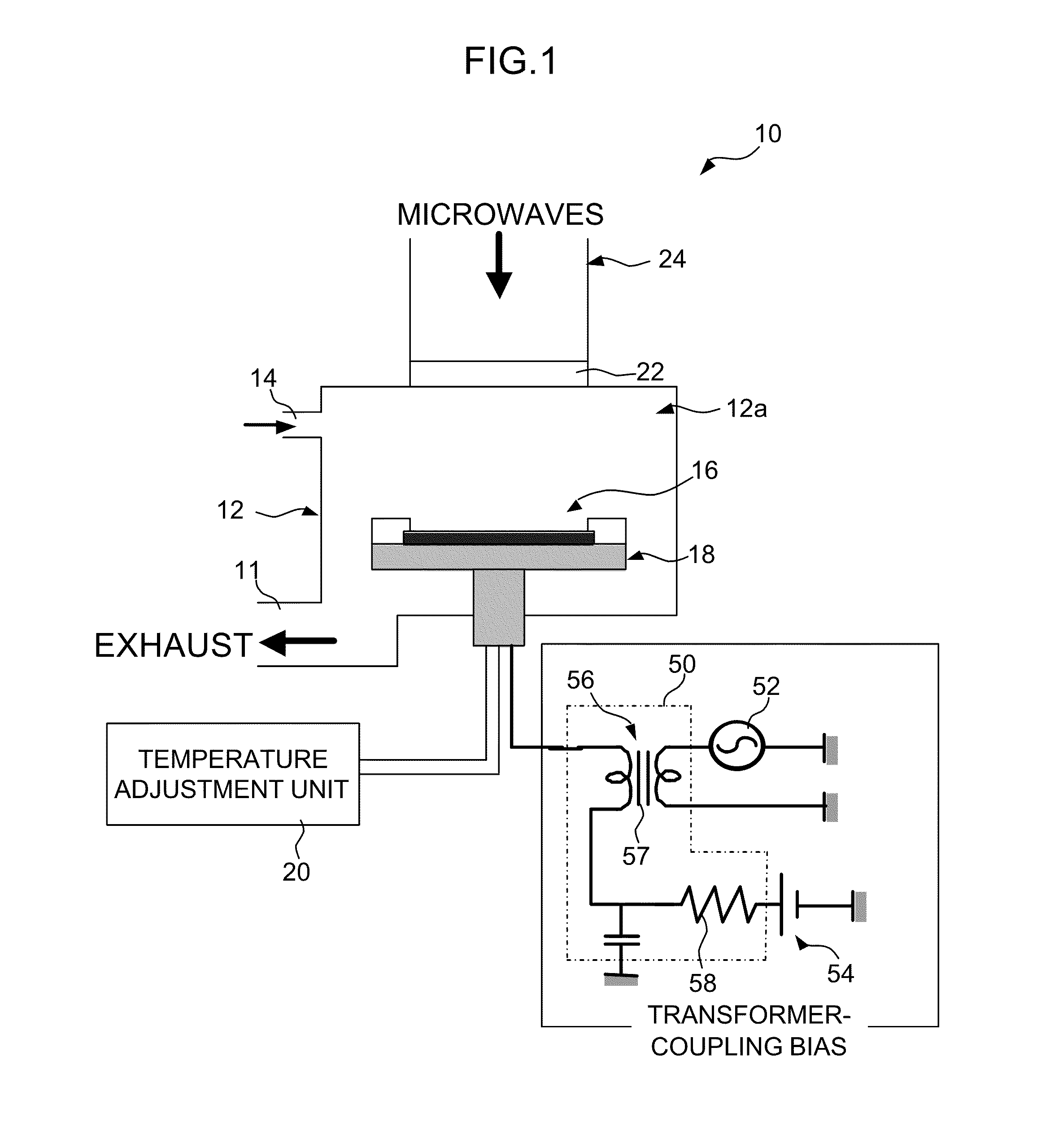
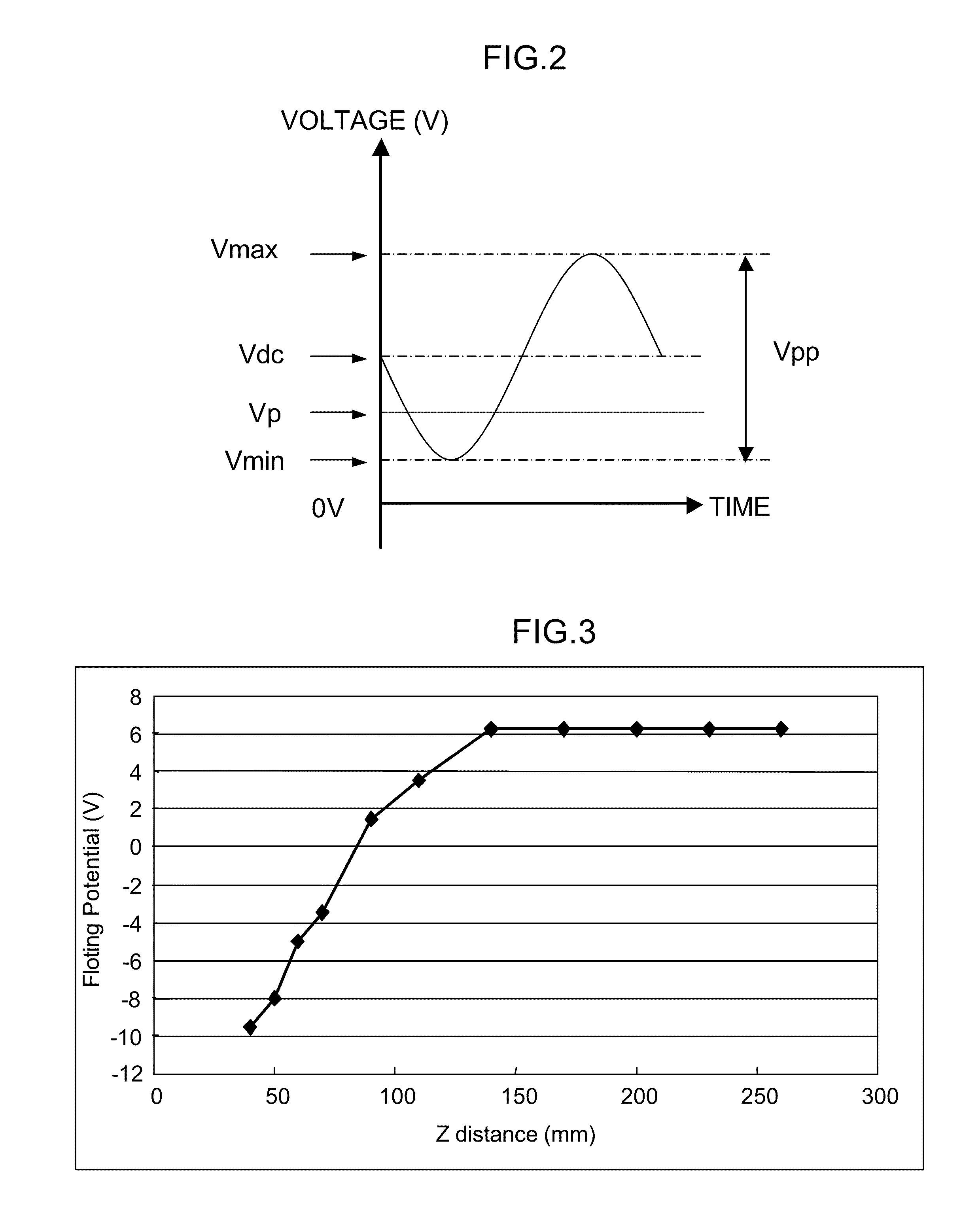
- A plasma oxidation method and apparatus that generates oxygen-containing plasma and applies a bias voltage to a substrate, controlling the bias potential such that the maximum value (Vmax) is greater than the plasma potential (Vp), while the minimum value (Vmin) is less than Vp, to efficiently draw negative ions and improve oxidation rates, allowing for thick film formation at low temperatures.

Environmental Regulations for PEO Industrial Processes
The regulatory landscape for Plasma Electrolytic Oxidation (PEO) industrial processes has evolved significantly as environmental awareness and sustainability concerns have intensified globally. Regulatory frameworks primarily focus on controlling emissions, waste management, and energy consumption associated with PEO operations, particularly given the process's reliance on high-voltage electrical systems and electrolytic solutions.
Air quality regulations constitute a primary concern for PEO facilities, as the process can generate various gaseous emissions including ozone, hydrogen, and potentially hazardous vapors from electrolyte decomposition. The Environmental Protection Agency (EPA) in the United States and equivalent bodies in Europe have established strict emission limits under the Clean Air Act and Industrial Emissions Directive respectively. These regulations mandate continuous monitoring systems and require facilities to implement best available control technologies to minimize atmospheric releases.
Wastewater discharge regulations present another critical compliance area, as PEO processes generate contaminated electrolyte solutions containing metal ions, alkaline compounds, and organic additives. The Resource Conservation and Recovery Act (RCRA) classifies many PEO waste streams as hazardous materials, requiring specialized treatment and disposal protocols. European REACH regulations similarly impose stringent requirements on chemical handling and waste characterization for PEO operations.
Energy efficiency standards are increasingly influencing PEO regulatory compliance, with jurisdictions implementing carbon footprint reporting requirements and energy consumption limits. The European Union's Energy Efficiency Directive specifically targets industrial processes with high electrical demands, potentially affecting voltage optimization strategies in PEO systems. These regulations encourage adoption of advanced power management technologies and real-time monitoring systems.
Occupational safety regulations, including OSHA standards and European workplace directives, mandate comprehensive safety protocols for high-voltage PEO operations. These requirements influence facility design, equipment specifications, and operational procedures, directly impacting voltage parameter optimization approaches and system automation levels in industrial PEO implementations.
Air quality regulations constitute a primary concern for PEO facilities, as the process can generate various gaseous emissions including ozone, hydrogen, and potentially hazardous vapors from electrolyte decomposition. The Environmental Protection Agency (EPA) in the United States and equivalent bodies in Europe have established strict emission limits under the Clean Air Act and Industrial Emissions Directive respectively. These regulations mandate continuous monitoring systems and require facilities to implement best available control technologies to minimize atmospheric releases.
Wastewater discharge regulations present another critical compliance area, as PEO processes generate contaminated electrolyte solutions containing metal ions, alkaline compounds, and organic additives. The Resource Conservation and Recovery Act (RCRA) classifies many PEO waste streams as hazardous materials, requiring specialized treatment and disposal protocols. European REACH regulations similarly impose stringent requirements on chemical handling and waste characterization for PEO operations.
Energy efficiency standards are increasingly influencing PEO regulatory compliance, with jurisdictions implementing carbon footprint reporting requirements and energy consumption limits. The European Union's Energy Efficiency Directive specifically targets industrial processes with high electrical demands, potentially affecting voltage optimization strategies in PEO systems. These regulations encourage adoption of advanced power management technologies and real-time monitoring systems.
Occupational safety regulations, including OSHA standards and European workplace directives, mandate comprehensive safety protocols for high-voltage PEO operations. These requirements influence facility design, equipment specifications, and operational procedures, directly impacting voltage parameter optimization approaches and system automation levels in industrial PEO implementations.
Energy Efficiency Standards in PEO Operations
Energy efficiency standards in plasma electrolytic oxidation operations have become increasingly critical as industries seek to balance coating quality with operational sustainability. The establishment of comprehensive efficiency metrics requires careful consideration of voltage parameter optimization, as electrical consumption typically represents 60-80% of total PEO process energy costs. Current industry benchmarks suggest that well-optimized PEO systems should achieve energy consumption rates between 15-25 kWh per square meter of treated surface, depending on substrate material and coating specifications.
The development of standardized efficiency measurements has gained momentum through collaborative efforts between research institutions and industrial stakeholders. Key performance indicators now include power factor optimization, which should maintain values above 0.85 during stable processing phases, and voltage utilization efficiency, measuring the ratio of effective coating formation energy to total electrical input. These standards recognize that optimal voltage parameters must balance rapid coating growth with minimal energy waste through parasitic reactions.
International standardization bodies have begun incorporating energy efficiency requirements into PEO process specifications. The emerging ISO 27892 framework emphasizes the importance of real-time energy monitoring and establishes baseline efficiency thresholds for different material categories. Aluminum alloy processing, for instance, should demonstrate energy conversion efficiencies exceeding 40%, while titanium-based substrates typically achieve 25-35% efficiency under optimized conditions.
Implementation of energy efficiency standards requires sophisticated monitoring systems capable of tracking instantaneous power consumption, voltage stability, and coating formation rates. Advanced PEO facilities now employ predictive algorithms that adjust voltage parameters in real-time to maintain optimal efficiency ratios throughout the treatment cycle. These systems incorporate feedback loops that monitor plasma discharge characteristics and automatically compensate for efficiency degradation.
The economic implications of energy efficiency standards extend beyond direct operational costs to encompass regulatory compliance and environmental impact assessments. Companies implementing comprehensive efficiency monitoring report 20-30% reductions in energy consumption while maintaining coating quality specifications, demonstrating the viability of standardized approaches to voltage parameter optimization in industrial PEO applications.
The development of standardized efficiency measurements has gained momentum through collaborative efforts between research institutions and industrial stakeholders. Key performance indicators now include power factor optimization, which should maintain values above 0.85 during stable processing phases, and voltage utilization efficiency, measuring the ratio of effective coating formation energy to total electrical input. These standards recognize that optimal voltage parameters must balance rapid coating growth with minimal energy waste through parasitic reactions.
International standardization bodies have begun incorporating energy efficiency requirements into PEO process specifications. The emerging ISO 27892 framework emphasizes the importance of real-time energy monitoring and establishes baseline efficiency thresholds for different material categories. Aluminum alloy processing, for instance, should demonstrate energy conversion efficiencies exceeding 40%, while titanium-based substrates typically achieve 25-35% efficiency under optimized conditions.
Implementation of energy efficiency standards requires sophisticated monitoring systems capable of tracking instantaneous power consumption, voltage stability, and coating formation rates. Advanced PEO facilities now employ predictive algorithms that adjust voltage parameters in real-time to maintain optimal efficiency ratios throughout the treatment cycle. These systems incorporate feedback loops that monitor plasma discharge characteristics and automatically compensate for efficiency degradation.
The economic implications of energy efficiency standards extend beyond direct operational costs to encompass regulatory compliance and environmental impact assessments. Companies implementing comprehensive efficiency monitoring report 20-30% reductions in energy consumption while maintaining coating quality specifications, demonstrating the viability of standardized approaches to voltage parameter optimization in industrial PEO applications.
Unlock deeper insights with PatSnap Eureka Quick Research — get a full tech report to explore trends and direct your research. Try now!
Generate Your Research Report Instantly with AI Agent
Supercharge your innovation with PatSnap Eureka AI Agent Platform!