How to Predict Trends Using Inverse Design Data Analysis
APR 22, 202610 MIN READ
Generate Your Research Report Instantly with AI Agent
Patsnap Eureka helps you evaluate technical feasibility & market potential.
Inverse Design Data Analysis Background and Objectives
Inverse design represents a paradigm shift from traditional forward design methodologies, where instead of predicting outcomes from given parameters, the process begins with desired outcomes and works backward to determine the optimal input parameters or design configurations. This approach has gained significant traction across multiple disciplines, from materials science and photonics to drug discovery and mechanical engineering, fundamentally transforming how complex systems are designed and optimized.
The evolution of inverse design has been closely intertwined with advances in computational power and algorithmic sophistication. Early implementations relied heavily on iterative optimization techniques and gradient-based methods, which often struggled with local minima and computational complexity. The integration of machine learning, particularly deep learning architectures, has revolutionized this field by enabling more efficient exploration of vast design spaces and identification of non-intuitive solutions that traditional methods might overlook.
Data analysis within inverse design contexts has emerged as a critical enabler for trend prediction capabilities. By systematically analyzing patterns in design-outcome relationships across large datasets, researchers can identify underlying principles that govern successful designs. This analytical approach extends beyond simple correlation identification to encompass complex, multi-dimensional relationships that influence design performance and market acceptance.
The primary objective of leveraging inverse design data analysis for trend prediction centers on developing predictive models that can anticipate future design requirements, market preferences, and technological directions. This involves creating robust analytical frameworks capable of processing heterogeneous data sources, including performance metrics, user feedback, market dynamics, and technological constraints, to generate actionable insights about emerging trends.
Contemporary applications demonstrate the transformative potential of this approach across various sectors. In consumer electronics, inverse design data analysis helps predict aesthetic preferences and functional requirements before products reach market. In pharmaceutical research, it accelerates drug discovery by predicting molecular structures with desired therapeutic properties. These applications highlight the technology's capacity to reduce development cycles, minimize resource expenditure, and enhance innovation outcomes.
The strategic importance of mastering inverse design data analysis for trend prediction lies in its ability to provide competitive advantages through anticipatory design capabilities. Organizations that effectively implement these methodologies can position themselves ahead of market curves, respond proactively to emerging demands, and develop products that align with future rather than current market conditions.
The evolution of inverse design has been closely intertwined with advances in computational power and algorithmic sophistication. Early implementations relied heavily on iterative optimization techniques and gradient-based methods, which often struggled with local minima and computational complexity. The integration of machine learning, particularly deep learning architectures, has revolutionized this field by enabling more efficient exploration of vast design spaces and identification of non-intuitive solutions that traditional methods might overlook.
Data analysis within inverse design contexts has emerged as a critical enabler for trend prediction capabilities. By systematically analyzing patterns in design-outcome relationships across large datasets, researchers can identify underlying principles that govern successful designs. This analytical approach extends beyond simple correlation identification to encompass complex, multi-dimensional relationships that influence design performance and market acceptance.
The primary objective of leveraging inverse design data analysis for trend prediction centers on developing predictive models that can anticipate future design requirements, market preferences, and technological directions. This involves creating robust analytical frameworks capable of processing heterogeneous data sources, including performance metrics, user feedback, market dynamics, and technological constraints, to generate actionable insights about emerging trends.
Contemporary applications demonstrate the transformative potential of this approach across various sectors. In consumer electronics, inverse design data analysis helps predict aesthetic preferences and functional requirements before products reach market. In pharmaceutical research, it accelerates drug discovery by predicting molecular structures with desired therapeutic properties. These applications highlight the technology's capacity to reduce development cycles, minimize resource expenditure, and enhance innovation outcomes.
The strategic importance of mastering inverse design data analysis for trend prediction lies in its ability to provide competitive advantages through anticipatory design capabilities. Organizations that effectively implement these methodologies can position themselves ahead of market curves, respond proactively to emerging demands, and develop products that align with future rather than current market conditions.
Market Demand for Predictive Trend Analysis Solutions
The global market for predictive trend analysis solutions has experienced substantial growth driven by increasing digitalization across industries and the exponential growth of data generation. Organizations across manufacturing, retail, finance, healthcare, and technology sectors are recognizing the strategic value of anticipating market shifts, consumer behavior patterns, and operational trends before they fully materialize. This demand surge reflects a fundamental shift from reactive to proactive business strategies.
Manufacturing industries represent a particularly significant market segment, where predictive trend analysis enables optimization of supply chain management, demand forecasting, and product lifecycle planning. The automotive, aerospace, and consumer electronics sectors are increasingly adopting inverse design methodologies to predict material performance trends and optimize product development cycles. These applications demonstrate substantial cost reduction potential and accelerated time-to-market advantages.
Financial services and investment management sectors constitute another major demand driver, where predictive trend analysis solutions enable portfolio optimization, risk assessment, and market timing strategies. The integration of inverse design principles with traditional financial modeling approaches offers enhanced accuracy in predicting market movements and identifying emerging investment opportunities.
The retail and e-commerce industries are leveraging predictive trend analysis to anticipate consumer preferences, optimize inventory management, and personalize customer experiences. Fashion, consumer goods, and technology companies are particularly interested in solutions that can predict trend emergence and evolution patterns, enabling more strategic product development and marketing decisions.
Healthcare and pharmaceutical sectors present emerging opportunities, where predictive trend analysis supports drug discovery, treatment outcome prediction, and epidemiological forecasting. The application of inverse design principles to biological systems and treatment protocols represents a growing market niche with significant potential.
Current market dynamics indicate strong demand for solutions that combine traditional statistical forecasting with advanced machine learning approaches and inverse design methodologies. Organizations seek platforms that can process diverse data types, integrate multiple analytical frameworks, and provide actionable insights with quantifiable confidence levels. The market particularly values solutions offering real-time analysis capabilities and seamless integration with existing business intelligence infrastructure.
Regional demand patterns show concentrated growth in North America, Europe, and Asia-Pacific markets, with emerging opportunities in developing economies as digital infrastructure expands. The market demonstrates preference for scalable, cloud-based solutions that can accommodate varying organizational sizes and complexity requirements while maintaining data security and compliance standards.
Manufacturing industries represent a particularly significant market segment, where predictive trend analysis enables optimization of supply chain management, demand forecasting, and product lifecycle planning. The automotive, aerospace, and consumer electronics sectors are increasingly adopting inverse design methodologies to predict material performance trends and optimize product development cycles. These applications demonstrate substantial cost reduction potential and accelerated time-to-market advantages.
Financial services and investment management sectors constitute another major demand driver, where predictive trend analysis solutions enable portfolio optimization, risk assessment, and market timing strategies. The integration of inverse design principles with traditional financial modeling approaches offers enhanced accuracy in predicting market movements and identifying emerging investment opportunities.
The retail and e-commerce industries are leveraging predictive trend analysis to anticipate consumer preferences, optimize inventory management, and personalize customer experiences. Fashion, consumer goods, and technology companies are particularly interested in solutions that can predict trend emergence and evolution patterns, enabling more strategic product development and marketing decisions.
Healthcare and pharmaceutical sectors present emerging opportunities, where predictive trend analysis supports drug discovery, treatment outcome prediction, and epidemiological forecasting. The application of inverse design principles to biological systems and treatment protocols represents a growing market niche with significant potential.
Current market dynamics indicate strong demand for solutions that combine traditional statistical forecasting with advanced machine learning approaches and inverse design methodologies. Organizations seek platforms that can process diverse data types, integrate multiple analytical frameworks, and provide actionable insights with quantifiable confidence levels. The market particularly values solutions offering real-time analysis capabilities and seamless integration with existing business intelligence infrastructure.
Regional demand patterns show concentrated growth in North America, Europe, and Asia-Pacific markets, with emerging opportunities in developing economies as digital infrastructure expands. The market demonstrates preference for scalable, cloud-based solutions that can accommodate varying organizational sizes and complexity requirements while maintaining data security and compliance standards.
Current State of Inverse Design Data Analytics
Inverse design data analytics has emerged as a transformative approach in materials science, engineering, and product development, fundamentally shifting the paradigm from traditional forward design methodologies. This field leverages computational algorithms and machine learning techniques to work backwards from desired properties or performance criteria to identify optimal design parameters and material compositions.
The current technological landscape of inverse design data analytics is characterized by the integration of artificial intelligence, particularly deep learning networks, with high-throughput computational methods. Advanced algorithms such as generative adversarial networks, variational autoencoders, and reinforcement learning frameworks are being employed to navigate complex design spaces efficiently. These systems can process vast datasets containing material properties, structural configurations, and performance metrics to identify previously unexplored design solutions.
Machine learning models in this domain have achieved significant sophistication, with neural networks capable of handling multi-objective optimization problems involving thousands of design variables simultaneously. Bayesian optimization techniques are increasingly utilized to balance exploration and exploitation in design space searches, while transfer learning approaches enable knowledge sharing across different material systems and applications.
Current implementations face several technical challenges that limit widespread adoption. Computational complexity remains a significant barrier, as inverse design problems often require extensive iterative calculations and large-scale simulations. Data quality and availability present ongoing obstacles, particularly in specialized domains where experimental datasets are limited or inconsistent. The interpretability of machine learning models poses another challenge, as understanding the reasoning behind algorithmic design recommendations is crucial for engineering validation and regulatory compliance.
Integration difficulties persist between inverse design platforms and existing computer-aided design workflows, creating bottlenecks in practical implementation. Additionally, the validation of computationally predicted designs through experimental verification remains time-consuming and resource-intensive, limiting the speed of design iteration cycles.
Geographically, inverse design data analytics development is concentrated in regions with strong computational research infrastructure and advanced manufacturing capabilities. North America leads in algorithm development and software platforms, while East Asia demonstrates significant progress in materials applications and manufacturing integration. European research institutions contribute substantially to theoretical foundations and regulatory framework development for these emerging technologies.
The current technological landscape of inverse design data analytics is characterized by the integration of artificial intelligence, particularly deep learning networks, with high-throughput computational methods. Advanced algorithms such as generative adversarial networks, variational autoencoders, and reinforcement learning frameworks are being employed to navigate complex design spaces efficiently. These systems can process vast datasets containing material properties, structural configurations, and performance metrics to identify previously unexplored design solutions.
Machine learning models in this domain have achieved significant sophistication, with neural networks capable of handling multi-objective optimization problems involving thousands of design variables simultaneously. Bayesian optimization techniques are increasingly utilized to balance exploration and exploitation in design space searches, while transfer learning approaches enable knowledge sharing across different material systems and applications.
Current implementations face several technical challenges that limit widespread adoption. Computational complexity remains a significant barrier, as inverse design problems often require extensive iterative calculations and large-scale simulations. Data quality and availability present ongoing obstacles, particularly in specialized domains where experimental datasets are limited or inconsistent. The interpretability of machine learning models poses another challenge, as understanding the reasoning behind algorithmic design recommendations is crucial for engineering validation and regulatory compliance.
Integration difficulties persist between inverse design platforms and existing computer-aided design workflows, creating bottlenecks in practical implementation. Additionally, the validation of computationally predicted designs through experimental verification remains time-consuming and resource-intensive, limiting the speed of design iteration cycles.
Geographically, inverse design data analytics development is concentrated in regions with strong computational research infrastructure and advanced manufacturing capabilities. North America leads in algorithm development and software platforms, while East Asia demonstrates significant progress in materials applications and manufacturing integration. European research institutions contribute substantially to theoretical foundations and regulatory framework development for these emerging technologies.
Existing Inverse Design Trend Prediction Methods
01 Machine learning and AI-based inverse design methods
Advanced machine learning algorithms and artificial intelligence techniques are employed to perform inverse design processes. These methods utilize neural networks, deep learning models, and optimization algorithms to predict optimal design parameters from desired outcomes. The approach enables automated analysis of complex design spaces and identification of optimal solutions through iterative learning processes.- Machine learning and AI-based inverse design methods: Advanced machine learning algorithms and artificial intelligence techniques are employed to perform inverse design processes. These methods utilize neural networks, deep learning models, and optimization algorithms to predict optimal design parameters from desired outcomes. The approach enables automated analysis of complex design spaces and identification of optimal solutions through iterative learning processes.
- Data-driven trend prediction and forecasting systems: Systems and methods for analyzing historical data patterns to predict future trends using statistical models and predictive analytics. These approaches incorporate time-series analysis, regression models, and pattern recognition techniques to forecast trends across various domains. The methods enable identification of emerging patterns and provide actionable insights for decision-making processes.
- Optimization algorithms for inverse problem solving: Implementation of advanced optimization techniques to solve inverse design problems by iteratively refining design parameters. These methods include genetic algorithms, gradient-based optimization, and multi-objective optimization frameworks that balance multiple design constraints. The approaches enable efficient exploration of design spaces to identify optimal or near-optimal solutions.
- Big data analytics and processing frameworks: Comprehensive frameworks for processing and analyzing large-scale datasets to extract meaningful patterns and insights. These systems incorporate distributed computing, parallel processing, and advanced data mining techniques to handle massive volumes of information. The methods enable real-time or near-real-time analysis of complex datasets for trend identification and prediction.
- Visualization and interpretation tools for design analysis: Interactive visualization systems and interpretation methods that transform complex analytical results into understandable formats. These tools provide graphical representations, dashboards, and interactive interfaces that facilitate comprehension of inverse design outcomes and trend predictions. The approaches enable stakeholders to effectively interpret analytical results and make informed decisions based on predicted trends.
02 Data-driven trend prediction and forecasting systems
Systems and methods for analyzing historical data patterns to predict future trends using statistical models and predictive analytics. These approaches incorporate time-series analysis, regression models, and pattern recognition techniques to forecast trends across various domains. The methods enable identification of emerging patterns and provide actionable insights for decision-making processes.Expand Specific Solutions03 Optimization algorithms for inverse problem solving
Implementation of advanced optimization techniques to solve inverse design problems by iteratively refining design parameters. These methods include genetic algorithms, gradient-based optimization, and multi-objective optimization frameworks that balance multiple design constraints. The approaches enable efficient exploration of design spaces to identify optimal or near-optimal solutions.Expand Specific Solutions04 Big data analytics and processing frameworks
Comprehensive frameworks for processing and analyzing large-scale datasets to extract meaningful patterns and insights. These systems incorporate distributed computing, parallel processing, and advanced data mining techniques to handle massive volumes of information. The methods enable real-time or near-real-time analysis of complex datasets for trend identification and prediction.Expand Specific Solutions05 Visualization and interpretation tools for design analysis
Interactive visualization systems and interpretation methods that transform complex analytical results into understandable formats. These tools provide graphical representations, dashboards, and interactive interfaces that facilitate comprehension of inverse design outcomes and trend predictions. The approaches enable stakeholders to explore data relationships and make informed decisions based on analytical insights.Expand Specific Solutions
Key Players in Inverse Design Analytics Industry
The inverse design data analysis field for trend prediction represents an emerging technological domain currently in its early-to-mid development stage, characterized by significant growth potential and evolving market dynamics. The competitive landscape spans diverse sectors, with major technology corporations like Samsung Electronics, Apple, Huawei, and Siemens leading commercial applications, while academic institutions including Zhejiang University, Carnegie Mellon University, and Princeton University drive fundamental research breakthroughs. Technology maturity varies considerably across applications, with companies like Microsoft Technology Licensing and specialized firms such as Avathon developing AI-powered solutions for industrial implementations. The market demonstrates fragmentation between established electronics manufacturers leveraging inverse design for product optimization and emerging startups focusing on niche applications. Research institutions particularly in China and the US are advancing theoretical foundations, while industrial players are translating these concepts into practical trend prediction systems across manufacturing, energy, and technology sectors.
Samsung Electronics Co., Ltd.
Technical Solution: Samsung has developed inverse design capabilities across multiple product lines, particularly in semiconductor manufacturing and display technologies. Their methodology incorporates advanced statistical analysis and machine learning to predict optimal manufacturing parameters and design specifications based on desired performance outcomes. The company uses large-scale simulation environments combined with historical production data to identify trends and predict future technology directions. Samsung's approach includes predictive modeling for market demand forecasting, enabling them to anticipate technology adoption patterns and adjust their design strategies accordingly. Their inverse design framework particularly focuses on optimizing yield rates and performance characteristics in semiconductor fabrication.
Strengths: Diverse product portfolio provides rich datasets for cross-domain trend analysis and strong manufacturing expertise. Weaknesses: Heavy focus on hardware may limit software-based inverse design applications.
Siemens AG
Technical Solution: Siemens has developed comprehensive inverse design methodologies integrated with their digital twin platforms and AI-driven analytics systems. Their approach combines machine learning algorithms with physics-based simulations to predict material properties and system behaviors by working backwards from desired outcomes. The company leverages advanced computational frameworks that utilize historical performance data, real-time sensor inputs, and predictive modeling to identify optimal design parameters. Their inverse design platform incorporates multi-objective optimization algorithms that can simultaneously consider multiple performance criteria while predicting future trends based on current design iterations and market demands.
Strengths: Strong integration with existing industrial systems and extensive domain expertise across multiple sectors. Weaknesses: High implementation costs and complexity may limit adoption for smaller organizations.
Core Algorithms in Inverse Design Data Mining
Machine Learning to Accelerate Alloy Design
PatentActiveUS20200257933A1
Innovation
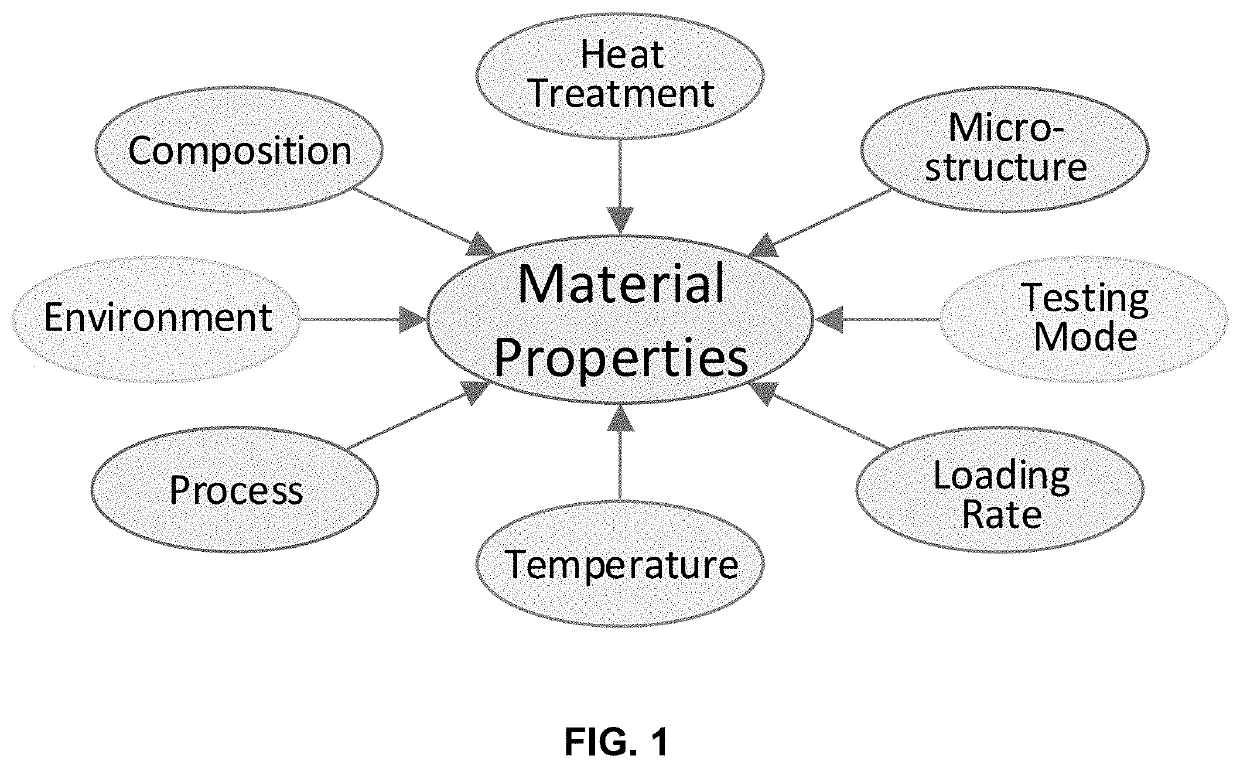
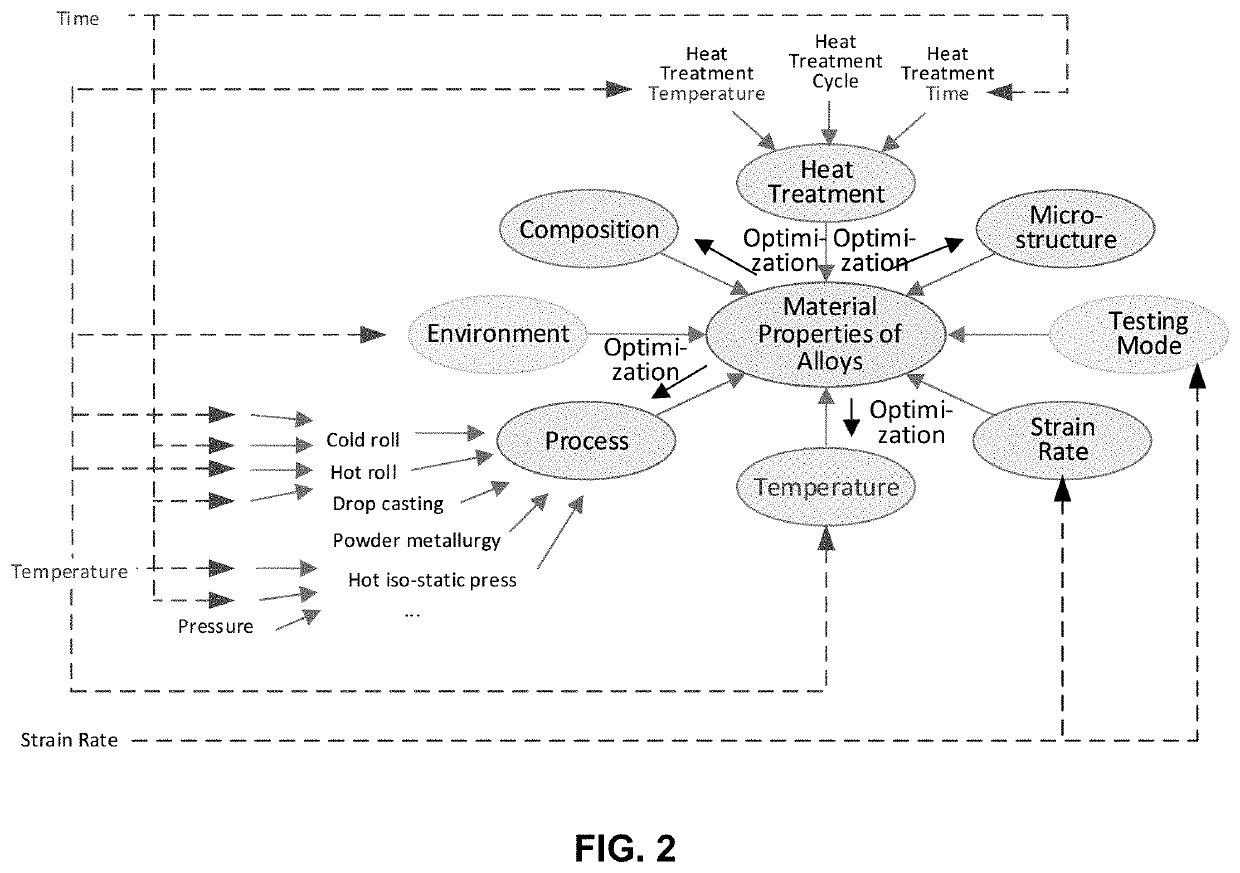
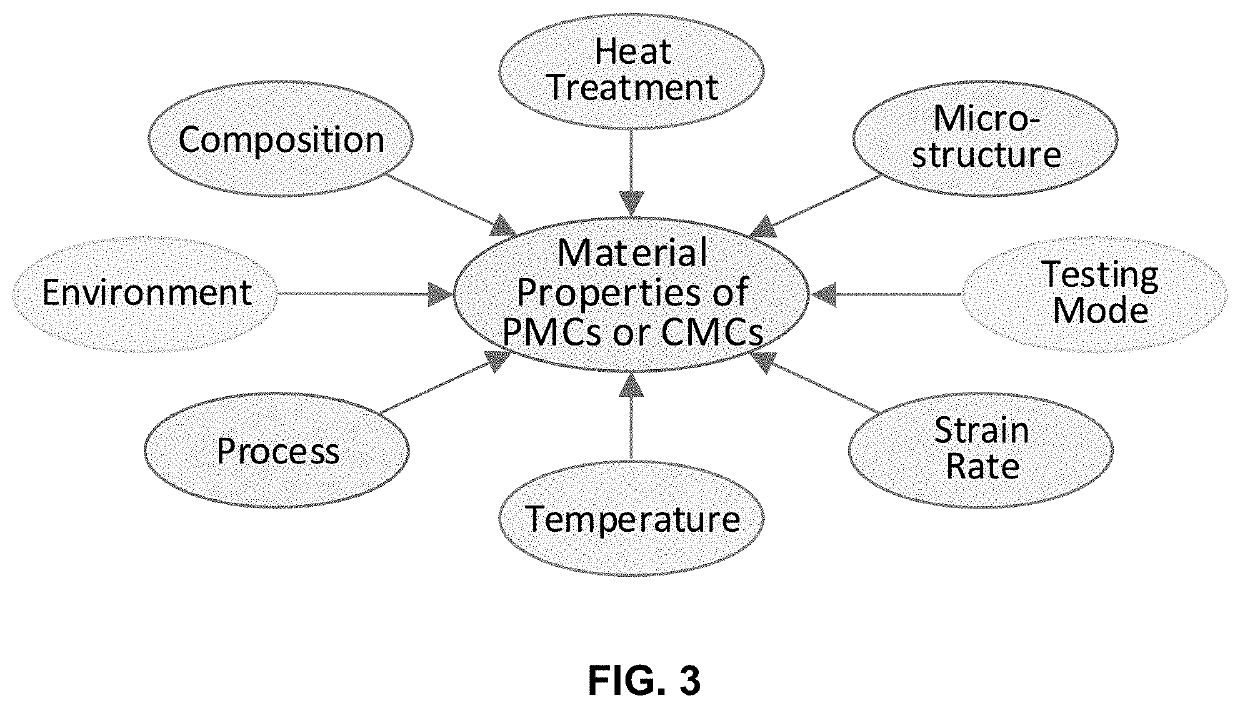
- The application of machine learning (ML) and data analytics to accelerate the design of HEAs and composites by leveraging existing data, using physics-based models and ML algorithms for predicting material properties, and employing ML to optimize AM processes for real-time monitoring and control, thereby reducing development time and costs and improving the quality of AM parts.
Inverse design method based on genetic algorithm, and alloy design including the same and using artificial intelligence computer, and computer-readable medium having a program recorded therein for executing inverse design method based on genetic algorithm
PatentActiveKR1020220073453A
Innovation
- A genetic algorithm-based reverse engineering method that includes a machine learning step for generating an optimal property prediction model, followed by a global search using a genetic algorithm to derive chemical composition and process conditions, with modularized processes for scalability and error minimization.


Data Privacy Regulations for Predictive Analytics
The implementation of inverse design data analysis for trend prediction operates within a complex regulatory landscape that varies significantly across jurisdictions. In the United States, the California Consumer Privacy Act (CCPA) and its amendment, the California Privacy Rights Act (CPRA), establish stringent requirements for organizations processing personal data for predictive purposes. These regulations mandate explicit consent mechanisms when utilizing consumer data to generate trend forecasts, particularly when such predictions could influence individual decision-making or market behaviors.
European Union's General Data Protection Regulation (GDPR) presents additional challenges for inverse design methodologies. The regulation's "right to explanation" provision requires organizations to provide clear justifications for automated decision-making processes, including predictive analytics systems. This requirement becomes particularly complex when dealing with inverse design algorithms that work backwards from desired outcomes to identify optimal input parameters, as the causal relationships may not be immediately transparent to data subjects.
The evolving regulatory framework in Asia-Pacific regions introduces further compliance considerations. China's Personal Information Protection Law (PIPL) and Singapore's Personal Data Protection Act (PDPA) both emphasize data minimization principles that directly impact the scope of data collection permissible for trend prediction models. These regulations require organizations to demonstrate that the volume and variety of data used in inverse design analysis are proportionate to the predictive objectives.
Sector-specific regulations add another layer of complexity to compliance frameworks. Financial services organizations implementing inverse design for market trend prediction must navigate additional requirements under regulations such as the Fair Credit Reporting Act (FCRA) and Basel III guidelines. Healthcare applications face constraints under HIPAA and similar health data protection laws, while telecommunications companies must comply with industry-specific privacy frameworks.
Cross-border data transfer restrictions significantly impact the deployment of inverse design systems that rely on distributed datasets. The invalidation of Privacy Shield and subsequent implementation of Standard Contractual Clauses (SCCs) under GDPR create operational challenges for organizations seeking to leverage global datasets for comprehensive trend analysis. These restrictions often require organizations to implement data localization strategies or invest in privacy-enhancing technologies such as federated learning approaches.
Emerging regulatory trends indicate increasing scrutiny of algorithmic transparency and bias mitigation in predictive systems. Proposed legislation in multiple jurisdictions emphasizes the need for algorithmic impact assessments and regular auditing of predictive models, requirements that necessitate careful documentation of inverse design methodologies and their decision-making processes.
European Union's General Data Protection Regulation (GDPR) presents additional challenges for inverse design methodologies. The regulation's "right to explanation" provision requires organizations to provide clear justifications for automated decision-making processes, including predictive analytics systems. This requirement becomes particularly complex when dealing with inverse design algorithms that work backwards from desired outcomes to identify optimal input parameters, as the causal relationships may not be immediately transparent to data subjects.
The evolving regulatory framework in Asia-Pacific regions introduces further compliance considerations. China's Personal Information Protection Law (PIPL) and Singapore's Personal Data Protection Act (PDPA) both emphasize data minimization principles that directly impact the scope of data collection permissible for trend prediction models. These regulations require organizations to demonstrate that the volume and variety of data used in inverse design analysis are proportionate to the predictive objectives.
Sector-specific regulations add another layer of complexity to compliance frameworks. Financial services organizations implementing inverse design for market trend prediction must navigate additional requirements under regulations such as the Fair Credit Reporting Act (FCRA) and Basel III guidelines. Healthcare applications face constraints under HIPAA and similar health data protection laws, while telecommunications companies must comply with industry-specific privacy frameworks.
Cross-border data transfer restrictions significantly impact the deployment of inverse design systems that rely on distributed datasets. The invalidation of Privacy Shield and subsequent implementation of Standard Contractual Clauses (SCCs) under GDPR create operational challenges for organizations seeking to leverage global datasets for comprehensive trend analysis. These restrictions often require organizations to implement data localization strategies or invest in privacy-enhancing technologies such as federated learning approaches.
Emerging regulatory trends indicate increasing scrutiny of algorithmic transparency and bias mitigation in predictive systems. Proposed legislation in multiple jurisdictions emphasizes the need for algorithmic impact assessments and regular auditing of predictive models, requirements that necessitate careful documentation of inverse design methodologies and their decision-making processes.
AI Ethics in Automated Trend Prediction Systems
The integration of artificial intelligence in automated trend prediction systems using inverse design data analysis raises significant ethical considerations that must be addressed to ensure responsible deployment and societal benefit. These ethical challenges span multiple dimensions, from data privacy and algorithmic transparency to fairness and accountability in predictive outcomes.
Data privacy emerges as a fundamental concern when implementing inverse design methodologies for trend prediction. These systems often require extensive datasets containing sensitive information about consumer behaviors, market patterns, and individual preferences. The inverse design approach, which works backward from desired outcomes to identify optimal input parameters, may inadvertently expose private information through pattern recognition and data reconstruction techniques. Organizations must implement robust data anonymization protocols and ensure compliance with privacy regulations while maintaining the analytical integrity necessary for accurate trend prediction.
Algorithmic transparency presents another critical ethical dimension. Inverse design data analysis typically involves complex machine learning models that operate as black boxes, making it difficult to understand how specific predictions are generated. This opacity becomes problematic when trend predictions influence significant business decisions, market strategies, or policy formulations. Stakeholders require explainable AI frameworks that can articulate the reasoning behind predictions, enabling informed decision-making and building trust in automated systems.
Bias mitigation represents a crucial challenge in automated trend prediction systems. Historical data used to train inverse design models often contains inherent biases reflecting past societal inequalities or market distortions. When these biases are perpetuated through predictive algorithms, they can reinforce existing disparities and create unfair advantages for certain groups while disadvantaging others. Implementing fairness-aware machine learning techniques and conducting regular bias audits becomes essential for ethical system operation.
The question of accountability in automated predictions requires careful consideration. When inverse design systems generate trend forecasts that lead to significant economic or social consequences, determining responsibility for outcomes becomes complex. Clear governance frameworks must establish accountability chains, defining roles and responsibilities for system developers, operators, and end-users to ensure appropriate oversight and remediation mechanisms.
Human oversight and intervention capabilities must be preserved within automated trend prediction systems. While inverse design approaches can process vast amounts of data and identify patterns beyond human capability, maintaining human agency in critical decision-making processes remains essential for ethical operation and societal alignment.
Data privacy emerges as a fundamental concern when implementing inverse design methodologies for trend prediction. These systems often require extensive datasets containing sensitive information about consumer behaviors, market patterns, and individual preferences. The inverse design approach, which works backward from desired outcomes to identify optimal input parameters, may inadvertently expose private information through pattern recognition and data reconstruction techniques. Organizations must implement robust data anonymization protocols and ensure compliance with privacy regulations while maintaining the analytical integrity necessary for accurate trend prediction.
Algorithmic transparency presents another critical ethical dimension. Inverse design data analysis typically involves complex machine learning models that operate as black boxes, making it difficult to understand how specific predictions are generated. This opacity becomes problematic when trend predictions influence significant business decisions, market strategies, or policy formulations. Stakeholders require explainable AI frameworks that can articulate the reasoning behind predictions, enabling informed decision-making and building trust in automated systems.
Bias mitigation represents a crucial challenge in automated trend prediction systems. Historical data used to train inverse design models often contains inherent biases reflecting past societal inequalities or market distortions. When these biases are perpetuated through predictive algorithms, they can reinforce existing disparities and create unfair advantages for certain groups while disadvantaging others. Implementing fairness-aware machine learning techniques and conducting regular bias audits becomes essential for ethical system operation.
The question of accountability in automated predictions requires careful consideration. When inverse design systems generate trend forecasts that lead to significant economic or social consequences, determining responsibility for outcomes becomes complex. Clear governance frameworks must establish accountability chains, defining roles and responsibilities for system developers, operators, and end-users to ensure appropriate oversight and remediation mechanisms.
Human oversight and intervention capabilities must be preserved within automated trend prediction systems. While inverse design approaches can process vast amounts of data and identify patterns beyond human capability, maintaining human agency in critical decision-making processes remains essential for ethical operation and societal alignment.
Unlock deeper insights with Patsnap Eureka Quick Research — get a full tech report to explore trends and direct your research. Try now!
Generate Your Research Report Instantly with AI Agent
Supercharge your innovation with Patsnap Eureka AI Agent Platform!