

How to Reduce Costs Using Modular Construction Techniques
MAR 16, 202610 MIN READ
Generate Your Research Report Instantly with AI Agent
PatSnap Eureka helps you evaluate technical feasibility & market potential.
Modular Construction Background and Cost Reduction Goals
Modular construction represents a paradigm shift in the building industry, fundamentally altering how structures are designed, manufactured, and assembled. This construction methodology involves creating building components or entire sections in controlled factory environments before transporting them to construction sites for final assembly. The approach has gained significant momentum over the past two decades as the construction industry grapples with escalating costs, labor shortages, and increasing demands for sustainable building practices.
The evolution of modular construction can be traced back to post-World War II housing needs, but modern applications have expanded far beyond residential projects. Today's modular techniques encompass commercial buildings, healthcare facilities, educational institutions, and even high-rise structures. This expansion reflects technological advancements in manufacturing processes, transportation logistics, and assembly methodologies that have enhanced the viability and appeal of modular approaches.
Current market pressures have intensified the focus on cost reduction within construction projects. Traditional construction methods face challenges including unpredictable weather delays, material waste, extended project timelines, and skilled labor shortages that collectively drive up project costs. These factors have created an urgent need for alternative construction approaches that can deliver comparable quality while significantly reducing overall project expenses.
The primary cost reduction goals associated with modular construction techniques center on several key areas. Labor cost optimization represents a fundamental objective, as factory-based manufacturing allows for more efficient workforce utilization and reduced dependency on specialized on-site trades. Material waste reduction constitutes another critical goal, with controlled manufacturing environments enabling precise material usage and recycling of excess materials.
Timeline compression serves as a major cost reduction driver, as modular construction can reduce overall project duration by 30-50% compared to traditional methods. This acceleration stems from the ability to conduct site preparation and module manufacturing simultaneously, rather than sequentially. Reduced financing costs, earlier occupancy, and faster return on investment directly translate to substantial cost savings for project stakeholders.
Quality consistency and reduced rework represent additional cost reduction targets. Factory-controlled environments provide superior quality control compared to outdoor construction sites, minimizing defects and associated remediation costs. Standardization of components and processes further contributes to cost efficiency through economies of scale and reduced design complexity.
The strategic implementation of modular construction techniques aims to achieve cost reductions of 10-20% compared to traditional construction methods while maintaining or improving quality standards and reducing environmental impact through more efficient resource utilization.
The evolution of modular construction can be traced back to post-World War II housing needs, but modern applications have expanded far beyond residential projects. Today's modular techniques encompass commercial buildings, healthcare facilities, educational institutions, and even high-rise structures. This expansion reflects technological advancements in manufacturing processes, transportation logistics, and assembly methodologies that have enhanced the viability and appeal of modular approaches.
Current market pressures have intensified the focus on cost reduction within construction projects. Traditional construction methods face challenges including unpredictable weather delays, material waste, extended project timelines, and skilled labor shortages that collectively drive up project costs. These factors have created an urgent need for alternative construction approaches that can deliver comparable quality while significantly reducing overall project expenses.
The primary cost reduction goals associated with modular construction techniques center on several key areas. Labor cost optimization represents a fundamental objective, as factory-based manufacturing allows for more efficient workforce utilization and reduced dependency on specialized on-site trades. Material waste reduction constitutes another critical goal, with controlled manufacturing environments enabling precise material usage and recycling of excess materials.
Timeline compression serves as a major cost reduction driver, as modular construction can reduce overall project duration by 30-50% compared to traditional methods. This acceleration stems from the ability to conduct site preparation and module manufacturing simultaneously, rather than sequentially. Reduced financing costs, earlier occupancy, and faster return on investment directly translate to substantial cost savings for project stakeholders.
Quality consistency and reduced rework represent additional cost reduction targets. Factory-controlled environments provide superior quality control compared to outdoor construction sites, minimizing defects and associated remediation costs. Standardization of components and processes further contributes to cost efficiency through economies of scale and reduced design complexity.
The strategic implementation of modular construction techniques aims to achieve cost reductions of 10-20% compared to traditional construction methods while maintaining or improving quality standards and reducing environmental impact through more efficient resource utilization.
Market Demand for Cost-Effective Modular Building Solutions
The global construction industry faces mounting pressure to deliver affordable housing and commercial buildings while maintaining quality standards. Traditional construction methods increasingly struggle to meet cost targets amid rising material prices, labor shortages, and extended project timelines. This economic reality has created substantial market demand for alternative construction approaches that can significantly reduce overall project costs.
Modular construction techniques have emerged as a compelling solution to address these cost pressures. The market demand stems from multiple stakeholders seeking economic advantages. Developers require faster project delivery to reduce financing costs and accelerate return on investment. Government agencies and housing authorities need cost-effective solutions to address affordable housing shortages within constrained budgets. Commercial clients seek predictable pricing and reduced construction risks that modular approaches can provide.
The residential sector demonstrates particularly strong demand for cost-effective modular solutions. Housing affordability crises in major metropolitan areas have intensified the search for construction methods that can deliver quality homes at lower price points. Multi-family housing developers increasingly recognize modular construction's potential to reduce per-unit costs through standardized designs and factory production efficiencies.
Commercial and institutional markets also show growing interest in modular building solutions. Educational institutions require cost-effective expansion options for classrooms and dormitories. Healthcare systems need rapid deployment of medical facilities while controlling capital expenditures. Retail and hospitality sectors seek standardized building solutions that can be replicated across multiple locations with consistent cost structures.
The market demand extends beyond initial construction costs to encompass lifecycle economic benefits. Building owners increasingly value modular construction's potential for reduced maintenance costs, improved energy efficiency, and enhanced building performance. These long-term economic advantages create additional market pull for modular solutions.
Geographic variations in market demand reflect regional economic conditions and regulatory environments. Markets with high labor costs and strict building codes show stronger demand for factory-built modular solutions. Regions experiencing rapid population growth require scalable construction approaches that modular techniques can provide. Areas with skilled labor shortages particularly value the controlled factory environment that modular construction offers.
The market demand continues expanding as awareness grows regarding modular construction's cost reduction capabilities and quality improvements compared to traditional site-built methods.
Modular construction techniques have emerged as a compelling solution to address these cost pressures. The market demand stems from multiple stakeholders seeking economic advantages. Developers require faster project delivery to reduce financing costs and accelerate return on investment. Government agencies and housing authorities need cost-effective solutions to address affordable housing shortages within constrained budgets. Commercial clients seek predictable pricing and reduced construction risks that modular approaches can provide.
The residential sector demonstrates particularly strong demand for cost-effective modular solutions. Housing affordability crises in major metropolitan areas have intensified the search for construction methods that can deliver quality homes at lower price points. Multi-family housing developers increasingly recognize modular construction's potential to reduce per-unit costs through standardized designs and factory production efficiencies.
Commercial and institutional markets also show growing interest in modular building solutions. Educational institutions require cost-effective expansion options for classrooms and dormitories. Healthcare systems need rapid deployment of medical facilities while controlling capital expenditures. Retail and hospitality sectors seek standardized building solutions that can be replicated across multiple locations with consistent cost structures.
The market demand extends beyond initial construction costs to encompass lifecycle economic benefits. Building owners increasingly value modular construction's potential for reduced maintenance costs, improved energy efficiency, and enhanced building performance. These long-term economic advantages create additional market pull for modular solutions.
Geographic variations in market demand reflect regional economic conditions and regulatory environments. Markets with high labor costs and strict building codes show stronger demand for factory-built modular solutions. Regions experiencing rapid population growth require scalable construction approaches that modular techniques can provide. Areas with skilled labor shortages particularly value the controlled factory environment that modular construction offers.
The market demand continues expanding as awareness grows regarding modular construction's cost reduction capabilities and quality improvements compared to traditional site-built methods.
Current State and Challenges in Modular Construction Costs
The modular construction industry has experienced significant growth over the past decade, driven by increasing demand for faster project delivery and improved quality control. However, cost reduction remains a persistent challenge that limits broader adoption across various construction sectors. Current market penetration of modular construction techniques varies significantly by region, with developed markets like Scandinavia and parts of North America achieving 15-20% adoption rates, while emerging markets lag considerably behind at 2-5%.
Manufacturing capacity constraints represent one of the most significant bottlenecks in achieving cost efficiencies. Most modular construction facilities operate at 60-70% capacity utilization, primarily due to inconsistent project pipelines and seasonal demand fluctuations. This underutilization directly impacts unit costs, as fixed manufacturing overhead cannot be adequately distributed across production volumes. Additionally, the lack of standardized module dimensions across different manufacturers creates inefficiencies in transportation and assembly processes.
Transportation logistics continue to pose substantial cost challenges, particularly for projects located beyond 300-mile radius from manufacturing facilities. Current transportation costs can account for 8-15% of total project costs, with oversized load regulations and route restrictions further complicating delivery schedules. The industry lacks integrated logistics networks that could optimize multi-project transportation routes and reduce per-unit shipping expenses.
Supply chain fragmentation presents another critical challenge, as modular manufacturers often struggle to achieve the same economies of scale enjoyed by traditional construction material suppliers. Raw material costs for modular construction typically run 5-10% higher than conventional construction due to smaller procurement volumes and specialized component requirements. This cost premium is particularly pronounced for mechanical, electrical, and plumbing systems that require factory-friendly installation methods.
Skilled labor shortages in manufacturing environments have created wage inflation pressures, with specialized modular construction workers commanding 10-15% premium over traditional construction labor. The industry faces difficulties in workforce development, as existing construction training programs inadequately address factory-based assembly techniques and quality control processes.
Regulatory barriers and code compliance issues add significant cost burdens, particularly for multi-jurisdictional projects. Current building codes often lack specific provisions for modular construction, requiring expensive custom engineering solutions and extended approval processes. These regulatory uncertainties can add 3-6 months to project timelines and increase development costs by 8-12%.
Design standardization remains limited, with most projects still requiring extensive customization that negates potential manufacturing efficiencies. The industry has yet to develop comprehensive catalogs of standardized modules that could drive down design costs and accelerate production processes.
Manufacturing capacity constraints represent one of the most significant bottlenecks in achieving cost efficiencies. Most modular construction facilities operate at 60-70% capacity utilization, primarily due to inconsistent project pipelines and seasonal demand fluctuations. This underutilization directly impacts unit costs, as fixed manufacturing overhead cannot be adequately distributed across production volumes. Additionally, the lack of standardized module dimensions across different manufacturers creates inefficiencies in transportation and assembly processes.
Transportation logistics continue to pose substantial cost challenges, particularly for projects located beyond 300-mile radius from manufacturing facilities. Current transportation costs can account for 8-15% of total project costs, with oversized load regulations and route restrictions further complicating delivery schedules. The industry lacks integrated logistics networks that could optimize multi-project transportation routes and reduce per-unit shipping expenses.
Supply chain fragmentation presents another critical challenge, as modular manufacturers often struggle to achieve the same economies of scale enjoyed by traditional construction material suppliers. Raw material costs for modular construction typically run 5-10% higher than conventional construction due to smaller procurement volumes and specialized component requirements. This cost premium is particularly pronounced for mechanical, electrical, and plumbing systems that require factory-friendly installation methods.
Skilled labor shortages in manufacturing environments have created wage inflation pressures, with specialized modular construction workers commanding 10-15% premium over traditional construction labor. The industry faces difficulties in workforce development, as existing construction training programs inadequately address factory-based assembly techniques and quality control processes.
Regulatory barriers and code compliance issues add significant cost burdens, particularly for multi-jurisdictional projects. Current building codes often lack specific provisions for modular construction, requiring expensive custom engineering solutions and extended approval processes. These regulatory uncertainties can add 3-6 months to project timelines and increase development costs by 8-12%.
Design standardization remains limited, with most projects still requiring extensive customization that negates potential manufacturing efficiencies. The industry has yet to develop comprehensive catalogs of standardized modules that could drive down design costs and accelerate production processes.
Existing Cost Reduction Solutions in Modular Construction
01 Prefabricated modular building components and systems
Modular construction techniques utilize prefabricated building components that are manufactured off-site and assembled on-site. These systems include wall panels, floor modules, and structural frames that can be quickly connected together. The prefabrication approach reduces on-site labor costs, minimizes construction time, and improves quality control. Standardized modular units allow for economies of scale in manufacturing, leading to significant cost reductions compared to traditional construction methods.- Prefabricated modular building components and systems: Modular construction techniques utilize prefabricated building components that are manufactured off-site and assembled on-site. These systems include wall panels, floor modules, and structural frames that can be quickly connected together. The prefabrication approach reduces on-site labor costs, minimizes construction time, and improves quality control. Standardized components and connection methods enable efficient assembly and reduce material waste, contributing to overall cost reduction in construction projects.
- Modular connection and joining systems: Specialized connection systems are designed to facilitate the rapid assembly of modular building components. These systems include mechanical fasteners, interlocking joints, and coupling mechanisms that allow modules to be securely connected without extensive welding or traditional construction methods. The connection systems are engineered to maintain structural integrity while reducing installation time and labor requirements, thereby lowering overall construction costs.
- Standardized modular unit dimensions and configurations: Modular construction employs standardized dimensional systems and configurations that enable mass production and interchangeability of components. These standardized units can be combined in various arrangements to create different building layouts while maintaining cost efficiency through economies of scale. The standardization reduces design complexity, simplifies logistics, and allows for better cost estimation and control throughout the construction process.
- Integrated building services and utilities in modular units: Modular construction techniques incorporate pre-installed building services such as electrical systems, plumbing, and HVAC components within the prefabricated modules. This integration allows for factory installation and testing of utilities before site delivery, reducing on-site installation time and associated labor costs. The approach minimizes coordination issues between different trades and reduces the risk of errors, leading to cost savings in both construction and long-term maintenance.
- Transportation and assembly optimization methods: Cost-effective modular construction requires optimized methods for transporting prefabricated modules and efficient on-site assembly procedures. These methods include collapsible or stackable module designs, specialized transportation equipment, and lifting systems that facilitate quick installation. Assembly optimization techniques focus on minimizing crane time, reducing site preparation requirements, and streamlining the construction sequence to lower overall project costs while maintaining safety and quality standards.
02 Standardized connection and assembly methods
Efficient connection systems are critical for reducing assembly time and labor costs in modular construction. These methods include mechanical fastening systems, interlocking joints, and quick-connect mechanisms that allow modules to be rapidly joined without specialized skills or equipment. Standardized connection interfaces enable interchangeability of components and reduce the need for custom fabrication, thereby lowering overall project costs.Expand Specific Solutions03 Lightweight and cost-effective materials
The selection of materials significantly impacts the cost-effectiveness of modular construction. Lightweight materials such as composite panels, engineered wood products, and advanced polymers reduce transportation costs and simplify handling during assembly. These materials maintain structural integrity while being more economical than traditional building materials. The use of recyclable and sustainable materials can also reduce long-term costs and environmental impact.Expand Specific Solutions04 Integrated building systems and utilities
Modular construction techniques incorporate pre-installed building systems including electrical, plumbing, and HVAC components within the modules during manufacturing. This integration reduces on-site installation time and coordination costs between different trades. Factory installation of utilities ensures better quality control and reduces the risk of errors that can lead to costly rework. The approach streamlines the construction process and minimizes overall project duration and expenses.Expand Specific Solutions05 Design optimization and cost estimation methods
Advanced design and planning tools enable accurate cost estimation and optimization of modular construction projects. These methods include parametric design approaches, building information modeling, and cost analysis algorithms that help identify the most economical configurations. Optimization techniques consider factors such as module size, transportation constraints, and assembly sequences to minimize total project costs. Standardized design templates and reusable components further reduce design costs and improve cost predictability.Expand Specific Solutions
Key Players in Modular Construction and Prefab Industry
The modular construction industry is experiencing rapid growth driven by increasing demand for cost-effective building solutions and labor shortages in traditional construction. The market demonstrates significant expansion potential, particularly in residential and commercial sectors. Technology maturity varies considerably among key players: established companies like China Construction Steel Structure Corp Ltd. and Hitachi Ltd. represent mature industrial capabilities, while innovative firms such as Cuby Technologies and NRB Modular Solutions showcase emerging automated manufacturing approaches. Chinese companies including Changsha Yuanda Housing Industry Group and China Construction Science & Technology Group dominate large-scale prefabricated construction, whereas specialized firms like Innovative Building Technologies LLC focus on advanced modular techniques. The competitive landscape spans from traditional construction giants adapting modular methods to pure-play technology companies revolutionizing manufacturing processes through micro-factories and digital integration.
Changsha Yuanda Housing Industry Group Co., Ltd.
Technical Solution: Yuanda specializes in prefabricated construction systems that significantly reduce on-site labor costs by up to 60% through factory-based manufacturing processes. Their modular approach includes standardized wall panels, structural components, and integrated MEP systems that are pre-manufactured in controlled environments. The company utilizes advanced BIM technology for precise component design and lean manufacturing principles to minimize material waste by approximately 30%. Their modular construction methodology enables faster project delivery with construction timelines reduced by 40-50% compared to traditional methods, while maintaining consistent quality standards through automated production processes.
Strengths: Significant cost reduction through factory automation and waste minimization, faster delivery timelines. Weaknesses: Limited design flexibility due to standardization requirements, high initial investment in manufacturing facilities.
China Construction Indl & Energy Engineering Grp Co., Ltd.
Technical Solution: CCIEE implements large-scale modular construction techniques focusing on industrial and energy sector projects. Their approach utilizes standardized modular units that can be pre-fabricated off-site and assembled rapidly on location, reducing construction costs by 25-35%. The company employs advanced steel frame modular systems with integrated utilities and mechanical components. Their methodology includes value engineering processes that optimize material usage and construction sequences. CCIEE's modular approach particularly excels in repetitive building types such as industrial facilities, where economies of scale can be maximized through component standardization and bulk procurement strategies.
Strengths: Expertise in large-scale industrial projects, strong economies of scale in material procurement. Weaknesses: Limited application to complex architectural designs, dependency on transportation logistics for large modules.
Core Innovations in Modular Design and Manufacturing
Module evaluation method and system
PatentInactiveUS7409255B2
Innovation
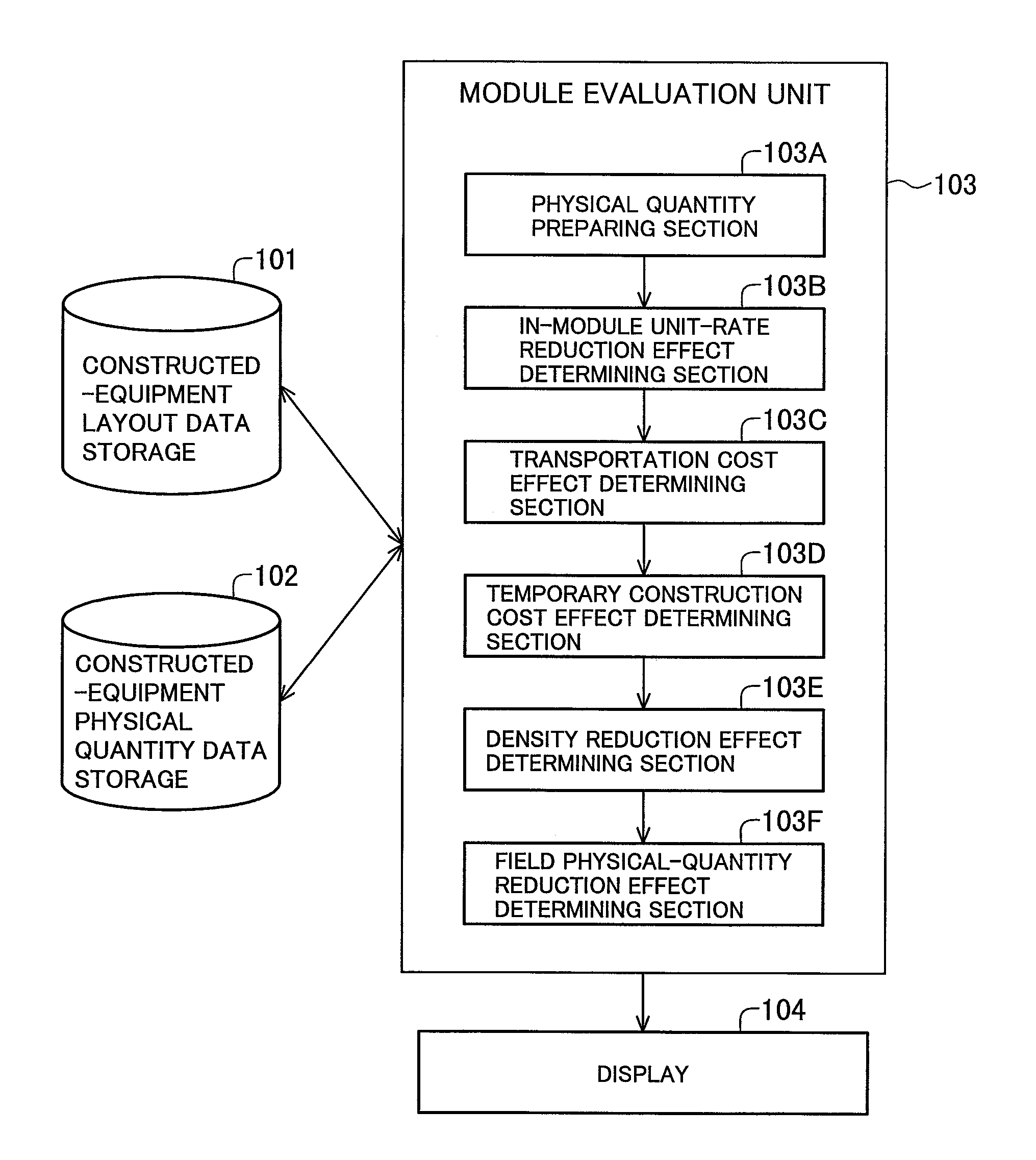
- A module evaluation method and system that calculates unit-rate reduction, transportation costs, temporary construction costs, and field physical-quantity reduction effects based on constructed-equipment layout, physical quantity, and transportation data, enabling quick and automatic assessment of modularization effectiveness.


Methods and apparatus for constructing multi-storey buildings
PatentPendingEP4491821A2
Innovation
- The method involves using temporary support members, such as tripods, to stabilize building modules during construction, allowing for the removal and reuse of these members once permanent support structures, like pre-fabricated concrete panels, are installed, decoupling the installation of modules from the supply of permanent support structures.


Building Codes and Standards for Modular Construction
Building codes and standards represent fundamental regulatory frameworks that significantly influence the cost-effectiveness of modular construction projects. These regulations establish minimum safety, structural, and performance requirements that modular manufacturers and builders must meet, directly impacting material selection, design processes, and manufacturing procedures. The standardization of these requirements across jurisdictions creates opportunities for economies of scale, while inconsistent or overly restrictive codes can substantially increase project costs.
The International Building Code (IBC) and International Residential Code (IRC) serve as primary reference standards for modular construction in many regions. These codes have evolved to better accommodate factory-built construction methods, recognizing the inherent quality control advantages of controlled manufacturing environments. Recent updates have streamlined approval processes for modular units that meet specific pre-certification criteria, reducing inspection time and associated costs.
Regional variations in building codes present both challenges and opportunities for cost reduction. States like California, Texas, and Florida have developed specialized modular construction standards that expedite permitting processes while maintaining safety requirements. These streamlined approaches can reduce project timelines by 20-30% compared to traditional stick-built construction, translating to significant cost savings through reduced financing costs and faster occupancy.
Fire safety standards particularly impact modular construction costs, as factory-built units must often exceed traditional construction requirements to compensate for transportation and assembly considerations. However, standardized fire-rated assemblies developed specifically for modular applications have emerged, allowing manufacturers to achieve compliance more cost-effectively through volume production of certified components.
Energy efficiency standards increasingly drive modular construction specifications, with codes requiring enhanced insulation, air sealing, and mechanical system performance. While these requirements initially increase material costs, the controlled factory environment enables more precise installation of energy-efficient systems, often achieving better performance at lower installed costs than site-built alternatives.
Seismic and wind load requirements vary significantly by geographic region, necessitating design modifications that can impact modular construction economics. However, standardized structural systems designed to meet multiple code requirements across different zones allow manufacturers to achieve broader market reach while maintaining cost efficiency through standardized production processes.
The emergence of performance-based codes offers new opportunities for cost optimization in modular construction. These standards focus on achieving specific performance outcomes rather than prescriptive construction methods, allowing innovative modular designs that may use alternative materials or construction techniques while maintaining equivalent safety and performance levels.
The International Building Code (IBC) and International Residential Code (IRC) serve as primary reference standards for modular construction in many regions. These codes have evolved to better accommodate factory-built construction methods, recognizing the inherent quality control advantages of controlled manufacturing environments. Recent updates have streamlined approval processes for modular units that meet specific pre-certification criteria, reducing inspection time and associated costs.
Regional variations in building codes present both challenges and opportunities for cost reduction. States like California, Texas, and Florida have developed specialized modular construction standards that expedite permitting processes while maintaining safety requirements. These streamlined approaches can reduce project timelines by 20-30% compared to traditional stick-built construction, translating to significant cost savings through reduced financing costs and faster occupancy.
Fire safety standards particularly impact modular construction costs, as factory-built units must often exceed traditional construction requirements to compensate for transportation and assembly considerations. However, standardized fire-rated assemblies developed specifically for modular applications have emerged, allowing manufacturers to achieve compliance more cost-effectively through volume production of certified components.
Energy efficiency standards increasingly drive modular construction specifications, with codes requiring enhanced insulation, air sealing, and mechanical system performance. While these requirements initially increase material costs, the controlled factory environment enables more precise installation of energy-efficient systems, often achieving better performance at lower installed costs than site-built alternatives.
Seismic and wind load requirements vary significantly by geographic region, necessitating design modifications that can impact modular construction economics. However, standardized structural systems designed to meet multiple code requirements across different zones allow manufacturers to achieve broader market reach while maintaining cost efficiency through standardized production processes.
The emergence of performance-based codes offers new opportunities for cost optimization in modular construction. These standards focus on achieving specific performance outcomes rather than prescriptive construction methods, allowing innovative modular designs that may use alternative materials or construction techniques while maintaining equivalent safety and performance levels.
Sustainability Impact of Cost-Effective Modular Building
The integration of modular construction techniques with cost reduction strategies presents significant opportunities for advancing sustainable building practices across the construction industry. Cost-effective modular building approaches fundamentally transform traditional construction paradigms by optimizing resource utilization, minimizing waste generation, and enhancing energy efficiency throughout the building lifecycle.
Modular construction's inherent design principles align closely with sustainability objectives through standardized manufacturing processes that reduce material waste by up to 90% compared to conventional construction methods. Factory-controlled environments enable precise material calculations, efficient cutting processes, and systematic recycling of excess materials, creating closed-loop production systems that minimize environmental impact while maintaining cost competitiveness.
The sustainability benefits extend beyond waste reduction to encompass energy performance improvements. Cost-effective modular buildings typically incorporate enhanced insulation systems, optimized building envelope designs, and integrated renewable energy solutions that reduce operational energy consumption by 20-40%. These energy efficiency gains translate into long-term cost savings while significantly reducing carbon footprints over the building's operational lifespan.
Transportation efficiency represents another critical sustainability dimension of cost-effective modular construction. Optimized module sizing and strategic manufacturing location planning reduce transportation-related emissions while maintaining economic viability. Advanced logistics planning and consolidated shipping methods further enhance environmental performance without compromising cost objectives.
The circular economy principles embedded in modular construction create additional sustainability advantages through design for disassembly and component reusability. Standardized connections and modular components facilitate future building modifications, expansions, or complete relocations, extending building lifecycles and reducing demolition waste. This adaptability ensures long-term value retention while supporting sustainable development goals.
Water management systems in cost-effective modular buildings often incorporate innovative sustainability features including rainwater harvesting, greywater recycling, and permeable foundation systems. These integrated approaches reduce infrastructure demands and operational costs while enhancing environmental performance through reduced water consumption and improved stormwater management.
The scalability of sustainable modular construction techniques enables widespread adoption across diverse building typologies, from residential developments to commercial facilities, creating cumulative environmental benefits that extend beyond individual projects to influence broader construction industry practices toward more sustainable and cost-effective building solutions.
Modular construction's inherent design principles align closely with sustainability objectives through standardized manufacturing processes that reduce material waste by up to 90% compared to conventional construction methods. Factory-controlled environments enable precise material calculations, efficient cutting processes, and systematic recycling of excess materials, creating closed-loop production systems that minimize environmental impact while maintaining cost competitiveness.
The sustainability benefits extend beyond waste reduction to encompass energy performance improvements. Cost-effective modular buildings typically incorporate enhanced insulation systems, optimized building envelope designs, and integrated renewable energy solutions that reduce operational energy consumption by 20-40%. These energy efficiency gains translate into long-term cost savings while significantly reducing carbon footprints over the building's operational lifespan.
Transportation efficiency represents another critical sustainability dimension of cost-effective modular construction. Optimized module sizing and strategic manufacturing location planning reduce transportation-related emissions while maintaining economic viability. Advanced logistics planning and consolidated shipping methods further enhance environmental performance without compromising cost objectives.
The circular economy principles embedded in modular construction create additional sustainability advantages through design for disassembly and component reusability. Standardized connections and modular components facilitate future building modifications, expansions, or complete relocations, extending building lifecycles and reducing demolition waste. This adaptability ensures long-term value retention while supporting sustainable development goals.
Water management systems in cost-effective modular buildings often incorporate innovative sustainability features including rainwater harvesting, greywater recycling, and permeable foundation systems. These integrated approaches reduce infrastructure demands and operational costs while enhancing environmental performance through reduced water consumption and improved stormwater management.
The scalability of sustainable modular construction techniques enables widespread adoption across diverse building typologies, from residential developments to commercial facilities, creating cumulative environmental benefits that extend beyond individual projects to influence broader construction industry practices toward more sustainable and cost-effective building solutions.
Unlock deeper insights with PatSnap Eureka Quick Research — get a full tech report to explore trends and direct your research. Try now!
Generate Your Research Report Instantly with AI Agent
Supercharge your innovation with PatSnap Eureka AI Agent Platform!