How to Reduce Direct Injection Idle Emissions
MAR 12, 20268 MIN READ
Generate Your Research Report Instantly with AI Agent
PatSnap Eureka helps you evaluate technical feasibility & market potential.
Direct Injection Idle Emission Challenges and Goals
Direct injection (DI) engines have revolutionized automotive powertrains by delivering superior fuel economy and performance compared to traditional port fuel injection systems. However, the technology's widespread adoption has revealed significant challenges in emission control, particularly during idle conditions. The fundamental issue stems from the combustion characteristics inherent to direct injection systems, where fuel is injected directly into the combustion chamber rather than the intake port.
During idle operation, DI engines face unique combustion challenges that contribute to elevated emissions. The reduced air motion and lower combustion temperatures create suboptimal mixing conditions between fuel and air, leading to incomplete combustion and increased formation of particulate matter. Additionally, the wall-wetting phenomenon becomes more pronounced at idle, where fuel droplets impinge on cylinder walls and piston surfaces, creating rich zones that generate higher levels of unburned hydrocarbons and carbon monoxide.
The emission profile during idle conditions presents multiple concerns for regulatory compliance and environmental impact. Particulate matter emissions, particularly in the ultrafine range, pose significant health risks and are subject to increasingly stringent regulations worldwide. Hydrocarbon emissions contribute to ground-level ozone formation, while carbon monoxide presents direct toxicity concerns in urban environments where vehicles frequently idle.
Current regulatory frameworks, including Euro 7 standards and EPA Tier 3 regulations, are imposing more stringent limits on idle emissions, creating urgent pressure for technological solutions. Real driving emissions (RDE) testing protocols now capture idle conditions more comprehensively, making it impossible for manufacturers to optimize solely for standardized test cycles.
The primary technical goal involves achieving near-zero particulate matter formation during idle while maintaining combustion stability and fuel efficiency. This requires developing advanced injection strategies that optimize spray targeting, timing, and pressure to minimize wall-wetting and improve fuel-air mixing. Secondary objectives include reducing hydrocarbon slip through enhanced combustion completeness and developing aftertreatment systems capable of effective operation at low exhaust temperatures typical of idle conditions.
Emerging targets focus on integrating electrification technologies to minimize or eliminate traditional idle operation entirely. Hybrid systems enabling engine-off idle represent a paradigm shift, while mild hybrid technologies can support advanced thermal management strategies to maintain optimal aftertreatment system temperatures during intermittent idle periods.
During idle operation, DI engines face unique combustion challenges that contribute to elevated emissions. The reduced air motion and lower combustion temperatures create suboptimal mixing conditions between fuel and air, leading to incomplete combustion and increased formation of particulate matter. Additionally, the wall-wetting phenomenon becomes more pronounced at idle, where fuel droplets impinge on cylinder walls and piston surfaces, creating rich zones that generate higher levels of unburned hydrocarbons and carbon monoxide.
The emission profile during idle conditions presents multiple concerns for regulatory compliance and environmental impact. Particulate matter emissions, particularly in the ultrafine range, pose significant health risks and are subject to increasingly stringent regulations worldwide. Hydrocarbon emissions contribute to ground-level ozone formation, while carbon monoxide presents direct toxicity concerns in urban environments where vehicles frequently idle.
Current regulatory frameworks, including Euro 7 standards and EPA Tier 3 regulations, are imposing more stringent limits on idle emissions, creating urgent pressure for technological solutions. Real driving emissions (RDE) testing protocols now capture idle conditions more comprehensively, making it impossible for manufacturers to optimize solely for standardized test cycles.
The primary technical goal involves achieving near-zero particulate matter formation during idle while maintaining combustion stability and fuel efficiency. This requires developing advanced injection strategies that optimize spray targeting, timing, and pressure to minimize wall-wetting and improve fuel-air mixing. Secondary objectives include reducing hydrocarbon slip through enhanced combustion completeness and developing aftertreatment systems capable of effective operation at low exhaust temperatures typical of idle conditions.
Emerging targets focus on integrating electrification technologies to minimize or eliminate traditional idle operation entirely. Hybrid systems enabling engine-off idle represent a paradigm shift, while mild hybrid technologies can support advanced thermal management strategies to maintain optimal aftertreatment system temperatures during intermittent idle periods.
Market Demand for Clean Direct Injection Technologies
The automotive industry faces unprecedented pressure to reduce emissions while maintaining performance standards, creating substantial market demand for clean direct injection technologies. Regulatory frameworks worldwide have established increasingly stringent emission standards, with Euro 7 regulations in Europe and Tier 3 standards in North America specifically targeting idle emissions from gasoline direct injection engines. These regulations have transformed emission reduction from a competitive advantage into a fundamental market requirement.
Consumer awareness regarding air quality and environmental impact has significantly influenced purchasing decisions, particularly in urban markets where idle emissions contribute substantially to local pollution. Fleet operators and commercial vehicle manufacturers represent a growing segment demanding cleaner idle performance, as they face operational restrictions in low-emission zones and corporate sustainability mandates.
The market opportunity extends beyond traditional automotive applications into marine, stationary power generation, and industrial equipment sectors, where direct injection engines operate frequently at idle conditions. These applications face similar regulatory pressures and operational cost considerations, creating diverse revenue streams for clean injection technologies.
Technology adoption patterns indicate strong demand for solutions that address particulate matter formation during idle operation, as current direct injection systems struggle with fuel wall-wetting and incomplete combustion at low loads. Market research indicates that manufacturers prioritize technologies offering measurable idle emission reductions without compromising fuel economy or requiring extensive engine redesign.
Investment trends show significant capital allocation toward advanced injection strategies, combustion optimization technologies, and integrated emission control systems. Automotive suppliers report increasing customer inquiries for idle-specific emission solutions, indicating market readiness for commercially viable technologies.
The aftermarket segment presents additional opportunities, as existing vehicle fleets require retrofit solutions to meet evolving emission standards. This market segment values cost-effective technologies that can be implemented without major powertrain modifications, creating demand for innovative injection system upgrades and combustion enhancement technologies.
Consumer awareness regarding air quality and environmental impact has significantly influenced purchasing decisions, particularly in urban markets where idle emissions contribute substantially to local pollution. Fleet operators and commercial vehicle manufacturers represent a growing segment demanding cleaner idle performance, as they face operational restrictions in low-emission zones and corporate sustainability mandates.
The market opportunity extends beyond traditional automotive applications into marine, stationary power generation, and industrial equipment sectors, where direct injection engines operate frequently at idle conditions. These applications face similar regulatory pressures and operational cost considerations, creating diverse revenue streams for clean injection technologies.
Technology adoption patterns indicate strong demand for solutions that address particulate matter formation during idle operation, as current direct injection systems struggle with fuel wall-wetting and incomplete combustion at low loads. Market research indicates that manufacturers prioritize technologies offering measurable idle emission reductions without compromising fuel economy or requiring extensive engine redesign.
Investment trends show significant capital allocation toward advanced injection strategies, combustion optimization technologies, and integrated emission control systems. Automotive suppliers report increasing customer inquiries for idle-specific emission solutions, indicating market readiness for commercially viable technologies.
The aftermarket segment presents additional opportunities, as existing vehicle fleets require retrofit solutions to meet evolving emission standards. This market segment values cost-effective technologies that can be implemented without major powertrain modifications, creating demand for innovative injection system upgrades and combustion enhancement technologies.
Current State of Direct Injection Emission Control
Direct injection (DI) engines have become increasingly prevalent in the automotive industry due to their superior fuel efficiency and power output compared to port fuel injection systems. However, these engines face significant challenges in controlling emissions during idle conditions, where incomplete combustion and fuel wall wetting contribute to elevated hydrocarbon and particulate matter emissions.
Current emission control strategies for DI engines primarily rely on advanced aftertreatment systems and engine management technologies. Three-way catalytic converters remain the cornerstone of gaseous emission control, though their effectiveness is compromised during cold starts and low-temperature idle conditions when catalyst light-off has not been achieved. Modern systems incorporate close-coupled catalysts positioned near the exhaust manifold to reduce warm-up time and improve conversion efficiency during idle operation.
Gasoline particulate filters (GPFs) have emerged as a critical technology for addressing particulate matter emissions from DI engines. These filters, similar to diesel particulate filters, physically capture soot particles and periodically regenerate through controlled combustion. However, GPF regeneration during idle conditions presents challenges due to insufficient exhaust temperatures, requiring active heating strategies or extended driving cycles for effective cleaning.
Engine calibration strategies play a crucial role in idle emission control. Advanced fuel injection timing and pressure management systems optimize spray patterns and fuel atomization to minimize wall wetting and improve combustion completeness. Multi-injection strategies, including pilot and post-injections, help reduce particulate formation while maintaining combustion stability during idle conditions.
Thermal management systems have gained prominence in addressing cold-start emissions, which significantly impact overall idle emission performance. Electric heating elements, exhaust gas recirculation cooler bypasses, and advanced coolant circulation systems work together to accelerate engine and aftertreatment system warm-up, reducing the duration of high-emission idle periods.
Despite these technological advances, several challenges persist in current DI emission control systems. The trade-off between fuel economy and emission performance remains a significant constraint, particularly during extended idle periods. Additionally, real-world driving conditions often differ from laboratory test cycles, leading to higher actual emissions than regulatory standards suggest. The increasing complexity of emission control systems also raises concerns about long-term durability, maintenance costs, and system integration challenges across different operating conditions.
Current emission control strategies for DI engines primarily rely on advanced aftertreatment systems and engine management technologies. Three-way catalytic converters remain the cornerstone of gaseous emission control, though their effectiveness is compromised during cold starts and low-temperature idle conditions when catalyst light-off has not been achieved. Modern systems incorporate close-coupled catalysts positioned near the exhaust manifold to reduce warm-up time and improve conversion efficiency during idle operation.
Gasoline particulate filters (GPFs) have emerged as a critical technology for addressing particulate matter emissions from DI engines. These filters, similar to diesel particulate filters, physically capture soot particles and periodically regenerate through controlled combustion. However, GPF regeneration during idle conditions presents challenges due to insufficient exhaust temperatures, requiring active heating strategies or extended driving cycles for effective cleaning.
Engine calibration strategies play a crucial role in idle emission control. Advanced fuel injection timing and pressure management systems optimize spray patterns and fuel atomization to minimize wall wetting and improve combustion completeness. Multi-injection strategies, including pilot and post-injections, help reduce particulate formation while maintaining combustion stability during idle conditions.
Thermal management systems have gained prominence in addressing cold-start emissions, which significantly impact overall idle emission performance. Electric heating elements, exhaust gas recirculation cooler bypasses, and advanced coolant circulation systems work together to accelerate engine and aftertreatment system warm-up, reducing the duration of high-emission idle periods.
Despite these technological advances, several challenges persist in current DI emission control systems. The trade-off between fuel economy and emission performance remains a significant constraint, particularly during extended idle periods. Additionally, real-world driving conditions often differ from laboratory test cycles, leading to higher actual emissions than regulatory standards suggest. The increasing complexity of emission control systems also raises concerns about long-term durability, maintenance costs, and system integration challenges across different operating conditions.
Existing Solutions for Direct Injection Idle Emissions
01 Fuel injection timing control during idle operation
Controlling the timing of fuel injection during idle operation can significantly reduce emissions. By optimizing the injection timing relative to the engine cycle, combustion efficiency is improved and unburned hydrocarbons are minimized. Advanced control strategies adjust injection timing based on engine temperature, load conditions, and other parameters to maintain stable idle while reducing harmful emissions. This approach is particularly effective for direct injection engines where precise fuel delivery control is critical.- Fuel injection timing control during idle operation: Controlling the timing of fuel injection during idle operation can significantly reduce emissions. By optimizing the injection timing relative to the engine cycle, combustion efficiency is improved and unburned hydrocarbons are minimized. Advanced timing strategies can be employed to ensure complete combustion while maintaining stable idle operation. This approach helps reduce both hydrocarbon and carbon monoxide emissions during idle conditions.
- Air-fuel ratio adjustment for idle emission reduction: Precise control of the air-fuel mixture during idle operation is critical for minimizing emissions. By adjusting the ratio to optimal levels, complete combustion can be achieved, reducing the formation of pollutants. Electronic control systems can monitor engine conditions and dynamically adjust the mixture to maintain low emissions while ensuring smooth idle performance. This technique is particularly effective in reducing nitrogen oxide and particulate matter emissions.
- Idle speed control strategies: Implementing advanced idle speed control strategies helps maintain optimal engine operation while minimizing emissions. By controlling the engine speed at idle through throttle position, fuel injection, or ignition timing adjustments, emissions can be reduced without compromising engine stability. These strategies often involve feedback control systems that respond to various engine parameters to maintain the most efficient idle condition.
- Exhaust gas recirculation during idle: Utilizing exhaust gas recirculation systems during idle operation can effectively reduce nitrogen oxide emissions. By reintroducing a controlled amount of exhaust gas into the combustion chamber, combustion temperatures are lowered, which reduces the formation of nitrogen oxides. The recirculation rate must be carefully controlled to maintain stable idle operation while achieving emission reduction targets.
- Catalyst heating and management at idle: Maintaining optimal catalyst temperature during idle operation is essential for effective emission control. Various strategies can be employed to keep the catalyst at its operating temperature, including adjusting fuel injection patterns, retarding ignition timing, or using secondary air injection. These methods ensure that the catalytic converter remains effective in converting harmful emissions even during prolonged idle periods when exhaust temperatures naturally decrease.
02 Air-fuel ratio optimization at idle
Maintaining optimal air-fuel ratios during idle conditions is essential for minimizing emissions. Lean burn strategies can be employed to reduce fuel consumption and emissions, while ensuring combustion stability. Feedback control systems monitor exhaust gas composition and adjust fuel delivery accordingly. Advanced sensors and control algorithms enable precise regulation of the air-fuel mixture, preventing rich conditions that lead to increased carbon monoxide and hydrocarbon emissions while avoiding lean conditions that may cause misfires.Expand Specific Solutions03 Idle speed control strategies
Implementing advanced idle speed control strategies helps reduce emissions by maintaining optimal engine operating conditions. Variable idle speed control adjusts engine speed based on thermal conditions, electrical loads, and emission requirements. Lower idle speeds generally produce fewer emissions but must be balanced against engine stability and response requirements. Electronic throttle control and variable valve timing systems can be coordinated to achieve stable low-speed idle operation with minimal emissions output.Expand Specific Solutions04 Exhaust gas recirculation during idle
Applying exhaust gas recirculation during idle operation reduces nitrogen oxide emissions and can improve combustion stability. By reintroducing a controlled amount of exhaust gas into the intake system, combustion temperatures are lowered, reducing formation of nitrogen oxides. The recirculation rate must be carefully controlled to avoid excessive dilution that could cause combustion instability or increased hydrocarbon emissions. Advanced control systems modulate recirculation based on engine operating conditions to optimize the trade-off between different emission species.Expand Specific Solutions05 Cold start and warm-up emission control
Reducing emissions during cold start and warm-up phases when the engine operates at or near idle is critical for overall emission performance. Strategies include rapid catalyst heating through optimized fuel injection and ignition timing, secondary air injection, and electric heating elements. During warm-up, enriched fuel mixtures may be required for stability, but advanced control systems minimize this enrichment while maintaining driveability. Multi-injection strategies and variable valve timing can accelerate catalyst light-off and reduce the duration of high-emission cold operation.Expand Specific Solutions
Key Players in Direct Injection Engine Industry
The direct injection idle emissions reduction market represents a mature technological landscape driven by increasingly stringent global emission regulations. The industry is in an advanced development stage, with market size expanding significantly due to regulatory pressures across major automotive markets. Technology maturity varies considerably among key players, with established automotive suppliers like Bosch, Continental, and Denso leading advanced fuel injection and engine management solutions. Major OEMs including Ford, Volkswagen, Mercedes-Benz, GM, Nissan, and Renault are actively implementing sophisticated emission control strategies. Specialized companies like Johnson Matthey focus on catalyst technologies, while AVL provides engineering solutions. The competitive landscape shows high consolidation among tier-one suppliers, with emerging players from Asia, particularly Chinese manufacturers like Chery and FAW, rapidly advancing their capabilities. Overall technology readiness is high, with most solutions approaching commercial maturity.
Ford Global Technologies LLC
Technical Solution: Ford has implemented a comprehensive idle emission reduction strategy combining cylinder deactivation technology with advanced fuel injection timing optimization. Their system can selectively deactivate cylinders during idle conditions while maintaining engine stability through precise fuel metering in active cylinders. The technology includes predictive algorithms that anticipate idle duration and adjust injection strategies accordingly, reducing fuel consumption by 15-20% during idle. Ford's approach also incorporates exhaust gas recirculation optimization and variable valve timing to minimize NOx and particulate emissions during idle operation.
Strengths: Proven cylinder deactivation technology, strong integration with vehicle systems. Weaknesses: Limited applicability to smaller displacement engines, potential NVH challenges during transitions.
Continental Automotive GmbH
Technical Solution: Continental has developed an integrated approach combining advanced engine management systems with predictive idle control algorithms for direct injection engines. Their technology utilizes machine learning algorithms to predict idle duration and optimize fuel injection strategies accordingly. The system includes high-pressure fuel pumps capable of maintaining precise pressure control down to 50 bar during idle conditions, ensuring optimal fuel atomization. Continental's solution also incorporates advanced sensor fusion technology that monitors combustion quality in real-time, enabling dynamic adjustment of injection parameters to minimize emissions while maintaining smooth idle operation.
Strengths: Advanced predictive algorithms, comprehensive sensor integration capabilities. Weaknesses: High development costs, requires extensive calibration for different vehicle platforms.
Core Innovations in Idle Emission Control Patents
Method of utilizing multiple fuel injections to reduce engine emissions at idle
PatentInactiveUS20040007203A1
Innovation
- A method involving the electronic control of a diesel engine's fuel injection system, where a first quantity of fuel is injected during the compression stroke, followed by a second quantity injected at least thirty degrees later, with both quantities being adjustable in timing and quantity to optimize emissions reduction, utilizing a common rail fuel injection system with electronic control to ensure consistent and precise fuel delivery.


Methods for reducing raw particulate engine emissions
PatentActiveUS20140196685A1
Innovation
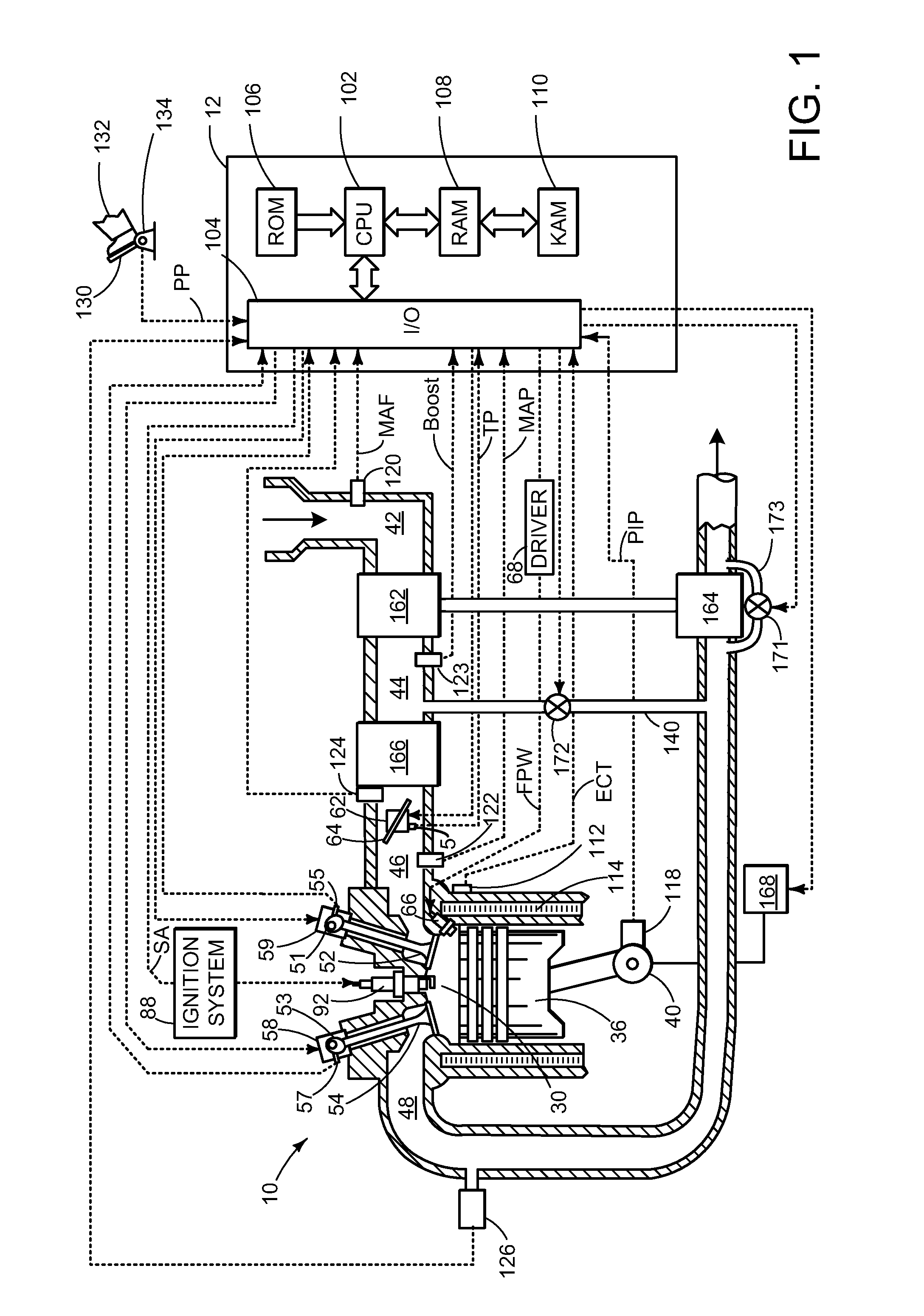
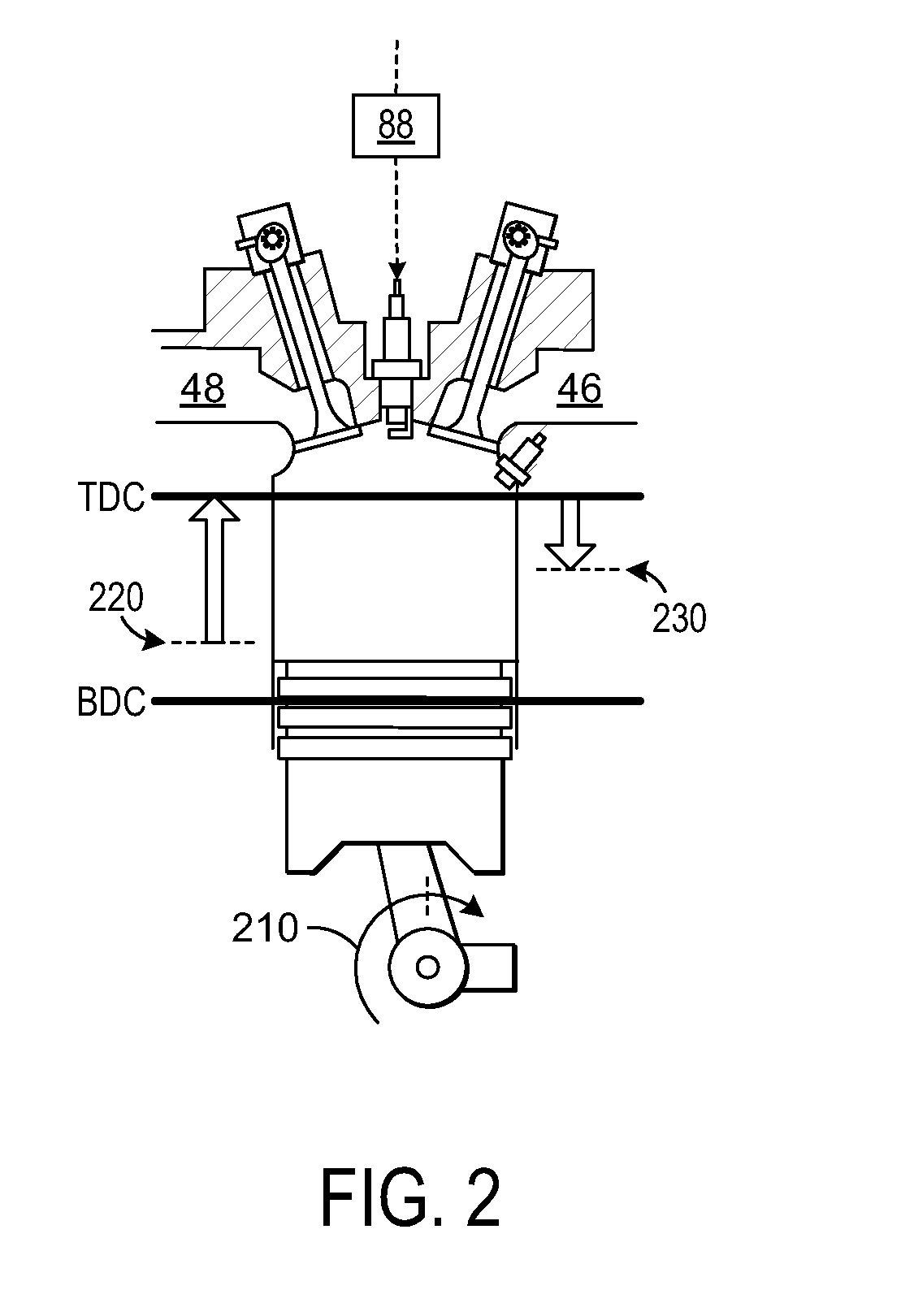
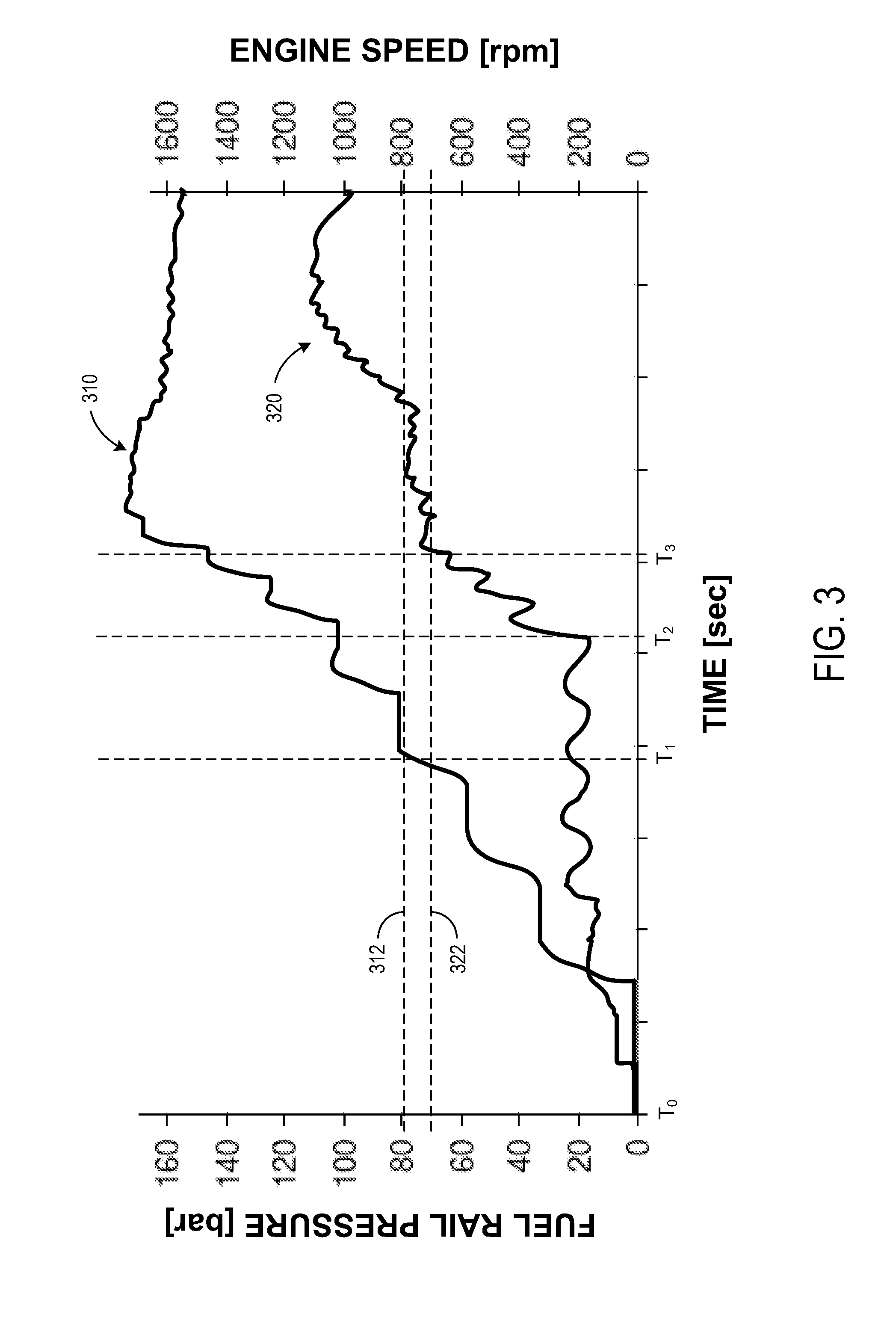
- The method involves adjusting the fuel release pressure threshold and enrichment factor based on engine conditions, activating the starting device to rotate the crankshaft without initial fuel injection, and injecting fuel only when the pressure exceeds a threshold, with the majority of fuel injection occurring during the compression or expansion phase to minimize fuel reaching the cylinder walls and reduce particulate emissions.

Environmental Regulations for Vehicle Emissions
Environmental regulations governing vehicle emissions have become increasingly stringent worldwide, directly impacting the development and implementation of direct injection engine technologies. The regulatory landscape is characterized by progressively tightening standards that specifically target idle emissions, creating significant compliance challenges for automotive manufacturers.
The European Union's Euro 7 standards, expected to be implemented by 2025, introduce more rigorous testing procedures that include extended idle testing periods and real-world driving emissions monitoring. These regulations specifically address particulate matter and nitrogen oxide emissions during idle conditions, which are particularly problematic for gasoline direct injection engines due to fuel wall wetting and incomplete combustion phenomena.
In the United States, the Environmental Protection Agency has strengthened Tier 3 vehicle emission standards, with particular emphasis on reducing particulate matter emissions from gasoline engines. The California Air Resources Board has implemented even more stringent Low Emission Vehicle III standards, requiring significant reductions in idle emissions through 2025. These regulations mandate advanced emission control technologies and improved fuel injection strategies.
China's National VI emission standards align closely with Euro 6 requirements but include additional provisions for idle emission testing under various ambient conditions. The standards require manufacturers to demonstrate compliance across extended temperature ranges, addressing the unique challenges of direct injection systems in diverse climatic conditions.
Regulatory frameworks increasingly emphasize real-world emissions performance rather than laboratory-only compliance. The introduction of Portable Emissions Measurement Systems and Remote On-Board Diagnostics requirements ensures that idle emission reductions achieved in controlled environments translate to actual driving conditions.
Future regulatory trends indicate continued tightening of particulate matter limits, with some jurisdictions considering near-zero emission requirements for idle conditions. These evolving standards are driving innovation in fuel injection timing, spray pattern optimization, and integrated emission control systems specifically designed to address direct injection idle emission challenges.
The European Union's Euro 7 standards, expected to be implemented by 2025, introduce more rigorous testing procedures that include extended idle testing periods and real-world driving emissions monitoring. These regulations specifically address particulate matter and nitrogen oxide emissions during idle conditions, which are particularly problematic for gasoline direct injection engines due to fuel wall wetting and incomplete combustion phenomena.
In the United States, the Environmental Protection Agency has strengthened Tier 3 vehicle emission standards, with particular emphasis on reducing particulate matter emissions from gasoline engines. The California Air Resources Board has implemented even more stringent Low Emission Vehicle III standards, requiring significant reductions in idle emissions through 2025. These regulations mandate advanced emission control technologies and improved fuel injection strategies.
China's National VI emission standards align closely with Euro 6 requirements but include additional provisions for idle emission testing under various ambient conditions. The standards require manufacturers to demonstrate compliance across extended temperature ranges, addressing the unique challenges of direct injection systems in diverse climatic conditions.
Regulatory frameworks increasingly emphasize real-world emissions performance rather than laboratory-only compliance. The introduction of Portable Emissions Measurement Systems and Remote On-Board Diagnostics requirements ensures that idle emission reductions achieved in controlled environments translate to actual driving conditions.
Future regulatory trends indicate continued tightening of particulate matter limits, with some jurisdictions considering near-zero emission requirements for idle conditions. These evolving standards are driving innovation in fuel injection timing, spray pattern optimization, and integrated emission control systems specifically designed to address direct injection idle emission challenges.
Cost-Benefit Analysis of Emission Reduction Solutions
The economic evaluation of direct injection idle emission reduction solutions requires comprehensive assessment of implementation costs against environmental and regulatory benefits. Initial capital expenditures vary significantly across different technological approaches, with software-based solutions typically requiring $50-200 per vehicle for ECU reprogramming and calibration updates, while hardware modifications such as advanced fuel injection systems can cost $300-800 per unit depending on complexity and production volume.
Operational cost considerations include fuel consumption impacts, maintenance requirements, and system durability. Advanced idle control strategies often demonstrate 5-15% fuel savings during idle conditions, translating to annual savings of $150-400 per vehicle in commercial applications. However, more sophisticated hardware solutions may introduce additional maintenance costs of $25-75 annually due to increased system complexity and component wear.
Regulatory compliance benefits provide substantial economic value through avoided penalties and extended market access. Non-compliance with emission standards can result in fines ranging from $3,000-37,500 per vehicle, making investment in emission reduction technologies economically compelling. Additionally, meeting stringent emission requirements enables access to environmentally sensitive markets and government contracts, potentially increasing revenue opportunities by 10-25% in affected segments.
Long-term economic benefits extend beyond direct cost savings to include brand value enhancement and market positioning advantages. Companies implementing effective emission reduction solutions often experience improved corporate reputation and customer preference, particularly in commercial and fleet markets where environmental performance increasingly influences purchasing decisions. These intangible benefits can contribute 3-8% premium pricing power and improved market share retention.
Return on investment calculations typically show payback periods of 18-36 months for comprehensive emission reduction implementations, with net present value becoming positive within 2-4 years depending on application intensity and regulatory environment. The economic case strengthens significantly when considering avoided future compliance costs and potential carbon credit revenues in regulated markets.
Operational cost considerations include fuel consumption impacts, maintenance requirements, and system durability. Advanced idle control strategies often demonstrate 5-15% fuel savings during idle conditions, translating to annual savings of $150-400 per vehicle in commercial applications. However, more sophisticated hardware solutions may introduce additional maintenance costs of $25-75 annually due to increased system complexity and component wear.
Regulatory compliance benefits provide substantial economic value through avoided penalties and extended market access. Non-compliance with emission standards can result in fines ranging from $3,000-37,500 per vehicle, making investment in emission reduction technologies economically compelling. Additionally, meeting stringent emission requirements enables access to environmentally sensitive markets and government contracts, potentially increasing revenue opportunities by 10-25% in affected segments.
Long-term economic benefits extend beyond direct cost savings to include brand value enhancement and market positioning advantages. Companies implementing effective emission reduction solutions often experience improved corporate reputation and customer preference, particularly in commercial and fleet markets where environmental performance increasingly influences purchasing decisions. These intangible benefits can contribute 3-8% premium pricing power and improved market share retention.
Return on investment calculations typically show payback periods of 18-36 months for comprehensive emission reduction implementations, with net present value becoming positive within 2-4 years depending on application intensity and regulatory environment. The economic case strengthens significantly when considering avoided future compliance costs and potential carbon credit revenues in regulated markets.
Unlock deeper insights with PatSnap Eureka Quick Research — get a full tech report to explore trends and direct your research. Try now!
Generate Your Research Report Instantly with AI Agent
Supercharge your innovation with PatSnap Eureka AI Agent Platform!