

How to Reduce Prepreg Autoclave Cycle Time Without Affecting Quality
MAY 26, 20269 MIN READ
Generate Your Research Report Instantly with AI Agent
Patsnap Eureka helps you evaluate technical feasibility & market potential.
Prepreg Autoclave Technology Background and Objectives
Prepreg autoclave technology represents a cornerstone manufacturing process in the aerospace and advanced composites industry, where carbon fiber reinforced polymer components are consolidated under precisely controlled temperature, pressure, and vacuum conditions. This technology has evolved significantly since its introduction in the 1960s, transitioning from basic pressure vessel applications to sophisticated computer-controlled systems capable of executing complex cure cycles with exceptional precision.
The fundamental principle underlying autoclave processing involves the application of external pressure through compressed air or inert gas, combined with elevated temperatures, to consolidate prepreg layups while removing entrapped air and volatile compounds. Traditional autoclave cycles typically span 4-8 hours, incorporating multiple heating and cooling phases, pressure ramp-ups, and vacuum holds to ensure complete resin cure and optimal mechanical properties.
Current industry challenges center on the inherent trade-off between cycle time efficiency and part quality assurance. Extended cycle times significantly impact manufacturing throughput, increase energy consumption, and elevate production costs, particularly in high-volume applications. The aerospace sector, which demands both rapid production capabilities and uncompromising quality standards, faces mounting pressure to optimize these processes without sacrificing structural integrity or certification requirements.
The primary objective of cycle time reduction initiatives focuses on maintaining critical quality parameters including void content below 2%, achieving target fiber volume fractions, ensuring complete resin cure, and preserving mechanical properties such as interlaminar shear strength and compression after impact resistance. These quality metrics serve as non-negotiable benchmarks that must be sustained throughout any process optimization efforts.
Technological advancement opportunities encompass multiple domains including advanced heating systems, intelligent process control algorithms, novel prepreg formulations with faster cure kinetics, and real-time monitoring technologies. The integration of predictive modeling, machine learning algorithms, and advanced sensor networks presents promising pathways for achieving substantial cycle time reductions while maintaining stringent quality standards.
The strategic importance of this technology optimization extends beyond immediate cost savings, encompassing competitive positioning, sustainability improvements through reduced energy consumption, and enhanced manufacturing flexibility. Success in this domain directly correlates with market responsiveness, production scalability, and long-term profitability in increasingly competitive advanced materials markets.
The fundamental principle underlying autoclave processing involves the application of external pressure through compressed air or inert gas, combined with elevated temperatures, to consolidate prepreg layups while removing entrapped air and volatile compounds. Traditional autoclave cycles typically span 4-8 hours, incorporating multiple heating and cooling phases, pressure ramp-ups, and vacuum holds to ensure complete resin cure and optimal mechanical properties.
Current industry challenges center on the inherent trade-off between cycle time efficiency and part quality assurance. Extended cycle times significantly impact manufacturing throughput, increase energy consumption, and elevate production costs, particularly in high-volume applications. The aerospace sector, which demands both rapid production capabilities and uncompromising quality standards, faces mounting pressure to optimize these processes without sacrificing structural integrity or certification requirements.
The primary objective of cycle time reduction initiatives focuses on maintaining critical quality parameters including void content below 2%, achieving target fiber volume fractions, ensuring complete resin cure, and preserving mechanical properties such as interlaminar shear strength and compression after impact resistance. These quality metrics serve as non-negotiable benchmarks that must be sustained throughout any process optimization efforts.
Technological advancement opportunities encompass multiple domains including advanced heating systems, intelligent process control algorithms, novel prepreg formulations with faster cure kinetics, and real-time monitoring technologies. The integration of predictive modeling, machine learning algorithms, and advanced sensor networks presents promising pathways for achieving substantial cycle time reductions while maintaining stringent quality standards.
The strategic importance of this technology optimization extends beyond immediate cost savings, encompassing competitive positioning, sustainability improvements through reduced energy consumption, and enhanced manufacturing flexibility. Success in this domain directly correlates with market responsiveness, production scalability, and long-term profitability in increasingly competitive advanced materials markets.
Market Demand for Faster Composite Manufacturing
The global composite materials market is experiencing unprecedented growth driven by increasing demand across aerospace, automotive, wind energy, and marine industries. This expansion has created significant pressure on manufacturers to accelerate production cycles while maintaining stringent quality standards. Traditional autoclave curing processes, which can require cycle times ranging from several hours to over twelve hours depending on part complexity and thickness, have become a critical bottleneck in meeting market demands.
Aerospace manufacturers face particularly acute challenges as aircraft production rates continue to climb. Major commercial aircraft programs require thousands of composite components per aircraft, with delivery schedules demanding consistent throughput improvements. The current autoclave-based manufacturing approach struggles to keep pace with these requirements, creating supply chain constraints that directly impact program timelines and profitability.
The automotive industry's transition toward lightweight vehicles for improved fuel efficiency and electric vehicle performance has further intensified demand for rapid composite manufacturing. Unlike aerospace applications where quality often takes precedence over speed, automotive manufacturers require both exceptional quality and high-volume production capabilities. Current autoclave cycle times are incompatible with automotive production line speeds, limiting the broader adoption of advanced composites in this sector.
Wind energy sector growth has created additional market pressure for faster composite manufacturing processes. Wind turbine blade production requires large-scale composite structures with demanding structural requirements, yet manufacturers must achieve competitive pricing through efficient production methods. Extended autoclave cycles significantly impact manufacturing costs and facility utilization rates, making cycle time reduction essential for market competitiveness.
Manufacturing capacity constraints have become increasingly evident as demand outpaces production capabilities. Existing autoclave facilities represent substantial capital investments, making cycle time optimization more economically attractive than facility expansion. Companies that successfully reduce autoclave cycle times while maintaining quality standards gain significant competitive advantages through improved asset utilization, reduced work-in-process inventory, and enhanced customer responsiveness.
The market demand for faster composite manufacturing extends beyond individual company benefits to address broader industry challenges including skilled labor shortages, energy costs, and supply chain resilience. Reduced cycle times enable more efficient use of specialized manufacturing personnel and decrease energy consumption per part, addressing two critical industry concerns simultaneously.
Aerospace manufacturers face particularly acute challenges as aircraft production rates continue to climb. Major commercial aircraft programs require thousands of composite components per aircraft, with delivery schedules demanding consistent throughput improvements. The current autoclave-based manufacturing approach struggles to keep pace with these requirements, creating supply chain constraints that directly impact program timelines and profitability.
The automotive industry's transition toward lightweight vehicles for improved fuel efficiency and electric vehicle performance has further intensified demand for rapid composite manufacturing. Unlike aerospace applications where quality often takes precedence over speed, automotive manufacturers require both exceptional quality and high-volume production capabilities. Current autoclave cycle times are incompatible with automotive production line speeds, limiting the broader adoption of advanced composites in this sector.
Wind energy sector growth has created additional market pressure for faster composite manufacturing processes. Wind turbine blade production requires large-scale composite structures with demanding structural requirements, yet manufacturers must achieve competitive pricing through efficient production methods. Extended autoclave cycles significantly impact manufacturing costs and facility utilization rates, making cycle time reduction essential for market competitiveness.
Manufacturing capacity constraints have become increasingly evident as demand outpaces production capabilities. Existing autoclave facilities represent substantial capital investments, making cycle time optimization more economically attractive than facility expansion. Companies that successfully reduce autoclave cycle times while maintaining quality standards gain significant competitive advantages through improved asset utilization, reduced work-in-process inventory, and enhanced customer responsiveness.
The market demand for faster composite manufacturing extends beyond individual company benefits to address broader industry challenges including skilled labor shortages, energy costs, and supply chain resilience. Reduced cycle times enable more efficient use of specialized manufacturing personnel and decrease energy consumption per part, addressing two critical industry concerns simultaneously.
Current Autoclave Cycle Limitations and Technical Challenges
Traditional autoclave curing processes for prepreg composites face significant temporal constraints that directly impact manufacturing efficiency and production throughput. The conventional cycle typically requires 6-12 hours for complete processing, including heating, pressure application, curing, and cooling phases. This extended duration stems from the need to ensure uniform heat distribution throughout thick composite laminates while maintaining precise temperature gradients to prevent thermal shock and resin flow irregularities.
Temperature ramping limitations represent a primary bottleneck in current autoclave operations. Standard heating rates of 1-3°C per minute are employed to prevent differential thermal expansion between fiber and matrix materials, which could lead to internal stress concentrations and delamination. The conservative approach to temperature control, while ensuring quality, significantly extends the overall cycle time and reduces facility utilization rates.
Pressure application timing and magnitude present additional technical challenges. Current protocols require gradual pressure increases synchronized with temperature profiles to optimize resin flow and void elimination. The typical pressure range of 0.6-0.8 MPa must be carefully coordinated with viscosity changes in the resin system, creating complex interdependencies that limit cycle optimization flexibility.
Cooling phase constraints further compound cycle time issues. Controlled cooling rates of 2-5°C per minute are necessary to minimize residual stresses and prevent part distortion. Rapid cooling can induce thermal gradients that compromise mechanical properties and dimensional stability, particularly in thick-section components where heat dissipation is inherently slower.
Resin chemistry limitations impose fundamental restrictions on cycle acceleration. Thermoset prepreg systems exhibit narrow processing windows where gelation and vitrification must occur under specific time-temperature conditions. Accelerating these chemical reactions through increased temperatures risks incomplete crosslinking, reduced glass transition temperatures, and compromised mechanical performance.
Part geometry and thickness variations create additional complexity in cycle optimization. Thick laminates and complex geometries require extended dwell times to achieve complete cure throughout the cross-section. Heat transfer limitations in low-conductivity composite materials necessitate conservative processing parameters that ensure uniform cure progression from surface to core regions.
Quality assurance requirements mandate extensive process validation and control, limiting opportunities for cycle modification. Aerospace and automotive applications demand rigorous documentation of cure cycles, with any deviations requiring comprehensive requalification testing. This regulatory framework creates resistance to cycle time reduction initiatives despite potential technical feasibility.
Temperature ramping limitations represent a primary bottleneck in current autoclave operations. Standard heating rates of 1-3°C per minute are employed to prevent differential thermal expansion between fiber and matrix materials, which could lead to internal stress concentrations and delamination. The conservative approach to temperature control, while ensuring quality, significantly extends the overall cycle time and reduces facility utilization rates.
Pressure application timing and magnitude present additional technical challenges. Current protocols require gradual pressure increases synchronized with temperature profiles to optimize resin flow and void elimination. The typical pressure range of 0.6-0.8 MPa must be carefully coordinated with viscosity changes in the resin system, creating complex interdependencies that limit cycle optimization flexibility.
Cooling phase constraints further compound cycle time issues. Controlled cooling rates of 2-5°C per minute are necessary to minimize residual stresses and prevent part distortion. Rapid cooling can induce thermal gradients that compromise mechanical properties and dimensional stability, particularly in thick-section components where heat dissipation is inherently slower.
Resin chemistry limitations impose fundamental restrictions on cycle acceleration. Thermoset prepreg systems exhibit narrow processing windows where gelation and vitrification must occur under specific time-temperature conditions. Accelerating these chemical reactions through increased temperatures risks incomplete crosslinking, reduced glass transition temperatures, and compromised mechanical performance.
Part geometry and thickness variations create additional complexity in cycle optimization. Thick laminates and complex geometries require extended dwell times to achieve complete cure throughout the cross-section. Heat transfer limitations in low-conductivity composite materials necessitate conservative processing parameters that ensure uniform cure progression from surface to core regions.
Quality assurance requirements mandate extensive process validation and control, limiting opportunities for cycle modification. Aerospace and automotive applications demand rigorous documentation of cure cycles, with any deviations requiring comprehensive requalification testing. This regulatory framework creates resistance to cycle time reduction initiatives despite potential technical feasibility.
Current Fast-Cure Prepreg Processing Solutions
01 Temperature control and heating profiles in autoclave cycles
Optimization of temperature control systems and heating profiles is crucial for reducing prepreg autoclave cycle times. Advanced temperature management techniques include rapid heating rates, precise temperature monitoring, and controlled heating zones that allow for faster processing while maintaining material quality. These methods focus on achieving uniform temperature distribution and minimizing thermal lag to accelerate the curing process.- Temperature control and heating profiles in autoclave cycles: Optimizing temperature control and heating profiles is crucial for reducing prepreg autoclave cycle times. Advanced heating systems and temperature ramping strategies can significantly decrease the time required to reach curing temperatures while maintaining uniform heat distribution throughout the composite material. Precise temperature control helps achieve faster consolidation and reduces overall processing time.
- Pressure application and vacuum systems optimization: Enhanced pressure application methods and vacuum systems play a critical role in accelerating autoclave cycles. Improved vacuum bagging techniques and pressure control systems enable faster air removal and better consolidation of prepreg materials. Optimized pressure profiles can reduce debulking time and improve the efficiency of the curing process.
- Advanced prepreg material formulations for faster curing: Development of prepreg materials with modified resin systems and catalysts enables faster curing reactions and shorter autoclave cycles. These advanced formulations are designed to cure at lower temperatures or with accelerated kinetics, reducing the overall processing time while maintaining mechanical properties and quality standards.
- Autoclave equipment design and process automation: Modern autoclave designs incorporate advanced control systems and automation technologies that optimize cycle parameters in real-time. These systems can automatically adjust temperature, pressure, and timing based on material feedback and process monitoring, leading to more efficient cycles and reduced processing times through intelligent process control.
- Monitoring and quality control systems for cycle optimization: Implementation of advanced monitoring systems and quality control technologies enables real-time optimization of autoclave cycles. These systems use sensors and data analytics to track cure progression and material properties, allowing for dynamic adjustment of cycle parameters to minimize processing time while ensuring product quality and consistency.
02 Pressure management and vacuum systems
Effective pressure control and vacuum application systems are essential for optimizing autoclave cycle efficiency. These systems involve coordinated pressure and vacuum cycles that can be adjusted to reduce overall processing time while ensuring proper consolidation and void removal. Advanced pressure management includes rapid pressurization techniques and optimized vacuum sequences that work in conjunction with temperature profiles.Expand Specific Solutions03 Automated control systems and process monitoring
Implementation of sophisticated automated control systems enables real-time monitoring and adjustment of autoclave parameters to minimize cycle times. These systems utilize sensors, feedback loops, and predictive algorithms to optimize processing conditions dynamically. The automation includes programmable logic controllers and advanced software that can adapt cycle parameters based on material characteristics and real-time measurements.Expand Specific Solutions04 Material-specific cycle optimization
Tailoring autoclave cycles to specific prepreg materials and configurations allows for significant time reduction while maintaining quality standards. This approach involves understanding the curing kinetics of different resin systems and fiber orientations to develop optimized time-temperature-pressure profiles. The optimization considers factors such as material thickness, fiber volume fraction, and resin chemistry to achieve faster processing.Expand Specific Solutions05 Equipment design and tooling innovations
Advanced autoclave equipment design and specialized tooling contribute to reduced cycle times through improved heat transfer and processing efficiency. These innovations include enhanced circulation systems, improved insulation, rapid cooling capabilities, and specialized tooling materials that facilitate faster heat transfer. The equipment modifications focus on reducing thermal mass and improving energy efficiency during processing cycles.Expand Specific Solutions
Key Players in Autoclave and Prepreg Manufacturing
The prepreg autoclave cycle time reduction technology represents a mature industrial sector experiencing steady growth driven by aerospace and automotive demand for lightweight composites. The market demonstrates significant scale with established players across multiple segments, from industrial automation leaders like Siemens AG providing advanced process control systems, to materials specialists such as Rhodia Operations SASU developing enhanced prepreg formulations. Technology maturity varies considerably across the competitive landscape - while companies like Tokyo Electron Ltd. and 3D Systems Inc. leverage cutting-edge digital manufacturing and precision equipment technologies, traditional industrial players including Air Liquide SA focus on optimized heating and atmospheric control solutions. The sector benefits from cross-industry expertise, with pharmaceutical sterilization specialists like W&H Sterilization SRL and thermal processing experts such as Hisaka Works Ltd. contributing proven rapid heating methodologies, creating a diverse ecosystem of complementary technologies advancing cycle time optimization.
Siemens AG
Technical Solution: Siemens has developed advanced digital twin technology and AI-powered process optimization solutions for autoclave operations. Their approach combines real-time monitoring systems with predictive analytics to optimize temperature and pressure profiles during prepreg curing cycles. The company's MindSphere IoT platform enables continuous data collection from autoclave sensors, allowing for dynamic adjustment of cycle parameters based on material properties and environmental conditions. Their machine learning algorithms can predict optimal cure cycles by analyzing historical data patterns, reducing cycle times by up to 25% while maintaining consistent part quality through precise control of heat transfer rates and pressure application sequences.
Strengths: Advanced digital infrastructure and extensive industrial automation experience. Weaknesses: High implementation costs and complexity requiring specialized technical expertise.
3D Systems, Inc.
Technical Solution: 3D Systems has developed advanced composite manufacturing solutions that integrate additive manufacturing principles with traditional autoclave processes. Their technology focuses on optimized part geometry and tooling design to enhance heat transfer during curing cycles. The company's approach includes specialized tooling materials with improved thermal conductivity and innovative part placement strategies within the autoclave chamber. Their software solutions provide simulation capabilities for predicting optimal cure cycles based on part geometry and material properties. By utilizing advanced materials science and computational modeling, they can reduce autoclave cycle times through improved heat distribution patterns and optimized curing sequences while maintaining structural integrity and surface quality of composite parts.
Strengths: Innovation in manufacturing processes and strong materials science expertise. Weaknesses: Focus primarily on design optimization rather than fundamental autoclave technology improvements.
Core Patents in Rapid Autoclave Curing Technologies
Continuous monitering system for compaction behavior of composite laminates in autoclave curing
PatentInactiveUS4831881A
Innovation
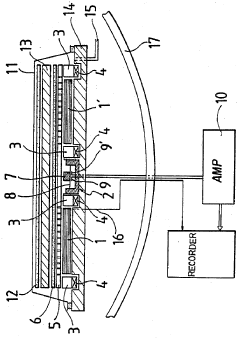
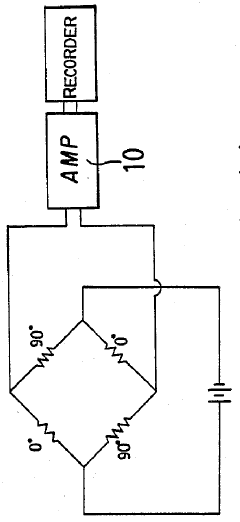
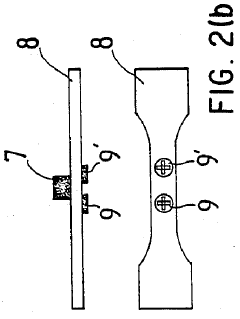
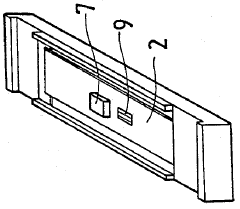
- A thickness measuring sensor system that uses a 3-point bending mechanism with strain gauges to continuously monitor thickness changes of composite laminates, featuring a linear displacement-strain relationship and minimal thermal-induced errors, allowing for real-time data collection and feedback to the autoclave control system.
System and method for forming composite articles
PatentInactiveUS20170297233A1
Innovation
- A thermal system and method that rapidly heats and cools a mold surface using a heater-subsystem, exchanger-subsystem, and chiller-subsystem, with a controller managing the flow of thermal fluids to achieve rapid temperature changes, reducing cycle times and energy consumption while maintaining excellent surface and mechanical properties.


Quality Standards and Certification Requirements
The aerospace and composite manufacturing industries operate under stringent quality standards that directly impact prepreg autoclave processing parameters and cycle time optimization strategies. Primary regulatory frameworks include AS9100 for aerospace quality management systems, NADCAP certification for special processes, and various military specifications such as MIL-HDBK-17 for composite materials characterization.
International standards organizations have established comprehensive guidelines for composite manufacturing processes. ASTM D3039 defines standard test methods for tensile properties of polymer matrix composites, while ASTM D7264 covers flexural properties testing. These standards establish baseline mechanical property requirements that must be maintained regardless of cycle time modifications. ISO 14126 provides additional guidance for resin and fiber characterization, ensuring material consistency across different processing parameters.
Aviation authorities impose additional certification requirements through documents like FAA Advisory Circular AC 20-107B, which addresses composite aircraft structures. EASA Certification Specifications CS-25 similarly mandate rigorous testing protocols for structural components. These regulations require extensive documentation of process variations and their impact on final part properties, creating substantial validation requirements for any cycle time reduction initiatives.
Quality assurance protocols must demonstrate statistical process control throughout manufacturing operations. Six Sigma methodologies are commonly implemented to maintain defect rates below 3.4 parts per million, requiring comprehensive data collection on temperature profiles, pressure cycles, and cure kinetics. Process capability studies must validate that shortened cycles maintain Cpk values above 1.33 for critical quality characteristics.
Certification bodies require extensive testing matrices when modifying established processes. Typical validation programs include mechanical testing of at least 30 specimens per configuration, environmental conditioning studies, and long-term durability assessments. Non-destructive testing protocols using ultrasonic inspection, thermography, and computed tomography must demonstrate equivalent void content and fiber alignment compared to standard processing methods.
Traceability requirements mandate complete documentation of raw material lots, processing parameters, and quality test results for each manufactured component. This creates significant administrative overhead when implementing new cycle time reduction techniques, as each parameter modification requires formal change control procedures and customer approval processes that can extend validation timelines by several months.
International standards organizations have established comprehensive guidelines for composite manufacturing processes. ASTM D3039 defines standard test methods for tensile properties of polymer matrix composites, while ASTM D7264 covers flexural properties testing. These standards establish baseline mechanical property requirements that must be maintained regardless of cycle time modifications. ISO 14126 provides additional guidance for resin and fiber characterization, ensuring material consistency across different processing parameters.
Aviation authorities impose additional certification requirements through documents like FAA Advisory Circular AC 20-107B, which addresses composite aircraft structures. EASA Certification Specifications CS-25 similarly mandate rigorous testing protocols for structural components. These regulations require extensive documentation of process variations and their impact on final part properties, creating substantial validation requirements for any cycle time reduction initiatives.
Quality assurance protocols must demonstrate statistical process control throughout manufacturing operations. Six Sigma methodologies are commonly implemented to maintain defect rates below 3.4 parts per million, requiring comprehensive data collection on temperature profiles, pressure cycles, and cure kinetics. Process capability studies must validate that shortened cycles maintain Cpk values above 1.33 for critical quality characteristics.
Certification bodies require extensive testing matrices when modifying established processes. Typical validation programs include mechanical testing of at least 30 specimens per configuration, environmental conditioning studies, and long-term durability assessments. Non-destructive testing protocols using ultrasonic inspection, thermography, and computed tomography must demonstrate equivalent void content and fiber alignment compared to standard processing methods.
Traceability requirements mandate complete documentation of raw material lots, processing parameters, and quality test results for each manufactured component. This creates significant administrative overhead when implementing new cycle time reduction techniques, as each parameter modification requires formal change control procedures and customer approval processes that can extend validation timelines by several months.
Energy Efficiency and Environmental Impact Considerations
The pursuit of reduced autoclave cycle times in prepreg processing presents significant opportunities for enhanced energy efficiency across composite manufacturing operations. Traditional autoclave cycles, typically ranging from 6-12 hours, consume substantial amounts of electrical energy for heating, pressurization, and cooling phases. By implementing optimized cycle parameters, manufacturers can achieve energy savings of 20-40% per production cycle. Advanced heating strategies, including rapid heating rates and optimized temperature profiles, reduce the overall energy input required while maintaining cure quality through precise thermal management systems.
Modern autoclave systems incorporating improved insulation materials and heat recovery mechanisms demonstrate measurable environmental benefits when paired with shortened cycle times. The integration of ceramic fiber insulation and advanced thermal barrier coatings reduces heat loss during processing, while regenerative heat exchangers capture waste thermal energy for preheating incoming air streams. These technological improvements, combined with reduced cycle durations, can decrease carbon emissions by approximately 25-35% compared to conventional processing methods.
The environmental impact extends beyond direct energy consumption to encompass reduced facility operational requirements and decreased material waste. Shorter cycle times enable higher throughput rates, reducing the need for multiple autoclave installations and associated infrastructure. This consolidation effect minimizes the overall manufacturing footprint while optimizing resource utilization. Additionally, improved process control associated with optimized cycles reduces the likelihood of part rejection due to cure defects, thereby minimizing material waste and associated environmental costs.
Emerging technologies such as variable frequency drives for vacuum pumps and smart grid integration capabilities further enhance the environmental profile of reduced cycle time operations. These systems enable dynamic power management and off-peak energy utilization, reducing strain on electrical grids and lowering operational costs. The cumulative effect of these efficiency improvements positions shortened autoclave cycles as a key enabler for sustainable composite manufacturing practices while maintaining stringent quality requirements.
Modern autoclave systems incorporating improved insulation materials and heat recovery mechanisms demonstrate measurable environmental benefits when paired with shortened cycle times. The integration of ceramic fiber insulation and advanced thermal barrier coatings reduces heat loss during processing, while regenerative heat exchangers capture waste thermal energy for preheating incoming air streams. These technological improvements, combined with reduced cycle durations, can decrease carbon emissions by approximately 25-35% compared to conventional processing methods.
The environmental impact extends beyond direct energy consumption to encompass reduced facility operational requirements and decreased material waste. Shorter cycle times enable higher throughput rates, reducing the need for multiple autoclave installations and associated infrastructure. This consolidation effect minimizes the overall manufacturing footprint while optimizing resource utilization. Additionally, improved process control associated with optimized cycles reduces the likelihood of part rejection due to cure defects, thereby minimizing material waste and associated environmental costs.
Emerging technologies such as variable frequency drives for vacuum pumps and smart grid integration capabilities further enhance the environmental profile of reduced cycle time operations. These systems enable dynamic power management and off-peak energy utilization, reducing strain on electrical grids and lowering operational costs. The cumulative effect of these efficiency improvements positions shortened autoclave cycles as a key enabler for sustainable composite manufacturing practices while maintaining stringent quality requirements.
Unlock deeper insights with Patsnap Eureka Quick Research — get a full tech report to explore trends and direct your research. Try now!
Generate Your Research Report Instantly with AI Agent
Supercharge your innovation with Patsnap Eureka AI Agent Platform!