
How To Replace FR4 Boards With Ceramic Substrates In Electronics
MAY 26, 20269 MIN READ
Generate Your Research Report Instantly with AI Agent
Patsnap Eureka helps you evaluate technical feasibility & market potential.
Ceramic Substrate Technology Background and Objectives
The evolution of electronic substrate materials has been driven by the relentless pursuit of higher performance, miniaturization, and reliability in electronic devices. Traditional FR4 (Flame Retardant 4) printed circuit boards, composed of woven fiberglass cloth with an epoxy resin binder, have served as the backbone of electronics manufacturing for decades. However, the exponential growth in computing power, the proliferation of high-frequency applications, and the demand for enhanced thermal management have exposed the inherent limitations of FR4 substrates.
FR4 boards exhibit several constraints that become increasingly problematic in advanced applications. Their relatively high dielectric constant and loss tangent result in signal integrity issues at high frequencies, while their limited thermal conductivity creates challenges in heat dissipation for power-dense applications. Additionally, FR4's coefficient of thermal expansion mismatch with semiconductor materials can lead to reliability concerns in harsh operating environments.
Ceramic substrates represent a paradigm shift in electronic packaging technology, offering superior electrical, thermal, and mechanical properties. These substrates, typically composed of materials such as aluminum oxide, aluminum nitride, or silicon carbide, provide exceptional thermal conductivity, low dielectric loss, and excellent dimensional stability across wide temperature ranges. The transition from FR4 to ceramic substrates addresses critical performance bottlenecks in modern electronics.
The primary objective of ceramic substrate adoption is to enable next-generation electronic systems that demand superior performance characteristics. Key technical goals include achieving thermal conductivity values exceeding 150 W/mK compared to FR4's typical 0.3 W/mK, reducing dielectric losses by an order of magnitude, and providing hermetic sealing capabilities for harsh environment applications. These improvements directly translate to enhanced system reliability, increased power density, and extended operational lifespans.
Strategic implementation of ceramic substrate technology aims to unlock new possibilities in high-power electronics, radio frequency applications, and automotive systems where traditional FR4 solutions fall short. The technology evolution focuses on developing cost-effective manufacturing processes, improving substrate-to-component attachment methods, and establishing design guidelines that maximize the inherent advantages of ceramic materials while addressing their unique challenges such as brittleness and processing complexity.
FR4 boards exhibit several constraints that become increasingly problematic in advanced applications. Their relatively high dielectric constant and loss tangent result in signal integrity issues at high frequencies, while their limited thermal conductivity creates challenges in heat dissipation for power-dense applications. Additionally, FR4's coefficient of thermal expansion mismatch with semiconductor materials can lead to reliability concerns in harsh operating environments.
Ceramic substrates represent a paradigm shift in electronic packaging technology, offering superior electrical, thermal, and mechanical properties. These substrates, typically composed of materials such as aluminum oxide, aluminum nitride, or silicon carbide, provide exceptional thermal conductivity, low dielectric loss, and excellent dimensional stability across wide temperature ranges. The transition from FR4 to ceramic substrates addresses critical performance bottlenecks in modern electronics.
The primary objective of ceramic substrate adoption is to enable next-generation electronic systems that demand superior performance characteristics. Key technical goals include achieving thermal conductivity values exceeding 150 W/mK compared to FR4's typical 0.3 W/mK, reducing dielectric losses by an order of magnitude, and providing hermetic sealing capabilities for harsh environment applications. These improvements directly translate to enhanced system reliability, increased power density, and extended operational lifespans.
Strategic implementation of ceramic substrate technology aims to unlock new possibilities in high-power electronics, radio frequency applications, and automotive systems where traditional FR4 solutions fall short. The technology evolution focuses on developing cost-effective manufacturing processes, improving substrate-to-component attachment methods, and establishing design guidelines that maximize the inherent advantages of ceramic materials while addressing their unique challenges such as brittleness and processing complexity.
Market Demand for FR4 to Ceramic Substrate Migration
The electronics industry is experiencing unprecedented demand for high-performance substrates driven by the proliferation of advanced applications requiring superior thermal management and electrical properties. Traditional FR4 printed circuit boards, while cost-effective and widely adopted, increasingly struggle to meet the stringent requirements of modern electronic systems operating at higher frequencies, temperatures, and power densities.
The automotive electronics sector represents one of the most significant growth drivers for ceramic substrate adoption. Electric vehicle powertrains, advanced driver assistance systems, and autonomous driving technologies demand substrates capable of withstanding extreme thermal cycling and providing reliable performance in harsh environments. Power electronics modules in electric vehicles particularly benefit from ceramic substrates' superior thermal conductivity, enabling more efficient heat dissipation and improved system reliability.
Telecommunications infrastructure modernization, particularly the global rollout of 5G networks, creates substantial demand for ceramic substrates. Base station equipment, millimeter-wave components, and high-frequency RF modules require substrates with low dielectric loss and excellent thermal properties that FR4 cannot adequately provide. The transition to higher frequency bands necessitates materials with superior electrical characteristics to maintain signal integrity and minimize losses.
The aerospace and defense industries continue driving demand for ceramic substrates due to their exceptional reliability requirements and operating conditions. Satellite communications, radar systems, and military electronics applications require substrates that maintain performance across extreme temperature ranges while providing long-term stability and resistance to radiation exposure.
Consumer electronics markets, particularly high-end smartphones, gaming devices, and wearable technology, increasingly adopt ceramic substrates for critical components. The miniaturization trend demands substrates that can handle higher power densities in smaller form factors while maintaining thermal stability. Premium device manufacturers leverage ceramic substrates to achieve performance differentiation and enhanced reliability.
Industrial automation and Internet of Things applications create additional market pull for ceramic substrates. Sensor systems, industrial controllers, and edge computing devices operating in challenging environments benefit from ceramic substrates' robustness and thermal performance. The growing emphasis on predictive maintenance and continuous operation drives demand for more reliable substrate solutions.
Market dynamics indicate accelerating adoption rates as manufacturing costs decrease and supply chain capabilities expand. The convergence of multiple high-growth application areas creates a compelling business case for transitioning from FR4 to ceramic substrates across diverse market segments.
The automotive electronics sector represents one of the most significant growth drivers for ceramic substrate adoption. Electric vehicle powertrains, advanced driver assistance systems, and autonomous driving technologies demand substrates capable of withstanding extreme thermal cycling and providing reliable performance in harsh environments. Power electronics modules in electric vehicles particularly benefit from ceramic substrates' superior thermal conductivity, enabling more efficient heat dissipation and improved system reliability.
Telecommunications infrastructure modernization, particularly the global rollout of 5G networks, creates substantial demand for ceramic substrates. Base station equipment, millimeter-wave components, and high-frequency RF modules require substrates with low dielectric loss and excellent thermal properties that FR4 cannot adequately provide. The transition to higher frequency bands necessitates materials with superior electrical characteristics to maintain signal integrity and minimize losses.
The aerospace and defense industries continue driving demand for ceramic substrates due to their exceptional reliability requirements and operating conditions. Satellite communications, radar systems, and military electronics applications require substrates that maintain performance across extreme temperature ranges while providing long-term stability and resistance to radiation exposure.
Consumer electronics markets, particularly high-end smartphones, gaming devices, and wearable technology, increasingly adopt ceramic substrates for critical components. The miniaturization trend demands substrates that can handle higher power densities in smaller form factors while maintaining thermal stability. Premium device manufacturers leverage ceramic substrates to achieve performance differentiation and enhanced reliability.
Industrial automation and Internet of Things applications create additional market pull for ceramic substrates. Sensor systems, industrial controllers, and edge computing devices operating in challenging environments benefit from ceramic substrates' robustness and thermal performance. The growing emphasis on predictive maintenance and continuous operation drives demand for more reliable substrate solutions.
Market dynamics indicate accelerating adoption rates as manufacturing costs decrease and supply chain capabilities expand. The convergence of multiple high-growth application areas creates a compelling business case for transitioning from FR4 to ceramic substrates across diverse market segments.
Current Challenges in Ceramic Substrate Adoption
The transition from FR4 boards to ceramic substrates faces significant cost barriers that remain the primary impediment to widespread adoption. Ceramic substrates typically cost 3-10 times more than conventional FR4 boards, depending on the specific ceramic material and manufacturing complexity. This substantial price differential stems from expensive raw materials, energy-intensive sintering processes, and specialized manufacturing equipment requirements that demand higher capital investments.
Manufacturing complexity presents another formidable challenge, as ceramic substrate production requires precise control over multiple variables including temperature profiles, atmosphere conditions, and material composition. The sintering process operates at temperatures exceeding 1600°C, demanding specialized furnaces and extended processing times that significantly impact production throughput. Additionally, achieving consistent dimensional tolerances and surface finish quality across large production volumes remains technically demanding.
Material brittleness constitutes a critical reliability concern that limits ceramic substrate deployment in mechanically demanding applications. Unlike flexible FR4 boards that can withstand bending and impact stresses, ceramic substrates are prone to catastrophic failure under mechanical shock or thermal cycling. This brittleness necessitates careful handling procedures throughout assembly processes and constrains design flexibility in applications subject to vibration or mechanical stress.
Thermal expansion mismatch between ceramic substrates and mounted components creates reliability challenges, particularly for large-area assemblies. The coefficient of thermal expansion differences can generate significant stress concentrations at solder joints during temperature cycling, potentially leading to fatigue failures and reduced operational lifetime. This issue becomes more pronounced in high-power applications where substantial temperature gradients exist.
Processing compatibility issues emerge during standard PCB assembly operations, as ceramic substrates require modified soldering profiles and specialized handling equipment. Traditional wave soldering and reflow processes may need adjustment to accommodate ceramic thermal properties, while drilling and machining operations demand diamond-tipped tools and modified parameters to prevent chipping or cracking.
Supply chain limitations further constrain adoption, as the ceramic substrate manufacturing ecosystem remains relatively immature compared to the well-established FR4 industry. Limited supplier options, longer lead times, and reduced availability of specialized ceramic formulations create procurement challenges for electronics manufacturers seeking to transition from conventional PCB technologies.
Manufacturing complexity presents another formidable challenge, as ceramic substrate production requires precise control over multiple variables including temperature profiles, atmosphere conditions, and material composition. The sintering process operates at temperatures exceeding 1600°C, demanding specialized furnaces and extended processing times that significantly impact production throughput. Additionally, achieving consistent dimensional tolerances and surface finish quality across large production volumes remains technically demanding.
Material brittleness constitutes a critical reliability concern that limits ceramic substrate deployment in mechanically demanding applications. Unlike flexible FR4 boards that can withstand bending and impact stresses, ceramic substrates are prone to catastrophic failure under mechanical shock or thermal cycling. This brittleness necessitates careful handling procedures throughout assembly processes and constrains design flexibility in applications subject to vibration or mechanical stress.
Thermal expansion mismatch between ceramic substrates and mounted components creates reliability challenges, particularly for large-area assemblies. The coefficient of thermal expansion differences can generate significant stress concentrations at solder joints during temperature cycling, potentially leading to fatigue failures and reduced operational lifetime. This issue becomes more pronounced in high-power applications where substantial temperature gradients exist.
Processing compatibility issues emerge during standard PCB assembly operations, as ceramic substrates require modified soldering profiles and specialized handling equipment. Traditional wave soldering and reflow processes may need adjustment to accommodate ceramic thermal properties, while drilling and machining operations demand diamond-tipped tools and modified parameters to prevent chipping or cracking.
Supply chain limitations further constrain adoption, as the ceramic substrate manufacturing ecosystem remains relatively immature compared to the well-established FR4 industry. Limited supplier options, longer lead times, and reduced availability of specialized ceramic formulations create procurement challenges for electronics manufacturers seeking to transition from conventional PCB technologies.
Existing FR4 to Ceramic Replacement Solutions
01 Ceramic substrate manufacturing and processing methods
Various manufacturing techniques and processing methods are employed to create ceramic substrates with desired properties. These methods include sintering processes, powder metallurgy techniques, and specialized forming methods to achieve specific structural characteristics. The manufacturing processes focus on controlling porosity, density, and surface finish to meet application requirements.- Ceramic substrate manufacturing and processing methods: Various manufacturing techniques and processing methods are employed to create ceramic substrates with desired properties. These methods include sintering processes, powder metallurgy techniques, and specialized forming methods to achieve specific structural characteristics. The manufacturing processes focus on controlling porosity, density, and surface finish to meet application requirements.
- Ceramic substrate composition and material formulations: Different ceramic materials and compositions are utilized to create substrates with specific properties such as thermal conductivity, electrical insulation, and mechanical strength. These formulations may include various ceramic powders, additives, and binding agents to achieve desired characteristics for different applications.
- Electronic and electrical applications of ceramic substrates: Ceramic substrates are widely used in electronic and electrical applications due to their excellent insulating properties and thermal management capabilities. These substrates serve as platforms for mounting electronic components, circuit boards, and semiconductor devices, providing reliable performance in various operating conditions.
- Surface treatment and metallization of ceramic substrates: Surface modification techniques are applied to ceramic substrates to enhance their functionality and compatibility with other materials. These treatments include metallization processes, coating applications, and surface texturing methods to improve adhesion, conductivity, or other surface properties required for specific applications.
- Thermal management and high-temperature applications: Ceramic substrates are designed and optimized for thermal management applications where heat dissipation and temperature resistance are critical. These substrates provide excellent thermal conductivity while maintaining structural integrity at elevated temperatures, making them suitable for high-power electronic devices and thermal interface applications.
02 Ceramic substrate composition and material formulations
Different ceramic materials and compositions are utilized to create substrates with specific properties. These formulations include various oxide ceramics, nitride ceramics, and composite materials that provide enhanced mechanical, thermal, and electrical characteristics. The composition selection depends on the intended application and performance requirements.Expand Specific Solutions03 Electronic and electrical applications of ceramic substrates
Ceramic substrates serve as critical components in electronic devices and electrical systems. They provide insulation, heat dissipation, and mechanical support for electronic circuits. These substrates are designed to handle high frequencies, provide low dielectric loss, and maintain stability under varying electrical conditions.Expand Specific Solutions04 Thermal management and heat dissipation properties
Ceramic substrates are engineered to provide excellent thermal management capabilities for high-power applications. They offer superior heat conduction and dissipation properties while maintaining electrical insulation. These thermal characteristics make them suitable for power electronics, LED applications, and other heat-generating devices.Expand Specific Solutions05 Surface treatment and metallization of ceramic substrates
Various surface modification techniques and metallization processes are applied to ceramic substrates to enhance their functionality and enable bonding with other components. These treatments include thin film deposition, thick film printing, and specialized coating applications that improve adhesion, conductivity, and environmental resistance.Expand Specific Solutions
Key Players in Ceramic Substrate Manufacturing
The transition from FR4 boards to ceramic substrates represents a rapidly evolving segment within the electronics industry, driven by increasing demands for higher thermal conductivity, miniaturization, and performance in power electronics and high-frequency applications. The market is experiencing significant growth, particularly in automotive electronics, 5G infrastructure, and LED applications, with the ceramic substrate market projected to expand substantially over the next decade. Technology maturity varies across different ceramic types, with established players like Murata Manufacturing, TDK Corp., and Rogers Corp. leading in advanced ceramic materials and substrate technologies. Intel Corp. and AMD drive demand through high-performance computing requirements, while specialized companies like Cambridge Nanotherm and Suzhou Jingpin Advanced Materials focus on innovative thermal management solutions. The competitive landscape shows a mix of mature Japanese manufacturers (Murata, TDK, Panasonic Holdings) and emerging technology developers, indicating both established market presence and ongoing innovation in ceramic substrate technologies for next-generation electronics applications.
Intel Corp.
Technical Solution: Intel has developed advanced ceramic substrate technologies primarily for their high-performance processor packaging applications. Their ceramic substrates utilize aluminum nitride and silicon carbide materials offering thermal conductivity up to 320 W/mK, essential for managing heat in multi-core processors generating over 200W. Intel's ceramic packaging technology features fine-pitch interconnects with bump pitches down to 45μm and supports thousands of I/O connections. The company has pioneered embedded bridge interconnect technology on ceramic substrates, enabling chiplet architectures with high-bandwidth connections. Their ceramic solutions incorporate through-substrate vias (TSVs) for 3D integration and support advanced packaging techniques like 2.5D and 3D stacking.
Strengths: Cutting-edge packaging technology, high-density interconnects, excellent thermal management for high-power applications. Weaknesses: Technology primarily optimized for semiconductor packaging, high development costs, limited availability for external customers.
Murata Manufacturing Co. Ltd.
Technical Solution: Murata has developed advanced ceramic substrate technologies including Low Temperature Co-fired Ceramics (LTCC) and High Temperature Co-fired Ceramics (HTCC) for replacing FR4 boards. Their ceramic substrates offer superior thermal conductivity (20-200 W/mK compared to FR4's 0.3 W/mK), excellent dimensional stability, and hermetic sealing capabilities. The company's multilayer ceramic technology enables complex 3D circuit integration with embedded passive components, reducing overall system size by up to 50%. Their ceramic substrates support operating temperatures from -55°C to +150°C and provide excellent high-frequency performance with low dielectric loss, making them ideal for RF and microwave applications.
Strengths: Market leader in ceramic technology, excellent thermal management, miniaturization capabilities. Weaknesses: Higher cost than FR4, requires specialized manufacturing processes and equipment.
Core Technologies for Ceramic Substrate Integration
Ferrite material and ceramic substrate
PatentInactiveUS20070085121A1
Innovation
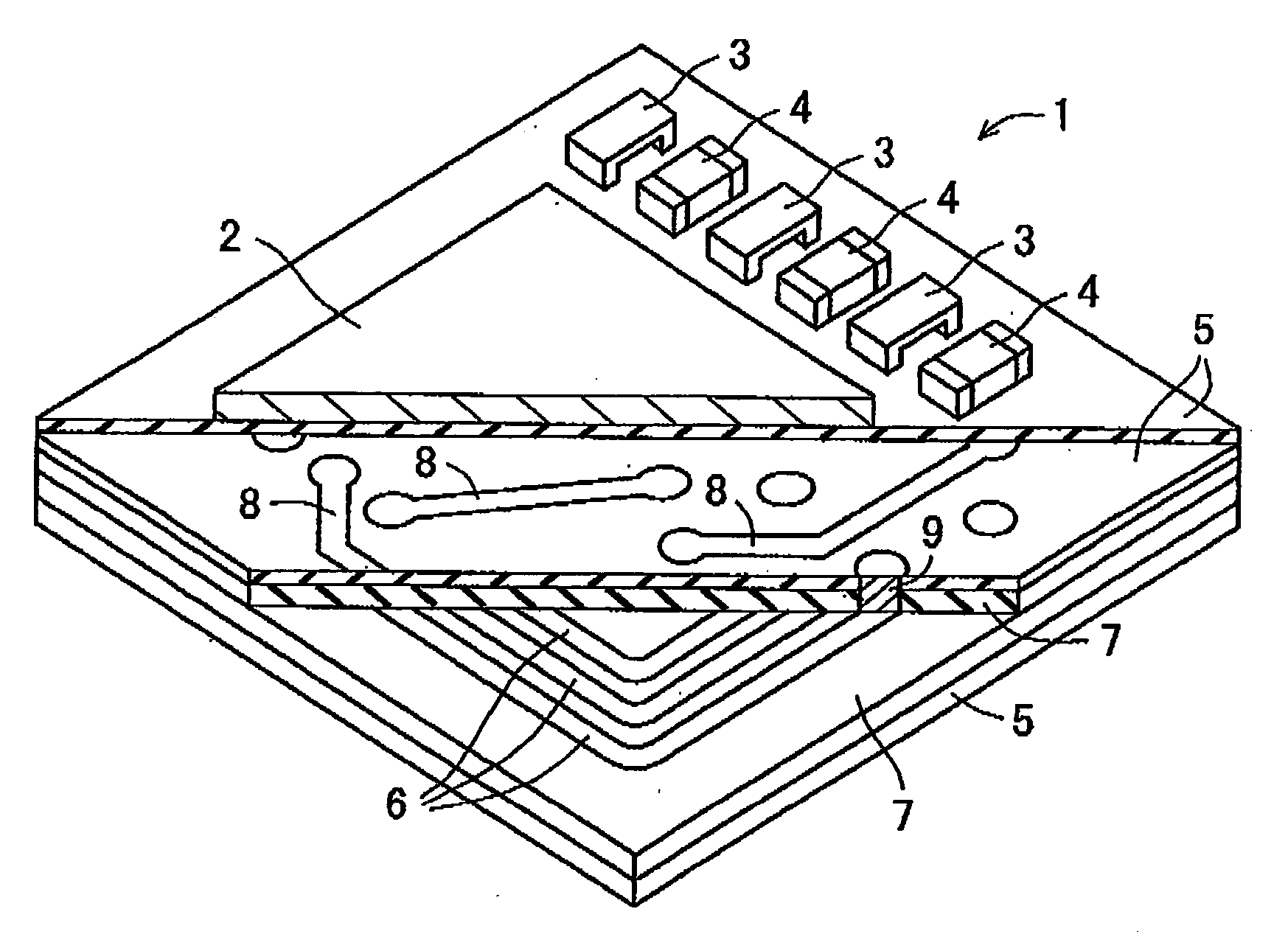
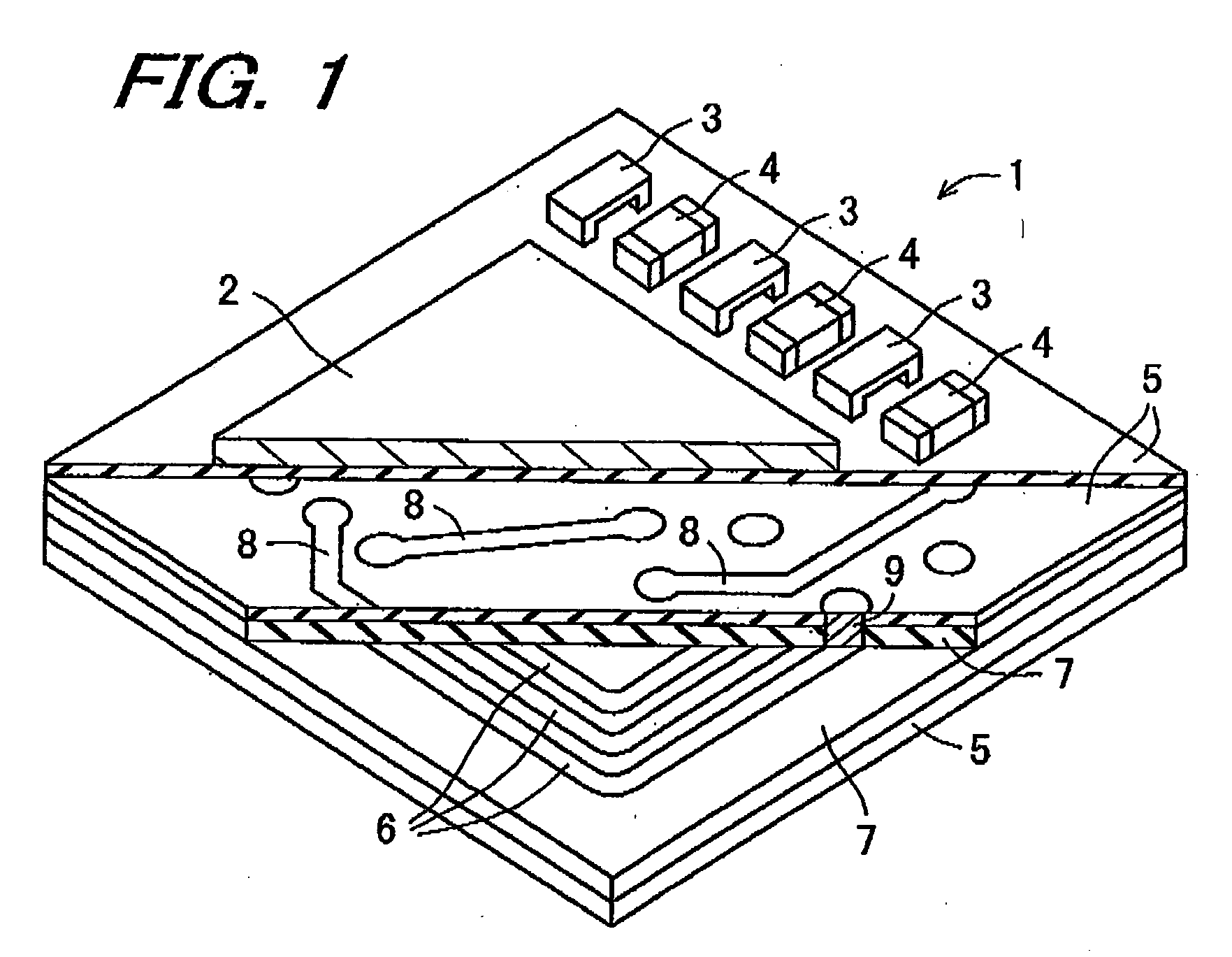
- A ferrite material composed of Fe2O3, CuO, NiO, and ZnO, with specific mass content ratios, is used to create a ceramic substrate with a ferrite layer that exhibits high magnetic permeability and stability, allowing for high-frequency performance without additional sintering aids, and incorporating electromagnetic shielding to manage magnetic flux and prevent electrical interference.

Glass-Ceramic Substrate
PatentInactiveUS20110018671A1
Innovation
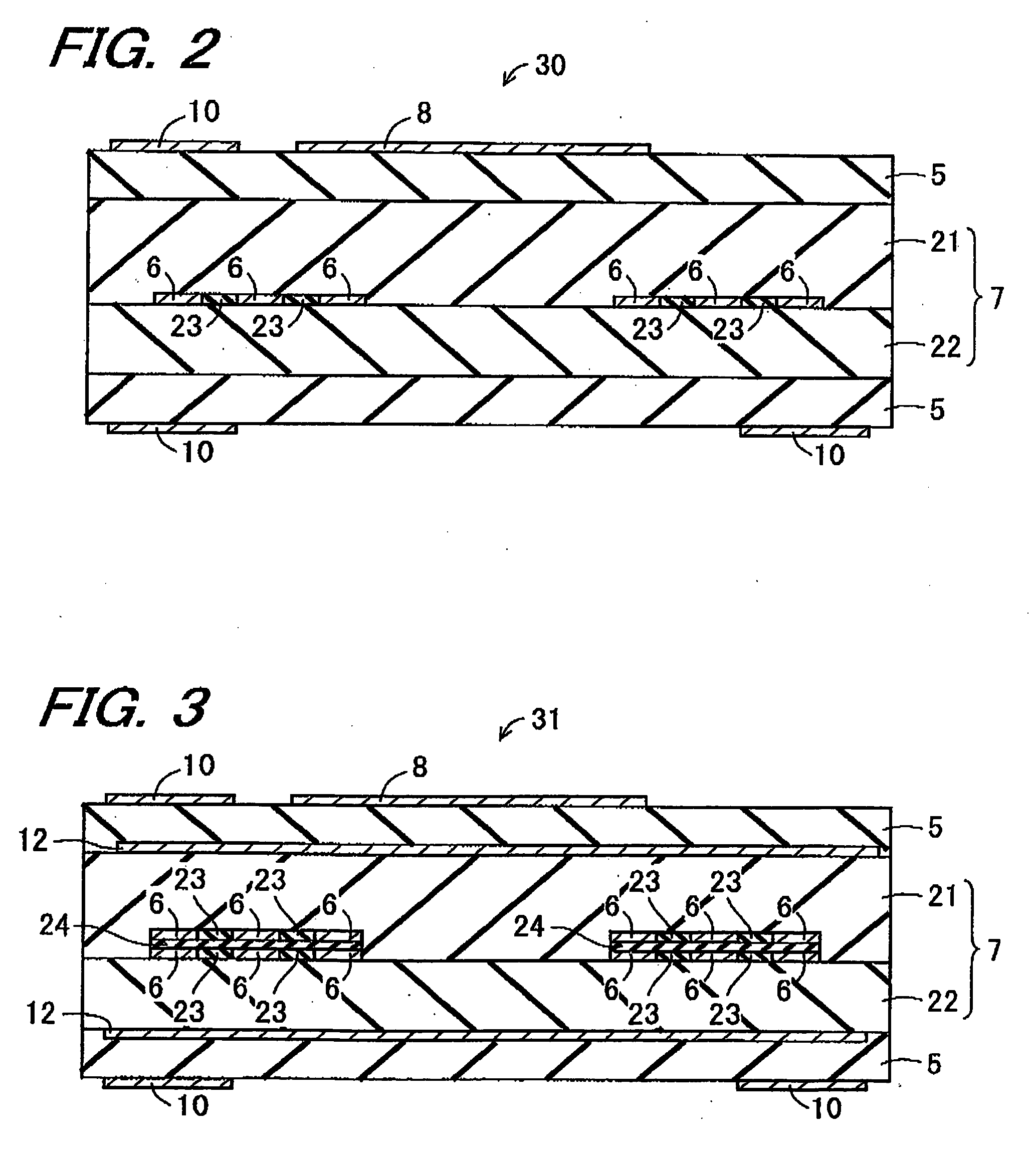
- A glass-ceramic substrate with a ferrite layer, an insulating layer, and an interlayer having a crystal structure isomorphic to both, where the interlayer is formed by reacting ceramic and ferrite green sheets during firing, reducing lattice constant differences and enhancing bonding strength.


Thermal Management Considerations for Ceramic Substrates
Thermal management represents one of the most critical considerations when transitioning from FR4 boards to ceramic substrates in electronic applications. The fundamental difference in thermal properties between these materials necessitates a comprehensive reevaluation of heat dissipation strategies and thermal design approaches.
Ceramic substrates exhibit significantly superior thermal conductivity compared to FR4 materials. While standard FR4 typically demonstrates thermal conductivity values ranging from 0.3 to 0.4 W/mK, ceramic substrates such as aluminum oxide achieve 20-30 W/mK, and aluminum nitride can reach up to 170 W/mK. This dramatic improvement in thermal performance enables more efficient heat transfer from active components to heat sinks or ambient environments.
The enhanced thermal conductivity of ceramic substrates allows for more aggressive component placement strategies and higher power density designs. Heat-generating components can be positioned closer together without experiencing thermal interference, enabling more compact circuit layouts. This capability is particularly valuable in high-power applications where thermal constraints traditionally limit design flexibility.
However, the transition to ceramic substrates introduces new thermal management challenges that require careful consideration. The coefficient of thermal expansion mismatch between ceramic substrates and mounted components becomes more pronounced due to improved heat transfer efficiency. This mismatch can generate significant mechanical stress during thermal cycling, potentially leading to solder joint failures or component cracking.
Thermal interface materials selection becomes increasingly critical when implementing ceramic substrates. The improved thermal performance of the substrate must be complemented by appropriate thermal interface materials to maintain efficient heat transfer paths. Traditional thermal interface materials designed for FR4 applications may not provide optimal performance with ceramic substrates.
The uniform thermal distribution characteristics of ceramic substrates also require modifications to existing thermal simulation models and design verification processes. Heat spreading patterns differ significantly from FR4 implementations, necessitating updated thermal analysis methodologies to accurately predict component temperatures and thermal gradients across the substrate surface.
Additionally, the thermal mass differences between ceramic and FR4 substrates affect transient thermal response characteristics, requiring adjustments to thermal protection circuits and temperature monitoring systems to accommodate faster thermal response times and different thermal time constants in electronic systems.
Ceramic substrates exhibit significantly superior thermal conductivity compared to FR4 materials. While standard FR4 typically demonstrates thermal conductivity values ranging from 0.3 to 0.4 W/mK, ceramic substrates such as aluminum oxide achieve 20-30 W/mK, and aluminum nitride can reach up to 170 W/mK. This dramatic improvement in thermal performance enables more efficient heat transfer from active components to heat sinks or ambient environments.
The enhanced thermal conductivity of ceramic substrates allows for more aggressive component placement strategies and higher power density designs. Heat-generating components can be positioned closer together without experiencing thermal interference, enabling more compact circuit layouts. This capability is particularly valuable in high-power applications where thermal constraints traditionally limit design flexibility.
However, the transition to ceramic substrates introduces new thermal management challenges that require careful consideration. The coefficient of thermal expansion mismatch between ceramic substrates and mounted components becomes more pronounced due to improved heat transfer efficiency. This mismatch can generate significant mechanical stress during thermal cycling, potentially leading to solder joint failures or component cracking.
Thermal interface materials selection becomes increasingly critical when implementing ceramic substrates. The improved thermal performance of the substrate must be complemented by appropriate thermal interface materials to maintain efficient heat transfer paths. Traditional thermal interface materials designed for FR4 applications may not provide optimal performance with ceramic substrates.
The uniform thermal distribution characteristics of ceramic substrates also require modifications to existing thermal simulation models and design verification processes. Heat spreading patterns differ significantly from FR4 implementations, necessitating updated thermal analysis methodologies to accurately predict component temperatures and thermal gradients across the substrate surface.
Additionally, the thermal mass differences between ceramic and FR4 substrates affect transient thermal response characteristics, requiring adjustments to thermal protection circuits and temperature monitoring systems to accommodate faster thermal response times and different thermal time constants in electronic systems.
Cost-Benefit Analysis of Ceramic vs FR4 Implementation
The transition from FR4 to ceramic substrates presents a complex cost-benefit equation that requires careful evaluation across multiple dimensions. Initial capital expenditure represents the most significant barrier, with ceramic substrates typically costing 3-5 times more than equivalent FR4 boards. This premium stems from specialized manufacturing processes, high-purity raw materials, and lower production volumes compared to the mature FR4 ecosystem.
Manufacturing infrastructure modifications constitute another substantial cost factor. Ceramic processing requires different handling equipment, specialized drilling tools for via formation, and modified assembly processes due to thermal expansion differences. Production facilities must invest in new tooling, updated pick-and-place equipment, and enhanced quality control systems capable of managing ceramic's brittleness during handling.
However, ceramic substrates deliver compelling long-term value propositions that can offset initial investments. Superior thermal conductivity, often 10-20 times higher than FR4, enables more efficient heat dissipation and allows for higher power density designs. This thermal advantage translates to reduced cooling requirements, smaller form factors, and improved system reliability, particularly in high-frequency and power electronics applications.
Operational benefits extend beyond thermal performance. Ceramic substrates exhibit exceptional dimensional stability across temperature ranges, enabling tighter tolerances and more predictable electrical characteristics. The reduced dielectric loss and superior high-frequency performance can eliminate the need for additional signal conditioning components, potentially reducing overall system costs despite higher substrate expenses.
Lifecycle cost analysis reveals additional advantages. Ceramic's inherent durability and resistance to environmental degradation result in extended product lifespans, reduced maintenance requirements, and lower failure rates. In mission-critical applications, these reliability improvements can justify premium costs through reduced warranty claims and enhanced customer satisfaction.
The cost-benefit ratio varies significantly across application domains. High-performance computing, automotive electronics, and aerospace applications typically justify ceramic implementation due to stringent performance requirements and failure cost implications. Consumer electronics applications require more careful evaluation, as cost sensitivity often outweighs performance benefits unless specific technical requirements mandate ceramic use.
Manufacturing infrastructure modifications constitute another substantial cost factor. Ceramic processing requires different handling equipment, specialized drilling tools for via formation, and modified assembly processes due to thermal expansion differences. Production facilities must invest in new tooling, updated pick-and-place equipment, and enhanced quality control systems capable of managing ceramic's brittleness during handling.
However, ceramic substrates deliver compelling long-term value propositions that can offset initial investments. Superior thermal conductivity, often 10-20 times higher than FR4, enables more efficient heat dissipation and allows for higher power density designs. This thermal advantage translates to reduced cooling requirements, smaller form factors, and improved system reliability, particularly in high-frequency and power electronics applications.
Operational benefits extend beyond thermal performance. Ceramic substrates exhibit exceptional dimensional stability across temperature ranges, enabling tighter tolerances and more predictable electrical characteristics. The reduced dielectric loss and superior high-frequency performance can eliminate the need for additional signal conditioning components, potentially reducing overall system costs despite higher substrate expenses.
Lifecycle cost analysis reveals additional advantages. Ceramic's inherent durability and resistance to environmental degradation result in extended product lifespans, reduced maintenance requirements, and lower failure rates. In mission-critical applications, these reliability improvements can justify premium costs through reduced warranty claims and enhanced customer satisfaction.
The cost-benefit ratio varies significantly across application domains. High-performance computing, automotive electronics, and aerospace applications typically justify ceramic implementation due to stringent performance requirements and failure cost implications. Consumer electronics applications require more careful evaluation, as cost sensitivity often outweighs performance benefits unless specific technical requirements mandate ceramic use.
Unlock deeper insights with Patsnap Eureka Quick Research — get a full tech report to explore trends and direct your research. Try now!
Generate Your Research Report Instantly with AI Agent
Supercharge your innovation with Patsnap Eureka AI Agent Platform!