How to Shield Synchronous Generators from Surges
JAN 7, 20269 MIN READ
Generate Your Research Report Instantly with AI Agent
Patsnap Eureka helps you evaluate technical feasibility & market potential.
Synchronous Generator Surge Protection Background and Objectives
Synchronous generators serve as the backbone of modern power generation systems, converting mechanical energy into electrical energy for industrial facilities, utility grids, and critical infrastructure applications. These machines operate in increasingly complex electrical environments where voltage surges pose significant threats to their operational integrity and longevity. Surge events, originating from lightning strikes, switching operations, fault conditions, or grid disturbances, can induce transient overvoltages that exceed the insulation capabilities of generator windings, potentially causing catastrophic failures and extended downtime.
The historical development of surge protection for synchronous generators has evolved alongside the expansion of electrical power systems. Early protection schemes relied primarily on basic lightning arresters and grounding systems. However, as power systems grew in complexity and generators increased in capacity and sophistication, the vulnerability to surge-related damage became more pronounced. Modern generators incorporate advanced insulation systems and electronic control components that, while improving efficiency and performance, have introduced new sensitivities to transient voltage phenomena.
The technical challenge of surge protection encompasses multiple dimensions. Generators must withstand not only the magnitude of surge voltages but also the rate of voltage rise and the energy content of transient events. The distributed capacitance and inductance within generator windings create complex voltage distribution patterns during surge conditions, with voltage stress concentrating at winding entry points and between turns. This phenomenon, known as non-uniform voltage distribution, represents a fundamental challenge in protection system design.
The primary objective of contemporary surge protection research focuses on developing comprehensive shielding strategies that address both external surge sources and internally generated transients. Protection systems must achieve rapid response times, typically within microseconds, while maintaining coordination with other protective devices. Additionally, solutions must accommodate the unique characteristics of different generator types, including their rated voltage, power capacity, winding configuration, and operational environment.
Advancing surge protection technology aims to enhance generator reliability, extend equipment lifespan, reduce maintenance costs, and prevent unplanned outages that can result in substantial economic losses. The integration of advanced monitoring capabilities, predictive analytics, and adaptive protection schemes represents the frontier of current research efforts, promising more intelligent and resilient protection architectures for next-generation power systems.
The historical development of surge protection for synchronous generators has evolved alongside the expansion of electrical power systems. Early protection schemes relied primarily on basic lightning arresters and grounding systems. However, as power systems grew in complexity and generators increased in capacity and sophistication, the vulnerability to surge-related damage became more pronounced. Modern generators incorporate advanced insulation systems and electronic control components that, while improving efficiency and performance, have introduced new sensitivities to transient voltage phenomena.
The technical challenge of surge protection encompasses multiple dimensions. Generators must withstand not only the magnitude of surge voltages but also the rate of voltage rise and the energy content of transient events. The distributed capacitance and inductance within generator windings create complex voltage distribution patterns during surge conditions, with voltage stress concentrating at winding entry points and between turns. This phenomenon, known as non-uniform voltage distribution, represents a fundamental challenge in protection system design.
The primary objective of contemporary surge protection research focuses on developing comprehensive shielding strategies that address both external surge sources and internally generated transients. Protection systems must achieve rapid response times, typically within microseconds, while maintaining coordination with other protective devices. Additionally, solutions must accommodate the unique characteristics of different generator types, including their rated voltage, power capacity, winding configuration, and operational environment.
Advancing surge protection technology aims to enhance generator reliability, extend equipment lifespan, reduce maintenance costs, and prevent unplanned outages that can result in substantial economic losses. The integration of advanced monitoring capabilities, predictive analytics, and adaptive protection schemes represents the frontier of current research efforts, promising more intelligent and resilient protection architectures for next-generation power systems.
Market Demand for Generator Surge Shielding Solutions
The global demand for synchronous generator surge protection solutions is experiencing sustained growth driven by the expansion of power generation infrastructure and the increasing complexity of electrical grid systems. Industrial facilities, power plants, and renewable energy installations represent the primary market segments requiring robust surge shielding technologies. The proliferation of distributed generation systems and the integration of renewable energy sources into existing grids have amplified the vulnerability of synchronous generators to transient overvoltages, creating urgent requirements for advanced protection mechanisms.
Manufacturing sectors including petrochemical plants, steel mills, and mining operations demonstrate particularly strong demand for generator surge protection due to their reliance on continuous power supply and the high costs associated with equipment downtime. These industries face significant financial losses when generator failures occur, making investment in comprehensive surge protection economically justified. The marine and offshore energy sectors also contribute substantially to market demand, as generators in these environments face harsh operating conditions and limited maintenance accessibility.
Emerging markets in Asia-Pacific and Middle Eastern regions are witnessing accelerated infrastructure development, driving substantial demand for generator protection systems. The modernization of aging power infrastructure in developed economies simultaneously creates replacement and upgrade opportunities. Regulatory frameworks mandating enhanced grid reliability and equipment protection standards further stimulate market growth across multiple jurisdictions.
The transition toward smart grid technologies and the increasing adoption of condition monitoring systems are reshaping customer expectations. End users now seek integrated protection solutions that combine surge suppression with real-time monitoring capabilities and predictive maintenance features. This evolution reflects a broader shift from reactive protection strategies to proactive asset management approaches.
Market research indicates that the total addressable market encompasses not only new generator installations but also the substantial retrofit market for existing equipment. The growing awareness of surge-related damage mechanisms and their long-term impact on generator lifespan is expanding the customer base beyond traditional heavy industrial users to include commercial buildings, data centers, and critical infrastructure facilities requiring uninterrupted power supply.
Manufacturing sectors including petrochemical plants, steel mills, and mining operations demonstrate particularly strong demand for generator surge protection due to their reliance on continuous power supply and the high costs associated with equipment downtime. These industries face significant financial losses when generator failures occur, making investment in comprehensive surge protection economically justified. The marine and offshore energy sectors also contribute substantially to market demand, as generators in these environments face harsh operating conditions and limited maintenance accessibility.
Emerging markets in Asia-Pacific and Middle Eastern regions are witnessing accelerated infrastructure development, driving substantial demand for generator protection systems. The modernization of aging power infrastructure in developed economies simultaneously creates replacement and upgrade opportunities. Regulatory frameworks mandating enhanced grid reliability and equipment protection standards further stimulate market growth across multiple jurisdictions.
The transition toward smart grid technologies and the increasing adoption of condition monitoring systems are reshaping customer expectations. End users now seek integrated protection solutions that combine surge suppression with real-time monitoring capabilities and predictive maintenance features. This evolution reflects a broader shift from reactive protection strategies to proactive asset management approaches.
Market research indicates that the total addressable market encompasses not only new generator installations but also the substantial retrofit market for existing equipment. The growing awareness of surge-related damage mechanisms and their long-term impact on generator lifespan is expanding the customer base beyond traditional heavy industrial users to include commercial buildings, data centers, and critical infrastructure facilities requiring uninterrupted power supply.
Current Surge Protection Status and Technical Challenges
Synchronous generators currently employ multiple surge protection mechanisms, yet significant technical challenges persist in achieving comprehensive protection. Traditional surge protection relies primarily on surge arresters, grounding systems, and insulation coordination. Metal oxide varistors have become the dominant arrester technology, offering superior energy absorption capabilities compared to earlier silicon carbide designs. However, these devices face limitations in response time, typically operating within microseconds, which may prove insufficient for extremely fast-rising transients generated by modern switching operations or lightning strikes with steep wavefronts.
The integration of renewable energy sources and power electronic converters has introduced new surge characteristics that conventional protection schemes struggle to address. High-frequency transients generated by inverter switching operations can bypass traditional protective devices, directly stressing generator windings. The increasing prevalence of distributed generation systems further complicates protection coordination, as bidirectional power flows create multiple potential surge entry points that traditional unidirectional protection philosophies cannot adequately cover.
Insulation systems represent another critical challenge area. Modern generators utilize complex insulation structures combining multiple materials with different dielectric properties and thermal expansion coefficients. Repetitive surge exposure causes cumulative degradation through partial discharge activity and thermal cycling, yet existing diagnostic techniques cannot reliably predict remaining insulation life under surge stress conditions. The transition toward compact generator designs with higher power densities exacerbates this issue by reducing insulation margins and increasing electric field concentrations.
Grounding system effectiveness remains problematic, particularly in installations with high soil resistivity or limited grounding electrode areas. Transient ground potential rise during surge events can reach dangerous levels, threatening both equipment and personnel safety. Conventional grounding resistance measurements fail to capture high-frequency impedance characteristics relevant to surge current dissipation, leading to inadequate grounding system designs.
Coordination between multiple protection layers presents ongoing difficulties. Surge arresters, circuit breakers, and relay protection must operate in precise sequence to ensure effective surge mitigation without unnecessary system interruptions. Achieving optimal coordination across equipment from different manufacturers with varying response characteristics requires sophisticated analysis tools that many facilities lack. Additionally, aging infrastructure with mixed vintage equipment compounds coordination challenges, as newer fast-acting protection devices may operate before older equipment can respond appropriately.
The integration of renewable energy sources and power electronic converters has introduced new surge characteristics that conventional protection schemes struggle to address. High-frequency transients generated by inverter switching operations can bypass traditional protective devices, directly stressing generator windings. The increasing prevalence of distributed generation systems further complicates protection coordination, as bidirectional power flows create multiple potential surge entry points that traditional unidirectional protection philosophies cannot adequately cover.
Insulation systems represent another critical challenge area. Modern generators utilize complex insulation structures combining multiple materials with different dielectric properties and thermal expansion coefficients. Repetitive surge exposure causes cumulative degradation through partial discharge activity and thermal cycling, yet existing diagnostic techniques cannot reliably predict remaining insulation life under surge stress conditions. The transition toward compact generator designs with higher power densities exacerbates this issue by reducing insulation margins and increasing electric field concentrations.
Grounding system effectiveness remains problematic, particularly in installations with high soil resistivity or limited grounding electrode areas. Transient ground potential rise during surge events can reach dangerous levels, threatening both equipment and personnel safety. Conventional grounding resistance measurements fail to capture high-frequency impedance characteristics relevant to surge current dissipation, leading to inadequate grounding system designs.
Coordination between multiple protection layers presents ongoing difficulties. Surge arresters, circuit breakers, and relay protection must operate in precise sequence to ensure effective surge mitigation without unnecessary system interruptions. Achieving optimal coordination across equipment from different manufacturers with varying response characteristics requires sophisticated analysis tools that many facilities lack. Additionally, aging infrastructure with mixed vintage equipment compounds coordination challenges, as newer fast-acting protection devices may operate before older equipment can respond appropriately.
Mainstream Surge Shielding Solutions for Generators
01 Surge protection devices with varistors for synchronous generators
Surge protection systems utilize varistor-based devices to protect synchronous generators from voltage surges and transient overvoltages. These devices are connected across generator terminals or windings to clamp excessive voltages by providing a low-impedance path during surge events. The varistors can be metal oxide varistors (MOVs) that exhibit non-linear voltage-current characteristics, effectively limiting voltage spikes while allowing normal operation during steady-state conditions.- Surge protection devices with varistors for synchronous generators: Surge protection systems utilize varistor-based devices to protect synchronous generators from voltage surges and transient overvoltages. These devices are connected across generator terminals or windings to clamp excessive voltages by providing a low-impedance path during surge events. The varistors can be metal oxide varistors (MOVs) that exhibit non-linear voltage-current characteristics, effectively limiting voltage spikes while allowing normal operation during steady-state conditions.
- Crowbar protection circuits for generator surge suppression: Crowbar protection circuits provide fast-acting surge protection by short-circuiting the generator terminals when dangerous voltage levels are detected. These circuits typically employ thyristors or similar semiconductor switching devices that trigger rapidly to divert surge currents away from sensitive generator components. The crowbar mechanism activates within microseconds of detecting overvoltage conditions, protecting the generator windings and associated power electronics from damage.
- Multi-stage surge protection systems for generator installations: Multi-stage protection architectures employ cascaded surge protection devices at different points in the generator system to provide comprehensive protection. The first stage typically handles high-energy surges using gas discharge tubes or heavy-duty varistors, while subsequent stages use faster-responding devices for residual surge suppression. This coordinated approach ensures that surge energy is progressively reduced through multiple protection layers, preventing damage to generator windings, excitation systems, and control electronics.
- Integrated surge protection with generator control systems: Advanced surge protection solutions integrate protection devices directly with generator control and monitoring systems. These integrated systems provide real-time monitoring of surge events, automatic disconnection capabilities, and diagnostic functions to assess protection device health. The control integration enables coordinated responses to surge conditions, including automatic voltage regulation adjustments and protective relay coordination to maintain generator stability during and after surge events.
- Grounding and shielding techniques for generator surge mitigation: Proper grounding configurations and electromagnetic shielding methods serve as fundamental surge protection measures for synchronous generators. These techniques include optimized grounding electrode systems, equipotential bonding of generator frames and enclosures, and shielded cable installations to minimize surge coupling. The grounding system design considers both power frequency fault currents and high-frequency surge currents, providing low-impedance paths that effectively dissipate surge energy while maintaining electrical safety standards.
02 Crowbar protection circuits for generator surge suppression
Crowbar protection circuits provide fast-acting surge protection by short-circuiting the generator terminals when dangerous voltage levels are detected. These circuits typically employ thyristors or similar semiconductor switching devices that trigger rapidly to divert surge currents away from sensitive generator components. The crowbar mechanism activates within microseconds of detecting overvoltage conditions, providing effective protection against lightning strikes and switching transients.Expand Specific Solutions03 Multi-stage surge protection systems for synchronous generators
Multi-stage protection architectures combine different surge protection technologies in cascaded configurations to provide comprehensive protection for synchronous generators. These systems typically integrate primary protection stages using gas discharge tubes or spark gaps with secondary stages employing varistors and tertiary stages using transient voltage suppressors. The coordinated operation of multiple protection stages ensures effective energy dissipation across different surge magnitudes while maintaining low let-through voltages.Expand Specific Solutions04 Intelligent monitoring and control systems for generator surge protection
Advanced surge protection systems incorporate intelligent monitoring and control capabilities that continuously assess generator operating conditions and surge protection device status. These systems utilize sensors, microprocessors, and communication interfaces to detect degradation of protection components, log surge events, and provide diagnostic information. The intelligent systems can automatically adjust protection parameters based on operating conditions and provide early warning of potential protection failures.Expand Specific Solutions05 Grounding and shielding techniques for generator surge mitigation
Effective grounding systems and electromagnetic shielding methods are employed to reduce surge vulnerability in synchronous generators. These techniques include optimized grounding electrode configurations, equipotential bonding of generator components, and strategic placement of shield conductors to intercept and divert surge currents. The grounding systems are designed to provide low-impedance paths for fault and surge currents while minimizing ground potential rise that could damage generator insulation and control systems.Expand Specific Solutions
Major Players in Generator Protection Equipment Market
The synchronous generator surge protection market represents a mature yet evolving sector within power system infrastructure, driven by increasing grid complexity and renewable energy integration. Major players span diverse segments: established electrical equipment manufacturers like Eaton Corp., Schneider Electric Industries, and Robert Bosch GmbH dominate comprehensive protection solutions; specialized component suppliers including Shindengen Electric Manufacturing, Bourns Ltd., and STMicroelectronics International provide semiconductor-based surge protection devices; while utilities such as State Grid Corp. of China, Korea Electric Power Corp., and Tohoku Electric Power drive demand through large-scale grid modernization. Chinese manufacturers like Beijing Sifang Automation, Sichuan Zhongguang Lightning Protection Technologies, and Shanghai Chenzhu Instruments demonstrate strong regional capabilities. Technology maturity varies from conventional surge arresters to advanced smart protection systems, with research institutions like Battelle Energy Alliance and Electronics & Telecommunications Research Institute pushing innovation boundaries in predictive protection and grid resilience.
Eaton Corp.
Technical Solution: Eaton implements comprehensive surge protection for synchronous generators through multi-layered defense systems. Their solution integrates surge arresters at generator terminals with coordinated metal oxide varistors (MOVs) rated for specific voltage levels. The protection scheme includes capacitor-resistor networks for high-frequency transient suppression and neutral grounding resistors to limit ground fault currents. Eaton's systems feature fast-acting circuit breakers with electronic trip units that detect surge events within microseconds, combined with RC snubber circuits across switching devices to dampen voltage spikes during switching operations. Their generator protection relays incorporate overvoltage detection algorithms with adjustable time-delay settings, enabling selective coordination with upstream protective devices while preventing nuisance tripping during normal transients.
Strengths: Comprehensive multi-layer protection with proven reliability in industrial applications; excellent coordination capabilities. Weaknesses: Higher initial investment costs; requires periodic maintenance and testing of surge protective devices.
Bourns Ltd.
Technical Solution: Bourns specializes in semiconductor-based surge protection components for generator systems, offering gas discharge tubes (GDTs), thyristor surge protectors (TSPs), and multi-layer varistors (MLVs) specifically rated for power generation applications. Their technical solution focuses on protecting sensitive electronic control systems and excitation circuits of synchronous generators from both lightning-induced and switching surges. The protection devices feature fast response times under 1 nanosecond for initial clamping and can handle surge currents exceeding 20kA. Bourns' approach emphasizes component-level protection with devices that exhibit low capacitance to minimize signal distortion in control circuits while providing robust energy absorption capabilities. Their products include bidirectional protection for AC circuits and unidirectional devices for DC excitation systems, with thermal fusing mechanisms to prevent catastrophic failures.
Strengths: Extremely fast response times; compact form factors suitable for space-constrained applications; excellent performance in protecting electronic control systems. Weaknesses: Component-level focus requires system integrators to design complete protection schemes; limited applicability for main power circuit protection without additional devices.
Core Patents in Generator Surge Suppression Technology
Apparatus and method for providing protection for a synchronous electrical generator in a power system
PatentActiveUS20080074810A1
Innovation
- A method and apparatus that derive and utilize generator safe operating boundary data expressions, such as quadratic equations, circle equations, or look-up tables, based on power system data to provide protection for synchronous generators by comparing active and reactive power values to predetermined safe operating limits, enabling real-time protection and preventing unsafe operating conditions.
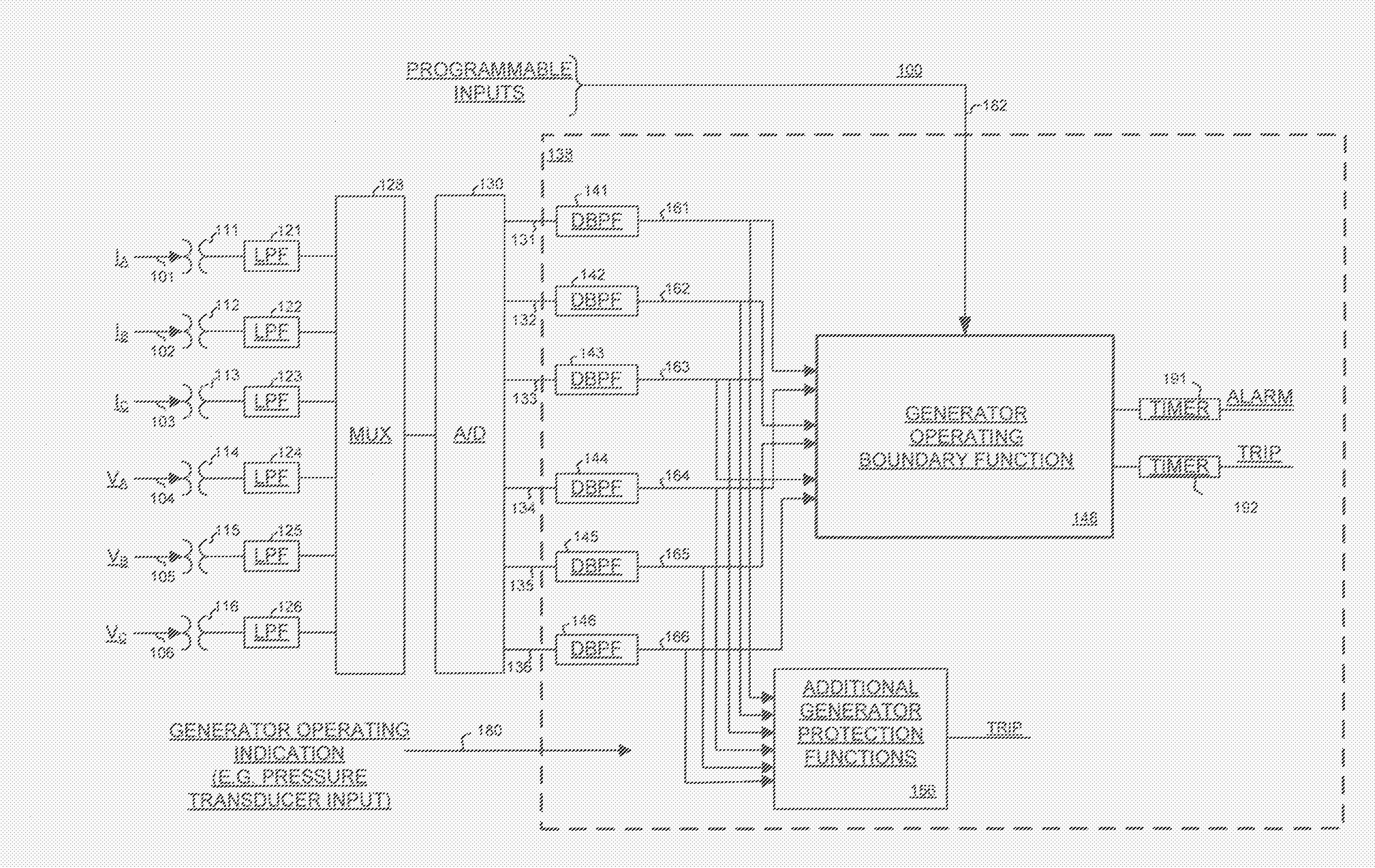
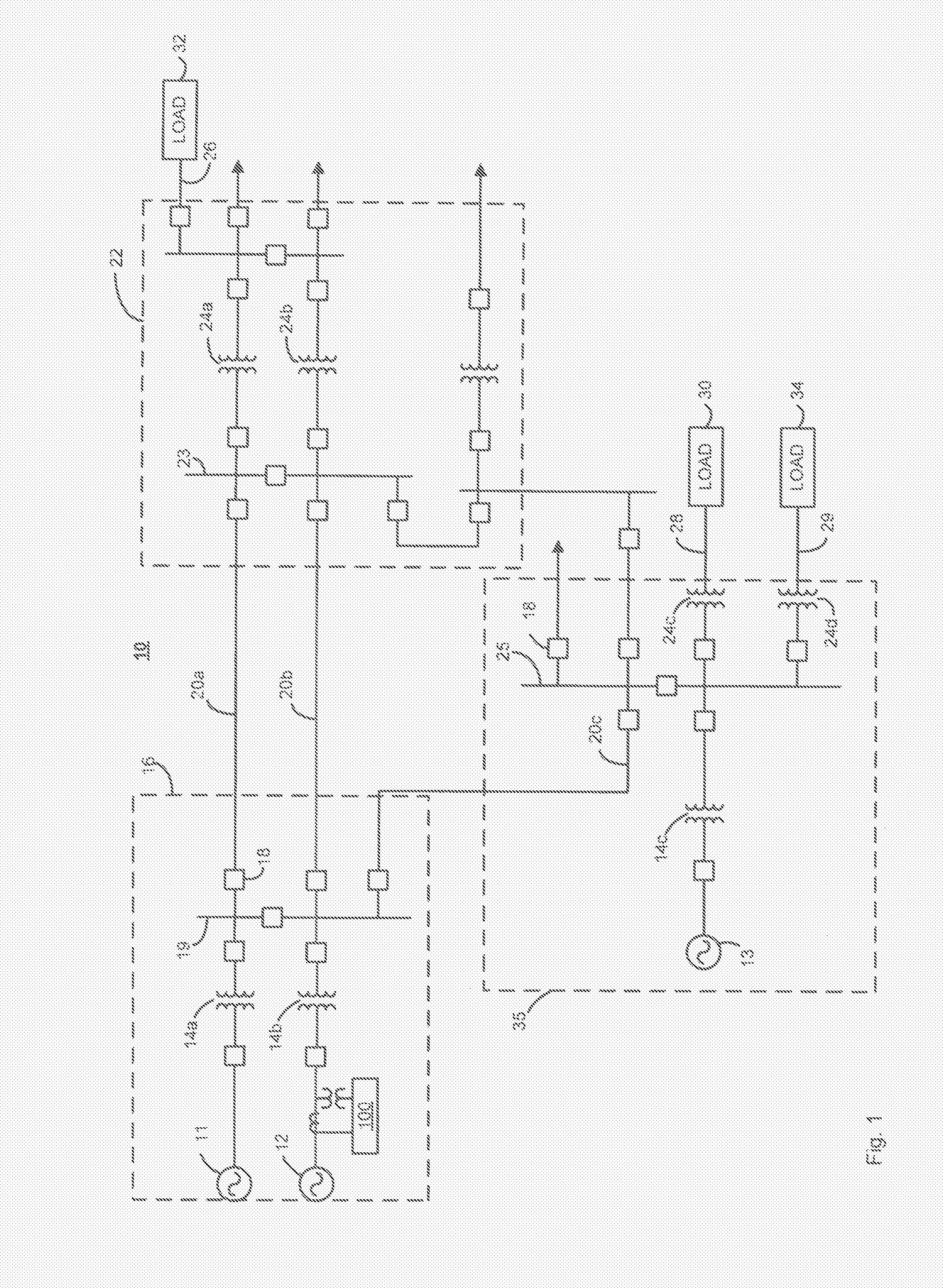
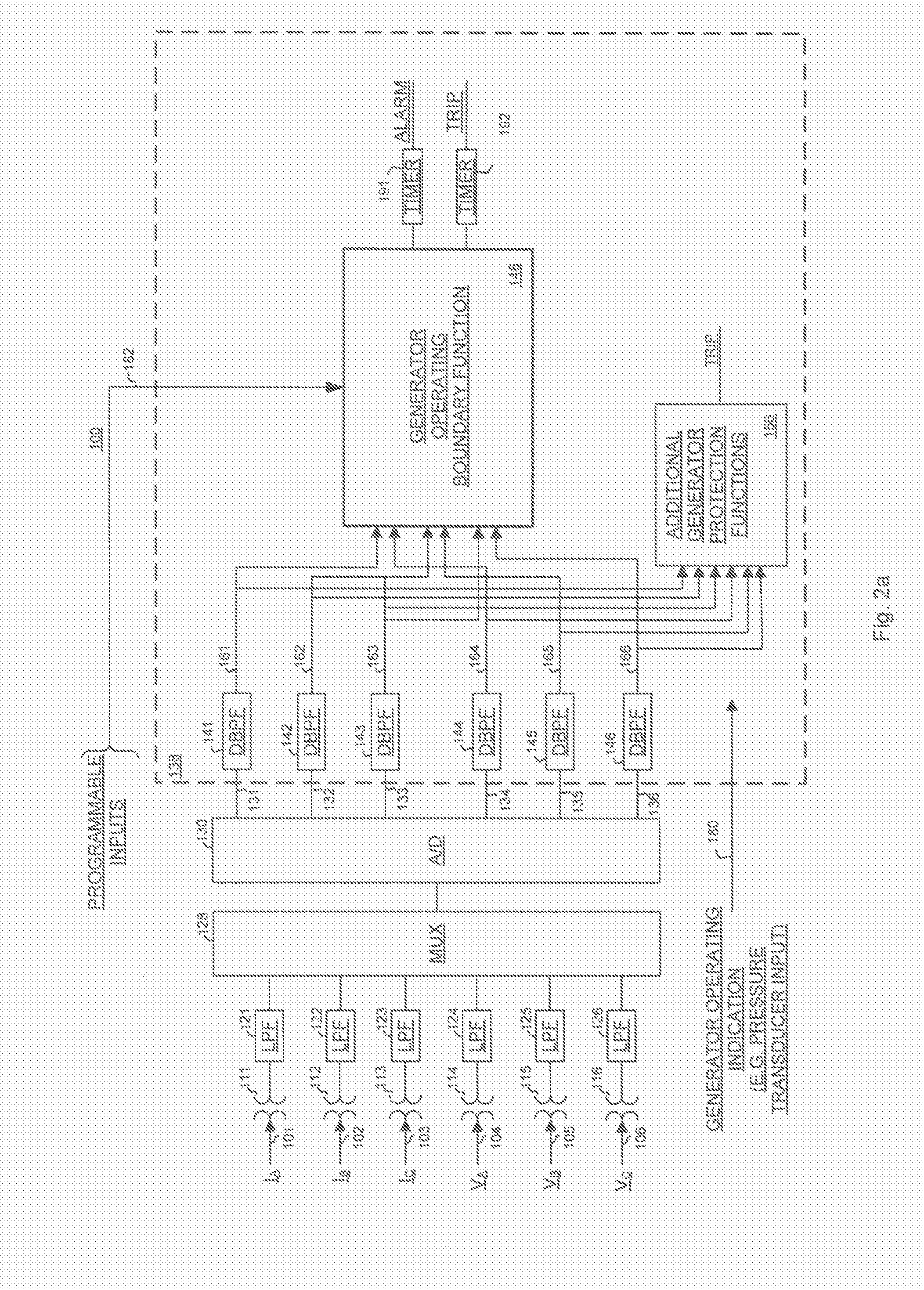

High-voltage Generator
PatentInactiveEP1280259A1
Innovation
- The generator winding is divided into sections with graded insulation voltages, and corresponding overvoltage protection elements are assigned to each section, ensuring optimal protection by adjusting their response levels to meet the specific requirements of each section, with additional elements connected to the high-voltage end or star point.


Grid Code and Safety Standards for Generator Protection
The protection of synchronous generators from surge events is fundamentally governed by a comprehensive framework of grid codes and safety standards established by international and regional regulatory bodies. These standards define the minimum technical requirements for generator protection systems, ensuring both equipment safety and grid stability. The IEEE C37 series, particularly C37.106 for abnormal frequency and voltage protection, and IEC 60255 standards for protective relays constitute the primary international references. Regional grid codes such as NERC standards in North America, the European Network Code Requirements for Generators, and China's GB/T 14285 further specify localized protection requirements tailored to specific grid characteristics.
Grid codes mandate specific protection functions that generators must implement to withstand surge conditions. These include overvoltage protection typically set between 110-120% of nominal voltage, transient overvoltage withstand capabilities as defined by insulation coordination standards, and surge arrester specifications compliant with IEC 60099 or IEEE C62.11. The standards prescribe maximum allowable voltage rise rates, minimum insulation levels, and coordination requirements between generator protection and transmission system protection schemes.
Safety standards emphasize the integration of multiple protection layers, requiring coordination between primary protection devices such as surge arresters and secondary protection through relay systems. Compliance testing protocols defined in IEEE 4 and IEC 60034-1 establish verification procedures for surge immunity, ensuring generators can withstand specified impulse voltage levels without insulation failure. Modern grid codes increasingly incorporate requirements for low voltage ride-through and fault ride-through capabilities, demanding that generators remain connected during transient disturbances rather than immediately disconnecting.
Certification and compliance verification processes require manufacturers and operators to demonstrate adherence through type testing, routine testing, and periodic maintenance protocols. Documentation requirements include protection system design validation, coordination studies, and evidence of proper grounding system implementation according to IEEE 80 standards, all critical for effective surge protection and regulatory compliance.
Grid codes mandate specific protection functions that generators must implement to withstand surge conditions. These include overvoltage protection typically set between 110-120% of nominal voltage, transient overvoltage withstand capabilities as defined by insulation coordination standards, and surge arrester specifications compliant with IEC 60099 or IEEE C62.11. The standards prescribe maximum allowable voltage rise rates, minimum insulation levels, and coordination requirements between generator protection and transmission system protection schemes.
Safety standards emphasize the integration of multiple protection layers, requiring coordination between primary protection devices such as surge arresters and secondary protection through relay systems. Compliance testing protocols defined in IEEE 4 and IEC 60034-1 establish verification procedures for surge immunity, ensuring generators can withstand specified impulse voltage levels without insulation failure. Modern grid codes increasingly incorporate requirements for low voltage ride-through and fault ride-through capabilities, demanding that generators remain connected during transient disturbances rather than immediately disconnecting.
Certification and compliance verification processes require manufacturers and operators to demonstrate adherence through type testing, routine testing, and periodic maintenance protocols. Documentation requirements include protection system design validation, coordination studies, and evidence of proper grounding system implementation according to IEEE 80 standards, all critical for effective surge protection and regulatory compliance.
Lightning and Transient Overvoltage Mitigation Strategies
Lightning strikes and transient overvoltages represent critical threats to synchronous generator systems, capable of causing immediate equipment failure, insulation breakdown, and extended operational downtime. These phenomena can originate from direct lightning strikes to transmission lines, switching operations in the power network, or fault conditions that propagate through the electrical system. The transient nature of these events, characterized by extremely high voltage magnitudes and rapid rise times, demands comprehensive protection strategies that address both external and internal vulnerability points within generator installations.
Effective mitigation begins with proper grounding system design, which serves as the foundation for dissipating surge energy safely into the earth. A well-engineered grounding network must maintain low impedance paths while ensuring equipotential bonding across all metallic structures. This prevents dangerous potential differences that could drive destructive currents through generator windings or auxiliary equipment. The grounding resistance should typically be maintained below specified thresholds, with multiple ground rods or grounding grids employed depending on soil resistivity characteristics.
Surge arresters constitute the primary line of defense against transient overvoltages, strategically positioned at generator terminals and critical connection points throughout the system. Modern metal-oxide varistor arresters offer superior protection characteristics compared to legacy technologies, providing fast response times and excellent energy absorption capabilities. Proper arrester selection requires careful consideration of the system voltage level, temporary overvoltage duration, and expected surge energy magnitudes. Installation location proves equally critical, with lead lengths minimized to reduce inductive voltage drops during surge events.
Shielding wires and overhead ground wires provide essential protection against direct lightning strikes to transmission lines connected to generator facilities. These conductors intercept lightning channels before they can contact energized phase conductors, directing surge currents to ground through tower structures. The shielding angle and positioning must be optimized to ensure adequate coverage while accounting for terrain features and tower geometry. Coordination between shielding wires and surge arresters creates multiple protection layers that significantly reduce the probability of damaging overvoltages reaching generator terminals.
Neutral grounding resistors or reactors offer additional protection by limiting ground fault currents and controlling transient overvoltage magnitudes during system disturbances. The impedance value selection involves balancing fault detection sensitivity against overvoltage limitation requirements. Surge capacitors installed at strategic locations can also help attenuate high-frequency transient components, smoothing voltage wavefronts before they propagate into generator windings. Regular testing and maintenance of all protective devices ensures continued effectiveness throughout the operational lifecycle.
Effective mitigation begins with proper grounding system design, which serves as the foundation for dissipating surge energy safely into the earth. A well-engineered grounding network must maintain low impedance paths while ensuring equipotential bonding across all metallic structures. This prevents dangerous potential differences that could drive destructive currents through generator windings or auxiliary equipment. The grounding resistance should typically be maintained below specified thresholds, with multiple ground rods or grounding grids employed depending on soil resistivity characteristics.
Surge arresters constitute the primary line of defense against transient overvoltages, strategically positioned at generator terminals and critical connection points throughout the system. Modern metal-oxide varistor arresters offer superior protection characteristics compared to legacy technologies, providing fast response times and excellent energy absorption capabilities. Proper arrester selection requires careful consideration of the system voltage level, temporary overvoltage duration, and expected surge energy magnitudes. Installation location proves equally critical, with lead lengths minimized to reduce inductive voltage drops during surge events.
Shielding wires and overhead ground wires provide essential protection against direct lightning strikes to transmission lines connected to generator facilities. These conductors intercept lightning channels before they can contact energized phase conductors, directing surge currents to ground through tower structures. The shielding angle and positioning must be optimized to ensure adequate coverage while accounting for terrain features and tower geometry. Coordination between shielding wires and surge arresters creates multiple protection layers that significantly reduce the probability of damaging overvoltages reaching generator terminals.
Neutral grounding resistors or reactors offer additional protection by limiting ground fault currents and controlling transient overvoltage magnitudes during system disturbances. The impedance value selection involves balancing fault detection sensitivity against overvoltage limitation requirements. Surge capacitors installed at strategic locations can also help attenuate high-frequency transient components, smoothing voltage wavefronts before they propagate into generator windings. Regular testing and maintenance of all protective devices ensures continued effectiveness throughout the operational lifecycle.
Unlock deeper insights with Patsnap Eureka Quick Research — get a full tech report to explore trends and direct your research. Try now!
Generate Your Research Report Instantly with AI Agent
Supercharge your innovation with Patsnap Eureka AI Agent Platform!


