

How to Streamline Workflow with Location Aided Tools
MAR 17, 20269 MIN READ
Generate Your Research Report Instantly with AI Agent
PatSnap Eureka helps you evaluate technical feasibility & market potential.
Location-Aided Workflow Technology Background and Objectives
Location-aided workflow technology represents a convergence of geographic information systems, mobile computing, and process automation that has evolved significantly over the past two decades. The foundational concept emerged from early GPS applications in logistics and field service management, where organizations recognized the potential of location data to optimize operational efficiency. As smartphones became ubiquitous and location services matured, the technology expanded beyond simple tracking to encompass comprehensive workflow orchestration based on spatial context.
The evolution of this technology domain has been driven by several key factors including the proliferation of Internet of Things devices, advances in indoor positioning systems, and the integration of artificial intelligence with geospatial analytics. Early implementations focused primarily on asset tracking and route optimization, but contemporary applications have expanded to include context-aware task assignment, proximity-based collaboration, and location-triggered process automation across diverse industry verticals.
Current technological objectives center on achieving seamless integration between location intelligence and business process management systems. Organizations are pursuing solutions that can automatically adapt workflows based on real-time location data, environmental conditions, and resource availability. This includes developing sophisticated algorithms that can predict optimal task sequences, minimize travel time, and maximize resource utilization while maintaining service quality standards.
The primary technical goals encompass creating unified platforms that can process multiple location data sources simultaneously, including GPS coordinates, beacon signals, Wi-Fi positioning, and cellular triangulation. These systems aim to provide sub-meter accuracy in both indoor and outdoor environments while maintaining low latency for real-time decision making. Additionally, there is significant focus on developing privacy-preserving location technologies that can deliver workflow benefits without compromising individual privacy rights.
Future objectives include advancing predictive analytics capabilities to anticipate workflow bottlenecks before they occur, implementing machine learning models that can continuously optimize process flows based on historical location patterns, and creating interoperable standards that enable seamless data exchange between different location-aided workflow platforms. The ultimate goal is establishing autonomous workflow systems that can self-optimize based on changing spatial dynamics and operational requirements.
The evolution of this technology domain has been driven by several key factors including the proliferation of Internet of Things devices, advances in indoor positioning systems, and the integration of artificial intelligence with geospatial analytics. Early implementations focused primarily on asset tracking and route optimization, but contemporary applications have expanded to include context-aware task assignment, proximity-based collaboration, and location-triggered process automation across diverse industry verticals.
Current technological objectives center on achieving seamless integration between location intelligence and business process management systems. Organizations are pursuing solutions that can automatically adapt workflows based on real-time location data, environmental conditions, and resource availability. This includes developing sophisticated algorithms that can predict optimal task sequences, minimize travel time, and maximize resource utilization while maintaining service quality standards.
The primary technical goals encompass creating unified platforms that can process multiple location data sources simultaneously, including GPS coordinates, beacon signals, Wi-Fi positioning, and cellular triangulation. These systems aim to provide sub-meter accuracy in both indoor and outdoor environments while maintaining low latency for real-time decision making. Additionally, there is significant focus on developing privacy-preserving location technologies that can deliver workflow benefits without compromising individual privacy rights.
Future objectives include advancing predictive analytics capabilities to anticipate workflow bottlenecks before they occur, implementing machine learning models that can continuously optimize process flows based on historical location patterns, and creating interoperable standards that enable seamless data exchange between different location-aided workflow platforms. The ultimate goal is establishing autonomous workflow systems that can self-optimize based on changing spatial dynamics and operational requirements.
Market Demand for Location-Based Workflow Solutions
The global market for location-based workflow solutions is experiencing unprecedented growth driven by the increasing digitization of business operations and the widespread adoption of mobile technologies. Organizations across various industries are recognizing the critical importance of integrating geographical context into their operational processes to enhance efficiency, reduce costs, and improve decision-making capabilities.
Enterprise mobility has emerged as a primary catalyst for market expansion, with companies seeking solutions that can optimize field operations, asset management, and resource allocation. The proliferation of smartphones, tablets, and IoT devices has created an ecosystem where location-aware applications can seamlessly integrate into existing workflow infrastructures, making these solutions more accessible and cost-effective than ever before.
Manufacturing and logistics sectors represent the largest demand segments, where location-aided tools are essential for supply chain optimization, inventory management, and real-time tracking of goods and personnel. These industries require sophisticated solutions that can handle complex routing algorithms, geofencing capabilities, and integration with existing enterprise resource planning systems.
Healthcare organizations are increasingly adopting location-based workflow solutions to streamline patient care, track medical equipment, and optimize staff allocation within facilities. The need for compliance with regulatory requirements and the critical nature of healthcare operations drive demand for highly reliable and secure location-enabled systems.
Field service industries, including utilities, telecommunications, and maintenance services, demonstrate strong market appetite for solutions that can optimize technician routing, automate work order assignments based on proximity, and provide real-time visibility into field operations. These sectors particularly value solutions that can reduce travel time and fuel costs while improving customer service response times.
The retail sector shows growing interest in location-based workflow solutions for inventory management, staff coordination, and customer experience enhancement. Retailers are seeking tools that can integrate indoor positioning systems with workforce management platforms to optimize store operations and improve customer service delivery.
Government and public sector organizations represent an emerging market segment, with increasing demand for location-aided tools in emergency response, infrastructure management, and citizen services. These organizations require solutions that can integrate with existing public safety systems and provide robust security features.
Market demand is further amplified by the growing emphasis on data-driven decision making and the need for real-time operational visibility. Organizations are seeking comprehensive solutions that not only provide location context but also offer analytics capabilities, predictive insights, and seamless integration with business intelligence platforms.
Enterprise mobility has emerged as a primary catalyst for market expansion, with companies seeking solutions that can optimize field operations, asset management, and resource allocation. The proliferation of smartphones, tablets, and IoT devices has created an ecosystem where location-aware applications can seamlessly integrate into existing workflow infrastructures, making these solutions more accessible and cost-effective than ever before.
Manufacturing and logistics sectors represent the largest demand segments, where location-aided tools are essential for supply chain optimization, inventory management, and real-time tracking of goods and personnel. These industries require sophisticated solutions that can handle complex routing algorithms, geofencing capabilities, and integration with existing enterprise resource planning systems.
Healthcare organizations are increasingly adopting location-based workflow solutions to streamline patient care, track medical equipment, and optimize staff allocation within facilities. The need for compliance with regulatory requirements and the critical nature of healthcare operations drive demand for highly reliable and secure location-enabled systems.
Field service industries, including utilities, telecommunications, and maintenance services, demonstrate strong market appetite for solutions that can optimize technician routing, automate work order assignments based on proximity, and provide real-time visibility into field operations. These sectors particularly value solutions that can reduce travel time and fuel costs while improving customer service response times.
The retail sector shows growing interest in location-based workflow solutions for inventory management, staff coordination, and customer experience enhancement. Retailers are seeking tools that can integrate indoor positioning systems with workforce management platforms to optimize store operations and improve customer service delivery.
Government and public sector organizations represent an emerging market segment, with increasing demand for location-aided tools in emergency response, infrastructure management, and citizen services. These organizations require solutions that can integrate with existing public safety systems and provide robust security features.
Market demand is further amplified by the growing emphasis on data-driven decision making and the need for real-time operational visibility. Organizations are seeking comprehensive solutions that not only provide location context but also offer analytics capabilities, predictive insights, and seamless integration with business intelligence platforms.
Current State and Challenges of Location-Aided Tools
Location-aided tools have experienced significant advancement in recent years, driven by the proliferation of GPS-enabled devices, IoT sensors, and cloud computing infrastructure. Current implementations span across various industries, from logistics and field service management to healthcare and manufacturing. These tools leverage real-time positioning data, geofencing capabilities, and mobile connectivity to provide contextual information and automate location-dependent processes.
The global market for location-based services has reached substantial maturity in developed regions, particularly in North America and Europe, where enterprises have widely adopted GPS tracking, fleet management systems, and mobile workforce solutions. However, adoption rates vary significantly across different sectors and geographical regions, with emerging markets showing rapid growth potential but facing infrastructure limitations.
Despite technological progress, several critical challenges continue to impede the full potential of location-aided workflow optimization. Indoor positioning remains problematic, as GPS signals are often unreliable or unavailable within buildings, forcing organizations to rely on alternative technologies like Wi-Fi triangulation, Bluetooth beacons, or RFID systems, which often lack the precision required for detailed workflow tracking.
Privacy and security concerns represent another significant barrier to widespread adoption. Organizations must navigate complex regulatory frameworks, including GDPR in Europe and various state-level privacy laws in the United States, while ensuring employee acceptance of location monitoring. This creates tension between operational efficiency gains and workforce privacy expectations.
Integration complexity poses substantial technical challenges, as most enterprises operate heterogeneous IT environments with legacy systems that were not designed for location-aware functionality. The lack of standardized APIs and data formats across different location service providers creates additional integration overhead and limits interoperability between systems.
Battery life and device management issues continue to affect mobile workforce productivity, particularly in industries requiring continuous location tracking. Hardware reliability in harsh environmental conditions, such as construction sites or outdoor maintenance operations, remains a persistent concern that impacts system effectiveness.
Data accuracy and reliability vary significantly based on environmental factors, urban canyon effects, and weather conditions. These inconsistencies can lead to workflow disruptions and reduced confidence in location-based automation systems, particularly in mission-critical applications where precision is paramount for operational success.
The global market for location-based services has reached substantial maturity in developed regions, particularly in North America and Europe, where enterprises have widely adopted GPS tracking, fleet management systems, and mobile workforce solutions. However, adoption rates vary significantly across different sectors and geographical regions, with emerging markets showing rapid growth potential but facing infrastructure limitations.
Despite technological progress, several critical challenges continue to impede the full potential of location-aided workflow optimization. Indoor positioning remains problematic, as GPS signals are often unreliable or unavailable within buildings, forcing organizations to rely on alternative technologies like Wi-Fi triangulation, Bluetooth beacons, or RFID systems, which often lack the precision required for detailed workflow tracking.
Privacy and security concerns represent another significant barrier to widespread adoption. Organizations must navigate complex regulatory frameworks, including GDPR in Europe and various state-level privacy laws in the United States, while ensuring employee acceptance of location monitoring. This creates tension between operational efficiency gains and workforce privacy expectations.
Integration complexity poses substantial technical challenges, as most enterprises operate heterogeneous IT environments with legacy systems that were not designed for location-aware functionality. The lack of standardized APIs and data formats across different location service providers creates additional integration overhead and limits interoperability between systems.
Battery life and device management issues continue to affect mobile workforce productivity, particularly in industries requiring continuous location tracking. Hardware reliability in harsh environmental conditions, such as construction sites or outdoor maintenance operations, remains a persistent concern that impacts system effectiveness.
Data accuracy and reliability vary significantly based on environmental factors, urban canyon effects, and weather conditions. These inconsistencies can lead to workflow disruptions and reduced confidence in location-based automation systems, particularly in mission-critical applications where precision is paramount for operational success.
Current Location-Aided Workflow Solutions
01 Location-based workflow automation and task management
Systems and methods for automating workflows based on geographic location enable dynamic task assignment and execution. When a user or device enters a specific location, predefined workflows are triggered automatically, streamlining operations and improving efficiency. This approach allows for context-aware task management where location serves as a key parameter for initiating, modifying, or completing workflow steps. The system can monitor location changes in real-time and adjust workflow states accordingly, ensuring that tasks are performed at the right place and time.- Location-based workflow automation and task management: Systems and methods for automating workflows based on geographic location enable dynamic task assignment and execution. When a user or device enters a specific location, predefined workflows can be triggered automatically, streamlining operations and improving efficiency. This approach allows for context-aware task management where location serves as a key parameter for initiating, modifying, or completing workflow steps. The system can monitor location changes in real-time and adjust workflow states accordingly, ensuring that tasks are performed at the right place and time.
- Geographic positioning for tool tracking and inventory management: Location-aided systems enable real-time tracking and management of tools and equipment across various sites. By integrating positioning technologies, organizations can monitor tool locations, usage patterns, and availability status. This capability helps prevent loss, optimize resource allocation, and ensure that the right tools are available at the right locations. The system can generate alerts when tools are moved outside designated areas or when specific equipment is needed at a particular site, facilitating efficient inventory control and reducing downtime.
- Location-based access control and security for workflow systems: Security mechanisms that utilize geographic location data to control access to workflow tools and sensitive operations enhance system protection. These systems verify user location before granting access to specific workflow functions or data, ensuring that operations are performed only in authorized areas. Location-based authentication can be combined with other security measures to create multi-factor verification processes. This approach is particularly valuable for workflows involving sensitive information or critical operations that should only be accessible from designated secure locations.
- Mobile device integration for location-aware workflow execution: Integration of mobile devices with location services enables field workers to execute workflows based on their current position. Mobile applications can receive location-specific instructions, display relevant information for the current site, and capture data with geographic context. This integration supports remote workforce management by providing workers with the appropriate tools and information based on where they are working. The system can adapt the user interface and available functions according to the detected location, ensuring optimal workflow execution in various field environments.
- Geofencing and proximity-based workflow triggering: Geofencing technology creates virtual boundaries that trigger specific workflow actions when crossed. When users or assets enter or exit defined geographic zones, the system automatically initiates corresponding workflow processes. This capability enables automated check-ins, location-based notifications, and context-sensitive task assignments. Proximity detection can also facilitate collaboration by identifying when team members or required resources are nearby, enabling dynamic workflow adjustments based on spatial relationships between workers, tools, and job sites.
02 Geographic positioning for tool tracking and inventory management
Location-aided systems enable real-time tracking of tools and equipment across work sites and facilities. By integrating positioning technologies, organizations can monitor tool locations, usage patterns, and availability status. This capability reduces time spent searching for equipment, prevents loss or theft, and optimizes resource allocation. The system can generate alerts when tools are moved outside designated areas or when specific equipment is needed for upcoming tasks, improving operational efficiency and asset utilization.Expand Specific Solutions03 Location-based access control and security for workflow systems
Security mechanisms that utilize geographic location data to control access to workflow tools and sensitive operations. These systems verify that users are in authorized locations before granting access to specific workflow functions or data. Location-based authentication adds an additional security layer beyond traditional credentials, ensuring that critical operations can only be performed from approved geographic zones. This approach is particularly valuable for workflows involving sensitive information or high-risk procedures that require physical presence verification.Expand Specific Solutions04 Mobile device integration for field workflow execution
Integration of mobile devices with location services enables field workers to execute workflows while on the move. These systems provide location-aware interfaces that adapt based on the worker's current position, displaying relevant tasks, instructions, and data specific to their geographic context. Mobile integration allows for real-time data collection, status updates, and communication between field personnel and central systems. The workflow interface can automatically adjust to show location-specific procedures, safety information, and available resources.Expand Specific Solutions05 Geofencing and proximity-based workflow triggering
Implementation of virtual geographic boundaries that automatically trigger workflow actions when crossed. Geofencing technology enables workflows to respond to entry or exit from defined zones, initiating appropriate processes without manual intervention. This capability supports applications such as automatic check-in procedures, location-based notifications, and proximity-triggered task assignments. The system can define multiple overlapping geofences with different workflow rules, allowing for complex location-based automation scenarios that improve operational efficiency and ensure compliance with location-specific protocols.Expand Specific Solutions
Key Players in Location-Aided Workflow Industry
The location-aided workflow streamlining technology market is experiencing rapid growth as organizations increasingly recognize the value of spatial intelligence in operational efficiency. The industry is transitioning from early adoption to mainstream implementation, driven by expanding market demand across sectors from manufacturing to healthcare. Technology maturity varies significantly among key players, with established giants like IBM, Microsoft, and Siemens leading through comprehensive platform integration and AI-powered solutions. Specialized providers such as ServiceNow and Salesforce excel in workflow automation, while emerging companies like Istari Digital focus on niche applications in aerospace and defense. Hardware manufacturers including Intel, NVIDIA, and Samsung provide essential infrastructure components, while telecommunications leaders like Huawei and NTT Docomo enable connectivity frameworks. The competitive landscape reflects a maturing ecosystem where location-based workflow optimization is becoming standard practice rather than innovative differentiation.
International Business Machines Corp.
Technical Solution: IBM develops comprehensive location-aided workflow solutions through Watson IoT platform and AI-powered analytics. Their approach integrates GPS tracking, indoor positioning systems, and real-time data processing to optimize field service operations. The platform utilizes machine learning algorithms to predict optimal routes, schedule maintenance tasks based on geographic proximity, and provide contextual information to mobile workers. IBM's solution includes geofencing capabilities that automatically trigger workflow actions when personnel enter or exit designated areas, reducing manual data entry and improving accuracy. The system also incorporates augmented reality features for on-site guidance and remote assistance, enabling technicians to access location-specific procedures and documentation instantly.
Strengths: Enterprise-grade scalability, robust AI integration, comprehensive analytics dashboard. Weaknesses: High implementation costs, complex setup requirements, steep learning curve for end users.
Microsoft Technology Licensing LLC
Technical Solution: Microsoft's location-aided workflow solution leverages Azure Maps and Power Platform to create intelligent business processes. Their approach combines GPS data with Microsoft 365 applications, enabling automatic task assignment based on worker proximity and real-time location sharing for team coordination. The platform uses Azure IoT Hub to collect location data from mobile devices and sensors, processing this information through Azure Stream Analytics for immediate workflow optimization. Microsoft's solution includes integration with Dynamics 365 Field Service, providing predictive maintenance scheduling and route optimization algorithms. The system also features HoloLens integration for mixed reality guidance in complex workflows, allowing workers to receive step-by-step instructions overlaid on their physical environment while maintaining location awareness.
Strengths: Seamless Office 365 integration, strong cloud infrastructure, mixed reality capabilities. Weaknesses: Vendor lock-in concerns, requires Microsoft ecosystem adoption, limited customization options.
Core Technologies in Location-Based Workflow Optimization
Location Sensitive Healthcare Task Management System
PatentInactiveUS20080164998A1
Innovation
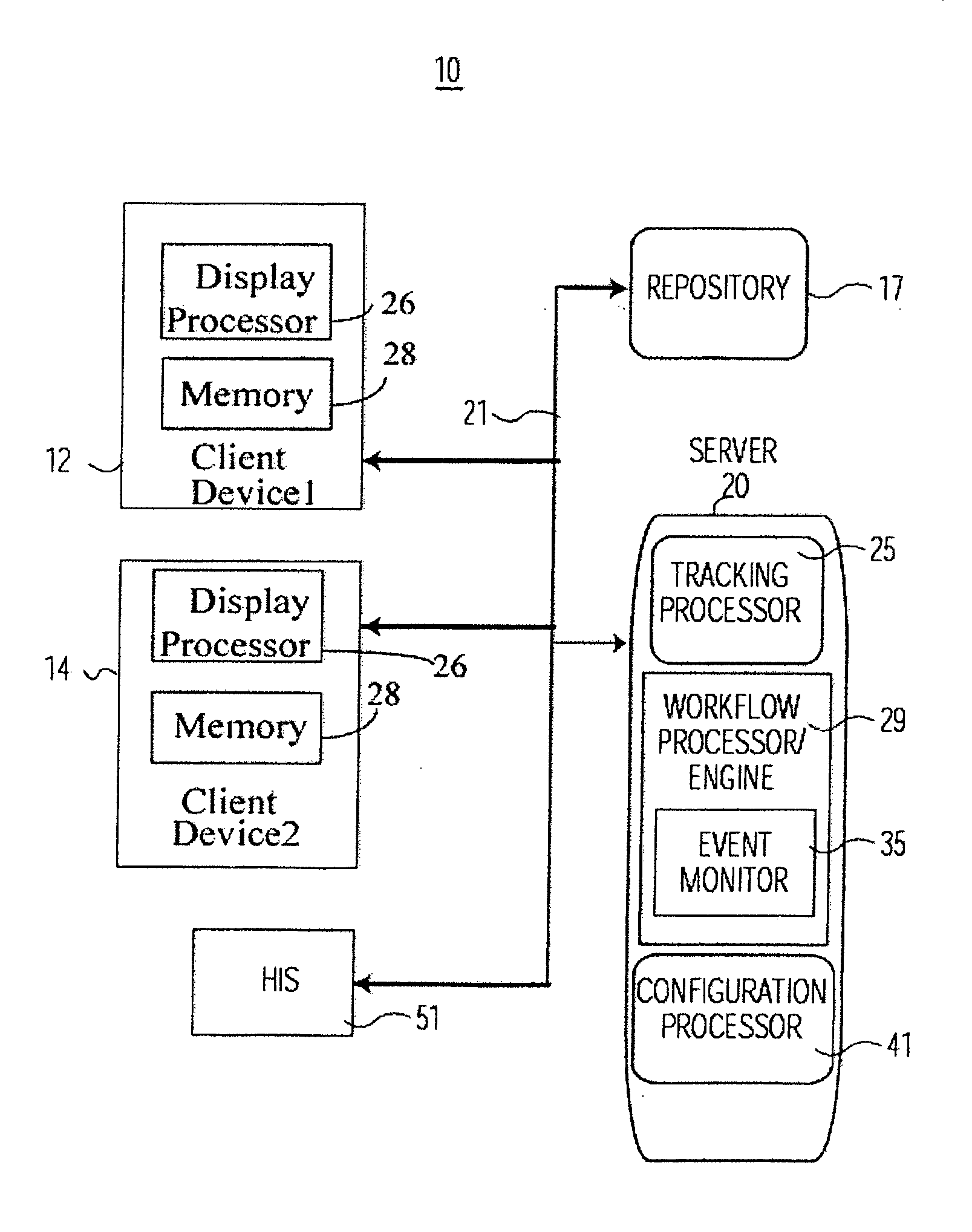
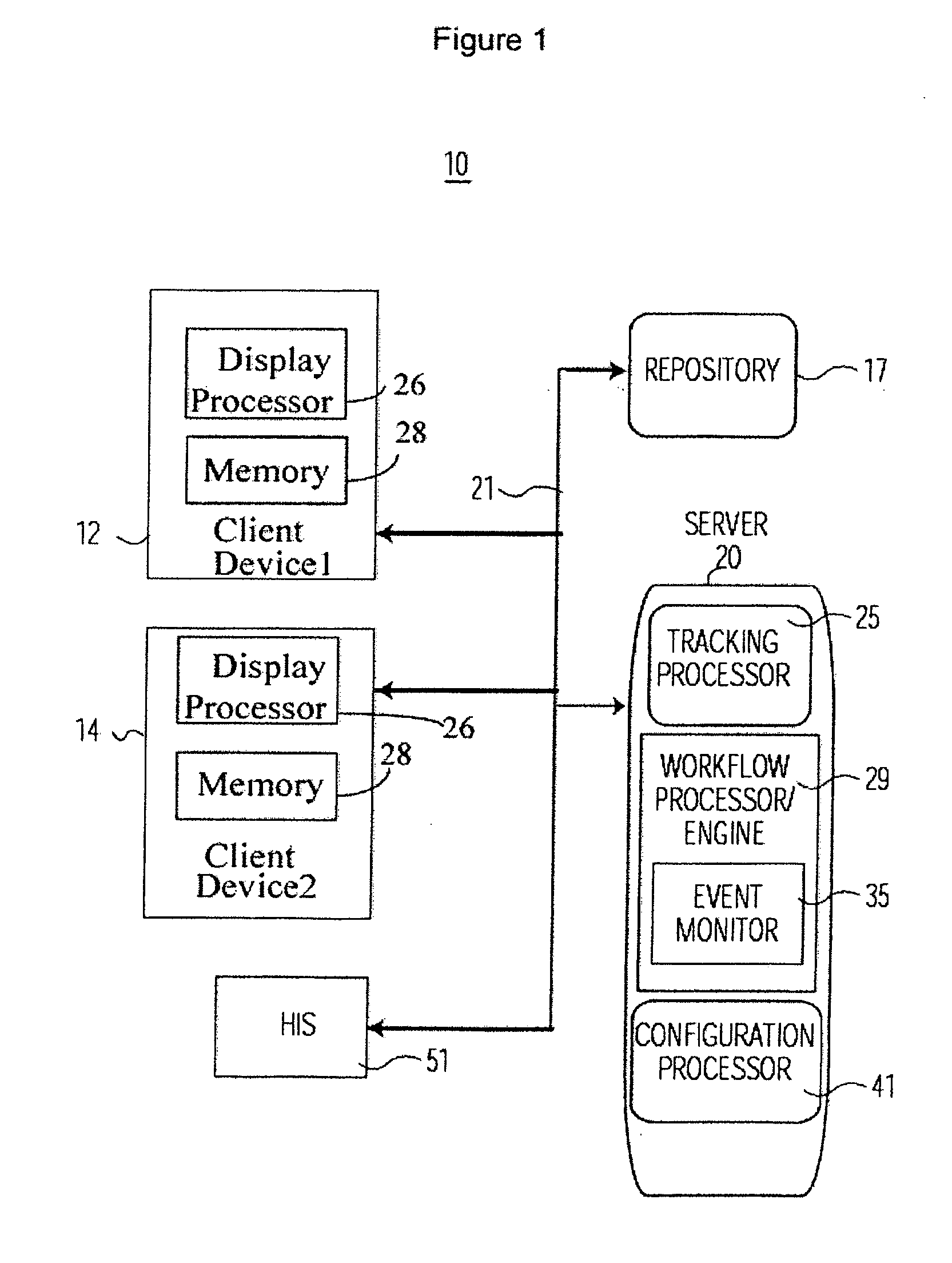
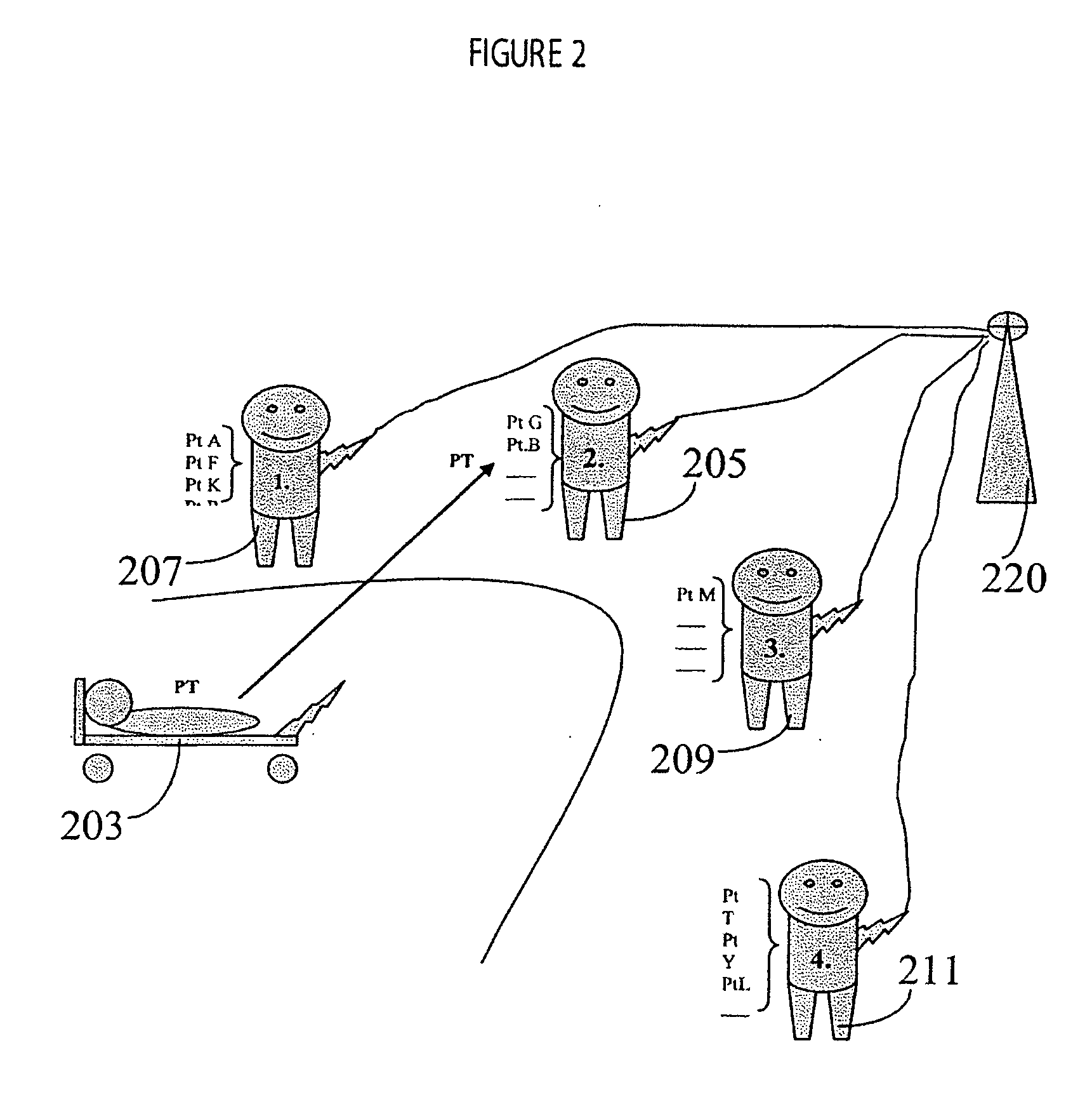
- A personnel and device location-sensitive system that uses RFID tags and other location detection systems to track the location of healthcare workers, patients, and equipment, integrating this data with a workflow management system to optimize task allocation by assigning tasks to the most appropriate personnel based on workload, skill level, and proximity to patients and necessary resources.

Workflow context aware location tracking system and method
PatentWO2014163948A1
Innovation
- A context-aware location tracking system utilizing a location tracking subsystem with communication devices and a context-aware location engine that processes initial location estimations to generate filtered estimates, incorporating workflow context information such as series of locations, states, dwell times, and interactions, and employing medium-range wireless communication formats like ZIGBEE and short-range formats like near-field communication to track resources and personnel within facilities.


Privacy and Data Protection in Location-Based Tools
Privacy and data protection represent critical considerations in the deployment of location-aided workflow tools, as these systems inherently collect, process, and store sensitive geospatial information about users and organizational operations. The integration of location services into workflow management platforms creates unique privacy challenges that extend beyond traditional data protection frameworks, requiring specialized approaches to safeguard both individual privacy rights and corporate confidential information.
Location-based workflow tools typically gather multiple data types including real-time GPS coordinates, movement patterns, workplace presence indicators, and contextual environmental data. This information creates detailed behavioral profiles that can reveal sensitive insights about employee activities, operational procedures, and business relationships. The persistent nature of location tracking means that even seemingly innocuous data points can accumulate into comprehensive surveillance profiles over time.
Regulatory compliance presents a complex landscape for location-aided tools, with frameworks such as GDPR, CCPA, and sector-specific regulations imposing strict requirements on geospatial data handling. These regulations mandate explicit consent mechanisms, data minimization principles, and purpose limitation constraints that directly impact how location features can be implemented in workflow systems. Organizations must navigate varying jurisdictional requirements when deploying tools across multiple geographic regions.
Technical privacy protection mechanisms include differential privacy algorithms, geofencing with privacy zones, data anonymization techniques, and edge computing approaches that minimize centralized data exposure. Advanced implementations employ homomorphic encryption and secure multi-party computation to enable location-based functionality while preserving individual privacy. Temporal data retention policies and automated deletion protocols help limit exposure windows for sensitive location information.
Organizational governance frameworks must establish clear policies regarding location data collection scope, employee consent procedures, third-party data sharing limitations, and incident response protocols. Transparency measures including privacy dashboards, data access controls, and audit trails enable users to understand and control their location data usage within workflow systems while maintaining operational effectiveness.
Location-based workflow tools typically gather multiple data types including real-time GPS coordinates, movement patterns, workplace presence indicators, and contextual environmental data. This information creates detailed behavioral profiles that can reveal sensitive insights about employee activities, operational procedures, and business relationships. The persistent nature of location tracking means that even seemingly innocuous data points can accumulate into comprehensive surveillance profiles over time.
Regulatory compliance presents a complex landscape for location-aided tools, with frameworks such as GDPR, CCPA, and sector-specific regulations imposing strict requirements on geospatial data handling. These regulations mandate explicit consent mechanisms, data minimization principles, and purpose limitation constraints that directly impact how location features can be implemented in workflow systems. Organizations must navigate varying jurisdictional requirements when deploying tools across multiple geographic regions.
Technical privacy protection mechanisms include differential privacy algorithms, geofencing with privacy zones, data anonymization techniques, and edge computing approaches that minimize centralized data exposure. Advanced implementations employ homomorphic encryption and secure multi-party computation to enable location-based functionality while preserving individual privacy. Temporal data retention policies and automated deletion protocols help limit exposure windows for sensitive location information.
Organizational governance frameworks must establish clear policies regarding location data collection scope, employee consent procedures, third-party data sharing limitations, and incident response protocols. Transparency measures including privacy dashboards, data access controls, and audit trails enable users to understand and control their location data usage within workflow systems while maintaining operational effectiveness.
Integration Strategies for Location-Aided Workflow Platforms
The successful deployment of location-aided workflow platforms requires a comprehensive integration strategy that addresses both technical architecture and organizational readiness. Modern enterprises must consider multiple integration approaches to ensure seamless connectivity between location-based tools and existing business systems. The primary integration models include API-based connections, middleware solutions, and cloud-native architectures that facilitate real-time data exchange between location services and workflow management systems.
API-first integration strategies have emerged as the dominant approach for connecting location-aided tools with enterprise workflows. RESTful APIs enable standardized communication protocols between GPS tracking systems, geofencing applications, and core business processes. This approach allows organizations to maintain system modularity while ensuring data consistency across platforms. Webhook implementations further enhance real-time responsiveness, triggering automated workflow actions based on location events such as employee arrivals, asset movements, or service completions.
Middleware integration platforms provide another critical pathway for organizations managing complex system landscapes. Enterprise service buses and integration platforms as a service solutions offer pre-built connectors for popular location services while providing data transformation capabilities. These platforms excel in scenarios requiring multiple system integrations, offering centralized monitoring and management of data flows between location tools and various workflow applications.
Cloud-native integration strategies leverage containerized microservices architectures to create scalable, resilient connections between location-aided tools and workflow platforms. This approach enables organizations to deploy location-aware applications across hybrid cloud environments while maintaining consistent performance and security standards. Container orchestration platforms facilitate automatic scaling based on location data processing demands and workflow complexity.
Data synchronization strategies must address the unique challenges of location-based information, including handling intermittent connectivity, managing high-frequency location updates, and ensuring data accuracy across distributed systems. Implementing event-driven architectures with message queuing systems helps manage the asynchronous nature of location data while maintaining workflow continuity during network disruptions.
Security integration considerations encompass authentication protocols, data encryption standards, and access control mechanisms specific to location-sensitive information. Organizations must implement zero-trust security models that validate location data integrity while protecting sensitive geographical information throughout the integration pipeline.
API-first integration strategies have emerged as the dominant approach for connecting location-aided tools with enterprise workflows. RESTful APIs enable standardized communication protocols between GPS tracking systems, geofencing applications, and core business processes. This approach allows organizations to maintain system modularity while ensuring data consistency across platforms. Webhook implementations further enhance real-time responsiveness, triggering automated workflow actions based on location events such as employee arrivals, asset movements, or service completions.
Middleware integration platforms provide another critical pathway for organizations managing complex system landscapes. Enterprise service buses and integration platforms as a service solutions offer pre-built connectors for popular location services while providing data transformation capabilities. These platforms excel in scenarios requiring multiple system integrations, offering centralized monitoring and management of data flows between location tools and various workflow applications.
Cloud-native integration strategies leverage containerized microservices architectures to create scalable, resilient connections between location-aided tools and workflow platforms. This approach enables organizations to deploy location-aware applications across hybrid cloud environments while maintaining consistent performance and security standards. Container orchestration platforms facilitate automatic scaling based on location data processing demands and workflow complexity.
Data synchronization strategies must address the unique challenges of location-based information, including handling intermittent connectivity, managing high-frequency location updates, and ensuring data accuracy across distributed systems. Implementing event-driven architectures with message queuing systems helps manage the asynchronous nature of location data while maintaining workflow continuity during network disruptions.
Security integration considerations encompass authentication protocols, data encryption standards, and access control mechanisms specific to location-sensitive information. Organizations must implement zero-trust security models that validate location data integrity while protecting sensitive geographical information throughout the integration pipeline.
Unlock deeper insights with PatSnap Eureka Quick Research — get a full tech report to explore trends and direct your research. Try now!
Generate Your Research Report Instantly with AI Agent
Supercharge your innovation with PatSnap Eureka AI Agent Platform!