

How to Utilize Eutectic Microstructure Modifications for Dependable Fusion
FEB 3, 20269 MIN READ
Generate Your Research Report Instantly with AI Agent
PatSnap Eureka helps you evaluate technical feasibility & market potential.
Eutectic Fusion Technology Background and Objectives
Eutectic alloys have long been recognized as critical materials in fusion technology due to their unique melting characteristics and microstructural properties. The concept of eutectic systems, where two or more phases solidify simultaneously at a specific composition and temperature, offers distinct advantages for fusion applications. These materials exhibit lower melting points than their constituent elements, enhanced thermal conductivity, and improved mechanical stability under extreme conditions. The historical development of eutectic materials in high-temperature applications dates back to metallurgical innovations in the mid-20th century, with significant advances occurring in aerospace and nuclear engineering sectors.
The evolution of fusion technology has consistently demanded materials capable of withstanding unprecedented thermal loads, neutron irradiation, and mechanical stresses. Traditional fusion reactor designs have struggled with material degradation, thermal fatigue, and structural integrity issues at plasma-facing components. Eutectic microstructures present a promising solution by offering self-organizing nanoscale architectures that can be tailored for specific performance requirements. The controlled modification of these microstructures through compositional adjustments, processing parameters, and post-treatment techniques has emerged as a frontier research area.
Current technological objectives focus on developing eutectic systems that demonstrate enhanced radiation tolerance, superior thermal management capabilities, and extended operational lifetimes in fusion environments. Researchers aim to exploit the inherent phase boundaries and interfacial characteristics of eutectic microstructures to create defect sinks that mitigate radiation damage. The strategic manipulation of lamellar spacing, phase distribution, and crystallographic orientation represents key pathways toward achieving dependable fusion performance.
The primary goal of this technological investigation is to establish systematic methodologies for eutectic microstructure modification that directly address fusion reactor reliability challenges. This includes optimizing composition-processing-property relationships, developing predictive models for microstructural evolution under fusion conditions, and validating performance through comprehensive testing protocols. Success in this domain would significantly advance the feasibility of commercial fusion energy by providing materials solutions that meet the stringent requirements of next-generation reactor designs.
The evolution of fusion technology has consistently demanded materials capable of withstanding unprecedented thermal loads, neutron irradiation, and mechanical stresses. Traditional fusion reactor designs have struggled with material degradation, thermal fatigue, and structural integrity issues at plasma-facing components. Eutectic microstructures present a promising solution by offering self-organizing nanoscale architectures that can be tailored for specific performance requirements. The controlled modification of these microstructures through compositional adjustments, processing parameters, and post-treatment techniques has emerged as a frontier research area.
Current technological objectives focus on developing eutectic systems that demonstrate enhanced radiation tolerance, superior thermal management capabilities, and extended operational lifetimes in fusion environments. Researchers aim to exploit the inherent phase boundaries and interfacial characteristics of eutectic microstructures to create defect sinks that mitigate radiation damage. The strategic manipulation of lamellar spacing, phase distribution, and crystallographic orientation represents key pathways toward achieving dependable fusion performance.
The primary goal of this technological investigation is to establish systematic methodologies for eutectic microstructure modification that directly address fusion reactor reliability challenges. This includes optimizing composition-processing-property relationships, developing predictive models for microstructural evolution under fusion conditions, and validating performance through comprehensive testing protocols. Success in this domain would significantly advance the feasibility of commercial fusion energy by providing materials solutions that meet the stringent requirements of next-generation reactor designs.
Market Demand for Advanced Fusion Materials
The global fusion energy sector is experiencing unprecedented momentum as governments and private investors recognize its potential to deliver safe, carbon-free baseload power. This surge in fusion development activities has created substantial demand for advanced materials capable of withstanding the extreme operational environments inherent to fusion reactors. Materials that can maintain structural integrity under intense neutron bombardment, thermal cycling, and plasma exposure are critical enablers for achieving commercial fusion viability.
Eutectic alloys and composites with tailored microstructures represent a particularly promising materials category for fusion applications. The demand stems from their unique ability to combine multiple desirable properties including enhanced radiation tolerance, improved thermal stability, and superior mechanical performance at elevated temperatures. International fusion projects such as ITER and emerging private ventures are actively seeking materials solutions that can extend component lifetimes and reduce maintenance costs, driving significant market interest in advanced eutectic systems.
The plasma-facing components and first-wall materials market constitutes a primary demand driver, as these elements require exceptional resistance to thermal shock and erosion. Eutectic microstructure modifications offer pathways to engineer materials with fine-scale phase distributions that can accommodate radiation-induced defects and maintain dimensional stability. This capability addresses a critical bottleneck in fusion reactor design where material degradation directly impacts operational reliability and economic feasibility.
Beyond structural applications, the breeding blanket systems essential for tritium fuel production present another substantial market segment. Materials with optimized eutectic structures can potentially enhance tritium extraction efficiency while maintaining mechanical robustness under neutron flux. The convergence of public fusion programs and private sector initiatives has accelerated procurement timelines, creating immediate demand for materials that demonstrate both performance advantages and manufacturing scalability.
The market landscape is further shaped by regulatory requirements for materials qualification and the need for extensive testing under fusion-relevant conditions. Organizations developing eutectic-based solutions face opportunities to establish early market positions as fusion technologies transition from experimental to demonstration phases, with material performance increasingly recognized as a determining factor in project success and commercial deployment timelines.
Eutectic alloys and composites with tailored microstructures represent a particularly promising materials category for fusion applications. The demand stems from their unique ability to combine multiple desirable properties including enhanced radiation tolerance, improved thermal stability, and superior mechanical performance at elevated temperatures. International fusion projects such as ITER and emerging private ventures are actively seeking materials solutions that can extend component lifetimes and reduce maintenance costs, driving significant market interest in advanced eutectic systems.
The plasma-facing components and first-wall materials market constitutes a primary demand driver, as these elements require exceptional resistance to thermal shock and erosion. Eutectic microstructure modifications offer pathways to engineer materials with fine-scale phase distributions that can accommodate radiation-induced defects and maintain dimensional stability. This capability addresses a critical bottleneck in fusion reactor design where material degradation directly impacts operational reliability and economic feasibility.
Beyond structural applications, the breeding blanket systems essential for tritium fuel production present another substantial market segment. Materials with optimized eutectic structures can potentially enhance tritium extraction efficiency while maintaining mechanical robustness under neutron flux. The convergence of public fusion programs and private sector initiatives has accelerated procurement timelines, creating immediate demand for materials that demonstrate both performance advantages and manufacturing scalability.
The market landscape is further shaped by regulatory requirements for materials qualification and the need for extensive testing under fusion-relevant conditions. Organizations developing eutectic-based solutions face opportunities to establish early market positions as fusion technologies transition from experimental to demonstration phases, with material performance increasingly recognized as a determining factor in project success and commercial deployment timelines.
Current Status and Challenges in Eutectic Microstructure Control
Eutectic microstructure control represents a critical frontier in fusion welding and joining technologies, where the formation and manipulation of eutectic phases directly influence joint reliability and mechanical performance. Current research demonstrates that eutectic solidification behavior governs defect formation, including hot cracking susceptibility, porosity distribution, and interfacial bonding quality. Despite significant advances in understanding eutectic phase diagrams and solidification kinetics, achieving consistent microstructural control across diverse material systems remains challenging due to the complex interplay between thermal gradients, cooling rates, and chemical composition variations during fusion processes.
The primary challenge lies in the inherent instability of eutectic solidification under non-equilibrium conditions typical of fusion welding. Rapid heating and cooling cycles create steep thermal gradients that promote constitutional supercooling and irregular eutectic morphologies, leading to unpredictable mechanical properties. Advanced characterization techniques have revealed that eutectic spacing, phase distribution, and interfacial coherency vary significantly across the fusion zone, creating localized weak points that compromise joint integrity. This heterogeneity becomes particularly problematic in dissimilar material joining, where compositional gradients exacerbate eutectic phase instability.
Contemporary approaches struggle with real-time monitoring and adaptive control of eutectic formation during fusion processes. While post-process heat treatments can partially refine eutectic structures, they introduce additional manufacturing steps and may not fully eliminate solidification-induced defects. The lack of predictive models that accurately correlate processing parameters with final eutectic microstructures hinders systematic optimization efforts. Furthermore, scaling challenges emerge when translating laboratory-scale successes to industrial applications, where process variability and economic constraints limit the implementation of sophisticated control strategies.
Emerging research directions focus on in-situ modification techniques, including electromagnetic stirring, ultrasonic vibration, and laser-based thermal management, yet their effectiveness varies considerably across different alloy systems. The integration of machine learning algorithms for process optimization shows promise but requires extensive datasets that capture the multidimensional parameter space governing eutectic evolution. Additionally, the development of novel filler materials with tailored eutectic-forming characteristics remains constrained by limited understanding of multi-component phase interactions under rapid solidification conditions.
The primary challenge lies in the inherent instability of eutectic solidification under non-equilibrium conditions typical of fusion welding. Rapid heating and cooling cycles create steep thermal gradients that promote constitutional supercooling and irregular eutectic morphologies, leading to unpredictable mechanical properties. Advanced characterization techniques have revealed that eutectic spacing, phase distribution, and interfacial coherency vary significantly across the fusion zone, creating localized weak points that compromise joint integrity. This heterogeneity becomes particularly problematic in dissimilar material joining, where compositional gradients exacerbate eutectic phase instability.
Contemporary approaches struggle with real-time monitoring and adaptive control of eutectic formation during fusion processes. While post-process heat treatments can partially refine eutectic structures, they introduce additional manufacturing steps and may not fully eliminate solidification-induced defects. The lack of predictive models that accurately correlate processing parameters with final eutectic microstructures hinders systematic optimization efforts. Furthermore, scaling challenges emerge when translating laboratory-scale successes to industrial applications, where process variability and economic constraints limit the implementation of sophisticated control strategies.
Emerging research directions focus on in-situ modification techniques, including electromagnetic stirring, ultrasonic vibration, and laser-based thermal management, yet their effectiveness varies considerably across different alloy systems. The integration of machine learning algorithms for process optimization shows promise but requires extensive datasets that capture the multidimensional parameter space governing eutectic evolution. Additionally, the development of novel filler materials with tailored eutectic-forming characteristics remains constrained by limited understanding of multi-component phase interactions under rapid solidification conditions.
Existing Eutectic Microstructure Modification Solutions
01 Eutectic alloy composition control for enhanced reliability
Controlling the composition of eutectic alloys is critical for achieving dependable microstructures. Precise control of alloying elements and their ratios ensures the formation of fine, uniform eutectic structures that provide consistent mechanical properties and improved reliability in service. The optimization of composition parameters directly influences the microstructural stability and performance characteristics of the final product.- Eutectic alloy composition control for enhanced reliability: Controlling the composition of eutectic alloys is critical for achieving dependable microstructures. Precise ratios of constituent metals ensure uniform eutectic formation, which directly impacts mechanical properties and structural integrity. Proper compositional control minimizes defects and improves the consistency of microstructural features, leading to enhanced reliability in applications requiring stable material performance over time.
- Heat treatment processes for eutectic microstructure optimization: Heat treatment processes play a vital role in optimizing eutectic microstructures for improved dependability. Controlled cooling rates and thermal cycling can refine the eutectic phase distribution and grain structure. These processes help eliminate microstructural irregularities and enhance the uniformity of the eutectic matrix, resulting in materials with superior mechanical stability and predictable performance characteristics.
- Solidification control techniques for eutectic structure formation: Solidification control techniques are essential for achieving reliable eutectic microstructures. Methods such as directional solidification and controlled nucleation influence the morphology and distribution of eutectic phases. These techniques ensure consistent microstructural development, reducing variability and improving the dependability of the final material in demanding applications.
- Alloying element additions for eutectic microstructure stabilization: Strategic additions of alloying elements can stabilize eutectic microstructures and enhance their dependability. Minor alloying additions modify the eutectic reaction kinetics and phase morphology, leading to more refined and stable microstructures. These modifications improve resistance to degradation and maintain structural integrity under various operating conditions.
- Microstructural characterization methods for eutectic reliability assessment: Advanced characterization methods are crucial for assessing the dependability of eutectic microstructures. Techniques for analyzing phase distribution, grain boundaries, and defect populations provide insights into structural reliability. These assessment methods enable quality control and validation of processing parameters to ensure consistent and dependable eutectic microstructures in manufactured components.
02 Heat treatment processes for eutectic microstructure stabilization
Heat treatment processes play a vital role in stabilizing eutectic microstructures and enhancing their dependability. Controlled cooling rates, annealing procedures, and thermal cycling can refine the eutectic structure and eliminate defects. These thermal processes help achieve uniform distribution of phases and improve the long-term stability and reliability of materials with eutectic microstructures.Expand Specific Solutions03 Solidification control methods for eutectic structure formation
Solidification control methods are essential for producing reliable eutectic microstructures. Techniques such as directional solidification, controlled nucleation, and regulation of solidification rates enable the formation of desired eutectic morphologies. These methods ensure reproducible microstructural characteristics and minimize defects that could compromise the dependability of the material.Expand Specific Solutions04 Microstructural characterization and quality assessment techniques
Advanced characterization techniques are employed to assess the dependability of eutectic microstructures. Methods including microscopy, phase analysis, and mechanical testing provide insights into the uniformity, defect density, and phase distribution within eutectic structures. These assessment techniques enable quality control and validation of microstructural reliability for critical applications.Expand Specific Solutions05 Alloying additions and modifiers for eutectic microstructure refinement
The addition of specific alloying elements and modifiers can significantly refine eutectic microstructures and enhance their dependability. Grain refiners, nucleating agents, and modifier elements alter the solidification behavior and result in finer, more uniform eutectic structures. These additions improve mechanical properties, reduce variability, and increase the overall reliability of materials with eutectic microstructures.Expand Specific Solutions
Key Players in Fusion Materials and Eutectic Engineering
The eutectic microstructure modification technology for dependable fusion represents an emerging field at the intersection of advanced materials science and manufacturing processes. The competitive landscape is characterized by early-stage development with diverse players spanning industrial giants, semiconductor manufacturers, and research institutions. Major industrial players like Robert Bosch GmbH, Infineon Technologies AG, and Canon Inc. are exploring applications in electronics and precision manufacturing, while Soitec SA and OSRAM Opto Semiconductors leverage their expertise in advanced substrate engineering. The technology shows particular promise in semiconductor bonding and medical device applications, evidenced by involvement from Adeia Semiconductor Bonding Technologies and Exo Imaging. Academic institutions including Sichuan University, Soochow University, and leading French research centers like CEA and CNRS are driving fundamental research breakthroughs. The market remains fragmented with limited commercialization, indicating technology is in nascent stages requiring substantial R&D investment before widespread industrial adoption materializes.
Robert Bosch GmbH
Technical Solution: Robert Bosch has developed eutectic bonding solutions primarily for MEMS sensors and automotive electronic components. Their technology leverages aluminum-germanium (Al-Ge) and gold-silicon (Au-Si) eutectic systems to create hermetic seals and reliable interconnections in sensor packaging. The company focuses on controlling the eutectic microstructure through precise temperature profiling and pressure application during the bonding cycle, which results in fine-grained eutectic structures with improved mechanical properties. Bosch's approach includes surface oxide removal techniques and controlled atmosphere processing to ensure clean interfaces that promote uniform eutectic liquid spreading and solidification. Their modifications to eutectic microstructures involve dopant additions and interface engineering to tailor the coefficient of thermal expansion matching between bonded materials, which is critical for sensor reliability across wide temperature ranges in automotive environments.
Strengths: Strong integration with automotive sensor manufacturing with high-volume production capabilities; robust quality control systems ensuring consistent eutectic microstructure formation. Weaknesses: Technology development primarily driven by specific automotive sensor requirements which may not directly translate to other fusion applications; limited public disclosure of detailed technical parameters.
Commissariat à l´énergie atomique et aux énergies Alternatives
Technical Solution: CEA has conducted extensive research on eutectic bonding for nuclear fusion reactor components and advanced materials joining applications. Their work focuses on understanding and controlling eutectic microstructure formation in high-temperature material systems including nickel-based and refractory metal eutectics. The research involves fundamental studies of eutectic solidification kinetics and microstructure evolution under various thermal conditions relevant to fusion energy applications. CEA has developed methodologies for modifying eutectic microstructures through alloying additions, rapid solidification techniques, and directional solidification processes to achieve desired mechanical properties and radiation resistance. Their approach includes characterization of eutectic phase stability under neutron irradiation and high-heat-flux conditions, which is critical for fusion reactor first-wall and divertor component reliability. The institute collaborates with fusion energy programs to translate fundamental eutectic microstructure knowledge into practical joining and manufacturing solutions.
Strengths: Deep fundamental research expertise in high-temperature materials and fusion energy applications; access to specialized characterization facilities for extreme environment testing. Weaknesses: Focus primarily on research and development rather than commercial production; longer timeline for technology transfer to industrial applications.
Core Innovations in Eutectic Phase Control for Fusion
Control of microstructure in cast eutectic articles
PatentInactiveUS4184900A
Innovation
- A directionally solidified eutectic article with portions having different microstructures and mechanical properties is produced by varying the solidification conditions to achieve a high degree of alignment in one portion and a cellular microstructure in another, allowing for higher ductility and mechanical properties suited for specific temperature and stress conditions.


Aluminium casting alloy
PatentInactiveUS20090297394A1
Innovation
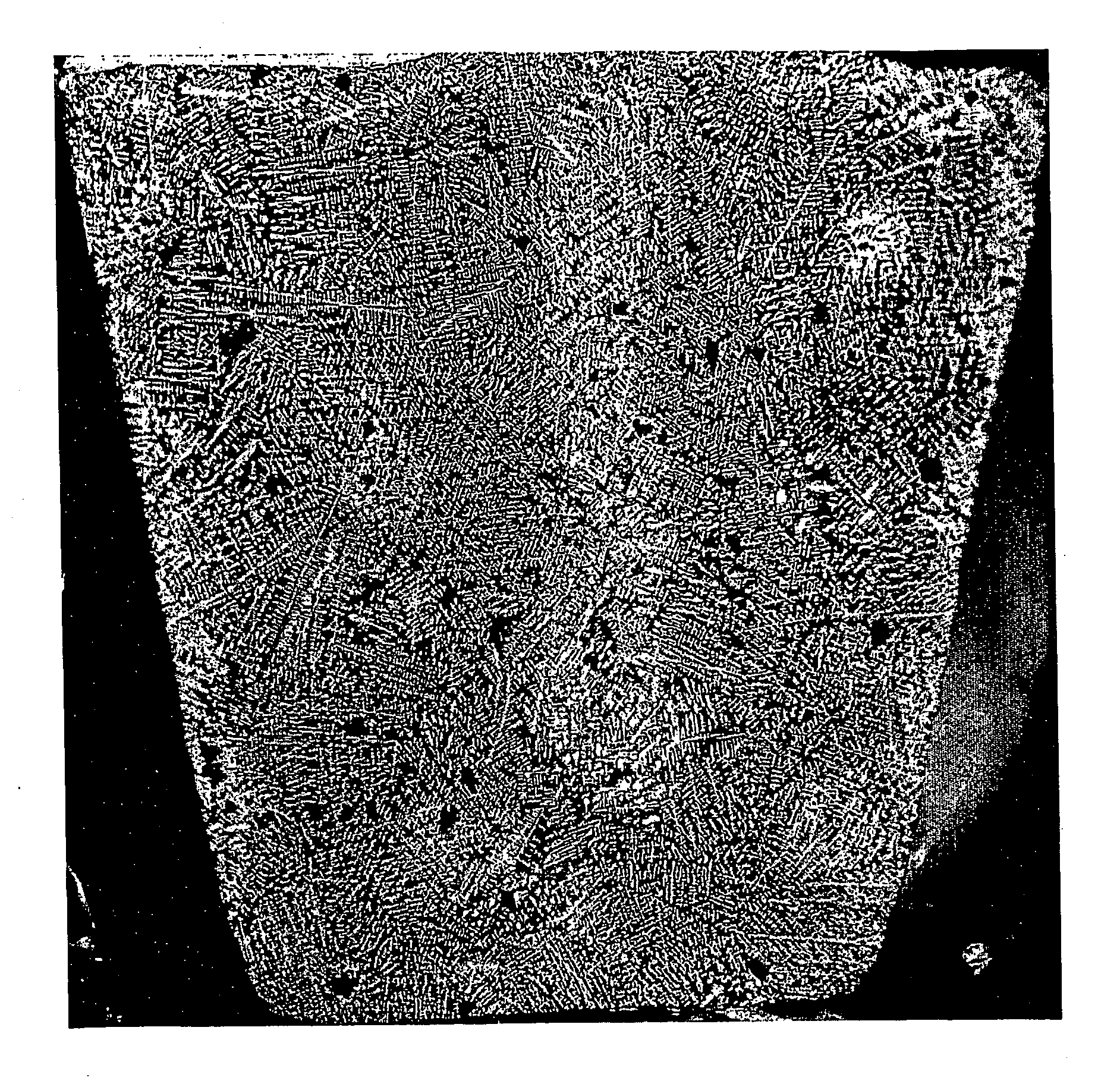
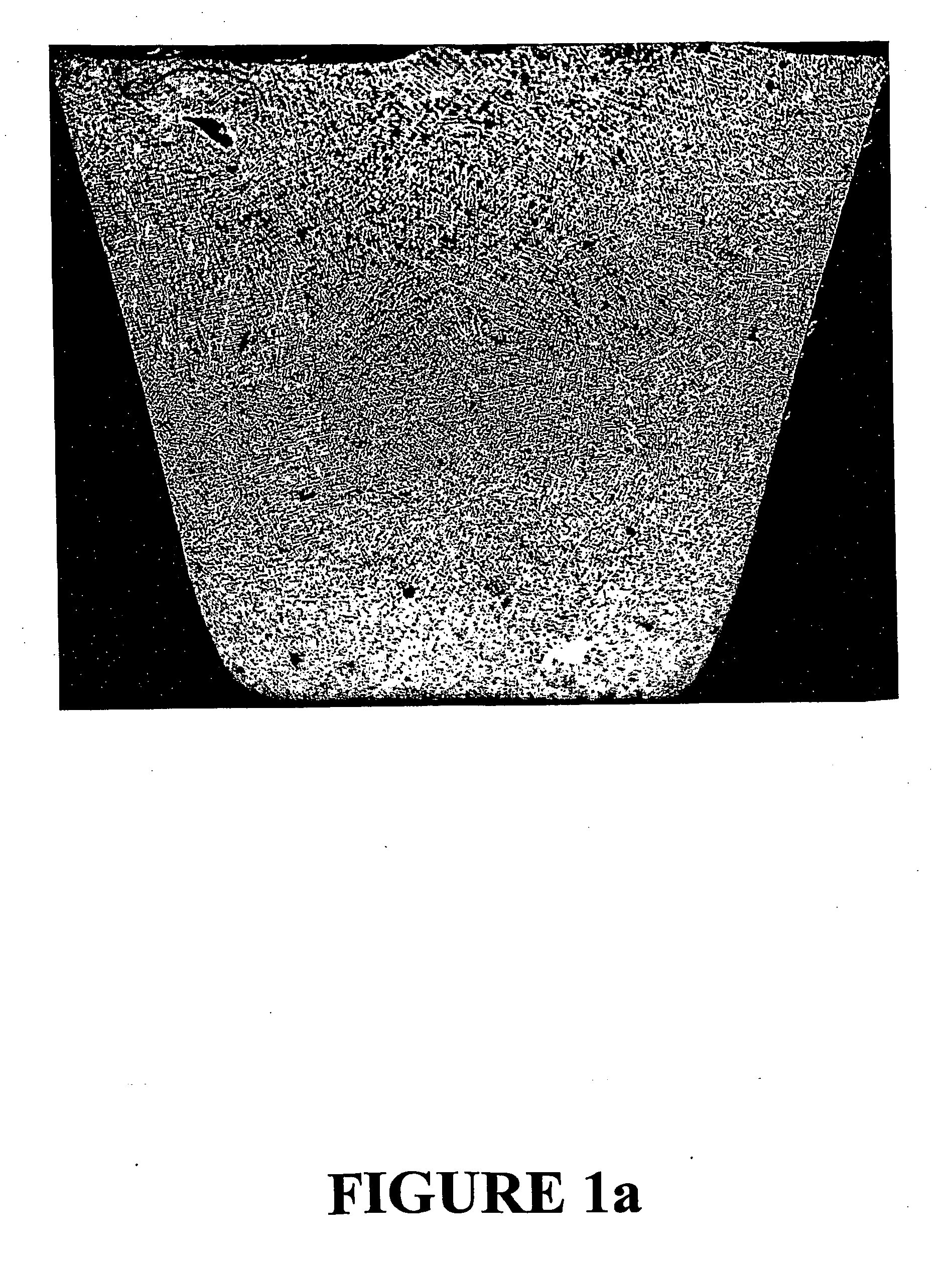
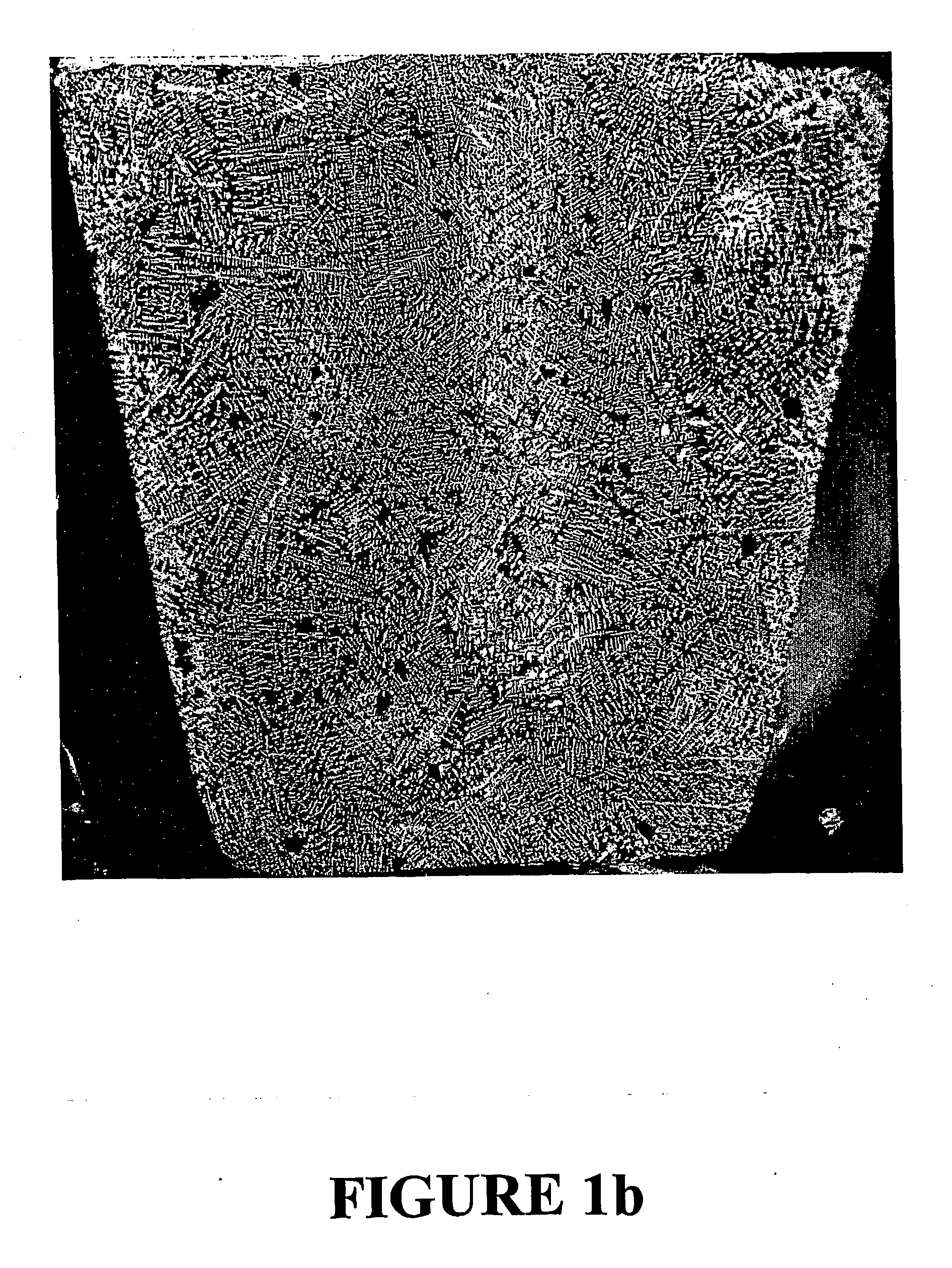
- A hypoeutectic aluminium silicon alloy is modified by adding a master alloy consisting of elements like strontium, sodium, antimony, and nucleant particles such as TiSix, MnCx, AlP, AlBx, and CrBx to promote small eutectic grain size and fibrous silicon structure without altering the morphology, thereby reducing porosity and improving castability.

Material Safety Standards for Fusion Applications
Material safety standards for fusion applications represent a critical framework governing the deployment of eutectic microstructure modifications in fusion reactor environments. These standards establish rigorous requirements for material performance under extreme operational conditions, including neutron irradiation, thermal cycling, and plasma exposure. The development of such standards necessitates comprehensive understanding of how eutectic modifications influence material behavior across multiple safety-critical parameters, including structural integrity, radiation resistance, and failure predictability.
Current regulatory frameworks, primarily derived from ITER materials assessment protocols and ASME Boiler and Pressure Vessel Code Section III Division 5, mandate extensive qualification procedures for fusion-facing materials. These protocols require demonstration of material stability under neutron fluences exceeding 150 dpa, operational temperatures ranging from cryogenic to 800°C, and cyclic loading conditions. Eutectic microstructures must maintain dimensional stability, resist helium embrittlement, and exhibit predictable degradation pathways throughout the reactor lifetime. Qualification testing typically encompasses mechanical property evaluation, microstructural characterization post-irradiation, and thermal fatigue assessment.
The integration of modified eutectic structures into fusion components demands adherence to traceability requirements throughout the material lifecycle. Standards specify documentation protocols for composition control, processing parameters, and quality assurance measures that ensure reproducibility of desired microstructural features. Particular emphasis is placed on controlling eutectic phase distribution, interlamellar spacing, and interface coherency, as these factors directly impact radiation damage tolerance and mechanical reliability.
Emerging safety considerations address the long-term activation and waste management implications of eutectic alloy systems. Standards increasingly incorporate requirements for reduced-activation compositions, limiting elements such as molybdenum, niobium, and nickel that generate long-lived radioactive isotopes. This constraint significantly influences alloy design strategies for eutectic modifications, necessitating careful selection of alloying elements that simultaneously satisfy safety, performance, and regulatory requirements. Compliance verification involves neutron activation analysis and decay heat calculations to ensure materials meet disposal criteria for low-level radioactive waste classification after decommissioning.
Current regulatory frameworks, primarily derived from ITER materials assessment protocols and ASME Boiler and Pressure Vessel Code Section III Division 5, mandate extensive qualification procedures for fusion-facing materials. These protocols require demonstration of material stability under neutron fluences exceeding 150 dpa, operational temperatures ranging from cryogenic to 800°C, and cyclic loading conditions. Eutectic microstructures must maintain dimensional stability, resist helium embrittlement, and exhibit predictable degradation pathways throughout the reactor lifetime. Qualification testing typically encompasses mechanical property evaluation, microstructural characterization post-irradiation, and thermal fatigue assessment.
The integration of modified eutectic structures into fusion components demands adherence to traceability requirements throughout the material lifecycle. Standards specify documentation protocols for composition control, processing parameters, and quality assurance measures that ensure reproducibility of desired microstructural features. Particular emphasis is placed on controlling eutectic phase distribution, interlamellar spacing, and interface coherency, as these factors directly impact radiation damage tolerance and mechanical reliability.
Emerging safety considerations address the long-term activation and waste management implications of eutectic alloy systems. Standards increasingly incorporate requirements for reduced-activation compositions, limiting elements such as molybdenum, niobium, and nickel that generate long-lived radioactive isotopes. This constraint significantly influences alloy design strategies for eutectic modifications, necessitating careful selection of alloying elements that simultaneously satisfy safety, performance, and regulatory requirements. Compliance verification involves neutron activation analysis and decay heat calculations to ensure materials meet disposal criteria for low-level radioactive waste classification after decommissioning.
Thermal Stability Assessment of Modified Eutectics
Thermal stability represents a critical performance metric for modified eutectic systems intended for fusion applications, where materials must withstand extreme temperature fluctuations and prolonged exposure to elevated thermal conditions. The assessment framework encompasses multiple evaluation dimensions, including phase stability retention, microstructural coarsening resistance, and mechanical property degradation under thermal cycling. Modified eutectic structures, while offering enhanced initial properties through compositional adjustments or processing parameter optimization, may exhibit different thermal responses compared to conventional eutectics due to altered phase distributions and interfacial characteristics.
Experimental methodologies for thermal stability evaluation typically involve isothermal aging tests at temperatures approaching operational conditions, combined with accelerated thermal cycling protocols that simulate fusion reactor environments. Advanced characterization techniques such as differential scanning calorimetry enable precise detection of phase transformation temperatures and thermal event sequences, while high-temperature X-ray diffraction provides real-time monitoring of structural evolution during thermal exposure. Microstructural examination through electron microscopy reveals coarsening kinetics of eutectic lamellae or rod structures, quantifying the temporal evolution of characteristic spacing parameters.
The thermodynamic stability of modified eutectic phases depends fundamentally on the free energy landscape established through compositional modifications. Minor alloying additions may stabilize metastable phases or alter interfacial energies, thereby influencing coarsening rates and phase transformation kinetics. Computational thermodynamic modeling using CALPHAD approaches offers predictive capabilities for phase stability ranges, enabling rational design of composition modifications that maximize thermal resilience while maintaining desired microstructural features.
Long-term thermal exposure studies demonstrate that certain modification strategies, particularly those involving refractory element additions, significantly enhance resistance to microstructural degradation. However, trade-offs frequently emerge between initial property optimization and sustained thermal stability, necessitating comprehensive assessment protocols that extend beyond short-term performance metrics. The establishment of quantitative stability criteria, including maximum allowable coarsening rates and phase fraction variations, provides essential benchmarks for qualifying modified eutectic systems for fusion applications where material reliability over extended operational lifetimes remains paramount.
Experimental methodologies for thermal stability evaluation typically involve isothermal aging tests at temperatures approaching operational conditions, combined with accelerated thermal cycling protocols that simulate fusion reactor environments. Advanced characterization techniques such as differential scanning calorimetry enable precise detection of phase transformation temperatures and thermal event sequences, while high-temperature X-ray diffraction provides real-time monitoring of structural evolution during thermal exposure. Microstructural examination through electron microscopy reveals coarsening kinetics of eutectic lamellae or rod structures, quantifying the temporal evolution of characteristic spacing parameters.
The thermodynamic stability of modified eutectic phases depends fundamentally on the free energy landscape established through compositional modifications. Minor alloying additions may stabilize metastable phases or alter interfacial energies, thereby influencing coarsening rates and phase transformation kinetics. Computational thermodynamic modeling using CALPHAD approaches offers predictive capabilities for phase stability ranges, enabling rational design of composition modifications that maximize thermal resilience while maintaining desired microstructural features.
Long-term thermal exposure studies demonstrate that certain modification strategies, particularly those involving refractory element additions, significantly enhance resistance to microstructural degradation. However, trade-offs frequently emerge between initial property optimization and sustained thermal stability, necessitating comprehensive assessment protocols that extend beyond short-term performance metrics. The establishment of quantitative stability criteria, including maximum allowable coarsening rates and phase fraction variations, provides essential benchmarks for qualifying modified eutectic systems for fusion applications where material reliability over extended operational lifetimes remains paramount.
Unlock deeper insights with PatSnap Eureka Quick Research — get a full tech report to explore trends and direct your research. Try now!
Generate Your Research Report Instantly with AI Agent
Supercharge your innovation with PatSnap Eureka AI Agent Platform!