

How Vortex Separators Improve Coolant Manifold Efficiency
MAY 27, 20269 MIN READ
Generate Your Research Report Instantly with AI Agent
PatSnap Eureka helps you evaluate technical feasibility & market potential.
Vortex Separation Technology Background and Objectives
Vortex separation technology represents a sophisticated fluid dynamics approach that leverages centrifugal forces to achieve efficient phase separation in fluid systems. This technology has evolved from fundamental principles of cyclonic separation, originally developed in the early 20th century for industrial applications such as dust collection and oil-water separation. The underlying physics involves creating a controlled vortex flow pattern that generates differential centrifugal forces, enabling the separation of particles, droplets, or phases based on their density differences.
The historical development of vortex separation technology can be traced back to mining and petroleum industries, where the need for efficient separation of materials with different specific gravities drove innovation. Over the decades, this technology has undergone significant refinement, transitioning from simple cyclone separators to sophisticated multi-stage vortex systems capable of handling complex fluid mixtures with high precision and efficiency.
In the context of coolant manifold systems, vortex separation technology addresses critical challenges related to fluid contamination, thermal management, and system efficiency. Modern cooling systems, particularly in automotive, aerospace, and industrial applications, face increasing demands for higher performance while maintaining compact designs. Traditional separation methods often prove inadequate when dealing with mixed-phase coolant flows containing air bubbles, particulate matter, or oil contamination.
The primary objective of implementing vortex separators in coolant manifolds centers on enhancing overall system efficiency through improved fluid quality and flow characteristics. By effectively removing entrained air and contaminants from the coolant stream, vortex separators enable more consistent heat transfer performance and reduce the risk of cavitation in pumps and other system components.
Secondary objectives include extending component lifespan by minimizing wear caused by abrasive particles and reducing maintenance requirements through automated separation processes. The technology also aims to optimize coolant flow distribution within manifold systems, ensuring uniform cooling performance across multiple circuits or zones.
Furthermore, vortex separation technology in coolant applications seeks to achieve these performance improvements while maintaining minimal pressure drop and energy consumption. This balance between separation efficiency and hydraulic performance represents a key design challenge that drives ongoing technological advancement in this field.
The integration of vortex separators into coolant manifolds also supports broader sustainability objectives by enabling the use of recycled coolants and reducing waste generation through improved contaminant removal capabilities.
The historical development of vortex separation technology can be traced back to mining and petroleum industries, where the need for efficient separation of materials with different specific gravities drove innovation. Over the decades, this technology has undergone significant refinement, transitioning from simple cyclone separators to sophisticated multi-stage vortex systems capable of handling complex fluid mixtures with high precision and efficiency.
In the context of coolant manifold systems, vortex separation technology addresses critical challenges related to fluid contamination, thermal management, and system efficiency. Modern cooling systems, particularly in automotive, aerospace, and industrial applications, face increasing demands for higher performance while maintaining compact designs. Traditional separation methods often prove inadequate when dealing with mixed-phase coolant flows containing air bubbles, particulate matter, or oil contamination.
The primary objective of implementing vortex separators in coolant manifolds centers on enhancing overall system efficiency through improved fluid quality and flow characteristics. By effectively removing entrained air and contaminants from the coolant stream, vortex separators enable more consistent heat transfer performance and reduce the risk of cavitation in pumps and other system components.
Secondary objectives include extending component lifespan by minimizing wear caused by abrasive particles and reducing maintenance requirements through automated separation processes. The technology also aims to optimize coolant flow distribution within manifold systems, ensuring uniform cooling performance across multiple circuits or zones.
Furthermore, vortex separation technology in coolant applications seeks to achieve these performance improvements while maintaining minimal pressure drop and energy consumption. This balance between separation efficiency and hydraulic performance represents a key design challenge that drives ongoing technological advancement in this field.
The integration of vortex separators into coolant manifolds also supports broader sustainability objectives by enabling the use of recycled coolants and reducing waste generation through improved contaminant removal capabilities.
Market Demand for Enhanced Coolant System Efficiency
The global cooling systems market is experiencing unprecedented growth driven by increasing demands for energy efficiency and thermal management across multiple industries. Industrial manufacturing facilities, data centers, automotive applications, and HVAC systems are all seeking advanced cooling solutions that can deliver superior performance while reducing operational costs and environmental impact.
Manufacturing industries face mounting pressure to optimize production processes while maintaining strict temperature control requirements. Modern production facilities require cooling systems that can handle higher heat loads with greater precision, particularly in sectors such as plastics processing, metalworking, and chemical manufacturing. The demand for enhanced coolant system efficiency has become critical as manufacturers strive to reduce energy consumption and improve overall equipment effectiveness.
Data center operators represent one of the fastest-growing market segments demanding improved coolant manifold efficiency. As computing power density continues to increase, traditional cooling methods struggle to maintain optimal operating temperatures. The need for more efficient coolant distribution systems has intensified as operators seek to reduce power usage effectiveness ratios and minimize cooling-related operational expenses.
Automotive and aerospace industries are driving significant demand for advanced coolant systems capable of managing increasingly complex thermal challenges. Electric vehicle manufacturers require sophisticated cooling solutions for battery thermal management, while traditional automotive applications demand improved engine cooling efficiency. These sectors prioritize cooling systems that can deliver consistent performance across varying operational conditions.
Regulatory pressures and sustainability initiatives are accelerating market demand for energy-efficient cooling technologies. Environmental regulations targeting industrial energy consumption are compelling organizations to invest in advanced cooling solutions that demonstrate measurable efficiency improvements. Corporate sustainability commitments further amplify this demand as companies seek technologies that support their carbon reduction goals.
The emergence of Industry 4.0 and smart manufacturing concepts has created additional market opportunities for intelligent cooling systems. Organizations increasingly value cooling solutions that provide real-time performance monitoring, predictive maintenance capabilities, and integration with broader facility management systems. This trend reflects growing recognition that cooling system efficiency directly impacts overall operational performance and competitiveness.
Market research indicates strong growth potential for cooling technologies that can demonstrate quantifiable efficiency improvements, reduced maintenance requirements, and enhanced system reliability. The convergence of these market drivers creates substantial opportunities for innovative cooling solutions that address the fundamental challenge of optimizing coolant manifold performance across diverse industrial applications.
Manufacturing industries face mounting pressure to optimize production processes while maintaining strict temperature control requirements. Modern production facilities require cooling systems that can handle higher heat loads with greater precision, particularly in sectors such as plastics processing, metalworking, and chemical manufacturing. The demand for enhanced coolant system efficiency has become critical as manufacturers strive to reduce energy consumption and improve overall equipment effectiveness.
Data center operators represent one of the fastest-growing market segments demanding improved coolant manifold efficiency. As computing power density continues to increase, traditional cooling methods struggle to maintain optimal operating temperatures. The need for more efficient coolant distribution systems has intensified as operators seek to reduce power usage effectiveness ratios and minimize cooling-related operational expenses.
Automotive and aerospace industries are driving significant demand for advanced coolant systems capable of managing increasingly complex thermal challenges. Electric vehicle manufacturers require sophisticated cooling solutions for battery thermal management, while traditional automotive applications demand improved engine cooling efficiency. These sectors prioritize cooling systems that can deliver consistent performance across varying operational conditions.
Regulatory pressures and sustainability initiatives are accelerating market demand for energy-efficient cooling technologies. Environmental regulations targeting industrial energy consumption are compelling organizations to invest in advanced cooling solutions that demonstrate measurable efficiency improvements. Corporate sustainability commitments further amplify this demand as companies seek technologies that support their carbon reduction goals.
The emergence of Industry 4.0 and smart manufacturing concepts has created additional market opportunities for intelligent cooling systems. Organizations increasingly value cooling solutions that provide real-time performance monitoring, predictive maintenance capabilities, and integration with broader facility management systems. This trend reflects growing recognition that cooling system efficiency directly impacts overall operational performance and competitiveness.
Market research indicates strong growth potential for cooling technologies that can demonstrate quantifiable efficiency improvements, reduced maintenance requirements, and enhanced system reliability. The convergence of these market drivers creates substantial opportunities for innovative cooling solutions that address the fundamental challenge of optimizing coolant manifold performance across diverse industrial applications.
Current Coolant Manifold Challenges and Vortex Solutions
Traditional coolant manifold systems face significant operational challenges that directly impact thermal management efficiency in industrial applications. Flow distribution irregularities represent one of the most persistent issues, where uneven coolant distribution across multiple channels leads to localized hot spots and reduced overall heat transfer effectiveness. These irregularities often stem from turbulent flow patterns at manifold junctions and inadequate pressure balancing mechanisms.
Pressure drop optimization remains a critical concern in conventional manifold designs. Excessive pressure losses occur due to sudden flow direction changes, sharp-edged transitions, and inadequate flow conditioning upstream of distribution points. These pressure drops not only reduce system efficiency but also increase pumping power requirements, leading to higher operational costs and energy consumption.
Particle separation and contamination control present ongoing challenges in coolant systems. Traditional manifolds lack effective mechanisms to remove debris, air bubbles, and particulate matter from the coolant stream. This contamination can cause blockages in narrow cooling channels, reduce heat transfer coefficients, and potentially damage sensitive components downstream.
Vortex separator technology offers innovative solutions to address these fundamental challenges. By implementing controlled vortex generation within the manifold structure, these systems create centrifugal forces that naturally separate particles and air bubbles from the primary coolant flow. The helical flow patterns generated by vortex separators promote more uniform velocity distribution across outlet channels.
The integration of vortex chambers upstream of distribution points enables pre-conditioning of the coolant flow, reducing turbulence and creating more predictable flow characteristics. This approach significantly improves pressure recovery and minimizes energy losses associated with flow redirection. Advanced vortex designs incorporate adjustable guide vanes and optimized chamber geometries to maximize separation efficiency while maintaining low pressure drop characteristics.
Modern vortex separator implementations utilize computational fluid dynamics optimization to achieve precise flow control and enhanced thermal performance. These systems demonstrate measurable improvements in coolant distribution uniformity, typically achieving flow variation reductions of 15-25% compared to conventional manifold designs, while simultaneously providing effective contamination removal capabilities.
Pressure drop optimization remains a critical concern in conventional manifold designs. Excessive pressure losses occur due to sudden flow direction changes, sharp-edged transitions, and inadequate flow conditioning upstream of distribution points. These pressure drops not only reduce system efficiency but also increase pumping power requirements, leading to higher operational costs and energy consumption.
Particle separation and contamination control present ongoing challenges in coolant systems. Traditional manifolds lack effective mechanisms to remove debris, air bubbles, and particulate matter from the coolant stream. This contamination can cause blockages in narrow cooling channels, reduce heat transfer coefficients, and potentially damage sensitive components downstream.
Vortex separator technology offers innovative solutions to address these fundamental challenges. By implementing controlled vortex generation within the manifold structure, these systems create centrifugal forces that naturally separate particles and air bubbles from the primary coolant flow. The helical flow patterns generated by vortex separators promote more uniform velocity distribution across outlet channels.
The integration of vortex chambers upstream of distribution points enables pre-conditioning of the coolant flow, reducing turbulence and creating more predictable flow characteristics. This approach significantly improves pressure recovery and minimizes energy losses associated with flow redirection. Advanced vortex designs incorporate adjustable guide vanes and optimized chamber geometries to maximize separation efficiency while maintaining low pressure drop characteristics.
Modern vortex separator implementations utilize computational fluid dynamics optimization to achieve precise flow control and enhanced thermal performance. These systems demonstrate measurable improvements in coolant distribution uniformity, typically achieving flow variation reductions of 15-25% compared to conventional manifold designs, while simultaneously providing effective contamination removal capabilities.
Existing Vortex Separator Solutions for Coolant Systems
01 Cyclone design optimization for enhanced separation efficiency
Improvements in cyclone separator design focus on optimizing the geometric parameters such as inlet configuration, cone angle, and vortex finder dimensions to maximize separation efficiency. These design modifications enhance the centrifugal forces and particle trajectory control, leading to better separation of particles from gas or liquid streams.- Cyclone design optimization for enhanced separation efficiency: Improvements in cyclone separator design focus on optimizing the geometric parameters such as cone angle, inlet configuration, and vortex finder dimensions to maximize separation efficiency. These design modifications enhance the centrifugal forces and particle trajectory control, leading to better separation of particles from gas or liquid streams. Advanced computational fluid dynamics and experimental studies guide the optimization of these geometric features.
- Multi-stage vortex separation systems: Multi-stage separation systems employ multiple vortex chambers or cyclones in series or parallel configurations to achieve higher separation efficiencies. These systems allow for progressive separation of particles of different sizes and densities, with each stage optimized for specific particle characteristics. The staged approach significantly improves overall system performance compared to single-stage separators.
- Flow control and inlet velocity optimization: Controlling the inlet flow conditions and velocity profiles is crucial for maximizing vortex separator efficiency. Proper flow distribution ensures optimal vortex formation and maintains stable separation conditions. Various inlet designs and flow conditioning devices are employed to achieve uniform velocity distribution and minimize turbulence that could reduce separation performance.
- Particle size and density-based separation enhancement: Advanced techniques focus on optimizing separation based on specific particle characteristics such as size distribution and density differences. These methods involve adjusting operational parameters and separator geometry to target particular particle ranges more effectively. The approach enables selective separation and improved recovery rates for different particle fractions.
- Hybrid separation technologies and auxiliary systems: Integration of vortex separators with complementary separation technologies such as filtration, magnetic separation, or electrostatic precipitation enhances overall system efficiency. These hybrid approaches combine the advantages of different separation mechanisms to achieve superior performance. Auxiliary systems including pre-treatment and post-processing units further optimize the separation process.
02 Multi-stage vortex separation systems
Multi-stage separation systems utilize multiple vortex chambers or cyclones in series to achieve higher separation efficiency. Each stage is designed to remove different particle size ranges, with the system progressively removing finer particles as the fluid moves through successive stages.Expand Specific Solutions03 Flow control and inlet velocity optimization
Controlling the inlet flow velocity and flow patterns is crucial for maximizing vortex separator efficiency. Optimal inlet velocities create the proper vortex strength while minimizing turbulence that could reduce separation performance. Various inlet designs and flow control mechanisms are employed to achieve these conditions.Expand Specific Solutions04 Particle size-specific separation techniques
Different separation techniques are optimized for specific particle size ranges to improve overall efficiency. Fine particle separation requires different vortex characteristics compared to coarse particle separation, leading to specialized designs and operating parameters for different applications.Expand Specific Solutions05 Advanced materials and surface treatments
The use of specialized materials and surface treatments in vortex separators helps reduce wear, minimize particle adhesion, and maintain consistent performance over time. These improvements contribute to sustained high efficiency and reduced maintenance requirements in industrial applications.Expand Specific Solutions
Key Players in Vortex Separator and Coolant Technology
The vortex separator technology for coolant manifold efficiency represents a mature industrial application within the broader fluid separation market, which has reached significant scale across automotive, industrial machinery, and power generation sectors. The competitive landscape demonstrates advanced technological maturity, with established players like General Electric Company, Mitsubishi Electric Corp., and Toyota Motor Corp. leading innovation through extensive R&D investments and patent portfolios. Academic institutions including Xi'an Jiaotong University, Shandong University, and Zhejiang University contribute fundamental research, while specialized companies such as Hanon Systems, Carrier Corp., and ABB Technology AG focus on application-specific solutions. The market shows strong consolidation among tier-one suppliers like Ford Global Technologies LLC, GM Global Technology Operations LLC, and Brose Fahrzeugteile, indicating a competitive environment where technological differentiation and manufacturing scale determine market position in this established industry segment.
Ford Global Technologies LLC
Technical Solution: Ford has developed advanced vortex separator technology integrated into coolant manifold systems for automotive applications. Their approach utilizes tangential inlet designs that create controlled vortex flow patterns to separate air bubbles and debris from coolant fluid. The system incorporates specially designed chamber geometries with optimized diameter-to-height ratios that enhance separation efficiency while maintaining minimal pressure drop. Ford's vortex separators feature multi-stage separation processes where larger particles are removed in the primary vortex chamber, while finer contaminants are captured in secondary cyclonic chambers. The technology includes smart flow distribution mechanisms that ensure uniform coolant delivery across engine components while preventing cavitation and hot spots.
Strengths: Proven automotive integration experience, robust design for high-temperature environments, effective multi-stage separation. Weaknesses: Limited to automotive applications, higher manufacturing complexity, requires precise machining tolerances.
Hanon Systems
Technical Solution: Hanon Systems specializes in automotive thermal management solutions including advanced vortex separator technology for coolant manifolds. Their approach focuses on creating highly efficient separation through optimized vortex chamber designs that maximize centrifugal forces while minimizing energy losses. The system incorporates patented inlet configurations that generate stable vortex patterns across varying flow rates and temperatures. Hanon's technology includes integrated heat exchange surfaces within the vortex chamber that provide additional cooling while maintaining separation efficiency. Their design features modular separator units that can be easily integrated into existing manifold architectures without requiring major system redesigns. The vortex separators include advanced materials that resist corrosion and maintain performance under extreme operating conditions.
Strengths: Specialized thermal management expertise, stable vortex generation, integrated heat exchange capability, modular integration design. Weaknesses: Primarily automotive focused, limited application diversity, requires specialized materials increasing costs.
Core Patents in Vortex-Enhanced Coolant Manifolds
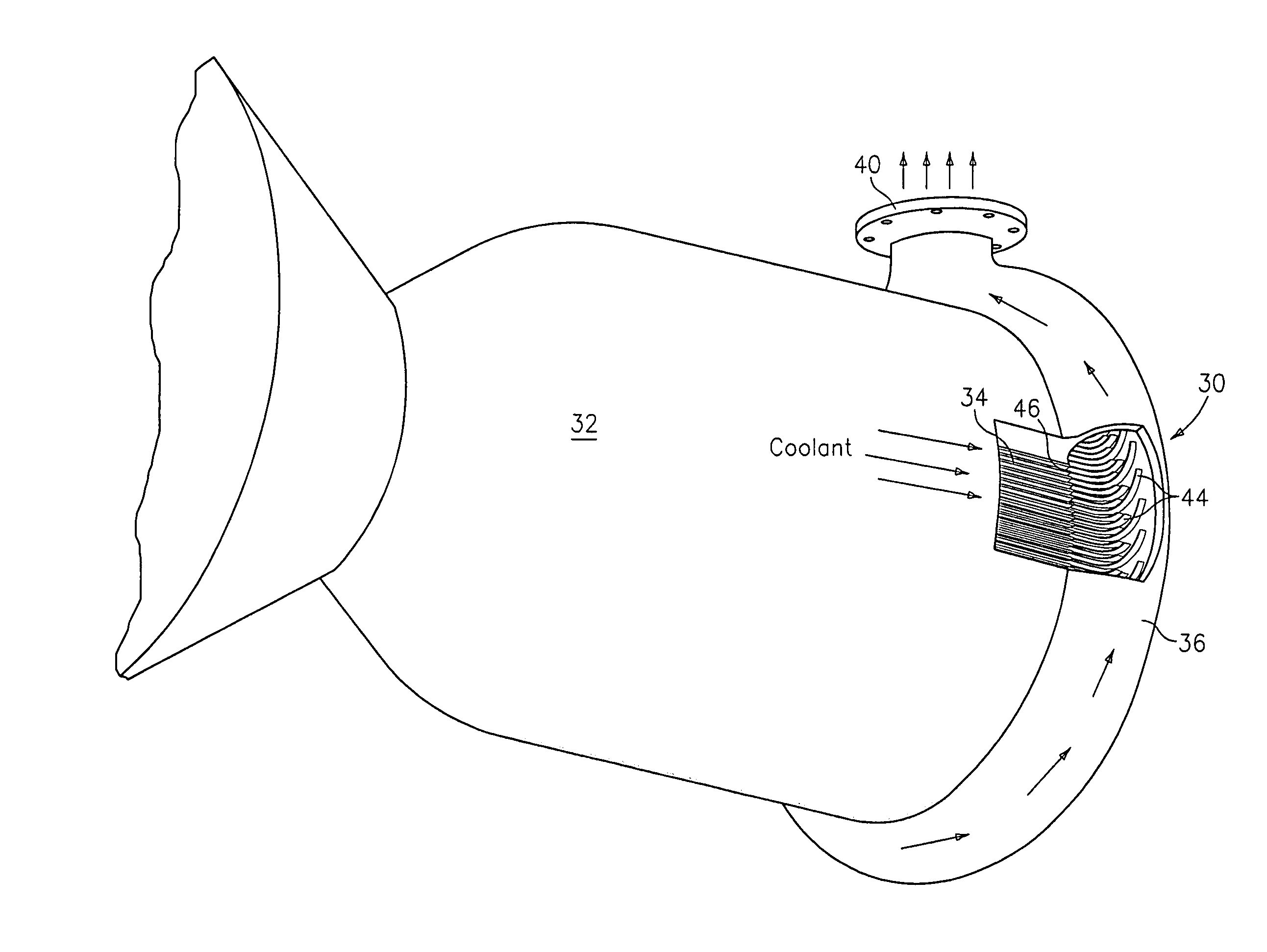
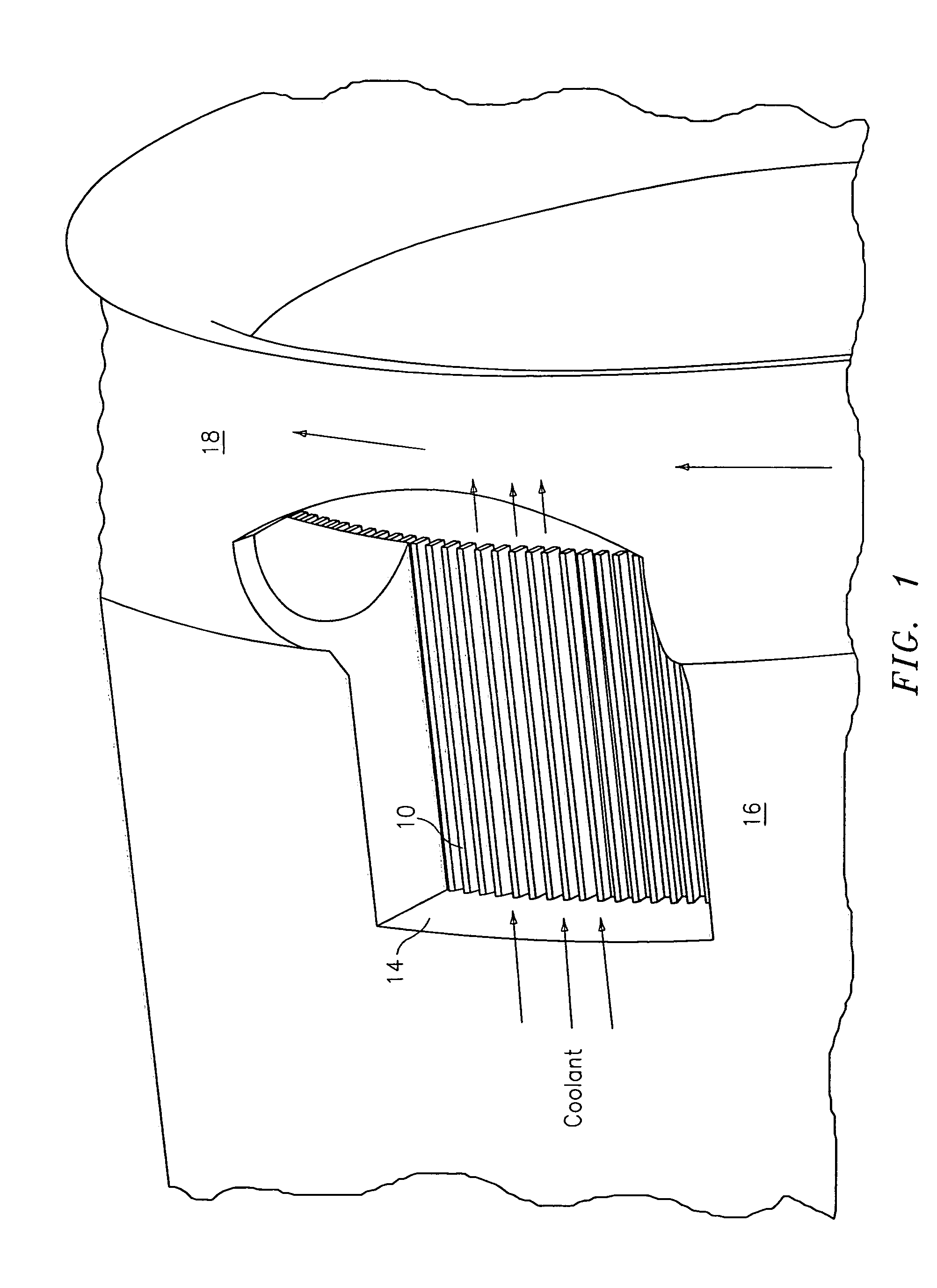
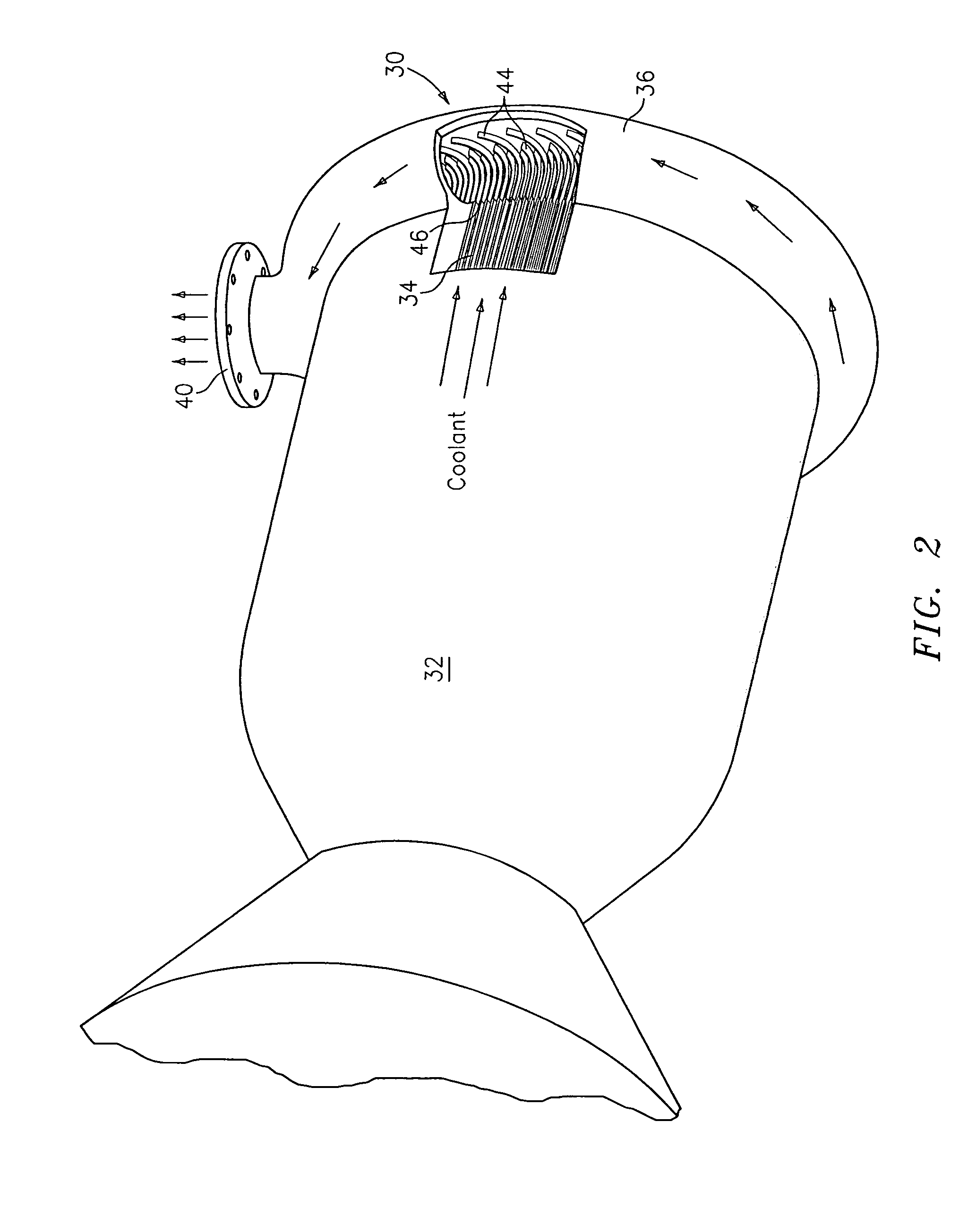
Enhanced performance torroidal coolant-collection manifold
PatentActiveUS7373774B2
Innovation
- Incorporation of turning vanes within the torroidal coolant-collection manifold to redirect coolant flow from radial or axial to tangential, minimizing sudden expansion and mixing losses and promoting uniform pressure distribution.

High performance coolant system with manifold for large diesel engines
PatentInactiveUS5337705A
Innovation
- A coolant manifold assembly that distributes coolant between the oil cooler outlet passages and the inlet suction ports of coolant pumps, increasing the number of outlet ports from two to five and incorporating high velocity 'jet' nozzles to prevent cavitation and improve flow distribution, replacing the conventional aspirator with a simple flow tube.


Environmental Impact of Advanced Coolant Systems
The integration of vortex separators in coolant manifold systems represents a significant advancement in environmental sustainability for industrial cooling applications. These systems demonstrate measurable reductions in environmental footprint through enhanced operational efficiency and reduced resource consumption. Advanced coolant systems incorporating vortex separation technology typically achieve 15-25% improvement in thermal management efficiency, directly translating to reduced energy consumption and lower carbon emissions.
Water conservation emerges as a primary environmental benefit of vortex separator-enhanced coolant systems. Traditional cooling systems often require continuous makeup water due to inefficient separation of contaminants and air bubbles, leading to frequent system purging and refilling. Vortex separators eliminate this waste by maintaining optimal coolant purity, reducing water consumption by up to 30% in typical industrial applications.
The reduction of chemical additives presents another significant environmental advantage. Conventional coolant systems rely heavily on chemical treatments to manage corrosion, scaling, and microbial growth. Vortex separators maintain cleaner coolant conditions by removing particulates and dissolved gases that accelerate chemical degradation, thereby extending coolant life and reducing the frequency of chemical treatments by approximately 40%.
Energy efficiency improvements directly correlate with reduced greenhouse gas emissions. Enhanced heat transfer efficiency achieved through vortex separation technology reduces the energy required for cooling operations. Studies indicate that facilities implementing advanced vortex separator systems report 12-18% reduction in cooling-related energy consumption, contributing to substantial decreases in operational carbon footprint.
Waste reduction represents a critical environmental benefit through extended coolant service life. Traditional systems typically require coolant replacement every 6-12 months due to contamination buildup. Vortex separator systems can extend coolant life to 18-24 months by maintaining superior fluid quality, reducing hazardous waste generation and associated disposal costs.
The lifecycle environmental impact assessment reveals that despite higher initial manufacturing requirements, vortex separator systems achieve net positive environmental benefits within 18-24 months of operation through cumulative resource savings and efficiency gains.
Water conservation emerges as a primary environmental benefit of vortex separator-enhanced coolant systems. Traditional cooling systems often require continuous makeup water due to inefficient separation of contaminants and air bubbles, leading to frequent system purging and refilling. Vortex separators eliminate this waste by maintaining optimal coolant purity, reducing water consumption by up to 30% in typical industrial applications.
The reduction of chemical additives presents another significant environmental advantage. Conventional coolant systems rely heavily on chemical treatments to manage corrosion, scaling, and microbial growth. Vortex separators maintain cleaner coolant conditions by removing particulates and dissolved gases that accelerate chemical degradation, thereby extending coolant life and reducing the frequency of chemical treatments by approximately 40%.
Energy efficiency improvements directly correlate with reduced greenhouse gas emissions. Enhanced heat transfer efficiency achieved through vortex separation technology reduces the energy required for cooling operations. Studies indicate that facilities implementing advanced vortex separator systems report 12-18% reduction in cooling-related energy consumption, contributing to substantial decreases in operational carbon footprint.
Waste reduction represents a critical environmental benefit through extended coolant service life. Traditional systems typically require coolant replacement every 6-12 months due to contamination buildup. Vortex separator systems can extend coolant life to 18-24 months by maintaining superior fluid quality, reducing hazardous waste generation and associated disposal costs.
The lifecycle environmental impact assessment reveals that despite higher initial manufacturing requirements, vortex separator systems achieve net positive environmental benefits within 18-24 months of operation through cumulative resource savings and efficiency gains.
Energy Efficiency Standards for Industrial Cooling
Industrial cooling systems are increasingly subject to stringent energy efficiency standards as governments and regulatory bodies worldwide implement comprehensive frameworks to reduce energy consumption and environmental impact. The International Organization for Standardization (ISO) has established ISO 50001 as the primary energy management standard, requiring industrial facilities to demonstrate continuous improvement in energy performance. In the United States, the Department of Energy enforces efficiency standards under the Energy Policy Act, while the European Union's Ecodesign Directive sets mandatory efficiency requirements for energy-related products including industrial cooling equipment.
Current efficiency standards for industrial cooling systems typically mandate minimum Coefficient of Performance (COP) values ranging from 2.5 to 4.0 depending on system capacity and application. The American Society of Heating, Refrigerating and Air-Conditioning Engineers (ASHRAE) Standard 90.1 establishes baseline efficiency requirements, with recent updates requiring 15-20% improvement over previous benchmarks. These standards specifically address coolant distribution systems, where manifold efficiency plays a critical role in overall system performance.
Regulatory frameworks increasingly emphasize system-level efficiency rather than component-level performance alone. The integration of advanced separation technologies, such as vortex separators in coolant manifolds, directly supports compliance with these evolving standards by reducing parasitic losses and improving heat transfer effectiveness. Modern standards require comprehensive energy auditing and documentation of efficiency improvements, creating strong incentives for adopting innovative technologies.
Emerging standards are incorporating real-time monitoring requirements and dynamic efficiency targets that adjust based on operational conditions. The International Energy Agency's industrial cooling efficiency roadmap projects that new standards will mandate 30-40% efficiency improvements by 2030 compared to current baselines. These anticipated regulations will likely favor technologies that demonstrate measurable performance enhancements in coolant flow management and thermal efficiency.
Compliance with energy efficiency standards increasingly influences technology adoption decisions in industrial cooling applications. Organizations implementing vortex separator technology in coolant manifolds can leverage demonstrated efficiency gains to meet regulatory requirements while achieving operational cost reductions and sustainability objectives.
Current efficiency standards for industrial cooling systems typically mandate minimum Coefficient of Performance (COP) values ranging from 2.5 to 4.0 depending on system capacity and application. The American Society of Heating, Refrigerating and Air-Conditioning Engineers (ASHRAE) Standard 90.1 establishes baseline efficiency requirements, with recent updates requiring 15-20% improvement over previous benchmarks. These standards specifically address coolant distribution systems, where manifold efficiency plays a critical role in overall system performance.
Regulatory frameworks increasingly emphasize system-level efficiency rather than component-level performance alone. The integration of advanced separation technologies, such as vortex separators in coolant manifolds, directly supports compliance with these evolving standards by reducing parasitic losses and improving heat transfer effectiveness. Modern standards require comprehensive energy auditing and documentation of efficiency improvements, creating strong incentives for adopting innovative technologies.
Emerging standards are incorporating real-time monitoring requirements and dynamic efficiency targets that adjust based on operational conditions. The International Energy Agency's industrial cooling efficiency roadmap projects that new standards will mandate 30-40% efficiency improvements by 2030 compared to current baselines. These anticipated regulations will likely favor technologies that demonstrate measurable performance enhancements in coolant flow management and thermal efficiency.
Compliance with energy efficiency standards increasingly influences technology adoption decisions in industrial cooling applications. Organizations implementing vortex separator technology in coolant manifolds can leverage demonstrated efficiency gains to meet regulatory requirements while achieving operational cost reductions and sustainability objectives.
Unlock deeper insights with PatSnap Eureka Quick Research — get a full tech report to explore trends and direct your research. Try now!
Generate Your Research Report Instantly with AI Agent
Supercharge your innovation with PatSnap Eureka AI Agent Platform!