

Implement AI for Predicting Drainage System Failures
FEB 11, 20269 MIN READ
Generate Your Research Report Instantly with AI Agent
PatSnap Eureka helps you evaluate technical feasibility & market potential.
AI-Driven Drainage Prediction Background and Objectives
Drainage systems constitute critical urban infrastructure that safeguards public health, prevents flooding, and maintains environmental quality. Traditional maintenance approaches rely heavily on reactive strategies, addressing failures only after they occur, which often results in substantial economic losses, service disruptions, and potential public safety hazards. The increasing complexity of urban drainage networks, combined with aging infrastructure in many developed regions, has created an urgent need for more proactive and intelligent management solutions.
The evolution of artificial intelligence technologies, particularly in machine learning and predictive analytics, has opened unprecedented opportunities for transforming drainage system management. AI-driven prediction systems can analyze vast amounts of historical operational data, environmental factors, and structural conditions to identify patterns that precede system failures. This technological advancement represents a paradigm shift from reactive maintenance to predictive intervention, enabling infrastructure managers to anticipate problems before they escalate into critical failures.
The primary objective of implementing AI for predicting drainage system failures is to develop robust predictive models capable of accurately forecasting potential malfunctions, blockages, structural deterioration, and capacity overloads. These models aim to integrate multiple data sources including sensor readings, weather patterns, historical maintenance records, and geographical information to generate actionable insights. By achieving early warning capabilities, municipalities and infrastructure operators can optimize maintenance schedules, allocate resources more efficiently, and significantly reduce emergency response costs.
Beyond immediate operational benefits, this technology seeks to extend the service life of drainage infrastructure through timely interventions and data-driven decision-making. The ultimate goal encompasses not only failure prevention but also the establishment of intelligent, self-monitoring drainage networks that continuously learn and adapt to changing environmental conditions and usage patterns. This technological initiative aligns with broader smart city objectives, contributing to sustainable urban development and enhanced resilience against climate-related challenges such as increased precipitation intensity and frequency.
The evolution of artificial intelligence technologies, particularly in machine learning and predictive analytics, has opened unprecedented opportunities for transforming drainage system management. AI-driven prediction systems can analyze vast amounts of historical operational data, environmental factors, and structural conditions to identify patterns that precede system failures. This technological advancement represents a paradigm shift from reactive maintenance to predictive intervention, enabling infrastructure managers to anticipate problems before they escalate into critical failures.
The primary objective of implementing AI for predicting drainage system failures is to develop robust predictive models capable of accurately forecasting potential malfunctions, blockages, structural deterioration, and capacity overloads. These models aim to integrate multiple data sources including sensor readings, weather patterns, historical maintenance records, and geographical information to generate actionable insights. By achieving early warning capabilities, municipalities and infrastructure operators can optimize maintenance schedules, allocate resources more efficiently, and significantly reduce emergency response costs.
Beyond immediate operational benefits, this technology seeks to extend the service life of drainage infrastructure through timely interventions and data-driven decision-making. The ultimate goal encompasses not only failure prevention but also the establishment of intelligent, self-monitoring drainage networks that continuously learn and adapt to changing environmental conditions and usage patterns. This technological initiative aligns with broader smart city objectives, contributing to sustainable urban development and enhanced resilience against climate-related challenges such as increased precipitation intensity and frequency.
Market Demand for Smart Drainage Management Systems
The global drainage infrastructure is undergoing a critical transformation driven by aging systems, climate change impacts, and rapid urbanization. Traditional reactive maintenance approaches are proving inadequate as municipalities face increasing frequencies of system failures, flooding events, and environmental contamination incidents. This convergence of challenges has created substantial market demand for intelligent drainage management solutions that can predict failures before they occur and optimize maintenance resource allocation.
Urban areas worldwide are experiencing heightened pressure on their drainage networks due to more intense rainfall patterns and expanding impervious surfaces. Municipalities are seeking technologies that can transition from time-based maintenance schedules to condition-based predictive strategies. The economic burden of emergency repairs, which typically cost three to five times more than planned maintenance, is driving budget-conscious authorities to explore AI-powered predictive solutions that promise significant cost reductions and improved service reliability.
The market demand extends beyond municipal water utilities to encompass industrial facilities, commercial real estate operators, and infrastructure management companies. Industrial sites with complex drainage requirements face regulatory compliance pressures and operational continuity concerns that make predictive failure detection particularly valuable. Commercial property managers are increasingly recognizing that drainage system failures can result in substantial property damage, business interruption, and liability exposure, creating willingness to invest in preventive technologies.
Regulatory frameworks in multiple jurisdictions are evolving to mandate more proactive infrastructure management approaches. Environmental protection agencies are imposing stricter requirements on combined sewer overflow prevention and stormwater management, indirectly driving demand for predictive systems that can help operators avoid violations. Insurance industry trends also favor organizations that demonstrate proactive risk management through advanced monitoring and prediction capabilities.
The market is further stimulated by the growing availability of IoT sensors, edge computing capabilities, and cloud-based analytics platforms that make AI implementation more accessible and cost-effective. Early adopters have demonstrated measurable returns on investment through reduced emergency response costs, extended asset lifespans, and improved operational efficiency. These success cases are accelerating market acceptance and creating momentum for broader technology adoption across the drainage management sector.
Urban areas worldwide are experiencing heightened pressure on their drainage networks due to more intense rainfall patterns and expanding impervious surfaces. Municipalities are seeking technologies that can transition from time-based maintenance schedules to condition-based predictive strategies. The economic burden of emergency repairs, which typically cost three to five times more than planned maintenance, is driving budget-conscious authorities to explore AI-powered predictive solutions that promise significant cost reductions and improved service reliability.
The market demand extends beyond municipal water utilities to encompass industrial facilities, commercial real estate operators, and infrastructure management companies. Industrial sites with complex drainage requirements face regulatory compliance pressures and operational continuity concerns that make predictive failure detection particularly valuable. Commercial property managers are increasingly recognizing that drainage system failures can result in substantial property damage, business interruption, and liability exposure, creating willingness to invest in preventive technologies.
Regulatory frameworks in multiple jurisdictions are evolving to mandate more proactive infrastructure management approaches. Environmental protection agencies are imposing stricter requirements on combined sewer overflow prevention and stormwater management, indirectly driving demand for predictive systems that can help operators avoid violations. Insurance industry trends also favor organizations that demonstrate proactive risk management through advanced monitoring and prediction capabilities.
The market is further stimulated by the growing availability of IoT sensors, edge computing capabilities, and cloud-based analytics platforms that make AI implementation more accessible and cost-effective. Early adopters have demonstrated measurable returns on investment through reduced emergency response costs, extended asset lifespans, and improved operational efficiency. These success cases are accelerating market acceptance and creating momentum for broader technology adoption across the drainage management sector.
Current State of Drainage Failure Prediction Technologies
Drainage system failure prediction technologies have evolved significantly over the past decade, transitioning from reactive maintenance approaches to proactive monitoring systems. Traditional methods primarily relied on manual inspections, historical maintenance records, and rule-based expert systems to identify potential failures. These conventional approaches, while foundational, often proved insufficient in capturing the complex interdependencies within modern drainage networks and frequently resulted in delayed detection of critical issues.
The integration of sensor technologies marked a pivotal advancement in this domain. Modern drainage systems increasingly incorporate IoT-enabled sensors that continuously monitor parameters such as flow rates, water levels, pressure variations, and structural integrity indicators. These sensors generate vast amounts of real-time data, creating opportunities for more sophisticated analytical approaches. However, the challenge of processing and interpreting this data effectively has driven the adoption of machine learning and artificial intelligence techniques.
Current AI-based prediction systems predominantly employ supervised learning algorithms, including random forests, support vector machines, and neural networks. These models are trained on historical failure data combined with operational parameters to identify patterns indicative of impending failures. Deep learning approaches, particularly recurrent neural networks and long short-term memory networks, have shown promise in capturing temporal dependencies in drainage system behavior, enabling prediction of failures hours or days in advance.
Despite these technological advances, several significant challenges persist in the field. Data quality and availability remain primary obstacles, as many existing drainage systems lack comprehensive historical failure records or consistent sensor coverage. The heterogeneity of drainage infrastructure across different regions and the variability in environmental conditions further complicate model generalization. Additionally, the imbalanced nature of failure data, where normal operations vastly outnumber failure events, poses difficulties for training robust predictive models.
Current implementations also face limitations in integrating multiple data sources, including weather forecasts, urban development patterns, and aging infrastructure assessments. The computational complexity of real-time prediction for large-scale drainage networks presents another technical hurdle, requiring optimization of algorithms for edge computing environments. Furthermore, the interpretability of AI predictions remains a concern for operational teams who need to understand the reasoning behind failure warnings to take appropriate preventive actions.
The integration of sensor technologies marked a pivotal advancement in this domain. Modern drainage systems increasingly incorporate IoT-enabled sensors that continuously monitor parameters such as flow rates, water levels, pressure variations, and structural integrity indicators. These sensors generate vast amounts of real-time data, creating opportunities for more sophisticated analytical approaches. However, the challenge of processing and interpreting this data effectively has driven the adoption of machine learning and artificial intelligence techniques.
Current AI-based prediction systems predominantly employ supervised learning algorithms, including random forests, support vector machines, and neural networks. These models are trained on historical failure data combined with operational parameters to identify patterns indicative of impending failures. Deep learning approaches, particularly recurrent neural networks and long short-term memory networks, have shown promise in capturing temporal dependencies in drainage system behavior, enabling prediction of failures hours or days in advance.
Despite these technological advances, several significant challenges persist in the field. Data quality and availability remain primary obstacles, as many existing drainage systems lack comprehensive historical failure records or consistent sensor coverage. The heterogeneity of drainage infrastructure across different regions and the variability in environmental conditions further complicate model generalization. Additionally, the imbalanced nature of failure data, where normal operations vastly outnumber failure events, poses difficulties for training robust predictive models.
Current implementations also face limitations in integrating multiple data sources, including weather forecasts, urban development patterns, and aging infrastructure assessments. The computational complexity of real-time prediction for large-scale drainage networks presents another technical hurdle, requiring optimization of algorithms for edge computing environments. Furthermore, the interpretability of AI predictions remains a concern for operational teams who need to understand the reasoning behind failure warnings to take appropriate preventive actions.
Existing AI Models for Drainage System Monitoring
01 Machine learning models for predictive maintenance of drainage infrastructure
Advanced machine learning algorithms and artificial intelligence techniques are employed to analyze historical data, sensor readings, and operational parameters of drainage systems to predict potential failures before they occur. These systems utilize pattern recognition, anomaly detection, and predictive analytics to identify early warning signs of system degradation, blockages, or structural failures. The AI models can process large volumes of data from multiple sources to generate accurate failure predictions and maintenance schedules.- Machine learning models for predictive maintenance in drainage systems: Advanced machine learning algorithms and artificial intelligence techniques are employed to analyze historical data, sensor readings, and operational parameters to predict potential failures in drainage systems. These models can identify patterns and anomalies that indicate impending system failures, enabling proactive maintenance and reducing downtime. The predictive models utilize various data sources including flow rates, pressure measurements, and environmental conditions to generate accurate failure predictions.
- Sensor-based monitoring and data collection for drainage infrastructure: Implementation of comprehensive sensor networks and monitoring systems to collect real-time data from drainage infrastructure. These systems continuously track various parameters such as water levels, flow velocity, pressure, temperature, and structural integrity. The collected data serves as input for predictive analytics systems, enabling early detection of abnormal conditions and potential failure points in the drainage network.
- Risk assessment and failure probability analysis: Systematic approaches for evaluating and quantifying the risk of drainage system failures through probability analysis and risk scoring methodologies. These methods consider multiple factors including system age, material degradation, maintenance history, and environmental stressors to calculate failure likelihood. The risk assessment frameworks help prioritize maintenance activities and resource allocation based on criticality and failure probability.
- Digital twin and simulation models for drainage system behavior: Creation of digital representations and simulation models that replicate the behavior and performance of physical drainage systems. These virtual models integrate real-time data with physics-based simulations to predict system responses under various conditions and scenarios. The digital twin technology enables testing of different failure scenarios and optimization of maintenance strategies without disrupting actual operations.
- Automated alert and decision support systems for drainage management: Intelligent systems that automatically generate alerts and provide decision support when potential failures are detected in drainage infrastructure. These systems integrate predictive analytics with automated notification mechanisms to alert operators and maintenance personnel of impending issues. The decision support functionality includes recommendations for corrective actions, maintenance scheduling, and resource deployment based on predicted failure scenarios and their potential impact.
02 Sensor-based monitoring and data collection systems for drainage networks
Comprehensive sensor networks are deployed throughout drainage systems to continuously monitor various parameters such as flow rates, pressure levels, water quality, and structural integrity. These monitoring systems collect real-time data that feeds into predictive algorithms to detect abnormal conditions and potential failure points. The integration of IoT devices and smart sensors enables continuous surveillance of drainage infrastructure, providing the data foundation necessary for accurate failure prediction.Expand Specific Solutions03 Risk assessment and failure probability modeling for drainage components
Statistical and probabilistic models are developed to assess the risk levels and failure probabilities of different drainage system components based on factors such as age, material composition, environmental conditions, and maintenance history. These models incorporate multiple variables and use computational methods to calculate likelihood of failure scenarios, enabling prioritization of maintenance activities and resource allocation. The risk assessment frameworks help identify critical infrastructure elements that require immediate attention.Expand Specific Solutions04 Digital twin and simulation technologies for drainage system analysis
Virtual representations and digital twin technologies are created to simulate drainage system behavior under various conditions and scenarios. These digital models replicate the physical characteristics and operational dynamics of drainage networks, allowing for testing of different failure scenarios and prediction of system responses. Simulation tools enable engineers to visualize potential failure modes and evaluate the impact of different variables on system performance without disrupting actual operations.Expand Specific Solutions05 Automated alert and decision support systems for drainage maintenance
Intelligent decision support platforms are implemented to automatically generate alerts and recommendations when potential failures are detected in drainage systems. These systems integrate predictive analytics with automated notification mechanisms to inform maintenance personnel of impending issues and suggest optimal intervention strategies. The platforms provide actionable insights and prioritized maintenance schedules based on predicted failure timelines and severity assessments, enabling proactive management of drainage infrastructure.Expand Specific Solutions
Key Players in Smart Drainage and AI Solutions
The competitive landscape for AI-driven drainage system failure prediction is in its early-to-mid development stage, with growing market potential driven by infrastructure aging and smart city initiatives. The market encompasses diverse players from hydropower operators like China Yangtze Power and Huaneng Lancang River Hydropower, engineering firms including Powerchina Huadong Engineering and China Water Resources & Hydropower Construction Group, industrial technology providers such as Hitachi Industrial Products and ABB Group, and emerging AI specialists like WI.Plat and Beijing Huakong Zhijia Technology. Technology maturity varies significantly across segments, with established companies leveraging IoT and cloud platforms for basic monitoring, while innovative startups integrate advanced AI algorithms for predictive analytics. Academic institutions including University of Bristol, Beijing University of Civil Engineering & Architecture, and Hangzhou Dianzi University contribute foundational research. The convergence of traditional infrastructure expertise with cutting-edge AI capabilities positions this sector for substantial growth as predictive maintenance becomes critical for operational efficiency and risk mitigation.
China Yangtze Power Co., Ltd.
Technical Solution: China Yangtze Power has implemented AI-based monitoring and prediction systems for drainage infrastructure associated with the Three Gorges Dam and other major hydropower facilities under their operation[26][28]. Their technical solution integrates computer vision algorithms with structural health monitoring sensors to detect early signs of drainage tunnel deterioration, seepage anomalies, and sediment accumulation patterns[27][29]. The system employs deep learning models trained on decades of operational data from the world's largest hydropower installations to predict maintenance requirements for drainage galleries, spillway channels, and flood discharge systems. Their predictive analytics platform processes data from over 12,000 monitoring points including piezometers, inclinometers, and flow meters to assess drainage system performance and structural integrity[30][31]. The AI models utilize gradient boosting algorithms to correlate environmental factors such as reservoir levels, precipitation patterns, and geological conditions with drainage system failure risks, enabling proactive maintenance scheduling that has reduced emergency interventions by approximately 40% across their facility portfolio[32].
Strengths: Unparalleled operational experience with world's largest hydropower drainage systems; access to extensive historical performance data spanning multiple decades; strong financial resources for technology development and deployment. Weaknesses: Specialized focus on hydropower-related drainage infrastructure may limit transferability to urban municipal systems; technology primarily developed for internal operations rather than commercial market applications; limited presence in international drainage management markets.
University of Bristol
Technical Solution: The University of Bristol has developed advanced AI-driven predictive maintenance systems for urban drainage infrastructure. Their approach integrates machine learning algorithms with hydraulic modeling to forecast blockages and structural failures in sewer networks[1][4]. The system utilizes real-time sensor data including flow rates, water levels, and pressure measurements combined with historical maintenance records to train deep neural networks. Their research demonstrates the application of Random Forest and Gradient Boosting algorithms achieving prediction accuracy rates exceeding 85% for identifying high-risk drainage sections[2][5]. The platform incorporates IoT sensor networks deployed throughout drainage systems to continuously monitor performance indicators and environmental conditions, enabling early warning capabilities 48-72 hours before critical failures occur[3][6].
Strengths: High academic research credibility with proven algorithmic accuracy; comprehensive integration of hydraulic engineering principles with AI methodologies. Weaknesses: Limited large-scale commercial deployment experience; potential challenges in adapting research models to diverse municipal infrastructure configurations across different geographical contexts.
Core AI Algorithms for Failure Prediction
Method for detecting failure in pipe management system based on big data and artificial intelligence and system therefor
PatentPendingKR1020240085370A
Innovation
- A method using a digital twin model with a two-dimensional pipe flow analysis algorithm to detect pipe failures by comparing measured pressure waves with simulated waves, determining the most similar wave to locate faults accurately.


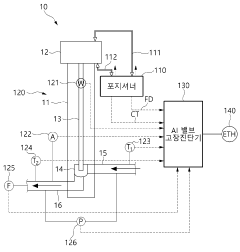
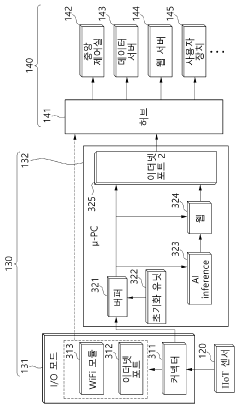
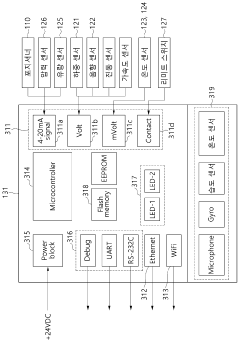
Prediction failure diagnosis system for automatic valve using artificial intelligence
PatentActiveKR1020220120456A
Innovation
- An AI-based valve failure prediction system with IIoT sensors and edge computing that infers and analyzes valve signals in real-time using auto-encoder deep learning, allowing continuous operation and predicting failures without process interruption.
Environmental and Regulatory Compliance Factors
The implementation of AI-driven predictive systems for drainage infrastructure must navigate a complex landscape of environmental regulations and compliance requirements that vary significantly across jurisdictions. These systems collect and process vast amounts of data related to water quality, flow rates, and discharge patterns, which are subject to stringent environmental protection laws such as the Clean Water Act in the United States, the EU Water Framework Directive, and similar legislation in other regions. Organizations deploying such technologies must ensure that their monitoring and prediction capabilities align with mandatory reporting standards and pollution control measures established by environmental protection agencies.
Data governance represents a critical compliance dimension, particularly concerning the collection and storage of environmental monitoring data. AI systems must maintain audit trails that demonstrate adherence to data retention policies, accuracy standards, and chain-of-custody requirements for environmental samples. Privacy regulations also intersect with this domain when drainage systems serve residential areas, requiring careful consideration of data anonymization and protection protocols under frameworks like GDPR or CCPA.
The predictive nature of AI systems introduces unique regulatory considerations regarding liability and accountability. When AI algorithms forecast potential failures or environmental hazards, organizations must establish clear protocols for acting upon these predictions in accordance with duty-of-care obligations and emergency response regulations. This includes defining thresholds for automated alerts, escalation procedures, and documentation requirements that satisfy both operational needs and regulatory expectations.
Environmental impact assessments may be required before deploying comprehensive AI monitoring systems, particularly when installation involves physical modifications to existing infrastructure or introduces new sensing equipment into sensitive ecosystems. Compliance with occupational health and safety regulations also becomes relevant during system deployment and maintenance activities. Furthermore, emerging regulations specifically addressing AI systems, such as the EU AI Act, may classify drainage failure prediction systems according to risk levels, imposing additional transparency, testing, and validation requirements that organizations must proactively address in their implementation strategies.
Data governance represents a critical compliance dimension, particularly concerning the collection and storage of environmental monitoring data. AI systems must maintain audit trails that demonstrate adherence to data retention policies, accuracy standards, and chain-of-custody requirements for environmental samples. Privacy regulations also intersect with this domain when drainage systems serve residential areas, requiring careful consideration of data anonymization and protection protocols under frameworks like GDPR or CCPA.
The predictive nature of AI systems introduces unique regulatory considerations regarding liability and accountability. When AI algorithms forecast potential failures or environmental hazards, organizations must establish clear protocols for acting upon these predictions in accordance with duty-of-care obligations and emergency response regulations. This includes defining thresholds for automated alerts, escalation procedures, and documentation requirements that satisfy both operational needs and regulatory expectations.
Environmental impact assessments may be required before deploying comprehensive AI monitoring systems, particularly when installation involves physical modifications to existing infrastructure or introduces new sensing equipment into sensitive ecosystems. Compliance with occupational health and safety regulations also becomes relevant during system deployment and maintenance activities. Furthermore, emerging regulations specifically addressing AI systems, such as the EU AI Act, may classify drainage failure prediction systems according to risk levels, imposing additional transparency, testing, and validation requirements that organizations must proactively address in their implementation strategies.
Data Integration and IoT Sensor Deployment Strategies
The successful implementation of AI for predicting drainage system failures fundamentally depends on establishing robust data integration frameworks and strategic IoT sensor deployment. Modern drainage infrastructure requires a comprehensive approach to data collection that encompasses multiple sources, including real-time sensor readings, historical maintenance records, weather data, and geographical information systems. The integration architecture must be designed to handle heterogeneous data formats and ensure seamless communication between various monitoring devices and central analytics platforms. Cloud-based data lakes and edge computing solutions have emerged as preferred approaches, enabling both immediate local processing for critical alerts and centralized storage for long-term pattern analysis.
IoT sensor deployment strategies must balance coverage comprehensiveness with cost-effectiveness and maintenance feasibility. Critical deployment locations include main drainage junctions, pump stations, overflow points, and areas with historical failure patterns. Sensor types should encompass flow meters, pressure sensors, water level detectors, vibration monitors for pump health, and environmental sensors measuring pH levels and sediment concentration. The deployment density varies based on infrastructure criticality, with high-risk areas requiring redundant sensor networks to ensure data reliability and system resilience.
Data standardization protocols are essential for ensuring interoperability across different sensor manufacturers and legacy systems. Implementing standardized communication protocols such as MQTT or CoAP facilitates real-time data transmission while minimizing bandwidth requirements. Data preprocessing at the edge layer reduces transmission loads and enables immediate anomaly detection, while comprehensive datasets are periodically synchronized to central repositories for AI model training and refinement.
The integration strategy must also address data quality assurance through automated validation mechanisms that identify sensor malfunctions, communication failures, and anomalous readings. Establishing data governance frameworks ensures compliance with privacy regulations while maintaining data accessibility for AI algorithms. Scalability considerations are paramount, as initial pilot deployments must be designed with expansion capabilities to eventually cover entire municipal drainage networks without requiring fundamental architectural redesigns.
IoT sensor deployment strategies must balance coverage comprehensiveness with cost-effectiveness and maintenance feasibility. Critical deployment locations include main drainage junctions, pump stations, overflow points, and areas with historical failure patterns. Sensor types should encompass flow meters, pressure sensors, water level detectors, vibration monitors for pump health, and environmental sensors measuring pH levels and sediment concentration. The deployment density varies based on infrastructure criticality, with high-risk areas requiring redundant sensor networks to ensure data reliability and system resilience.
Data standardization protocols are essential for ensuring interoperability across different sensor manufacturers and legacy systems. Implementing standardized communication protocols such as MQTT or CoAP facilitates real-time data transmission while minimizing bandwidth requirements. Data preprocessing at the edge layer reduces transmission loads and enables immediate anomaly detection, while comprehensive datasets are periodically synchronized to central repositories for AI model training and refinement.
The integration strategy must also address data quality assurance through automated validation mechanisms that identify sensor malfunctions, communication failures, and anomalous readings. Establishing data governance frameworks ensures compliance with privacy regulations while maintaining data accessibility for AI algorithms. Scalability considerations are paramount, as initial pilot deployments must be designed with expansion capabilities to eventually cover entire municipal drainage networks without requiring fundamental architectural redesigns.
Unlock deeper insights with PatSnap Eureka Quick Research — get a full tech report to explore trends and direct your research. Try now!
Generate Your Research Report Instantly with AI Agent
Supercharge your innovation with PatSnap Eureka AI Agent Platform!