

Improve Control Accuracy in Cable-Driven Robots for Real-Time Tasks
APR 30, 20269 MIN READ
Generate Your Research Report Instantly with AI Agent
PatSnap Eureka helps you evaluate technical feasibility & market potential.
Cable-Driven Robot Control Challenges and Goals
Cable-driven robots represent a paradigm shift in robotic system design, utilizing flexible cables instead of rigid links to achieve motion and positioning. These systems have evolved from early cable-suspended mechanisms in the 1980s to sophisticated parallel cable-driven robots capable of handling complex manipulation tasks. The fundamental principle involves multiple cables connected to a mobile platform or end-effector, where coordinated tension control enables precise positioning and movement within a defined workspace.
The historical development of cable-driven robotics can be traced through several key phases. Initial applications focused on large-scale positioning systems for construction and material handling, where the lightweight nature of cables provided significant advantages over traditional rigid manipulators. The 1990s witnessed the emergence of cable-driven parallel robots for high-speed pick-and-place operations, leveraging reduced inertia for enhanced dynamic performance.
Current technological evolution emphasizes the integration of advanced control algorithms with real-time sensing capabilities. Modern cable-driven systems incorporate sophisticated tension monitoring, dynamic modeling, and adaptive control strategies to address inherent challenges such as cable slack, nonlinear dynamics, and workspace limitations. The transition from open-loop positioning to closed-loop force and position control represents a critical advancement in achieving industrial-grade precision.
The primary technical objectives center on achieving sub-millimeter positioning accuracy while maintaining real-time responsiveness for dynamic tasks. This requires addressing fundamental challenges including cable elasticity compensation, tension distribution optimization, and robust control under varying payload conditions. Advanced goals encompass predictive control strategies that anticipate and compensate for system disturbances before they impact task performance.
Contemporary research directions focus on hybrid control architectures combining feedforward compensation with adaptive feedback mechanisms. Machine learning integration enables real-time parameter identification and control adaptation, while advanced sensor fusion provides comprehensive system state estimation. The ultimate objective involves creating cable-driven systems capable of matching or exceeding the precision and reliability of traditional rigid-link robots while maintaining their inherent advantages in speed, workspace coverage, and energy efficiency.
The historical development of cable-driven robotics can be traced through several key phases. Initial applications focused on large-scale positioning systems for construction and material handling, where the lightweight nature of cables provided significant advantages over traditional rigid manipulators. The 1990s witnessed the emergence of cable-driven parallel robots for high-speed pick-and-place operations, leveraging reduced inertia for enhanced dynamic performance.
Current technological evolution emphasizes the integration of advanced control algorithms with real-time sensing capabilities. Modern cable-driven systems incorporate sophisticated tension monitoring, dynamic modeling, and adaptive control strategies to address inherent challenges such as cable slack, nonlinear dynamics, and workspace limitations. The transition from open-loop positioning to closed-loop force and position control represents a critical advancement in achieving industrial-grade precision.
The primary technical objectives center on achieving sub-millimeter positioning accuracy while maintaining real-time responsiveness for dynamic tasks. This requires addressing fundamental challenges including cable elasticity compensation, tension distribution optimization, and robust control under varying payload conditions. Advanced goals encompass predictive control strategies that anticipate and compensate for system disturbances before they impact task performance.
Contemporary research directions focus on hybrid control architectures combining feedforward compensation with adaptive feedback mechanisms. Machine learning integration enables real-time parameter identification and control adaptation, while advanced sensor fusion provides comprehensive system state estimation. The ultimate objective involves creating cable-driven systems capable of matching or exceeding the precision and reliability of traditional rigid-link robots while maintaining their inherent advantages in speed, workspace coverage, and energy efficiency.
Market Demand for High-Precision Cable Robot Systems
The global market for high-precision cable-driven robotic systems is experiencing unprecedented growth, driven by increasing demands for automation solutions that combine flexibility, precision, and cost-effectiveness. Industries ranging from manufacturing and logistics to healthcare and entertainment are recognizing the unique advantages that cable robots offer over traditional rigid-link robotic systems, particularly in applications requiring large workspace coverage with high accuracy requirements.
Manufacturing sectors represent the largest market segment, where cable-driven robots are increasingly deployed for precision assembly operations, material handling, and quality inspection tasks. The automotive industry has emerged as a key adopter, utilizing these systems for body panel positioning, welding operations, and paint booth applications where traditional robots face workspace limitations. Aerospace manufacturers are leveraging cable robots for large component assembly and surface treatment processes, capitalizing on their ability to maintain high precision across extensive work envelopes.
The logistics and warehousing industry demonstrates rapidly expanding adoption rates, particularly for automated storage and retrieval systems where cable robots provide superior reach and payload capabilities compared to conventional solutions. E-commerce growth has intensified demand for flexible automation systems capable of handling diverse package sizes and weights while maintaining operational accuracy in real-time sorting and distribution applications.
Healthcare applications represent an emerging high-value market segment, with cable-driven systems being developed for surgical assistance, patient rehabilitation, and medical device positioning. The entertainment industry, including theme parks and performance venues, increasingly relies on cable robot technology for precise motion control in dynamic environments where safety and accuracy are paramount.
Market analysis indicates strong growth potential in developing regions, particularly in Asia-Pacific markets where rapid industrialization drives demand for advanced automation solutions. The construction industry presents significant untapped opportunities, with cable robots showing promise for building facade installation, structural assembly, and maintenance operations requiring precision positioning at height.
Current market dynamics reveal increasing customer expectations for real-time performance capabilities, with end-users demanding sub-millimeter accuracy combined with rapid response times. This trend is particularly pronounced in semiconductor manufacturing, precision machining, and scientific instrumentation applications where traditional automation solutions cannot meet evolving accuracy requirements while maintaining operational flexibility.
Manufacturing sectors represent the largest market segment, where cable-driven robots are increasingly deployed for precision assembly operations, material handling, and quality inspection tasks. The automotive industry has emerged as a key adopter, utilizing these systems for body panel positioning, welding operations, and paint booth applications where traditional robots face workspace limitations. Aerospace manufacturers are leveraging cable robots for large component assembly and surface treatment processes, capitalizing on their ability to maintain high precision across extensive work envelopes.
The logistics and warehousing industry demonstrates rapidly expanding adoption rates, particularly for automated storage and retrieval systems where cable robots provide superior reach and payload capabilities compared to conventional solutions. E-commerce growth has intensified demand for flexible automation systems capable of handling diverse package sizes and weights while maintaining operational accuracy in real-time sorting and distribution applications.
Healthcare applications represent an emerging high-value market segment, with cable-driven systems being developed for surgical assistance, patient rehabilitation, and medical device positioning. The entertainment industry, including theme parks and performance venues, increasingly relies on cable robot technology for precise motion control in dynamic environments where safety and accuracy are paramount.
Market analysis indicates strong growth potential in developing regions, particularly in Asia-Pacific markets where rapid industrialization drives demand for advanced automation solutions. The construction industry presents significant untapped opportunities, with cable robots showing promise for building facade installation, structural assembly, and maintenance operations requiring precision positioning at height.
Current market dynamics reveal increasing customer expectations for real-time performance capabilities, with end-users demanding sub-millimeter accuracy combined with rapid response times. This trend is particularly pronounced in semiconductor manufacturing, precision machining, and scientific instrumentation applications where traditional automation solutions cannot meet evolving accuracy requirements while maintaining operational flexibility.
Current Control Limitations in Cable-Driven Mechanisms
Cable-driven robots face significant control challenges that fundamentally limit their precision and responsiveness in real-time applications. The inherent flexibility of cables introduces complex nonlinear dynamics that are difficult to model accurately, creating substantial obstacles for precise position and force control. Unlike rigid-link robots with well-established kinematic models, cable-driven systems exhibit time-varying mechanical properties that change based on cable tension, environmental conditions, and operational history.
One of the most critical limitations stems from cable elasticity and stretch characteristics. Cables experience varying degrees of elongation under different load conditions, leading to position errors that accumulate over time. This elastic behavior is particularly problematic in real-time tasks where consistent accuracy is paramount. The relationship between applied tension and actual cable length is nonlinear and hysteretic, making it challenging to predict exact end-effector positions based solely on motor commands.
Tension distribution and management present another fundamental challenge in multi-cable systems. Maintaining optimal tension across all cables while preventing slack conditions requires sophisticated control algorithms that current systems struggle to implement effectively. Uneven tension distribution can lead to workspace limitations, reduced payload capacity, and compromised positioning accuracy. The redundant nature of many cable-driven robots, while providing flexibility, complicates the tension optimization problem significantly.
Dynamic response limitations further constrain real-time performance capabilities. Cable-driven mechanisms typically exhibit slower response times compared to traditional robotic systems due to the time required for tension changes to propagate through the cable network. This delay becomes particularly pronounced in large-scale systems where cable lengths are substantial, creating phase lags between control inputs and actual system response.
Sensor integration and feedback control present additional technical barriers. Traditional position sensors may not adequately capture the complex state of cable-driven systems, particularly regarding individual cable tensions and lengths. The lack of comprehensive real-time feedback about system state makes it difficult to implement advanced control strategies that could improve accuracy. Current sensing technologies often cannot provide the high-frequency, multi-parameter feedback necessary for precise real-time control.
Environmental disturbances and external forces pose significant challenges for maintaining control accuracy. Cable-driven robots are particularly susceptible to wind loads, vibrations, and other external perturbations due to their inherently compliant structure. These disturbances can cause oscillations and positioning errors that are difficult to compensate for using conventional control approaches, especially when rapid response is required for real-time tasks.
One of the most critical limitations stems from cable elasticity and stretch characteristics. Cables experience varying degrees of elongation under different load conditions, leading to position errors that accumulate over time. This elastic behavior is particularly problematic in real-time tasks where consistent accuracy is paramount. The relationship between applied tension and actual cable length is nonlinear and hysteretic, making it challenging to predict exact end-effector positions based solely on motor commands.
Tension distribution and management present another fundamental challenge in multi-cable systems. Maintaining optimal tension across all cables while preventing slack conditions requires sophisticated control algorithms that current systems struggle to implement effectively. Uneven tension distribution can lead to workspace limitations, reduced payload capacity, and compromised positioning accuracy. The redundant nature of many cable-driven robots, while providing flexibility, complicates the tension optimization problem significantly.
Dynamic response limitations further constrain real-time performance capabilities. Cable-driven mechanisms typically exhibit slower response times compared to traditional robotic systems due to the time required for tension changes to propagate through the cable network. This delay becomes particularly pronounced in large-scale systems where cable lengths are substantial, creating phase lags between control inputs and actual system response.
Sensor integration and feedback control present additional technical barriers. Traditional position sensors may not adequately capture the complex state of cable-driven systems, particularly regarding individual cable tensions and lengths. The lack of comprehensive real-time feedback about system state makes it difficult to implement advanced control strategies that could improve accuracy. Current sensing technologies often cannot provide the high-frequency, multi-parameter feedback necessary for precise real-time control.
Environmental disturbances and external forces pose significant challenges for maintaining control accuracy. Cable-driven robots are particularly susceptible to wind loads, vibrations, and other external perturbations due to their inherently compliant structure. These disturbances can cause oscillations and positioning errors that are difficult to compensate for using conventional control approaches, especially when rapid response is required for real-time tasks.
Existing Real-Time Control Solutions for Cable Robots
01 Cable tension control and monitoring systems
Advanced control systems that continuously monitor and adjust cable tensions in real-time to maintain optimal performance. These systems utilize sensors and feedback mechanisms to detect tension variations and automatically compensate for changes, ensuring consistent positioning accuracy and preventing cable slack or over-tensioning that could affect robot precision.- Cable tension control and monitoring systems: Advanced control systems that continuously monitor and adjust cable tension to maintain optimal performance in cable-driven robots. These systems utilize sensors and feedback mechanisms to detect tension variations and automatically compensate for cable stretch, wear, or environmental factors that could affect positioning accuracy. The control algorithms can predict and prevent cable slack or over-tension conditions that would compromise robot precision.
- Kinematic calibration and compensation methods: Sophisticated calibration techniques that account for geometric uncertainties and mechanical imperfections in cable-driven robot systems. These methods involve mathematical modeling of the robot's kinematic chain and real-time compensation for cable routing errors, pulley misalignments, and structural deformations. The calibration processes can be performed automatically or semi-automatically to maintain high positioning accuracy over time.
- Advanced control algorithms and feedback systems: Implementation of sophisticated control strategies including adaptive control, predictive control, and machine learning-based approaches to enhance robot accuracy. These algorithms process multiple sensor inputs to provide real-time corrections for dynamic effects, external disturbances, and system uncertainties. The feedback systems integrate position, velocity, and force information to achieve precise end-effector positioning and trajectory following.
- Cable routing optimization and mechanical design: Innovative mechanical configurations and cable routing strategies that minimize geometric errors and improve system stiffness. These designs focus on optimizing pulley arrangements, cable attachment points, and structural elements to reduce compliance and backlash effects. The mechanical improvements include specialized cable guides, tension distribution mechanisms, and rigid frame designs that enhance overall system accuracy.
- Sensor integration and measurement systems: Multi-sensor approaches that combine various measurement technologies to provide comprehensive feedback for accurate robot control. These systems integrate encoders, force sensors, vision systems, and inertial measurement units to create a complete picture of robot state and performance. The sensor fusion techniques enable precise position estimation and real-time error detection, significantly improving control accuracy in cable-driven robotic applications.
02 Kinematic modeling and calibration methods
Mathematical modeling approaches that establish precise relationships between cable lengths and end-effector positions. These methods include forward and inverse kinematic algorithms, workspace analysis, and calibration procedures that account for geometric parameters, cable elasticity, and mechanical tolerances to improve positioning accuracy.Expand Specific Solutions03 Compensation algorithms for cable dynamics
Control algorithms designed to compensate for dynamic effects such as cable stretch, vibration, and hysteresis. These methods incorporate predictive models and adaptive control strategies to counteract the inherent flexibility and non-linear behavior of cables, resulting in improved trajectory tracking and reduced positioning errors.Expand Specific Solutions04 Sensor integration and feedback control
Implementation of various sensing technologies including encoders, force sensors, and vision systems to provide real-time feedback for closed-loop control. These sensor networks enable precise measurement of cable positions, forces, and end-effector location, allowing for continuous correction and enhanced control accuracy.Expand Specific Solutions05 Multi-cable coordination and synchronization
Control strategies for coordinating multiple cables simultaneously to achieve precise robot movements. These approaches address the challenge of managing redundant actuation systems, ensuring proper load distribution among cables, and maintaining synchronization to prevent interference and improve overall system accuracy.Expand Specific Solutions
Key Players in Cable-Driven Robotics Industry
The cable-driven robot control accuracy market is in a growth phase, driven by increasing demand for precision automation across manufacturing, medical, and service sectors. The market demonstrates significant potential with established industrial automation leaders like OMRON Corp., FANUC Corp., and Mitsubishi Electric Corp. leveraging their extensive control systems expertise. Technology maturity varies considerably across players - while traditional automation giants possess advanced servo control and sensor integration capabilities, emerging companies like Shanghai Zhiyuan New Technology Co. and ROEN Surgical Inc. are developing specialized cable-driven solutions for humanoid robots and surgical applications respectively. Research institutions including Tianjin University and Nanjing University of Aeronautics & Astronautics contribute fundamental algorithmic advances, while companies like KUKA Deutschland GmbH and ABB Technology AG integrate AI-enhanced control systems. The competitive landscape shows a convergence of mechanical precision engineering from established players and innovative real-time control algorithms from newer entrants, indicating a maturing technology with substantial room for accuracy improvements.
FANUC Corp.
Technical Solution: FANUC has developed advanced cable-driven robotic systems with proprietary servo control algorithms that achieve sub-millimeter positioning accuracy through real-time feedback compensation. Their technology incorporates adaptive tension control mechanisms that continuously monitor cable forces and adjust motor outputs to maintain optimal cable tension distribution. The system utilizes high-resolution encoders and force sensors integrated with predictive control algorithms to compensate for cable stretch, hysteresis, and dynamic loading effects. FANUC's approach includes machine learning-based calibration routines that adapt to changing environmental conditions and cable wear patterns, enabling consistent performance over extended operational periods.
Strengths: Industry-leading precision control, robust industrial-grade components, extensive field validation. Weaknesses: High cost, complex setup requirements, limited flexibility for custom applications.
Mitsubishi Electric Corp.
Technical Solution: Mitsubishi Electric has pioneered cable-driven control systems incorporating their MELSERVO servo technology with specialized algorithms for cable tension management and positioning accuracy. Their solution features multi-axis coordinated control with real-time cable force distribution optimization, enabling precise manipulation in applications requiring high payload capacity and large working envelopes. The system utilizes advanced sensor fusion techniques combining visual feedback, force sensing, and position encoding to achieve robust control performance. Mitsubishi's approach includes intelligent calibration procedures and self-tuning control parameters that adapt to cable characteristics and environmental conditions, ensuring consistent accuracy throughout operational cycles.
Strengths: Reliable servo technology, cost-effective solutions, strong support infrastructure. Weaknesses: Limited innovation in cutting-edge cable-driven applications, conservative approach to new technologies.
Core Innovations in Cable Tension Control Algorithms
Cable tension self-adjustment winch and control method thereof
PatentActiveCN106946097A
Innovation
- A cable tension self-adjusting winch is designed, which uses a tension detection device and a tension protection device. By detecting the cable tension in real time and adjusting the torque of the winding drum through the control device, the clutch mechanical protection method is used to limit the cable tension and ensure the line The cable will not break when moving at high speed.
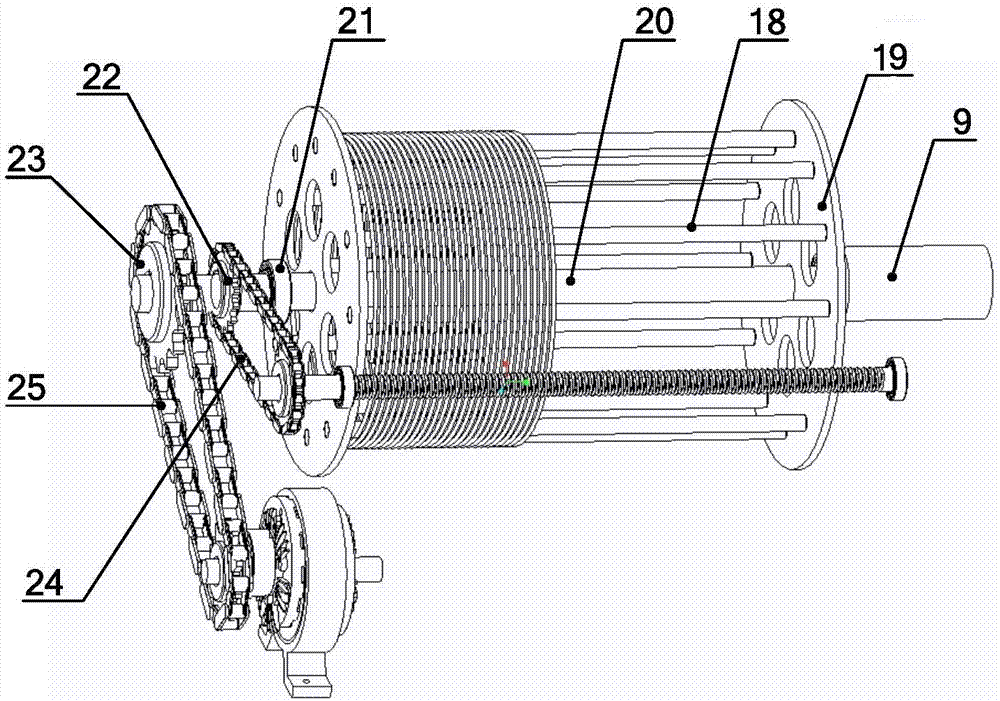
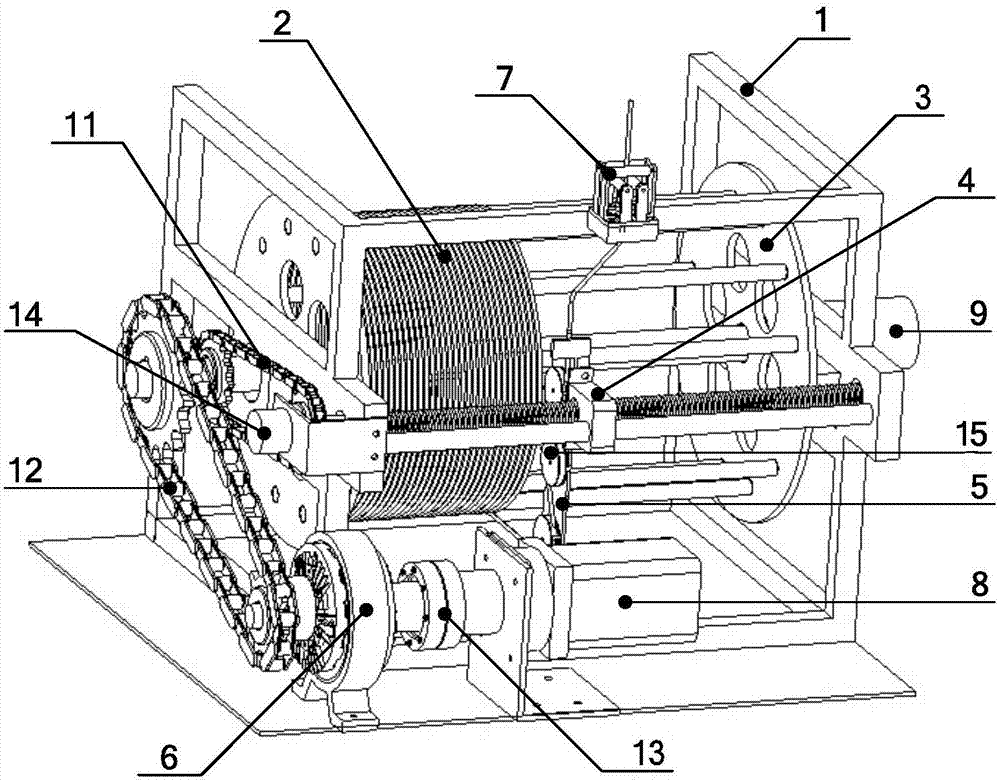
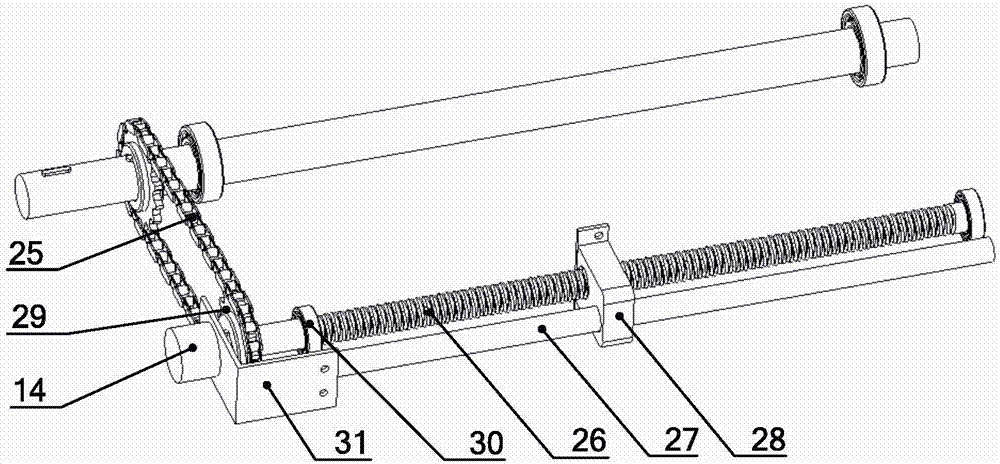

Modeling system of cable for accurate cable robot control
PatentInactiveKR1020190110387A
Innovation
- A cable modeling system using springs and dampers to detect instantaneous and prolonged cable deformations, coupled with a control unit to calculate and correct cable length in real time, eliminating the need for additional position sensors.


Safety Standards for Cable-Driven Robotic Systems
Safety standards for cable-driven robotic systems represent a critical framework that directly impacts control accuracy requirements, particularly in real-time operational environments. Current international standards such as ISO 10218 for industrial robots and ISO 13482 for personal care robots provide foundational guidelines, though specific provisions for cable-driven mechanisms remain limited. The unique characteristics of cable-driven systems, including their inherent compliance and potential for cable slack or failure, necessitate specialized safety protocols that go beyond conventional rigid-link robot standards.
The development of safety standards specifically tailored to cable-driven robots has gained momentum through collaborative efforts between the International Organization for Standardization and regional bodies like ANSI in North America and EN standards in Europe. These emerging standards emphasize fail-safe mechanisms, redundant cable configurations, and real-time monitoring systems that can detect cable tension anomalies within milliseconds. The integration of these safety requirements directly influences control system design, as safety-compliant systems must maintain operational accuracy while continuously monitoring for potential hazards.
Risk assessment methodologies outlined in current draft standards require comprehensive analysis of cable failure modes, workspace limitations, and human-robot interaction scenarios. These assessments mandate that control systems incorporate predictive algorithms capable of detecting pre-failure conditions in cable tension, wear patterns, and geometric configurations. The standards specify minimum response times for emergency stops and require that control accuracy be maintained even during degraded operational modes when one or more cables experience reduced performance.
Certification processes for cable-driven robotic systems involve rigorous testing protocols that validate both safety compliance and control performance under various operational conditions. Testing standards require demonstration of maintained control accuracy during simulated cable failures, environmental disturbances, and extended operational periods. These certification requirements drive the development of advanced control algorithms that can adapt to changing system dynamics while preserving safety margins.
The evolution of safety standards continues to address emerging applications such as rehabilitation robotics, construction automation, and aerospace systems, where cable-driven robots operate in close proximity to humans or in mission-critical environments. Future standard revisions are expected to incorporate machine learning-based safety monitoring and adaptive control requirements that can respond to previously unknown operational scenarios while maintaining both safety and accuracy objectives.
The development of safety standards specifically tailored to cable-driven robots has gained momentum through collaborative efforts between the International Organization for Standardization and regional bodies like ANSI in North America and EN standards in Europe. These emerging standards emphasize fail-safe mechanisms, redundant cable configurations, and real-time monitoring systems that can detect cable tension anomalies within milliseconds. The integration of these safety requirements directly influences control system design, as safety-compliant systems must maintain operational accuracy while continuously monitoring for potential hazards.
Risk assessment methodologies outlined in current draft standards require comprehensive analysis of cable failure modes, workspace limitations, and human-robot interaction scenarios. These assessments mandate that control systems incorporate predictive algorithms capable of detecting pre-failure conditions in cable tension, wear patterns, and geometric configurations. The standards specify minimum response times for emergency stops and require that control accuracy be maintained even during degraded operational modes when one or more cables experience reduced performance.
Certification processes for cable-driven robotic systems involve rigorous testing protocols that validate both safety compliance and control performance under various operational conditions. Testing standards require demonstration of maintained control accuracy during simulated cable failures, environmental disturbances, and extended operational periods. These certification requirements drive the development of advanced control algorithms that can adapt to changing system dynamics while preserving safety margins.
The evolution of safety standards continues to address emerging applications such as rehabilitation robotics, construction automation, and aerospace systems, where cable-driven robots operate in close proximity to humans or in mission-critical environments. Future standard revisions are expected to incorporate machine learning-based safety monitoring and adaptive control requirements that can respond to previously unknown operational scenarios while maintaining both safety and accuracy objectives.
Performance Metrics for Cable Robot Control Accuracy
Establishing comprehensive performance metrics for cable robot control accuracy requires a multi-dimensional evaluation framework that addresses both static and dynamic operational characteristics. The fundamental challenge lies in quantifying precision across varying operational conditions while maintaining relevance to real-time task requirements.
Position accuracy represents the primary metric, typically measured through root mean square error (RMSE) and maximum absolute error between commanded and actual end-effector positions. Advanced systems incorporate three-dimensional spatial accuracy measurements, with tolerances often specified within millimeter ranges for precision applications. Repeatability metrics complement position accuracy by evaluating consistency across multiple task executions under identical conditions.
Trajectory tracking performance constitutes another critical dimension, encompassing path following accuracy and velocity profile adherence. Metrics include cross-track error, along-track error, and velocity deviation measurements. These parameters become particularly significant in applications requiring smooth motion profiles, such as material handling or assembly operations.
Dynamic response characteristics focus on system bandwidth, settling time, and overshoot parameters. Bandwidth measurements determine the frequency range over which the system maintains acceptable tracking performance, while settling time quantifies the duration required to achieve steady-state accuracy following command changes. Overshoot metrics evaluate system stability and control authority effectiveness.
Cable tension distribution metrics assess the uniformity and stability of forces across the cable network. Tension variance, maximum-to-minimum tension ratios, and tension ripple measurements provide insights into mechanical stress distribution and potential system degradation factors. These metrics directly correlate with long-term reliability and maintenance requirements.
Real-time performance indicators include computational latency, control loop execution time, and sensor data processing delays. These temporal metrics determine system responsiveness and establish operational boundaries for time-critical applications. Jitter measurements in control timing provide additional insights into system determinism and predictability.
Position accuracy represents the primary metric, typically measured through root mean square error (RMSE) and maximum absolute error between commanded and actual end-effector positions. Advanced systems incorporate three-dimensional spatial accuracy measurements, with tolerances often specified within millimeter ranges for precision applications. Repeatability metrics complement position accuracy by evaluating consistency across multiple task executions under identical conditions.
Trajectory tracking performance constitutes another critical dimension, encompassing path following accuracy and velocity profile adherence. Metrics include cross-track error, along-track error, and velocity deviation measurements. These parameters become particularly significant in applications requiring smooth motion profiles, such as material handling or assembly operations.
Dynamic response characteristics focus on system bandwidth, settling time, and overshoot parameters. Bandwidth measurements determine the frequency range over which the system maintains acceptable tracking performance, while settling time quantifies the duration required to achieve steady-state accuracy following command changes. Overshoot metrics evaluate system stability and control authority effectiveness.
Cable tension distribution metrics assess the uniformity and stability of forces across the cable network. Tension variance, maximum-to-minimum tension ratios, and tension ripple measurements provide insights into mechanical stress distribution and potential system degradation factors. These metrics directly correlate with long-term reliability and maintenance requirements.
Real-time performance indicators include computational latency, control loop execution time, and sensor data processing delays. These temporal metrics determine system responsiveness and establish operational boundaries for time-critical applications. Jitter measurements in control timing provide additional insights into system determinism and predictability.
Unlock deeper insights with PatSnap Eureka Quick Research — get a full tech report to explore trends and direct your research. Try now!
Generate Your Research Report Instantly with AI Agent
Supercharge your innovation with PatSnap Eureka AI Agent Platform!