
Industrial Robot Deployment: Cost vs. Efficiency Analysis
APR 2, 20269 MIN READ
Generate Your Research Report Instantly with AI Agent
Patsnap Eureka helps you evaluate technical feasibility & market potential.
Industrial Robot Deployment Background and Objectives
Industrial robotics has undergone a remarkable transformation since its inception in the 1960s, evolving from simple programmable machines to sophisticated autonomous systems capable of complex manufacturing tasks. The deployment of industrial robots has become a critical strategic decision for manufacturers worldwide, driven by the need to balance operational costs against productivity gains and efficiency improvements.
The historical development of industrial robotics began with General Motors' installation of the first industrial robot, Unimate, in 1961. This marked the beginning of automation in manufacturing, initially focused on hazardous tasks such as die casting and welding. Over subsequent decades, technological advancements in sensors, artificial intelligence, and machine learning have expanded robot capabilities beyond repetitive tasks to include precision assembly, quality inspection, and adaptive manufacturing processes.
Current market dynamics reveal an accelerating adoption rate across diverse industries, from automotive and electronics to pharmaceuticals and food processing. The global industrial robot market has experienced consistent growth, with deployment rates increasing by approximately 10-15% annually in recent years. This growth trajectory reflects manufacturers' recognition that robotic automation represents a fundamental shift in production paradigms rather than merely a cost-reduction tool.
The primary objective of analyzing cost versus efficiency in industrial robot deployment centers on establishing quantifiable metrics for return on investment while considering both direct and indirect benefits. Direct cost considerations include initial capital expenditure, installation costs, programming expenses, and ongoing maintenance requirements. Efficiency gains encompass productivity improvements, quality enhancement, reduced waste, and operational flexibility.
Contemporary deployment strategies must address the challenge of justifying substantial upfront investments against long-term operational benefits. Traditional cost-benefit analyses often underestimate the comprehensive value proposition of robotic systems, including their ability to operate continuously, maintain consistent quality standards, and adapt to changing production requirements through reprogramming rather than physical reconfiguration.
The strategic importance of this analysis extends beyond immediate financial considerations to encompass competitive positioning in an increasingly automated global marketplace. Organizations that successfully optimize the cost-efficiency equation in robot deployment gain significant advantages in production scalability, product quality consistency, and market responsiveness. Understanding these dynamics enables informed decision-making regarding technology adoption timing, system selection, and implementation strategies that align with broader organizational objectives and market positioning goals.
The historical development of industrial robotics began with General Motors' installation of the first industrial robot, Unimate, in 1961. This marked the beginning of automation in manufacturing, initially focused on hazardous tasks such as die casting and welding. Over subsequent decades, technological advancements in sensors, artificial intelligence, and machine learning have expanded robot capabilities beyond repetitive tasks to include precision assembly, quality inspection, and adaptive manufacturing processes.
Current market dynamics reveal an accelerating adoption rate across diverse industries, from automotive and electronics to pharmaceuticals and food processing. The global industrial robot market has experienced consistent growth, with deployment rates increasing by approximately 10-15% annually in recent years. This growth trajectory reflects manufacturers' recognition that robotic automation represents a fundamental shift in production paradigms rather than merely a cost-reduction tool.
The primary objective of analyzing cost versus efficiency in industrial robot deployment centers on establishing quantifiable metrics for return on investment while considering both direct and indirect benefits. Direct cost considerations include initial capital expenditure, installation costs, programming expenses, and ongoing maintenance requirements. Efficiency gains encompass productivity improvements, quality enhancement, reduced waste, and operational flexibility.
Contemporary deployment strategies must address the challenge of justifying substantial upfront investments against long-term operational benefits. Traditional cost-benefit analyses often underestimate the comprehensive value proposition of robotic systems, including their ability to operate continuously, maintain consistent quality standards, and adapt to changing production requirements through reprogramming rather than physical reconfiguration.
The strategic importance of this analysis extends beyond immediate financial considerations to encompass competitive positioning in an increasingly automated global marketplace. Organizations that successfully optimize the cost-efficiency equation in robot deployment gain significant advantages in production scalability, product quality consistency, and market responsiveness. Understanding these dynamics enables informed decision-making regarding technology adoption timing, system selection, and implementation strategies that align with broader organizational objectives and market positioning goals.
Market Demand for Cost-Effective Industrial Automation
The global industrial automation market is experiencing unprecedented growth driven by the urgent need for cost-effective manufacturing solutions. Manufacturing companies across sectors are increasingly recognizing that traditional labor-intensive operations cannot sustain competitive advantages in today's economic environment. Rising labor costs, particularly in developed economies, combined with growing demands for consistent product quality and faster production cycles, have created a compelling business case for automated solutions.
Small and medium-sized enterprises represent a particularly significant growth segment within this market demand. These companies, which previously viewed industrial robotics as prohibitively expensive, are now actively seeking affordable automation solutions that can deliver measurable returns on investment within reasonable timeframes. The democratization of robotics technology has made sophisticated automation accessible to businesses with limited capital budgets, expanding the addressable market substantially.
Manufacturing sectors including automotive, electronics, food processing, and pharmaceuticals are driving substantial demand for cost-optimized robotic solutions. These industries face intense pressure to reduce operational expenses while maintaining or improving production efficiency. The automotive sector continues to lead adoption rates, but electronics manufacturing has emerged as a rapidly growing segment due to increasing product complexity and miniaturization requirements.
Geographic demand patterns reveal strong growth in emerging markets where manufacturers seek to establish competitive manufacturing capabilities without the traditional infrastructure investments. Countries in Southeast Asia, Eastern Europe, and Latin America are experiencing accelerated adoption of industrial automation as they transition from labor-intensive to technology-driven manufacturing models.
The market demand is increasingly characterized by requirements for flexible, easily reconfigurable robotic systems that can adapt to changing production needs. Companies are prioritizing solutions that offer rapid deployment capabilities, minimal integration complexity, and clear cost-benefit metrics. This shift reflects a broader industry trend toward lean manufacturing principles and just-in-time production methodologies.
Supply chain disruptions and labor shortages experienced globally have further intensified demand for reliable automated solutions. Organizations are recognizing that strategic automation investments can provide operational resilience and reduce dependency on volatile labor markets, making cost-effective robotics not just an efficiency improvement but a risk mitigation strategy.
Small and medium-sized enterprises represent a particularly significant growth segment within this market demand. These companies, which previously viewed industrial robotics as prohibitively expensive, are now actively seeking affordable automation solutions that can deliver measurable returns on investment within reasonable timeframes. The democratization of robotics technology has made sophisticated automation accessible to businesses with limited capital budgets, expanding the addressable market substantially.
Manufacturing sectors including automotive, electronics, food processing, and pharmaceuticals are driving substantial demand for cost-optimized robotic solutions. These industries face intense pressure to reduce operational expenses while maintaining or improving production efficiency. The automotive sector continues to lead adoption rates, but electronics manufacturing has emerged as a rapidly growing segment due to increasing product complexity and miniaturization requirements.
Geographic demand patterns reveal strong growth in emerging markets where manufacturers seek to establish competitive manufacturing capabilities without the traditional infrastructure investments. Countries in Southeast Asia, Eastern Europe, and Latin America are experiencing accelerated adoption of industrial automation as they transition from labor-intensive to technology-driven manufacturing models.
The market demand is increasingly characterized by requirements for flexible, easily reconfigurable robotic systems that can adapt to changing production needs. Companies are prioritizing solutions that offer rapid deployment capabilities, minimal integration complexity, and clear cost-benefit metrics. This shift reflects a broader industry trend toward lean manufacturing principles and just-in-time production methodologies.
Supply chain disruptions and labor shortages experienced globally have further intensified demand for reliable automated solutions. Organizations are recognizing that strategic automation investments can provide operational resilience and reduce dependency on volatile labor markets, making cost-effective robotics not just an efficiency improvement but a risk mitigation strategy.
Current State and Challenges in Robot Cost-Efficiency
The global industrial robotics market has experienced unprecedented growth, with deployment costs ranging from $50,000 to $500,000 per unit depending on application complexity. Current market penetration remains uneven across industries, with automotive manufacturing leading at 38% adoption rates while sectors like food processing lag at merely 12%. This disparity reflects fundamental cost-efficiency barriers that continue to constrain widespread robotic integration.
Manufacturing enterprises face a complex cost structure encompassing initial capital expenditure, integration expenses, ongoing maintenance, and workforce retraining. The total cost of ownership typically spans 7-10 years, with integration costs often exceeding the robot's purchase price by 200-300%. Small and medium enterprises particularly struggle with these financial barriers, as their production volumes may not justify the substantial upfront investment required for meaningful efficiency gains.
Technical integration challenges compound financial obstacles significantly. Legacy manufacturing systems often lack the digital infrastructure necessary for seamless robot deployment, requiring extensive retrofitting and system upgrades. Interoperability issues between different automation platforms create additional complexity, with integration timelines frequently extending 6-18 months beyond initial projections. These delays directly impact return on investment calculations and operational efficiency targets.
Efficiency measurement presents another critical challenge in current deployment strategies. Traditional metrics focus primarily on production speed and output volume, often overlooking quality improvements, waste reduction, and long-term operational flexibility. Many organizations struggle to quantify intangible benefits such as improved workplace safety, reduced employee turnover, and enhanced production consistency, making comprehensive cost-benefit analysis difficult to establish.
Regional variations in labor costs, regulatory frameworks, and technological infrastructure create additional complexity in cost-efficiency optimization. Developed markets with high labor costs demonstrate clearer efficiency advantages, while emerging economies face different economic dynamics that may not favor immediate robotic deployment. These geographical disparities influence global supply chain strategies and manufacturing location decisions.
Current technological limitations in artificial intelligence and adaptive learning capabilities restrict robots to relatively structured, predictable tasks. This constraint limits efficiency gains in dynamic manufacturing environments requiring frequent product changes or customization. The gap between robotic capabilities and real-world manufacturing flexibility continues to impact overall cost-effectiveness calculations across diverse industrial applications.
Manufacturing enterprises face a complex cost structure encompassing initial capital expenditure, integration expenses, ongoing maintenance, and workforce retraining. The total cost of ownership typically spans 7-10 years, with integration costs often exceeding the robot's purchase price by 200-300%. Small and medium enterprises particularly struggle with these financial barriers, as their production volumes may not justify the substantial upfront investment required for meaningful efficiency gains.
Technical integration challenges compound financial obstacles significantly. Legacy manufacturing systems often lack the digital infrastructure necessary for seamless robot deployment, requiring extensive retrofitting and system upgrades. Interoperability issues between different automation platforms create additional complexity, with integration timelines frequently extending 6-18 months beyond initial projections. These delays directly impact return on investment calculations and operational efficiency targets.
Efficiency measurement presents another critical challenge in current deployment strategies. Traditional metrics focus primarily on production speed and output volume, often overlooking quality improvements, waste reduction, and long-term operational flexibility. Many organizations struggle to quantify intangible benefits such as improved workplace safety, reduced employee turnover, and enhanced production consistency, making comprehensive cost-benefit analysis difficult to establish.
Regional variations in labor costs, regulatory frameworks, and technological infrastructure create additional complexity in cost-efficiency optimization. Developed markets with high labor costs demonstrate clearer efficiency advantages, while emerging economies face different economic dynamics that may not favor immediate robotic deployment. These geographical disparities influence global supply chain strategies and manufacturing location decisions.
Current technological limitations in artificial intelligence and adaptive learning capabilities restrict robots to relatively structured, predictable tasks. This constraint limits efficiency gains in dynamic manufacturing environments requiring frequent product changes or customization. The gap between robotic capabilities and real-world manufacturing flexibility continues to impact overall cost-effectiveness calculations across diverse industrial applications.
Current Solutions for Robot Deployment Optimization
01 Modular and reconfigurable robot systems for cost reduction
Modular robot designs allow for flexible reconfiguration and adaptation to different tasks without requiring complete system replacement. This approach reduces initial investment costs and enables efficient redeployment of robotic components across multiple applications. Standardized interfaces and interchangeable modules facilitate easier maintenance and upgrades, extending the operational lifespan of industrial robots while minimizing downtime and associated costs.- Modular and reconfigurable robot systems for cost reduction: Modular robot designs allow for flexible reconfiguration and adaptation to different tasks without requiring complete system replacement. This approach reduces initial investment costs and enables efficient reuse of components across multiple applications. Reconfigurable systems can be quickly adapted to changing production requirements, minimizing downtime and improving overall cost-effectiveness in manufacturing environments.
- Collaborative robot systems for improved efficiency: Collaborative robots designed to work alongside human operators enhance productivity while maintaining safety standards. These systems incorporate advanced sensors and control algorithms to enable safe human-robot interaction, reducing the need for safety barriers and allowing for more flexible workspace utilization. The integration of collaborative capabilities improves operational efficiency by combining human dexterity with robotic precision and repeatability.
- Automated path planning and optimization systems: Advanced path planning algorithms and optimization techniques enable robots to perform tasks more efficiently by minimizing cycle times and energy consumption. These systems utilize artificial intelligence and machine learning to continuously improve motion trajectories and task execution strategies. Optimized path planning reduces wear on mechanical components and decreases operational costs while increasing throughput.
- Multi-robot coordination and fleet management: Coordinated control of multiple robots working in shared environments maximizes efficiency through intelligent task allocation and collision avoidance. Fleet management systems optimize resource utilization by dynamically assigning tasks based on robot availability and capability. This approach reduces idle time and improves overall system productivity while lowering per-unit operational costs through economies of scale.
- Predictive maintenance and monitoring systems: Implementation of condition monitoring and predictive maintenance technologies reduces unexpected downtime and extends robot service life. These systems use sensor data and analytics to predict component failures before they occur, enabling scheduled maintenance during planned downtime. Predictive approaches minimize repair costs and improve overall equipment effectiveness by preventing catastrophic failures and optimizing maintenance intervals.
02 Advanced control systems and programming methods for efficiency optimization
Sophisticated control algorithms and intuitive programming interfaces enhance robot operational efficiency by optimizing motion paths, reducing cycle times, and minimizing energy consumption. These systems enable faster task execution and easier adaptation to new processes, reducing the need for specialized programming expertise and lowering operational costs. Real-time monitoring and adaptive control further improve productivity and resource utilization.Expand Specific Solutions03 Collaborative robots with enhanced safety features
Collaborative robotic systems designed to work safely alongside human operators eliminate the need for expensive safety barriers and dedicated work cells. These robots incorporate advanced sensors and force-limiting mechanisms that reduce infrastructure costs while improving workspace efficiency. The ability to share workspaces with humans enables more flexible production layouts and reduces facility requirements, contributing to overall cost savings.Expand Specific Solutions04 Predictive maintenance and diagnostic systems
Integrated monitoring systems that predict component failures and optimize maintenance schedules significantly reduce unplanned downtime and repair costs. These systems analyze operational data to identify potential issues before they cause failures, enabling proactive maintenance interventions. By extending component life and reducing emergency repairs, predictive maintenance systems improve overall equipment effectiveness and lower total cost of ownership.Expand Specific Solutions05 Energy-efficient actuators and drive systems
Advanced actuator technologies and optimized drive systems reduce energy consumption during robot operation, lowering ongoing operational costs. These systems incorporate regenerative braking, efficient power transmission, and intelligent power management to minimize electricity usage. Reduced energy requirements not only decrease operating expenses but also contribute to smaller power supply infrastructure needs and lower cooling requirements in manufacturing facilities.Expand Specific Solutions
Key Players in Industrial Robotics and Automation
The industrial robot deployment market is experiencing rapid growth, driven by increasing demand for automation across manufacturing sectors. The industry has reached a mature development stage with established market leaders like ABB Ltd., FANUC Corp., and Kawasaki Heavy Industries dominating the traditional robotics space. Technology maturity varies significantly across segments - while established players like ABB and FANUC offer proven solutions with high reliability, emerging companies such as Beijing Geekplus Technology and Symbotic LLC are advancing warehouse automation and AI-integrated systems. The market demonstrates strong bifurcation between conventional industrial robotics manufacturers (ABB, FANUC, Hitachi) focusing on precision and reliability, and innovative firms developing specialized applications. Cost-efficiency analysis reveals that while initial deployment costs remain substantial, ROI improvements are accelerating due to enhanced AI capabilities, better integration software from companies like Siemens Industry Software, and specialized solutions from niche players like Güdel Group and Nabtesco Corp.
ABB Ltd.
Technical Solution: ABB implements a comprehensive cost-efficiency framework for industrial robot deployment through their RobotStudio simulation software and FlexPicker technology. Their approach focuses on total cost of ownership (TCO) analysis, incorporating initial investment, operational costs, and productivity gains. ABB's robots demonstrate up to 25% faster cycle times compared to traditional automation solutions, while reducing energy consumption by 20-30%. The company utilizes predictive maintenance algorithms and digital twin technology to minimize downtime costs. Their modular robot design allows for scalable deployment, enabling manufacturers to optimize capital expenditure based on production requirements. ABB's collaborative robots (cobots) provide flexible automation solutions with payback periods typically ranging from 12-18 months in high-volume manufacturing environments.
Strengths: Market-leading simulation tools, proven ROI metrics, extensive service network. Weaknesses: Higher initial investment costs, complex integration requirements for legacy systems.
FANUC Corp.
Technical Solution: FANUC employs a lean deployment methodology focusing on maximizing operational efficiency through their FIELD system (FANUC Intelligent Edge Link & Drive). Their cost-efficiency analysis incorporates machine learning algorithms to optimize robot performance and reduce operational expenses. FANUC robots achieve industry-leading uptime rates of 99.8%, significantly reducing production losses. The company's standardized robot platforms enable rapid deployment with installation times reduced by 40% compared to custom solutions. Their ROBOGUIDE simulation software allows for virtual commissioning, reducing physical testing costs by up to 60%. FANUC's predictive maintenance capabilities extend robot lifespan by 15-20%, while their energy-efficient servo systems reduce power consumption by 25%. The company offers flexible financing models and performance-based contracts to optimize capital allocation for manufacturers.
Strengths: Exceptional reliability and uptime, comprehensive simulation capabilities, strong ROI performance. Weaknesses: Limited collaborative robot portfolio, higher maintenance complexity for advanced features.
Core Technologies in Robot Cost-Efficiency Analysis
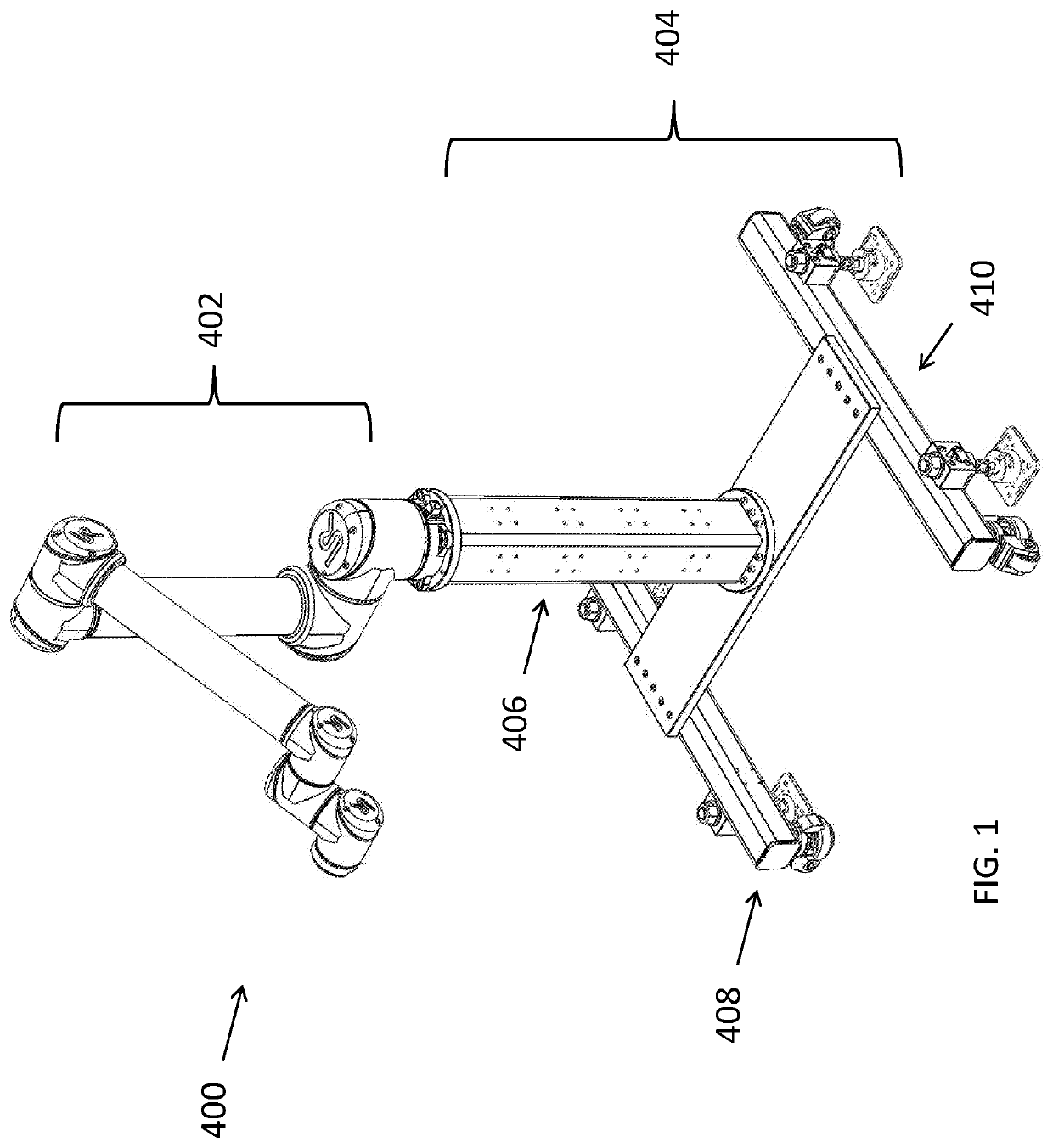
Universal collaborative robot mounting pedestal system and method
PatentInactiveUS20200056738A1
Innovation
- A universal mount system that allows for secure positioning and movement of collaborative robots, including sliding along rails, pivotal movement, and attachment to the machine frame or floor, along with a parts presentation tray, to maintain alignment and facilitate redeployment without damaging the shop floor, reducing the need for realignment and improving safety.


Industrial robotic platforms
PatentPendingUS20250144802A1
Innovation
- The development of modular industrial robotic platforms featuring a universal platform that can be coupled with interchangeable payload and mobility components, enabling the robots to perform a variety of industrial tasks autonomously or collaboratively.


ROI Assessment Framework for Robot Implementation
The ROI assessment framework for industrial robot implementation requires a comprehensive evaluation methodology that balances initial capital expenditure against long-term operational benefits. This framework establishes quantitative metrics to measure the financial viability of robotic automation projects, incorporating both direct cost savings and indirect efficiency improvements that contribute to overall profitability.
The foundation of ROI calculation begins with total cost of ownership analysis, encompassing robot acquisition costs, installation expenses, programming and commissioning fees, and ongoing maintenance requirements. Initial investment typically ranges from $50,000 to $500,000 per robot unit, depending on complexity and application requirements. Additional infrastructure modifications, safety systems, and employee training programs must be factored into the comprehensive cost structure.
Labor cost displacement represents the primary revenue component in ROI calculations. Manufacturing facilities can achieve 15-30% reduction in direct labor costs through strategic robot deployment, with payback periods typically ranging from 18 to 36 months. The framework must account for varying labor rates across different geographic regions and skill levels, as higher-wage environments generally demonstrate more favorable ROI profiles.
Productivity enhancement metrics form the second critical evaluation dimension. Robotic systems typically operate at 85-95% uptime compared to human workers' 70-80% effective productivity rates. This translates to 20-35% throughput improvements in continuous operation scenarios. Quality consistency improvements reduce defect rates by 40-60%, minimizing rework costs and warranty claims that significantly impact bottom-line performance.
The assessment framework incorporates risk-adjusted return calculations to account for technological obsolescence and market volatility. Depreciation schedules typically span 7-10 years for industrial robots, requiring careful consideration of technological advancement cycles. Sensitivity analysis examines various scenarios including production volume fluctuations, labor cost inflation, and maintenance cost variations to ensure robust investment decisions.
Financial modeling within the framework utilizes net present value calculations with appropriate discount rates reflecting company cost of capital and project risk profiles. Break-even analysis identifies critical performance thresholds, while scenario planning evaluates best-case, worst-case, and most-likely outcomes. This comprehensive approach enables informed decision-making regarding robot deployment timing, scale, and configuration optimization for maximum financial return.
The foundation of ROI calculation begins with total cost of ownership analysis, encompassing robot acquisition costs, installation expenses, programming and commissioning fees, and ongoing maintenance requirements. Initial investment typically ranges from $50,000 to $500,000 per robot unit, depending on complexity and application requirements. Additional infrastructure modifications, safety systems, and employee training programs must be factored into the comprehensive cost structure.
Labor cost displacement represents the primary revenue component in ROI calculations. Manufacturing facilities can achieve 15-30% reduction in direct labor costs through strategic robot deployment, with payback periods typically ranging from 18 to 36 months. The framework must account for varying labor rates across different geographic regions and skill levels, as higher-wage environments generally demonstrate more favorable ROI profiles.
Productivity enhancement metrics form the second critical evaluation dimension. Robotic systems typically operate at 85-95% uptime compared to human workers' 70-80% effective productivity rates. This translates to 20-35% throughput improvements in continuous operation scenarios. Quality consistency improvements reduce defect rates by 40-60%, minimizing rework costs and warranty claims that significantly impact bottom-line performance.
The assessment framework incorporates risk-adjusted return calculations to account for technological obsolescence and market volatility. Depreciation schedules typically span 7-10 years for industrial robots, requiring careful consideration of technological advancement cycles. Sensitivity analysis examines various scenarios including production volume fluctuations, labor cost inflation, and maintenance cost variations to ensure robust investment decisions.
Financial modeling within the framework utilizes net present value calculations with appropriate discount rates reflecting company cost of capital and project risk profiles. Break-even analysis identifies critical performance thresholds, while scenario planning evaluates best-case, worst-case, and most-likely outcomes. This comprehensive approach enables informed decision-making regarding robot deployment timing, scale, and configuration optimization for maximum financial return.
Risk Management in Industrial Robot Investment
Industrial robot investment carries inherent risks that require systematic evaluation and mitigation strategies. Financial risks represent the most immediate concern, encompassing capital expenditure uncertainties, return on investment variability, and potential cost overruns during implementation phases. Market volatility can significantly impact projected savings, while unexpected maintenance costs may erode anticipated efficiency gains.
Technological risks emerge from rapid advancement cycles in robotics and automation systems. Equipment obsolescence poses a substantial threat, as newer technologies may render current investments outdated within shorter timeframes than traditional manufacturing equipment. Integration complexities with existing systems can lead to extended deployment periods and additional costs, while software compatibility issues may require ongoing updates and modifications.
Operational risks encompass workforce displacement challenges, requiring comprehensive change management strategies and retraining programs. Production disruptions during installation and commissioning phases can temporarily reduce output, affecting revenue streams. Quality control variations during initial deployment may impact product consistency until systems achieve optimal calibration.
Regulatory and compliance risks involve evolving safety standards and workplace regulations that may necessitate additional investments in protective systems and certification processes. Environmental regulations increasingly influence automation decisions, particularly regarding energy consumption and waste reduction requirements.
Strategic risk mitigation approaches include phased implementation strategies that allow for gradual system integration and learning curve management. Establishing partnerships with experienced system integrators reduces technical risks while providing access to specialized expertise. Comprehensive insurance coverage for equipment and business interruption helps protect against unforeseen circumstances.
Financial risk management involves diversifying automation investments across multiple applications and maintaining contingency budgets for unexpected costs. Regular technology roadmap assessments ensure alignment with industry trends and help anticipate obsolescence timelines. Developing internal technical capabilities reduces dependence on external support while building organizational resilience for future automation initiatives.
Technological risks emerge from rapid advancement cycles in robotics and automation systems. Equipment obsolescence poses a substantial threat, as newer technologies may render current investments outdated within shorter timeframes than traditional manufacturing equipment. Integration complexities with existing systems can lead to extended deployment periods and additional costs, while software compatibility issues may require ongoing updates and modifications.
Operational risks encompass workforce displacement challenges, requiring comprehensive change management strategies and retraining programs. Production disruptions during installation and commissioning phases can temporarily reduce output, affecting revenue streams. Quality control variations during initial deployment may impact product consistency until systems achieve optimal calibration.
Regulatory and compliance risks involve evolving safety standards and workplace regulations that may necessitate additional investments in protective systems and certification processes. Environmental regulations increasingly influence automation decisions, particularly regarding energy consumption and waste reduction requirements.
Strategic risk mitigation approaches include phased implementation strategies that allow for gradual system integration and learning curve management. Establishing partnerships with experienced system integrators reduces technical risks while providing access to specialized expertise. Comprehensive insurance coverage for equipment and business interruption helps protect against unforeseen circumstances.
Financial risk management involves diversifying automation investments across multiple applications and maintaining contingency budgets for unexpected costs. Regular technology roadmap assessments ensure alignment with industry trends and help anticipate obsolescence timelines. Developing internal technical capabilities reduces dependence on external support while building organizational resilience for future automation initiatives.
Unlock deeper insights with Patsnap Eureka Quick Research — get a full tech report to explore trends and direct your research. Try now!
Generate Your Research Report Instantly with AI Agent
Supercharge your innovation with Patsnap Eureka AI Agent Platform!