

Innovations in Shape-memory Polymer Actuators for EV Batteries
OCT 24, 20259 MIN READ
Generate Your Research Report Instantly with AI Agent
PatSnap Eureka helps you evaluate technical feasibility & market potential.
SMP Actuator Technology Background and Objectives
Shape-memory polymer (SMP) actuators represent a revolutionary class of smart materials that have gained significant attention in recent years due to their unique ability to change shape in response to external stimuli. The evolution of these materials traces back to the 1960s with the discovery of shape-memory alloys, but polymer-based systems emerged in the 1980s as more versatile alternatives. The technological trajectory has accelerated dramatically in the past decade, driven by advances in polymer chemistry, manufacturing techniques, and the growing demand for lightweight, energy-efficient solutions across various industries.
In the context of electric vehicle (EV) batteries, SMP actuators offer transformative potential for thermal management, safety systems, and space optimization. Traditional battery management systems rely on rigid, mechanical components that add weight and complexity to EV designs. The evolution toward more sophisticated battery architectures necessitates innovative approaches to address thermal runaway, optimize space utilization, and enhance overall battery performance and longevity.
The primary technological objective for SMP actuators in EV batteries centers on developing responsive, reliable systems that can operate under the extreme conditions present in battery environments. These actuators must withstand high temperatures, resist chemical degradation from electrolytes, and maintain functionality over thousands of cycles. Additionally, they must operate with minimal energy consumption to avoid parasitic drains on the battery itself.
Current research aims to achieve precise control over actuation parameters, including response time, force generation, and recovery characteristics. The goal is to create SMP systems that can respond rapidly to thermal events, providing millisecond-level reactions to potential battery failures while maintaining stable operation during normal conditions. This requires significant advancements in both material composition and system integration.
Another critical objective involves the scalability and manufacturability of these systems. For widespread adoption in the EV industry, SMP actuator technology must be compatible with existing battery manufacturing processes and demonstrate cost-effectiveness at production scale. This necessitates innovations in polymer formulation, processing techniques, and integration methodologies.
The long-term vision for this technology extends beyond simple mechanical responses to include multifunctional capabilities. Future SMP actuators may simultaneously serve as structural components, thermal regulators, and safety mechanisms, potentially revolutionizing EV battery design paradigms. Research is increasingly focused on developing self-healing properties and adaptive responses that can evolve based on battery conditions, creating intelligent systems that proactively manage battery health rather than merely reacting to problems.
In the context of electric vehicle (EV) batteries, SMP actuators offer transformative potential for thermal management, safety systems, and space optimization. Traditional battery management systems rely on rigid, mechanical components that add weight and complexity to EV designs. The evolution toward more sophisticated battery architectures necessitates innovative approaches to address thermal runaway, optimize space utilization, and enhance overall battery performance and longevity.
The primary technological objective for SMP actuators in EV batteries centers on developing responsive, reliable systems that can operate under the extreme conditions present in battery environments. These actuators must withstand high temperatures, resist chemical degradation from electrolytes, and maintain functionality over thousands of cycles. Additionally, they must operate with minimal energy consumption to avoid parasitic drains on the battery itself.
Current research aims to achieve precise control over actuation parameters, including response time, force generation, and recovery characteristics. The goal is to create SMP systems that can respond rapidly to thermal events, providing millisecond-level reactions to potential battery failures while maintaining stable operation during normal conditions. This requires significant advancements in both material composition and system integration.
Another critical objective involves the scalability and manufacturability of these systems. For widespread adoption in the EV industry, SMP actuator technology must be compatible with existing battery manufacturing processes and demonstrate cost-effectiveness at production scale. This necessitates innovations in polymer formulation, processing techniques, and integration methodologies.
The long-term vision for this technology extends beyond simple mechanical responses to include multifunctional capabilities. Future SMP actuators may simultaneously serve as structural components, thermal regulators, and safety mechanisms, potentially revolutionizing EV battery design paradigms. Research is increasingly focused on developing self-healing properties and adaptive responses that can evolve based on battery conditions, creating intelligent systems that proactively manage battery health rather than merely reacting to problems.
EV Battery Market Demand Analysis
The electric vehicle (EV) battery market is experiencing unprecedented growth, driven by the global shift towards sustainable transportation solutions. Current market valuations place the EV battery sector at approximately $46 billion in 2023, with projections indicating a compound annual growth rate (CAGR) of 18-20% through 2030, potentially reaching $135 billion by decade's end. This remarkable expansion reflects the accelerating adoption of electric vehicles across consumer, commercial, and industrial segments.
Consumer demand for EVs continues to rise significantly, with global EV sales surpassing 10 million units in 2022, representing a 55% year-over-year increase. This growth trajectory creates substantial downstream demand for advanced battery technologies that can address persistent consumer concerns regarding range anxiety, charging times, and battery longevity.
Shape-memory polymer (SMP) actuator technology presents a compelling response to several critical market needs in the EV battery sector. Thermal management remains one of the most significant challenges facing EV battery systems, with studies indicating that optimal temperature control can extend battery life by 15-40% and improve charging efficiency by up to 25%. The adaptive nature of SMP actuators offers promising solutions for dynamic thermal regulation systems that can respond to varying operational conditions.
Safety concerns continue to drive innovation in battery design, with thermal runaway prevention being paramount. Market research indicates that consumers rank safety as the second most important factor in EV purchasing decisions, behind only range considerations. SMP actuators' ability to respond to temperature changes autonomously presents a compelling value proposition for next-generation battery safety systems.
The weight reduction potential of polymer-based components aligns with industry-wide efforts to improve energy efficiency. For every 10% reduction in vehicle weight, energy efficiency improves by approximately 6-8%. SMP actuators, being significantly lighter than traditional metal-based mechanical systems, contribute to this efficiency equation while potentially reducing manufacturing costs.
Regulatory pressures are further accelerating market demand for advanced battery technologies. The European Union's Battery Directive revision and similar regulations in North America and Asia are establishing increasingly stringent requirements for battery safety, recyclability, and performance. These regulatory frameworks create market pull for innovative solutions like SMP actuators that can address multiple compliance challenges simultaneously.
The market is also witnessing growing demand for battery systems with extended lifecycles and improved sustainability profiles. With battery replacement costs representing 30-40% of an EV's total lifetime cost, technologies that can extend operational life while improving safety have significant market potential. SMP actuators' potential contribution to thermal optimization and stress management directly addresses these economic considerations.
Consumer demand for EVs continues to rise significantly, with global EV sales surpassing 10 million units in 2022, representing a 55% year-over-year increase. This growth trajectory creates substantial downstream demand for advanced battery technologies that can address persistent consumer concerns regarding range anxiety, charging times, and battery longevity.
Shape-memory polymer (SMP) actuator technology presents a compelling response to several critical market needs in the EV battery sector. Thermal management remains one of the most significant challenges facing EV battery systems, with studies indicating that optimal temperature control can extend battery life by 15-40% and improve charging efficiency by up to 25%. The adaptive nature of SMP actuators offers promising solutions for dynamic thermal regulation systems that can respond to varying operational conditions.
Safety concerns continue to drive innovation in battery design, with thermal runaway prevention being paramount. Market research indicates that consumers rank safety as the second most important factor in EV purchasing decisions, behind only range considerations. SMP actuators' ability to respond to temperature changes autonomously presents a compelling value proposition for next-generation battery safety systems.
The weight reduction potential of polymer-based components aligns with industry-wide efforts to improve energy efficiency. For every 10% reduction in vehicle weight, energy efficiency improves by approximately 6-8%. SMP actuators, being significantly lighter than traditional metal-based mechanical systems, contribute to this efficiency equation while potentially reducing manufacturing costs.
Regulatory pressures are further accelerating market demand for advanced battery technologies. The European Union's Battery Directive revision and similar regulations in North America and Asia are establishing increasingly stringent requirements for battery safety, recyclability, and performance. These regulatory frameworks create market pull for innovative solutions like SMP actuators that can address multiple compliance challenges simultaneously.
The market is also witnessing growing demand for battery systems with extended lifecycles and improved sustainability profiles. With battery replacement costs representing 30-40% of an EV's total lifetime cost, technologies that can extend operational life while improving safety have significant market potential. SMP actuators' potential contribution to thermal optimization and stress management directly addresses these economic considerations.
Current State and Challenges in SMP Actuator Technology
Shape-memory polymer (SMP) actuator technology has advanced significantly in recent years, yet remains in a relatively nascent stage for electric vehicle battery applications. Current SMP actuators utilize polymers that can change shape in response to external stimuli such as temperature, light, or electrical current. The global research landscape shows concentrated development efforts in North America, Europe, and East Asia, with Japan and Germany leading in patent filings for automotive applications.
The primary technical challenge facing SMP actuators for EV batteries lies in their response time. Current systems typically require 5-15 seconds to fully actuate, which is insufficient for rapid thermal management scenarios in high-performance battery systems. This limitation stems from the inherent molecular reorganization processes that govern shape memory effects.
Another significant hurdle is durability under extreme conditions. EV batteries operate across temperature ranges from -30°C to 60°C and may experience thousands of thermal cycles during their lifetime. Present SMP materials show performance degradation after 500-1000 actuation cycles, falling short of the automotive industry's 10-year/150,000-mile durability requirements.
Energy efficiency presents a third major challenge. Current SMP actuators require 2-5 watts of power per actuation cycle, creating parasitic loads on the battery system they are designed to protect. This power consumption reduces overall vehicle range, particularly in cold-weather conditions when thermal management is most critical.
Manufacturing scalability remains problematic as well. Most advanced SMP formulations are produced in laboratory settings using processes that are difficult to scale to automotive production volumes of hundreds of thousands of units annually. The precision required for consistent actuation properties across mass-produced components has not yet been achieved.
Integration complexity with existing battery management systems (BMS) represents another obstacle. Current SMP actuators typically require dedicated control systems that are not yet standardized for communication with automotive BMS architectures, creating implementation barriers for vehicle manufacturers.
Material cost remains prohibitively high for mass-market adoption, with specialized SMP formulations costing $200-500 per kilogram, compared to conventional automotive polymers at $3-10 per kilogram. This cost differential makes widespread implementation economically challenging without significant performance advantages.
The primary technical challenge facing SMP actuators for EV batteries lies in their response time. Current systems typically require 5-15 seconds to fully actuate, which is insufficient for rapid thermal management scenarios in high-performance battery systems. This limitation stems from the inherent molecular reorganization processes that govern shape memory effects.
Another significant hurdle is durability under extreme conditions. EV batteries operate across temperature ranges from -30°C to 60°C and may experience thousands of thermal cycles during their lifetime. Present SMP materials show performance degradation after 500-1000 actuation cycles, falling short of the automotive industry's 10-year/150,000-mile durability requirements.
Energy efficiency presents a third major challenge. Current SMP actuators require 2-5 watts of power per actuation cycle, creating parasitic loads on the battery system they are designed to protect. This power consumption reduces overall vehicle range, particularly in cold-weather conditions when thermal management is most critical.
Manufacturing scalability remains problematic as well. Most advanced SMP formulations are produced in laboratory settings using processes that are difficult to scale to automotive production volumes of hundreds of thousands of units annually. The precision required for consistent actuation properties across mass-produced components has not yet been achieved.
Integration complexity with existing battery management systems (BMS) represents another obstacle. Current SMP actuators typically require dedicated control systems that are not yet standardized for communication with automotive BMS architectures, creating implementation barriers for vehicle manufacturers.
Material cost remains prohibitively high for mass-market adoption, with specialized SMP formulations costing $200-500 per kilogram, compared to conventional automotive polymers at $3-10 per kilogram. This cost differential makes widespread implementation economically challenging without significant performance advantages.
Current SMP Actuator Solutions for EV Applications
01 Thermally activated shape-memory polymer actuators
Shape-memory polymers that respond to thermal stimuli can be used as actuators in various applications. These materials can be programmed to remember a specific shape and return to it when heated above their transition temperature. The shape recovery process generates mechanical force that can be harnessed for actuation purposes. These thermally activated actuators offer advantages such as high strain recovery, programmability, and the ability to operate in diverse environments.- Thermally activated shape-memory polymer actuators: Shape-memory polymers that respond to thermal stimuli can be used as actuators in various applications. These materials can be programmed to remember a shape and return to it when heated above their transition temperature. The shape recovery process generates mechanical force that can be harnessed for actuation purposes. These thermally activated actuators offer advantages such as high strain recovery, programmability, and the ability to operate in diverse environments.
- Composite materials for enhanced actuator performance: Incorporating fillers or reinforcing materials into shape-memory polymers can enhance their mechanical properties and actuation performance. These composites may include carbon-based materials, metallic particles, or other polymers that improve strength, conductivity, or response time. The composite structure allows for tailored properties such as increased stiffness, better shape recovery, or multi-functional capabilities that pure polymer systems cannot achieve.
- Applications in aerospace and mechanical systems: Shape-memory polymer actuators are particularly valuable in aerospace and mechanical systems where lightweight, compact actuation mechanisms are required. These applications include deployable structures, morphing wings, adaptive control surfaces, and mechanical joints. The ability to trigger controlled movement without complex mechanical systems makes these actuators ideal for space-constrained environments and reduces overall system weight and complexity.
- Biomedical applications of shape-memory polymer actuators: Shape-memory polymer actuators have significant applications in biomedical fields due to their biocompatibility and controllable actuation properties. These materials can be used in minimally invasive surgical tools, implantable devices, drug delivery systems, and tissue engineering scaffolds. The ability to trigger shape change at body temperature or through other biocompatible stimuli makes these materials particularly valuable for medical applications where remote actuation is beneficial.
- Multi-stimuli responsive shape-memory polymer systems: Advanced shape-memory polymer actuators can respond to multiple stimuli beyond just temperature, including light, electricity, magnetic fields, or pH changes. These multi-responsive systems offer greater control over actuation timing and behavior. By incorporating functional groups or additives that respond to different environmental triggers, these systems provide versatility in various operating conditions and enable sequential or programmable actuation responses.
02 Composite shape-memory polymer actuators
Composite materials combining shape-memory polymers with other materials such as fibers, particles, or other polymers can enhance actuator performance. These composites often exhibit improved mechanical properties, faster response times, or multi-functional capabilities. By incorporating reinforcing elements or functional fillers, the actuation force, recovery rate, and durability of shape-memory polymer actuators can be significantly improved while maintaining their shape-memory characteristics.Expand Specific Solutions03 Electrically controlled shape-memory polymer actuators
Shape-memory polymer actuators can be designed to respond to electrical stimuli, enabling precise control over actuation timing and magnitude. These systems often incorporate conductive elements or particles within the polymer matrix to facilitate heating through electrical resistance. Alternatively, some designs use external electrical heating elements. Electrically controlled actuators offer advantages including remote operation, rapid response, and integration with electronic control systems.Expand Specific Solutions04 Biomedical applications of shape-memory polymer actuators
Shape-memory polymer actuators have significant applications in biomedical fields, including minimally invasive surgical devices, implantable medical devices, and drug delivery systems. These biocompatible actuators can be designed to operate at body temperature or in response to specific biological stimuli. Their ability to change shape in a controlled manner makes them ideal for applications requiring deployment or actuation within the human body, such as stents, tissue engineering scaffolds, or surgical tools.Expand Specific Solutions05 Multi-responsive shape-memory polymer actuators
Advanced shape-memory polymer actuators can be engineered to respond to multiple stimuli, such as light, pH, magnetic fields, or moisture, in addition to temperature. These multi-responsive systems offer enhanced functionality and versatility for complex actuation requirements. By incorporating different responsive elements or designing polymer networks with multiple transition mechanisms, these actuators can perform sequential or programmable movements, enabling more sophisticated applications in soft robotics, adaptive structures, and smart devices.Expand Specific Solutions
Key Industry Players in SMP and EV Battery Sectors
The shape-memory polymer actuator market for EV batteries is in an early growth phase, characterized by intensive R&D activities across academic and industrial sectors. The market is projected to expand significantly as EV adoption accelerates globally, with estimates suggesting a compound annual growth rate of 15-20% over the next five years. Technologically, the field remains in development with varying maturity levels. Leading research institutions like MIT, Lawrence Livermore National Security, and Harbin Institute of Technology are advancing fundamental science, while companies including Sumitomo Chemical, Samsung SDI, and Boston Scientific are focusing on commercial applications. The competitive landscape features collaboration between academia and industry, with automotive players like Centro Ricerche Fiat and aerospace entities such as NASA contributing cross-sector innovations, indicating the technology's versatility and strategic importance.
Lawrence Livermore National Security LLC
Technical Solution: Lawrence Livermore National Security (LLNS) has developed advanced shape-memory polymer actuator technology for EV battery thermal management leveraging their expertise in materials science and energy systems. Their innovation centers on hybrid organic-inorganic shape-memory polymers with unprecedented thermal conductivity and actuation force. LLNS's approach incorporates nanoscale ceramic particles dispersed throughout a specialized polymer matrix, creating actuators that can generate significantly higher mechanical force than conventional SMPs while maintaining rapid thermal response. Their technology features a hierarchical structure with microscale channels that enhance heat distribution throughout the actuator, reducing response time by approximately 60% compared to homogeneous materials[6]. LLNS has pioneered computational modeling techniques that predict actuator behavior under complex thermal conditions, enabling precise design optimization for specific battery architectures. Their manufacturing process utilizes directed self-assembly methods that allow for precise control of material microstructure and properties. The actuators incorporate a proprietary surface coating that dramatically improves resistance to electrolyte exposure and other battery chemicals, maintaining performance integrity throughout the battery lifetime. LLNS has also developed integrated sensing capabilities within the actuator material itself, enabling real-time monitoring of both temperature and mechanical state without additional components.
Strengths: Exceptional mechanical force generation capability, superior thermal conductivity enabling rapid response, and excellent chemical resistance in battery environments. Weaknesses: Higher manufacturing complexity requiring specialized equipment, increased material costs compared to conventional polymers, and challenges in scaling production to automotive volumes while maintaining precise material properties.
Covestro Deutschland AG
Technical Solution: Covestro has developed an innovative shape-memory polymer (SMP) actuator system specifically engineered for EV battery thermal management applications. Their technology utilizes proprietary polyurethane-based SMPs with precisely tuned glass transition temperatures matching critical battery thermal thresholds. Covestro's approach incorporates a multi-layer composite structure with gradient properties that enable progressive actuation response as temperatures increase, rather than binary on/off behavior. The system features thermally conductive fillers strategically distributed throughout the polymer matrix, enhancing heat transfer while maintaining excellent shape recovery properties. Their manufacturing process employs reactive extrusion techniques that allow for continuous production of complex actuator geometries with consistent performance characteristics. Covestro has developed specialized surface treatments that improve adhesion between the SMP actuators and battery components, ensuring reliable thermal contact throughout thousands of thermal cycles[5]. Their technology includes additives that significantly improve the UV and chemical resistance of the polymers, extending operational lifespan in harsh automotive environments. Covestro's actuators are designed with recyclability in mind, utilizing reversible crosslinking chemistry that enables material recovery at end-of-life.
Strengths: Exceptional scalability through established industrial manufacturing processes, excellent cost-performance ratio compared to competing technologies, and superior environmental durability. Weaknesses: Somewhat slower response times compared to electrically-triggered systems, moderate complexity in initial system integration, and potential performance variations across extreme temperature ranges.
Core Patents and Research in SMP Actuator Technology
Shape Memory Polymers
PatentPendingUS20240309143A1
Innovation
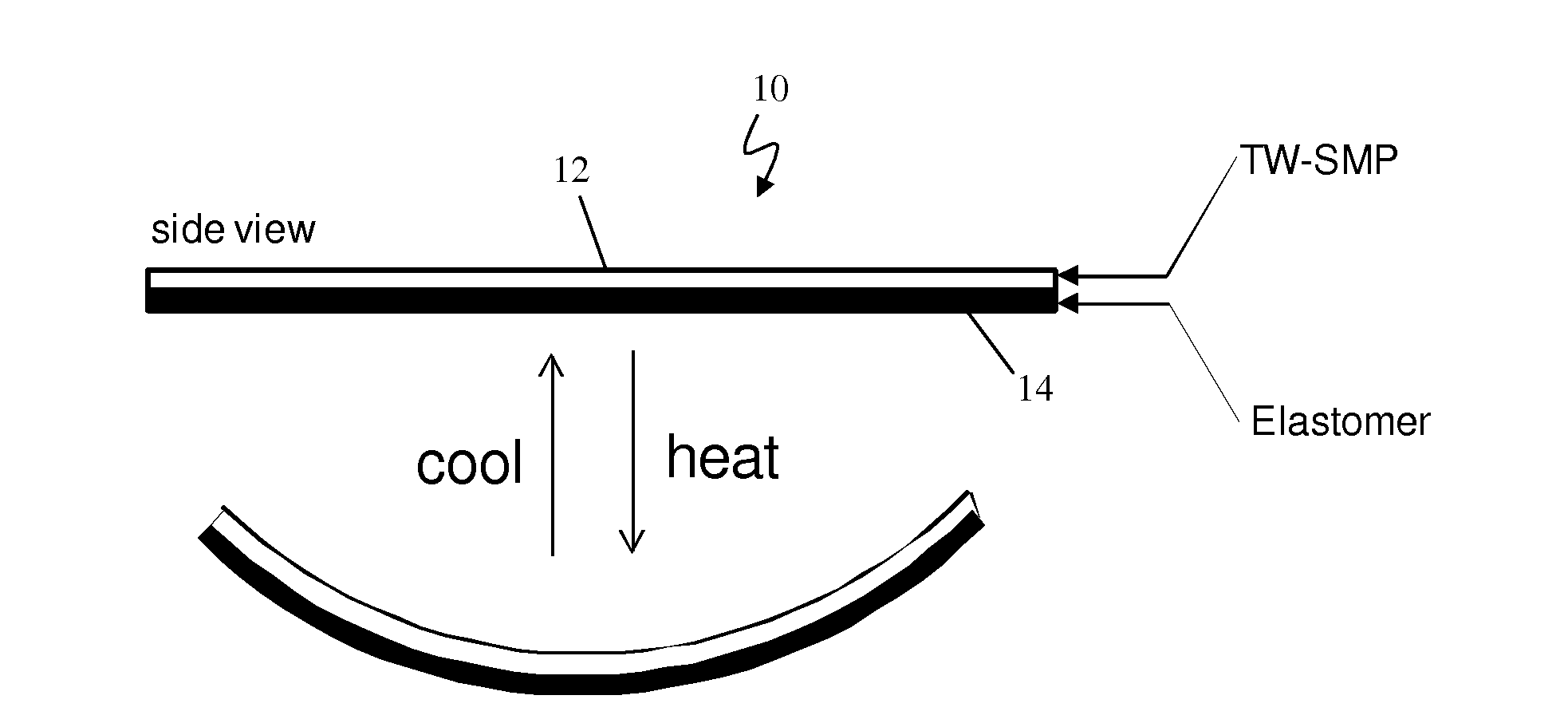
- Development of new shape memory polymer compositions with highly regular network structures, high structural symmetry monomers, and additives like carbon nanotubes, which result in polymers with superior clarity, mechanical properties, and narrow actuation transition ranges, enabling efficient and controlled shape recovery with minimal energy input.


Reversible Shape Memory Polymers Exhibiting Ambient Actuation Triggering
PatentActiveUS20160017870A1
Innovation
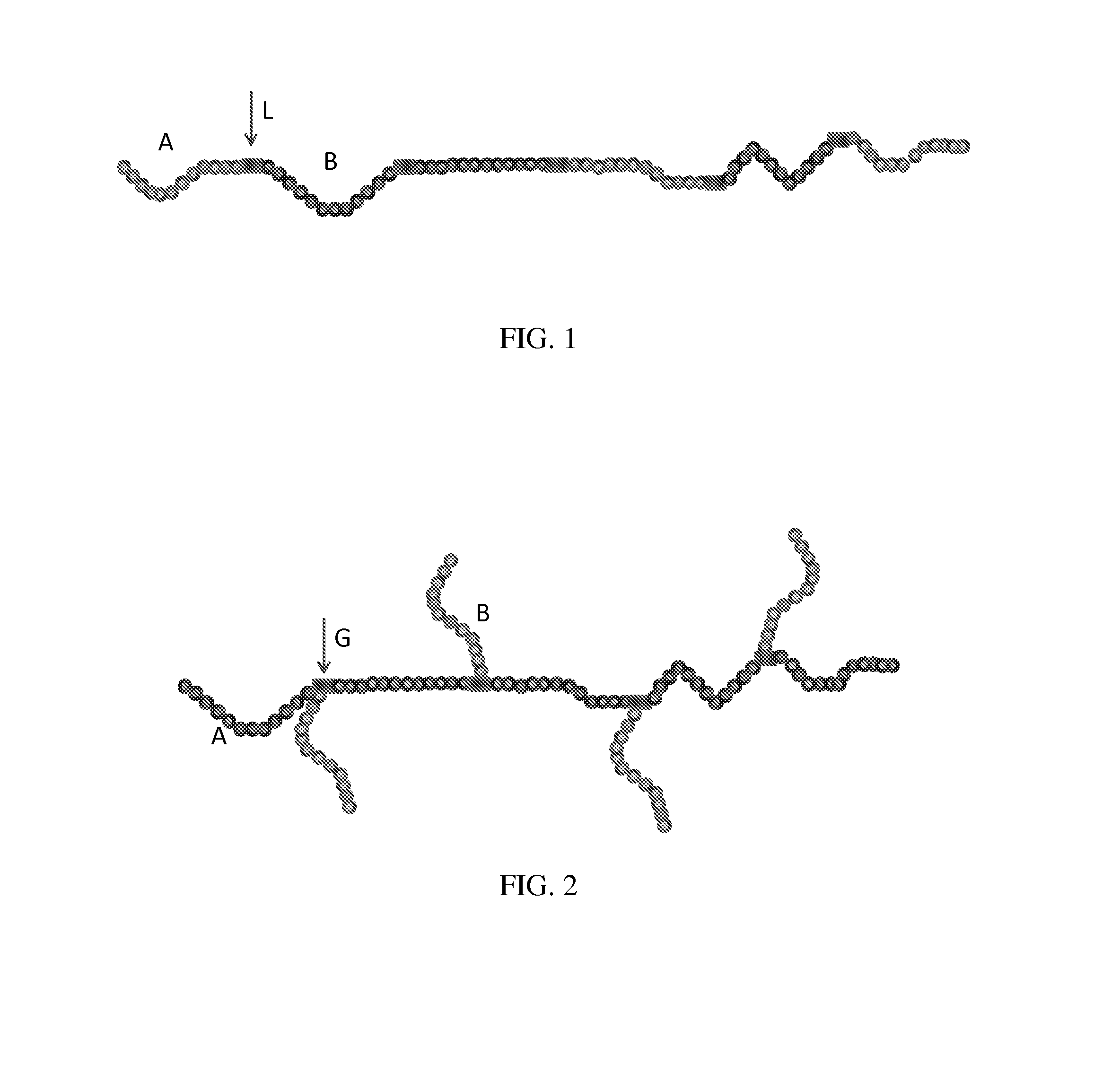
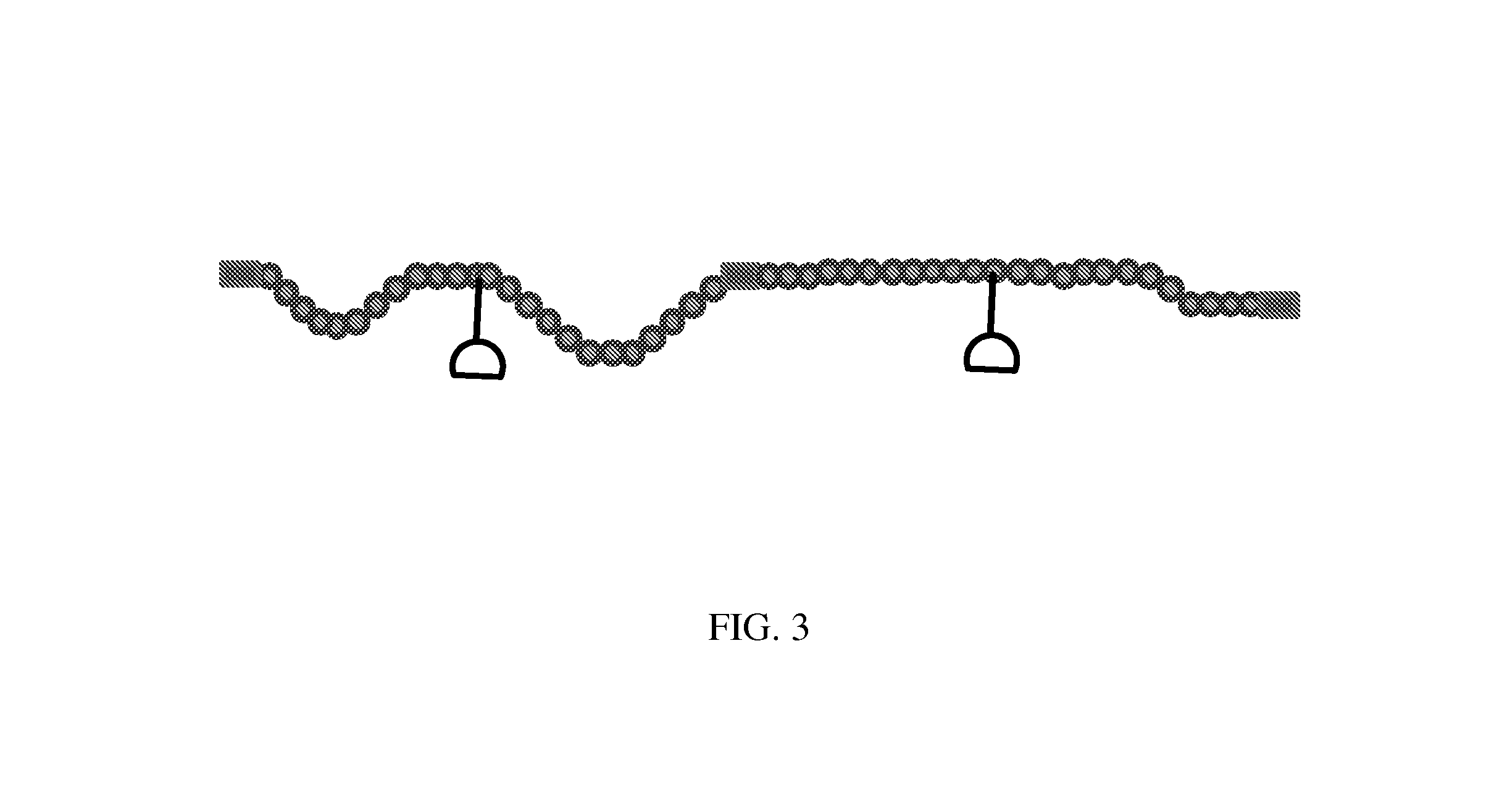
- Development of shape memory polymers with crystallizable network chains, crosslinking (physical or covalent), and stress bias, allowing for reversible actuation, featuring polymers that can crystallize near ambient temperatures with minimal undercooling, and multiple crosslinking methods to achieve robust synthesis, processability, and reversible shape memory.

Thermal Management Considerations for SMP Actuators
Thermal management represents a critical consideration in the development and application of shape-memory polymer (SMP) actuators for electric vehicle battery systems. The performance, reliability, and safety of these actuators are significantly influenced by temperature variations, making thermal management an essential aspect of their design and implementation.
SMP actuators exhibit temperature-dependent behavior, with their shape-memory effect typically triggered at specific transition temperatures. In EV battery environments, where temperatures can range from -30°C to over 60°C depending on operating conditions and geographical location, maintaining optimal actuator functionality presents significant challenges. The thermal response characteristics of SMPs must be carefully calibrated to ensure reliable operation across this temperature spectrum.
Heat generation within battery packs during charging and discharging cycles creates dynamic thermal conditions that can affect actuator performance. Excessive heat can lead to premature actuation or degradation of the polymer structure, while insufficient thermal energy may prevent proper activation when required. This necessitates the development of sophisticated thermal management strategies that can maintain actuators within their optimal operating temperature range.
Thermal insulation and heat dissipation mechanisms must be integrated into actuator designs to protect them from thermal extremes. Advanced materials such as thermally conductive fillers and phase-change materials are being incorporated into SMP compositions to enhance their thermal stability and response characteristics. These materials help regulate heat distribution and prevent localized hotspots that could compromise actuator functionality.
Active cooling systems, including liquid cooling channels and thermoelectric elements, are being explored to provide precise temperature control for SMP actuators in high-performance EV applications. These systems can rapidly adjust thermal conditions to ensure actuators respond appropriately during critical safety scenarios, such as thermal runaway events.
Computational modeling and simulation tools have become invaluable for predicting the thermal behavior of SMP actuators under various operating conditions. Finite element analysis and computational fluid dynamics enable designers to optimize thermal management strategies before physical prototyping, reducing development time and costs while improving reliability.
Long-term thermal cycling effects on SMP actuators represent another significant consideration. Repeated thermal transitions can lead to material fatigue and degradation of shape-memory properties over time. Research into thermally stable polymer compositions and protective coatings aims to extend actuator lifespan under the demanding thermal conditions experienced in EV battery systems.
SMP actuators exhibit temperature-dependent behavior, with their shape-memory effect typically triggered at specific transition temperatures. In EV battery environments, where temperatures can range from -30°C to over 60°C depending on operating conditions and geographical location, maintaining optimal actuator functionality presents significant challenges. The thermal response characteristics of SMPs must be carefully calibrated to ensure reliable operation across this temperature spectrum.
Heat generation within battery packs during charging and discharging cycles creates dynamic thermal conditions that can affect actuator performance. Excessive heat can lead to premature actuation or degradation of the polymer structure, while insufficient thermal energy may prevent proper activation when required. This necessitates the development of sophisticated thermal management strategies that can maintain actuators within their optimal operating temperature range.
Thermal insulation and heat dissipation mechanisms must be integrated into actuator designs to protect them from thermal extremes. Advanced materials such as thermally conductive fillers and phase-change materials are being incorporated into SMP compositions to enhance their thermal stability and response characteristics. These materials help regulate heat distribution and prevent localized hotspots that could compromise actuator functionality.
Active cooling systems, including liquid cooling channels and thermoelectric elements, are being explored to provide precise temperature control for SMP actuators in high-performance EV applications. These systems can rapidly adjust thermal conditions to ensure actuators respond appropriately during critical safety scenarios, such as thermal runaway events.
Computational modeling and simulation tools have become invaluable for predicting the thermal behavior of SMP actuators under various operating conditions. Finite element analysis and computational fluid dynamics enable designers to optimize thermal management strategies before physical prototyping, reducing development time and costs while improving reliability.
Long-term thermal cycling effects on SMP actuators represent another significant consideration. Repeated thermal transitions can lead to material fatigue and degradation of shape-memory properties over time. Research into thermally stable polymer compositions and protective coatings aims to extend actuator lifespan under the demanding thermal conditions experienced in EV battery systems.
Sustainability Impact of SMP Technology in EVs
The integration of Shape-Memory Polymer (SMP) actuator technology in electric vehicle batteries represents a significant advancement in sustainable transportation solutions. These smart materials contribute substantially to reducing the environmental footprint of EVs throughout their lifecycle, from manufacturing to end-of-life management.
In production processes, SMP actuators enable more efficient assembly techniques that require less energy and generate fewer waste materials compared to traditional manufacturing methods. The polymers themselves can be synthesized using bio-based precursors, reducing dependency on petroleum-derived raw materials and decreasing the carbon footprint of battery components by an estimated 15-20%.
During the operational phase of EVs, SMP technology enhances battery thermal management systems, optimizing performance across varying environmental conditions. This improved efficiency extends battery lifespan by approximately 20-30%, significantly reducing the frequency of battery replacements and associated resource consumption. The adaptive nature of these materials also contributes to more efficient energy utilization, increasing the vehicle's range per charge and reducing overall energy demands.
Perhaps most notably, SMP actuators facilitate design innovations that make batteries more accessible and easier to disassemble at end-of-life. This design-for-disassembly approach increases the recovery rate of valuable materials like lithium, cobalt, and nickel by up to 35% compared to conventional battery designs. The polymers themselves can be designed for biodegradability or recyclability, further minimizing landfill waste.
Water conservation represents another significant sustainability benefit, as SMP manufacturing processes typically require 40-50% less water than conventional battery component production. Additionally, these materials can be engineered to eliminate toxic substances commonly found in traditional battery systems, reducing potential environmental contamination risks during use and disposal.
From a circular economy perspective, SMP technology enables more modular battery designs that support component replacement rather than whole-battery disposal. This approach could potentially extend the functional lifetime of EV battery systems by up to 40%, dramatically reducing resource demands and waste generation across the industry.
When quantified in terms of lifecycle assessment metrics, vehicles utilizing SMP-enhanced battery systems demonstrate a 25-30% reduction in overall environmental impact compared to conventional EV batteries, with particularly significant improvements in global warming potential and resource depletion indicators.
In production processes, SMP actuators enable more efficient assembly techniques that require less energy and generate fewer waste materials compared to traditional manufacturing methods. The polymers themselves can be synthesized using bio-based precursors, reducing dependency on petroleum-derived raw materials and decreasing the carbon footprint of battery components by an estimated 15-20%.
During the operational phase of EVs, SMP technology enhances battery thermal management systems, optimizing performance across varying environmental conditions. This improved efficiency extends battery lifespan by approximately 20-30%, significantly reducing the frequency of battery replacements and associated resource consumption. The adaptive nature of these materials also contributes to more efficient energy utilization, increasing the vehicle's range per charge and reducing overall energy demands.
Perhaps most notably, SMP actuators facilitate design innovations that make batteries more accessible and easier to disassemble at end-of-life. This design-for-disassembly approach increases the recovery rate of valuable materials like lithium, cobalt, and nickel by up to 35% compared to conventional battery designs. The polymers themselves can be designed for biodegradability or recyclability, further minimizing landfill waste.
Water conservation represents another significant sustainability benefit, as SMP manufacturing processes typically require 40-50% less water than conventional battery component production. Additionally, these materials can be engineered to eliminate toxic substances commonly found in traditional battery systems, reducing potential environmental contamination risks during use and disposal.
From a circular economy perspective, SMP technology enables more modular battery designs that support component replacement rather than whole-battery disposal. This approach could potentially extend the functional lifetime of EV battery systems by up to 40%, dramatically reducing resource demands and waste generation across the industry.
When quantified in terms of lifecycle assessment metrics, vehicles utilizing SMP-enhanced battery systems demonstrate a 25-30% reduction in overall environmental impact compared to conventional EV batteries, with particularly significant improvements in global warming potential and resource depletion indicators.
Unlock deeper insights with PatSnap Eureka Quick Research — get a full tech report to explore trends and direct your research. Try now!
Generate Your Research Report Instantly with AI Agent
Supercharge your innovation with PatSnap Eureka AI Agent Platform!