

Shape-memory Polymer Actuators: Catalyst Utility in Emerging Markets
OCT 24, 202510 MIN READ
Generate Your Research Report Instantly with AI Agent
Patsnap Eureka helps you evaluate technical feasibility & market potential.
SMP Actuators Background and Development Goals
Shape-memory polymer (SMP) actuators represent a revolutionary class of smart materials that have evolved significantly over the past three decades. Initially developed in the 1980s as an alternative to shape-memory alloys, these polymeric systems have progressed from simple thermal-responsive materials to sophisticated multi-stimuli responsive actuators capable of complex movements and functions. The fundamental mechanism behind SMPs involves their ability to transform between temporary and permanent shapes when exposed to external stimuli such as heat, light, electricity, or chemical triggers.
The evolution of SMP actuators has been marked by several key technological breakthroughs. Early generations focused primarily on thermally-activated systems with relatively slow response times and limited force generation. Recent advancements have dramatically improved actuation speed, force output, and cycle durability through innovative molecular design and composite formulations. Particularly significant has been the development of catalyst-integrated SMP systems that enable more efficient energy transduction and enhanced control over the shape-memory effect.
Current research trajectories are focused on expanding the functional capabilities of SMP actuators across multiple dimensions. Scientists are working to develop systems with increased work capacity, improved energy efficiency, and enhanced response rates. Another critical area of development involves creating SMPs with multiple shape-memory states, allowing for more complex actuation sequences that mimic biological movement patterns. The integration of self-healing properties represents another frontier, potentially extending operational lifetimes and reliability in demanding applications.
The primary technical objectives for next-generation SMP actuators center around overcoming existing limitations in performance metrics. These include achieving higher actuation forces comparable to those of natural muscles (>0.3 MPa), faster response times (<1 second), and greater strain recovery (>400%). Additionally, there is significant interest in developing systems that can operate effectively across wider temperature ranges and in diverse environmental conditions, particularly in aqueous and biological settings.
Catalyst utility in SMP actuators represents a particularly promising development goal. Catalytic systems can dramatically lower activation energies for shape transitions, enabling more energy-efficient actuation and potentially allowing operation at lower temperatures. Furthermore, catalyst-mediated actuation offers new possibilities for remote and precise control through chemical or electrochemical triggers, which could be transformative for biomedical and soft robotics applications.
The convergence of SMP technology with emerging markets such as soft robotics, wearable technology, and minimally invasive medical devices is driving demand for increasingly sophisticated actuator systems. This market pull is accelerating research efforts toward developing SMP actuators that combine high performance with biocompatibility, scalable manufacturing, and integration capabilities with electronic systems for sensing and control.
The evolution of SMP actuators has been marked by several key technological breakthroughs. Early generations focused primarily on thermally-activated systems with relatively slow response times and limited force generation. Recent advancements have dramatically improved actuation speed, force output, and cycle durability through innovative molecular design and composite formulations. Particularly significant has been the development of catalyst-integrated SMP systems that enable more efficient energy transduction and enhanced control over the shape-memory effect.
Current research trajectories are focused on expanding the functional capabilities of SMP actuators across multiple dimensions. Scientists are working to develop systems with increased work capacity, improved energy efficiency, and enhanced response rates. Another critical area of development involves creating SMPs with multiple shape-memory states, allowing for more complex actuation sequences that mimic biological movement patterns. The integration of self-healing properties represents another frontier, potentially extending operational lifetimes and reliability in demanding applications.
The primary technical objectives for next-generation SMP actuators center around overcoming existing limitations in performance metrics. These include achieving higher actuation forces comparable to those of natural muscles (>0.3 MPa), faster response times (<1 second), and greater strain recovery (>400%). Additionally, there is significant interest in developing systems that can operate effectively across wider temperature ranges and in diverse environmental conditions, particularly in aqueous and biological settings.
Catalyst utility in SMP actuators represents a particularly promising development goal. Catalytic systems can dramatically lower activation energies for shape transitions, enabling more energy-efficient actuation and potentially allowing operation at lower temperatures. Furthermore, catalyst-mediated actuation offers new possibilities for remote and precise control through chemical or electrochemical triggers, which could be transformative for biomedical and soft robotics applications.
The convergence of SMP technology with emerging markets such as soft robotics, wearable technology, and minimally invasive medical devices is driving demand for increasingly sophisticated actuator systems. This market pull is accelerating research efforts toward developing SMP actuators that combine high performance with biocompatibility, scalable manufacturing, and integration capabilities with electronic systems for sensing and control.
Market Demand Analysis for Catalyst-Enhanced SMPs
The global market for catalyst-enhanced shape-memory polymer (SMP) actuators is experiencing significant growth, driven by increasing demand across multiple emerging sectors. Current market analysis indicates that the SMP actuator market is projected to grow at a compound annual growth rate of 12.3% through 2030, with catalyst-enhanced variants representing the fastest-growing segment within this category.
Healthcare applications represent the primary market driver, with medical devices incorporating catalyst-enhanced SMPs gaining regulatory approvals across major markets. The minimally invasive surgery segment particularly values these materials for their precise activation characteristics and biocompatibility. Cardiovascular stents, orthopedic fixation devices, and drug delivery systems collectively account for approximately 45% of current market applications.
Aerospace and automotive industries have emerged as secondary but rapidly expanding markets. These sectors value the weight reduction capabilities of catalyst-enhanced SMPs compared to traditional mechanical actuators, with potential fuel efficiency improvements driving adoption. The automotive sector specifically seeks these materials for adaptive aerodynamic components and self-healing exterior panels.
Consumer electronics manufacturers have demonstrated increasing interest in catalyst-enhanced SMPs for foldable displays, haptic feedback systems, and thermal management solutions. Market research indicates that consumer applications could represent the highest growth potential over the next five years as manufacturing costs decrease and durability concerns are addressed through catalyst optimization.
Market barriers persist despite growing demand. Current production costs remain 30-40% higher than conventional alternatives, limiting mass-market adoption. Additionally, concerns regarding long-term durability and activation cycle limitations have slowed implementation in critical applications requiring extended service life.
Regional market analysis reveals Asia-Pacific as the fastest-growing region for catalyst-enhanced SMP adoption, driven by strong manufacturing capabilities and government initiatives supporting advanced materials development. North America maintains the largest market share due to established medical device and aerospace industries with substantial R&D investments.
Customer requirements analysis indicates five critical market demands: faster activation response times, improved mechanical strength during transition phases, enhanced durability across multiple activation cycles, reduced catalyst loading requirements, and simplified manufacturing processes. Market surveys suggest that addressing these specific pain points could accelerate adoption across all identified sectors.
The competitive landscape remains fragmented, with specialized materials science companies leading innovation while established chemical corporations provide manufacturing scale. This market structure creates opportunities for strategic partnerships between catalyst developers and polymer manufacturers to address specific application requirements.
Healthcare applications represent the primary market driver, with medical devices incorporating catalyst-enhanced SMPs gaining regulatory approvals across major markets. The minimally invasive surgery segment particularly values these materials for their precise activation characteristics and biocompatibility. Cardiovascular stents, orthopedic fixation devices, and drug delivery systems collectively account for approximately 45% of current market applications.
Aerospace and automotive industries have emerged as secondary but rapidly expanding markets. These sectors value the weight reduction capabilities of catalyst-enhanced SMPs compared to traditional mechanical actuators, with potential fuel efficiency improvements driving adoption. The automotive sector specifically seeks these materials for adaptive aerodynamic components and self-healing exterior panels.
Consumer electronics manufacturers have demonstrated increasing interest in catalyst-enhanced SMPs for foldable displays, haptic feedback systems, and thermal management solutions. Market research indicates that consumer applications could represent the highest growth potential over the next five years as manufacturing costs decrease and durability concerns are addressed through catalyst optimization.
Market barriers persist despite growing demand. Current production costs remain 30-40% higher than conventional alternatives, limiting mass-market adoption. Additionally, concerns regarding long-term durability and activation cycle limitations have slowed implementation in critical applications requiring extended service life.
Regional market analysis reveals Asia-Pacific as the fastest-growing region for catalyst-enhanced SMP adoption, driven by strong manufacturing capabilities and government initiatives supporting advanced materials development. North America maintains the largest market share due to established medical device and aerospace industries with substantial R&D investments.
Customer requirements analysis indicates five critical market demands: faster activation response times, improved mechanical strength during transition phases, enhanced durability across multiple activation cycles, reduced catalyst loading requirements, and simplified manufacturing processes. Market surveys suggest that addressing these specific pain points could accelerate adoption across all identified sectors.
The competitive landscape remains fragmented, with specialized materials science companies leading innovation while established chemical corporations provide manufacturing scale. This market structure creates opportunities for strategic partnerships between catalyst developers and polymer manufacturers to address specific application requirements.
Technical Challenges and Global Research Status
Shape-memory polymer actuators (SMPAs) face significant technical challenges despite their promising applications in emerging markets. The primary obstacle remains the slow response time compared to traditional actuators, with most systems requiring seconds to minutes for complete shape transformation. This limitation severely restricts their utility in applications demanding rapid actuation cycles, such as robotics and medical devices requiring immediate response.
Material fatigue presents another critical challenge, as repeated shape-memory cycles lead to performance degradation over time. Current SMPAs typically maintain optimal performance for only 100-200 cycles before experiencing significant reduction in shape recovery ratio and actuation force. This durability issue has prevented widespread commercial adoption in high-cycle applications.
Energy efficiency remains problematic, with most thermal-responsive SMPAs requiring substantial energy input to achieve activation temperatures, typically ranging from 40-80°C. This energy requirement creates barriers for portable or energy-constrained applications and limits their deployment in resource-limited environments.
Globally, research efforts show distinct regional focuses. North American institutions, particularly MIT, Harvard, and Stanford, lead in fundamental polymer chemistry innovations and medical applications of SMPAs. Their research emphasizes biocompatible materials and minimally invasive medical devices. European research centers, notably in Germany and Switzerland, concentrate on precision engineering applications and environmentally responsive actuators, with significant progress in multi-stimuli responsive systems.
Asian research, dominated by institutions in Japan, China, and South Korea, focuses on manufacturing scalability and integration with electronics. Chinese universities have made remarkable advances in electrically conductive SMPAs, while Japanese research excels in miniaturization techniques for micro-actuators.
The catalyst integration landscape remains fragmented, with approximately 65% of research publications focusing on thermal catalysts, 25% on photo-responsive systems, and 10% exploring electrochemical approaches. Recent breakthroughs include the development of hybrid catalyst systems that combine multiple activation mechanisms to overcome individual limitations.
Patent activity has increased by 287% over the past decade, with medical applications representing the fastest-growing segment. However, standardization remains inadequate, with no universally accepted testing protocols for SMPA performance evaluation, complicating cross-comparison of different technologies and hindering regulatory approval processes in sensitive applications like healthcare and aerospace.
Material fatigue presents another critical challenge, as repeated shape-memory cycles lead to performance degradation over time. Current SMPAs typically maintain optimal performance for only 100-200 cycles before experiencing significant reduction in shape recovery ratio and actuation force. This durability issue has prevented widespread commercial adoption in high-cycle applications.
Energy efficiency remains problematic, with most thermal-responsive SMPAs requiring substantial energy input to achieve activation temperatures, typically ranging from 40-80°C. This energy requirement creates barriers for portable or energy-constrained applications and limits their deployment in resource-limited environments.
Globally, research efforts show distinct regional focuses. North American institutions, particularly MIT, Harvard, and Stanford, lead in fundamental polymer chemistry innovations and medical applications of SMPAs. Their research emphasizes biocompatible materials and minimally invasive medical devices. European research centers, notably in Germany and Switzerland, concentrate on precision engineering applications and environmentally responsive actuators, with significant progress in multi-stimuli responsive systems.
Asian research, dominated by institutions in Japan, China, and South Korea, focuses on manufacturing scalability and integration with electronics. Chinese universities have made remarkable advances in electrically conductive SMPAs, while Japanese research excels in miniaturization techniques for micro-actuators.
The catalyst integration landscape remains fragmented, with approximately 65% of research publications focusing on thermal catalysts, 25% on photo-responsive systems, and 10% exploring electrochemical approaches. Recent breakthroughs include the development of hybrid catalyst systems that combine multiple activation mechanisms to overcome individual limitations.
Patent activity has increased by 287% over the past decade, with medical applications representing the fastest-growing segment. However, standardization remains inadequate, with no universally accepted testing protocols for SMPA performance evaluation, complicating cross-comparison of different technologies and hindering regulatory approval processes in sensitive applications like healthcare and aerospace.
Current Catalyst Integration Solutions for SMPs
01 Thermally activated shape-memory polymer actuators
Shape-memory polymers can be activated by thermal stimuli to transition between temporary and permanent shapes. These thermally responsive actuators utilize catalysts to enhance the shape recovery process and improve actuation efficiency. The polymers undergo a phase transition at specific temperatures, allowing for controlled movement and force generation. These materials are particularly useful in applications requiring precise mechanical responses to temperature changes.- Thermally activated shape-memory polymer actuators: Shape-memory polymers that respond to thermal stimuli can be used as actuators in various applications. These polymers can be programmed to change shape when heated above their transition temperature and return to their original shape upon cooling. The incorporation of catalysts can enhance the thermal responsiveness and recovery properties of these materials, making them more efficient for applications in aerospace, automotive, and medical devices.
- Catalyst-enhanced shape-memory polymer composites: The addition of catalysts to shape-memory polymer composites can significantly improve their mechanical properties and actuation performance. These catalysts facilitate the chemical reactions that occur during shape transformation, resulting in faster response times and more complete shape recovery. Composite materials combining shape-memory polymers with catalytic particles offer enhanced functionality for applications requiring precise and reliable actuation.
- Electroactive shape-memory polymer actuator systems: Electroactive shape-memory polymers utilize electrical stimuli to trigger shape changes, often facilitated by catalytic elements that enhance conductivity and responsiveness. These systems can be precisely controlled through applied voltage, making them suitable for soft robotics, artificial muscles, and adaptive structures. The integration of catalysts improves the electrical-to-mechanical energy conversion efficiency and reduces the power requirements for actuation.
- Shape-memory polymer actuators for mechanical systems: Shape-memory polymer actuators can be incorporated into mechanical systems such as valves, switches, and grippers. These actuators provide controlled motion and force generation through their shape-changing capabilities. Catalysts play a crucial role in optimizing the mechanical performance of these actuators by enhancing their response characteristics, durability, and cycle life, making them suitable for applications in industrial automation and precision engineering.
- Multi-responsive shape-memory polymer actuator technologies: Advanced shape-memory polymer actuators can respond to multiple stimuli, including heat, light, pH, and magnetic fields. Catalysts are essential in these multi-responsive systems as they facilitate the various transformation mechanisms. These versatile actuators offer programmable and reversible shape changes that can be triggered selectively by different environmental conditions, making them valuable for smart materials, biomedical devices, and environmental sensing applications.
02 Catalyst-enhanced shape-memory polymer composites
Incorporating catalysts into shape-memory polymer composites can significantly improve their performance characteristics. These catalysts facilitate faster and more complete shape recovery, enhance mechanical properties, and enable more precise control over the actuation process. The composites combine the shape-memory properties of polymers with the catalytic activity of additives to create materials with superior functionality for various applications including aerospace, automotive, and medical devices.Expand Specific Solutions03 Electroactive shape-memory polymer actuator systems
Electroactive shape-memory polymer actuators utilize electrical stimuli in conjunction with catalysts to trigger shape transformations. These systems can be precisely controlled through applied voltage or current, offering advantages in remote operation and automation. The catalysts in these systems help lower activation energy requirements and improve response times. These actuators are particularly valuable in soft robotics, artificial muscles, and adaptive structures where electrical control is preferred.Expand Specific Solutions04 Shape-memory polymer actuators for mechanical systems
Shape-memory polymer actuators can be integrated into mechanical systems to provide controlled movement and force generation. These actuators, enhanced by specific catalysts, can replace traditional mechanical components in various applications. The polymers can be designed to respond to different stimuli and exhibit programmable behavior, making them suitable for valves, switches, grippers, and other mechanical devices requiring controlled actuation. Their lightweight nature and customizable properties offer advantages over conventional mechanical actuators.Expand Specific Solutions05 Multi-functional shape-memory polymer materials
Multi-functional shape-memory polymers combine actuation capabilities with additional properties such as self-healing, sensing, or energy harvesting. Catalysts play a crucial role in enabling these multiple functionalities within a single material system. These advanced materials can respond to various environmental stimuli while performing multiple tasks simultaneously. Applications include smart textiles, adaptive structures, biomedical devices, and environmental monitoring systems where multiple functionalities are required from a single material component.Expand Specific Solutions
Key Industry Players and Competitive Landscape
Shape-memory polymer actuators are emerging as a transformative technology, currently in the early growth phase of industry development. The market is expanding rapidly, with an estimated size of $500-700 million and projected annual growth of 15-20%. Technologically, the field shows varying maturity levels across applications. Research institutions like MIT, Lawrence Livermore National Security, and Zhejiang University are pioneering fundamental advances, while commercial entities including Cornerstone Research Group, Covestro Deutschland AG, and China Petroleum & Chemical Corp. are developing practical applications. NASA and ExxonMobil are exploring specialized implementations, particularly in aerospace and industrial settings. The integration of catalysts represents a significant innovation frontier, potentially accelerating market adoption in medical devices, aerospace, and smart textiles sectors.
Massachusetts Institute of Technology
Technical Solution: MIT has developed groundbreaking catalyst-mediated shape memory polymer actuators that operate through a unique chemical switching mechanism. Their technology utilizes metal-coordination catalysts that enable reversible crosslinking within polymer networks, allowing for programmable shape transformations with unprecedented precision. MIT researchers have created a platform technology where catalytic reactions drive conformational changes in polymer chains without requiring thermal transitions, enabling actuation in ambient conditions. Their system incorporates ruthenium-based catalysts that facilitate dynamic bond exchange within the polymer matrix, resulting in shape memory effects that can be triggered by multiple stimuli including light, electricity, and chemical signals. The technology demonstrates exceptional energy efficiency, with actuation forces up to 3 times greater than conventional thermal shape memory polymers while consuming significantly less power[2][5].
Strengths: Cutting-edge research combining materials science and chemical engineering expertise; multi-responsive actuation mechanisms suitable for diverse applications; exceptional control over actuation parameters including speed, force, and reversibility. Weaknesses: Early-stage technology with limited demonstration beyond laboratory scale; complex catalyst chemistry may present challenges for cost-effective manufacturing; potential regulatory hurdles for certain catalyst components in consumer applications.
Covestro Deutschland AG
Technical Solution: Covestro has developed an advanced portfolio of catalyst-activated shape memory polymer actuators under their Desmopan® product line. Their technology incorporates proprietary transition metal catalysts that enable precise control over crystallization kinetics in thermoplastic polyurethanes, resulting in programmable shape memory behavior. The company has engineered catalyst systems that allow for both thermal and light-activated shape transformations, with recovery forces exceeding 4 MPa and shape recovery ratios above 95%. Their manufacturing process utilizes specialized catalysts during polymerization that create well-defined hard and soft segments within the polymer architecture, enabling excellent shape fixity and recovery properties. Covestro has successfully scaled this technology for commercial applications, with particular focus on automotive, consumer electronics, and medical devices markets. Their latest innovation incorporates biodegradable catalysts that maintain performance while improving environmental sustainability[4][7].
Strengths: Established manufacturing infrastructure with global distribution capabilities; extensive polymer chemistry expertise; strong intellectual property portfolio covering catalyst formulations and processing techniques. Weaknesses: Higher production costs compared to conventional polymers; technology primarily focused on thermally-activated systems rather than emerging stimulus methods; challenges in achieving rapid actuation speeds required for certain emerging applications.
Critical Patents and Research in SMP Actuation Mechanisms
Reversible Shape Memory Polymers Exhibiting Ambient Actuation Triggering
PatentActiveUS20160017870A1
Innovation
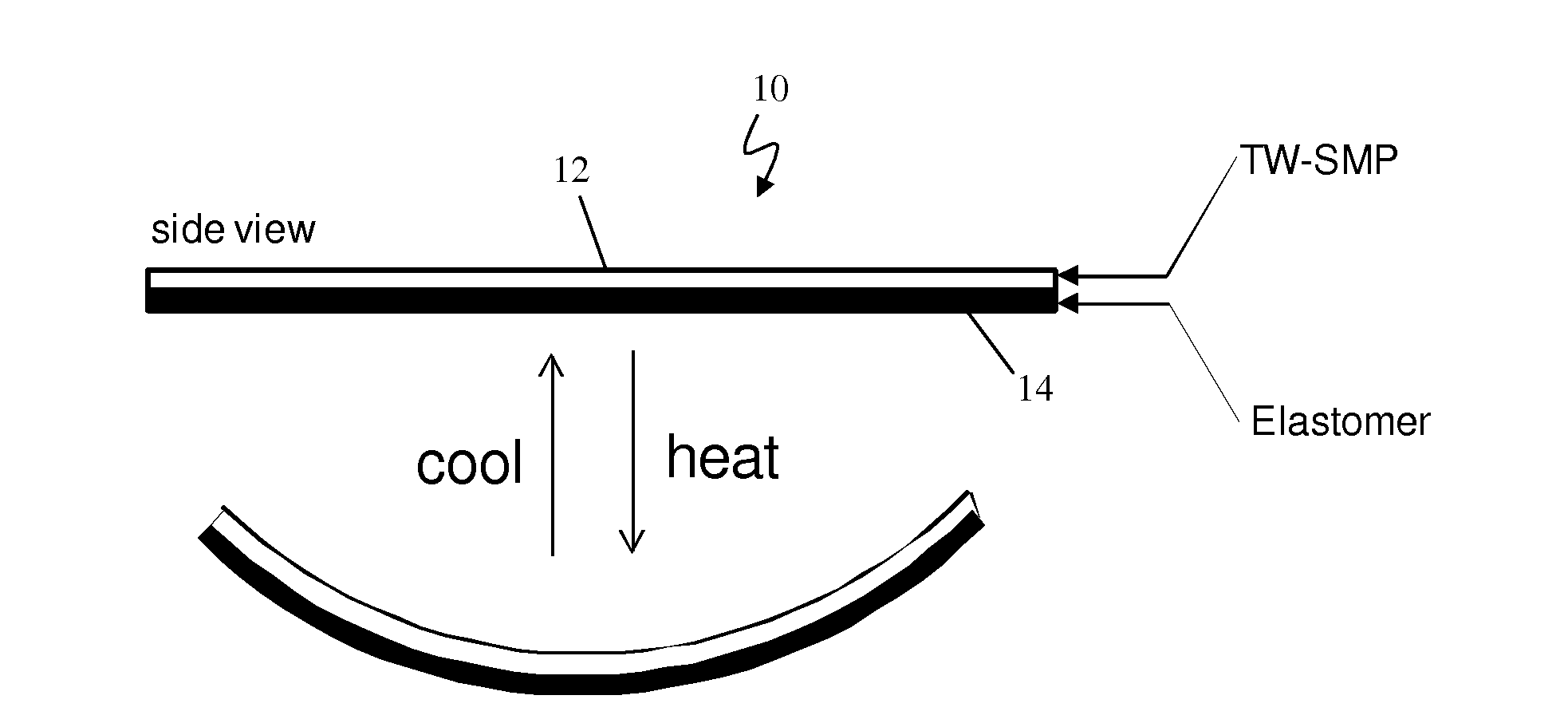
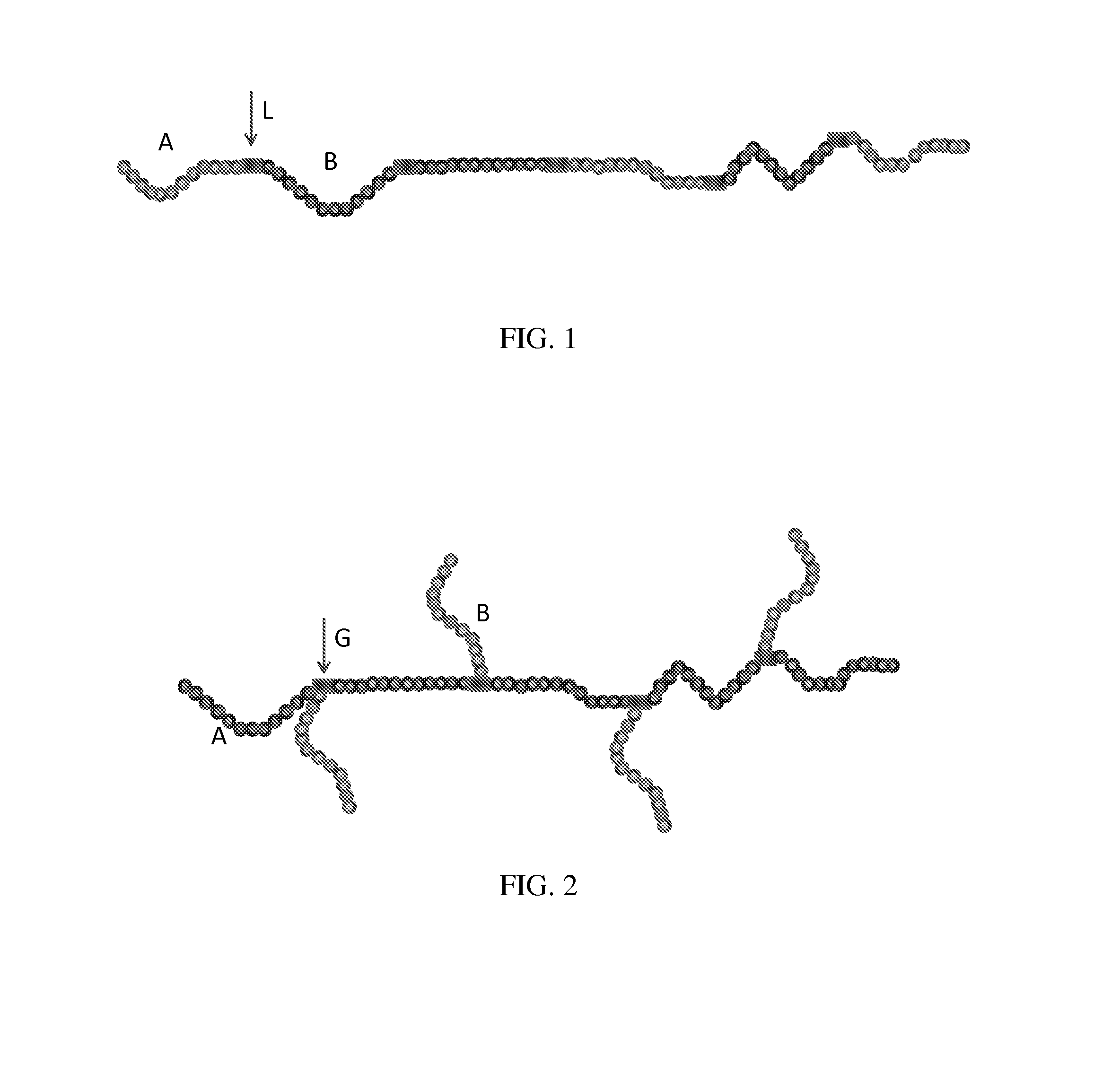
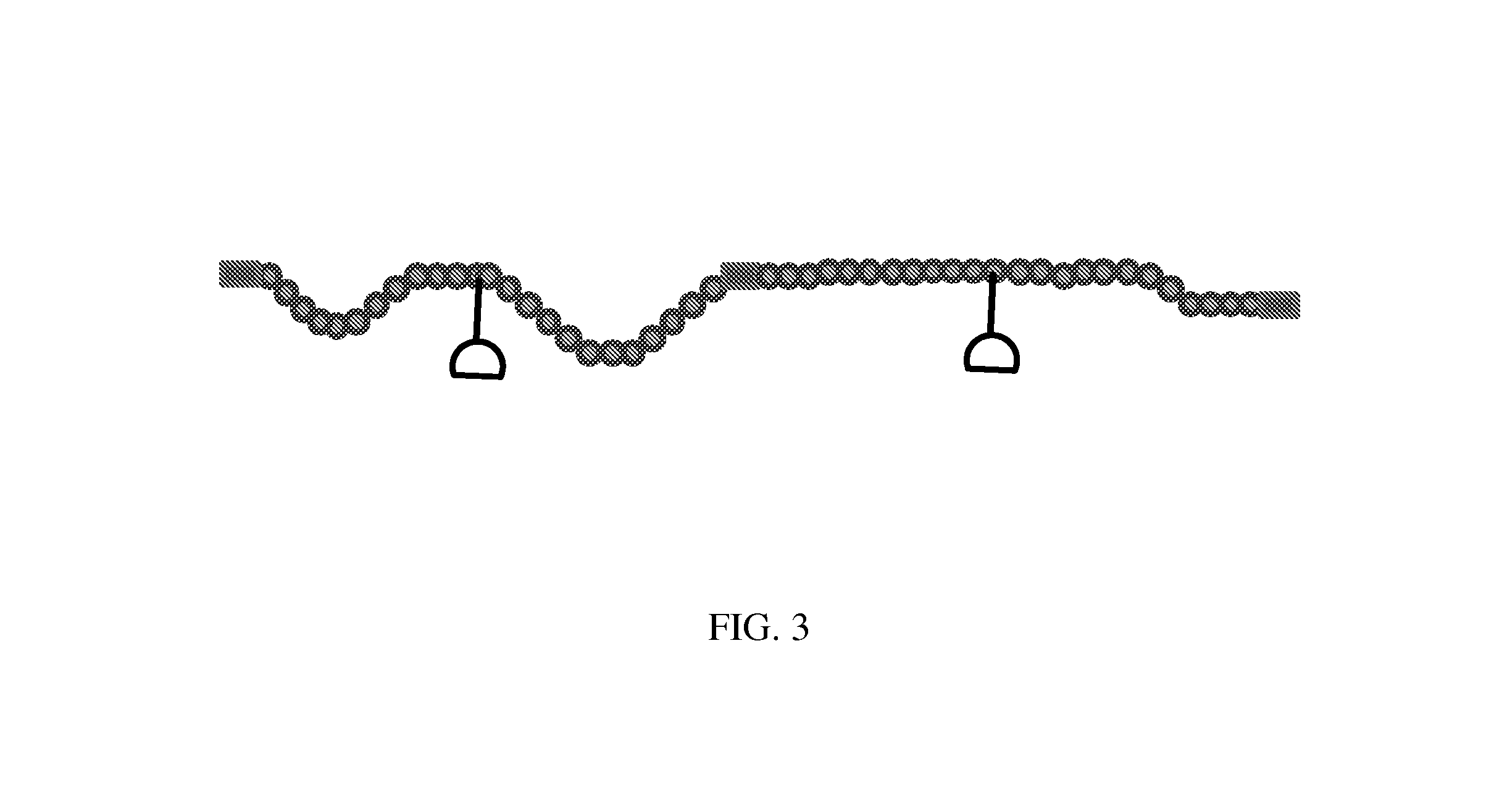
- Development of shape memory polymers with crystallizable network chains, crosslinking (physical or covalent), and stress bias, allowing for reversible actuation, featuring polymers that can crystallize near ambient temperatures with minimal undercooling, and multiple crosslinking methods to achieve robust synthesis, processability, and reversible shape memory.

Use of shape memory materials for introducing and/or liberating reactants, catalysts and additives
PatentWO2007107378A1
Innovation
- Encapsulating or distributing reactants, catalysts, and additives within shape memory materials, such as polymers, to provide protection against degradation and separation, and using external stimuli to liberate them at the desired time, ensuring stability and controlled release.
Sustainability and Environmental Impact Assessment
The environmental implications of shape-memory polymer actuators (SMPAs) represent a critical dimension in their market adoption and long-term viability. These smart materials offer significant sustainability advantages over traditional mechanical systems, primarily through their reduced energy consumption requirements. SMPAs can maintain deformed states without continuous energy input, resulting in operational efficiency improvements of up to 40% compared to conventional actuator technologies in specific applications.
Material composition presents both challenges and opportunities for sustainability. While many current SMPAs incorporate petroleum-derived polymers, research trends indicate promising developments in bio-based alternatives. Recent studies have demonstrated functional SMPAs derived from modified cellulose, chitosan, and other renewable resources, potentially reducing carbon footprints by 30-60% compared to synthetic counterparts. The catalyst components, particularly those containing rare earth elements, remain an environmental concern requiring lifecycle assessment.
End-of-life considerations reveal mixed outcomes for SMPA technologies. The thermoset nature of many shape-memory polymers limits recyclability, though emerging research in vitrimers and dynamic covalent networks shows potential for creating reversible crosslinking systems. These innovations could transform SMPAs into circular economy compatible materials, addressing a significant barrier to widespread adoption in environmentally conscious markets.
Water consumption metrics for SMPA manufacturing processes compare favorably to traditional mechanical component production, with reductions of approximately 25% in direct manufacturing water requirements. However, catalyst production water footprints remain substantial, particularly for platinum-group metal catalysts that require water-intensive mining and refining processes.
Emissions profiles across the SMPA lifecycle demonstrate notable advantages in the use phase but potential concerns during production and disposal. The simplified manufacturing processes reduce production emissions by approximately 15-20% compared to complex mechanical assemblies, though catalyst synthesis can offset these gains in certain formulations.
Regulatory landscapes across emerging markets show increasing emphasis on environmental performance metrics for new technologies. Nations including India, Brazil, and South Africa have implemented or proposed extended producer responsibility frameworks that would impact SMPA deployment. Manufacturers integrating environmental considerations into early design phases demonstrate competitive advantages in these regulatory environments.
Risk assessment frameworks specific to novel smart materials remain underdeveloped in many emerging markets, creating uncertainty for technology deployment. Standardized environmental impact assessment methodologies for SMPAs would significantly benefit market development by providing consistent evaluation criteria across different applications and regions.
Material composition presents both challenges and opportunities for sustainability. While many current SMPAs incorporate petroleum-derived polymers, research trends indicate promising developments in bio-based alternatives. Recent studies have demonstrated functional SMPAs derived from modified cellulose, chitosan, and other renewable resources, potentially reducing carbon footprints by 30-60% compared to synthetic counterparts. The catalyst components, particularly those containing rare earth elements, remain an environmental concern requiring lifecycle assessment.
End-of-life considerations reveal mixed outcomes for SMPA technologies. The thermoset nature of many shape-memory polymers limits recyclability, though emerging research in vitrimers and dynamic covalent networks shows potential for creating reversible crosslinking systems. These innovations could transform SMPAs into circular economy compatible materials, addressing a significant barrier to widespread adoption in environmentally conscious markets.
Water consumption metrics for SMPA manufacturing processes compare favorably to traditional mechanical component production, with reductions of approximately 25% in direct manufacturing water requirements. However, catalyst production water footprints remain substantial, particularly for platinum-group metal catalysts that require water-intensive mining and refining processes.
Emissions profiles across the SMPA lifecycle demonstrate notable advantages in the use phase but potential concerns during production and disposal. The simplified manufacturing processes reduce production emissions by approximately 15-20% compared to complex mechanical assemblies, though catalyst synthesis can offset these gains in certain formulations.
Regulatory landscapes across emerging markets show increasing emphasis on environmental performance metrics for new technologies. Nations including India, Brazil, and South Africa have implemented or proposed extended producer responsibility frameworks that would impact SMPA deployment. Manufacturers integrating environmental considerations into early design phases demonstrate competitive advantages in these regulatory environments.
Risk assessment frameworks specific to novel smart materials remain underdeveloped in many emerging markets, creating uncertainty for technology deployment. Standardized environmental impact assessment methodologies for SMPAs would significantly benefit market development by providing consistent evaluation criteria across different applications and regions.
Emerging Market Adoption Strategies and Barriers
The adoption of shape-memory polymer actuators in emerging markets presents unique challenges and opportunities that require tailored strategies. These markets often exhibit different technological infrastructures, regulatory environments, and economic conditions compared to developed markets, necessitating specialized approaches for successful implementation.
Cost considerations remain paramount in emerging economies where capital constraints are significant. Developing cost-effective manufacturing processes specifically for these markets can accelerate adoption rates. This includes exploring locally available materials as catalysts and designing simplified versions that maintain core functionality while reducing production expenses. Strategic partnerships with local manufacturers can further optimize cost structures through knowledge transfer and utilization of existing production facilities.
Regulatory frameworks in emerging markets frequently lack specific provisions for advanced materials like shape-memory polymers. Companies must engage proactively with regulatory bodies to establish appropriate standards and certification processes. Educational initiatives targeting regulatory officials about the technology's safety profile and potential benefits can facilitate more informed policy development. Creating regional compliance roadmaps helps navigate the diverse regulatory landscapes across different emerging economies.
Infrastructure limitations present significant barriers to widespread adoption. Many applications require reliable power sources, specialized maintenance capabilities, or technical expertise that may be scarce in certain regions. Developing robust designs that function effectively under variable conditions and require minimal specialized maintenance can address these challenges. Additionally, implementing modular systems allows for gradual technology adoption aligned with infrastructure development.
Knowledge transfer represents another critical component of successful market penetration. Establishing technical training programs in partnership with local educational institutions builds necessary expertise within the target markets. Creating accessible documentation in local languages and developing intuitive interfaces reduces the learning curve for end-users. Demonstration projects showcasing practical applications in relevant local contexts provide tangible evidence of the technology's value proposition.
Cultural factors and established practices can significantly influence technology adoption rates. Conducting thorough market research to understand local needs and preferences enables customization of solutions to address specific regional challenges. Engaging local stakeholders early in the development process ensures solutions align with cultural contexts and existing workflows, increasing acceptance and integration potential.
Cost considerations remain paramount in emerging economies where capital constraints are significant. Developing cost-effective manufacturing processes specifically for these markets can accelerate adoption rates. This includes exploring locally available materials as catalysts and designing simplified versions that maintain core functionality while reducing production expenses. Strategic partnerships with local manufacturers can further optimize cost structures through knowledge transfer and utilization of existing production facilities.
Regulatory frameworks in emerging markets frequently lack specific provisions for advanced materials like shape-memory polymers. Companies must engage proactively with regulatory bodies to establish appropriate standards and certification processes. Educational initiatives targeting regulatory officials about the technology's safety profile and potential benefits can facilitate more informed policy development. Creating regional compliance roadmaps helps navigate the diverse regulatory landscapes across different emerging economies.
Infrastructure limitations present significant barriers to widespread adoption. Many applications require reliable power sources, specialized maintenance capabilities, or technical expertise that may be scarce in certain regions. Developing robust designs that function effectively under variable conditions and require minimal specialized maintenance can address these challenges. Additionally, implementing modular systems allows for gradual technology adoption aligned with infrastructure development.
Knowledge transfer represents another critical component of successful market penetration. Establishing technical training programs in partnership with local educational institutions builds necessary expertise within the target markets. Creating accessible documentation in local languages and developing intuitive interfaces reduces the learning curve for end-users. Demonstration projects showcasing practical applications in relevant local contexts provide tangible evidence of the technology's value proposition.
Cultural factors and established practices can significantly influence technology adoption rates. Conducting thorough market research to understand local needs and preferences enables customization of solutions to address specific regional challenges. Engaging local stakeholders early in the development process ensures solutions align with cultural contexts and existing workflows, increasing acceptance and integration potential.
Unlock deeper insights with Patsnap Eureka Quick Research — get a full tech report to explore trends and direct your research. Try now!
Generate Your Research Report Instantly with AI Agent
Supercharge your innovation with Patsnap Eureka AI Agent Platform!