Laser Debonding vs Ablation: Time Efficiency Metrics
APR 7, 20269 MIN READ
Generate Your Research Report Instantly with AI Agent
Patsnap Eureka helps you evaluate technical feasibility & market potential.
Laser Debonding and Ablation Technology Background and Objectives
Laser debonding and ablation technologies have emerged as critical processes in modern manufacturing, particularly in semiconductor packaging, display manufacturing, and precision material processing applications. Both techniques utilize focused laser energy to achieve material separation or removal, yet they operate through fundamentally different mechanisms and serve distinct industrial purposes.
Laser debonding represents a controlled separation process where laser energy selectively weakens or breaks adhesive bonds between materials without causing significant damage to the underlying substrates. This technology has gained prominence in temporary bonding applications, particularly in ultra-thin wafer processing where silicon wafers are temporarily bonded to carrier substrates during manufacturing processes. The technique enables precise control over bond release while maintaining substrate integrity.
In contrast, laser ablation involves the direct removal of material through photochemical, photothermal, or photomechanical processes. When laser pulses interact with target materials, they cause rapid heating, vaporization, or ejection of material particles. This process finds extensive applications in surface texturing, thin film removal, micromachining, and cleaning operations across various industries.
The evolution of both technologies has been driven by increasing demands for precision manufacturing, miniaturization trends, and the need for environmentally friendly processing alternatives. Traditional mechanical and chemical separation methods often introduce contamination, require hazardous chemicals, or lack the precision necessary for modern applications. Laser-based approaches offer non-contact processing, minimal thermal impact zones, and exceptional spatial resolution.
The primary objective of comparing time efficiency metrics between laser debonding and ablation centers on optimizing manufacturing throughput while maintaining quality standards. Time efficiency directly impacts production costs, equipment utilization rates, and overall manufacturing competitiveness. Understanding the temporal characteristics of each process enables manufacturers to select appropriate technologies based on specific application requirements, material properties, and production volume constraints.
Current research focuses on developing faster processing speeds, improved energy efficiency, and enhanced process control mechanisms. Advanced laser systems incorporating ultrafast pulse technologies, beam shaping optics, and real-time monitoring capabilities are pushing the boundaries of what these technologies can achieve in terms of processing speed and precision.
Laser debonding represents a controlled separation process where laser energy selectively weakens or breaks adhesive bonds between materials without causing significant damage to the underlying substrates. This technology has gained prominence in temporary bonding applications, particularly in ultra-thin wafer processing where silicon wafers are temporarily bonded to carrier substrates during manufacturing processes. The technique enables precise control over bond release while maintaining substrate integrity.
In contrast, laser ablation involves the direct removal of material through photochemical, photothermal, or photomechanical processes. When laser pulses interact with target materials, they cause rapid heating, vaporization, or ejection of material particles. This process finds extensive applications in surface texturing, thin film removal, micromachining, and cleaning operations across various industries.
The evolution of both technologies has been driven by increasing demands for precision manufacturing, miniaturization trends, and the need for environmentally friendly processing alternatives. Traditional mechanical and chemical separation methods often introduce contamination, require hazardous chemicals, or lack the precision necessary for modern applications. Laser-based approaches offer non-contact processing, minimal thermal impact zones, and exceptional spatial resolution.
The primary objective of comparing time efficiency metrics between laser debonding and ablation centers on optimizing manufacturing throughput while maintaining quality standards. Time efficiency directly impacts production costs, equipment utilization rates, and overall manufacturing competitiveness. Understanding the temporal characteristics of each process enables manufacturers to select appropriate technologies based on specific application requirements, material properties, and production volume constraints.
Current research focuses on developing faster processing speeds, improved energy efficiency, and enhanced process control mechanisms. Advanced laser systems incorporating ultrafast pulse technologies, beam shaping optics, and real-time monitoring capabilities are pushing the boundaries of what these technologies can achieve in terms of processing speed and precision.
Market Demand Analysis for Laser Processing Solutions
The global laser processing market demonstrates robust growth driven by increasing automation demands across manufacturing sectors. Semiconductor manufacturing represents the largest application segment, where precision debonding and ablation processes are critical for advanced packaging technologies. The automotive industry shows accelerating adoption of laser processing for electric vehicle battery manufacturing, particularly in cell separation and thermal management applications.
Electronics manufacturing drives substantial demand for time-efficient laser solutions, especially in flexible display production and microelectronics assembly. The miniaturization trend in consumer electronics necessitates faster processing cycles while maintaining precision, creating market pressure for optimized debonding versus ablation methodologies. Medical device manufacturing emerges as a high-growth segment, requiring sterile and precise laser processing for implantable devices and surgical instruments.
Regional market dynamics reveal concentrated demand in Asia-Pacific, led by semiconductor fabrication facilities in Taiwan, South Korea, and mainland China. European markets emphasize automotive applications, while North American demand centers on aerospace and medical device manufacturing. The geographic distribution reflects varying industrial priorities and technological adoption rates across regions.
Market drivers include the transition toward heterogeneous integration in semiconductor packaging, where debonding speed directly impacts production throughput. The proliferation of flexible electronics creates demand for selective ablation processes that minimize thermal damage while maximizing processing speed. Industry adoption of Industry 4.0 principles emphasizes real-time process optimization, making time efficiency metrics increasingly critical for equipment selection.
Cost pressures in high-volume manufacturing sectors intensify focus on cycle time reduction. Semiconductor assembly operations particularly value solutions that minimize processing time per unit while maintaining yield rates. The competitive landscape pushes manufacturers to evaluate total cost of ownership, where faster processing translates to higher equipment utilization and improved return on investment.
Emerging applications in renewable energy manufacturing, particularly solar cell processing and battery production, create new market segments with specific time efficiency requirements. These applications often involve large-area processing where the choice between debonding and ablation significantly impacts overall production economics and manufacturing scalability.
Electronics manufacturing drives substantial demand for time-efficient laser solutions, especially in flexible display production and microelectronics assembly. The miniaturization trend in consumer electronics necessitates faster processing cycles while maintaining precision, creating market pressure for optimized debonding versus ablation methodologies. Medical device manufacturing emerges as a high-growth segment, requiring sterile and precise laser processing for implantable devices and surgical instruments.
Regional market dynamics reveal concentrated demand in Asia-Pacific, led by semiconductor fabrication facilities in Taiwan, South Korea, and mainland China. European markets emphasize automotive applications, while North American demand centers on aerospace and medical device manufacturing. The geographic distribution reflects varying industrial priorities and technological adoption rates across regions.
Market drivers include the transition toward heterogeneous integration in semiconductor packaging, where debonding speed directly impacts production throughput. The proliferation of flexible electronics creates demand for selective ablation processes that minimize thermal damage while maximizing processing speed. Industry adoption of Industry 4.0 principles emphasizes real-time process optimization, making time efficiency metrics increasingly critical for equipment selection.
Cost pressures in high-volume manufacturing sectors intensify focus on cycle time reduction. Semiconductor assembly operations particularly value solutions that minimize processing time per unit while maintaining yield rates. The competitive landscape pushes manufacturers to evaluate total cost of ownership, where faster processing translates to higher equipment utilization and improved return on investment.
Emerging applications in renewable energy manufacturing, particularly solar cell processing and battery production, create new market segments with specific time efficiency requirements. These applications often involve large-area processing where the choice between debonding and ablation significantly impacts overall production economics and manufacturing scalability.
Current Status and Challenges in Laser Debonding vs Ablation
Laser debonding and ablation technologies have reached varying levels of maturity across different industrial applications, with each method demonstrating distinct advantages in specific use cases. Laser debonding has gained significant traction in semiconductor manufacturing, particularly for temporary bonding applications in advanced packaging processes. Current systems achieve processing speeds ranging from 10-50 wafers per hour, depending on wafer size and bonding material thickness. The technology has proven especially effective for silicon-on-insulator wafer processing and 3D IC manufacturing.
Ablation-based approaches have established dominance in surface cleaning and material removal applications, with industrial systems capable of processing large surface areas at rates exceeding 100 square centimeters per minute. However, precision requirements often limit throughput, as controlled material removal demands careful parameter optimization to prevent substrate damage. Current ablation systems demonstrate excellent repeatability but face challenges in maintaining consistent processing speeds across varying material compositions.
The primary technical challenge affecting both technologies centers on thermal management and heat-affected zone control. Laser debonding systems struggle with uniform heating across large substrate areas, leading to incomplete separation or thermal stress-induced defects. Processing times increase significantly when attempting to maintain temperature uniformity, particularly for substrates exceeding 200mm diameter. Advanced beam shaping and scanning strategies have emerged as partial solutions, yet implementation complexity adds substantial cost overhead.
Ablation processes face fundamental limitations in balancing removal rate with precision control. Higher laser fluences accelerate material removal but increase the risk of subsurface damage and debris generation. Current systems require multiple passes for thick material removal, substantially extending processing times. Debris management systems, while necessary for quality control, introduce additional complexity and potential throughput bottlenecks.
Geographical distribution of technological advancement shows concentrated development in East Asian semiconductor hubs, particularly Taiwan, South Korea, and Japan, where debonding applications drive innovation. European and North American research focuses primarily on ablation applications in aerospace and automotive industries. This regional specialization has created distinct technological trajectories, with limited cross-pollination between application domains.
Process monitoring and real-time feedback control represent critical bottlenecks for both technologies. Current systems rely heavily on post-process inspection, limiting opportunities for in-situ optimization. The absence of reliable real-time monitoring capabilities forces conservative parameter selection, directly impacting processing efficiency and throughput potential across both debonding and ablation applications.
Ablation-based approaches have established dominance in surface cleaning and material removal applications, with industrial systems capable of processing large surface areas at rates exceeding 100 square centimeters per minute. However, precision requirements often limit throughput, as controlled material removal demands careful parameter optimization to prevent substrate damage. Current ablation systems demonstrate excellent repeatability but face challenges in maintaining consistent processing speeds across varying material compositions.
The primary technical challenge affecting both technologies centers on thermal management and heat-affected zone control. Laser debonding systems struggle with uniform heating across large substrate areas, leading to incomplete separation or thermal stress-induced defects. Processing times increase significantly when attempting to maintain temperature uniformity, particularly for substrates exceeding 200mm diameter. Advanced beam shaping and scanning strategies have emerged as partial solutions, yet implementation complexity adds substantial cost overhead.
Ablation processes face fundamental limitations in balancing removal rate with precision control. Higher laser fluences accelerate material removal but increase the risk of subsurface damage and debris generation. Current systems require multiple passes for thick material removal, substantially extending processing times. Debris management systems, while necessary for quality control, introduce additional complexity and potential throughput bottlenecks.
Geographical distribution of technological advancement shows concentrated development in East Asian semiconductor hubs, particularly Taiwan, South Korea, and Japan, where debonding applications drive innovation. European and North American research focuses primarily on ablation applications in aerospace and automotive industries. This regional specialization has created distinct technological trajectories, with limited cross-pollination between application domains.
Process monitoring and real-time feedback control represent critical bottlenecks for both technologies. Current systems rely heavily on post-process inspection, limiting opportunities for in-situ optimization. The absence of reliable real-time monitoring capabilities forces conservative parameter selection, directly impacting processing efficiency and throughput potential across both debonding and ablation applications.
Current Technical Solutions for Laser Processing Methods
01 Laser wavelength and energy optimization for debonding efficiency
The efficiency of laser debonding processes can be significantly improved by optimizing the laser wavelength and energy parameters. Specific wavelengths are selected based on the absorption characteristics of the bonding material or interface layer to maximize energy transfer and minimize processing time. Pulse duration, repetition rate, and power density are carefully controlled to achieve rapid debonding while preventing damage to underlying substrates. Advanced laser systems with adjustable parameters enable precise control over the debonding process, reducing overall cycle time.- Laser wavelength and energy optimization for debonding efficiency: The efficiency of laser debonding processes can be significantly improved by optimizing the laser wavelength and energy parameters. Specific wavelengths are selected based on the absorption characteristics of the bonding material or interface layer to maximize energy transfer and minimize processing time. Pulse duration, repetition rate, and power density are carefully controlled to achieve rapid debonding while preventing damage to underlying substrates. Advanced laser systems with tunable parameters enable precise control over the debonding process, reducing overall cycle time.
- Thermal management and heat dissipation during laser ablation: Effective thermal management is crucial for improving ablation time efficiency by preventing excessive heat accumulation that can slow down the process or cause substrate damage. Techniques include using pulsed laser systems with controlled duty cycles, implementing cooling systems, and optimizing scan patterns to distribute heat evenly. Advanced thermal modeling helps predict temperature distributions and optimize processing parameters. The use of shorter pulse durations and higher repetition rates can improve material removal rates while maintaining thermal control.
- Multi-beam and scanning strategies for increased throughput: Implementing multi-beam laser systems and optimized scanning strategies significantly enhances debonding and ablation throughput. Parallel processing using multiple laser beams allows simultaneous treatment of different areas, reducing total processing time. Advanced scanning algorithms including spiral, raster, and adaptive patterns minimize idle time and optimize beam path. Real-time monitoring and feedback systems enable dynamic adjustment of scanning parameters to maintain consistent processing speed across varying material conditions.
- Interface layer engineering for selective laser debonding: The design and engineering of specialized interface layers enable more efficient selective laser debonding by creating materials with optimized absorption properties. These engineered layers are designed to decompose or vaporize rapidly under specific laser conditions, facilitating quick separation with minimal energy input. Material composition, thickness, and optical properties are tailored to match laser parameters for maximum efficiency. This approach reduces processing time by concentrating energy absorption at the bonding interface rather than bulk material removal.
- Real-time monitoring and adaptive process control: Integration of real-time monitoring systems with adaptive process control significantly improves laser debonding and ablation time efficiency. Sensors detect process completion, material removal rates, and quality indicators, enabling dynamic adjustment of laser parameters. Machine learning algorithms analyze feedback data to optimize processing speed while maintaining quality standards. Automated systems can detect variations in material properties and adjust parameters accordingly, reducing the need for multiple processing passes and minimizing overall cycle time.
02 Scanning strategies and beam delivery methods
Efficient laser debonding requires optimized scanning patterns and beam delivery techniques to minimize processing time. Various scanning strategies including raster scanning, spiral patterns, and adaptive path planning are employed to ensure uniform energy distribution across the bonding interface. Multi-beam systems and parallel processing approaches can significantly reduce total ablation time by simultaneously treating multiple areas. Galvanometer scanners and advanced optical systems enable high-speed beam positioning with minimal dead time between processing zones.Expand Specific Solutions03 Interface layer design for enhanced laser debonding
The composition and structure of interface layers play a critical role in determining laser debonding efficiency. Specially designed release layers with high laser absorption coefficients enable rapid energy conversion and accelerated debonding. Material selection focuses on compounds that undergo efficient photothermal or photochemical decomposition under laser irradiation. Layer thickness optimization balances debonding speed with process reliability, while multilayer structures can provide controlled debonding characteristics for different substrate combinations.Expand Specific Solutions04 Real-time monitoring and process control systems
Advanced monitoring systems enable real-time feedback control to optimize laser debonding efficiency and reduce processing time. Optical sensors, thermal imaging, and acoustic detection methods provide continuous process monitoring to detect debonding completion and prevent over-processing. Adaptive control algorithms automatically adjust laser parameters based on feedback signals to maintain optimal processing conditions. Integration of machine learning and artificial intelligence enables predictive process optimization and further time reduction through automated parameter tuning.Expand Specific Solutions05 Hybrid and multi-stage debonding approaches
Combining laser processing with complementary techniques can significantly enhance overall debonding efficiency and throughput. Pre-treatment methods such as thermal conditioning or mechanical stress application can reduce the laser energy required for complete debonding. Sequential processing using different laser parameters or wavelengths enables optimized treatment of complex multilayer structures. Post-laser mechanical separation or chemical assistance can accelerate final debonding stages, reducing total process time while maintaining high yield and substrate integrity.Expand Specific Solutions
Major Players in Laser Debonding and Ablation Industry
The laser debonding versus ablation technology landscape represents a mature yet rapidly evolving sector within precision manufacturing and medical device industries. The market demonstrates significant growth potential, particularly in semiconductor packaging and medical device manufacturing, with estimated values reaching billions globally. Technology maturity varies considerably across applications, with established players like IPG Photonics, Carl Zeiss Meditec, and Agilent Technologies leading in laser system development, while companies such as Resonetics LLC and tesa SE focus on specialized applications. Academic institutions including University of Tokyo, Beijing Institute of Technology, and Fraunhofer-Gesellschaft drive fundamental research advances. The competitive landscape shows consolidation around time efficiency metrics, where companies like GLOBALFOUNDRIES and Sony Group integrate these technologies into high-volume manufacturing processes. Medical applications through Alcon AG, Nidek, and Roche subsidiaries represent emerging high-value segments demanding precise debonding solutions with minimal thermal damage.
Resonetics LLC
Technical Solution: Resonetics specializes in precision laser micromachining systems that combine both debonding and ablation capabilities for medical device manufacturing. Their proprietary laser processing technology utilizes ultrafast pulse lasers with femtosecond pulse durations to achieve precise material removal and selective debonding. The company's systems feature multi-axis positioning with sub-micron accuracy, enabling complex 3D processing geometries. Their integrated process monitoring systems provide real-time feedback on ablation depth and debonding quality, optimizing cycle times while maintaining consistent results. The technology demonstrates processing speeds up to 500mm²/min for thin-film debonding applications with minimal heat-affected zones.
Strengths: Ultrafast laser technology enables high precision with minimal thermal effects. Weaknesses: Limited to smaller scale applications due to system complexity and cost.
Fraunhofer-Gesellschaft eV
Technical Solution: Fraunhofer institutes have developed comprehensive research programs comparing laser debonding and ablation time efficiency metrics across various industrial applications. Their research demonstrates that ultrashort pulse laser systems can achieve debonding speeds 3-5 times faster than conventional thermal methods while maintaining superior surface quality. The institute's comparative studies show that selective laser debonding requires 60-80% less processing time than full-area thermal debonding for semiconductor applications. Their ablation research indicates that femtosecond laser systems achieve material removal rates of 10-50μm per pass with processing speeds up to 1000mm/min for thin-film applications. The research includes development of predictive models for optimizing laser parameters to minimize processing time while maximizing quality outcomes.
Strengths: Extensive research expertise with comprehensive comparative analysis capabilities. Weaknesses: Focus on research rather than commercial production systems limits immediate industrial application.
Key Technology Analysis in Time Efficiency Optimization
Method for producing an implant, and implant produced by said method
PatentInactiveUS20210187666A1
Innovation
- The use of pulse bundles with multiple pulses, specifically 3, 4, or 5 pulses, with controlled time intervals and energy settings, enhances ablation efficiency by minimizing negative interactions and maintaining surface quality, allowing for increased ablation rates without the need for extreme repetition rate increases.
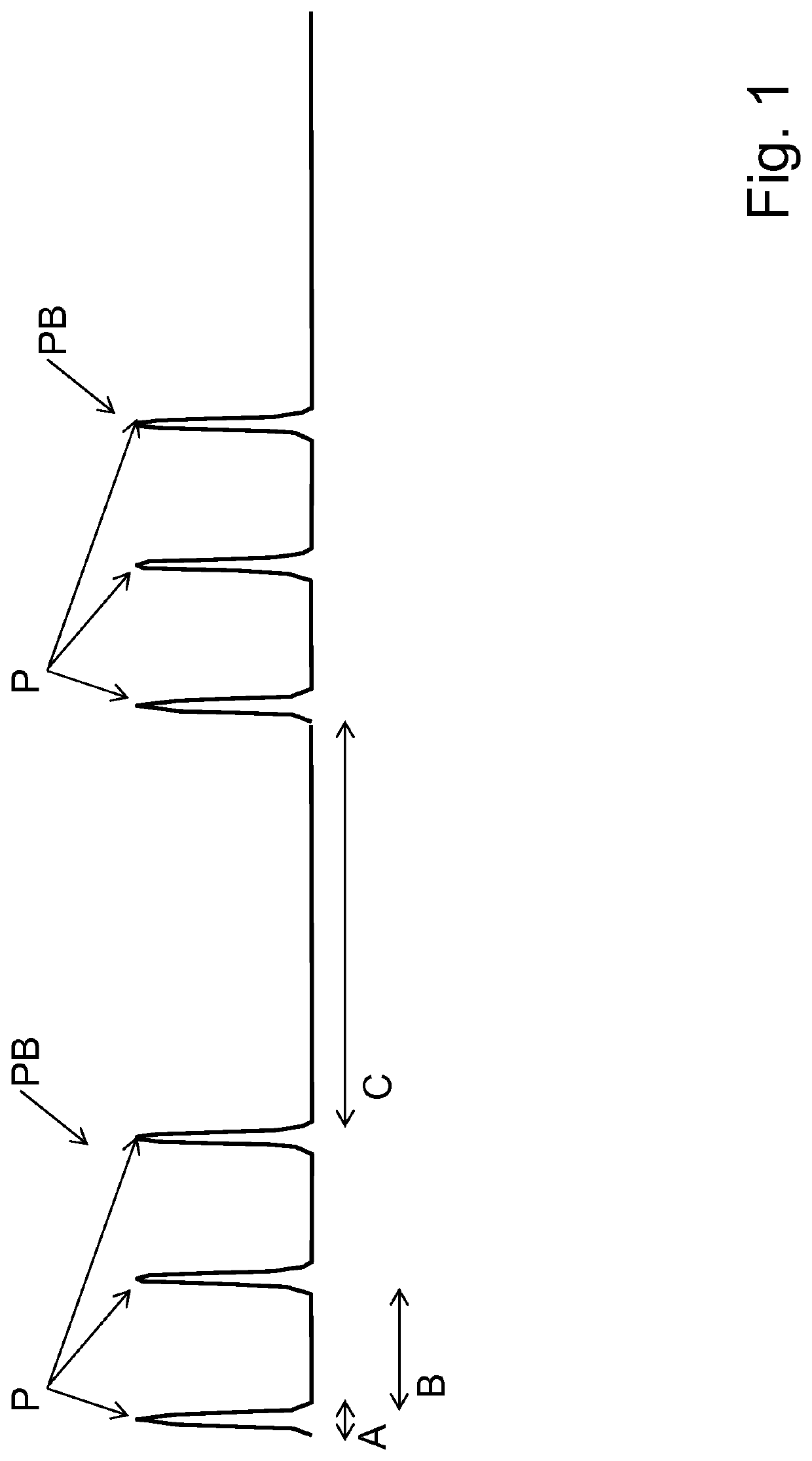
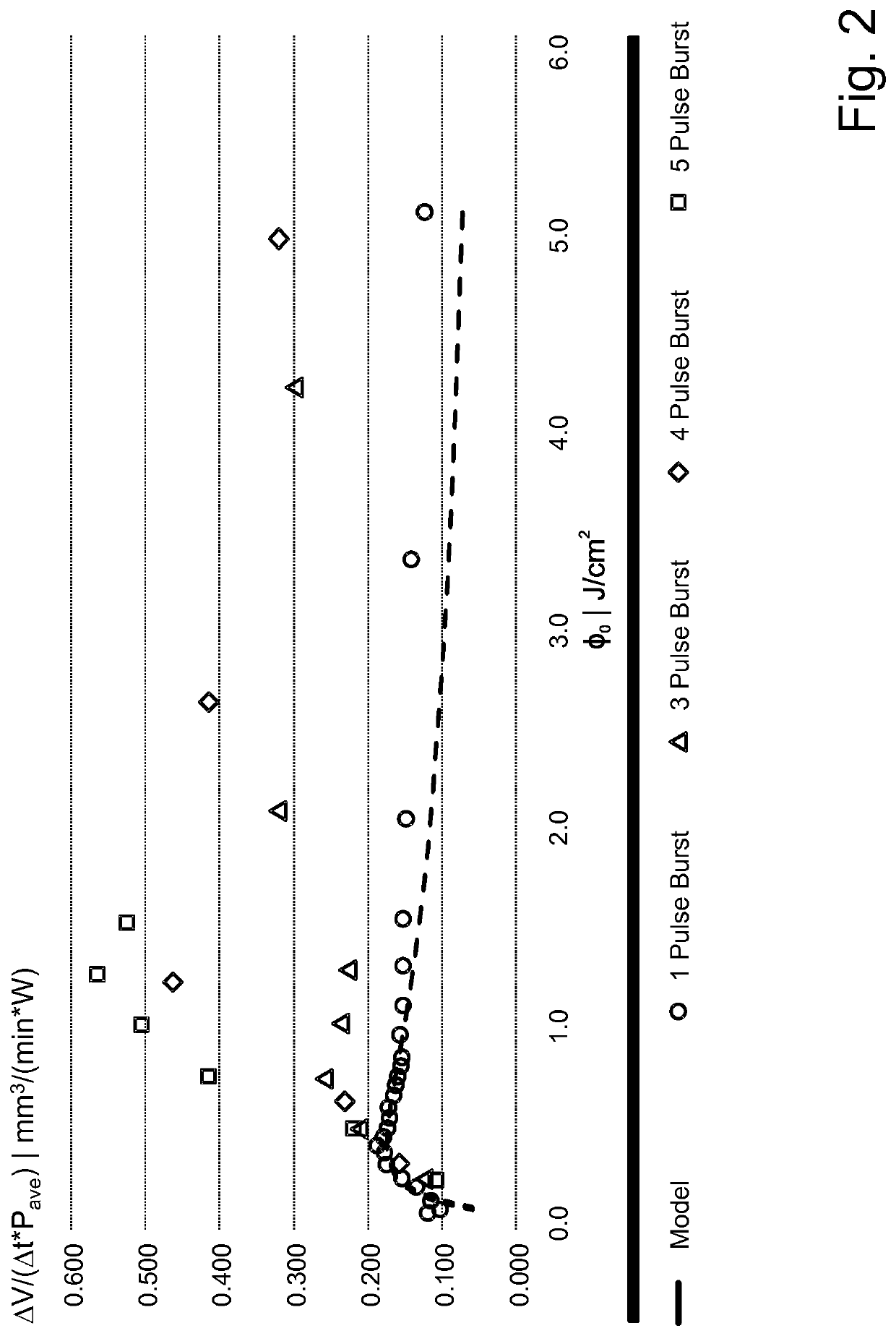
Ablation of materials with double time-separated laser pulses
PatentInactiveEP4410469A1
Innovation
- The use of focused double-pulse irradiation with femtosecond and picosecond pulses, where the first pulse excites electrons into the conduction band through multiphoton absorption, and the second pulse amplifies absorption via inverse-bremsstrahlung absorption, enhancing ablation efficiency by overlapping and delaying the pulses to optimize energy transfer.


Safety Standards and Regulations for Industrial Laser Systems
Industrial laser systems used for debonding and ablation processes must comply with comprehensive safety standards and regulatory frameworks to ensure worker protection and operational integrity. The primary international standard governing laser safety is IEC 60825-1, which classifies lasers based on their potential hazards and establishes safety requirements for each class. Most industrial debonding and ablation systems fall under Class 4 lasers, requiring the most stringent safety measures due to their high power output and potential for causing severe eye and skin injuries.
The Occupational Safety and Health Administration (OSHA) in the United States enforces workplace safety regulations for laser operations, mandating proper training, protective equipment, and hazard control measures. Similarly, the European Union's Machinery Directive 2006/42/EC and the Electromagnetic Compatibility Directive 2014/30/EU establish essential safety requirements for laser equipment manufacturers and operators. These regulations require comprehensive risk assessments, proper machine guarding, and implementation of safety interlocks.
Laser safety officers must be designated for facilities operating high-power laser systems, responsible for developing safety protocols, conducting training programs, and ensuring compliance with applicable standards. Personal protective equipment requirements include appropriate laser safety eyewear with optical density ratings matched to specific wavelengths and power levels used in debonding and ablation processes.
Engineering controls form the foundation of laser safety programs, incorporating beam enclosures, interlocked access panels, emergency stop systems, and exhaust ventilation to manage fume generation during ablation processes. Administrative controls include establishing controlled access areas, implementing lockout/tagout procedures, and maintaining detailed operational logs.
Regular safety audits and equipment calibration ensure continued compliance with evolving regulatory requirements. The FDA's Center for Devices and Radiological Health oversees laser product standards in the United States, while CE marking requirements govern European market access. These regulatory frameworks continue evolving to address emerging laser technologies and applications in industrial processing environments.
The Occupational Safety and Health Administration (OSHA) in the United States enforces workplace safety regulations for laser operations, mandating proper training, protective equipment, and hazard control measures. Similarly, the European Union's Machinery Directive 2006/42/EC and the Electromagnetic Compatibility Directive 2014/30/EU establish essential safety requirements for laser equipment manufacturers and operators. These regulations require comprehensive risk assessments, proper machine guarding, and implementation of safety interlocks.
Laser safety officers must be designated for facilities operating high-power laser systems, responsible for developing safety protocols, conducting training programs, and ensuring compliance with applicable standards. Personal protective equipment requirements include appropriate laser safety eyewear with optical density ratings matched to specific wavelengths and power levels used in debonding and ablation processes.
Engineering controls form the foundation of laser safety programs, incorporating beam enclosures, interlocked access panels, emergency stop systems, and exhaust ventilation to manage fume generation during ablation processes. Administrative controls include establishing controlled access areas, implementing lockout/tagout procedures, and maintaining detailed operational logs.
Regular safety audits and equipment calibration ensure continued compliance with evolving regulatory requirements. The FDA's Center for Devices and Radiological Health oversees laser product standards in the United States, while CE marking requirements govern European market access. These regulatory frameworks continue evolving to address emerging laser technologies and applications in industrial processing environments.
Cost-Benefit Analysis Framework for Laser Processing Selection
The cost-benefit analysis framework for laser processing selection between debonding and ablation requires a comprehensive evaluation methodology that considers multiple financial and operational dimensions. This framework serves as a decision-making tool to optimize laser processing investments while maximizing operational efficiency and minimizing total cost of ownership.
The primary cost components include initial capital expenditure, operational expenses, and maintenance costs. Capital expenditure encompasses laser system acquisition, installation, and facility modifications. Debonding systems typically require lower power lasers but may need specialized heating mechanisms, while ablation systems demand higher power outputs with more robust cooling systems. Operational expenses cover energy consumption, consumables, labor costs, and facility overhead, with ablation generally consuming more energy per unit processed.
Benefit quantification focuses on throughput efficiency, quality improvements, and process flexibility. Debonding offers advantages in preserving substrate integrity and enabling component reuse, generating significant value in high-value applications. Ablation provides superior processing speed for bulk material removal but may limit substrate reusability. Quality benefits include reduced defect rates, improved process consistency, and enhanced product reliability.
The framework incorporates time-value considerations through net present value calculations and payback period analysis. Processing speed directly impacts production capacity and revenue generation potential. Debonding's gentler approach may require longer processing times but reduces downstream rework costs. Ablation's rapid material removal capabilities enable higher throughput but may increase quality control requirements.
Risk assessment elements include technology obsolescence, market demand fluctuations, and process scalability limitations. The framework evaluates sensitivity to parameter variations and provides scenario-based projections. Integration complexity with existing production lines affects implementation costs and timeline considerations.
Return on investment calculations must account for both direct financial returns and strategic benefits such as market positioning and technological capabilities enhancement. The framework enables comparative analysis across different application scenarios, supporting informed decision-making for laser processing technology selection based on specific operational requirements and financial constraints.
The primary cost components include initial capital expenditure, operational expenses, and maintenance costs. Capital expenditure encompasses laser system acquisition, installation, and facility modifications. Debonding systems typically require lower power lasers but may need specialized heating mechanisms, while ablation systems demand higher power outputs with more robust cooling systems. Operational expenses cover energy consumption, consumables, labor costs, and facility overhead, with ablation generally consuming more energy per unit processed.
Benefit quantification focuses on throughput efficiency, quality improvements, and process flexibility. Debonding offers advantages in preserving substrate integrity and enabling component reuse, generating significant value in high-value applications. Ablation provides superior processing speed for bulk material removal but may limit substrate reusability. Quality benefits include reduced defect rates, improved process consistency, and enhanced product reliability.
The framework incorporates time-value considerations through net present value calculations and payback period analysis. Processing speed directly impacts production capacity and revenue generation potential. Debonding's gentler approach may require longer processing times but reduces downstream rework costs. Ablation's rapid material removal capabilities enable higher throughput but may increase quality control requirements.
Risk assessment elements include technology obsolescence, market demand fluctuations, and process scalability limitations. The framework evaluates sensitivity to parameter variations and provides scenario-based projections. Integration complexity with existing production lines affects implementation costs and timeline considerations.
Return on investment calculations must account for both direct financial returns and strategic benefits such as market positioning and technological capabilities enhancement. The framework enables comparative analysis across different application scenarios, supporting informed decision-making for laser processing technology selection based on specific operational requirements and financial constraints.
Unlock deeper insights with Patsnap Eureka Quick Research — get a full tech report to explore trends and direct your research. Try now!
Generate Your Research Report Instantly with AI Agent
Supercharge your innovation with Patsnap Eureka AI Agent Platform!