Lyocell Fabric vs Rayon: Versatility in Design
MAR 13, 20269 MIN READ
Generate Your Research Report Instantly with AI Agent
Patsnap Eureka helps you evaluate technical feasibility & market potential.
Lyocell and Rayon Fiber Technology Background and Goals
Lyocell and rayon represent two distinct generations of regenerated cellulose fiber technology, both derived from natural cellulose sources but employing fundamentally different manufacturing processes. The development of these fibers traces back to the late 19th century when the first regenerated cellulose fibers were created to address the growing demand for silk-like textiles at more accessible price points.
Rayon technology emerged first, with viscose rayon being commercialized in the early 1900s using a chemical process involving carbon disulfide and sodium hydroxide. This technology dominated the regenerated cellulose market for decades, establishing the foundation for man-made cellulosic fiber production. The process, while effective in creating silk-like properties, presented significant environmental challenges due to toxic chemical emissions and complex waste treatment requirements.
Lyocell technology represents a revolutionary advancement in regenerated cellulose processing, developed in the 1970s and commercialized in the 1990s. This closed-loop solvent spinning process utilizes N-methylmorpholine N-oxide (NMMO) as a direct solvent for cellulose, eliminating the need for chemical derivatization. The technology addresses the environmental concerns associated with traditional rayon production while achieving superior fiber properties.
The evolution from rayon to lyocell reflects the textile industry's progression toward sustainable manufacturing practices and enhanced performance characteristics. Key technological milestones include the development of high-tenacity rayon variants, modal fibers with improved wet strength, and ultimately lyocell's breakthrough in combining environmental responsibility with exceptional fiber performance.
Current technological objectives focus on optimizing fiber properties for diverse design applications while maintaining sustainability standards. For rayon, goals include improving production efficiency and reducing environmental impact through advanced recovery systems. Lyocell development targets enhanced moisture management, improved durability, and expanded application versatility across fashion, home textiles, and technical applications.
The comparative analysis of these technologies reveals distinct advantages in design versatility. Rayon excels in drape characteristics and color absorption, making it ideal for flowing garments and vibrant prints. Lyocell offers superior strength, moisture-wicking properties, and dimensional stability, enabling applications in performance wear and structured garments. Both technologies continue evolving to meet contemporary demands for sustainable, high-performance textiles that support innovative design concepts across multiple market segments.
Rayon technology emerged first, with viscose rayon being commercialized in the early 1900s using a chemical process involving carbon disulfide and sodium hydroxide. This technology dominated the regenerated cellulose market for decades, establishing the foundation for man-made cellulosic fiber production. The process, while effective in creating silk-like properties, presented significant environmental challenges due to toxic chemical emissions and complex waste treatment requirements.
Lyocell technology represents a revolutionary advancement in regenerated cellulose processing, developed in the 1970s and commercialized in the 1990s. This closed-loop solvent spinning process utilizes N-methylmorpholine N-oxide (NMMO) as a direct solvent for cellulose, eliminating the need for chemical derivatization. The technology addresses the environmental concerns associated with traditional rayon production while achieving superior fiber properties.
The evolution from rayon to lyocell reflects the textile industry's progression toward sustainable manufacturing practices and enhanced performance characteristics. Key technological milestones include the development of high-tenacity rayon variants, modal fibers with improved wet strength, and ultimately lyocell's breakthrough in combining environmental responsibility with exceptional fiber performance.
Current technological objectives focus on optimizing fiber properties for diverse design applications while maintaining sustainability standards. For rayon, goals include improving production efficiency and reducing environmental impact through advanced recovery systems. Lyocell development targets enhanced moisture management, improved durability, and expanded application versatility across fashion, home textiles, and technical applications.
The comparative analysis of these technologies reveals distinct advantages in design versatility. Rayon excels in drape characteristics and color absorption, making it ideal for flowing garments and vibrant prints. Lyocell offers superior strength, moisture-wicking properties, and dimensional stability, enabling applications in performance wear and structured garments. Both technologies continue evolving to meet contemporary demands for sustainable, high-performance textiles that support innovative design concepts across multiple market segments.
Market Demand Analysis for Sustainable Textile Fibers
The global textile industry is experiencing a fundamental shift toward sustainable fiber alternatives, driven by increasing environmental consciousness among consumers and stringent regulatory frameworks. This transformation has created substantial market opportunities for eco-friendly fibers, particularly lyocell and conventional rayon, which compete in the sustainable textile segment despite their different environmental profiles.
Consumer demand for sustainable textiles has intensified significantly across multiple demographics. Millennials and Generation Z consumers demonstrate strong purchasing preferences for environmentally responsible products, with sustainability becoming a primary decision factor in textile and apparel choices. This demographic shift has compelled fashion brands and textile manufacturers to prioritize sustainable fiber sourcing and transparent supply chain practices.
The fashion and apparel sector represents the largest market segment for sustainable fibers, encompassing fast fashion, luxury brands, and emerging sustainable fashion companies. Home textiles constitute another growing segment, with consumers seeking eco-friendly bedding, curtains, and upholstery materials. Technical textiles for automotive, medical, and industrial applications also show increasing demand for sustainable fiber solutions.
Regulatory pressures across major markets have accelerated sustainable fiber adoption. European Union regulations on textile waste and circular economy initiatives create mandatory requirements for sustainable material usage. Similar regulatory frameworks in North America and Asia-Pacific regions establish environmental standards that favor closed-loop production processes like those used in lyocell manufacturing.
Market capacity for sustainable fibers continues expanding, with established textile manufacturers investing in sustainable production capabilities and new market entrants focusing exclusively on eco-friendly alternatives. The versatility advantage of lyocell over conventional rayon in design applications has created premium market positioning opportunities, particularly in high-performance and luxury textile segments.
Supply chain considerations significantly influence market demand patterns. Brands increasingly require traceability and environmental impact documentation from fiber suppliers. This requirement favors lyocell producers who can demonstrate closed-loop manufacturing processes and reduced chemical usage compared to conventional rayon production methods.
The market demand trajectory indicates sustained growth potential for sustainable textile fibers, with lyocell positioned advantageously due to its superior environmental profile and enhanced design versatility compared to traditional rayon alternatives.
Consumer demand for sustainable textiles has intensified significantly across multiple demographics. Millennials and Generation Z consumers demonstrate strong purchasing preferences for environmentally responsible products, with sustainability becoming a primary decision factor in textile and apparel choices. This demographic shift has compelled fashion brands and textile manufacturers to prioritize sustainable fiber sourcing and transparent supply chain practices.
The fashion and apparel sector represents the largest market segment for sustainable fibers, encompassing fast fashion, luxury brands, and emerging sustainable fashion companies. Home textiles constitute another growing segment, with consumers seeking eco-friendly bedding, curtains, and upholstery materials. Technical textiles for automotive, medical, and industrial applications also show increasing demand for sustainable fiber solutions.
Regulatory pressures across major markets have accelerated sustainable fiber adoption. European Union regulations on textile waste and circular economy initiatives create mandatory requirements for sustainable material usage. Similar regulatory frameworks in North America and Asia-Pacific regions establish environmental standards that favor closed-loop production processes like those used in lyocell manufacturing.
Market capacity for sustainable fibers continues expanding, with established textile manufacturers investing in sustainable production capabilities and new market entrants focusing exclusively on eco-friendly alternatives. The versatility advantage of lyocell over conventional rayon in design applications has created premium market positioning opportunities, particularly in high-performance and luxury textile segments.
Supply chain considerations significantly influence market demand patterns. Brands increasingly require traceability and environmental impact documentation from fiber suppliers. This requirement favors lyocell producers who can demonstrate closed-loop manufacturing processes and reduced chemical usage compared to conventional rayon production methods.
The market demand trajectory indicates sustained growth potential for sustainable textile fibers, with lyocell positioned advantageously due to its superior environmental profile and enhanced design versatility compared to traditional rayon alternatives.
Current State and Challenges in Cellulose Fiber Production
The global cellulose fiber production industry currently operates through two primary manufacturing processes: the viscose process for conventional rayon and the closed-loop solvent spinning process for lyocell fibers. Traditional viscose production dominates the market with approximately 5.9 million tons annually, while lyocell production accounts for roughly 300,000 tons per year. The viscose process, developed over a century ago, involves treating cellulose with sodium hydroxide and carbon disulfide to create a viscous solution that can be extruded into fibers.
Lyocell production represents a more recent technological advancement, utilizing N-methylmorpholine N-oxide (NMMO) as a direct solvent to dissolve cellulose without chemical derivatization. This process achieves solvent recovery rates exceeding 99%, significantly reducing environmental impact compared to conventional viscose manufacturing. However, the higher production costs and technical complexity of lyocell manufacturing have limited its market penetration despite superior fiber properties.
Environmental sustainability challenges pose significant constraints across both production methods. Viscose manufacturing generates substantial chemical waste, including carbon disulfide emissions and zinc-containing wastewater, creating regulatory pressures in developed markets. The process requires extensive water treatment facilities and generates approximately 30-50 cubic meters of wastewater per ton of fiber produced. Air emissions control systems are essential but add considerable operational costs.
Raw material sourcing presents another critical challenge, as both processes depend on high-quality dissolving pulp derived from wood or cotton linters. Competition with paper and packaging industries for cellulose feedstock has intensified price volatility. Sustainable forestry practices and traceability requirements further complicate supply chain management, particularly as brands increasingly demand certified sustainable sources.
Technical limitations in fiber modification capabilities restrict design versatility for both fiber types. While lyocell offers superior strength and moisture management properties, achieving specific aesthetic characteristics such as silk-like luster or cotton-like hand feel requires complex post-processing treatments. Conventional rayon provides greater flexibility in chemical modification during production but at the cost of environmental performance.
Production scalability remains a significant barrier for lyocell technology. The NMMO solvent system requires precise temperature and concentration control, making large-scale manufacturing technically challenging and capital-intensive. Equipment corrosion issues and solvent degradation over multiple recycling cycles add operational complexity. Most lyocell production facilities operate at relatively small scales compared to viscose plants, limiting cost competitiveness and market availability for textile designers seeking sustainable alternatives.
Lyocell production represents a more recent technological advancement, utilizing N-methylmorpholine N-oxide (NMMO) as a direct solvent to dissolve cellulose without chemical derivatization. This process achieves solvent recovery rates exceeding 99%, significantly reducing environmental impact compared to conventional viscose manufacturing. However, the higher production costs and technical complexity of lyocell manufacturing have limited its market penetration despite superior fiber properties.
Environmental sustainability challenges pose significant constraints across both production methods. Viscose manufacturing generates substantial chemical waste, including carbon disulfide emissions and zinc-containing wastewater, creating regulatory pressures in developed markets. The process requires extensive water treatment facilities and generates approximately 30-50 cubic meters of wastewater per ton of fiber produced. Air emissions control systems are essential but add considerable operational costs.
Raw material sourcing presents another critical challenge, as both processes depend on high-quality dissolving pulp derived from wood or cotton linters. Competition with paper and packaging industries for cellulose feedstock has intensified price volatility. Sustainable forestry practices and traceability requirements further complicate supply chain management, particularly as brands increasingly demand certified sustainable sources.
Technical limitations in fiber modification capabilities restrict design versatility for both fiber types. While lyocell offers superior strength and moisture management properties, achieving specific aesthetic characteristics such as silk-like luster or cotton-like hand feel requires complex post-processing treatments. Conventional rayon provides greater flexibility in chemical modification during production but at the cost of environmental performance.
Production scalability remains a significant barrier for lyocell technology. The NMMO solvent system requires precise temperature and concentration control, making large-scale manufacturing technically challenging and capital-intensive. Equipment corrosion issues and solvent degradation over multiple recycling cycles add operational complexity. Most lyocell production facilities operate at relatively small scales compared to viscose plants, limiting cost competitiveness and market availability for textile designers seeking sustainable alternatives.
Current Production Methods for Lyocell and Rayon Fibers
01 Lyocell fiber production methods and processing techniques
Various methods for producing lyocell fibers involve dissolving cellulose in amine oxide solvents and extruding through spinnerets. The production process includes controlling fiber formation parameters, solvent recovery systems, and post-treatment processes to achieve desired fiber properties. Advanced processing techniques focus on optimizing the dissolution process, spinning conditions, and fiber coagulation to enhance fiber quality and production efficiency.- Manufacturing processes for lyocell and rayon fibers with enhanced properties: Various manufacturing methods have been developed to produce lyocell and rayon fibers with improved characteristics such as strength, durability, and texture. These processes involve specific spinning techniques, solvent systems, and fiber treatment methods that enhance the versatility of the final fabric for diverse design applications. The manufacturing innovations focus on controlling fiber morphology and crystallinity to achieve desired performance attributes.
- Blended fabric compositions combining lyocell or rayon with other fibers: Blending lyocell or rayon with other natural or synthetic fibers creates fabrics with unique properties that expand design possibilities. These blended compositions can combine the softness and drape of cellulosic fibers with the strength, elasticity, or functional properties of other materials. The blending ratios and fiber combinations can be adjusted to achieve specific aesthetic and performance characteristics suitable for various design applications.
- Surface treatment and finishing techniques for enhanced fabric aesthetics: Various surface modification and finishing methods have been developed to enhance the visual and tactile properties of lyocell and rayon fabrics. These treatments can create different textures, patterns, and appearances that increase design versatility. Finishing processes may include chemical treatments, mechanical processing, or coating applications that modify the fabric surface while maintaining the inherent properties of the cellulosic fibers.
- Dyeing and coloration methods for cellulosic fabrics: Specialized dyeing techniques and coloration processes have been developed specifically for lyocell and rayon fabrics to achieve vibrant colors and patterns. These methods address the unique chemical structure of regenerated cellulose fibers and optimize dye uptake, color fastness, and uniformity. The dyeing innovations enable designers to create diverse color palettes and patterns while maintaining fabric quality and environmental sustainability.
- Functional modifications for specialized design applications: Technologies have been developed to impart specific functional properties to lyocell and rayon fabrics, expanding their use in specialized design contexts. These modifications can include moisture management, antimicrobial properties, wrinkle resistance, or enhanced dimensional stability. Such functional enhancements allow designers to utilize these cellulosic fabrics in applications requiring specific performance characteristics beyond basic aesthetic qualities.
02 Blended fabrics combining lyocell with other fibers
Blending lyocell fibers with other natural or synthetic fibers creates fabrics with enhanced properties and design versatility. These blended compositions can combine the moisture absorption and softness of lyocell with the strength and durability of other fibers. The blending ratios and fiber combinations can be adjusted to achieve specific textile characteristics suitable for various applications including apparel and home textiles.Expand Specific Solutions03 Surface modification and finishing treatments for lyocell fabrics
Surface treatment technologies enhance the functional properties and aesthetic appeal of lyocell and rayon fabrics. These treatments include enzymatic processing, chemical modifications, and physical treatments to improve properties such as wrinkle resistance, dimensional stability, and color fastness. Finishing processes can also impart special characteristics like water repellency, antibacterial properties, or enhanced dyeability to expand design possibilities.Expand Specific Solutions04 Fabric structure and weaving techniques for design versatility
Various weaving and knitting structures utilizing lyocell and rayon fibers enable diverse fabric designs and textures. Different fabric constructions including plain weave, twill, jacquard, and knitted structures provide unique aesthetic and functional characteristics. The fabric architecture can be engineered to achieve specific drape, stretch, breathability, and visual effects suitable for fashion and technical textile applications.Expand Specific Solutions05 Dyeing and coloration methods for lyocell and rayon textiles
Specialized dyeing processes and colorant systems are developed to achieve vibrant and durable colors on lyocell and rayon fabrics. These methods address the unique chemical structure of regenerated cellulose fibers and optimize dye uptake, color fastness, and environmental sustainability. Advanced coloration techniques include reactive dyeing, pigment printing, and digital printing technologies that enable complex patterns and designs while maintaining fiber integrity.Expand Specific Solutions
Key Players in Lyocell and Rayon Manufacturing Industry
The lyocell fabric versus rayon market represents a mature yet evolving segment within the sustainable textile industry, currently valued at several billion dollars globally with steady growth driven by eco-conscious consumer demand. The industry is transitioning from traditional rayon production to more sustainable lyocell manufacturing, positioning itself in the growth-to-maturity phase. Technology maturity varies significantly across market players, with established leaders like Lenzing AG demonstrating advanced lyocell production capabilities through their TENCEL brand, while Asian manufacturers including HYOSUNG Corp., KOLON IND INC, and Chinese companies like Dangyang Hongyang New Material Technology are rapidly developing competitive technologies. Research institutions such as Donghua University and Wuhan Textile University contribute to innovation advancement, while specialized manufacturers like Acegreen Eco-Material Technology focus on environmentally friendly fiber production. The competitive landscape shows a clear technological divide between premium sustainable producers and traditional rayon manufacturers adapting to market demands.
Lenzing AG
Technical Solution: Lenzing AG is a global leader in specialty fibers, particularly known for their TENCEL™ lyocell fibers. Their closed-loop production process recovers and reuses over 99% of the solvent, making it highly sustainable. The company has developed various grades of lyocell fibers including TENCEL™ Lyocell for fashion and home textiles, and TENCEL™ Modal for enhanced softness. Their fibers offer superior moisture management, breathability, and natural antibacterial properties. Lenzing's lyocell production utilizes eucalyptus wood from sustainably managed forests, and their innovative spinning technology creates fibers with exceptional strength both wet and dry, making them highly versatile for various textile applications from activewear to luxury bedding.
Strengths: Market leadership in sustainable fiber production, advanced closed-loop technology, strong brand recognition with TENCEL™. Weaknesses: Higher production costs compared to conventional rayon, limited raw material sources.
HYOSUNG Corp.
Technical Solution: HYOSUNG Corporation has developed advanced lyocell fiber production capabilities through their subsidiary HYOSUNG Advanced Materials. They focus on producing eco-friendly cellulose fibers using sustainable manufacturing processes. Their lyocell fibers are designed for high-performance applications including sportswear, intimate apparel, and home textiles. The company has invested in closed-loop production technology that minimizes environmental impact while maintaining fiber quality. HYOSUNG's lyocell fibers offer excellent moisture absorption, thermal regulation, and biodegradability. They have also developed specialized variants for different applications, including antimicrobial treatments and enhanced durability features for technical textiles.
Strengths: Strong technical expertise in fiber manufacturing, diversified product portfolio, cost-competitive production. Weaknesses: Less established brand presence in lyocell market compared to European competitors, limited global distribution network.
Core Technologies in Closed-loop Fiber Production
Upholstery and Wall Panel Weight Woven Fabrics
PatentInactiveUS20110223398A1
Innovation
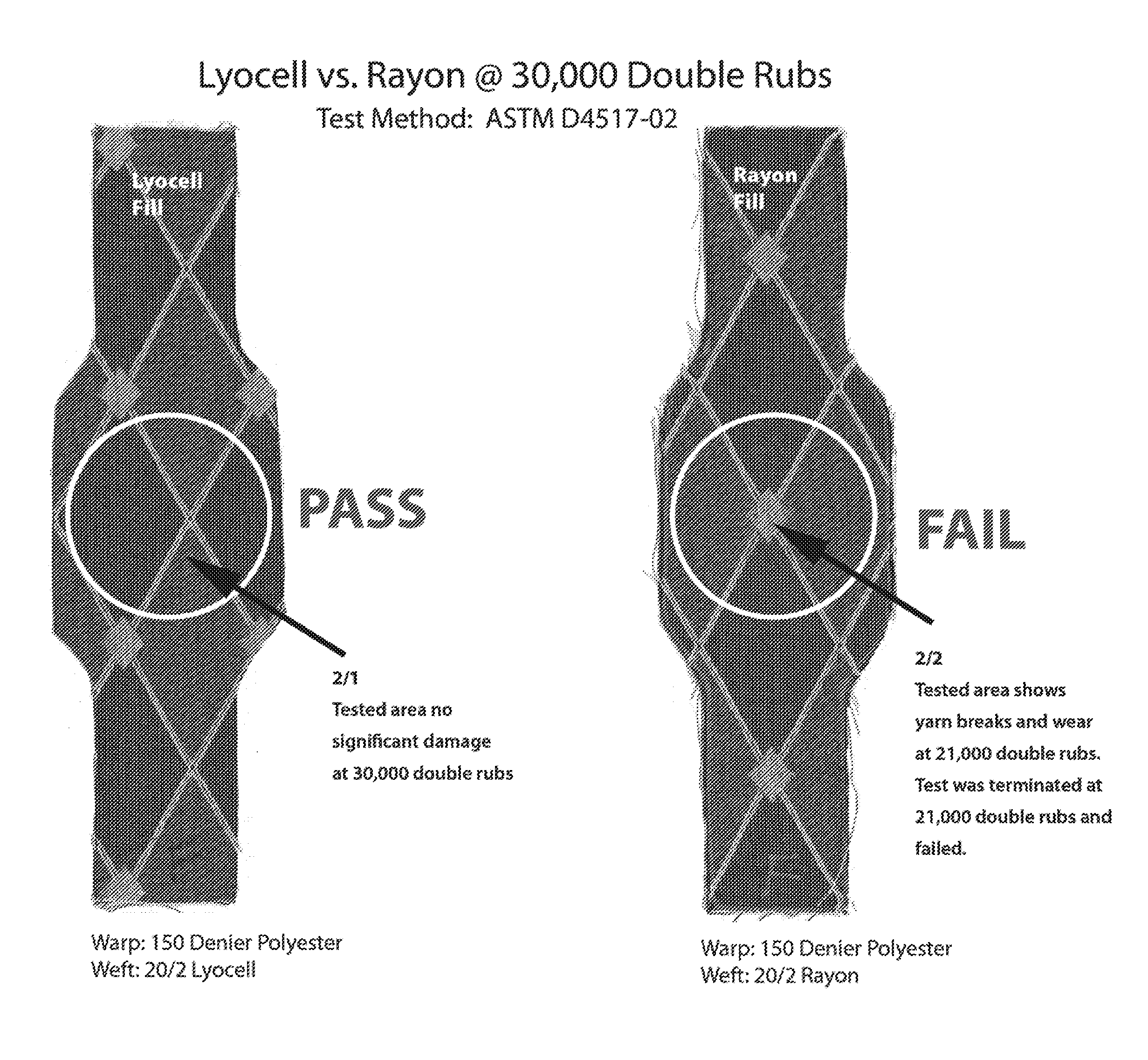
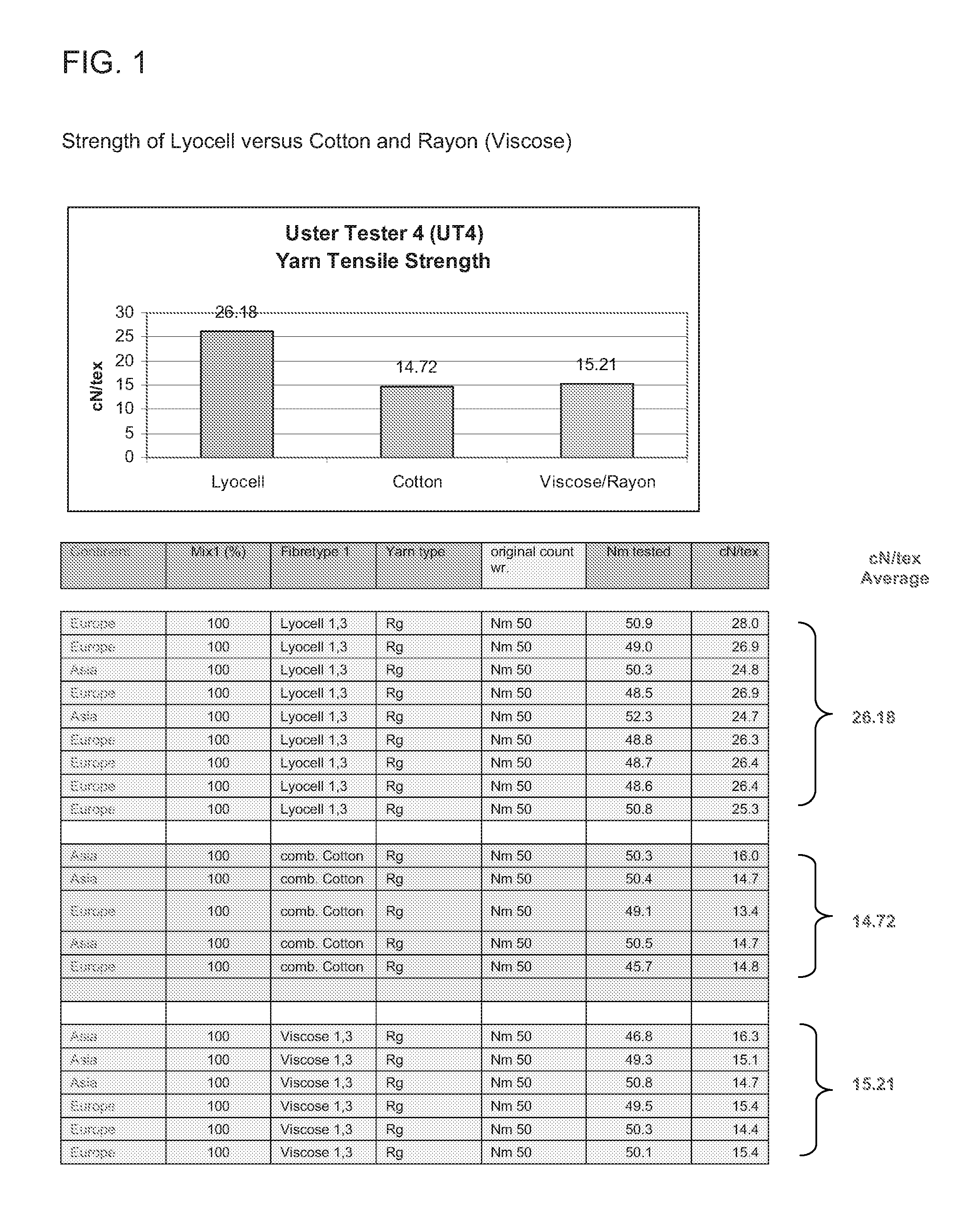
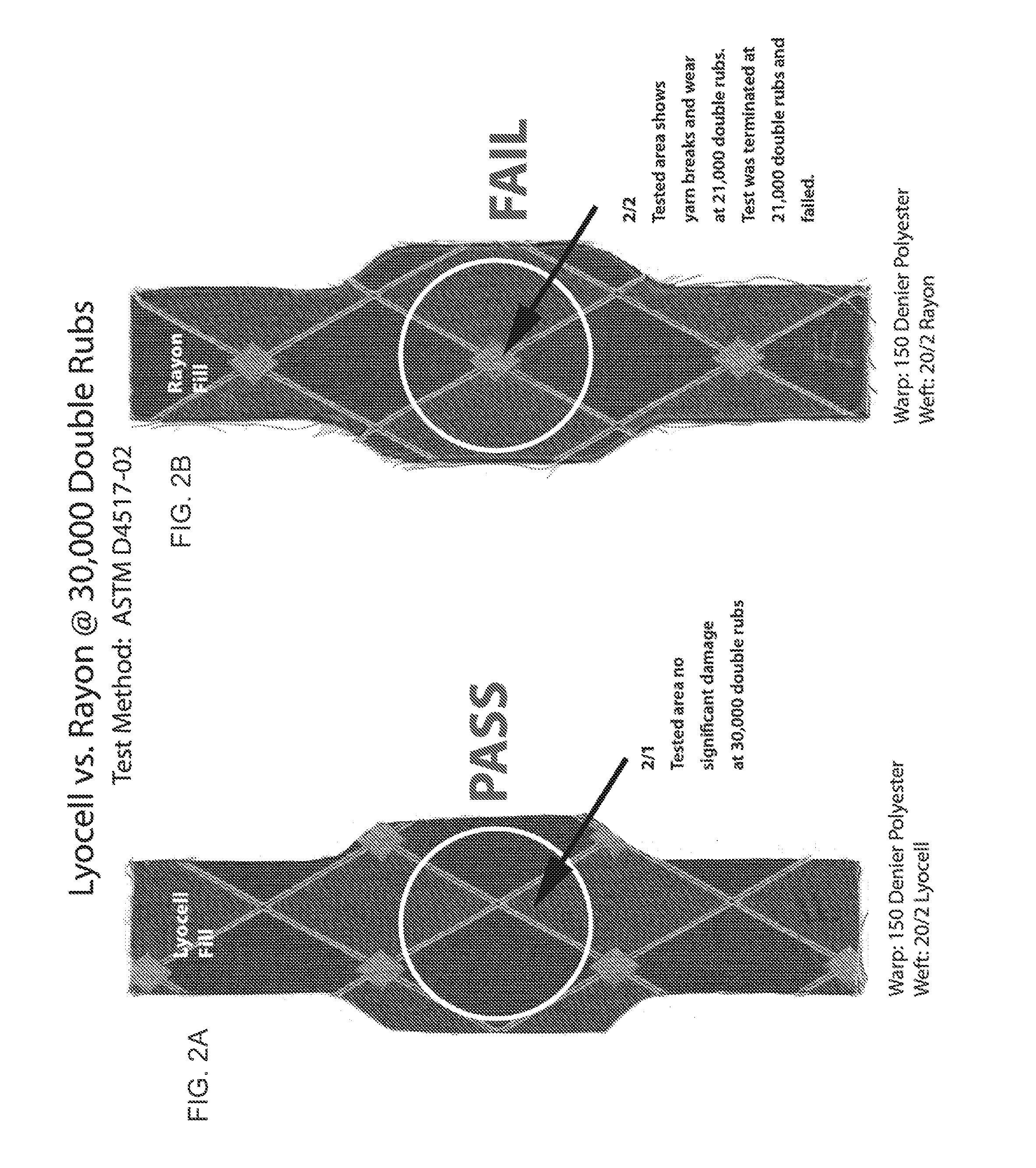
- Development of woven yarn-dyed jacquards and dobby constructions using lyocell fiber blends with natural or man-made fibers, such as polyester, nylon, and cotton, to create high durability heavy-weight fabrics that incorporate 100% lyocell or lyocell blended with other fibers, ensuring consistent color and pattern matching, and meeting stringent testing requirements like abrasion resistance and flame codes.

Lyocell multi-filament for tire cord and method of producing the same
PatentInactiveUS20040126577A1
Innovation
- A method of producing a lyocell multi-filament by dissolving cellulose and polyvinyl alcohol in N-methyl morpholine N-oxide and water, extruding through a spinning nozzle with air gaps into a conical coagulation bath, followed by washing, drying, and oiling, to achieve high tenacity and modulus suitable for tire cords.


Environmental Regulations for Textile Manufacturing
The textile manufacturing industry faces increasingly stringent environmental regulations worldwide, particularly affecting the production of cellulose-based fibers like lyocell and rayon. These regulations have fundamentally reshaped manufacturing processes, chemical usage, and waste management practices across the sector.
Water pollution control represents the most critical regulatory focus for textile manufacturers. The European Union's Industrial Emissions Directive sets strict limits on chemical oxygen demand (COD) and biochemical oxygen demand (BOD) in wastewater discharge. Similarly, China's National Emission Standards for Textile Dyeing and Finishing Industry impose maximum allowable concentrations for various pollutants, directly impacting rayon production facilities that traditionally generate high volumes of contaminated wastewater.
Chemical safety regulations have intensified scrutiny of solvent usage in fiber production. The REACH regulation in Europe requires comprehensive registration and evaluation of chemicals used in textile manufacturing, particularly affecting viscose rayon production which relies on carbon disulfide and sodium hydroxide. These substances face increasing restrictions due to their environmental and health impacts, driving manufacturers toward cleaner alternatives like the N-Methylmorpholine N-oxide (NMMO) process used in lyocell production.
Air emission standards have become more restrictive, targeting volatile organic compounds (VOCs) and hazardous air pollutants. The U.S. Clean Air Act amendments specifically address textile manufacturing emissions, while similar regulations in Asia-Pacific regions limit sulfur compound releases from rayon production facilities. These standards favor closed-loop processes that minimize atmospheric emissions.
Waste management regulations now mandate comprehensive tracking and treatment of solid waste streams. The Basel Convention's amendments affect international trade of textile waste, while domestic regulations in major manufacturing countries require detailed waste characterization and disposal documentation. This regulatory environment particularly challenges traditional rayon production, which generates significant solid waste compared to lyocell manufacturing.
Emerging regulations focus on circular economy principles, requiring manufacturers to demonstrate sustainable resource utilization and waste minimization. Extended Producer Responsibility frameworks in various jurisdictions are beginning to encompass textile products, potentially affecting fiber selection criteria and manufacturing process optimization strategies for both lyocell and rayon producers.
Water pollution control represents the most critical regulatory focus for textile manufacturers. The European Union's Industrial Emissions Directive sets strict limits on chemical oxygen demand (COD) and biochemical oxygen demand (BOD) in wastewater discharge. Similarly, China's National Emission Standards for Textile Dyeing and Finishing Industry impose maximum allowable concentrations for various pollutants, directly impacting rayon production facilities that traditionally generate high volumes of contaminated wastewater.
Chemical safety regulations have intensified scrutiny of solvent usage in fiber production. The REACH regulation in Europe requires comprehensive registration and evaluation of chemicals used in textile manufacturing, particularly affecting viscose rayon production which relies on carbon disulfide and sodium hydroxide. These substances face increasing restrictions due to their environmental and health impacts, driving manufacturers toward cleaner alternatives like the N-Methylmorpholine N-oxide (NMMO) process used in lyocell production.
Air emission standards have become more restrictive, targeting volatile organic compounds (VOCs) and hazardous air pollutants. The U.S. Clean Air Act amendments specifically address textile manufacturing emissions, while similar regulations in Asia-Pacific regions limit sulfur compound releases from rayon production facilities. These standards favor closed-loop processes that minimize atmospheric emissions.
Waste management regulations now mandate comprehensive tracking and treatment of solid waste streams. The Basel Convention's amendments affect international trade of textile waste, while domestic regulations in major manufacturing countries require detailed waste characterization and disposal documentation. This regulatory environment particularly challenges traditional rayon production, which generates significant solid waste compared to lyocell manufacturing.
Emerging regulations focus on circular economy principles, requiring manufacturers to demonstrate sustainable resource utilization and waste minimization. Extended Producer Responsibility frameworks in various jurisdictions are beginning to encompass textile products, potentially affecting fiber selection criteria and manufacturing process optimization strategies for both lyocell and rayon producers.
Circular Economy Impact on Fiber Design Versatility
The circular economy paradigm is fundamentally reshaping the design versatility landscape for both Lyocell and rayon fibers, creating new opportunities and constraints that influence their comparative advantages in textile applications. This economic model emphasizes resource efficiency, waste minimization, and closed-loop production systems, directly impacting how designers approach fiber selection and product development strategies.
Lyocell demonstrates superior alignment with circular economy principles through its inherently sustainable production process and enhanced recyclability characteristics. The closed-loop manufacturing system used in Lyocell production recovers and reuses over 99% of the solvent, creating minimal waste streams and reducing environmental impact. This efficiency translates into greater design freedom for manufacturers seeking to meet sustainability targets while maintaining product performance standards.
The biodegradability advantage of Lyocell over conventional rayon significantly expands design possibilities in applications where end-of-life considerations are paramount. Fashion brands and textile manufacturers can now explore innovative product concepts, including temporary-use items, seasonal collections, and biodegradable technical textiles, knowing that Lyocell-based products will decompose naturally without leaving harmful residues.
Circular economy principles are driving the development of fiber-to-fiber recycling technologies, where Lyocell shows promising potential for mechanical and chemical recycling processes. This capability enables designers to create products with planned obsolescence cycles, where materials can be recovered and reprocessed into new textile applications, maintaining quality standards across multiple lifecycle iterations.
The economic incentives embedded within circular economy frameworks are encouraging textile manufacturers to prioritize fibers that support resource efficiency goals. Lyocell's lower water consumption during production and reduced chemical discharge requirements align with regulatory trends and consumer preferences, providing designers with broader market acceptance and reduced compliance constraints.
However, the transition toward circular economy models also presents challenges for both fiber types. The need for supply chain transparency and traceability requires enhanced documentation and certification processes, potentially limiting design flexibility in terms of sourcing options and production timelines. Additionally, the emphasis on durability and longevity may conflict with traditional fast-fashion design approaches, necessitating fundamental shifts in product development strategies.
Lyocell demonstrates superior alignment with circular economy principles through its inherently sustainable production process and enhanced recyclability characteristics. The closed-loop manufacturing system used in Lyocell production recovers and reuses over 99% of the solvent, creating minimal waste streams and reducing environmental impact. This efficiency translates into greater design freedom for manufacturers seeking to meet sustainability targets while maintaining product performance standards.
The biodegradability advantage of Lyocell over conventional rayon significantly expands design possibilities in applications where end-of-life considerations are paramount. Fashion brands and textile manufacturers can now explore innovative product concepts, including temporary-use items, seasonal collections, and biodegradable technical textiles, knowing that Lyocell-based products will decompose naturally without leaving harmful residues.
Circular economy principles are driving the development of fiber-to-fiber recycling technologies, where Lyocell shows promising potential for mechanical and chemical recycling processes. This capability enables designers to create products with planned obsolescence cycles, where materials can be recovered and reprocessed into new textile applications, maintaining quality standards across multiple lifecycle iterations.
The economic incentives embedded within circular economy frameworks are encouraging textile manufacturers to prioritize fibers that support resource efficiency goals. Lyocell's lower water consumption during production and reduced chemical discharge requirements align with regulatory trends and consumer preferences, providing designers with broader market acceptance and reduced compliance constraints.
However, the transition toward circular economy models also presents challenges for both fiber types. The need for supply chain transparency and traceability requires enhanced documentation and certification processes, potentially limiting design flexibility in terms of sourcing options and production timelines. Additionally, the emphasis on durability and longevity may conflict with traditional fast-fashion design approaches, necessitating fundamental shifts in product development strategies.
Unlock deeper insights with Patsnap Eureka Quick Research — get a full tech report to explore trends and direct your research. Try now!
Generate Your Research Report Instantly with AI Agent
Supercharge your innovation with Patsnap Eureka AI Agent Platform!