Magnesium Nitride Synthesis: Advanced Techniques Explored
AUG 1, 20259 MIN READ
Generate Your Research Report Instantly with AI Agent
PatSnap Eureka helps you evaluate technical feasibility & market potential.
Mg3N2 Synthesis Background and Objectives
Magnesium nitride (Mg3N2) synthesis has garnered significant attention in recent years due to its potential applications in various fields, including energy storage, catalysis, and advanced materials. The development of this compound traces back to the early 20th century, but it is only in the past few decades that researchers have intensified their efforts to optimize its production and explore its full potential.
The evolution of Mg3N2 synthesis techniques has been driven by the increasing demand for high-purity, nanostructured materials with controlled morphologies. Traditional methods, such as direct nitridation of magnesium metal with nitrogen gas at high temperatures, have been gradually supplemented and, in some cases, replaced by more advanced approaches. These newer techniques aim to address the limitations of conventional methods, such as poor control over particle size and morphology, as well as the need for extreme reaction conditions.
Recent technological advancements have paved the way for innovative synthesis routes, including solution-based methods, plasma-assisted processes, and mechanochemical reactions. These approaches offer the potential for lower reaction temperatures, better control over product characteristics, and improved scalability. The ongoing research in this field is focused on developing environmentally friendly, cost-effective, and industrially viable production methods.
The primary objectives of current Mg3N2 synthesis research are multifaceted. Firstly, there is a strong emphasis on enhancing the purity and crystallinity of the final product, as these factors significantly influence its performance in various applications. Secondly, researchers are striving to achieve precise control over particle size and morphology, which can dramatically affect the material's properties and functionality. Thirdly, there is a growing interest in developing synthesis methods that are amenable to large-scale production, addressing the gap between laboratory-scale synthesis and industrial manufacturing.
Another crucial goal is to explore the potential of Mg3N2 as a precursor for other advanced materials. This includes its use in the synthesis of magnesium-based compounds and as a source of reactive nitrogen for the production of nitrides and oxynitrides. Additionally, researchers are investigating the possibility of doping Mg3N2 with various elements to tailor its properties for specific applications, such as in hydrogen storage materials or as catalysts for ammonia synthesis.
The pursuit of these objectives is driven by the broader technological trends in materials science and engineering. As industries continue to demand materials with enhanced performance and sustainability, the development of advanced Mg3N2 synthesis techniques becomes increasingly critical. This research not only contributes to the fundamental understanding of nitride chemistry but also has the potential to enable breakthrough technologies in energy storage, environmental remediation, and advanced manufacturing processes.
The evolution of Mg3N2 synthesis techniques has been driven by the increasing demand for high-purity, nanostructured materials with controlled morphologies. Traditional methods, such as direct nitridation of magnesium metal with nitrogen gas at high temperatures, have been gradually supplemented and, in some cases, replaced by more advanced approaches. These newer techniques aim to address the limitations of conventional methods, such as poor control over particle size and morphology, as well as the need for extreme reaction conditions.
Recent technological advancements have paved the way for innovative synthesis routes, including solution-based methods, plasma-assisted processes, and mechanochemical reactions. These approaches offer the potential for lower reaction temperatures, better control over product characteristics, and improved scalability. The ongoing research in this field is focused on developing environmentally friendly, cost-effective, and industrially viable production methods.
The primary objectives of current Mg3N2 synthesis research are multifaceted. Firstly, there is a strong emphasis on enhancing the purity and crystallinity of the final product, as these factors significantly influence its performance in various applications. Secondly, researchers are striving to achieve precise control over particle size and morphology, which can dramatically affect the material's properties and functionality. Thirdly, there is a growing interest in developing synthesis methods that are amenable to large-scale production, addressing the gap between laboratory-scale synthesis and industrial manufacturing.
Another crucial goal is to explore the potential of Mg3N2 as a precursor for other advanced materials. This includes its use in the synthesis of magnesium-based compounds and as a source of reactive nitrogen for the production of nitrides and oxynitrides. Additionally, researchers are investigating the possibility of doping Mg3N2 with various elements to tailor its properties for specific applications, such as in hydrogen storage materials or as catalysts for ammonia synthesis.
The pursuit of these objectives is driven by the broader technological trends in materials science and engineering. As industries continue to demand materials with enhanced performance and sustainability, the development of advanced Mg3N2 synthesis techniques becomes increasingly critical. This research not only contributes to the fundamental understanding of nitride chemistry but also has the potential to enable breakthrough technologies in energy storage, environmental remediation, and advanced manufacturing processes.
Market Analysis for Mg3N2 Applications
The market for magnesium nitride (Mg3N2) applications is experiencing significant growth, driven by its unique properties and versatile uses across various industries. As an advanced ceramic material, Mg3N2 offers high thermal conductivity, low density, and excellent chemical stability, making it attractive for a wide range of applications.
In the electronics sector, Mg3N2 is gaining traction as a potential material for next-generation semiconductors. Its wide bandgap and high electron mobility make it suitable for high-power and high-frequency electronic devices. The increasing demand for more efficient and compact electronic components in consumer electronics, automotive systems, and telecommunications equipment is expected to drive the growth of Mg3N2 in this market segment.
The energy industry is another key area where Mg3N2 is finding applications. Its potential use in hydrogen storage systems is particularly promising, as the world shifts towards cleaner energy sources. Mg3N2 can react with water to produce magnesium hydroxide and ammonia, which can be further processed to yield hydrogen. This property makes it an attractive option for developing safe and efficient hydrogen storage solutions for fuel cell applications.
In the chemical industry, Mg3N2 serves as a precursor for the synthesis of various nitrogen-containing compounds. It is used in the production of high-purity nitrides, which are essential in the manufacturing of advanced ceramics, catalysts, and specialty chemicals. The growing demand for these materials in industries such as aerospace, automotive, and electronics is expected to fuel the market for Mg3N2.
The agricultural sector is also exploring the use of Mg3N2 as a slow-release fertilizer. When exposed to moisture in soil, Mg3N2 gradually decomposes to release nitrogen and magnesium, both essential nutrients for plant growth. This controlled release mechanism can potentially improve nutrient uptake efficiency and reduce environmental impact compared to conventional fertilizers.
While the market for Mg3N2 applications shows promise, it is important to note that the commercial adoption of this material is still in its early stages. The high cost of production and limited availability of high-purity Mg3N2 remain significant challenges. However, ongoing research and development efforts are focused on improving synthesis techniques and scaling up production, which could lead to more cost-effective manufacturing processes in the future.
As the demand for advanced materials with unique properties continues to grow across various industries, the market for Mg3N2 applications is expected to expand. The development of new synthesis methods and the discovery of novel applications are likely to further drive market growth in the coming years.
In the electronics sector, Mg3N2 is gaining traction as a potential material for next-generation semiconductors. Its wide bandgap and high electron mobility make it suitable for high-power and high-frequency electronic devices. The increasing demand for more efficient and compact electronic components in consumer electronics, automotive systems, and telecommunications equipment is expected to drive the growth of Mg3N2 in this market segment.
The energy industry is another key area where Mg3N2 is finding applications. Its potential use in hydrogen storage systems is particularly promising, as the world shifts towards cleaner energy sources. Mg3N2 can react with water to produce magnesium hydroxide and ammonia, which can be further processed to yield hydrogen. This property makes it an attractive option for developing safe and efficient hydrogen storage solutions for fuel cell applications.
In the chemical industry, Mg3N2 serves as a precursor for the synthesis of various nitrogen-containing compounds. It is used in the production of high-purity nitrides, which are essential in the manufacturing of advanced ceramics, catalysts, and specialty chemicals. The growing demand for these materials in industries such as aerospace, automotive, and electronics is expected to fuel the market for Mg3N2.
The agricultural sector is also exploring the use of Mg3N2 as a slow-release fertilizer. When exposed to moisture in soil, Mg3N2 gradually decomposes to release nitrogen and magnesium, both essential nutrients for plant growth. This controlled release mechanism can potentially improve nutrient uptake efficiency and reduce environmental impact compared to conventional fertilizers.
While the market for Mg3N2 applications shows promise, it is important to note that the commercial adoption of this material is still in its early stages. The high cost of production and limited availability of high-purity Mg3N2 remain significant challenges. However, ongoing research and development efforts are focused on improving synthesis techniques and scaling up production, which could lead to more cost-effective manufacturing processes in the future.
As the demand for advanced materials with unique properties continues to grow across various industries, the market for Mg3N2 applications is expected to expand. The development of new synthesis methods and the discovery of novel applications are likely to further drive market growth in the coming years.
Current Challenges in Mg3N2 Production
The production of magnesium nitride (Mg3N2) faces several significant challenges that hinder its widespread industrial application. One of the primary obstacles is the high reactivity of magnesium with oxygen and moisture, which necessitates stringent control over the reaction environment. This reactivity often leads to the formation of undesired byproducts, such as magnesium oxide, which can significantly reduce the yield and purity of the final product.
Another major challenge lies in the energy-intensive nature of the synthesis process. Traditional methods for producing Mg3N2 typically require high temperatures, often exceeding 700°C, which translates to substantial energy consumption and increased production costs. This high-temperature requirement also limits the scalability of the process, making large-scale industrial production economically challenging.
The choice of nitrogen source presents another hurdle in Mg3N2 synthesis. While gaseous nitrogen (N2) is abundant and cost-effective, its triple bond is extremely stable, requiring significant energy input for dissociation. Alternative nitrogen sources, such as ammonia or nitrogen-containing organic compounds, may offer lower activation energies but introduce additional complexities in terms of handling, safety, and potential side reactions.
Controlling the particle size and morphology of the synthesized Mg3N2 is crucial for many applications, yet it remains a significant challenge. The rapid reaction kinetics and high temperatures involved in most synthesis methods often result in agglomerated particles with broad size distributions. This lack of control over particle characteristics can limit the material's performance in applications such as hydrogen storage or as a precursor for advanced ceramics.
The sensitivity of Mg3N2 to air and moisture also poses challenges in post-synthesis handling, storage, and application. The material readily hydrolyzes upon exposure to water, forming magnesium hydroxide and releasing ammonia. This instability necessitates careful handling procedures and specialized packaging, which adds to the overall production complexity and cost.
Furthermore, the development of more efficient catalysts for the nitridation of magnesium remains an ongoing challenge. While various catalysts have been explored to lower the reaction temperature and improve yields, finding a catalyst that is both highly effective and economically viable for large-scale production has proven difficult.
Lastly, the environmental impact of Mg3N2 production processes is a growing concern. Many current synthesis methods involve the use of hazardous reagents or generate significant amounts of waste. Developing greener, more sustainable production routes that minimize environmental footprint while maintaining product quality and economic viability is a critical challenge facing researchers and industry professionals alike.
Another major challenge lies in the energy-intensive nature of the synthesis process. Traditional methods for producing Mg3N2 typically require high temperatures, often exceeding 700°C, which translates to substantial energy consumption and increased production costs. This high-temperature requirement also limits the scalability of the process, making large-scale industrial production economically challenging.
The choice of nitrogen source presents another hurdle in Mg3N2 synthesis. While gaseous nitrogen (N2) is abundant and cost-effective, its triple bond is extremely stable, requiring significant energy input for dissociation. Alternative nitrogen sources, such as ammonia or nitrogen-containing organic compounds, may offer lower activation energies but introduce additional complexities in terms of handling, safety, and potential side reactions.
Controlling the particle size and morphology of the synthesized Mg3N2 is crucial for many applications, yet it remains a significant challenge. The rapid reaction kinetics and high temperatures involved in most synthesis methods often result in agglomerated particles with broad size distributions. This lack of control over particle characteristics can limit the material's performance in applications such as hydrogen storage or as a precursor for advanced ceramics.
The sensitivity of Mg3N2 to air and moisture also poses challenges in post-synthesis handling, storage, and application. The material readily hydrolyzes upon exposure to water, forming magnesium hydroxide and releasing ammonia. This instability necessitates careful handling procedures and specialized packaging, which adds to the overall production complexity and cost.
Furthermore, the development of more efficient catalysts for the nitridation of magnesium remains an ongoing challenge. While various catalysts have been explored to lower the reaction temperature and improve yields, finding a catalyst that is both highly effective and economically viable for large-scale production has proven difficult.
Lastly, the environmental impact of Mg3N2 production processes is a growing concern. Many current synthesis methods involve the use of hazardous reagents or generate significant amounts of waste. Developing greener, more sustainable production routes that minimize environmental footprint while maintaining product quality and economic viability is a critical challenge facing researchers and industry professionals alike.
State-of-the-Art Mg3N2 Synthesis Methods
01 Synthesis and production of magnesium nitride
Various methods for synthesizing and producing magnesium nitride are described. These processes may involve reactions between magnesium and nitrogen gas at high temperatures, or the use of plasma-enhanced chemical vapor deposition techniques. The resulting magnesium nitride can be used in various applications, including as a precursor for other materials or in electronic devices.- Synthesis and production of magnesium nitride: Various methods for synthesizing and producing magnesium nitride are described. These processes may involve reactions between magnesium and nitrogen gas at high temperatures, or the use of plasma-enhanced chemical vapor deposition techniques. The resulting magnesium nitride can be used in various applications, including as a precursor for other materials or in electronic devices.
- Applications in semiconductor devices: Magnesium nitride is utilized in the fabrication of semiconductor devices, particularly in the field of optoelectronics. It can be used as a buffer layer, a component in light-emitting diodes (LEDs), or as part of the active region in various electronic and photonic devices. Its properties make it suitable for improving device performance and efficiency.
- Use in energy storage and conversion: Magnesium nitride finds applications in energy-related technologies, such as hydrogen storage materials, battery electrodes, and catalysts for energy conversion processes. Its unique properties allow for efficient energy storage and conversion, making it a promising material for sustainable energy solutions.
- Magnesium nitride in composite materials: The incorporation of magnesium nitride into composite materials is explored for various applications. These composites may exhibit enhanced mechanical, thermal, or electrical properties, making them suitable for use in aerospace, automotive, or construction industries. The addition of magnesium nitride can improve the overall performance of the composite materials.
- Magnesium nitride in chemical processes: Magnesium nitride is utilized in various chemical processes, including as a reagent for organic synthesis, a precursor for the production of other nitrogen-containing compounds, or as a catalyst in chemical reactions. Its reactivity and nitrogen content make it valuable in these applications, enabling the development of new chemical processes and products.
02 Applications in semiconductor devices
Magnesium nitride is utilized in the fabrication of semiconductor devices, particularly in the production of light-emitting diodes (LEDs) and other optoelectronic components. It can serve as a buffer layer, electron-blocking layer, or as part of the active region in these devices, contributing to improved performance and efficiency.Expand Specific Solutions03 Use in energy storage and conversion
Magnesium nitride finds applications in energy storage and conversion technologies. It can be used as a component in electrode materials for batteries, particularly in magnesium-ion batteries. Additionally, it has potential applications in hydrogen storage systems and as a catalyst in various energy-related processes.Expand Specific Solutions04 Magnesium nitride in composite materials
Magnesium nitride is incorporated into various composite materials to enhance their properties. These composites may exhibit improved mechanical strength, thermal conductivity, or electrical characteristics. Applications include aerospace materials, thermal management systems, and advanced ceramics.Expand Specific Solutions05 Chemical reactions and transformations
Magnesium nitride participates in various chemical reactions and transformations. It can be used as a starting material for the synthesis of other nitrogen-containing compounds, as a reducing agent in certain chemical processes, or as a precursor for the production of nanostructured materials with unique properties.Expand Specific Solutions
Key Players in Mg3N2 Research and Production
The magnesium nitride synthesis market is in a growth phase, driven by increasing demand for advanced materials in various industries. The global market size is expanding, with projections indicating significant growth potential in the coming years. Technologically, the field is advancing rapidly, with companies like Applied Materials, Nichia Corp., and Toyota Motor Corp. leading innovation. These firms are investing heavily in R&D to improve synthesis techniques and explore new applications. Academic institutions such as Zhejiang University and Nanjing Tech University are also contributing to technological advancements through research collaborations with industry partners. The competitive landscape is diverse, featuring both established players and emerging startups, indicating a dynamic and evolving market.
Applied Materials, Inc.
Technical Solution: Applied Materials has developed advanced techniques for Magnesium Nitride synthesis using their proprietary Endura® platform. This system employs a combination of physical vapor deposition (PVD) and plasma-enhanced atomic layer deposition (PE-ALD) to achieve high-quality Mg3N2 thin films[1]. The process involves alternating cycles of magnesium deposition and nitrogen plasma exposure, allowing for precise control over film composition and thickness[2]. The company has also implemented in-situ monitoring techniques to optimize the growth parameters in real-time, resulting in improved crystallinity and reduced impurity incorporation[3]. Additionally, Applied Materials has explored the use of their Centura® platform for large-scale production of Magnesium Nitride, incorporating multi-chamber configurations to enhance throughput and uniformity across large substrate areas[4].
Strengths: Precise control over film composition and thickness, in-situ monitoring for optimized growth, and scalability for large-scale production. Weaknesses: Potentially high equipment costs and complexity of the multi-step deposition process.
Nichia Corp.
Technical Solution: Nichia Corporation has pioneered innovative techniques for Magnesium Nitride synthesis, particularly focusing on its application in LED technology. Their approach involves a modified molecular beam epitaxy (MBE) process, utilizing a custom-designed ultra-high vacuum chamber equipped with electron cyclotron resonance (ECR) plasma sources[5]. This setup allows for the precise control of magnesium and nitrogen flux ratios, resulting in high-purity Mg3N2 layers with excellent crystalline quality[6]. Nichia has also developed a novel two-step growth method, where an initial low-temperature buffer layer is deposited to improve nucleation, followed by high-temperature growth for enhanced crystallinity[7]. The company has further refined their process by incorporating in-situ reflection high-energy electron diffraction (RHEED) monitoring, enabling real-time adjustments to growth parameters and ensuring consistent film quality[8].
Strengths: High-purity Mg3N2 layers with excellent crystalline quality, precise control over growth parameters, and in-situ monitoring capabilities. Weaknesses: Potentially limited scalability due to the use of MBE, and high equipment costs associated with ultra-high vacuum systems.
Breakthrough Technologies in Mg3N2 Synthesis
Improvements in or relating to processes for the manufacture of magnesium or alloys thereof
PatentInactiveGB464812A
Innovation
- A process involving heating magnesium nitride to 1500°C in the presence of substances like calcium carbide or silicide, which form nitrides with lower melting points, allowing for the separation and distillation of metallic magnesium in an inert atmosphere, preventing recombination with nitrogen.
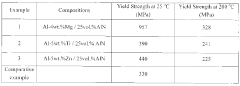
Method for manufacturing high strength ultra-fine/NANO-structured al /ALN or al alloy/ALN composite materials
PatentWO2006129965A1
Innovation
- A method involving mechanical milling or mechanical alloying in a nitride-forming atmosphere, followed by heat treatment and hot consolidation, ensures homogeneous distribution of aluminum nitride reinforcements and prevents oxide layer formation, using nitrogen or ammonia gases for direct nitride formation without additional processes.
Environmental Impact of Mg3N2 Synthesis
The environmental impact of Mg3N2 synthesis is a critical consideration in the development and implementation of advanced techniques for magnesium nitride production. The process of synthesizing Mg3N2 involves several stages that can potentially affect the environment in various ways.
One of the primary environmental concerns is the energy consumption associated with Mg3N2 synthesis. Traditional methods often require high temperatures and pressures, leading to significant energy expenditure and consequent greenhouse gas emissions. Advanced techniques aim to reduce this energy footprint by exploring lower temperature processes and more efficient reaction pathways. For instance, some researchers are investigating the use of plasma-enhanced synthesis methods that can operate at lower temperatures, potentially reducing overall energy requirements.
The raw materials used in Mg3N2 synthesis also have environmental implications. Magnesium, the primary metal component, is typically extracted from minerals or seawater. The mining and processing of magnesium ores can lead to habitat disruption and soil erosion. Advanced techniques are exploring more sustainable sources of magnesium, including recycled materials and industrial by-products, to minimize the environmental impact of raw material acquisition.
Nitrogen, the other key component, is usually obtained from the air through cryogenic distillation or pressure swing adsorption. While these processes are relatively clean, they still consume energy and may contribute to the overall carbon footprint of Mg3N2 production. Innovative approaches are being developed to integrate renewable energy sources into the nitrogen extraction process, further reducing its environmental impact.
The synthesis process itself can generate by-products and waste materials that require proper management. Some advanced techniques are focusing on improving reaction efficiency to minimize waste generation. Additionally, closed-loop systems are being designed to capture and recycle unreacted precursors and by-products, reducing the overall environmental footprint of the synthesis process.
Water usage is another environmental factor to consider in Mg3N2 synthesis. Some production methods may require significant amounts of water for cooling or purification processes. Advanced techniques are exploring dry synthesis methods or water recycling systems to minimize water consumption and reduce the strain on local water resources.
Lastly, the potential for accidental releases of reactive materials during synthesis poses environmental risks. Mg3N2 is highly reactive with water, potentially releasing ammonia gas. Advanced safety protocols and containment systems are being developed to mitigate these risks and prevent environmental contamination in case of accidental spills or releases.
As research in Mg3N2 synthesis progresses, there is a growing emphasis on life cycle assessment (LCA) studies to comprehensively evaluate the environmental impact of different production techniques. These assessments consider factors such as raw material extraction, energy consumption, emissions, waste generation, and end-of-life disposal to provide a holistic view of the environmental footprint associated with Mg3N2 production.
One of the primary environmental concerns is the energy consumption associated with Mg3N2 synthesis. Traditional methods often require high temperatures and pressures, leading to significant energy expenditure and consequent greenhouse gas emissions. Advanced techniques aim to reduce this energy footprint by exploring lower temperature processes and more efficient reaction pathways. For instance, some researchers are investigating the use of plasma-enhanced synthesis methods that can operate at lower temperatures, potentially reducing overall energy requirements.
The raw materials used in Mg3N2 synthesis also have environmental implications. Magnesium, the primary metal component, is typically extracted from minerals or seawater. The mining and processing of magnesium ores can lead to habitat disruption and soil erosion. Advanced techniques are exploring more sustainable sources of magnesium, including recycled materials and industrial by-products, to minimize the environmental impact of raw material acquisition.
Nitrogen, the other key component, is usually obtained from the air through cryogenic distillation or pressure swing adsorption. While these processes are relatively clean, they still consume energy and may contribute to the overall carbon footprint of Mg3N2 production. Innovative approaches are being developed to integrate renewable energy sources into the nitrogen extraction process, further reducing its environmental impact.
The synthesis process itself can generate by-products and waste materials that require proper management. Some advanced techniques are focusing on improving reaction efficiency to minimize waste generation. Additionally, closed-loop systems are being designed to capture and recycle unreacted precursors and by-products, reducing the overall environmental footprint of the synthesis process.
Water usage is another environmental factor to consider in Mg3N2 synthesis. Some production methods may require significant amounts of water for cooling or purification processes. Advanced techniques are exploring dry synthesis methods or water recycling systems to minimize water consumption and reduce the strain on local water resources.
Lastly, the potential for accidental releases of reactive materials during synthesis poses environmental risks. Mg3N2 is highly reactive with water, potentially releasing ammonia gas. Advanced safety protocols and containment systems are being developed to mitigate these risks and prevent environmental contamination in case of accidental spills or releases.
As research in Mg3N2 synthesis progresses, there is a growing emphasis on life cycle assessment (LCA) studies to comprehensively evaluate the environmental impact of different production techniques. These assessments consider factors such as raw material extraction, energy consumption, emissions, waste generation, and end-of-life disposal to provide a holistic view of the environmental footprint associated with Mg3N2 production.
Safety Protocols in Mg3N2 Handling and Storage
Magnesium nitride (Mg3N2) is a highly reactive compound that requires careful handling and storage to ensure safety and maintain its chemical integrity. Proper safety protocols are essential when working with this material due to its sensitivity to moisture and potential for rapid decomposition.
The primary concern when handling Mg3N2 is its reactivity with water. Upon contact with moisture, it readily hydrolyzes to form magnesium hydroxide and ammonia gas. This reaction can be vigorous and potentially hazardous, especially if large quantities are involved. Therefore, all handling procedures must be conducted in a dry, inert atmosphere, typically using a glove box filled with argon or nitrogen gas.
Personal protective equipment (PPE) is crucial when working with Mg3N2. Researchers and technicians should wear appropriate gloves, lab coats, and safety goggles at all times. In cases where there is a risk of dust formation, respiratory protection may also be necessary. It is important to note that standard nitrile gloves may not provide adequate protection against Mg3N2, and specialized gloves made of materials resistant to both moisture and chemical penetration should be used.
Storage of Mg3N2 requires careful consideration of environmental conditions. The compound should be kept in tightly sealed containers made of materials that are impervious to moisture and air. Commonly used containers include glass vials with PTFE-lined caps or metal containers with appropriate seals. These containers should be stored in a cool, dry place, preferably in a desiccator or under an inert atmosphere to prevent any moisture ingress.
Proper labeling and documentation are essential aspects of Mg3N2 safety protocols. All containers should be clearly labeled with the compound name, chemical formula, hazard warnings, and date of preparation or opening. A detailed inventory system should be maintained to track the quantity, location, and usage of Mg3N2 within the laboratory or production facility.
Emergency response procedures must be established and communicated to all personnel working with or around Mg3N2. This includes protocols for dealing with spills, accidental exposure, and fire situations. Appropriate fire extinguishing agents, such as dry chemical powders, should be readily available, as water-based extinguishers can exacerbate the situation due to the compound's reactivity with moisture.
Regular safety training and refresher courses should be provided to all staff involved in the handling and storage of Mg3N2. These sessions should cover the specific hazards associated with the compound, proper handling techniques, storage requirements, and emergency response procedures. Additionally, periodic audits of storage areas and handling practices should be conducted to ensure ongoing compliance with safety protocols.
By implementing and strictly adhering to these comprehensive safety protocols, the risks associated with Mg3N2 handling and storage can be significantly mitigated, ensuring the protection of personnel and maintaining the integrity of research and production processes involving this reactive compound.
The primary concern when handling Mg3N2 is its reactivity with water. Upon contact with moisture, it readily hydrolyzes to form magnesium hydroxide and ammonia gas. This reaction can be vigorous and potentially hazardous, especially if large quantities are involved. Therefore, all handling procedures must be conducted in a dry, inert atmosphere, typically using a glove box filled with argon or nitrogen gas.
Personal protective equipment (PPE) is crucial when working with Mg3N2. Researchers and technicians should wear appropriate gloves, lab coats, and safety goggles at all times. In cases where there is a risk of dust formation, respiratory protection may also be necessary. It is important to note that standard nitrile gloves may not provide adequate protection against Mg3N2, and specialized gloves made of materials resistant to both moisture and chemical penetration should be used.
Storage of Mg3N2 requires careful consideration of environmental conditions. The compound should be kept in tightly sealed containers made of materials that are impervious to moisture and air. Commonly used containers include glass vials with PTFE-lined caps or metal containers with appropriate seals. These containers should be stored in a cool, dry place, preferably in a desiccator or under an inert atmosphere to prevent any moisture ingress.
Proper labeling and documentation are essential aspects of Mg3N2 safety protocols. All containers should be clearly labeled with the compound name, chemical formula, hazard warnings, and date of preparation or opening. A detailed inventory system should be maintained to track the quantity, location, and usage of Mg3N2 within the laboratory or production facility.
Emergency response procedures must be established and communicated to all personnel working with or around Mg3N2. This includes protocols for dealing with spills, accidental exposure, and fire situations. Appropriate fire extinguishing agents, such as dry chemical powders, should be readily available, as water-based extinguishers can exacerbate the situation due to the compound's reactivity with moisture.
Regular safety training and refresher courses should be provided to all staff involved in the handling and storage of Mg3N2. These sessions should cover the specific hazards associated with the compound, proper handling techniques, storage requirements, and emergency response procedures. Additionally, periodic audits of storage areas and handling practices should be conducted to ensure ongoing compliance with safety protocols.
By implementing and strictly adhering to these comprehensive safety protocols, the risks associated with Mg3N2 handling and storage can be significantly mitigated, ensuring the protection of personnel and maintaining the integrity of research and production processes involving this reactive compound.
Unlock deeper insights with PatSnap Eureka Quick Research — get a full tech report to explore trends and direct your research. Try now!
Generate Your Research Report Instantly with AI Agent
Supercharge your innovation with PatSnap Eureka AI Agent Platform!