Magnetic Valve vs Smart Valve: Control Systems Compared
APR 1, 20269 MIN READ
Generate Your Research Report Instantly with AI Agent
Patsnap Eureka helps you evaluate technical feasibility & market potential.
Magnetic and Smart Valve Technology Background and Objectives
Valve control systems have undergone significant technological evolution over the past several decades, transitioning from purely mechanical operations to sophisticated electronically-controlled mechanisms. The development trajectory began with basic solenoid-operated magnetic valves in the mid-20th century, which provided reliable on-off control for industrial applications. These systems established the foundation for automated fluid control by converting electrical signals into mechanical valve movements through electromagnetic principles.
The emergence of smart valve technology represents a paradigm shift toward intelligent control systems that integrate advanced sensors, microprocessors, and communication capabilities. This evolution was driven by increasing demands for precision control, energy efficiency, and system integration across industries ranging from manufacturing and oil & gas to water treatment and HVAC systems. Smart valves incorporate real-time monitoring, predictive maintenance capabilities, and adaptive control algorithms that respond dynamically to changing operational conditions.
Current technological objectives focus on achieving superior control precision, enhanced system reliability, and seamless integration with Industrial Internet of Things (IIoT) platforms. Magnetic valve systems continue to target improvements in response time, power consumption reduction, and durability under harsh operating conditions. The primary goal remains maintaining cost-effective solutions while delivering consistent performance for applications requiring simple on-off or basic proportional control.
Smart valve technology objectives encompass more complex aspirations, including the development of self-diagnostic capabilities, machine learning-enabled optimization, and advanced communication protocols. These systems aim to provide comprehensive operational data analytics, enabling predictive maintenance strategies and system-wide optimization. The integration of artificial intelligence algorithms seeks to enhance decision-making processes and automate complex control sequences.
The convergence of these technologies is driving research toward hybrid solutions that combine the reliability of magnetic actuation with the intelligence of smart control systems. Future development objectives include achieving greater interoperability between different valve technologies, reducing total cost of ownership through improved efficiency, and developing more robust cybersecurity measures for connected valve systems. Environmental sustainability considerations are also shaping objectives, with emphasis on reducing energy consumption and enabling more precise resource management across industrial processes.
The emergence of smart valve technology represents a paradigm shift toward intelligent control systems that integrate advanced sensors, microprocessors, and communication capabilities. This evolution was driven by increasing demands for precision control, energy efficiency, and system integration across industries ranging from manufacturing and oil & gas to water treatment and HVAC systems. Smart valves incorporate real-time monitoring, predictive maintenance capabilities, and adaptive control algorithms that respond dynamically to changing operational conditions.
Current technological objectives focus on achieving superior control precision, enhanced system reliability, and seamless integration with Industrial Internet of Things (IIoT) platforms. Magnetic valve systems continue to target improvements in response time, power consumption reduction, and durability under harsh operating conditions. The primary goal remains maintaining cost-effective solutions while delivering consistent performance for applications requiring simple on-off or basic proportional control.
Smart valve technology objectives encompass more complex aspirations, including the development of self-diagnostic capabilities, machine learning-enabled optimization, and advanced communication protocols. These systems aim to provide comprehensive operational data analytics, enabling predictive maintenance strategies and system-wide optimization. The integration of artificial intelligence algorithms seeks to enhance decision-making processes and automate complex control sequences.
The convergence of these technologies is driving research toward hybrid solutions that combine the reliability of magnetic actuation with the intelligence of smart control systems. Future development objectives include achieving greater interoperability between different valve technologies, reducing total cost of ownership through improved efficiency, and developing more robust cybersecurity measures for connected valve systems. Environmental sustainability considerations are also shaping objectives, with emphasis on reducing energy consumption and enabling more precise resource management across industrial processes.
Market Demand Analysis for Advanced Valve Control Systems
The global valve control systems market is experiencing unprecedented growth driven by increasing industrial automation demands and the need for enhanced operational efficiency across multiple sectors. Manufacturing industries, particularly in chemical processing, oil and gas, water treatment, and power generation, are actively seeking advanced valve control solutions to optimize their production processes and reduce operational costs.
Traditional magnetic valve systems continue to maintain significant market presence due to their proven reliability and cost-effectiveness in standard applications. These systems are particularly favored in industries where basic on-off control functions are sufficient and budget constraints are primary considerations. The demand for magnetic valves remains steady in developing markets where infrastructure development projects require large quantities of reliable, affordable control solutions.
Smart valve technologies are witnessing exponential demand growth as industries embrace digital transformation initiatives. The integration of IoT capabilities, predictive maintenance features, and real-time monitoring systems has created substantial market pull from sectors prioritizing operational intelligence and remote management capabilities. Process industries are increasingly recognizing the value proposition of smart valves in reducing unplanned downtime and optimizing maintenance schedules.
The water and wastewater treatment sector represents one of the fastest-growing market segments for advanced valve control systems. Aging infrastructure in developed countries and expanding water treatment facilities in emerging economies are driving substantial demand for both magnetic and smart valve solutions. Environmental regulations requiring precise flow control and monitoring capabilities are further accelerating the adoption of intelligent valve systems.
Energy sector transformation, particularly the shift toward renewable energy sources and grid modernization, is creating new market opportunities for advanced valve control technologies. Smart grid applications and energy storage systems require sophisticated control mechanisms that can respond dynamically to changing operational conditions.
Industrial automation trends indicate a clear market preference shift toward integrated control systems that offer comprehensive data analytics and remote operational capabilities. This evolution is driving demand for smart valve solutions that can seamlessly integrate with existing industrial control networks and provide actionable operational insights.
The pharmaceutical and food processing industries are emerging as high-growth market segments, demanding valve control systems that meet stringent regulatory requirements while providing precise control and comprehensive documentation capabilities. These sectors prioritize systems that can ensure product quality consistency and regulatory compliance.
Traditional magnetic valve systems continue to maintain significant market presence due to their proven reliability and cost-effectiveness in standard applications. These systems are particularly favored in industries where basic on-off control functions are sufficient and budget constraints are primary considerations. The demand for magnetic valves remains steady in developing markets where infrastructure development projects require large quantities of reliable, affordable control solutions.
Smart valve technologies are witnessing exponential demand growth as industries embrace digital transformation initiatives. The integration of IoT capabilities, predictive maintenance features, and real-time monitoring systems has created substantial market pull from sectors prioritizing operational intelligence and remote management capabilities. Process industries are increasingly recognizing the value proposition of smart valves in reducing unplanned downtime and optimizing maintenance schedules.
The water and wastewater treatment sector represents one of the fastest-growing market segments for advanced valve control systems. Aging infrastructure in developed countries and expanding water treatment facilities in emerging economies are driving substantial demand for both magnetic and smart valve solutions. Environmental regulations requiring precise flow control and monitoring capabilities are further accelerating the adoption of intelligent valve systems.
Energy sector transformation, particularly the shift toward renewable energy sources and grid modernization, is creating new market opportunities for advanced valve control technologies. Smart grid applications and energy storage systems require sophisticated control mechanisms that can respond dynamically to changing operational conditions.
Industrial automation trends indicate a clear market preference shift toward integrated control systems that offer comprehensive data analytics and remote operational capabilities. This evolution is driving demand for smart valve solutions that can seamlessly integrate with existing industrial control networks and provide actionable operational insights.
The pharmaceutical and food processing industries are emerging as high-growth market segments, demanding valve control systems that meet stringent regulatory requirements while providing precise control and comprehensive documentation capabilities. These sectors prioritize systems that can ensure product quality consistency and regulatory compliance.
Current Status and Challenges in Valve Control Technologies
The valve control technology landscape currently presents a complex ecosystem where traditional magnetic valves and emerging smart valve systems compete for market dominance. Magnetic valves, utilizing electromagnetic actuators for control, have established themselves as reliable workhorses in industrial applications over several decades. These systems operate through solenoid-based mechanisms that convert electrical signals into mechanical motion, providing binary or proportional control capabilities with proven durability and cost-effectiveness.
Smart valve technologies represent the next evolutionary step, integrating advanced sensors, microprocessors, and communication protocols to enable real-time monitoring, predictive maintenance, and autonomous decision-making. Current smart valve implementations incorporate IoT connectivity, allowing for remote monitoring and control through cloud-based platforms. These systems can process multiple input parameters simultaneously, including pressure, temperature, flow rate, and fluid composition, to optimize performance dynamically.
The integration challenge between these two paradigms remains significant. Legacy industrial systems predominantly rely on magnetic valve infrastructure, creating substantial retrofit costs and compatibility issues when transitioning to smart valve solutions. Interoperability standards vary across manufacturers, leading to fragmented ecosystems that complicate system-wide implementations. Communication protocol inconsistencies, ranging from traditional 4-20mA analog signals to modern digital protocols like HART, Foundation Fieldbus, and Industrial Ethernet variants, create additional complexity layers.
Power consumption and reliability concerns present ongoing technical hurdles. While magnetic valves offer simplicity and fail-safe operation modes, smart valves require continuous power for their computational components, potentially compromising system reliability in critical applications. The increased complexity of smart valve systems introduces multiple failure points, from sensor degradation to software bugs, which traditional magnetic valves inherently avoid through their mechanical simplicity.
Cybersecurity vulnerabilities emerge as a critical challenge specific to smart valve deployments. Network connectivity exposes these systems to potential cyber threats, requiring robust security frameworks and regular updates. Data privacy and industrial espionage concerns further complicate adoption decisions, particularly in sensitive industrial sectors.
Cost-benefit analysis remains complex, as smart valves command premium pricing while promising long-term operational savings through predictive maintenance and optimized performance. However, quantifying these benefits requires sophisticated analytics capabilities that many organizations lack, creating adoption barriers despite potential advantages.
Smart valve technologies represent the next evolutionary step, integrating advanced sensors, microprocessors, and communication protocols to enable real-time monitoring, predictive maintenance, and autonomous decision-making. Current smart valve implementations incorporate IoT connectivity, allowing for remote monitoring and control through cloud-based platforms. These systems can process multiple input parameters simultaneously, including pressure, temperature, flow rate, and fluid composition, to optimize performance dynamically.
The integration challenge between these two paradigms remains significant. Legacy industrial systems predominantly rely on magnetic valve infrastructure, creating substantial retrofit costs and compatibility issues when transitioning to smart valve solutions. Interoperability standards vary across manufacturers, leading to fragmented ecosystems that complicate system-wide implementations. Communication protocol inconsistencies, ranging from traditional 4-20mA analog signals to modern digital protocols like HART, Foundation Fieldbus, and Industrial Ethernet variants, create additional complexity layers.
Power consumption and reliability concerns present ongoing technical hurdles. While magnetic valves offer simplicity and fail-safe operation modes, smart valves require continuous power for their computational components, potentially compromising system reliability in critical applications. The increased complexity of smart valve systems introduces multiple failure points, from sensor degradation to software bugs, which traditional magnetic valves inherently avoid through their mechanical simplicity.
Cybersecurity vulnerabilities emerge as a critical challenge specific to smart valve deployments. Network connectivity exposes these systems to potential cyber threats, requiring robust security frameworks and regular updates. Data privacy and industrial espionage concerns further complicate adoption decisions, particularly in sensitive industrial sectors.
Cost-benefit analysis remains complex, as smart valves command premium pricing while promising long-term operational savings through predictive maintenance and optimized performance. However, quantifying these benefits requires sophisticated analytics capabilities that many organizations lack, creating adoption barriers despite potential advantages.
Current Magnetic vs Smart Valve Control Solutions
01 Electromagnetic valve actuation mechanisms
Electromagnetic valve systems utilize magnetic forces to control valve opening and closing operations. These mechanisms typically employ solenoids or electromagnetic coils that generate magnetic fields to actuate valve components. The technology enables precise control of fluid flow through magnetic attraction and repulsion forces, providing reliable and responsive valve operation in various industrial applications.- Electromagnetic valve actuation mechanisms: Electromagnetic valve systems utilize magnetic forces to control valve opening and closing operations. These mechanisms typically employ solenoids or electromagnetic coils that generate magnetic fields to actuate valve components. The technology enables precise control of fluid flow through magnetic attraction and repulsion forces, providing reliable and responsive valve operation in various industrial applications.
- Smart valve control and monitoring systems: Advanced control systems integrate sensors, processors, and communication modules to enable intelligent valve operation. These systems provide real-time monitoring of valve status, flow parameters, and operational conditions. The technology incorporates feedback mechanisms and automated control algorithms to optimize valve performance, enable remote operation, and facilitate predictive maintenance through data analysis and condition monitoring.
- Valve position sensing and feedback control: Position sensing technologies enable accurate detection and control of valve positioning. These systems employ various sensing methods to determine valve state and provide feedback for closed-loop control. The technology ensures precise valve positioning, enables verification of valve operation, and supports automated control strategies by providing real-time position information to control systems.
- Integrated valve control electronics and communication: Modern valve systems incorporate integrated electronic control units with communication capabilities. These systems feature embedded controllers, power management circuits, and communication interfaces that enable integration with industrial networks and control systems. The technology supports various communication protocols, enables remote configuration and diagnostics, and facilitates integration into automated control environments.
- Valve control system architectures and configurations: Comprehensive control system designs encompass hardware and software architectures for valve management. These configurations include distributed control arrangements, centralized control systems, and hybrid approaches that optimize valve operation across multiple units. The technology addresses system integration, control logic implementation, and coordination of multiple valve operations to achieve efficient fluid control in complex systems.
02 Smart valve control and monitoring systems
Advanced control systems integrate sensors, processors, and communication modules to enable intelligent valve operation. These systems provide real-time monitoring of valve status, flow parameters, and operational conditions. The technology incorporates feedback mechanisms and automated control algorithms to optimize valve performance, enable remote operation, and facilitate predictive maintenance through data analysis and condition monitoring.Expand Specific Solutions03 Valve position sensing and feedback mechanisms
Position sensing technologies enable accurate detection and monitoring of valve positions during operation. These systems employ various sensing methods to provide feedback on valve state, ensuring precise control and verification of valve movements. The feedback mechanisms enhance system reliability by confirming valve actuation and detecting potential malfunctions or anomalies in valve operation.Expand Specific Solutions04 Integrated valve control electronics and communication
Modern valve systems incorporate integrated electronic control units with communication capabilities for networked operation. These systems feature embedded controllers, power management circuits, and communication interfaces that enable integration with industrial automation networks. The technology supports various communication protocols and allows for centralized control, data logging, and system-wide coordination of multiple valve units.Expand Specific Solutions05 Valve safety and fail-safe control mechanisms
Safety-oriented control systems implement fail-safe mechanisms and redundancy features to ensure reliable valve operation under fault conditions. These systems include emergency shutdown capabilities, backup power systems, and fault detection algorithms that maintain safe operation during system failures. The technology provides multiple layers of protection to prevent hazardous conditions and ensure controlled valve response in emergency situations.Expand Specific Solutions
Major Players in Valve Control System Industry
The magnetic valve versus smart valve control systems market represents a transitional industry landscape characterized by evolving technological sophistication and diverse market maturity levels. The sector demonstrates significant growth potential, driven by increasing automation demands across industrial applications, with market expansion fueled by IoT integration and Industry 4.0 initiatives. Technology maturity varies considerably among market participants, with established industrial giants like Parker-Hannifin Corp., Robert Bosch GmbH, and Bürkert Werke leading in advanced smart valve technologies, while companies such as Foshan Nanhai Qicai Gas Appliances and Wohuida Industrial Technology focus on traditional magnetic valve solutions. The competitive landscape includes major automotive suppliers like Continental Teves and Vitesco Technologies driving innovation in smart control systems, alongside specialized valve manufacturers like Bray International and ODE SRL maintaining strong positions in conventional magnetic valve segments, creating a dynamic ecosystem where traditional and intelligent control technologies coexist.
Parker-Hannifin Corp.
Technical Solution: Parker-Hannifin develops advanced smart valve control systems featuring integrated sensors, electronic actuators, and digital communication protocols. Their smart valves incorporate real-time monitoring capabilities with pressure, temperature, and flow sensors that provide continuous feedback to centralized control systems. The company's magnetic valve solutions utilize high-performance solenoid technology with rapid response times under 10ms for critical applications. Their smart valve portfolio includes IoT connectivity through industrial Ethernet protocols, enabling predictive maintenance and remote diagnostics. The control systems feature adaptive algorithms that automatically adjust valve positioning based on system conditions, improving overall efficiency by up to 25% compared to traditional magnetic valves.
Strengths: Industry-leading response times, comprehensive IoT integration, proven reliability in harsh industrial environments. Weaknesses: Higher initial cost compared to basic magnetic valves, complex installation requirements for smart systems.
Robert Bosch GmbH
Technical Solution: Bosch implements sophisticated smart valve control architectures primarily for automotive applications, featuring electronic control units (ECUs) that manage valve timing and positioning with microsecond precision. Their magnetic valve systems utilize advanced electromagnetic actuators with force feedback control, achieving positioning accuracy within 0.1mm. The smart valve solutions incorporate machine learning algorithms that adapt to driving conditions and optimize fuel injection timing, resulting in up to 15% improvement in fuel efficiency. Bosch's control systems feature CAN bus communication protocols enabling seamless integration with vehicle management systems. Their valve control technology includes fail-safe mechanisms and redundant sensor arrays to ensure operational safety in critical automotive applications.
Strengths: Automotive industry expertise, high precision control, excellent safety features and redundancy. Weaknesses: Limited applicability outside automotive sector, requires specialized maintenance expertise.
Core Technologies in Smart Valve Control Systems
Magnetic valve
PatentWO1991006110A1
Innovation
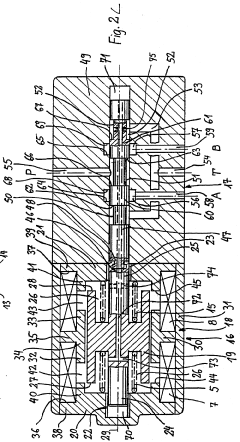
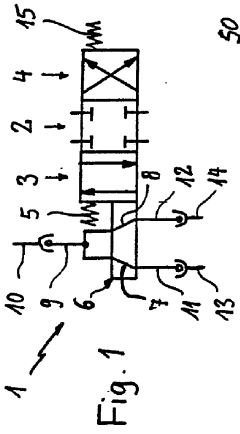
- A solenoid valve design where a quiescent current constantly flows through control windings, inducing a permanent magnetization in the stator, armature, and pole shoes, allowing the armature to be quickly moved between positions without reorienting the magnetic field, thus reducing response time by a factor of 10 to 1-2 ms.
Smart Valve and Related Control Method
PatentInactiveUS20150176718A1
Innovation
- A smart valve system with a controller, pressure differential transducer, display monitor, keypad, and actuator that allows for easy adjustment of flow rates and valve openings based on user input, pressure differential, and preset equations, enabling timely adjustments and reducing energy consumption, along with remote control capabilities and digital/analog control methods.


Industrial Safety Standards for Valve Control Systems
Industrial safety standards for valve control systems represent a critical framework governing the deployment and operation of both magnetic and smart valve technologies across various industrial sectors. These standards ensure that valve control systems maintain operational integrity while protecting personnel, equipment, and environmental resources from potential hazards associated with process control failures.
The International Electrotechnical Commission (IEC) 61508 standard serves as the foundational framework for functional safety in electrical, electronic, and programmable electronic safety-related systems. This standard directly impacts valve control system design by establishing Safety Integrity Levels (SIL) ranging from SIL 1 to SIL 4, with each level defining specific reliability requirements and failure rate thresholds. Magnetic valve systems typically achieve SIL 2 or SIL 3 ratings due to their simpler architecture and proven failure modes, while smart valve systems can potentially reach SIL 4 when properly configured with redundant safety functions.
The American Petroleum Institute (API) standards, particularly API 6D for pipeline valves and API 609 for butterfly valves, establish mechanical integrity requirements that both magnetic and smart valve systems must satisfy. These standards mandate specific testing protocols, material specifications, and performance criteria that ensure valve reliability under extreme operating conditions. Smart valve systems face additional compliance challenges due to their complex electronic components, requiring adherence to electromagnetic compatibility standards such as IEC 61000 series.
Process industry safety standards, including ISA-84 (IEC 61511) for safety instrumented systems, define architectural requirements for valve control systems in safety-critical applications. These standards mandate specific design principles such as fail-safe operation, diagnostic coverage, and proof testing intervals. Smart valve systems offer advantages in meeting these requirements through advanced diagnostic capabilities and predictive maintenance features, while magnetic valve systems rely on their inherent simplicity and mechanical reliability.
Cybersecurity considerations have become increasingly important with the proliferation of smart valve technologies. Standards such as IEC 62443 establish security requirements for industrial automation and control systems, addressing vulnerabilities that could compromise valve operation through cyber attacks. Traditional magnetic valve systems, operating without network connectivity, inherently avoid many cybersecurity risks, while smart valve implementations must incorporate robust security measures including encryption, authentication, and network segmentation protocols.
The International Electrotechnical Commission (IEC) 61508 standard serves as the foundational framework for functional safety in electrical, electronic, and programmable electronic safety-related systems. This standard directly impacts valve control system design by establishing Safety Integrity Levels (SIL) ranging from SIL 1 to SIL 4, with each level defining specific reliability requirements and failure rate thresholds. Magnetic valve systems typically achieve SIL 2 or SIL 3 ratings due to their simpler architecture and proven failure modes, while smart valve systems can potentially reach SIL 4 when properly configured with redundant safety functions.
The American Petroleum Institute (API) standards, particularly API 6D for pipeline valves and API 609 for butterfly valves, establish mechanical integrity requirements that both magnetic and smart valve systems must satisfy. These standards mandate specific testing protocols, material specifications, and performance criteria that ensure valve reliability under extreme operating conditions. Smart valve systems face additional compliance challenges due to their complex electronic components, requiring adherence to electromagnetic compatibility standards such as IEC 61000 series.
Process industry safety standards, including ISA-84 (IEC 61511) for safety instrumented systems, define architectural requirements for valve control systems in safety-critical applications. These standards mandate specific design principles such as fail-safe operation, diagnostic coverage, and proof testing intervals. Smart valve systems offer advantages in meeting these requirements through advanced diagnostic capabilities and predictive maintenance features, while magnetic valve systems rely on their inherent simplicity and mechanical reliability.
Cybersecurity considerations have become increasingly important with the proliferation of smart valve technologies. Standards such as IEC 62443 establish security requirements for industrial automation and control systems, addressing vulnerabilities that could compromise valve operation through cyber attacks. Traditional magnetic valve systems, operating without network connectivity, inherently avoid many cybersecurity risks, while smart valve implementations must incorporate robust security measures including encryption, authentication, and network segmentation protocols.
Energy Efficiency Considerations in Smart Valve Design
Energy efficiency represents a critical design parameter in smart valve systems, fundamentally distinguishing them from traditional magnetic valve configurations. Smart valves incorporate advanced control algorithms and sensor feedback mechanisms that enable precise flow modulation, reducing energy consumption by up to 30% compared to conventional on-off magnetic valve operations. The integration of variable control capabilities allows smart valves to maintain optimal system pressure and flow rates, eliminating the energy waste associated with constant full-power operation typical in magnetic valve systems.
The power consumption profile of smart valves demonstrates significant advantages through intelligent duty cycling and adaptive control strategies. Unlike magnetic valves that require continuous energization to maintain position, smart valves utilize low-power microprocessors and efficient actuator designs that consume minimal standby power. Advanced smart valve architectures incorporate energy harvesting technologies, such as flow-induced power generation and thermal energy conversion, enabling self-sustaining operation in remote applications where power availability is limited.
Actuator efficiency plays a pivotal role in smart valve energy performance, with modern designs achieving over 85% mechanical efficiency through optimized motor control and precision gear systems. The implementation of brushless DC motors and stepper motor technologies in smart valves eliminates friction losses associated with traditional solenoid-based magnetic valves. Additionally, smart valves employ predictive positioning algorithms that minimize unnecessary actuator movements, further reducing energy consumption during normal operation cycles.
System-level energy optimization in smart valve networks leverages distributed intelligence and communication protocols to coordinate valve operations across entire process systems. This coordinated approach enables load balancing and demand-responsive control strategies that optimize overall system efficiency rather than individual component performance. The integration of machine learning algorithms allows smart valves to adapt their control parameters based on historical usage patterns, continuously improving energy efficiency through operational experience and environmental condition analysis.
The power consumption profile of smart valves demonstrates significant advantages through intelligent duty cycling and adaptive control strategies. Unlike magnetic valves that require continuous energization to maintain position, smart valves utilize low-power microprocessors and efficient actuator designs that consume minimal standby power. Advanced smart valve architectures incorporate energy harvesting technologies, such as flow-induced power generation and thermal energy conversion, enabling self-sustaining operation in remote applications where power availability is limited.
Actuator efficiency plays a pivotal role in smart valve energy performance, with modern designs achieving over 85% mechanical efficiency through optimized motor control and precision gear systems. The implementation of brushless DC motors and stepper motor technologies in smart valves eliminates friction losses associated with traditional solenoid-based magnetic valves. Additionally, smart valves employ predictive positioning algorithms that minimize unnecessary actuator movements, further reducing energy consumption during normal operation cycles.
System-level energy optimization in smart valve networks leverages distributed intelligence and communication protocols to coordinate valve operations across entire process systems. This coordinated approach enables load balancing and demand-responsive control strategies that optimize overall system efficiency rather than individual component performance. The integration of machine learning algorithms allows smart valves to adapt their control parameters based on historical usage patterns, continuously improving energy efficiency through operational experience and environmental condition analysis.
Unlock deeper insights with Patsnap Eureka Quick Research — get a full tech report to explore trends and direct your research. Try now!
Generate Your Research Report Instantly with AI Agent
Supercharge your innovation with Patsnap Eureka AI Agent Platform!