

Material-Based Performance Enhancements in Progressive Cavity Pumps
APR 2, 20269 MIN READ
Generate Your Research Report Instantly with AI Agent
Patsnap Eureka helps you evaluate technical feasibility & market potential.
Material Innovation Background and PCP Enhancement Goals
Progressive Cavity Pumps have undergone significant technological evolution since their invention by René Moineau in 1930. Initially designed as simple positive displacement pumps featuring a helical rotor within a double-helical stator, PCPs have evolved from basic mechanical systems to sophisticated engineered solutions. The fundamental operating principle remains unchanged: fluid is transported through progressive cavities formed between the rotor and stator, creating a continuous, pulsation-free flow.
The historical development of PCP technology has been marked by incremental improvements in manufacturing precision, seal design, and operational efficiency. Early PCPs were primarily constructed using conventional steel rotors and rubber stators, limiting their application to basic water pumping and low-viscosity fluid handling. The 1970s and 1980s witnessed the first significant material innovations, with the introduction of specialized elastomers and improved metallurgy for rotor construction.
Contemporary material science has emerged as the primary driver for PCP performance enhancement, addressing longstanding limitations in durability, chemical compatibility, and operational range. Traditional material constraints have historically restricted PCP applications in aggressive environments, high-temperature operations, and abrasive fluid handling scenarios. The integration of advanced materials represents a paradigm shift from mechanical optimization to molecular-level engineering solutions.
Current material innovation efforts focus on developing next-generation elastomeric compounds, advanced metallic alloys, and composite materials that can withstand extreme operational conditions. These developments are driven by increasing demands from oil and gas extraction, chemical processing, and industrial applications requiring enhanced reliability and extended service life.
The primary enhancement goals for material-based PCP improvements encompass several critical performance parameters. Wear resistance represents a fundamental objective, as traditional rubber stators experience degradation when handling abrasive fluids or operating under high differential pressures. Advanced polymer formulations and surface treatments aim to extend operational life by factors of three to five compared to conventional materials.
Temperature tolerance constitutes another crucial enhancement target, with goals to expand operational ranges from current limitations of 150°C to potential capabilities exceeding 250°C. This expansion would enable PCP deployment in geothermal applications, high-temperature industrial processes, and enhanced oil recovery operations previously inaccessible to conventional PCP technology.
Chemical compatibility enhancement seeks to broaden PCP applications across diverse fluid types, including corrosive chemicals, hydrocarbon mixtures, and specialized industrial fluids. Material innovations target molecular-level resistance to chemical attack, swelling, and degradation, ensuring consistent performance across extended operational periods.
Efficiency optimization through material innovation focuses on reducing internal friction, minimizing fluid slip, and enhancing volumetric efficiency. Advanced surface treatments, specialized coatings, and engineered material interfaces aim to achieve efficiency improvements of 10-15% while simultaneously reducing power consumption and operational costs.
The historical development of PCP technology has been marked by incremental improvements in manufacturing precision, seal design, and operational efficiency. Early PCPs were primarily constructed using conventional steel rotors and rubber stators, limiting their application to basic water pumping and low-viscosity fluid handling. The 1970s and 1980s witnessed the first significant material innovations, with the introduction of specialized elastomers and improved metallurgy for rotor construction.
Contemporary material science has emerged as the primary driver for PCP performance enhancement, addressing longstanding limitations in durability, chemical compatibility, and operational range. Traditional material constraints have historically restricted PCP applications in aggressive environments, high-temperature operations, and abrasive fluid handling scenarios. The integration of advanced materials represents a paradigm shift from mechanical optimization to molecular-level engineering solutions.
Current material innovation efforts focus on developing next-generation elastomeric compounds, advanced metallic alloys, and composite materials that can withstand extreme operational conditions. These developments are driven by increasing demands from oil and gas extraction, chemical processing, and industrial applications requiring enhanced reliability and extended service life.
The primary enhancement goals for material-based PCP improvements encompass several critical performance parameters. Wear resistance represents a fundamental objective, as traditional rubber stators experience degradation when handling abrasive fluids or operating under high differential pressures. Advanced polymer formulations and surface treatments aim to extend operational life by factors of three to five compared to conventional materials.
Temperature tolerance constitutes another crucial enhancement target, with goals to expand operational ranges from current limitations of 150°C to potential capabilities exceeding 250°C. This expansion would enable PCP deployment in geothermal applications, high-temperature industrial processes, and enhanced oil recovery operations previously inaccessible to conventional PCP technology.
Chemical compatibility enhancement seeks to broaden PCP applications across diverse fluid types, including corrosive chemicals, hydrocarbon mixtures, and specialized industrial fluids. Material innovations target molecular-level resistance to chemical attack, swelling, and degradation, ensuring consistent performance across extended operational periods.
Efficiency optimization through material innovation focuses on reducing internal friction, minimizing fluid slip, and enhancing volumetric efficiency. Advanced surface treatments, specialized coatings, and engineered material interfaces aim to achieve efficiency improvements of 10-15% while simultaneously reducing power consumption and operational costs.
Market Demand for High-Performance Progressive Cavity Pumps
The global progressive cavity pump market is experiencing robust growth driven by increasing demand across multiple industrial sectors. Oil and gas operations represent the largest application segment, where these pumps handle challenging fluids including heavy crude oil, produced water, and drilling mud. The upstream sector particularly values progressive cavity pumps for their ability to maintain consistent flow rates while handling abrasive and viscous fluids that would damage conventional pumping systems.
Water and wastewater treatment facilities constitute another significant demand driver, especially as municipalities and industries face stricter environmental regulations. Progressive cavity pumps excel in handling sludge, biosolids, and chemically treated water due to their gentle pumping action and ability to maintain fluid integrity. The growing emphasis on water recycling and treatment efficiency has intensified requirements for pumps that can operate reliably with minimal maintenance.
The food and beverage industry presents expanding opportunities, particularly in applications involving viscous products, delicate materials, and sanitary requirements. Dairy processing, fruit juice production, and confectionery manufacturing rely on progressive cavity pumps for their ability to handle shear-sensitive fluids without compromising product quality. Stringent hygiene standards in this sector drive demand for pumps with enhanced material properties and easy cleaning capabilities.
Chemical processing industries require pumps capable of handling corrosive, abrasive, and high-temperature fluids. The increasing complexity of chemical processes and the push toward more aggressive operating conditions have created demand for progressive cavity pumps with superior material performance. Applications in polymer production, pharmaceutical manufacturing, and specialty chemical processing particularly benefit from pumps that can maintain performance under challenging conditions.
Mining operations represent a growing market segment, where progressive cavity pumps handle tailings, slurries, and process fluids containing high concentrations of abrasive particles. The trend toward processing lower-grade ores and more challenging materials has increased demand for pumps with enhanced wear resistance and extended service life.
Emerging markets in renewable energy, particularly geothermal applications, are creating new demand patterns. These applications require pumps capable of handling high-temperature fluids with varying chemical compositions, driving requirements for advanced material solutions that can withstand thermal cycling and corrosive environments.
The overall market trend indicates increasing preference for high-performance pumps that offer extended service intervals, reduced maintenance costs, and improved reliability. End users are willing to invest in premium solutions that demonstrate superior total cost of ownership through enhanced material properties and design optimization.
Water and wastewater treatment facilities constitute another significant demand driver, especially as municipalities and industries face stricter environmental regulations. Progressive cavity pumps excel in handling sludge, biosolids, and chemically treated water due to their gentle pumping action and ability to maintain fluid integrity. The growing emphasis on water recycling and treatment efficiency has intensified requirements for pumps that can operate reliably with minimal maintenance.
The food and beverage industry presents expanding opportunities, particularly in applications involving viscous products, delicate materials, and sanitary requirements. Dairy processing, fruit juice production, and confectionery manufacturing rely on progressive cavity pumps for their ability to handle shear-sensitive fluids without compromising product quality. Stringent hygiene standards in this sector drive demand for pumps with enhanced material properties and easy cleaning capabilities.
Chemical processing industries require pumps capable of handling corrosive, abrasive, and high-temperature fluids. The increasing complexity of chemical processes and the push toward more aggressive operating conditions have created demand for progressive cavity pumps with superior material performance. Applications in polymer production, pharmaceutical manufacturing, and specialty chemical processing particularly benefit from pumps that can maintain performance under challenging conditions.
Mining operations represent a growing market segment, where progressive cavity pumps handle tailings, slurries, and process fluids containing high concentrations of abrasive particles. The trend toward processing lower-grade ores and more challenging materials has increased demand for pumps with enhanced wear resistance and extended service life.
Emerging markets in renewable energy, particularly geothermal applications, are creating new demand patterns. These applications require pumps capable of handling high-temperature fluids with varying chemical compositions, driving requirements for advanced material solutions that can withstand thermal cycling and corrosive environments.
The overall market trend indicates increasing preference for high-performance pumps that offer extended service intervals, reduced maintenance costs, and improved reliability. End users are willing to invest in premium solutions that demonstrate superior total cost of ownership through enhanced material properties and design optimization.
Current Material Limitations and Performance Challenges in PCPs
Progressive cavity pumps face significant material-related performance limitations that directly impact their operational efficiency and service life. The primary challenge stems from the inherent material incompatibility between the metallic rotor and elastomeric stator, which creates fundamental constraints in pump design and application scope.
The elastomeric stator represents the most critical material limitation in PCP systems. Traditional rubber compounds, including nitrile, EPDM, and fluoroelastomers, exhibit limited temperature resistance, typically failing above 150°C in continuous operation. This thermal constraint severely restricts PCP applications in high-temperature environments such as heavy oil production and geothermal systems. Additionally, these materials demonstrate poor chemical resistance when exposed to aggressive fluids containing hydrogen sulfide, carbon dioxide, or aromatic hydrocarbons, leading to rapid degradation and premature failure.
Mechanical wear constitutes another major performance challenge. The continuous contact between the rotating metal rotor and the elastomeric stator creates abrasive wear patterns that progressively reduce sealing efficiency. This wear is particularly pronounced when handling fluids containing sand, scale, or other abrasive particles common in oil and gas applications. The resulting volumetric efficiency loss directly impacts pump performance and increases maintenance requirements.
Swelling and chemical degradation of elastomeric materials present additional operational challenges. When exposed to incompatible fluids, stator materials can experience significant volume changes, leading to either excessive interference that increases torque requirements or reduced contact pressure that compromises sealing effectiveness. This chemical incompatibility limits the range of fluids that can be effectively pumped using conventional PCP designs.
Temperature cycling effects compound these material limitations by creating thermal stress cycles that accelerate material fatigue. The differential thermal expansion between metallic and elastomeric components generates cyclic stresses that promote crack initiation and propagation in the stator material. These thermal effects are particularly problematic in applications with frequent startup and shutdown cycles or variable operating temperatures.
The rotor material selection also presents challenges, as conventional steel rotors may experience corrosion in aggressive environments or excessive wear when handling abrasive fluids. Surface hardening treatments, while improving wear resistance, can increase manufacturing costs and may not provide adequate protection in highly corrosive environments.
The elastomeric stator represents the most critical material limitation in PCP systems. Traditional rubber compounds, including nitrile, EPDM, and fluoroelastomers, exhibit limited temperature resistance, typically failing above 150°C in continuous operation. This thermal constraint severely restricts PCP applications in high-temperature environments such as heavy oil production and geothermal systems. Additionally, these materials demonstrate poor chemical resistance when exposed to aggressive fluids containing hydrogen sulfide, carbon dioxide, or aromatic hydrocarbons, leading to rapid degradation and premature failure.
Mechanical wear constitutes another major performance challenge. The continuous contact between the rotating metal rotor and the elastomeric stator creates abrasive wear patterns that progressively reduce sealing efficiency. This wear is particularly pronounced when handling fluids containing sand, scale, or other abrasive particles common in oil and gas applications. The resulting volumetric efficiency loss directly impacts pump performance and increases maintenance requirements.
Swelling and chemical degradation of elastomeric materials present additional operational challenges. When exposed to incompatible fluids, stator materials can experience significant volume changes, leading to either excessive interference that increases torque requirements or reduced contact pressure that compromises sealing effectiveness. This chemical incompatibility limits the range of fluids that can be effectively pumped using conventional PCP designs.
Temperature cycling effects compound these material limitations by creating thermal stress cycles that accelerate material fatigue. The differential thermal expansion between metallic and elastomeric components generates cyclic stresses that promote crack initiation and propagation in the stator material. These thermal effects are particularly problematic in applications with frequent startup and shutdown cycles or variable operating temperatures.
The rotor material selection also presents challenges, as conventional steel rotors may experience corrosion in aggressive environments or excessive wear when handling abrasive fluids. Surface hardening treatments, while improving wear resistance, can increase manufacturing costs and may not provide adequate protection in highly corrosive environments.
Existing Material Solutions for PCP Performance Optimization
01 Rotor and stator design optimization for improved performance
Progressive cavity pumps can achieve enhanced performance through optimized rotor and stator configurations. The geometric design of the rotor profile and stator cavity directly impacts pumping efficiency, flow rate, and pressure capabilities. Modifications to the helical geometry, pitch, and interference fit between rotor and stator can reduce slip, minimize pulsation, and increase volumetric efficiency. Advanced materials and coatings for these components can also improve wear resistance and extend operational life under demanding conditions.- Rotor and stator design optimization for improved performance: Progressive cavity pumps can achieve enhanced performance through optimized rotor and stator configurations. The geometric design of the rotor profile and stator cavity directly impacts pumping efficiency, flow rate, and pressure capabilities. Modifications to the helical geometry, pitch, and interference fit between rotor and stator can reduce slip, minimize pulsation, and increase volumetric efficiency. Advanced materials and coatings for these components can also improve wear resistance and extend operational life under demanding conditions.
- Seal and bearing systems for enhanced reliability: The performance and longevity of progressive cavity pumps depend significantly on effective sealing and bearing systems. Improved seal designs prevent fluid leakage and contamination while maintaining pressure integrity. Advanced bearing configurations support the eccentric motion of the rotor, reducing friction and wear. These systems must withstand the unique kinematics of progressive cavity pumps, including the wobbling motion and axial forces, to ensure consistent performance and minimize maintenance requirements.
- Drive systems and torque transmission mechanisms: Efficient power transmission is critical for progressive cavity pump performance. Drive system innovations include flexible coupling designs that accommodate the eccentric motion while transmitting torque effectively. Variable speed drives and motor configurations allow for operational flexibility across different flow and pressure requirements. Improved drive train components reduce energy consumption and enable better control of pump output, particularly in applications requiring precise flow regulation or handling of varying fluid viscosities.
- Monitoring and control systems for performance optimization: Advanced monitoring and control technologies enable real-time performance optimization of progressive cavity pumps. Sensor systems track parameters such as pressure, temperature, vibration, and flow rate to detect performance degradation or potential failures. Automated control algorithms adjust operating parameters to maintain optimal efficiency and prevent damage. Predictive maintenance capabilities based on performance data analysis help reduce downtime and extend equipment life by identifying issues before catastrophic failure occurs.
- Material selection and surface treatments for abrasive applications: Progressive cavity pump performance in abrasive or corrosive environments requires specialized materials and surface treatments. Hardened alloys, elastomeric compounds, and composite materials are selected based on the specific fluid characteristics and operating conditions. Surface treatments and coatings enhance resistance to wear, chemical attack, and erosion. Material innovations focus on balancing durability with the flexibility required for effective sealing between rotor and stator, particularly when handling solids-laden fluids or chemically aggressive media.
02 Seal and bearing systems for enhanced reliability
The performance and longevity of progressive cavity pumps depend significantly on effective sealing and bearing systems. Improved seal designs prevent fluid leakage and contamination while maintaining pressure integrity. Advanced bearing configurations support the eccentric motion of the rotor, reducing friction and wear. These systems must withstand the unique kinematics of progressive cavity pumps, including the planetary motion of the rotor, while handling abrasive fluids and maintaining alignment under varying load conditions.Expand Specific Solutions03 Material selection and coating technologies for wear resistance
Material innovations play a crucial role in progressive cavity pump performance, particularly when handling abrasive or corrosive fluids. Specialized elastomers for stators and hardened alloys for rotors can significantly extend component life. Surface treatments and coating technologies provide additional protection against wear, chemical attack, and temperature extremes. The selection of materials must balance mechanical properties, chemical compatibility, and cost-effectiveness while maintaining the necessary interference fit and flexibility required for proper pump operation.Expand Specific Solutions04 Flow control and monitoring systems for operational optimization
Advanced control systems and monitoring technologies enable optimization of progressive cavity pump performance across varying operating conditions. Sensors and instrumentation can track flow rates, pressures, temperatures, and vibration patterns to detect performance degradation or impending failures. Variable speed drives allow precise flow control and energy optimization. Integrated monitoring systems provide real-time data for predictive maintenance, helping to prevent unplanned downtime and extend equipment life while maintaining optimal efficiency throughout the operational envelope.Expand Specific Solutions05 Multi-stage configurations and system integration for enhanced capacity
Progressive cavity pump performance can be significantly enhanced through multi-stage configurations and integrated system designs. Multiple pump stages connected in series can achieve higher discharge pressures, while parallel arrangements increase flow capacity. System integration considerations include inlet conditioning, discharge manifold design, and auxiliary equipment coordination. Proper system design addresses pulsation dampening, thermal management, and power transmission efficiency. These configurations are particularly valuable in applications requiring high pressure or flow rates beyond the capability of single-stage units.Expand Specific Solutions
Key Players in PCP Manufacturing and Advanced Materials
The progressive cavity pump industry for material-based performance enhancements is experiencing significant growth driven by increasing demand across oil and gas, construction, and industrial applications. The market demonstrates a mature competitive landscape with established players like Schlumberger Technologies, Baker Hughes Co., and Saudi Arabian Oil Co. leading oilfield applications, while companies such as Putzmeister Engineering GmbH and SCHWING GmbH dominate construction sectors. Technology maturity varies significantly across segments, with advanced materials research being conducted by Illinois Tool Works Inc. and Henkel AG & Co. KGaA for specialized coatings and adhesives, while academic institutions like Jiangsu University and University of Akron contribute fundamental research. The industry shows consolidation trends with major corporations acquiring specialized firms like PCM Technology Oy, indicating a shift toward integrated solutions combining traditional pump technology with advanced material science innovations.
Schlumberger Technologies, Inc.
Technical Solution: Schlumberger has developed advanced elastomer compounds and surface treatments for progressive cavity pump stators, utilizing specialized rubber formulations that resist swelling and degradation in harsh downhole environments. Their technology incorporates nitrile-based elastomers with enhanced cross-linking agents and proprietary fillers that maintain flexibility while providing superior abrasion resistance. The company's material solutions include temperature-resistant compounds rated for operations up to 150°C and chemically-resistant formulations for corrosive fluid applications. Their stator manufacturing process involves precision molding techniques that ensure uniform wall thickness and optimal interference fit with the rotor, significantly extending pump operational life in oil and gas applications.
Strengths: Industry-leading expertise in downhole applications, extensive field testing data, global service network. Weaknesses: High cost solutions, limited applicability outside oil and gas sector.
Weatherford Technology Holdings LLC
Technical Solution: Weatherford has developed innovative coating technologies for progressive cavity pump components, utilizing plasma-sprayed ceramic coatings and diamond-like carbon (DLC) films to enhance surface properties. Their material solutions include advanced elastomer formulations with improved fatigue resistance and thermal stability, incorporating nano-scale additives that enhance mechanical properties. The company's rotor technology features multi-layer coating systems that provide both corrosion protection and wear resistance, with surface hardness values exceeding 60 HRC. Their stator manufacturing employs injection molding techniques with specialized rubber compounds that maintain consistent performance across temperature ranges from -20°C to 120°C, significantly improving pump efficiency and reducing maintenance requirements.
Strengths: Advanced coating technologies, strong materials engineering capabilities, comprehensive testing protocols. Weaknesses: Limited market presence compared to larger competitors, dependency on specialized manufacturing equipment.
Core Material Innovations in Stator and Rotor Design
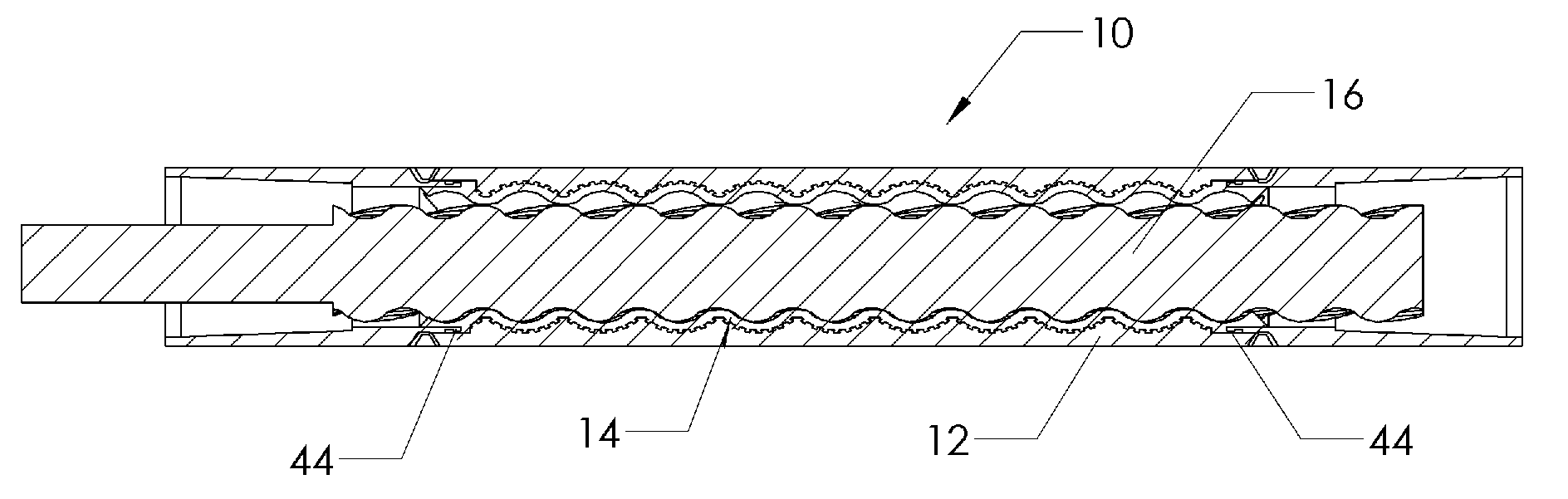
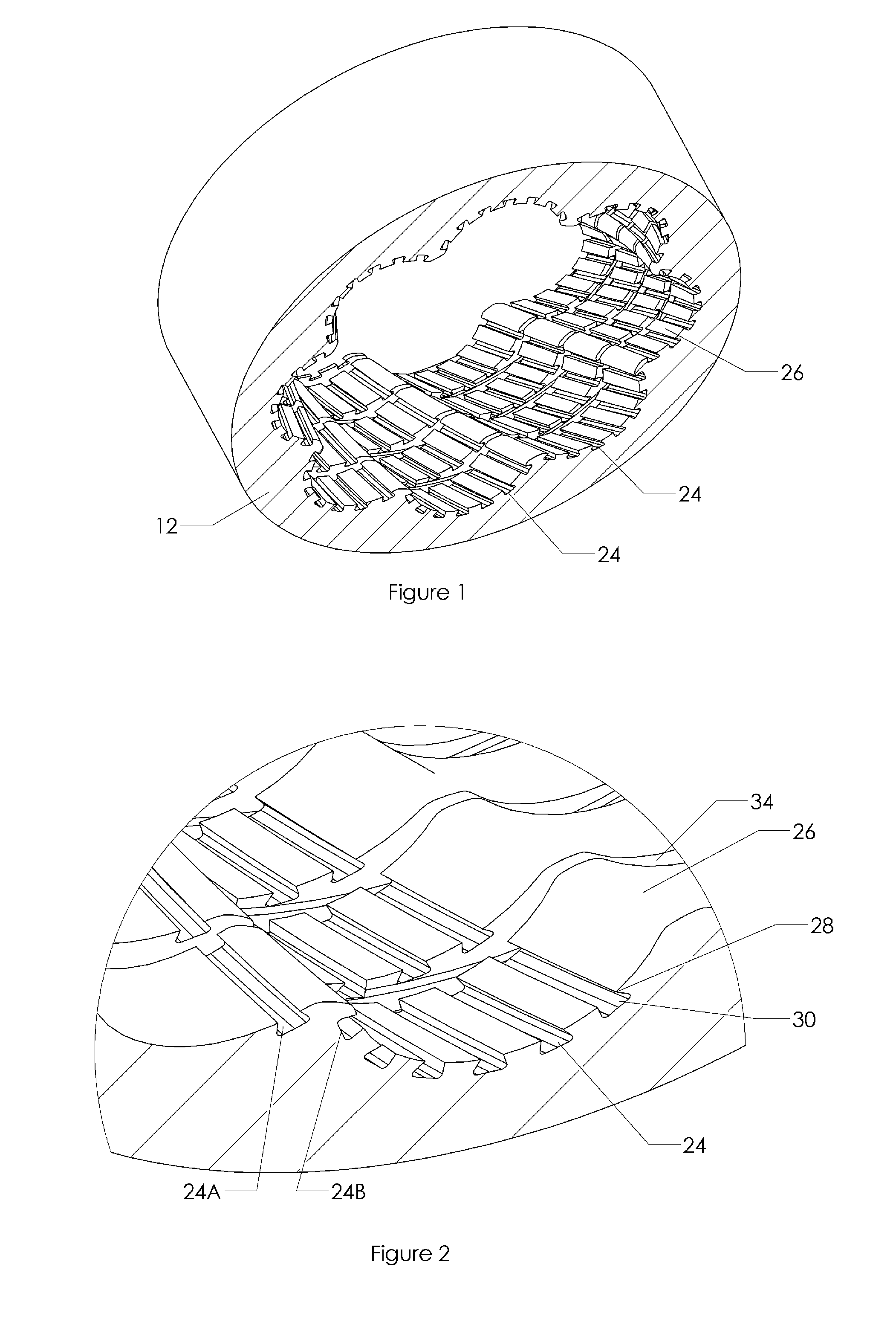
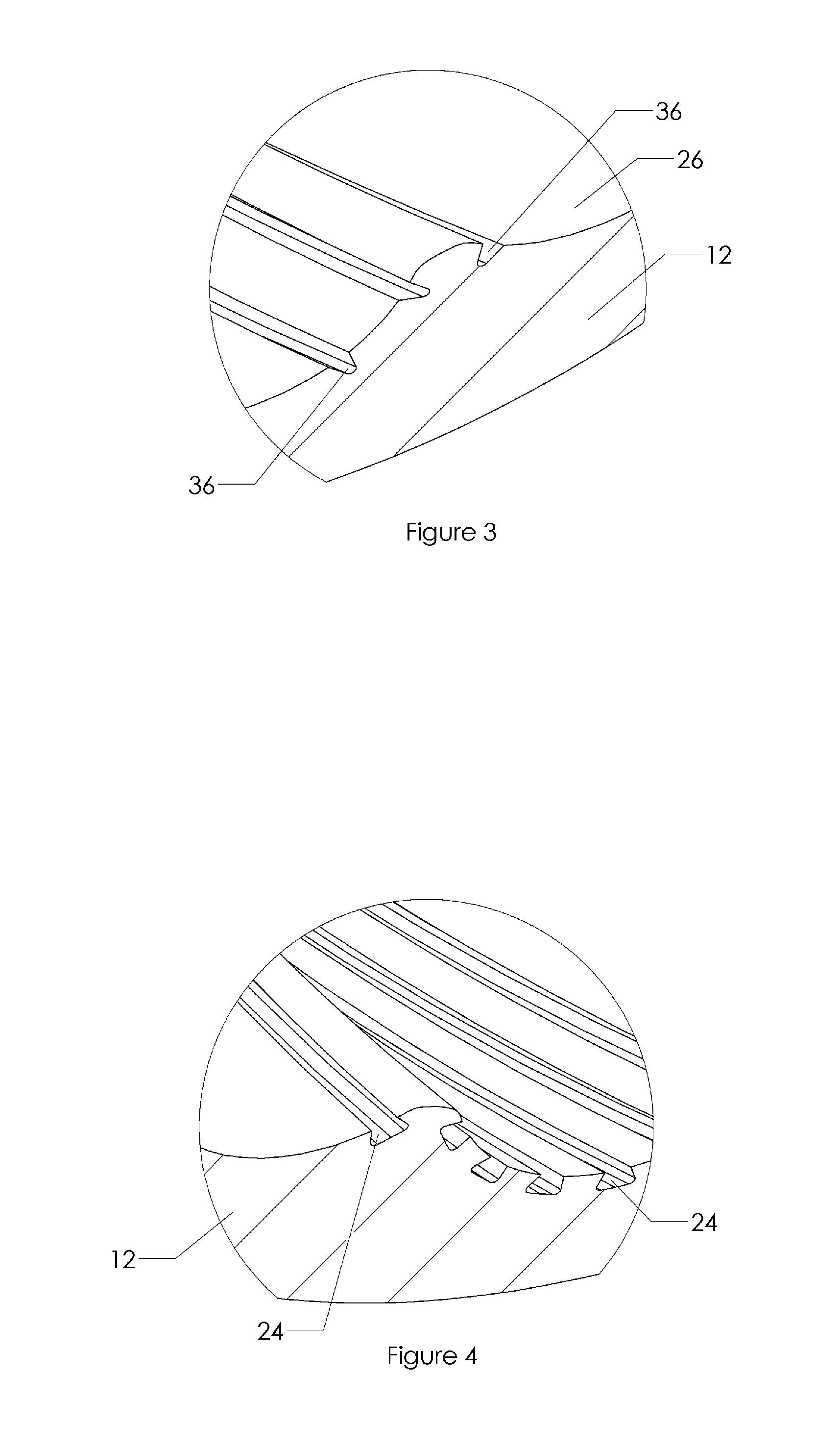
Progressing Cavity Pump/Motor
PatentActiveUS20120156078A1
Innovation
- The use of a combination of axially extending and intersecting grooves on the interior surface of the stator housing, along with seal glands, to create a mechanical lock between the polymeric layer and the stator housing, enhancing the bonding area and resistance to movement, thereby preventing the polymeric sleeve from detaching.

Composite metal-to-metal progressive cavity pump
PatentWO2020150082A1
Innovation
- The development of a progressive cavity pump using a stator and rotor composed of stacks of laminates, where dissimilar materials are used to build laminate stacks, with wear-resistant materials like ceramic or non-metallic materials integrated into a composite matrix or interleaved within steel laminates, providing enhanced wear resistance and thermal stability.


Environmental Regulations Impact on PCP Material Selection
Environmental regulations have become increasingly stringent worldwide, fundamentally reshaping material selection criteria for progressive cavity pumps across multiple industries. The regulatory landscape encompasses emissions standards, chemical compatibility requirements, and environmental safety protocols that directly influence elastomer and metal component choices in PCP systems.
The European Union's REACH regulation and similar frameworks in North America have restricted the use of certain rubber compounds and additives traditionally employed in PCP stator manufacturing. These restrictions particularly affect nitrile rubber formulations containing heavy metals and aromatic compounds, forcing manufacturers to develop alternative elastomer compositions that maintain performance while meeting regulatory compliance standards.
Oil and gas industry regulations have intensified focus on fugitive emissions control, driving demand for enhanced sealing materials and corrosion-resistant metallurgy in PCP applications. The implementation of methane emission reduction targets has necessitated the development of low-permeability elastomers and improved metal-to-elastomer bonding technologies to minimize hydrocarbon leakage through pump components.
Water treatment and municipal applications face increasingly strict regulations regarding material leachability and biocompatibility. NSF/ANSI 61 certification requirements for drinking water applications have eliminated numerous traditional elastomer formulations, promoting the adoption of EPDM and specialized food-grade compounds in PCP systems serving potable water markets.
Chemical processing industries must navigate complex regulatory frameworks governing material compatibility with hazardous substances. OSHA and EPA guidelines influence the selection of chemically resistant elastomers and protective coatings, while international standards like ISO 23936 establish performance benchmarks for materials exposed to aggressive chemical environments.
Emerging environmental regulations addressing microplastics and polymer degradation products are beginning to influence long-term material selection strategies. These evolving standards may require enhanced material durability testing and lifecycle assessment protocols, potentially favoring thermoplastic elastomers and advanced composite materials over conventional rubber compounds in future PCP designs.
The European Union's REACH regulation and similar frameworks in North America have restricted the use of certain rubber compounds and additives traditionally employed in PCP stator manufacturing. These restrictions particularly affect nitrile rubber formulations containing heavy metals and aromatic compounds, forcing manufacturers to develop alternative elastomer compositions that maintain performance while meeting regulatory compliance standards.
Oil and gas industry regulations have intensified focus on fugitive emissions control, driving demand for enhanced sealing materials and corrosion-resistant metallurgy in PCP applications. The implementation of methane emission reduction targets has necessitated the development of low-permeability elastomers and improved metal-to-elastomer bonding technologies to minimize hydrocarbon leakage through pump components.
Water treatment and municipal applications face increasingly strict regulations regarding material leachability and biocompatibility. NSF/ANSI 61 certification requirements for drinking water applications have eliminated numerous traditional elastomer formulations, promoting the adoption of EPDM and specialized food-grade compounds in PCP systems serving potable water markets.
Chemical processing industries must navigate complex regulatory frameworks governing material compatibility with hazardous substances. OSHA and EPA guidelines influence the selection of chemically resistant elastomers and protective coatings, while international standards like ISO 23936 establish performance benchmarks for materials exposed to aggressive chemical environments.
Emerging environmental regulations addressing microplastics and polymer degradation products are beginning to influence long-term material selection strategies. These evolving standards may require enhanced material durability testing and lifecycle assessment protocols, potentially favoring thermoplastic elastomers and advanced composite materials over conventional rubber compounds in future PCP designs.
Cost-Performance Trade-offs in Advanced PCP Materials
The economic viability of advanced materials in progressive cavity pumps presents a complex optimization challenge where performance gains must be carefully weighed against implementation costs. Traditional elastomer materials, while cost-effective, often require frequent replacement in demanding applications, leading to higher total cost of ownership despite lower initial investment. Advanced polymer composites and specialized rubber compounds can extend operational life by 200-300%, but their material costs may be 3-5 times higher than conventional alternatives.
High-performance materials such as fluoroelastomers and thermoplastic elastomers demonstrate superior chemical resistance and temperature stability, particularly valuable in oil and gas applications where fluid compatibility is critical. However, the premium pricing of these materials necessitates careful application assessment to ensure return on investment. The break-even point typically occurs when operational conditions exceed standard material capabilities, resulting in frequent maintenance cycles that offset initial savings.
Manufacturing complexity introduces additional cost considerations beyond raw material expenses. Advanced materials often require specialized processing techniques, modified curing procedures, and enhanced quality control measures. These factors can increase production costs by 15-25% while potentially extending lead times. The investment in specialized manufacturing capabilities must be justified through volume commitments or premium market positioning.
Performance metrics reveal that cost-effectiveness varies significantly across application domains. In municipal water systems, where operating conditions are relatively benign, standard materials often provide optimal cost-performance ratios. Conversely, in chemical processing or enhanced oil recovery applications, advanced materials deliver substantial value through reduced downtime, extended service intervals, and improved system reliability.
The total cost of ownership analysis must incorporate factors beyond material and manufacturing costs, including installation complexity, maintenance requirements, and operational efficiency impacts. Advanced materials that enable higher operating pressures or temperatures can unlock system-level performance improvements that justify their premium pricing through enhanced productivity and reduced operational constraints.
High-performance materials such as fluoroelastomers and thermoplastic elastomers demonstrate superior chemical resistance and temperature stability, particularly valuable in oil and gas applications where fluid compatibility is critical. However, the premium pricing of these materials necessitates careful application assessment to ensure return on investment. The break-even point typically occurs when operational conditions exceed standard material capabilities, resulting in frequent maintenance cycles that offset initial savings.
Manufacturing complexity introduces additional cost considerations beyond raw material expenses. Advanced materials often require specialized processing techniques, modified curing procedures, and enhanced quality control measures. These factors can increase production costs by 15-25% while potentially extending lead times. The investment in specialized manufacturing capabilities must be justified through volume commitments or premium market positioning.
Performance metrics reveal that cost-effectiveness varies significantly across application domains. In municipal water systems, where operating conditions are relatively benign, standard materials often provide optimal cost-performance ratios. Conversely, in chemical processing or enhanced oil recovery applications, advanced materials deliver substantial value through reduced downtime, extended service intervals, and improved system reliability.
The total cost of ownership analysis must incorporate factors beyond material and manufacturing costs, including installation complexity, maintenance requirements, and operational efficiency impacts. Advanced materials that enable higher operating pressures or temperatures can unlock system-level performance improvements that justify their premium pricing through enhanced productivity and reduced operational constraints.
Unlock deeper insights with Patsnap Eureka Quick Research — get a full tech report to explore trends and direct your research. Try now!
Generate Your Research Report Instantly with AI Agent
Supercharge your innovation with Patsnap Eureka AI Agent Platform!