

Maximize Stereolithography Customization for Market Trends
FEB 28, 20269 MIN READ
Generate Your Research Report Instantly with AI Agent
PatSnap Eureka helps you evaluate technical feasibility & market potential.
SLA Customization Background and Technical Objectives
Stereolithography (SLA) technology has undergone significant evolution since its inception in the 1980s, transforming from a prototyping tool into a versatile manufacturing platform capable of producing end-use parts across diverse industries. The technology's foundation lies in photopolymerization, where liquid resin is selectively cured by ultraviolet light to create three-dimensional objects layer by layer. This additive manufacturing approach has consistently demonstrated superior surface finish quality and dimensional accuracy compared to other 3D printing technologies.
The historical trajectory of SLA development reveals a clear progression toward enhanced customization capabilities. Early systems were primarily focused on rapid prototyping applications, utilizing basic photopolymer resins with limited material properties. However, technological advancements in laser systems, resin chemistry, and process control have expanded the scope of achievable customization parameters, including material properties, geometric complexity, and surface characteristics.
Contemporary market dynamics are driving unprecedented demand for personalized products across sectors including healthcare, automotive, aerospace, and consumer goods. This shift toward mass customization represents a fundamental departure from traditional manufacturing paradigms, where standardization and economies of scale dominated production strategies. The convergence of digital design tools, advanced materials science, and sophisticated manufacturing processes has created opportunities for SLA technology to address these evolving market requirements.
Current technical objectives in SLA customization encompass multiple dimensions of product differentiation. Material customization involves developing specialized resins with tailored mechanical, thermal, and chemical properties to meet specific application requirements. Geometric customization focuses on leveraging SLA's design freedom to create complex internal structures, lattices, and organic shapes that are impossible to achieve through conventional manufacturing methods.
Process customization represents another critical objective, involving the optimization of printing parameters such as layer thickness, exposure time, and post-processing protocols to achieve desired part characteristics. This includes developing adaptive manufacturing strategies that can automatically adjust process parameters based on part geometry and material requirements.
The integration of digital technologies, including artificial intelligence and machine learning algorithms, is becoming increasingly important for achieving scalable customization. These technologies enable real-time process optimization, predictive quality control, and automated design generation based on performance specifications and manufacturing constraints.
Future technical objectives emphasize the development of multi-material printing capabilities, enabling the creation of parts with spatially varying properties within a single build. Additionally, the integration of functional elements such as embedded sensors, conductive pathways, and mechanical components during the printing process represents a significant advancement toward truly customized smart products.
The historical trajectory of SLA development reveals a clear progression toward enhanced customization capabilities. Early systems were primarily focused on rapid prototyping applications, utilizing basic photopolymer resins with limited material properties. However, technological advancements in laser systems, resin chemistry, and process control have expanded the scope of achievable customization parameters, including material properties, geometric complexity, and surface characteristics.
Contemporary market dynamics are driving unprecedented demand for personalized products across sectors including healthcare, automotive, aerospace, and consumer goods. This shift toward mass customization represents a fundamental departure from traditional manufacturing paradigms, where standardization and economies of scale dominated production strategies. The convergence of digital design tools, advanced materials science, and sophisticated manufacturing processes has created opportunities for SLA technology to address these evolving market requirements.
Current technical objectives in SLA customization encompass multiple dimensions of product differentiation. Material customization involves developing specialized resins with tailored mechanical, thermal, and chemical properties to meet specific application requirements. Geometric customization focuses on leveraging SLA's design freedom to create complex internal structures, lattices, and organic shapes that are impossible to achieve through conventional manufacturing methods.
Process customization represents another critical objective, involving the optimization of printing parameters such as layer thickness, exposure time, and post-processing protocols to achieve desired part characteristics. This includes developing adaptive manufacturing strategies that can automatically adjust process parameters based on part geometry and material requirements.
The integration of digital technologies, including artificial intelligence and machine learning algorithms, is becoming increasingly important for achieving scalable customization. These technologies enable real-time process optimization, predictive quality control, and automated design generation based on performance specifications and manufacturing constraints.
Future technical objectives emphasize the development of multi-material printing capabilities, enabling the creation of parts with spatially varying properties within a single build. Additionally, the integration of functional elements such as embedded sensors, conductive pathways, and mechanical components during the printing process represents a significant advancement toward truly customized smart products.
Market Demand Analysis for Customized SLA Products
The stereolithography (SLA) market is experiencing unprecedented demand for customized products across multiple industry verticals, driven by evolving consumer expectations and technological capabilities. Healthcare applications represent the most significant growth segment, with personalized medical devices, dental prosthetics, and surgical guides requiring precise customization to individual patient anatomies. The dental sector alone demonstrates substantial market expansion, as practitioners increasingly adopt chairside manufacturing for crowns, bridges, and orthodontic appliances tailored to specific patient requirements.
Automotive and aerospace industries are driving demand for customized SLA components in prototyping and low-volume production applications. These sectors require parts with complex geometries and material properties that traditional manufacturing cannot efficiently produce. The ability to create lightweight, high-strength components with intricate internal structures positions customized SLA solutions as essential for next-generation vehicle and aircraft development.
Consumer goods markets show accelerating adoption of personalized products, particularly in jewelry, eyewear, and consumer electronics accessories. The rise of direct-to-consumer business models enables manufacturers to offer mass customization services, where individual customer preferences drive unique product specifications. This trend is supported by growing consumer willingness to pay premium prices for personalized items that reflect individual style and functional requirements.
Industrial tooling and manufacturing aids represent another substantial demand driver, where customized jigs, fixtures, and production tools enhance manufacturing efficiency. Companies seek SLA solutions that can rapidly produce specialized tooling adapted to specific production runs or product variations, reducing lead times and inventory costs compared to traditional tooling approaches.
The educational and research sectors demonstrate increasing demand for customized SLA applications in creating teaching aids, research prototypes, and experimental apparatus. Academic institutions and research facilities require the flexibility to produce unique components that support diverse educational and investigative activities.
Market capacity analysis indicates robust growth potential, with demand patterns showing geographic concentration in developed economies while emerging markets demonstrate accelerating adoption rates. The convergence of design software capabilities, material science advances, and cost reduction trends creates favorable conditions for expanded market penetration across previously underserved applications and customer segments.
Automotive and aerospace industries are driving demand for customized SLA components in prototyping and low-volume production applications. These sectors require parts with complex geometries and material properties that traditional manufacturing cannot efficiently produce. The ability to create lightweight, high-strength components with intricate internal structures positions customized SLA solutions as essential for next-generation vehicle and aircraft development.
Consumer goods markets show accelerating adoption of personalized products, particularly in jewelry, eyewear, and consumer electronics accessories. The rise of direct-to-consumer business models enables manufacturers to offer mass customization services, where individual customer preferences drive unique product specifications. This trend is supported by growing consumer willingness to pay premium prices for personalized items that reflect individual style and functional requirements.
Industrial tooling and manufacturing aids represent another substantial demand driver, where customized jigs, fixtures, and production tools enhance manufacturing efficiency. Companies seek SLA solutions that can rapidly produce specialized tooling adapted to specific production runs or product variations, reducing lead times and inventory costs compared to traditional tooling approaches.
The educational and research sectors demonstrate increasing demand for customized SLA applications in creating teaching aids, research prototypes, and experimental apparatus. Academic institutions and research facilities require the flexibility to produce unique components that support diverse educational and investigative activities.
Market capacity analysis indicates robust growth potential, with demand patterns showing geographic concentration in developed economies while emerging markets demonstrate accelerating adoption rates. The convergence of design software capabilities, material science advances, and cost reduction trends creates favorable conditions for expanded market penetration across previously underserved applications and customer segments.
Current SLA Customization Capabilities and Constraints
Current stereolithography technology offers substantial customization capabilities across multiple dimensions, enabling manufacturers to adapt products to diverse market requirements. Layer resolution customization represents a fundamental capability, with modern SLA systems supporting layer heights ranging from 10 to 200 microns. This flexibility allows manufacturers to balance production speed against surface quality based on specific application needs.
Material selection provides another critical customization avenue, with contemporary SLA systems supporting various photopolymer formulations including standard resins, tough resins, flexible materials, castable resins, and biocompatible options. Each material category enables different mechanical properties and end-use applications, from prototyping to direct manufacturing of functional parts.
Build volume scalability offers significant customization potential, with available systems ranging from desktop units with 100mm build platforms to industrial systems exceeding 1000mm in working dimensions. This range enables customization from small precision components to large architectural models and automotive parts.
Post-processing customization capabilities include variable curing protocols, support removal strategies, and surface finishing options. UV curing chambers with programmable exposure times and wavelengths allow optimization for different material properties, while automated support removal systems enable consistent quality across production runs.
However, several constraints limit current customization capabilities. Material compatibility restrictions prevent cross-platform resin usage, as each manufacturer typically requires proprietary formulations optimized for specific light engines and exposure systems. This creates vendor lock-in scenarios that limit material sourcing flexibility.
Processing speed constraints become pronounced with high-resolution settings, where layer exposure times can extend significantly. Complex geometries requiring extensive support structures further compound production time limitations, affecting scalability for time-sensitive applications.
Temperature and environmental sensitivity present operational constraints, as most SLA systems require controlled ambient conditions for consistent results. Humidity, temperature fluctuations, and dust contamination can significantly impact print quality and dimensional accuracy.
Economic constraints emerge from high-performance resin costs, which can exceed $200 per liter for specialized formulations. Combined with equipment depreciation and maintenance requirements, these factors limit cost-effective customization for price-sensitive market segments.
Size limitations persist despite available large-format systems, as part dimensions remain constrained by build platform dimensions. Multi-part assemblies requiring post-processing bonding introduce additional complexity and potential failure points that limit design freedom for large-scale applications.
Material selection provides another critical customization avenue, with contemporary SLA systems supporting various photopolymer formulations including standard resins, tough resins, flexible materials, castable resins, and biocompatible options. Each material category enables different mechanical properties and end-use applications, from prototyping to direct manufacturing of functional parts.
Build volume scalability offers significant customization potential, with available systems ranging from desktop units with 100mm build platforms to industrial systems exceeding 1000mm in working dimensions. This range enables customization from small precision components to large architectural models and automotive parts.
Post-processing customization capabilities include variable curing protocols, support removal strategies, and surface finishing options. UV curing chambers with programmable exposure times and wavelengths allow optimization for different material properties, while automated support removal systems enable consistent quality across production runs.
However, several constraints limit current customization capabilities. Material compatibility restrictions prevent cross-platform resin usage, as each manufacturer typically requires proprietary formulations optimized for specific light engines and exposure systems. This creates vendor lock-in scenarios that limit material sourcing flexibility.
Processing speed constraints become pronounced with high-resolution settings, where layer exposure times can extend significantly. Complex geometries requiring extensive support structures further compound production time limitations, affecting scalability for time-sensitive applications.
Temperature and environmental sensitivity present operational constraints, as most SLA systems require controlled ambient conditions for consistent results. Humidity, temperature fluctuations, and dust contamination can significantly impact print quality and dimensional accuracy.
Economic constraints emerge from high-performance resin costs, which can exceed $200 per liter for specialized formulations. Combined with equipment depreciation and maintenance requirements, these factors limit cost-effective customization for price-sensitive market segments.
Size limitations persist despite available large-format systems, as part dimensions remain constrained by build platform dimensions. Multi-part assemblies requiring post-processing bonding introduce additional complexity and potential failure points that limit design freedom for large-scale applications.
Existing SLA Customization Solutions and Methods
01 Customized dental appliances using stereolithography
Stereolithography technology enables the fabrication of personalized dental devices such as aligners, crowns, bridges, and orthodontic appliances. The process involves creating digital models from patient scans and using layer-by-layer photopolymerization to produce precise, patient-specific dental products with accurate fit and improved treatment outcomes.- Customized dental appliances using stereolithography: Stereolithography technology enables the fabrication of personalized dental devices such as aligners, crowns, bridges, and orthodontic appliances. The process involves creating digital models from patient scans and using layer-by-layer photopolymerization to produce precise, patient-specific dental products with accurate fit and improved treatment outcomes.
- Patient-specific surgical guides and implants: Stereolithography allows for the creation of customized surgical guides and implants tailored to individual patient anatomy. These guides assist surgeons in precise placement during procedures, while custom implants ensure optimal fit and integration. The technology utilizes medical imaging data to design and manufacture components that match the unique anatomical features of each patient.
- Customized prosthetics and orthotic devices: The technology enables the production of personalized prosthetic limbs and orthotic devices that conform to individual body measurements and functional requirements. By utilizing three-dimensional scanning and digital modeling, stereolithography produces lightweight, comfortable, and functionally optimized devices that improve patient mobility and quality of life.
- Customizable material formulations for stereolithography: Advanced photopolymer resins and material compositions are developed specifically for stereolithography applications, allowing customization of mechanical properties, biocompatibility, and functional characteristics. These materials can be tailored to meet specific application requirements such as strength, flexibility, transparency, or biocompatibility for medical applications.
- Software and workflow optimization for customized stereolithography production: Integrated software systems and automated workflows streamline the process from digital design to final product manufacturing. These systems incorporate algorithms for design optimization, support structure generation, build orientation selection, and quality control, enabling efficient mass customization and reducing production time while maintaining high precision and repeatability.
02 Patient-specific surgical guides and implants
Stereolithography allows for the creation of customized surgical guides and implants tailored to individual patient anatomy. These personalized medical devices are designed based on medical imaging data and enable surgeons to perform more accurate procedures with better pre-operative planning. The technology facilitates the production of complex geometries that match patient-specific anatomical requirements.Expand Specific Solutions03 Customized prosthetics and orthotic devices
The technology enables the manufacturing of personalized prosthetic limbs and orthotic devices that conform to individual patient measurements and requirements. By utilizing three-dimensional scanning and digital modeling, stereolithography produces lightweight, comfortable, and functionally optimized devices that improve patient mobility and quality of life.Expand Specific Solutions04 Personalized hearing aids and auditory devices
Stereolithography facilitates the production of custom-fitted hearing aids and ear molds that precisely match the unique ear canal geometry of each patient. This customization approach improves comfort, acoustic performance, and wearing experience. The additive manufacturing process allows for rapid production of individualized devices with complex internal structures.Expand Specific Solutions05 Customized medical models for surgical planning
The technology enables the creation of patient-specific anatomical models for pre-surgical planning and medical education. These physical replicas are produced from CT or MRI scan data and allow surgeons to visualize complex anatomical structures, practice procedures, and improve surgical outcomes. The models can incorporate multiple materials to simulate different tissue properties.Expand Specific Solutions
Major Players in SLA Customization Market
The stereolithography customization market is experiencing rapid growth driven by increasing demand for personalized manufacturing solutions across healthcare, automotive, and consumer goods sectors. The industry has reached a mature development stage with established players like Carbon Inc., 3D Systems Inc., and DWS Srl leading technological advancement through proprietary resin formulations and precision printing systems. Market expansion is supported by material science innovations from companies like JSR Corp. and Merck Patent GmbH, who provide specialized photopolymers enabling diverse applications. Technology maturity varies significantly, with semiconductor lithography leaders ASML Netherlands BV and Carl Zeiss SMT GmbH representing the highest precision capabilities, while emerging players like Shenzhen Mofang New Material Technology focus on cost-effective solutions. Academic institutions including MIT and Cornell University continue driving fundamental research, while companies like Planmeca Oy demonstrate successful vertical integration in dental applications, indicating strong market segmentation opportunities for customized stereolithography solutions.
Carbon, Inc.
Technical Solution: Carbon has developed Digital Light Synthesis (DLS) technology that uses continuous liquid interface production (CLIP) for stereolithography. Their approach enables rapid prototyping and mass production of customized parts by utilizing programmable liquid resins and oxygen-permeable optics. The DLS platform allows for real-time adjustment of mechanical properties during printing, enabling multi-material capabilities within single parts. This technology supports market customization by offering variable shore hardness, elasticity, and durability characteristics that can be tailored to specific application requirements across automotive, healthcare, and consumer goods sectors.
Strengths: High-speed continuous printing process, excellent surface finish quality, wide range of customizable material properties. Weaknesses: Limited to proprietary resin systems, higher material costs compared to traditional SLA resins.
3D Systems, Inc.
Technical Solution: 3D Systems offers comprehensive stereolithography solutions through their SLA platform featuring adaptive print controls and multi-material capabilities. Their technology incorporates real-time monitoring systems and automated parameter adjustment to optimize print quality for different geometries and applications. The company provides extensive material libraries with customizable properties including biocompatible, high-temperature, and flexible resins. Their software ecosystem enables design optimization for specific market requirements, supporting industries from aerospace to medical devices through tailored material formulations and printing parameters that can be adjusted for batch customization and rapid market response.
Strengths: Extensive material portfolio, mature technology platform, strong software integration for customization. Weaknesses: Slower printing speeds compared to newer technologies, higher equipment maintenance requirements.
Core Technologies for Advanced SLA Customization
Integrated system and method for determining consumer insights and analyzing market trends
PatentInactiveUS20230394511A1
Innovation
- An integrated system combining data listening, survey, and content creation modules to analyze consumer sentiment from social media, generate customized surveys, and incentivize users for content creation, utilizing sentiment analysis and demographic data to provide actionable insights and market trend analysis.
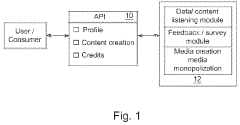
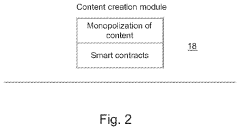
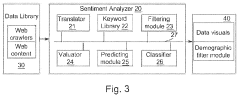
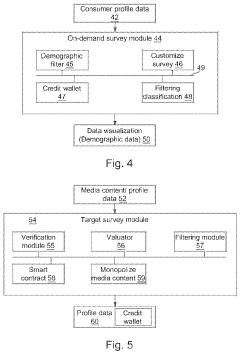
Method and system to analyze market trend
PatentInactiveEP1253526A1
Innovation
- The use of wavelet transforms for objective analysis of market trend data, allowing for multi-resolution analysis and feature extraction from unorganized data, enabling a more comprehensive and objective evaluation of market trends.


Material Standards and Quality Control for SLA
Material standards and quality control represent critical foundations for maximizing stereolithography customization capabilities in response to evolving market demands. The establishment of comprehensive material certification frameworks ensures consistent performance across diverse application sectors, from aerospace components requiring exceptional mechanical properties to biomedical devices demanding biocompatibility certifications.
Current industry standards primarily focus on ASTM D792 for density measurements, ISO 527 for tensile properties, and ASTM D638 for mechanical characterization of photopolymer resins. However, these traditional standards inadequately address the unique requirements of customized SLA applications, particularly those involving multi-material printing or specialized functional additives.
Quality control protocols must encompass real-time monitoring of critical parameters including laser power stability, resin viscosity variations, and environmental conditions such as temperature and humidity. Advanced spectroscopic analysis techniques enable precise characterization of photopolymer crosslinking density, directly correlating with final part mechanical performance and dimensional accuracy.
The integration of artificial intelligence-driven quality assessment systems facilitates automated defect detection and process optimization. Machine learning algorithms analyze layer-by-layer formation patterns, identifying potential issues before they compromise final product quality. This predictive approach significantly reduces material waste while ensuring consistent output quality across customized production runs.
Traceability systems incorporating blockchain technology provide comprehensive material provenance tracking, essential for regulated industries requiring complete supply chain transparency. Digital material passports document chemical composition, processing parameters, and performance validation data, enabling rapid qualification of new material formulations for specific customization requirements.
Standardized testing protocols for novel photopolymer formulations must address accelerated aging studies, chemical resistance evaluations, and long-term stability assessments. These comprehensive validation procedures ensure that customized materials maintain performance specifications throughout their intended service life, regardless of specific application requirements or environmental exposure conditions.
Current industry standards primarily focus on ASTM D792 for density measurements, ISO 527 for tensile properties, and ASTM D638 for mechanical characterization of photopolymer resins. However, these traditional standards inadequately address the unique requirements of customized SLA applications, particularly those involving multi-material printing or specialized functional additives.
Quality control protocols must encompass real-time monitoring of critical parameters including laser power stability, resin viscosity variations, and environmental conditions such as temperature and humidity. Advanced spectroscopic analysis techniques enable precise characterization of photopolymer crosslinking density, directly correlating with final part mechanical performance and dimensional accuracy.
The integration of artificial intelligence-driven quality assessment systems facilitates automated defect detection and process optimization. Machine learning algorithms analyze layer-by-layer formation patterns, identifying potential issues before they compromise final product quality. This predictive approach significantly reduces material waste while ensuring consistent output quality across customized production runs.
Traceability systems incorporating blockchain technology provide comprehensive material provenance tracking, essential for regulated industries requiring complete supply chain transparency. Digital material passports document chemical composition, processing parameters, and performance validation data, enabling rapid qualification of new material formulations for specific customization requirements.
Standardized testing protocols for novel photopolymer formulations must address accelerated aging studies, chemical resistance evaluations, and long-term stability assessments. These comprehensive validation procedures ensure that customized materials maintain performance specifications throughout their intended service life, regardless of specific application requirements or environmental exposure conditions.
Cost-Benefit Analysis of SLA Customization Strategies
The economic viability of SLA customization strategies requires comprehensive evaluation across multiple financial dimensions to determine optimal implementation approaches. Initial capital expenditure analysis reveals that high-end SLA systems capable of advanced customization features typically require investments ranging from $150,000 to $500,000, with additional costs for specialized resins, post-processing equipment, and software licenses adding 30-40% to the base system cost.
Operational cost structures demonstrate significant variability based on customization complexity levels. Standard production runs achieve material utilization rates of 85-90%, while highly customized small-batch productions often experience utilization rates dropping to 60-70% due to increased support structure requirements and specialized resin consumption. Labor costs for customized SLA production increase by approximately 40-60% compared to standardized manufacturing, primarily due to extended design preparation, parameter optimization, and quality control processes.
Revenue generation potential through customization strategies shows promising returns across targeted market segments. Premium pricing for customized SLA products typically commands 200-400% markup over standard offerings, with medical device applications achieving the highest margins. Market research indicates that 73% of customers in aerospace and medical sectors are willing to pay premium rates for tailored solutions, creating substantial revenue opportunities that can offset increased operational costs.
Break-even analysis for different customization tiers reveals that low-complexity customization achieves profitability within 8-12 months, while high-complexity custom solutions require 18-24 months to reach break-even points. The analysis demonstrates that companies implementing tiered customization strategies, offering both standard and premium custom options, achieve optimal financial performance with reduced risk exposure.
Long-term financial projections indicate that SLA customization investments generate positive ROI within 2-3 years when properly aligned with market demand. Companies focusing on niche markets with high customization requirements consistently outperform those pursuing volume-based strategies, achieving 25-35% higher profit margins and stronger customer retention rates exceeding 80%.
Operational cost structures demonstrate significant variability based on customization complexity levels. Standard production runs achieve material utilization rates of 85-90%, while highly customized small-batch productions often experience utilization rates dropping to 60-70% due to increased support structure requirements and specialized resin consumption. Labor costs for customized SLA production increase by approximately 40-60% compared to standardized manufacturing, primarily due to extended design preparation, parameter optimization, and quality control processes.
Revenue generation potential through customization strategies shows promising returns across targeted market segments. Premium pricing for customized SLA products typically commands 200-400% markup over standard offerings, with medical device applications achieving the highest margins. Market research indicates that 73% of customers in aerospace and medical sectors are willing to pay premium rates for tailored solutions, creating substantial revenue opportunities that can offset increased operational costs.
Break-even analysis for different customization tiers reveals that low-complexity customization achieves profitability within 8-12 months, while high-complexity custom solutions require 18-24 months to reach break-even points. The analysis demonstrates that companies implementing tiered customization strategies, offering both standard and premium custom options, achieve optimal financial performance with reduced risk exposure.
Long-term financial projections indicate that SLA customization investments generate positive ROI within 2-3 years when properly aligned with market demand. Companies focusing on niche markets with high customization requirements consistently outperform those pursuing volume-based strategies, achieving 25-35% higher profit margins and stronger customer retention rates exceeding 80%.
Unlock deeper insights with PatSnap Eureka Quick Research — get a full tech report to explore trends and direct your research. Try now!
Generate Your Research Report Instantly with AI Agent
Supercharge your innovation with PatSnap Eureka AI Agent Platform!