
Modeling Parallel Plate Capacitors for Electromagnetic Compatibility
JUN 27, 20269 MIN READ
Generate Your Research Report Instantly with AI Agent
Patsnap Eureka helps you evaluate technical feasibility & market potential.
Parallel Plate Capacitor EMC Background and Objectives
Parallel plate capacitors represent fundamental electromagnetic components that have evolved from simple energy storage devices to critical elements in modern electromagnetic compatibility design. The historical development of capacitor technology traces back to the 18th century with the Leyden jar, progressing through decades of refinement in dielectric materials, manufacturing processes, and theoretical understanding. This evolution has been driven by the increasing complexity of electronic systems and the corresponding need for precise electromagnetic interference control.
The contemporary landscape of electronic devices demands unprecedented levels of electromagnetic compatibility, where parallel plate capacitors serve dual roles as both functional components and EMC mitigation elements. Modern applications span from high-frequency switching power supplies to sensitive RF communication systems, where capacitor behavior directly impacts system performance and regulatory compliance. The miniaturization trend in electronics has intensified the importance of accurate capacitor modeling, as parasitic effects become increasingly significant relative to ideal capacitive behavior.
Current technological objectives center on developing comprehensive modeling frameworks that capture the full electromagnetic behavior of parallel plate capacitors across extended frequency ranges. Traditional lumped-element models prove inadequate for high-frequency applications where distributed effects, parasitic inductances, and resistive losses significantly influence performance. The primary goal involves establishing predictive models that accurately represent capacitor impedance characteristics, current distribution patterns, and electromagnetic field interactions within the operating environment.
Advanced modeling approaches aim to integrate multiple physical phenomena including dielectric dispersion, conductor skin effects, and proximity coupling with adjacent components. These models must accommodate various capacitor geometries, from discrete components to integrated structures within printed circuit boards. The ultimate objective involves creating simulation tools that enable designers to predict and optimize EMC performance during the design phase, reducing the need for extensive prototyping and testing cycles.
The strategic importance of this modeling capability extends beyond individual component characterization to system-level electromagnetic compatibility prediction. Accurate parallel plate capacitor models enable comprehensive analysis of power distribution networks, decoupling effectiveness, and electromagnetic emission characteristics. This capability becomes increasingly critical as electronic systems operate at higher frequencies and stricter EMC regulations govern product development across industries ranging from automotive electronics to aerospace applications.
The contemporary landscape of electronic devices demands unprecedented levels of electromagnetic compatibility, where parallel plate capacitors serve dual roles as both functional components and EMC mitigation elements. Modern applications span from high-frequency switching power supplies to sensitive RF communication systems, where capacitor behavior directly impacts system performance and regulatory compliance. The miniaturization trend in electronics has intensified the importance of accurate capacitor modeling, as parasitic effects become increasingly significant relative to ideal capacitive behavior.
Current technological objectives center on developing comprehensive modeling frameworks that capture the full electromagnetic behavior of parallel plate capacitors across extended frequency ranges. Traditional lumped-element models prove inadequate for high-frequency applications where distributed effects, parasitic inductances, and resistive losses significantly influence performance. The primary goal involves establishing predictive models that accurately represent capacitor impedance characteristics, current distribution patterns, and electromagnetic field interactions within the operating environment.
Advanced modeling approaches aim to integrate multiple physical phenomena including dielectric dispersion, conductor skin effects, and proximity coupling with adjacent components. These models must accommodate various capacitor geometries, from discrete components to integrated structures within printed circuit boards. The ultimate objective involves creating simulation tools that enable designers to predict and optimize EMC performance during the design phase, reducing the need for extensive prototyping and testing cycles.
The strategic importance of this modeling capability extends beyond individual component characterization to system-level electromagnetic compatibility prediction. Accurate parallel plate capacitor models enable comprehensive analysis of power distribution networks, decoupling effectiveness, and electromagnetic emission characteristics. This capability becomes increasingly critical as electronic systems operate at higher frequencies and stricter EMC regulations govern product development across industries ranging from automotive electronics to aerospace applications.
Market Demand for EMC Modeling Solutions
The electromagnetic compatibility (EMC) modeling solutions market has experienced substantial growth driven by increasingly stringent regulatory requirements and the proliferation of electronic devices across industries. Regulatory bodies worldwide, including the Federal Communications Commission (FCC), European Telecommunications Standards Institute (ETSI), and International Electrotechnical Commission (IEC), have established comprehensive EMC standards that mandate rigorous testing and compliance verification for electronic products before market entry.
The automotive industry represents one of the most significant demand drivers for EMC modeling solutions, particularly with the rapid adoption of electric vehicles and advanced driver assistance systems. Modern vehicles contain hundreds of electronic control units that must coexist without electromagnetic interference, creating complex design challenges that require sophisticated modeling capabilities. The integration of high-power inverters, battery management systems, and wireless communication modules has intensified the need for accurate capacitive coupling analysis.
Aerospace and defense sectors continue to demand advanced EMC modeling tools due to mission-critical applications where electromagnetic interference can have catastrophic consequences. The increasing deployment of electronic warfare systems, radar technologies, and satellite communications has created specialized requirements for modeling parallel plate capacitor configurations in shielded environments and complex geometric arrangements.
The telecommunications infrastructure expansion, particularly with 5G network deployment, has generated substantial demand for EMC modeling solutions. Base station equipment, small cells, and massive MIMO antenna systems require precise electromagnetic compatibility analysis to ensure reliable operation in dense urban environments with multiple interference sources.
Consumer electronics manufacturers face mounting pressure to accelerate product development cycles while maintaining EMC compliance. The miniaturization trend and increased functionality density in smartphones, tablets, and wearable devices have created complex electromagnetic environments where parallel plate capacitor effects significantly impact overall system performance.
Industrial automation and Internet of Things applications represent emerging market segments with growing EMC modeling requirements. Smart manufacturing facilities, industrial sensors, and connected machinery must operate reliably in electromagnetically noisy environments, driving demand for comprehensive modeling solutions that can accurately predict capacitive coupling effects in industrial settings.
The market demand is further amplified by the shift toward virtual prototyping and simulation-driven design methodologies, which enable manufacturers to identify and resolve EMC issues early in the development process, reducing costly physical testing iterations and accelerating time-to-market objectives.
The automotive industry represents one of the most significant demand drivers for EMC modeling solutions, particularly with the rapid adoption of electric vehicles and advanced driver assistance systems. Modern vehicles contain hundreds of electronic control units that must coexist without electromagnetic interference, creating complex design challenges that require sophisticated modeling capabilities. The integration of high-power inverters, battery management systems, and wireless communication modules has intensified the need for accurate capacitive coupling analysis.
Aerospace and defense sectors continue to demand advanced EMC modeling tools due to mission-critical applications where electromagnetic interference can have catastrophic consequences. The increasing deployment of electronic warfare systems, radar technologies, and satellite communications has created specialized requirements for modeling parallel plate capacitor configurations in shielded environments and complex geometric arrangements.
The telecommunications infrastructure expansion, particularly with 5G network deployment, has generated substantial demand for EMC modeling solutions. Base station equipment, small cells, and massive MIMO antenna systems require precise electromagnetic compatibility analysis to ensure reliable operation in dense urban environments with multiple interference sources.
Consumer electronics manufacturers face mounting pressure to accelerate product development cycles while maintaining EMC compliance. The miniaturization trend and increased functionality density in smartphones, tablets, and wearable devices have created complex electromagnetic environments where parallel plate capacitor effects significantly impact overall system performance.
Industrial automation and Internet of Things applications represent emerging market segments with growing EMC modeling requirements. Smart manufacturing facilities, industrial sensors, and connected machinery must operate reliably in electromagnetically noisy environments, driving demand for comprehensive modeling solutions that can accurately predict capacitive coupling effects in industrial settings.
The market demand is further amplified by the shift toward virtual prototyping and simulation-driven design methodologies, which enable manufacturers to identify and resolve EMC issues early in the development process, reducing costly physical testing iterations and accelerating time-to-market objectives.
Current EMC Modeling Challenges for Parallel Plate Capacitors
Parallel plate capacitors face significant electromagnetic compatibility modeling challenges that stem from the complex interaction between their fundamental electrical properties and real-world electromagnetic environments. Traditional modeling approaches often oversimplify the capacitor structure by treating it as an ideal lumped element, which fails to capture the distributed electromagnetic effects that become prominent at higher frequencies and in dense electronic systems.
One of the primary challenges lies in accurately representing the parasitic inductance and resistance that emerge from the physical geometry of parallel plate structures. The interconnecting leads, plate dimensions, and dielectric properties create frequency-dependent impedance characteristics that deviate substantially from ideal capacitive behavior. These parasitics become particularly problematic in EMC analysis where broadband frequency response is critical for predicting interference patterns and compliance with regulatory standards.
The modeling of electromagnetic field coupling between parallel plate capacitors and surrounding circuit elements presents another significant hurdle. Conventional circuit simulation tools struggle to account for the three-dimensional electromagnetic field distributions that occur around capacitor structures, especially when multiple capacitors are placed in proximity. This limitation becomes acute in modern high-density electronic designs where capacitor arrays are commonly employed for power delivery and filtering applications.
Frequency-dependent dielectric behavior adds another layer of complexity to EMC modeling efforts. Real dielectric materials exhibit variations in permittivity and loss tangent across frequency ranges, directly impacting the capacitor's electromagnetic signature. Current modeling frameworks often rely on simplified material models that inadequately represent these frequency-dependent characteristics, leading to inaccurate predictions of electromagnetic emissions and susceptibility.
The challenge of modeling nonlinear effects in parallel plate capacitors under varying voltage and temperature conditions further complicates EMC analysis. Voltage-dependent capacitance and temperature-induced parameter drift can significantly alter the electromagnetic behavior of these components, yet existing modeling approaches typically assume linear, time-invariant characteristics.
Manufacturing tolerances and geometric variations present additional modeling difficulties, as small deviations in plate spacing, alignment, and surface roughness can substantially impact electromagnetic performance. The statistical nature of these variations requires probabilistic modeling approaches that are not well-integrated into current EMC simulation workflows, creating gaps between predicted and measured electromagnetic behavior in production systems.
One of the primary challenges lies in accurately representing the parasitic inductance and resistance that emerge from the physical geometry of parallel plate structures. The interconnecting leads, plate dimensions, and dielectric properties create frequency-dependent impedance characteristics that deviate substantially from ideal capacitive behavior. These parasitics become particularly problematic in EMC analysis where broadband frequency response is critical for predicting interference patterns and compliance with regulatory standards.
The modeling of electromagnetic field coupling between parallel plate capacitors and surrounding circuit elements presents another significant hurdle. Conventional circuit simulation tools struggle to account for the three-dimensional electromagnetic field distributions that occur around capacitor structures, especially when multiple capacitors are placed in proximity. This limitation becomes acute in modern high-density electronic designs where capacitor arrays are commonly employed for power delivery and filtering applications.
Frequency-dependent dielectric behavior adds another layer of complexity to EMC modeling efforts. Real dielectric materials exhibit variations in permittivity and loss tangent across frequency ranges, directly impacting the capacitor's electromagnetic signature. Current modeling frameworks often rely on simplified material models that inadequately represent these frequency-dependent characteristics, leading to inaccurate predictions of electromagnetic emissions and susceptibility.
The challenge of modeling nonlinear effects in parallel plate capacitors under varying voltage and temperature conditions further complicates EMC analysis. Voltage-dependent capacitance and temperature-induced parameter drift can significantly alter the electromagnetic behavior of these components, yet existing modeling approaches typically assume linear, time-invariant characteristics.
Manufacturing tolerances and geometric variations present additional modeling difficulties, as small deviations in plate spacing, alignment, and surface roughness can substantially impact electromagnetic performance. The statistical nature of these variations requires probabilistic modeling approaches that are not well-integrated into current EMC simulation workflows, creating gaps between predicted and measured electromagnetic behavior in production systems.
Existing EMC Modeling Solutions for Parallel Plate Capacitors
01 Capacitor structure design for EMC improvement
Specific structural configurations of parallel plate capacitors can be optimized to enhance electromagnetic compatibility. This includes modifications to plate geometry, spacing arrangements, and overall capacitor architecture to minimize electromagnetic interference and improve signal integrity in electronic circuits.- Capacitor structure design for EMC improvement: Specific structural configurations of parallel plate capacitors can be optimized to enhance electromagnetic compatibility. This includes modifications to plate geometry, spacing arrangements, and overall capacitor architecture to minimize electromagnetic interference and improve signal integrity in electronic systems.
- Shielding and grounding techniques: Implementation of electromagnetic shielding methods and proper grounding configurations in parallel plate capacitor systems to reduce unwanted electromagnetic emissions and improve immunity to external interference. These techniques help maintain signal quality and prevent cross-talk between components.
- Dielectric material optimization for EMC: Selection and formulation of dielectric materials between capacitor plates to enhance electromagnetic compatibility performance. The dielectric properties directly influence the capacitor's ability to suppress electromagnetic interference while maintaining desired electrical characteristics.
- Multi-layer capacitor configurations: Advanced multi-layer parallel plate capacitor designs that incorporate multiple conductive and dielectric layers to improve electromagnetic compatibility. These configurations provide better filtering capabilities and reduced electromagnetic emissions compared to single-layer designs.
- Integration with circuit board layouts: Methods for integrating parallel plate capacitors into printed circuit board designs to optimize electromagnetic compatibility at the system level. This includes placement strategies, routing considerations, and interconnection techniques that minimize electromagnetic interference in complete electronic assemblies.
02 Shielding and grounding techniques
Implementation of electromagnetic shielding methods and proper grounding configurations in parallel plate capacitor systems to reduce unwanted electromagnetic emissions and susceptibility. These techniques help maintain electromagnetic compatibility in sensitive electronic environments and prevent interference with adjacent components.Expand Specific Solutions03 Dielectric material optimization for EMC
Selection and formulation of dielectric materials between capacitor plates to enhance electromagnetic compatibility performance. The dielectric properties directly influence the capacitor's ability to suppress electromagnetic interference while maintaining desired electrical characteristics and reliability under various operating conditions.Expand Specific Solutions04 Multi-layer capacitor configurations
Advanced multi-layer parallel plate capacitor designs that provide improved electromagnetic compatibility through enhanced filtering capabilities and reduced parasitic effects. These configurations offer better high-frequency performance and electromagnetic interference suppression compared to conventional single-layer designs.Expand Specific Solutions05 Integration methods for EMC compliance
Techniques for integrating parallel plate capacitors into electronic systems while maintaining electromagnetic compatibility standards and regulatory compliance. This includes placement strategies, connection methods, and system-level design considerations to ensure optimal electromagnetic performance in complete electronic assemblies.Expand Specific Solutions
Key Players in EMC Simulation and Capacitor Industry
The electromagnetic compatibility modeling of parallel plate capacitors represents a mature yet evolving technical domain within the broader EMC industry, which has reached a stable growth phase with an estimated market size exceeding $6 billion globally. The competitive landscape is dominated by established semiconductor foundries and component manufacturers who possess advanced modeling capabilities. Technology maturity varies significantly across market segments, with companies like TSMC, Intel, and GLOBALFOUNDRIES leading in advanced process node implementations, while specialized component manufacturers such as Murata, Samsung Electro-Mechanics, and Taiyo Yuden excel in passive component optimization. The field benefits from strong R&D contributions from institutions like Beihang University and ITRI, alongside EDA tool providers like Synopsys enabling sophisticated simulation capabilities. Market consolidation continues as companies integrate vertical capabilities spanning from material science through system-level EMC solutions, with emerging applications in 5G, automotive electronics, and IoT driving continued innovation in capacitor modeling methodologies.
Huawei Technologies Co., Ltd.
Technical Solution: Huawei has developed proprietary electromagnetic compatibility modeling techniques for parallel plate capacitors used in their telecommunications equipment and 5G infrastructure. Their approach integrates advanced computational electromagnetics with AI-driven optimization algorithms to predict and minimize EMI/EMC issues in high-frequency communication systems. The company utilizes multi-physics simulation platforms that account for thermal effects, mechanical stress, and electromagnetic coupling in parallel plate capacitor structures. Their modeling framework includes comprehensive analysis of ground plane design, via placement optimization, and multi-layer PCB stackup configurations to ensure compliance with international EMC standards.
Strengths: Strong expertise in high-frequency communications, comprehensive multi-physics modeling capabilities. Weaknesses: Technology primarily focused on telecom applications, limited academic publications on methodologies.
Murata Manufacturing Co. Ltd.
Technical Solution: Murata has developed advanced multilayer ceramic capacitor (MLCC) technology with specialized electromagnetic compatibility features for parallel plate capacitor modeling. Their approach incorporates low-ESR design methodologies and proprietary dielectric materials that minimize electromagnetic interference. The company utilizes sophisticated 3D electromagnetic field simulation tools to model parasitic effects in parallel plate structures, enabling precise prediction of EMC performance in high-frequency applications. Their capacitor designs feature optimized electrode configurations and advanced termination techniques that reduce unwanted electromagnetic emissions while maintaining stable capacitance characteristics across wide frequency ranges.
Strengths: Industry-leading MLCC technology with proven EMC performance, extensive simulation capabilities. Weaknesses: Limited to ceramic-based solutions, higher costs for specialized EMC variants.
Core Innovations in Capacitor EMC Modeling Patents
Parallel plate capacitor resistance modeling and extraction
PatentActiveUS20210202183A1
Innovation
- A lumped element model is developed that uses edge nodes and a capacitor node to represent the resistance of the overlap region between parallel plates, with lumped resistances calculated to preserve point-to-point resistance values, ensuring accurate modeling of resistance across the capacitor plate in both x and y directions.


Methodology for automated design of vertical parallel plate capacitors
PatentInactiveUS20080301592A1
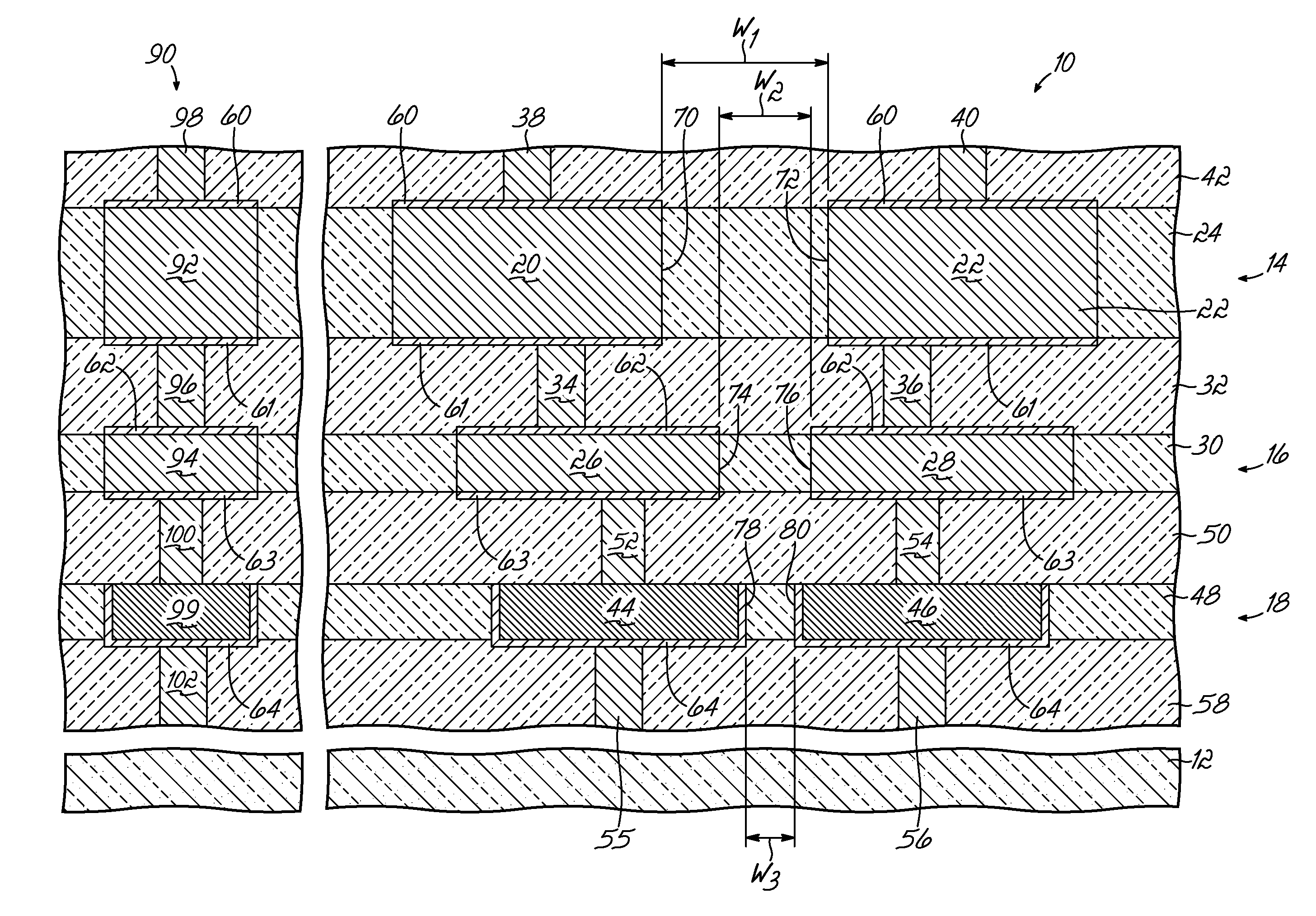
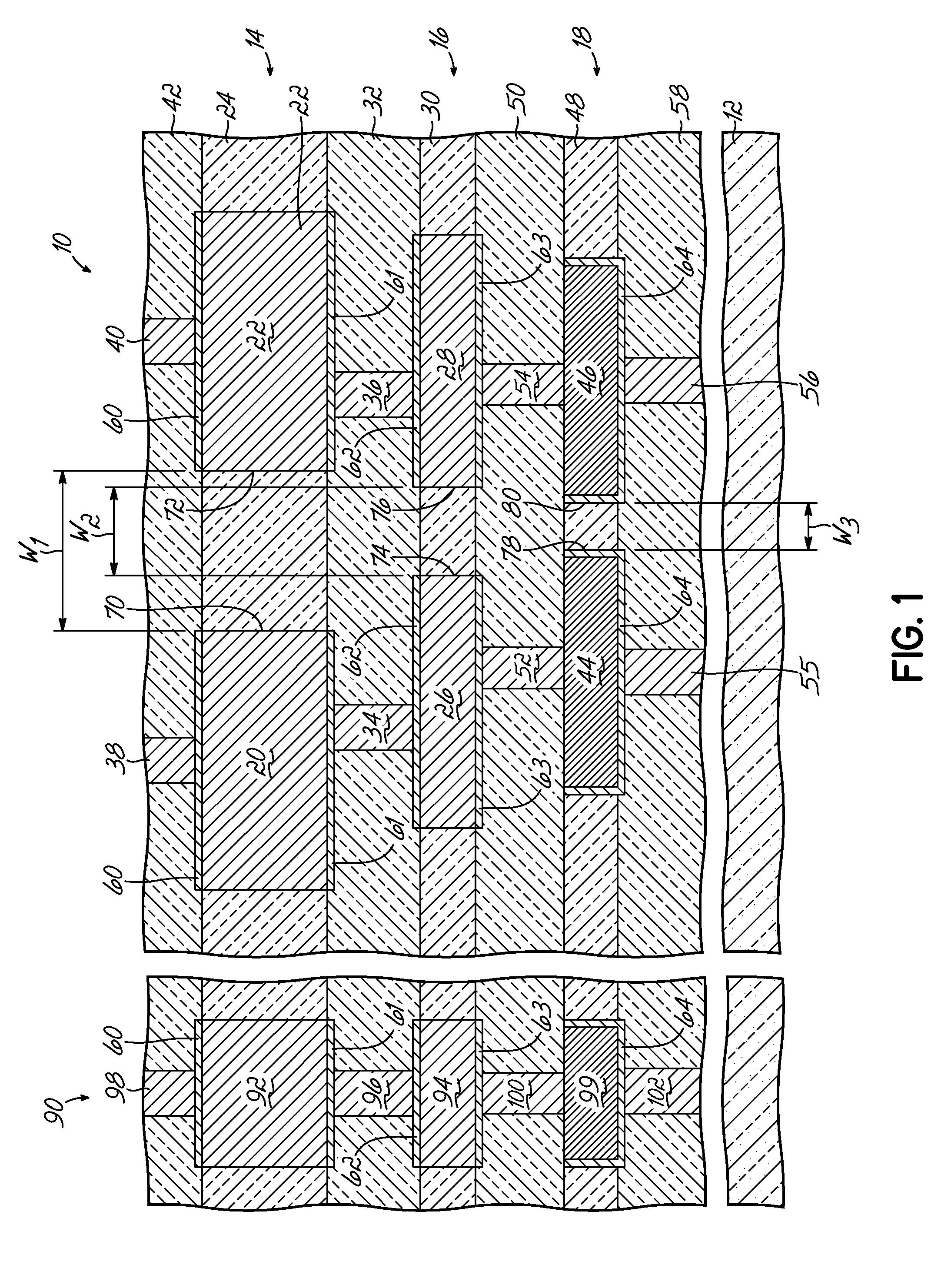
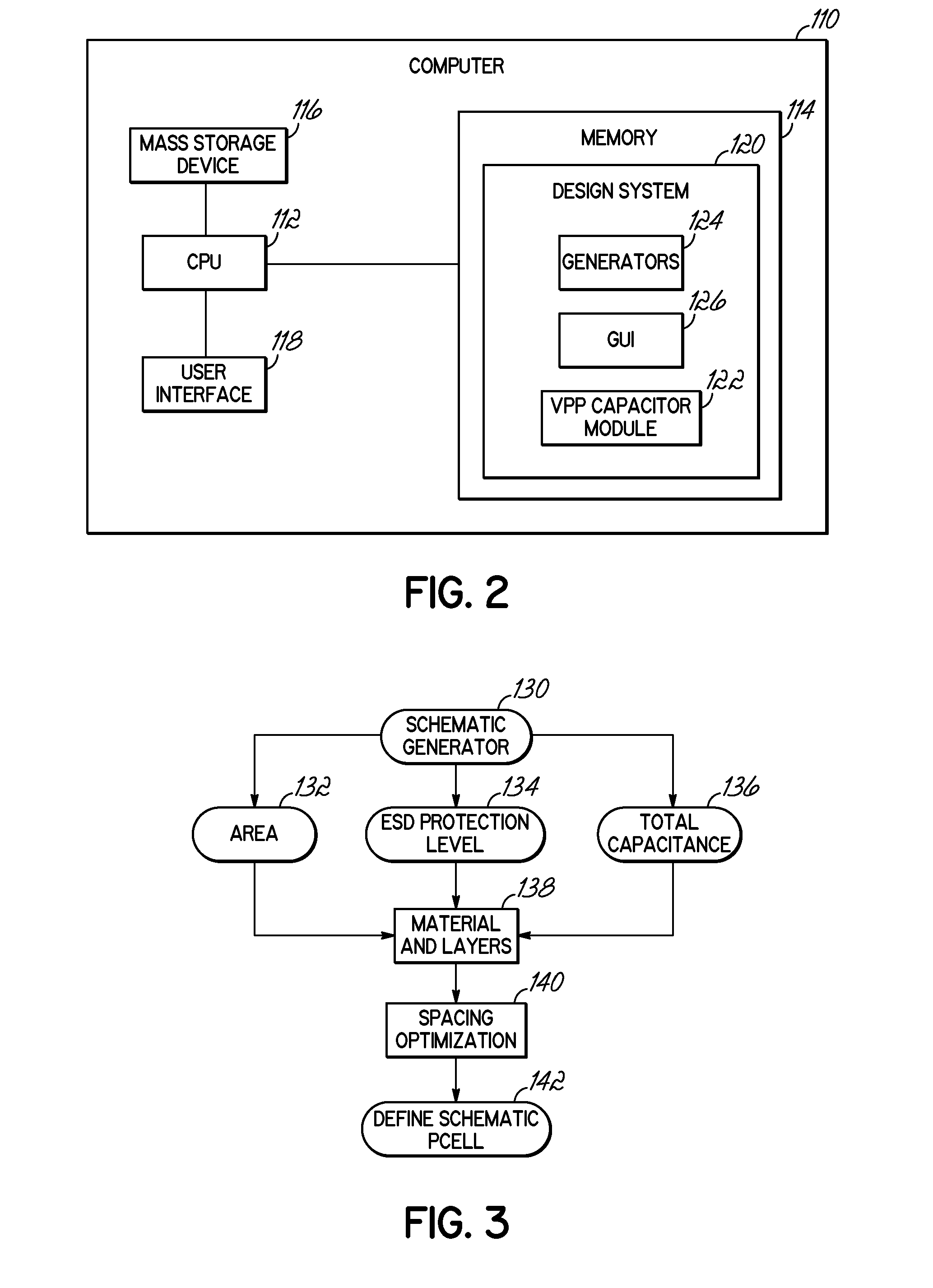
Innovation
- An automated design system utilizing a graphical user interface and processor to optimize the physical spacing between conductive plates in different metallization layers of the capacitor stack, selecting materials and layer configurations to enhance ESD robustness, which includes varying the spacing based on material failure mechanisms to alleviate ESD-promoted failures.

EMC Standards and Regulatory Requirements
Electromagnetic compatibility standards and regulatory requirements form the foundation for parallel plate capacitor modeling in EMC applications. The International Electrotechnical Commission (IEC) provides comprehensive guidelines through IEC 61000 series standards, which establish fundamental EMC principles and testing methodologies. These standards define emission limits, immunity requirements, and measurement procedures that directly influence capacitor design parameters and modeling approaches.
The Federal Communications Commission (FCC) Part 15 regulations in the United States establish specific emission limits for electronic devices, requiring accurate capacitor modeling to predict and control electromagnetic interference. Similarly, the European Union's EMC Directive 2014/30/EU mandates compliance with harmonized standards such as EN 55032 for emission requirements and EN 55035 for immunity standards. These regulations necessitate precise modeling of parallel plate capacitors to ensure devices meet stringent EMC performance criteria.
Military and aerospace applications operate under more stringent standards, including MIL-STD-461 and DO-160, which impose severe electromagnetic environment requirements. These standards demand sophisticated capacitor modeling techniques to account for extreme operating conditions, including high-altitude electromagnetic pulse effects and lightning strike scenarios. The modeling must incorporate frequency-dependent characteristics across extended bandwidths, often exceeding commercial requirements by several orders of magnitude.
Automotive EMC standards, particularly ISO 11452 and CISPR 25, present unique challenges for capacitor modeling due to the harsh electromagnetic environment in vehicles. These standards require consideration of transient immunity, bulk current injection, and radiated immunity testing, necessitating dynamic modeling approaches that capture capacitor behavior under varying load conditions and temperature extremes.
Recent regulatory developments emphasize cybersecurity aspects of EMC compliance, introducing new modeling requirements for intentional electromagnetic interference scenarios. Standards organizations are developing frameworks that integrate traditional EMC modeling with security vulnerability assessments, requiring capacitor models to account for potential exploitation vectors through electromagnetic channels.
Compliance testing procedures specified in these standards directly influence modeling accuracy requirements, with measurement uncertainties typically limited to ±3dB, demanding correspondingly precise simulation models for successful regulatory approval.
The Federal Communications Commission (FCC) Part 15 regulations in the United States establish specific emission limits for electronic devices, requiring accurate capacitor modeling to predict and control electromagnetic interference. Similarly, the European Union's EMC Directive 2014/30/EU mandates compliance with harmonized standards such as EN 55032 for emission requirements and EN 55035 for immunity standards. These regulations necessitate precise modeling of parallel plate capacitors to ensure devices meet stringent EMC performance criteria.
Military and aerospace applications operate under more stringent standards, including MIL-STD-461 and DO-160, which impose severe electromagnetic environment requirements. These standards demand sophisticated capacitor modeling techniques to account for extreme operating conditions, including high-altitude electromagnetic pulse effects and lightning strike scenarios. The modeling must incorporate frequency-dependent characteristics across extended bandwidths, often exceeding commercial requirements by several orders of magnitude.
Automotive EMC standards, particularly ISO 11452 and CISPR 25, present unique challenges for capacitor modeling due to the harsh electromagnetic environment in vehicles. These standards require consideration of transient immunity, bulk current injection, and radiated immunity testing, necessitating dynamic modeling approaches that capture capacitor behavior under varying load conditions and temperature extremes.
Recent regulatory developments emphasize cybersecurity aspects of EMC compliance, introducing new modeling requirements for intentional electromagnetic interference scenarios. Standards organizations are developing frameworks that integrate traditional EMC modeling with security vulnerability assessments, requiring capacitor models to account for potential exploitation vectors through electromagnetic channels.
Compliance testing procedures specified in these standards directly influence modeling accuracy requirements, with measurement uncertainties typically limited to ±3dB, demanding correspondingly precise simulation models for successful regulatory approval.
Validation Methods for Capacitor EMC Models
Validation of capacitor EMC models requires a comprehensive approach combining theoretical verification, experimental testing, and computational analysis. The validation process ensures that mathematical models accurately represent the electromagnetic behavior of parallel plate capacitors across relevant frequency ranges and operating conditions.
Experimental validation forms the cornerstone of model verification, utilizing vector network analyzers to measure S-parameters across frequency spectrums from DC to several gigahertz. Time-domain reflectometry provides critical insights into transient behavior and impedance characteristics. Near-field scanning techniques enable detailed electromagnetic field mapping around capacitor structures, validating field distribution predictions from theoretical models.
Computational validation employs full-wave electromagnetic simulation tools such as HFSS, CST Studio Suite, and FEKO to cross-reference analytical model predictions. These simulations incorporate detailed geometric representations, material properties, and boundary conditions that may be simplified in analytical approaches. Monte Carlo analysis addresses manufacturing tolerances and parameter variations, ensuring model robustness across production variations.
Comparative analysis against established measurement standards provides additional validation layers. Reference capacitors with known characteristics serve as benchmarks for model accuracy assessment. Correlation studies between different modeling approaches help identify systematic errors and validate fundamental assumptions underlying the mathematical formulations.
Statistical validation methods quantify model accuracy through metrics such as root mean square error, correlation coefficients, and confidence intervals. Frequency-domain validation focuses on impedance magnitude and phase accuracy, while time-domain validation examines transient response characteristics and settling behavior.
Environmental validation testing encompasses temperature cycling, humidity exposure, and mechanical stress conditions to verify model predictions under real-world operating scenarios. Accelerated aging tests validate long-term performance predictions and degradation modeling accuracy.
The validation framework must address frequency-dependent effects including parasitic inductance, dielectric losses, and skin effect contributions. Multi-physics validation incorporates thermal effects, mechanical deformation, and aging phenomena that influence electromagnetic performance over operational lifetimes.
Experimental validation forms the cornerstone of model verification, utilizing vector network analyzers to measure S-parameters across frequency spectrums from DC to several gigahertz. Time-domain reflectometry provides critical insights into transient behavior and impedance characteristics. Near-field scanning techniques enable detailed electromagnetic field mapping around capacitor structures, validating field distribution predictions from theoretical models.
Computational validation employs full-wave electromagnetic simulation tools such as HFSS, CST Studio Suite, and FEKO to cross-reference analytical model predictions. These simulations incorporate detailed geometric representations, material properties, and boundary conditions that may be simplified in analytical approaches. Monte Carlo analysis addresses manufacturing tolerances and parameter variations, ensuring model robustness across production variations.
Comparative analysis against established measurement standards provides additional validation layers. Reference capacitors with known characteristics serve as benchmarks for model accuracy assessment. Correlation studies between different modeling approaches help identify systematic errors and validate fundamental assumptions underlying the mathematical formulations.
Statistical validation methods quantify model accuracy through metrics such as root mean square error, correlation coefficients, and confidence intervals. Frequency-domain validation focuses on impedance magnitude and phase accuracy, while time-domain validation examines transient response characteristics and settling behavior.
Environmental validation testing encompasses temperature cycling, humidity exposure, and mechanical stress conditions to verify model predictions under real-world operating scenarios. Accelerated aging tests validate long-term performance predictions and degradation modeling accuracy.
The validation framework must address frequency-dependent effects including parasitic inductance, dielectric losses, and skin effect contributions. Multi-physics validation incorporates thermal effects, mechanical deformation, and aging phenomena that influence electromagnetic performance over operational lifetimes.
Unlock deeper insights with Patsnap Eureka Quick Research — get a full tech report to explore trends and direct your research. Try now!
Generate Your Research Report Instantly with AI Agent
Supercharge your innovation with Patsnap Eureka AI Agent Platform!