

MWCNT Qualification: Electrical Continuity, Volume Resistivity And Durability Acceptance
SEP 12, 202510 MIN READ
Generate Your Research Report Instantly with AI Agent
PatSnap Eureka helps you evaluate technical feasibility & market potential.
MWCNT Technology Background and Qualification Objectives
Multi-walled carbon nanotubes (MWCNTs) have emerged as revolutionary nanomaterials since their discovery in 1991 by Sumio Iijima. These cylindrical structures, composed of multiple layers of graphene sheets, possess exceptional electrical, thermal, and mechanical properties that have attracted significant attention across various industries. The evolution of MWCNT technology has progressed from laboratory curiosities to commercially viable materials over the past three decades, with continuous improvements in synthesis methods, purification techniques, and functionalization approaches.
The electrical properties of MWCNTs are particularly noteworthy, with conductivity levels comparable to copper but with significantly lower density. This combination makes them ideal candidates for lightweight conductive applications. However, the integration of MWCNTs into commercial products has been hindered by challenges related to consistent quality control and standardized qualification methods, especially regarding electrical continuity, volume resistivity, and long-term durability.
Current qualification standards for MWCNTs vary widely across industries and applications, creating barriers to widespread adoption. The lack of universally accepted testing protocols for electrical properties has resulted in inconsistent performance evaluations and difficulty in comparing materials from different suppliers. This fragmentation in qualification approaches has slowed technological progress and market penetration of MWCNT-based solutions.
The primary objective of MWCNT qualification efforts is to establish standardized, reliable, and reproducible methods for assessing electrical continuity, volume resistivity, and durability. These parameters are critical for applications in electronics, aerospace, automotive, and energy storage sectors where consistent electrical performance is essential. Standardization would enable more accurate comparisons between different MWCNT materials and accelerate their integration into commercial products.
Another key qualification goal is to develop accelerated aging protocols that can reliably predict the long-term electrical performance of MWCNT-based components under various environmental conditions. Understanding how factors such as temperature cycling, humidity, mechanical stress, and chemical exposure affect electrical properties over time is crucial for ensuring product reliability and customer confidence.
The technology trajectory suggests that as qualification methods become more refined and standardized, MWCNT applications will expand into more demanding sectors such as aerospace electronics, automotive safety systems, and medical devices. These applications require exceptionally high reliability standards and consistent electrical performance over extended operational lifetimes.
Recent technological advancements in measurement techniques, including non-destructive testing methods and in-situ monitoring approaches, are creating new opportunities for more comprehensive MWCNT qualification. These innovations promise to enhance our understanding of structure-property relationships and enable more precise control over electrical performance characteristics in MWCNT-based materials and components.
The electrical properties of MWCNTs are particularly noteworthy, with conductivity levels comparable to copper but with significantly lower density. This combination makes them ideal candidates for lightweight conductive applications. However, the integration of MWCNTs into commercial products has been hindered by challenges related to consistent quality control and standardized qualification methods, especially regarding electrical continuity, volume resistivity, and long-term durability.
Current qualification standards for MWCNTs vary widely across industries and applications, creating barriers to widespread adoption. The lack of universally accepted testing protocols for electrical properties has resulted in inconsistent performance evaluations and difficulty in comparing materials from different suppliers. This fragmentation in qualification approaches has slowed technological progress and market penetration of MWCNT-based solutions.
The primary objective of MWCNT qualification efforts is to establish standardized, reliable, and reproducible methods for assessing electrical continuity, volume resistivity, and durability. These parameters are critical for applications in electronics, aerospace, automotive, and energy storage sectors where consistent electrical performance is essential. Standardization would enable more accurate comparisons between different MWCNT materials and accelerate their integration into commercial products.
Another key qualification goal is to develop accelerated aging protocols that can reliably predict the long-term electrical performance of MWCNT-based components under various environmental conditions. Understanding how factors such as temperature cycling, humidity, mechanical stress, and chemical exposure affect electrical properties over time is crucial for ensuring product reliability and customer confidence.
The technology trajectory suggests that as qualification methods become more refined and standardized, MWCNT applications will expand into more demanding sectors such as aerospace electronics, automotive safety systems, and medical devices. These applications require exceptionally high reliability standards and consistent electrical performance over extended operational lifetimes.
Recent technological advancements in measurement techniques, including non-destructive testing methods and in-situ monitoring approaches, are creating new opportunities for more comprehensive MWCNT qualification. These innovations promise to enhance our understanding of structure-property relationships and enable more precise control over electrical performance characteristics in MWCNT-based materials and components.
Market Demand Analysis for MWCNT Applications
The global market for Multi-Walled Carbon Nanotubes (MWCNTs) has experienced significant growth in recent years, driven by their exceptional electrical, mechanical, and thermal properties. The demand for MWCNT applications with verified electrical continuity, precise volume resistivity, and proven durability has expanded across multiple industries, creating a robust market landscape.
In the electronics sector, MWCNTs are increasingly sought after for conductive films, transparent electrodes, and semiconductor devices. Market research indicates that the consumer electronics segment alone accounts for over 30% of MWCNT demand, with particular emphasis on applications requiring consistent electrical continuity across varying environmental conditions.
The automotive industry represents another major demand driver, with applications in lightweight composites, EMI shielding, and battery technologies. Manufacturers are specifically seeking MWCNTs with certified volume resistivity properties to ensure consistent performance in safety-critical components. This sector's demand is projected to grow at a compound annual rate exceeding 15% through 2028.
Aerospace and defense applications constitute a premium market segment where durability acceptance criteria are particularly stringent. These industries require MWCNTs that maintain electrical properties under extreme temperature variations, mechanical stress, and radiation exposure. Though smaller in volume than consumer applications, this segment commands higher price points due to performance requirements.
Energy storage represents perhaps the most rapidly expanding application area. The battery market's transition toward higher energy density solutions has created substantial demand for MWCNTs with precisely qualified electrical properties. Manufacturers of lithium-ion batteries are incorporating MWCNTs to improve conductivity and structural integrity, with market adoption accelerating as qualification standards become more established.
Regional analysis reveals that Asia-Pacific dominates MWCNT consumption, accounting for approximately 45% of global demand, followed by North America and Europe. China leads manufacturing capacity, though concerns about quality consistency have created market opportunities for producers with robust qualification protocols.
Price sensitivity varies significantly by application. While commodity applications remain highly price-competitive, specialized applications requiring certified electrical continuity and durability properties command premium pricing. This market stratification has encouraged manufacturers to develop application-specific MWCNT formulations with tailored qualification parameters.
Market forecasts indicate that demand for qualified MWCNTs will continue to grow at 17-20% annually through 2030, with particularly strong growth in applications requiring precise volume resistivity specifications. This growth trajectory is supported by expanding industrial applications and increasing integration into consumer products.
In the electronics sector, MWCNTs are increasingly sought after for conductive films, transparent electrodes, and semiconductor devices. Market research indicates that the consumer electronics segment alone accounts for over 30% of MWCNT demand, with particular emphasis on applications requiring consistent electrical continuity across varying environmental conditions.
The automotive industry represents another major demand driver, with applications in lightweight composites, EMI shielding, and battery technologies. Manufacturers are specifically seeking MWCNTs with certified volume resistivity properties to ensure consistent performance in safety-critical components. This sector's demand is projected to grow at a compound annual rate exceeding 15% through 2028.
Aerospace and defense applications constitute a premium market segment where durability acceptance criteria are particularly stringent. These industries require MWCNTs that maintain electrical properties under extreme temperature variations, mechanical stress, and radiation exposure. Though smaller in volume than consumer applications, this segment commands higher price points due to performance requirements.
Energy storage represents perhaps the most rapidly expanding application area. The battery market's transition toward higher energy density solutions has created substantial demand for MWCNTs with precisely qualified electrical properties. Manufacturers of lithium-ion batteries are incorporating MWCNTs to improve conductivity and structural integrity, with market adoption accelerating as qualification standards become more established.
Regional analysis reveals that Asia-Pacific dominates MWCNT consumption, accounting for approximately 45% of global demand, followed by North America and Europe. China leads manufacturing capacity, though concerns about quality consistency have created market opportunities for producers with robust qualification protocols.
Price sensitivity varies significantly by application. While commodity applications remain highly price-competitive, specialized applications requiring certified electrical continuity and durability properties command premium pricing. This market stratification has encouraged manufacturers to develop application-specific MWCNT formulations with tailored qualification parameters.
Market forecasts indicate that demand for qualified MWCNTs will continue to grow at 17-20% annually through 2030, with particularly strong growth in applications requiring precise volume resistivity specifications. This growth trajectory is supported by expanding industrial applications and increasing integration into consumer products.
Current Status and Challenges in MWCNT Qualification
The global landscape of Multi-Walled Carbon Nanotube (MWCNT) qualification presents a complex picture of significant advancements alongside persistent technical challenges. Currently, standardization efforts for MWCNT qualification parameters—particularly electrical continuity, volume resistivity, and durability acceptance—remain fragmented across different industries and regions. Major standards organizations including ASTM International, ISO, and IEC have established preliminary testing protocols, yet these lack universal adoption and comprehensive coverage of all qualification aspects.
Recent technological developments have enabled more precise measurement of MWCNT electrical properties, with four-point probe methods emerging as the industry standard for volume resistivity assessment. However, measurement consistency remains problematic due to the inherent anisotropic nature of MWCNT materials and variations in sample preparation techniques. Research indicates that measurement discrepancies between laboratories can reach up to 15% for identical MWCNT samples, highlighting the urgent need for more robust standardization.
Electrical continuity testing has progressed significantly with the development of specialized equipment capable of detecting nanoscale discontinuities in MWCNT networks. Nevertheless, the industry faces challenges in correlating these measurements with actual performance in end applications. The relationship between laboratory measurements and real-world performance under varying environmental conditions represents a critical knowledge gap requiring further investigation.
Durability acceptance criteria present perhaps the most significant challenge in MWCNT qualification. Current accelerated aging protocols fail to adequately simulate the complex degradation mechanisms that occur in diverse application environments. Research from leading institutions indicates that MWCNT electrical properties can degrade unpredictably when exposed to combinations of UV radiation, temperature cycling, and chemical exposure—conditions common in automotive and aerospace applications.
Manufacturing consistency represents another substantial hurdle. Production-scale MWCNT materials often exhibit batch-to-batch variations in electrical properties exceeding acceptable limits for high-reliability applications. This variability stems from challenges in controlling catalyst distribution, growth conditions, and post-processing treatments during large-scale manufacturing.
Regulatory frameworks add another layer of complexity to MWCNT qualification. Different jurisdictions impose varying requirements for safety assessment and environmental impact evaluation, creating a fragmented compliance landscape that impedes global commercialization efforts. The absence of harmonized qualification standards increases development costs and extends time-to-market for MWCNT-enhanced products.
Looking forward, the integration of artificial intelligence and machine learning approaches for predicting long-term MWCNT performance based on accelerated testing data shows promise. These computational methods could potentially address the limitations of current empirical testing approaches by establishing more reliable correlations between laboratory measurements and field performance across diverse application environments.
Recent technological developments have enabled more precise measurement of MWCNT electrical properties, with four-point probe methods emerging as the industry standard for volume resistivity assessment. However, measurement consistency remains problematic due to the inherent anisotropic nature of MWCNT materials and variations in sample preparation techniques. Research indicates that measurement discrepancies between laboratories can reach up to 15% for identical MWCNT samples, highlighting the urgent need for more robust standardization.
Electrical continuity testing has progressed significantly with the development of specialized equipment capable of detecting nanoscale discontinuities in MWCNT networks. Nevertheless, the industry faces challenges in correlating these measurements with actual performance in end applications. The relationship between laboratory measurements and real-world performance under varying environmental conditions represents a critical knowledge gap requiring further investigation.
Durability acceptance criteria present perhaps the most significant challenge in MWCNT qualification. Current accelerated aging protocols fail to adequately simulate the complex degradation mechanisms that occur in diverse application environments. Research from leading institutions indicates that MWCNT electrical properties can degrade unpredictably when exposed to combinations of UV radiation, temperature cycling, and chemical exposure—conditions common in automotive and aerospace applications.
Manufacturing consistency represents another substantial hurdle. Production-scale MWCNT materials often exhibit batch-to-batch variations in electrical properties exceeding acceptable limits for high-reliability applications. This variability stems from challenges in controlling catalyst distribution, growth conditions, and post-processing treatments during large-scale manufacturing.
Regulatory frameworks add another layer of complexity to MWCNT qualification. Different jurisdictions impose varying requirements for safety assessment and environmental impact evaluation, creating a fragmented compliance landscape that impedes global commercialization efforts. The absence of harmonized qualification standards increases development costs and extends time-to-market for MWCNT-enhanced products.
Looking forward, the integration of artificial intelligence and machine learning approaches for predicting long-term MWCNT performance based on accelerated testing data shows promise. These computational methods could potentially address the limitations of current empirical testing approaches by establishing more reliable correlations between laboratory measurements and field performance across diverse application environments.
Existing MWCNT Qualification Methodologies
01 MWCNT composite materials for electrical conductivity enhancement
Multi-walled carbon nanotubes can be incorporated into composite materials to significantly enhance electrical conductivity. These composites exhibit low volume resistivity and excellent electrical continuity due to the formation of conductive networks within the matrix. The addition of MWCNTs at specific concentrations creates percolation pathways that allow for efficient electron transport throughout the material, making them suitable for applications requiring high electrical performance while maintaining structural integrity.- MWCNT composite materials for enhanced electrical conductivity: Multi-walled carbon nanotubes can be incorporated into composite materials to significantly enhance electrical conductivity and reduce volume resistivity. These composites typically combine MWCNTs with polymers or other matrices to create materials with excellent electrical continuity while maintaining mechanical properties. The dispersion method and MWCNT concentration are critical factors affecting the final electrical properties, with proper dispersion techniques ensuring uniform distribution throughout the matrix for optimal conductivity networks.
- Surface functionalization of MWCNTs for durability and conductivity: Surface functionalization of multi-walled carbon nanotubes can improve their durability and electrical properties in various applications. By modifying the surface chemistry of MWCNTs through chemical treatments, their compatibility with different matrices can be enhanced, resulting in better dispersion and stronger interfacial bonding. These functionalized MWCNTs demonstrate improved resistance to environmental degradation, enhanced mechanical stability, and maintained electrical conductivity over extended periods, making them suitable for applications requiring long-term performance reliability.
- MWCNT network structures for optimized volume resistivity: Specific network structures formed by multi-walled carbon nanotubes can be engineered to optimize volume resistivity in various applications. These networks create continuous conductive pathways throughout the material, allowing for efficient electron transport. The morphology, alignment, and interconnectivity of MWCNTs significantly influence the overall electrical performance. By controlling the formation of these networks through processing techniques such as alignment in electric/magnetic fields or specialized mixing methods, materials with tailored resistivity properties can be developed for specific electronic applications.
- Temperature and environmental stability of MWCNT electrical properties: Multi-walled carbon nanotubes exhibit remarkable stability of electrical properties under varying temperature conditions and harsh environments. Their robust structure allows them to maintain electrical continuity and consistent volume resistivity across wide temperature ranges, making them suitable for applications in extreme conditions. MWCNTs demonstrate resistance to thermal cycling, humidity, chemical exposure, and mechanical stress, ensuring long-term durability of their electrical performance. This stability is particularly valuable in applications requiring reliable conductivity under fluctuating environmental conditions.
- Measurement and characterization techniques for MWCNT electrical properties: Various specialized techniques have been developed to accurately measure and characterize the electrical continuity, volume resistivity, and durability of multi-walled carbon nanotubes and their composites. These methods include four-point probe measurements, impedance spectroscopy, cyclic voltammetry, and accelerated aging tests. Advanced imaging techniques such as scanning electron microscopy combined with electrical mapping provide insights into the relationship between MWCNT structure and electrical performance. These characterization approaches are essential for quality control and performance prediction of MWCNT-based materials in electrical applications.
02 Surface functionalization of MWCNTs for improved durability and dispersion
Surface functionalization techniques can be applied to multi-walled carbon nanotubes to improve their durability and dispersion characteristics in various matrices. Chemical treatments that introduce functional groups onto the MWCNT surface enhance compatibility with polymer matrices, resulting in stronger interfacial bonding and improved mechanical stability. These functionalized MWCNTs maintain their electrical properties while exhibiting greater resistance to environmental degradation, thermal cycling, and mechanical stress, leading to more durable composite materials with consistent electrical performance over time.Expand Specific Solutions03 MWCNT alignment techniques for optimized volume resistivity
Various techniques can be employed to align multi-walled carbon nanotubes within composite materials to optimize volume resistivity. Methods such as magnetic field alignment, shear force application during processing, and electric field orientation can create directional conductivity pathways. Aligned MWCNTs demonstrate significantly lower volume resistivity along the alignment direction compared to randomly oriented nanotubes, allowing for tailored electrical properties. This controlled orientation enables the development of materials with anisotropic electrical characteristics suitable for specialized applications requiring directional conductivity.Expand Specific Solutions04 MWCNT-polymer interfaces for long-term electrical stability
The interface between multi-walled carbon nanotubes and polymer matrices plays a crucial role in maintaining long-term electrical stability and durability. Engineering this interface through compatibilizers, coupling agents, or specialized processing techniques can prevent agglomeration and ensure consistent electrical continuity throughout the material's lifetime. Properly designed MWCNT-polymer interfaces resist degradation under thermal cycling, mechanical stress, and environmental exposure, preserving the conductive network and maintaining low volume resistivity over extended periods of use.Expand Specific Solutions05 Testing and characterization methods for MWCNT electrical properties
Specialized testing and characterization methods have been developed to accurately measure the electrical continuity, volume resistivity, and durability of multi-walled carbon nanotube composites. These include four-point probe measurements, impedance spectroscopy, cyclic electrical loading, environmental aging tests, and accelerated durability assessments. Advanced analytical techniques such as scanning electron microscopy combined with electrical mapping provide insights into the relationship between MWCNT dispersion, network formation, and resulting electrical properties. These methods enable quality control and performance prediction for MWCNT-based materials in various applications.Expand Specific Solutions
Key Industry Players in MWCNT Manufacturing
The MWCNT (Multi-Walled Carbon Nanotube) qualification market is currently in a growth phase, with increasing applications across electronics, automotive, and energy sectors. The global market size for carbon nanotubes is expanding rapidly, projected to reach significant value as industries adopt these materials for electrical conductivity and durability applications. Technologically, the field shows varying maturity levels among key players. Companies like Henkel, Sumitomo Chemical, and BYD demonstrate advanced capabilities in MWCNT implementation, while research institutions such as Purdue Research Foundation and NASA continue pushing boundaries in fundamental research. State Grid corporations from China are leveraging MWCNTs for power transmission applications, while automotive manufacturers like BYD are integrating these materials into electric vehicle components. Testing and certification organizations like Vkan Certification are developing standardized qualification protocols to ensure consistent electrical continuity and volume resistivity performance.
National Aeronautics & Space Administration
Technical Solution: NASA has established rigorous MWCNT qualification protocols designed specifically for aerospace applications where reliability under extreme conditions is paramount. Their approach incorporates specialized testing for electrical continuity under vacuum conditions (10^-6 torr) and across temperature extremes (-150°C to +250°C) that simulate space environments. NASA's volume resistivity testing methodology includes evaluation under radiation exposure (up to 100 kGy), providing critical data on MWCNT performance in orbital and deep space missions. Their durability acceptance criteria are exceptionally stringent, requiring materials to maintain electrical properties after exposure to atomic oxygen, UV radiation, and micrometeoroid impact simulation. The agency has developed specialized equipment for measuring electrical performance during rapid thermal cycling that simulates orbit transitions, with temperature change rates exceeding 10°C/minute. NASA's qualification framework also includes evaluation of outgassing characteristics correlated with electrical performance, ensuring materials maintain both electrical specifications and contamination requirements for sensitive equipment.
Strengths: Unparalleled expertise in qualifying materials for extreme environments with comprehensive testing capabilities that exceed commercial standards. Their qualification methods effectively identify potential failure modes in space applications. Weaknesses: Their qualification requirements often exceed what's necessary for terrestrial applications, potentially adding unnecessary complexity and cost for non-aerospace uses.
Sumitomo Chemical Co., Ltd.
Technical Solution: Sumitomo Chemical has developed a comprehensive MWCNT qualification framework focusing on electrical continuity and volume resistivity measurements. Their approach involves specialized testing protocols that evaluate carbon nanotube networks under various environmental conditions to ensure consistent electrical performance. The company employs a multi-parameter testing methodology that measures volume resistivity across temperature ranges from -40°C to 150°C, providing data on thermal stability of MWCNT-based materials. Their durability acceptance criteria include cyclic testing (up to 10,000 cycles) to simulate real-world operational conditions, with specific focus on maintaining electrical continuity under mechanical stress. Sumitomo has also pioneered standardized testing procedures for MWCNT-polymer composites that quantify changes in resistivity after environmental aging, including humidity exposure and thermal cycling.
Strengths: Industry-leading expertise in MWCNT-polymer composites with exceptional consistency in manufacturing processes. Their testing protocols are widely recognized for reliability and precision. Weaknesses: Their qualification standards are primarily optimized for electronics and automotive applications, potentially limiting applicability in aerospace or extreme environment scenarios.
Critical Technical Analysis of MWCNT Resistivity Standards
Carbon nanotube assembly and process for producing the same
PatentInactiveUS8038908B2
Innovation
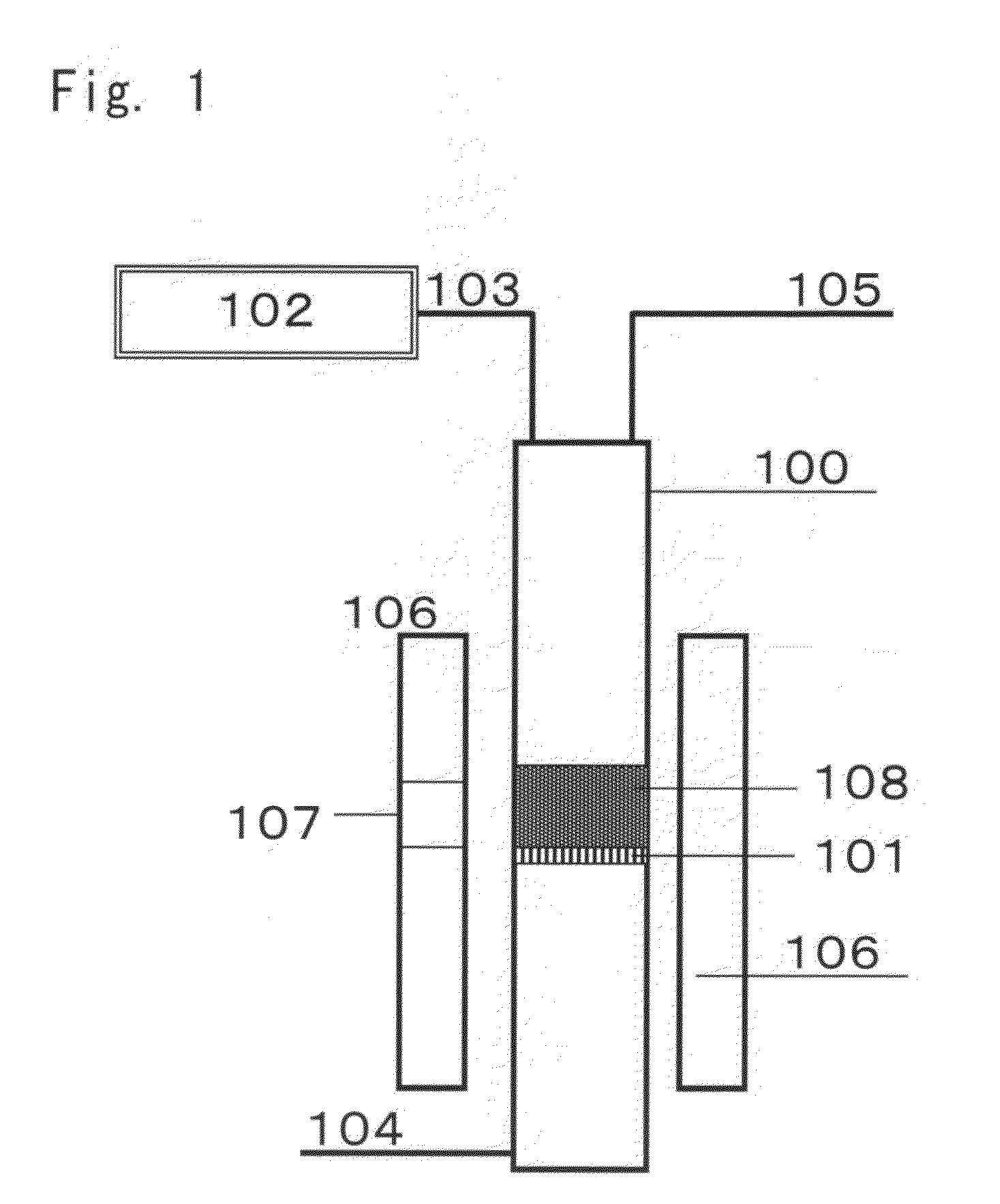
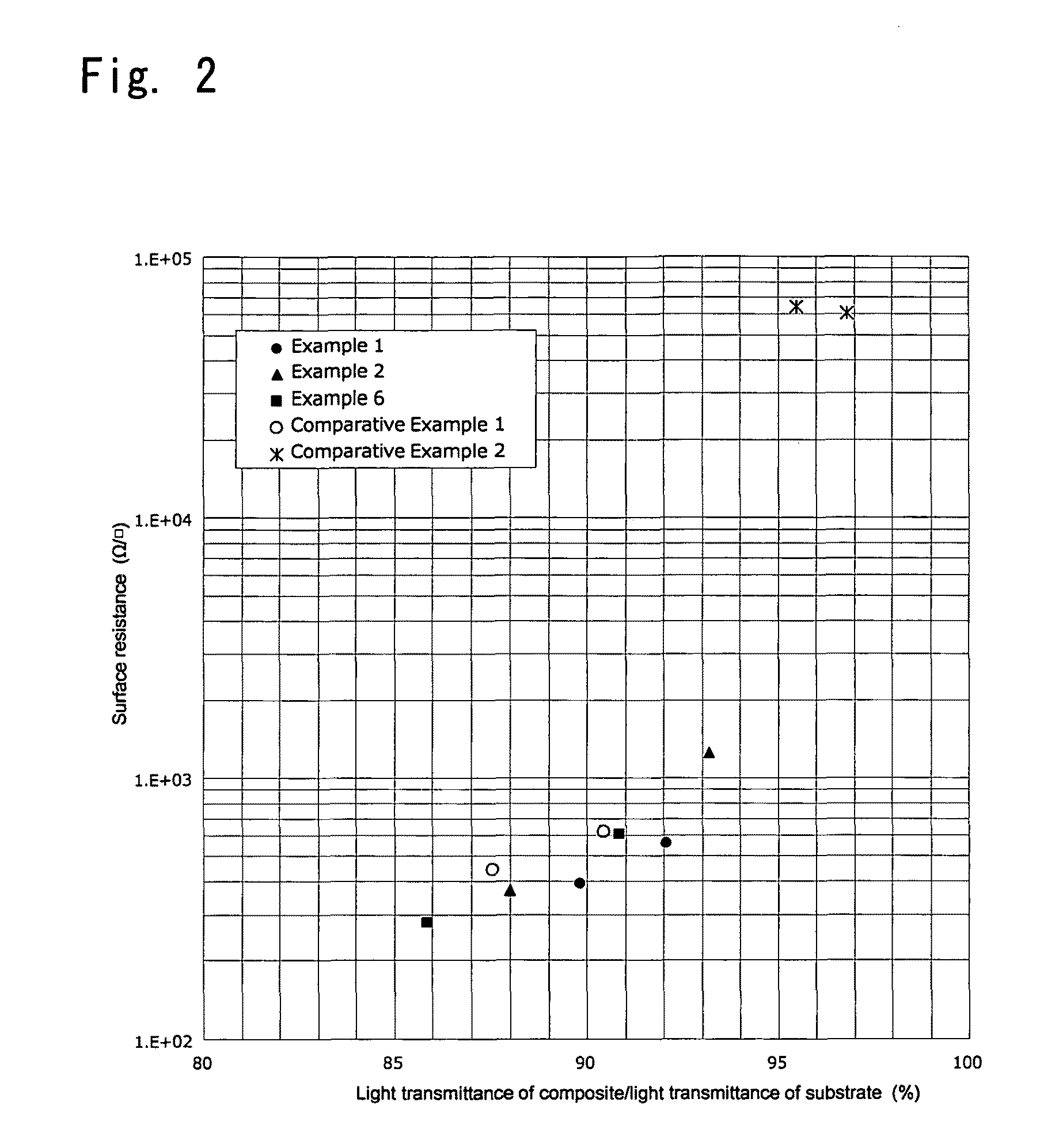
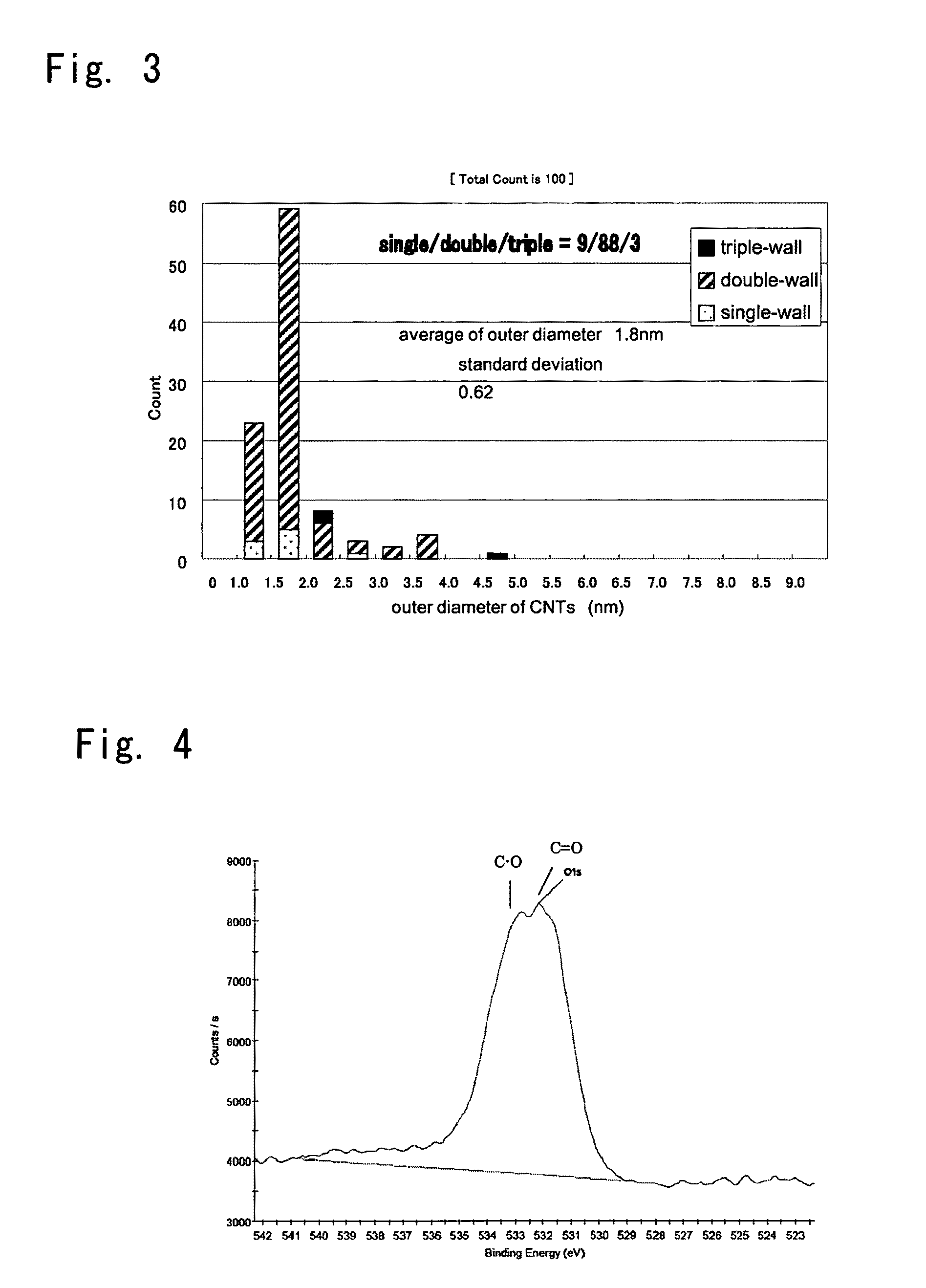
- Treating double-walled carbon nanotubes with a nitric acid solution to achieve a high degree of graphitization, resulting in aggregates with specific electrical conductivity and purity criteria, including a volume resistivity range of 1×10⁻⁵ Ω·cm to 5×10⁻³ Ω·cm, a high ratio of double-walled carbon nanotubes observed by TEM, and a controlled weight loss from 200° C. to 400° C. in thermogravimetry.

Method for separating a solid-state layer from a solid-state material
PatentPendingUS20210299910A1
Innovation
- A method involving a laser processing system that adjusts focus based on parameters like refractive index and processing depth, using a crack guidance region and a polymer-hybrid material for crack propagation, allowing for precise modifications within solid states with reduced reworking effort.


Quality Control Frameworks for Carbon Nanotube Materials
Quality control frameworks for carbon nanotube materials have evolved significantly to address the unique challenges presented by multi-walled carbon nanotubes (MWCNTs). These frameworks are essential for ensuring consistent electrical continuity, volume resistivity, and durability across batches of nanotube materials used in industrial applications.
The foundation of effective MWCNT quality control begins with standardized testing protocols that specifically target electrical properties. Organizations such as ISO, ASTM International, and IEC have developed specialized standards for measuring the electrical conductivity of carbon nanomaterials, with particular emphasis on four-point probe measurements for volume resistivity assessment.
Statistical process control (SPC) methodologies have been adapted for MWCNT production environments, incorporating electrical continuity metrics as critical quality indicators. These frameworks typically employ control charts with predefined upper and lower specification limits for resistivity values, allowing manufacturers to detect process drift before it impacts product performance.
Durability acceptance criteria within these frameworks often include accelerated aging tests under various environmental conditions. MWCNTs must maintain their electrical properties when exposed to thermal cycling, humidity, mechanical stress, and chemical exposure. Modern quality systems incorporate these durability metrics as pass/fail criteria rather than treating them as secondary considerations.
Real-time monitoring systems represent the cutting edge of MWCNT quality control, with inline measurement technologies capable of assessing electrical properties during production. These systems utilize impedance spectroscopy and non-contact resistivity measurements to provide immediate feedback on material consistency without disrupting manufacturing processes.
Traceability requirements form another crucial component of these frameworks, with each batch of MWCNT material linked to its electrical characterization data. This enables manufacturers to correlate end-product performance with specific material properties and production parameters, facilitating continuous improvement initiatives.
Industry-specific adaptations of these frameworks exist across sectors including aerospace, automotive, and electronics manufacturing. For instance, aerospace applications typically demand more stringent electrical continuity requirements and more extensive durability testing than consumer electronics applications, resulting in tiered qualification protocols based on end-use criticality.
Documentation systems within these frameworks have evolved to capture not only test results but also measurement uncertainties and environmental conditions during testing, providing a more comprehensive understanding of material performance variability and enabling more accurate predictive models for long-term electrical stability.
The foundation of effective MWCNT quality control begins with standardized testing protocols that specifically target electrical properties. Organizations such as ISO, ASTM International, and IEC have developed specialized standards for measuring the electrical conductivity of carbon nanomaterials, with particular emphasis on four-point probe measurements for volume resistivity assessment.
Statistical process control (SPC) methodologies have been adapted for MWCNT production environments, incorporating electrical continuity metrics as critical quality indicators. These frameworks typically employ control charts with predefined upper and lower specification limits for resistivity values, allowing manufacturers to detect process drift before it impacts product performance.
Durability acceptance criteria within these frameworks often include accelerated aging tests under various environmental conditions. MWCNTs must maintain their electrical properties when exposed to thermal cycling, humidity, mechanical stress, and chemical exposure. Modern quality systems incorporate these durability metrics as pass/fail criteria rather than treating them as secondary considerations.
Real-time monitoring systems represent the cutting edge of MWCNT quality control, with inline measurement technologies capable of assessing electrical properties during production. These systems utilize impedance spectroscopy and non-contact resistivity measurements to provide immediate feedback on material consistency without disrupting manufacturing processes.
Traceability requirements form another crucial component of these frameworks, with each batch of MWCNT material linked to its electrical characterization data. This enables manufacturers to correlate end-product performance with specific material properties and production parameters, facilitating continuous improvement initiatives.
Industry-specific adaptations of these frameworks exist across sectors including aerospace, automotive, and electronics manufacturing. For instance, aerospace applications typically demand more stringent electrical continuity requirements and more extensive durability testing than consumer electronics applications, resulting in tiered qualification protocols based on end-use criticality.
Documentation systems within these frameworks have evolved to capture not only test results but also measurement uncertainties and environmental conditions during testing, providing a more comprehensive understanding of material performance variability and enabling more accurate predictive models for long-term electrical stability.
Environmental Impact Assessment of MWCNT Production
The production of Multi-Walled Carbon Nanotubes (MWCNTs) has raised significant environmental concerns despite their remarkable electrical properties and durability characteristics. Current manufacturing processes, particularly chemical vapor deposition (CVD), consume substantial energy and generate considerable greenhouse gas emissions. Research indicates that producing one kilogram of MWCNTs via CVD methods can release approximately 4.5 tons of CO2 equivalent, positioning it among the more carbon-intensive nanomaterial production processes.
Water contamination presents another critical environmental challenge. MWCNT production facilities discharge wastewater containing catalyst residues, including metals like nickel, cobalt, and iron, which can persist in aquatic ecosystems. Studies have documented that even low concentrations (5-10 mg/L) of MWCNTs can adversely affect aquatic organisms, disrupting gill function in fish and inhibiting growth in certain algae species.
Airborne MWCNT particles pose occupational and community health risks. During manufacturing, particularly in processes requiring qualification testing for electrical continuity and volume resistivity, fine MWCNT particles can become airborne. These particles, with dimensions similar to asbestos fibers, have demonstrated potential pulmonary toxicity in laboratory studies, raising concerns about long-term respiratory exposure effects.
Waste management challenges compound these issues. The durability characteristics that make MWCNTs valuable in applications also render them resistant to environmental degradation. With half-lives potentially exceeding decades, improper disposal can lead to long-term environmental persistence. Current recycling technologies for MWCNT-containing products remain limited, with less than 5% of production waste currently recoverable.
Life cycle assessments reveal that the environmental footprint varies significantly based on production method. Arc discharge methods, while less common for commercial-scale MWCNT production, demonstrate 30-40% lower environmental impact compared to CVD methods but typically yield products with less consistent electrical properties and durability metrics.
Recent innovations show promise for reducing environmental impacts. Green synthesis approaches using plant extracts as reducing agents have demonstrated up to 60% reduction in hazardous waste generation. Additionally, closed-loop production systems that recapture catalyst materials and solvents have achieved 45% reductions in water usage and waste generation in pilot implementations.
Regulatory frameworks worldwide are increasingly addressing MWCNT environmental concerns. The European Union's REACH regulations now require specific environmental impact data for MWCNT registration, while the EPA in the United States has implemented Significant New Use Rules (SNURs) requiring manufacturers to report potential environmental releases and implement control measures.
Water contamination presents another critical environmental challenge. MWCNT production facilities discharge wastewater containing catalyst residues, including metals like nickel, cobalt, and iron, which can persist in aquatic ecosystems. Studies have documented that even low concentrations (5-10 mg/L) of MWCNTs can adversely affect aquatic organisms, disrupting gill function in fish and inhibiting growth in certain algae species.
Airborne MWCNT particles pose occupational and community health risks. During manufacturing, particularly in processes requiring qualification testing for electrical continuity and volume resistivity, fine MWCNT particles can become airborne. These particles, with dimensions similar to asbestos fibers, have demonstrated potential pulmonary toxicity in laboratory studies, raising concerns about long-term respiratory exposure effects.
Waste management challenges compound these issues. The durability characteristics that make MWCNTs valuable in applications also render them resistant to environmental degradation. With half-lives potentially exceeding decades, improper disposal can lead to long-term environmental persistence. Current recycling technologies for MWCNT-containing products remain limited, with less than 5% of production waste currently recoverable.
Life cycle assessments reveal that the environmental footprint varies significantly based on production method. Arc discharge methods, while less common for commercial-scale MWCNT production, demonstrate 30-40% lower environmental impact compared to CVD methods but typically yield products with less consistent electrical properties and durability metrics.
Recent innovations show promise for reducing environmental impacts. Green synthesis approaches using plant extracts as reducing agents have demonstrated up to 60% reduction in hazardous waste generation. Additionally, closed-loop production systems that recapture catalyst materials and solvents have achieved 45% reductions in water usage and waste generation in pilot implementations.
Regulatory frameworks worldwide are increasingly addressing MWCNT environmental concerns. The European Union's REACH regulations now require specific environmental impact data for MWCNT registration, while the EPA in the United States has implemented Significant New Use Rules (SNURs) requiring manufacturers to report potential environmental releases and implement control measures.
Unlock deeper insights with PatSnap Eureka Quick Research — get a full tech report to explore trends and direct your research. Try now!
Generate Your Research Report Instantly with AI Agent
Supercharge your innovation with PatSnap Eureka AI Agent Platform!