

Optimize Beam Shaping in Laser Cladding for Specialty Coatings
APR 8, 20269 MIN READ
Generate Your Research Report Instantly with AI Agent
PatSnap Eureka helps you evaluate technical feasibility & market potential.
Laser Cladding Beam Shaping Background and Objectives
Laser cladding has emerged as a critical additive manufacturing and surface modification technology since its development in the 1970s. The process involves using a focused laser beam to melt and fuse metallic or ceramic powders onto substrate surfaces, creating high-performance coatings with superior metallurgical bonding. Initially developed for repair applications in aerospace and automotive industries, laser cladding has evolved into a sophisticated manufacturing technique capable of producing complex geometries and functionally graded materials.
The evolution of laser cladding technology has been closely tied to advances in laser systems, from early CO2 lasers to modern fiber and diode lasers offering improved beam quality and control precision. Early implementations focused primarily on basic repair operations, but technological maturation has enabled applications in producing specialty coatings for extreme environments, including wear-resistant surfaces, corrosion-protective layers, and thermally insulating barriers.
Beam shaping represents a fundamental challenge in optimizing laser cladding processes, particularly for specialty coating applications requiring precise material properties and geometric accuracy. Traditional Gaussian beam profiles often result in non-uniform energy distribution, leading to inconsistent melt pool characteristics, irregular coating thickness, and suboptimal microstructural properties. These limitations become particularly pronounced when processing advanced materials such as superalloys, ceramics, and composite powders used in specialty coatings.
The primary objective of optimizing beam shaping in laser cladding centers on achieving uniform energy distribution across the interaction zone to ensure consistent melt pool dynamics and coating quality. This involves developing advanced beam shaping techniques that can create tailored intensity profiles, including top-hat, ring-shaped, or multi-spot configurations, depending on specific coating requirements and material characteristics.
Secondary objectives include minimizing heat-affected zone dimensions to preserve substrate properties, reducing residual stresses through controlled thermal gradients, and enabling precise control over coating microstructure and phase composition. Advanced beam shaping also aims to improve process efficiency by optimizing powder utilization rates and reducing post-processing requirements.
The technological goals extend to developing adaptive beam shaping systems capable of real-time adjustment based on process monitoring feedback, enabling consistent quality across complex geometries and varying substrate conditions. This includes integration with advanced control systems that can modify beam parameters dynamically to compensate for thermal accumulation effects and geometric variations during multi-layer deposition processes.
The evolution of laser cladding technology has been closely tied to advances in laser systems, from early CO2 lasers to modern fiber and diode lasers offering improved beam quality and control precision. Early implementations focused primarily on basic repair operations, but technological maturation has enabled applications in producing specialty coatings for extreme environments, including wear-resistant surfaces, corrosion-protective layers, and thermally insulating barriers.
Beam shaping represents a fundamental challenge in optimizing laser cladding processes, particularly for specialty coating applications requiring precise material properties and geometric accuracy. Traditional Gaussian beam profiles often result in non-uniform energy distribution, leading to inconsistent melt pool characteristics, irregular coating thickness, and suboptimal microstructural properties. These limitations become particularly pronounced when processing advanced materials such as superalloys, ceramics, and composite powders used in specialty coatings.
The primary objective of optimizing beam shaping in laser cladding centers on achieving uniform energy distribution across the interaction zone to ensure consistent melt pool dynamics and coating quality. This involves developing advanced beam shaping techniques that can create tailored intensity profiles, including top-hat, ring-shaped, or multi-spot configurations, depending on specific coating requirements and material characteristics.
Secondary objectives include minimizing heat-affected zone dimensions to preserve substrate properties, reducing residual stresses through controlled thermal gradients, and enabling precise control over coating microstructure and phase composition. Advanced beam shaping also aims to improve process efficiency by optimizing powder utilization rates and reducing post-processing requirements.
The technological goals extend to developing adaptive beam shaping systems capable of real-time adjustment based on process monitoring feedback, enabling consistent quality across complex geometries and varying substrate conditions. This includes integration with advanced control systems that can modify beam parameters dynamically to compensate for thermal accumulation effects and geometric variations during multi-layer deposition processes.
Market Demand for Advanced Specialty Coating Solutions
The global specialty coatings market is experiencing unprecedented growth driven by increasing demands for enhanced surface protection, functionality, and performance across multiple industrial sectors. Aerospace and defense industries require coatings that can withstand extreme temperatures, corrosive environments, and mechanical stress while maintaining lightweight properties. The automotive sector seeks advanced coatings for improved fuel efficiency, durability, and aesthetic appeal, particularly as electric vehicle adoption accelerates.
Manufacturing industries are increasingly adopting specialty coatings to extend equipment lifespan and reduce maintenance costs. Oil and gas operations demand corrosion-resistant coatings for pipelines, drilling equipment, and offshore platforms operating in harsh marine environments. The renewable energy sector, particularly wind and solar power generation, requires specialized coatings that can endure prolonged exposure to environmental elements while maintaining optimal performance.
Medical device manufacturing represents a rapidly expanding market segment requiring biocompatible coatings with precise surface properties. These applications demand exceptional uniformity, controlled thickness, and specific surface characteristics that traditional coating methods struggle to achieve consistently. The semiconductor industry similarly requires ultra-precise coatings for advanced electronic components and microprocessors.
Current coating technologies face significant limitations in achieving the precision, uniformity, and material properties demanded by these advanced applications. Conventional thermal spray methods often produce coatings with inconsistent thickness distribution and suboptimal bonding characteristics. Chemical vapor deposition processes, while precise, are limited in material selection and often require complex processing conditions.
The market increasingly values coatings that combine multiple functional properties, such as wear resistance, thermal barrier capabilities, and electrical conductivity. This trend toward multifunctional coatings creates opportunities for laser cladding technologies that can precisely control material deposition and microstructure formation. Industries are willing to invest in advanced coating solutions that demonstrate superior performance, reduced processing time, and enhanced cost-effectiveness compared to traditional methods.
Emerging applications in additive manufacturing and surface repair further expand market opportunities, as these sectors require precise material addition capabilities that align closely with optimized laser cladding technologies.
Manufacturing industries are increasingly adopting specialty coatings to extend equipment lifespan and reduce maintenance costs. Oil and gas operations demand corrosion-resistant coatings for pipelines, drilling equipment, and offshore platforms operating in harsh marine environments. The renewable energy sector, particularly wind and solar power generation, requires specialized coatings that can endure prolonged exposure to environmental elements while maintaining optimal performance.
Medical device manufacturing represents a rapidly expanding market segment requiring biocompatible coatings with precise surface properties. These applications demand exceptional uniformity, controlled thickness, and specific surface characteristics that traditional coating methods struggle to achieve consistently. The semiconductor industry similarly requires ultra-precise coatings for advanced electronic components and microprocessors.
Current coating technologies face significant limitations in achieving the precision, uniformity, and material properties demanded by these advanced applications. Conventional thermal spray methods often produce coatings with inconsistent thickness distribution and suboptimal bonding characteristics. Chemical vapor deposition processes, while precise, are limited in material selection and often require complex processing conditions.
The market increasingly values coatings that combine multiple functional properties, such as wear resistance, thermal barrier capabilities, and electrical conductivity. This trend toward multifunctional coatings creates opportunities for laser cladding technologies that can precisely control material deposition and microstructure formation. Industries are willing to invest in advanced coating solutions that demonstrate superior performance, reduced processing time, and enhanced cost-effectiveness compared to traditional methods.
Emerging applications in additive manufacturing and surface repair further expand market opportunities, as these sectors require precise material addition capabilities that align closely with optimized laser cladding technologies.
Current Beam Shaping Challenges in Laser Cladding
Laser cladding for specialty coatings faces significant beam shaping challenges that directly impact coating quality, process efficiency, and material utilization. The fundamental issue lies in achieving uniform energy distribution across the substrate surface while maintaining precise control over the melt pool geometry. Traditional circular beam profiles often result in non-uniform heating patterns, leading to inconsistent coating thickness, porosity variations, and thermal stress concentrations that compromise the integrity of specialty coatings.
Power density distribution represents one of the most critical challenges in current beam shaping approaches. Gaussian beam profiles, commonly used in laser systems, create hot spots at the beam center while delivering insufficient energy at the periphery. This uneven distribution causes irregular melting patterns, particularly problematic when processing high-performance alloys or ceramic-metal composite coatings that require precise thermal management for optimal microstructural development.
Geometric constraints pose another significant obstacle in beam shaping optimization. Complex component geometries, curved surfaces, and varying substrate thicknesses demand adaptive beam profiles that current static shaping systems cannot adequately address. The inability to dynamically adjust beam characteristics during processing limits the application scope for specialty coatings on intricate parts, especially in aerospace and medical device manufacturing where precision is paramount.
Thermal management challenges emerge from inadequate beam shaping control, resulting in excessive heat-affected zones and substrate dilution. Poor beam profile design leads to uncontrolled thermal gradients that cause cracking, residual stress accumulation, and metallurgical inconsistencies in specialty coatings. These thermal issues are particularly pronounced when processing dissimilar materials or applying coatings with significantly different thermal properties than the substrate.
Process stability and repeatability suffer from current beam shaping limitations, as inconsistent energy coupling between the laser beam and powder stream creates variations in coating properties. The lack of real-time beam profile monitoring and adjustment capabilities prevents operators from maintaining optimal processing conditions throughout extended cladding operations, leading to quality variations that are unacceptable for high-value specialty coating applications.
Material-specific optimization requirements present additional challenges, as different coating materials demand unique beam characteristics for optimal processing. Current beam shaping systems lack the flexibility to rapidly reconfigure energy distribution patterns when switching between materials, limiting production efficiency and increasing setup complexity for multi-material coating operations.
Power density distribution represents one of the most critical challenges in current beam shaping approaches. Gaussian beam profiles, commonly used in laser systems, create hot spots at the beam center while delivering insufficient energy at the periphery. This uneven distribution causes irregular melting patterns, particularly problematic when processing high-performance alloys or ceramic-metal composite coatings that require precise thermal management for optimal microstructural development.
Geometric constraints pose another significant obstacle in beam shaping optimization. Complex component geometries, curved surfaces, and varying substrate thicknesses demand adaptive beam profiles that current static shaping systems cannot adequately address. The inability to dynamically adjust beam characteristics during processing limits the application scope for specialty coatings on intricate parts, especially in aerospace and medical device manufacturing where precision is paramount.
Thermal management challenges emerge from inadequate beam shaping control, resulting in excessive heat-affected zones and substrate dilution. Poor beam profile design leads to uncontrolled thermal gradients that cause cracking, residual stress accumulation, and metallurgical inconsistencies in specialty coatings. These thermal issues are particularly pronounced when processing dissimilar materials or applying coatings with significantly different thermal properties than the substrate.
Process stability and repeatability suffer from current beam shaping limitations, as inconsistent energy coupling between the laser beam and powder stream creates variations in coating properties. The lack of real-time beam profile monitoring and adjustment capabilities prevents operators from maintaining optimal processing conditions throughout extended cladding operations, leading to quality variations that are unacceptable for high-value specialty coating applications.
Material-specific optimization requirements present additional challenges, as different coating materials demand unique beam characteristics for optimal processing. Current beam shaping systems lack the flexibility to rapidly reconfigure energy distribution patterns when switching between materials, limiting production efficiency and increasing setup complexity for multi-material coating operations.
Existing Beam Optimization Solutions for Cladding
01 Optical beam shaping devices and lens systems for laser cladding
Specialized optical components including beam shaping lenses, diffractive optical elements, and multi-lens systems are used to transform and control the laser beam profile in cladding applications. These devices can convert Gaussian beams into flat-top or rectangular profiles, improving energy distribution and cladding quality. Advanced lens arrangements allow for precise control of beam dimensions and intensity distribution across the working area.- Optical beam shaping devices and systems for laser cladding: Various optical devices and systems are employed to shape laser beams in cladding processes. These include diffractive optical elements, refractive lens systems, and beam homogenizers that transform the beam profile from Gaussian to top-hat or rectangular distributions. The optical components can be arranged in specific configurations to achieve desired beam characteristics such as uniform intensity distribution and controlled spot size on the substrate surface.
- Multi-beam and beam splitting techniques for laser cladding: Advanced beam shaping approaches utilize beam splitting and multi-beam configurations to enhance cladding quality and efficiency. These techniques involve dividing a single laser source into multiple beams or creating specific beam patterns that can be independently controlled. The split beams can be directed at different angles or positions relative to the powder feed stream, enabling better energy distribution and improved metallurgical bonding in the cladding layer.
- Beam profile control through adjustable optical elements: Dynamic beam shaping is achieved through adjustable optical components that allow real-time modification of beam parameters during the cladding process. These systems incorporate movable lenses, variable apertures, or adaptive optics that can alter beam diameter, focal position, and intensity distribution. The adjustability enables optimization of processing parameters for different materials, geometries, and cladding requirements without changing the optical setup.
- Rectangular and linear beam shaping for wide-area cladding: Specialized beam shaping techniques create rectangular or linear beam profiles optimized for wide-area cladding applications. These configurations utilize cylindrical lenses, Powell lenses, or custom optical arrays to generate elongated beam shapes with uniform intensity along the length. The linear beam geometry enables single-pass cladding of larger surface areas and improves processing efficiency compared to circular spot scanning methods.
- Integrated beam shaping with powder delivery systems: Coordinated beam shaping approaches integrate optical beam control with powder delivery mechanisms to optimize material deposition. These systems synchronize beam profile characteristics with powder stream geometry, flow rate, and injection angle. The integration ensures proper interaction between the laser energy and powder particles, resulting in improved powder capture efficiency, reduced porosity, and enhanced metallurgical properties of the cladded layer.
02 Beam splitting and multi-beam configurations
Techniques involving splitting a single laser beam into multiple beams or creating complex beam patterns enable enhanced cladding processes. This approach allows for simultaneous processing of multiple areas, improved heat distribution, and better control over the cladding layer characteristics. The technology includes beam dividers, array generators, and synchronized multi-beam systems that can operate independently or in coordinated patterns.Expand Specific Solutions03 Dynamic beam shaping and adaptive control systems
Active beam shaping systems that can adjust beam parameters in real-time during the cladding process provide enhanced process control. These systems utilize feedback mechanisms, scanning optics, and programmable beam modulators to adapt the beam shape according to substrate geometry, material properties, or process requirements. The technology enables optimization of cladding quality across complex geometries and varying conditions.Expand Specific Solutions04 Rectangular and linear beam profiles for wide-area cladding
Transformation of circular laser beams into rectangular or linear profiles enables efficient processing of large surface areas and linear features. This beam shaping approach is particularly useful for coating flat surfaces, creating tracks, and improving process efficiency by reducing the number of passes required. The technology includes specialized optics and beam homogenizers that create uniform intensity distribution across extended beam shapes.Expand Specific Solutions05 Beam focusing and depth control for precision cladding
Advanced focusing systems and depth-of-field control mechanisms enable precise control over the laser beam's focal characteristics during cladding operations. These technologies allow for maintaining optimal focus across varying substrate heights, controlling penetration depth, and achieving consistent cladding layer thickness. The systems may incorporate variable focus optics, beam expanders, and focal position monitoring to ensure high-quality results on complex three-dimensional surfaces.Expand Specific Solutions
Key Players in Laser Cladding and Beam Shaping Industry
The laser cladding beam shaping technology market is experiencing rapid growth driven by increasing demand for specialty coatings across aerospace, automotive, and industrial applications. The industry is in an expansion phase with significant market potential, as evidenced by participation from major industrial players like TRUMPF Laser- und Systemtechnik GmbH, Siemens AG, and Rolls-Royce Plc alongside specialized companies such as Titanova Inc. and Coherent Inc. Technology maturity varies significantly across market segments, with established manufacturers like Mitsubishi Heavy Industries and Toyota Motor Corp. driving industrial adoption, while research institutions including Shanghai Jiao Tong University and Fraunhofer-Gesellschaft advance fundamental beam shaping methodologies. The competitive landscape shows strong collaboration between industrial giants, specialized laser technology providers, and academic institutions, indicating a maturing technology with substantial commercial viability and continued innovation potential.
TRUMPF Laser- und Systemtechnik GmbH
Technical Solution: TRUMPF has developed advanced beam shaping technologies for laser cladding applications, featuring their TruDisk laser systems with integrated beam shaping optics. Their solution incorporates adaptive beam profile control using diffractive optical elements (DOEs) and spatial light modulators to achieve uniform energy distribution across the cladding track. The system enables real-time adjustment of beam intensity profiles from Gaussian to top-hat distributions, optimizing heat input for different coating materials. Their proprietary BrightLine fiber technology ensures consistent beam quality with M² values below 1.1, while their closed-loop monitoring system tracks melt pool geometry to automatically adjust beam parameters for optimal coating thickness and metallurgical bonding.
Strengths: Industry-leading beam quality and precision control, extensive process monitoring capabilities. Weaknesses: High capital investment costs, complex system integration requirements.
Fraunhofer-Gesellschaft eV
Technical Solution: Fraunhofer institutes have developed innovative beam shaping solutions for laser cladding through their multi-beam and structured beam approaches. Their technology utilizes micro-optical arrays and beam splitting techniques to create multiple focal points, enabling simultaneous processing of larger areas with improved coating uniformity. The research focuses on adaptive optics systems that can dynamically reshape laser beams based on substrate geometry and material properties. Their developments include ring-shaped beam profiles for hollow shaft cladding and line beam configurations for wide-area coating applications. The institute's work on process monitoring integration allows for real-time beam parameter optimization based on thermal imaging and spectroscopic feedback, significantly improving coating quality and reducing defect rates in specialty applications.
Strengths: Cutting-edge research capabilities, strong academic-industry collaboration network. Weaknesses: Technology transfer timelines can be lengthy, limited commercial production capacity.
Core Patents in Laser Beam Shaping for Coatings
Puddle forming and shaping with primary and secondary lasers
PatentActiveUS20130105447A1
Innovation
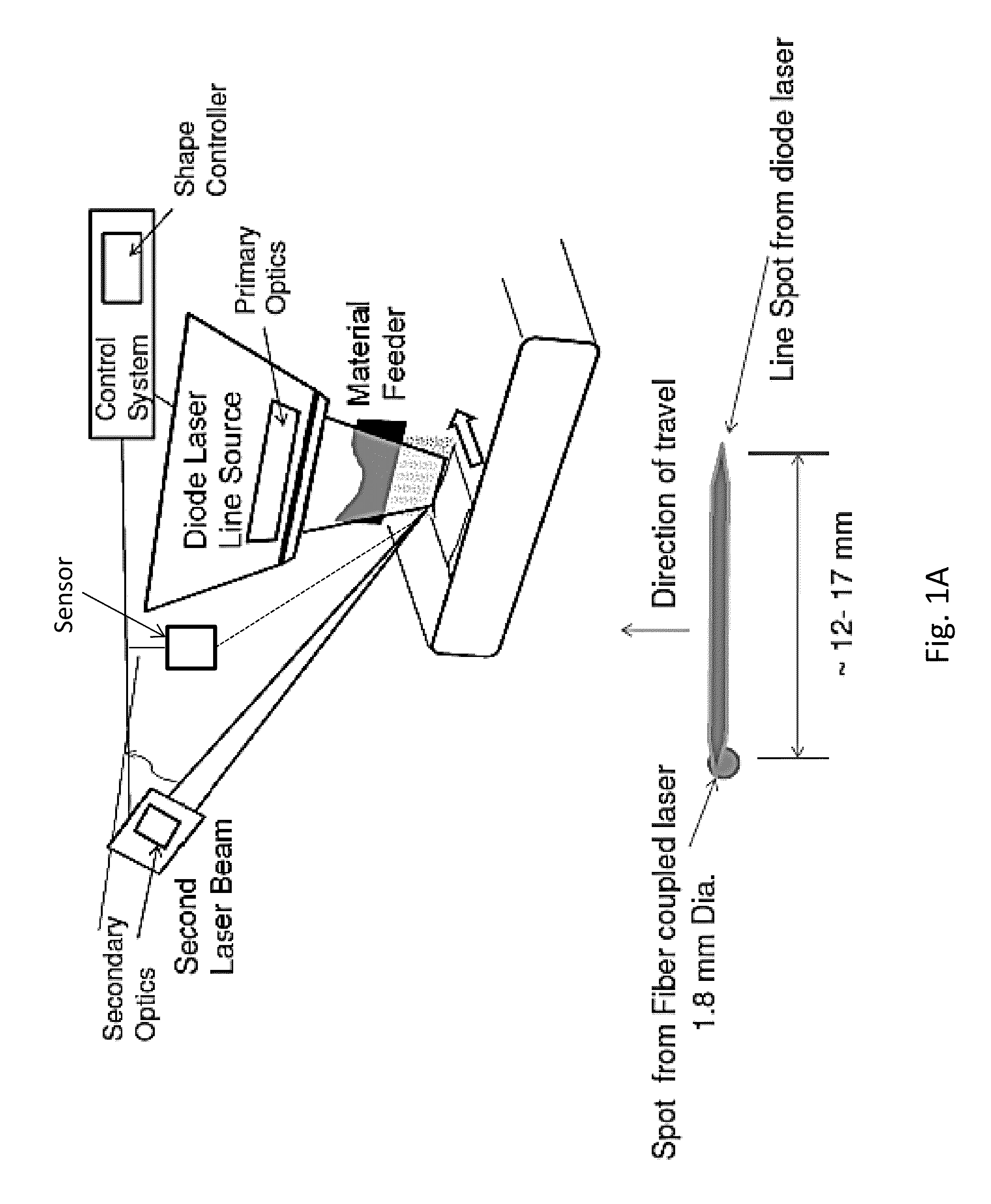
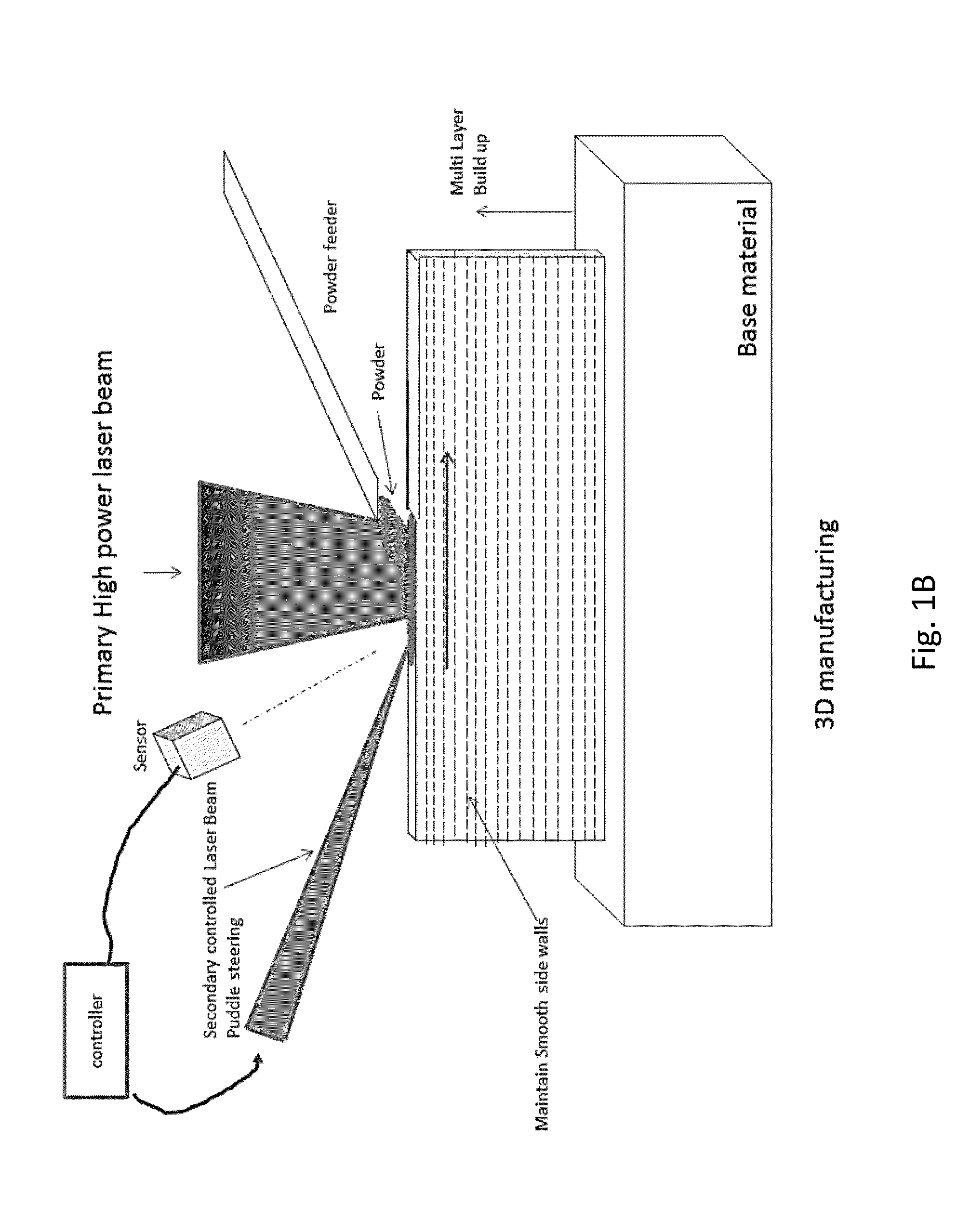
- A dual-laser system is employed, where a primary line source laser melts the deposit material and a secondary laser with lower power shapes the molten puddle, allowing for independent control of the weld puddle's shape and position, reducing overlap distance and improving deposition efficiency.
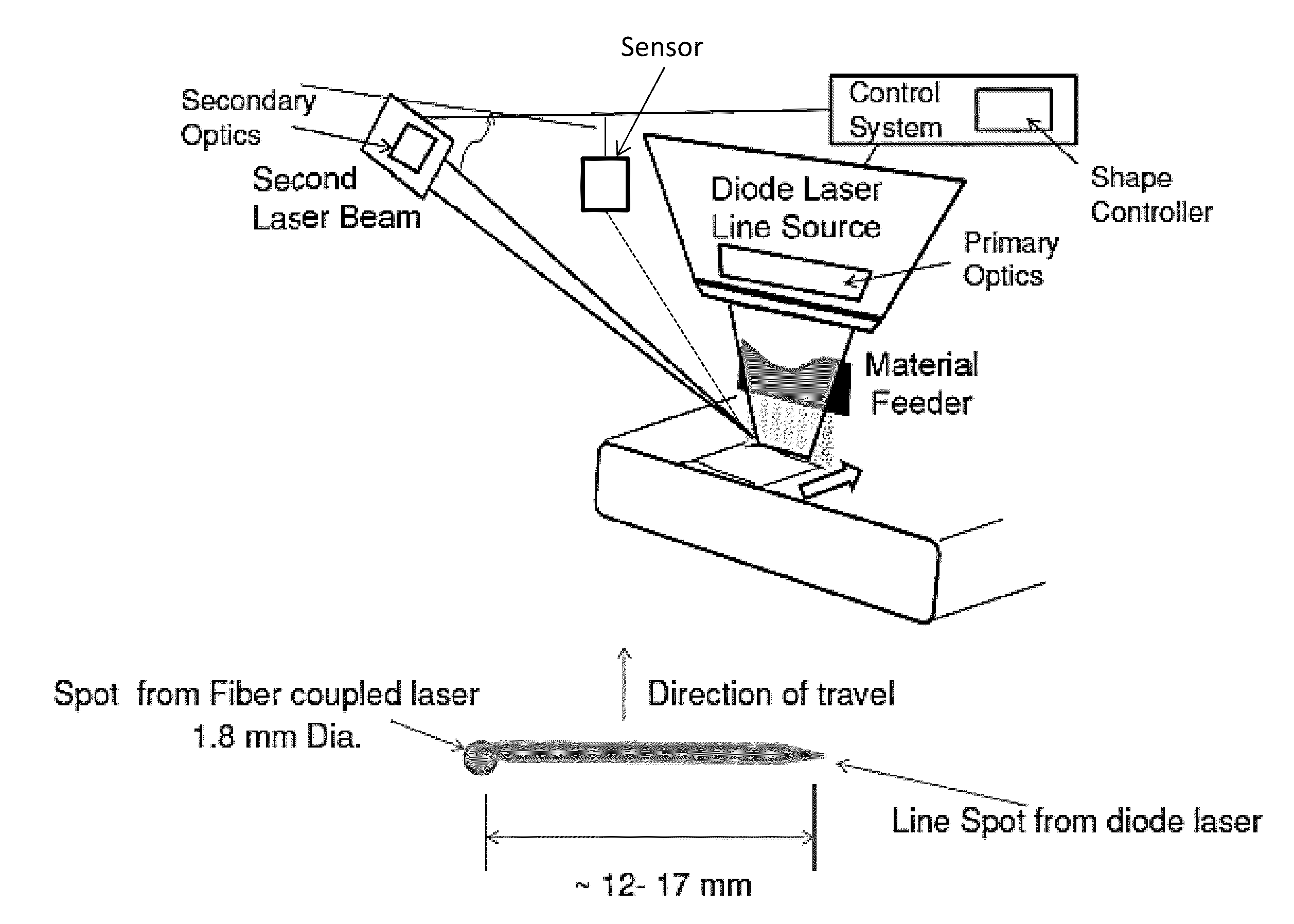

Beam Shaper Optic For Laser Material Processing
PatentPendingUS20240207974A1
Innovation
- A refractive or reflective optical beam shaping element with a twisted Siemens star configuration, featuring curved sector-shaped facets that radiate outward in a spiral star pattern, eliminating hot spots by spreading concentrated light uniformly across an annular ring distribution.


Quality Standards for Laser Cladding Applications
Quality standards for laser cladding applications represent a critical framework that ensures consistent performance, reliability, and safety across diverse industrial implementations. These standards encompass multiple dimensions including coating integrity, dimensional accuracy, metallurgical properties, and surface characteristics. The establishment of comprehensive quality benchmarks becomes particularly crucial when optimizing beam shaping techniques for specialty coatings, as variations in laser parameters directly impact the final coating quality.
International standards such as ISO 19232 and ASTM F3187 provide foundational guidelines for laser cladding processes, defining acceptable tolerances for coating thickness uniformity, porosity levels, and adhesion strength. These standards typically specify maximum allowable defect densities, with porosity levels generally required to remain below 2% for structural applications and below 0.5% for critical aerospace components. Surface roughness parameters are commonly regulated within Ra values of 3.2 to 12.5 micrometers, depending on the intended application and post-processing requirements.
Metallurgical quality standards focus on microstructural integrity, including grain structure uniformity, phase composition, and heat-affected zone characteristics. Hardness distribution requirements often mandate variations within 10% across the coating thickness, while tensile bond strength typically must exceed 70 MPa for most industrial applications. Chemical composition tolerances are strictly controlled, with elemental segregation limits defined to prevent performance degradation in service conditions.
Geometric quality parameters encompass coating thickness consistency, edge definition, and dimensional stability. Standards typically require thickness variations to remain within ±10% of the nominal value across the coated surface. Edge quality specifications address feathering effects and transition zones, ensuring smooth integration with substrate materials. These geometric requirements become increasingly stringent for precision applications such as turbine blade repair or medical device manufacturing.
Process monitoring and documentation standards mandate real-time quality control measures, including temperature monitoring, powder feed rate verification, and beam parameter validation. Traceability requirements ensure complete documentation of process parameters, material certifications, and quality test results throughout the manufacturing chain, enabling consistent reproduction of successful coating applications.
International standards such as ISO 19232 and ASTM F3187 provide foundational guidelines for laser cladding processes, defining acceptable tolerances for coating thickness uniformity, porosity levels, and adhesion strength. These standards typically specify maximum allowable defect densities, with porosity levels generally required to remain below 2% for structural applications and below 0.5% for critical aerospace components. Surface roughness parameters are commonly regulated within Ra values of 3.2 to 12.5 micrometers, depending on the intended application and post-processing requirements.
Metallurgical quality standards focus on microstructural integrity, including grain structure uniformity, phase composition, and heat-affected zone characteristics. Hardness distribution requirements often mandate variations within 10% across the coating thickness, while tensile bond strength typically must exceed 70 MPa for most industrial applications. Chemical composition tolerances are strictly controlled, with elemental segregation limits defined to prevent performance degradation in service conditions.
Geometric quality parameters encompass coating thickness consistency, edge definition, and dimensional stability. Standards typically require thickness variations to remain within ±10% of the nominal value across the coated surface. Edge quality specifications address feathering effects and transition zones, ensuring smooth integration with substrate materials. These geometric requirements become increasingly stringent for precision applications such as turbine blade repair or medical device manufacturing.
Process monitoring and documentation standards mandate real-time quality control measures, including temperature monitoring, powder feed rate verification, and beam parameter validation. Traceability requirements ensure complete documentation of process parameters, material certifications, and quality test results throughout the manufacturing chain, enabling consistent reproduction of successful coating applications.
Energy Efficiency in Industrial Laser Processing
Energy efficiency represents a critical performance metric in industrial laser processing, particularly for beam shaping applications in laser cladding operations. The optimization of energy consumption directly impacts operational costs, environmental sustainability, and overall process economics. In laser cladding for specialty coatings, energy efficiency encompasses the effective utilization of laser power, minimization of heat losses, and maximization of material deposition rates per unit energy consumed.
Current industrial laser systems typically achieve energy conversion efficiencies ranging from 25% to 45%, with significant variations depending on laser type and operating parameters. Fiber lasers demonstrate superior efficiency compared to CO2 and Nd:YAG systems, reaching up to 40-45% wall-plug efficiency. However, the overall process efficiency in laser cladding applications often drops to 10-20% due to heat conduction losses, reflection, and incomplete material utilization.
Beam shaping technologies play a pivotal role in enhancing energy efficiency by optimizing power density distribution and reducing thermal waste. Advanced beam shaping techniques, including diffractive optical elements and adaptive optics systems, enable precise control over energy distribution patterns. These technologies can improve material utilization efficiency by 15-30% while reducing heat-affected zones and minimizing substrate dilution.
Process parameter optimization significantly influences energy efficiency outcomes. Key variables include scanning speed, overlap ratio, powder feed rate, and beam geometry. Research indicates that optimized rectangular or elliptical beam profiles can achieve 20-25% better energy utilization compared to traditional Gaussian distributions. Multi-beam configurations and synchronized powder delivery systems further enhance efficiency by reducing processing time and improving coating uniformity.
Thermal management strategies are essential for maximizing energy efficiency in laser cladding operations. Preheating substrates to optimal temperatures reduces energy requirements for melting and improves metallurgical bonding. Controlled cooling systems prevent excessive heat buildup and enable higher processing speeds. Advanced monitoring systems using pyrometry and thermal imaging provide real-time feedback for dynamic parameter adjustment.
Emerging technologies promise substantial improvements in energy efficiency. Ultrashort pulse lasers minimize heat conduction losses through precise energy delivery. Machine learning algorithms optimize processing parameters in real-time based on feedback from multiple sensors. Hybrid processing approaches combining laser cladding with other manufacturing techniques can achieve synergistic efficiency gains while expanding application possibilities for specialty coating applications.
Current industrial laser systems typically achieve energy conversion efficiencies ranging from 25% to 45%, with significant variations depending on laser type and operating parameters. Fiber lasers demonstrate superior efficiency compared to CO2 and Nd:YAG systems, reaching up to 40-45% wall-plug efficiency. However, the overall process efficiency in laser cladding applications often drops to 10-20% due to heat conduction losses, reflection, and incomplete material utilization.
Beam shaping technologies play a pivotal role in enhancing energy efficiency by optimizing power density distribution and reducing thermal waste. Advanced beam shaping techniques, including diffractive optical elements and adaptive optics systems, enable precise control over energy distribution patterns. These technologies can improve material utilization efficiency by 15-30% while reducing heat-affected zones and minimizing substrate dilution.
Process parameter optimization significantly influences energy efficiency outcomes. Key variables include scanning speed, overlap ratio, powder feed rate, and beam geometry. Research indicates that optimized rectangular or elliptical beam profiles can achieve 20-25% better energy utilization compared to traditional Gaussian distributions. Multi-beam configurations and synchronized powder delivery systems further enhance efficiency by reducing processing time and improving coating uniformity.
Thermal management strategies are essential for maximizing energy efficiency in laser cladding operations. Preheating substrates to optimal temperatures reduces energy requirements for melting and improves metallurgical bonding. Controlled cooling systems prevent excessive heat buildup and enable higher processing speeds. Advanced monitoring systems using pyrometry and thermal imaging provide real-time feedback for dynamic parameter adjustment.
Emerging technologies promise substantial improvements in energy efficiency. Ultrashort pulse lasers minimize heat conduction losses through precise energy delivery. Machine learning algorithms optimize processing parameters in real-time based on feedback from multiple sensors. Hybrid processing approaches combining laser cladding with other manufacturing techniques can achieve synergistic efficiency gains while expanding application possibilities for specialty coating applications.
Unlock deeper insights with PatSnap Eureka Quick Research — get a full tech report to explore trends and direct your research. Try now!
Generate Your Research Report Instantly with AI Agent
Supercharge your innovation with PatSnap Eureka AI Agent Platform!