

Optimize Heat Management in Laser Cladding for Efficiency
APR 8, 20269 MIN READ
Generate Your Research Report Instantly with AI Agent
PatSnap Eureka helps you evaluate technical feasibility & market potential.
Laser Cladding Heat Management Background and Objectives
Laser cladding has emerged as a critical additive manufacturing and surface modification technology since its development in the 1970s. The process involves using a high-power laser beam to melt metallic powder or wire feedstock, creating a metallurgically bonded coating on a substrate surface. This technology has evolved from simple surface repair applications to sophisticated manufacturing processes capable of producing complex three-dimensional components with superior material properties.
The fundamental challenge in laser cladding lies in the precise control of thermal energy distribution during the melting and solidification process. The laser beam generates intense localized heating, creating steep temperature gradients that significantly influence the microstructure, mechanical properties, and dimensional accuracy of the final product. Historical development has shown a consistent trend toward improving process control, with early systems focusing primarily on laser power optimization and later generations incorporating advanced monitoring and feedback systems.
Current market demands are driving the need for enhanced heat management solutions as laser cladding applications expand into aerospace, automotive, medical device manufacturing, and energy sectors. These industries require components with exceptional quality standards, minimal distortion, and consistent material properties across large-scale production runs. The growing adoption of laser cladding for high-value applications has intensified the focus on thermal process optimization.
The primary objective of optimizing heat management in laser cladding centers on achieving superior process efficiency through controlled thermal cycles. This encompasses minimizing heat-affected zone dimensions, reducing residual stresses, and eliminating defects such as cracking, porosity, and delamination. Enhanced thermal control directly translates to improved material utilization, reduced post-processing requirements, and increased production throughput.
Strategic goals include developing predictive thermal models that enable real-time process adjustment, implementing advanced cooling strategies to manage heat accumulation during multi-layer deposition, and establishing optimal processing parameters for diverse material combinations. The ultimate aim is to transform laser cladding from a largely empirical process to a fully controlled manufacturing technology capable of producing components with predetermined properties and minimal variability.
Achieving these objectives requires integration of advanced sensing technologies, computational modeling capabilities, and adaptive control systems that can respond dynamically to thermal variations during processing. Success in this domain will unlock laser cladding's full potential as a precision manufacturing technology for next-generation industrial applications.
The fundamental challenge in laser cladding lies in the precise control of thermal energy distribution during the melting and solidification process. The laser beam generates intense localized heating, creating steep temperature gradients that significantly influence the microstructure, mechanical properties, and dimensional accuracy of the final product. Historical development has shown a consistent trend toward improving process control, with early systems focusing primarily on laser power optimization and later generations incorporating advanced monitoring and feedback systems.
Current market demands are driving the need for enhanced heat management solutions as laser cladding applications expand into aerospace, automotive, medical device manufacturing, and energy sectors. These industries require components with exceptional quality standards, minimal distortion, and consistent material properties across large-scale production runs. The growing adoption of laser cladding for high-value applications has intensified the focus on thermal process optimization.
The primary objective of optimizing heat management in laser cladding centers on achieving superior process efficiency through controlled thermal cycles. This encompasses minimizing heat-affected zone dimensions, reducing residual stresses, and eliminating defects such as cracking, porosity, and delamination. Enhanced thermal control directly translates to improved material utilization, reduced post-processing requirements, and increased production throughput.
Strategic goals include developing predictive thermal models that enable real-time process adjustment, implementing advanced cooling strategies to manage heat accumulation during multi-layer deposition, and establishing optimal processing parameters for diverse material combinations. The ultimate aim is to transform laser cladding from a largely empirical process to a fully controlled manufacturing technology capable of producing components with predetermined properties and minimal variability.
Achieving these objectives requires integration of advanced sensing technologies, computational modeling capabilities, and adaptive control systems that can respond dynamically to thermal variations during processing. Success in this domain will unlock laser cladding's full potential as a precision manufacturing technology for next-generation industrial applications.
Market Demand for Efficient Laser Cladding Solutions
The global laser cladding market is experiencing unprecedented growth driven by increasing demands for advanced manufacturing solutions across multiple industrial sectors. Aerospace and automotive industries represent the largest consumer segments, where the need for high-performance components with superior wear resistance and extended service life continues to escalate. These sectors require precise material deposition techniques that can restore expensive components or enhance surface properties without compromising substrate integrity.
Manufacturing industries are increasingly recognizing laser cladding as a cost-effective alternative to traditional coating methods and component replacement strategies. The technology offers significant advantages in repairing high-value components such as turbine blades, engine parts, and precision tooling, where conventional repair methods prove inadequate or economically unfeasible. This shift toward repair-over-replacement philosophies is driving substantial market expansion.
Energy sector applications, particularly in oil and gas exploration, nuclear power generation, and renewable energy infrastructure, are creating substantial demand for efficient laser cladding solutions. These applications require components that can withstand extreme operating conditions while maintaining dimensional accuracy and surface quality. The ability to apply protective coatings or repair critical components in-situ has become increasingly valuable for minimizing downtime and operational costs.
The medical device industry presents another rapidly growing market segment, where laser cladding enables the production of biocompatible implants and surgical instruments with tailored surface properties. Precision requirements in this sector demand exceptional heat management capabilities to prevent thermal damage to sensitive materials and maintain strict dimensional tolerances.
Current market challenges center around process efficiency and quality consistency, directly linking to heat management optimization needs. Manufacturers are seeking solutions that can reduce processing time while improving coating quality and reducing post-processing requirements. Thermal distortion and residual stress issues continue to limit adoption in precision applications, creating strong demand for advanced heat management technologies.
Emerging markets in additive manufacturing and hybrid processing systems are expanding the application scope for laser cladding technologies. These applications require sophisticated thermal control systems to enable multi-material processing and complex geometries. The integration of real-time monitoring and adaptive control systems is becoming a key differentiator in meeting evolving market demands for consistent, high-quality results across diverse applications.
Manufacturing industries are increasingly recognizing laser cladding as a cost-effective alternative to traditional coating methods and component replacement strategies. The technology offers significant advantages in repairing high-value components such as turbine blades, engine parts, and precision tooling, where conventional repair methods prove inadequate or economically unfeasible. This shift toward repair-over-replacement philosophies is driving substantial market expansion.
Energy sector applications, particularly in oil and gas exploration, nuclear power generation, and renewable energy infrastructure, are creating substantial demand for efficient laser cladding solutions. These applications require components that can withstand extreme operating conditions while maintaining dimensional accuracy and surface quality. The ability to apply protective coatings or repair critical components in-situ has become increasingly valuable for minimizing downtime and operational costs.
The medical device industry presents another rapidly growing market segment, where laser cladding enables the production of biocompatible implants and surgical instruments with tailored surface properties. Precision requirements in this sector demand exceptional heat management capabilities to prevent thermal damage to sensitive materials and maintain strict dimensional tolerances.
Current market challenges center around process efficiency and quality consistency, directly linking to heat management optimization needs. Manufacturers are seeking solutions that can reduce processing time while improving coating quality and reducing post-processing requirements. Thermal distortion and residual stress issues continue to limit adoption in precision applications, creating strong demand for advanced heat management technologies.
Emerging markets in additive manufacturing and hybrid processing systems are expanding the application scope for laser cladding technologies. These applications require sophisticated thermal control systems to enable multi-material processing and complex geometries. The integration of real-time monitoring and adaptive control systems is becoming a key differentiator in meeting evolving market demands for consistent, high-quality results across diverse applications.
Current Heat Management Challenges in Laser Cladding
Laser cladding processes face significant thermal management challenges that directly impact coating quality, substrate integrity, and overall process efficiency. The primary challenge stems from the complex heat distribution patterns created during laser-material interactions, where excessive heat accumulation can lead to substrate dilution, residual stress formation, and geometric distortions in the final coating.
Temperature gradient control represents one of the most critical challenges in current laser cladding operations. Rapid heating and cooling cycles create steep thermal gradients that often result in crack formation, particularly at the interface between the coating and substrate. These thermal shock effects are exacerbated when processing materials with significantly different thermal expansion coefficients, leading to delamination and reduced coating adhesion.
Heat-affected zone management poses another substantial challenge, as uncontrolled thermal penetration can alter the metallurgical properties of the substrate material. Excessive heat input frequently causes grain growth, phase transformations, and softening in heat-treatable alloys, compromising the mechanical properties of the base material. This is particularly problematic in aerospace and automotive applications where substrate integrity is paramount.
Current cooling strategies often prove inadequate for maintaining optimal processing temperatures throughout extended cladding operations. Conventional air cooling and basic heat sinks fail to provide sufficient thermal control for high-power laser applications, resulting in cumulative heat buildup that degrades process stability. This thermal accumulation leads to inconsistent melt pool dynamics, irregular coating thickness, and poor surface finish quality.
Process parameter optimization remains challenging due to the interdependent nature of laser power, scanning speed, and thermal management variables. Existing control systems typically operate on predetermined parameters rather than real-time thermal feedback, making it difficult to adapt to varying material properties or geometric complexities during processing.
Multi-layer cladding operations present compounded thermal challenges, as each successive layer adds thermal mass and alters heat conduction pathways. The inability to effectively manage interlayer temperatures often results in poor bonding between layers, porosity formation, and dimensional inaccuracies that require extensive post-processing correction.
Industrial implementation faces additional challenges related to scalability and cost-effectiveness of thermal management solutions. Many advanced cooling technologies remain economically prohibitive for large-scale manufacturing applications, while simpler approaches fail to deliver the precision required for high-quality coating production.
Temperature gradient control represents one of the most critical challenges in current laser cladding operations. Rapid heating and cooling cycles create steep thermal gradients that often result in crack formation, particularly at the interface between the coating and substrate. These thermal shock effects are exacerbated when processing materials with significantly different thermal expansion coefficients, leading to delamination and reduced coating adhesion.
Heat-affected zone management poses another substantial challenge, as uncontrolled thermal penetration can alter the metallurgical properties of the substrate material. Excessive heat input frequently causes grain growth, phase transformations, and softening in heat-treatable alloys, compromising the mechanical properties of the base material. This is particularly problematic in aerospace and automotive applications where substrate integrity is paramount.
Current cooling strategies often prove inadequate for maintaining optimal processing temperatures throughout extended cladding operations. Conventional air cooling and basic heat sinks fail to provide sufficient thermal control for high-power laser applications, resulting in cumulative heat buildup that degrades process stability. This thermal accumulation leads to inconsistent melt pool dynamics, irregular coating thickness, and poor surface finish quality.
Process parameter optimization remains challenging due to the interdependent nature of laser power, scanning speed, and thermal management variables. Existing control systems typically operate on predetermined parameters rather than real-time thermal feedback, making it difficult to adapt to varying material properties or geometric complexities during processing.
Multi-layer cladding operations present compounded thermal challenges, as each successive layer adds thermal mass and alters heat conduction pathways. The inability to effectively manage interlayer temperatures often results in poor bonding between layers, porosity formation, and dimensional inaccuracies that require extensive post-processing correction.
Industrial implementation faces additional challenges related to scalability and cost-effectiveness of thermal management solutions. Many advanced cooling technologies remain economically prohibitive for large-scale manufacturing applications, while simpler approaches fail to deliver the precision required for high-quality coating production.
Existing Heat Management Solutions for Laser Cladding
01 Active cooling systems for laser cladding processes
Implementation of active cooling mechanisms to manage heat during laser cladding operations. These systems utilize cooling fluids, gas jets, or cryogenic cooling to rapidly dissipate heat from the cladding zone and substrate. The cooling can be applied through nozzles positioned around the laser beam or through substrate cooling channels to control temperature gradients and prevent thermal distortion.- Active cooling systems for laser cladding processes: Implementation of active cooling mechanisms to manage heat during laser cladding operations. These systems utilize cooling fluids, gas jets, or cryogenic cooling to rapidly dissipate heat from the cladding zone and substrate. The cooling can be applied through nozzles positioned around the laser beam or through substrate cooling channels to control temperature gradients and reduce thermal stress in the cladded material.
- Preheating and temperature control strategies: Methods for preheating substrates and controlling temperature profiles during laser cladding to minimize thermal shock and residual stresses. These approaches involve heating the substrate to specific temperatures before cladding begins and maintaining controlled temperature ranges throughout the process. Temperature monitoring systems and feedback control mechanisms ensure optimal thermal conditions for improved bonding and reduced cracking.
- Laser parameter optimization for heat input control: Techniques for optimizing laser processing parameters including power, scanning speed, beam diameter, and pulse characteristics to control heat input during cladding. By adjusting these parameters, the heat-affected zone can be minimized while ensuring adequate melting and bonding. Multi-pass strategies and overlapping patterns are employed to distribute heat more evenly and prevent excessive temperature buildup in localized areas.
- Thermal barrier and insulation methods: Application of thermal barriers, coatings, or insulating materials to protect heat-sensitive substrate regions during laser cladding. These methods involve using sacrificial layers, heat-resistant shields, or selective masking to prevent unwanted heat transfer to critical areas. The thermal management approach helps maintain dimensional stability and prevents degradation of substrate properties in areas adjacent to the cladding zone.
- Real-time monitoring and adaptive heat management: Integration of sensors and monitoring systems for real-time temperature measurement and adaptive control during laser cladding. These systems use infrared cameras, pyrometers, or thermocouples to continuously monitor thermal conditions and automatically adjust process parameters. Feedback loops enable dynamic modification of laser power, scanning speed, or cooling intensity to maintain optimal thermal conditions and prevent defects caused by improper heat management.
02 Preheating and temperature control strategies
Methods for preheating substrates and controlling temperature profiles during laser cladding to minimize thermal stress and cracking. These approaches involve heating the substrate to specific temperatures before cladding begins, maintaining controlled temperature ranges during processing, and implementing gradual cooling protocols. Temperature monitoring systems and feedback control mechanisms ensure optimal thermal conditions throughout the cladding process.Expand Specific Solutions03 Laser parameter optimization for heat input control
Techniques for optimizing laser processing parameters to control heat input and distribution during cladding. This includes adjusting laser power, scanning speed, beam diameter, and pulse characteristics to achieve desired thermal profiles. Multi-pass strategies and path planning algorithms are employed to distribute heat more evenly and prevent localized overheating while maintaining adequate fusion between cladding material and substrate.Expand Specific Solutions04 Heat sink and thermal barrier designs
Structural designs incorporating heat sinks, thermal barriers, or heat-dissipating fixtures to manage thermal accumulation during laser cladding. These solutions include specialized clamping devices with integrated cooling channels, backing plates with high thermal conductivity, and protective coatings that control heat flow. The designs facilitate rapid heat extraction from critical areas while maintaining process stability.Expand Specific Solutions05 Real-time thermal monitoring and adaptive control
Systems for real-time temperature monitoring and adaptive process control during laser cladding operations. These systems employ infrared cameras, pyrometers, or thermal sensors to continuously measure temperature distributions. The collected data feeds into control algorithms that automatically adjust processing parameters to maintain optimal thermal conditions, prevent defects, and ensure consistent cladding quality across complex geometries.Expand Specific Solutions
Key Players in Laser Cladding and Thermal Management
The laser cladding heat management optimization field represents a mature industrial technology experiencing steady growth, driven by increasing demand for advanced manufacturing and surface enhancement applications. The market demonstrates significant scale potential across aerospace, automotive, and heavy machinery sectors, with established players like Boeing, Caterpillar, and Mitsubishi Heavy Industries leveraging the technology for component repair and enhancement. Technology maturity varies considerably across the competitive landscape - while industrial giants such as Robert Bosch, Textron Systems, and MTU Aero Engines have integrated sophisticated heat management solutions into their manufacturing processes, specialized laser companies like Titanova and regional players including Wuhan Hanhai Intelligent Laser Engineering are advancing targeted innovations. Academic institutions including Shanghai Jiao Tong University, Huazhong University of Science & Technology, and Zhejiang University of Technology contribute fundamental research, while emerging companies like Ningbo Xinsong Robot Technology focus on automation integration, creating a diverse ecosystem spanning from research-stage concepts to commercially deployed solutions.
Caterpillar, Inc.
Technical Solution: Caterpillar has developed advanced thermal management systems for laser cladding applications in heavy machinery manufacturing. Their approach integrates real-time temperature monitoring with adaptive cooling strategies, utilizing precision-controlled coolant flow systems and thermal barrier coatings. The company employs multi-zone heating control algorithms that adjust laser power and scanning speed based on substrate temperature feedback. Their proprietary heat dissipation technology includes enhanced heat sink designs and optimized powder feed rates to maintain consistent thermal gradients during the cladding process, ensuring uniform coating quality and reduced thermal stress in large-scale industrial components.
Strengths: Extensive experience in heavy-duty industrial applications and robust thermal management systems. Weaknesses: Solutions may be over-engineered for smaller scale applications, potentially increasing costs.
Mitsubishi Heavy Industries, Ltd.
Technical Solution: Mitsubishi Heavy Industries has developed sophisticated heat management solutions for laser cladding in aerospace and power generation applications. Their technology features advanced pyrometric temperature measurement systems coupled with predictive thermal modeling algorithms. The company utilizes multi-beam laser configurations with independent power control to distribute heat more evenly across the substrate. Their innovative approach includes preheating strategies and controlled cooling protocols that minimize residual stress and distortion. The system incorporates machine learning algorithms to optimize processing parameters in real-time based on thermal history and material properties, achieving superior metallurgical bonding while maintaining dimensional accuracy.
Strengths: Advanced aerospace-grade precision and sophisticated control systems with proven reliability. Weaknesses: High complexity and cost may limit adoption in cost-sensitive applications.
Core Thermal Optimization Patents in Laser Cladding
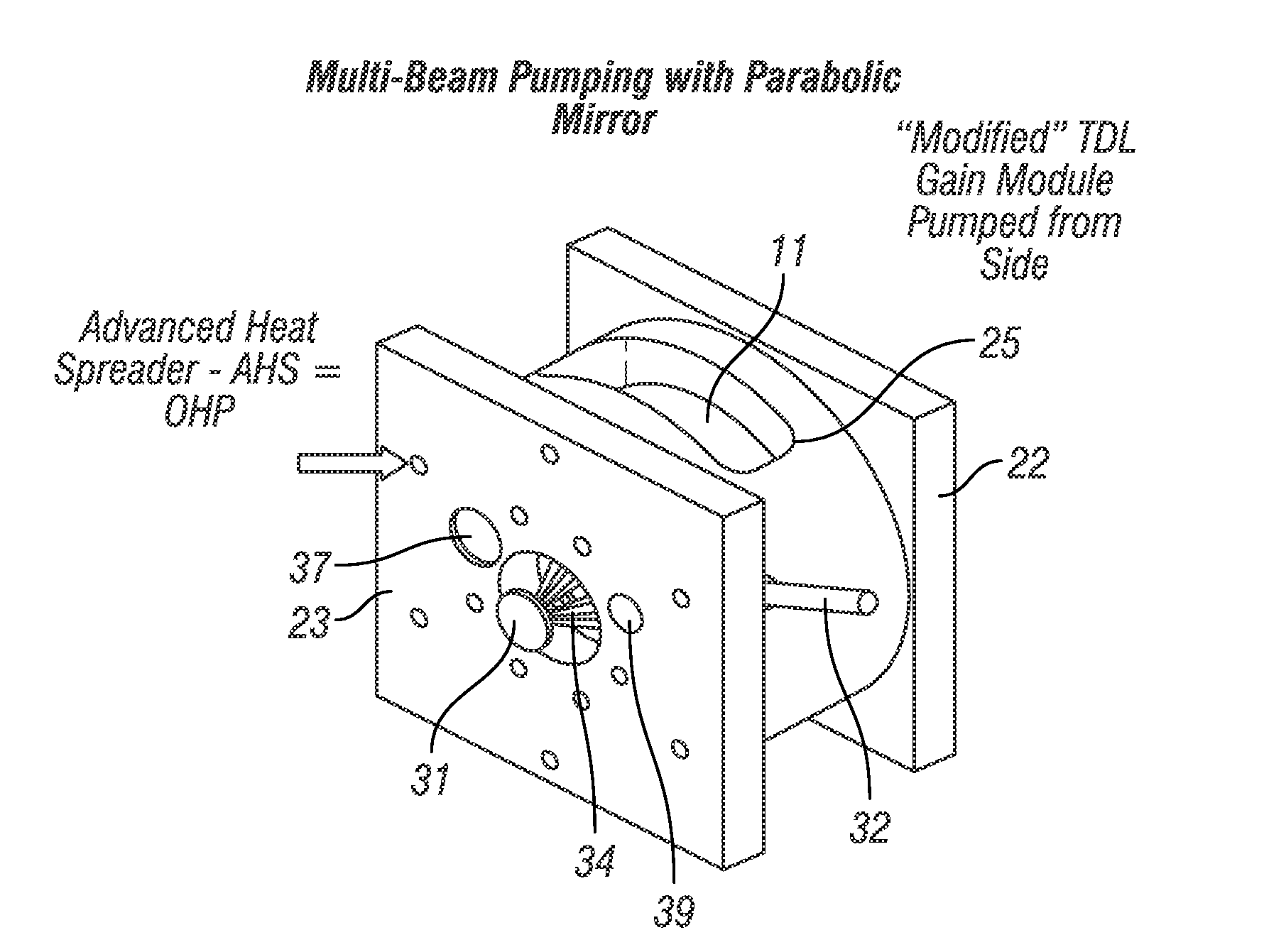
Integrated Advanced Heat Spreader for Solid-State Laser Systems
PatentActiveUS20130044776A1
Innovation
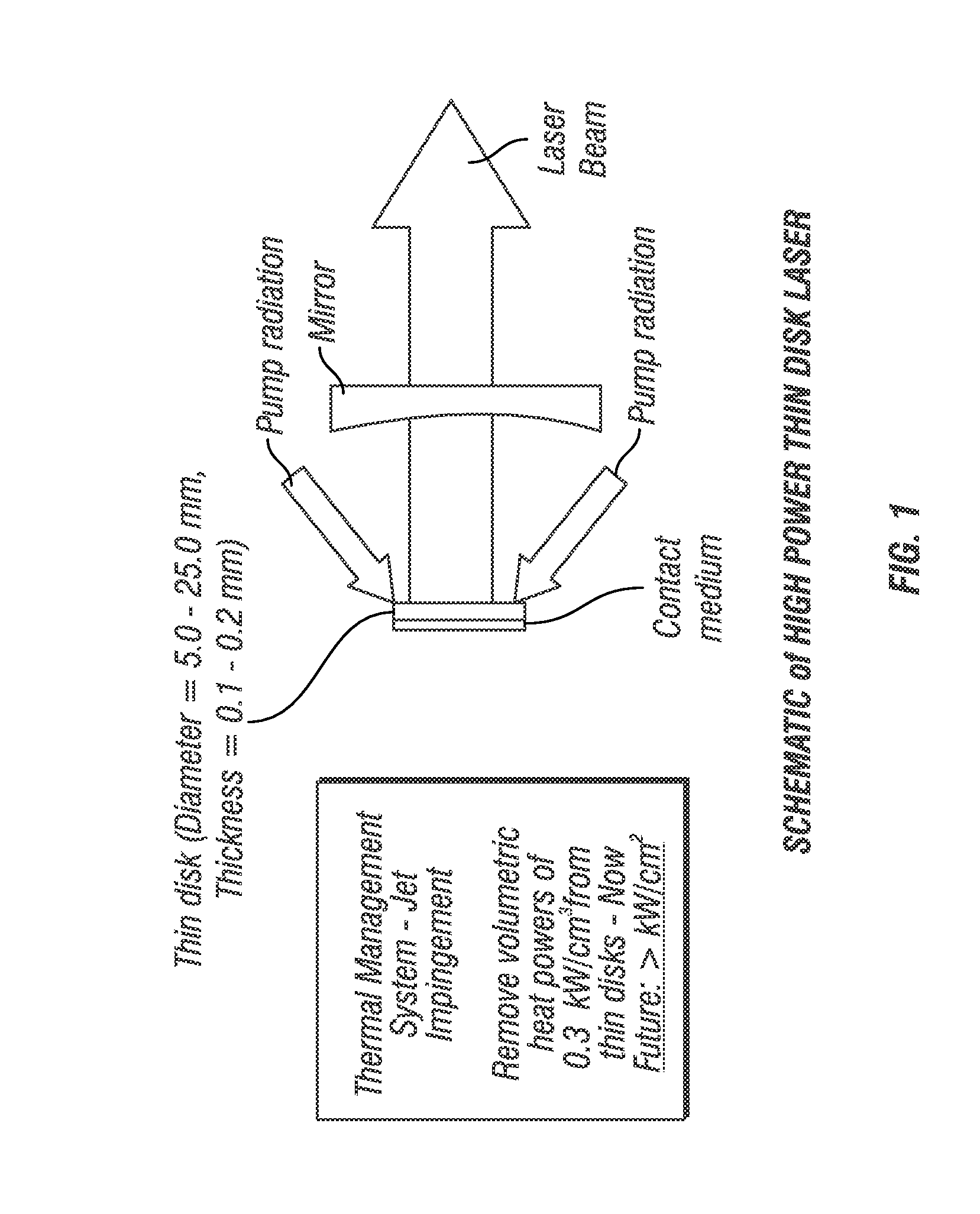
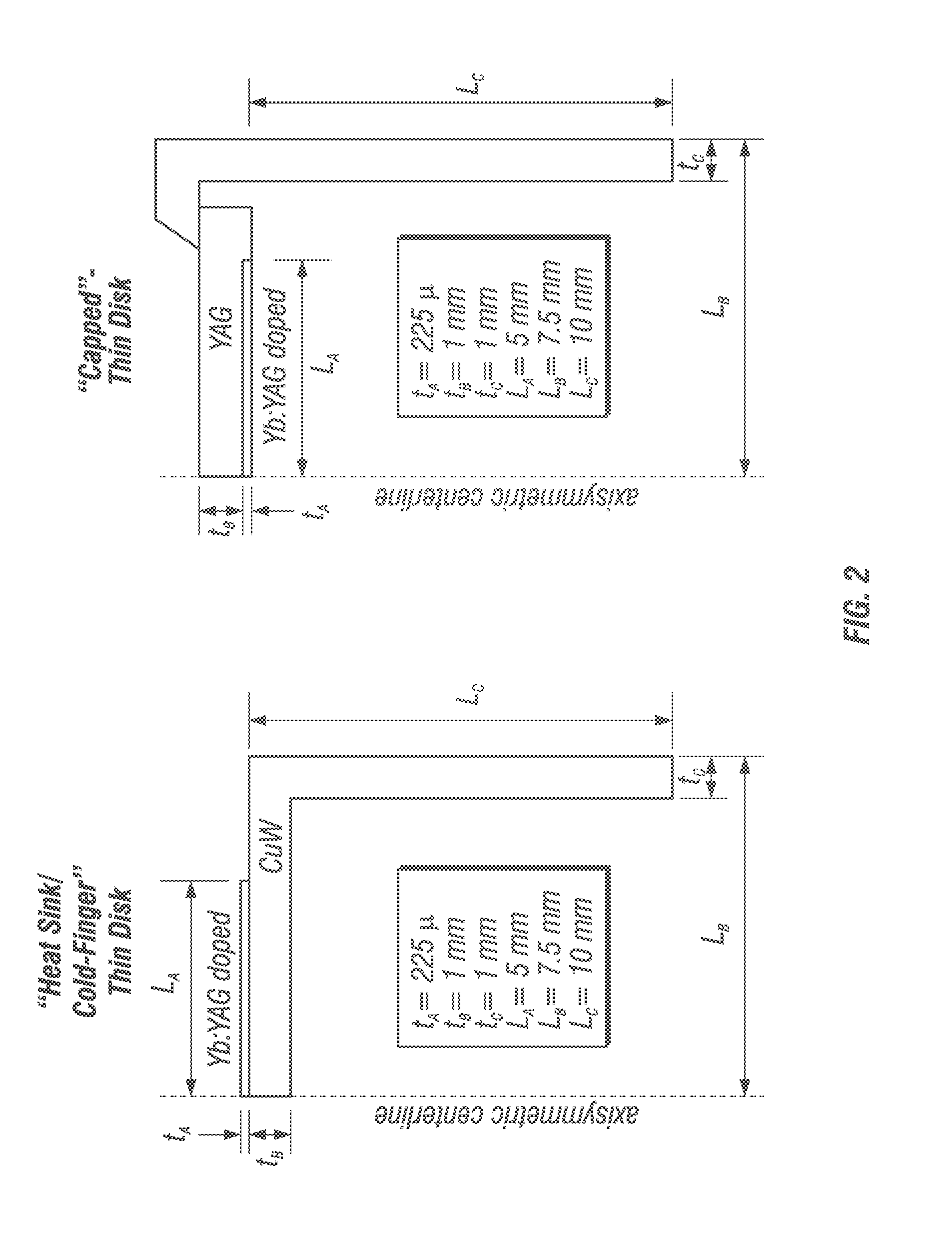
- An advanced heat spreader system utilizing a mechanically controlled, two-phase oscillating heat pipe with nanofluids and nanostructures, achieving high thermal conductivity (up to 20,000 W/m*K) to ensure near-isothermal conditions across the thin disk, enhancing heat transfer and reducing thermal-induced stress and birefringence.

Laser cladding method and device for implementing same
PatentWO2015132640A1
Innovation
- The method involves forming a series of conical laser beams from an annular beam using conical mirrors and a lens, allowing for separate heating of the workpiece and deposited material, with the focus aligned along the optical axis, enabling adjustable power distribution and improved thermal management.

Energy Efficiency Standards for Industrial Laser Systems
The establishment of comprehensive energy efficiency standards for industrial laser systems represents a critical regulatory framework that directly impacts heat management optimization in laser cladding processes. Current international standards, including ISO 11553 series and ANSI Z136 guidelines, provide foundational requirements for laser system performance, though specific provisions for thermal efficiency in additive manufacturing applications remain limited.
Energy efficiency metrics for industrial laser systems typically focus on wall-plug efficiency, which measures the ratio of useful laser output power to total electrical input power. Modern fiber laser systems achieve wall-plug efficiencies of 25-45%, significantly higher than traditional CO2 lasers at 10-15%. However, these standards primarily address overall system efficiency rather than process-specific thermal management requirements essential for laser cladding applications.
Emerging regulatory frameworks are beginning to incorporate thermal management criteria specific to laser cladding operations. The European Union's Ecodesign Directive increasingly influences laser system manufacturers to develop more thermally efficient solutions, while ASTM F3187 standard provides guidelines for additive manufacturing processes that indirectly address thermal considerations in laser-based systems.
Industry-specific energy efficiency standards are evolving to address the unique thermal challenges of laser cladding. These include requirements for real-time thermal monitoring capabilities, minimum cooling system efficiency ratings, and maximum allowable heat-affected zone dimensions. Such standards mandate that laser cladding systems incorporate advanced thermal management features, including adaptive power control and intelligent heat dissipation mechanisms.
Future energy efficiency standards are expected to establish mandatory thermal efficiency benchmarks for laser cladding systems, potentially requiring minimum substrate preheating efficiency ratios and maximum thermal waste generation limits. These evolving standards will likely drive innovation in integrated cooling solutions, smart thermal control algorithms, and energy recovery systems, ultimately promoting more sustainable and efficient laser cladding operations across industrial applications.
Energy efficiency metrics for industrial laser systems typically focus on wall-plug efficiency, which measures the ratio of useful laser output power to total electrical input power. Modern fiber laser systems achieve wall-plug efficiencies of 25-45%, significantly higher than traditional CO2 lasers at 10-15%. However, these standards primarily address overall system efficiency rather than process-specific thermal management requirements essential for laser cladding applications.
Emerging regulatory frameworks are beginning to incorporate thermal management criteria specific to laser cladding operations. The European Union's Ecodesign Directive increasingly influences laser system manufacturers to develop more thermally efficient solutions, while ASTM F3187 standard provides guidelines for additive manufacturing processes that indirectly address thermal considerations in laser-based systems.
Industry-specific energy efficiency standards are evolving to address the unique thermal challenges of laser cladding. These include requirements for real-time thermal monitoring capabilities, minimum cooling system efficiency ratings, and maximum allowable heat-affected zone dimensions. Such standards mandate that laser cladding systems incorporate advanced thermal management features, including adaptive power control and intelligent heat dissipation mechanisms.
Future energy efficiency standards are expected to establish mandatory thermal efficiency benchmarks for laser cladding systems, potentially requiring minimum substrate preheating efficiency ratios and maximum thermal waste generation limits. These evolving standards will likely drive innovation in integrated cooling solutions, smart thermal control algorithms, and energy recovery systems, ultimately promoting more sustainable and efficient laser cladding operations across industrial applications.
Environmental Impact of Laser Cladding Processes
The environmental implications of laser cladding processes have become increasingly significant as the technology gains widespread adoption across manufacturing industries. While laser cladding offers substantial advantages in material restoration and surface enhancement, its environmental footprint requires careful consideration, particularly when optimizing heat management systems for improved efficiency.
Energy consumption represents the most direct environmental impact of laser cladding operations. High-power laser systems typically consume between 10-50 kW of electrical energy, with heat management systems adding an additional 20-30% to overall power requirements. Cooling systems, including chillers, pumps, and heat exchangers, contribute significantly to this energy demand. The carbon footprint varies considerably based on regional electricity generation methods, ranging from 0.5 to 2.5 kg CO2 equivalent per kilogram of processed material.
Material waste generation poses another environmental concern. Inefficient heat management often leads to excessive powder consumption due to thermal degradation and oxidation of feedstock materials. Studies indicate that optimized thermal control can reduce material waste by 15-25%, directly impacting resource consumption and disposal requirements. Additionally, substrate overheating frequently necessitates post-processing operations, increasing overall material and energy consumption.
Atmospheric emissions from laser cladding processes include metal fumes, particulates, and volatile organic compounds released during high-temperature processing. Poor heat management exacerbates these emissions by creating unstable thermal conditions that promote material vaporization and oxidation. Advanced filtration systems, while necessary for emission control, consume additional energy and generate filter waste requiring specialized disposal.
Water consumption for cooling systems presents environmental challenges, particularly in water-scarce regions. Closed-loop cooling systems can reduce water consumption by 60-80% compared to once-through systems, while also minimizing thermal pollution of water bodies. However, these systems require periodic coolant replacement and treatment, generating chemical waste streams.
The lifecycle environmental impact extends beyond operational considerations. Manufacturing and disposal of heat management components, including heat exchangers, sensors, and control systems, contribute to the overall environmental burden. Optimized heat management systems with longer operational lifespans and improved efficiency can significantly reduce these lifecycle impacts while maintaining process quality and productivity standards.
Energy consumption represents the most direct environmental impact of laser cladding operations. High-power laser systems typically consume between 10-50 kW of electrical energy, with heat management systems adding an additional 20-30% to overall power requirements. Cooling systems, including chillers, pumps, and heat exchangers, contribute significantly to this energy demand. The carbon footprint varies considerably based on regional electricity generation methods, ranging from 0.5 to 2.5 kg CO2 equivalent per kilogram of processed material.
Material waste generation poses another environmental concern. Inefficient heat management often leads to excessive powder consumption due to thermal degradation and oxidation of feedstock materials. Studies indicate that optimized thermal control can reduce material waste by 15-25%, directly impacting resource consumption and disposal requirements. Additionally, substrate overheating frequently necessitates post-processing operations, increasing overall material and energy consumption.
Atmospheric emissions from laser cladding processes include metal fumes, particulates, and volatile organic compounds released during high-temperature processing. Poor heat management exacerbates these emissions by creating unstable thermal conditions that promote material vaporization and oxidation. Advanced filtration systems, while necessary for emission control, consume additional energy and generate filter waste requiring specialized disposal.
Water consumption for cooling systems presents environmental challenges, particularly in water-scarce regions. Closed-loop cooling systems can reduce water consumption by 60-80% compared to once-through systems, while also minimizing thermal pollution of water bodies. However, these systems require periodic coolant replacement and treatment, generating chemical waste streams.
The lifecycle environmental impact extends beyond operational considerations. Manufacturing and disposal of heat management components, including heat exchangers, sensors, and control systems, contribute to the overall environmental burden. Optimized heat management systems with longer operational lifespans and improved efficiency can significantly reduce these lifecycle impacts while maintaining process quality and productivity standards.
Unlock deeper insights with PatSnap Eureka Quick Research — get a full tech report to explore trends and direct your research. Try now!
Generate Your Research Report Instantly with AI Agent
Supercharge your innovation with PatSnap Eureka AI Agent Platform!