

Optimize Coating Materials For Silicon-Carbon Anode Performance
MAY 19, 20269 MIN READ
Generate Your Research Report Instantly with AI Agent
PatSnap Eureka helps you evaluate technical feasibility & market potential.
Silicon-Carbon Anode Coating Development Background and Goals
Silicon-carbon (Si-C) composite anodes have emerged as one of the most promising next-generation electrode materials for lithium-ion batteries, driven by silicon's exceptional theoretical capacity of 4,200 mAh/g compared to conventional graphite's 372 mAh/g. However, the commercial implementation of Si-C anodes faces significant challenges, particularly the dramatic volume expansion of silicon during lithiation cycles, which can reach up to 300%. This expansion leads to particle pulverization, loss of electrical contact, and rapid capacity degradation.
The evolution of Si-C anode technology has progressed through several distinct phases since the early 2000s. Initial research focused on pure silicon nanostructures, but the inherent instability prompted the development of silicon-carbon composites that leverage carbon's structural stability and conductivity. The integration of carbon matrices, whether as graphite, carbon nanotubes, or amorphous carbon, has provided mechanical support and enhanced electrical conductivity, yet volume expansion remains a critical bottleneck.
Surface coating strategies have emerged as a pivotal solution to address these fundamental challenges. The development of protective coatings represents a paradigm shift from purely structural approaches to surface engineering methodologies. These coatings serve multiple functions: providing mechanical constraint to limit volume expansion, forming stable solid electrolyte interphase layers, and maintaining electrical connectivity throughout cycling.
The primary objectives of optimizing coating materials for Si-C anode performance encompass several interconnected goals. First, achieving mechanical stability through coatings that can accommodate silicon's volume changes while maintaining structural integrity. Second, enhancing electrochemical performance by facilitating stable lithium-ion transport and minimizing side reactions with the electrolyte. Third, improving cycling longevity by preventing active material loss and maintaining consistent electrical pathways.
Current coating development efforts target specific performance metrics including capacity retention above 80% after 500 cycles, first-cycle efficiency exceeding 85%, and rate capability maintaining 70% capacity at 2C discharge rates. These targets reflect the stringent requirements for commercial viability in electric vehicle and energy storage applications, where both energy density and cycle life are critical performance indicators.
The evolution of Si-C anode technology has progressed through several distinct phases since the early 2000s. Initial research focused on pure silicon nanostructures, but the inherent instability prompted the development of silicon-carbon composites that leverage carbon's structural stability and conductivity. The integration of carbon matrices, whether as graphite, carbon nanotubes, or amorphous carbon, has provided mechanical support and enhanced electrical conductivity, yet volume expansion remains a critical bottleneck.
Surface coating strategies have emerged as a pivotal solution to address these fundamental challenges. The development of protective coatings represents a paradigm shift from purely structural approaches to surface engineering methodologies. These coatings serve multiple functions: providing mechanical constraint to limit volume expansion, forming stable solid electrolyte interphase layers, and maintaining electrical connectivity throughout cycling.
The primary objectives of optimizing coating materials for Si-C anode performance encompass several interconnected goals. First, achieving mechanical stability through coatings that can accommodate silicon's volume changes while maintaining structural integrity. Second, enhancing electrochemical performance by facilitating stable lithium-ion transport and minimizing side reactions with the electrolyte. Third, improving cycling longevity by preventing active material loss and maintaining consistent electrical pathways.
Current coating development efforts target specific performance metrics including capacity retention above 80% after 500 cycles, first-cycle efficiency exceeding 85%, and rate capability maintaining 70% capacity at 2C discharge rates. These targets reflect the stringent requirements for commercial viability in electric vehicle and energy storage applications, where both energy density and cycle life are critical performance indicators.
Market Demand for High-Performance Battery Anodes
The global lithium-ion battery market is experiencing unprecedented growth, driven primarily by the rapid expansion of electric vehicles and energy storage systems. This surge has created substantial demand for high-performance battery anodes that can deliver superior energy density, faster charging capabilities, and extended cycle life. Traditional graphite anodes are approaching their theoretical capacity limits, creating a critical market gap that silicon-carbon composite anodes are positioned to fill.
Electric vehicle manufacturers are particularly driving demand for advanced anode materials as they seek to achieve longer driving ranges and reduced charging times. The automotive sector's transition toward electrification has intensified requirements for batteries that can store more energy per unit weight and volume. Silicon-carbon anodes offer theoretical capacity improvements of up to three times compared to conventional graphite, making them highly attractive for next-generation battery applications.
Consumer electronics manufacturers also represent a significant market segment demanding enhanced anode performance. Smartphones, laptops, and wearable devices require batteries that can support increasingly power-hungry applications while maintaining compact form factors. The miniaturization trend in electronics necessitates anode materials that can deliver maximum energy density within constrained spaces.
Energy storage system deployments for grid-scale applications are creating additional market pressure for high-performance anodes. These systems require batteries with exceptional cycle life and reliability to ensure long-term operational viability. Silicon-carbon anodes, when properly optimized through advanced coating materials, can address the mechanical stress and capacity degradation issues that have historically limited silicon-based anode adoption.
The market demand is further amplified by stringent environmental regulations and government incentives promoting clean energy technologies. Battery manufacturers are under increasing pressure to develop solutions that not only meet performance requirements but also demonstrate improved sustainability profiles. This regulatory environment is accelerating investment in advanced anode technologies and creating favorable market conditions for innovative coating material solutions that enhance silicon-carbon anode performance and commercial viability.
Electric vehicle manufacturers are particularly driving demand for advanced anode materials as they seek to achieve longer driving ranges and reduced charging times. The automotive sector's transition toward electrification has intensified requirements for batteries that can store more energy per unit weight and volume. Silicon-carbon anodes offer theoretical capacity improvements of up to three times compared to conventional graphite, making them highly attractive for next-generation battery applications.
Consumer electronics manufacturers also represent a significant market segment demanding enhanced anode performance. Smartphones, laptops, and wearable devices require batteries that can support increasingly power-hungry applications while maintaining compact form factors. The miniaturization trend in electronics necessitates anode materials that can deliver maximum energy density within constrained spaces.
Energy storage system deployments for grid-scale applications are creating additional market pressure for high-performance anodes. These systems require batteries with exceptional cycle life and reliability to ensure long-term operational viability. Silicon-carbon anodes, when properly optimized through advanced coating materials, can address the mechanical stress and capacity degradation issues that have historically limited silicon-based anode adoption.
The market demand is further amplified by stringent environmental regulations and government incentives promoting clean energy technologies. Battery manufacturers are under increasing pressure to develop solutions that not only meet performance requirements but also demonstrate improved sustainability profiles. This regulatory environment is accelerating investment in advanced anode technologies and creating favorable market conditions for innovative coating material solutions that enhance silicon-carbon anode performance and commercial viability.
Current Coating Material Challenges in Si-C Anodes
Silicon-carbon anodes face significant coating material challenges that directly impact their electrochemical performance and commercial viability. The primary challenge stems from the substantial volume expansion of silicon particles during lithiation, which can reach up to 300% compared to the initial state. This dramatic dimensional change creates mechanical stress that compromises the integrity of conventional coating materials, leading to coating delamination and particle pulverization.
Current carbon-based coating materials, while providing electrical conductivity, often lack sufficient mechanical flexibility to accommodate silicon's volume changes. Traditional carbon coatings tend to crack and fragment during cycling, exposing fresh silicon surfaces to the electrolyte and causing continuous solid electrolyte interphase formation. This process consumes active lithium and contributes to rapid capacity fade, particularly during the initial cycles.
The adhesion between coating materials and silicon particles presents another critical challenge. Many existing coating approaches rely on physical deposition methods that create weak interfacial bonds. When silicon undergoes expansion and contraction cycles, these weak interfaces become failure points, resulting in coating detachment and loss of electrical contact between silicon particles and the conductive network.
Thermal stability represents an additional concern for coating materials in silicon-carbon anodes. During battery operation and manufacturing processes, coating materials must maintain their structural integrity and functional properties across varying temperature ranges. Some polymer-based coatings exhibit thermal degradation that compromises their protective capabilities and electrical conductivity.
The electrochemical stability window of coating materials also poses challenges. Coatings must remain stable within the operating voltage range of silicon anodes while maintaining ionic conductivity for lithium transport. Many candidate materials either undergo unwanted electrochemical reactions or create barriers that impede lithium diffusion, negatively affecting rate capability and overall performance.
Manufacturing scalability and cost-effectiveness of advanced coating materials remain significant hurdles for commercial implementation. While laboratory-scale coating techniques may demonstrate promising results, translating these methods to industrial production often reveals limitations in uniformity, reproducibility, and economic feasibility. The challenge lies in developing coating solutions that balance performance enhancement with practical manufacturing constraints.
Current carbon-based coating materials, while providing electrical conductivity, often lack sufficient mechanical flexibility to accommodate silicon's volume changes. Traditional carbon coatings tend to crack and fragment during cycling, exposing fresh silicon surfaces to the electrolyte and causing continuous solid electrolyte interphase formation. This process consumes active lithium and contributes to rapid capacity fade, particularly during the initial cycles.
The adhesion between coating materials and silicon particles presents another critical challenge. Many existing coating approaches rely on physical deposition methods that create weak interfacial bonds. When silicon undergoes expansion and contraction cycles, these weak interfaces become failure points, resulting in coating detachment and loss of electrical contact between silicon particles and the conductive network.
Thermal stability represents an additional concern for coating materials in silicon-carbon anodes. During battery operation and manufacturing processes, coating materials must maintain their structural integrity and functional properties across varying temperature ranges. Some polymer-based coatings exhibit thermal degradation that compromises their protective capabilities and electrical conductivity.
The electrochemical stability window of coating materials also poses challenges. Coatings must remain stable within the operating voltage range of silicon anodes while maintaining ionic conductivity for lithium transport. Many candidate materials either undergo unwanted electrochemical reactions or create barriers that impede lithium diffusion, negatively affecting rate capability and overall performance.
Manufacturing scalability and cost-effectiveness of advanced coating materials remain significant hurdles for commercial implementation. While laboratory-scale coating techniques may demonstrate promising results, translating these methods to industrial production often reveals limitations in uniformity, reproducibility, and economic feasibility. The challenge lies in developing coating solutions that balance performance enhancement with practical manufacturing constraints.
Existing Coating Solutions for Si-C Anode Optimization
01 Coating composition and formulation optimization
Advanced coating formulations focus on optimizing the composition of polymers, resins, and additives to enhance overall performance characteristics. These formulations involve careful selection of base materials and their ratios to achieve desired properties such as adhesion, flexibility, and chemical resistance. The optimization process includes consideration of molecular weight distribution, crosslinking density, and compatibility between different components.- Coating composition and formulation optimization: Development of advanced coating formulations involves optimizing the composition of polymers, resins, and additives to achieve desired performance characteristics. These formulations focus on improving adhesion, durability, and application properties through careful selection and combination of base materials and functional additives.
- Surface treatment and preparation methods: Surface preparation techniques and treatment methods are critical for enhancing coating performance and adhesion. These approaches include mechanical preparation, chemical treatments, and primer applications that modify substrate surfaces to improve coating bonding and long-term performance.
- Durability and weather resistance enhancement: Technologies focused on improving coating resistance to environmental factors such as UV radiation, temperature fluctuations, moisture, and chemical exposure. These innovations involve specialized additives and protective mechanisms that extend coating lifespan and maintain performance under harsh conditions.
- Application equipment and process optimization: Development of specialized equipment and application processes for improved coating performance, including spray systems, curing methods, and quality control techniques. These innovations focus on achieving uniform coverage, proper thickness control, and enhanced coating properties through optimized application parameters.
- Functional coating properties and testing methods: Advanced coating systems designed to provide specific functional properties such as corrosion resistance, thermal protection, electrical conductivity, or barrier properties. This includes development of testing methodologies and performance evaluation techniques to assess coating effectiveness and quality.
02 Durability and weathering resistance enhancement
Coating materials are engineered to withstand environmental stresses including UV radiation, temperature fluctuations, moisture, and chemical exposure. Performance improvements focus on incorporating stabilizers, antioxidants, and barrier properties that extend service life. These enhancements help maintain coating integrity and appearance over extended periods of exposure to harsh conditions.Expand Specific Solutions03 Mechanical properties and surface characteristics
The mechanical performance of coatings encompasses hardness, scratch resistance, impact resistance, and flexibility. Surface characteristics include smoothness, gloss retention, and texture control. These properties are achieved through specific polymer architectures, particle size distribution, and surface modification techniques that provide optimal balance between protection and aesthetic appeal.Expand Specific Solutions04 Application methods and processing techniques
Coating performance is significantly influenced by application methodology including spray techniques, brush application, and specialized deposition methods. Processing parameters such as temperature, humidity, curing conditions, and film thickness control are critical for achieving optimal performance. Advanced application techniques ensure uniform coverage and proper film formation.Expand Specific Solutions05 Testing and evaluation methodologies
Comprehensive performance evaluation involves standardized testing protocols for adhesion, corrosion resistance, thermal stability, and long-term durability assessment. Testing methodologies include accelerated aging, salt spray testing, and mechanical property evaluation. These assessment techniques provide quantitative data for coating performance validation and quality control.Expand Specific Solutions
Key Players in Battery Materials and Coating Industry
The silicon-carbon anode coating materials market represents a rapidly evolving sector within the lithium-ion battery industry, currently in its growth phase as manufacturers transition from traditional graphite anodes to higher-capacity silicon-based alternatives. The market demonstrates significant expansion potential, driven by increasing electric vehicle adoption and energy storage demands. Technology maturity varies considerably across market participants, with established players like LG Chem, Samsung Electronics, and BTR New Material Group leveraging extensive R&D capabilities and manufacturing scale, while specialized companies such as NanoGraf Corp., Sicona Battery Technologies, and S-Graphene focus on breakthrough silicon anode innovations. Chinese manufacturers including Shanghai Shanshan Tech and Guangdong Kaijin New Energy have achieved commercial-scale production, whereas emerging players like Amprius (Nanjing) and various research institutions continue developing next-generation coating solutions to address silicon expansion challenges and enhance battery performance.
BTR New Material Group Co., Ltd.
Technical Solution: BTR has developed advanced coating technologies for silicon-carbon anodes using polymer-based binders and conductive additives. Their approach focuses on creating flexible coating layers that can accommodate the volume expansion of silicon particles during lithiation/delithiation cycles. The company utilizes specialized water-based binder systems combined with carbon nanotube additives to enhance electrical conductivity and mechanical stability. Their coating formulations include polyacrylic acid (PAA) derivatives and carboxymethyl cellulose (CMC) that provide strong adhesion to current collectors while maintaining electrode integrity during cycling. BTR's coating process involves precise control of slurry viscosity and drying parameters to achieve uniform thickness distribution and minimize defects that could lead to capacity fade.
Strengths: Established manufacturing scale, proven binder technology, strong adhesion properties. Weaknesses: Higher production costs, sensitivity to moisture during processing.
LG Chem Ltd.
Technical Solution: LG Chem has developed proprietary coating materials specifically designed for silicon-carbon composite anodes, focusing on multi-layered coating architectures. Their technology employs a combination of organic polymer matrices with inorganic ceramic particles to create hybrid coatings that provide both mechanical flexibility and thermal stability. The company's approach includes the use of modified polyimide-based binders that offer superior adhesion properties and can withstand the stress generated by silicon expansion. LG Chem's coating formulations incorporate nano-scale silica particles and graphene oxide derivatives to enhance ionic conductivity while maintaining structural integrity. Their manufacturing process utilizes advanced slot-die coating techniques with real-time thickness monitoring to ensure consistent electrode performance across large-scale production.
Strengths: Advanced multi-layer coating technology, excellent thermal stability, scalable manufacturing processes. Weaknesses: Complex formulation requirements, higher material costs compared to conventional coatings.
Core Innovations in Advanced Coating Materials
Silicon carbon composite anode materials, preparation method thereof, and secondary battery comprising the same
PatentPendingUS20240282927A1
Innovation
- A silicon carbon composite anode material is developed with a coating layer on nano-silicon particles, comprising a medium coating layer and a hard or soft coating layer, which enhances adhesion and durability, preventing fracture and maintaining capacity, and includes a silicon carbide layer for improved conductivity.


Ordered nano-porous carbon coating on silicon or silicon/graphene composites as lithium ion battery anode materials
PatentInactiveUS20170222219A1
Innovation
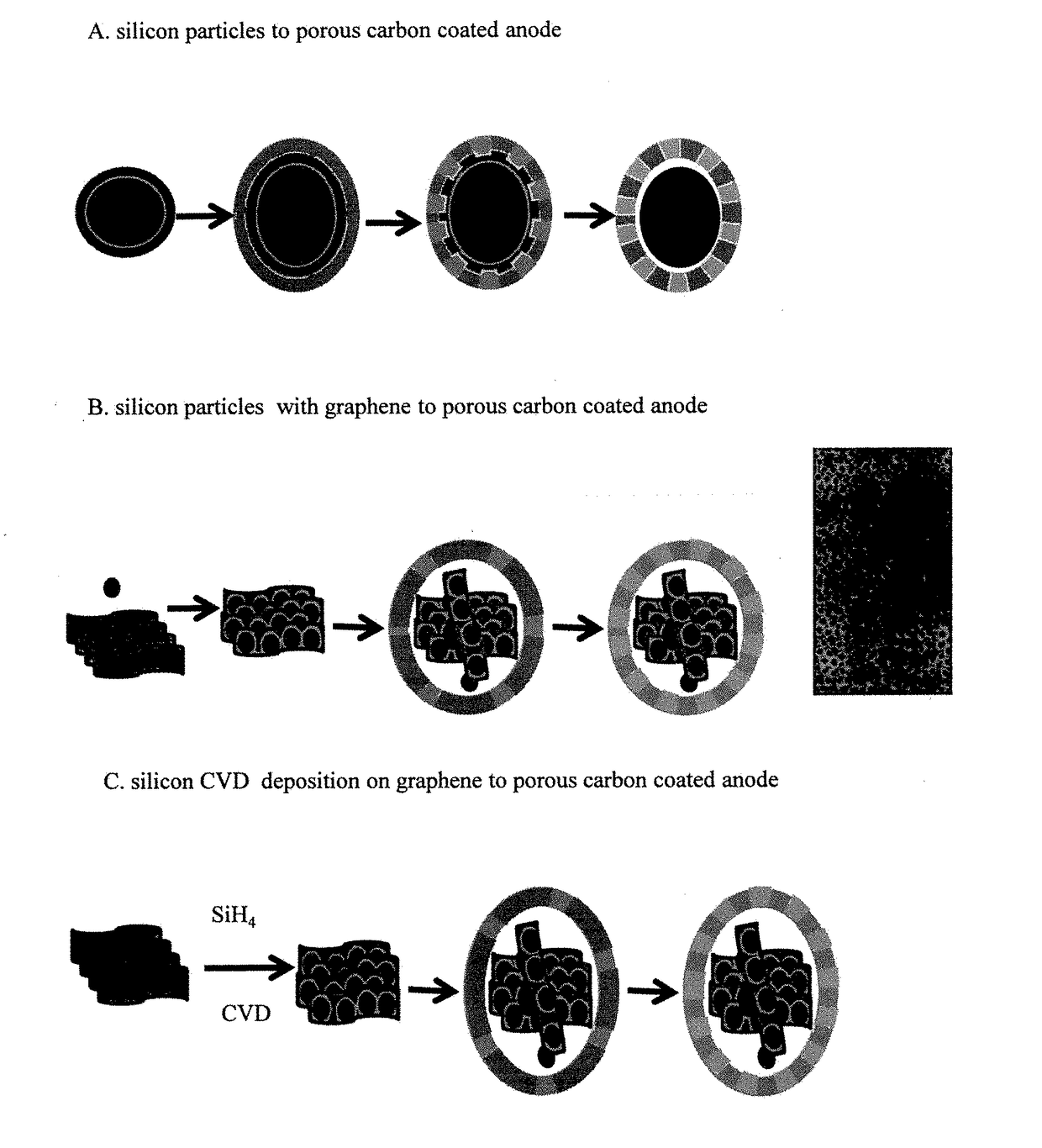
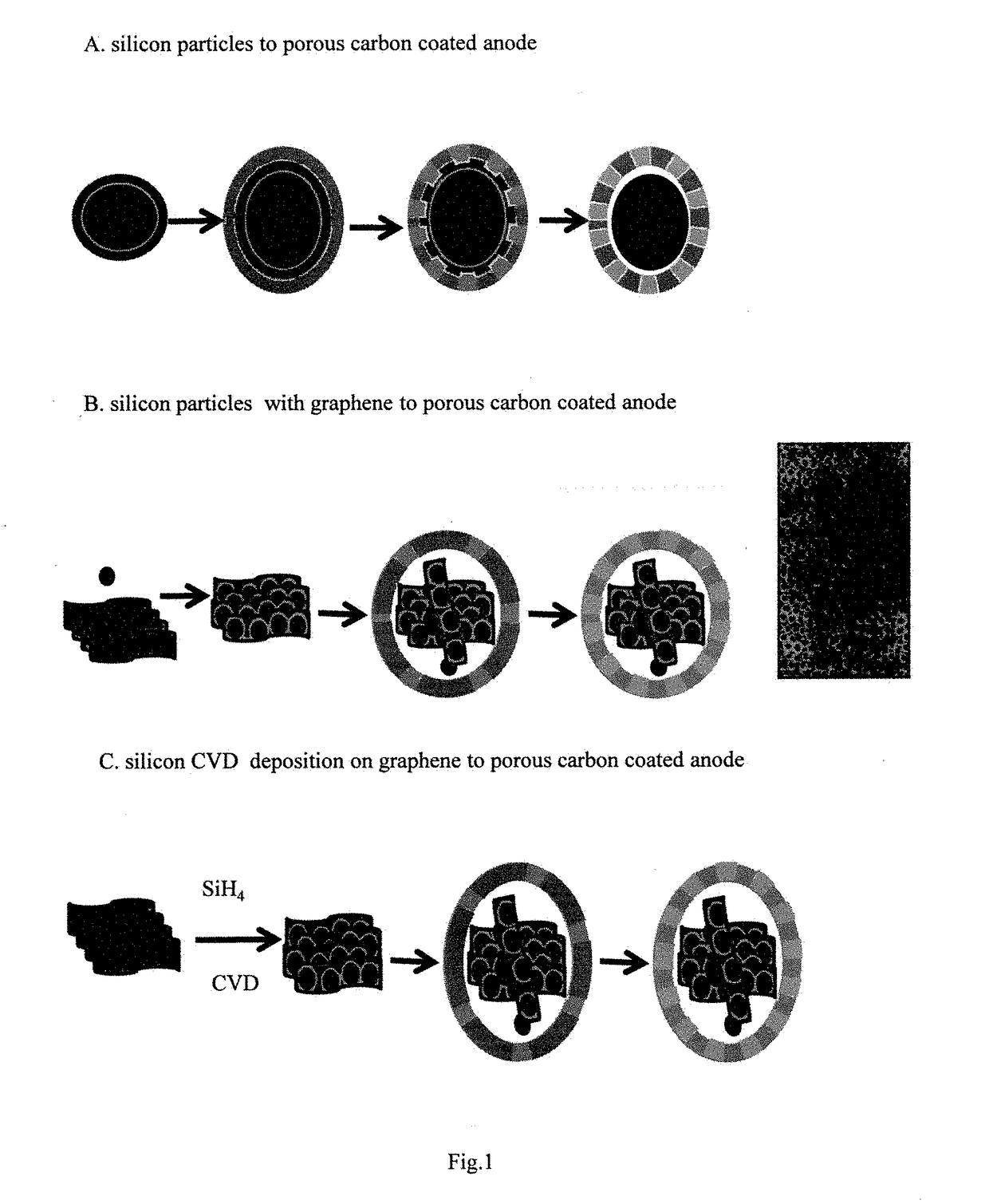
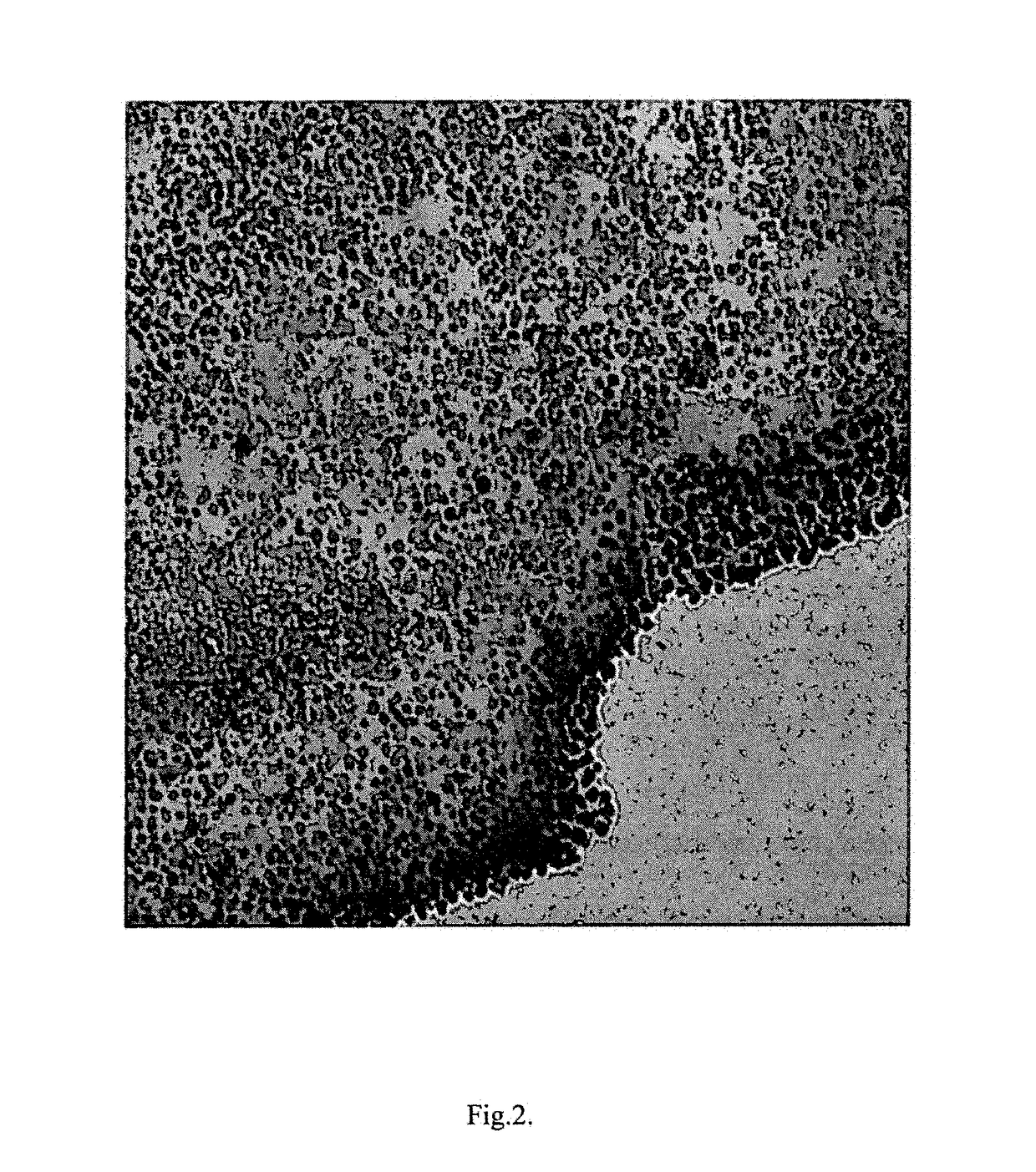
- A high-energy density composite anode material is developed using a silicon core with a porous carbon shell, where the carbon coating layer includes well-ordered nano-pores to accommodate volume expansion and ensure fast lithium ion transfer, optionally incorporating graphene for additional structural support.

Environmental Impact of Coating Material Production
The production of coating materials for silicon-carbon anodes presents significant environmental challenges that require comprehensive assessment across the entire manufacturing lifecycle. Traditional coating materials such as carbon-based compounds, polymer binders, and ceramic coatings involve energy-intensive synthesis processes that contribute substantially to carbon emissions. The manufacturing of carbon nanotubes, graphene derivatives, and other advanced carbon materials typically requires high-temperature processing exceeding 1000°C, resulting in considerable energy consumption and associated greenhouse gas emissions.
Chemical precursors used in coating material synthesis often involve toxic solvents and reagents that pose environmental risks during production, handling, and disposal. Polyacrylonitrile-based carbon coatings require hazardous chemicals like dimethylformamide and various catalysts, generating toxic waste streams that demand specialized treatment facilities. The purification processes for these materials frequently involve acid treatments and organic solvents, creating additional environmental burdens through wastewater generation and air emissions.
Resource extraction for coating material production raises sustainability concerns, particularly regarding the sourcing of raw materials. Silicon-based ceramic coatings require high-purity silicon compounds, while polymer coatings depend on petroleum-derived monomers. The mining and processing of these raw materials contribute to habitat disruption and resource depletion, emphasizing the need for circular economy approaches in material selection.
Water consumption represents another critical environmental factor, as many coating synthesis processes require substantial quantities of ultrapure water for washing, purification, and quality control. The treatment and recycling of process water add complexity to environmental management systems, particularly when dealing with contaminated streams containing nanoparticles or chemical residues.
Emerging sustainable alternatives are gaining attention, including bio-derived polymer coatings and recycled carbon materials from waste sources. These approaches aim to reduce the environmental footprint while maintaining performance requirements. However, the scalability and cost-effectiveness of these green alternatives remain under evaluation, requiring continued research to achieve commercial viability without compromising anode performance optimization goals.
Chemical precursors used in coating material synthesis often involve toxic solvents and reagents that pose environmental risks during production, handling, and disposal. Polyacrylonitrile-based carbon coatings require hazardous chemicals like dimethylformamide and various catalysts, generating toxic waste streams that demand specialized treatment facilities. The purification processes for these materials frequently involve acid treatments and organic solvents, creating additional environmental burdens through wastewater generation and air emissions.
Resource extraction for coating material production raises sustainability concerns, particularly regarding the sourcing of raw materials. Silicon-based ceramic coatings require high-purity silicon compounds, while polymer coatings depend on petroleum-derived monomers. The mining and processing of these raw materials contribute to habitat disruption and resource depletion, emphasizing the need for circular economy approaches in material selection.
Water consumption represents another critical environmental factor, as many coating synthesis processes require substantial quantities of ultrapure water for washing, purification, and quality control. The treatment and recycling of process water add complexity to environmental management systems, particularly when dealing with contaminated streams containing nanoparticles or chemical residues.
Emerging sustainable alternatives are gaining attention, including bio-derived polymer coatings and recycled carbon materials from waste sources. These approaches aim to reduce the environmental footprint while maintaining performance requirements. However, the scalability and cost-effectiveness of these green alternatives remain under evaluation, requiring continued research to achieve commercial viability without compromising anode performance optimization goals.
Cost-Performance Trade-offs in Coating Material Selection
The selection of coating materials for silicon-carbon anodes presents a complex optimization challenge where cost considerations must be carefully balanced against performance requirements. Traditional coating approaches often favor expensive materials that deliver superior electrochemical properties, but emerging market pressures demand more economically viable solutions without compromising battery performance standards.
Carbon-based coatings represent the most cost-effective option, with amorphous carbon and graphite coatings offering reasonable performance at relatively low material costs. These materials typically range from $5-15 per kilogram and provide adequate electrical conductivity and structural stability. However, their limited ability to accommodate silicon expansion during cycling restricts their application to lower silicon content anodes, potentially limiting overall energy density gains.
Polymer-based coatings occupy the middle ground in cost-performance considerations. Materials such as polyacrylic acid, carboxymethyl cellulose, and specialized conductive polymers cost between $20-80 per kilogram but offer superior flexibility and adhesion properties. These coatings demonstrate enhanced capacity retention and cycle life, particularly in high silicon content anodes, justifying their higher cost through improved battery longevity and performance consistency.
Advanced ceramic and metallic coatings, including aluminum oxide, titanium dioxide, and various metal phosphates, represent the premium segment with costs ranging from $100-500 per kilogram. While these materials provide exceptional electrochemical stability and mechanical reinforcement, their high cost necessitates careful evaluation of the performance benefits relative to application requirements.
The economic analysis reveals that coating material costs typically represent 8-15% of total anode manufacturing expenses. However, the impact on overall battery performance and lifespan can justify premium coating selections in high-value applications such as electric vehicles and grid storage systems. For consumer electronics applications, cost-optimized solutions using hybrid coating approaches or lower-cost alternatives become more attractive.
Manufacturing scalability significantly influences cost-performance trade-offs. Materials requiring specialized processing conditions or complex synthesis routes may exhibit prohibitive costs at commercial scales, regardless of their laboratory performance. Conversely, materials compatible with existing industrial processes offer cost advantages through reduced capital investment and operational complexity.
The optimal coating selection strategy involves application-specific analysis considering performance requirements, cost constraints, and manufacturing capabilities. High-performance applications may justify premium coatings for their superior cycle life and safety characteristics, while cost-sensitive markets benefit from optimized formulations that balance essential performance metrics with economic viability.
Carbon-based coatings represent the most cost-effective option, with amorphous carbon and graphite coatings offering reasonable performance at relatively low material costs. These materials typically range from $5-15 per kilogram and provide adequate electrical conductivity and structural stability. However, their limited ability to accommodate silicon expansion during cycling restricts their application to lower silicon content anodes, potentially limiting overall energy density gains.
Polymer-based coatings occupy the middle ground in cost-performance considerations. Materials such as polyacrylic acid, carboxymethyl cellulose, and specialized conductive polymers cost between $20-80 per kilogram but offer superior flexibility and adhesion properties. These coatings demonstrate enhanced capacity retention and cycle life, particularly in high silicon content anodes, justifying their higher cost through improved battery longevity and performance consistency.
Advanced ceramic and metallic coatings, including aluminum oxide, titanium dioxide, and various metal phosphates, represent the premium segment with costs ranging from $100-500 per kilogram. While these materials provide exceptional electrochemical stability and mechanical reinforcement, their high cost necessitates careful evaluation of the performance benefits relative to application requirements.
The economic analysis reveals that coating material costs typically represent 8-15% of total anode manufacturing expenses. However, the impact on overall battery performance and lifespan can justify premium coating selections in high-value applications such as electric vehicles and grid storage systems. For consumer electronics applications, cost-optimized solutions using hybrid coating approaches or lower-cost alternatives become more attractive.
Manufacturing scalability significantly influences cost-performance trade-offs. Materials requiring specialized processing conditions or complex synthesis routes may exhibit prohibitive costs at commercial scales, regardless of their laboratory performance. Conversely, materials compatible with existing industrial processes offer cost advantages through reduced capital investment and operational complexity.
The optimal coating selection strategy involves application-specific analysis considering performance requirements, cost constraints, and manufacturing capabilities. High-performance applications may justify premium coatings for their superior cycle life and safety characteristics, while cost-sensitive markets benefit from optimized formulations that balance essential performance metrics with economic viability.
Unlock deeper insights with PatSnap Eureka Quick Research — get a full tech report to explore trends and direct your research. Try now!
Generate Your Research Report Instantly with AI Agent
Supercharge your innovation with PatSnap Eureka AI Agent Platform!